Robert Mapplethorpe Exhibitions in Oslo

The late American photographer Robert Mapplethorpe (1946 – 1989) is famous for his intimate photographs of his lovers and friends. The Edvard Munch Museum and Galleri Brandstrup in Oslo honor his works.

Galleri Brandstrup displays 32 examples of his mature production, including his very last self-portrait, while the Munch Museum focus on fascinating parallels and points of contact between the art of Edvard Munch and Robert Mapplethorpe. With 141 works from Mapplethorpe and 95 from Munch, this exhibition presents similarities between the two great artists that have never been done before.

Self Portrait 1988
Self Portrait 1988

Robert Mapplethorpe once described himself as a devil, with a bullwhip for a tail. However, he ended up on the side of the angels with pictures of extreme homosexual act and thereby pushed the American culture wars into high gear.

Self portrait, Guggenheim

A quarter-century after his death of age at 42, Saint Robert Mapplethorp was born. “Robert Mapplethorpe: The Perfect Medium” is in view at both the J. Paul Getty Museum and the Los Angeles County Museum of Art. An artist once reviled as a pariah and embraced as a martyr has been thoroughly absorbed into mainstream.

Jason, by Robert Mapplethorpe

Mapplethorpe was born in Floral Park, Queens, New York in 1946. Of his childhood he has said, “I come from suburban America. It was a very safe environment and it was a good place to come from in that it was a good place to leave.”

Two figures, by Robert Mapplethorpe

When it comes to comparing Mapplethorpe and Munch several interesting similarities are revealed. Both are using traditional genres as portraits and nudes, both are self-understanding as artists and both caused scandals with their art. Both were members of a bohemian subcultures of artists that defied the establishment of their era.

190416-robert-mapplethorpe-photo
The exhibition at Brandstrup presents carefully crafted and controlled studio images for which the artist became renowned. It features self-portraits, figure studies, still lives, and portraits of Mapplethorpe’s lovers and friends. During the early 1980s, his photographs shifted to emphasize classical formal beauty, concentrating on statuesque male and female nudes, flowers and formal portraits.

Iggy Pop, by Robert Mapplethorpe

Mapplethorpe had his own ideas of what makes art valuable. One was its role as witness. “Art is an accurate statement of the time in which it is made,” he said.

He went to art school to study advertising, but in 1963 Mapplethorpe enrolled at Pratt Institute in New York City Mapplethorpe to study drawing, painting and sculpture. He was influenced by artists such as Joseph Cornell and Marcel Duchamp.

Tom of Finland (Touko Laaksonen), by Robert Mapplethorpe

At this time he took drugs, dressed weird, and in 1969, dropped out to live in bohemian poverty with a girlfriend, the future poet and performer Patti Smith. Her award-winning 2010 memoir, “Just Kids,” is about their time together in New York. A year later he took up with a man and clarified the erotic direction of his life.

Patti Smith, by Robert Mapplethorpe

He started experimenting with various materials in his mixed-media collages, including images cut from books and magazines, and in 1970 he acquired a Polaroid camera and began producing his own photographs to incorporate in the collages. For many years he used his Polaroid, taking informal pictures of himself and friends, bit later switched to a Hasselblad medium-format camera and for the rest of his career focused primarily on studio-based photography, which afforded maximum control of the lighting and composition.

Robert Mapplethorpe and Patti Smith

Robert Mapplethorpe is one of the most controversial and well-known artists of our era. He made his breakthrough as a photographer in New York in the late 1970s, and his fame grew rapidly in both the US and internationally through the 1980s.Mapplethorpe worked exclusively in black and white photography.

Self portrait 1977 (Guggenheim)

Robert Mapplethorpe established the not-for-profit Robert Mapplethorpe Foundation on May 27, 1988, some ten months before his death, to protect his work, to advance his creative vision and to promote the causes he cared about. Serving as the first president on a five-person board of trustees, he established an initial mandate of furthering the recognition of photography as an art form of the same importance as painting and sculpture. During the last weeks of his life, he added the second mandate of supporting medical research in the area of AIDS and HIV infection.

Both exhibitions in Oslo are organized in cooperation with The Robert Mapplethorpe Foundation.

The exhibition at Galleri Brandstup runs through 28 April

The Exhibition at the Munch museum runs through 29 May

Robert Mapplethorpe Exhibitions in Oslo, written by Tor Kjolberg
You may also be interested in reading:

Swedish Photographer On Innocent War Victims

Star Photographer Visits Oslo Kameraklubb

Wining and Dining in Sweden

0

«Ska vi fika?» (Shall we have a coffee break?») is a question that induces a warm glow on every Swedish heart, and the answer is always “Ja!”

Coffee is important to Sweden’s wellbeing. A snug place in which to drink it is vital, and a piece of cake, most usually a cinnamon bun (kanelbulla), is a non-negotiable accompaniment.

Swedish kanelbullar
Swedish kanelbullar

Coffee is one thing, alcohol another. An unyielding state monopoly and steep prices create a faint sense of prohibition. On Friday evenings, stoical Swedes queue at the state’s Systembolaget off licenses to buy wine or a six-pack.

260416-Systembolaget-Sweden
Customs laws changed in 2003, allowing Swedes to buy quantities of alcohol from the EU into the country; but cautious Sweden still sees more harm than good in deregulating alcohol sales.

Crayfishparty in Sweden

Yet when the chance to indulge presents itself, Swedes love celebrations – as long as all is done with regard to etiquette. Punctuality is a must, and toasts (skaal!) are made according to strict rules. Impeccable manners only seem to loosen at a crayfish feats, when Swedes will merrily rip off claws with their hands and clash beer glasses in true Viking fashion.

260416-fika-bistro
In line with the new Nordic cuisine revolution that has swept across Scandinavia in recent years, Stockholm has seen an incredible restaurant boom. Cozy bistros and sophisticated restaurants (including six with Michelin stars) have sprung up everywhere, placing the city firmly on the gastronomic map.

Wining and Dining in Sweden, written by Tor Kjolberg

You may also be interested in reading:

Coffee Lovers, Look to Sweden!

Coffee Geeks from Norway

Oslo Open Artist Festival

Oslo Open was established to give artists an alternative venue to show and an opportunity to be discovered outside the established institutions. Enjoy this year’s festival next weekend, 16-17 April.

Oslo Open was established in 2000 by a collective of artists and art institutions in Oslo. The main goal of Oslo Open is to give the public the opportunity to interact with artists in a way they have never done before. They get to visit artists at their ateliers and studios to view their work in a whole new light. Guided tours are offered as well to provide extra information about the artists and their exhibitions. There are group exhibition, child friendly workshops, as well as solo exhibitions. There are also free concerts, films and lectures.Oslo Open is an unmediated event, which is what makes it as diversified and as varied as the artists themselves.

Hloves by Kirsten Opstad
Gloves by Kirsten Opstad

Since 2014, the Oslo Open has been organizing an international study visit program, inviting gallerists, curators and collectors from all over the world to explore Oslo’s art scene.

Are we growing apart? by Jim Darbu

Oslo Open also hosts “art ambassadors” who come to Norway to represent their countries’ art and cultural development. The international visitors will have a viewing and a judging of their portfolios.

Author Lars Saabye Christensen, painting by Karen Aare

Oslo Open offers a unique and informal meetings between artists and the audience of artists’ own work. A mythical and otherwise closed room, in countless variations.

Poster from 2007
Poster from 2007

You find the artists, samples of their works and studio addresses here.

270816-oslo-open-3
In 2015, the international program was expanded to include a “speed-dating” portfolio presentation. This year the speed dating will take place on 14 and 15 April, 12pm – 6pm both days.

270416-oslo-open-1
The artist’s studio is usually an exclusive place, inaccessible to people outside the professional field of art. Oslo Open facilitates an unmediated meeting between a general audience and the professional artist. The festival is free and open for everyone.

270416-oslo-open-2
Since its inception in 2000, there have been 8 editions of Oslo Open. The idea behind Oslo Open was introduced by Gavin Jantjes in 1998.

Spread your wings, bu Lirsti Aasheim

Several artists organize concerts, performances, exhibitions and other activities during Oslo Open. You can read more about these satellite events here.

Palms, the African Art Show, by Tiago Bom

Today there are similar projects in Bergen (B-Open), Trondheim (Trondheim Open), Tromso (Tromsø Open) and Stavanger
(R-Open).

Feature image (on top): Oil painting by Kira Wager

Oslo Open Artist Festival, compiled by the Daily Scandinavian Team

Unusual Hotel in Copenhagen

0

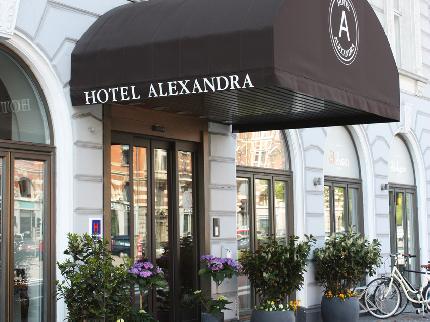
“Unusual Hotels of the World” aims to recognize unique and exceptional hotels around the globe and nominated its first venue in Denmark: Copenhagen retro Hotel Alexandra. The hotel is filled with vintage furniture dedicated to such design legends as Arne Jacobsen.

180416-hotel-alexandra-copenhagen
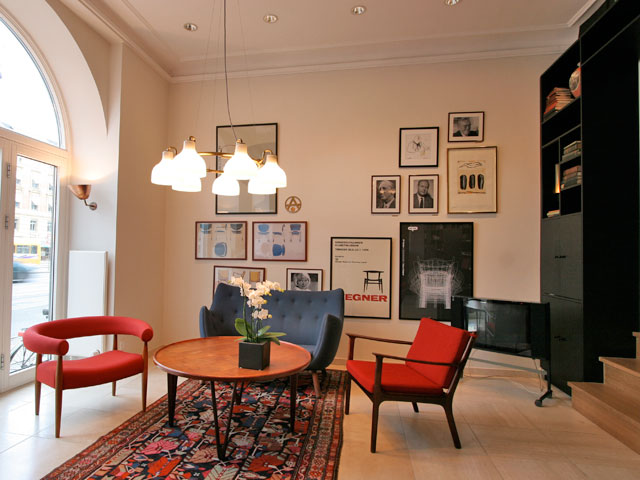
The Danish retro hotel Alexandra has assembled a large collection of world-famous Danish mid-century vintage furniture and decorated the rooms with them. The rooms also have textiles, wallpapers and other gems that take you back in time to experience living like the design loving Danes did in the 50’s and 60’s, nearly 300 pieces of vintage furniture have been collected and displayed in the hotel.

180416-hotel-alexandra-copenhagen-2
Hotel Alexandra’s retro theme features the work of seven of the most renowned Danish designers, among them Finn Juhl, who made a career of reimagining the chair. Guests may also enjoy staying among gems made by Hans Wegener, Arne Jacobsen, Borge Mogensen, Nanna Ditzel and Verner Panton.

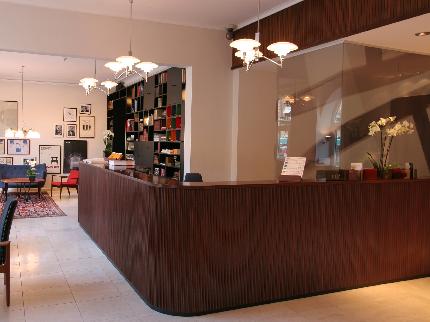
Hotel Alexandra lobby

Each suites and rooms showcase unique vintage furniture, which covers a decade of iconic Danish design, for example  Finn Juhl’s long-limbed armchair, the outstretched arms of Hans Wegener’s Papa Bear armchair and Arne Jacobsen’s wooden Shaker seat and works by the eccentric designer Verner Panton. Panton is considered one of Denmark’s most influential 20th-century furniture and interior designers. During his career, he created innovative and futuristic designs in a variety of materials, especially plastics, and in vibrant and exotic colors. His style was very “1960s” but regained popularity at the end of the 20th century; as of 2004, Panton’s most well-known furniture models are still in production.

Arne Jacobsen suite
Arne Jacobsen suite

Hotel Alexandra was originally built as luxury apartments near Tivoli and the City Hall, but Alexandra has been a hotel since 1910. More than 100 years later it became Hotel Alexandra.

Unusual Hotel in Copenhagen, written by Tor Kjolberg

Related article:
Hotel Alexandra, Copenhagen – a Tribute to Danish Designers

A Short Travel Guide to Spitsbergen

0

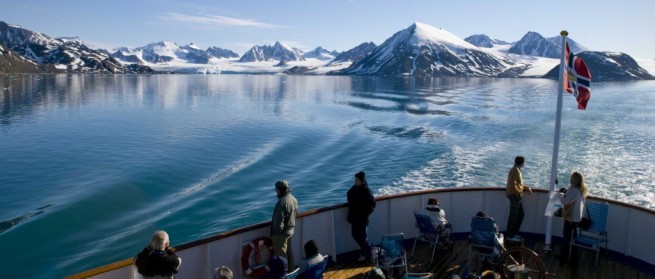
Spitsbergen is the largest and only permanently populated island of the Svalbard archipelago in Northern Norway. The island is served by Svalbard airport, which lies in the ‘capital’ Longyearbyen.

The best way to get around and see its unique arctic wildlife is by boat in summer, and there is plenty of opportunity to do so with adventure sailing and expedition cruises available. With just 29 miles if road, in summer ships are the best way to explore and in winter snow mobiles and dog sledding are used to get around.

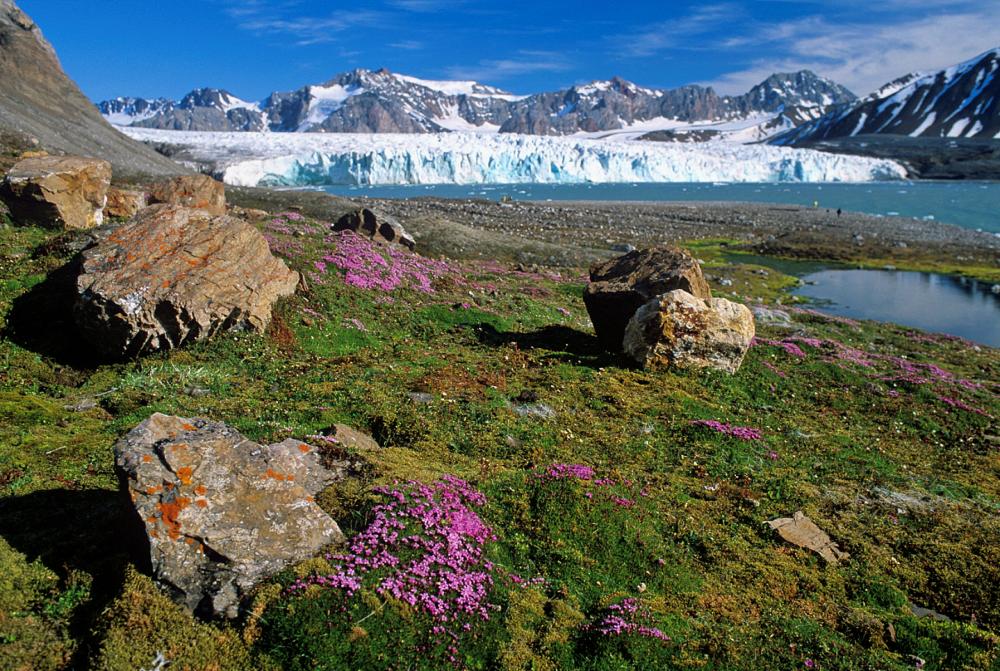
Arctic tundra
Arctic tundra

The islands were named Spitsbergen, meaning pointed mountains, by the first ever European visitor. Although mainly populated by Norwegian and Russian settlements, it’s only one thousand and three hundred kilometers from the North Pole – providing an ideal starting point for many arctic explorers. It has a rich industrial history of coal mining particularly in the main town Longyearbyen, named after its most famous mining entrepreneur.

Between late November and the end of February there is 24 hour darkness because of its location, but visitors can enjoy short skidoo and sledging trips.

Zodiac among Kittywakes swarm. Monaco Glaciers, Svalbard
It’s during midsummer you have the opportunity to enjoy the incredible scenery under a midnight sun. With its incredible mountains, fjords and glaciers it’s the perfect place to partake in arctic voyages and sailing expeditions. For the more adventurous traveler, your ship-based voyage can be complimented by kayaking, snow shoe walking, end even polar diving to fully take in these amazing surroundings.

250316-Polar-Bears
The landscape is made up of six national parks, which protects the fragile and untouched environment. With 3,000 polar bears, Spitsbergen is the only populated place in the world to have more Polar bears than people. The best time to see the wildlife is from June to September, when all are busy feeding, breeding and making the best of the summer.

250316-spitsbergen-map
Highlights include whales, seals, walrus, reindeer, arctic fox, together with millions of migratory seabirds.

250316-spitsbergen-bear-island-north-cape
Due to Spitsbergen’s northern location and clear remote skies, you have the rare opportunity to view the magical Northern Lights. The best chance to see them is during the polar night when it’s dark for 24 hours a day.

More information
Spitsbergen Travel
Nathab
Arctic Cruise
Wildfoot Travel

A short travel guide to Spitsbergen, compiled by the Daily Scandinavian Team

Read also:
Spotting Polar Bears in the Arctic

Land Rover Safari in Denmark

0

Denmark is a small country but with a wide selection of attractions and things-to-do. Why not experience a Land Rover safari among the many African animals living on the savannah in the Ree Park in Djursland on the peninsula if Jutland?

250416-ree-park-denmark
Ree park is the home of more than 800 animals of 80 species from 5 different continents. The popular tourist attraction offers its guests a comprehensive insight in the life and behavior of animals from Europe, Africa, North America, South America and Asia.

The Ebeltoft Safari is a special day out, close to the animal kingdom. In the park’s outstanding landscape, the animals coexist on almost their own terms without caging or high fences bit with lots of space in which to roam. There are open savannahs and expansive prairies, making you feel that you are in Africa, North America or Asia.

Continue the day with an entertaining bird show where the big birds fly right over your head. The animals will get even closer at feeding time. Here you will see Denmark’s only cheetahs chase their lunch or watch the many monkeys gather around for food.

Karsten Ree
Karsten Ree

The zoo was founded in 1991 by Frans Kilde Hansen and was named Ebeltoft Dyrepark. In 1993 the park  was sold to Lars Thye and the name was changed to Ebeltoft Zoo. In 1998 Merete and Henrik Elsass bought the zoo and changed the name to Ebeltoft Zoo & Safari. In 2006 Karsten Ree bought the zoo and gave it the park’s present name.

Today you can experience the spotted cheetahs, the dangerous wild dogs, the big black bears, the arctic wolves, the impressive vultures and eagles, the mighty American bison, the cheeky skunks, the hot-tempered zebra, a curious ostrich – plus more than 100 different species from five continents.

Children warching lemures at Ree Park

Children will love a ride on one of the park’s big camels, and the playground is the opportunity for kids to burn off some extra energy, under the supervision of the striped Sumatra tigers, living next door. You can also get up close and touch the animals on the farm, play with the chickens, Swedish mini-pigs, goats and donkeys or watch the lemurs.

250416-wild-boar-at-Ree-Park-Ebeltoft-Denmark
Welfare of wild animals in captivity is a key value in the vision of the park. This is why all the different species of the park live in surroundings tailored to meet their special needs and instinctive behavior.

Land Rover Safari in Denmark, compiled by Tor Kjolberg

“Norway Fascinates Me”

Since the American illustrator Max Estes (38) packed his drawing gear and moved to Norway with his Norwegian wife in 2009, Norway has fascinated him and inspired him to make several children books and strips.

We have interviewed Max Estes on his fascinating life and work.

We understand that you moved to Norway in 2009. Please tell us a little about your background and how Norway has influenced your work?

I met my wife, a Norwegian writer, after she’d written a review of my first US picture book. She’d contacted me for a follow-up interview, and we simply kept talking. Not long after, we met, then we married, and I found myself living halfway around the world in Oslo.

150416-max-estes-book-cover-see-norway
I’d never imagined moving to Scandinavia, but was immediately taken by the rugged landscape and the traditional bright color palette of Norwegian houses. As an illustrator, the rugged and beautiful landscape was an immediate source of inspiration for me. Having grown up in the pan-flat American Midwest, Norway was a bold and exciting change of scenery.

Nusfjord, illustration by Max Estes

After living in Oslo for five years, my wife and I decided to spend some time in Lofoten. We’re presently living in a rorbu (fishermen’s shack) from the 1850’s, in the tiny fishing village of Nusfjord (population of 38). We’ve traded sidewalks, bookstores and cafes for fjords, quiet solitude, and mountains – at least until this coming June when we return south.

150416-fox-by-max-estes
This time in Lofoten has been an immensely inspiring chapter in my life. Having been able to exploring this immense, bold landscape at length, has deepened my appreciation and respect for my new homeland.

You are writing books in the Norwegian tongue. How good is your Norwegian?

Since arriving in 2009, I have written and illustrated over 15 bildeboker (picture books) and tegneserier (strips) for the Norwegian market. For a relatively small country, Norway is widely known for its high caliber children’s literature. I credit Norway’s large public support for Arts. Without such support, an outsider like me may have never been given a shot to publish in his non-native tongue.

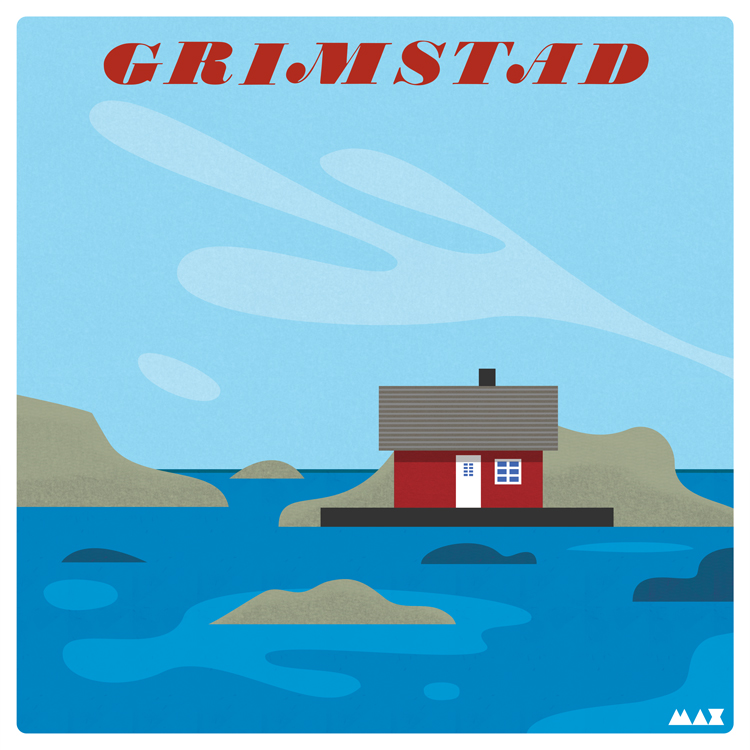
150416-max-estes-grimstadAs for my language skills, after nearly seven years in Norway, my Norwegian is greatly lacking. It is a poor excuse for sure, but Norwegian’s overwhelming ability to speak English has greatly deflated my efforts to learn the language. In fact, my wife’s English grammar is probably more accurate than mine. I hope to tackle the language before I meet my 10 year mark. Oy!

Lucky for me, both my wife and my editor skillfully translate the text for my children’s books. I think and write in English, then work with Norwegians to find suitable translations.

What are you working on now? What are most important, images or words?

I’ve just completed a bildebok for my publisher Cappelen Damm, titled, Et brevs reise (Journey of a Letter). This picture book illustrates a posted letter’s journey from the United States to Norway. It’s a dizzyingly complex journey for a tiny letter to find its way from one side of the planet to another, and I thought that process would be great to illustrate. That book will be in stores in late August of 2016.

Cover illustration for 'Journey of a Letter'
Cover illustration for ‘Journey of a Letter’

Words or images? I see them as collaborators. We SEE images and we READ text, so we experience both quite differently. Images are immediate, while text reveals its message gradually. It helps me to approach a book as a Storyteller, as opposed to an Author or an Illustrator. The story usually dictates what needs to be shown and what needs to be written as I go.

Do you have a favorite among your works?

I’m very pleased with Vi flyr Sørover (Flying South), my bildebok from 2015. In this book, I illustrated myrsniper (dunlins’) annual migration south from coastal Norway to Mauritania. For birds no larger than the human hand, this 5,000 kilometer journey is that much more impressive. I’m amazed at this extraordinary flight, and had a great time imagining what they saw and observed on their flight south.

Cover for 'Flying Soith'
Cover for ‘Flying South’

Who is your typical reader?

I write for children in the 3 to 7 age group.

You may see more illustrations by Max Estes here.
“Norway Fascinates Me”, Max Estes was interviewed by Tor Kjolberg

Danish Water Alliance Helps Solve California’s Water Challenges

0

A Danish US partnership regarding water technology was launched in 4 April. The Danish company Ramboll participates in the partnership in order to help migrating water resource issues in California.

Droughts have always plagued California, but the UN Climate Panel and countless other scientists warn that climate change will worsen droughts in drought-prone regions, even rendering some areas permanently arid.

130416-drought_ramboll_water
In order to avoid even more extensive problems related to the lack of water, a range of companies and utilities in both Denmark and the USA including Ramboll have formed a new forum for collaboration named Water Technology Alliance (WTA).

The alliance is formally inaugurated 4 April by Ulla Tørnæs, Danish Minister for Higher Education and Science, at the conference “Water /More for Less – Sharing knowledge and best practise from the US & Denmark”. The main purpose is to share knowledge and develop new solutions for the water-related problems caused by climate change.

Ulla Tørnæs, Danish Minister for Higher Education and Science


Achieving more together

The Danish water sector is world-leading in sustainable water resource management and avoiding non-revenue water, and Karen Kubick, director of the Wastewater Enterprise Capital Improvement Program for the City and County of San Francisco’s Public utilities Commission (SFPUC) and member of the 2015-2016 Board of Trustees for the Water Environment Federation (WEF), has been looking forward to the collaboration:

Karen Kubick, director of the Wastewater Enterprise Capital Improvement Program for the City and County of San Francisco’s Public utilities Commission (SFPUC)

“I am looking forward to sharing San Francisco’s story with our colleagues from Denmark, and learning more about their one water approach at the WATER/MORE FOR LESS program on April 4. This type of in-person cultural knowledge exchange, while rare, allows the world’s most sustainable practices to be shared and implemented across the globe so we can achieve more together,” she says in her comment prior to the conference.

Max Halkjær, Global Service Line Leader for Water Resources in Ramboll Water, also looks forward to collaborating with the other WTA members on bringing innovative solutions to the market in the Western part of the US:

Max Halkjær, Global Service Line Leader for Water Resources in Ramboll Water

“Even at this very early stage we see the benefit from working closely together. We accelerate and share our insight in the market and we use the WTA to get access to potential clients as well as the innovative environment in California,” he says.

The WTA is part of the Consulate General of Denmark with offices in Chicago and San Francisco and supported by The Danish Industry Foundation. Besides Ramboll, it consists of the companies Kamstrup, Applied Biomimetec, Danfoss, Grundfos, Smith Innovation, Skytem, DHI, and Leif Koch A/S.

Danish Water Alliance Helps Solve California’s Water Challenges, written by Michael Rothenborg and Martin Zoffmann.

This article was written for Ramboll Water. We thank the company for their kind permission to republish the article.

Extreme Surfing in Norway

0

Arctic surfing at Unstad on the island of Lofoten in Northern Norway attracts extreme surfers from all over the world.

Even in winter it’s become a unique experience for estreme sports enthusiasts. Every year more than 1,000 surfers are visiting the island.

070416-arctic-surfing-norway
The Gulf Stream ensures that the water stays ice-free all year round in this stunning landscape of fjords and snow-covered mountains. Even when the air temperature is around freezing, the Norwegian Sea is about five degrees Celsius.

In this unusual tourist destination there are no sharks, but seals and killer whales, and the surfers use full body suits 5mm to 7mm thick, with hoods, boots and gloves.

070416-unstad-surf-camping-lofoten-norway
You can say what you want about surf camps, but one thing is certain. They are fun and social, and at Unstad they do their very best to give you a positive and meaningful experience.

The first surf camp this year is for beginners and intermediate surfers and takes place from June 23 – 25.
Extreme Surfing in Norway, written by Tor Kjolberg

Naturists in Scandinavia

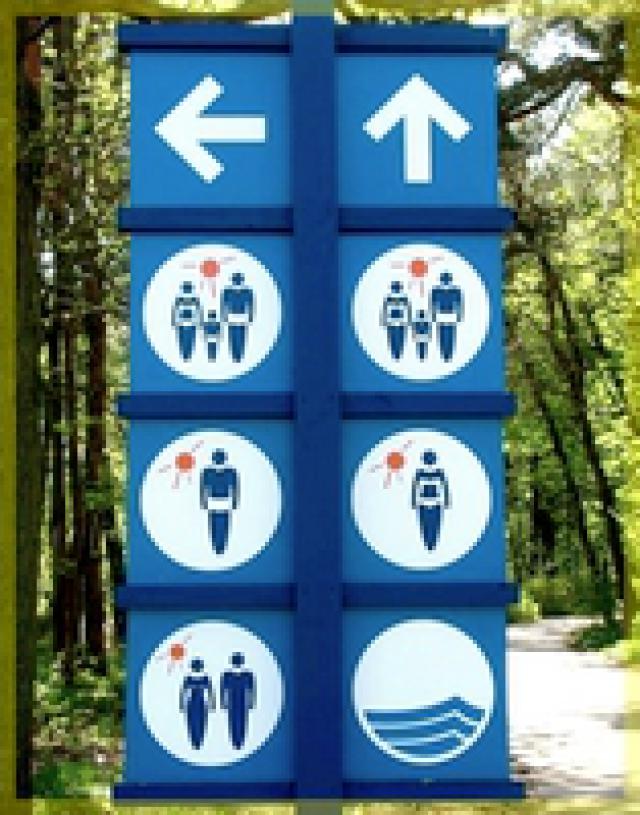
Scandinavia is the most open-minded region in the world and it’s perfectly legal in Scandinavia for nudists to swim naked, or to sunbathe either topless or completely in the nude.

What is Nudism?
Nudism is the practice of going without clothing in mixed groups and for purposes of good health or personal comfort. Governed by a strict set of rules, nudism itself is purposely non-erotic and non-sexual. It is said that nudism aids both exercise and relaxation while promoting stress relief, a positive body image and increased self-esteem. Research indicates that children who have seen their parents nude do not grow up emotionally scarred, but instead are much more likely to be accepting of their own nude bodies, and more comfortable with their own sexuality.

120416-naturist-beach-on-scandinavia
Nudism in Scandinavia
In 1936 Soren Sorensen created a nudist holiday camp on an island near Copenmhagen and founded the first nudist club in Scandinavia, “Sunny Sports North”.

The Scandinavian naturist campings and resorts are owned or rented by naturist aorganizations, and membership in a club associated with the International Narurist Federation is usually required for access. However, you will be heartily welcomed to a short time “test visit”.

120416-naturist-camp
In Denmark, nudism is allowed on 4,500 kilometers of coastline and there are four “free beaches” dedicated to naturists only.

Norway has over 20 clothes-free beaches, and Sweden offers about 60 clothes optional beaches for nudists. Signs are often used to inform beach visitors about nude-only or CO beaches.

The nude beaches are public areas where nudity is accepted, either officially or by practice. Everybody have access to these beaches.

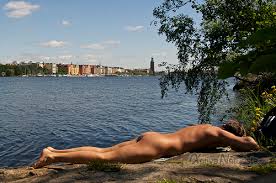
120416-naturist-in-stockholm
Denmark
The Danes have what may be the world’s most liberal policy regarding nudity at the beach. There are just a few beaches in the country where nudity is specifically prohibited. There are also just a few beaches that are specifically set aside for naturists.

Danish naturists by and large are circumspect about choosing where to be naked. Almost all nude bathing occurs on beaches with strong naturists traditions or on remote or peripheral areas of other beaches.

Strandguide.dk describes about 100 naturist places in Denmark. Almost all pages of the website are available in Danish, English and German. Of the places described, a handful are naturist camping establishments, while the rest are beaches, and the sites range from lightly visited beaches with naturist potential to popular and well established beaches.

120416-naturist-view-from-cabin
120416-nude-beach-signNorway
While just about any beach in Denmark can theoretically be considered a nude beach, Norway and Sweden follow a more usual model of having some beaches specifically designated for nudity and others where nudity is unofficially tolerated.

Nudism in Norway is not uncommon and widely accepted. There are about 20 declared nude beaches (“free beaches”) along Norway’s coastline and fjords at the moment. However, besides those official beaches, nudists in Norway have unlimited possibilities all over the country to take a swim in the nude without being embarrassed or embarrassing anybody. And the long coast line helps to find a private bathing spot at any time.

Norway’s offerings include five nude beaches that are in or in the immediate vicinity of the capital city of Oslo, and Huk Beach—located about 7 kilometers west of the city center—is the most popular nude beach in Norway.

The Scandinavian Tourist Portal website provides detailed information about many nude beaches in Norway.

Sweden
In Sweden over 70 beaches are detailed (just under half are described as official nude beaches) along with eleven naturist camping establishments. Sweden has a bigger selection of nude beaches which are roughly evenly divided between coastal locations and interior lakeshore locations. There are about a dozen nude beaches within a 50 kilometer radius of the capital city of Stockholm, including several that are within the city proper.

120416-nude-beach-for-women-only
The Scandinavian Tourist Portal website provides detailed information about many nude beaches in Sweden.

Naturists in Scandinavia, written by Tor Kjolberg