“Congratulations to all our winners here at Forte Village Resort in Sardinia,” said World Travel Awards President Graham Cooke last week-end. “These are the leaders of our industry here in Europe and it is a pleasure and an honor to recognize their achievements this evening.”
The European Gala Ceremony was held at Forte Village Resort in Sardinia, Italy. The European Gala Ceremony held on Saturday night September 5 was followed by an audience of more than 250 industry leaders from across Europe.
Feature image (on top): A representative from Norwegian Air Shuttle receives the World Travel Award 2015.
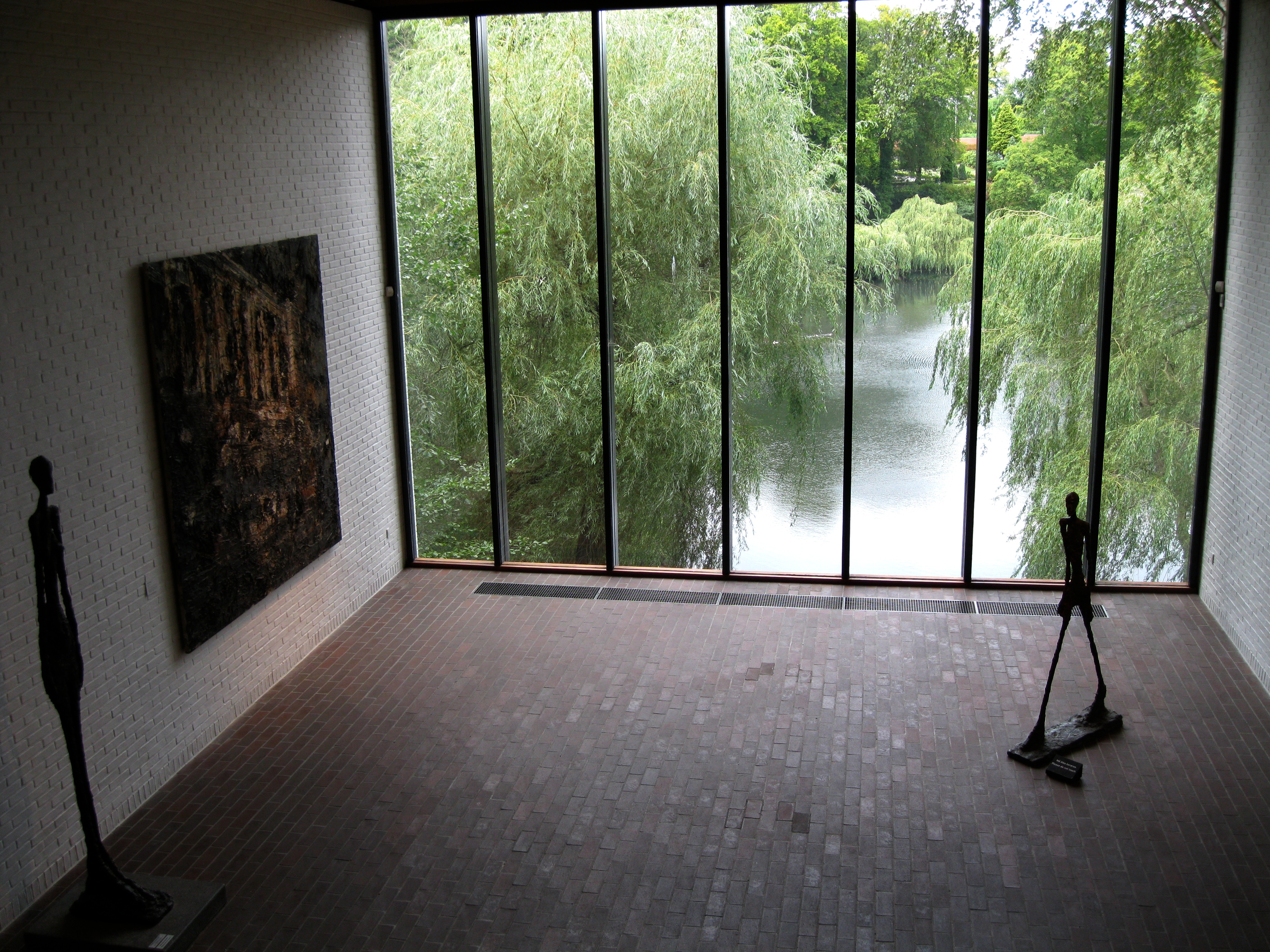
Focus this autumn is on the French painter Matisse at Henie Onstad Art Center outside Oslo as well as at Ordrupgaard Museum outside Copenhagen.
Basis for the two exhibitions is, however, fundamentally different.
Henie Onstad Kunstsenter is launching a provenance project with vast cultural and informational significance for museum institutions, art history students and professionals in Scandinavia as well as a general audience. The exhibition In Search of Matisse is the first research project in Norway on the relationship between looting and art collecting during and after World War II, and the role of the market also in contemporary situations such as Bagdad in 2003 and the ongoing destruction by IS in Mosul.
In Copenhagen, on the other hand, the focus is on a period in Matisse’s life in which the artist directed his attention and creative motivation towards the North, in a series of black and white depictions of Eskimos, whose faces and mask art, he was introduced to by his son-in-law’s collection of inuit masks and the Danish polar explorer Knud Rasmussen’s books. The exhibition Matisse and The Eskimos draws attention to an overlooked niche in Matisse’s late work, in which, he increasingly simplifies and radicalizes his portraits and figurative representations and endows them with the monumentality of the mask.
Blue Dress in Ocher armchair
The title of the exhibition in Oslo might give the impression that Henie Onstad Art Center will exhibit works by Matisse only, but there are only two works by the world famous French artist on display. The title refers to the story relating to the artworks’ ownership history (provenance) and comes in the wake of the fact that the Art Center in 2014 relinquished the painting Blue dress in ocher armchair to the heirs of the French Jewish art collector Paul Rosenberg. Where this painting is today is unknown to the Henie Onstad Foundation.
The exhibition is open September 11 to December 13.
The exhibition Matisse and The Eskimos at Ordrupgaard Museumexhibits works from the 1940s, and the theme os the artist’s interest for this ethnic group. This is an overlooked chapter in Matisse’s production, and is complemented by several reference works, including works by Césanne, Pissaro, Gauguin and Delacroix, who also were concerned by the so called exotic.
Philodendron noir et citrons
The exhibition is open through November 29.
In Search of Matisse in Copenhagen and Oslo, compiled by Tor Kjolberg
Lyngfjord Adventure, Tromsoe, North Norway, was rewarded the Norwegian Tourism Prize 2015 yesterday.The Tourism Prize is awarded by Innovation Norway and consists of a cash award of NOK 250,000. The announcement was made by Cathrine Pia Lund, director of Brand Norway/Innovation Norway
Lyngfjord Adventure has offered Arctic adventures since 2007, and visitors can enjoy a combination of outdoor activities and Northern Lights experiences every day and evening during the winter season – seven days a week.
The activity center Camp Tamok provides guests with crisp Arctic air, silence, untouched wilderness and once-in-a-lifetime experiences.
“Lyngfjord Adventure has created values to the company as well as to the local community – and with national engagement,” said the jury. “The team has focused on economy, security and sustainability and has managed to attract an international audience.” More than 10,000 foreign visitors have enjoyed the services of Lyngfjord Adventures.
“It’s an honor to receive the Norwegian Tourism Award 2015,” said founder and chairman Hans-Olav Eriksen. “When we started to play with the thought of making an Arctic attraction several years ago, we knew nothing about tourism, and there were no benchmarking reports to guide us. It was purely enthusiasm, teamwork and trial and error. The only thing we knew was stated in a report we had read, saying that tourism was the least profitable business in the country with the least knowledgeable employees.”
The prize of NOK 250,000 will be used to further improve the product and cooperation with the benevolent municipalities.
Feature image (on top) shows founder and CEO Hans-Olav Eriksen, Lyngfjord Adventure (in the middle), Cathrine Pia Lund, Brand Norway/Innovation Norway (left) and Per-Arne Tuftin, manager Tourism, Innovation Norway/(right). Photo: Audun Pettersen.
All other images, Lyngfjord Adventures.
Norwegian Tourism Prize 2015, written by Tor Kjolberg
ABBA’s Dancing Queen piano, which will go under the hammer at Sotheby’s Rock & Pop Auction in London on 29 September, is expected to make £800,000.
The ABBA Grand Piano has featured in many ABBA pop classics, like “Waterloo”, “Dancing Queen”, “Mamma Mia”, “SOS”, Knowing Me, Knowing You”, “Ting Ring” and “Money. Money, Money.” “The opening piano glissando from Dancing Queen is one of the most distinctive sounds of the 1970s and we are delighted to offer the actual instrument used by the legendary ABBA in their major recordings,” said Sotheby’s books and manuscript specialist Dr. Philip W Errington.
The piano was built by the Swedish musical instrument maker George Bolin for the American jazz pianist Bill Evans. In 1964 the New York Times described it as a “space-age piano” and wrote: “the new piano represents Mr. Bolin’s ultimate desire – to produce an instrument that gives the pianist the sensation of playing ‘directly on the strings’ as a guitarist would.”
Evans said it was one of the most unbelievable instruments he had ever played.
Stockholm’s Metronome Studios bought the piano in 1967 and it appeared on nearly all of the group’s recordings between 1973 and 1977. The piano is now sold by Atlantis Grammofon, the former Metronome Studios.
The groups pianist Benny Andersson has described the piano as “One of a kind and a great source of inspiration during the ABBA sessions in the studio.” The instrument comes with a certificate of authentication from the ABBA pianist.
The Swedish band shot to fame after winning the Eurovision Song Contest in 1974 and their hits dominated charts in both the UK and the US. Their music inspired a generation of artists and was immortalized in the film and musical production Mamma Mia!
ABBA is estimated to be one of the best-selling music artists of all time, second only to The Beatles. It is rare for any ABBA-related material to be sold and this is the first major ABBA piece to be offered at auction.
The four member pop group comprising Andersson, Bjoern Ulvaeus, Anni-Frid Lyngstad and Agnetha Faeltskog split up in 1983. They have never performed as a group since.
It is not the first time a famous piano has appeared at auction.
John Lennon’s Steinway upright piano, on which he composed Imagine, was sold for £1.67 million in 2000 to singer George Michael, while the piano which featured in the film Casablanca was sold for 3.4 million dollars (£2.2 million) last year.
Iconic ABBA Piano to be auctioned at Sotheby’s, written by Tor Kjolberg
The Exhibition Munch and Van Gogh at the Munch Museum in Oslo was a huge success. From September 29 the Van Gogh Museum in Amsterdam is organizing this unique exhibition in the Dutch capital, exposing the many similarities between these two artists’ work and artistic ambitions.
Discover the parallels between these two iconic artists. Admire more than one hundred artworks from all over the world, including The scream and Madonna by Edvard Munch and Starry night over the Rhone and Patience Escalier (The Farmer) by Van Gogh in one spectacular exhibition.
The two artists’ vision on life and art are closely related, despite the fact that they never met. Their work is colorful, intense, espressive and radical. Their lives are remarkably similar in many ways.
For that reason, Vincent van Gogh (1853-1890) and the Norwegian artist Edvard Munch (1863-1944) are often mentioned together. Munch : Van Gogh offers the unique opportunity to admire an important part of the work of both artists in one location.
The oeuvres and artistic ambitions of Van Gogh and Munch reveal striking parallels. Both artists are known for their emotionally charged paintings and drawings, their unique and innovative style and their tormented lives.
They modernized the arts and developed a highly personal, expressive visual language to convey the universal emotions of the human condition.
The Scream, by Edvard Munch
Despite the many references to the similarities between Munch and Van Gogh in literature and popular culture, this level of in-depth research into their affinity has never before been carried out.
The year 2015 marks the 125th anniversary of Vincent van Gogh’s death, and this is being commemorated with an international cultural program entitled ‘125 years of inspiration’. The Van Gogh Museum will be centered on its new collection presentation in 2015, as well as present this unique exhibition – Munch : Van Gogh.
Munch and Van Gogh move to Amsterdam, source: Van Gogh Museum, Amsterdam
Explore Denmark’s rich cultural heritage in a series of events at the Golden Days Festival, September 4 – 20.
What is cultural heritage? Whose is it and why is it important? In September, Golden Days puts the theme of cultural heritage on the agenda with the Festival of Important Shit.
An entire weekend dedicated to visitors and expats, Hello Heritage is a 3-day festival within the history and culture festival Golden Days. With more than 30 participating museums and cultural institutions, and more than 40 talks, concerts, city walks, guided tours and other events, Hello Heritage offers a unique insight into some of the highlights of Danish art, history, and culture. And best of all, all events are in English.
What is cultural heritage? This year’s Golden Days Festival (called ‘Festival of Important Shit’) emphasizes the fact that cultural heritage consists of both the precious objects exhibited in cultural institutions as well as the trinkets of everyday life – the ‘important shit’, so to speak – the personal things and objects that shape us and make us who we are.
More than 200 events – concerts, parties, performances, debates, city walks, and talks – take place in the period 4 – 20 September. You’ll have the opportunity to meet authors, journalists, actors, cartoonists, politicians, publishers, architects, musicians and singers, all representing Danish heritage in one way or another.
Under the heading “Hello Heritage” tourists are invited to explore Danish cultural heritage through exhibitions, lectures, walks, films and music and more. On one hand, the festival management presents the classical heritage that proudly are put on display in various tourist guides, and on the other hand you may experience parts of Danish heritage that often is overlooked – from the Sun Chariot at the National Museum to sunbathing at Assistens Cemetery, from iconic buildings and great symbols of power to Danish “hygge”, liver paté and playgrounds. www.goldendaysfestival.dk
Painting by Peder Severin Kroyer
With more than 30 participating museums and cultural institutions, tourists and expats will be introduced to the highlights of Danish cultural heritage through a series of events over the course of a weekend – from the concept of ‘smørrebrød’, the traditional Danish open sandwich, to the world-renowned author Karen Blixen and satirist Storm P, among others.
Important Shit in Copenhagen, compiled by Tor Kjolberg
Judy Fayard wrote recently an article in the Wall street Journal titled ‘Five of the World’s Best Sculpture Parks’. “Sculpture parks dedicated to modern and contemporary art are now found around the globe,” she wrote, and the Ekeberg Sculpture Park in Oslo, Norway was on her bucket list.
Water mirror
High on a bluff overlooking the city center and its fiord, the Ekeberg area was marked by prehistoric rock carvings as early as the Iron Age. A large abbey farm in the Middle Ages, it eventually became a city park, and gained fame as the viewpoint for Edvard Munch’s 1893 painting “The Scream.”
Ekeberg Woods
Wall Street Journal calls Christian Ringnes’ selection of art in the park ‘an eclectic collection of some 30 works by artists including Rodin,Renoir, Dalí, Maillol, James Turrell, Jenny Holzer, Jake and Dinos Chapman, Damien Hirst and Louise Bourgeois.
Walking Woman by Sean Henry
The other parks on Fayard’s list are Domaine du Muy in South France, Storm King Art Center in New York, Oliver Ranch in California and Hakone Open Air Museum in Japan.
The Pavillion
The Ekeberg Parkhas also been listed in the magazine Bloomerg Business’ list of 20 things to do in Norway.
They wrote: “Visitors to the sculpture park at Ekeberg appreciate Louise Bourgeois’s The Couple from an alternative angle (feature image, on top). The 25-hectare park overlooking Oslo opened at the end of 2013, the brainchild of Norwegian art collector Christian Ringnes. Not only is it free—much appreciated in this expensive city—it’s also open 24 hours a day, so you can appreciate its works—including pieces by James Turrell, Tony Cragg, and Marina Abramovic, as well as 20th century masters such as Auguste Rodin—any time you please.”
One of the World’s Best Sculpture Parks, written by Admin
If you’re planning to study in Europe, then Scandinavian universities should definitely be on your list.
The 2015 Academic Ranking of World Universities (ARWU) was released last week by the Center for World-Class Universities at Shanghai Jiao Tong University.
Starting from 2003, ARWU has been presenting the world Top 500 universities annually based on transparent methodology and third-party data. It has been recognized as the precursor of global university rankings and the most trustworthy one.
Harvard University remains the number one in the world for the 13th year. On the Top 10 list are also: Stanford, MIT, Berkeley, Cambridge, Princeton, Caltech, Columbia, Chicago and Oxford.
Scandinavian universities have the following rankings:
The Center for World-Class Universities also releases the 2015 Academic Ranking of World Universities by Broad Subject Fields (ARWU-FIELD) and 2015 Academic Ranking of World Universities by Subject Fields (ARWU-SUBJECT).
Scandinavian Universities on the World’s Top 100 List, compiled by Admin
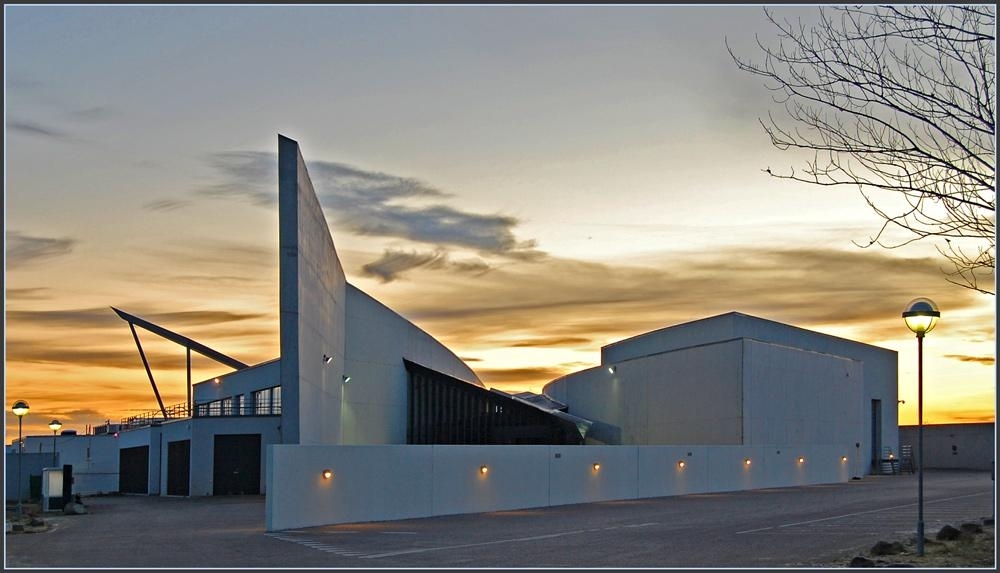
Northern Norway’s coastline once again made a spectacular backdrop earlier this month when the world’s cycle elite met in the northernmost bike race in the world.
In 2013, the Arctic Race became the first professional road cycling race to be held above the Arctic Circle. After having wound through the Norwegian fjords around the idyllic islands of Lofoten and Vesterålen in 2013, and having led the pack to the North Cape in 2014, the Arctic Race of Norway 2015 continued its exploration beyond the Arctic Circle to discover the hidden treasures of the north.
Running from Thursday 13 August to Sunday 16 August, the third edition of the Arctic Race of Norway covered a total distance of 700 kilometers in four stages across Northern Norway.
Cycling fever Last year’s race was a great success with over 150,000 spectators, and there is every reason to believe that the number was succeeded this year. Extensive media coverage and a vivid presence in social media – Arctic Race’s Facebook page has about 40,500 likes.
The popularity of road cycling in Norway has grown dramatically in the last 20 years, and thus the Arctic Race of Norway is not just for cyclists. Spectators and visitors now have the chance to enjoy the excitement of watching a major race, as well as experiencing the great wilderness and bustling cities of Northern Norway.
The race is organized by Amaury Sports, the French organization behind Tour de France, Vuelta a Espana and the Dakar Rally.
Four new stages in stunning surroundings The route’s four stages were chosen to display some of Norway’s most awe-inspiring and diverse nature. TV-viewers, spectators and cyclists alike could marvel at the contrasts along the way – from rocky mountains lining the coastline to the stark beauty of vast open plains and snow-capped peaks in the background.
Stage 1: Harstad – Harstad The race started in the town of Harstad, which enjoys a beautiful and strategic location on Norway’s largest island Hinnøya in the county of Troms. In Harstad and its surrounding area you find a rich array of culture and nature-based experiences. The area surrounding Harstad is exciting, with Kvæfjord’s world famous strawberries and the Viking island of Bjarkøy with 523 islets and rocks. Visitors who arrived before 18 July coulf do all of the above with the added bonus of the midnight sun.
Stage 2: Evenskjer – Setermoen The starting point for stage 2 was Evenskjer in the municipality of Skånland, where the nature is grand, from inland wild mountains to coastal landscapes. Here are rich natural resources with sea fishing from land or boat, or inland fishing in rivers and lakes. The riders then headed inland and crossed trough a military base 3 kilometers from the finish in Setermoen.
Stage 3: Senja (Finnsnes) – Målselv The third stage was undoubtedly the climax of the race. It started with a 100 kilometer loop on the Senja island, a genuine gem of Northern Norway. The finish stage was demanding, with a tough climb up to the mountain resort of Målselv – 3.5 kilometers at a gradient of six percent. Along the route the riders and spectators could appreciate the beauty of mountains and fjords, long beaches of fine sand and fishing villages.
Senja National Tourist Route is a 90-kilometre-long stretch of road between Gryllefjord and Botnhamn. In addition, the official route includes detours to Mefjordvær and Husøya, for an additional 12 kilometers of road. The roads are ideal for cycling. Visitors can experience many great viewpoints, and with ferry and express boat you can cycle from island to island.
Stage 4: Narvik – Narvik The peleton returned to the Nordland region on the last day, on a stage full of hazards around Narvik. The port of Narvik was made famous after a major Second World War battle in 1940. The bearer of the blue and orange leader’s jersey had his work cut out for him when it comes to keeping his rivals at bay, as they could take advantage of a particularly lethal last eleven kilometers containing a 2.5 kilometer slope at a gradient of six percent to be climbed four times.
Narvik is a lively place that tempts you with wild, dramatic and beautiful Arctic experiences. A cable car takes you up to the view point on Narvikfjellet mountain, from where you can enjoy scenic views over the Ofotfjord.
Only an hour away from Narvik by car, visitors may enjoy Norway’s national mountain Stetind, a natural obelisk towering 1,381 meters straight up from the fjord. The journey from Narvik to Stetind is a fantastic way to experience Ofoten and enjoy the unique landscape and tranquil surroundings.
Thousands of granite islands make up the Western Islands of Sweden, an archipelago that stretches north into the Norwegian border. It’s an exciting part of Scandinavia!
Gothenburg
Why not begin your exploration with the largest city of the Swedish West Coast? Wander the picturesque canal, with its cute bridges and majestic Gustav Adolf square (named after the founding father of Sweden). Enjoy some cold beers alfresco before spending a night at the floating hotel Ibis, housed in a ship on the Gothia river.
Gothenburgh by night
Kayaking Gothenburg archipelago can lead to other adventures
The Gothenburg archipelago, with thousands of islands, is ideal for kayaking. You can takelessons from outfitters, go on an afternoon outing on your own or sign up for a multi-day tour that includes camping. If you’re lucky, you’ll see seals and waterfowl that call the archipelago home.
Kayaking in Gotehneburgh. Photo Henrik Trygg/Visit Sweden
Marstrand The smallest town in the county of Västra Götaland is an absolute must-see – a Swedish playground for royalty and celebrities that boasts a rich and intriguing history. Here you can enjoy the impressive views across the archipelago from Carlsten’s Fortress.
Klädesholmen On this small island in Tjörn municipality, Bohuslän, you can join local fishermen on a seafood safari for lobster, oysters and mussels. Herring is so big on the West Coast that the folks here celebrate “the Day of the Herring” on June 6. A perfect day for festing and raising a glass or two to the picturesque fishing villages there. Be aware though, realize that much of the following day will be spent with head in hands. Exactly at which point during the celebration was it a good idea to get in yet another round?
Visit the floating waterfront restaurant Salt & Sill. Salt & Sill restaurant has one of the West Coast’s best locations. Outdoor serving and windowseats with a sea view that provides an almost surreal closeness to the sea. Here you will enjoy fishing, shellfish and Salt & Sill specialty “herring plate” that has contributed heavily to the tavern as international recognition. Salt & Sill, inter alia, awarded the reviews “Worth a trip” and “White Heart” by the White Guide and Quality Award “West Swedish tastes” of the West Sweden Tourist Board.
The island is connected to Tjörn via a bridge to Bleket.
Lysekil This adorable, postcard-pretty village is a great place to base yourself for further island exploration, including the island of Skaftö, where you’ll find Fiskebeckskil and Grandsund.
Fjellbacka is a peaceful burg about 90 miles north of Gothenburg. Fjallbacka boomed in the late 1800s when herring filled the waters offshore.
It became a popular vacation spot for Scandinavians early in the last century and continues to draw visitors, many of whom come to see the about 600 panels of 3,000-year-old Tanum rock carvings, included in the UNESCO World Heritage site north of town. Many of the glyphs shoe boats, humans with bows, spears or axes, rituals and hunting scenes.
If you love lobster, come in September for the lobster fishing season and pot some of these darlings of the foodie world. Back on dry land, you get to prepare and devour your catch. Actress Ingrid Bergman spent many summers on Danholmen Island after she and producer husband Lars Schmidt bought a home there in 1958. And it is there, on the north side of the island, that her ashes were scattered after her death in 1982.
The Fjällbacka archipelago boats leave from the town harbor (Centrumbryggan) by Ingrid Bergman square. Choose a vessel from motor cruisers, fishing boats, yachts and RIB (Rigid Inflatable Boat). If you want a leisurely ‘cruise-type’ experience go for one of the first three. For a rush to the head and a bad hair day go for the RIB option.
High above Fjällbacka rises Vetteberget, from the top of which there is a fantastic view of both the islands off the coast and the mainland. The rock is divided into Stora (Big) and Lilla (Little) Vetteberget by the unusual Kungsklyftan, a cleft that has huge stone blocks wedged in like a roof. That cleft is a must-see spot on Camilla Lackberg murder mystery tours. Lackberg, a bestselling Swedish author, used the Kungsklyftan as the opening scene in her book “The Preacher,” in which a boy finds the body of a young woman covering the skeletons of two young women killed decades earlier.
Getting there: From Gothenburg, you can rent a car and drive on E6 north for about 1 hour and 45 minutes. Or you can take a train to the little town of Dingle and then catch bus 875 to Fjallbacka, which is about 15 miles northwest.
Väderöarna Islands The aptly named Weather Islands are Sweden’s most westerly islands and among the most exotic islands in the country. This is kayaking heavens for seafood lovers.
Väderöarnas guesthouse and restaurant is set on the main island – a wonderful retreat where guests can indulge in fresh seafood and enjoy the beautiful landscape, including walks across the smooth cliffs, swimming in the ocean or relaxing in a wood-fired sauna or hot-tub.
The restaurant is Taste of West Sweden accredited – one of a network of gastronomic eateries that make the most of West Sweden’s first-class produce. It serves up delicacies from the sea, with a menu changing according to season and availability. The tasty mussel soup, laced with cognac, has already become a classic.
Käringön
has an attractive and well protected harbor for guest boats. There are four hotels, bed and breakfast, guesthouses and many private rooms to rent for visitors. The island has 3-4 restaurants and coffee shops, the most famous are “Petersons krog” and “Karingo Oysterbar”, where people come from all over the world to enjoy the fresh seafood and fantastic views.
Kosterhavet National Park This is Sweden’s first national Marine Park with more than 6,000 sea creatures, including rare seabirds, brachiopods, spinge and coral larvae, live in waters of this preserve. Don’t miss:
Kosters Tradgarder This is an organic garden restaurant, ideal for a fika, the traditional Swedish coffee brak, typically accompanied by pastries and sandwiches. The restaurant is run by Helena and Dtevan von Bothmer, who once taught at Uppsala University and now sell books and vegetables. The restaurant serves the day’s fresh seafood catc, garnished with selfgrown herbs and vegetables.
Hotel Koster Try to stop for a smorgasbord lunch at Hotel Koster. It looks like a hotel on the Main coast in USA and has been serving guests since 1905. Ask for a table on the deck with a view to the elegant sailboats heading into the Kosterfjord harbor.
Getting there
Take the regular ferry from the Disney-pretty seaside resort in Strömstad, north of Fjallbacka. The boat is usually packed with Swedish families showing off spectacularly efficient systems for transporting huge amount of camping gear on foot. You may rent bicycles on the island.
Grebbestad 90% of Sweden’s oysters originate from this kooky, quaint fishing village. It is also home to Everts Sjöbod, a restored 19th century boathouse where eco-friendly seafood safaris and tasting sessions are on the menu.
The Rocky West Coast of Sweden, written by Tor Kjolberg