Europe’s Gateway to Space

More than 100 kilometers above the Arctic Circle, in the land of the midnight sun and the Northern lights, Spaceport Sweden aims to change the way people relate to their planet and the universe beyond.

Spaceport Sweden in Kiruna, has since 2005 been active in the development of commercial manned space flights since 2005.

250315-Spaceport-sweden-1
Kiruna in Swedish Lapland aims to be the home to a world-class spaceport with an array of educational experiences, and training and development programs. Kiruna is already one of the world’s premier space cities. Since 1957, the Swedish Institute of Space Physics has conducted extensive research, and Esrange Space Centre, a rocket range and research facility built by the European Space Agency and managed by the SSC Group, has been active in the area since 1966.

Kiruna is Sweden’s principal mining town and the combination of high-tech industry, sophisticated research facilities and natural unspoiled beauty on the edge of the continent are turning the area to one of the most dynamic locations in Europe.

Traveling to space stands as one of humanity’s greatest accomplishments. Spaceport Sweden is one of the pioneers working to make commercial space travel a reality. Therefore we call it Europe’s Gateway to Space. Already now you can learn from experts about space travel, as well as the past, present and future role of Kiruna in this process. Meet some of the greatest minds in science, engineering, and tourism and witness the technologies that will be sending civilians into space.
250315-northernlights-kiruna-sweden
Whether you come to Kiruna in the summer under the midnight sun, or in the middle of the Arctic winter with the Northern lights pulsating overhead, with the romance of space and the stunning nature as your backdrop, all the ingredients are present to create an unforgettable experience.

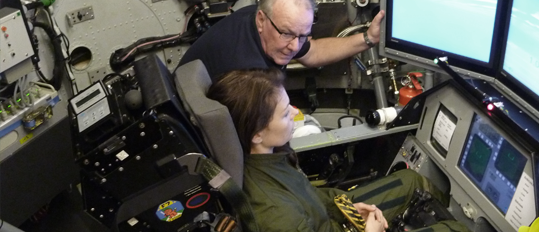
Spaceport Sweden together with QinetiQ offer courses at the Flight Physiological Centre that will prepare passengers and crew of future space vehicles for the unique acceleration environment they will experience. State-of-the-art facilities combined with experienced doctors and scientists will guide clients through the world of G Forces so they can gain practical experience of the symptoms they are likely to encounter and the actions they can take.

Johanna Bergstrom-Roos and Beatrice Nordin of Spaceport Sweden with Anousheh Ansari (middle), who is the world’s 4th private space tourist, 1st female space tourist and 1st astronaut of Iranian descent.

The Kiruna region is situated within the aurora zone and are among the best destinations to see the Northern lights.

The organization cooperates with Ice hotel and Lapland Resorts in offering a space adventure that will allow you to get an even closer look at the mythical Northern lights. The Northen Lights Flight from Kiruna Airport take you high above the clouds and up over the Arctic for optimal viewing.

250315-northernlights-flights-kiruna-sweden
It might be years before you book your ticket to the International Space Station, but already now you are able to experience one of the most thrilling aspects of the journey, micro-gravity.


William Buick – the Conqueror

0

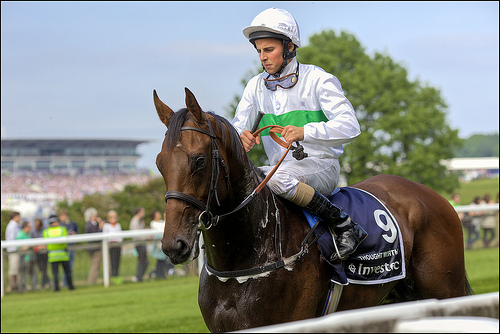
Jockey William Buick from Oslo has assignments for the Sheik of Dubai, the Queen of England, Arséne Wenger and the musical king Sir Andrew Lloyd Webber.

Sheikh Mohammed, the ruler of Dubai, has swooped to recruit the jockeys William Buick for his Godolphin racing empire.
240315-Jockey-William-Buick
His new contract will not come into effect until the jockey has fulfilled his current riding arrangements, completing all contractual obligations to his present employers.

William Buick – the conqueror – has been fabulously successful in 2014 as retained rider for the John Gosden stable, where he has been first jockey since 2010. He was trainer champion in 2012 and the most winning jockey that year.  Gosden is the trainer for The Fugue, a horse belonging to Sir Andrew Lloyd Webber and has seven victories in eleven runs.

Buick was appointed “Apprentice Jockey of the Year” by British Horseracing Awards in 2008 and 2009.

In 2012 he participated in 130 runs and was the third most winning and best earning top jockey.

240315-William-Buick-feature-image
“It’s like being a boxer,” says Buick. “You must be lightweight but strong at the same time.”

The jockey flew to Dubai from Heathrow to confirm his new deal. Eye-bulging sums of cash must have been on offer to secure his signature.

About the horse owners he says:

“Andrew Lloyd Webber is unbelievably pleasant and vey eccentric. Arsène Wenger is a shy person and quite boring. Sheik Mohammed Bin Rashid Al Maktoum looks very intense, but he is a fair guy. He knows horses better than most people. Queen Elizabeth of England is very earthy, and knows evidently a lot about horses.”

William Buick was born on the 22 July in Baerum outside Oslo. He has British and Danish citizenships and lives in Newmarket, England.

Photo credits: Flickr

H. C. Andersen Fairytale Book Containing Handmade Danish Chocolate for Chinese Consumers

0

“Our mission is to give the Chinese consumers a chance to get to know H. C. Andersen and Denmark a little bit better, “ says Morten Klæstrup, chief operating officer in Fairytale Company of Denmark.
The gift giving culture in China is powerful. The right gift, based on the right background, and with the right empathy and understanding for the Chinese culture and needs, can be crucial and embraces many good and giving relations in many years to come,” states the company on their homepage.
230315-book-with-chocolate “Even if there already are many foreign players in the premium Chinese chocolate market – such as Lindth, Godiva and Neuhaus – none of them has a story to tell like we have – there is nothing extra about them,” says Klæstrup.

230315-fairytale-company-denmark-book
The fairytale book is a perfect gift from Danish companies which want to strengthen their relations with their Chinese partners.

Also Danish premium chocolatier Michelsen hopes to break into China after teaming with the start-up company that produces the hollow H. C. Andersen Fairytale book containing handmade Danish chocolate.
230315-h-c-andersen-chinese
The Fairytale Company  has exclusive rights to market its product in China via a partnership with the Hans Christian Andersen Museum in Odense and the Sv. Michelsen’s handmade chocolate.

By Tor Kjolberg

Karl Ove Knausgaard Travels Through North America

0

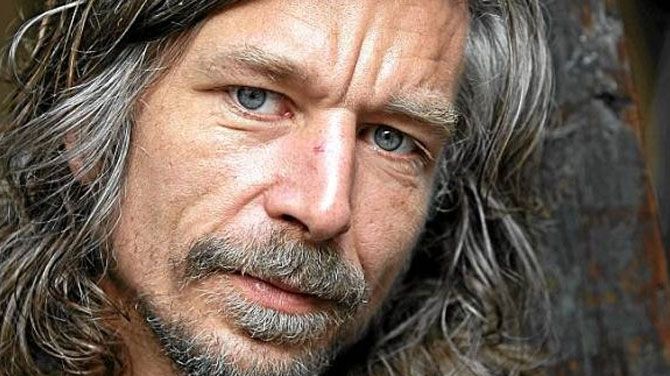
Karl Ove Knausgaard adorned the front page of the New York Times Sunday Magazine’s 1st March issue.

In addition to the front page image, first part of his essay “My Saga – On the trail of the first Europeans” was published on 13 pages in the magazine.

250315-Karl-Ove-Knausgaard-3
“The New York Times Magazine contacted Knausgaard in December to ask whether he would travel across the United States and write about his trip for them. The editor proposed that he traveled to Newfoundland to visit the place where the Vikings had settled, then rent a car and drive south, into the U.S. and westward to Minnesota, where a large majority of Norwegian-American immigrants had settled, and then write about it. He also suggested that he should see the disputed Kensington Runestone while he was in Minnesota. It was on display in a little town called Alexandria, near where a farmer had claimed to discover it in 1898, and it could be proof — if authentic — that the Vikings had not only settled Newfoundland but made it all the way to the center of the continent. It probably was a hoax, he said, but seeing it would be a nice way to round out the story.” (*

The essay is a commissioned work describing the Viking’s journey from Newfoundland through America.

250315-Karl-Ove-Knausgaard
Part two will be published Sunday 22.

Karl Ove Knausgaard is the author of the six-volume autobiographical novel “My Struggle.” The English translation of “My Struggle: Book Four” will be published in the United States in April. Translated by Ingvild Burkey from the Norwegian.

*) Excerpt from the introduction of the essay.

The images are not from the New York Times Magazine article.

Veggie Mania in Scandinavia

Thousands have become vegetarians…Why not you? It’s no surprise that Vegetariaism has become increasingly popular over the years.

The health benefits include: reduced risk of disease, weight loss, longer life span, stronger bones, increased energy, regular bowel movements…yada, yada, yada….

Now, don’t get me wrong…

I LOVE bacon and other meat, but sometimes I become a vegetarian when I travel to take advantage of the local cuisine.

Next time you visit Scandinavia, why not give our selected veggie eateries a try? Be a part of the veggie mania in Scandinavia!

Vegan Eateries in Scandinavia

Copenhagen

BioMio, Halmtorvet 19, 1700 København V

Bio Mio is located in the new hot spot The Meatpacking District, in Vesterbro. The eatery is 100% organic and named CLIMATE+ restaurant and green café.

190315-BioMio-Copenhagen
In the hip eatery you will be served delicious organic food, prepared in the large open kitchen. You order your food directly with the chef, who is happy to answer questions and take special orders. If you want healthy, organic, and tasteful food at fair prices, in a nice cozy atmosphere, and want an experience beyond the usual, aim for the big red Bosch sign above Bio Mio’s facade.

Morgenstedet, Fabriksområdet 134, Christiania,1440 København K

Morgenstedet  is an organic, vegetarian  eatery in freetown Christiania.

190315-Morgenstedet-Copenhagen
 
It has existed in more than 20 years, on a concept of collectivism and voluntary workforce. This results in an intriguing mixture of cuisines, from Far Eastern to Mediterranean, depending on what chef is on shift.

One thing you can be sure of is that it is homemade vegetarian fare, based on organic ingredients. Most often you can choose between two hot dishes and several salads.

The café is housed in a small white washed house, with a pebbled front yard. When the sun is out, this is a perfect place to lounge. The interior of the house is made up of a quirky composition of furniture, an open countryside kitchen with an antique stove.

42 Raw, Pilestræde 42, 1112 København K

Copenhagen’s first raw food bar. Raw food is not only, as the name suggests, raw food. Preparation is also a part of the food, but is only heated to a maximum of 42 degrees – hence the bar’s name.

190315-42-Raw-Copenhagen
In this way food retains maximum vitamins and enzymes; enzymes are catalysts for a myriad of important body processes, and affect among other things how and when these processes go on.

The Standard, Havnegade 44,1058 København K

190315-Standard-Copenhagen
Claus Meyer from Noma, Meyers Madhus and jazz musician Niels Lan Doky, joined forces to open a combined restaurant and jazz club. Here you can enjoy Nordic as well as Indian food while listening to soothing jazz tones. Read more.

Oslo

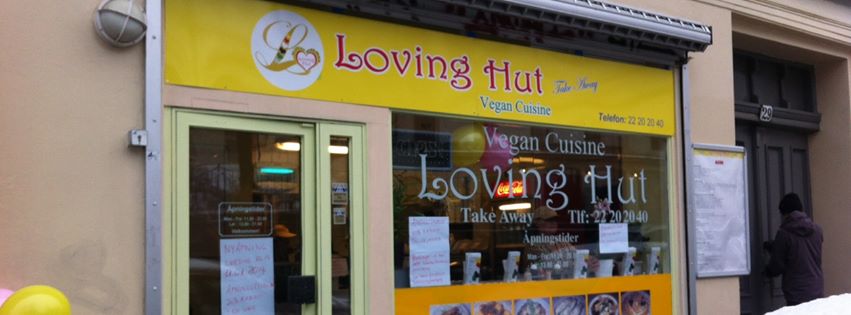
Loving Hut, Bjerregaardsgt. 6, 0172 Oslo

190315-loving-hut-oslo
Second Loving Hut in Oslo, opened Apr 2014. Asian vegan fast food cafe that’s part of the international chain of restaurants opened by followers of Supreme Master Ching Hai, an advocate for veg living. Each location is individual family owned and operated. Serves all vegan food, desserts, and non-alcoholic beverages.

Helt Raa, Maridalsveien 17, 0175 Oslo

190315_Helt-Raa-Oslo
First raw food café in Norway. Raw food cafe inside Mathallen food market. It was the first raw food restaurant in Norway when it opened in Sandvika (no longer). Uses vegan ingredients except for honey. Accepts credit cards.

Vega Fair Food, Akersgt. 74, 0180 Oslo

190315-vega-restaurant-oslo
Features all-you-can-eat buffet which includes hot foods, soup, bread. Has organic coffee, non alcohol bar, fairtrade chocolate, organic cakes and bread made by its bakery. Gluten-free options. Entrance at Kurbadet, Thor Olsens gate. Has outdoor seating. Wheelchair accessible.

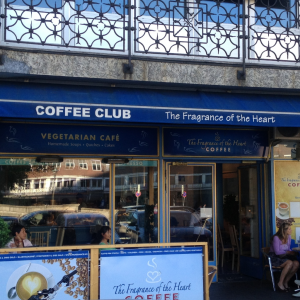
The Fragrance of the Heart, Fritjof Nansens Pl. 2, 0155 Oslo

190315-Fragrance-of-the-heart-oslo
Coffee shop and vegetarian cafe serving a variety of vegetarian dishes, vegan soups, coffee, and beverages. Relaxed atmosphere. English spoken by staff.

Stockholm

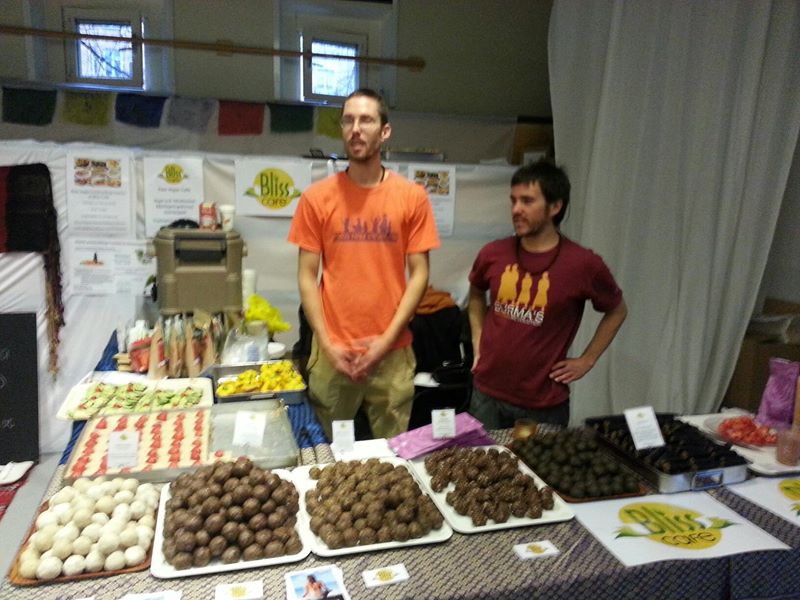
Bliss Café, Oslogatan 77, Stockholm

190315-Bliss-cafe-stockholm
Raw vegan cafe, since 2012. Offers a variety of raw food, snacks, and desserts; plus smoothies, herbal teas, and coffee alternative. Casual set up. Has outdoor seating.

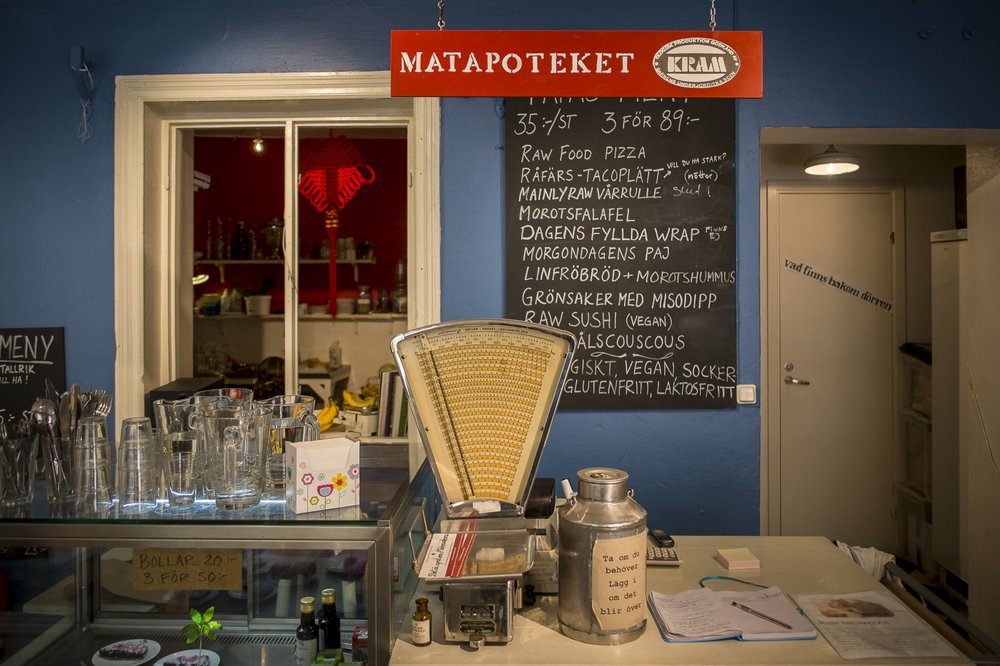
Matapoteket, Bondegatan 6, Stockholm, 11623

190315-matapoteket-stockholm

Serves raw food lunch, smoothies, fresh-pressed juices and desserts. All vegan and free from sugar and gluten. Moved from Bondegatan 1F.

Café Fleminggatan, Fleminggatan11, Kungsholmen, Stockholm, 11226

190315-cafe-fleminggatan-stockholm
Cafe Fleminggatan, also known as Sattva’s Eko Smak, is an organic vegetarian cafe that offers soups, salads, sandwiches, cakes, bread, coffee, tea, and more. Vegan, sugar-free, and gluten-free products are also offered. Their own bakery, Naturbageriet Sattva, provides the bread and baking. Takeaway is available. Delivery service is also offered.

Cafe Heyday, Upplandsgatan 10, Stockholm

190315-cafe-heyday-stockholm
A cozy vegetarian café in Vasastan that offers mostly organic food. Some dishes can be veganised upon request. Since Nov 2014.

Compiled and written by Tor Kjolberg

Good Terrace Living

0

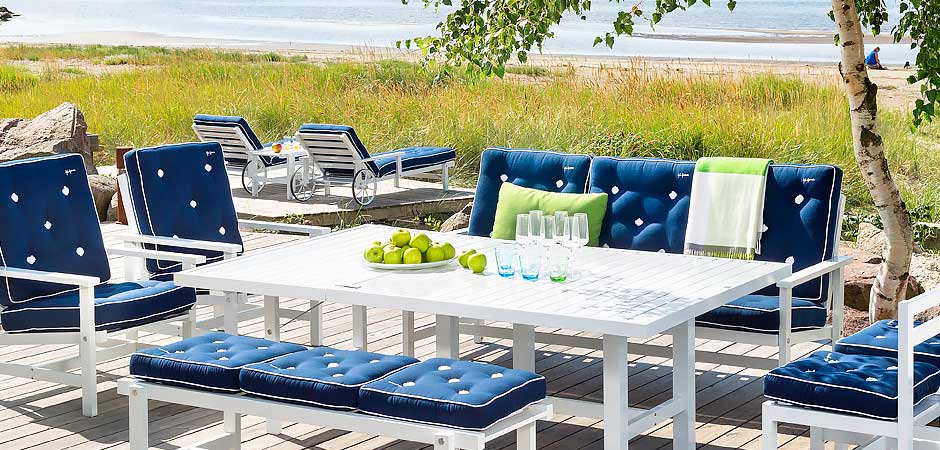
The Swedish furniture design company Fri Form offers exclusive Swedish designed terrace furniture that will last for generations.

The foundation of Fri Form is Elsa Stackelberg’s simple and elegant designs from the early sixties. In 1960 Berndt Wolter Stackelberg married his second wife Elsa Juliane Lund, whose family fled from Norway to Sweden during W.W.II. Elsa Stackelberg, educated at the Oslo Academy of Art & Design, inspired Berndt, who was already a furniture craftsman by hobby, to officially reestablish the tradition of furniture making. In the 1960s they successfully introduced and evolved a garden furniture series called Fri Form.

180315-fri-from-from-sweden-2
Continuity in design and color is one of the distintive characteristics of this classic range of furniture, which has a timeless look and can be extended whenever you want. Add to this the high quality and attention to detail, and you have the key to the unique appeal of Fri Form.

180315-fri-form-from-sweden-3
To meet the demand of everyone who enjoys life, Fri Form comes in three different versions:

Classic
– First rate Swedish craftmanship in natural or white stained pine timber
Teak – Natural beauty and classic sophistication in solid teak
Alu – This timeless range is also available in white, grey or black lacquered finish, and will last a lifetime.

Best Beer in Scandinavia

Two Danish Brewers are among the World’s Top Ten. Reviews taken last year and weighted by performance within and outside of style and balanced by indicators of depth, show that two Danish brewers are among the top ten performing of more than 19,000 listed at RateBeer.

170315-mikkelier-copenhagen170315-To-øl-denmark
Mikkelier from Copenhagen was ranked no. 3, and To Øl, Copenhagen, was ranked at ninth place. The two first places are held by two US breweries.


On the Top 100 Beer list you also find
All In Brewing, Gothenburg, Sweden

170315-all-in-brewing_sweden

Amager Bryghus, Denmark

170315-Amager-bryghus

Omipollo, Stockholm, Sweden

170315-omnipollo-stockholm

Beer Here, Køge, Denmark

Haandbryggeriet, Drammen, Norway

170315_haandbryggeriet-norway

Lervig Aktebryggeri, Stavanger, Norway

170315-Lervig-aktiebryggeri

 170315-best-beer-2014

All winners in this category are eligible for award certificates.

Here is the Rate Beer’s guide to the best beer in Denmark, Norway and Sweden.

Buy a Viking Long-ship

After touring a museum, what do you think is the best gift shop souvenir to commemorate your visit? A post card? A magnet? The online gift shop for the Viking Ship Museum in Roskilde, Denmark, has got something far more appropriate: an actual Viking boat to stage your own conquests.

170315_;aking_a-Viking_Longship
The Viking Ship Museum is now offering the public the chance to buy a Viking longboat via its online shop.

Nordic Culture’s marketing director Anders Roge explained that the popularity of the Vikings is continuing to grow so they believe the opportunity to purchase an authentic Viking boat online is sure to be a great success. He said that the custom-built ships should be able to fulfill a childhood dream, and could be used in a company’s marketing strategy or taken for a weekend cruise by families and friends.

170315_Viking_Longship_2
The custom-build vessels come in a range of models, with the almost 10-metre Gokstad Ship – used for exploration, warfare, trade and commerce during the Viking Age – being among the most spectacular.

Roge pointed out that the popularity of TV series ‘Vikings’ as well as the success of the National Museum of Denmark’s Viking exhibition, which has been displayed in Berlin and London, proves that current interest in the Vikings’ history and culture is on the up.

The Viking Ship Museum is renowned for using the Vikings’ shipbuilding tradition to recreate the old wooden boats for exhibitions and research, but its new move will extend to companies and people in the private sector.

Norwegian Animated Characters Popular in France

The small town of Flåklypa is experiencing great lack of snow. The inventor Reodor Felgen is asked to create a snow machine. However, things do not go as planned. The main characters, Solan and Ludvig, are popular in France.

About 154,000 French movie goers have paid to see the film Christmas in Flaklypa by the perhaps most popular Norwegian movie maker Ivo Caprino.

Ivo Caprino with friends

‘A masterpiece and a pioneer work, first rate stop motion animation. The director and producer Ivo Caprino, invented a whole new ‘multi camera system’, which has turned into a brilliant result.’ says a French critic, enthusiastic when it comes to the Norwegian animated characters.

Producer Rasmus A. Sivertsen

The Norwegian producer Cornelia Boysen is proud to be so well received in a country with such a rich animation film story.

Christmas in Flaklypa (2013) was the most seen film that year in Norway with more than 800,000 visitors.

By Tor Kjolberg

Michael Booth On Scandinavia

When journalist and author Michael Booth moved to Denmark ten years ago, he wondered what the Scandinavian people was like. Was it a homogenous group of people? It had recently been ranked as the happiest people in the world. Was it true and is do, how come? It resulted in his book, The almost nearly happiest people in the world. We interviewed Booth in Copenhagen last month.

120315-booth-book-cover-the-almost-nearly-perfect-peopleHow long did it take you to write this book?
When I first came to Denmark ten years ago, I saw for the first time the differences between the three countries, which I was not aware of. I barely knew the geography. I didn’t know what languages they spoke, and didn’t know the differences with Scandinavia and the Nordic countries. I knew nothing. And as I came here, as most Brits and Americans, I put it together as one homogenous group.

At that time I thought this might be an idea for a book. It was always there, but it lacked something. Just explaining cultural differences wasn’t really enough to make a book.

Then was this amazing cultural wave that came from these countries; the new Nordic food, The TV-series, Stig Larson, Wallander. It was so many TV-shows, you wouldn’t believe it, newspapers, magazines and everything.  For years it had been, “Go to Spain or buy a house in Toscany, where your dream life would be.

120315-Stig_Larson-book-cover120315-book-on-scandinavian-cooking120315-lutefisk
Then came 2008 with its economic crises; the year which went down with the toilet water. People who had moved lost everything, or at least had to devaluate their properties. My theory is that the world somehow started to look somewhere else, a place with different values, less commercialized, more like work-life balance and less globalized. It was more about equality instead of what you could buy or what you could acquire. The Nordic countries were perfect for that. They became a kind of Utopia, which they are not.

120315-booth-michael
So there was the third stage of the book, to give a more nuanced picture of the people who was a kind of blinded by the Nordic light. I wanted to give it a more shaded image. That last process was about four years. I pursued my publisher to do it. In between I wrote another book actually.

Did you have a research team, or did you everything yourself?

I did the book alone, without a team. I wish I could have afforded a team. Six years before that I was always noticing things and reading articles, so I was aware of the stuff. I had a big file of cuttings. Somewhere in there was an idea.

My publisher was worried people would not be interested in Scandinavia, but he was wrong about that. The book has also created lots of buzz in the media; BBC among others, it caught on something.

3d character textured with flag of Denmark
The book is classified under ‘humor’. Did you intend to write a funny book, or what was your idea?

I was walking on a kind of tightrope, so I was very conscious about that, because I live here, and I like it very much. I am joking that I am living here almost of my free will, so you have to be careful not to be rude to your own hosts. I am, but I laugh at myself a lot, but I like an easy target to laugh at. So the humor is very important, I think. But some people hate the humor in a book.

You are often ironical when describing the Scandinavian people, not without quite a deal of British humor. Have writing the book changed your mind about the Scandinavian people?

I learned so much I didn’t know. I got to know the people better. The history is special, new to me and really interesting. Still I would never claim I am an expert on Scandinavia or the Nordic countries. The more I learn, the more I realize what I don’t know. There are so many places I haven’t visited, but coming to new remote destinations, I realize how amazing they are.
3d character textured with flag of Norway
As a journalist I had expected you to be more liberal to Mohammed cartoons than described in your book. Has your opinion changed after the incidents in Paris?

Not at all, if it is deliberately set out to cause grouse offence to someone, why should we do it? To prove a point of free speech? I disagree with that. I like nice good manners. I think we can arouse discussions without deliberately crossing borders. The cartoons in question weren’t even funny.

When traveling around to interview persons and experience the five countries, is there any experience not mentioned in your book you would like to add?

Memories keep actually coming all the time since I wrote the book. I was walking down a street in Copenhagen the other day, and I saw three young kids, maybe six or seven years old, having a race. The kid who won had a really celebration, almost like an American baseball player. His mom came and grabbed him by the ear and said, “Stop that right now!” That was a great illustration for me about the Scandinavian equality philosophy.

And there’s another one. My eldest son participated in a musical his class at school put on a Monday night. It wasn’t a big deal, just a performance that parents could watch. But the teacher who arranged it rotated the cast. It was Treasure Island. In one scene one child played John Silver, and in the next it would be a girl playing Long John. She did it to give everyone a chance. It was a joke. It was ridiculous. You wouldn’t follow anything So what was the purpose of that? It should be a kind of inclusiveness in the class. It’s a good example of misunderstood equality.

3d character textured with flag of Sweden

Having lived in Denmark for some years now, what do you as a Brit miss the most?

Politeness, manners to people you meet in the shops or in the streets. This is of course from a weird British perspective – we might have too much of it, but I miss it. I miss the chatting to people in working shops. I miss choices, cultural choices, compared to London, or even Brighton, where I come from. I miss good radio. This is not a criticism to Denmark, just a statement of what I miss. My Danish wife complaines about the Danes as well.

I like it when foreigners describe how they view our countries. Opinions from the outside are important. If you had been a politician, which advice, if any, would you give to our state leaders?

I have written just a humorous travel book. I have no solutions there, I am just an observer. Of course, I have trouble with the taxes. I don’t like to pay such high taxes. Just a reduction of four to five percent, like in Sweden, would have been a good thing. But I am not a politician.

Do you have any new projects?

Not, actually. I have written five books back to back during the last ten years, strictly with no break in between them, and it’s nice not to have to do it. And I am very busy working as a journalist, teaching, and my book has recently been published in the U.S, and is published again in Britain as a paperback. So you see, I am quite involved, giving talks, and other tasks have exploded.

I even had a talk at the Oslo University among other speakers doing TED-talks (Techological-Educational-Design), where people talk for 18 minutes for global organizations.

I wrote a book on Japanese food several years ago, which has been translated into Japanese,  so I will even go to Japan to talk on Japanese television by the end of this month. I will, however, never get rich from my freelance writing, paying 50 percent taxes.

As a journalist and writer, do you read a lot, for writing purposes or for pleasure? What book do you read right now, if any?

I am always reading subjects about my books. That’s all I am reading. My first book was about Hans Christian Andersen and his journey to Istanbul in 1840. So I was reading everything I came over about that, including a lot of research, and it gave me a new perspective on Andersen. I detected the places he had been to, and I actually got to know him a lot better.

He wrote a journal, he wrote letters, and he wrote a travel book about that journey, so I was going to the places where he had lived, places where he ate, museums he had visited and so on. My book was never translated into Danish. It came out just after the 200th anniversary, and I think people were sick of it all by then.

And then I did a couple of food books. The books might have been forgotten, and I move on to other things.

Japanes tekecision will make a series about my Andersen book. I still think that book’s got potential. It will have nothing to do with me, just about Andersen’s journey, but it’s my project. Now, that I have so little spare time, I read novels, mostly American.

Do you have any role models? Any book recommendations?

It’s a book called Danubia, about the Austrian-Hungarian empire, by Simon Winder, who also wrote Germania, which is a kind of historical travel book about Germany, and it’s very funny. Winder brilliantly mixes really interesting research with a lot of humor. Actually, he gave me permission to write more or less in his style.

What is the future of books in your opinion?

I have been very depressed for a while. But I just heard that ebook-sales have gone down again, and I think, or hope, that people go back to books, because we like the smell of the print, the sense of a book you actually has seen. I write for the magazine Monacle, a high quality product, so I am more optimistic actually. I would have been very worried if books had gone the same way as music has gone, and you can’t get them for free.

Any reactions from the Nordic readers of your book?

It’s quite funny to talk about the reaction to the book I have gotten from different Nordic countries, especially since I wrote a rather provocative article in the Guardian.

Mostly they are nice, they got the humor. Swedes have been rather pedantic about mistakes. In my book I cannot deal with stereotypes, so I generalize. I am absolutely guilty about that, but it’s fun. The Danes were somewhat crossed with me. The Norwegians had the strongest reactions, mostly negative, but more regarding the article than my book, probably because I talked about the oil and the climate change. I had actually been to Norway and spoken with experts, so Norwegians have told me this stuff. In fact, I got personal, nasty notes.

But all reactions were conforming to stereotypes.

What can the world learn about these stereotypes?

Americans could perhaps learn to redistribute the wealth a bit better, which is the bedrock of these societies. I would like to cite a Finnish journalist, who said, “Helsinki is a fantastic place to live, but you have to get away from it a lot.”

My favorite quotation appeared in the Economist, “Scandinavia is a great place in which to be born…but only if you are average.  If you have average talent, have average ambitions and average dreams, then you’ll do just fine, but if you are extraordinary, if you have big dreams,  great visions, or just a bit different, you will be crushed, if you do not emigrate first.”

Machael Booth on Scandinavia was interviewed by Tor Kjolberg
Portrait photo (on top): Tor Kjolberg
All illustrations: Graphic Stock

Read our review of The Almost Nearly Perfect People