Norwegian Screenwriter Wrote Script for Wim Wenders

Last month Wim Wenders won a honoray Golden Bear at the Berlin Fim Festival – the script was written by Norwegian screenwriter Bjørn Olaf Johannessen.

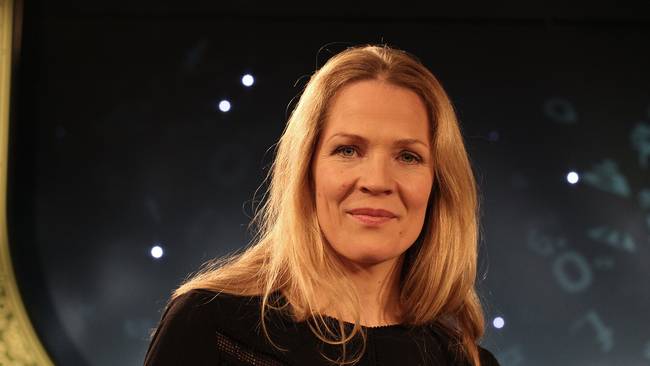
250215-Bjorn-olaf-johannessenNorwegian screenwriter Bjørn Olaf Johannessen made his debut with the stage play Silkematt produced by Norwegian National Theatre in 2000. Johannessen is by education a Marine Engineer and has worked many years as a research scientist and developer of environmental technology.

His main focus since then has been towards feature film and television, including Norwegian as well as International titles such as Bastard (2006), directed by Marius Holst; Nowhere man (2008), directed by Patrice Toye, which was awarded the Sundance NHK International Filmmakers Award in 2006 and the critically acclaimed comedy drama series Trial of Life (2014), written with Per Schreiner and Erlend Loe for Norwegian television (NRK) and which was nominated for the 2014 Prix Europa.

Johannessen’s upcoming work includes feature film Dirk Ohm – The Disappearing Illusionist (2015) directed by Bobbie Peers as well as feature film The Pyromaniac which will be directed by Erik Skjoldbjærg in 2015.

250215-Everything-will-be-fine-movie-posterHis most actual achievement is writing the original screenplay to Oscar nominated director Wim Wenders’ awaited 3D drama Every Thing Will Be Fine (2015), starring James Franco, Charlotte Gainsbourg and Rachel McAdams. The film had its premiering at the year’s Berlin International Film Festival last month.

Bjørn Olaf Johannessen met Wim Wenders at the Sundance Film Festival in USA in 2006. That turned out to be the beginning of a cooperation which resulted in the drama Everything will be fine.  This is one of eight feature films which have received funds from the Swedish Film Institute.

You may also like
Prestigeous Prize to Norwegian Film Director
Wow, What a Film By a Norwegian Director!
Famous Danish Film Directors

Stockholm Bloodbath

0

After more than one trial separation Denmark and Sweden were together again under the Danish king Kristian II (1841-1559). Anti-Danish feeling was growing apace in Sweden when the Swedish assembly voted to burn the fortress of the Archbishop of Sweden, a pro-Dane, Gustav Trolle.

240215-Gustav_Trolle,_Archbishop_of_Uppsala
In the event Trolle was merely imprisoned, but in 1520 the Papal Court excommunicated the Swedish regent, Sten Sture the Younger, for this act. Kristian II had the justification he sought for invading Sweden. He invited Sweden’s leading nobles to a feast in Stockholm at which he chopped off the heads of 82 of Sweden’s finest. This has been named the Stockholm bloodbath.

240215-Christian-II_of_denmark
This “Stockholm Bloodbath” provoked a rebellion. Kristian was driven out of Sweden and Gustav Vasa, a nobleman whose family had been victims in the massacre, seized power. Thus began a Swedish dynasty of exceptional distinction and durability.

240215-Gustav_Vasa
Hounded out of Denmark, Kristian II sought refuge in the Netherlands. Norway’s clergy, staunchly loyal to Rome, made him an offer of the Norwegian throne, which provoked violent intervention by Danish and Hanseatic forces with far-reaching consequences.

Kristian spent the rest of his life in Sonderborg Castle, while the Norwegian Church was purged of Roman Catholics to make it Lutheran, and the Norwegian monarchy was abolished.

Norway was thereafter a mere province of Denmark. The tripartite Kalmar Union was dead.

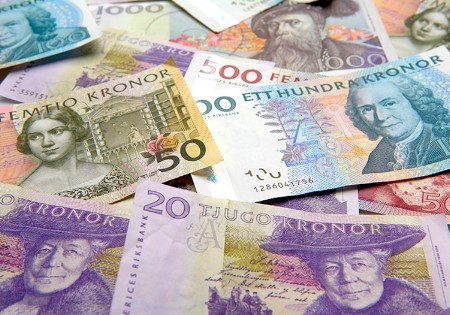
Gustav Vasa, the enigmatic king, portrayed on the Swedish 1,000-krona note, is credited with founding the Swedish state. He’s a folkloric hero, yet his brutal behavior led to armed rebellions in Småland and Dalarne.

All images: Wikipedia

Spectacular Driving in Norway

0

Norway is a spectacular driving location with a number of scenic drives, but it is important to keep headlights on all the time and observe speed limits. 

You can drive on the photo license of most countries but if you hold a non-Scandinavian/English language license it may be best to use an International Driving Permit.

Roads are generally well maintained and in good condition, even minor roads, though in mountainous areas roads are steep, narrow and winding. In the North expect severe winter conditions and many minor roads may close. Winter tires are mandatory from approximately 1 November to 15 April (exact dates can vary year on year).Distances are great and driving takes longer than you think. Keep headlights on at all times and observe speed limits, which are, in general lower than the rest of Europe. Fines for speeding are high and are enforced by automatic cameras.

Alcohol limits for drivers are low and random checks for alcohol are frequent, with severe penalties if you’re over the limit. Driving standards are high and road rules are generally complied with.

Norway is a spectacular driving location with a number of scenic drives such as –

230215-Sognefjellet-National-Tourist-RouteThe Sognefjellet National Tourist Route is the highest mountain pass in Northern Europe  and is widely accepted as one of the most spectacular drives in Scandinavia. Along its 108 kilometres you will find The Sognefjord and Jostedalsbreen Glaciers, and Galdhøpiggen, Norway’s highest mountain.


230215-Hardanger-National-Tourist-Route

The Hardanger National Tourist Route is a 194-kilometre-long stretch of road east of Bergen passing by glaciers, mountains, moorland and waterfalls, it’s seen as the classic Norwegian drive.

230215-Lofoten-touristroute-Norway
The Lofoten National Tourist Route – a 166-kilometre-long stretch of road between the village of Fiskebøl in the north of the Lofoten islands and Å in the south.

230215-Helgeland-Coast-National-Norwegian-Tourist-Route
The Helgeland Coast National Tourist Route is divided in two parts; Helgeland Coast South and Helgeland Coast North.

Helgeland Coast South is a 101-kilometre-long stretch of road between Holm and Alstahaug. Helgeland Coast North is a 129-kilometre-long stretch of road between Stokkvågen and Storvika.

230215-Rondane-National-Tourist-Route-Norway
Rondane National Tourist Route is a 42-kilometre-long stretch of road that follows the border between the Rondane Mountains and the valley from Enden to Folldal . The area is part of the destination Villmarksriket Hedmark, Scandinavia’s southernmost wilderness.

230215-Old-Strynefjell-National-Tourist-Route-Norway
The Old Strynefjell Mountain Road (Gamle Strynefjellsveien) is a 27-kilometre long stretch of road between Videseter and Grotli.

More details of all these drives can be found on this website

The Scandinavian countries are notoriously expensive destinations for food and drink (especially alcohol!). For that reason, many travellers opt for a campervan holiday. This saves on hotel costs and allows you to be self-sufficient in terms of food and drink. The Scandinavian countries are perfect for campervan and caravan holidays as, away from main Cities, the roads are quiet and in good condition, and camp sites are plentiful and have good facilities.

Also, all the countries abide by what’s known as ‘Everyman’s Law’. (In Norway its allemannsrett – all men’s right) This varies by country but generally provides a ‘right to roam’ e.g. the opportunity to hike across or camp on another’s land , boating on someone else’s waters, and picking wildflowers, mushrooms and berries. However — with the rights come responsibilities; that is, an obligation neither to harm, disturb, litter nor to damage wildlife or crops.

Driving distances and times between main settlements in Norway
Oslo- Stavanger -550km, 8hrs
Oslo-Bergen – 520km, 8hrs
Oslo- Trondheim- 500km, 7hrs 15
Trondheim to Bodo- 715km,9 hrs
Bodo to Tromso- 561km, 7hrs
Trondheim- Tromso -1155km, 16hrs
Oslo- Tromso -1650km, 23hrs

Car Rental in Norway
SixtHertz, Europcar, AlamoNational, Avis, Budget,   have outlets here.Also usually features on Car rental broker sites such as Argus Car Hire and Web discount sites such as LastMinute.com.

This company is based in Moskenes in the Lofoten Islands

http://www.rentacar-moskenes.no/

This is a company is based in Svolvær..http://www.rentacar-lofoten.com/information-in-english/
Hertz, Avis and Europcar also have branches in the town

This well-known American company now operate in Denmark,  Norway and Sweden. They rent older vehicles and tend to be cheaper than most of the big companies. They also have less stringent rules on young drivers and renting without a credit card.

http://www.rent-a-wreck.no/eng/

Norway Self Drive Rules
The big companies generally allow Cross Border Rentals to Denmark, Finland and Sweden with no Greencard needed. Cross Border Rentals out of the Nordic countries may be allowed with written authority from the rental company. If they grant permission they will also arrange a green card which you will need to carry in the vehicle. One way rentals are allowed within Norway by some companies. (Sixt allow them between Kristiansand, Stavanger, Oslo, Bergen, Sandefjord and Trondheim.)

Feature image (on top): Aurlandsfjord viewpount, western Norway

All images: Innovation Norway

Getting To “Yes” In Northern Sweden

0

All it takes is a sharp intake of breath through pursed lips, a tradition that has been described as the world’s strangest way to indicate the affirmative.

A simple “ja” does it in other parts of the Scandinavian country, but people from up north don’t even have to say anything. The city of Umeå is located 250 miles south of the Arctic Circle. This may be why they’ve chosen to stop saying one of the most common words in Swedish, ja, which means “yes.”

200215-saying-yes--in-northern-sweden
Reporter Oliver Gee from The Local travelled to the region to delve deeper into this unusual tradition, admitting that at first he thought people were either impressed by him or a little bit shocked.

But locals were very happy to explain the sound to help Gee understand a little better, with some saying that it was even better to accompany the sound with a nonchalant shrug of the shoulders. One women, from Umea, noted that it was so easy because you didn’t even have to open your mouth, while another described it as like sucking a mint.

Swedes from Stockholm and the south revealed that to some extent the sound was being used, with variations like “shoop”, “fjo” and “whoosh” being adopted. However, one commenter, Jan Reuterberg, questioned whether any of the sounds were actually easier than “ja” or a simple nod.

But Stefan Andersson was all for the northerners’ way, noting that it took less energy than an “mm”, which requires exhaling with enough power to arouse your vocal chords, whereas a simple “suup” needs only a quick intake of breath through your teeth.

Some would claim this makes them sound silly, but this is Sweden, a nation of Viking-descended good-governance addicts who hand out Nobel Prizes every year and all speak decent English. Nearly every country has some variation of the world of confirmation that all sound somewhat similar. Except for the city of Umeå in northern Sweden.

Read more about Umeaa:
Umeaa – A Swedish Music Loving City

One of the World’s Best Public Toilets

0

According to DesignCurial, Akkarvikodden rest stop in Lofoten, Norway, is on the Top 10 list of the world’s best public toilets.

Designed by Manthey Kula Architects the rest stop in Lofoten is built to replace a toilet that had been blown off its foundations by the wind. You find the roadside rest stop in Akkarvikodden by one of Norway’s beautiful and wild National Tourist Routes.

190215-norwegian-public-toilet
There are eighteen such routes in Norway, all chosen for their spectacular and characteristic landscape. The facilities for the tourists that drive along these roads, such as rest stops, viewing platforms and links to local points of interest, are carried out by architects and landscape architects with the purpose of offering an experience of both nature and design. By now six routes already have Tourist Routes status and 12 more are in the planning. The project will be finished by 2016.

Given the fate of its predecessor, the new toilet in Lofoten needed to be solid and durable.

The building is made of 10-12 mm sheets of structural corten steel, which was welded together on site. Two large glass openings give views of the sky and the reflected horizon. The surfaces that come into contact with the visitors – the toilet itself and sink – are made of stainless steel or covered in clear glass to prevent rust staining.

190215-interior-public-toilet-lofoten-norway
The Roadside Toilet Facility at Akkarvikodden is built in connection with existing rest stop designed by landscape architect Inge Dahlmann/Landskapsfabrikken. The commission given to Manthey Kula was to design a toilet facility that could replace an existing structure that had been lifted off its foundations by the strong winds from the Atlantic Ocean. Lofoten is located at the 67th and 68th parallels north of the Arctic Circle in North Norway. The site for the project is extraordinary. The road runs on a narrow plateau between the mountains and the sea. Were the rest stop is the plateau widens out and one experience entering a space between the mountains from where the view to the horizon is very powerful.

The design had two aims. One was to make the small building very heavy so it would not be lifted off ground. The other was to make interiors that shut the scenery out. The first objective was of course very pragmatic, a direct response to the history of the building’s predecessor. The other objective was more obscure. The experience of the place, mountains and sea and the ever-present coastal climate is very intense. The restrooms were conceived to present a pause from the impressions of the surrounding nature, offering an experience of different sensuous qualities.

The rest room is open only during summer season thus the building did not have to be insulated. Initially it was planned in concrete. However, after having checked the work of some local mechanical industries the designed changed to a body of welded plates. The structure of the small building is not unlike the structure of a ship: welded steel plates locally reinforced with steel flanges – every part specially designed for its specific use.

All photos: Paul Warchol, DesignCurial

‘Rocket Man’ Plays at Tivoli, Copenhagen in July

With 250 million records sold worldwide, Sir Elton John is one of the biggest and most successful solo artists ever.

Over five decades, he has played more than 3,500 concerts in 80 countries and with his touching version of Candle in the Wind (Goodbye England’s Rose) he managed to sell 33 million copies.

180215-Sir-Elton-John
“Sir Elton John (‘Rocket Man’) belongs to the top of international pop icons. It will be a great musical summer, “says Tivoli artist manager Rune Erbs Led, referring to Mark Knopfler’s appearance on June 14 and later Tony Bennet and Lady Gaga on July 8.

If you want to experience Sir John there you may either spend 480 Danish kroner per ticket and get access to a restricted area in Tivoli Gardens, or you can just settle for paying the entrance fee to Tivoli, but then you must accept to stand at some distance from the stage.

Tickets can be purchase at Tivoli’s website or at the ticket counter at the entrance.

Sir Elton John will perform in Tivoli Gardens on July 6.

Munch’s «Scream» to Paris

0

«Keys to a Passion» is an exhibition in Paris, in which French and international art audience may experience Edvard Munch and other modern art’s highlights.

After thirteen years in construction, the Louis Vuitton art and cultural center in Paris opened October last year.

170215-foundation_louis_vuitton_museum
The foundation will now present a number of modern art’s touchstones. Edvard Munch’s “The Scream” is one of the famous works, on loan from the Munch Museum in Oslo, while Matisse’s “Dance,” not seen in Paris for 15 years, is on loan from the State Hermitage Museum in St. Petersburg. Léger’s “Three Women” is borrowed from the Museum of Modern Art in New York.

170215_Edvard-Munch-ScreamIt is not often the Munch Museum lends out “The Scream” (1910), but Director Stein Olav Henrichsen justifies it the following way, “Edvard Munch’s The Scream has an indisputable position in the international history of art. The work is considered one of the most important contributions in the transition from the figurative to the modernist idiom, and in particular expressionism as a genre constituted a crucial role in the development of modern painting.”

The basis for the grand exhibition aims in fact to show some of modern art’s world names that radically changed the history of art and artistic expression. Other names in the world elite to be displayed by the private museum in Paris are Alberto Giacometti, Piet Mondrian and Mark Rothko, to name a few.

“The foundation indeed aims to be contemporary,” Ms. Pagé, a former director of the Musée d’Art Moderne de la Ville in Paris, said. “But it doesn’t want to ignore the history of art, as it is seen in these major works of the 20th century, which continue to be a vital reference for artists today.”

The Munch Museum is experiencing a large influx of art institutions and museums that want to showcase Munch’s works. Munch’s “Scream” is one of the world’s most famous artworks, and perhaps one of the most commented in all possible formats and contexts, as well as one of the most sought.

Ms. Pagé said she hopes that The Keys to a Passion will let the public see that the Louis Vuitton foundation is more than a showcase for contemporary art but also a place to learn about the historic figures inspiring art today. “Both are important,” she said. “You have to be very curious about what’s happening everywhere around the world, whether it’s in Sharjah or New York or Paris.”

The exhibition will run from March 19 through June 28.

Related articles:
Munch through new eyes
The Munch Trail

A Scheming Danish Queen

0

Margrethe I, who had married in 1363, at the age of 10 and given birth to Oluf at 17, knew what she was doing.

With Denmark under Oluf’s little belt and the Norwegian crown bound to follow in due course, she encouraged him to think of himself as “the true heir to Sweden” as well, a presumption that infuriated Albrecht, the reigning king of Sweden. 160215-Queen-Margrethe-I-of-Denmark

Nevertheless, Margrethe had to think again when Oluf died at 17. While personally keeping the Danish throne warm, she persuaded the Norwegian nobility to recognize her grandnephew Erik of Pomerania as Oluf’s successor.

Erik, too, was five at this turning point in his career. Margrethe went behind Albrecht’s back to offer the Swedish nobles perpetual rights to their property ab privileges in exchange for their support against him.

Albrecht could take no more. Raising an army of German mercenaries, he demanded satisfaction at Falköping. A chronicler was surprised by the outcome: “God gave an unexpected victory into the hands of a woman.”

The Danish queen Margrethe’s grand scheme was at last realized at Kalmar in 1397 when Erik, now 14, donned the three crowns of Norway, Denmark and Sweden. “Rash, violent and obstinate,” he faced the tall order of running an empire from the Arctic Circle (including Swedish Finland) to the Eider, and west to Greenland, with no money or support from the wary nobility.

Margrethe had her hands full nursing the damage caused by Erik’s railings against these constraints, and she was addressing the aftermath of a war with Holstein when she collapsed.

The Danish nobility wondered aloud whether their interests might be better served by Erik’s nephew, Christopher of Bavaria, and the talk in Sweden was of a separate constitution and a fresh crowned head.

Meanwhile, Erik retired to Visborg Castle in Gotland and applied himself, privately and very profitably, to the business of piracy.

Feature image (on top) Erik of Pommern crowned to King of Denmark, Norway and Sweden June 17, 1397 at Kalmar Castle.

Spaces of Knowledge

0

The German photographer Candida Hoefer (born 1944) is often connected to magnificent interior images from historical buildings, libraries, national archives and theatres. Now she exhibits some of her works at Gallery K in Oslo.

130215-Hoefer-Candida-June-2013
Hoefer’s first solo exhibition was in 1975 at the Konrad Fisher Galerie in Duisseldorf. Since then, Hoefer has had solo exhibitions in museums throughiut Europe and the United States. She represented Germany at the Venice Biennale in 2003. The first comprehensive North American survey of her works was shown uncder the title “Architecture of Absence” at Norton Museum of Art in 2006.

DSeichmann Library in Oslo
Deichmann Library in Oslo


The exhibition “Spaces of Knowledge” in Oslo shows examples of her play with angles, dimensions and her interpretations of rooms. Sometimes she sees a room from the center, other times from a gallery or an entrance.

The exhibition includes images from the Library in Weimar, Biblioteca América Universidade de Santiago de Compostela and Conway Library, London.

Oslo University Aula

The Oslo exhibition displays also the great works taken by Candida Hoefer in Oslo mid 1990s, culimination with the decoration of the National Museum – Architecture in 2008. In addition to the large photograph Deichmanske Bibliothek Oslo in 2000 (152 x 456 cm), you may experience motifs including the Aula at the University.

Palais des Beaux Arts, Brussels

Candida Höfer lives and works in Cologne. She studied under Bernd Becher together with Andreas Gursky, Axel Hütte, Thomas Ruff and Thomas Struth. They are representatives of the main direction in art photography in Europe, “Becher School”.

University Library in Hamburg

Hoefer is represented in major museums and collections worldwide, MoMA; N.Y, TATE; London, MET; N.Y, Centro de Arte Reine Sofia; Madrid, J. Paul Getty; L.A, Guggenheim Museum; N.Y, Centre Pompidou; Paris, Le Louvre; Paris.

In Norway Candida Höfer represented at the National Museum, Astrup Fearnley Museum, Nordea Kunstsamling, Storebrand Kunstsamling and several private collections. In 2007 she had a retrospective exhibition at Henie Onstad Art Centre.

Hoefer’s imagery has since the 1980s constantly focused on the depopulated interiors of institutional and geographical interiors, but the formal similarity among her images is their dominant organizing principle.

Feature image (on top), Viking Ship Museum in Oslo

The exhibition runs through  March 8.

The Nearly Almost Perfect People

 When the British journalist and author Michael Booth, living in Copenhagen, read that Scandinavian people had been anointed the happiest people in the world in  the so-called “Satisfaction with Life Index”,  he was intrigued to find the truth about the Nordic miracle.

120215-booth-book-cover-the-almost-nearly-perfect-peopleWhat he found resulted in the book, “The Nearly Almost Perfect People”, first published in England by Random House, then translated into Danish and subsequently released this month in the USA.  In my opinion, this book is a must-read book for all persons interested in Scandinavia, working with Scandinavians, or planning a trip to this part of the world.   It is always interesting for the happiest people on earth to read how we are seen by foreigners, and what we might learn from it.

Many people believe that Norway, Sweden and Denmark are a region populated by a homogeneous people – nothing is further from the truth, which one can really learn by reading Booth’s entertaining but also informative book.

Michael Booth has traveled extensively in the five Nordic countries, well aware of the fact that Finland and Iceland do not belong to Scandinavia, but as he says, “The Finns have reserved the right to opt in and out of the old marauders’ club as and when it suits them, and I don’t think the Icelanders would be too upset to be labeled as Scandinavians either.”

The author has met people in different situations in the five countries and has interviewed professors and economists as well as socio-anthropologists and inhabitants in general.  When he describes the different countries and their peoples,  he often makes preposterous statements, but instead of passing the assertion unchallenged, he most ably avoids being interpreted as accusing people or behavior by explaining why they are the way that they are.

Michael Booth. Photo: Tor Kjolberg

In spite of its humoristic and often cynical style,  this book reveals supporting statistics, mentions other books and facts on the Nordic economies, as well as the lifestyles, habits and histories of each – all contributing to making this book a most reliable source of information.

120215-finns
Nevertheless , there are those who may be offended.  Not everything or everyone is perfect, even in Scandinavia, and that is why I recommend that Scandinavians read it as well.  As a snotty Brit, to use his own description, he drills into issues that are particularly sensitive for Scandinavians, asks sarcastic questions and analyzes the answers in both an ironic and candid way.  For example – why are the Nordic people not known for being the most sober people on this earth when they have established their state wine and liquor monopolies. Booth’s keen observations take us through five different countries, full of surprises and pointing out characteristics which in his view are worth thinking about.

When Michael once wrote a subtle comment about the Nordic countries in a British paper, the most aggressive reactions came from Norwegians.

Throughout his book,  Booth balances humor with facts and personal experiences.  His chapter titles might, however, create some confusion and curiousness  such as  “Dixieland” and  Denmark?  Booth tries to  compare Danish congeniality to American Dixieland jazz in a beer garden.  In his chapter on “Elves” he stresses that 54 per cent of Icelanders believe in the existence of elves, and he cannot resist making jokes about Norwegian national costumes,  which he mockingly refers to “dirndls” from the German Dirndlkleid .  He also devotes a full chapter on Finland to “Santa” and on Sweden to “Donald Duck”.

Don’t be turned off by funny chapter titles, though.  I would describe Booth’s book as an artful critique, sometimes revealing that what is superficially good may be bad in practice; Sweden’s long-standing neutrality, which has annoyed other Nordic countries, and Norway’s nationalistic and even egoistic attitude enhanced of “we know best”, all aided by the country’s oil economy.  The author writes that Norwegians were traditionally thought of as Scandinavia’s “country bumpkins”, whereas the Danes’ emphasis on equality, leads to less individual success.

120215-Norwegian.Constitution-day-celebration-in-oslo
Booth embraces the Economist’s description of Scandinavia in the magazine’s special edition on the region, “Scandinavia is a great place in which to be born…but only if you are average.  If you have average talent, have average ambitions and average dreams, then you’ll do just fine, but if you are extraordinary, if you have big dreams,  great visions, or just a bit different, you will be crushed, if you do not emigrate first.

The Longitude Blog claims, “Regardless, Booth urges readers to see beyond tired tropes and become better acquainted with the quirks and charms of the Nordic region.  His insightful and entertaining profiles define each country as  unique destinations , inviting travelers to further explore the compelling and contradictory cultures of Scandinavia.”

You are hereby invited to read Michael Booth’s excellent book on the Nordic Utopia.

An interview with Michael Booth will follow next month.

The Nearly Almost Perfect People, review by Tor Kjolberg

Read also:
Danish Bacon
Egoiste from Norway
Michael Booth on Sweden