Magnus Carlsen Picks Up Where He Left Off

Magnus Carlsen,  the 22-year-old Norwegian who has been the most dominant chess player since 2010, skipped the London Chess Classic in December, where he had competed every year since the tournament began in 2009, and did not play in the Tata Steel tournament in the Netherlands in January, the first time he had missed it since his breakthrough performance there in 2004, when he was 13.

Carlsen instead went on a promotional tour. He showed up at the International Consumer Electronic Show in Las Vegas, where he was interviewed while playing 20 people at the same time. (He defeated them all.) He traveled to Silicon Valley, where he met with Arthur D. Levinson, the chairman of Apple and Genentech; Peter Thiel, the co-founder of PayPal; and Facebook’s most famous founder, Mark Zuckerberg. (He gave Zuckerberg a chess lesson at a private dinner.)

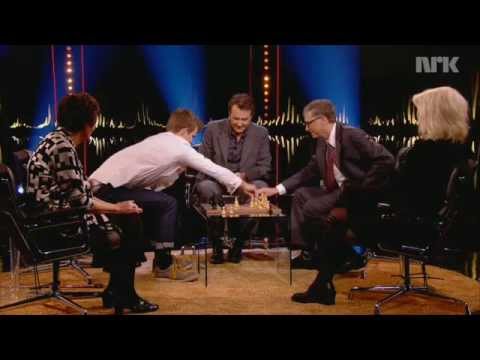
At Google headquarters, he played 10 players simultaneously — defeating them all. Carlsen also stopped in London for an interview with a Norwegian talk show host along with Bill Gates, Microsoft’s founder. They played a blitz game onstage, and considering the circumstances, Gates acquitted himself well and showed that he knows something about how to play.

The talk show host asked Gates when, if ever, he suffered from a feeling of inferiority, and Gates, gesturing at Carlsen, replied, “When I play chess against him,” according to a Reuters report.

Carlsen returned to tournament play at the Zurich Chess Challenge. His time off did not appear to be a problem: Carlsen took first place ahead of a field that consisted of Levon Aronian, Hikaru Nakamura, Fabiano Caruana, Boris Gelfand and the world champion he dethroned, Viswanathan Anand.

One of Carlsen’s best games was a victory over Caruana, who was Black. Caruana used the Berlin Defense, and gaining an advantage against it is difficult. After 15 moves, chances were roughly equal.

But Caruana inexplicably postponed castling, advanced his pawns while his king was in the center and only then castled queenside, exposing his king to danger.

Magnus Carlsen picks up where he left off.

Best Scandinavian Journeys

The team of Daily Scandinavian has voted the top journeys in Scandinavia. We want to point you in the right direction, so you may enjoy your visit to this part of the world even better.

Here’s your chance to experience the sheer beauty of Scandinavia.

Hurtigruten (Norway)
The world-famous postal boat sails up Norway’s fjord-lined coast, stopping in 34 picturesque pots along its 12-route. Related post. (Photo Tor Kjolberg: Hurtigruten in Aalesund.)
SONY DSC

Göta Kanal (Sweden)
Cross the country in the most leisurely manner possible, along Swedens 19th-century engineering masaterpiece, the Göta Kanal. Related article.

4013_GORAN_BILLESON_gotakanal.visitsweden

Hærvejen (Denmark)
Cycle through Denmark’s peaceful countryside on this bicycle path, which stretches from Germany to Viborg in central Jutland.

https://www.dreamstime.com/stock-images-map-denmark-vector-image19027904

Flåmsbanen (Norway)
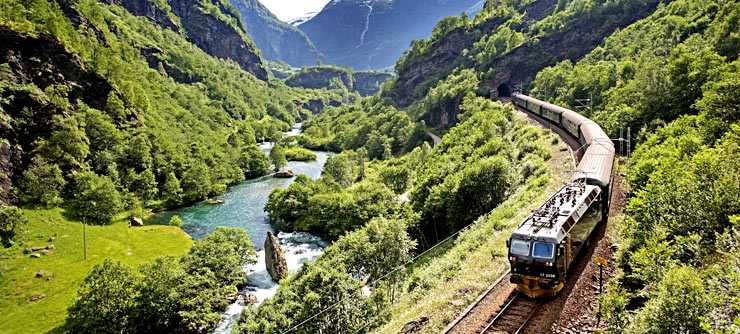
The mountain railway from Myrdal to Flåm packs the most dramatic scenery – ravines, rivers and toppling waterfalls – into its 12 miles (20 km) route. This part of the “Norway in a Nutshell” trip that adopts a variety of forms of transport to experience Norway’s exhilarating natural beauty.

110314_Flamsbanen_Norway

 Enjoy the best Scandinavian journeys!

The Fleeting Return of Long Summer Days

All of Scandinavia celebrates the Nordic festival of Midsummer, but perhaps nowhere as enthusiastically as in Sweden. This ancient Germanic custom honoring life itself has ancient pagan roots – a fertility rite, it was held at the exact time the sun and earth were considered at the peak of their reproductive powers. 

050314_Siljan_Map

Everyone takes to the countryside, often dressing in colorful local costumes, resuscitating old-world traditions, eating favorite foods, and imbibing substantial amounts of aquavit, resulting in folks of all ages and sorts singing and dancing.

050314_Midsummer_in_Sweden

Young girls believe they will dream of their future husbands if they sleep with a freshly picked bouquet of nine different wildflowers under their pillows. But who can tell when it’s time to sleep during the long hours of the midnight sun, when even birds are confused?

 050314_Midsummer_Girl_Sweden

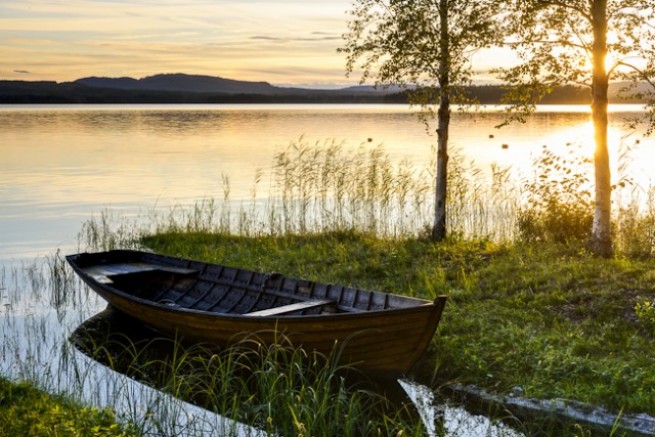
One of the best places to celebrate Midsommar is in Sweden’s central rural province of Dalarne around the beautiful Lake Siljan, a hilly area often referred to as Sweden’s “folklore district.” Traditions and customs are lovingly kept alive, thanks in great part to local old-time families such as the Åkerblads.

050314_Åkerblads_Inn_Siljan

Experience it by visiting their eponymous 15th-century red-framed farmstead, which they converted to an inn in 1910. The mix of antiques (think canopied beds and grandfather clocks) and decorative paintings and carvings found throughout enhances the old-fashioned country atmosphere for which Dalaerne is famous. Don’t miss the chance to eat here: Swedes come from all parts to do just that.

Feature image (on top): Lake Siljan, photograph by Michael Svensson

The Best Contemporary Design Shops in Copenhagen

Copenhagen is a veritable mecca for design aficionados. From modernist classics to cutting-edge conversation pieces, there are plenty of unique (and tempting) elements for a stylish interior to be found in Denmark’s capital. Whether you’re in the mood to learn or purchase, here are in our opinion the best eight places to visit on your design tour of Copenhagen.

Normann Copenhagen
Located in the Osterbo district, this former movie theater’s 18,000 square feet of space is filled with home furniture and accessories by top Scandinavian and global designers (there’s a heavy Italian influence as well). If you’re looking for chic, timeless, and clever designs, you’re sure to find them here.

 030314_Normann-Copenhagen

Illums Bolighus
From big names in Scandinavian design (think Georg Jensen, Arne Jacobsen, Alvar Aalto, Finn Juhl) tonewcomers on the global design scene, Illums Bolighus carries some of the finest (and most expensive) modernist and contemporary furniture and accessories in the city. International shoppers, be on the lookout for Illums Bolighus in Oslo and Stockholm, too.

030314_Illum_Copenhagen

Designer Zoo
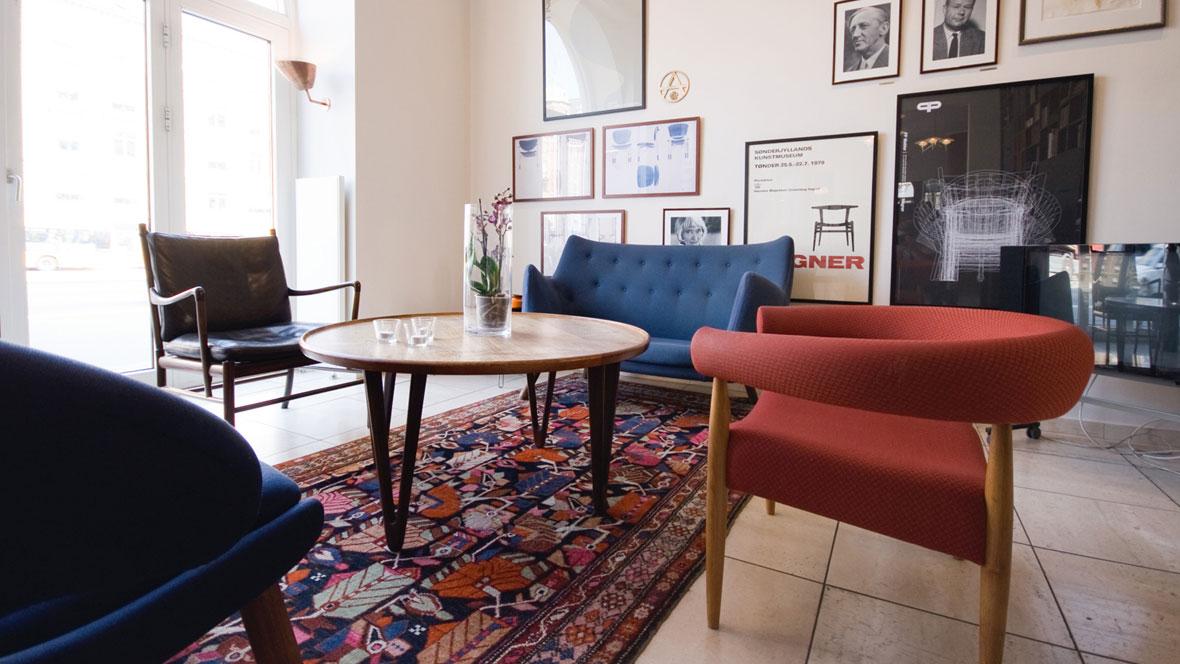
Designer Zoo is comprised of studios of contemporary working designers and a shop where their pieces can be purchased. The stunning, light-filled boutique is filled to the brim with beautiful art (and functional) glass, ceramics, wooden home accessories, furniture, lamps, etc. This is a shop and workspace for different designers, who produce furniture, glassware, ceramics, etc. The designers themselves take turns working the shop, so you may even have the chance to meet an up-and-coming design star. (See feature image on top)

Designmuseum Danmark
Designmuseum Danmark (formerly The Danish Museum of Art & Design) is the perfect place to brush up on your Scandinavian aesthetic history (and present!). This exhibition and research forum focuses both on industrial design and applied arts from throughout Scandinavia. In addition to providing a chance for visitors to experience fascinating design first-hand, the museum also endeavors to educate the public about contemporary design through lecture series and classes. Be sure to visit the on-site café that serves delicious food and, of course, the irresistible gift shop (full of plenty of design-heavy goodies that will fit in your suitcase).

030314_Design_museum_Cipenhagen

Hay House
This relatively new furniture and accessories studio has taken the international design world by storm (they are currently selling in over 20 countries). Hay House’s shop is full of minimalist yet cheerful furniture as well as accessories with a global flare in a variety of colors. It’s the perfect place to find a distinctive piece of Danish design for your home.

030314_Hay_House_Copenhagen

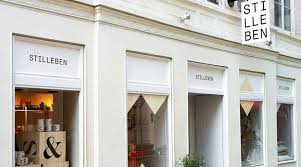
Stilleben
This small but mighty design boutique is packed with singular home accessories (think colorful ceramics, glassware, dishes, clocks, lamps, statuettes, throw pillows, rugs, candlesticks and other décor and functional items). Stilleben also carries jewelry from top international designers. With all of the suitcase-friendly sized pieces, it’s a great place to do your souvenir shopping.

030314_stilleben_shop_copenhagen

Dansk (Danish) Design Center
The Danish Design Center is a great place to discover the work of new designers. In addition to the gallery and research center, the building (designed by architect Henning Larsen) also has dedicated exhibition space (rotating exhibitions typically feature a variety of international designers’ pieces that correspond to a particular theme – check the website to see what will be showing when you visit), a café, and a gift shop carrying ingenious multifunctional travel items (with sleek playful designs, of course).

Casa Shop
If Casa Shop doesn’t scratch your design itch, I’m not sure what will. This well-curated shop carries stunning furniture and delightful home accessories by a variety of Scandinavian and international designers (including lots of Italian, French and Indian designs). If you’re anything like me, you’ll have a hard time not taking home a piece or two.

030314_casa_shop_copenhagen

Skater Gjersem Follows In Henie’s Footsteps

0

Norwegian figure skater Anne Line Gjersem was following in the footsteps of illustrious countrywoman Sonja Henie when she entered the ice in Sochi last week. 

280214_Anne_Lise_Gjersem

The 20-year-old from Asker, the first Norwegian to qualify for figure skating in the Olympics since 1964, advanced to the free skating final.

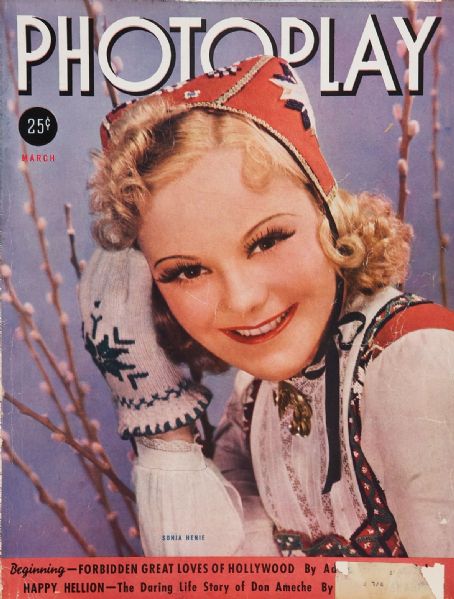
Norway was a figure skating superpower in the early Olympics with figure skating legend Sonja Henie winning gold three times — in 1928, 1932, and 1936.

Henie was also a ten-time world champion before finding success in Hollywood where she was one of the highest paid stars during the height of her career.

280214_Sonja_Henie_Cover_Art

“I’m very happy that Norway has a spot here. I’m very proud to represent my country, and I’m very excited,” said Gjersem after taking the 24th and final qualifying spot in the short program.

“I’m quite satisfied with my performance. The first jump could have been a little bit better, and I could have had more speed. I could feel it in my body that I was slightly tense but I enjoyed skating and was trying to do my best.”

She scored 48.56 was high enough to claim a qualifying spot the for free skate final.

She became the first Norwegian figure skater to compete at the Olympic Winter Games in 50 years after qualifying at the Nebelhorn Trophy in September 2013.

Born to a Norwegian father and a Philippines mother, Gjersem wore a light blue sequined outfit as she skated to “Maria and the Violin’s Sting” by Ashram.

Her twin sister Camilla Marie Gjersem is also a competitive figure skater, but she watched from home.

The twins started skating in 2002, and four years later they were taken into the Sonja Henie project to prepare for future Olympics.

In 2008-2009 Gjersem debuted in the Junior Grand Prix and Junior World Championships, and took the bronze medal in both the European Youth Olympic Festival and the Nordic Championship.

Both sisters aim to participate in the 2018 Winter Games in South Korea.

“My sister always says positive things to me and she’s my biggest supporter,” says Anne Line.

South Korea’s Kim Yu-Na remained on course to defend her Olympic women’s crown as she leads Russia’s Adelina Sotnikova and Italy’s Carolina Kostner by less than a point.

Kim led the 30-skater field with 74.92 as Sotnikova achieved 74.64 and Kostner 74.12.

Kim is bidding to become just the third woman to win consecutive titles after Henie, and Germany’s Katarina Witt in 1984 and 1988.

SAS launches new routes for 2014

0

From the end of March 2014, SAS will be opening Stockholm – Visby, Stavanger – Edinburgh, Oslo – Edinburgh, Oslo – Aalborg, Oslo – Aberdeen and Oslo – Chania, as well as Copenhagen – Leeds Bradford. These launches reflect increased customer demand for new nonstop services.

SAS continues to improve its customer offering by launching new routes. From four Scandinavian airports SAS is opening seven new routes in the summer 2014 timetable.

SAS announces the first seven new routes for the 2014 timetable. From the end of March 2014, SAS will be opening Stockholm – Visby, Stavanger – Edinburgh, Oslo – Edinburgh, Oslo – Aalborg, Oslo – Aberdeen and Oslo – Chania, as well as Copenhagen-Leeds Bradford. These launches reflect increased customer demand for new nonstop services.

“SAS offers more destinations and a greater frequency than any other Scandinavian airline, and we will continue to invest in our offering to our customers. This last year we have succeeded in improving our competitiveness and increasing productivity, and this gives us the opportunity to open many new routes to serve our customers,” says Joakim Landholm, Executive Vice President Commercial.

270214_Joakim_Landholm

Earlier this fall, SAS opened two new year-round routes, Copenhagen – Bremen and Copenhagen – Humberside, and announced two routes for the winter season 2013: Oslo – Sochi and Copenhagen – Salzburg. In 2013, SAS launched more than 50 new domestic and European routes, as well as the popular Copenhagen – San Francisco route.

The new routes will go on sale gradually from November 21, 2013. SAS will launch the peak summer timetable on Monday, November 25.

New routes from Sweden
Stockholm to: Visby (starts 30 Mar)

New routes from Norway
Oslo to: Edinburgh (10 Apr-11 Oct), Aalborg (starts 30 Mar), Aberdeen (starts 31
Mar), Chania (12 Apr-11 Oct)
Stavanger to: Edinburgh (10 Apr-11 Oct)

New routes from Denmark
Copenhagen to: Leeds Bradford (starts 31 Mar)
Aalborg to: Oslo (starts 30 Mar).

Money-saving Tips When Traveling to Scandinavia

How to save money , travelling in Scandinavia

Whether you want to see the Northern Lights, or island-hopping off the coast of Denmark, explore Norway’s fjords or see brown bears in Sweden, we are pleased to give you some money-saving tips. At least, buy the City Cards, and the City Bikes are a cheap and good way to explore the capitals.

City Cards
Scandinavia’s capitals (and some larger cities such as Göteborg) offer 24- and 48-hour tourist cards, which are well worth the money as the price includes admission to many museums, galleries and tourist attractions, and usually free access to public transport or car-parking.

City Cards in Norway are an excellent travel tip and a great value for travelers. The Oslo and Bergen city cards are available in different lengths and pay for themselves quickly with free admission on most sights and attractions, free parking, free public transportation, and much more. Here are the details of the city card programs in Oslo and Bergen:

“The Oslo Pass” – The City Card for Oslo, Norway

The Oslo Pass gives you free entry to more than 30 museums and attractions, free travel on all public transport, free parking in municipal car parks, free entry to outdoor swimming pools, free walking tours, discounts on sightseeing, ski simulator, Tusenfryd Amusement Park, concert tickets, climbing, ski and bike rental, and special offers in restaurants, shops, entertainment and leisure venues. 240213_OsloPass

You decide whether you want a card that is valid for 24, 48 or 72 hours. The card is valid from the time you validate it by writing the time and date in the space provided. From that moment, the pass is valid for the number of hours indicated on it. An Oslo Pass for children is available at a reduced rate. Along with the Oslo Pass, you will receive the Oslo Pass booklet, describing all the benefits for Oslo Pass holders. – See more at: http://www.visitoslo.com/en/activities-and-attractions/oslo-pass/#sthash.oMTlrQFX.dpuf

“The Bergen Card” – The City Card for Bergen, Norway

Want to save money in Bergen? Get the city card. Like other city cards, the Bergen Card grants you free admission to attractions and sights in the city, along with free public transportation and parking. Here, the city card also gives you access to cultural events, sightseeing trips, and additional savings in local restaurants and shops!

The Bergen Card is available in 1 and 2 day durations. Make sure to take a look at the Bergen Card Handbook that comes with the city card – it lists all the free and discounted destinations for you. Even cheaper than Oslo’s city card, and children pay less than half of the adult price!

City Card for Stockholm: The Stockholm Card (Stockholmskortet)

The most popular travel discount card among Sweden’s city cards is certainly the Stockholm Card (in Swedish: Stockholmskortet). This city card offers free public transportation in Stockholm and surrounding area, free admission to 75+ museums/attractions, free boat tours, hotel discounts, etc.

You can also opt for the SL Tourist Card (free public transportation through Greater Stockholm, along with free admission to Grona Lund amusement park.) Either card is available at tourist information offices in Stockholm, many campsites and hostels,
Gothenburg City Card gives you free entrance to plenty of sights, attractions, museums and day trips. Free parking and unlimited travel on trams, buses and boats are also included. You also recieve a book of discount shopping coupons with offers in selected stores.


This page shows everything that you get with your City Card. Some of the attractions are only open during the summer or winter season, please double-check the opening hours to be sure what’s open during your visit.

The Copenhagen card: Read what’s included. 250214_Copenhagen_cards
Hotels
Youth hostels in Scandinavia are well worth considering: they tend to be good value, family-oriented and have excellent facilities. Bring your own sheets and towels to save on rental costs.

Swedish hostel
Swedish hostel

City Bikes
Getting around Scandinavian cities by bicycle is generally a liberating experience. Borrow bicycles for free in Norway (Bergen, Oslo and Trondheim) and Denmark (Copenhagen) and explore further afield.

Oslo City Bikes
Oslo City Bikes

Food
Self-service buffet breakfasts in hostels and hotels are a great boon to the thrifty traveler.  Fill up in the morning; at lunchtime snack on sandwiches or look for the daily special on restaurant menus; many places do “early bird” evening deals, usually between 5.30pm and 7pm.

Breakfast buffet in Sweden

Nature
Wild, empty space is Scandinavia’s greatest treasure. Get back to nature with a tent and immerse yourself in solitude.

Free Festivals
Check what’s on and when. Many Scandinavian festivals have free as well as ticketed events: for example, at the Copenhagen Jazz Festival in July, the city streets become a venue.

250214_Copenhagen_Jazz_Festival

Use these money-saving tips when traveling to Scandinavia!

Famous Danish Film Directors

World class film directors from Denmark

Although Denmark is a small country, over the years we have been known to produce world-class film directors. The country’s first famous silent movie directors emerged around the 1900’s and the importance of film art is still big today.

Now contemporary Danish directors are known for their cutting-edge, quality films. Modern auteurs of Denmark are making it big in Hollywood with movies like Nicolas Winding Refn’s “Only God Forgives” and latest Lars Von Trier’s “Nymphomaniac”.

Lars Von Trier (photo above)
Lars Von Trier, one of the grand old men among famous Danish film directors, is as much known for his films as for his controversial statements and attitude. Among film critics he is often renowned for his distinct visual style and challenging storylines. Von Trier was also one of the founding members of the Dogma95 movement, first and foremost known for promoting hand-held filming as a new visual style. His most famous movies include Dancer in The Dark (2000), Antichrist (2009) and Melancholia (2011). The new release “Nymphomaniac” is set to premiere on December 25 2013.

(Photo: Christian Geisnæs)

260214_thomas_vinterberg
Thomas Vinterberg
Thomas Vinterberg is a Danish film director. Vinterberg co-founded the Dogme 95 movement with Lars von Trier. His first internationally acknowledged film was The Celebration (1998). Filmed according to the Dogme 95 rules, the film won 26 international film awards, including at the Cannes Film Festival and The European Film Awards. More recently Vinterberg directed The Hunt (2010) starring Danish Mads Mikkelsen, who won Best Actor Award at Cannes for his performance.

260214_susanne_bier
Susanne Bier

Susanne Bier is a Danish film director. After directing a long list of films for the Scandinavian markets, she found international acclaim with After the Wedding (2006) starring Mads Mikkelsen and Sidse Babett Knudsen, followed by In A Better World (2010) and Love Is All You Need (2012). In A Better World won Best Foreign Language Oscar and the European Film Award for Best Director in 2011.

260214_nicholas_winding_refn
Nicolas Winding Refn

Nicolas Winding Refn a Danish film director, screenwriter and producer. He began his career in Denmark with the Danish-language trilogy Pusher (1996-2005). In 2011 Refn directed Drive which won him Best Director Award at the 2011 Cannes Film Festival and a whole host of other awards. His latest film, Only God Forgives, was shortlisted at the 2013 Cannes Film Festival.


Birka — The Swedish Viking trading center

0

One of the most important trading centers in Scandinavia during the Viking Age

In Lake Mälaren, 18 miles west of Stockholm, Sweden, lies the small island of Björkö. Its size belies its importance in the Viking world of 1,100 years ago.

240214_Birka_Viking_Museum

On this island are the ruins of the town of Birka, which, together with the towns of Hedeby in Denmark and Kaupang in Norway, was one of the most important trading centers in Scandinavia during the Viking Age.

Founded around AD 790, Birka was part of a royal strategy to control trade in the Baltic through the establishment of trading centers. Traders came to Birka from all over Europe — England, Germany, Greece and the lands of the eastern Baltic — bringing their cloth, silks, glass and weapons to trade for furs, antlers and iron. There is even evidence that Arabs and Orientals came with their goods.

Crafts flourished: woodcarving, bronze casting, textile weaving, leather work and wrought ironwork, among others. As trade grew, so did Birka, expanding along the lakeshore with small wattle-and-daub houses and workshops arranged in rows separated from each other by fences.

The permanent population of Birka was never very large, probably no more than 700 to 1,000 at its height. Merchants who came from other lands increased that population temporarily, especially in wintertime, when trading was most brisk.

Birka, the Swedish Viking trading center, lasted only two centuries. Founded at the end of the eighth century, it was abandoned by the end of the 10th. It wasn’t war, plague or natural disaster that was the death knell for Birka but probably a combination of other circumstances.

Water levels in Lake Mälaren fell, making Birka’s harbors less usable or unusable; trade patterns changed, and — perhaps most importantly — the town of Sigtuna was founded on the Swedish mainland around AD 970. Birka’s population either moved to Sigtuna or was ordered to move.

240214_Birka_Viking_Museum_Model

Christianity was on the rise all over Scandinavia at this time. Sigtuna was a Christian town from its founding, eclipsing predominantly pagan Birka.

Burial mounds

What visitors to Birka first notice when they arrive are the gentle green hills dotting the island. These “hills” are actually burial mounds — thousands of them. In Viking times, on the island there were six cemeteries encircling the town of Birka. In the largest of the cemeteries, Hemlanden, there are over 1,600 burial mounds. It is estimated that there are at least another 1,400 burial mounds scattered around the island in the other cemeteries.

Both Christian and pagan burials have been found beneath the mounds. Christians generally were buried without grave goods, while pagan graves contained goods necessary for the afterlife, including weapons, tools and ornaments. What was buried indicated the social status and the wealth of the dead person.

240214_From_Birka_Viking_Museum

Defensive ramparts

Near the first set of burial mounds are the ruins of Birka’s fort high on a cliff. There’s a semicircular earth-and-stone rampart with three openings facing toward the town that once existed there. A thousand years ago the cliff dropped steeply into the lake on its west side, making defense unnecessary there. Because the lake has receded, the cliff now drops onto dry land.

Northeast of the town was another long rampart with six openings that were probably where wooden defense towers once stood. Archaeologists discovered more than 50 graves that were incorporated into this rampart when it was built at the end of the ninth century. The builders of the rampart apparently found it easier to make the graves part of the wall rather than move them.

There is little visible evidence of the town of Birka, itself. It was located in the northwest corner of the island, covered an area of about 30 acres and had at least three harbors. It lay between the fort and the long protective town rampart to the east.

Museum and village

There are two excellent ways to visualize what Birka must have looked like 1,100 years ago. One is to visit the museum near the boat dock, where there’s a scale model of Viking Birka, complete down to the smallest details: there’s a man fishing on the ice, children romping, a vessel unloading cargo and a man pulling a sleigh loaded with antlers over the ice.

The other way is to visit the Viking Age houses that are being built, full size, a five-minute walk from the museum. It’s like stepping back into the year AD 900.

Birka is on UNESCO’s World Heritage List.

If you go…

My husband, Peter, and I journeyed to Birka from Stockholm by boat,  sailings every day between May and early September, leaving at 9:30 a.m. and returning from Björkö Island at 2:45 p.m. Between the end of June and mid-August there is a second sailing at 1 p.m., returning from Björkö at 6:15 p.m.

The trip over takes about one hour and 45 minutes and departs from Stadhusbron, just steps from Stockholm’s beautiful City Hall. The price was 290 Swedish kroner (about $40) for the round-trip boat trip, guide and museum admission or SEK200 ($28) for the boat trip only. Visitors have 3½ hours on the island. Stromma offers a wide variety of other excursions.

In Stockholm, don’t miss a visit to the superlative Historiska Museum at Narvavägen 13. It houses an incredible gold and silver collection which includes Viking Age jewelry and ornaments. Archaeological finds from Birka are also displayed there as part of the world’s largest Viking exhibition.

We rented a spacious, gracious apartment, with a working old-fashioned tile stove, on Nybrogatan, about a 25-minute walk from Stockholm’s Gamla Stan (Old Town) or a 10-minute bus ride. The apartment had a large living room, dining room, modern kitchen, bedroom, two bathrooms and lots of natural light through large windows. Our cost for 10 days was $2,671 at the time we rented in June ’09.

We rented through Via Nicoline, a company run by Nicoline Kinch, the owner of the apartment we stayed in. Via Nicoline offers 50 rental apartments in Stockholm.

We flew by SAS from New York/Newark to Stockholm as we almost always do on trips to Scandinavia.

Written by guest contributor

 

International Interest in Denmark’s Longest Roller Coaster

0

When Djurs Sommerland opened one of the largest new rides ever in Denmark last spring, interest came from more than just playful Danish children. International media such as L.A. Times and CNN reported about Denmark’s longest roller coaster, Juvelen (The Jewel), and the first in the queue was a bevy of roller coaster enthusiasts from foreign organizations who had travelled all the way to Scandinavia’s largest summer land to try the first ride on Juvelen. 

210214_Juvelen_Jewel_Djurs_summerland_denmark

Although amusement parks around the world offer both large and wild roller coasters, Denmark is also capable of marking itself on the world map of spectacular rides.

Djurs Sommerland’s opening of Denmark’s largest roller coaster and Europe’s only double launch coaster, did not go unnoticed outside of the country’s borders. At the same time, with a price tag of 70 million kroner, it is one the largest ever investments in a Danish amusement park.

The American L.A. Times reported on Juvelen, and CNN broadcasted a list of the world’s most exciting roller coaster news, including Juvelen. For some dedicated roller coaster enthusiasts with thousands of roller coasters under their belts, the opening was a very special day.

“Our visitors included members of Themepark Review and World of Coaster. At the same time Denmark’s only roller coaster club, Coaster Club Denmark, reported on its arrival. These people are true devotees, who travel around the world to try the largest, the best and the wildest roller coasters, so naturally their visit is a seal of approval for Juvelen,” said Henrik B. Nielsen, managing director of Djurs Sommerland.
210214_Djurs_Summerland_Denamrk

Thematization at an international level

In addition to Juvelen’s length in kilometers, it is the roller coaster’s special design and thematization that draws interest from abroad. The new ride is Europe’s only “double launch” coaster, where guests are twice accelerated to speeds of up to 85 kilometers an hour. At the same time the ride takes place in a crimson ATV carriage, and the entire roller coaster is built into a comprehensive thematization.

“We deliberately try to give our guests more than just a roller coaster, which you can experience in the best amusement parks around the world. We therefore constructed a spectacular Mayan universe around Juvelen with a 10 meter high pyramid, large rock formations, over 100 trees and a lake large enough to give them the experience of running in hot pursuit through the jungle on a hunt for the stolen jewel. We have already had a fantastically good response,” said Henrik B. Nielsen.
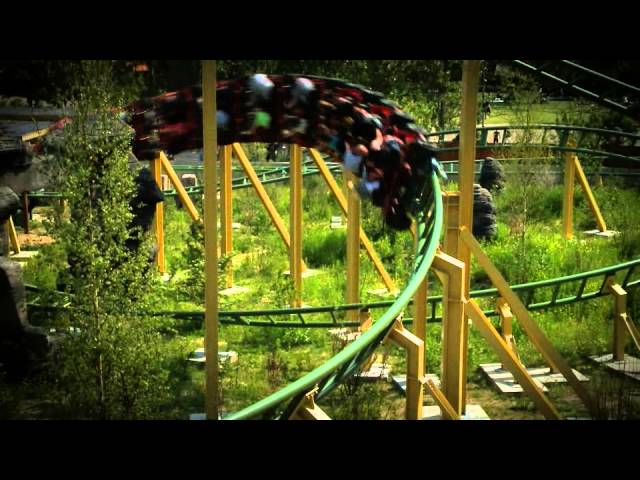
Juvelen is a roller coaster for playful children of all ages, and the minimum height requirement is 120 centimetres.