Exclusive Swedes to Traena

First Aid Kit are confirmed to participatete at the Trænafestival 2014. The two Swedish sisters Klara and Johanna Söderberg released their second album in 2012, named “The Lion’s Roar”. The album gave them a total of 4 awards in the Swedish Grammy awards. The talented duet were also awarded with the Nordic Music Prize for the same album.

 180214_First_Aid-Kit

The organizers have wanted to get the girls to the island of Traene for a long time, and this year they have succeeded. First Aid Kit will visit only one Norwegian festival in addition to Traena, the Slottsfjell Festival in Tønsberg. The island-version will probably be an emotional and energetic event that you don’t want to miss out. The music from First Aid Kit can be described as folk music with a strong influence of indie folk and American country.

Having said that, Sara and Johanna have created an unique sound and a musical universe where their natural talent for the good melody is greater than any references and other sources to music.

First Aid Kit, the exclusive swedes, describes their own songs as bittersweet, and when we listen closely to their lyrics we absolutely understand that description. There’s not much more to say, other than get your ticket to Trænafestival now! Go to Træna, become a volunteer, whatever it takes to be there when First Aid Kit enters the stage at the Trænafestival.
If you haven’t heard them before, give the girls a listen, and get hooked…


The World’s Oldest Preserved Man-of-War

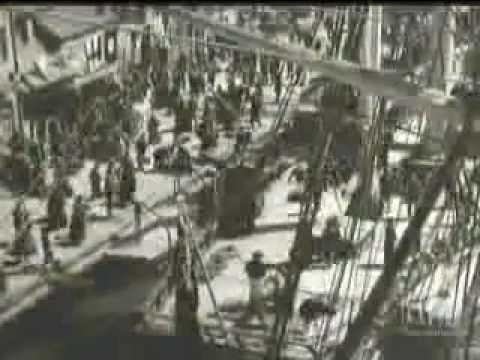
On August 10, 1628, the magnificent royal warship Vasa sank on her maiden voyage in front of thousands of horrified onlookers before she even left the Stockholm harbor. Sudden gusts of wind and not enough ballast are the most popular explanation. 

190214_Vasa_museum
Built at vast expense to be the largest and most powerful battleship ever constructed, the 226-foot, 64-cannon man-of-war was supposed to become the pride of the Swedish war fleet. She took ytwo years to complete on the site where the Grand Hotel now stands.

Salvaged 333 years after her demise, and since then painstakingly restored, she can now be seen with her complete lower rigging at the Vasa Museum, the only maritime museum of its kind in the world. Large enough to dwarf even the wondrous museum especially built around her at enormous cost and completed in 1990, she is the oldest preserved man-of-war in the world.

190214_Vasa_stern_color_model

Elaborate wooden carvings cover the exterior of the boat. Of the 700 sculptures, 500 are figure sculptures, all of which had been stripped of their original paint and gilt. Almost as interesting was the ship’s cargo, which included 4,000 coins, medical equipment, and a backgammon set.

A video is shown regularly, illustrating the painstakingly five-year resurrection of the ship upon its discovery in 1961. The Vasa is the most visited museum in Scandinavia, and an immediate favorite for anyone visiting Stockholm.


Norway’s best hotels

0

Tripadvisor has ranked the 25 best hotels in Norway. Here is the list and some guest reviews. Discover small boutique hotels or luxury resorts in Norway, the most northern country in Scandinavia, and experience what is above the Arctic Circle, the spectacular geography, and the famous fjords.

The Thief, Oslo Tjuvholmen
My kind of hotel! Spacious rooms, fantastic location, decor and amenities. Each room has a balcony with a spectacular view of the bay and the modern art museum.

170214_Thief-Hotel_Oslo_Norway

Solstrand Hotel & Bad, Osoyro
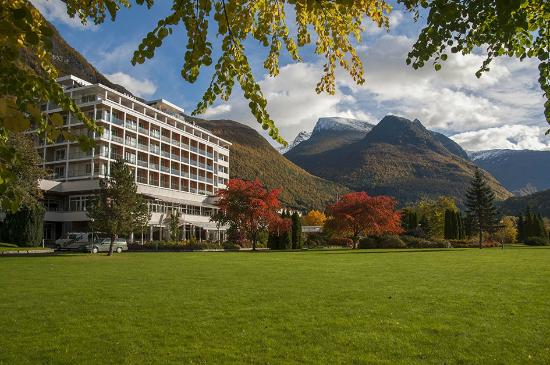
Spectacular location, fantastic outdoor pool!” “Wonderful hotel” 

170214_solstrand-hotel-Osoyro

Hotel Alexandra, Loen
Ideal destination, perfect family holiday, peace and beauty…” 

170214-hotel-alexandra-stryn

Clarion Collection Hotel Folketeatret, Oslo
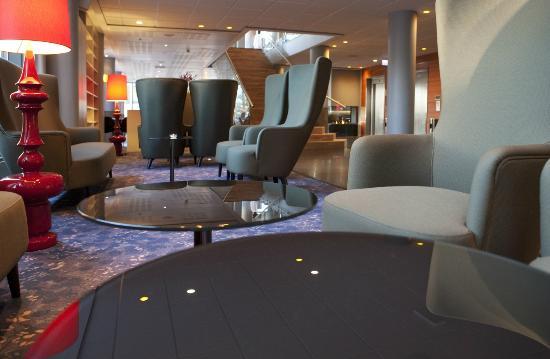
Some wonderful features/amenities: interior design, the large bathroom, nice shower, comfortable bedding, free dinner, afternoon tea and waffles (or other goodies), and friendly staff.

170214_Clarion_Collection_Hotel_Folketeatret_Oslo

Rica Park Hotel, Stavanger

Excellent choice in Stavanger City Centre. Great hospitality and perfect rooms.

170214_rica-park-hotel-stavanger

Hotel Brosundet, Alesund
A stylish boutique hotel with great views and amazing staff. Attractive, quiet hotel with excellent breakfast and friendly staff.

170214_hotel-brosundet_alesund

Comfort Hotel Grand Central, Oslo.
Next to Train Station. So convenient.

170214_Comfort_Hotel_Grand_Central_Oslo

Saga Hotel, Oslo
Saga Hotel is ´little hotel´ and special in ´big ways’. Excellent value, very nice central hotel.

170214_saga-hotel-oslo

Hotel Ullensvang, Lofthus
Fantastic view, enchanting hotel. Lovely setting, wonderful hotel. 

170214_Hotel_Ullensvang_Lofthusa

Dalen Hotel, Dalen
Fantastic location – romantic Hotel. Fantastic wooden fairy tale castle in the middle of nowhere.

170214-dalen-hotel-Dalen

Rica Bakklandet Hotel, Trondheim
This is the hotel who has figured it out. Friendly staff, clean rooms and great breakfast.

170214_rica-bakklandet-hotel-Trondheim

Clarion Collection Amanda, Haugesund
Loved it! From the reception to the room and beyond…. Exceptional service and friendliness.

170214_clarion-collection-amanda-Haugesund

Lysebu, Oslo
One couldn’t do better. Tranquil and Stunning location.

170214_Lysebu_Hotel_Oslo

Clarion Collection Hotel Tollboden, Drammen
Family friendly hotel with great staff. Nice place.

170214_Clarion_Collection_Hotel_Tollboden_Drammen

Rica Hotel, Grimstad
Small room, but a cozy room! Fantastisk stay 🙂

170214_Rica_Hotel_Grimstad

Clarion Hotel, Stavanger
Initial disappointment reversed by rock star manager! Number one in Stavanger.

170214_clarion-hotel-stavanger

Rica Nidelven Hotel, Trondheim
Nice hotel, excellent breakfast. Luxury hotel.

170214_rica-nidelven-hotel_Trondheim

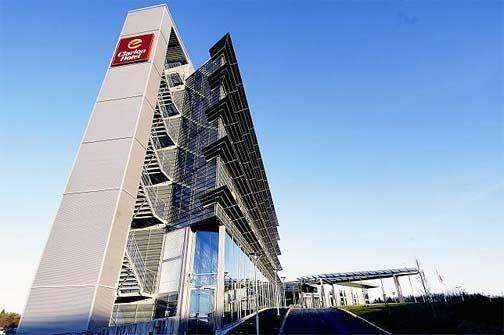
Clarion Hotel Bergen Airport
Nice clean hotel, great breakfast! One of my best experiences ever.

170214_Clarion_Airport_Hotel_Bergen

Thon Hotel, Kirkenes
Breathtaking View of the Fjord! Saw the northern lights from the bedroom window. fantastic hotel.

170214_Thon_Hotel_Kirkenes

Clarion Collection Havnekontoret, Bergen
Great hotel and excellent service. Perfect hotel for business travelers.

170214_clarion-collection-havnekontoret_Bergen

Hotel Bristol, Oslo
Great Hotel, lovely staff and handy location.Great hotel and excellent service.

170214_Bristol_Hotel_Oslo

Rica Airport Hotel, Stavanger
Great hotel choice in Stavanger. Airport convenience.

170214_Sola_Airport_Hotel_Stavanger

Clarion Collection Hotel Atlantic, Sandefjord
Nice hotel with history. Oasis in whaling town.

170214_clarioncollectionhotelatlanticsandefjord

Rica Holmenkollen Park Hotel, Oslo
Perfect for business meeting but also family friendly. If Good Weather: Check in here! (Cancel your other reservation)

170214_Holmenkollen_Park_Hotel_Oslo

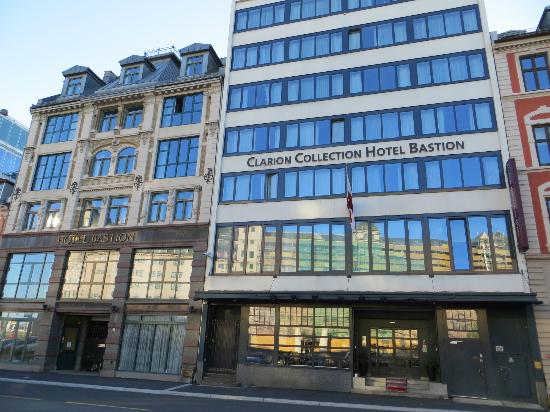
Clarion Collection Hotel Bastion, Oslo
Felt like home in one of Norway’s best hotels.

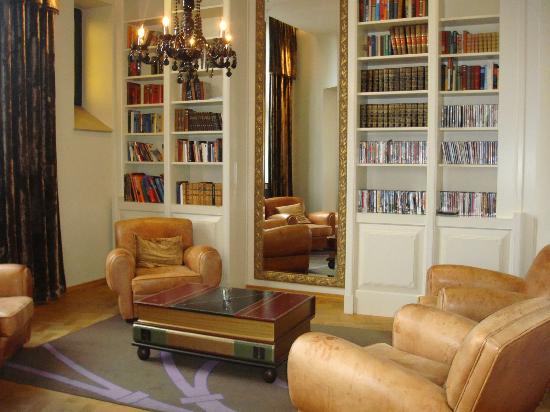
170214_clarion-collection-hotel

Flåklypa Grand Prix

0

In 1975 the most widely seen Norwegian films of all times was released. Flåklypa Grand Prix is still very popular, and in 2005 a new, digitally restored DVD was released which featured soundtracks and subtitles in 5 languages including English. Norway’s favourite animated folk are winning over a new generation of fans, almost 40 years after Solan, Ludvig and Reodor Felgen first captured the hearts of Norwegian filmgoers.

 140214_Flaaklypa_Grand_Prix

Solan and Ludvig – Christmas in Flåklypa (Solan og Ludvig – jul i Flåklypa) picks up the action 38 years after the most-seen Norwegian film ever, Flåklypa Grand Prix. The new movie was painstakingly created using stop-motion animation, faithful to the 1975 version.

This year’s NOK 25 million (USD 4.1 million), 72-minute feature is made up of more than 124,000 still images. It took two years to film at a rate of 20 seconds of footage per day, reported newspaper Aftenposten.

Christmas in Flåklypa premiered in the late creator Kjell Aukrust’s hometown of Alvdal at the start of November, before opening nationwide the following weekend. NewspaperDagsavisen has reported the film broke box office records for Norway’s best opening weekend this year, with almost 138,000 tickets sold.

140214_Flaaklypa_Grand_Prix_2

By the end of November, more than 500,000 Norwegians had seen the film and it’s tipped to outsell one of Norway’s most popular films ever, Max Manus, which sold 1.2 million seats.Aftenposten reported the new Flåklypa film already ranks as the fourth most-seen Norwegian film in the past 10 years.

This is the plot: In the town of Flåklypa the inventor Reodor Felgen lives with his animal friends Ludvig (a nervous, pessimistic and melancholic hedgehog) and Solan (a cheerful and optimistic magpie). Reodor works as a bicycle repairman, though he spends most of his time inventing strange things. One day, the trio discovers that one of Reodor’s former assistants; Rudolf Blodstrupmoen has stolen his design for a racecar engine and has become a world champion Formula One driver.

Solan secures funding from an Arab oil sheik who happens to be vacationing in Flåklypa, and to enter the race, the trio builds a gigantic racing car: Il Tempo Gigante—a fabulous construction with two extremely big engines, a body made out of copper, a spinning radar (that turns out to be useful when Blodstrupmoen starts engaging in smoke warfare during the race) and its own blood bank. Reodor ends up winning despite Blodstrupmoen’s attempts at sabotage.

If you want to buy this film or other of Ivo Caprino`s animated movies you should visit their website  .

Year of Miracles in Norway

0

In 2014 it will be 200 years since the Norwegian Constitution was signed and numerous events will take place around the country.

130214_Year_of_Miracles_Exhibition_in_Oslo

Exhibit at the Norwegian Folk Museum

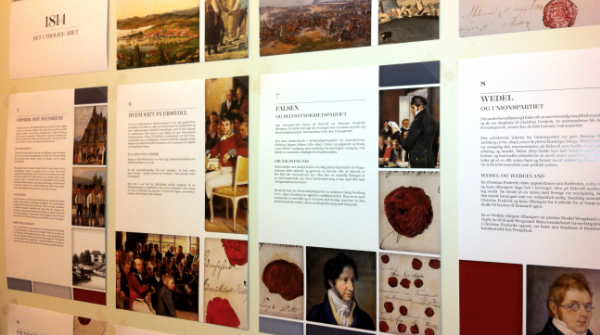
What is it that connects the Napoleonic Wars with the Norwegian Constitution? The exhibition “1814 – The Game for Denmark and Norway” explains the reasons for and the consequences of the events that took place during 1814, the “Year of Miracles”. In collaboration with the Museum of National History at Frederiksborg in Denmark, Norwegian Folk Museum, in Oslo, tells one of Norwegian history’s most exciting stories. The exhibition opened on January 15 and will last to the end of July 2014.

The exhibition was officially opened by H.M. Queen Sonja on Tuesday January 14, the date when King Frederik VI of Denmark was forced to surrender Norway to the King of Sweden. The Bicentenary of the Norwegian Constitution in 2014 will raise awareness of what the Norwegian Constitution means today, and what role it will play in our future democracy.

1814 is a memorable year in Norwegian history, a year that has become a national symbol. The exhibition “1814 – The game of Denmark and Norway” put the events of 1814 in a historical context and is an extensive exhibition that offers a unique cavalcade of items. Several of these, such as the anointing robes of Christian Frederik, Jakob Bull Kielland’s uniform, and a series of magnificent paintings will be on display for the very first time in Norway. Nearly 300 items, 65 of which have been borrowed from the Museum of National History at Frederiksborg, relate the story of what happened before, during and after 1814. This story is told both from a national and an international perspective. Through the exhibit visitors will become acquainted with the different players in the events that unfurled in 1814.

130214_King_Frederick_VI_of_Denmark

The Norwegian Constitution of May 17, 1814, occupies a special place in Norwegian history. Not only did it lay a foundation for democratic development, it was also instrumental in providing Norway with status as an independent country. So this was the year of miracles in Norway. “1814 – The Game for Denmark and Norway” is Norwegian Folk Museum’s largest and most important contribution to the Bicentenary Year of 2014.

Denmark on Ice

0

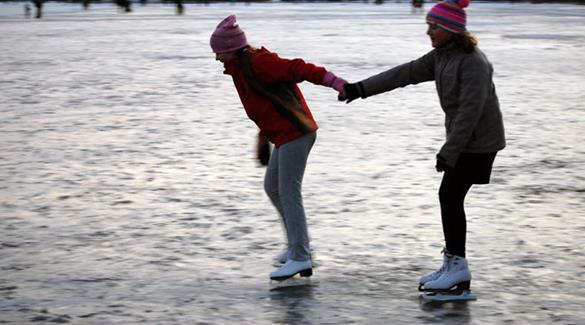
Get your skates on and zoom around one of Denmark’s atmospheric outdoor ice rinks. Found only in the winter months, Denmark’s outdoor rinks are as popular with locals as tourists. Hire skates at most of these outdoor ice rinks or bring your own and don’t forget to wrap up! Ice skating outside is healthy, fantastic fun and an uplifting way to enjoy the Danish outdoors in winter!
120214_Reunion_Place_Copenhagen

Skate outdoors by Frederiksberg Have
Every winter Frederiksberg Runddel, at the entrance to Frederiksberg Garden, is turned into a wonderful ice rink, which allows you to have fun on the ice throughout the winter season.

120214_Fredriksberg_Runddel

The ice rink at Frederiksberg Runddel is open around the clock, if you have your own skates, and during the day you can rent skates or bring your own in for an annual check up.

If you get cold while skating, you can also pruchase hot drinks from the skate rental.

Frederiksberg Municipality has set up some rules and guidelines for using the ice rink, for everyone’s benefit and enjoyment.

The ice rink is reserved for skaters, and therefore cannot be used for ice hockey games. And to avoid clashes please skate counterclockwise.

The largest outdoor rink in Northern Europe

Genforeningspladsen’s ice skating rink in Northwest Copenhagen is Northern Europe’s largest artificial ice rink. All winter you can ice skate – using your own or rented skates. (Picture: See feature inage).

Bring your own skates or rent a pair for DKK 50 per hour and skate around in the fresh winter air. The ice rink can be used for both plain skating and speed skating.

Parking is possible on the opposite side of Hulgårdsvej in the parking lot at the Grøndal shopping centre. Please avoid parking in the small streets leading up to the ice rink.

Skate in atmospheric North Copenhagen

The ice skating rink in the heart of Copenhagen has moved to Valby and offers tons of fun for young as well as old during the winter. The rink measures 40 x 60 meters.

120214_Copenhagen_on_Ice
You might know the ice skating rink at Kongens Nytorv, but due to the Metro-work it has been moved to a new location in Valby.

Disco on the ice

Here you can ice skate outdoors on Toftegårds Plads. The rink is new and offers activies on ice for all ages. For example you can disco on the ice every Friday.

Art and skating combined

You can also enjoy a wall of street art from the Galore Festival earlier this year.

Ice rink at the heart of Aalborg

You can go ice skating in the cosy C.W. Obels Square, placed in the heart of Aalborg. The skating rink is surrounded by some of the best cafees in Aalborg, where you can go to get you feet warmed up, and enjoy a hot cup of chocolate after your activities on the rink.
120214_Ice_rink_in_Aalborg

The outdoor skating rink is opened from November 23rd to March and it is free when you bring your own skates.

Prices:
Rental of ice skates DKK 30,-
Ice skate sharpening DKK 25,-
If the weather is really bad, the skating rink will be closed.

Skate in idyllic Esbjerg town centre

Opening day 29 Nov. 12.00 – 21.00
December Mon – Fri   12.00 – 21.00
January Mon – Fri      13.00 – 19.00
February Mon – Fri     13.00 – 18.00

Weekends and holidays 10.00 – 18.00
120214_Skating_in_Esbjerg

The ice rink can be used free of charge.

Skates for rent – price DKK 30 per hour.
Helmets for rent – price DKK 15 per hour.

Skate by the Sea on Funen

Every winter (around the 1. December) the volley courts in Havnegade change into an ice rink, with a lovely view of Lillebælt. It is free to use the ice rink.

120214_Ice_rink_on_Funen

Skive Outdoor Ice Rink

Skive ice rink is situated centrally at Posthustorvet. Here children of ALL ages can enjoy the fun of skating.

120214_Outdoor_skating_in_Skive

Skate rental is open every day from 10am to 6pm. Price for renting a pair of skates: DKK 35.-

Everyday the ice rink is closed between 6am – 10am, while the ice is being prepared for the day.

Holbæk Outdoor Ice Rink

Outdoor skating rink.  Ice skating rental. Refreshment sold. This is Denmark on ice!

120214_Outdoor_skating_in_Holbaek

Source: Visit Denmark

Stockholm’s allotment garden

The 100 or more allotment gardens at Tanto are dotted with perfectly cute red, yellow and green cottages and dapper sheds above Årstaviken bay on Södermalm. And very natty gardens with multi-coloured sprays of flowers, blossoms, blooms and trees. 

110214_Tanto_Stockholm

Had I stepped into a storybook? Cute-as-a-button little cottages painted in shades of red, yellow, white and green nestled behind white picket fences and clipped hedges, each surrounded by an array of flowers, abundant beds of vegetables, and fruit trees summer-heavy with fruit.

You’ll find all types of gardens here: designer gardens, kitchen gardens, countryside gardens, vegetable gardens etc. Look out for original cottages from the 1920s, 30s and 40s.

A good time to visit is end August when the allotment holders put on a harvest festival. The gardens are part of Tantolunden park.

There are frequent buses to Tanto allotments, Stockholm’s allotment garden, and the nearest underground station is Zinkensdamm (red line).

The Tanto allotment gardens are part of a ‘secret’ Stockholm that not many visitors experience. Visit them for free and experience a different side of Stockholm. 110214_Tanto_Allotment_Park_Stockholm_Sweden
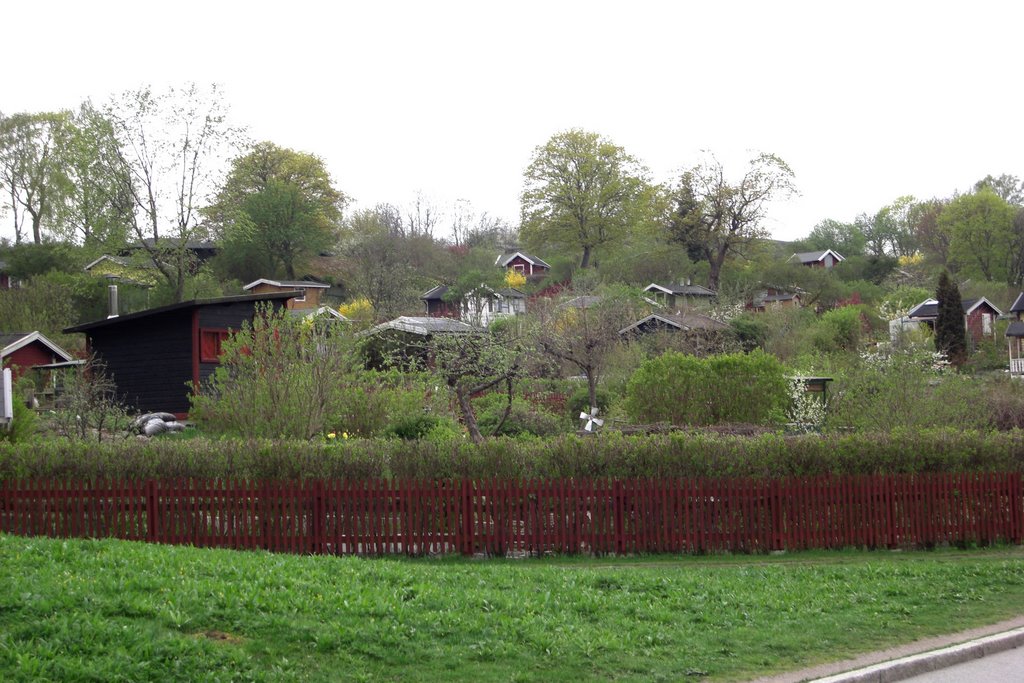
The path I followed took me deeper into the collection of little houses and gardens clinging to the hillside that descended to the edge of Sweden’s Årstaviken Bay.

“Yoo-hoo!” Lisbeth Ulfstedt awaited me at a junction in the path ahead, reassuring with a wave of her arm and her attention-getting greeting that, yes, I’d followed directions correctly into storybook-land Stockholm: Tanto Södra koloniträdgårdsförening, an allotment garden of 111 spaces.

Tanto, as it is called, is located south of Gamla stan (Old Town) on Södermalm, one of the 14 islands that make up central Stockholm.

Tanto’s picturesque collection of miniature cottages surrounded by vegetables and flowers is among the oldest of 150 allotment gardens scattered throughout Stockholm. Together, they create some 10,000 spaces available to city dwellers yearning to dig in with trowel and spade.

110214_Sweden_Stockholm_Tanto

Stockholm’s first gardens were laid out in 1895, with the Stockholm Allotment Society established to oversee the various areas in 1906. The gardens all were out in the countryside — the city grown around them since — put in place so that Stockholm’s impoverished might have a place to grow food, with the added benefit of being able to do so in fresh country air.

Tanto’s allotments were laid out in 1915, one of several new garden areas to provide potato-growing land to feed the city’s near-starving population during World War I.

A more unlikely spot could not have been chosen, its base amounting to a gigantic boulder. Soil was laboriously transported into nooks and crannies and, soon, vegetables, berries, fruits and herbs enhanced the planting of potatoes. Flowers began to bloom.

Sheds to house gardening equipment began to emerge. To form a common policy, the Allotment Society specified what they called “gazebos” to be modeled on supplied drawings and built of wood, then painted red, white, yellow or dark green.

Despite the specified uniformity, individuality emerged as gardeners embroidered the basic with ornamentation and surrounded their “gazebos” with gardens of their choosing. Regulations were relaxed in the 1960s to allow larger and individually designed cottages.

In the 1970s the areas received electricity and telephone lines — a move decreed by purists as a modernization inconsistent with the image of life in the allotment.

Lisbeth and I were on our way to allotment number 41, where she and her husband, Bo Belin, garden. Bo Belin, following in the green thumbprints of his grandfather and father, is a third-generation Tanto participant.

“Are visitors welcome to wander about Tanto?” I asked Lisbeth as we followed a path to number 41.

“Yes, indeed,” she answered. “We encourage walkers, joggers and bicyclists,” adding that Sweden’s policy of right to public access makes that a given. “We clip our hedges so that passersby can easily see into the gardens. But don’t step in,” she advised, “unless invited by the garden holder to do so.”

Reaching number 41 and Lisbeth’s pocket-sized cottage, she asked if I’d like to peek inside.

A shipshape interior flooded with light from ample windows was outfitted with a rudimentary kitchen with tiny appliances, table and chairs, a heater, and daybeds for sleeping. Water, cold, came to the allotment via a hose. Bathroom facilities, communal, were located not far away.

“In spring we’re here every weekend,” Lisbeth told me as we returned to the adjacent terrace affording additional space. “By June, we more or less live here. We start seeds in April and harvest until frost closes the gardens for the winter.”

Stockholm, largely a city of apartment dwellers, has no shortage of would-be gardeners awaiting allotments. Precious patches they are. Tanto’s waiting list contains over 350 names.

“Waiting time can take up to 20 years,” Lisbeth told me. In addition, prospective space holders face an exhaustive interview process as to their intended use of the space and their interest in gardening. To eliminate the possibility of parents’ signing up their kindergarteners for placement down the road, no one younger than 18 can apply. Payment of a small yearly charge keeps one’s name on the list.

Once a plot is snagged, the privilege of gardening does not come cheap. An annual fee of 14,000 kronor (close to $2,000) is charged, making the ownership of a Tanto space out of reach of those for whom they were originally intended: Stockholm’s poor.

Lisbeth and I left her terrace so that I might see what others were up to in their gardens. We leaned over fences to talk, accepting invitations to step inside precious patches to admire the size of a just-dug onion here, the fragrance of a crushed handful of rosemary and basil there.

“The garden is a close neighborhood,” Lisbeth commented. “We see each other often, at organized events, chatting over a cup of coffee, discussing our gardens over the fence or,” she added with a laugh, “doing what my husband is doing right now, enjoying a late-afternoon beer on a neighbor’s terrace with his cronies. That’ll keep him busy for the next couple of hours!”

Staying near Tanto allotment garden

I visited Stockholm and Tanto allotment garden in August ’09 as a guest of the Stockholm Visitors Board (Drottninggatan 33, 10325 Stockholm, Sweden; phone 08 508 285 08,www.visitstockholm.com). I stayed at the Hilton Stockholm Slussen (chosen for its proximity to both Old Town and other Stockholm areas of special attraction and to Södermalm, where Tanto allotment garden is located.
Double rooms at the Hilton average $325, including a full buffet breakfast. The excellent Stockholm city museum with its exhibits emphasizing the city’s history is just across the street.

Written by guest contributor

Living on a Star in Oslo

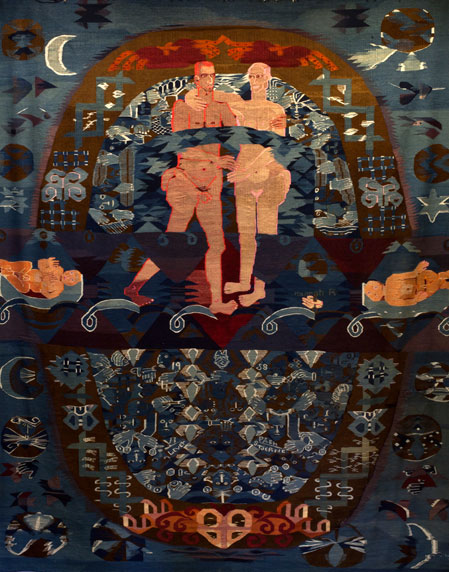
We are Living on a Star is the main contemporary exhibition at Henie Onstad Kunstsenter (HOK) this year.

The Hannah Ryggen tapestry We are living on a star is the leitmotif for the main contemporary exhibition at HOK this year. The tapestry hung in the government building which was bombed July 22, 2011. This exhibition intends to investigate the wound after July 22, with the concept of normality as its point of departure.

Performance programme:
Marthe Ramm FortunI samme rom:  Februray 2nd &16th. March 2nd, 16th & 30th. April 13th & 27th at 2PM.

Julian BlaueScenefilososfisk fakultet for kunstbasert terrorforskning: March 16th 11 AM -5 PM (in Norwegian).

Artists:
Burak Arikan, Doug Ashford, Julian Blaue, Martin Braathen med Marius Engh, Even Smith Wergeland og Superunion Architects, Marthe Ramm Fortun, Hanne Friis, Else Marie Hagen, Silje Linge Haaland, Per-Oskar Leu, Lotte Konow Lund, Jumana Manna, Eline McGeorge, Eva Rothschild, Hannah Ryggen, Ahlam Shibli and Javier Téllez.

Hannah Ryggen, Vi lever på en stjerne (1958). Photo: Steffen Wesselvold Holden/Nordenfjeldske Kunstindustrimuseum.

Curators:
Tone Hansen and Marit Paasche

Henie Onstad Kunstsenter (HOK) was established in 1968 as a donation of the collectors Sonja Henie and Niels Onstad. The choice of “Kunstsenter,” rather than “museum,” was deliberate, signaling that HOK was to be not only a keeper of a strong modern European core collection, but also a producer of contemporary, experimental art.

100214_Henie_Onstad_Museum_of_Contemporary_Art_Oslo

Today HOK is one of Norway’s leading venues for Norwegian and International contemporary and 20th century art. The Kunstsenter is an active arena for debate and social critique, with a broad commitment to the arts and its audience. Its expertise, collections and historical identity lie in the interdisciplinary field, with special emphasis on the relationship between art, music, performance and the historical avant-garde.

The HOK collection consists of more than 4000 objects, ranging from its core collection of high modernist work—with a focus on the French School with Pierre Soulages, Maurice Estève, Hans Hartung, Picasso, Matisse, Juan Gris et al to special collections of the Fluxus and Cobra movements, as well as a permanent sculpture garden.

HOK is a major supporter of artists in the production of new art and new expressions, and works actively to create new knowledge that is communicated through papers, catalogs and anthologies, published internationally. HOK collaborates actively with other art and educational institutions internationally to co-produce exhibitions, seminars and publications. Prisma records (a HOK label) continues its singular tradition of releasing unique, commissioned, new and historic works by experimental and electronic sound artists, many of which accompany exhibitions at HOK.

HOK is located on the Oslo Fjord peninsula, approximately 10 km south of Oslo. The art center is a popular destination and its scenic location and distinctive building bring together unique qualities of Norway. The Director since August 2011 is Tone Hansen.

Watch Living on a Star, in Oslo at the HOK.

Nordic Light International Festival of Photography

0

Nordic Light International Festival of Photography is a one week international gathering that celebrates photography as an art. The festival’s philosophy is to bring photography out to the people, to define what is a good photography, but also to give the photography strength as a mean of communication. 

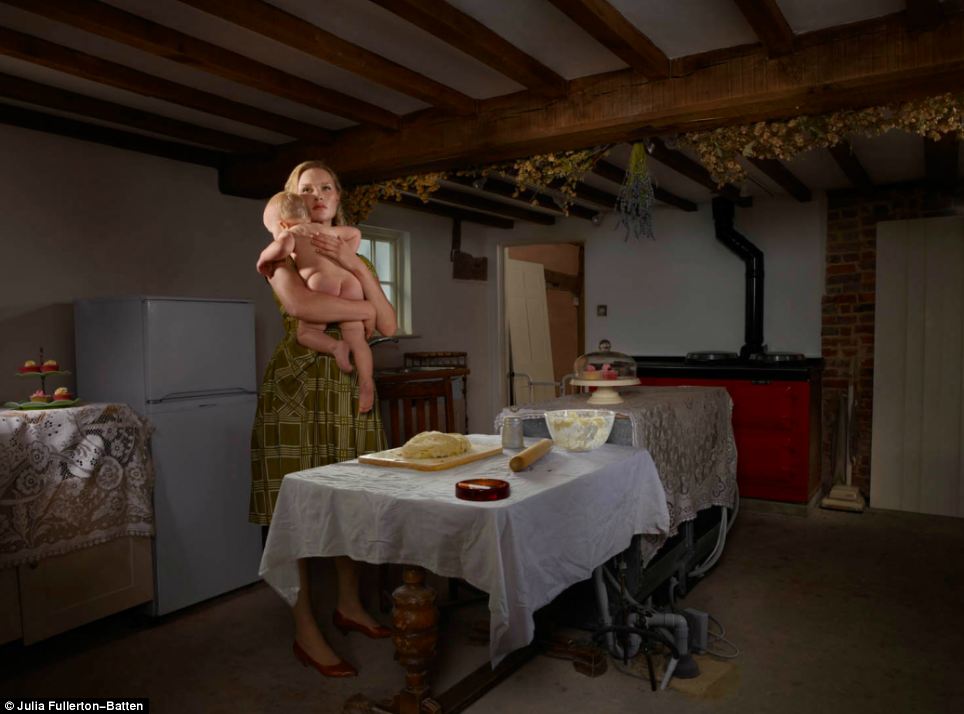
Mother and Cild, Photo Julia Fullerton
Mother and Child, Photo Julia Fullerton

Other arts have always been a source of inspiration and knowledge for photography and in combination with world events, philosophy and cultural expressions, photography has become what it is today.
Nordic Light International Festival of Photography is a one week international gathering that celebrates photography as an art. festival the locals, international photographers, students, amateurs and pupils gather in what has become a melting point of photographic and cultural events. For those interested in photography, professional photographers are available for portfolio reviewing.
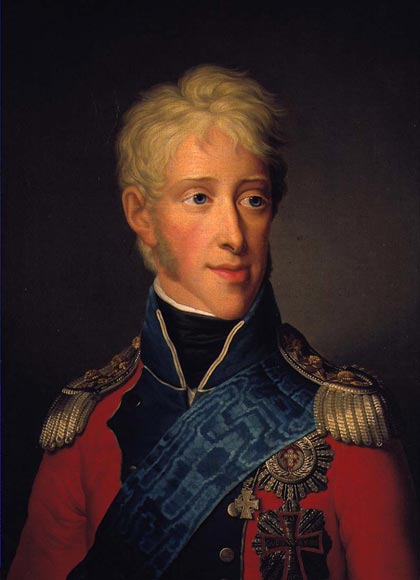
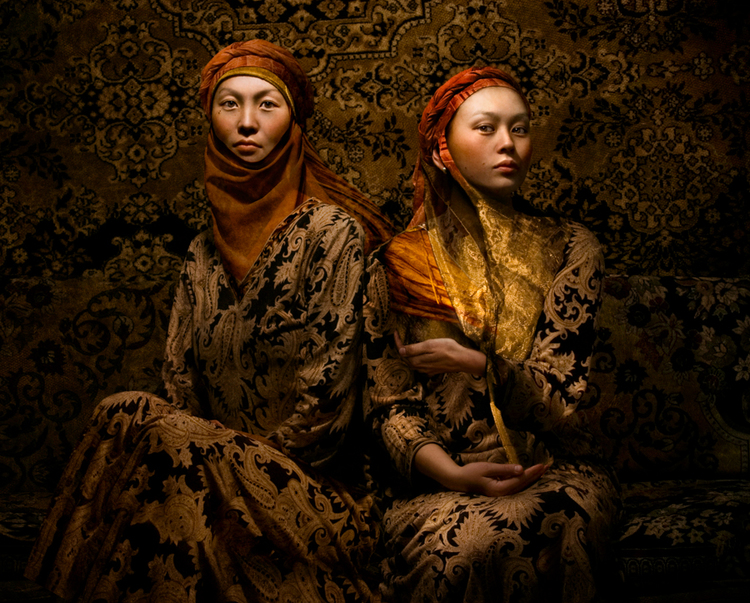
Photo: Roger Brendhagen

What they all have in common is the desire to explore the moment. In this act different types of photographers may increase their knowledge and understanding of photography as art. In addition cultural impulses as exhibitions, workshops, presentations, portfolio reading, breakfast cinema, Face to Face, literature and music are important cultural contributions to the photographers development.

The main goal of the Nordic Light International Festival of Photography’s is to create the most important meeting place for photography in Europe. A second aim is to contribute to a stronger engagement and higher understanding of a good photography. Nordic Light wants to be a spokesman of the photography’s purpose as a positive and creative activity. This may be avaible by continuously arranging workshops, conferences, exhibitions and seminars the whole year through.

Nordic Light  wants to take advantage of the competence, experience and knowledge obtained during its existence to become better and better. The organization is financed by national, municipal and local subsidies as well as private investors who all want to contribute to a vital cultural life with great variety.

Nordic Light International Festival of Photography – A photographic springtime sensation

Since its beginnings in 2006, Nordic Light has achieved incredible success. The unique visits increased from 12,000 in 2006 to a staggering 70,000 in 2012. The main reason for this is the festival’s collection of top ranking photographers; the unique possibility to meet the stars of the photographic world face-to-face at exhibitions, lectures or even down the pub. However, we also have to pay homage to this amazing location. Kristiansund is beautifully situated on the north-west coast of Norway where fjord meets open sea. The town is built on four islands and is surrounded by majestic mountains and the mighty Atlantic Ocean. The salty tang of the air hits you the moment you arrive here. Add to this the generous, no-nonsense, cheerful nature of Kristiansund’s people and you have an unbeatable combination.

Photo: Sarah Cooper
Photo: Sarah Cooper

Through the years the Festival has had the pleasure of welcoming a star speckled gallery of national and international artists. The festival has become a magnet for anyone interested in photography and anyone interested in seeing the world though others’ eyes.

From festival to centre

The festival has become a popular gathering for photographers and anyone interested in photography, and an arena for showing the diversity of photographic expression.

Nordic Light took a new step in the summer of 2010, and has now established what aims to be Northern Europe’s centre of excellence for photography, Nordic Light International Centre of Photography (NLICP). Through several workshops and exhibitions during the year, Nordic Light is making Kristiansund and Nordmøre into a photographic arena.

This year’s festival: May 6 – 10

Island-Hopping in Stockholm’s Front Yard

0

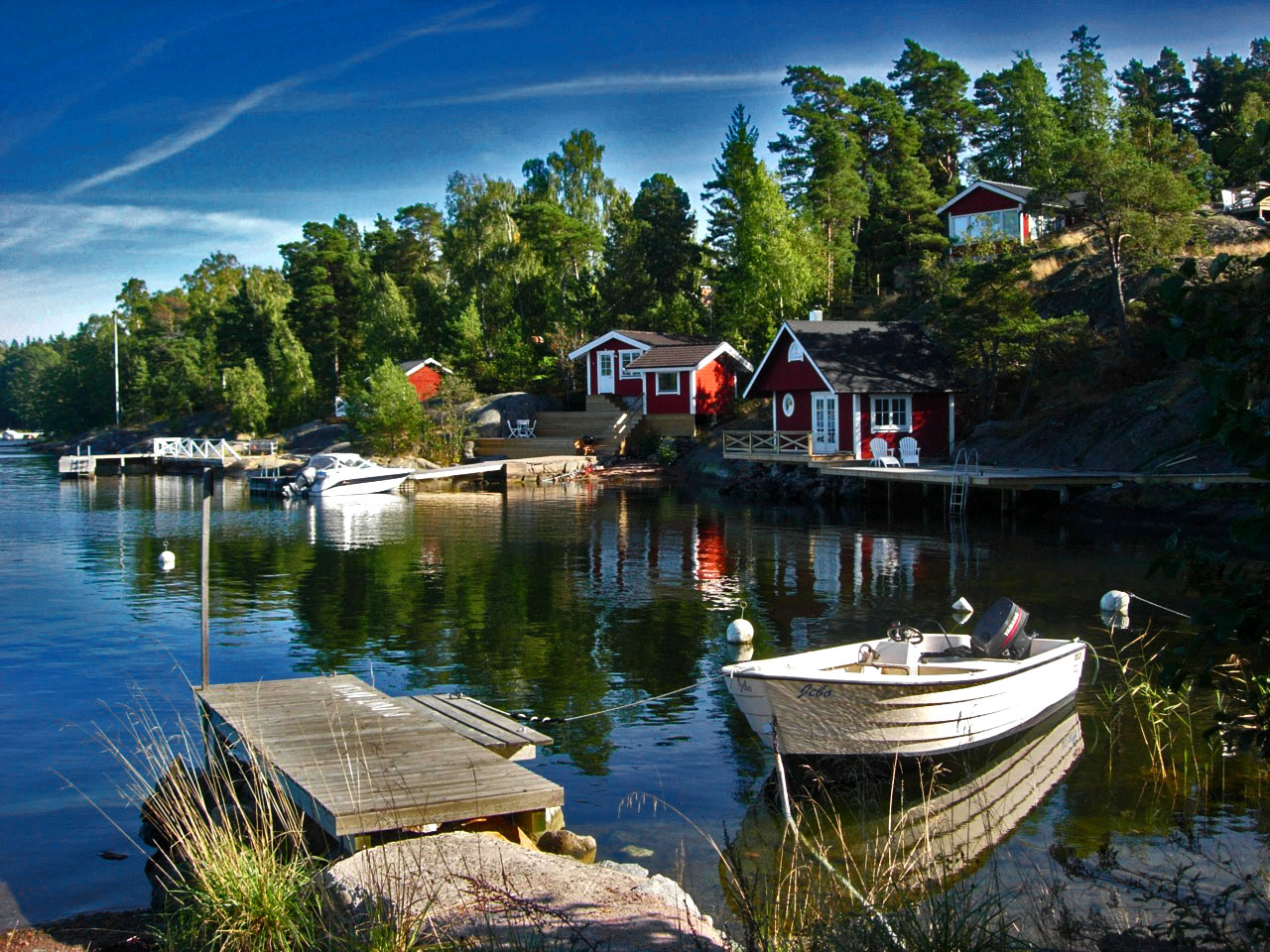
There are a number of ways to see Sweden’s archipelago, a latticework of some 24,000 islands and smooth glacier-polished outcroppings that dot a 150-mile stretch off its eastern coast. 

060214-The-Stockholm-Archipelago
You can travel by ferry, vintage steamer, three-mast schooner, private sailboat, or yacht. But the most important thing is not to miss them: they are one of the country’s most important natural attractions and its wild frontier. Only 6,000 people live on 1,000 islands; the rest is uninhabited. In other words, ideal for island-hopping in Stockholm’s front yard.

060214_Storskar_Stockholm
Sweden’s summer is brief but glorious and this is the place to celebrate it – kayaking, picknicking, biking and walking unpaved island roads.

Take a thirty-minute ferryboat ride from Stockholm out to the well-known restaurant Fjaderholmarnas Krog, accessible only by boat, for a leisurely lunch of just-caught fish, perfectly prepared. Fjaderholmarna means Feather Islands.

060214_Fjaderholmarna_Stockholm
Alternatively stay on board one of the steamers for the scenery: skerries (skärgarden, the Swedish word for archipelago, means “garden of skerries”), islets, flower-bedecked fishing cottages, landing stages, meadows, farms, beaches and a late evening sky of changing pastels.

Writers and artists have traditionally been drawn to Vaxholm, while the boating crowd firmly favors Sandhamn, hub for the prestigious annual Royal Regatta.

060214_Royal_Regatta_Stockholm
The archipelago has two environments – the wooded, protected inner part and the barren, wild outer archipelago, the latter home to seabirds, seals, and a few very hardy fishermen. Take a leisurely, blissful sail and you’ll understand a lot more about Stockholm, built on fourteen of the archipelago’s islands, and its connection to the sea.