Danish fashion brand WOOD WOOD was founded in 2002 by designer trio Karl Oskar Olsen, Lotte Bank Nielsen and Brian Jensen. Their upbringing including inspiration from graffiti and street culture in Copenhagen quickly turned their company into an international fashion and lifestyle brand.
As a sub-cultural founded lifestyle brand, its founders grew up with graffiti and street culture in the 1990s. They mix high-end fashion, sports and streetwear with youth and urban culture, art and music. A Wood Wood yellow T-shirt was worn by Sigrid in the video for “Strangers” giving the brand international exposure. It is described as Contemporary Streetwear. Wood Wood has a strong sports component. It started as a small shop selling T-shirts and evolved into a well-established fashion brand, showing new collections in Florence and London.
The founders Karl Oskar Olsen, Lotte Bank Nielsen and Brian Jensen.
Wood Wood has made more than 50 collaborations with global brands such as Nike, Asics, Barbour, Eastpak, Lego and Adidas, hand with niche brands and artists such as Peter Sutherland and Elmgreen & Dragset.
Engaging in special collaborations with established brands and independent artists, WOOD WOOD’s design ethos is about high-quality timeless pieces. With sustainability in mind, WOOD WOOD values transparency, allowing customers to have insight into its business practices and environmental efforts.
WOOD WOOD is described as Contemporary Streetwear
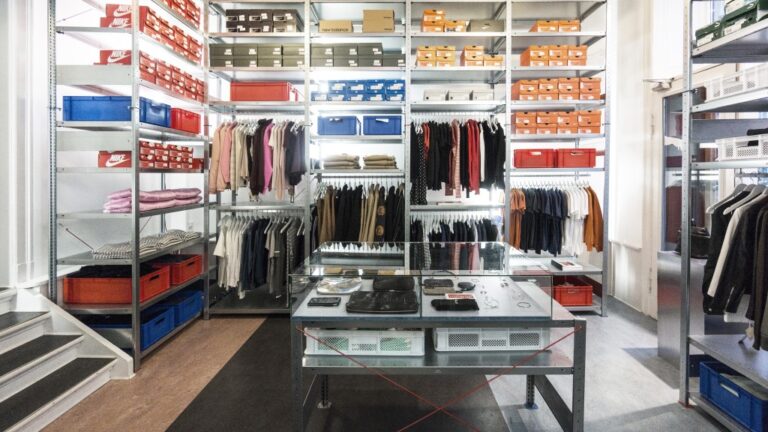
At the Wood Wood Museum store in Copenhagen you can buy articles and objects from seasons past. The selection sees outtakes from in-house collections, sneaker classics from adidas and Nike, and external brands like WTAPS, Cav Empt and Comme des Garçon. On the shelves, pre-loved Wood Wood items are available in the shape of Artefact, a take-back program that allows customers to return pre-loved Wood Wood clothes.
WOOD WOOD’s current design team includes London menswear designers Liam Hodges and Dominic Huckbody, and Cecilie Engberg who previously worked at Balenciaga.
From Graffiti and Street Culture in Copenhagen to International Fashion and Lifestyle Brand, Tor Kjolberg reporting.
Feature image (on top): The Wood Wood Museum shop.
Inspired by the style of the 70s, Danish children’s wear company Småfolk was created based on a clear mission to design clothes that inspire the children’s imagination and creativity and is comfortable to wear. Learn more about playful Danish children’s wear – a colorful and quirky universe.
“When I started Småfolk in 2004, almost no one had children’s clothing that was even remotely interesting. It was clothes made for small adults that dominated. Childhood is the best thing we have, we must preserve it for as long as possible,” says Tana Kretchmer, the founder of Småfolk.
Tana Kretchmer studied design in Florence
Småfolk are clothes that the children can live and play in.
In short: Småfolk are clothes that the children can live and play in. Children love colors and fun prints. That’s why the company uses lots of happy colors and always have a large selection of different prints in its collections. Children can easily find their favorite print, whether they love machines, flowers, cats or dinosaurs.
Småfolk has become an internationally recognized brand
Danish design
Småfolk has since become an internationally recognized brand, with dealers all over the world. An important part of the company’s DNA is the unique prints, which talented in-house designers draw themselves with inspiration from the children.
Comfort and quality are also very important and Småfolk was the first company in Denmark to introduce children’s clothing in organic materials. To ensure that the clothes last season after season, it is important to create timeless designs and choose high-quality materials that help extend the life of the clothes.
Children love colors and fun prints.
**********************************************
You might also like to read Danish Interior for Kids
**********************************************
Children tumble, crawl, jump, dance and climb trees. Småfolk clothes are always comfortable for the children to wear and are made for play (and often become part of the play as well). The designs are always carefully adapted to the different needs of children and offer a perfect fit that ensures the child’s freedom of movement.
Playful Danish Children’s Wear – A Colorful and Quirky Universe, compiled by Tor Kjolberg
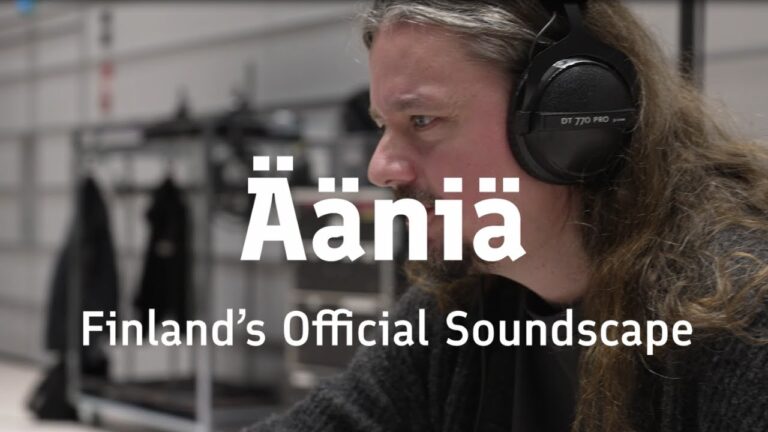
What is the Sound of Finland? Finland is the first country in the world to commission a composer to create an official national soundscape. Internationally renowned composer and musician Lauri Porra created the piece.
Finnish Ministry for Foreign Affairs commissioned Lauri Porra, one of Finland’s most revered contemporary composers, to create the nation’s soundscape. The idea was not to present Finland’s greatest hits to the world, but to capture the country’s essence through mental images of nature, expressed by the sounds of instruments.
The result was Ääniä, a work that takes the listener on a journey through the impressions, seasons and serene beauty of Finland. “There’s space to think, feel and live in Finland,” says the composer.
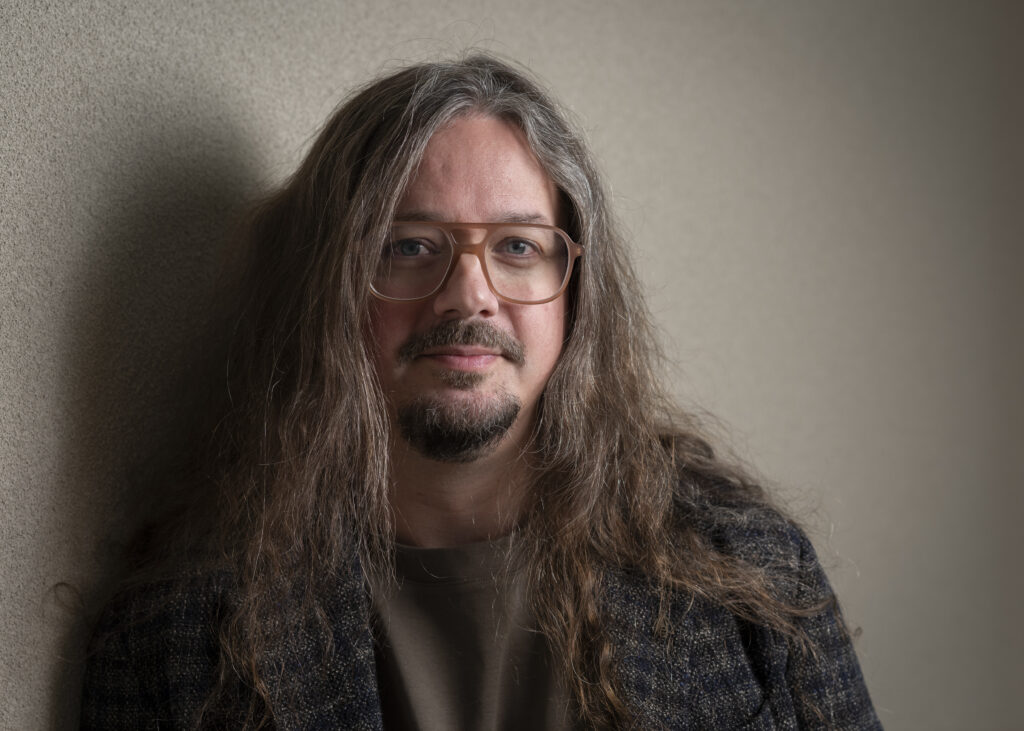
Lauri Porra. Photo: Markku Pajunen.
****************************************
You might also like to read The Finnish UFO houses
****************************************
“It could be the color of the sky, a forest scene or the sound of water running in a river,” Porra continues. The Finnish word ääniä means “sounds” or “voices”. Actually, Lauri Porra’s work consists of 15 compositions, a total of one hour of music. Porra should be the perfect composer for expressing the soul of Finland. His great-grandfather was the iconic Finnish composer, Jean Sibelius.
If you’ve ever experienced homesickness, you know the feeling when you close your eyes and flashes of memories come to life. Sounds, smells, sensations. People and places. While they’re all personal to us, taken together they also form the contours of a country.
Lauri Porra has collaborated with prestigious orchestras around the world, including the BBC Symphony Orchestra and the Seattle Symphony Orchestra. His collaborations, together with his role as the bassist in the power metal band Stratovarius, have taken him to more than 50 countries.
The Finnish word ääniä means “sounds” or “voices”.
The composition Ääniä was officially performed for the first time on Finland’s Independence Day on 6 December and soon became the soundtrack to parties and other events thrown by Finnish embassies across the world.
“The more I travelled, the more I got in contact with my Finnishness, and understood the personality and mentality of Finland,” says Porra. “I missed the four seasons, the way light and color work there, and the calmness and space. I started to create musical snapshots of Finland that I could listen to on my trips in order to relax and create a little Finnish bubble around me.”
Sound possesses a unique capability to evoke powerful emotions and memories, making audio a great way of sharing Finland’s unique identity, both inside and outside the country. It’s also a medium that most people around the world can access easily.
Porra was given creative freedom to make sure that the work felt personal and intimate, instead of turning into an idealized marketing image of the country. His musical snapshots evolved into Finland’s official soundscape. To my knowledge, it is the first of its kind in the world.
“Finns have always been deeply connected to their natural surroundings and cultural heritage,” says Paula Parviainen, Finland’s Ambassador for Culture and Creative Industries. “We wanted to bring these to a wider audience in a way that transcends languages and borders. We envision the soundscape providing a moment of peace and calm in people’s daily lives. Individuals can use it to create an opportunity to relax and reflect.”
“I have spent a large part of my life abroad and whenever I return to Finland, I notice how the scale of things appears to change,” says Porra. “This understated, minimalist music is meant to create a certain atmosphere,” he continues.
Porra is also works as the musical supervisor for Moomin.Characters
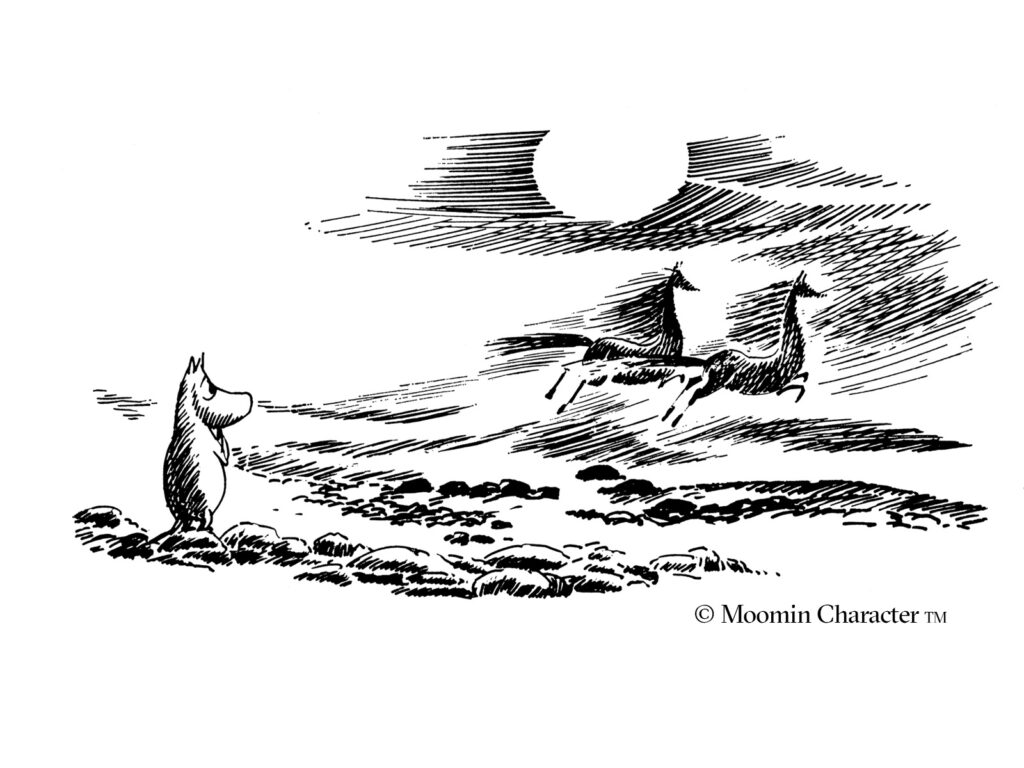
The idea for Ääniä initially emerged from discussions between Parviainen and Porra, who also works as the musical supervisor for Moomin Characters, the company that manages the rights to the beloved characters invented by Finnish artist and author Tove Jansson.
A new initiative to boost freedom of movement in the Nordic Region will be a top priority for the Nordic Council of Ministers in the coming years. A new co-operation program emphasizes freedom of movement as a key issue, and a six-year program aimed at increasing mobility within the Nordic Region will commence at the start of 2025.
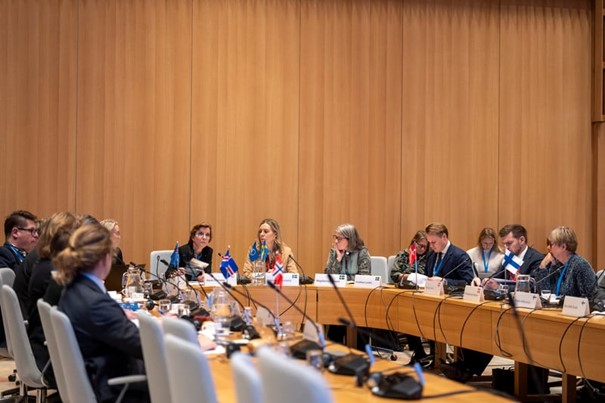
Sweden held the presidency of the Nordic Council of Ministers in 2024. One of the top items on the agenda was prioritizing an integrated Nordic Region free of obstacles to freedom of movement.
This year, an analysis of efforts to remove obstacles to freedom of movement has been conducted, providing several recommendations on how these efforts can be streamlined.
An analysis of efforts to remove obstacles to freedom of movement has been conducted.
Additionally, during Sweden’s presidency, the Ministers for Nordic Co-operation developed a new co-operation program for 2025 to 2030. The program will guide ongoing efforts towards Vision 2030, the goal of which is for the Nordic Region to be the most sustainable and integrated region in the world by 2030. The new co-operation program raises the level of ambition in the areas of mobility and removal of obstacles to freedom of movement.
“I’m particularly proud that under the Swedish presidency, we’ve stepped up efforts to remove obstacles to freedom of movement in the Nordic Region. With a new program for freedom of movement in place, the Ministers for Nordic Co-operation will have clearer political ownership over efforts to remove obstacles to freedom of movement. The program lays a solid foundation for continued efforts to strengthen integration, particularly in the digital sphere. Freedom movement is a fundamental prerequisite for achieving the vision of being the most sustainable and integrated region in the world by 2030,” said Jessica Rosencrantz, Sweden’s Minister for European Union Affairs, responsible for Nordic affairs.
The co-operation program for 2025 to 2030 outlines that future mobility efforts will focus on major issues of critical importance to Nordic integration. It also stresses strengthening political anchoring and co-operation among all stakeholders working on freedom of movement. Additionally, information campaigns will be improved.
The co-operation program for 2025 to 2030 outlines that future mobility efforts will focus on major issues of critical importance to Nordic integration.
Six-year program to improve efficiency
To ensure that obstacles to freedom of movement remain a political priority and solutions are found more efficiently, a six-year program for freedom of movement in the Nordic Region is being launched.
The program aims to establish a clearer framework, stronger political ownership, and more defined responsibility in efforts to remove obstacles to freedom of movement.
In the future, the Ministers for Nordic Co-operation will play a more central role in the work, such as by prioritising problem areas that are particularly important for intra-Nordic integration and to achieve the goals in efforts to deliver Vision 2030. The purpose is to ensure stronger national anchoring and support for the work. The dialogue between the Ministers for Nordic Co-operation and national ministries must also be strengthened in order to place obstacles to freedom of movement higher on the political agenda in all countries.
Freedom of Movement Council still plays a central role
Co-ordination and work on mobility issues will also receive increased resources as a result of the six-year program. It will be led by a dedicated program secretariat tasked with enhancing synergies between efforts to acquire information and remove obstacles to freedom of movement, and to improve co-operation between the Nordic Council of Ministers’ information service, Info Norden, and the three cross-border regional information services.
The Nordic Freedom of Movement Council, which was established in 2014, will continue to play a central role in efforts to improve freedom of movement in the Nordic Region. The council will work to identify and pursue solutions to obstacles to freedom of movement between the Nordic countries, as well as continue to work on the major problem areas that need to be solved for the Nordic Region to become more integrated.
Examples of such areas that the Freedom of Movement Council has on its agenda are tax-related issues, identity matching and digitalization, and border region statistics.
The overarching goal in the Nordic Council of Ministers’ work with obstacles to freedom of movement is that it should be as simple as possible to move, commute, study, and run businesses across national borders in the Nordic Region without the risk of being affected by obstacles to freedom of movement or other mobility problems.
New Initiative to Boost Freedom of Movement in Nordic Region, a press release from Norden.org
Danish company Tempur has opened an immersive showroom in the Philippines. The Danish mattress company is also the first brand in the Philippines with Made in Green certification.
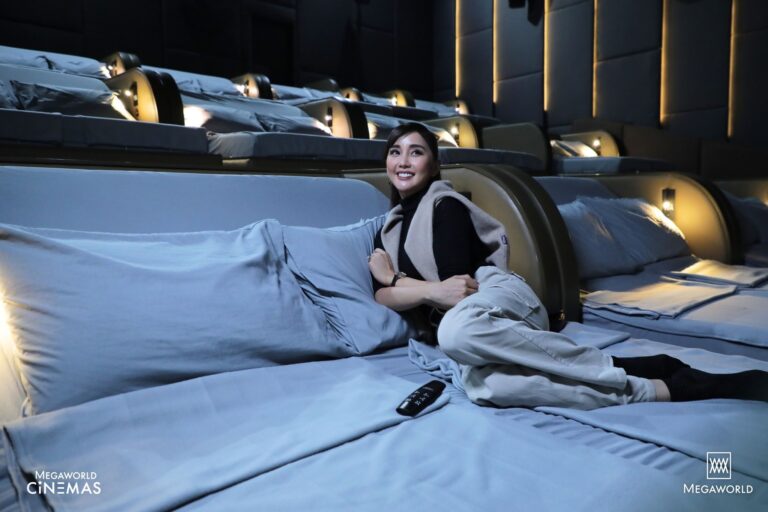
Tempur, a global sleep solutions brand from Denmark, has launched a new experiential showroom in Uptown Bonifacio, Taguig. This follows the success of the first Tempur cinema in the same location, where visitors can relax on Tempur mattresses and adjustable beds.
The new showroom offers a range of sleep products, including mattresses, pillows, and accessories. A standout feature is the immersive sleep pod, allowing customers to experience Tempur’s products first-hand. Visitors can even take a nap to understand the brand’s unique comfort and support better.
Tempur is known for its NASA developed material that adapts to body temperature, providing optimal support and pressure relief.
Celebrities like Maja Salvador Nuñez and Mylene Dizon attended the ribbon-cutting ceremony, adding flair to the opening event. Stephen Sy, president of Focus Global Inc., highlighted how the showroom complements the Tempur cinema, letting customers easily purchase products they’ve tested. Tempur is known for its NASA developed material that adapts to body temperature, providing optimal support and pressure relief.
In Tempur Cinema, visitors can relax on Tempur mattresses and adjustable beds.
The brand recently earned the “Made in Green” certification, ensuring that its products meet high environmental and safety standards. This new showroom aims to redefine sleep experiences for customers in the Philippines while promoting eco-conscious sleep solutions.
Danish Mattress Company – First Brand in the Philippines With Made in Green Certification, based on a press release from Tempur.
One of the first things I research on a trip is the best way to get from the airport to the city center. Read on and get valuable tips on how I travel from airports to city centers.
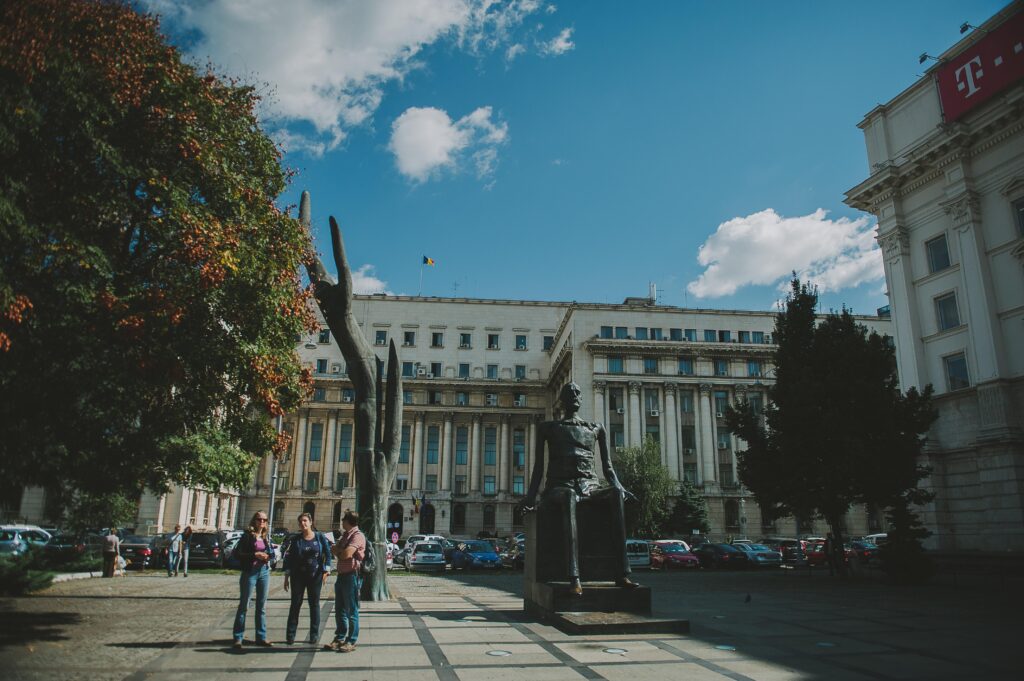
Actually, it’s as easy as searching Google for “best way to get from Bucharest airport to the city center”. You will find a combination of results, ranging from buses to taxis to trains. While all options work, I prefer Uber, and luckily, the number of countries that offer Uber is growing every day.
From Bucharest
*******************************************
Related: Hotel Booking Secrets – Part 1
*******************************************
Uber always takes stored credit cards. Dealing with cash can be cumbersome as you have to consider the exchange rate and pay exorbitant ATM fees or currency exchange fees. The drivers are more trustworthy than traditional taxi drivers in many locations.
I can rest assured that the driver is taking the direct route
*******************************************
Related: Hotel Booking Secrets – Part 2
*******************************************
The number of countries that offer Uber is growing every day.
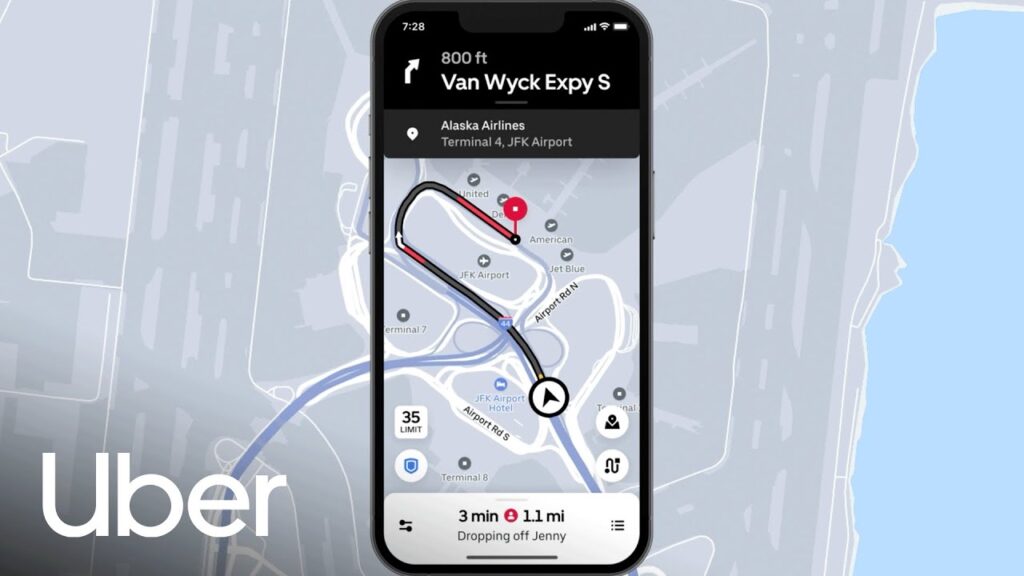
I can also rest assured that the driver is taking the direct route, and I can follow said route on the Uber app right on my phone to make sure the driver is taking us where he is supposed to take us.
This article is not a paid advertisement from Uber, but written from my personal experience.
What’s life like when everything you need is just a stroll away? The Danish 15-minute city concept involves creating an urban environment where residents have access to all necessary services and amenities within a 15-minute walk or a short cycle or public transport ride from their home.
Nordhavn, Copenhagen’s once-industrial port, has been planned to make everything – from schools and play areas to businesses and recreational spaces – accessible, not in 15 minutes but five.
While ambitious urban planners try to make 15-minute cities a reality, the Nordhavn district of Copenhagen has gone one better. The basic idea is to organize compact and mixed zones that promote more efficient use of urban infrastructure and reduce dependence on cars, thus contributing to a more sustainable and comfortable life for city dwellers.
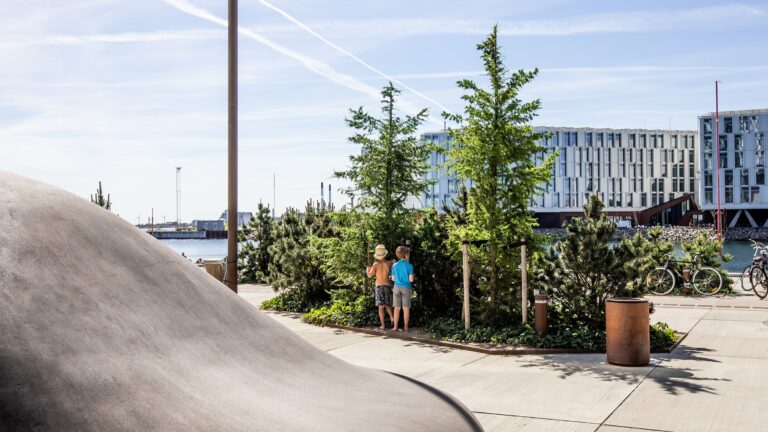
Nordhavn, Copenhagen’s once-industrial port, has been planned to make everything.
The core of the new development in Copenhagen is Århusgadekvarteret, with gleaming apartment buildings, high-end office spaces and a cafe-lined boardwalk along the previously industrial harbor. This will be the world’s first five-minute city. When the project is complete, everything you need will be within a 400m walk.
It does feel pretty quiet in Århusgadekvarteret, but that’s not because there are no people; it’s because there are hardly any cars – and those that do glide by are electric. The 15-minute city concept assumes that walking and cycling will become more attractive than driving a car, so in practice local authorities introduce policies discouraging car use, such as fines for driving on some residential streets.
Sandkaj. Photo: Wikipedia
Commuting is one of the biggest challenges of modern life as it adds so much time into the daily routine. Nordhavn (officially a district of Copenhagen, but described as a city due to its scale and scope) has been designed to make everything – from schools and play areas to businesses and recreational spaces – accessible within five minutes. It is setting a blueprint for a world where residents can fit in a morning workout before strolling to the office, grab lunch at a cute cafe, have a quick swim at the harbor and still make it home in time to take your kids to the playground – all before enjoying a cozy candlelit dinner at home.
The planners have drawn circles of 400 meters radius (that’s what you can walk in five minutes Within a circle like that, you would have a mix of residential areas and office buildings, social infrastructure such as schools and kindergartens, retail, cafes – everything that you would need in your daily life.
The concept means reduced transport problems, less need for long journeys and increased use of walking and cycling will reduce congestion and pollution. Ultimately, it’s improving the city’s transport accessibility. In addition, it’s promoting healthy lifestyles: development of pedestrian and bicycle environment in the city promotes an active lifestyle—citizens remain mobile, which is very important for physical and mental health.
Portland Towers. Photo: Martin Heiberg/Visit Copenhagen
Copenhagen is currently the Unesco World’s Architecture Capital (until 2026) and innovative solutions for smart living have been brewing across the Danish capital: from Paper Island, designed to focus on public spaces and housing for all income groups; to Carlsberg City District that’s built on four pillars of beer production: science, innovation, art and culture.
********************************************
Related: Copenhagen’s New Recreational Hub
********************************************
But it’s not just about environmental sustainability. It’s also about social sustainability. It’s nice to meet your neighbor – that is part of the design in Nordhavn. A five-minute city creates the conditions for greater social activity and interaction between residents, fostering community building and strengthening ties between neighbors.
“We are creating a neighborhood that meets everyday needs and special occasions,” explains Peter Bur Andersen, an architect from BRIQ Studios that played a crucial role in zoning Nordhavn. “Everything is within walking or biking distance, minimizing the need for commuting. The area also promotes a mostly car-free lifestyle, connected by cycle paths and the metro.”
It does feel pretty quiet in Århusgadekvarteret, but that’s not because there are no people; it’s because there are hardly any cars
A more social neighborhood is also a safer one. The Nordhavn district in Copenhagen, one of the largest and most ambitious urban development projects in Scandinavia, is an example of how this concept can work in practice.
Although the entire Nordhavn project won’t be finished until 2060, it is being developed in islets (small islands), with key areas such as Nordø and Århusgadekvarteret, already complete and full of life, brimming with locals and tourists. A metro extension to Nordhavn and Orientkaj opened in 2020, providing easy access from the city center.
The Danish 15-Minute City Concept, Tor Kjolberg reporting
Come with us to Masai Mari and Serea Camp in Kenya and experience the wild animals, the proud Maasai people and beautiful, photogenic landscapes. We have invited the founders of the camp to a presentation in Oslo on January 30 where you can learn more about how you can live the dream of Africa in authentic and safe surroundings.
Serea Camp is privately run by two Norwegian photographers Øyvind Løkka and Erik Hagen together with native ranger Serea Ntuala.
Masai Mara is home to the lions.
Nestled in the heart of Masai Mari surrounded by rolling hills, sprawling savannahs, dramatic river crossings and most importantly – more wildlife and adventure than any movie could ever portray. Masai Mara is home to the lions, and other wild animals (1.5 million wildebeests are spread over these sprawling savannahs).
Descendants of mighty Maasai warriors take care of you and create unforgettable experiences and lifelong memories.
Camp manager andranger Serea Ntuta.
Serea Camp was created by Øyvind Løkka and Erik Hagen together with camp manager Masai Serea Ntuala. Experience the unique wilderness camp with fantastic excursions in the heart of the Masai Mara. The two Norwegian photographers have also established a foundation that helps to engage the local community and preserve the Masai culture, while providing visitors with authentic and meaningful nature experiences.
Serea Camp was born from a combination of a sense of adventure, a passion for nature, and a deep respect for local traditions. Løkka and Hagen, shared dream of Africa, and realized this dream on a trip to the Masai Mara in 2019. They wanted to create a place that not only offers unique wilderness camping experiences but also builds bridges between guests and the local culture. Together with Serea Ntuala, they established Serea Camp as a window into the rich wildlife and majestic landscapes that the Masai Mara has to offer, all while maintaining a deep commitment to sustainability and community support.
From left to right: Øyvind Løkka, Serea Ntuala and Erik Hagen.
Through collaboration with Serea Ntuala, a native Maasai and the camp’s future manager, they created a sanctuary that reflects their adventurous spirit and deep love for the wild African nature.
Experience rich and varied wildlife, with everything from majestic lions to elegant giraffes right outside the camp. Discover the joy of the wilderness camp, where you feel the presence of nature without giving up comfort. Exceptional safari experiences take you through the heart of the wild and beautiful landscape.
Exceptional safari experiences take you through the heart of the wild and beautiful landscape.
Meet the two photographers and Serea Ntuala during a short presentation of the camp at
Lynx Communications, Wilses gate 6, 0178 Oslo on Thursday 30 January 2025 at 6pm.
African finger food and drinks are served. Entrance is free, but due to limited seating capacity, we ask you kindly to reserve your seat by contacting
TAKs verden on torarne@taksverden.no or telephone 977 58 562.
The Serea Camp presentation is arranged in collaboration with Serea Camp, TAKs verden, Daily Scandinavian, Lynx Communications AS and Nye Reiselivsavisen.
“The rules regarding highly qualified workers must be improved. Sweden must be an attractive country for highly qualified workers, and employers in highly qualified professional sectors must be sure that they can get the workers they need in time. This is an important part of the Government’s efforts to strengthen Sweden’s competitiveness,” says Minister for Migration Johan Forssell in a press release.
Sweden will lower the minimum salary requirement to be eligible for the document.
********************************************
Related: Moving to Sweden
********************************************
If the new law on the EU Blue Card gets approved, Sweden will lower the minimum salary requirement to be eligible for the document. Under the new proposed rules, the salary requirement will be lowered from the current 1.5 times the gross average salary (€5,165) to 1.25 times (€4,304) the gross average salary.
“The rules regarding highly qualified workers must be improved,” says Minister for Migration Johan Forssell. Photo: Utrikesdepartementet
In addition, the new rules aim to halve the required length of the employment contract from the current one year to six months and to permit EU Blue Card holders to switch from one job to another without having to apply for a new document.
Schengen.News reports that this change means that foreign highly qualified workers now are able to obtain Sweden’s EU Blue Card under more simplified rules and on more favorable conditions.
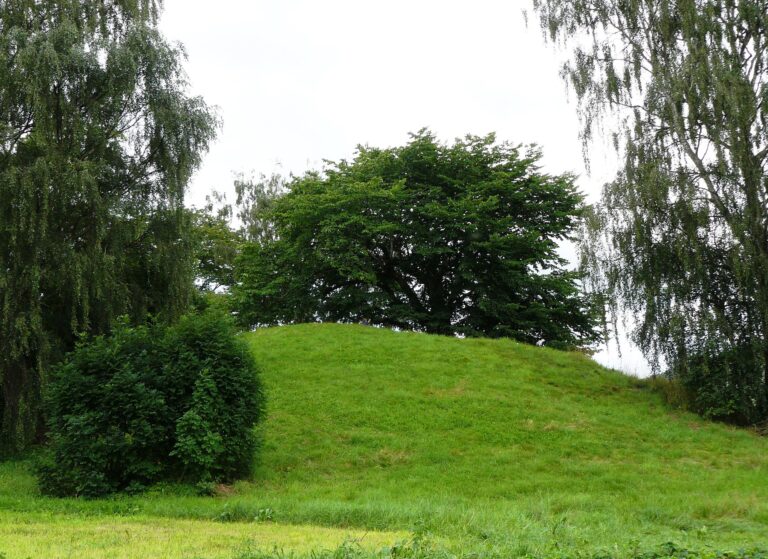
A mysterious hill in Western Norway have been proved by Archeologists using ground-penetrating radar to be an Ancient Burial Mound from the Iron Age. What it contains remains a mystery.
In the tranquil seaside town of Gloppen, with sweeping views of the fjords, archaeologists now announce that the largest man-made burial mound in Western Norway, and one of the largest in the Nordic countries, has been turned from theory to fact. The announcement sheds new light on the region’s ancient history and cultural significance.
The area’s geography is defined by two fjords branching off the main waterway: Hyefjorden and Gloppefjorden. The latter lends its name to the municipality, with “Gloppi” likely deriving from an Old Norse word meaning “narrow opening” or “mountain gorge.”
With sweeping views of the fjords, archaeologists now announce that the largest man-made burial mound in Western Norway. Photo: Wikipedia
**************************************
Yoy might also like to read Visit Norway’s Oldest Ice
**************************************
Something about the hill caught the attention of archaeologists, prompting a theory that it was actually an ancient structure. But no one knew for sure — until now. Actually, the large mound, called Karnilshaugen, is a man-made burial mound from the period before the Viking Age, according to a press release from the Norwegian Directorate for Cultural Heritage on December 20, 2024.
Looking at the scans, researchers saw clear traces of man-made layers, not natural soil deposits. officials said. The mound measures about 23 feet tall by 160 feet wide but was probably much larger centuries ago. Christian Løchsen Rødsrud, an archaeologist with the agency, described Karnilshaugen as deeply fascinating and the only ancient burial mound linked to a solar phenomenon.
“This is the largest man-made burial mound in Western Norway and among the largest in the Nordic countries,” says archeologist Christian Løchsen Rødsrud. Photo: LinkedIn
“This is the largest man-made burial mound in Western Norway and among the largest in the Nordic countries,” he says. “At the winter and summer solstices, the sun shines on the mound through a crevice in the mountain at a specific time. There is a lot of mystery and superstition drawn into the landscape there, and the placement of the monument is deliberate,” Rødsrud elaborates.
According to Rødsrud, the mound has never been excavated, and there are no plans to do so now. “The prevailing practice in archaeology is to leave it undisturbed. The mound is well-preserved in the soil. But of course, we can learn more about the contents of the mound with more modern ground-penetrating radar technology in the future,” he says.
Mysterious Hill in Western Norway Proved to be an Ancient Burial Mound, Tor Kjolberg reporting.


















 The Serea Camp presentation is arranged in collaboration with Serea Camp, TAKs verden, Daily Scandinavian, Lynx Communications AS and Nye Reiselivsavisen.


 The Dream of Africa, written by Tor Kjolberg