

The World’s Most Eco-Friendly City

0

Copenhagen is often touted as the world’s most eco-friendly city. By 2025, the Danish capital aims to become carbon-neutral, and they are well on their way to achieving this goal. Learn more about the world’s most eco-friendly city.

Thinking about moving abroad and eager to embrace a green lifestyle? You’re not alone! These days, more and more expats are tuning into the importance of climate change and environmental sustainability. Let’s look at what makes the Danish capital a remarkable place to live and work.

Copenhagen’s approach to sustainability is comprehensive, involving not just government and businesses but also the active participation of citizens. Through their commitment to reducing CO2 emissions, they have encouraged eco-friendly lifestyles.

The World’s Most Eco-Friendly City
Copenhagen’s approach to sustainability is comprehensive. Photo: Visit Copenhagen

*********************************
Related: The Ultimate Green Traveler’s Guide to Copenhagen
*********************************
Various policies support Copenhagen’s green initiatives, such as tax incentives for green businesses, renewable energy mandates, and building regulations encouraging energy efficiency. The city’s urban planning strategies, focusing on sustainability, have led to the development of eco-friendly communities. The district of Ørestad is one example of this, designed to minimize energy consumption while maximizing green space.

Ørestad is blessed with world-class architecture, stunning nature, cutting-edge examples of sustainable living, and an increasingly exciting food scene, Copenhagen’s city-within-the-city might be its best-kept secret. Built on former marshland – and in less than 20 years – this urban district continues to evolve and wow its residents as well as those visiting.

The World’s Most Eco-Friendly City
From Ørestad. Photo: Wonderful Copenhagen

Let’s just look at some milestones:

  • In 1998, the first construction project in Ørestad City begins.
  • In 2002, the metro opens – by 2008, Ørestad station is Denmark’s fifth largest station, measured by passengers.
  • In 2004, Ørestad’s first residents move into Karen Blixen Parken in Ørestad Nord.
  • The same year, the Field’s shopping mall opens in Ørestad City.
  • In 2006, Danish Broadcasting Corporation giant DR moves into Ørestad North.
  • In 2010, the 8-House – designed by star architect Bjarke Ingels– opens in Ørestad South.
  • In 2016, the Royal Arena opens in Ørestad South.
  • 2018 – the Bellakvarter by COBE and Vilhelm Larsen architects shoots up around the Bella Center Copenhagen.
The World’s Most Eco-Friendly City
The highway through Ørestad towards Copenhagen. Photo: Øresundsinstituttet.www.newsoresund.org

*************************************
Related: Denmark – the Cleanest Country in the World
*************************************
Copenhagen’s investment in cycling infrastructure is also a primary reason for its eco-friendly reputation. There are more than 375 kilometers of designated bike lanes and numerous bike-friendly policies.

Then things turned around with the 1973 global oil crisis, when oil prices quadrupled within a few days.  The Danish Cyclist Federation proposed a citywide bike network, and Copenhagen started creating more bike lanes. During the 1980s, driven largely by civil servants, the city developed a bikeway plan and 240 km of cycle lanes, and worked to improve cycling safety at intersections. Between 1990 and 2000, the total distance traveled by bicycle increased by 40%, while related injuries dropped by 30%.

The World’s Most Eco-Friendly City
The Mountain in Øresund. Photo: Thit Andersen/Visit Copenhagen.

Then, in 2005, Copenhagen elected a new mayor on a platform that promoted cycling, and cycling promotion was on the political agenda for the first time. That year, the city started promoting cycling to residents, as a way of reducing congestion and pollution and improving quality of life. You can find out more about the city’s bike-wide scheme through the Copenhagenize Index.

Another reason why expats may be enticed to Denmark’s capital is the city’s commitment to renewable energy. The 2025 Climate Plan focuses on energy efficiency, renewable energy production, green mobility, and exemplary use of energy by city government. Setting carbon-reduction goals for each area, the plan then shows, area by area and project by project, how the activities will reduce CO2.

Finally, Copenhagen’s devotion to providing green spaces within the city has not only made it beautiful but has also had positive effects on the health and well-being of its residents. With parks like Frederiksberg Gardens, the Botanical Gardens and the Waterfront restauration, residents have access to abundant green spaces, offering opportunities for recreation and relaxation. Community gardens foster social cohesion, enabling citizens to grow their vegetables and herbs. This practice further strengthens the bond between urban living and nature. In Copenhagen, the green roof policy has led to the creation of living roofs across the city. These roofs not only reduce heating and cooling costs but also increase biodiversity.

The World’s Most Eco-Friendly City, compiled by Tor Kjolberg

India is Looking to Scandinavia

India is the world’s largest country in terms of population with over 1.4 billion people. While China’s population is declining, India’s is growing by around 10 million a year. The country is the world’s fifth largest economy with growth of 7 percent. By 2030, India will be the world’s third largest economy – beaten only by China and the US. For many reasons, India is looking to Scandinavia.

At the G20 summit in 2023, India’s Prime Minister Narendra Modi had the opportunity to present his country as a major power. There he promised that when the country celebrates its100 years’ anniversary in 2047, when the British were kicked out, India will have an economy per capita that compares with China, Brazil, Mexico, Turkey and Bulgaria.

India is Looking to Scandinavia
India is the world’s largest country In terms of population with over 1.4 billion people.

According to the QS World University Rankings 2023, Scandinavian institutions are among the finest in the world, with 26 universities ranked in the top 500 and three in the top 100. Five of Scandinavia’s higher education institutions have also been ranked among the 100 best in the world according to the newest annual assessment by Chinese company Shanghai Ranking Consultancy. Several Indian students have chosen higher education in Scandinavia.

India, with its rich history, diverse culture, and growing influence, is for many reasons poised to play a significant role on the global stage – also in Scandinavia.

India is home to a thriving tech industry, with companies like Tata Consultancy Services (TCS), Infosys, and Wipro leading the way. Indian engineers, entrepreneurs, and scientists are making strides in fields such as artificial intelligence, space exploration, and biotechnology. Their innovations will undoubtedly shape the world.

India with its massive population, and its youth are increasingly well-educated and ambitious. As this demographic continues to grow, it will contribute significantly to global trends in consumption, labor, and culture. The recent spotlight on Scandinavia results from the rise in international students attending its renowned universities.

India is Looking to Scandinavia
The Himadri research station, located in the International Arctic Research base at Svalbard, Norway.

India has already embarked on its first-ever winter expedition to the Arctic, marking a significant milestone. The Himadri research station, located in the International Arctic Research base at Svalbard, Norway, is now being manned during the winter season. Four Indian scientists are currently stationed at Himadri during this winter expedition. This initiative makes Himadri only the fourth research station in the Arctic to be continuously staffed throughout the year.

The issue has received a lot of attention in the Indian press. It is not only a symbol of climate research, but also a sign of India’s increased importance in the world. The Scandinavian region is known for its stunning coastlines, magnificent fjords, the allure of the northern lights, and its Viking heritage. The region comprises Norway, Sweden, Denmark and, in cultural contexts, Finland and Iceland.

From a purely financial point of view, Scandinavian companies will want to gain access to a market approaching 20 per cent of the world’s population. Scandinavian participants already collaborate with Indian companies and institutions in everything from technology and space travel to ocean management.

And Scandinavia has become the newest hotspot for international education – hidden among the snow-capped mountains and panoramic ocean views in Northern Europe.

India is Looking to Scandinavia
Indian culture, including its music, dance, cuisine, and cinema, has a global appeal. Raga Jazz. RagaJazz combine Indian ragas and Scandinavian jazz. Lars Møller, Kala Ramnath, Jonas Johansen, Thor Madsen, Abhijit Bannerjee. Photo by Sarit Dhabani.

These countries, also known as the Nordic countries, are among the happiest in the world and provide the highest quality of life. The Nordic countries, rich in natural resources, are famous for being home to brands like IKEA, Volvo, Nokia, Skype, Spotify and ABBA.

Indian culture, including its music, dance, cuisine, and cinema, has a global appeal. Bollywood movies, yoga, and Indian cuisine have already made their mark worldwide and in Scandinavia. This soft power will continue to influence people across borders.

India’s middle class will import Scandinavian products and travel to Norwegian fjords and search for the Northern Lights in the Arctic. Indian companies will also become more visible in Scandinavia – beyond the Indian food and yoga culture.

Research and development are prioritized heavily at Scandinavian universities. Denmark has the biggest population of research students, and the institutions there are affiliated with research organizations to aid in the quest for hands-on experience.

The Indian diaspora is spread across the globe, with successful professionals, academics, and artists contributing to various fields. Their achievements and connections bridge cultures and economies, fostering collaboration and understanding.

This form of behavior constitutes so-called soft power. In world politics, soft power means as much as military power. It opens doors and contributes to economic growth and political opportunities. At the same time, international politics is about positioning and strategic planning.

India is Looking to Scandinavia
At the G20 summit in 2023, India’s Prime Minister Narendra Modi had the opportunity to present his country as a major power.

While India faces significant environmental challenges, it is also at the forefront of sustainable practices. Innovations in renewable energy, water conservation, and waste management will have a global impact.

The northern regions are the only part of the globe where Norway is a major power. The combination of sea and northern areas is the country’s trump card in international politics and in meeting with the great powers. This distinguishes Norway from other small countries such as Belgium and Switzerland.

India’s future depends on its ability to restructure its vast agriculture that could be hit hard by climate change in addition to addressing its conflicts with neighboring countries. Scandinavia has several special prerequisites that can interact with this growing superpower.

India is Looking to Scandinavia, written by Tor Kjolberg

Feature image (on top): Photo © Eye on Asia

Good Vibes at New Copenhagen Restaurant

Dishes of greens, fish and meat done well (not well-done) add to the allure and good vibes at the new Copenhagen restaurant Bobe.

The culinary haven, curated by the renown chef Bo Bech, combines an international vibe with homely coziness, embodying his avant-garde approach to gastronomy.

“We wanted to create a place where guests can come in the pursuit of the best in life, food, art, love,” says Bobe’s founder and chef, whose menu blends Nordic fare with global flavors.

***********************************
Related: Korean restaurant in Copenhagen
***********************************

Good Vibes at New Copenhagen Restaurant
The past and present merge beautifully, thanks to the thoughtful revamp by architectural duo Atelier Axo.

At Bobe, the past and present merge beautifully, thanks to the thoughtful revamp by architectural duo Atelier Axo. The space, with its rich history evident in the original wooden floors and tiles dating back to 1731, gets a breath of fresh air with modern touches.

With emphasis on minimalistic style, the interior draws inspiration from medieval Copenhagen, incorporating open fireplaces and seamlessly integrating them with natural tones and meticulously chosen wooden furniture.

Good Vibes at New Copenhagen Restaurant
Bo Bech

***********************************
Related: Skyline Restaurant in Copenhagen
***********************************

“The space is meant to spark conversation, “ says Bech.

Good Vibes at New Copenhagen Restaurant
This culinary haven combines an international vibe with homely coziness

Every visit feels like a warm embrace, reminding us why this spot on Gråbrødre Torv has become a go-to for both special occasions and those ’just because’ meals. It’s the kind of place that, no matter where you sit, you feel like you’re exactly where you need to be, surrounded by a vibe that’s as comforting as the food.

Discover a restaurant where every corner tells a story and timeless and sophisticated furniture is curated with utmost care, contributing to the venue’s warmth and sense of intimacy.

Good Vibes at New Copenhagen Restaurant, written by Tor Kjolberg

All images (except portrait), courtesy of foodandsense.com

How to Collect an Impressive Wardrobe

0

“Collecting fashion is a relatively recent phenomenon,” says the Danish, London-based stylist and creative consultant Alexandra Carl, who has written the book “Collecting Fashion: Nostalgia, Passion, Obsession”. The book gathers the preeminent collection of archival obsessives, capturing the closets of an impressive list of fashion and design talent, and gives the readers insight in how to collect an impressive wardrobe.

Each of the 20 chapters in Alexandra Carl’s Collecting Fashion (Rizzoli, out this month), covers a subject and their accumulations – and each person recalls something that can guide you. “It’s emotional. It’s an intense dedication and calling,” says Carl of the enduring motivation to collect.

Carl’s book surveys the wardrobes of the people who pioneered, from French fashion designer Michêle Lamy’s extensive Comme des Garçon archive to Berlin showroom Endyma’s Helmut Lang collection. Carl, who has worked with photographers such as Viviane Sussen and Jürgen Teller, spent three years travelling around the world to get insight in the archives of the most prolific fashion collectors, including the late Azzedine Alaia, Chanel sound director Michel Gaubert and Carla Sozzani, founder of Milanese retailer 10 Corso Como.

How to Collect an Impressive Wardrobe
Michelle Elie Photography by Raphael Bliss, Styling by Abby Adler

Archives take time to build, wardrobes or storage units packed to the brim with rare, archival shoes, dresses, and handbags, some never worn, are only perfected after countless hours spent on Ebay and in the depths of obscured vintage sales. The results end up being remarkable representations of fashion history.

**********************************
You may also like to read: New International Library of Fashion Research Opened at the National Museum in Oslo
**********************************

How to Collect an Impressive Wardrobe
Alexandra Carl

Carl says it was her own attachment to the clothes left in assiduously well-maintained condition by her Danish grandmother that first ignited her curiosity. “Everything has a memory,” she says of this mysterious animating quality of putting something on and living with it. “You have to look closely to realize why it’s an amazing piece. Then you cannot get it out of your head.”

Each collection she describes is filled with stories of “the liaison between past and present, history and the moment, affection and consumption”. The book has been written in collaboration with the Italian writer Angelo Flaccavento, and professor and art advisor Dimitrios Tsivrikos, a specialist in consumer psychology.

How to Collect an Impressive Wardrobe
Each of the 20 chapters in Alexandra Carl’s Collecting Fashion (Rizzoli, out this month), covers a subject and their accumulations

In order for fashion to march forward, it must possess the ability to look back. For the fashion obsessed, one’s archive is surely a testament to the act of preservation and, of course, a sophisticated symbol of taste.

“I once had to go to a chiropractor because a pillow dress was putting too much pressure on my neck,” says Michèle Lamy in the first chapter, “but I kept wearing it anyway.”

*************************************
You may also like to read Sweden’s First Doctor in Redesign
**************************************

Carl grew up with a mum who was a collector. “As a child I got to wear her clothes and her influence – along with that of my grandmother, who taught me how to make clothes. It’s probably where this all comes from,” she says.

How to Collect an Impressive Wardrobe
Everything has a memory,” Carl says

Readers will get an in-depth look at Michèle Lamy’s extensive Comme des Garçon archive, Sarah Andelman’s covetable (and colorful) sneaker and t-shirt collection, ENDYMA’s growing Helmut Lang archive, Zaha Hadid’s fabulous footwear assemblage, and more. This tome, over 300 pages long, painstakingly showcases the subjects’ archive while showing off top-tier labels and hard-to-obtain seasons: Issey Miyake, Maison Martin Margiela, Thierry Mugler, John Galliano, and Alexander McQueen, among others, and serves as an indispensable reference for those interested in fashion history and building their own archive.

The decisions within the book—what to omit, what to include—seem infinite, but Carl’s discernment is unflagging. Her love is for the sleuth. The completist. The obsessive. “It was always the essence of the book,” she says. This gnawing fixation. It’s also what separated some from others. “There are people who have amazing collections, but it was driven by financial access.” Every subject needed to be as emotionally, as dizzyingly, in love—as haunted by detail as she is.

“Nowadays, people buy things for exposure and wait 90 minutes for delivery. Everything is so readily available so you miss out the element of desire,” says Carl. ”Brands don’t really inspire that in you anymore.”

How to Collect an Impressive Wardrobe
According to Carl, In order for fashion to march forward, it must possess the ability to look back.

Alexandra Carl is an acclaimed fashion stylist and consultant and recipient of the British Fashion Council’s New Wave Creative Award.

Angelo Flaccavento is an Italian fashion journalist, writer, and curator. 

Dr. Dimitrios Tsivrikos is a noted university professor, curator, and art advisor. A pioneer in the field of psychology, he has advised and managed international contemporary art collections, and led sales with Christie’s and Sotheby’s.

“‘What’s old is new’ is a phrase often used to describe fashion trends since so much of what was created in the past influences the present day. In Collecting Fashion, clothes enthusiasts obsessed with the industry (and everyone else who finds it intriguing) will have their passion ignited by the sheer magnitude and detail of this insightful survey. It features some of the most significant archival collections from a coveted group of fashion and design influencers’ closets, including Michèle Lamy’s expansive Comme des Garçons archive and Zaha Hadid’s impressive footwear assortment. With a deep dive into the collections’ history, top-tier labels, and hard-to-obtain seasons, this book spans 300 pages and also includes essays from top thinkers and writers offering keen insights to accompany each selection,” wrote Boston Magazine.

How to Collect an Impressive Wardrobe, written by Tor Kjolberg

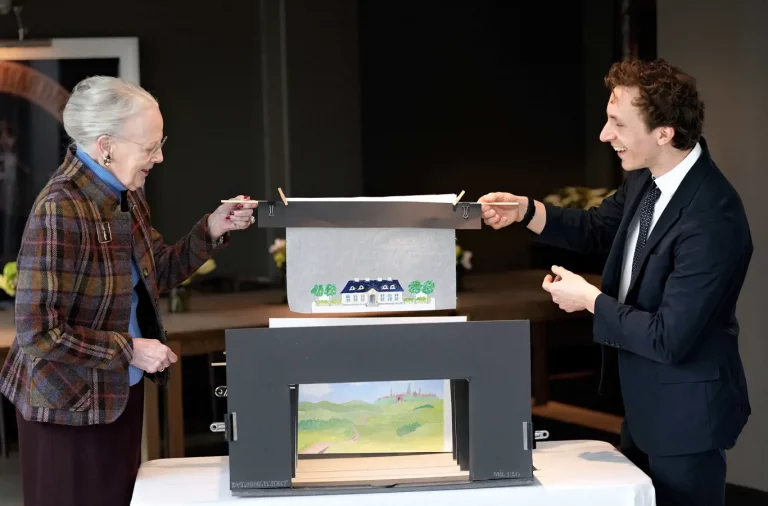
Abdicated Queen Margrete of Denmark Creating New Ballet Costumes

Queen Margrethe, who surprised her country by abdicating earlier this year, is back as ballet costume designer with Denmark’s famed Tivoli amusement park that celebrates its 150th anniversary this year. Learn more about abdicated Queen Margrete of Denmark creating new ballet costumes.

Since childhood, The Queen has been strongly interested in the worlds of theatre and especially ballet, inspired particularly by Frederik IX’s enjoyment in this regard. Early on, Princess Margrethe went with her parents to the Royal Theatre, where in 1948 she attended August Bournonville’s ballet Napoli, which made a deep impression on the Princess.

Abdicated Queen Margrete of Denmark Creating New Ballet Costumes
The ex-queen is ow creating the costumes and set for a ballet based on a fairy tale by the Danish writer Hans Christian Andersen, “Klods Hans,” or “Clumsy Hans.

Since 1970, The Queen has been actively engaged in a number of artistic modes of expression: painting, church textiles, watercolors, prints, book illustrations, découpage works, scenography and embroidery. She is an honorary member of the Association of Danish Scenographers for her many years of work as a set designer in Danish film, television and theater.

From the mid-1980s and 30 years onwards, The Queen helped with the annual ballet performances at a friend’s dance school in Næstved, where the wing scenery and costumes were conjured up with enormous imagination from materials at hand. Quite special were the performances’ numerous paper hats, which The Queen thought up and created herself.

In 2021, 81 years old, the Queen of Denmark was hired by Netflix as a set designer for the adaption of Karen Blixen’s fantasy novel Ehrengard.

Abdicated Queen Margrete of Denmark Creating New Ballet Costumes
The 83-year-old-queen, who has designed costumes and stage sets more than a dozen of times at the Tivoli gardens’ Pantomine theater

The 83-year-old-queen, who has designed costumes and stage sets more than a dozen of times at the Tivoli gardens’ Pantomine theater, is now creating the costumes and set for a ballet based on a fairy tale by the Danish writer Hans Christian Andersen, “Klods Hans,” or “Clumsy Hans.”

Queen Margrethe was Denmark’s much loved monarch for over 50 years.

Abdicated Queen Margrete of Denmark Creating New Ballet Costumes, written by Tor Kjolberg

Feature image (on top): © photo Keld Navntoft/Tivoli

Sweden is Now a NATO Member

Next year, Sweden will send a combat battalion of approximately 600 soldiers to the NATO Forward Land Forces (FLF). The FLF are multinational forces deployed by NATO in eight Eastern European countries. This marks that Sweden is now a NATO member.

Before applying for NATO membership, Sweden had maintained a policy of neutrality in military affairs since the Napoleonic Wars, after which Sweden adopted a policy of “non-alignment in peace and neutrality in war”. The country was neutral in both world wars—though it cooperated with both Germany and Allied nations on various occasions during World War II—and chose not to join NATO when it was founded in 1949.

The 2022 Russian invasion of Ukraine (24–25 February 2022) spurred a shift in public opinion, prompting Sweden to apply for NATO membership alongside Finland on 18 May 2022.

Sweden is Now a NATO Member
From left to right Turkey’s President Recep Tayyip Erdoğan,NATO’s General Secretary. Jens Stoltenberg and Sweden’s Prime Minister Ulf Kristersson before the 2023 NATO Summit. Photo: Quora

********************************
Related: Camp Lejeune Marines Join the NATO Nordic Response ’24: Exploring the Alliance of Two Military Powers
********************************

In days following Russia’s invasion, a Novus poll conducted found 41% in favor of NATO membership and 35% opposed. The first poll to register majority (51%) support for NATO membership came on 4 March 2022, and support grew substantially since then.

Sweden is Now a NATO Member
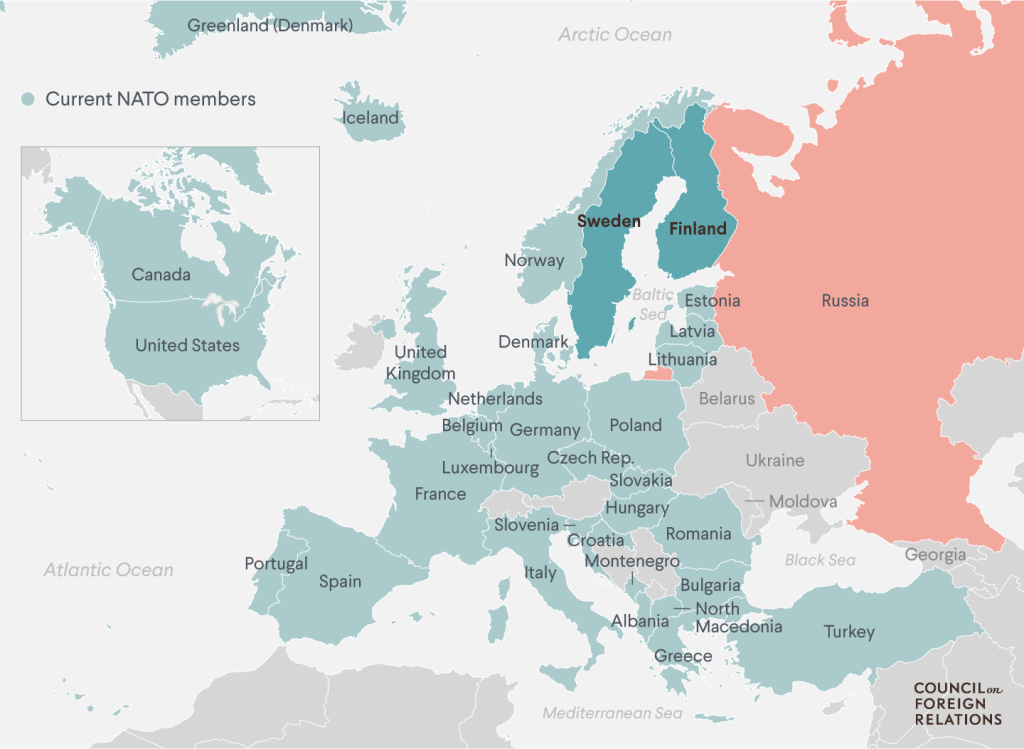
The new NATO map

Sweden became NATO’s 32nd Ally on 7th March 2024. Now the blue and white NATO flag is waving next to the Swedish flag at the Revingehed military base in Sweden. If an allied country is attacked, Sweden is now obliged to send soldiers.

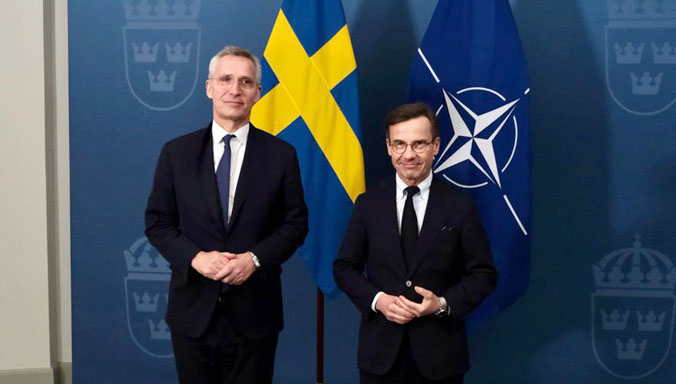
The Secretary General welcomed Prime Minister Ulf Kristersson to NATO Headquarters for a flag-raising ceremony to mark Sweden’s accession. Speaking ahead of the ceremony, the Secretary General thanked Prime Minister Kristersson for his strong personal leadership and commitment to leading Sweden into NATO. He said: “Sweden has taken its rightful place at NATO’s table under the shield of Article 5 protection – the ultimate guarantee of our freedom and security. All for one and one for all.”

********************************
Related: Poland Buys 2 Swedish Airborne Surveillance Systems
********************************

Sweden is Now a NATO Member
NATO’s General Scretary Jens Stoltenberg and Sweden’s Prime Minister Ulf Kristersson .

NATO membership means that Sweden is rapidly equipping itself. The defense budget increases by more than SEK 27 billion between 2023 and 2024, an increase of 28 per cent.

Noting that NATO will mark its 75th anniversary this year, Secretary General Stoltenberg underlined that the transatlantic bond between Europe and North America has ensured the member countries’ freedom and security. “Sweden will help to build an even stronger NATO at a critical time for Euro-Atlantic security,” he said, adding that “joining NATO is good for Sweden, good for stability in the North, and good for the security of our whole Alliance.”

Sweden – New Member of NATO, reporting by by Tor Kjolberg

Danish Loop Stand

0

Designed for HAY by Danish designer Leif Jørgensen, the Loop Stand is a series of tables and clothing stands. The series has just been relaunched in a number of new variants, with the tabletop now offered in oak veneer and the trestles updated in deep tones of red and blue. Learn more about the Danish loop stand.

These new additions bring freshness to the well-known series and extend the options and versatility of the tables.

Danish Loop Stand
The loop stand family

Characterized by its uncluttered, graphic expression, the collection features a distinctive three-legged design. All models in the collection are offered in various sizes and colors, with the tables also available in different material options that make them suited to a wide range of settings.

******************************************
Related: Holiday & Winter Accessories from Danish Design Company
******************************************

Loop Stand Wardrobe is a larger version of Loop Stand Hall. Based on the same elegant and graphic three-pillared design, it offers a simple and discreet wardrobe solution with increased capacity. Suitable for hanging clothes in a variety of private or public environments.

Danish Loop Stand
Danish designer Leif Jørgensen

Loop Stand is Leif Jørgensen’s well-designed and ultra-functional, no-nonsense series of coat stands, wardrobe furniture and tables, all with a consistent family identity. Loop Stand Table shares the same clean visual expression as the wardrobe stand, where the characteristic three-legged trestles are attached to the tabletop with screws. The Loop Stand Table is available in several variants and heights to suit a wide range of dining rooms and offices in corporate and private settings.

***************************************
You may also like to read: Design Museum Copenhagen Reopens June 2022
***************************************

Danish Loop Stand
Roundtable

Leif Jørgensen is a Danish designer and architect based in Copenhagen who founded his first design business in 1989. He works in the fields of interior and exterior architecture, and in product design. He has particular experience with retail design and has created numerous concepts for the fashion industry, along with products, office spaces and private houses.

His approach is dictated by a desire to develop original ideas and to push boundaries of traditional product typologies through the application of new techniques and production methods. An inquisitive designer, Jørgensen has a keen interest in how products and concepts are influenced by their cultural and social context. For HAY he has designed the Loop Series and the Connect Bed.

Danish Loop Stand, based on news from hay.dk

Reduce Your Flight Costs with Google Flights

Google Flights not only allows you to see what days are the cheapest to fly and what site has the cheapest fares but also allows you to purchase the tickets by following the links provided on the site. Learn how to reduce your flight costs with Google Flights.

When following the provided links, you will sometimes purchase directly from the airline, and sometimes it will direct you to sites such as Priceline or Expedia.

So, how do you use the functions of Google Flights to book flights as low as $178 to get from Los Angeles to Europe? If you already know where you would like to go, grab your laptop or jump on your desktop computer. Google Flights does NOT offer all of the advanced functions on the mobile app, mobile browsers, or on most tablets.

Here’s how you do it:

1. Go to Google Flights and type in your desired destination.
2. Click on ‘Round Trip’ in the upper left-hand corner and change it to ‘One Way’.
3. Now click on the date and a calendar will pop up. In a few seconds, the prices of your chosen date will load. Press on the ‘Price Graph’ and each day of two months will show you the cheapest days to leave.

(The arrow on the right side of the graph will allow you to advance the months to future dates).

As I write this, I see that flying from Oslo to Tenerife will cost me NOK 2,423 if I leave on the 6th of September. However, if I wait until the 16th, the flight costs only NOK 1,325, saving me 45 percent.

What if you are not sure where you want to go? Not to worry. What if I told you that you could look at a map of cities with specific airfare indicated next to them in order to help you choose the location of your next adventure? The best way to find cheap flights when you do not know exactly which city you want to visit is to use the map function on Google Flights.

1. Start over on a new page.
2. Ensure that you have clicked ‘One Way’ in the upper left-hand corner.
3. Leave the destination (Where to?) blank and zoom in and out until you find your home country on the map, and you’ll see the cheapest fares to different cities.
4. Zoom out to find the continent you are interested in visiting.
5. When you see a price that appeals to you on the map, click on it to see what date that fare applies.
6. The airline will appear to the left of the map below some suggested attractions.
7. By clicking on that airline, you will find the date of the flight.
8. If you want alternative dates click on the calendar symbol and you will have several choices.
9. When you have selected a month and date click on continue.

Reduce Your Flight Costs with Google FlightsRight now using this tool, I see a flight from Oslo to Cape Town for NOK 4,055. For those of you with a stomach for adventure you can travel to Marrakesh for NOK 2,360 or Manila for NOK 3,957. These are just what I see while I casually looking as I write in this text. If I took time to really dig in, I may be able to find even cheaper flights to those destinations.

One great part of traveling is once you have flown into a particular region, the flights are ultra cheap to get to other cities or other countries within the same region (see below for saving money on fares by creating a faux layover.) Once you get to Asia, for example, flights can be as low as NOK 600 from Singapore to Malaysia or NOK 800 from Singapore to the Philippines. Once you get to Europe, flights can be as low as NOK 500 from Paris to Barcelona or from London to Prague. I do not know how airlines can make a profit with such low fares, but I’ll let them worry about that.

One problem people encounter is finding that a particular destination has a daunting fare – even when they use the steps mentioned above. If that is the case, try adding what I call a faux layover. A faux layover is a layover that you create in order to save money. If you take a flight to one of the major airport hubs in the world, you can catch a cheap flight to destinations that may be rare from your home city but more common from a regional airport hub.

Major hubs around the world include London, Paris, Rome, Barcelona, Istanbul, Dubai, Singapore, Shanghai, and Beijing, to name a few. If the airfare to your desired destination is too expensive, try flying to a major regional airport hub first, then check the prices from the regional hub to your destination.

**************************************
Related: Long Flights = Long Holidays. Really?
**************************************

I have an American colleague who wanted to visit Prague, but the flights were well over NOK 10,000. So he flew to Norway for NOK 2,000 and caught a flight to Prague for NOK 900, effectively saving over NOK 7,000 … and I could have a meeting with my colleague in Oslo.

Reduce Your Flight Costs with Google FlightsIf you prefer to get on to your intended destinations as quickly as possible, you can book a flight that departs from the regional hub a few hours after you arrive. This technique requires that you go through customs and pick up your luggage in order to recheck it, so be sure to allow enough time (at least two hours is recommended, but I have done it with less time available). You just created a faux layover and saved hundreds of bucks in doing so.
Some of you may prefer to check out the city that houses the airport of the regional hub for a few hours longer … maybe even overnight. This is a great way to simply experience a local restaurant or a historical landmark or two. If you choose to spend several hours on this layover, you may have time for a quick organized tour before flying to your intended destination. In a later article I’ll explain in more detail how to make the most of a layover.

Reduce Your Flight Costs With Google Flights, written by Tor Kjolberg

Copenhagen’s New Recreational Hub

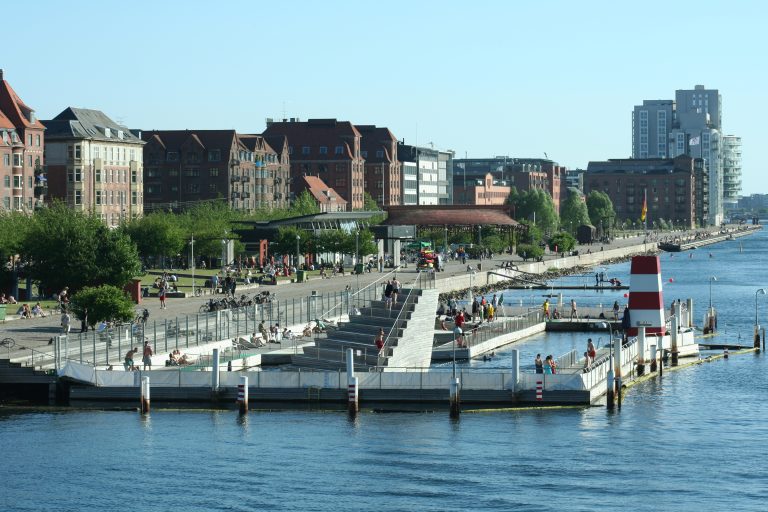
The waterfront in Denmark’s capital has undergone impressive redevelopment in recent decades and transformed into Copenhagen’s new recreational hub.

Today, you can almost read the chapters of Copenhagen’s harbor from fortress and trading port through shipbuilder and business center to a modern, creative knowledge city with integrated urban districts. The Copenhagen waterfront has been transformed into a vibrant public space with recreational activities and residential developments.

The urban regeneration of the harbor has been in progress for nearly two decades. Politicians, landowners, and investors have jointly succeeded in redeveloping these urban districts thanks to a totally new mindset. The result is a totally new area which attracts new residents and businesses as well as home-seekers, tradespeople, creative entrepreneurs, and visitors.

Copenhagen’s New Recreational Hub
Waterfront Cultural Center. Photo: AART

*******************************
Related: The Colorful Nyhavn Quayside in Copenhagen
*******************************

A host of cultural institutions and recreational hotspots have been built on the harbor, transforming it from a highly polluted industrial port into one of the most popular destinations in the Danish capital.

The plans for the harbor have included creating more activities for visitors to engage with, improved access to the waterfront and more public space by the water. New tendencies in society were a major boost for the start of the harbor’s transformation. There was recognition that the future of Copenhagen should be perceived in terms of a knowledge-city with authentic, idiosyncratic urban districts, which could attract new residents and businesses, but also hold onto people, who already populated the city.

Copenhagen’s New Recreational Hub
The Opera Park has become a lush space on top of the requisite underground car park.. Photo: Studio Cobe.

The development has provided space for events, introduced nature to the site and made the area cleaner and friendlier. The latest addition to this ever-evolving urban landscape comes courtesy of local architecture Studio Cobe, which was tasked with creating parking facility for the Opera House. The Opera Park has become a lush space on top of the requisite underground car park.

**************************************
Related: Circle Bridge in Copenhagen
**************************************

Copenhagen’s New Recreational Hub
Vesterbro by night. Photo: Wikimedia commons

It took about twenty years for Copenhagen to become one of Europe’s most popular cities. It is modern, fashionable, safe, democratic, business-friendly, family-friendly, recreational, green and clean.

Over the recent years, many of the buildings around Copenhagen’s port have been abandoned, which has provided an opportunity for new initiatives to develop an increasingly recreational harbor.

The unused plot for the Opera Park was originally meant for housing, but the client scrapped the plan in favor of a new recreational spot for everyone to use. The park features winding paths that cross through six gardens with vegetation from different parts of the world, inspired by the area’s history as an international trade hub. At the heart of the green space is a glass pavilion with expansive views of the surroundings and water.

Copenhagen’s New Recreational Hub
Opera Park  glass pavillion. Photo: Studio Cobe Copenhagen.

It is probably the areas lining the harbor that give the clearest picture of the city’s general development.

As part of the harbor’s transformation, a portable dipping zone was added by Sharing Copenhagen with the aim of creating a safe space where people can submerge in the harbor’s water. The dipping zone can move to different points along the harbor to test bathing zones and correlate with events going on in the area.

Although all of the new urban districts along the waterfront share a close relationship with the water, at the same time they could not be more diverse. All have been inspired by the geography of the setting, the existing buildings and their former use and the different ways they related to the water.

Inside the Opera Park’s glass pavilion there is a restaurant and café offering seasonal dishes, while a garden of tropical vegetation, including a 12-meter-tall tree, leads to the underground parking lot.

Another recent development is a floating community center developed in the area of Nordhavn.

Designed by local architecture practice Spektrum Arkitektur, the building is used as a shared common area for sports association Nordhavn IF and is made up of a meeting room, bathing facilities, sauna and changing rooms.

Copenhagen’s New Recreational Hub
Portland Tower at Nordhavn. Photo: Martin Heiberg/Spektrum Arkitektur.

Harbor baths, bathing beaches, mooring points for canoes, kayaks and motorboats, recreational pursuits both next to and on the water, cultural venues, restaurants and cafes are already inviting Copenhageners and tourists to come and sample the pleasures of the harbor.

The Danish capital is the only capital city in Europe that has an industrial harbor that people can both swim and fish in without health risks, thanks to a modernized sewer system that has kept the harbor water clean since 2002.

And every day sees the appearance of new facilities and functions.

Copenhagen’s New Recreational Hub, written by Tor Kjolberg.

Feature image (on top): Islands brygge. Photo © Wikimedia commons.

Insider Tips and Advice from Expats Living in Scandinavia

Moving to a new country is a thrilling adventure, packed with opportunities for personal growth and discovery. With its stunning natural landscapes, exceptional quality of life, and robust social welfare, Scandinavia stands out as a top destination for those pondering why to move abroad. In this article we give you insider tips and advice from expats living in Scandinavia.

Scandinavia, encompassing Sweden, Norway and Denmark, offers a mosaic of experiences catering to various lifestyles and preferences. Drawing on advice from expats living in Scandinavia, this article aims to equip you with insider tips and practical insights to navigate your transition smoothly. Whether you’re attracted by the adventure of living overseas or specifically by the Nordic charm, the guidance shared here will illuminate your path to settling in Scandinavia.

Understanding and Adjusting to Scandinavian Culture

Adapting to a new culture is a significant aspect of moving abroad, and Scandinavia is no exception. Despite the region’s reputation for openness and modernity, newcomers often face a learning curve with social norms and customs.

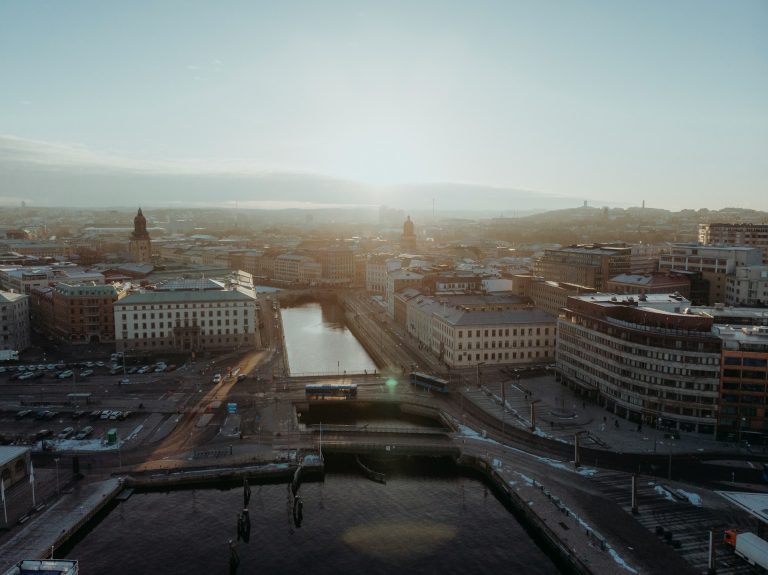
City in Scandinavia during sunrise.
Scandinavian culture’s deep connection with nature is mirrored in its architecture, featuring clean lines and sustainable materials. Photo: Hilda/Pexels

One key to success is embracing the concept of “Lagom” in Sweden or “Hygge” in Denmark, which emphasizes balance and contentment. Participating in local traditions and holidays can also fast-track your cultural integration, providing a deeper understanding of the Nordic mindset.

The Scandinavian Work-Life Balance

Scandinavia is also renowned for its work-life balance, with a strong emphasis on employee well-being and flexibility. Understanding this balance is crucial for expats entering the job market here.

Unlike many countries where long hours signify dedication, Nordic countries value productivity during work hours and personal time outside. This approach fosters a healthier, more balanced lifestyle, something that expats tend to appreciate deeply once adjusted.

Community and Socializing

Building a new social circle can be daunting in any expat experience, and Scandinavia poses unique challenges and opportunities in this regard. While Scandinavians may initially come across as reserved, they are incredibly warm and welcoming once you break the ice. Engaging in community activities, joining local clubs, or attending language classes can be excellent ways to meet new people and form lasting friendships.

Practical Tips for Moving to Scandinavia

The first step in your Scandinavian adventure is ensuring you have the right to live and work there. Each country has its own set of visa and residency requirements, so it’s crucial to research and prepare your paperwork accordingly. From securing a job offer to applying for a residency permit, understanding the legal framework will help you avoid any unnecessary hurdles.

Finding a Place to Live

Housing is a critical consideration for any expat, and Scandinavia offers a wide range of options, from urban apartments to rural homes. While major cities offer more amenities and job opportunities, they also have higher living costs.

Websites and local agencies can be invaluable resources in finding a place that suits your needs and budget. Remember, understanding the common expenses when moving to Scandinavia can help you plan better and avoid surprises.

Managing Finances

The cost of living in Scandinavia is notoriously high, but so is the standard of living. Opening a local bank account, understanding the tax system, and budgeting for daily and monthly expenses will help you manage financially. Although the initial costs might be high, most expats find the quality of life and the Nordic social welfare system’s benefits worth the investment.

Outdoor Activities

One of the most distinctive aspects of Scandinavian culture is its people’s profound connection with nature. Regardless of the season, embracing the outdoors is a way of life here.

A person embracing the outdoors in Scandinavia.
The love for the outdoors is a cornerstone of life in Scandinavia, and activities in nature are encouraged throughout the year. Photo: Agnieszka Boeske/Unsplash

IFrom skiing and ice skating in the winter to hiking and swimming in the summer, there’s always an activity to get involved in. Expats advise investing in quality outdoor clothing and gear to comfortably enjoy these activities year-round, truly embodying the local adage, “There’s no bad weather, only bad clothing.”

Sustainability Practices

Scandinavia leads by example in terms of sustainability and environmental consciousness. Living here, you’ll notice the emphasis on recycling, renewable energy, and eco-friendly transportation. In fact, going green is one of the most common pieces of advice you’ll ever get from expats living in Scandinavia.

Expats can embrace this aspect of the lifestyle by adopting practices like cycling to work, shopping for local and organic produce, and minimizing waste. This helps you integrate into the community and contribute positively to the environment.

Food and Cuisine

Scandinavian cuisine, emphasizing simplicity, freshness, and seasonal ingredients, can be a delightful discovery for expats. From Swedish meatballs and Norwegian salmon to Danish smørrebrød, the culinary scene is diverse and inviting. Expats recommend trying out local dishes and attending cooking classes to appreciate and integrate into the food culture fully. This also offers a tasty opportunity to socialize and meet locals.

Working in Scandinavia

The job market in Scandinavia is competitive but rewarding. There is a strong emphasis on skill and work-life balance. Online and in-person networking plays a crucial role in job hunting.

Additionally, while English is widely spoken, learning the local language can significantly enhance your job prospects and help you with adjusting to expat life. It showcases your commitment to integrating into the society and opens up a wider range of opportunities.

Workplace Culture

Flat hierarchies, open communication, and inclusivity characterize Scandinavian workplace culture. Decisions are often made through consensus, and employees at all levels are encouraged to voice their opinions.

This egalitarian approach fosters a respectful and collaborative work environment, which many expats find refreshing. Understanding and adapting to this culture can make your professional journey in Scandinavia a fulfilling experience.

Overcoming Challenges

While English is widely understood in Scandinavia, not speaking the local language can limit your social and professional integration. Depending on where you are, investing time in learning Swedish, Danish, Norwegian, or Finnish can vastly improve your daily life and connections with locals. Many communities offer language courses tailored to expats, which can also be a great way to meet other newcomers.

Seasonal Affective Disorder (SAD)

The long, dark winters in Scandinavia can be a challenge for expats, potentially leading to SAD. Staying active, maintaining a healthy social life, and making the most of daylight hours can help mitigate these effects. Additionally, embracing winter activities and understanding the challenges of winter driving in Scandinavia can transform the colder months into a time of enjoyment rather than something to endure.

A person pouring coffee outside during winter.
: During harsh winters, seeking advice from expats living in Scandinavia is invaluable for managing seasonal affective disorder effectively. Photo: Jonas Jacobsson/Unsplash

Image 3 Caption: During harsh winters, seeking advice from expats living in Scandinavia is invaluable for managing seasonal affective disorder effectively.
Alt-tag: A person pouring coffee outside during winter.

The Journey is the Reward

Embracing life in Scandinavia is about more than overcoming the initial hurdles of moving and adjusting; it’s about immersing yourself in a culture that values the quality of life, community, and harmony with nature. The advice from expats living in Scandinavia serves as a roadmap, guiding you through the practicalities while encouraging you to explore and engage with your new surroundings. With preparation, openness, and a sense of adventure, living in Scandinavia can be an enriching experience, offering lessons and memories that last a lifetime.

Insider Tips and Advice from Expats Living in Scandinavia
Samantha Green

Insider Tips and Advice from Expats Living in Scandinavia, written dedicatedly for Daily Scandinavian by Samantha Green. Samantha is a passionate writer who focuses on travel, cultural experiences, and the expatriate lifestyle. With years of experience living in various countries, Samantha brings a rich perspective to her readers, offering insights into life abroad, with a special fondness for the Nordic region.

Feature image (on top) © Jonas Jacobsson/Unsplash