Norway’s southern beaches and picturesque seaside towns are a magnet for summer visitors, while the west coast is blessed with glorious fjords and the oil-rich city of Stavanger and the Hanseatic city of Bergen.
Draw an upward arc on the map from Oslo in the east to Bergen in the west, and south of it you see the part of Norway where the majority of Norwegians take their home country holidays. They head for their seaside cottages, camp in the forests and by the lakes, or set sail to explore the islands and the inlets.
Beaches and Picturesque Seaside Towns in Southern Norway
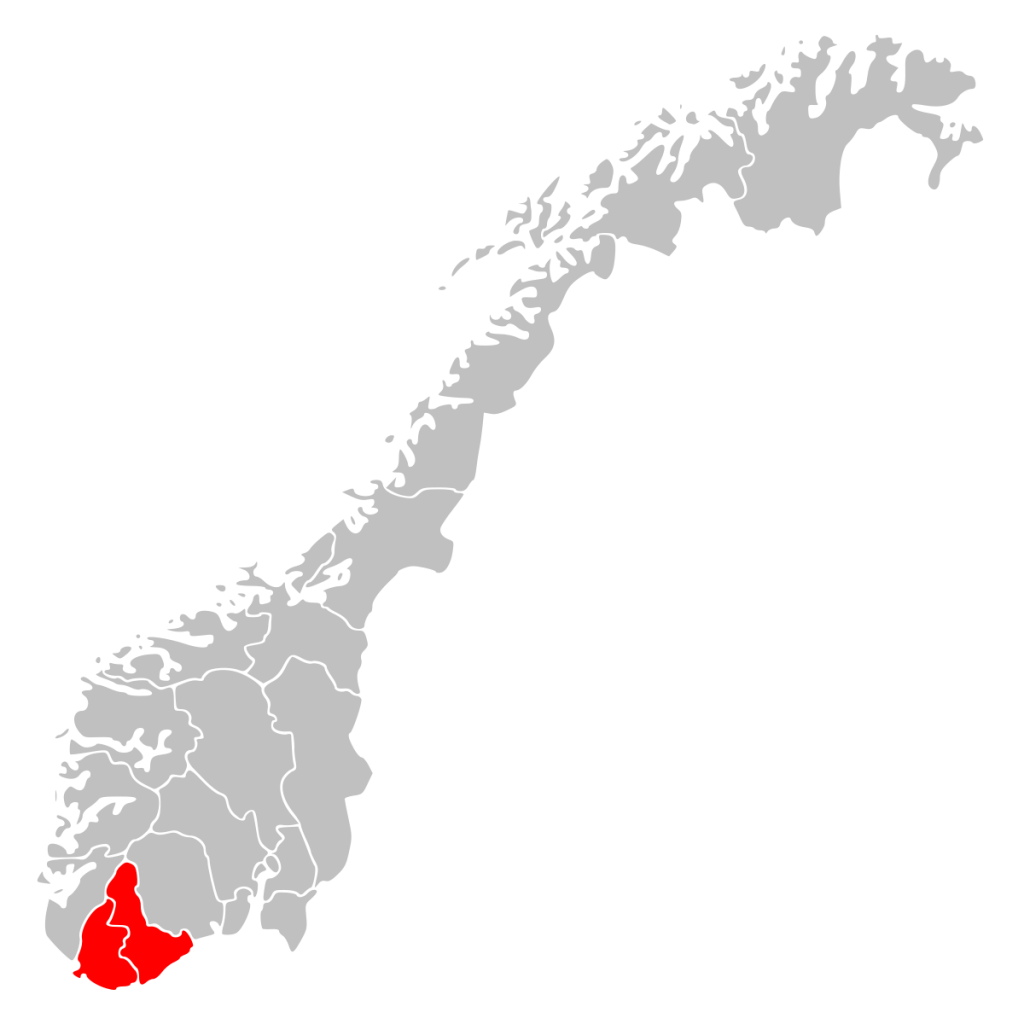
In clockwise order starting at Oslo, southern Norway can be divided into the principal regions of Sørlandet (southern country), comprising Telemark, Aust-Agder and Vest-Agder counties and their coasts around to about 7 o’clock; Rogaland county centered at the city of Stavanger on the west coast and Hordaland county around Bergen.
Sørlandet Norway’s fifth largest city, lively Kristiansand, is the unofficial capital of the southern coast. It’s a busy summer resort with ferry connections to Denmark. In 1639, King Christian IV of Denmark and Norway selected the site of the city for a fort to control the approaches to the North Sea and the Baltic. You can visit the remains of Christiansholm Fortress, which offers views of the harbor and coast from its stocky ramparts.
One of Norway’s most visited attractions is Kristiansand Dyrepark 11km (7 miles) east of the city, incorporating a zoo, wilderness park, water park and amusement park.
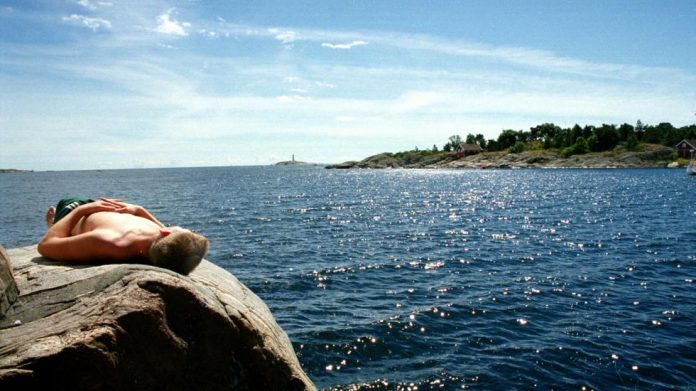
Summer holiday in southern Norway
Norway’s best sandy beach
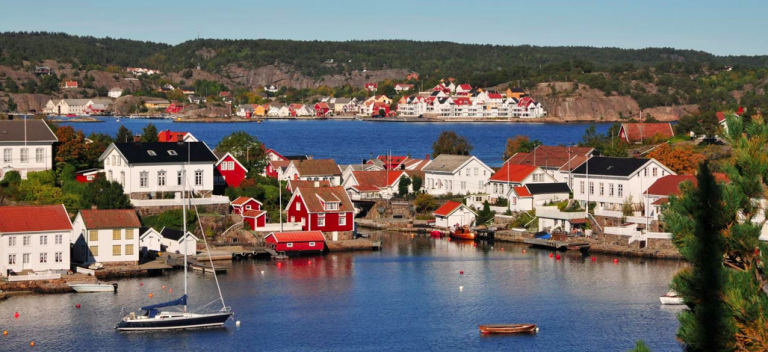
West of Kristiansand, the seaside resort and former timber town, Mandal, boasts Norway’s best sandy beach and a well-preserved center of cobbled streets and white clapboard houses, characteristic of this area of beaches and picturesque seaside towns in Southern Norway
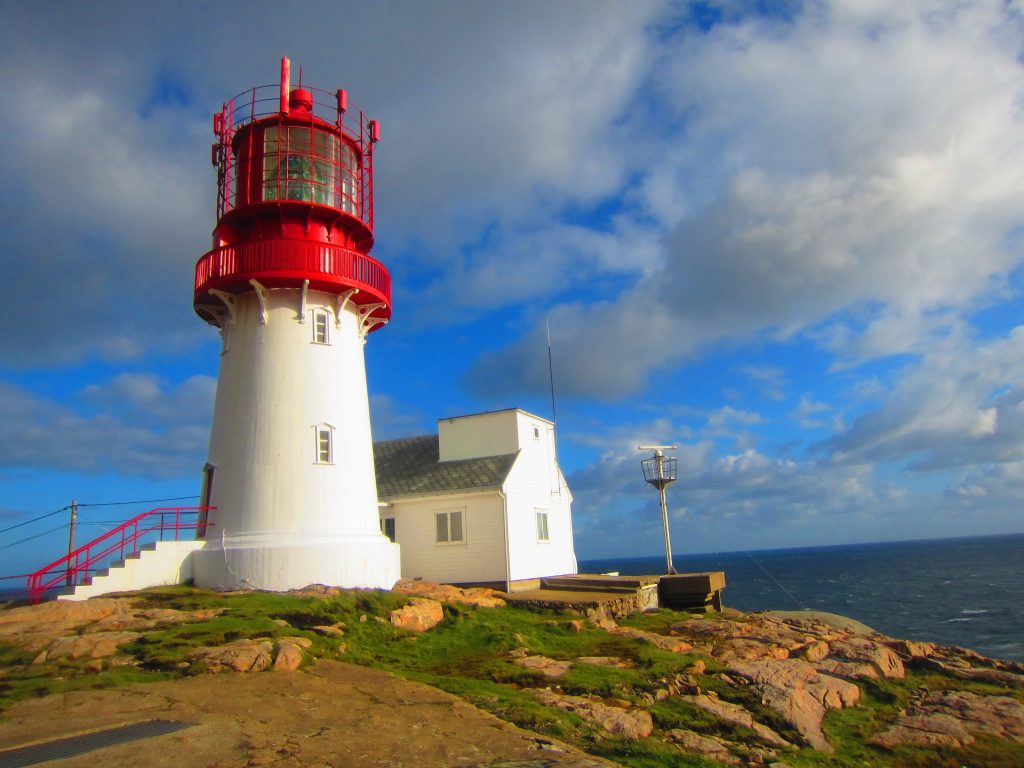
The Lindesnes Lighthouse marks the southernmost point of Norway.
Yacht harbor in southern Norway
Splendid waterfalls
The last town before Vest-Agder rises to meet Rogaland is the port of Flekkefjord and the idyllic island of Hidra. The terrain is mountainous, with many splendid waterfalls, especially around Kvinesdal.
Beaches and Picturesque Seaside Towns in Southern Norway, written by Tor Kjolberg
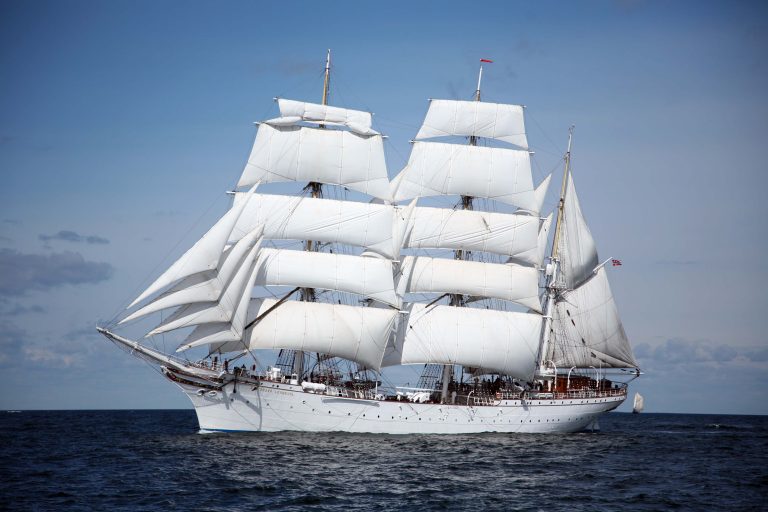
To sail with the Statsraad Lehmkuhl is a once-in-a-lifetime experience. The three-masted steel barque was built in 1914 in Bremerhaven, Germany as a training ship for the German merchant navy and originally called Grossherzog Friedrich August.
After the First World War the ship was taken by the British army as a trophy of war and sold in 1921 to the former minister of Norway, Kristoffer Lehmkuhl. That explains the name, Statsraad Lehmkuhl, which literally means ‘Cabinet Minister Lehmkuhl’.
You’d better roll up your sleeves being in board Statsraad Lehmkuhl
The Norwegian Tall Ship Statsraad Lehmkuhl
The Statsraad Lehmkuhl has an impressive and romantic appearance with the length of 98 meters and over 2000 m² of sail – you’d better roll up your sleeves! In fact, you’re welcomed aboard. No prior experience is necessary – the professional crew is expert sailors and will teach you all the skills you need.
The Statsraad Lehmkuhl takes daytrips, but also cruises of 10 days and naturally this ship competes during the Tall Ships Races. This Norwegian giant often finishes in the top three.
The Statsraad Lehmkuhl has an impressive and romantic appearance with the length of 98 meters and over 2000 m² of sail
Saved from falling into foreign hands
Statsraad Lehmkuhl started sail training in Norway, transferring to the Bergen School Ship Foundation in 1924 where she was run until 1966 with the exception of five years during the Second World War when she was renamed Westwärts.
Ship tycoon Hilmar Reksten bought her in 1967 to prevent Statsraad Lehmkuhl from falling into foreign hands. Twelve years later he donated the ship to the foundation ‘Stiftelsen Seilskip Stadsraat Lehmkuhl’. The foundation has been the owner and manager since.
You’re welcomed aboard. No prior experience is necessary – the professional crew expert sailors and will teach you all the skills you need.
The steel barque is moored in Bergen, from where it will depart for most of its 2019 cruises.
The Statsraad Lehmkuhl takes daytrips, but also cruises of 10 days and naturally this Ship competes during the Tall Ships Races
Circumnavigation in cooperation with the University of Bergen
In August 2018, Statsraad Lehmkuhl and the University of Bergen (UiB) became the first partner to sign a statement of intent to participate in the circumnavigation and to provide the scientific content. In 2021, it plans to perform its first ever circumnavigation of the world.
A number of UiB’s research environments and initiatives have been involved in shaping the statement of intent, including the world-renowned Bjerknes Centre for Climate Research, the SDG Bergen initiative and the Ocean Sustainability Bergen centre.
The Norwegian Tall Ship Statsraad Lehmkuhl, written by Tor Kjolberg
Swedish furniture company Fogia, established in Stockholm in 1981, works closely with some of Scandinavia’s most successful designers. We visited Fogia’s concept store inside a subtly overhauled 19th-century steam engine workshop just outside Stockholm to meet CEO and owner Marcus Huber and PR & marketing manager Richard Prime.
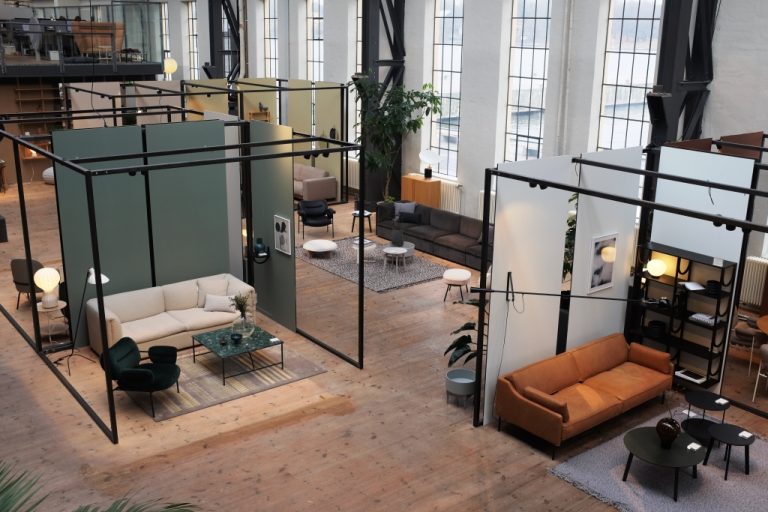
Located in the municipality of Nacka beside an inlet of the Stockholm archipelago, the 1200 square-meter concept store Fogia Market appears almost like a well-furnished home.
“Fogia believes in the natural Scandinavian heritage of blending excellent craftmanship with intelligent choice of materials,” explains Richard Prime
“Fogia began its ‘design life’ as a manufacturer of tables that joined glass tops to Plexiglas frames,” says Richard Prime. “The Swedish word “foga” means “join” and thus the name Fogia.” Over the years, Fogia has developed its production range to furniture and interior items, working closely with a tight-knit group of european designers, such as Swedish Stefan Borselus and Carina Seth Andersson, Andreas Engesvik from Norway and studios like Norm Architects, Note, TAF Studio and Main.
Fogia Barba sofa group, designed by Andreas Engesvik
Furniture made to order
“Fogia believes in the natural Scandinavian heritage of blending excellent craftmanship with intelligent choice of materials,” continues Richard Prime. “We’re aiming at making the most out of the materials and create aesthetic expressions.”
Most of Fogia’s products are handmade in Europe. There is no stock of furniture, every piece of inventory is made to order. So, don’t expect delivery the next day after you have found your favorite bookcase or sofa at one of the Fogia dealers around Scandinavia and Europe. Fogia is now expanding into the international market. Last year, the company opened a showroom in New York and won the Collection of the Year Award at the 2018 edition of ICFF in New York.
“We don’t follow the trends, we make our own paths,” says Marcus Huber who took over the company with partner Lars Lindgren in 2011
An element of surprise
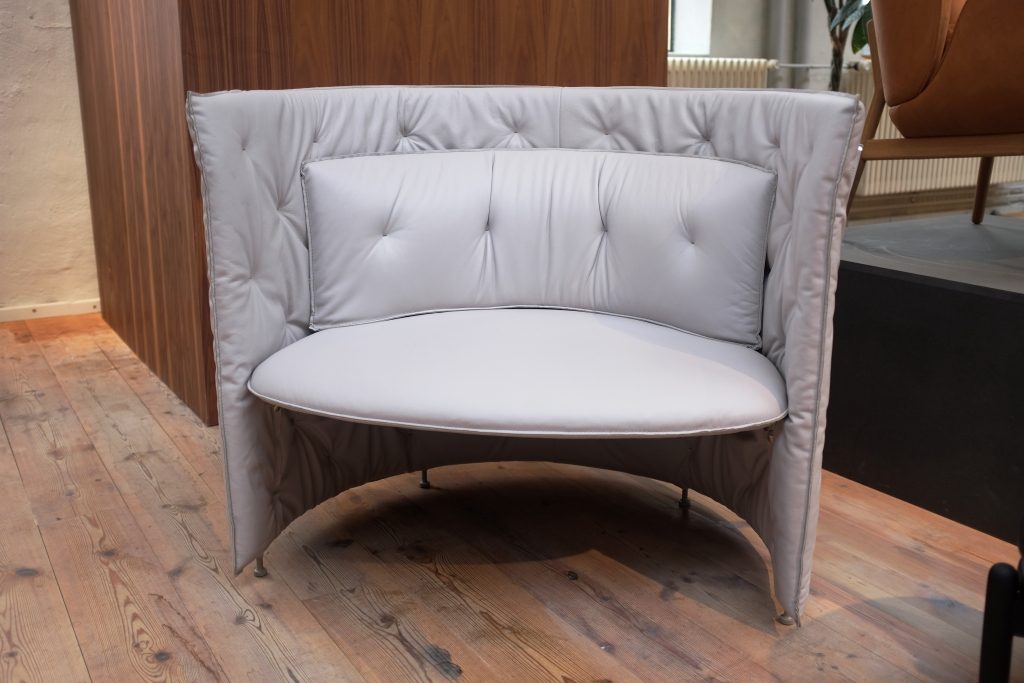
“We don’t follow the trends, we make our own paths,” says Marcus Huber who took over the company with partner Lars Lindgren in 2011. “There is often an element of surprise. When the National Museum in Stockholm reopened after five years of restoration last year, Fogia was commissioned to make site-specific chairs designed to fit into a curved recess in the restaurant. The result was Niche, a one and a half seater designed by TAF Studio.”
Months later, an internationally acclaimed single seater club chair, influenced by the design and also named Niche, was added to Fogia’s collection.
Fogia Mtko chairs, designed by Stefan Borselius
When we ask Richard what makes Fogia so special, he smiles and says, “It’s a combination of design, choice of materials and good craftsmanship. I will give you an example. Some time ago I wanted to change my old sofa at home and the new one was of course a sofa from Fogia. The movers came and my old sofa was quickly removed. It took considerably more time for my new sofa to arrive at my apartment. I could not believe it since their truck was parked nearby. When they returned with my new sofa, I asked the movers why it took them so long to come back. I still remember their answer: “Your new piece of furniture is just a better quality item compared to your old lightweight sofa; so it takes a bit more manpower to get it from the van!”
Niche, a one and a half seater designed by TAF Studio for the National Museum of Stockholm
Sustainability is a keyword
Fogia’s product manager Hanna Nilsson is incredibly focused on producing as sustainabily as possible without compromising quality. Each Fogia item is made to last for a long time, and we’ll take no shortcuts where this is concerned.
“Before launching a new model, we never rush,” explains Richard. “It can take years to launch a new product. We wait until it’s perfect. We want to give our designers space. We don’t make furniture specifically to launch at the furniture fairs. These days, our products are released when they’re ready.”
An ambitious company “Ambition is the answer to success,” says Marcus Huber. “We’re not locked into a system on how to do things right in our industry. We have our own vision that governs how we operate in the design framework. We work in close collaboration with creative people both within and outside our company.”
Foga Tiki sofa, designed by Andreas Engesvik
Fogia works with several styles in their furniture collection, with a story behind each product. The concept store in Nacka, Stockholm is the perfect place to exhibit the items and let each of them communicate their own story.
Welcome to Fogia’s concept store in Stockholm
If you have not had the chance to visit Fogia’s concept store in Stockholm, you have missed an important part of Swedish furniture history. Or, more accurately, you have missed an important part of its future.
There is also a small café that serves drinks and snacks to browsing visitors at the rear of the store.
All photos: Tor Kjolberg
Handmade Furniture from Sweden, written by Tor Kjolberg
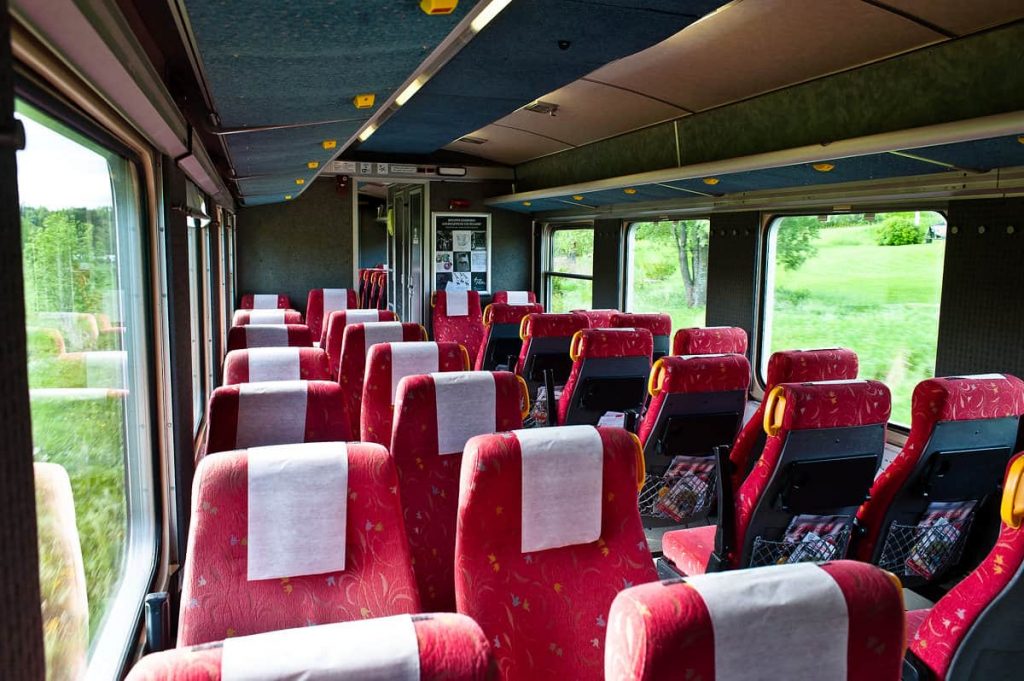
The 1,007-km (667-ml) Inlandsbanan carries you along the spine of central northern Sweden. Built to serve the logging industry, it has now diversified to cater for the burgeoning tourist trade.
The pace of the train is very laid back. As befits a Swedish operation, you are transported at an average speed of 50 kph (30 mph) through magnificent pine and birch forests.
Departing from Mora
As the train departs Mora on its northbound journey, all eyes are drawn to the deep forest where yellow wild flowers line the track. This is an ideal habitat for bear, reindeer and moose and the train will conveniently slow down if any are spotted so to be sure to have your camera primed and ready.
The train passes many water features in the way but the waterfalls at Storstupet (Grand Plunge) and Helvetestfallet (Hell’s Waterfall) are the most spectacular.
The train departs Kristinehamn on its northbound journey and finally pulls in to Gällivare
The Swedish Inland Railway
Whilst it is possible to make this gentle journey inside two days, it is best experienced in separate stages with stopovers between. Aside for the wonderful forest surroundings, there is much more to enjoy on the way.
First main stop
The first main stop is Ôstersund. More associated with winter sports, it takes on a different life in the summer. A picturesque little town, it offers historic walks, a heritage museum and the splendid Lake Storsjön is nearby.
It is possible to make this gentle journey inside two days
Exploring Vilhelmina
The next stop, Vilhelmina, is most worthy of exploration. Surrounded by invigorating fast flowing streams, it is home to many Sami artisans and has many naturally heated pools and an extensive cycleway.
Swedish inland railway passing the Arctic Circle
Finally pulling in to Gällivarte
As the train continues steadfastly towards the Arctic Circle, the forest becomes more untamed and the vista ever more beautiful. The train finally pulls in to Gällivare, a town where people successfully combine modern living with a more traditional way of life.
The Swedish Inland Railway, written by Tor Kjolberg
Originally from Cattolica, the Italian province of Rimini, Massimo Leardini has lived and worked in Norway since 1987 and has become one of the most sought-after photographers in Scandinavia. His works have received numerous awards and prizes and appear regularly in leading magazines, like Elle, S Magazine, Smug, Carl’s Car and Personae.
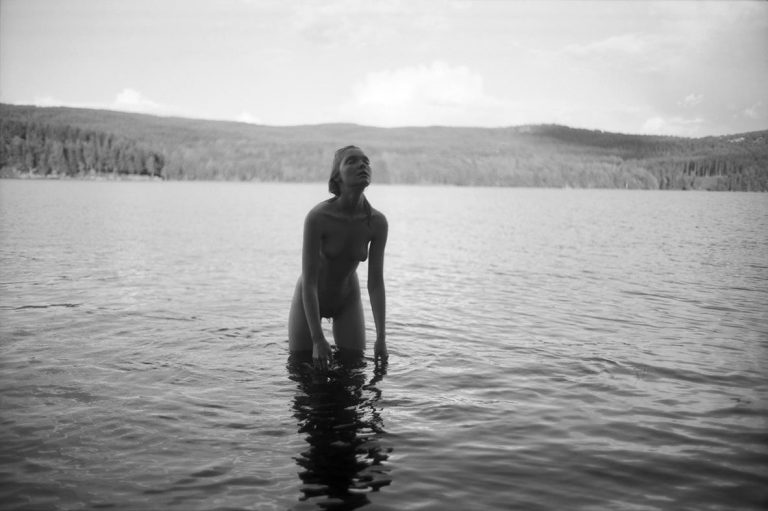
He moved to Norway because of a book project in 1987, a book featuring photographs with female models Iselin Steiro, Marianne Schröder, Viktoria Winge, Jenny Sinkaberg and Ophelie Rupp amongst others. His vision was to bring together the beauty of the human body along with the timeless Scandinavian landscape. He has always been captivated by the visual world.
Italian Photographer in Love with Norwegian Nature The result was a large format clothbound hardcover book, Scandinavian by Massimo Leardini. Later he has made another book, Iselin, in which he presents a series of intimate portraits of Norwegian model Iselin Steiro. Despite the seeming purity and innocence of these candid moments, a quite sense of melancholy pervades and hint at a deeper undercurrent of Nordic angst.
Massimo Leardini moved to Norway because of a book project in 1987
Never willing to compromise
Leardini is basically interested in natural things. He makes portraits, landscapes and takes pictures of grass. To him everything is natural. He also works with fashion photography and says many of these pictures are like a diary to him. The simplicity behind his art is what makes it so easy for the eyes to appreciate.
Massimi Leardini’s vision was to bring together the beauty of the human body along with the timeless Scandinavian landscape
Placing the integrity of his work above everything else, Leardini is never willing to compromise on his vision. His images successfully create a timeless story of female adoration and empowerment – no clothes, no barriers, no messing!
Feature image (on top): Iselin, by Massimo Leardini
Italian Photographer in Love with Norwegian Nature, written by Tor Kjolberg
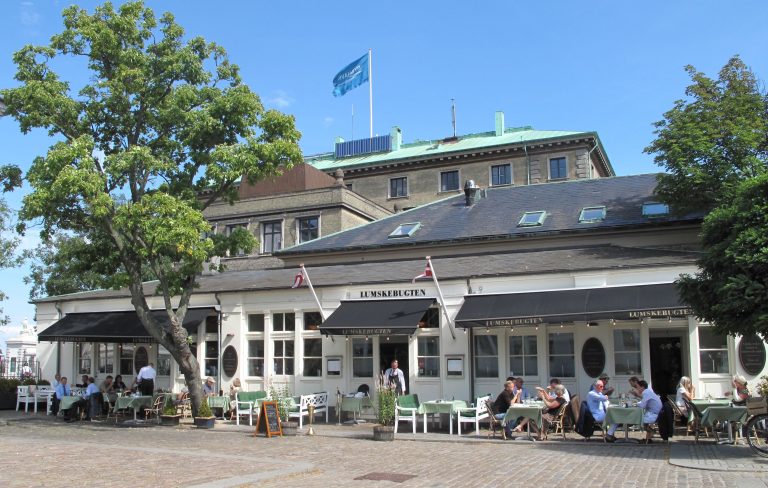
“Lumskebughten” is an odd word in Danish. However, when you look at the surroundings it actually makes sense. Tucked away at the sea entrance to Copenhagen, the historic sailor’s tavern Lumskebugten no longer has to rely on strong currents to secure its clientele.
Today, as well as in historic times, Lumskebugten offers traditional Danish cuisine, including an extensive selection of fresh seafood and is a shining example of Danish charm.
Lumskebugten offers traditional Danish cuisine, including an extensive selection of fresh seafood and is a shining example of Danish charm
From the old custom house Frederiksstad next to the restaurant there is very strong currents forming sand banks in the bay. So, the restaurant is amply decorated with paintings of seafaring men, ship models, and other curious, lending a certain maritime touch to the establishment, led by one of Denmark’s most established chefs Erwin Lauterbach.
Superb atmosphere
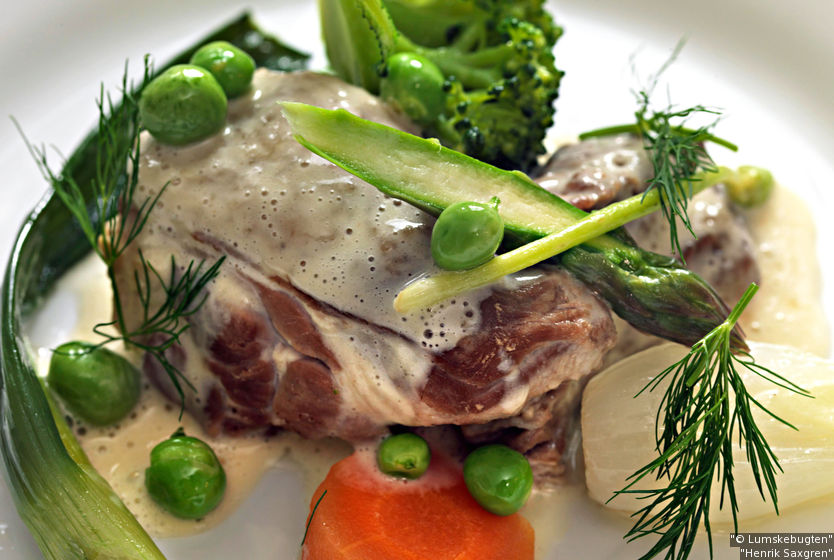
The spotless restaurant offers superb atmosphere, and the authentic Danish menu includes tartare of salmon with herbs, fried herring platters, and fish cakes in mustard sauce. Since 1854 sailors and lubbers alike have been “washed” into the establishment. The tavern was situated just where ships and sailors took leave of Denmark and then again sat foot on Danish soil after having cruised around the world.
The Historic Treacherous Bay Tavern in Copenhagen
From the beginning of the 1900s, Lumskebugten was constantly the talk of town. Fresh French frog’s legs were regularly flown in, and Russian Czar Nicolai II often graced the restaurant with a royal visit.
The restaurant is amply decorated with paintings of seafaring men, ship models, and other curious, lending a certain maritime touch to the establishment
Since 2011, the tavern is owned and run by Chef Erwin Lauterbach, famous for his love of vegetables, fish and traditional cooking. It is also worth visiting the restaurant if you want to try a traditional Danish lunch. “This is a kind of place that I would love to stumble upon in my own holidays,” says Lauterbach.
The authentic Danish menu includes tartare of salmon with herbs, fried herring platters, and fish cakes in mustard sauce
Where to find it
Within a short stroll from the old defense site Kastellet and the famous Little Mermaid, Lumskebugten has one of the most peaceful cobblestoned terraces in Copenhagen
The place’s popularity has grown much in later years, so reservations are recommended.
A small booklet with the story of Lumskebugten is at hand for free when you visit the Restaurant.
The Historic Treacherous Bay Tavern in Copenhagen, written by Tor Kjolberg
Whiteboard Animation? Whiteboard Animation Videos are short videos that effectively tell your potential customers, in 90 seconds or less, about your product or service. Englishman Benedict Hickson who specializes in it moved to Oslo, Norway to extend his business.
Benedict Hickson’s animation company, CZA Studios, has included work for film companies and the BBC series Hustle, The Body Farm and Inspector Lewis, before the company specialized in whiteboard animation.
His very first client in whiteboard animation who found Benedict’s company, CZA Studios, was the American Chicago partner of the huge global consulting company, PWC. He along with 4 partners of the countries: United Kingdom, France, Germany and Japan, needed to put together an internal talk on innovation. They’d thought of the different options and felt that it would capture people’s interest more with whiteboard animation in which the sketching during the voiceover keeps the audience’s interest in the curiosity to find out what will be sketched. The message was complicated, but Benedict created a whiteboard animation video within a month, including the script, storyboard, recorded voiceover and the animation.
“Oslo is the capital but still small enough so I can travel around on my bicycle and communicate with potential clients,” says Benedict
The ball was rolling
The client was so happy that he got a call from another global consulting company in London to make a presentation for them. It is one of the top three global consultancy companies whose name (due to their protocol) we can’t mention, but can only refer to them as a top-tiered global consultancy company. Their client was the NHS CCG in England for the Executives of the company for their employees and it was a great success.
Benedict’s next client showed how flexible the use of Whiteboard Animation is. It can be used for training videos for example. He was taken on by the German senior lecturer in tourism, Dr Dorothea Meyer, who had done a big project on Zanzibar in trying to help the women there. According to their culture, even though there were hotels there they were not accepted by their people to work in them. The main option was to be working in arts and craft. So Dorothea had done projects with them training them and helping them to create their own businesses. Benedict did a whiteboard animation describing what she had been doing in Zanzibar which was presented at International University Meetings to great success as it gave a clear idea of her work to other countries.
2D Animation video made by CZA Studios for the Swedish Graphic Book Series, Barnen i Lyckeskolan
Whiteboard Animation Made in Norway
After more work of this kind he decided to extend his business and partly by instinct he moved to Oslo, Norway.
“Oslo is the capital but still small enough so I can travel around on my bicycle and communicate with potential clients,” he says. “It suits my creative side of life. A lot of businesses including both of the main global consultancy companies that I’d worked for are situated here in Oslo.”
“A lot of businesses including both of the main global consultancy companies that I’d worked for are situated here in Oslo,” explains Hickson
He arrived in Oslo in the lovely summer of 2018, but the timing to do business wasn’t ideal. Business was slow and most of his potential customers were on holiday. He also needed an ID number as well as a place to work and sleep, so much of his first weeks consisted of staying in Airbnb apartments or hotels whilst getting his act together. Once the branch of his company was set up he succeeded in finding an apartment to rent. His only assets were his working tools, a database he’d put together of 850 customers and his creative talent.
Animation video made for PWC by CZA Studios
First Norwegian clients
He quickly built up contacts. One of his contacts was Flyvefisken in Oslo. Thanks to the owner he got an accountant and business adviser who offered his accountant services. Both of them were some of Benedict’s first whiteboard animation clients to sell their products.
Although Benedict’s specialization is whiteboard animation he has been working on other forms of video and animation here in Norway such as the videos for Røde Kors for Papyaya Design & Marketing and 2D animation for Staalstrøm, the Norwegian company in Florida.
“The reason this kind of video is essential has to do with people’s short attention spans. The average attention span of a visitor on your landing page till distracted is just 8 seconds,” explains Benedict.
Another Whiteboard Animation client was for the company, Stingray Marine Solutions. Realizing that some of the prospective fish farmers were more visually skilled in learning, the entrepreneur, co-founder and managing director, John Breivik, was keen to have the story told with whiteboard animation, unfolding as they watched to make sure that it kept their interest.
Why animation videos?
“The reason this kind of video is essential has to do with people’s short attention spans. The average attention span of a visitor on your landing page till distracted is just 8 seconds,” says Benedict. “People love to be entertained, and a good Animation Video grabs their attention and allows you to explain exactly what you do deliver and how your product works, without being pushy or salesy,” he adds.
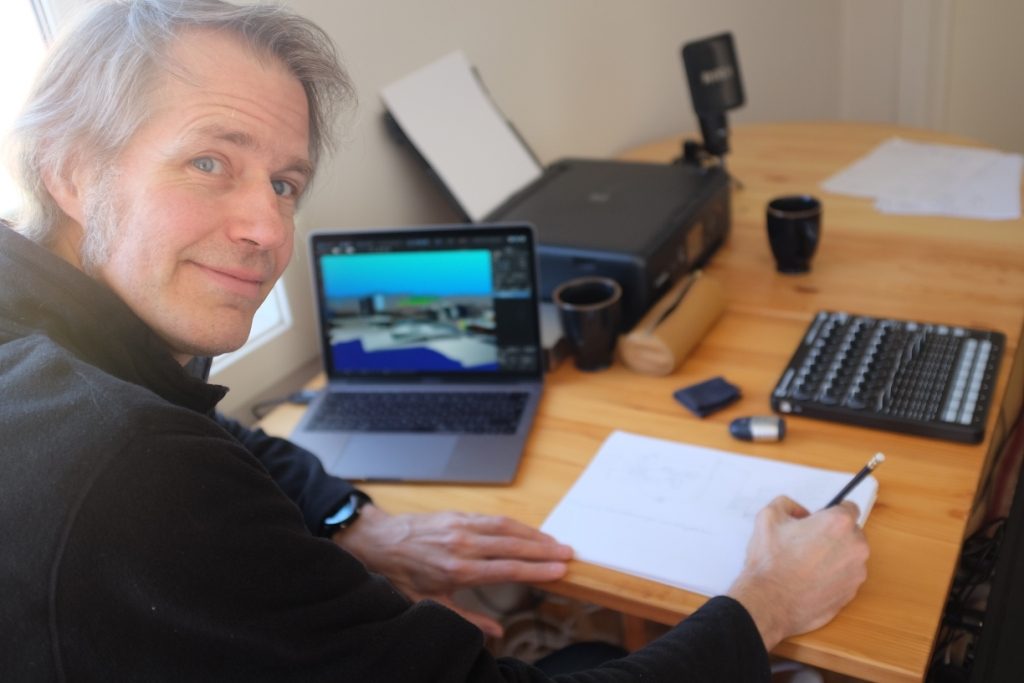
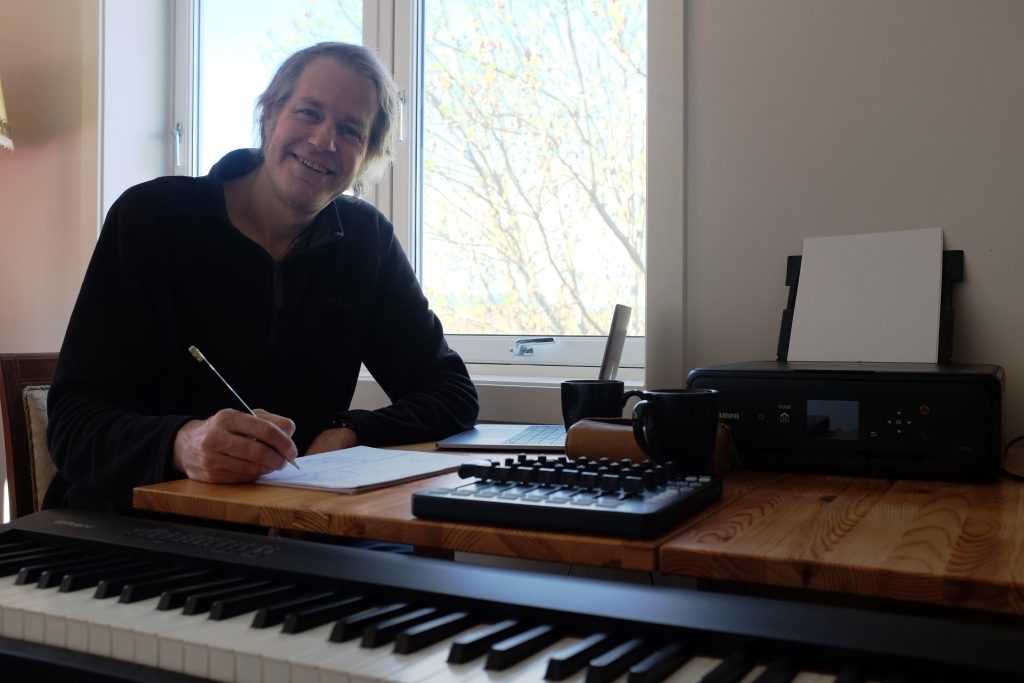
When I interviewed Benedict in his apartment I was impressed by how he can produce his animations with quick sketches, just a few computer programs and lots of talent.
Benedict Hickson’s cover image for an article called 25th of june at 5.30, a film about resilience of Syrian school children in a refugee camp
Close cooperation
“The clue is very much personal cooperation between myself and the client,” Benedict says. “I pick my client’s brain to understand the client’s dream and message. From this I understand what the client wants and I put it into a visual story.”
It is a process of setting up the narration, and working out reference images. Then Benedict takes it away and creates a simple pencil and paper storyboard with the images at appropriate places of the narration. Benedict states that it is important that they are simple sketches and not too arty but simple and clear to make sure that they match what the client wants. After some changes as required and the client is happy, Benedict is ready to start on the animation, bespoke to the requirements of the client. Although most whiteboard animation is simple sketches, Benedict likes to take it further with the art and quality of the finished images in the whiteboard animation.
Since Benedict is also an actor and composer, he can do the narration (with his British accent) and add music to his productions – huge savings, both in time and money, for his customers.
For companies in need of explaining a complicated product or wanting to educate their customers, animated videos are ideal, explains Benedict
“People are interested in what you are sketching and it keeps their attention during the sketching process. This leads to animation videos having many benefits, like increasing sales, driving online search visibility, building trust and creating a social buzz,” says Benedict.
On the technical side, Benedict explains that he does both 2-D and 3-D animation. “Animation Videos generate a strong bond with the viewer, and this connection impacts directly on your marketing campaign rates. They not only engage the audience and explain your product in an enlightening and entertaining way, but they also directly affect your potential customers’ purchase decisions,” says Benedict Hickson, sole owner of CZA Studio AS.
For companies in need of explaining a complicated product or wanting to educate their customers, animated videos are ideal, explains Benedict.
First impression important
According to Mr Hickson first impressions are so important, especially in today’s day and age when everything is happening so fast and the average person’s attention span is growing shorter and shorter. To make a good first and lasting impression, your best tool is an Animation Video.
Order your free copy of the eBook “What is Whiteboard Animation?”
“Presentations with Power Point even with an inspiring presenter can be boring,” says Benedict. “Animated videos are proven to be the best means of introduction because they quickly capture the attention of your audience, while delivering your message in a fun, engaging and informative way,” he adds.
If you want an in depth report on Animated Videos, Benedict has written a White Paper on Whiteboard Animation which he gives away for free. Just email him at benedict@czastudios.com and ask for your free copy.
Photos: Tor Kjolberg
Whiteboard Animation Made in Norway, written by Tor Kjolberg
Vast quantities of water plunge 182 meters down after Vøringsfossen drops down from the Hardangervidda plateau to the Måbødalen valley. Now, the Norwegian Public Roads Administration has made the area safer, created unity and cohesion between the various viewing points to heighten the nature experience.
It is just an impressive sight in natural and idyllic surroundings. Måbødalen is narrow and steep, and this beautiful valley stretches from Eidfjord through to Hardangervidda, where it is possible to see the waterfall from the bottom of the valley. There used to be several roads passing through Måbødalen, and in the 1780’s stone steps were built (1300 in total) to make the journey easier.
Visitors looking at Vøringsfossen from Vossli. Photo: Silja Lena Løken / Statens Vegvesen
If you want to see Vøringsfossen from the bottom of Måbødalen, you can park at Fossatromma and follow the old road down to the old waymarked trail from 1872 leading into the waterfall. The waterfall can be very loud, especially when discharge is great, and the drizzle from the waterfall can make the experience rather cool in more ways than one. From the main road it takes half an hour to walk to the waterfall.
Vøringsfossen is just an impressive sight in natural and idyllic surroundings. Photo: Silja Lena Løken / Statens Vegvesen
The Most Famous Waterfall in Norway Over time, Vøringsfossen has been visited frequently, and the landscape surrounding the waterfall has borne evidence of wear and tear. However, the Norwegian Public Roads Administration has improved the attraction considerably, both visually and safety wise. New viewing platforms, a spectacular footbridge across the river as well as new paths and improved visitor facilities such as parking and toilets have been constructed. The project has been designed by architect Carl-Viggo Hølmebakk.
Toilet facilities at Vøringsfossen. Photo: Tonje Tjernet / Statens Vefvesen
Architect Carl-Viggo Hølmebakk
Carl-Viggo Hølmebakk is a Norwegian architect who attended the Oslo School of Architecture and Design in 1984, and the Cooper Union in New York in 1985. Hølmebakk has designed several viewing points and rest areas along the National Tourist Routes, including Sohlbergplassen in Rondane, and he has received several prizes for his designs.
The Norwegian Public Roads Administration has improved the attraction considerably, both visually and safety wise. Photo: Silja Lena Løken / Statens Vegvesen
The attraction is partially wheelchair accessible. The toilets at Vøringsfossen are closed in winter from November to the beginning of May.
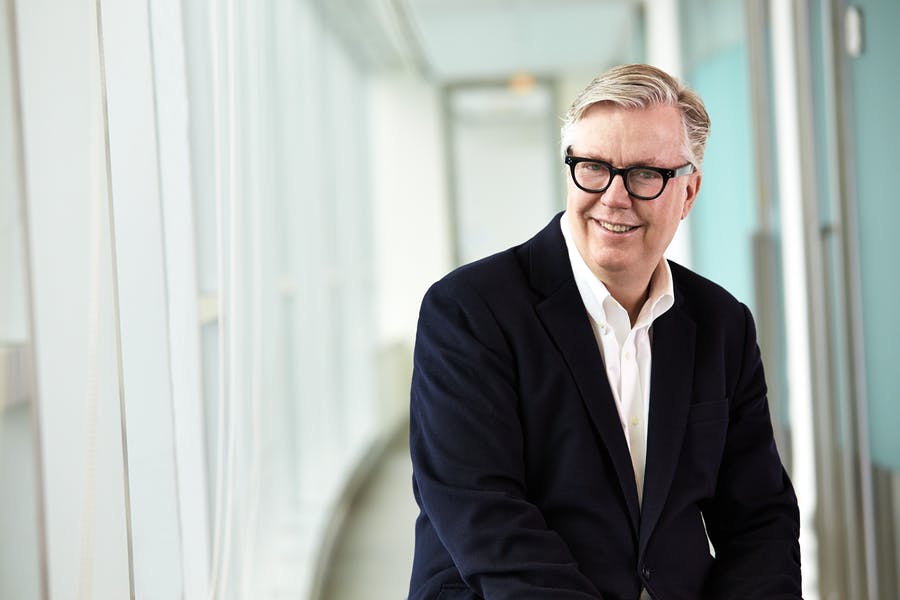
Swedish Lars Nittve (66) was the the director of the Louisiana Museum of Modern Art outside Copenhagen (1995–98), founding Director of Tate Modern in London (1998–2001), director of Moderna Museet in Stockholm (2001–10), and until recently Director of the M+ museum of contemporary art in Hong Kong, which he joined in 2011.
The M+ Museum in Hong Kong was scheduled to open in 2017, but the latest construction delay was the last straw and from now on, he wants to spend more time at his home in Sweden and only remain a consultant to the project.
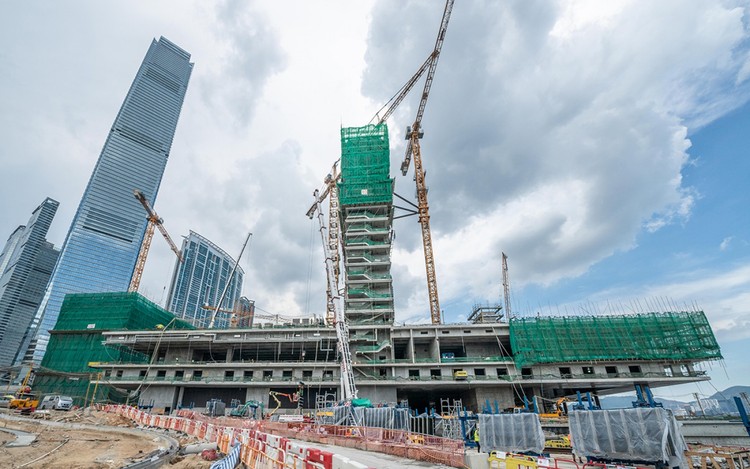
Construction work at M+ Museum in Hong Kong
Lars Nittve goes to Hong Kong
Lars Nittve was born in Stockholm in 1953. He studied at the Stockholm School of Economics, and obtained an M.A. at Stockholm University. He also pursued postgraduate studies at New York University. In 2009, Nittve earned a PhD, HC, from the Umeå University in Sweden.
In 2010 when Nittve agreed to come to Hong Kong to lead the M+ project, the authority was overjoyed. M+ is aiming at reinventing the definition of a museum and has been described as the most ambitious museum project since the Centre Pompidou opened in Paris nearly 40 years ago.
In 2010 when Nittve agreed to come to Hong Kong to lead the M+ project, the authority was overjoyed
In an interview in 2015, Nittve pointed out that he was not really leaving. He said he would be showing up for work as a consultant for one week each month in Tsim Sha Tsui. “M+ is a team effort but it is also very much my brainchild. I’ve been here five-and-a-half years. I want it to have a happy ending,” he concluded.
The building is now scheduled to be finished March 2020 and the M+ museum will open nine to twelve months later.
Swedish Legend in the Art World
Nevertheless, Nittve has had a prolific career as a curator and lecturer, and is a member of the Royal Swedish Academy of Fine Art. In 2013 he was ranked at number 73 in Art Review Magazine’s annual Power. He is also the author of several publications on art, as well as articles in journals and catalogues in Sweden and abroad
Swedish Legend in the Art World, written by Tor Kjolberg
National Geographic’s new six-part series, Hostile Planet focuses on how predator and prey struggles to survive in Earth’s rapidly changing extreme environments. Hostile Planet is an unvarnished depiction of the animals’ struggle to survive on an ever more relentless planet. The team has also been to the mountains of Telemark and the Reisa Fjord in Tromsø to perpetuate Norwegian fauna.
“It’s an honest account of what’s going on today,” says the series creator, Tom High-Jones. It has taken months of preparation followed by weeks of tracking various species to capture the perfect unexpected shots. Out of 1,800 hours of footage comes six segments focusing on distinctive biome: mountains, oceans, grassland, jungles, deserts and polar.
“It’s an honest account of what’s going on today,” says the series creator, Tom High-Jones
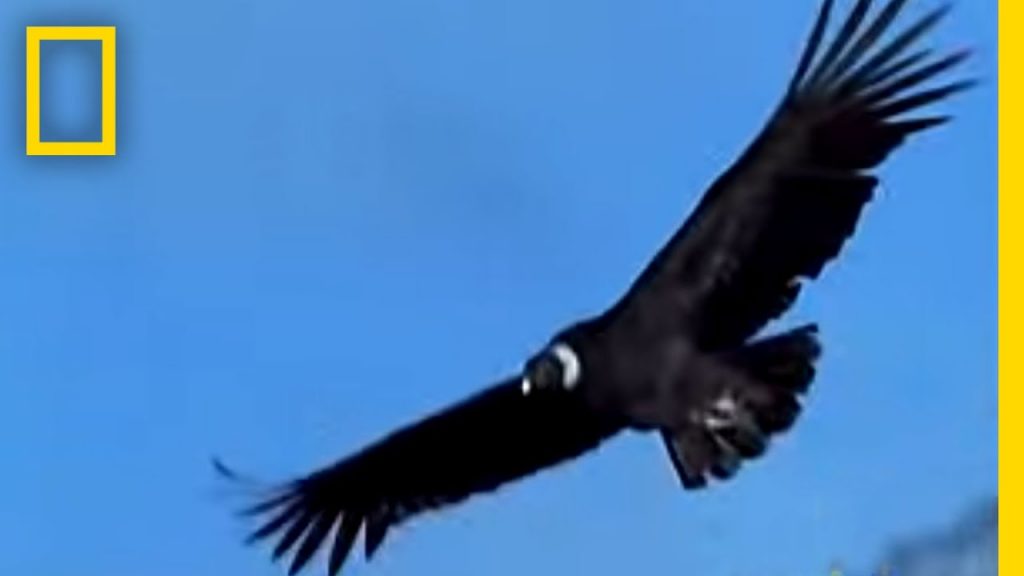
Eagle filmed for National Geographic in Telemark, Norway
Award-winning director
Hostile Planet is executive produced by Academy Award-winning cinematographer and director Guillermo Navarro (Pan’s Labyrinth), Emmy-nominated producer Martha Holmes (The Blue Planet) and Emmy Award-winning Tom Hugh-Jones (Planet Earth II).
TV Documentary team on earth’s climate change visits Norway
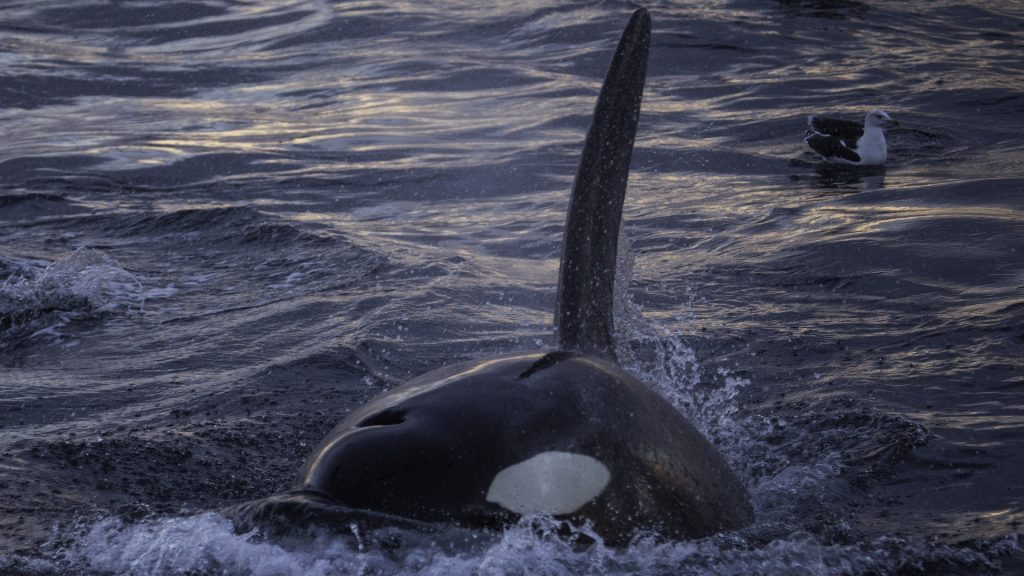
The series draws attention to the most extraordinary – almost supernatural – accounts of animals that have conformed to the cruelest evolutionary curveballs. “Norway was my absolute favorite part of these recordings,” says Navarro to the Norwegian newspaper Aftenposten after having filmed eagles and orcas respectively on his trip to Norway.
“The visual language is now what takes over. The old traditional way was pretty much a voiceover being illustrated with images. This is a much more immersive experience,” says Guillermo Navarro.
Hostile Planet Production Credits
Hostile Planet is produced by Plimsoll Productions for National Geographic. For Plimsoll Productions, executive producers include Grant Mansfield, Andrew Jackson, Martha Holmes, Bear Grylls, Delbert Shoopman and Tom Hugh-Jones, who also serves as showrunner. Guillermo Navarro is executive producer. For National Geographic, Kevin Tao Mohs is executive producer. Geoff Daniels is executive vice president of global unscripted entertainment for National Geographic Channels.
Feature image (on top): Mother polar bear, desperate for food
TV Documentary on Earth’s Climate Change Visits Norway, written by Tor Kjolberg