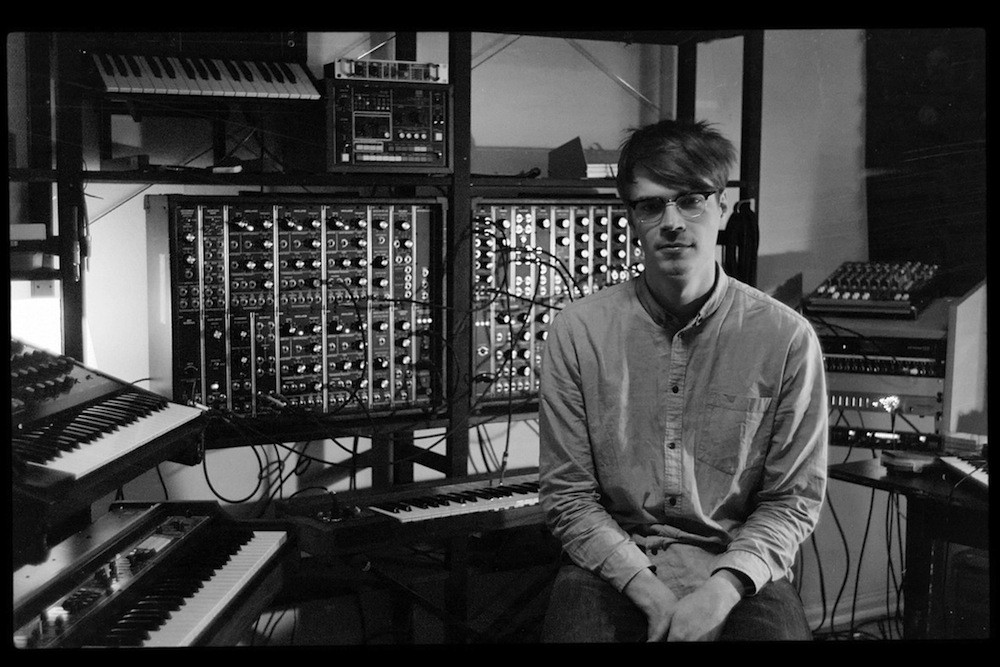
Interested in experimental, electronic dance music? Then you should pay attention to Norwegian electronica artist André Bratten (30).
According to Bratten, his music is inspired from a wide range of sources, giving it an easily identifiable sound that has helped him to win hearts and minds at home as well as abroad.
According to Bratten, his music is inspired from a wide range of sources
Andre Bratten was born in Oslo and grew up in a suburb of the Norwegian capital, Eiksmarka, which borders on the deep, dark Norwegian forest and he is now one of Norway’s most important names in experimental, electronic dance music.
Andre Bratten was born in Oslo and grew up in a suburb of the Norwegian capital
If you pay attention to his throbbing and pulsating tracks today, you can feel a musical relationship to Norwegian electronic masters Røyksopp as well as artists like Matro Area, Sigur Rós, Eno, Cluster and even Weather Report.
However, like most kids in the late 1990s, he was bitten by the hiphop bug, but he also got turned on by the Led Zeppelin records which he picked out from his father’s record collection.
André made his debut in 2013 with the album «Be A Man You Ant»
André made his debut in 2013 with the album «Be A Man You Ant» – a result of a refined working process on one modular synthesizer and one drum machine. Later same year he issued the EP “Math ilium lon”Brattens efforts with the synthesizer coincided with a huge boom in Norwegian electronic music, and his productions came to the attention of Norwegian ‘cosmic disco’ mogul Prins Thomas and his Full Pupp colony.
Bratten has been named “Trommer og Bass” (Drums and bass)
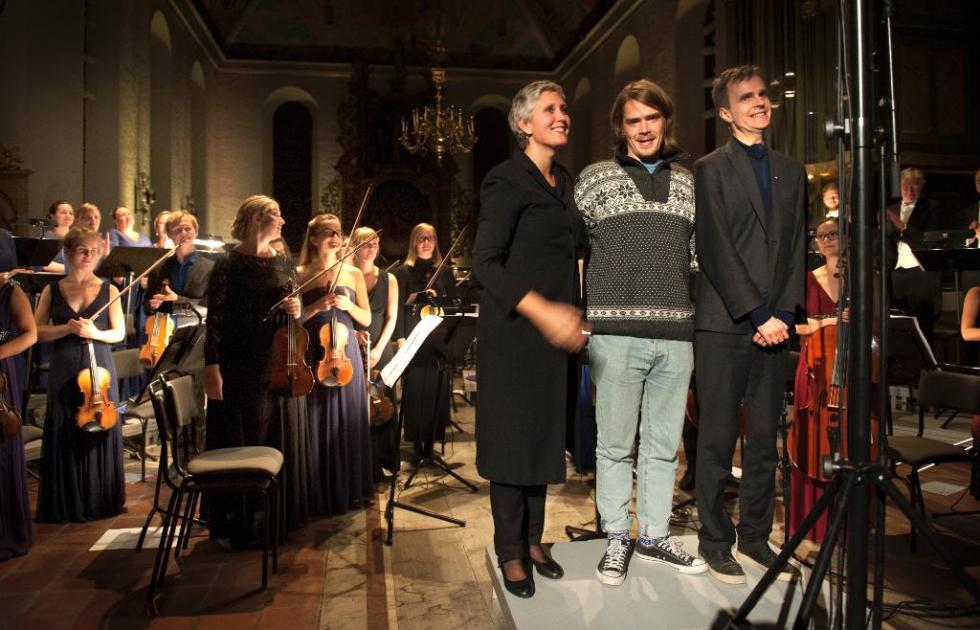
In 2015 he participated in the Oslo Ultima Festival with a contemporary closing composition, co-written with composer and violinist Ole-Henrik Moe.
From left to right, conductor Vivianne Sydnes, Andre Bratten and Ole-Henrik Moe
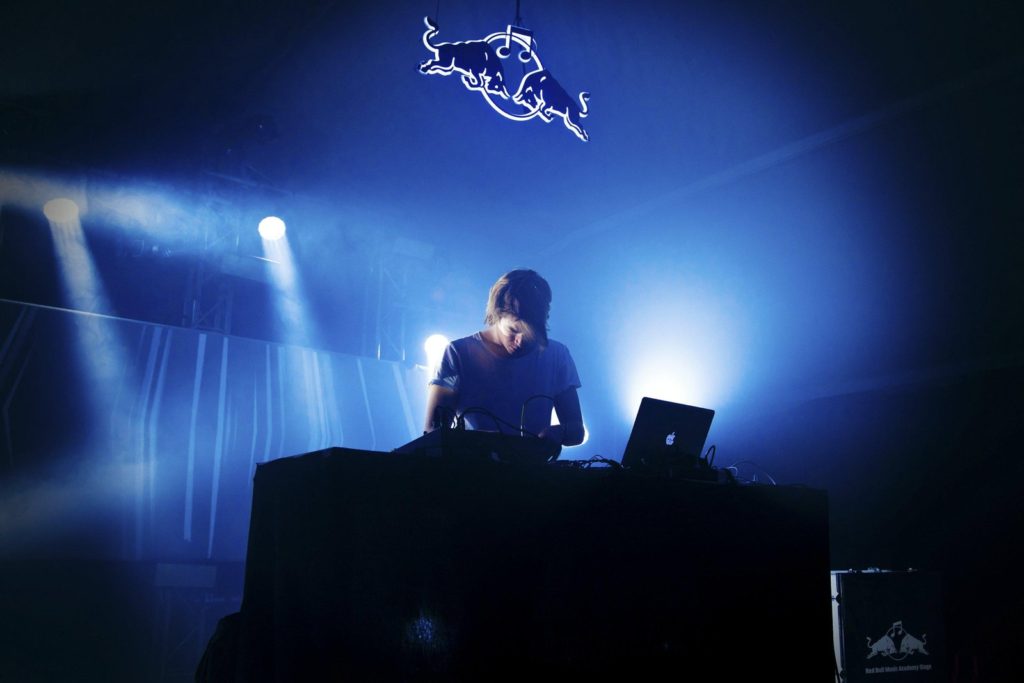
In general, his tracks share the exploratory vibe of the 80s synth pop pioneers, but he does not hesitate to do commissioned pieces for experimental music festivals the one day, and brutal techno in a studio the day after. He has been named “Trommer og Bass” (Drums and bass), probably because of his uncompromising rhythms in a multi-channel environment.
André Bratten (Red Bull)
Andre Bratten’s music rejects coziness and whimsy, and steps away from pleasing the crowd. You’ll find squelchy bugs in the bassbin, weird analogue squeegee smears, bright drum machine splats and an occasional significant pause.
Get ready to let it caress your antennae.
Norwegian Electronica Artist André Bratten, written by Tor Kjolberg
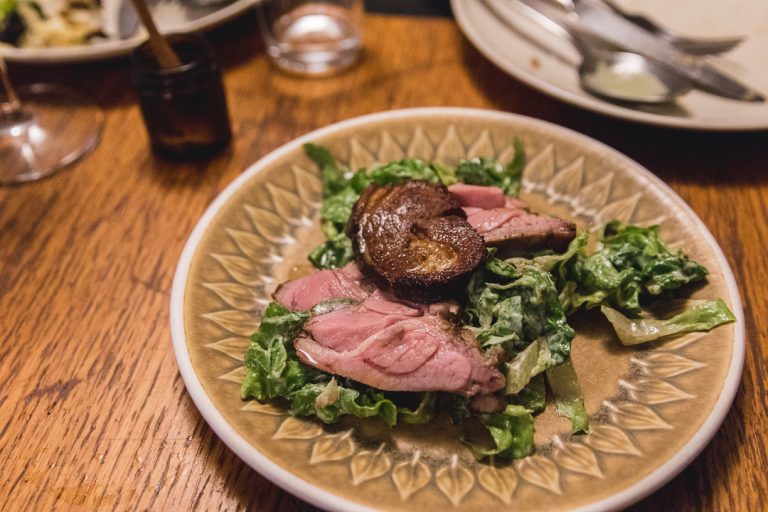
It has become a tradition for Copenhagen’s Michelin restaurants to open a low-priced version of their star awarded originals. Here’s our guide for visitors who like food at Michelin-level, but are not ready to empty their piggy bank.
Throughout Copenhagen starry Michelin restaurants open cheaper versions of themselves. The suppliers are often the same, the food is tasty, the ambition level is high, but the prices are affordable for the common man.
Formel B’s cousin Uformel opened in Studiestræde 69 in May 2014. The name Informal is both a word play of the name and a description of the restaurant’s atmosphere.
Even with the price of a starter of DKK 100, the ambition level in this super trendy restaurant is sky high. Perhaps not surprising, knowing that the chef and co-owner Frederik Rudkjøbing, former assistant of Rasmus Kofoed, is a gold medal winner in Bocuse d’Or.
AOC Bistro’s sibling No. 2 The gourmet restaurant AOC has long been considered one of Copenhagen’s top restaurants. First, Ronny Emborg acquired a Michelin star. Later Søren Selin has been responsible for the stylish restaurant.
However, if you’re not looking for crisp tablecloths and costumed waiters, you should head for Christianshavn.
No. 2 is a Nordic bistro with an international perspective with an impressive wine list. The bar is also worth a visit.
Noma’s sibling 108 (Closed in 2020, due to the pandemic)
Noma’s sibling 108 offers the same style as Noma, but has lower prices and a more relaxed atmosphere. It’s located just a stone’s throw from the original Noma in Strandgade 108, hence the name.
The smaller dishes start at 100 DKK, larger dishes around 135-180 DKK and desserts around 80 DKK. Often the chefs present the food at the table and unlike Noma the ingredients are from all over the world. Therefore don’t be surprised to find yuzu, sweet potatoes or combo on the menu.
Kiin Kiin at Nørrebro has long been one of the world’s best Thai restaurants. If you want to enjoy Thai food at Michelin level, just visit Chai Wong at Fredriksberg.
Chai Wong gives you value for money and even if the dishes not are quite as elaborate as at Kiin Kiin, the taste is surprisingly close – the prices taken into consideration.
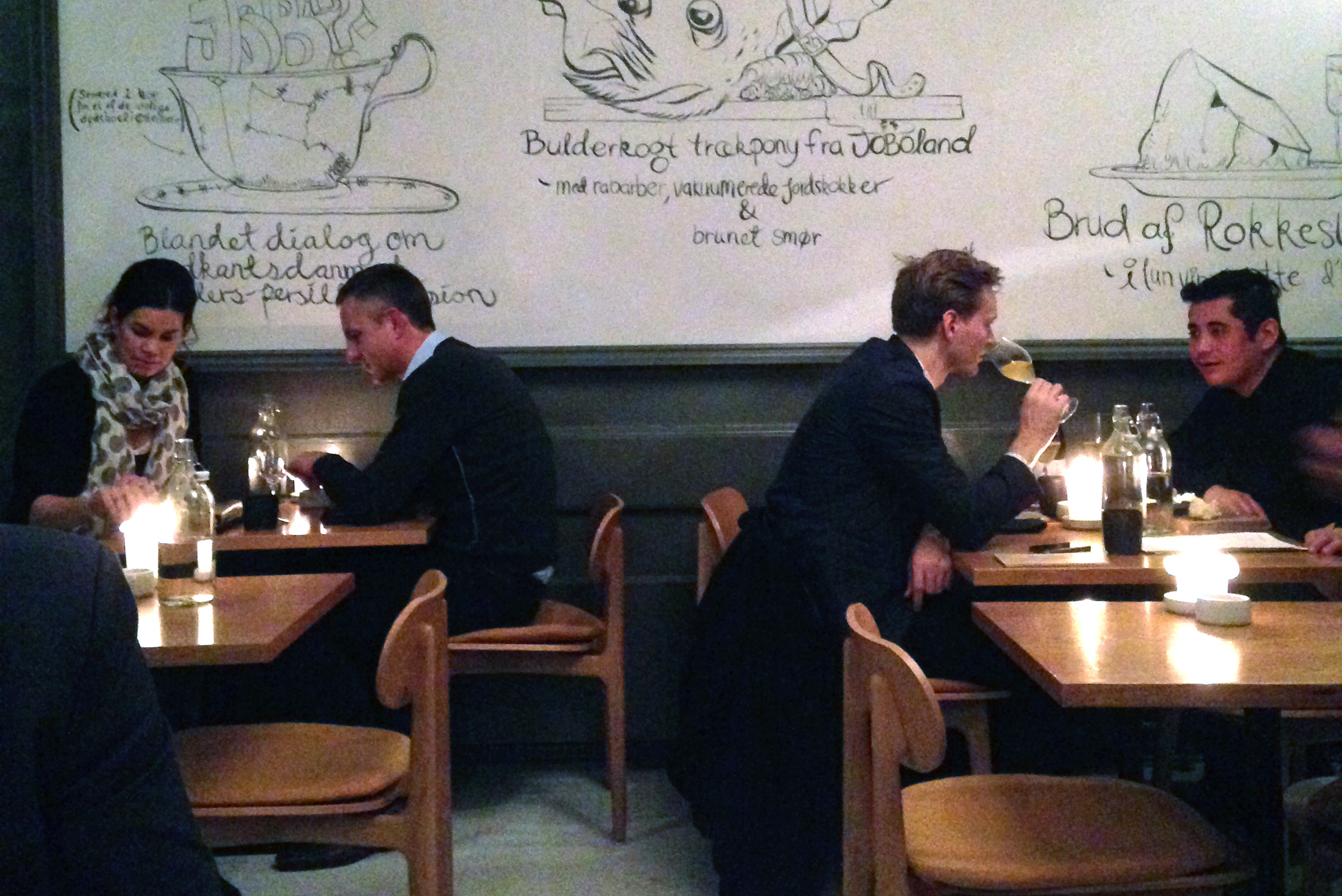
No doubt there are family relationships here. Pony restaurant is located in the premises where Michelin big brother Kadeau started it all before moving to Christianshavn.
Pony has now inherited the room with adventurous chefs taking a little more culinary chances. It’s a slightly more noisy place but with prices starting at 110 DKK you’ll feel relaxed all right.
Jægersborggade has become a true food mecca, and when Relæ was awarded a Michelin star the street became a culinary attraction. But before all this, it all started in fact with Manfred & Vin just across the street.
So to speak, Relæ is in fact the little brother in this gastronomic relationship, but let it lie.
The fact is that Manfreds & Vin serves food that you can understand and consists primarily of small dishes in the starter size, which are split across the table and are served continuously from the kitchen. 7 dishes are available for 250 DKK.
Michelin Restaurants’ Lower-priced Siblings in Copenhagen, compiled by Tor Kjolberg
President Donald Trump’s controversial comments on Sweden’s immigration policy have led to a new exhibit and a book by some of Sweden’s leading photographers, entitled “Last Night in Sweden”.
The first copy of the book will be presented to President Trump
One week ago, in Florida, President Trump repeated his sharp critique of Europe’s refugee policies and the attacks of terrorists. He also mentioned Sweden, which for a long time has not been a target of recent terrorist attacks.
Leading Swedish photographers have therefore as a rebuttal to Donald Trump’s false claims about terror attacks in Sweden collectively contributed photographs to a new crowfunded book published by Max Ström. The first copy will be presented to President Trump and sent to all members of the US Congress and European parliament.
Here is an image showing that’s bedtime for 94-year-old Aina Friman at the Sekelbo retirement home in the Kortedala district in Gothenburg. Dementia has crept up on Aina and she needs Abdi Hersi’s help with most things. The 24-year-old care assistant came from Somalia in 2008 and is one of the many new Swedes who help ease pressure on a healthcare system strained by an ageing population. For Aina and the other residents in the five-storey house, he is both a personal assistant and an on-call fellow human being
Bedtime for 94-year-old Aina Friman. Photograph: Lisa Thanner
Since there had been no extraordinary trouble that ‘last night in Sweden’ and Trump later tweeted more negative comments on Sweden’s immigration protocols, these comments baffled many Swedes.
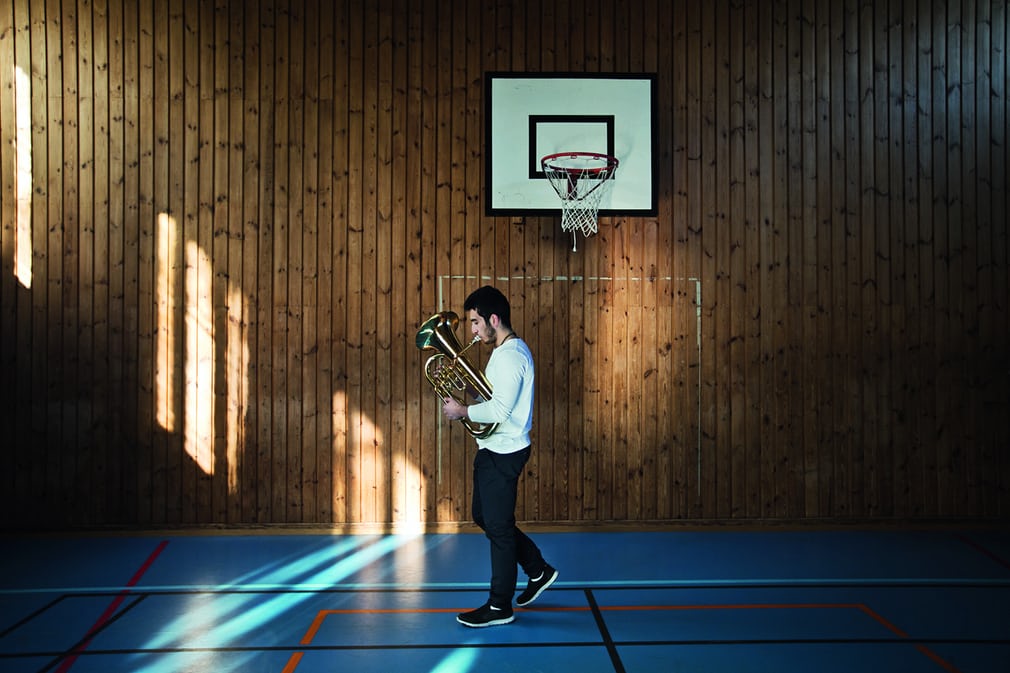
Here is an image from Hallonbergen in Stockholm, featured in the book. Mazen Bahe has developed his musical skills in the St Petrus’ Band, which is getting ready to assemble for rehearsal as he warms up. ‘Most of the players are beginners,’ explains leader Noel Tappo, who teaches almost 50 children and youths. ‘Our goal? Simply to help them to learn new things’
Mazen Bahe has developed his musical skills in the St Petrus’ Band. Photograph: Anna Simonsson
“We’ve got to keep our country safe,” said President Trump in Florida a week ago. “You look at what’s happening in Germany, you look at what’s happening last night in Sweden. Sweden, who would believe this?” he added.
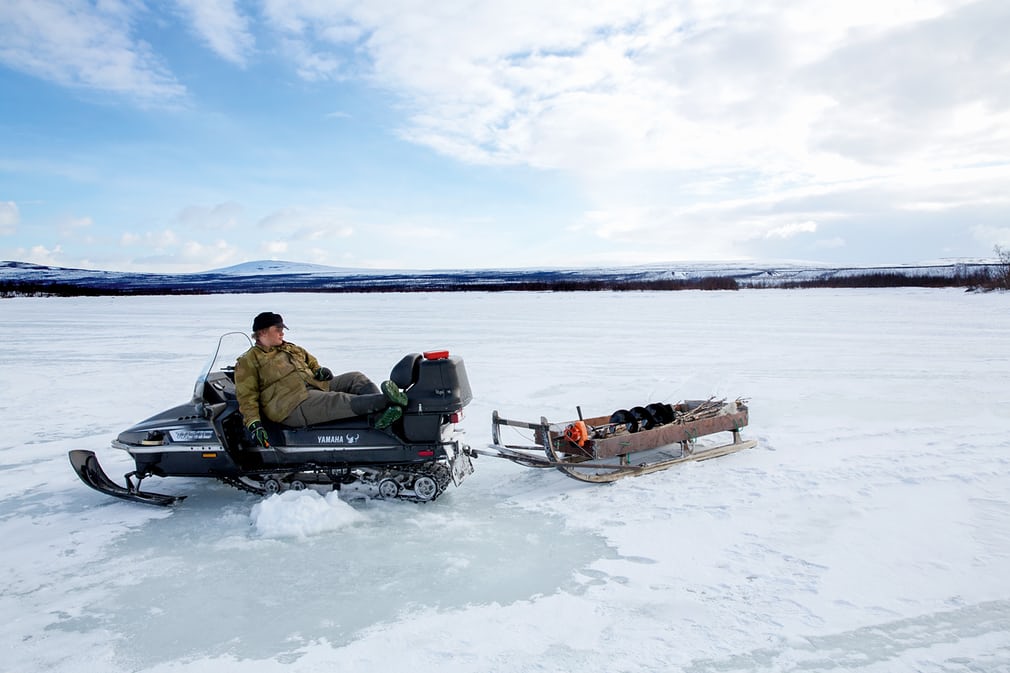
Moose graze in the forest and the waters are rich with pike, grayling, whitefish, turbot, trout and, in the summer, salmon in the Köakämä river in Naimakka. Here Simon Siikavuopio has driven his snowmobile on to the river, where the early May ice is still half-meter thick.
Simon Siikavuopio has driven his snowmobile on to the river. Photograph: Magnus Sundberg
The book and the exhibition “Last night in Sweden” is an effort to present a more diverse and multi-faceted portrait of the country.
According to Anette Nantell at Max Ström, who has commissioned the book, the photos – all taken after 6 p.m. in the spring – present a diverse portrait of Sweden, from an elderly couple in their sauna to a group of Scouts from Syria practicing music.
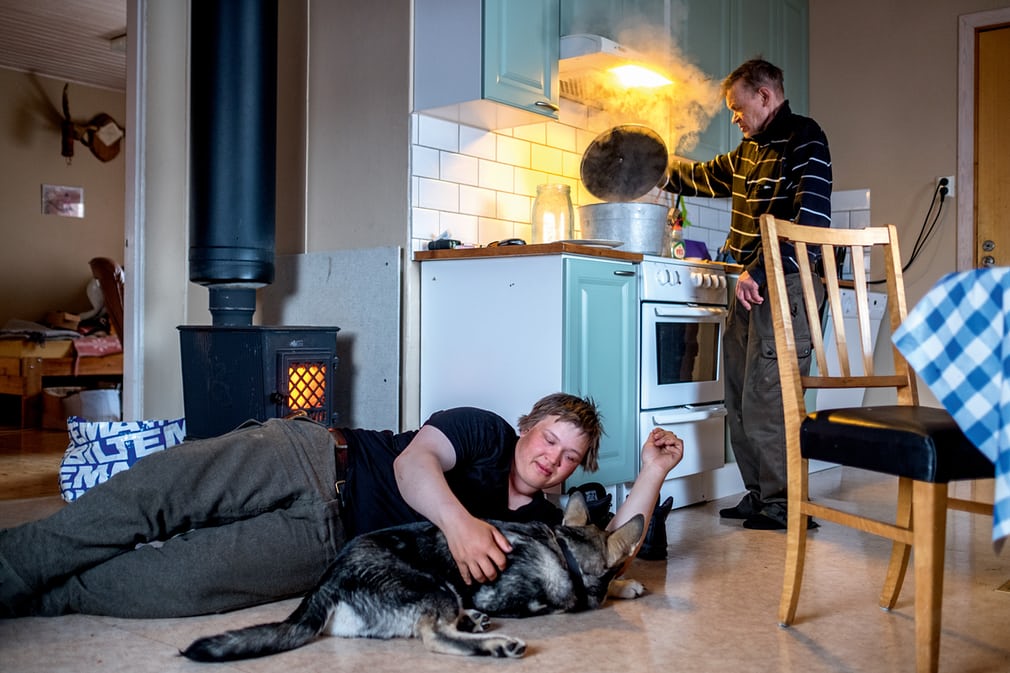
An evening supper stew of moose, reindeer and cabbage is simmering in 80-year-old Åke’s kitchen, and four-month-old Balto, a Swedish Elkhound, joins the party. Åke and Simon live a life that largely resembles that of their ancestors, close to nature and the changing of the seasons. It is 155 miles (250km) to the nearest town Kiruna, which is the northernmost town in Sweden. There’s total darkness 24 hours a day in winter, and Naimakka holds the national record for lowest temperature: -48.9C
In 80-year-old Åke’s kitchen. Photograph: Magnus Sundberg
“What has President Trump been smoking?” Carl Bildt, a former Swedish prime minister and foreign minister, commented on Twitter.
True love never fades away, especially not when lovers spend time together in the sauna. Birgitta and Bengt Bohlin, 87 and 86 respectively, met in 1955 when Bengt moved from Borås in the southwest to take a job building hydroelectric plants in Birgitta’s native Lapland. ‘It was instant passion,’ he recalls. ‘We found out right away that we had the same interests, the same simple demands on life’
Birgitta and Bengt Bohlin, 87 and 86 respectively. Photograph: Moa Karlberg
“We felt we had to react because we didn’t recognize Sweden at all in his words,” photographer and publisher Jeppe Wikstrom told The Associated Press before the opening of the exhibition.
In Stenungsund a pair of rebuilt roller skates with a metal heel give the best grip. Even a Viking sport like tug-of-war can adopt modern materials and techniques. Sweden is a world leader in the sport
a pair of rebuilt roller skates with a metal heel give the best grip. Photograph: Daniel Stiller
Admittedly, President Trump did not state that a terrorist attack had taken place in Sweden. However, he mentioned Sweden right after he chastised Germany and therefore suggested that he thought it might have.
The contractions are coming faster now, and 26-year-old Mave Lochove gets a hand to cling to from her mum, Akiki. It will still be nine hours of agony before a little girl will be born at Stockholm South general hospital who will get the name Juliana. She’s the first to be born in this country to a family that fled from the Congo conflict, coming to Sweden in November 2016.
The contractions are coming faster for 26-year-old Mave Lochove. Photograph: Anette Nantell
According to Mr. Trump Sweden took in large numbers of refugees, and they’re having problems like they never thought possible.
Following a series of shootings and rock-throwing aimed at police this year in the Stockholm suburbs of Fittja and Rinkeby, a group of women got fed up. Now 40 women, most of them immigrants, are volunteering as ‘night walkers’ on Fridays and Saturdays to keep an eye on the neighbourhood’s youth and help de-escalate conflicts. ‘If we see anything happening, we call the police,’ say Fatma Ipek. ‘We’re strong, and we’re never afraid’
40 women, most of them immigrants, are volunteering as ‘night walkers’ on Fridays and Saturdays. Photograph: Anette Nantell
The book “Last night in Sweden” doesn’t shy away from complicated truths, and the foreword acknowledges that following an extremist attack in Stockholm in April, it’s “hard to claim that ‘nothing happened last night in Sweden.’”
Anna Claren, the head of the Nordic School of Photography, has worked on selecting the photos for the book. “Of course there are a lot of different people,” she says, “but there is so much warmth around and among people.”
More photos from the book:
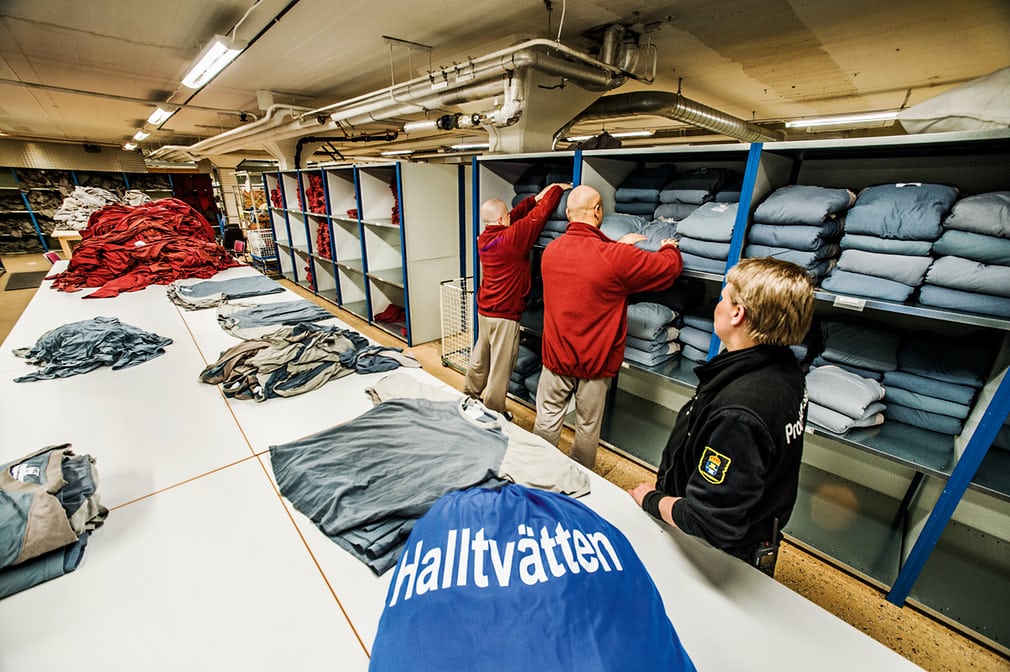
Hall prison in Södertälje holds inmates convicted of the most serious crimes. Here, Åsa Nensén works as a production manager for the laundry, the ceramics workshop and the plastic factory. Prisoners who work in the facilities are paid 13 krona an hour and are confined to their cells between 7pm and 7am.
From Hall prison in Södertälje. Photograph: Lars Pehrson
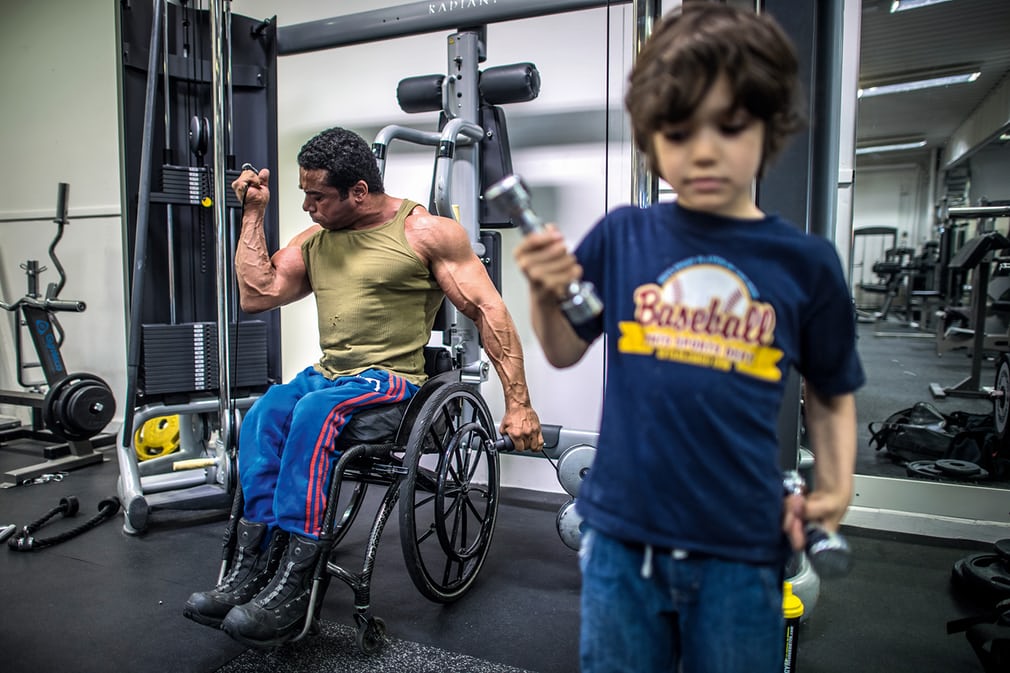
When no one seemed interested in hiring a handicapped former Algerian soldier, Antoni Khadraoui decided to open his own gym in Uppsala. Today he ranks among the world’s elite in bodybuilding. ‘When I’m on my back doing bench presses, I’m as good as anyone,’ he says. ‘But when I started out I wasn’t allowed to compete because of my disability. That pissed me off.’ Antoni built his gym so that anyone can train there regardless of physical status
Former Algerian soldier, Antoni Khadraoui decided to open his own gym in Uppsala. Photograph: Jonas Lindkvist
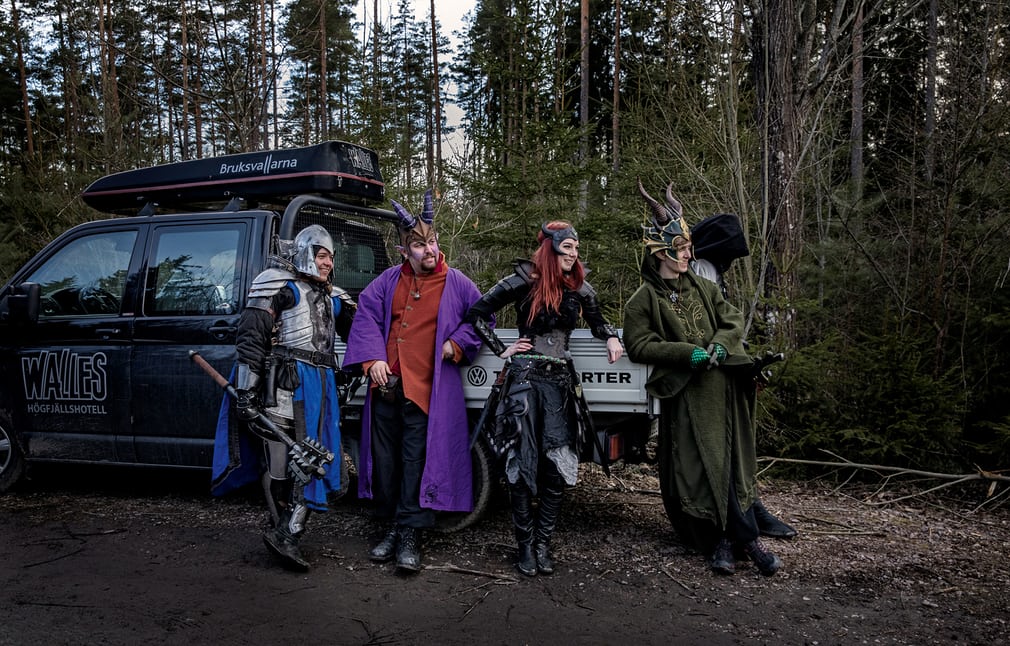
Orcs, elves and blackbloods take a breather in a glade north of Västerås. For five days they live out their roles in an epic fantasy world, only breaking the illusion to use the toilet, call home or eat modern food. Live action roleplay games, Larps, have been popular among young adults in Sweden since the 1980s.
Orcs, elves and blackbloods take a breather in a glade north of Västerås. Photograph: Roger Tuersson
Sweden has a long history of welcoming refugees from many countries in the world. But even some of the most tolerant and idealistic Swedes have raised questions about whether the country can absorb so many newcomers so quickly.
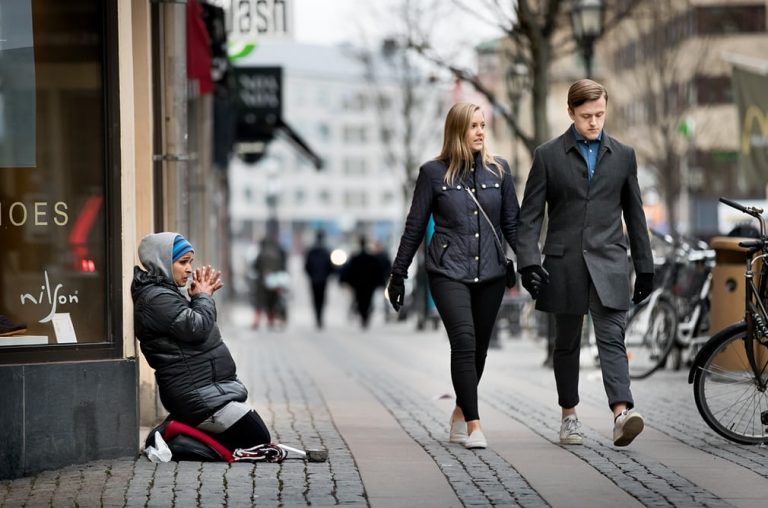
Feature image (on top): Thirty-seven-year-old Maria Grancea is Romani and she’s doing her best to support her family as a beggar in Örebro. She’s left her two boys with their grandmother in Romania, and now she’s in her seventh month of pregnancy. ‘I beg because I want my kids to be able to go to school – I never got to,’ says Maria, who estimates her daily income at 100 krona (£9.43). Photograph: Kicki Nilsson
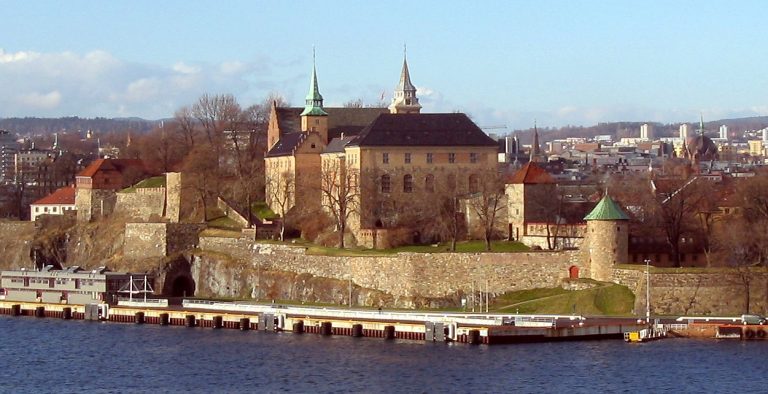
The sprawling Akershus Castle and Fortressis a great place to discover Oslo’s history. The major complex was begun in 1300, finished in 1308 and extended through the 17th century.
It was built principally to defend the city against attack from Sweden. State events are still held in the beautiful ballrooms and the grounds provide the venue for summer concerts and theatrical performances. The Royal Chapel and Royal Mausoleum are open to the public.
Aksershus Fortress was built principally to defend the city against attack from Sweden
In the fortress, the Armed Forces Museum covers Norwegian military history from the Viking period on, and provides a fascinating insight into Norway’s relationship with neighboring Denmark and Sweden over the centuries.
Just outside the castle, the Norway Resistance Museum, located at the place where Resistance members were executed by the Gestapo, gives a clear and detailed account (with English labels) of the mense and moving story of occupied Norway.
The Akershus Complex in Oslo, written by Tor Kjolberg
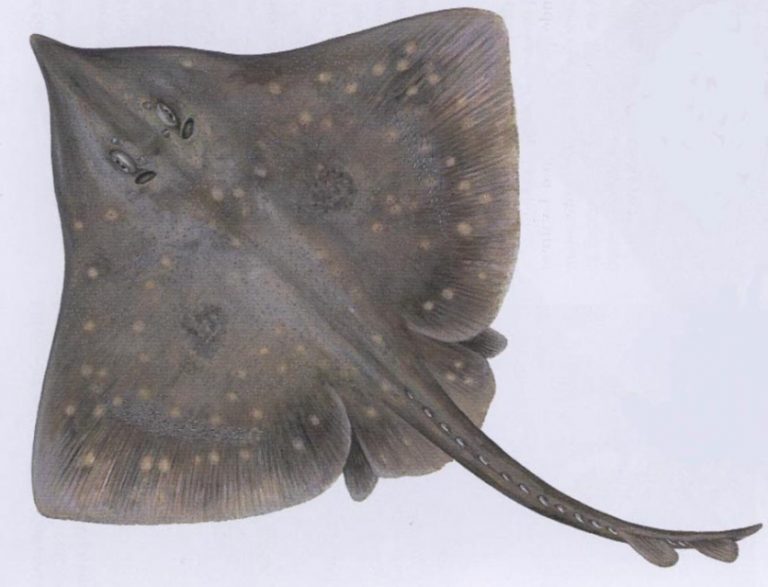
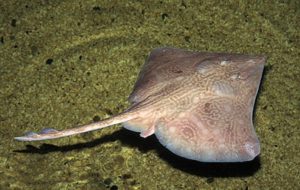
Eating ray (raja batis) is a peculiar and beautiful experience, rather like you might expect it to be uf you were eating a dragon steak. You sense that this, like shark, is far older and stranger than any fish, or anything for that matter, that you are likely to eat.
A survivor from millions of years ago, they say ray is in the same family as sharks, but with a flavor quite different from the shark’s meaty taste. There are many species and they are all good.
Skate (Raja clavata) i ssimilar to rayBlue skate
Culinary uses You eat only the ‘wings’, two wide fins that the fish can move in an unbelievable elegant manner. You understand how when you see the meat, which is made up from long, fibrous strands of muscle, and is very lobster-like, both in consistency and taste.
Under the lizard skin the flesh is white and tender, in long, pearly strands, and is as close to lobster as you can get (apart from monkfish). Allow 250-300g per head: there is not much meat, but it is extremely filling.
Pan fried ray wingsRay dish
Ray can be fried whole, in butter, or baked, dotted with butter and sprinkled with sea salt, in a pan in the oven. Pour a little water in the bottom, just so it will not burn, and bake for 25 minutes at 200C/gas mark 6. Check the fish with a pointed knife: if the meat is white all the way to the cartilage it’s done; otherwise shove it back into the oven for a few minutes. It will never become dry, as the jelly will keep it moist.
The ray has thick, inedible skin and several layers of jelly-like connective tissue that must be removed before eating. Cook the ray in whole pieces, and remove the skin after cooking. You eat ray by scraping back the skin, and plucking the meat off. In the middle is a very strong and extremely flexible system of tiny bones, like in the fin of a shark, providing the elegance the live ray has as it moves through the water. When you have eaten one side, turn it over and eat the rest.
Eat the fish with a caper-sauce or shredded horseradish, browned butter and lemon. It is best eaten warm. Make plenty as the flesh is perfect in a salad for lunch or a starter the next day. Moisten, but don’t drown the long strands of meat, in a herbed mustard-mayonnaise, chervil-cream or herbed vinaigrette. In autumn, combine with diced raw apples, tiny dice of celeriac, capers and top with crisp bacon and in the spring accompany with new peas, asparagus and small carrot dice for sweetness. Serve with toasted rye bread.
Skate wing in brown butter
The skate (raja clavata) is also common in Scandinavia.
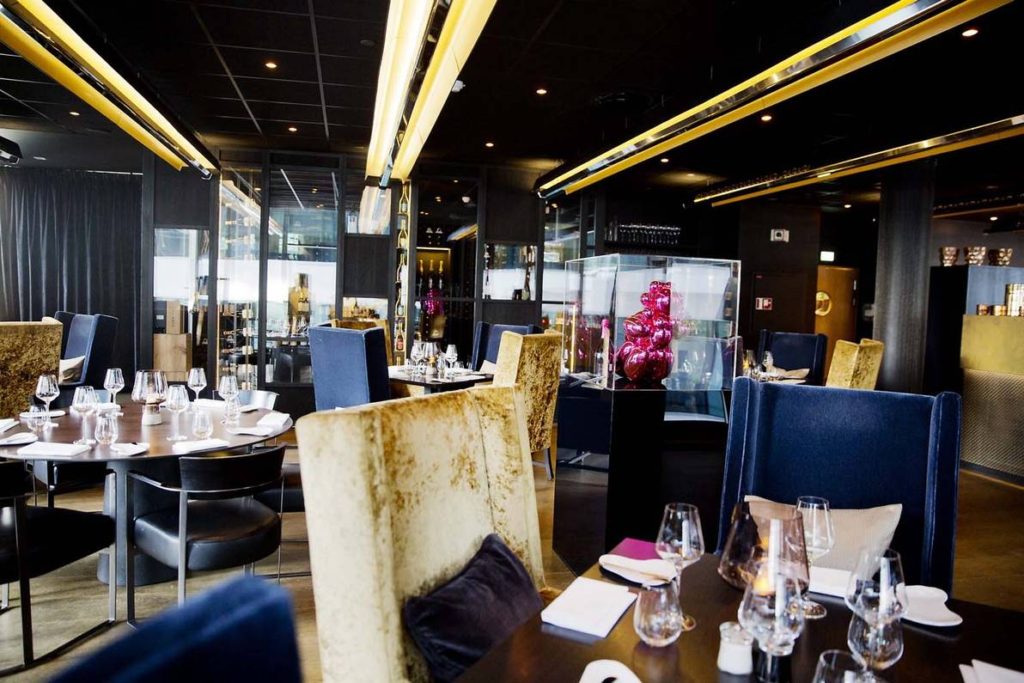
The small and exclusive restaurant, Fru K, in The Thief Hotel at Tjuvholmen, Oslo seats only 26 persons. Fu K wants to bring culinary traditions back to life with a modern twist. This is done by two set menus; a smaller menu, Æge and a full menu Njord.
Many strange Norwegian names here need a clarification
Fru K takes the best of the traditional Norwegian and Scandinavian cuisine and gives it a contemporary twist
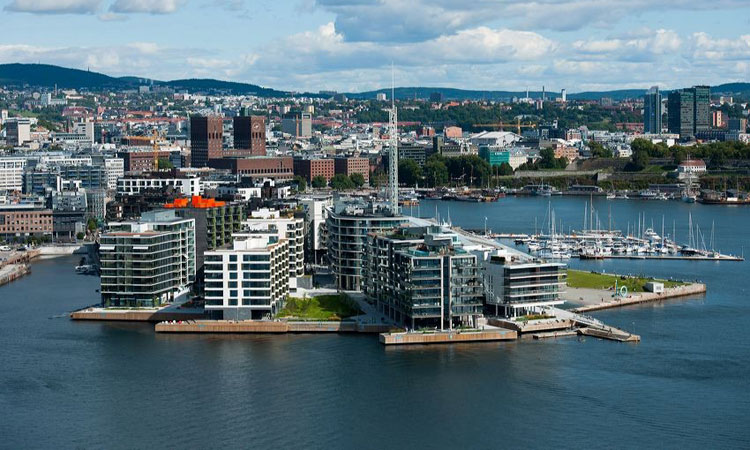
Fru K – which translates to Mrs K, comes from the owner of the peninsula in the 1800s, Mrs. Krogh. She used the landf as grazing ground for her cows. The Thief – the flagship hotel of Norwegian hotel tycoon Petter Stordalen and his most ambitious project yet. The name is a promise to “steal you away from your everyday life.” However it is also named after the neighborhood of Tjuvholmen, a peninsula at the tip of Aker Brygge.
Tjuvholmen translated into Norwegian means “The Isle of Thieves”
Tjuvholmen – means “Isle of Thieves” and was in fact a place for thieves and drunks, some were even hanged there.
The flagship hotel of Norwegian hotel tycoon Petter Stordalen, The Thief
Njord (the full menu) or Njörðr in Norse mythology is the God of the Ocean. Æge (the smaller menu) or Ægir is the sea Jötunn.
Chef Johan Laursen, has beeen headhunted from the Michelin-starred restaurant Maaemo in Oslo
The Thief was the first Norwegian hotel to be listed in the Condé Nast Traveller Hot List 2013. And at Fru K art is everything. It has nothing to do with decoration. It simply intensifies the gustatory experience and inhabits the whole place. The restaurant became fast the culinary hotspot of Oslo.
Fru K takes the best of the traditional Norwegian and Scandinavian cuisine and gives it a contemporary twist, Tjuvholmen has become a center of culture and art with the best to offer when it comes to galleries, museums and restaurants.
Chef Johan Laursen, coming from the Michelin-starred restaurant Maaemo in Oslo, has competed in two Olympics and two world championships with Culinary Team Gothenburg. He is in favor of simple and pure flavors, with “clean” sensations.
Fru K has a strong culinary concept with focus on traditions and an equally strong emphasize on conscious cooking. It’s not likely that you dine at Fru K every night of the week. It’s a celebration.
A toast to one of life’s purest and simplest pleasures.
Culinary Traditions Back to Life in Oslo, written by Tor Kjolberg
Norwegian dancer Lukas Bjørneboe Brændsrød (21) started his professional dancing education at the Norwegian Opera & Ballet in Oslo. He was the first Norwegian boy to be enrolled at the prestigious Royal Ballet School in London.
He was interested in dance already when he went in first grade grammar school, breakdance at that time. However, his mother convinced him to study classical dance, and in 2010 he participated in ballet classes six days a week.
Torgeir Lund, Syvert Lorenz Garcia and Lukas Bjørneboe Brændsrød in Ballet Boys
He is quite well known for his starring role in the Norwegian 2014 Ballet Boys documentary film. The film follows three secondary school friends on their dance journey in Oslo. Part of the documentary’s charm lies in the different traits of the starring trio, Lukas and his co-dancers Syvert Lorenz Garcia and Torgeir Lund.
Unfortunately the film only takes us to the first year of college, and we are left wondering what happened to the boys.
Lukas Bjørneboe Brændsrød
It is however well known that Lucas later trained at the Royal Ballet Upper School. His awards at the School included second prize at the 2013 Lynn Seymour Award for Expressive Dance and first prize at the 2014 Ursula Moreton Choreographic Award. The Ursula Moreton Choreographic Award was created in 1973 to encourage choreographic talent.
In 2015 he graduated into The Royal Ballet’s Aud Jebsen Young Dancers Programme and joined the Company as an artist in 2016.
His work as a choreographer with The Royal Ballet included a piece for Draft Works 2017.
Norwegian Dancer – From Breakdance to London’s Royal Ballet, written by Tor Kjolberg
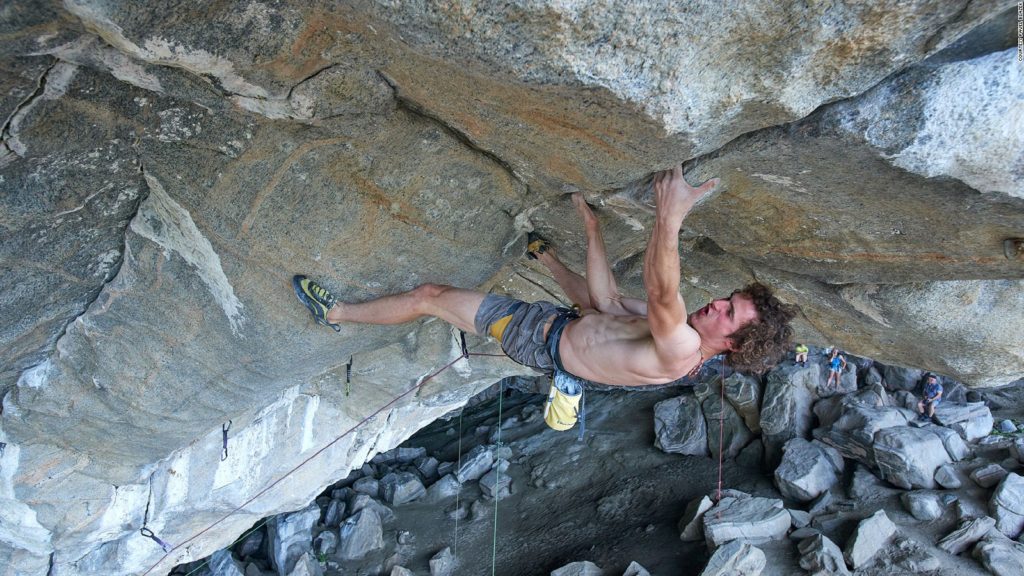
The 45-meter ascent at Hanshelleren cave in Flatanger, a three-hour drive north of the city of Trondheim, is considered to be the world’s hardest single rope-length climb.
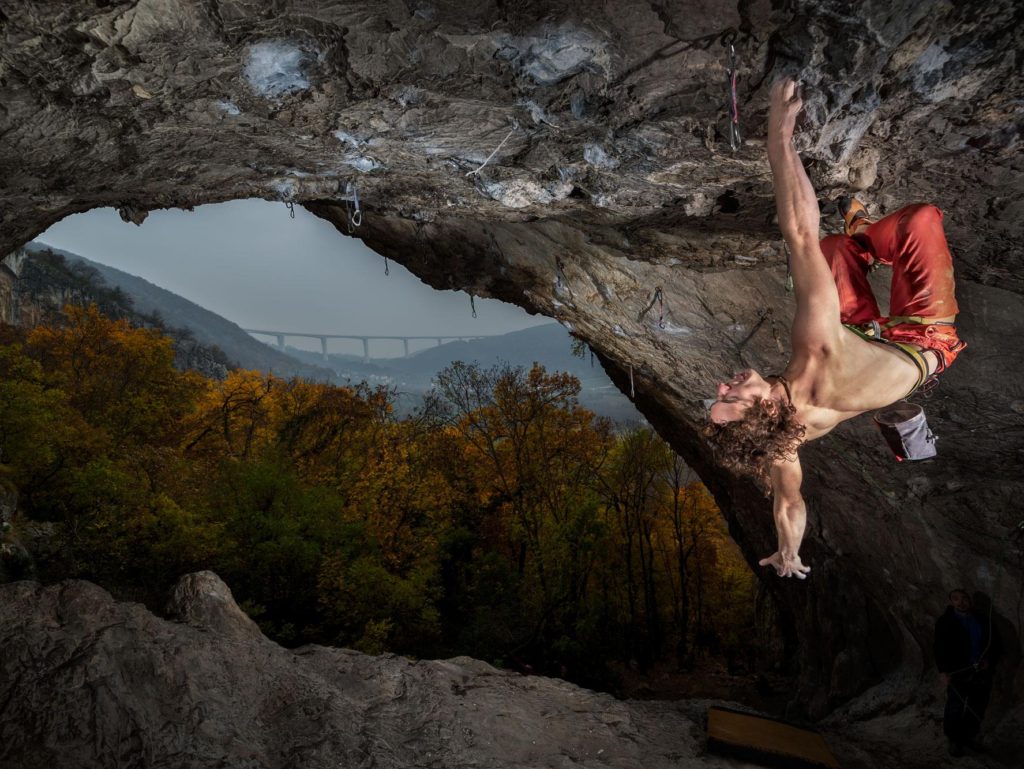
A small community of elite rock climbing has in the last few years fixated on this giant windswept granite cave in Flatanger, Norway. One climber, Czech Adam Ondra (24), had prepared himself for four years and seven visits to Norway to set a new world record.
Czech climber Adam Ondra (24), had prepared himself for four years and seven visits to Norway to set a new world record
It’s called the world’s first 5.15c route and Ondra has proposed the highest grade ever to be given to a route. The young man who has dominated rock climbing in recent years achieved the ascent in just 20 minutes earlier this month.
In a blog post Ethan Pringle, one of the developers of the climb describes the cave as “like if Jailhouse and Mickeys Beach had a baby, and that offspring was artificially inseminated with rock sperm from Rumney and Column of the Giants at the same time … then THAT baby grew up subsisting on nothing but muscle milk, steroids and acid.”
Adam Ondra climbs the world’s first 9c3
“At the end of the route when I knew I did it, I had one of the strangest emotions ever,” said Ondra.
For a so-called sport climb – in which expansion bolts are drilled permanently into the rock to clip the rope into – climbers can spend years trying to complete their first ascents.
Adam Ondra’s project Misja
To claim a grade climbers must provide photographic proofs of the ascent, and Ondra had it all filmed.
Ondra climbing in Hanshelleren, Flatanger
Hanshelleren cave is a favorite with seasoned climbers, partly due to its giant overhang, which means it rarely rains inside. The water can however sometimes seep through.
Climbing was approved as a sport for the 2020 Olympics in Tokyo by the International Olympic Committee. Ondra’s next victory may therefore well be an Olympic medal.
The World’s Hardest Rock Climb – in Norway, written by Tor Kjolberg
Scandinavia has been honored with the first major retrospective presentation of Marina Abramovic’s work in Europe this year. First out was Moderna Museet in Stockholm. From there the exhibition travelled to Louisiana Museum of Modern Art in Copenhagen where it will be on display through 22 October. 24 November, the Henie Onstad Museum of Modern Art in Oslo opens its doors for The Cleaner, which will be on display through 11 March 2018.
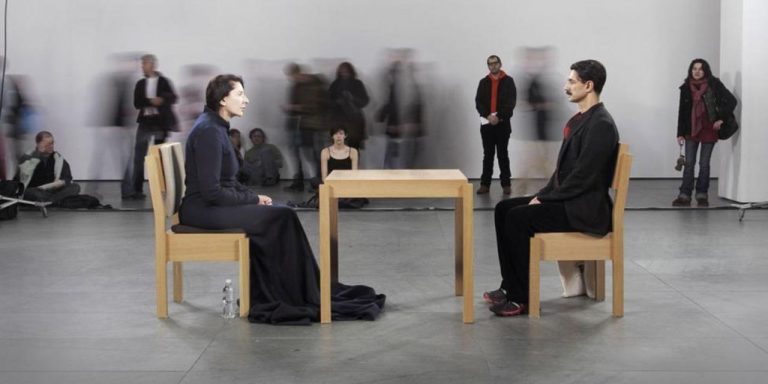
Few artists in the world today evoke such strong emotions and reactions as the pioneer of body and performance art Marina Abramović. She has inscribed herself in the history of art as one of the pioneers of body and performance art, and since the 1970s she has developed one of contemporary art’s most radical and uncompromising practices.
Marina Ambramovic. Image via cdn.com
“This will be the most extensive presentation of Marina Abramović’s works in Norway ever. We are very proud to be able to take this exhibition to Norway,” says Director Tone Hansen at Henie Onstad Kunstsenter.
Marina Abramović has been expanding the boundaries of art. Using her own body as a vehicle, she has pushed herself to the ultimate limits, often exposing herself to lethal hazards to create performance art that is shocking, challenging and deeply moving.
Since the 1970s Marina Abramovic has developed one of contemporary art’s most radical and uncompromising practices
In line with Henie Onstad Kunstsenter’s history, the exhibition The Cleaner at Høvikodden will feature more than 100 works from five decades and presents several of her most famous performance works as films, video installations, live performances, scenographies and photographs from the 1970s to today. It includes works created with the German artist Ulay, her partner in art and life from 1976 to 1988. Several of her early pieces – paintings, photos, sound compositions and works on paper – are shown here for the first time.
Volcano, by Marina Abramovic
Marina Abramović – The Cleanerhas been developed in a dialogue with the artist and is organized by Moderna Museet, Stockholm, in collaboration with Louisiana Museum of Modern Art, Henie Onstad Kunstsenter and Bundeskunsthalle, Bonn.
On Ciacometti, by Marina Abramovic
MARINA ABRAMOVIĆ – A SHORT BIOGRAPHY Marina Abramović was born 1946 in the former Yugoslavia. Here she graduated as painter from the academy of art in Belgrade 1970, but quickly abandoned painting in favour of a practice that took place in real time and space in direct encounters between artist and audience. With her sound and performance works she was a formative part of Belgrade’s experimental avant-garde scene until 1976, when she moved to Amsterdam and embarked on a close partnership and collaboration for the next twelve years with the German photographer and performance artist Ulay (Frank Uwe Laysiepen, b. 1943)
Marina Abramović’s The Cleaner in Scandinavia, compiled by Admin
Designers Saturday Oslo is a 3 day event being held every other year in September. Designers Saturday is a chance for Norwegian and International interior brands to showcase themselves and their showrooms as well as mingle with others in the industry. This year’s event is being held 8 – 10 September.
The Designers Saturday idea was dreamt up by enthusiastic industry insiders who brought the concept over from New York in 1986. This is the only national exhibition in Norway, dedicated to furniture, textiles, lighting, flooring and other interior and design related products aimed at both industry professionals and the wider design aware public.
The Designers Saturday idea was dreamt up by enthusiastic industry insiders who brought the concept over from New York in 1986
A free bus service is available to attendees; simply jump on and off the bus where you want. 190 cutting edge Norwegian, Scandinavian and international exhibitors will display their latest offerings at 36 locations across Oslo city center.
A free bus service is available to attendees
In 2007 Designers Saturday Oslo instigated Designers Saturday Awards. The awards serve to heighten interest in interior architecture and give students and experienced professionals’ alike, recognition of design excellence and quality. There will be two awards; one for best interior, where a jury of experts choose between the latest works of Norwegian interior designers.
Participants visiting an interior showroom
The other one is for best talents, where emerging designers will have a chance to show their talents to potential employers in the industry, hopefully resulting in collaboration between designers and manufacturers.
The jury chairmen Anne Heinsvig and, Jonas Stokke
The jury chairmen, Jonas Stokke and Anne Heinsvig, will announce the winners and hand over the awards during the opening ceremony.
The opening ceremony in 2015 at Oslo National Academy of Arts was a success. This year the opening ceremony has moved to the new spectacular construction called “Arctic Pyramid” or Salt, looking like a gigantic fish rack. It’s just a five minute walk along the Bjørvika shoreline from the Oslo Opera House towards Vippetangen Port.
The nominees in category Best Interior are:
Norgesglasset by Snøhetta
Norgesglasset by Snøhetta
Snøhetta has designed a unique bar and interior concept for the expansion of Oslo Airport. Located centrally in the new domestic terminal, the playful design of Norgesglasset draws inspiration from its namesake, the Norgesglasset jar, a classic product long used for pickling and storing food familiar to many Norwegian homes. Snøhetta re-used over 4000 original Norgesglasset jars to clad the ceiling and back wall of the 65 sqm bar.
Aesop Homansbyen by Snøhetta
Aesop Homansbyen by Snøhetta
Aesop opened its second Norwegian signature store in the vibrant retail and residential district of Majorstuen, Oslo in June this year.
Business lounge at Stavanger airport Sola, bvy Metropolis
Business Lounge Stavanger Lufthavn Sola by Metropolis
Rhe Wool Central/The Prthodontists (Ullsentralen/Kjeveortopedane) by Sol Design
Ullsentralen – Kjeveortopedane (The Wool Central – the Orthodontists) by Sol Design
Grand Café, Oslo by Radius Design. Photo: Niklas Hart
Grand Café, Oslo by Radius Design
Faust, by Snøhetta
Faust by Snøhetta
For the high-end shoemaker Faust, Snøhetta has created a complete visual identity and the brand’s very first signature store.
Make an Entrance, by Metropolis
Make an entrance by Metropolis Architects
Summit Bar, Oslo by Snøhetta
Summit Bar by Snøhetta
Grïnerløkka Innovation Factory, by Ledsten Architecure
Mat- og Merkevarehuset på Grünerløkka-innovasjonsfabrikken by Ledsten arkitektur
Norwegian Medicine Agency, by Snøhetta
The Norwegian Medicine Agencyby Snøhetta
Designers Saturday Awards Best Interior 2017:
No 1: Mat- og merkevarehuset – Ledsten Arkitektur
No 2: Make an entrance – Metropolis arkitektur & design
No 3: Faust – Snøhetta
Best Talent 2017:
Designer Marcus Voraa was awarded for his dining table, which grows by the means of a crank handle.