
Norwegian Zero Emissions Ship Without Crew

Two Norwegian companies, Kongsberg and the chemical company Yara have teamed up for the launch if the world’s first fully autonomous, zero-emissions ship.

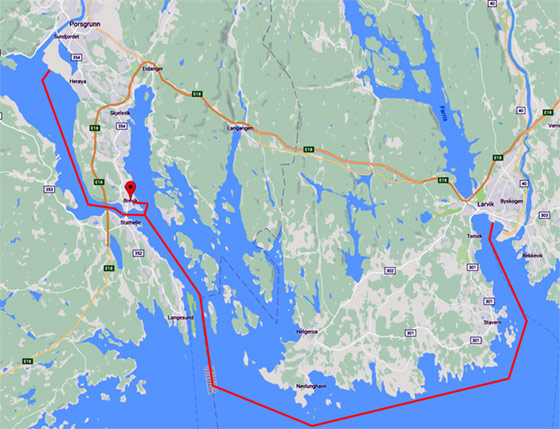
Operation is planned to start in the latter half of 2018, shipping products from YARA’s Porsgrunn production plant to the ports of Brevik and Larvik in Norway.

Norwegian Zero Emissions Ship Without Crew
Yara Birkeland

Named “YARA Birkeland” after YARA’s founder, the famous scientist and innovator Kristian Birkeland, the vessel will be the world’s first fully electric container feeder.

Related:  Norway’s Maritime Information Highway
Norwegian Zero Emissions Ship Without Crew
Operational area

Set to be a real game-changer for maritime transport, the vessel will reduce NOx and CO2 emissions by reducing diesel-powered truck haulage by around 40,000 journeys per year, and thereby also improve road safety.  Autonomous and 100% electric, “YARA Birkeland” will be the world’s most advanced container feeder ship.

Kongsberg will integrate sensor, control, communication and electrical systems, and the eco-initiative will help to meet the UN sustainability goals. YARA Birkeland will initially operate as a manned vessel, moving to remote operation in 2019 and expected to be capable of performing fully autonomous operations from 2020.

Related:  Norway’s Top Oil Company Will Provide New York With Renewable Energy

Norwegian Zero Emissions Ship Without Crew
Svein Tore Holseter in front of painting of Yara’s founder Kristian Birkeland

Svein Tore Holsether, president and CEO of YARA explains the need for such an initiative, stating that “every day, more than 100 diesel truck journeys are needed to transport products from YARA’s Porsgrunn plant to ports in Brevik and Larvik where we ship products to customers around the world.”

“As a leading global fertilizer company with a mission to feed the world and protect the planet, investing in this zero emission vessel to transport our crop nutrition solutions fits our strategy well,” he adds.

Norwegian Zero Emissions Ship Without Crew
Geir Haaøy, CEO of Kongsberg

Geir Håøy, president and CEO of Konsberg elaborates that ‘developing systems for autonomous operations is a major opening and natural step for KONGSBERG, considering their decades of expertise in the development and integration of advanced sensors, control and communication systems for all areas of ship operations. “YARA Birkeland will set the benchmark for the application of innovative maritime technology for more efficient and environmentally friendly shipping,” he says.

About Yara
Yara’s knowledge, products and solutions grow farmers’, distributors’ and industrial customers’ businesses profitably and responsibly, while protecting the earth’s resources, food and environment.

Its fertilizers, crop nutrition programs and technologies increase yields, improve product quality and reduce the environmental impact of agricultural practices. Its industrial and environmental solutions improve air quality by reducing emissions from industry and transportation, and serve as key ingredients in the production of a wide range of goods. YARA fosters a culture that promotes the safety of employees, contractors and societies.

Founded in 1905 to solve emerging famine in Europe, today, Yara has a worldwide presence, with close to 15,000 employees and sales to about 160 countries.

About Kongsberg
Kongsberg (OSE-ticker: KOG) is an international, knowledge-based group delivering high technology systems and solutions to clients within the merchant marine, offshore, oil and gas industry, defence and aerospace. KONGSBERG has 7 200 employees located in more than 25 countries and total revenues of NOK 15.8 billion in 2016.

Norwegian Zero Emissions Ship Without Crew, edited by Admin

What Tourists Want to Know Before Visiting Norway

Natural wonders, fjords and glaciers, and northern lights are the most sought after search terms when foreigners consider a trip to Norway.  A report prepared by Bloomberg Consulting and commissioned by Innovation Norway shows a significant increase in searches for Norway as a tourist nation in 2015 and 2016.
The most popular search engines in the world were monitored. These represent 90% of all searches during the period. Norway was associated with natural beauty in online searches as well. Many people also search for specific product information, such as attractions, destinations, cruises, accommodation and winter activities.

What Tourists Want to Know Before Visiting Norway
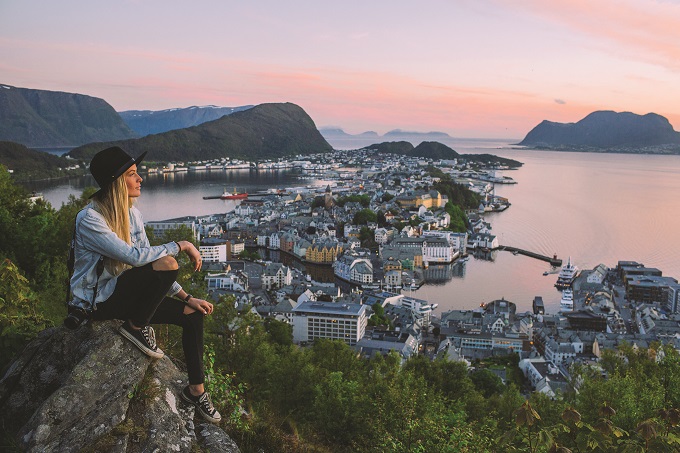
Axla viewpoint, Ålesund

“This proves that interest in Norway is increasing. The results coincide well with the attractions we have been promoting in the tourism industry over time, “says Bente Bratland Holm, Tourism Director of Innovation Norway.

What Tourists Want to Know Before Visiting Norway
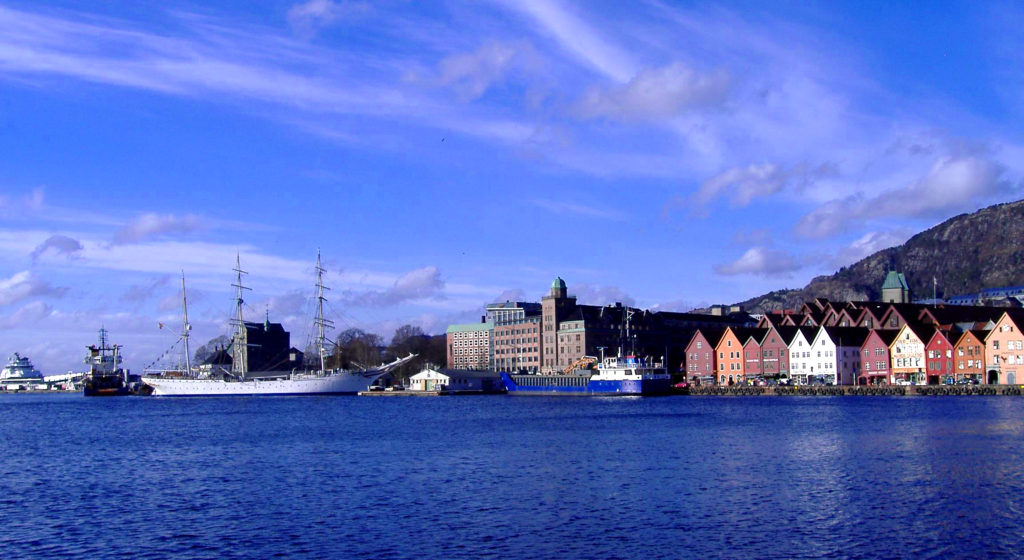
From Bergen. Photo: Andrea Giubelli

There were nearly two million searches for ‘natural wonders’ followed by 1,350,000 searches for ‘fjords and glaciers’ and 450,000 searches for ‘northern lights’.

What Tourists Want to Know Before Visiting Norway
The Geiranger fjord. Photo: Terje Rakke

The Germans are on the top of the search list with almost a million searches, but Americans show the highest increase, 34 percent from 2015 with 640,000 searches. In 2016 there were 5.8 million tourism-related searches for Norway, an increase of 24 per cent from the previous year.


What Tourists Want to Know Before Visiting Norway
From Lofoten. Photo: Terje Rakke

Germany is the largest market for Norwegian tourism, so it’s natural to see them on top, but it’s exciting to follow the United States, who lately has been showing an increase, both in interest and actual visits,” says Bratland Holm.

Big potential in the luxury segment
A search that is very noticeable is “luxury tourism”. Between 2015 and 2016, the number increased by 614 per cent, from 1560 searches to 11 140 searches. Although the numbers are still low compared to nature-based searches, it displays a good idea of ​​the possibilities available in the other segment.

What Tourists Want to Know Before Visiting Norway
Norwegian mountains

“It’s natural to think that Norway is increasingly becoming available in markets that traditionally have many high end travelers,” Holm says,  “but It’s not necessarily about five star hotels and private butlers, but about the exotic experiences only we can offer.”

Top 10 Keywords Most Wanted In 2016:
Natural wonders
Fjords and glaciers
Northern lights
Tourism packages and products
Tourism
Holiday packages
Tourism attractions
Busy
Cruises
Holiday accommodation

What Tourists Want to Know Before Visiting Norway
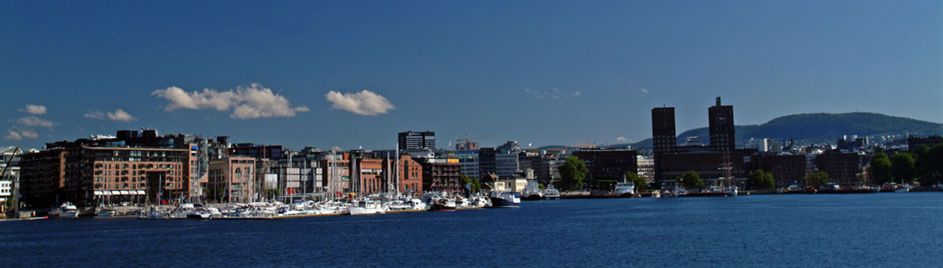
Oslo view. Photo: Nancy Bundt

Most active countries
Germany
United States
United Kingdom
Spain
France
Netherlands
Italy
Denmark
Sweden
Switzerland

“Despite terrorism and unrest in many places, people’s wanderlust is growing. Norway also saw a marked growth in the number of foreign tourists,” according to the Bloomberg report.

What Tourists Want to Know Before Visiting Norway
The Rauma Railway. Photo: Johan Berge

Facts about the report:
The reports contain 63 main categories, which have 232 subcategories.

The reports include over 150,000 tourism-related keywords in 15 languages: English, German, Spanish, Russian, French, Italian, Portuguese, Chinese, Japanese, Dutch, Finnish, Korean, Polish, Swedish and Danish.

The report covers the most widely used search engines in the world, representing 90 percent of all searches in the period.

All photos: Innovation Norway

Feature image (on top): Hurtigruten with northern lights in Tromsø

What Tourists Want to Know Before Visiting Norway, written by Tor Kjolberg

Read also:
Norway – Worth a Visit

Stockholm – The Capital City That Floats On Water

Sweden’s capital is a city of islands where palaces and peaceful hideaways line the shores, and where cobbled streets lead to city shops, cafés and lively cultural attractions.

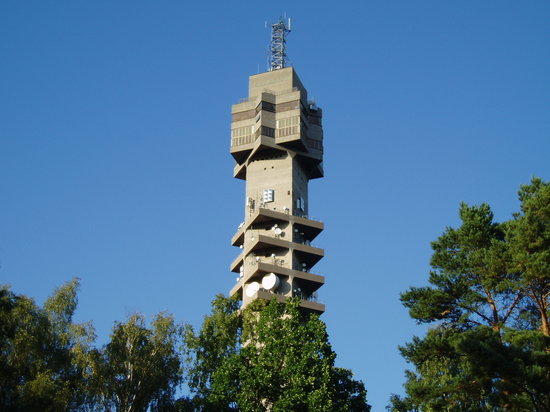
The novelist Selma Laferlöf called Stockholm “the city that floats on water”. Nowhere do you see this more clearly than from the dizzy observation platform on the top of Kaknäs Television Tower (Kaknästornet), Ladugårdsgärdet, which rises 155 meters (508ft).

Stockholm – The Capital City That Floats On Water
Kaknäs Television Tower in Stockholm

Below, Stockholm spreads out in a panorama of blue water, the red of the old buildings contrasting with the stark white and glass of the new, and swathes of trees and grass. This pretty low-rise city, designated Europe’s first Green Capital in 2010, rests on its 14 islands, for all the world like a raft traveler drifting down a lazy river.

Stockholm – The Capital City That Floats On Water
View from Kaknäs Television Tower

Fresh and salt water are separated by the island of Gamla Stan (Old Town) and the great lock gate of Slussen, at the southern end. The island barrier is where Stockholm originated some time before the 13th century.

Stockholm – The Capital City That Floats On Water
From Gamla Stan (Old Town) in Stockholm

Today with a population of more than 2 million in the greater metropolitan area, Stockholm is a modern and sophisticated metropolis, famous for Scandinavian design in furniture, textiles and interiors, and a hotbed of innovation in information technology – Europe’s Silicon Valley.

Stockholm – The Capital City That Floats On Water
Interior shop in Stockholm

The city features some of the most exciting cuisine in Europe. Stockholm’s nightlife has exploded into an array of young, hip clubs and older, more sedate nightspots. Infusing the old with the new is a specialty of today’s vibrant Stockholm.

Feature image (on top): Stockholm archipelago (Visit Stockholm)

Stockholm – The Capital City That Floats On Water, written by Tor Kjolberg

Find Hotels in Stockholm


Read also:
Copenhagen- The Capital City of Green Spires
Oslo- The Nordic Capital City of Light

Norway’s Maritime “Information Highway”

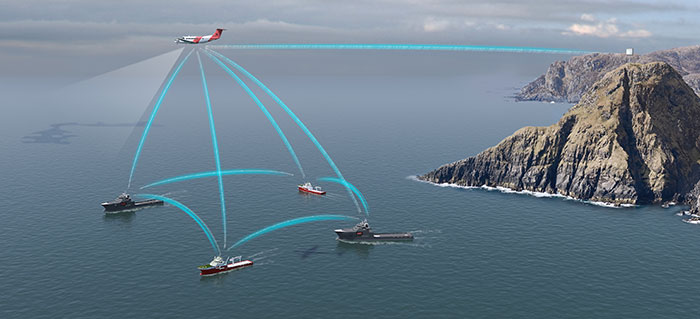
Norway has developed the first wireless network at sea to tackle oil spills. The Maritime Broadband Radio is developed for use in maritime applications where digital high-speed reliable communication and data transfer are crucial for efficient and safe operations.

The system will be implemented on ships and aircrafts in public service and enables exchange if information that can be crucial in limiting damage when accidents occur. To improve offshore oil spill preparedness, Norway’s government and the oil industry are building an offshore broadband wireless network.

Norway’s Maritime "Information Highway"
Coastguard ship KV Bergen

The maritime “information highway, (MBR), connects crews and their vessels with a high-speed and high capacity digital communication channel with “fast track” priority options.

The two Norwegian companies Kongsberg Seatex and Radionor have teamed up to develop the MBR. In contrast to previous systems, MBR is highly stable and with extensive reach and enables streaming of HD-video.

According to the Norwegian Coastal Administration, the ability to exchange information quickly between ships, planes, and other actors can greatly limit the damage caused when oil spill occurs. The system can securely carry a diverse array of operational information, from real-time video to system data, and remotely situated teams can work together seamlessly, coordinating systems and activities for optimal performance, safety and operational success.

Norway’s Maritime "Information Highway"
MBR used for coast guard purposes

MBR does not require an Internet connection to connect units in the network, though it is possible to transfer data from the network using Internet.

The Norwegian Clean Seas Association for Operating Companies (NOFO) – made up of oil industry organizations – will install the MBR system on all their oil recovery vessels. MBR is already installed on the surveillance aircraft LN-KYV, a joint initiative between the Coastal Administration, NOFO and the Norwegian Coast Guard. Three onshore base stations have also been installed, to aid in communications with ships and planes.

Kjetil Aasebø, senior advisor in the Norwegian Coastal Administration

“This is a significant improvement that allows us to communicate with all units participating in an oil recovery mission, and share the data without an Internet connection. MBR allows us to respond faster with the right actions,” says Kjetil Aasebø, senior advisor in the Coastal Administration, in a statement.

Norway’s maritime “information highway”, written by Tor Kjolberg

Scandinavian Grey Mullet

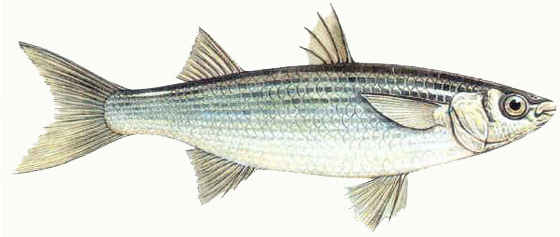
Grey mullet (Chelon abrosus) is a recent introduction in northern waters. The warm water around the power stations and the general warming of the seas are responsible for having provided breeding ground for this delicious vegetarian fish that eventually grows to a huge size, serving up to 12 people.

The fish has no teeth, just soft kissable lips, as it’s a grazer of soft seaweeds. This makes it almost impossible to catch on a rod; whereas a net close to the shore is ideal. It can grow to an impressive 80cm, but most grey mullets are much smaller.

Scandinavian Grey Mullet
Grey mullet

Appearance and taste
The fish is covered in huge silver coin scales that need to come off before you cut it open. It’s easy to do yourself, or you can have the fishmonger do it for you. The flesh is white, flaky, sweet flavored, and so dense it will stick together even if grilled whole or in fillets. The flesh is fatty and rich in omega 3 fatty acids.

Culinary uses
Grey mullet has much of the same qualities as wild salmon, even if it’s not quite so fatty, and you can cook it instead of salmon, in every way you wish. It’s not farmed, and is a much better choice than farmed conventional salmon.

Scandinavian Grey Mullet
Vegetarian grey mullet

Grey mullet gas been a favorite fish for grilling whole in its home in southern European waters for millennia, but fits naturally into the northern repertoire of serving fish with spiky horseradish, or pickled cucumber salad. The bones and head are very good for fish soup.

Scandinavian Grey Mullet
Grey mullet dish

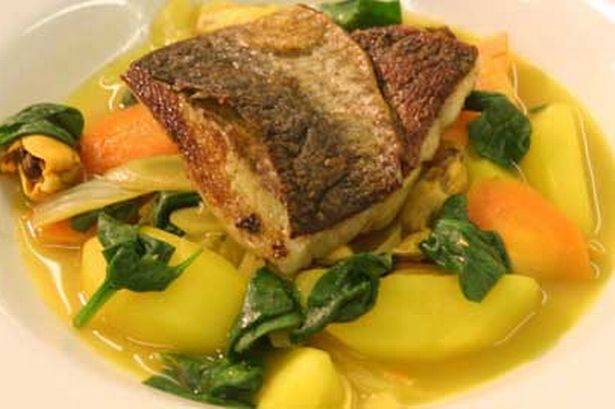
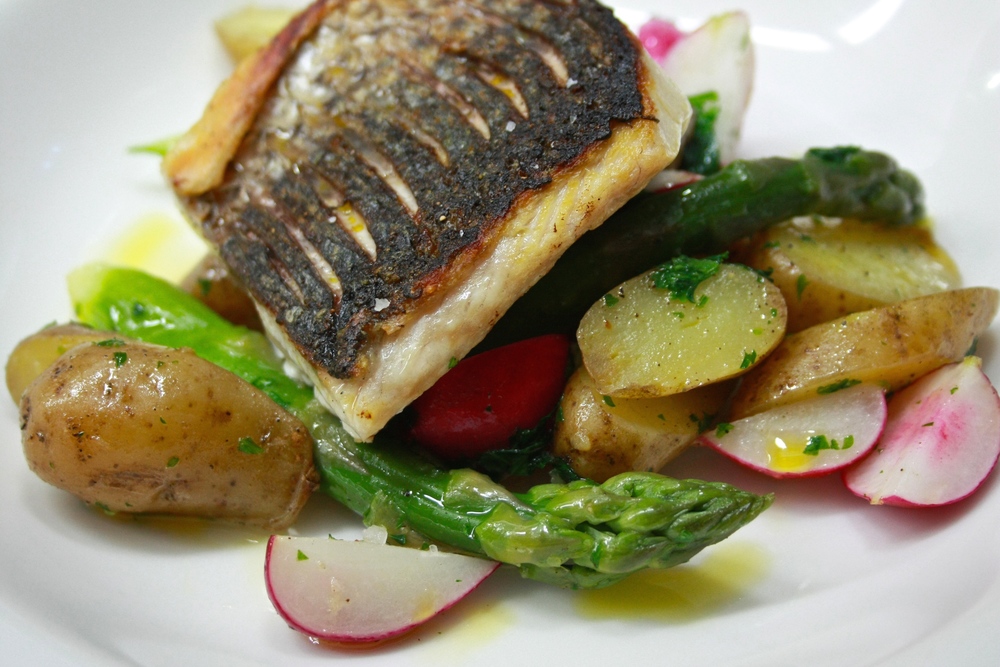
The flesh will cook to an almost lobster-like firmness if cut into dice or strips and added at the last moment to the soup. But the preparation that will show of the mullet in all its glory is when fried crisp on the grill or in a pan. The skin is delicious and so is the flesh underneath.

It’s essential that grey mullet is not overcooked, either way you choose to cook it. It is extremely filling and 250g fish on the bone is enough for one serving. When the flesh is just firm, and it’s still little pink in the middle, or by the bone it’s cooked. Longer, and it will dry up, and what a shame that would be.

Scandinavian Grey Mullet
Grey mullet for lunch

Gravad with dill, or baked in slices on a plate are also very good ways to eat the fish, and prepared as the fried Mackerel with gooseberries, or with a rhubarb compote; new potatoes are perfect with grey mullet. The frying and the butter/olive oil works miracles.

Fried pieces of grey mullet are delicious when soused, like herring, and if it’s served with cucumber salad, you can pair the two in a deep dish and eat it for lunch the day after, with toasted rye bread.

Scandinavian Grey Mullet, written by Tor Kjolberg

Related:
Scandinavian Monkfish
Scandinavian Garfish

Old Times at Bellevue Beach in Copenhagen

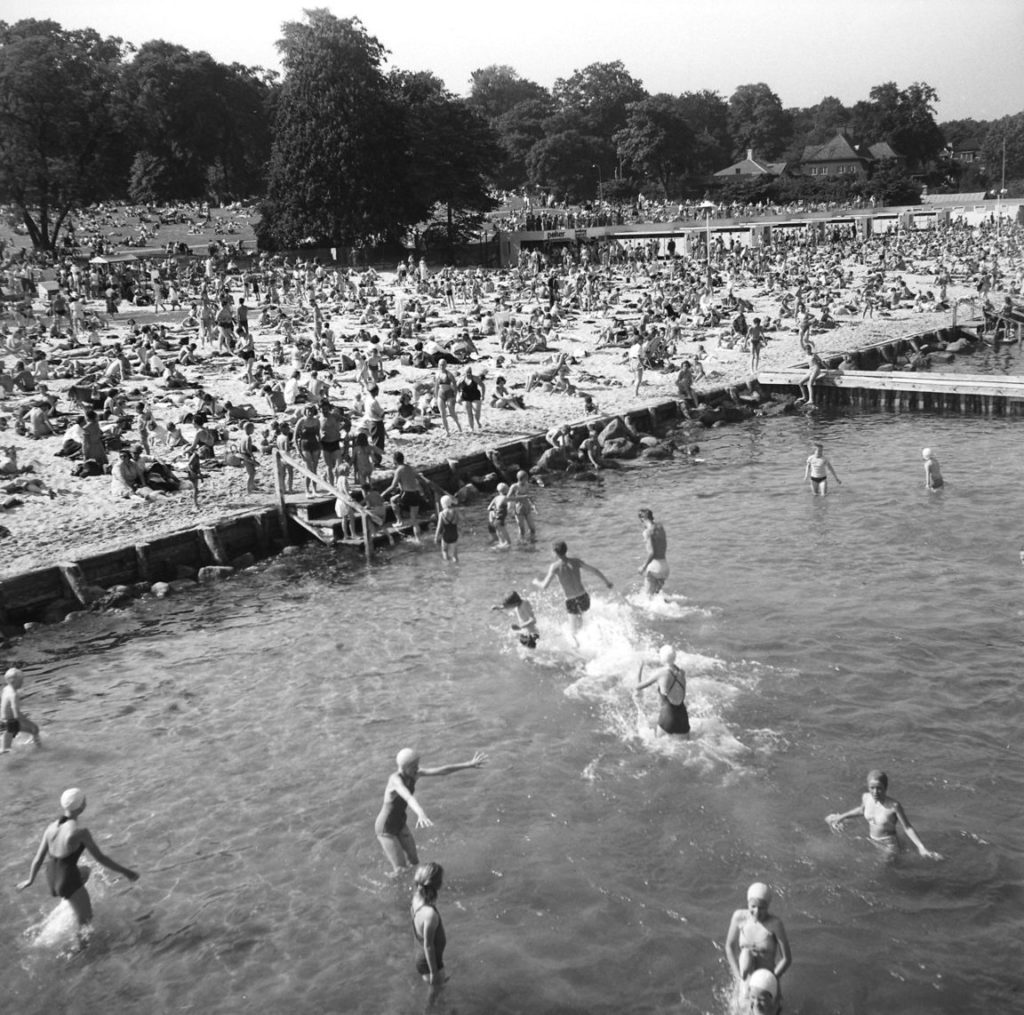
Bellevue isn’t just any old beach. In 1931, Arne Jacobsen was invited to enter a competition for a bathing area as part of Gentofte Municipality’s overall plan for the area. The beach is 700 meters of sandy shoreline behind which is a small park with trees.

The whole beach, park and surrounding area have played a key role in recent Danish cultural history, and it’s only a5 minutes’ walk from Klampenborg Station near Bakken.

Old Times at Bellevue Beach in Copenhagen
Here an excavator in action at Bellebue. Photo: Sven Gjørling

In the summer of 1932, Bellevue Beach with its changing rooms, lifeguard towers and elegant, metal-sheeted kiosks, opened to paying bathers, designed by Arne Jacobsen, who won the competition. And the beach itself is still one of the most popular in the Copenhagen area.

Old Times at Bellevue Beach in Copenhagen
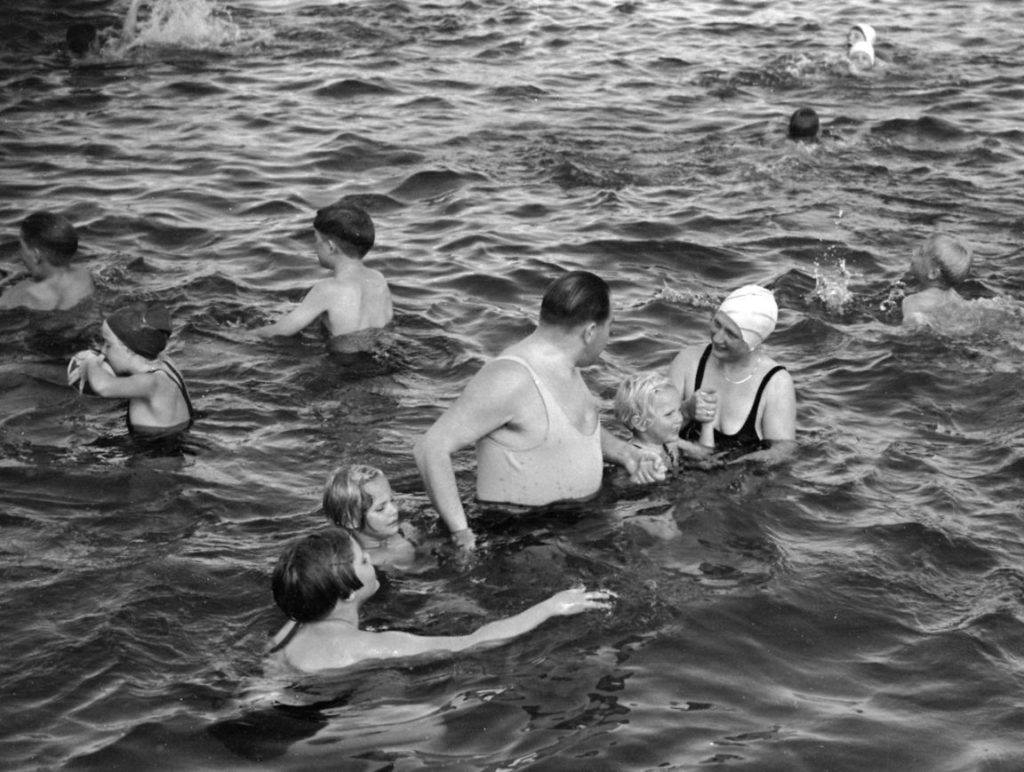
Summer holiday at the beach. A family enjoying the water. Photo: Sven Hjørling
Old Times at Bellevue Beach in Copenhagen
Bellevue, anno 1938.; People are enjoying a lovely day on the beach of Bellevue north of Copenhagen.

It’s a great choice on really warm days because of the welcoming shade provided by the trees, and Jacobsen has designed everything down the smallest detail. Bellevue Beach was an early example of a consistent branding strategy.

Old Times at Bellevue Beach in Copenhagen
A summer sunday at Bellevue Beach. Two bikini dressed women standing posing in front of the changing tents. Photo: H. G. E. Aue
Old Times at Bellevue Beach in Copenhagen
Bellevue Beach

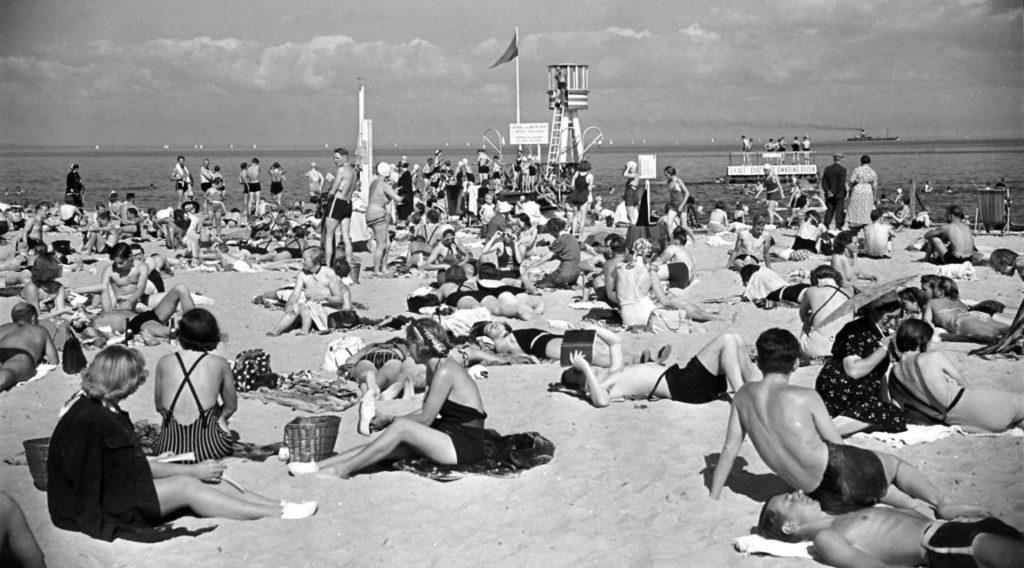
As soon as the water and sand reach the appropriate temperature, the season’s latest swimsuit fashions are aired at Bellevue, as it did in 1932. The artificial beach was quickly nicknamed ‘the flypaper’ because bathers often were squeezed so closely together.

Old Times at Bellevue Beach in Copenhagen
Bellevue, anno 1938.; People are enjoying a lovely day on the beach of Bellevue.Photo: Sven Gjørling
Old Times at Bellevue Beach in Copenhagen
Bellevue Beach anno 1945. Photo: Unknown

Today, it is not just the Sound’s waves that attract people. Copenhageners have always loved Bellevue Beach. First they flocked to it on the boats that crossed regularly from Copenhagen to Klampenborg, then from 1934 on the newly opened suburban electric railway.

Old Times at Bellevue Beach in Copenhagen
Bellevue Beach 1951: Lines of tents for change of dresses. Photo: Walther Månsson
Old Times at Bellevue Beach in Copenhagen
A hot summer’s day at Bellevue Beach. Photo: Olaf Ibsen

The two beach-volleyball courts are particularly popular, and now as then  people shelter from the sun under the trees, spread out blankets for picnics and relax with a book.

Old Times at Bellevue Beach in Copenhagen
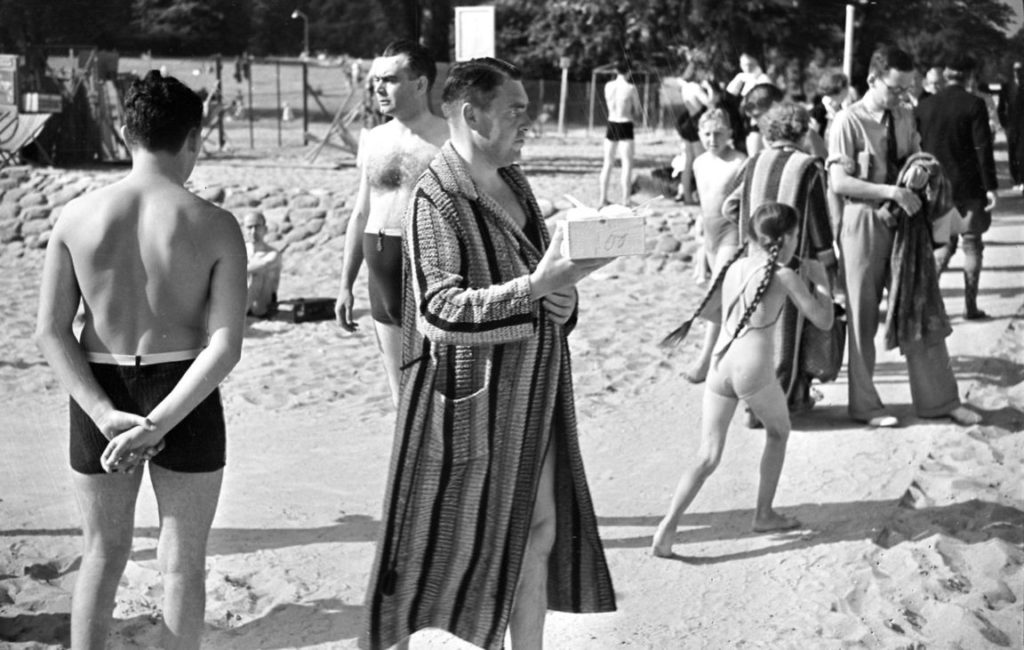
Bellevue Beach, anno 1938. Summer holiday at the beach. A family enjoying the weather. Father wearing a bathrobe. Photo: Sven Gjørling
Old Times at Bellevue Beach in Copenhagen
A summer sunday at Bellevue Beach. The beach is flypapered with people. Photo: H. G. E. Aue

The sweet life has come within reach of the masses

Old Times at Bellevue Beach in Copenhagen
Bellevue, anno 1938. A young woman in bathing suit. Photo: Sven Gjørling
Old Times at Bellevue Beach in Copenhagen
Denmark, Klampenborg: A hot day on Bellevue beach anno 1952 north of Copenhagen. A young woman reading leaned against a commercial for chewing gum.. Photo: Sven Hjørling
Old Times at Bellevue Beach in Copenhagen
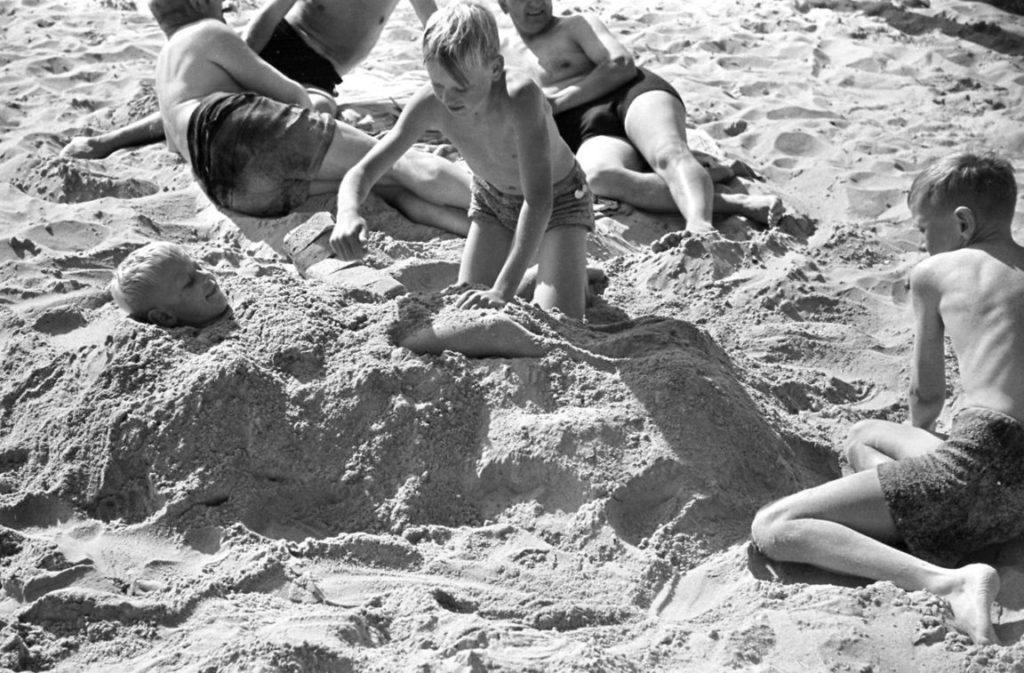
Bellevue, anno 1938. Summer holiday at the beach. Boys playing in the sand. Phitoi: Sven Gjørling
Old Times at Bellevue Beach in Copenhagen
Beach life on Bellevue. Young people are playing with a huge beach ball. Photo: Mogens Amsnæs
Old Times at Bellevue Beach in Copenhagen
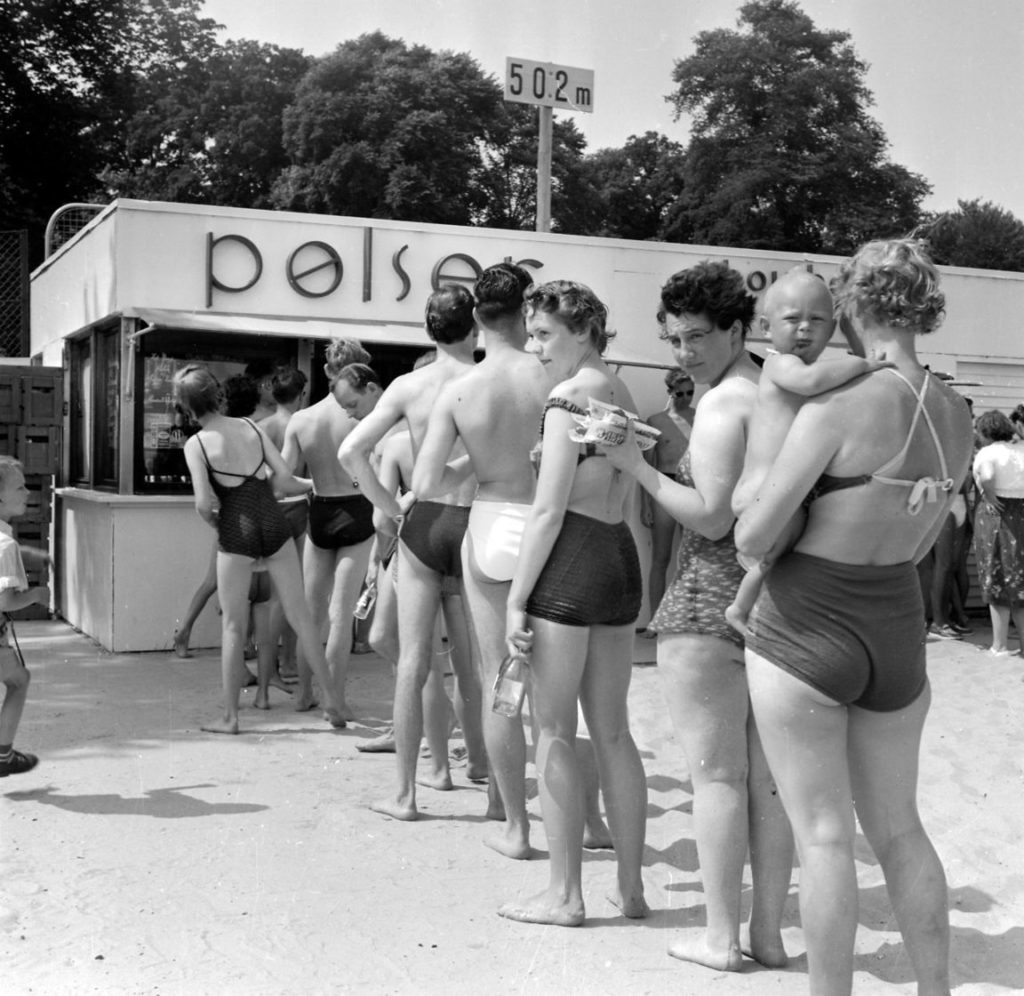
On a hot day at Bellevue , the holidaymaker queuing up for hot dogs. Photo: Birthe Melchiors
Old Times at Bellevue Beach in Copenhagen
Bellevue, anno 1938. Father and son playing. Photo: Sven Hjørling

Feature image (on top): Bellevue beach, anno 1938. Photo: Sven Gjørling

Old Times at Bellevue Beach in Copenhagen, written by Tor Kjolberg

Oslo – the Nordic City of Light

Norway’s capital city offers a lively mix of galleries, museums, shops, restaurants and nightlife, with magnificent forests, islands, ski trails and the beautiful Oslo Fjord close at hand.

Oslo still ranks as one of the world’s most expensive cities, but the “Nordic City of Light” has awakened to the attraction if city fun, and developed into an unexpected metropolis. In 2010 it was the only Scandinavian city to make it into the top 10 city break destinations at the World Travel Awards, the industry’s biggest and most prestigious award worldwide.

Oslo – the Nordic City of Light
Akershus Fortress

Oslo’s cultural rebirth in recent years has been in part conscious, in part a natural outcome of injections of money in the right place. On the back of the oil boom came money for the arts and a flourishing of the arts scene. The new face of Oslo is represented by the magnificent white marble and granite Opera House, at the heart of the newly developing Bjørvika waterfront district.

Oslo – the Nordic City of Light
The Astrup-Fearnley Museum of Modern Art in front of Oslo Town Hall

But in many ways Oslo remains the features of the ideal city of the 19th century. Within easy walking distance (and this is a perfect city for walking in), nestled around the northern tip of the fjord and the central boulevard, Karl Johans gate, are all the accoutrements of a capital – the Royal Palace and its park, Parliament, City Hall, a fortress, a cathedral, the National Theatre and excellent museums, the city’s biggest draw.

Oslo – the Nordic City of Light
The Vigeland Park (also called the Frogner Park)

The attractions not in this compact grid of streets are just a few stops on the tram or T-Bane (metro) – Vigeland Park, the Munch Museum, the Nordmarka wilderness – whole the sights on the Bygdøy peninsula, Oslo’s other big draws are a short ferry ride away.

Oslo – the Nordic City of Light, written by Tor Kjolberg

Feature image (on top): Modern architectire in Oslo – Barcode

Related:
Copenhagen – The Capital City of Green Spires
S
tockholm – The Capital City That Floats On Water


Experience the Norwegian Stave Churches

Some of the most stunning churches in the world are also some of the simplest. Stave churches are considered to be among the most important examples of wooden Medieval architecture in Europe. One of the most recognized examples of Norwegian history and culture is the stave church (“stavkirke”).

In the Middle Ages, there were probably more than 1,000 Norwegian stave churches. Due to the Black Death and the reformation, many stave churches disappeared. In 1851 a new law in Norway stated that rural churches must have seating for at least three-tenths of the parishioners, which also led to the fact that many did not survive.

Experience the Norwegian Stave Churches
Borgund Stave Church

Today, only 28 remain, including Urnes stave church in Luster in the Sognefjord  area , which is the oldest of the Norwegian Stave Churches (from around 1130) and included on UNESCO’s World Heritage List.

Experience the Norwegian Stave Churches
Urnes Stave Church

In Norway there was a tradition for using wood in artwork as well as in constructions, using the same woodworking prowess that made the Vikings such adept shipbuilders, and this lead to the development of a unique technique that the Norwegian stave churches are a perfect example of. The construction is made out of poles (“staver” in Norwegian), hence the name.

Experience the Norwegian Stave Churches
The stave churches were notable for mixing Christian iconography and pagan designs like dragons and animals

These medieval churches were notable for mixing Christian iconography and pagan designs like dragons and animals, giving them a distinctive look found nowhere else in the world.

Traditional Norwegian stave churches were often built using nothing more than expertly crafted joints and joins, with no nails or glue. Some of them have survived for as many as 800 years. Unique to Norway, they are medieval yet elegant symbols of Christianity’s initial foothold into a country whose Viking era and ancient gods were a recent memory.

Experience the Norwegian Stave Churches
Interior from Røldal stave church

Most of the remaining stave churches in Norway were built between 1150 and 1350. The largest of the original stave churches is the Heddal Church. Borgund stave church in Lærdal (around 1180), also in the Sognefjord area, is the most visited and most photographed church.

Experience the Norwegian Stave Churches
Stave church in Little Norway, Wisconsin

Even in the United States there are stave churches! Between 1968 and 1969 a replica of the Borgund stave church was built in Rapid City, South Dakota. More recently, a replica of the Hopperstad stave church (Vik, Norway) was built in Hjemkomst Center in Moorhead, Minnesota.

Find the Norwegian stave churches  here.

Experience the Norwegian Stave Churches, written by Tor Kjolberg

If you want to experience Borgund stave church in Luster, you might also want to read:
The Oldest Hotel in Norway

Feel Like a Celebrity Wearing Swedish Jewelry

0

The successful Swedish jewelry brand Charlotte Bonde, established in 2010, is owned by designer Charlotte Ihre (her maiden name). She describes her design style as classic and organic, with classic lines combined with a modern twist. The result is a radiant blend of the past and the future.

Seen often on celebrities in Sweden, and a firm favorite of Princess Victoria, they stand out in their originality, something hard to achieve in today’s highly saturated jewelry market.

Feel Like a Celebrity Wearing Swedish Jewelry
Princess Victoria wearing Charlotte Bonde Jewelry

Over half a century ago, Charlotte’s mother was raised in the family business designing women’s clothing and running the famous Ohlssons Fashion Store in Malmø, Sweden.  Also her grandparents were entrepreneurs in the fashion industry which inspired her in a sense that nothing is impossible, hard work matters and personal style is in her mind rather than fleeting trends. The creative family history served as an important source of inspiration for Charlotte.

Feel Like a Celebrity Wearing Swedish Jewelry
Irma Palace Amazon earrings

Her love affair with oriental architecture, with its graphic elements and rich designs, is another strong influence. Charlotte Bonde has earned a lot of credit from fashion magazines both in Sweden and abroad.

Feel Like a Celebrity Wearing Swedish Jewelry
Charlotte Ihre

Charlotte Ihre’s inspiration originates mostly from architecture, and explains that she usually finds stimuli through natural materials, shapes and textiles. She is also inspired by the iconic Swedish silversmith Wiwen Nilsson, known for his geometric and timeless designs. Charlotte Bonde Jewelry is pure eye candy.

Charlotte aims to design creatively, while still making jewelry that is easy to wear and not too pretentious. Her pieces range from small to large and from artistic to commercial. With inspiration from the past in architecture, history and the present fashion and art the collections has grown with bold, sovereign jewelry embracing individuality.

Charlotte Bonde opened her exclusive shop in Riddargatan in Stockholm and today the brand is available at leading department stores in Stockholm and other major cities.  But even if you don’t have a shop close to where you live, you needn’t worry – you can easily buy her pieces from her online store.

Feel Like a Celebrity Wearing Swedish Jewelry
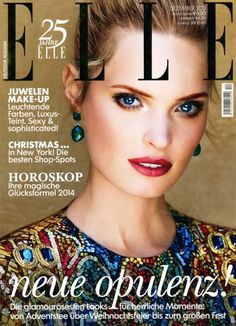
Charlotte Bonde has earned a lot of credit from fashion magazines both in Sweden and abroad. Here a cover story in German Elle

She continues to illuminate the artisan family tree. Charlotte Bonde is a brand where every collection has a history and a tale to tell.

Wearing Swedish Jewelry Like a Celebrity, written by Tor Kjolberg

Related stories:
Uncompromising Danish Jewelry Designer
Nomadic Designer From Norway

Meet Rocky in Stockholm

Swedish cartoonist Martin Kellerman drew his first comic strip of himself with a dog’s head when his girlfriend split and he lost his job. Rocky was an instant classic! Today Rocky has run for almost 20 years and is on display in about 50 newspapers and magazines around the world! Now you can meet Rocky in Stockholm – he has moved into the Museum of Spirits in Stockholm.

Rocky has moved into the museum, bringing his kitchen, his studio, his country cottage and his friend Igge’s living room – settings familiar to anybody who has followed Rocky over the years.

Meet Rocky in Stockholm
Martin Kellerman

Martin Kellerman’s newspaper strip Rocky is considered a very important part of Swedish and particularly Stockholm culture. “When I was a kid my goal was to take over Don Martin’s job at MAD Magazine when he died. I copied his style for years so that I’d be able to take his place eventually. When I eventually developed my own style my goal was just to be able to make a living from drawing,” said Kellerman in an interview with Comics Reporter.

Meet Rocky in Stockholm
A Rocky stripe

It was, however, an autobiographical comic strip in funny animal style that began publication in the free newspaper Metro in 1998 when things had gone straight to hell for Martin Kellerman. Having recently been dumped, and sitting on the train from Uppsala, he drew himself as a dog with a noose around his neck.

Meet Rocky in Stockholm
A Rocky drawing

The strip centers on Kellerman’s alter ego Rocky’s troubles with women, his job as a cartoonist, his friends, and the everyday life of partying and being bored. In Rocky’s world, drinks rarely play the lead role. The alcohol is just a prop. But at the Museum of Spirits, you can take a seat at the kitchen table, pop the cork and relax at home with Rocky.

Meet Rocky in Stockholm
Rocky has run for almost 20 years

The stripe was translated into Norwegian (by Dag F. Gravem in Dagbladet, from 1999) as well as into Danish (by Nikolaj Scherfig in Politiken, from 2004). The setting was changed from Stockholm to Oslo and Copenhagen respectively, and Rocky changed his passport rather seamlessly. To some members of the audiences in the other Scandinavian countries, Rocky appeared to be inherently native and readers are sometimes surprised to learn that Rocky is in fact “as Swedish as surströmming [sour herring] and Systembolaget (Wine Monopoly)”.

Meet Rocky in Stockholm
Rocky logo

“A lot of people just laugh at the characters because they think they’re stupid and pathetic, but I don’t think they would laugh if they didn’t recognize themselves,” said Kellerman to Comic Reporter.

Meet Rocky in Stockholm
Rocky’s world

Until 29 October 2017 you can meet Rocky in Stockholm.

Meet Rocky in Stockholm. Written by Tor Kjolberg