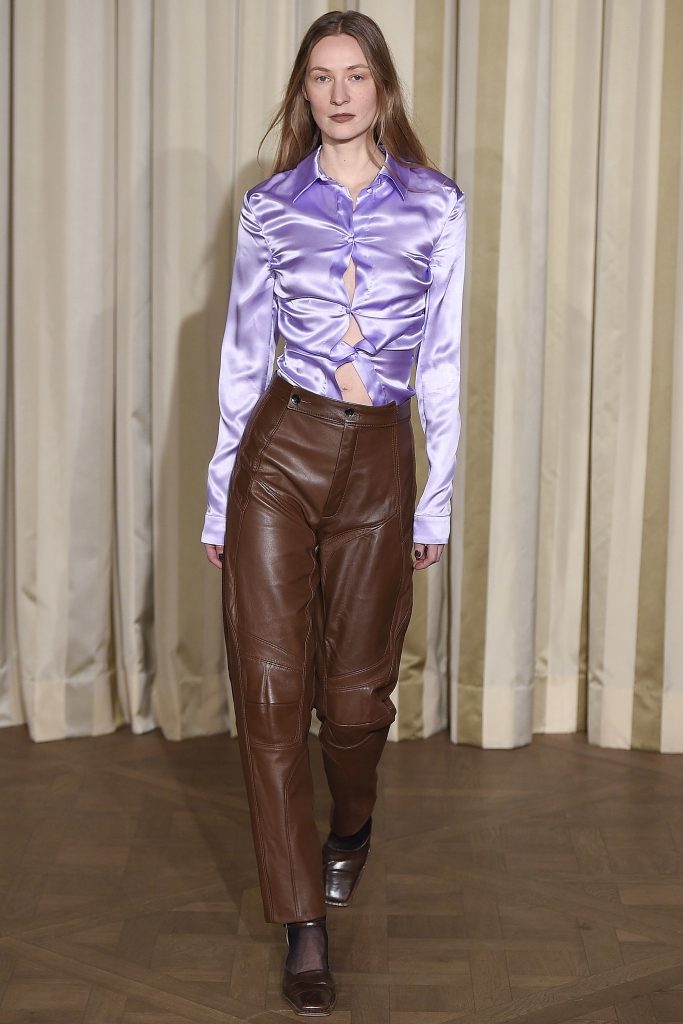
Danish fashion designer Freya Dalsjø stretches borders in Danish fashion with fur, wild color combinations and architectural elements.
Danish fashion designer Freya Dalsjø founded her brand in Copenhagen in 2012 after studying fashion at the Royal Academy of fine arts in Antwerp, and somehow, this Danish designer manages to merge femininity with functionality.
Freya Dalsjø, Creatures of the wind, Fall 2017
Her autumn 2017 collection, presented at the Copenhagen Fashion Week in Copenhagen in February included deconstructed suits and shirtdresses and coats with exaggerated shoulders. Dalsjø’s clothes showed bold, off-kilter silhouettes and emphasize on transforming high quality materials into unexpected timeless design.
One can sense Dalsjø’s desire to mediate the manufactured and get to the heart of something a little more real, and the collection is defined by the use of bold colors and lines with an artistic and architectural approach.
“I’m inspired by portraying a woman I know and am genuinely affected by her mood, reactions, and interactions, “says Dalsjø. “All make me want to portray something that feels more real and communicates an idea that different women can relate to.”
About Freya Dalsjø Born in Vejle, Denmark 1980
Fashion brand Freya Dalsjø established 2012
Educated at the Royal Academy of fine arts in Antwerp
Winner of Sølvtråden (Silver Tread) 2013
Winner of Elle Style Awards 2015
Cooperates with Copenhagen Fur
Danish Fashion Designer Merges Femininity with Functionality, written by Tor Kjolberg
Destination expert Fred Mawer calls Norway “Europe’s most beautiful country” in an article in the British paper The Telegraph on 3 August 2017.
He and his family was on a four-night journey with Hurtigruten, from Tromsø down the Norwegian coast to Bergen. He points out, however, that the voyage was a sedate experience and that a grown-up atmosphere prevailed on board. Even some of the offerings, such as lectures on Ibsen and Grieg, were too highbrow for him during a holiday.
That said, when he claims that Norway is Europe’s most beautiful country, we believe the family’s Norwegian coastal experience, wasn’t a complete waste of time.
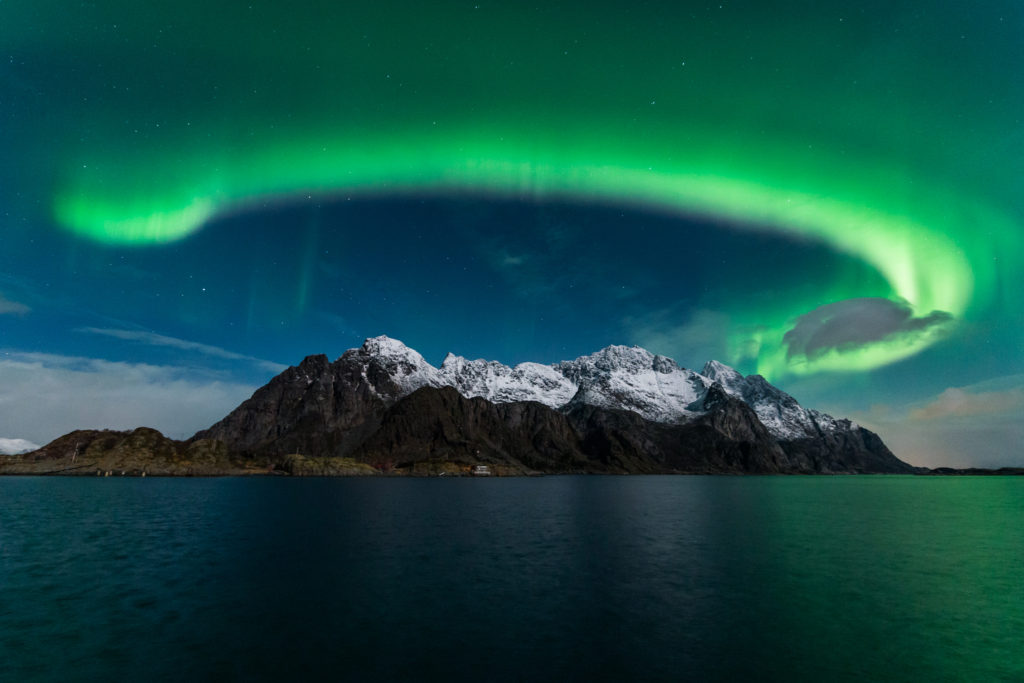
Experience the beautiful surroundings in Narvik. The city is located by the emerald-colored Ofot fjord, where vessels ship iron ore all over the world. The fjord is surrounded by rugged mountain peaks and forested hills. From the mountain above the city you can see all the way to Lofoten, and in the mountains there are endless opportunities for mountain biking.
Narvik is located on the 68th parallel, 200km north of the Arctic Circle in northern Norway. You can fly to Evenes Airport from Oslo, Trondheim, Bodø or Tromsø. From there It’s one hour’s transfer to Narvik.
Downhill biking in Narvik
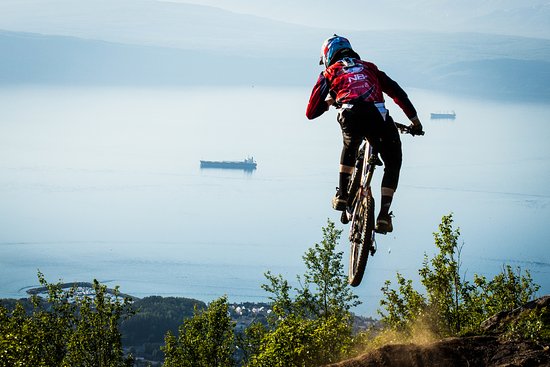
The terrain here is very mountainous and hilly, and the landscape is breathtaking. Biking here is one of the world’s most fantastic, yet untouched freeriding spots. However, the views often come after several hours of hard cycling.
During the cold winter months this place is dark, but during the summer months the sun never sets. Accordin to Sture Petterson, a resident of Narvik and editor of Singletracknarvik.com, most of the area is rideable from mid/late June except some of the highest altitudes like Låktatjåkko Fjällstation (1228 m) and Reinnesfjellet (804 m). All tours are within a range of one hour driving from the town.
Brage Vestavik getting some air in Narvik, Norway (Red Bull)
On a sunny day this place is as close as you will ever come to paradise. Bjørn Forselv has written several books on hiking and biking in the Narvik area, but unfortunately, the books have not yet been translated into English. For many years Narvik has been a well-known ski resort, but few people know the area as a bike destination. On Singletrack Narvik you will find links to pictures and descriptions of several freeride trips below.
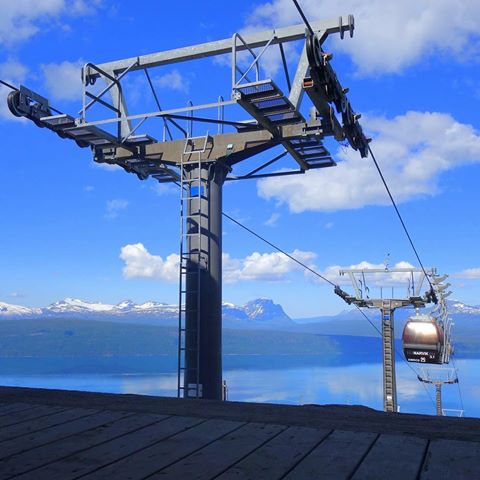
The bike scene in Narvik was established already in 1997, when enthusiastic locals hand-built the long, steep downhill track from the top of Fagernesfjellet. It is served by a gondola lift and gives 700m of vertical drop. In the summer months the gondola lift runs until 8pm, as the sun does not set until very late.
Most of the trails in the Narvik area require a certain amount of off-road riding experience, but many of the rides are not that technically demanding.
On 24 August 2017 the Nordic food award ‘Embla’ is handed out for the first time at an award ceremony in Copenhagen City Hall.
The price will be handed out in seven different categories celebrating:
– The best food for children and young people
– The best food destination
– The best food entrepreneur
– The best food craftsman or –woman
– The best food communicator
– The best creator of food to many
– The best food producer
The nominees will be from all the Nordic countries. Related: New Nordic Kitchen
The new Nordic food prize, Embla, is aimed at helping to strengthen a shared Nordic culinary identity and culture, and increase interest in Nordic food outside the region.
The first pan-Nordic food prize is launched by six Nordic agricultural organizations.
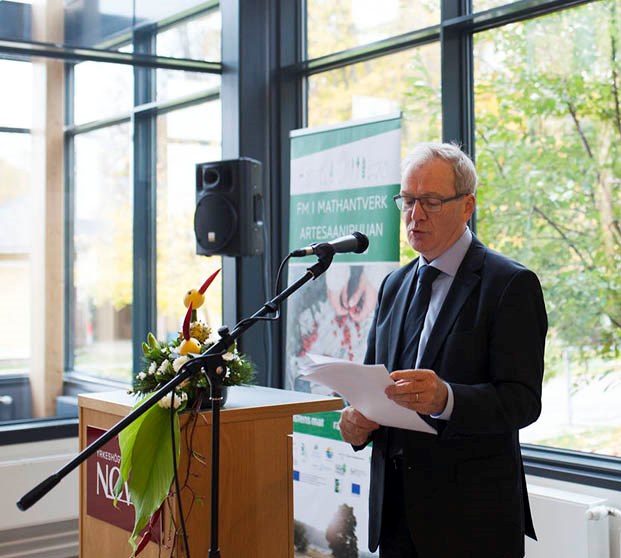
Senior advisor at the Nordic Council of Ministers, Mads Frederik Fischer-Møller
The focus will be on ingredients, food, production and the professionals behind it. Mads Frederik Fischer-Møller, senior advisor at the Nordic Council of Ministers, said:
The Embla logo
“The fact that the prize is administered by organizations representing the breadth of Nordic food is a huge boost for Embla, its identity, and its purpose. The objective is for the prize to become as recognised as the Nordic Literature Prize.”
Embla will be awarded every other year. The host country for Embla 2019 will be announced at the ceremony. The awards ceremony in Copenhagen will take place in conjunction with the Ministry of Environment and Food of Denmark’s ‘Better Food for More People’ summit at Copenhagen Cooking.
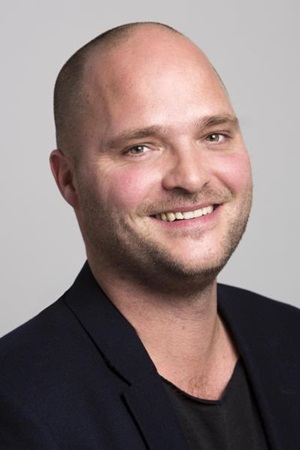
Chief consultant at the Danish Agriculture and Food Council and project manager for Embla, Andreas Buchhave Jensen
Andreas Buchhave Jensen who is chief consultant at the Danish Agriculture and Food Council and project manager for Embla says:
“We have so many good things to offer in the Nordic Region. Tasty ingredients and a high level of innovation among food professionals. By sharing our experiences, we all benefit. The prize is also recognition of a Nordic culinary culture that we can all be proud of.”
New food prize celebrates Nordic cuisine, compiled by Admin
Different cultures have different ideas about privacy. The practice of revealing everybody’s salaries in Norway and Sweden dates back to the 18th century.
Norway has been making such details open to the public since 1863.
Would you be happy to have your tax return displayed for everyone to see? Want to know what your boss earns? Or your future husband? Each year Sweden and Norway publish everyone’s income tax returns so everybody in the country can inspect them.
What do the very rich really pay in taxes? Just some keystrokes on your computer’s keybpatd and the information is there. The person whose returns you request will know it was you, but that is all. This rule, introduced in 2014, resulted in the fact that the number of requests fell considerably. However, workers can see what their colleagues earn and neighbors can snoop on how much the people next door make – all legally and online.
Progressivity of Scandinavian and US incomew taxes
In the grand tradition of the “Jantelov”, where no-one is better than anyone else, Sweden and Norway publish everyone’s income and tax details, every year. So it’s possible to find out the average gap between women and men. However, only total income and total tax paid is revealed.
On a date every year in October, just after midnight, Norwegian citizens’ annual tax returns are posted online – and the country’s newspapers leap to produce top ten lists of the country’s highest earners, the incomes and taxes paid by the political and cultural elites, celebrities and sportspeople.
Sweden’s ‘tax calendars’are published in stages, starting with ordinary taxpayers, then high income earners from company bosses to celebrities. The Swedish gender pay gap has become smaller since the system was introduced, 6 per cent only.
For most foreigners, how much someone earns is not information that belongs in the public space. Money should be private.
Tax declaration in Sweden
In Sweden, businesses with 25 or more employees have to establish an equality action plan. And companies with big pay gaps face fines if they fail to take steps to close them.
According to domestic tax authorities, few Norwegians and Swedes have the same hangups as most foreign people about having their incomes disclosed. The list seems to symbolize the best of Nordic openness.
Norwegians living and working abroad say the rules mean there is more honesty about salaries back home than in the country they live in. “Isn’t this how a social democracy ought to work, with openness, transparency and social equality as ideals?” they ask. Tax transparency may also contribute to a flatter and more equal pay structure in the country.
The spirit of transparency, when it comes to money at least, doesn’t translate into every culture. What some see as an honest commitment to fairness is for others, an invasion of personal privacy, or as a Norwegian tabloid described as “tax porn”.
Income and Tax Transparency in Norway and Sweden, written by Tor Kjolberg
Join the Danish “Viking trail” in West Jutland and visit the historic sites and old as well as new attractions.
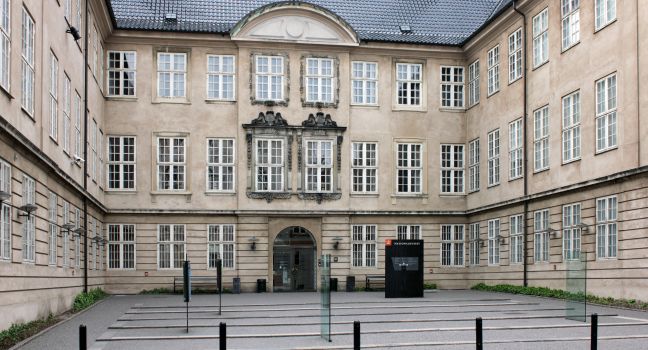
We think the best place to start is in the capital city, Copenhagen, where you initially learn about Denmark’s distant past in the National Museum (Nationalmuseet). There you can watch priceless treasures like Viking jewelry, coins, weapons and rune stones. Sample the Viking menu at Restaurant Valhal in Tivoli Gardens.
Natuonal Museum, Copenhagen
Next stop is the picturesque town Roskilde with its Viking Ship Museum. The town was founded by the Vikings in a strategic position overlooking the beautiful Roskilde Fjord. The Roskilde Cathedral is a key local landmark. This is the church in which the Viking king Harald Bluetooth is buried. The museum contains five completely reconstructed Viking longboats, built from salvaged wrecks from the fjord itself, discovered in the 1960s. Here you can also watch a film telling the story of the salvage and restoration.
Next, head south from Roskilde to the Viking stronghold of Trelleborg near Slagelse on Zealand. This impressive 1,000 year old ring fortress built by King Harald Bluetooth in 980 is surrounded by a 134-metre-diameter wall, where you can also meet ‘real’ Vikings and get a glimpse of their daily life and taste the Viking brew, mjød.
At the museum you can see some of the many discoveries that were made during the excavation and learn more about the castle and its function.
Standing stones at Gammel Lejre
About 10 kilometers west of Roskilde is Lejre, an important powerbase at which the story of the kingdom of Denmark began. The Viking Age discoveries from Gammel Lejre include a unique large hall complex (covering around 500m2).
Apart from the great halls, many splendid archaeological finds have also been recovered in the area and these are exhibited in the Lejre museum.
From Ladby Viking Museum
From Lejre, drive west over the Great Belt Bridge (Storebæltsbro) to the island of Funen (Fyn). South of the town Kerteminde, you’ll find Ladby Viking Museum where the Ladbyskibet viking chieftain burial site is located. The Ladbyskibet burial site is the only Viking burial site in Denmark.
140km south west of Kerteminde in Jutland, you come to Ribe, Denmark’s oldest town. It’s as though you have been transported back to 980. At its Viking Centre, you can wander through a full-size reconstruction of Ribe’s Viking market place. Beyond the longhouse there are barns, workshops and pit-houses. See their film, Odin’s Eye, which also takes you back to Viking times.
You can sense the history all around in this picturesque country town.
From Bork Viking Harbor
From Ribe, head north-west towards Ringkøbing Fjord. At its southern end, you’ll find Bork Viking harbour. At the open-air Viking harbor museum you can go sailing on the fjord and go fishing and experience the viking activities.
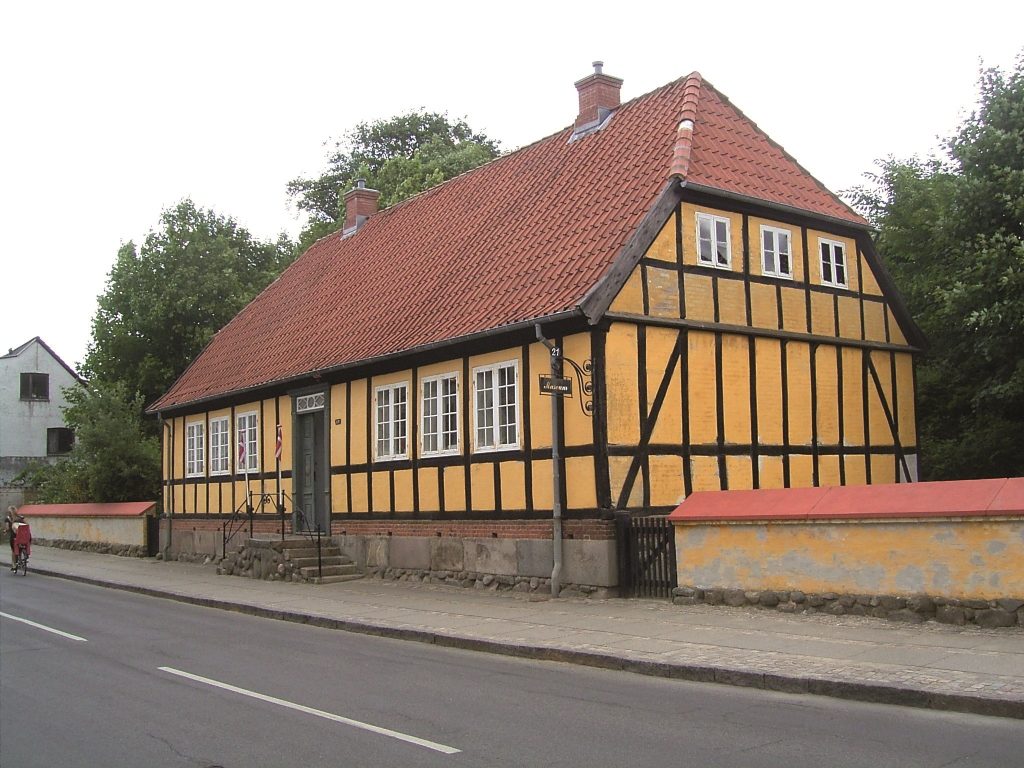
The Hobro Museum
About 45 miles away, before the town of Vejle, you’ll reach the the Unesco world heritage site where kings Gorm the Old and Harald Bluetooth erected two famous rune stones and built the largest structures of the period. The new Royal Jelling Experience Centre will tell the story of Denmark’s birth as a nation.
From Jelling, head to Aarhus and further north to Hobro, around 135km away. Here you can visit the Hobro Museum and its rich collection of prehistoric and Viking archaeological finds. Close by, you can see the foundations of a large Viking castle.
From Lindholm Høje
40km north of Hobro, towards Aalborg, you’ll come to Nørresundby and Lindholm Høje – the biggest ancient burial ground in Scandinavia. The site dates back to the Iron Age and Viking period and contains a staggering 700 graves, marked with striking stone rings and patterns. There’s also a great museum for you to visit. At Lindholm Høje Museum, you will find exhibitions which bring history to life. With an outset in the recovered relics, you will be introduced to Viking life through amazing reconstructions, panoramas, illustrations, and 3D animations.
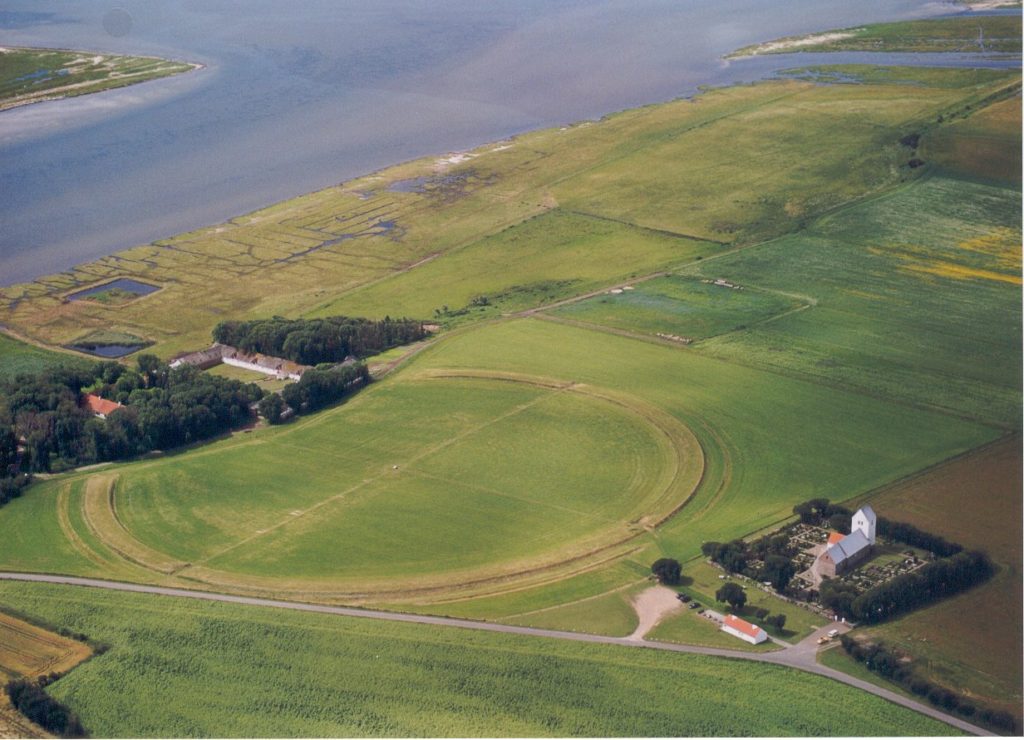
Aggersborg wuth the chirch
Head to Aggersborg, near the small town of Løgstør. Here you can wander around the atmospheric ruins of a round Viking castle fortress and absorb the thousand years of history you’ve collected on your journey back to Viking Denmark. Aggersborg is the biggest of the Danish viking fortresses, built at the same time period as the Trelleborg, Fyrkat and Nonnebakken viking fortresses in 980-981 AD by King Harald Bluetooth.
Feature image (on top):
The new Royal Jelling Experience Centre will tell the story of Denmark’s birth as a nation.
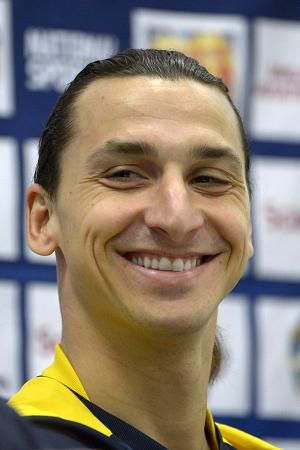
Swedish football hero, forward Zlatan Ibrahimovic, is now honored and immortalized on a 1,000 kroner note, featuring his face. However, the noteis simply an artistic design and cannot be used to purchase anything.
But when the Swedish top scorer in fact will be immortalized in a statue outside the national stadium, he has certainly attained a living legend status in Sweden.
Zlatan-Ibrahimovic will be immortalized in a statue outside the national stadium
The 1,000 kroner note, designed by Swedish artist and photographer Bingo Rimer, has Zlatan’s face is plastered over Swedish currency artwork, and Zlatan now compares himself to Benjamin Franklin.
Zlatan Ibrahimovic now compares himself to Benjamin Franklin
The former Manchester United, Barcelona and Juventus striker posed for Rimer with a blown up version of the note. The image was published on Instagram with the caption, “’You have Benjamin Franklin and you have me”. Unbelievably, Zlatan Ibrahimovic’s ego seems to have been inflated even more than it already is.
A 1,000 kroner note is Sweden’s largest denomination available, so Ibrahimovic will without doubt be pleased by the symbolism, as he is a man known to have compared himself to God.
The former Manchester United, Barcelona and Juventus striker
Although his fans and Zlatan himself will be disappointed that they cannot by anything with the 1,000 kroner note, they should not forget that five special official stamps of the forward in the yellow of the national team were released in 2014.
However, the 35-year-old Zlatan is currently a free agent, after Manchester United decided not to renew his one year contract. But United boss Mourinho has said that a move to get the striker back at the club is in the pipeline. Zlatan is likely to ask for a wage of a lot more than 1,000 kroner a week.
A Living Swedish Football Legend, written by Tor Kjolberg
The small Norwegian town Fossmork has been overrun by tourists looking for the famous Pulpit Rock (Preikestolen). The reason? A mistake in Google maps.
Local residents have complained of the tourists clogging up their picturesque village with cars, minibuses and vans every day. The village of Fossmork is 18 miles away from the famed Pulpit Rock, on the other side of a fjord.
Google maps route to Pulpit Rock
“When we are in the cabin, sometimes two, three, four or five tourists come in – every day, asking their way to the famed Pulpit Rock” Gunnar Bøe, a local resident, told the newspaper Stavanger Aftenblad.
Eidavatnet, Fossmork
The Preikestolen cliff is one of the most sought-after views in Norway. Rising some 604m above the limpid Lysefjord, the Pulpit Rock is a famous Norwegian landmark and reportedly receives more than 200,000 visitors annually.
Fossmark, the quaint village that the tourists stumble upon, is equally beautiful but, but that’s not what the visitors expect to see.
“We have sent hundreds of tourists away in no uncertainty that they’re on the wrong side of the fjord,” said Gunnar Bøe, who have spoken to tourists from all over the world.
Google maps lead the tourists over the Lysefjord Bridge and into Fossmork. The road is quite narrow and some get quite upset when they’re told they have to go back.
Rådhuspladsen (City Hall Square in Copenhagen) is the nexus of Denmark’s capital city, grandly lit up at night with its colored signs, digital news headlines and blinking neon, with the enormous City Hall (Rådhuset).
Constructed in the National Romantic style, its inspiration was drawn from medieval Danish and Norwegian architecture with a touch of the palazzo style of northern Italy. The façade and interior are trimmed with historic details from Nordic mythology.
City Hall Square in Copenhagen
For a bird’s eye view of the city’s spires and towers, climb the 106 meter (347ft) tower.
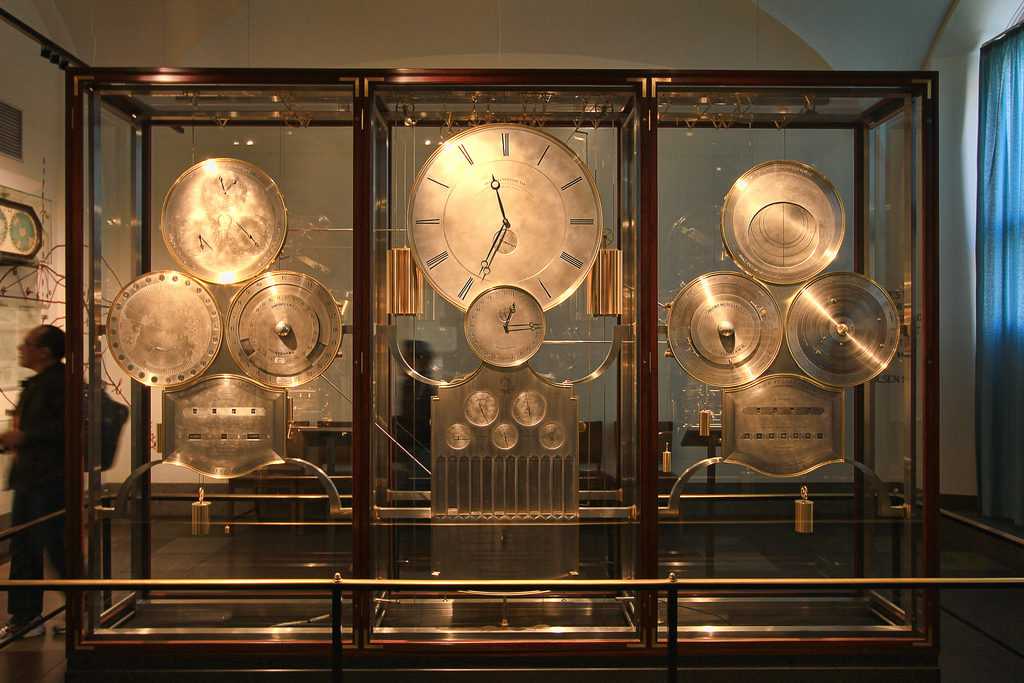
Inside the Rådhuset’s foyer, look for the entrance to Jens Olsen’s World Clock. Its star dial mechanism shows the path of the pole star in resettable periods, making it one of the most accurate and complicated clocks in the world. Unsurprisingly, the masterpiece of time-telling took 27 years to build.
Jens Olsen’s world clock
Bordering the square to the cast on Vester Voldgade, are two of Copenhagen’s fine traditional hotels. Closest to City Hall is the Palace Hotel, one of the few buildings in the Jugendstil (Art Nouveau style), and further north, past the square, Hotel Kong Fredrik with the smart and pricey Gastro Pub Restaurant.
Forget educational value, and take the family to marvel at animated tableaux of Andersen’s most famous stories, or shrunken heads, optical illusions, and a picture of Queen Margrethe carefully constructed from pocket fluff.
On the western side of Rådhuspladsen is Denmark’s most viewed attraction, the charming Tivoli Gardens. Opened in 1843, the amusement park updates its collection of rides and rollercoasters regularly while still retaining the air of a pleasure garden for a bygone age. The fair opening in April marks the beginning of summer. It’s a Copenhagen institution attracting visitors of all generations with its old-fashioned side-stalls, aquarium, gardens, cafés, theatres, an open-air stage, its own symphony orchestra, and a concert hall where classical concerts, jazz and musicals are performed. The park has more than 20 restaurants, including the Michelin-starred restaurant Herman.
City Hall Square in Copenhagen, written by Tor Kjolberg
Norwegian entrepreneur Stian Rustad (44), founder and co-founder of almost 40 companies, was interviewed by Daily Scandinavian in the beginning of this month. He said that one of the reasons for his success was the coinciding with the evolvement of the Internet.
Straight from his engineering and financial studies in Norway he served his military ‘dream duty’, as he calls it, at NATO in Brussels. His assignments there led him to understand the possibilities of having a web-based ERP-system delivered on Cloud Computing technology and SaaS (Software as a service).
After his military duty, Stian and soon eight more partners realized that they needed better management systems. In 1996, with the help from a regional business and organizational body in Norway, he established the first ERP web-based company in Europe for mid-sized companies, 24SevenOffice. Working via the cloud, the team could now work from everywhere.
“I like to build a company and stay as long as I know I can contribute to the company’s growth,” says Stuan Rustad. Photo: Tor Kjolberg
The solution was based on modules and included everything a medium-sized business needs to manage its business in one integrated system. In addition 24SevenOffice is integrated with over 200 third-party solutions including most banks, debt collection, disposal systems, online trading, production systems, industry solutions, pre-systems, etc.
Accountants for mid-sized companies were an important target group. With the help of the ERP system businesses were able to share information with shareholders, stakeholders, accounting, auditors, advisors etc.
Today 24SevenOffice has more than 20,000 customers in Norway and Sweden, and increased its turnover by 30 percent last year.
Stian Rustad in front of 24SevenOffice main office at Tjuvholmen, Oslo
What is the reason for your success, Stian? “I’ve always been working closely with my companies.
One company I started together with the main founder Bjørn Roland in 2002, Regnskapsfabrikken, (‘The Accounting Factory’) involved 50 people and was sold to PWC. The company focused on system development, implementation and consultancy in relation to hardware and software, as well as financial and administrative systems. That was my first larger exit.
I was engaged in Norway’s first cloud-based server company, which I sold to the Braathe Gruppen. That was my second exit.
Early on I realized the challenges related to telemarketing. Salespeople had to manually press the keys to contact potential clients. My company Oyatel replaced the traditional corporate phone system and became the first IP-based system in Norway. The system enabled businesses to manage without the traditional Cisco box. The company was sold to the A-group. This was my third exit.”
Propartner Defense at Notodden was offered for sale, and Stian bought it by chance. The company produced advanced high-tech electronics for domestic and international customers and had long experience in electromechanical assembly and cable assembly. Stian completed a turnaround and sold the company to an Orkla owned investmentcompany. That was his fourth exit.
Is it your strategy to buy, build and sell?
“I like to build a company and stay as long as I know I can contribute to the company’s growth. When I realize I cannot infuse more to the company than a potential buyer, I want to sell it. At the same time it is a social issue as I want to invest in new businesses in which I have more to add.
“Focus on sales and marketing and get your act together” is Stian’s advise to entrepreneurs. Photo: Tor Kjolberg
Six years ago I wanted to buy a new car and visited a car dealer in downtown Oslo. There was an extremely knowledgeable and accomplished salesman. It turned out that I knew his brother, and I was asked if I wanted to invest in the company. I did and together we restructured the company and slowly the company increased its turnover by NOK 200 million. In fact, this was not an exit, I am still one of the owners.
Today I am involved in almost 40 companies.”
There must have been some challenges? “Yes, indeed. One of the most common questions from the founders following an investment discussion is whether the investment company requires management representation and / or possibly the majority of the board as part of the shareholder agreement. As a minority shareholder I was once involved in a company where I was completely isolated. The board took many very important decisions that I and the rest of the management team knew were wrong. They did not understand the company culture well enough. The board did not understand that the company did not possess good enough systems, routines or tools to hire a large amount of sales reps. The company burned too much money and the growth ceased. The members of the board were competent enough, but they were unfamiliar with the business, prerequisites and restrictions. Group dynamics lead to the fact that too little or too much was being done. For readers interested in more information, read my LinkedIn article.” (In Norwegian only)
What is your advice to entrepreneurs? “Focus on sales and marketing and get your act together. Too many entrepreneurs use post-it notes and defer accounting and finance. You have to be structured and focus on project management. But not to such a degree that it takes away your attention from the company. Find the right level of attention in relation to the stage that your company is at. A success factor is electronic documentation. Too many business people use too much time looking for this and that.”
What next? I have recently moved to Manhattan, New York City with my family. I know there’s a market for 24SevenOffice in the USA. I know that expensive ERP cloud systems for big corporations and cheap systems for small companies already exist, but there’s a lack of systems for medium sized companies. My aim now is to start spreading the word about 24SevenOffice here. I love Manhattan – and I love challenges.”
The Sky is No Limit for Norwegian Entrepreneur: Stian Rustad was interviewed by Tor Kjolberg









 Related: