Norway’s capital city offers a lively mix of galleries, museums, shops, restaurants and nightlife, with magnificent forests, islands, ski trails and the beautiful Oslo Fjord close at hand.
Oslo still ranks as one of the world’s most expensive cities, but the “Nordic City of Light” has awakened to the attraction if city fun, and developed into an unexpected metropolis. In 2010 it was the only Scandinavian city to make it into the top 10 city break destinations at the World Travel Awards, the industry’s biggest and most prestigious award worldwide.
Akershus Fortress
Oslo’s cultural rebirth in recent years has been in part conscious, in part a natural outcome of injections of money in the right place. On the back of the oil boom came money for the arts and a flourishing of the arts scene. The new face of Oslo is represented by the magnificent white marble and granite Opera House, at the heart of the newly developing Bjørvika waterfront district.
The Astrup-Fearnley Museum of Modern Art in front of Oslo Town Hall
But in many ways Oslo remains the features of the ideal city of the 19th century. Within easy walking distance (and this is a perfect city for walking in), nestled around the northern tip of the fjord and the central boulevard, Karl Johans gate, are all the accoutrements of a capital – the Royal Palace and its park, Parliament, City Hall, a fortress, a cathedral, the National Theatre and excellent museums, the city’s biggest draw.
The Vigeland Park (also called the Frogner Park)
The attractions not in this compact grid of streets are just a few stops on the tram or T-Bane (metro) – Vigeland Park, the Munch Museum, the Nordmarka wilderness – whole the sights on the Bygdøy peninsula, Oslo’s other big draws are a short ferry ride away.
Oslo – the Nordic City of Light, written by Tor Kjolberg
Feature image (on top): Modern architectire in Oslo – Barcode
Some of the most stunningchurches in the world are also some of the simplest.Stave churches are considered to be among the most important examples of wooden Medieval architecture in Europe.One of the most recognized examples of Norwegian history and culture is the stave church (“stavkirke”).
In the Middle Ages, there were probably more than 1,000 Norwegian stave churches. Due to the Black Death and the reformation, many stave churches disappeared. In 1851 a new law in Norway stated that rural churches must have seating for at least three-tenths of the parishioners, which also led to the fact that many did not survive.
Borgund Stave Church
Today, only 28 remain, including Urnes stave church in Luster in the Sognefjord area , which is the oldest of the Norwegian Stave Churches (from around 1130) and included on UNESCO’s World Heritage List.
Urnes Stave Church
In Norway there was a tradition for using wood in artwork as well as in constructions, using the same woodworking prowess that made the Vikings such adept shipbuilders, and this lead to the development of a unique technique that the Norwegian stave churches are a perfect example of. The construction is made out of poles (“staver” in Norwegian), hence the name.
The stave churches were notable for mixing Christian iconography and pagan designs like dragons and animals
These medieval churches were notable for mixing Christian iconography and pagan designs like dragons and animals, giving them a distinctive look found nowhere else in the world.
Traditional Norwegian stave churches were often built using nothing more than expertly crafted joints and joins, with no nails or glue. Some of them have survived for as many as 800 years. Unique to Norway, they are medieval yet elegant symbols of Christianity’s initial foothold into a country whose Viking era and ancient gods were a recent memory.
Interior from Røldal stave church
Most of the remaining stave churches in Norway were built between 1150 and 1350. The largest of the original stave churches is the Heddal Church. Borgund stave church in Lærdal (around 1180), also in the Sognefjord area, is the most visited and most photographed church.
Stave church in Little Norway, Wisconsin
Even in the United States there are stave churches! Between 1968 and 1969 a replica of the Borgund stave church was built in Rapid City, South Dakota. More recently, a replica of the Hopperstad stave church (Vik, Norway) was built in Hjemkomst Center in Moorhead, Minnesota.
The successful Swedish jewelry brand Charlotte Bonde, established in 2010, is owned by designer Charlotte Ihre (her maiden name). She describes her design style as classic and organic, with classic lines combined with a modern twist. The result is a radiant blend of the past and the future.
Seen often on celebrities in Sweden, and a firm favorite of Princess Victoria, they stand out in their originality, something hard to achieve in today’s highly saturated jewelry market.
Princess Victoria wearing Charlotte Bonde Jewelry
Over half a century ago, Charlotte’s mother was raised in the family business designing women’s clothing and running the famous Ohlssons Fashion Store in Malmø, Sweden. Also her grandparents were entrepreneurs in the fashion industry which inspired her in a sense that nothing is impossible, hard work matters and personal style is in her mind rather than fleeting trends. The creative family history served as an important source of inspiration for Charlotte.
Irma Palace Amazon earrings
Her love affair with oriental architecture, with its graphic elements and rich designs, is another strong influence. Charlotte Bonde has earned a lot of credit from fashion magazines both in Sweden and abroad.
Charlotte Ihre
Charlotte Ihre’s inspiration originates mostly from architecture, and explains that she usually finds stimuli through natural materials, shapes and textiles. She is also inspired by the iconic Swedish silversmith Wiwen Nilsson, known for his geometric and timeless designs. Charlotte Bonde Jewelry is pure eye candy.
Charlotte aims to design creatively, while still making jewelry that is easy to wear and not too pretentious. Her pieces range from small to large and from artistic to commercial. With inspiration from the past in architecture, history and the present fashion and art the collections has grown with bold, sovereign jewelry embracing individuality.
Charlotte Bonde opened her exclusive shop in Riddargatan in Stockholm and today the brand is available at leading department stores in Stockholm and other major cities. But even if you don’t have a shop close to where you live, you needn’t worry – you can easily buy her pieces from her online store.
Charlotte Bonde has earned a lot of credit from fashion magazines both in Sweden and abroad. Here a cover story in German Elle
She continues to illuminate the artisan family tree. Charlotte Bonde is a brand where every collection has a history and a tale to tell.
Wearing Swedish Jewelry Like a Celebrity, written by Tor Kjolberg
Swedish cartoonist Martin Kellerman drew his first comic strip of himself with a dog’s head when his girlfriend split and he lost his job. Rocky was an instant classic! Today Rocky has run for almost 20 years and is on display in about 50 newspapers and magazines around the world! Now you can meet Rocky in Stockholm – he has moved into the Museum of Spirits in Stockholm.
Rocky has moved into the museum, bringing his kitchen, his studio, his country cottage and his friend Igge’s living room – settings familiar to anybody who has followed Rocky over the years.
Martin Kellerman
Martin Kellerman’s newspaper strip Rocky is considered a very important part of Swedish and particularly Stockholm culture. “When I was a kid my goal was to take over Don Martin’s job at MAD Magazine when he died. I copied his style for years so that I’d be able to take his place eventually. When I eventually developed my own style my goal was just to be able to make a living from drawing,” said Kellerman in an interview with Comics Reporter.
A Rocky stripe
It was, however, an autobiographical comic strip in funny animal style that began publication in the free newspaper Metro in 1998 when things had gone straight to hell for Martin Kellerman. Having recently been dumped, and sitting on the train from Uppsala, he drew himself as a dog with a noose around his neck.
A Rocky drawing
The strip centers on Kellerman’s alter ego Rocky’s troubles with women, his job as a cartoonist, his friends, and the everyday life of partying and being bored. In Rocky’s world, drinks rarely play the lead role. The alcohol is just a prop. But at the Museum of Spirits, you can take a seat at the kitchen table, pop the cork and relax at home with Rocky.
Rocky has run for almost 20 years
The stripe was translated into Norwegian (by Dag F. Gravem in Dagbladet, from 1999) as well as into Danish (by Nikolaj Scherfig in Politiken, from 2004). The setting was changed from Stockholm to Oslo and Copenhagen respectively, and Rocky changed his passport rather seamlessly. To some members of the audiences in the other Scandinavian countries, Rocky appeared to be inherently native and readers are sometimes surprised to learn that Rocky is in fact “as Swedish as surströmming [sour herring] and Systembolaget (Wine Monopoly)”.
Rocky logo
“A lot of people just laugh at the characters because they think they’re stupid and pathetic, but I don’t think they would laugh if they didn’t recognize themselves,” said Kellerman to Comic Reporter.
Rocky’s world
Until 29 October 2017 you can meet Rocky in Stockholm.
Stockholm is a watery heaven with a boat at every turn. Why not stay at the 19th-century full-rigged steel ship af Chapman which has been turned into a youth hostel?
The beautiful capital of Sweden is composed of a panoply of islands, separated by winding canals and seaways. Docked on the banks of grassy Skeppsholmen Island, opposite the Swedish capital’s medieval old town, the af Chapman is a gleaming white, full-rigged steel ship dating from the 1800s.
In the warm Stockholm summer months there’s a lively on-board bar
The majestic full-rigged steel-ship is named for the famed Swedish shipbuilder Fredrik Henrik af Chapman. The ship offers 124 cozy, nautical themed rooms complete with porthole views across the water. In the warm Stockholm summer months there’s a lively on-board bar (which closes down during the winter months).
The boat has come a long way from its days braving the mighty Atlantic, when it served as a training crucible for Swedish naval officers. Today it is managed by theSwedish Tourist Association.
The boat has come a long way from its days braving the mighty Atlantic
Sleeping on a 19th-century boat doesn’t necessarily appeal to everyone, but once you’re on board with a glass of wine in hand and watching the sun set across Stockholm’s coral-colored rooftops, it’s easy to see the allure.
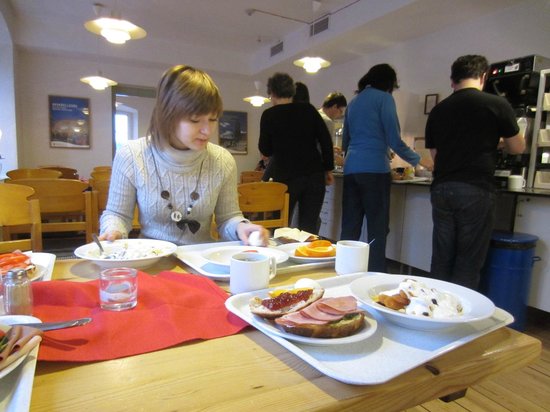
Breakfastroom at af Chapman
The hostel also owns the on-land adjacent building, which has a nautical link of its own: a former navy barracks, now sleeping 150 and hosting the hostel’s dining and lounging facilities.
Cabins at the full-rigged steel-ship af Chapman:
There are different choices of cabins onboardA typical naval cabinCabin with twin-bed
“Just being on the ship is a special feeling,” long-time af Chapman employee Magnus Frymark told CNN of this ship-turned-hostel. “You can sense her history.”
Safe entrance to he ship
Tourists line up to photograph the af Chapman., one of the most photographed objects in Stockholm, and native Stockholmers see her as a city landmark.
Stay at a Full-rigged Steel Ship in Stockholm, written by Tor Kjolberg
Architectural gems, deranged village people and exclusive accommodation. Strandveien (the Coastal Road) is Denmark’s 40 kilometer long holiday paradise. That’s why we call it the Danish Pacific Coast.
It takes only about 30 minutes on the express highway getting to Helsingør from Copenhagen on the express highway. Strandvejen takes nearly twice as long, but you should allow for several more hours.
Map of Strandvejen
The 40 kilometer long road begins at Svanelmøøen station in Ytre Østerbro in Copenhagen and stretches along the Zealand east coast to Helsingør. This beautiful route showcases the very best of Denmark, with nice views over to Sweden.
From Klampenborg
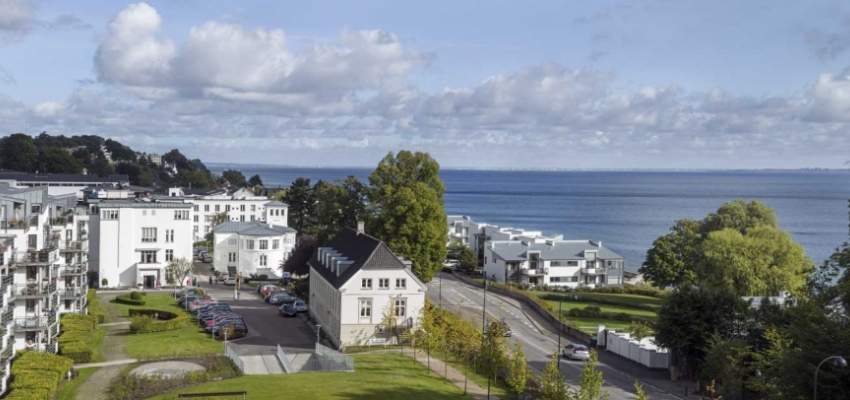
Six miles north of Copenhagen’s center, you round the bend at Klampenborg and see the bay dotted with Victorian villas and low modern apartment buildings whose white facades and curving forms reflect the seascape.
The Blue Planet Aquarium
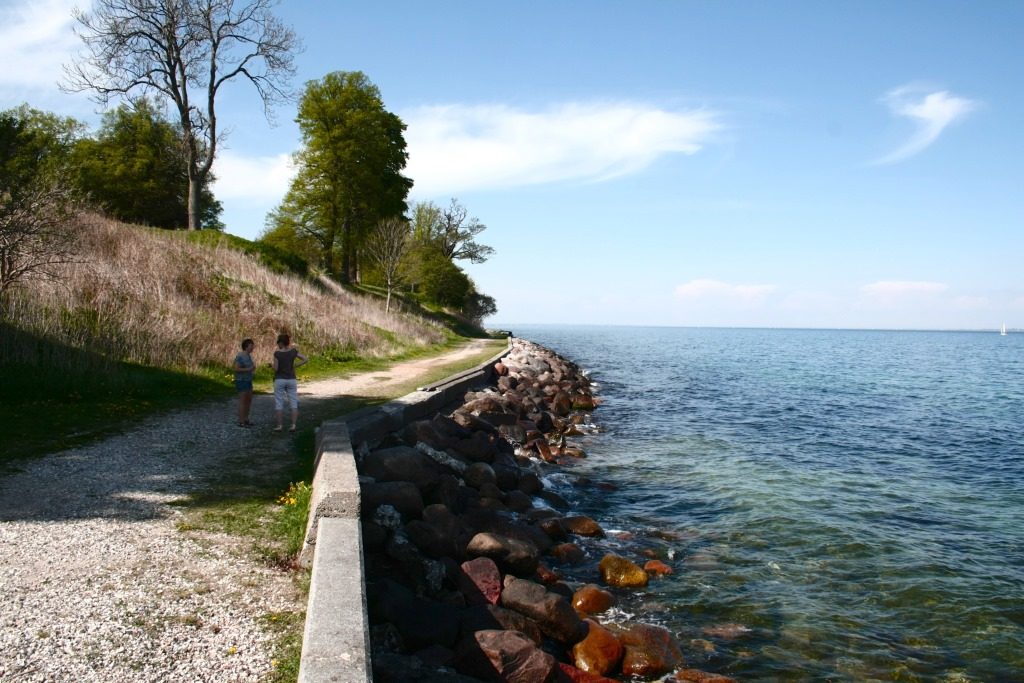
Beautiful scenery with forests, up-market housing, beaches and pleasure gardens dot this 24 miles of coastline. We recommend that you use the whole day to take in all the sights and adventures this stretch has to offer. Strandvejen, curves through the area like a Danish version of the Pacific Coast Highway.
The Danish Pacific Coast, Strandvejen, alter its name along the route, to Coastal road, Skodsborg Strandvej and Taarbæk Strandvej, but don’t worry. You’re on track.
Strandvejen alter its name along the way, but you’re on track
As you exit Østerbro, the northern district of downtown Copenhagen, you will soon reach Charlottenlund where Denmark’s Aquarium is located.
Famous museums like Karen Blixen museum, Louisiana museum for modern art, are also on the route. Take a stop at the more than 400 year, and the oldest in the world, Bakken amusement park near Klampenborg.
Along the route there is ample good food in restaurants, pubs, and small food stands. Some of Denmark’s most prominent citizens live here, facing the country’s traditional enemy, the Swedes, on the other side of the narrow Oresund strait.
From Louisiana Museum of Modern Art
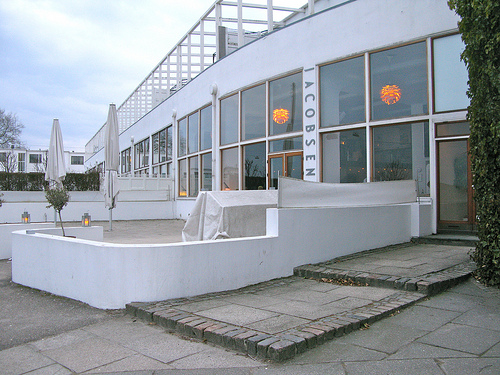
The architect Arne Jacobsen won the competition to construct the Bellevue Beach Bath in 1932, and the whole bay was turned into a functionalist masterpiece.
From Arne Jacobsen’s Bellevue
About half-way between Copenhagen and Helsingør is the old fishing village Rungsted, where there was once a famous inn, established by King Christian II in the 16th century. It was later made into a private home, and the famous Danish writer Karen Blixen grew up in the house in the late 19th century.
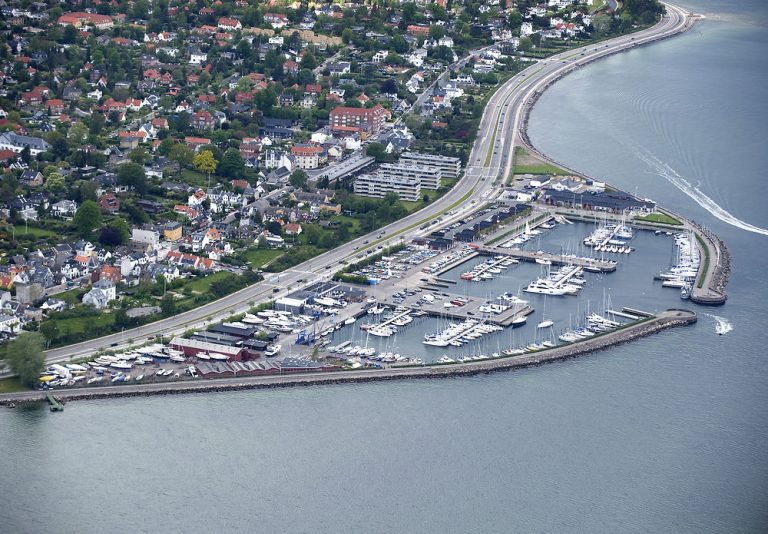
Rungsted Harbor
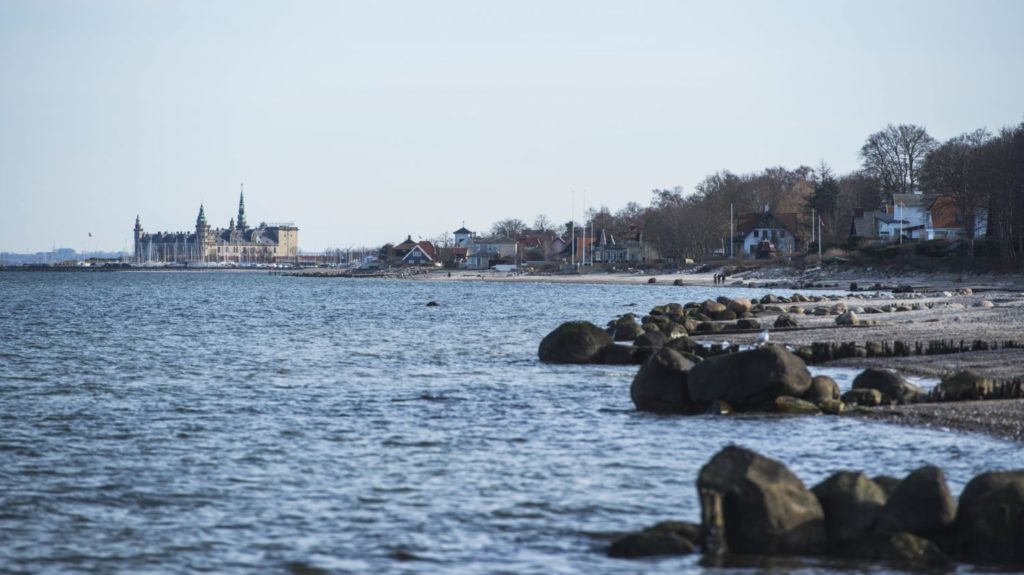
Before you reach Helsingør and Kronborg Castle, scene of Shakespeare’s Hamlet, we recommend you to make two stops. The museum Nivågård in the village Nivå is famous for its 16th century Italian and 17th century Danish paintings. Among them is the only Rembrandt on public display in Denmark. Just a short drive from Nivå is Humlebæk where Louisiana is located.
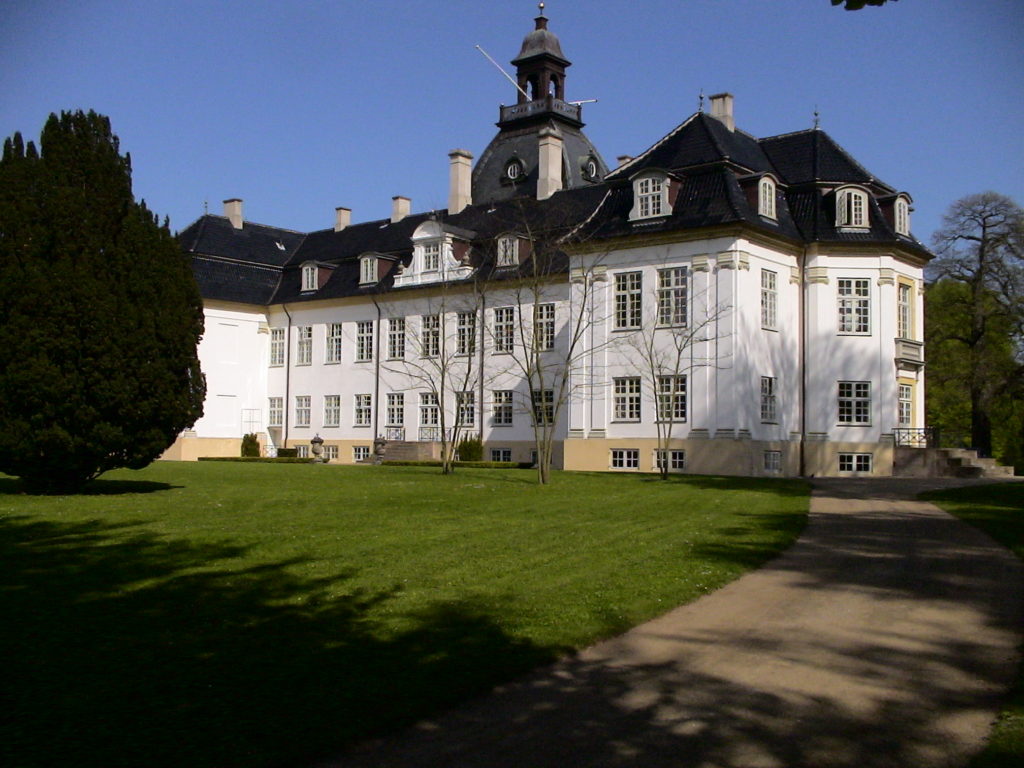
From Nivaagaard
Copenhagen’s mass transit system, the S-train, also has a “Coastal Line” for commuters, explorers and urban invaders. Car or S-train, take your time and take a few stops, it is not a race track. You can easily continue your Scandinavian trip further north to Sweden by ferry.
A new ranking of the best countries to be an immigrant has placed the Scandinavian countries, Sweden, Norway and Denmark, on the 10 top spots
U.S. News and World Report has compiled the ranking, which reveals that more than 40 percent of respondents view immigration as the most important issue for our world to solve. The analysis dives into the economic benefits and challenges of immigration on countries’ world standing, including economic stability, income equality and job markets.
U.S. News and World Report has compiled the ranking
The immigration project is part of a broader ranking, launched by U.S. News and World Report last year, that attempts to determine the world’s “best” countries in the same way that the publication also ranks colleges, hospitals and cars.
Here are the top 10 Best countries to be an immigrant:
1. Sweden
2. Canada
3. Switzerland
4. Australia
5. Germany
6. Norway
7. United States of America
8. Netherlands
9. Finland
10. Denmark
Map of Scandinavia
The data is gathered from a proprietary survey of more than 21,000 business leaders, informed elites and general citizens. Additional factors include data from the World Bank and the United Nations on the share of migrants per population, the amount of remittance migrants send to their country of birth and analysis on immigration policies.
In total, 80 countries were included in the ranking. Kenya came bottom of the list, preceded by Guatemala and Tunisia.
About U.S. News & World Report
U.S. News & World Report is a digital news and information company that empowers people to make better, more informed decisions about important issues affecting their lives. Focusing on Education, Health, Personal Finance, Travel, Cars and News & Opinion, USNews.com provides consumer advice, rankings, news and analysis to serve people making complex decisions throughout all stages of life. More than 30 million people visit USNews.com each month for research and guidance. Founded in 1933, U.S. News is headquartered in Washington, D.C.
Scandinavian Countries Take Three of the Top 10 Best Immigrant Spots, written by Tor Kjolberg
Oslo Accords, the set of agreements between the Government of Israel and the Palestine Liberation Organization (PLO), signed in Washington, D.C. in 1993 and a second signed in Taba, Egypt in 1995, marked the start of the Oslo process. Now the Oslo Accords is made into a thrilling Broadway production.
J. T. Rogers’s “Oslo” is the against-all-odds story of the international peacemaking initiated by Norwegian politicians, has now been made into a thrilling, new Broadway production.
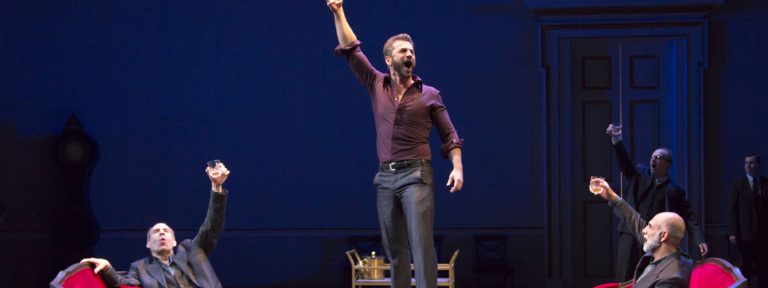
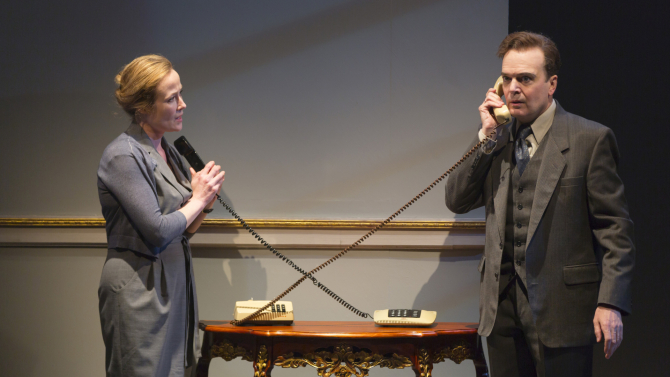
The 1993 Oslo Peace Accords take center stage in J.T. Rogers’ “Oslo.” Left to right: Anthony Azizi, Dariush Kashani, Jennifer Ehle, Michael Aronov and Daniel Oreskes. (Credit: T. Charles Erickson)
If the daughter of theatre director Bartiett Sher had not been best friend with the daughter of Terje Tød-Larsen and Mona Jull at primary school, “Oslo” would not have been one of the biggest Broadway sensations of the year.
Playwright J. T. Rogers
One character in Oslo observes that, “Americans cannot stand it when others take the lead,” while earlier on another notes that the U.S. government is especially proprietary about its relationship with the Middle East. To the Norwegian newspaper Aftenposten playwright J. T. Rogers says, “This is embarrassing. I actually thought that it was US Americans who had made the Israelis agree on a peace agreement.”
The Oslo process started after secret negotiations in Oslo, resulting in the recognition by the PLO of the State of Israel and the recognition by Israel of the PLO as the representative of the Palestinian people and as a partner in negotiations.
“Oslo” has now become the colossus it was always meant to be, while giving an even sharper focus to the urgent behind-the-scenes intimacy at its fast-beating heart.
Jennifer Ehle and Jefferson Mays
The political drama about the 1993 peace treaty lasts for about three hours and is unequivocally fascinating. It started as an off-Broadway production last year, and was immediately an success:
J. T. Rogers and Bartlett Sher
“The terrific new political thriller Oslo begins with actors scurrying about the stage positioning props and furniture, as one key figure played by Jefferson Mays arranges people within the space while another, portrayed by Jennifer Ehle, breaks the fourth wall early on to elucidate character and background information.
One remarkable aspect of this very fine production, directed with unerringly precise attention to detail by Bartlett Sher, is that while its mechanics as a theatrical presentation are emphasized from the start, they enhance rather than impede our involvement in a fascinating true story. This is a play alive with tension, intrigue, humor, bristling intelligence and emotional peaks that are subdued yet intensely moving, which concludes unexpectedly on a poignant note of hope.”
J.T. Rogers, foreground, and the cast and crew of “Oslo” accept the award for best play at the 71st annual Tony Awards on Sunday, June 11, 2017, in New York. Michael Zorn/Invision/AP
The production’s newly enhanced scale at the Lincoln Center Theatre matches the aspirations of not only the play’s author but also its protagonists. Heading the flawlessly cast ensemble are Jefferson Mays and Jennifer Ehle as the Norwegian tacticians Terje Rod-Larsen and Mona Juul, the (very real) Norwegian husband and wife who in the early 1990s initiated the series of secret peace talks between high-level officials from Israel and the PLO in the same room and actually talking with one another.
Terje Røed Larsen (Screenprint, NRK)
Terje (embodied here by Jefferson Mays) was then director of the Fafo Institute for Applied Social Sciences. Terje is a fussy fellow who dresses so well (credits to costumer Catherine Zuber) and whose manners are so refined that Yitzak Rabin insists on referring to him as a Frenchman. Mona Juul (Ehle), his wife and the narrator of the dramatic events, is the even-tempered government diplomat who does whatever has to be done — from ordering the liquor to putting out emotional fires — to make it happen.
Mona Juul
“It’s a very small country,” Mona says to the audience, graciously explaining the extremely tight personal and political relationships. “We take nepotism to an entirely new level.” Rogers’ dialogue is really witty. You get the facts, but you get them delivered with intelligence and humor by a dream of a cast.
Michael Yeargan’s scenic design and 59 Productions’ projections of constantly breaking battles makes it clear that neutral Norway aspires to be a very soothing nation in a world gone mad.
The Oslo Accords Made Into Thrilling Broadway Production, written by Tor Kjolberg
The British campaign in Norway in 1940 was an ignominious and abject failure. It is perhaps best known as the fiasco which directly led to the fall of Prime Minister Neville Chamberlain and his replacement by Winston Churchill. The book, ‘Anatomy of a Campaign – The British Fiasco in Norway, 1940’ by John Kiszely is out now.
Author, Sir John Kiszely, who served in the British Army for forty years, rising to the rank of lieutenant general, analyzes the reasons for failure and why decision makers, including Churchill, made such poor decisions and exercised such bad judgement. What other factors played a part?
Aboard Orensay en route to Norway 1940Anatomy of a Campaugn, book cover
The author draws on his own experience of working at all levels in the military to assess the campaign as a whole, its context and evolution from strategic failures, intelligence blunders and German air superiority to the performance of the troops and the serious errors of judgement by those responsible for the higher direction of the war.
A number of books have been written about the British-led campaign in Norway in spring 1940, but none had carried out such a forensic examination of the reasons for failure. Although it is little known – overshadowed, if not eclipsed, by the German invasion of Belgium and France in May 1940 – the campaign was short, disastrous and full of drama, both military and political.
The Norwegian campaign, though hastily improvised, was meant to play to Britain’s maritime strength. Cutting off the supply of Swedish iron ore shipped through Narvik, which the Ministry of Economic Warfare believed could fatally weaken the German war effort in months — was dubious.
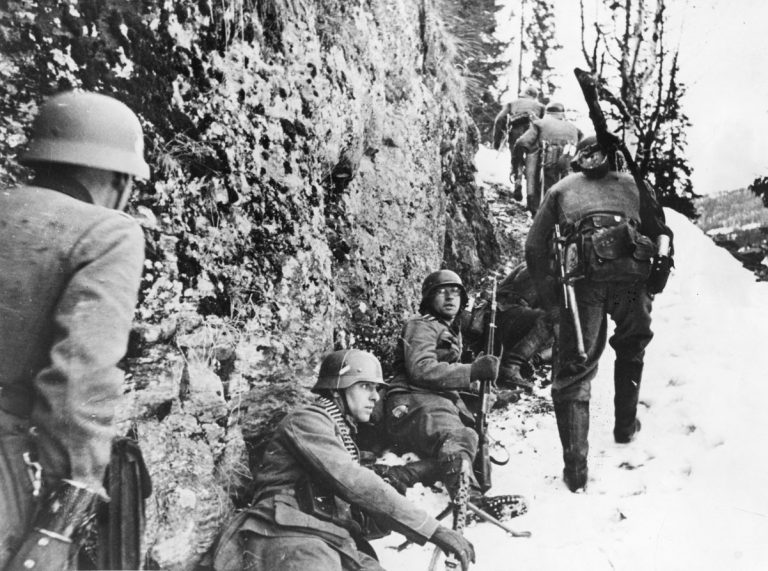
Germans amass on Norway coast, 9 April, 1940
Two of the main reasons for campaign failure were the catastrophic failure of intelligence which allowed the Germans complete strategic surprise, and the dominance of German airpower.
Events in early 1940 developed fast. Aided by the Nazi–Soviet Non-Aggression Pact, in November Russia had invaded Finland, Sweden was becoming increasingly accommodating towards Berlin, the Norwegian fjords offered a perfect base for U-boats, while the British and French armies were busy with the Phoney War on the Western Front. To Hitler, Norway looked like low-hanging fruit.
Norwegian village burned during a battle in April 1940
In the book, Kiszely’s forensic examination helps our understanding of institutional and systematic failure mixed unhappily with human error and the frailties of human nature.
But if Kiszely is scathing about the political leadership, he despairs of the military even more. The First Sea Lord, Dudley Pound, was ‘a backward-looking sailor… little aware of the growing influence of air and underwater weapons’. Other military officers, like the Chief of the Air Staff, Cyril Newall and Chief of the Imperial General Staff, ‘Tiny’ Ironside, are more or less being claimed to have emptied the War Office.
The 8th Batallion Sherwood Forester
At the tactical level, troops were sent to Norway poorly trained, inadequately equipped and without proper support, and in administrative chaos reminiscent of the Crimea. The result helps us to understand not only the outcome of the Norwegian campaign but also why more recent military campaigns have found success so elusive.
Anyone wanting to know about the pitfalls of pol-mil decision-making and campaign-planning, should read Kiszely.
And by the way, the British did help extricate the Norwegian royal family and much of the country’s gold reserves (for which the Christmas tree in Trafalgar Square each year is a memorial gift).
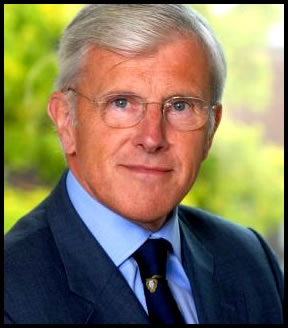
Author John Kuszley
About the author:
John Kiszely served in the British Army for forty years, rising to the rank of lieutenant general. His operational service included Northern Ireland, the Falkland Islands, Bosnia and Iraq. He served three tours of duty in the Ministry of Defence, latterly as Assistant Chief of the Defence Staff. On leaving the Army he spent three years as a visiting professor in war studies at King’s College London, and from 2014 to 2017 was a visiting research fellow on the Changing Character of War Programme at Pembroke College, Oxford.
The ‘Forgotten Fiasco’ of Norway, 1940, written by Tor Kjolberg
Gustav Vigeland was one of Norway’s foremost artists – and an excellent lobbyist who acquired a studio, housing and a future museum, funded by the public sector.
It all began with Gustav Vigeland’s dream of a magnificent fountain in Kristiania, the name of Oslo at that time. After a dispute, the City of Oslo wanted to demolish the artist’s house, but in 1921 he donated nearly all his works, previous and future, to the city and received in return a new building.
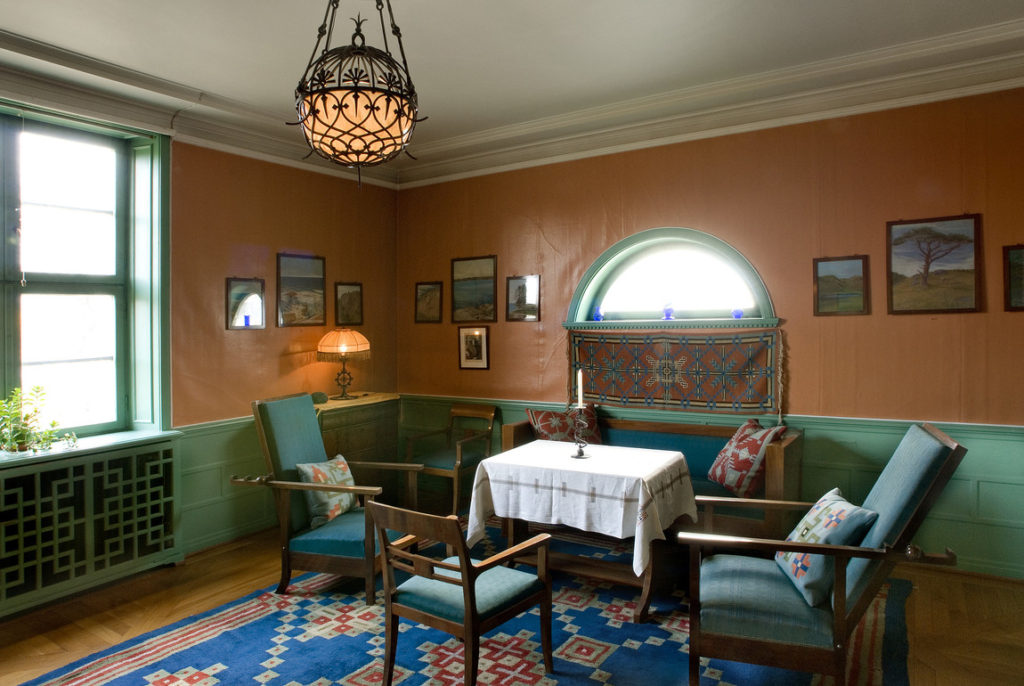
Living room in the Gustav Vigeland House
Besides a studio, the space included an apartment for him and his family, a library, bedrooms and a lavatory (a somewhat uncommon feature in those days).
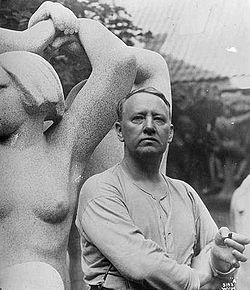
Gustav Vigeland, 1929
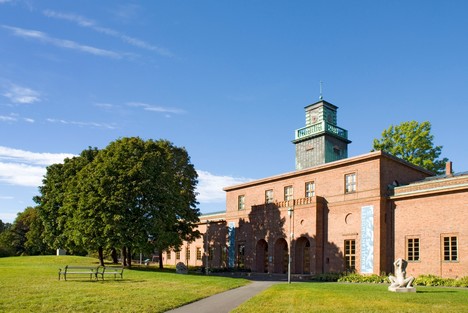
Vigeland moved into the new building in 1924, living in the apartment on the top floor of the east wing for the last two decades of his life. From the tower in this majestic red brick building he had a beautiful view towards the fields of Frogner, where his great project, the park, soon was to be reality.
He resided and worked there until his death in 1943. After his death, it became the Vigeland Museum, now one of Oslo’s top attractions along with the adjacent sculpture park.
Gustav Vigeland (1869-1943) may just be Norway’s most important artist you’ve never heard of. On the terrazzo tiled floor, under the clear light of the skylights, Vigeland worked for years with his models of the Monolith, the Wheel of Life and the bronze sculptures of people in all stages of life. There are very few works by this talented sculptor outside his native country.
Vigeland’s the Monolith is one of his most famous sculptures.
Vigeland’s body of work includes woodcuts, drawings, iron works, and art and crafts such as weavings, some of which can be seen in the museum. He created several public monuments across Scandinavia and designed the medal for the Nobel Peace Prize, which is awarded in Norway.
The museum was built in the 1920’s with Lorentz Harboe Ree as executing architect. The building is one of the finest examples of Norwegian Neo-Classicism. However, many people who live in Oslo, has never been inside the museum. It looks pretty closed from the outside, but when they come in, it’s bright, big and open.
Inside the Vigeland Museum
It’s amazing how Vigeland expressed love, anxiousness, anger and trust — all from stone.
A Norwegian Artist With a Museum, written by Tor Kjolberg