
All About Housing Types, Buying a Property and Rental Apartments in Sweden

Sweden has a rich array of accommodation options that reflect its varied landscapes, from the coastal archipelago with seaside cottages to mountain ranges with their cozy lodges and hotels. In this article, you can learn all about housing types, buying a property, and rental apartments in Sweden.

Finding housing in Sweden can be a challenge, but with the correct information and strategies, you can increase your chances of finding the perfect home. There are different types of housing, including a rented room, a rented flat in a block of flats, and a house of one’s own.

In 2024, one- and two-dwelling buildings with owner-occupancy were the most common type of housing in Sweden. Nationally, home ownership stands at 64.8%, while 35.2% of Swedes rent. The average functional floor space per person in Sweden is 42 square meters. Rental prices vary widely by region, but in major cities, they range from €20 to €30 per square meter monthly.

All About Housing Types, Buying a Property and Rental Apartments in Sweden
Figures from real estate company Investropa show that house prices in 2023 took a dip, with the national index dropping by 6.31%.

Figures from real estate company Investropa show that house prices in 2023  took a dip, with the national index dropping by 6.31%. This was especially noticeable in Greater Stockholm and Greater Malmö, where prices fell by 6.3% and 8.7% respectively. It was a tough time for sellers, but buyers had a bit more room to negotiate.

Fast forward to 2024, and things started to look up. The market began to stabilize, with a modest 2% increase in house prices. This shift suggested that the rapid growth phase was cooling off, making it a more comfortable time for potential buyers. Real estate agencies observed that while more transactions were happening, they were still not at the levels seen in the past, hinting at a more balanced market.

All About Housing Types, Buying a Property and Rental Apartments in Sweden
Lingonriset, Huddinge. Photo: Skanska.

The Swedish government has been busy behind the scenes, working to keep the housing market steady. They’ve been focusing on increasing access to buildable land and encouraging new construction methods. These efforts, along with the Riksbank’s decision to ease interest rates in 2024, have helped create a more balanced environment for buyers and sellers alike.

For those considering buying property in Sweden, this stabilization means more opportunities and potentially better deals. The market isn’t as frantic as it once was, giving buyers a chance to explore their options without feeling rushed.

Regardless of whether you want to buy or rent, it is essential to understand the Swedish housing market and the different types of housing in the country. Everyone in Sweden is entitled to housing. Your right to housing means that you can apply for help to find some form of housing if you have nowhere to stay. Municipalities have a responsibility to ensure that all of their inhabitants have housing.

All About Housing Types, Buying a Property and Rental Apartments in Sweden
The Swedish government has been busy behind the scenes, working to keep the housing market steady.

Key Statistics:

  • Homeownership: 64.8% of Swedes own their homes.
  • Rental: 35.2% of Swedes rent their homes.
  • Average household size: 2.2 people per household.
  • Average functional floor space per person: 42 square meters.
  • Most common housing type: One- or two-dwelling buildings with owner-occupancy.

There are three main types of housing in Sweden.

  1. House: You can choose to live in your own house on its plot of land, or own the home and lease the land it is built on (tomträtt). If you live on your plot, you are responsible for almost everything relating to your house.
  2. Apartment in a housing association (bostadsrätt): This means that you buy a percentage of the property itself and own the right to use your apartment within the property. You own the property together with the other residents. Residents in the house own the property and are part of a housing association. The regulations vary from association to association, but you are not allowed to rent out your apartment without permission from the board of the housing association.
  3. Rental property (hyresrätt): You pay a monthly rent.
All About Housing Types, Buying a Property and Rental Apartments in Sweden
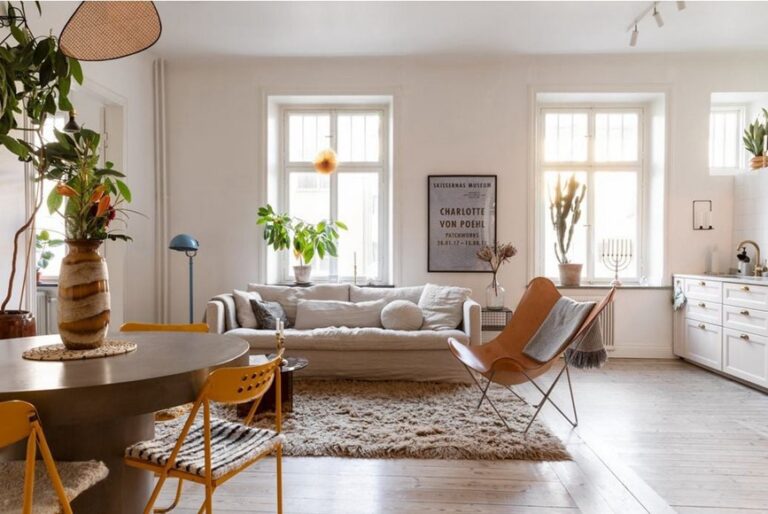
Single-person households are more common in tenant-owned dwellings than in owner-occupied houses. Photo: Visit Sweden.

Living in Sweden

Sweden is located in northern Europe, on the eastern side of the Scandinavian peninsula. The geographical area includes Sweden, Denmark, Norway, Iceland, and Finland, which are collectively known as the Nordic countries. Sweden is a large and oblong country, and is divided into three parts from south to north: Götaland in the south, Svealand in the middle, and Norrland in the north. Sweden is also divided into 25 provinces (called landscapes in Swedish), 21 counties, and 290 municipalities.

Additional Insights:

  • Regional Differences:

Housing costs and rental prices vary significantly between regions, especially between Stockholm and other areas.

  • Public Housing:

A significant portion of the rental market is publicly owned, managed by municipal housing companies, and accessible to all residents, not just low-income households.

  • Cost increases:

Housing costs have increased across all tenure types (owner-occupied, tenant-owned, and rented) between 2021 and 2024, with owner-occupied and tenant-owned dwellings experiencing larger increases.

  • Single-person households:

Single-person households are more common in tenant-owned dwellings than in owner-occupied houses.

All About Housing Types, Buying a Property and Rental Apartments in Sweden
Regardless of whether you want to buy or rent, it is essential to understand the Swedish housing market and the different types of housing in the country. Photo: The Swedish Program.

Foreigners may buy properties in Sweden

Both Swedish and foreign citizens can buy property in Sweden. There is no requirement to be a Swedish citizen or have a Swedish personal ID number. However, there are specific requirements involved in the actual purchasing process. To buy a property, there must be a written agreement that contains information about the purchase price and includes the signatures of both buyer and seller.

***************************************
Related: Moving to Scandinavia: A Step-by-Step Guide
***************************************

Buying a property in Sweden

Buying a house or an apartment in a housing association can be an exciting investment, but it requires knowledge and understanding of the Swedish property market. Here are some basic steps to buying property in Sweden.

  1. Find your dream property: Start by looking for housing suitable for your needs and budget. You can use property portals, real estate agents, or contact the sellers directly if they are selling privately.
  2. Visit the property: When you find an interesting property, you should visit it in person. This gives you the chance to inspect the property and the surrounding area.
  3. Finance: You must be clear about how you will finance your purchase. This can involve a bank loan or your own funds.
  4. Purchase agreement: When you have found your dream house or apartment, and you are ready to buy, a written purchase agreement is drawn up that describes all terms and conditions.
  5. Inspection and investigations: You should order a technical inspection of the property and carry out any necessary investigations to ensure that everything is in order.
  6. Transfer documents: Before the transfer of ownership, make sure that all necessary documents are in place, including the property deeds and any mortgage deeds.
  7. Transfer: When everything is completed and the purchase agreement has been signed, ownership of the property is transferred.
  8. Registration and taxes: Your property must be registered in the Swedish property register, and there may be costs in the form of transfer taxes and stamp duties.
  9. House and home insurance: Remember to arrange insurance that covers both the property and the contents.
  10. New property: It’s now time to enjoy your new property in Sweden!

If you’re a foreigner, remember that the Swedish property market may differ from that in your home country, so it is a good idea to seek professional advice and investigate the specific laws and regulations that apply to property purchase in Sweden.

About ten million people live in Sweden today. Around four million of these live in and around the country’s three biggest cities: Stockholm, Gothenburg, and Malmö. Stockholm is the capital of Sweden.

Additional tips for buying a home in Sweden.

All About Housing Types, Buying a Property and Rental Apartments in Sweden, compiled by Tor Kjolberg.
Feature image (top) © Properstar

Big Mermaid Statue in Denmark is “Too Hot” For Public Viewing

A debate has erupted in Denmark over the fate of a mermaid statue that is to be removed from public view after being decried as “ugly and pornographic” and “a man’s hot dream of what a woman should look like”. The big mermaid statue in Denmark is “too hot” for public viewing.

Plans to remove the statue of a mermaid in Denmark from a historical landmark have sparked debate. However, the man behind the statue, Peter Bech, says, “The mermaid has completely normal proportions concerning her size. Of course, the breasts are big on a big woman.”

Big Mermaid Statue in Denmark is “Too Hot” For Public Viewing
Sculptor Peter Bech says hid mermaid was a boon for the Dragør area and attracted visitors. Photo: Visit Dragor.

The Danish agency for palaces and culture is reportedly removing the 4×6 meter granite 14-ton Den Store Havfrue (the Big Mermaid) from Dragør Fort, part of Copenhagen’s former sea fortifications, because it does not align with the cultural heritage of the 1910 landmark.

Mathias Kryger, art critic for the Danish paper Politiken, told local media that the statue was “ugly and pornographic”. Writing in the newspaper Berlingske, another journalist, Sørine Gotfredsen, said many people found the statue “vulgar, unpoetic and undesirable”.

Big Mermaid Statue in Denmark is “Too Hot” For Public Viewing
Sculptor Peter Bech, who has said he made the statue in response to tourists’ comments that the Little Mermaid – inspired by the Hans Christian Andersen fairytale – was too small. Photo: Visit Copenhagen.

Others have said the criticism reflects society’s attitudes to women’s bodies more generally – and not in a good way. For Aminata Corr Thrane, Berlingske’s debate editor, the scrutiny of the mermaid’s breasts was tantamount to body shaming.

Big Mermaid Statue in Denmark is “Too Hot” For Public Viewing
The Big Mermaid by Peter Bech. Photo: Mermaids of Earth.

However, Peter Bech, says it was a boon for the Dragør area and attracted visitors. He described the criticism as “pure nonsense”.

The statue, which was carved in Beijing, drew sharp criticism from many locals; some backed the artist and fort owner in their position to keep the statue erected.

In 2006, the Big Mermaid was erected at Langelinie Pier in Copenhagen, near the Little Mermaid. But it was removed in 2018 after locals denounced it as “the fake and vulgar mermaid”.

Bech, who has said he made the statue in response to tourists’ comments that the Little Mermaid – inspired by the Hans Christian Andersen fairytale – was too small, has said people in Dragør often tell him that they love his sculpture. He is hoping to find a way to keep it in the town.

Big Mermaid Statue in Denmark is “Too Hot” For Public Viewing, Tor Kjolberg reporting.

Vaccinations for Safe Travel

The Norwegian Institute of Public Health offers information regarding the vaccination requirements of each country. Learn more here about vaccinations for safe travel.

For safe travel, it’s crucial to get appropriate vaccinations based on your destination and activities. Safe travel includes, of course, also visa information and currency restrictions, but this article is all about vaccinations.

Consulting a healthcare professional 6-12 weeks before travel is recommended to allow time for necessary vaccinations and to ensure complete immunity. Most of the time, vaccinations for those holding a Norwegian passport are not required since many epidemics have been all but eradicated in Norway. However, a few countries in Africa may still require yellow fever vaccinations and the like.

Vaccinations for Safe Travel
If I had chosen to go with all the recommendations for the countries I was visiting, I would have walked out of the pharmacy with a $1,500 bill. Photo: UNICEF.

Some vaccines require multiple doses, and it takes time for them to become effective. Check with your doctor or use resources like the CDC’s Travelers’ Health website to identify required and recommended vaccines for your destination.

Some activities, like trekking or interacting with animals, may increase your risk of certain diseases and necessitate specific vaccinations. Do make your own choices with recommendations, though. I chose only to get vaccinations that are required for entry into a particular country.

Vaccinations for Safe TravelCommon Travel Vaccines:

  • Hepatitis A and B: Protect against liver infections, especially in areas with poor sanitation.
  • Typhoid: Recommended for travel to areas with contaminated food and water.
  • Tetanus: Important for wound protection, especially in areas with limited access to medical care.
  • Rabies: Recommended for travelers at risk of animal bites, especially in some areas of Asia, Africa, and South America.
  • Japanese Encephalitis: Recommended for travelers spending extended time in rural areas of Asia during mosquito season.
  • Yellow Fever: Required or recommended for travel to certain parts of Africa and South America.
  • Meningococcal: Recommended for travel to certain parts of Africa and Hajj pilgrims.
  • Polio: Routine vaccination is recommended for all travelers.
  • COVID-19: Check current recommendations and requirements for your destination.

If I had chosen to go with all the recommendations for the countries I was visiting, I would have walked out of the pharmacy with a $1,500 bill. A pharmacist friend, who also has experience traveling in Africa, stated that many of the recommended prescriptions and vaccinations are not necessary and that he fared just fine without them.

That said, ensure your routine vaccinations (like measles, mumps, rubella, etc.) are up to date. Consult your doctor about malaria prevention medication if traveling to a malarious area. If traveling to high altitudes, discuss preventative measures with your doctor.

Vaccinations for Safe Travel
Consulting a healthcare professional 6-12 weeks before travel is recommended to allow time for necessary vaccinations and to ensure complete immunity. Photo: news-medical.net

I have taken the plunge without most of the required vaccinations and made it out alive. However, I conduct safe food and water practices to minimize the risk of gastrointestinal illnesses.

But take no risks. Schedule a consultation with your doctor or a travel health clinic to discuss your specific needs and receive personalized recommendations. Be prepared to provide details about your travel itinerary, activities, and any pre-existing health conditions.

One last reminder: There’s one thing many people forget: the European Health Insurance Card – the most important thing you forgot to pack.

Make your own choices based on your level of comfort or the size of your wallet.

Vaccinations for Safe Travel, written by Tor Kjolberg.
Feature image (top) © Harvard Health.

Denmark Develops a Metabolism at the Venice Biennale 2025

The Danish pavilion explores unconventional ways of repurposing surplus construction materials hyper-locally at the Venice Biennale this year. In other words, Denmark develops a metabolism at the Venice Biennale 2025.

Under the headline Build of Site, the Danish contribution to the 19th International Architecture Exhibition – La Biennale di Venezia in 2025 explores how rethinking and reusing existing buildings and resources can address some of architecture’s most pressing challenges.

It is no secret that new construction is a significant source of carbon emissions. It’s appropriate, then, that the Danish Pavilion, which is currently undergoing renovation, is looking for ways to address the issue.

Denmark Develops a Metabolism at the Venice Biennale 2025
For the duration of the biennale, the space will become a paused construction site. Photo: Hampus Berndtson.

Rather than allocating funds and time to a temporary exhibition, the project redirects these resources into lasting improvements. The elements presented within the pavilion originate from its restoration.

The exhibition is curated by architect Søren Pihlmann, who, building on the overarching theme of the Biennale Architettura 2025, “Intelligens. Natural. Artificial. Collective.”, explores how we can discover new value in existing buildings. The exhibition in the Danish pavilion exhibits hands-on maintenance of the building that reuses the resources already present in the building. Søren Pihlmann demonstrates hyper-local methods for reclaiming building materials, and the exhibition is framed as a technical, aesthetic communication of an ongoing process – as a work in progress.

Denmark Develops a Metabolism at the Venice Biennale 2025
The exhibition is curated by architect Søren Pihlmann. Photo: Lasse Dearman/Dansk Arkitektur Center.

For the duration of the biennale, the space will become a paused construction site, with its displaced materials used to provide temporary walls, furniture, and flooring in the pavilion.

What would typically be discarded as construction waste is reimagined in collaboration with experts across disciplines, integrating bio-based, high-tech, and recycled features, prioritizing structural potential over preconceptions of value.

Denmark Develops a Metabolism at the Venice Biennale 2025
Denmark explores how rethinking and reusing existing buildings and resources can address some of architecture’s most pressing challenges. Photo: Hampus Berndtson

As part of his curation, Søren Pihlmann has conducted a comprehensive study of the Danish pavilion to increase the usability of materials already present in the building. By combining existing building materials with unconventional bio-based binders, the exhibition demonstrates how advanced technology can promote methods that use bio-based and recycled building materials. This approach highlights the potential in surplus materials previously considered waste, establishing a new architectural practice that uses and draws inspiration from existing on-site materials.

“I think there’s a future where buildings start to reconfigure themselves in a metabolic process, using their materials for renovations,” says Pihlmann.

Venice Biennale runs through November 23, 2025.

Denmark Develops a Metabolism at the Venice Biennale 2025, Tor Kjolberg reporting.
Feature image (top) © Pihlman Architects.

Missing American Journalist in Norway Rescued Yesterday

0

Rescuers in Norway has been searching for missing US climate journalist Alec Luhn. He was found alive yesterday. Read on to learn more about the missing American journalist in Norway who was rescued yesterday.

Award-winning climate journalist Alec Luhn didn’t return as planned from a four-day solo hike in bad weather at the Norwegian national park Folgefonna, home to one of the country’s most enormous glaciers.

Luhn, who has worked for multiple news outlets, including the New York Times, the Atlantic, and the BBC, departed for his hike from the town of Odda on 31 July, according to his wife Veronika Silchenko.

American Journalist Missing in Norway
Award-winning climate journalist Alec Luhn. Photo: Carey Institute.

******************************************
You might also like to read The World of Ski Photography
******************************************

Luhn, a 38-year-old Wisconsin native, was scheduled to stay at two mountain cabins, DNT Holmaskjer and DNT Breidablikk, during his hike. His trip was set to end Monday morning, 4 August, at Årsnes Kai bus station, where he would begin a roughly four-hour journey from the national park to the city of Bergen to catch an evening flight.

Rescue crews are using dogs and drones to search, the New York Times reported, citing Ingeborg Thorsland, a spokeswoman for the Norwegian Red Cross.

American Journalist Missing in Norway
Bondshusdalen, Folgefånna. Photo: Jan Rabben/Norges Nasjonalparker.

Silchenko added that she knew Luhn wouldn’t have strong cellphone service on the trek, so she didn’t expect him to be in constant contact. He usually sets his phone on airplane mode to save battery at the start of hikes, she added, so she couldn’t tell if or when he may have lost service. Luhn was last active and connected to the internet on Thursday.

Norwegian media said Luhn, 38, was holidaying with his sister in Norway and had set out on the four-day hike alone on 31 July from the outdoor center of Ullensvang on the northern edge of the park, a 550 sq km wilderness in the west of the country.

American Journalist Missing in Norway
Holmasjer Tourist Canin. Photo: DNT

“Weather conditions started to get bad around midnight,” when a rescue helicopter was recalled amid strong winds and heavy rain, said Tatjana Knappen, an operations manager from Vestland police. “It was not reasonable to continue the search in the mountains.” However, his wife said that he is an experienced outdoorsman who has previously camped in poor weather conditions. Still, she began to panic after the hiker missed his Monday flight out of Bergen to London. That’s when Silchenko alerted authorities and reported him missing.

Police said late on Tuesday afternoon that volunteer rescuers had been pulled out because of fast-deteriorating weather conditions, but the search would continue into the evening. “We have to put rescue teams’ safety first,” the police chief Svein Buer told VG newspaper.

Missing American Journalist in Norway Rescued Yesterday, Tor Kjolberg reporting.
Feature image (top) Ullensvang. Photo: Wikipedia.

Experience Norwegian Salmon – Face to Face

With its narrow passages, rapids, and cascades, the beautiful river Lygna flows from Lygnevannet in Hægebostad through Lyngdalen to its outlet in Kvavikfjorden in Lyngdal. Here you can experience Norwegian salmon – face to face.

The name of the river, Lygna, is said to be derived from the old Norwegian word “logn,” meaning calm or sheltered.

The idea of a salmon ladder in the Lygna River is said to be 100 years old. Except for a period in the 1970s and 1980s when acid rain emptied the river, wild salmon have flowed in from the sea, through the southern town of Lyngdal and up the rapids in the valley opposite, to the delight of so-called salmon lords and local fishermen. But at Kvåsfossen, there has been a halt. Here, under a meter-high, thundering foam, the salmon’s journey up the Lygna was prevented.

Experience Norwegian Salmon – Face to Face
The waterfall itself is a beautiful sight, but the real jewel is hidden inside the mountain beside the waterfall.

************************************
Related: The Norwegian Queen of Samon Rivers
************************************

Kvåsfossen and the legend of the troll Kvåsfossen has always been a landmark. The enormous “Kvåssteinen” forming the foundation for the current bridge is a spectacle in itself. At first glance, it looks like it could topple over at any moment, but it has rested securely for thousands of years.

Experience Norwegian Salmon – Face to Face
The building was designed by the architectural firm Rever & Drage, and offers, among other things, a moose exhibition, a café, and a SoMe-friendly view. Photo: Franzefoss Minerals.

The waterfall itself is a beautiful sight, but the real jewel is hidden inside the mountain beside the waterfall. Here you’ll find Norway’s longest salmon ladder in a tunnel. A 220-meter tunnel has been carved out to help the salmon pass the waterfall so that they can travel further upstream.

The salmon ladder was opened in 2014, and the visitor center was finished in mid-2017. Just a few hours after the opening, the first fish came swimming up. Since then, the ladder has guided salmon, trout, sea trout, and eels past the waterfall and up into the valleys above. The area made available to the salmon is estimated to provide at least two extra miles of romp space, possibly doubling the potential for the four fish species.

Experience Norwegian Salmon – Face to Face
The salmon staircase is located in the cave-like lower floor.

The permanently protected watercourse has always been a magnet for both young and old. The river truly comes to life during the salmon season. The largest salmon in Southern Norway in recent times was caught on a fly in Lygna in August 2008, weighing 17.6 kg. The dream of catching a big salmon, combined with inland fishing and small game hunting, provides enough excitement for those who love hunting and outdoor activities. The waterfall has a drop of 36 meters.
*********************************************
Related: Salmon Fishing in Norway
*********************************************

The visitor center of Nasjonalt Villakssenter – Kvåsfossen (National Wild Salmon Center – Kvåsfossen) is very informative with excellent facilities. The building is partly hanging over the river, and large windows make for spectacular views. A sitting area invites you to take a break and admire the beautiful nature. The more adventure-seeking guests can venture outside onto a small balcony that allows them to watch the river from above.

Experience Norwegian Salmon – Face to Face
Entrance at National Wild Salmon Center – Kvåsfossen.

The building was designed by the architectural firm Rever & Drage, and offers, among other things, a moose exhibition, a café, and a SoMe-friendly view. The salmon staircase is located in the cave-like lower floor.

It is pretty spectacular to see the salmon through a glass wall in the tunnel. With a mix of awe and fear, you can also stand and look into the gorge and truly feel the power of the waterfall on your body.

Experience Norwegian Salmon – Face to Face, written by Tor Kjolberg
Feature image (top) © National Wild Salmon Center – Kvåsfossen.

Best Travel Steamer in the Market

Norway’s largest technology website, Tek.no, has named Philips’ handheld Steamer 5000 Series the best travel steamer in the market.

Between three brands, the test was conducted on six garments each – everything from a thick cotton jacket and shirt to lighter linen and silk garments. All Philips steamers received high scores.

“This is proof that we are right on time,” says Veera Rytsölä, Marketing Manager for Garment Care Nordics.

Philips already has a long list of “best in test” awards. In the fall of 2022, the Philips Steamer 7000 Series was named the “most affordable steamer” by Tek.no, in an extensive test that included six brands. The brand also did well in the iron category, winning the “Best Iron” award in December 2024. Since then, Philips has continued to build on its product portfolio in garment care, launching its new handheld Steamer 5000 Series in spring 2025 – just in time for Tek.no’s “Best Travel Steamer” award for the upcoming holidays.

****************************************
Related: Travel Light the Scandinavian Way
****************************************

“The ironing head in the 5000 Series can now be straightened, making it easier to pack in your suitcase. It heats up in about 35 seconds, which means you save time – because who wants to iron when you’re on holiday? At the same time, it comes with a 120 ml and a 200 ml water tank, so you can choose the smaller one when you’re travelling. The steamer also comes with a glove that allows it to be stored safely in your suitcase – something I think many people will appreciate,” says Veera Rytsölä.

Best Travel Steamer in the Market
Between three brands, all Philips steamers received high scores.

How the test was carried out

In an attempt to mimic reality, the test was carried out on what could be classified as a standard holiday package: six different garments in different materials, most of them freshly laundered and with pronounced wrinkles. 100% cotton trousers, 100% linen men’s shirt, 100% polyester dress, 60% wool / 30% cashmere thick knit sweater (with an unwanted smell of fire and perfume), 70% linen / 20% silk T-shirt (with a trapped smell), 70% cotton / 30% polyester coat (with some wrinkles and an unwanted smell of rain).

******************************************
Related: 3 Of The Best Business Bags For Your Scandinavian Workation
******************************************

Best Travel Steamer in the Market
In the fall of 2022, the Philips Steamer 7000 Series was named the “most affordable steamer” by Tek.no, in an extensive test that included six brands.

The three brands Tefal, Point, and Philips were then evaluated on how well they steamed the garments, based on the following criteria: ease of holding and maneuvering, ability to remove wrinkles, creases, and odors, water tank volume and several garments per tank, features, and accessories, and heat-up time. An exhaustive list of requirements that demanded a steamer with high performance on all levels – and Philips delivered.

“Overall, this is a very efficient and powerful steamer with a creative and practical design. The steamer is slightly larger than the others in the test, but thanks to the slim design, it does not take up too much space in the suitcase,” writes Tek.no.

Best Travel Steamer in the Market
The ironing head in the 5000 Series can now be straightened, making it easier to pack in your suitcase.

Consumers are steaming the category

Interest in steaming clothes has been rising since the first modern handheld steamers were launched in the early 2000s. As a result, the category has been shaped by consumers who have become increasingly clear about what they expect. For example, it used to be enough for a steamer to be powerful. Today, manufacturers must take into account everything from portability, steam output, design, operating time, and changing travel habits – factors that have driven Philips’ development of handheld steamers.

“With the increased travel activity after the pandemic and people spending a lot of money on vacation, we see an increased need to feel good and comfortable on vacation. At the same time, it should be quick and easy to freshen up your clothes, and I think people would rather bring a steamer from home than use the hotel’s – excuse the expression – but often “ancient iron.”  So it’s no coincidence that the market is currently in demand for high-quality travel steamers,” concludes Veera Rytsölä.

Best Travel Steamer in the Market, a press release from MyNewsDesk

Swedish Start-Up Company is Connecting Africa and Europe and Crossing the Baltic Sea in a New Way

0

Swedish start-up Candela reckons that it has developed the perfect all-electric Med ferry. The Swedish company Candela is connecting Africa and Europe as well as crossing the Baltic Sea in a new way.

The company’s ultimate purpose is to speed up the transition to fossil fuel-free lakes and oceans. A traditional 7.5 m petrol boat consumes about 15 times more fuel than a family car, leaving a heavy footprint on our planet. Multiply that number by the number of ships and boats in seas worldwide, and it’s easy to see that the concept of traditional combustion engine boats is not sustainable.

The company set a world record by driving a hydrofoiling Candela C-8 between Stockholm and the Finnish autonomous region of Åland, marking the first time an electric boat has crossed the Baltic Sea. They even returned the same day – at 95% lower costs than a fossil-fuel-powered boat.

Swedish Start-Up Company is Connecting Africa and Europe and Crossing the Baltic Sea in a New Way, the article continues below the image.

Swedish Start-Up Company is Connecting Africa and Europe and Crossing the Baltic Sea in a New Way
Gustav Hasselskog, CEO and founder of Candela.

The company’s Elina is a fully electric hydrofoil that is attempting to set a world record for being the first all-electric vessel to traverse the Mediterranean. The plan is to graze past the Rock of Gibraltar, dock at the Spanish city of Ceuta on the African continent for a quick charge of the boat’s battery in the morning, and then return to the Spanish mainland in the afternoon.

The idea is to rethink efficiency in marine transportation to enhance the performance of electric boats and ships significantly. “The aim is to demonstrate that long-distance electric sea travel is not only possible today, but that foiling electric ships and boats outperform fossil-fueled vessels in every way,” says Gustav Hasselskog, CEO and founder of Candela.

Swedish Start-Up Company is Connecting Africa and Europe and Crossing the Baltic Sea in a New Way
Candela’s larger hydrofoil, the P-12, can take 30 passengers and is already running a successful commuter service on Stockholm’s waterways.

Elina is a C-8 hydrofoil, a nimble and lightweight 28ft (8.5 m) leisure boat built from carbon fibre that comes with battery technology and upholstery designed by car manufacturer Polestar. The boat, which is built and developed by Swedish firm Candela, can reach speeds of 30 knots (55.6km/h) and travel 40 nautical miles (74km) on a single charge. Candela’s crossing of the Med is not just about breaking records; it’s also a charm offensive. This will introduce the technology behind the firm’s larger hydrofoil, the P-12, which can take 30 passengers and is already running a successful commuter service on Stockholm’s waterways.

“At Candela, we care about doing something good for the planet and all its species. Coming from 20 different nations, we share a conviction that kindness combined with deep knowledge in science has revolutionary power,” states the company’s website.

Swedish Start-Up Company is Connecting Africa and Europe and Crossing the Baltic Sea in a New Way
The company’s Elina is a fully electric hydrofoil that is attempting to set a world record for being the first all-electric vessel to traverse the Mediterranean.

The record trip on the Baltic Sea was made on Thursday, Sep 5, 2024, in the latest version of the leisure boat Candela C-8, equipped with a Polestar battery, and charged by Kempower, starting at 6 a.m. from Stockholm’s Frihamn. After a charging stop in Kapellskär, they reached Mariehamn, the capital and largest town of the Åland Islands, an autonomous region of Finland, at lunchtime, making it the first electric boat to cross the Baltic Sea between Sweden and Finland.

About the company

Candela was founded in 2014 by Gustav Hasselskog. Determined to find ways to make electric boats with both range and speed, he gathered a task force consisting of some of the world’s leading experts within dynamic modelling, hardware design, hydrodynamics, control theory, machine learning, image & signal processing, structural engineering, and electrical machines.

Swedish Start-Up Company is Connecting Africa and Europe and Crossing the Baltic Sea in a New Way, Tor Kjolberg reporting.
All images © Candela.

Norwegians’ First Summer Holiday Destination Choice

Greece is Norwegians’ first choice when going on a summer holiday, according to charter company Apollo. “Greece sells by far the most in the summer,” says press officer Linn Granvold in NTB. Greece is the Norwegians’ first summer holiday destination choice.

Greece is a well-known and beloved travel destination that is often chosen every year. The country has good temperatures, a mix of sun, beach, local food, and reasonable prices. Eighty percent of the approximately 200,000 boarders who traveled with Apollo this summer traveled to Greece.

While Crete, Rhodes, and Epirus are the favorites of Norwegians in Greece, something else is now capturing Norwegians’ interest. There is a growing trend that Norwegians want to go to places that are less affected by tourists.

Northeastern Greece near the border with Bulgaria is a place rich in natural beauty, cultural heritage, and historical depth.Linn Granvold is not sure why this trend is happening. “We are seeing a phenomenon in social media called “destination dupes”. In short, the trend is a hunt for genuine and local travel areas without completely emptying the wallet. We think the phenomenon is magnificent because it contributes positively to the local population. And it is cheaper to vacation on such trips.

At the same time, Apollo sees another trend. Norwegians and extended families like to travel to the same places and hotels as they did the year before.

Norwegians' First Summer Holiday Destination Choice
From the old town in Drama.

This is one of the reasons why Daily Scandinavian, in collaboration with our travel partner TAKs verden, is heading towards Drama (Δράμα), located in northeastern Greece near the border with Bulgaria, a place rich in natural beauty, cultural heritage, and historical depth.

I discovered Drama as a travel destination through my good friend and co-editor of our new debate section, Raymond Sebergsen. His great passion is paragliding, and 13 years ago, he discovered Drama for the first time. The city has perhaps the best conditions in the world for paragliders, both in terms of geography and flight conditions.

Norwegians' First Summer Holiday Destination Choice
The food in the Drama area is fresh and genuine.

However, over the years, he found that this city with its 40,000 inhabitants has so much more to offer than paragliding: The food, the nature, the culture, the sights, and not least the genuine people who live there.

Norwegians' First Summer Holiday Destination Choice
Raymond Sebergsen’s great passion is paragliding, and 13 years ago, he discovered Drama for the first time.

In summertime, you can fly directly with Norwegian Air Shuttle to Thessaloniki. From there, it is just under two hours to Drama by car. The rest of the year, you can easily get there with a stopover by plane. Drama has something to offer all year round.

Norwegians' First Summer Holiday Destination Choice.
When a priest in a town outside the Antique town of Filippa realized I was from Norway, he asked me to send his regards to the author Jo Nessbø.

From early December to early January, the city transforms into a Christmas village with lights, wooden stalls, activities for children, and festive music. It’s especially magical at night and draws visitors from all over northern Greece. Drama is turned into a festive wonderland called Oneiroupoli (“Dream City”).

We will for sure tell you more about Drama in future reviews.

Norwegians’ First Summer Holiday Destination Choice, written by Tor Kjolberg
All images © Tor Kjolberg/Daily Scandinavian

Norwegian Green Alternative to Cushioning Foam for Sofas and More

Celine Sandberg was studying business development when she had the idea to replace petroleum-based cushioning foam, which fills our furniture, with a new variant made from Norwegian kelp. This is a Norwegian green alternative to cushioning foam sofas and more.

Celine Sandberg’s start-up company Agoprene is introducing sustainable seaweed foam that sets a new standard in planet-friendly materials. Developed and crafted to make choosing planetary health a no-brainer.

Norwegian Green Alternative to Cushioning Foam for Sofas and More
Agropene’s flexible foam provides a green alternative for sofas and more. Photo: Agropene

“For us, sustainability isn’t a trend or a selling point; it’s the benchmark. It’s about embedding eco-consciousness into every choice, ensuring that what’s ‘green’ today is ‘normal’ tomorrow,” states the company’s website.

Today, her company, Agropene, is doing well, as its flexible foam provides a green alternative for sofas and more. The primary component of Agoprene biofoam is Norwegian kelp, but minerals from crab shells and waste from the Norwegian paper industry are also used. The material is 100% biodegradable and contains no harmful or petroleum-based chemicals.

Born out of a vision to harness science for a meaningful impact, Agoprene stands at the intersection of innovation and responsibility. The starting point for Celine Sandberg’s journey was a challenge: how to reduce the carbon footprint of the furniture industry without compromising on quality.

*************************************************
Related: Seaweed in a Shampoo Bottle
*************************************************

By trading petrochemicals for biomass, she and her team embarked on a mission to create foam that was not only eco-friendly but an upgrade in every sense. Today, as they expand their vision, they are driven by the same commitment to innovation, quality, and the planet.

“Flexible foam made from seaweed hadn’t been produced before, so I went knocking on professors’ doors to pitch my idea, but they didn’t think it was doable,” says Sandberg. Photo: LinkedInAgoprene’s ambition is to enhance sustainability in everyday products, beginning with the furniture industry. Its solutions not only reduce environmental impact but also provide cost-effective alternatives for businesses across various sectors.

By sourcing natural materials from local waters, the company is crafting a foam that’s not just kinder to the planet but also a practical choice for various applications.

“Flexible foam made from seaweed hadn’t been produced before, so I went knocking on professors’ doors to pitch my idea, but they didn’t think it was doable,” says Sandberg. “I created the prototypes in my student kitchen with a lot of seaweed, some pots, and an oven. The first thing we made was bioplastic, which was quite easy, and then a rigid foam. After two years, we managed to make it flexible.”

Norwegian Green Alternative to Cushioning Foam for Sofas and More
Agoprene’s ambition is to enhance sustainability in everyday products, beginning with the furniture industry. Photo: Agropene

“With rubber consumption increasing and set to continue to grow in the future, it goes without saying that we need more sources of rubber than we already have. Otherwise, we will have to burn down more hectares of rainforest and drill for even more oil”, says Celine.

She recently submitted her master’s thesis at NTNU’s School of Entrepreneurship and is now working full-time as the general manager of Agoprene. The goal is to develop an entirely new type of foam rubber that is biodegradable and more environmentally friendly than existing alternatives.

****************************************
You may also like to read Norwegian Soap Maker Inspired by Seagulls, Sea Breeze and Alchemy
****************************************

Initially, the plan was to use natural rubber to make a new type of wetsuit for extreme sports athletes. However, when she discovered that rubber production was environmentally unfriendly, she began searching for alternative materials. And with a pandemic that shut down the country, Celine was forced to look in her backyard.

Celine’s surprise stems from companies’ willingness to test out a new material. She was speaking to some of the most prominent players in the world who have been reaching out to her company.

Agoprene is leading the way in sustainable innovation. Its seaweed foam is not just an alternative – it’s a revolution. Altogether avoiding petrochemicals, it’s pushing boundaries to offer a product that’s pure, eco-friendly, and in harmony with nature.

The company’s first automated line in Norway is slated to open later this year. According to Celine, it doesn’t make sense to build a few large production lines. “We want 100 smaller ones all around the world that are closer to customers and use local seaweed. Next, we want to target the transport and footwear industries.”

Norwegian Green Alternative to Cushioning Foam for Sofas and More, reported by Tor Kjolberg