Denmark is a small country but with a wide selection of attractions and things-to-do. Why not experience a Land Rover safari among the many African animals living on the savannah in the Ree Park in Djursland on the peninsula if Jutland?
Ree park is the home of more than 800 animals of 80 species from 5 different continents. The popular tourist attraction offers its guests a comprehensive insight in the life and behavior of animals from Europe, Africa, North America, South America and Asia.
The Ebeltoft Safari is a special day out, close to the animal kingdom. In the park’s outstanding landscape, the animals coexist on almost their own terms without caging or high fences bit with lots of space in which to roam. There are open savannahs and expansive prairies, making you feel that you are in Africa, North America or Asia.
Continue the day with an entertaining bird show where the big birds fly right over your head. The animals will get even closer at feeding time. Here you will see Denmark’s only cheetahs chase their lunch or watch the many monkeys gather around for food.
Karsten Ree
The zoo was founded in 1991 by Frans Kilde Hansen and was named Ebeltoft Dyrepark. In 1993 the park was sold to Lars Thye and the name was changed to Ebeltoft Zoo. In 1998 Merete and Henrik Elsass bought the zoo and changed the name to Ebeltoft Zoo & Safari. In 2006 Karsten Ree bought the zoo and gave it the park’s present name.
Today you can experience the spotted cheetahs, the dangerous wild dogs, the big black bears, the arctic wolves, the impressive vultures and eagles, the mighty American bison, the cheeky skunks, the hot-tempered zebra, a curious ostrich – plus more than 100 different species from five continents.
Children warching lemures at Ree Park
Children will love a ride on one of the park’s big camels, and the playground is the opportunity for kids to burn off some extra energy, under the supervision of the striped Sumatra tigers, living next door. You can also get up close and touch the animals on the farm, play with the chickens, Swedish mini-pigs, goats and donkeys or watch the lemurs.
Welfare of wild animals in captivity is a key value in the vision of the park. This is why all the different species of the park live in surroundings tailored to meet their special needs and instinctive behavior.
Land Rover Safari in Denmark, compiled by Tor Kjolberg
Since the American illustrator Max Estes (38) packed his drawing gear and moved to Norway with his Norwegian wife in 2009, Norway has fascinated him and inspired him to make several children books and strips.
We have interviewed Max Estes on his fascinating life and work.
We understand that you moved to Norway in 2009. Please tell us a little about your background and how Norway has influenced your work?
I met my wife, a Norwegian writer, after she’d written a review of my first US picture book. She’d contacted me for a follow-up interview, and we simply kept talking. Not long after, we met, then we married, and I found myself living halfway around the world in Oslo.
I’d never imagined moving to Scandinavia, but was immediately taken by the rugged landscape and the traditional bright color palette of Norwegian houses. As an illustrator, the rugged and beautiful landscape was an immediate source of inspiration for me. Having grown up in the pan-flat American Midwest, Norway was a bold and exciting change of scenery.
Nusfjord, illustration by Max Estes
After living in Oslo for five years, my wife and I decided to spend some time in Lofoten. We’re presently living in a rorbu (fishermen’s shack) from the 1850’s, in the tiny fishing village of Nusfjord (population of 38). We’ve traded sidewalks, bookstores and cafes for fjords, quiet solitude, and mountains – at least until this coming June when we return south.
This time in Lofoten has been an immensely inspiring chapter in my life. Having been able to exploring this immense, bold landscape at length, has deepened my appreciation and respect for my new homeland.
You are writing books in the Norwegian tongue. How good is your Norwegian?
Since arriving in 2009, I have written and illustrated over 15 bildeboker (picture books) and tegneserier (strips) for the Norwegian market. For a relatively small country, Norway is widely known for its high caliber children’s literature. I credit Norway’s large public support for Arts. Without such support, an outsider like me may have never been given a shot to publish in his non-native tongue.
As for my language skills, after nearly seven years in Norway, my Norwegian is greatly lacking. It is a poor excuse for sure, but Norwegian’s overwhelming ability to speak English has greatly deflated my efforts to learn the language. In fact, my wife’s English grammar is probably more accurate than mine. I hope to tackle the language before I meet my 10 year mark. Oy!
Lucky for me, both my wife and my editor skillfully translate the text for my children’s books. I think and write in English, then work with Norwegians to find suitable translations.
What are you working on now? What are most important, images or words?
I’ve just completed a bildebok for my publisher Cappelen Damm, titled, Et brevs reise (Journey of a Letter). This picture book illustrates a posted letter’s journey from the United States to Norway. It’s a dizzyingly complex journey for a tiny letter to find its way from one side of the planet to another, and I thought that process would be great to illustrate. That book will be in stores in late August of 2016.
Cover illustration for ‘Journey of a Letter’
Words or images? I see them as collaborators. We SEE images and we READ text, so we experience both quite differently. Images are immediate, while text reveals its message gradually. It helps me to approach a book as a Storyteller, as opposed to an Author or an Illustrator. The story usually dictates what needs to be shown and what needs to be written as I go.
Do you have a favorite among your works?
I’m very pleased with Vi flyr Sørover (Flying South), my bildebok from 2015. In this book, I illustrated myrsniper (dunlins’) annual migration south from coastal Norway to Mauritania. For birds no larger than the human hand, this 5,000 kilometer journey is that much more impressive. I’m amazed at this extraordinary flight, and had a great time imagining what they saw and observed on their flight south.
Cover for ‘Flying South’
Who is your typical reader?
I write for children in the 3 to 7 age group.
You may see more illustrations by Max Estes here.
“Norway Fascinates Me”, Max Estes was interviewed by Tor Kjolberg
A Danish US partnership regarding water technology was launched in 4 April. The Danish company Ramboll participates in the partnership in order to help migrating water resource issues in California.
Droughts have always plagued California, but the UN Climate Panel and countless other scientists warn that climate change will worsen droughts in drought-prone regions, even rendering some areas permanently arid.
In order to avoid even more extensive problems related to the lack of water, a range of companies and utilities in both Denmark and the USA including Rambollhave formed a new forum for collaboration named Water Technology Alliance (WTA).
The alliance is formally inaugurated 4 April by Ulla Tørnæs, Danish Minister for Higher Education and Science, at the conference “Water /More for Less – Sharing knowledge and best practise from the US & Denmark”. The main purpose is to share knowledge and develop new solutions for the water-related problems caused by climate change.
Ulla Tørnæs, Danish Minister for Higher Education and Science
Achieving more together
The Danish water sector is world-leading in sustainable water resource management and avoiding non-revenue water, and Karen Kubick, director of the Wastewater Enterprise Capital Improvement Program for the City and County of San Francisco’s Public utilities Commission (SFPUC) and member of the 2015-2016 Board of Trustees for the Water Environment Federation (WEF), has been looking forward to the collaboration:
Karen Kubick, director of the Wastewater Enterprise Capital Improvement Program for the City and County of San Francisco’s Public utilities Commission (SFPUC)
“I am looking forward to sharing San Francisco’s story with our colleagues from Denmark, and learning more about their one water approach at the WATER/MORE FOR LESS program on April 4. This type of in-person cultural knowledge exchange, while rare, allows the world’s most sustainable practices to be shared and implemented across the globe so we can achieve more together,” she says in her comment prior to the conference.
Max Halkjær, Global Service Line Leader for Water Resources in Ramboll Water, also looks forward to collaborating with the other WTA members on bringing innovative solutions to the market in the Western part of the US:
Max Halkjær, Global Service Line Leader for Water Resources in Ramboll Water
“Even at this very early stage we see the benefit from working closely together. We accelerate and share our insight in the market and we use the WTA to get access to potential clients as well as the innovative environment in California,” he says.
The WTA is part of the Consulate General of Denmark with offices in Chicago and San Francisco and supported by The Danish Industry Foundation. Besides Ramboll, it consists of the companies Kamstrup, Applied Biomimetec, Danfoss, Grundfos, Smith Innovation, Skytem, DHI, and Leif Koch A/S.
Danish Water Alliance Helps Solve California’s Water Challenges, written by Michael Rothenborg and Martin Zoffmann.
This article was written for Ramboll Water. We thank the company for their kind permission to republish the article.
Arctic surfing at Unstad on the island of Lofoten in Northern Norway attracts extreme surfers from all over the world.
Even in winter it’s become a unique experience for estreme sports enthusiasts. Every year more than 1,000 surfers are visiting the island.
The Gulf Stream ensures that the water stays ice-free all year round in this stunning landscape of fjords and snow-covered mountains. Even when the air temperature is around freezing, the Norwegian Sea is about five degrees Celsius.
In this unusual tourist destination there are no sharks, but seals and killer whales, and the surfers use full body suits 5mm to 7mm thick, with hoods, boots and gloves.
You can say what you want about surf camps, but one thing is certain. They are fun and social, and at Unstad they do their very best to give you a positive and meaningful experience.
The first surf camp this year is for beginners and intermediate surfers and takes place from June 23 – 25.
Extreme Surfing in Norway, written by Tor Kjolberg
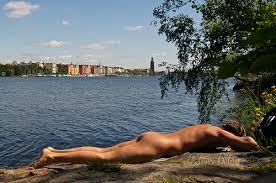
Scandinavia is the most open-minded region in the world and it’s perfectly legal in Scandinavia for nudists to swim naked, or to sunbathe either topless or completely in the nude.
What is Nudism?
Nudism is the practice of going without clothing in mixed groups and for purposes of good health or personal comfort. Governed by a strict set of rules, nudism itself is purposely non-erotic and non-sexual. It is said that nudism aids both exercise and relaxation while promoting stress relief, a positive body image and increased self-esteem. Research indicates that children who have seen their parents nude do not grow up emotionally scarred, but instead are much more likely to be accepting of their own nude bodies, and more comfortable with their own sexuality.
Nudism in Scandinavia
In 1936 Soren Sorensen created a nudist holiday camp on an island near Copenmhagen and founded the first nudist club in Scandinavia, “Sunny Sports North”.
The Scandinavian naturist campings and resorts are owned or rented by naturist aorganizations, and membership in a club associated with the International Narurist Federation is usually required for access. However, you will be heartily welcomed to a short time “test visit”.
In Denmark, nudism is allowed on 4,500 kilometers of coastline and there are four “free beaches” dedicated to naturists only.
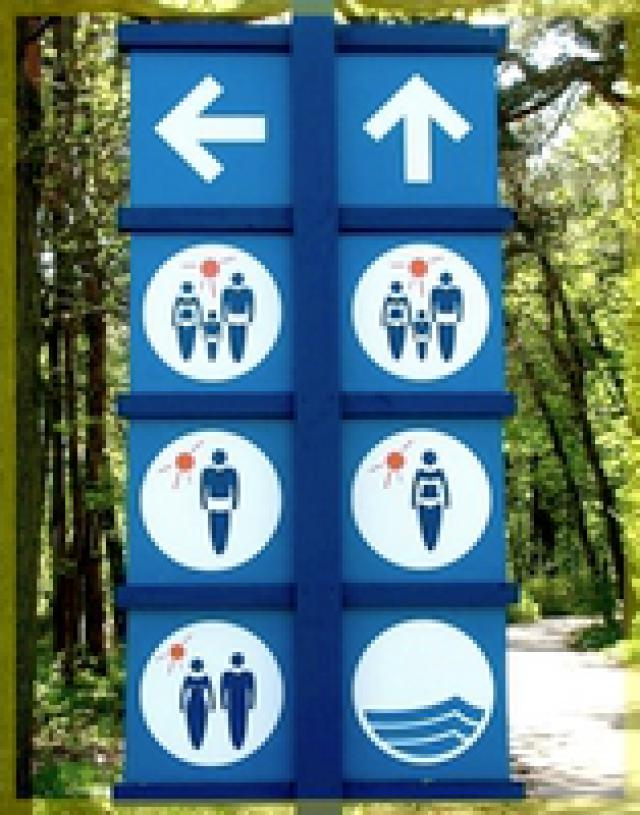
Norway has over 20 clothes-free beaches, and Sweden offers about 60 clothes optional beaches for nudists. Signs are often used to inform beach visitors about nude-only or CO beaches.
The nude beaches are public areas where nudity is accepted, either officially or by practice. Everybody have access to these beaches.
Denmark The Danes have what may be the world’s most liberal policy regarding nudity at the beach. There are just a few beaches in the country where nudity is specifically prohibited. There are also just a few beaches that are specifically set aside for naturists.
Danish naturists by and large are circumspect about choosing where to be naked. Almost all nude bathing occurs on beaches with strong naturists traditions or on remote or peripheral areas of other beaches.
Strandguide.dkdescribes about 100 naturist places in Denmark. Almost all pages of the website are available in Danish, English and German. Of the places described, a handful are naturist camping establishments, while the rest are beaches, and the sites range from lightly visited beaches with naturist potential to popular and well established beaches.
Norway While just about any beach in Denmark can theoretically be considered a nude beach, Norway and Sweden follow a more usual model of having some beaches specifically designated for nudity and others where nudity is unofficially tolerated.
Nudism in Norway is not uncommon and widely accepted. There are about 20 declared nude beaches (“free beaches”) along Norway’s coastline and fjords at the moment. However, besides those official beaches, nudists in Norway have unlimited possibilities all over the country to take a swim in the nude without being embarrassed or embarrassing anybody. And the long coast line helps to find a private bathing spot at any time.
Norway’s offerings include five nude beaches that are in or in the immediate vicinity of the capital city of Oslo, and Huk Beach—located about 7 kilometers west of the city center—is the most popular nude beach in Norway.
Sweden In Sweden over 70 beaches are detailed (just under half are described as official nude beaches) along with eleven naturist camping establishments. Sweden has a bigger selection of nude beaches which are roughly evenly divided between coastal locations and interior lakeshore locations. There are about a dozen nude beaches within a 50 kilometer radius of the capital city of Stockholm, including several that are within the city proper.
For the first time, a European Concert of the Berliner Philharmoniker will take place in Norway, or more precisely: in a beautiful Baroque church in the mining town of Røros, a UNESCO World Heritage site.
Berlin Phiharmonic Orchestra’s enthusiasm about the German-Norwegian mining history has resulted in a tailor made symphonic festive day in the Norwegian mountains.
Simon Rattle will conduct the orchestra, playing works by Edvard Grieg, Felix Mendelssohn and Ludvig van Beethoven. The soloist in Mendelssohn’s Violin Concerto in E minor will be the young Norwegian Vilde Frang, who is not only a wonderful virtuoso, but also “has the knack of breathing life into every note” (BBC Music Magazine).
Vilde Frang Photo: Marco Borggreve
The event will take place on May 1 and unfortunately there are no tickets left. However, music lovers all over the world can experience the concerts via television.
May 1 is considered the birthday of the Berlin Philharmoniker. On that day in 1882 the musicians revolted against an autocratic owner and took responsibility for the operation and musical development of the orchestra.
The capasity of Bergstaden Ziir, is about 850 seats
Last year the birthday event was a concert in Acropolis, Athens.
Sensational Concert in Norway, written by Tor Kjolberg
Beneath the cool, sophisticated exterior, the Swede harbors a deep and heartfelt passion for the nature, tradition and schnapps.
Swedes have a reputation for being dry, somber and painfully serious. It is true that the average Swede is quite quiet and reserved, and that instant gushing friendliness is not commonly witnessed. But contrary to popular opinion, Swedes do have a sense of humor – one that is as elusive as Garbo and as fleeting as a Swedish summer. Swedes may seem calm and collected on the outside, but they’re every bit as prone to ribald fits of laughter as the next person, even if they do recover their solemn faces much more quickly. So remember that appearances can be deceptive: underneath that composed exterior, you’ll usually find a warm, friendly individual. And once a Swede has decided to let their guard down and befriend you, they will be a friend for life.
Blond or blue-eyed? When it comes to Sweden, popular misconceptions are rife. Think “Swede” and an image of a blue-eyed bond, no doubt sitting at the wheel of a Volvo, may well spring to mind. But only a proportion of native Swedes fit the old stereotype: Sweden today is a country of growing cultural and social diversity. In 2010 over one million of Sweden’s 9.4 million inhabitants were born abroad, the majority in Finland, the former Yugoslavia and Iraq.
However, Sweden’s traditionally tolerant outlook has been called into questions recently. The high standard of living, strong economy and cradle-to-grave welfare system enjoyed by the Swedes has come under increasing pressure, particularly following the 2008 global financial crash. Far-right groups who place the blame on immigrants have made political headway: for the first time, the anti-immigrations Sweden Democrats won 49 of the 349 parliamentary seats – nearly13 percent of the vote – in the September 2014 elections.
Children of nature It’s no exaggeration to say that Swedes are potty about nature. It’s somehow a part of the Swedish soul. They are quick to wax lyrical about the grassy plains of Skåne, expound the virtues of lakeside Dalarna and remind you that theirs is the only true wilderness left in Europe. Ask any Swede to recount tales of their childhood and they’ll dreamily recall summers spent in the country with a noticeable softening of facial expression and a faraway look in their eye.
From Lapland
Nowadays the little red cottage is Sweden’s most enduring image, and there’s nothing Swedes like better than to take off to their stuga, where they can kick off their shoes, swim naked and bond with nature.
Swedish stuga
Life in Sweden is intrinsically linked to the changing seasons. Swedish winters are famous for their darkness, longevity and Arctic temperatures. But Swedes have learnt how to make the most of it, and winter sports are popular with Swedes of all ages. They eagerly await the spring and the return of sunlight with all the excited anticipation of children at Christmas. Like hibernating animals re-emerging after winter, sun-starved Swedes are wont to stand on street corners, at crossings, in traffic lights and any other spot with a south-facing aspect, soaking up the first warming rays of spring.
This deep-rooted love of nature means that environmental concerns are a high priority in Sweden. The country plans to wean itself off oil by 2020, and car manufacturers Saab and Volvo have been forerunners in developing vehicles that run on biofuels. Sweden’s best restaurants inevitably are part of the international “slow food” movement, focusing on organic local produce and local culinary culture.
Sweden National Culinary Olympic Champions 2012
Cosmopolitan citizens of the world Despite such closeness to the countryside, Sweden is no nation of bumpkins. Its people are a true blend of the provincial and the cosmopolitan, every but at home in the concrete jungle as going barefoot at their place in the country – 85 percent of the country’s inhabitants live in an urban area.
From Gothenburg
Friendships are often sealed over schnapps. Delicately flavored with fruits or spices, schnapps is a perennial favorite and every Swede can name his or her tipple.
Swedes have a reputation for forward thinking, with Sweden deemed to be Europe’s most innovative country in 2008. Biotechnology and pharmaceuticals are a major export, and IT companies thrive: one of Skype’s two co-founders is Swedish, and the online music service Spotify is a Swedish creation.
Hans Blix
Swedes also have a strong international perspective and many of Sweden’s most (in) famous people (Dag Hammarskjöld; Olof Palme; Dr. Hans Blix, who lead the search for weapons of mass destruction in Iraq 2003) have loomed large in the world stage. According to the Organization for Economic Co-operation and Development, in 2010 Sweden was the world’s most charitable country.
National pride Swedes have a high opinion of their country and like nothing more than to talk about Sweden itself. This is not to say that Swedes are braggarts; a more humble, self-depreciating tyribe you’d be gard pushed to find. But their modesty is merely a thin veil, and all young Swedes are well versed in the achievements of their countrymen, be it Alfred Nobel or August Strindberg. And perhaps this universal satisfaction is not so misplaced; after all, in recent times the rest of the world has come to appreciate various Swedish exports. IKEA sells Swedish homeware in 39 countries, and it is said that one in 10 Europeans was conceived in an IKEA bed!
IKEA bedroom
Culturally, Stieg Larsson’s thriller The Girl with the Dragon tattoo, The Girl who Played with Fire and The Girl Who Kicked the Hornets’ Nest have sold over 50 million copies since the first book was published posthumously in 2005.
Learn some basic Norwegian words and phrases before you travel. Your trip to Norway will be much more enjoyable if you can communicate with the locals. Our team has reviewed the most common Norwegian words and phrases for you. You should also take a small pocket dictionary with you just in case or download a translator app to your phone. Here we present some top Norwegian words and phrases for travelers.
Basics These easy-to-remember words and phrases are important to know if you’re traveling to Norway.
Yes – Ja
No – Nei
Thank you – Takk
Thank you very much – Tusen takk
You’re welcome – Vær så god
Please – Vær så snill
Excuse me – Unnskyld meg
I do not understand – Jeg forstår ikke
Day – Dag
Week – Uke
Month – Måned
Year – År
Today – I dag
Yesterday – I går
Tomorrow – I morgen
How do you say this in Norwegian? – Hvordan sier man dette på norsk?
Learning a new language is always exciting yet can be rather challenging for many. Students who study one or more languages are often required to write essays in these languages to practice their writing skills. But today, a reliable make my essay for me service can take care of that and allow students to focus on speaking. And that is exactly what you need to do if you want to go abroad and be able to communicate with locals – focus on speaking.
Did you know that Norwegian is considered one of the easiest languages for English speakers to learn? This may sound surprising because, let’s face it, Norwegian isn’t often “up there” on the list of modern foreign languages to learn when you’re considering a course. But we think Norwegian is an incredible language for anyone to try to learn.
Yes we know. English is renowned for polluting the languages of the world with words like ‘email’ and ‘webcam’. But Norwegian has actually loaned English a few words too. Some examples we like are: berserk, ski,lemming and slalom.
Getting Around If you’re lost or unsure of how to get somewhere, here are some simple questions to ask and words to know in order to find your way.
Where is …? – Hvor er …?
How much is the fare? – Hvor mye koster billetten?
One ticket to …, please. – En billett til …, takk.
Train – Tog
Bus – Buss
Underground/tube/metro – T-bane
Tram – Trikk
Train station – Jernbanestasjon
Bus station – Busstasjon
Airport – Flyplass
Tourist Information – Turistinformasjon
Police station – Politistasjon
Hospital – Sykehus
Museum – Museum
Bank – Bank
Restaurant – Restaurant
Church – Kirke
Restrooms – Toalett
“Norwegian” is actually a little misleading, for there are a number of languages that fall under this rather ‘umbrella-like’ term and are considered Norwegian. There is Bokmål (Book Norwegian, official), Nynorsk (New Norwegian, official), Riksmal (‘national language’) and Hognorsk (High Norwegian), to name the more well-known ones. Nynorsk and Bokmål provide a basis for the written form of Norwegian but for the spoken one, this varies dialectically all over the country. Shopping
Store/shop – Butikk
How much does this cost? – Hvor mye koster dette?
What is this? – Hva er dette?
I’ll buy it. – Jeg kjøper det.
I would like to buy… – Jeg vil gjerne kjøpe…
Do you have … – Har du …
Do you accept credit cards? – Tar dere kredittkort?
Because of the large number of cognates in Norwegian, you will be surprised to find that reading a simple newspaper article would actually come pretty easy to you. Some words are identical, such as bank, over and problem, while some are close enough to guess, like velkommen (welcome), av (of) and skrive (write).
Dining
Table – Bord
Menu – Meny
I have a reservation – Jeg har en reservasjon
Soup – Suppe
Salad – Salat
Appetizer – Forrett
Hamburger – Hamburger
Dessert – Dessert
Drink – Drikke
Water – Vann
Red wine – Rødvin
White wine – Hvitvin
Beer – Øl
Coffee – Kaffe
Waiter – Servitør
Waitress – Servitøren
Because of the closeness between Norwegian, Swedish and Danish, there is a lot of fluidity between the languages. Norwegians are able to understand around 88% of spoken Swedish, and 73% of spoken Danish. Conversely, Swedes understand 48% of Norwegian and the Danes 69%. Numbers
One – En
Two – To
Three – Tre
Four – Fire
Five – Fem
Six – Seks
Seven – Syv
Eight – Åtte
Nine – Ni
Ten – Ti
And why is this surprising? Well, Norwegian seafarers settled Iceland, the two languages are somewhat closely related. However, despite both Norway and Iceland being under Danish rule for some time, the isolation of Iceland means that the Danish influence was limited and their language is closer to Old Norse than Norwegian. Which means that the good people of Iceland can read the Sagas of the viking eras with ease, whilst those of Norway need patience and a good dictionary to do so.
The Norwegian flag button on the keyboard. close-up
Days of the Week
Monday – Mandag
Tuesday – Tirsdag
Wednesday – Onsdag
Thursday – Torsdag
Friday – Fredag
Saturday – Lørdag
Sunday – Søndag
Norwegian is a bit exotic compared to the other European languages as it is a tonal language or described as having a pitch accent. To the untrained ear this sounds like singing and you’ll have to go as far away as China to hear a similar spoken word. It is often used to distinguish between things like homonyms, but we love how it makes the language sound so lyrical!
Norwegian Pronunciations
KJ, KI, and KY makes a soft k-sound.
J is pronounced like the “y” in yes.
R is more “rolled” than the English R.
Pronounciation Guide
A as in father
E as in bed
I as in meat
U as in food
Æ as in sad
Ø as in hurt
Å as in ball
There are three in particular that stand out for us in Norwegian and we think the English language would be better for having them. Glad i deg, a kind of ‘I have affection for you’ phrase that doesn’t lead to any awkward expectations. Takk for sist, translating as ‘thanks for the last time’ and is used for when you bump into someone that you haven’t seen for a while. And pålegg which is all the stuff that you put on top of an open sandwich.
Norwegian Slang
Girl – Berte
Guy/Dude – Kiis
That’s cool. – Det er k
Fantastic/great – Konge
Boy/Girl – Type/kjei
Bad/ugly – kjiip
Crazy/wild – Texas
There is no actual word for “please” in Norwegian. For those of us overly liberal with the use of the word please, this might stop you in your tracks. Sure, there are phrases that more or less mean the same thing: venlegst (most friend-ily) and ver så venleg (very kind). Norwegian tends to be a more polite language overall, so perhaps it can be forgiven for lacking a simple please. For example, the presumptuous are you is always replaced with can you – a subtle change, yes, but politer than ours, nonetheless.
Top Norwegian Words and Phrases for Travelers, compiled by the Daily Scandinavian team
Scandinavian geese – both wild and domesticated – have been immortalized in the famous book The Wonderful Adventures of Nils, written by Swedish author and Nobel Prize laureate Selma Lagerlöf and published in 1906.
It tells the story of a naughty boy called Nils, who is turned into a Tomte – a small man with magical powers, guarding livestock and farm life – for the way he mistreats the farm animals and for involuntarily riding the farm goose and following a flock of wild geese migrating to Lapland. Lagerlöf’s descriptions of the Swedish landscape and customs featured in the book are the most precise and beautiful descriptions of Scandinavia ever written.
Selma Lagerlöf
Scandinavians have kept both geese and ducks for millennia, and both have always been extensively farmed. They are able to thrive mostly on grass, so it was normal for every farm to have a few, either to eat or to sell for a good price at market. In communities untouched by agricultural-supporting laws and money, geese and ducks (which do not compete with human needs for grain) are far cheaper to keep than chickens, which basically can eat the same as humans. In the Scandinavian over-supported farming communities, the picture is askew, and these birds cost a fortune.
Ducks
Geese and ducks are certainly not everyday fare in Scandinavia. In general, both are eaten only for festive occasions, even if some people hold on to the delicious way of eating salted duck with horseradish sauce as a summer dish. And twice a year the consumption of both rockets: at Christmas and on St. Martin’s Eve on the 10th of November.
Geese
Appearance and taste There are several special Nordic breeds of both geese and ducks. In recent years, Scandinavians have tend to buy more of the meaty Barbary ducks, though many people stick with the old breeds, which have more intramuscular fat and lack the gamy taste of the Barbary.
Barbary Duck
Geese and ducks must be raised on abundant grass and with plenty of fresh air if they are to end up as the truly wonderful meal they can be. And the best are raised organically, slowly and eating nothing but fresh grass and grains. This gives a taste, and lots of intramuscular fat that you won’t find in conventionally farmed birds. The latter are so intensively reared that meat and fat are mostly separated in the body, with far too much fat under the skin and in the belly. Organic birds are easier to prepare to the succulence you want. Conventionally raised and fed animals tend to leave a small, dry bird in a pool of fat.
Gourmet Barbary Duck Breast
Buying and storing Geese and ducks must look as though they are made of marzipan: form to the touch, the breast arched and covered with light yellow or white skin (according to the feed). The skin must be without holes, and untorn, or it will never be crispy; if it has purplish spots or blemished, you should not buy it.
There will always be feathers and stubble left, as well as pieces of peeling wax, but if it looks too furry buy another one – it’s quite a job to pluck a large bird clean with tweezers, and you need to get all the feathers off as they stink when roasted. Remember to check that the goblets are inside the bird as you will need these for the sauce/gravy.
Most ducks for eating weigh around 3kg, but you can find monster ducks weighing up to 4.5kg. The bigger, the better, since a duck’s carcass is huge compared to its size: the carcass of a 3kg duck is much the same size as that of a heavier bird, so the extra weight is pure meat. Ducks weighing less than 3kg are too young and have too little taste. A large duck will feed five to seven people. A 3kg duck is not really enough for four.
Festive Duck Meal
A goose weights around 5-7kg, and again the bigger ones are much better value. While not so monstrously sized as turkey, a goose can certainly feed quite a gathering: a large one is enough for 10-12 people.
Most birds are sold frozen, and musty thaw slowly in the fridge for 2-3 days. A fresh one will keep in the fridge for 3-4 days.
Roast goose
Culinary uses Both duck and goose are fat, juicy birds, and they can become meltingly tender if slow roasted. They have dark, hefty meat, standing up to the traditional spiced, vinegary trimmings.
In Denmark and parts of Norway, ducks and geese are eaten on Christmas Eve, and are always prepared in more or less the same manner: roasted with an apple and prune stuffing, pickled red cabbage, caramelized potatoes and gravy. Trimmings vary, but might include lingonberry, apple sauce spiced with horseradish, halved apples with jelly or baked apples. It’s usually the same for St. Martin’s Eve, though some people try to be more innovative, as the pressure of tradition on that occasion is less severe.
The summery way of cooking, in which the bird is salted and slowly poached, is more elegant and served with creamy horseradish, new potatoes and creamed spinach. The salting dyes the meat an appetizing pink, and makes it even juicier. Anyone who tastes this dish will never forget it.
Compared with turkey, goose and duck meat is very rarely dry, and leftovers are a treat to eat. At Christmas few things beat rye bread topped with some cold jellied gravy, duck or goose meat and pickled red cabbage.
The third traditional way to prepare goose is with gule erter, a filling and delicious yellow split pea soup, served with sausages, vegetables and salted pork. In more well-to-do homes, it is traditionally made with salted goose also, and it’s wonderful, even if it has been diluted to poorer versions over time, and heads the list of dished that Nordic people really hate to eat.
The bird’s carcass, bones and neck, as well as leftovers from the roasted bird, can be made into a wonderfully flavored stock with the addition of a few onions, carrots and herbs such as sage, thyme and bay leaf, and maybe a glass of dark beer. Cover with water and simmer for a couple of hours, strain and use for sauce or soup.
And what can we say about the duck and goose fat, other than that it is pure liquid gold in your kitchen? Nothing beats potatoes or root vegetables sizzled in this fat, or pâtés and liver paste made with it. And rendered duck or goose fat is heaven on rye bread, just sprinkled with salt; and it’s the traditional spread to use with herrings, sausages and most meat toppings on open sandwiches. It can be used on its own, or melted with pork fat, which is solid at room temperature, to give it a higher melting point.
Scandinavian Goose and Duck, written by Tor Kjolberg
Take your family or best friend to the Danish island of Bornholm this Easter and meet a bison or watch the new dinosaur exhibition at Nature Bornholm.
Winter is about to release its grip, daffodils bloom in the gardens and anemones emanates in Almindingen. Easter is coming and soon the whole Bornholm will be crowded by happy holidaymakers.
Exciting Easter activities on Bornholm
The Danish island of Bornholm in the Baltic Sea offers many activities both during and after the Easter holidays. Experience for example Easter in Hasle(Danish only), where the whole town is in Easter mood. Or join exciting Easter egg hunt in Gudheim, over three days with great prizes! You can stay overnight at Hotel Gudhjem in the town center.
NaturBornholm offers activities for the whole family withy a brand new exhibition about the Danish dinosaurs. At the Museum of Bornholmyou can make Easter activities since there are several alternatives; jogging, trotting, walking tours, carriage rides, fun in the Middle Ages and much, much more.
Museum of Bornholm
Happy Easter in Bornholm, source: Visit Denmark
Coastline Bornholm
About Bornholm Bornholm is a Danish island in the Baltic Sea, to the east of most of Denmark, south of Sweden, northeast of Germany and northwest of Poland. The main industries on the island include fishing, arts and crafts such as glass production and pottery using locally worked clay, and dairy farming. Tourism is important during the summer. The topography of the island consists of dramatic rock formations in the north (unlike the rest of Denmark, which is mostly gentle rolling hills) sloping down towards pine and deciduous forests (greatly damaged by storms in the 1950s) and farmland in the middle and sandy beaches in the south. (Wikipedia)