
Scandinavian Borders and Migration

0

The Oresund bridge between Sweden and Denmark has been a towering symbol of European integration ever since it opened in 2001. New travel restrictions imposed by Swedish authorities are an example of how national boundaries are re-emerging.

The Finnish government has also decided to strengthen its border surveillance after several hundred illegal migrants have entered into Finland via Sweden.

 Anti-migration protesters attend a rally at the border town Tornio between Sweden and Finland, 03 October 2015.
Anti-migration protesters attend a rally at the border town Tornio between Sweden and Finland, 03 October 2015.

Previously the Scandinavian countries thought that refugees would come in a controlled fashion they have now awakened to the reality, and now Norway, as several other European countries, considers introducing passport control. Norwegian authorities have realized that a large part of those who come to Sweden will head to Norway, because Sweden is about to collapse under the massive migration.

Sweden received more than 160,000 asylum-seekers last year, mainly from Syria, Iraq and Afghanistan.

110716-Stockholm-Station-Migration
The idea of a borderless Europe, where you could pass borders from Spain to Denmark and the south of Norway has now been killed.

“The refugee situation in northern Finland is out of control,” says Minister of Interior, Petteri Orpo to the television station Yle.

Oetteri Orpo
Petteri Orpo

When Finland criticized the Swedish railway (SJ) for allowing illegal migrants to travel from Sweden to Finland, SJ justified this decision and claimed that the state railway wanted to “act kindly and humane”.

There has been large amounts of asylum seekers, everything from a dozen up to about one hundred per train,” said the Finnish railway’s Communication Director Mika Heihari to Yle.

Hundreds of thousands of refugees from the Middle East and Africa is now going through southern Europe with only one goal, Germany and Scandinavia.

Now Swedish politicians claim they will probably have to take up big loans to finance the hundreds of thousands of refugees and asylum seekers who are expected this and the coming years. The Swedish economy is simply not prepared for such enormous costs.

Øresund bridge
Øresund bridge

Andreas Orrefors, an associate professor in intellectual history, who lives in Lund, on the Swedish side of the Oresund Bridge, says that the clock has been turned back.  “We’re going back in time when the bridge didn’t exist,” he says. He’s studied on both sides and taught students from both Sweden and Denmark.

Closing the borders in Scandinavia is supposedly temporary but is likely to be extended if Europe’s migrant crisis continues in 2016.

Only in Finland 150 people have been assigned specifically to handle the migration chaos.

Mark Rhinard
Mark Rhinard

Refugees in Sweden, not satisfied with being housed in abandoned military camps, cottages and former manors, are heading for the neighboring country, Norway, where welfare benefits are even better and the system not yet broke.

“It’s basically every country for itself now,” said Mark Rhinard, an expert on the European Union at the Swedish institute of international Affairs.

Refugees crossing the border from Russia to Norway reached an unprecedented number, and an agreement between Russia and Norway has been settled to stop the traffic there.

“There is a clause in the Schengen Agreement which gives member states the option of introducing border and passport control if one fears for national security,” says Secretary of the Norwegian Justice Department, Jøran Kallmyr.

Jøran Kallmyr
Jøran Kallmyr

Both the Danish and the Norwegian governments have taken a series of measures to discourage migrants from going there, including a proposal to seize their jewelry to cover their expenses.

Paal Frisvold
Paal Frisvold

“There are 22 million Syrians, and this has put enormous forces in action,” says EU expert Paal Frisvold. “”It’s an intersection here between openness and generosity and being caught off guard. I think this is clearly a sign that the situation is out of control.”

The new ID checks between Denmark and Sweden mean there will be no more direct railway service from Copenhagen’s main station to Sweden. Travelers heading to Malmo will have to switch trains at Copenhagen Airport after going through the checkpoints there, adding an estimated half an hour to the 40-minute commute.

Scandinavian Borders and Migration, written by Tor Kjolberg

Related post:
Immigration Tensions in Scandinavia

The World Celebrates a Fine Old Gentleman

Henrik Ibsen (1828-1906) is still considered one of the world’s greatest playwrights. 110 years after his death, you can visit the Ibsen museum in Oslo’s Arbins gate 1, and get an insight into his life and works.

200116-Henrik-Ibsen-2
Henrik Ibsen, the man with the full white beard, round glasses and top hat, used his sparkling pen to put into words how people think, live and feel. His portrayal of the individual’s personal fate at that time is still something which touches us today. Ibsen lived in the apartment in Arbins gate 1, which has been reopened to the public, for the last 11 years of his life.

200116-henrik-ibsen-museum-oslo
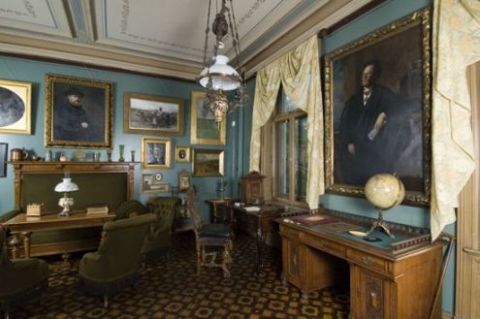
In connection with the Ibsen centenary celebrations ten years ago, the apartment was refurbished with the colors and interior details of Ibsen’s own day.

200116-henrik-ibsen-museum-oslo-interior-2
The workroom, where many of his plays were written, is still intact, and stands just as he left it.

200116-henrik-ibsen-museum-interior-oslo
John Gabriel Borkman (1896)and When the Dead Awaken (1899) are the last works Ibsen write in this room.

The World Celebrates a Fine Old Gentleman, written by Tor Kjolberg

You may also like to read:

In the Footsteps of Henrik Ibsen
(Please observe that Grand Café was closed down in September last year)

How to Save for Your Next Vacation…

0

Do you know how long habits take?

According to the University College London (UCL) on average it takes 66 days to change a habit.

But it all starts with the first step…

To break bad spending habits and start saving for your next vacation, here are four simple tricks:

1. Set up an automatic transfer to a savings account.  An automatic transfer of just $85 per month will save over $1,000 annually for your next vacation.

190116-Savings-Account
2. Skip the small stuff
like $5 coffees at Starbucks or $70 mani/pedis. Those small frivolous expenses add up fast and aren’t worth it.  Besides, it’s easy to make your own coffee and paint your own nails.
190116-skip-coffee
3. Keep a change jar in your kitchen as a daily reminder to control your spending.  Just before your trip, cash in the coins at a bank or coin machine.
190116-change-jar
4. Negotiate all the time.  I used to be a professional buyer and everything is negotiable, from groceries to cars. Simply ask “Is this price negotiable?” and you’ll be shocked at the number of “yes” responses you get.

190116-Negotiating
So why not try these new habits?  There’s nothing to lose.

How to Save for Your Next Vacation…, compiled by Admin

Internationally Acclaimed Norwegian Artist

0

Norwegian singer-songwriter Susanne Sundfør made headlines in international media, not least because of her latest album, “Ten Love Songs”.

“This is brilliant pop from Norwegian megastar”, wrote Alexis Petidris in the British paper The Guardian. “At its most straightforward, Sundfør’s songwriting can sound a little like Lana Del Rey without the cliched affectations and invented persona, but it’s hardly ever straightforward. Sometimes the contrast between Sundfør’s pop inclinations and her more avant garde impulses are as stark as the monochrome lighting”, he claims.
180116_Susanne_Sundfør_Ten_Love_Songs_Album_Cover Journalist Tim Jonze in the same paper wrote that Listening to Susanne Sundfør’s latest album, Ten Love Songs, made it tricky to predict what kind of artist you’re going to meet. But he concludes, “Ten Love Songs is one of the year’s best albums, and possibly one of the nerdiest, too”.

Journalist James Hall in the newspaper The Telegraph, puts it this way:

The 29-year-old Norwegian is a self-confessed pop nerd who loves Abba and Carly Simon along with Radiohead and Joni Mitchell. Yet she is also classically trained, as in thrall to Handel and Mozart as she is to Baroque music and Philip Glass.

180116-Susanne-Sundfør-poster
“Ten Love Songs, such an intriguing record. Released to much acclaim in February, the largely self-produced album comprises 10 ruminations on love,” he wrote.

She sees no inconsistency in these passions. It is the mingling of all these strands that makes her latest album, At the darker end of the spectrum are songs about bad relationships such as Kamikaze and Delirious. The latter includes the lyric “I hope you’ve got a safety net ’cause I’m going to push you over the edge”. The album also contains songs of yearning, such as the astonishing 10-minute Memorial, which starts as an epic ballad in the vein of Madonna’s Live To Tell before it veers off into an extended classical coda.

“Accelerate”, Official Music Video

About her sixth album, the Australian magazine DoubleJ wrote:

“While Norwegian singer-songwriter Susanne Sundfør is something of an unknown proposition in Australia, she’s practically a superstar in her home country. It remains to be seen whether her album Ten Love Songs will propel her profile elsewhere, but it certainly ought to.

180116-susanne-sundfor-ainger-songwriter
This is brilliantly crafted, mature pop music. Elements of dance music, prog-rock, synth pop and modern art/classical music combine to make perfect sounding dark pop songs that may seem uncomplicated on the surface, but pack plenty of sonic wonders when you delve in deeper.”

The magazine concludes that “this is a massive, beautiful sounding album and it has been shaped with laudable expertise. While it’s obvious that there’s enormous talent on show here, it’s easily accessible music too. We strongly doubt she’ll be an unknown around these parts for much longer.”

Internationally Acclaimed Norwegian Artist, written by Tor Kjolberg

Absolutely Scandilicious!

0

According to Norwegian chef, food anthropologist and author Signe Johansen, “people are tired of Italian and French, they are searching for something new and want to expand their spectrum.” In her book, “Secrets of Scandinavian cooking – Scandilicious”, you’ll find lots of food inspiration.

150116-Scandilicious-by-Signe-JohansenThe book contains more than 80 recipes with inspiring photography and we consider it the home cooking bible for those wishing to cook simple, easy and flavorsome Nordic cuisine without the Noma complexities.

Signe Johansen reveals the skills and secrets behind Scandinavian cooking, a cuisine very much in the forefront since Norma opened people’s taste buds for Northern European vegetables and foraged goodies.

As the title promises, the book will reveal the secrets of Scandinavian cooking, from delicious healthy breakfasts and leisurely brunches to tasty suppers and plenty of stress-free crown-pleaser puddings. Signe Johansen will also teach you putting together the perfect smorrebrod for a speedy Scandinavian lunch and the best way to let cakes and biscuits accompany your afternoon cuppa.

150116-signe_johansen-book
According to Hip and Healthy, “the world of Scandinavian food is on the rise. The delectable combination of fresh seafood, delicious berries and whole-grains is enough to tempt healthy foodies across the globe.”

150116-signe-johansen-by-hip-and-healthy
The young cook, Signe Johansen, trained by the best British chefs, shows you that the Scandinavian kitchen not only consists of herrings and meatballs – although they are in here as well.

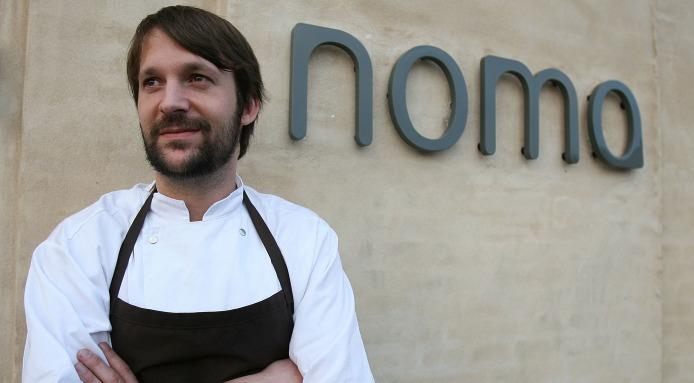
Rene Redzepi at Noma

The Danish acclaimed chef Rene Redzipi asserted that “if a “Nordic terroir” really exists, then it is firmly anchored in the wild, in foraging for local ingredients, in celebrating our maritime and hunting heritage and marrying that heritage with modern culinary techniques and flavors. Food in Scandinavia is perhaps best understood as a way of life, as an ecology, rather than a distinct cuisine. That philosophy of resourcefulness, a discreet frugality and a focus on provenance makes Scandinavian food distinctive but of course not unique.”

150116-scandilicious-cook-book
This book is fresh, light and surprisingly indulgent, this is food to lift your spirits – it’s quite simply Scandilicious! Measurements are metric.

150116-ultimate_student_cover
Signe Johansen, with a Norwegian father and English-American mother, is a food writer and cook who grew up in Norway and now lives in London. She trained at Leiths School of Food and Wine, and after graduating went to work for Heston Blumenthal in his Experimental Kitchen, at the Fat Duck in Bray. She co-wrote “The Ultimate Student Cookbook” with Fiona Beckett.

Saltyard Books published Signe’s first book Secrets of Scandinavian Cooking…Scandilicious. in 2011. Scandilicious Baking followed in 2013.

Absolutely Scandilicious!, written by Tor Kjolberg

A Wave of Nostalgia in Oslo

0

It is easy to forget how important typewriters were for the development of our modern society. Easy to forget what they meant for the development of the press and typography. And, not less, easy to forget how important they were for the entry of women into the workplace.

By learning “touch-typing”, a method which allows text to be written fast and accurately, the modern typist was born, indispensable in any modern office.

Veltman and Michelson 1842. Design by Russel G. Thompson

Touch or not, the arrival of the electric typewriter onto the market was a huge step forward. For that we can thank Russell G. Thompson, who invented it as far back as 1923.

We can also thank IBM, who launched the golfball typewriter in 1961, thereby putting an end to keys that were always getting jammed together. Ink cartridges also replaced ink ribbons. You know, the ones that were red at the top and black at the bottom.

281215-IBM-Selectric
I still have my first typewriter in my desk. But if you would like to see these old wonders, take a trip to the Museum of Science and Technology in Oslo and follow the rest of the story – from the first golfball machines to modern computer systems.

Rasmus Malling-Hansen 1887
Rasmus Malling Hansen 1887

Pastor Rasmus Malling- Hansen constructed this ‘typing ball’ to enable blind people to write more easily. It is one of the first typewriters to be mass produced. The machine cost USD 35, hugely expensive in its day. Although they were originally sold as a help for the blind, they were also bought by a number of companies for business correspondence.

Rasmus Malling-Hansen writingball

Malling Hansen was head of an institute for the deaf and mute in Copenhagen. His prototype was finished in 1867. The typewriter was  the first to be industrially produced (a total of 100 machines).


A Wave of Nostalgia in Oslo, written for Daily Scandinavian by Hans Helmersen

All photos Wikipedia

Sweden’s «Middle Way»

0

While Norway and Denmark struck oil in the late 1960s and early 70s, Sweden was deprived of any share of the North Sea bonanza.

Sweden’s “Middle Way” is a compromise between capitalism and socialism, and showed signs of turning into a cul-de-sac.

On 3 September 1967, Sweden switched from driving on the left-hand side of the road to the right. The result was chaos in the streets.
On 3 September 1967, Sweden switched from driving on the left-hand side of the road to the right. The result was chaos in the streets
301215-volvo-assembly-line-kalmar-sweden
Volvo assembly line in Kalmar

Industry had long been pampered with low taxes while individual taxpayers were bled white, but it is still complained loudly about its employees’ national insurance contributions, shorter working weeks and longer holidays.

By the 1990s, just as Norway was becoming rich as Croesus, recession hit Sweden hard. Swedes were astonished and dismayed when Saab was swallowed by General Motors, Volvo by Ford, and a regiment of other prestigious companies decamped abroad.

Sweden's Permanent Representation to the European Union. Photo by Per Sandström /Regeringskansliet
Sweden’s Permanent Representation to the European Union.
Photo by Per Sandström /Regeringskansliet

The government introduced austerity measures, designed to stave off the worst; but interest rates rocketed. Huge public expenditure cuts followed, and in 1994 the Swedish people voted to throw in their lot with the European Union.

Sweden’s «Middle Way»,  written by Tor Kjolberg

Refreshingly Eccentric Young Norwegian Artist

0

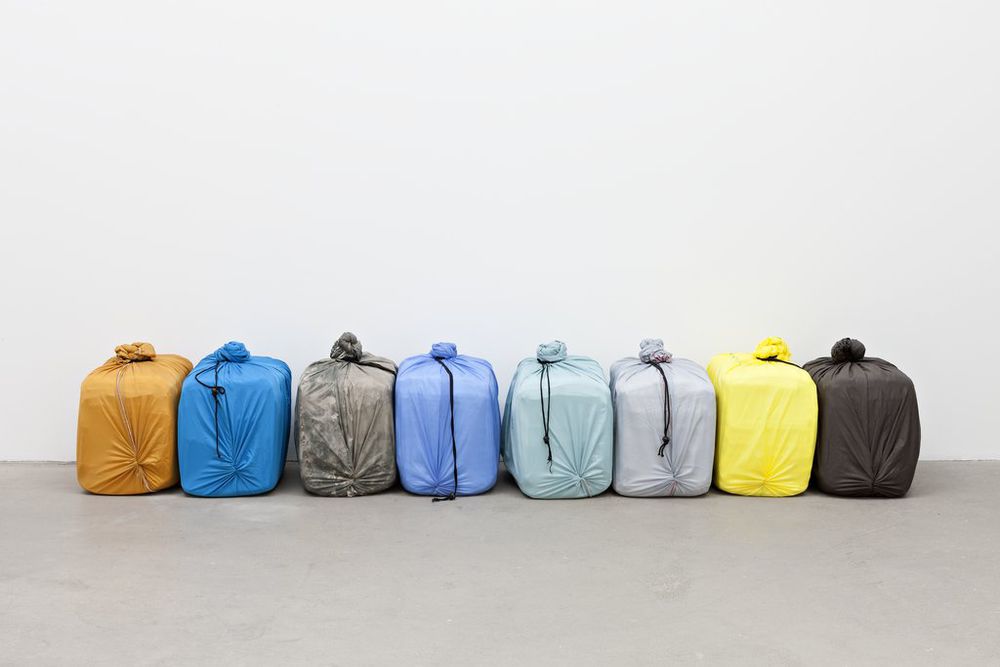
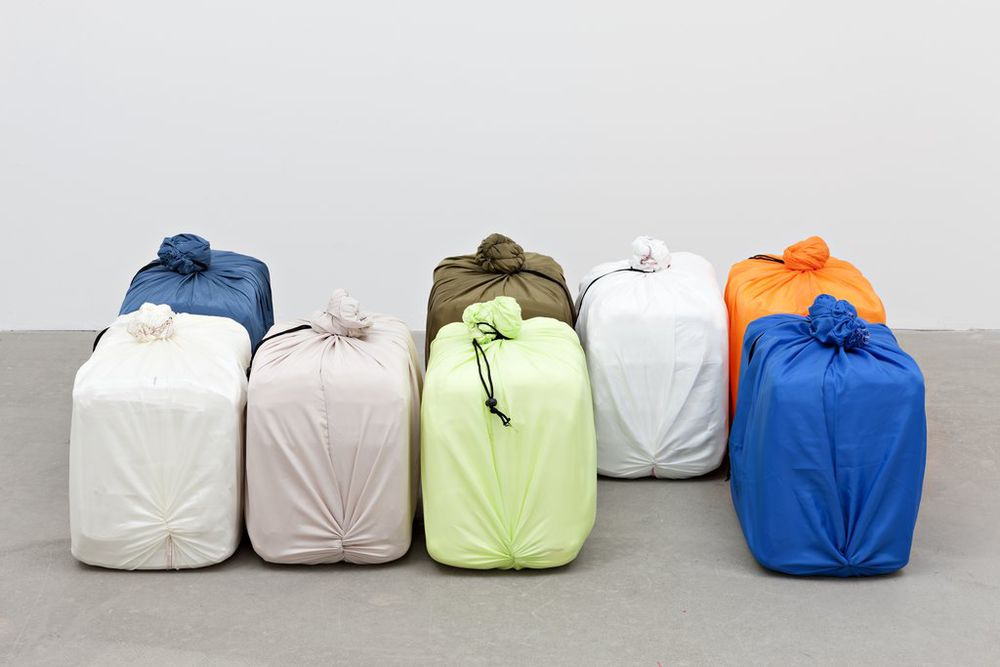
The Norwegian contemporary artist Ann Cathrin November Høibo has gathered international attention for her sculptures and paintings utilizing weaving, fabric, dangling string and cords, rubber bands, various found objects and spare, intense color.

Ann Cathrin’s tapestries form a part of a lineage of Norwegian textile art that stretches back through her mentor, Else Marie Jakobseb, in turn a pupil of Hannah Ryggen, to Frida Hansen, who established the Workshop for National Tapestry Weaving in 1892.

Piece, November 2014

The ravishing work of November Høibo from Kristiansand has caught the attention of art galleries around the world. Her characteristic treatment of gallery- and museums spaces, in which she arranges exhibitions of temporary situations from singular elements that interact in different ways is certainly one of the reasons.

Ann Cathrin preparing for a masterpiece in 2010

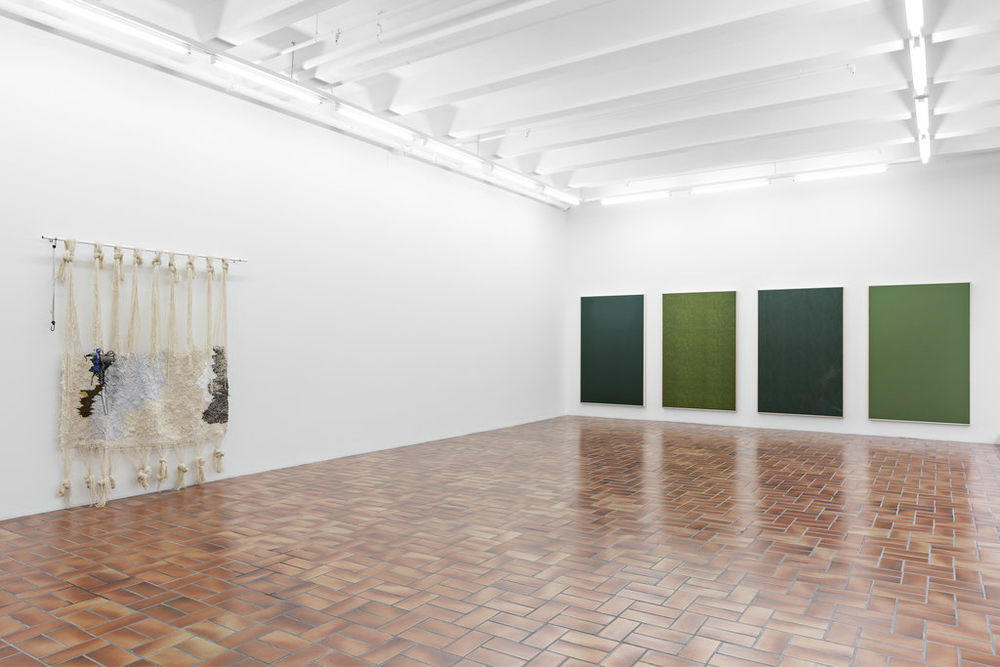
Although her background is in weaving, she is by no means a textile artist per se. She often combines natural and synthetic materials, wool fashioned on a loom and commercial products, hinting at an abstract painting sans paint, while also suggesting landforms seen from above. Working both with and against associated traditions, her works are thus typically finished at a moment before they are complete.

Using the gallery room as her studio, she assembles half-finished works with new whims and acquisitions.

Weaving
Weaving

Her work ranges from installation-based, site-specific pieces comprised of mixed media and found objects to large-scale abstract canvases incorporating materials like acrylic paint, acid and salt.

Installation
Installation

Høibo’s straightforward works disclose exactly what was accomplished, and with what materials, while they reference or incorporate commonplace domestic objects. Working in such an improvised way, she often ignores any regular sequence of warp and weft and leaves threads trailing or casually bundled up.

From Standard, Oslo
From Standard, Oslo

She is indeed demonstrating that textiles are a legitimate artistic medium for voicing her concerns regarding self or society. Her works have a remarkable air of mystery, wonderment and transformation. She rejects a homespun aesthetic: natural threads are counterpoised by shiny nylons and other oil-derived, highly durable looking polyesters.

080116-from-standard-oslo-3
Høibo’s site specific installations consist predominantly of threads and textiles in various conditions, weaved, draped, laddered, bundled and seducing.

From Standard, Oslo
From Standard, Oslo

Ann Cathrin November Høibo was trained at the National Academy of Arts, Oslo, and Städelschule, Frankfurt am Main. She lives and works in Oslo. She has already participated in group shows at Rodeo in Istanbul, White Columns in New York and Standard (Oslo) Henie Onstad art Center (Oslo), as well as a solo presentation at Art Basel in Miami Beach.

Refreshingly Eccentric Young Norwegian Artist, written by Tor Kjolberg

Scandinavian Sour Milk Products

0

Scandinavia is home to a number of exquisite and unique milk products, aside from all the ones available in the rest of the world.

Sour milk, like yogurt, was originally produced to make fresh milk keep, but also for its health-giving and culinary properties.

120116-yoghurt-with-berries
The fermenting process makes milk much easier to digest. Most Scandinavians are able to digest milk, when over the age of breast-feeding, as opposed to many other human beings who, apart from nomads, are usually not able to digest milk, and will get sick from eating large amounts of milk products.

The ability to digest milk is taken too far in Scandinavia, where almost every adult drinks lots of milk every day. It stems from a popular misconception that milk is the only source of calcium and that it is just basically good for you.

The truth is more complex, and milk drinking is certainly a way to get fat. Obesity is now a huge problem in Scandinavia.

Let’s have a look at the three most common sour milk products:

Laangfil from Sweden

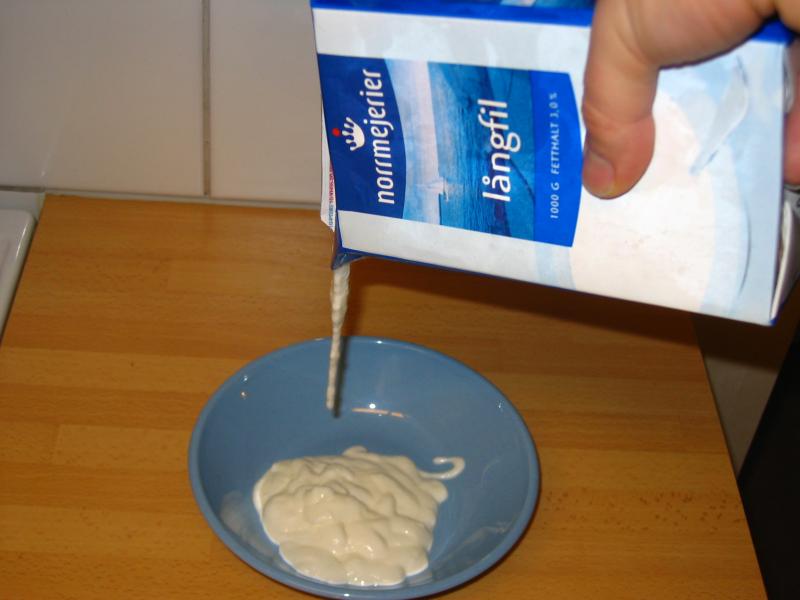
Långfil
This is a type of fermented cow’s milk, which is only available in Sweden. It ferments at low temperatures over a long period, and was traditionally a way of making milk keep (and still is), to make while you are out in the wilderness tending your herd, timbering or hiking or just to take along.

120116-skyr-from-iceland
Skyr
Originally from Norway, skyr was taken by the Vikings to Iceland, where it is tremendously popular as an everyday health food. Skyr is a dense, drained milk product, essentially a fresh, unfermented cheese, much like fresh ricotta.

Cheesy Skyr with blueberries

Buttermilk
The story of butter and the resulting buttermilk is closely entwined with the Scandinavian pig export business. Genuine buttermilk is the whey that’s left after you have churned the butter, and the real stuff is delicious.

Buttermilk dessert
Buttermilk dessert

Recipe:
Buttermilk and sweet grass cream whith rhubarb jelly

2 sweet grass leaves or 4 rose geranium leaves
250 ml water

For the cream:
100g sugar
300ml full-fat cream
200 ml buttermilk
4 leaves of gelatin

For the jelly:
5 leaves of gelatin
500ml rhubarb cordial or leftover syrup from rhubarb compote or soup
A handful if edible flowers

Serves 6

Boil the sweet grass in the water for 10 minutes, the leave to cool. Discard the grass.

Bring the sugar and cream to the boil, then take off the heat. Stir in the grass water and buttermilk.

Soften the four leaves of gelatin in a little cold water for a few minutes until it feels like a jellyfish. Squeeze off any excess water and place in a small pan along with a little of the cream. Put over a very low heat until the gelatin is completely melted, then stir in some more of the cream, making sure there are no lumps, and finally the rest of the cream.

Divide between six tall glasses or bowls, allowing room for the jelly on top. Leave in a cool place to set.

Meanwhile, soften the gelatin for the rhubarb jelly as before, and then dissolve in the rhubarb cordial. When the buttermilk cream has set, pour or spoon over the rhubarb jelly, and leave it to set completely. Do not put it in the fridge, as this will spoil the taste. Decorate with edible flowers.

Enjoy!

Variations: berries instead of rhubarb

Scandinavian Sour Milk Products, written by Tor Kjolberg

The First Car Tourist in Norway

0

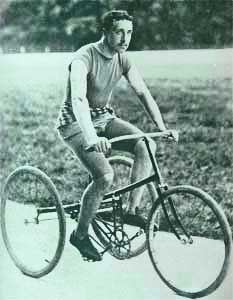
Dutchman Peter Scheltema Beduin was a true pioneer. In the years before 1900 he distinguished himself as racer cyclist and won prizes in many parts of Europe. Reporters called him “The Flying Dutchman”.

On Thursday 9 August 1901 Beduin (1870-1928) arrived in Christiania as the first car tourist on Norwegian soil.

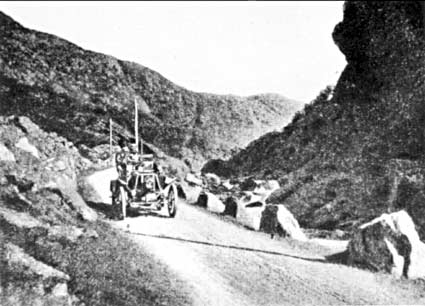
Beduin driving through Laerdal in Norway

Beduin was an adventurer with a sense of drama and had been on long expeditions by car in the Alps and through St. Gotthardpass. He embarked on this expedition to Scandinavia and Norway along with two others. Scandinavia was then considered as “Europe’s wilderness,” and a car expedition there would be an even greater challenge.
On 3 September his “Panhard & Lavassor” rolled over the county border to Sogn and Fjordane at Filefjell. The car had eight horsepower, four cylinders and four gears.

Peter Scheltema Beduin on bike

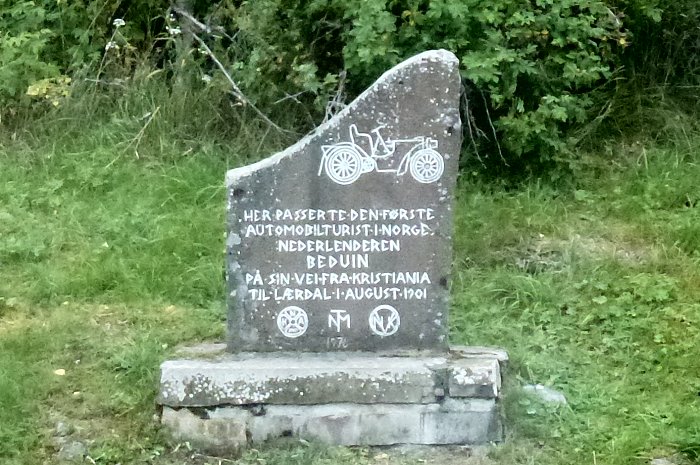
Outside Vindhella youth home in Laerdal you’ll find a stone raised in memory of the first car that drove through the municipality.

At Nes in Buskerud Beduin suffered his greatest defeat on the trip. The whole village had flocked to see the new driving vehicle. Right there, with a large audience, they met the only steep hillside where the car with its motorized horsepower failed to pass. They had to bring horses to pull the car upwards.

Norwegians must undoubtedly have given Beduin a mixed impression as a people: first of all he had to pay a motor vehicle fee of 200 kroner to the Norwegian authorities to be allowed to bring his car into the country.  At that time there were only four cars in the country, so the government was then as now quick to see profits on cars.

First car tourist in Norway, memory stone

The next requirement came from the Technical Committee, who required being a part on a trip in order to judge whether the Panhard was a capable conveyance.

070116_A_view_from_Riksveg_55_at_Sognefjellet
A virw from Riksveg 55 at Sognefjellet

The first car imported to Norway was in 1895.

Borgund Stave Church, Sogn

Beduin died in 1928 and had been general secretary and later treasurer of the RAI, the Dutch organization of importers and manufacturers of motor vehicles.

Feature image on top: Panhard & Lavassor, 1901

The First Car Tourist in Norway, written by Tor Kjolberg