Welcome to South East Norway

Despite county boundaries and differences between the three counties of Telemark, Vestfold and Buskerud, both in terms of scope, livelihood and tradition, there are still more similarities than differences.

The differences are most often seen in the cultural scene in that many great artists come from this part of the country.

020216-telemark-buskerud-vestfold-map
Food is both an art and a culture with Norwegian national dishes highly valued in the three counties.
Telemark Excursions by Olivenreiser

020216-myllargutenTelemark county extends from Skagerrak to Hardangervidda bordering on Buskerud, Vestfold, East-Agder, Rogaland and Hordaland.  Tourists have cast their eyes on this area, able to choose between a “Riviera existence” in the archipelago, or a proper mountain holiday in the many mountain areas Telemark has to offer. In the hilly skiing terrain, many famous Norwegian skiers have laid the foundation for their later achievements. Telemark has a rich variety in folk music and is known as Myllargutten’s home county.  Myllarguttnen’s real name was Tarjej Augundsson and he is regarded as Norway’s most famous player of the Hardanger fiddle.

The Whaling Monument in Sandefjord

Vestfold, is Norway’s smallest county in size. Here the phrase “small but good” is appropriate. Vestfold is on the west side of the Oslofjord, bordering Buskerud and Telemark.  Vestfold is a coastal county, but has also large agricultural areas within its borders and was once the most important whaling county in Norway.  Seamen previously associated with the fishing industry gradually turned towards industrial work.

The climate in south east Norway is stable and attracts many tourists.

Ringvold fruit garden

Buskerud is also one of the trio of counties in Southeastern Norway, in which we now explore.  Buskerud County ranges from the Oslofjord all the way up to Hardangervidda, bordering on seven counties. Lofty mountains and broad communities are characteristic for Buskerud and we must remember that it is one of the most important counties for forestry in Norway, only beaten by the county of Hordaland when it comes to number of fruit trees. This is an industry that has had great significance for Norway. The number of fruit gardens here leaves its mark on the culinary traditions.

Norwegian national dishes have a strong foothold here, and the diet is as powerful as it is tasteful in this area of prosperity.

Welcome to South East Norway, written by Tor Kjolberg

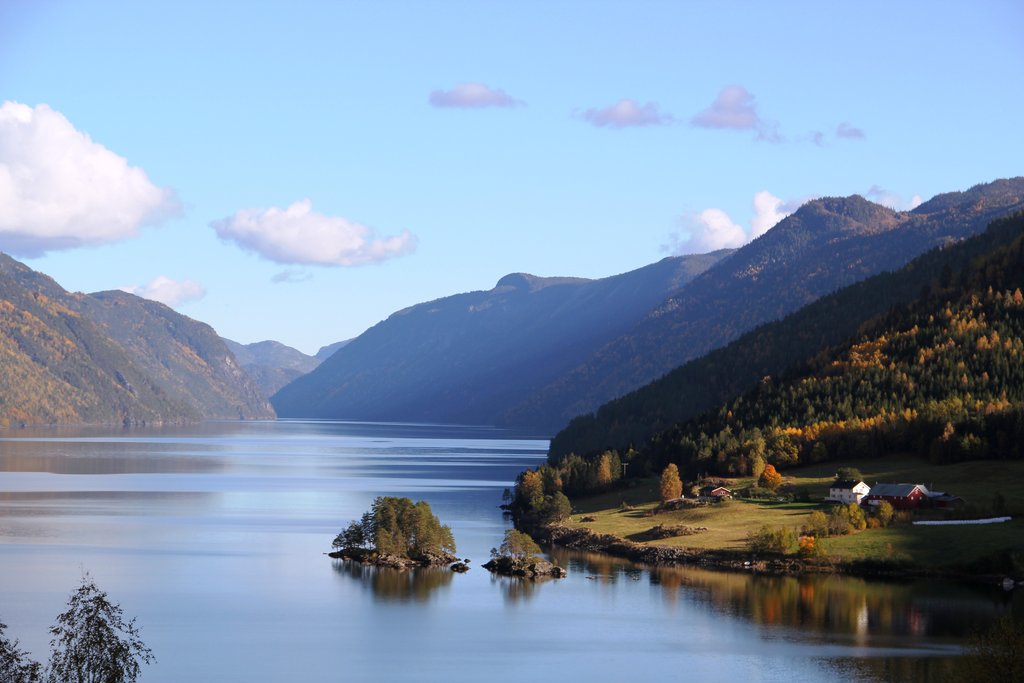
Feature image (on top): Autumn in Telemark (Photo: Visit Telemark)
Recipes from the trail: Two hunters’ takes on gourmet game
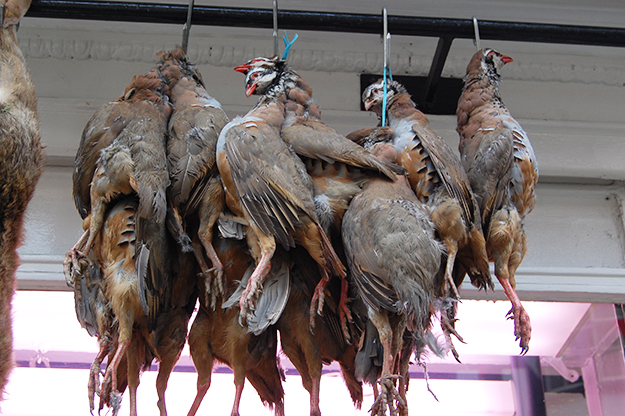
Hanging birds. Photo: Andy Mannett /Wikipedia Commons)


Ptarmigan Dinner

by Erik Wanberg

2-3 clean ptarmigans
birch or applewood chips, for smoking
1/2 stick of butter
1/2 cup Port wine
1 cup chicken broth
1 tbsp. flour
1 tsp. ground sage
1/4 cup heavy cream or half-and-half
salt and pepper to taste

Optional:
1/2 cup dried chanterelle mushrooms (or other light mushroom)
1/2 cup dried cherries
(or dried cranberries, or a tablespoon or two of lingonberry jam)
1/2 cup boiled and peeled chestnuts

Take the ptarmigans and quarter them so the breasts are split in two pieces and the thigh/drumsticks are one piece.

Lightly cold smoke them with birch or applewood chips, about 1/2 hour, just for flavor. If you don’t have a smoker, this step can be omitted, but I really like the mild smoke flavor.

Remove from smoke and lightly brown on both sides on medium-high heat in a large fry or sauté pan with some melted butter. Remove from the pan and place on a plate.

Deglaze the pan with the Port. Add the remaining butter.

Add the flour to the chicken broth and stir or whisk to remove any lumps, then add to the pan. Add the optional ingredients and sage and bring to a simmer.

As it thickens, add the cream. Lower the heat and place the ptarmigan pieces flat in the pan. Simmer gently for approximately 45 minutes.

Serve with mashed rutabagas and a steamed green vegetable such as broccoli or sautéed green beans.

Notes: While the traditional Norwegian style is a simple brown sauce gravy, rich in butter and cream, it usually has some wild mushrooms in the sauce and a handful of lingonberries. I like adding the Port to bring out the flavor and the dried cherries and chestnuts. While rich, it is perfect around the holidays.

As ptarmigan are not flying around the midwest, or even available in the corner supermarket, this recipe works well with other game birds such as grouse or pheasant, and I have even cooked cottontail rabbits this way.

After dinner, open that Port wine bottle again and serve with a plate of Jarlsberg chunks…Hunting doesn’t always mean roughing it!

To hang or not to hang: that is the question

When hunting with my Norwegian relatives it is customary—no, just expected—to hang the meat for a few days to make it darker and more flavorful. Some might say this makes it more gamey in taste, and they would be correct.

It is a practice in Norway, and especially in Voss, to hang the meat for a few days in the open air to cure it. I am almost embarrassed to say that they don’t even clean the bird first, just hang it fully intact. In the U.S., we often field clean the birds straight away. In contrast, in Voss, upon returning from a two-day hunting trip the ungutted birds are simply hung by their necks in the garage with the temperature in the 35-40 degree range. After a few days, the flesh is very dark, almost black, and the flavor is much stronger.

On one trip to Voss after a day of hunting, I offered to cook some freshly killed ptarmigan for dinner. My uncle wrinkled his nose and reluctantly agreed to let me forge ahead with dinner.
At dinner in the mountain cabin (hytte), I asked how he liked it. He said, “Well Erik, that is… ummmm, well, very interesting.”

Lesson learned. However, I don’t recommend doing it here unless you really know what you are doing.
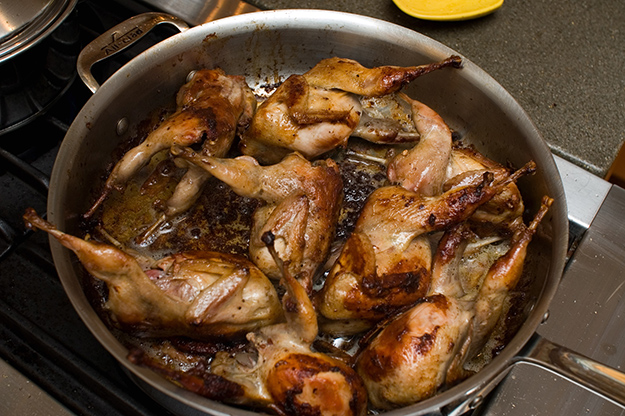
Quails browning in pan. Photo: Stewart Butterfield (Wikipedia Commons)

Mashed Rutabagas
by Erik Wanberg

3 large rutabagas
1-2 large red potatoes
1/2 cup chicken broth
1/2 cup cream or half-and-half
1/2 stick of butter
salt and pepper to taste

Peel the rutabagas and potatoes and cut into one inch chunks. Boil in a large pot.

When soft to a fork (about 30-40 minutes), strain the water off and add the butter, start mashing, and then add the other ingredients and continue mashing until nearly smooth.

I sometimes add a splash or two of akevitt, as the caraway flavor really complements the rutabaga flavor, even more so if serving akevitt at dinner.

Notes: While I will often serve wine with a ptarmigan dinner, (a nice light-bodied pinot noir goes great with upland game like this), this is not always the case in Norway. The traditional beverage pairing in Norway, and especially in Voss, is a large glass of hjemmebrygg (homebrew) and a shot glass of akevitt. While a good wine is a great pairing with this dinner, nothing compares to the pairing of a smoky Voss homebrew (usually 10-12% alcohol) with juniper flavors, combined with smoked and hung (read gamey) ptarmigan. The akevitt then cleanses the palate with the caraway flavor, and you’re ready for another bite.

Wild stew at its best
by Ottar Nord

4.4 pounds tiur meat or a blend of poultry
2.6 ounces salt pork
4 tsps. flour
1/2 tsp. pepper
salt to taste
16 ounces boiled stock
one onion, chopped
1/4 tsp. crushed juniper berries
one cup lingonberry or cranberry jam

Cut the meat into bite-sized pieces, and cube the salt pork.

Blend together the flour, salt, and pepper.

Brown the salt pork in a pot and remove, leaving the pork drippings in the pot.

Dredge the meat in the flour mixture and brown in the fat.

Pour the stock over the meat. Add the chopped onion, pork cubes, crushed juniper berries, and jam, and let the mixture steep until the meat is dark.

These recipes originally appeared in the Norwegian American Weekly. To subscribe, visit SUBSCRIBE or call them at (800) 305-0271.


Heavy Retro in Stockholm

Stockholm is described as relaxed, cool and hip, and offers visitors a full range of creative shops, restaurants and vintage stores. But why not start your exploration at Nordiska Museet and the exhibition Heavy Retro, open through 4 September 2016?

030216-heavy-retro-nordiska-museet-stockholm
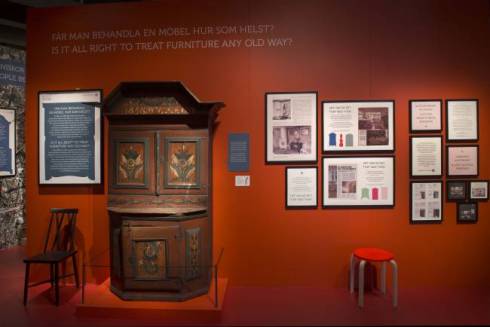
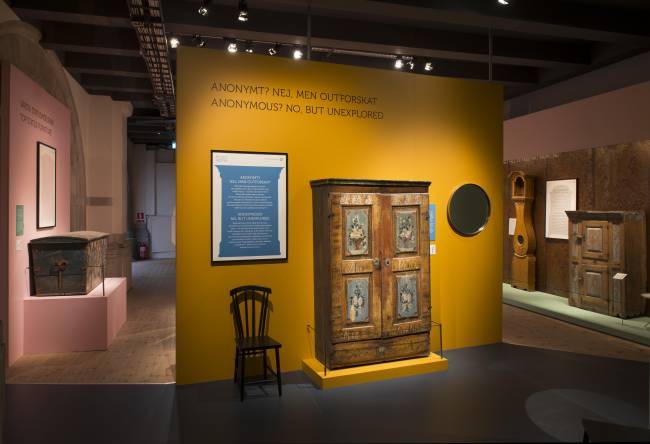
There you can experience distinct trends right now, but also rustic furniture from the 18th and 19th centuries. The main characters in the exhibition are grandfather clocks, cabinets, boxes and chests. Over 50 selected status objects that were once somebody’s pride and joy, and are now part of the museum’s collections.

030216-heavy-retro-nordiska-musseet-stockholm-sweden
Inspired by the objects at the museum, you should start exploring the Stockholm neighborhoods and be surprised to find a playful street fashion scene unfolding. The Swedes are surprisingly enamored of 1950s American Rockabilly and fashions that echo the rootsy blues of Johnny Cash, Elvis and Carl Perkins.

030216-pet-sounds-records-stockholm
The best place to search for this reborn retro trend is actually in the Södermalm district, often called “SoFo” in guidebooks. The locals, however, call it “Söder”, and is the area haunted by the fictional punk hacker Lisbet Salander in The Girl With the Dragon Tattoo.

Brannkyrkagatan, Södermalm, Stockholm

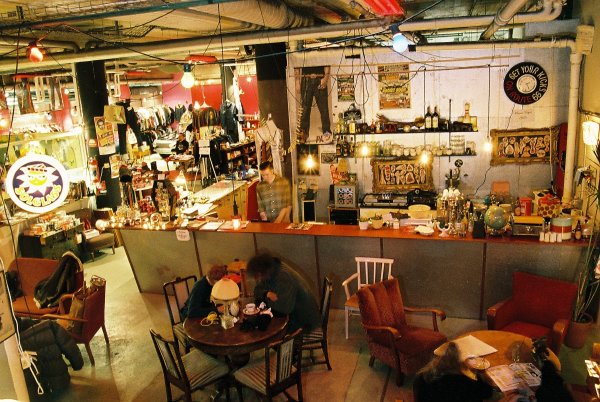
Be sure to visit the underground shop Sivletto. It’s filled with rod magazines, poodle shirts and fedoras. Retro magazines like Tiki Magazine ad makeup guides for Rockabilly hair and grooming.  The in-house hairdresser will even create extravagant cuts for both men and women – if you dare.

030216-sivletto-a-real-lifestyle-boutique-stockholm
Since DJs are spinning Bill Haley and Jerry Lee Lewis on Saturdays, the hours can easily slip away, and there are more to explore in this exciting district.

At Pet Sounds Bar, a cellar cavern named for the Beach Boys LP, the menu is heavy on burgers and fries and cocktails have names like Barbara Ann and other hits.

030216-pet-sounds-bar-stockholm
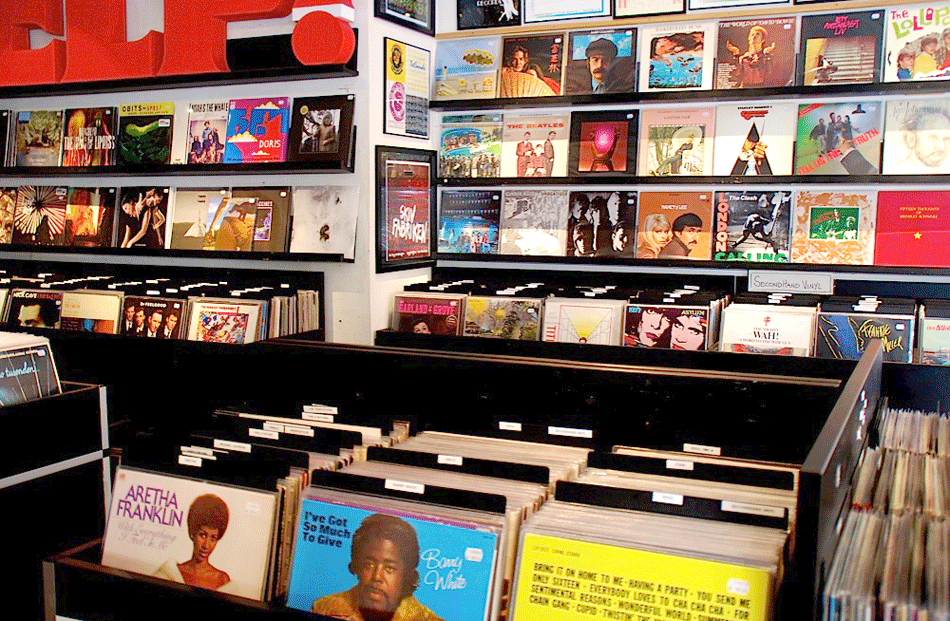
Across the street you find Pet Sound Records, where music geeks cam find the latest under-the-radar music trends.

030216-pet-sounds-records-stockholm-2
Cocktail is a shop jammed with Japanese robot toys, TV dinner trays and Elvis assecories. Look for the pink bicycle outside.

030216-cocktail-shop-stockholm
Not far away you find the food store Cajsa Warg, named after the 18th-century woman believed to be the first female cookbook author. The products here are displayed farm stand style.

Grandpa
Grandpa

The standout fashion stores in Södermalm is Grandpa and Beyond Retro. Grandpa opened in 2003 and decline strong brands Beyond Retro began in 2002 as a single retail store in East London. Today it is one of the leading vintage retailer across the UK and Sweden, stocked with an eclectic range of vintage sourced from around the globe.

030216-beyond-retro-stockholm
Heavy Retro in Stockholm, compiled by Admin

Step Back in Time at Røros

0

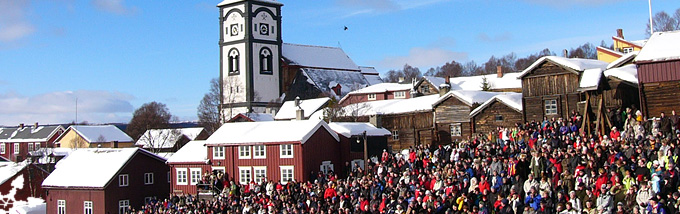
In 1853, the King of Norway issued a royal decree stating that “From 1854 onwards a yearly market shall be held in Røros, Norway, commencing the second to the last Tuesday in the month of February, and lasting until the following Friday”.

This year, the Winter Fair in Røros (No 163)  has been extended until Saturday and will be open from 16 February through 20 February.

Photo: Eldnes Bussreiser

Norway consists of much more than its famous fjords and mountainous scenery. Further east you can experience the beautiful town of Røros, rich in fascinating history.

Røros is a little town with long-established traditions with its own unique and fascinating charm, which we encourage you to experience for yourself.

100216-roros-market-norway
Founded in 1646 as a timber town, Roros later developed into a mining and farming community – and in 1980 it became a UNESCO World Heritage site. You can access this area by plane, train or by car

Today, more than 160 years later, the winter fair, Rørosmartnan, is a national event, with approximately 75 000 visitors each year. During these five days Røros is transformed into a lively marketplace with a booming street life. Whether it’s night or day, you’ll feel the energy at restaurants and bars, in dance halls, raffles and bazaars, the different accommodations and at cultural events.

Photo: Fjordanes reisebyrå

Walking around these well preserved wooden buildings makes you feel like you have stepped back in time. Close by are the old copper mines (another UNESCO listed site) which were once vital to the town’s prosperity.

Dancing at Rørosmartnan

Back in time, merchants from across Norway and Sweden did not need to be asked twice. They harnessed their sleighs and set through the wilderness, crossing ice-bound lakes and gliding along frozen rivers in order to trade in Røros.  Products that were unique to their regions were brought to be bartered and traded with people from other settlements, regions and countries.

Musicians at Rørosmartnan

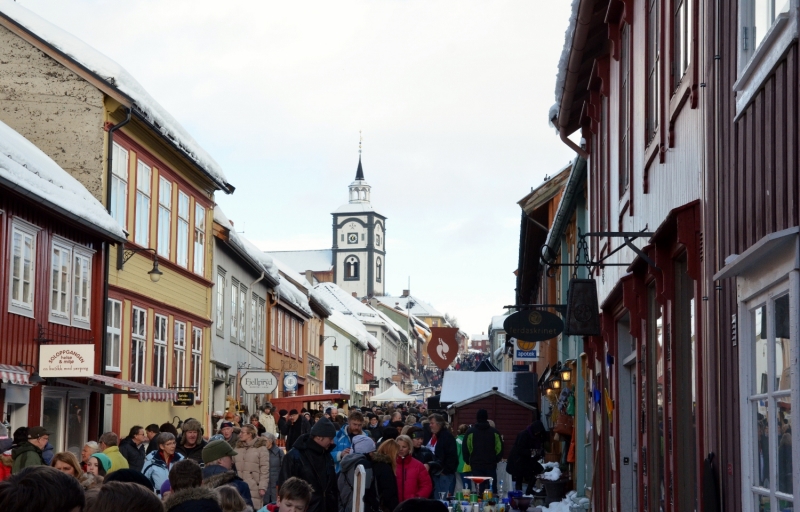
Today most of the fair takes place in the two main streets of Røros, where around 250 exhibitors have stalls outside and also at the indoor trade fair.

100216-Rørosmartnan-norway
You cannot avoid seeing the dominant church in Røros, as it stands above the colorful timber buildings. It was built during the copper works’ golden age and completed in 1784.  Get inside and have a look at the fascinating interior and paintings.

The locals are very proud of keeping the tradition og coachmen transporting feed and goods across the mountains to Røros alive.  As part of the opening ceremony more than eighty horse-drawn sleighs from Sweden, Gudbrandsdalen, Østerdalen, Hedmark, Gauldalen, Selbu and Tydal participate, marking the arrival in Røros after travelling for almost two weeks in the old-fashioned manner.
During these days, the quiet streets of this atmospheric old town are transformed into a bustling market with colorful stalls selling delicious food and drink, artisan handicrafts, clothing and jewelry from the Nordic countries – and even olives from Italy!

Røros market stalls
Røros market stalls

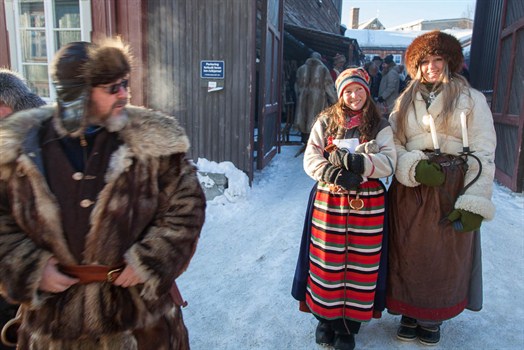
However, many people say that it is in the backyards of the town center you will find the soul of Rørosmartnan. This is where people originally gathered to trade, play music, dance, tell stories, laugh and talk, and it was there cultural exchange between the tradesmen and other visitors took place. With many dressed in traditional costume, it’s like stepping back in time as the townspeople and their neighbors congregate in the narrow streets and courtyards.

Swedish national costumes at Rørosmartnan

During the fair, houses and backyards swarm with activities day and night. Here you’ll still find authentic old-fashioned trade, horses in the stables, coffee brewed over an open fire, traditional delicacies and storytelling – all accompanied by fiddlers and other musicians. It’s a joy to listen to, and everyone stopping by receives a hearty welcome!

Photo: Askeladden Travel

Visitors are encouraged to try the tasty local food on offer; to see how traditional crafts were carried out and artefacts made; to enjoy concerts of ethnic Sami music; or even go for a sleigh-ride into the winter wonderland that surrounds the town.

Step back in time.

Getting there
We recommend visiting Roros by train from Oslo, which takes around five hours. It’s a scenic rail journey, passing through some beautiful landscape – highlands and lowlands, towns and villages.

You might also like to read:

Christmas in Norway

Step Back in Time at Røros, written by Tor Kjolberg

Denmark is more than Copenhagen

0

Many of Denmark’s major attractions lie beyond the city limits, and if you’re visiting Copenhagen, it’s worth considering how long your Copenhagen visit should be.

You may either rent a car or use public transport. Train and bus links are comprehensive and easy to navigate.

Hellsingør station
Hellsingør station

Many travel guides describe the road from Copenhagen north to Helsingor as ‘scenic’, and that’s not an exaggeration. It runs beside the stretch of water called Oresund, with the coast of Sweden visible in the distance. It is a lovely drive, passing beautiful homes and small marinas full of yachts as well as it leads to some of the region’s major attractions.

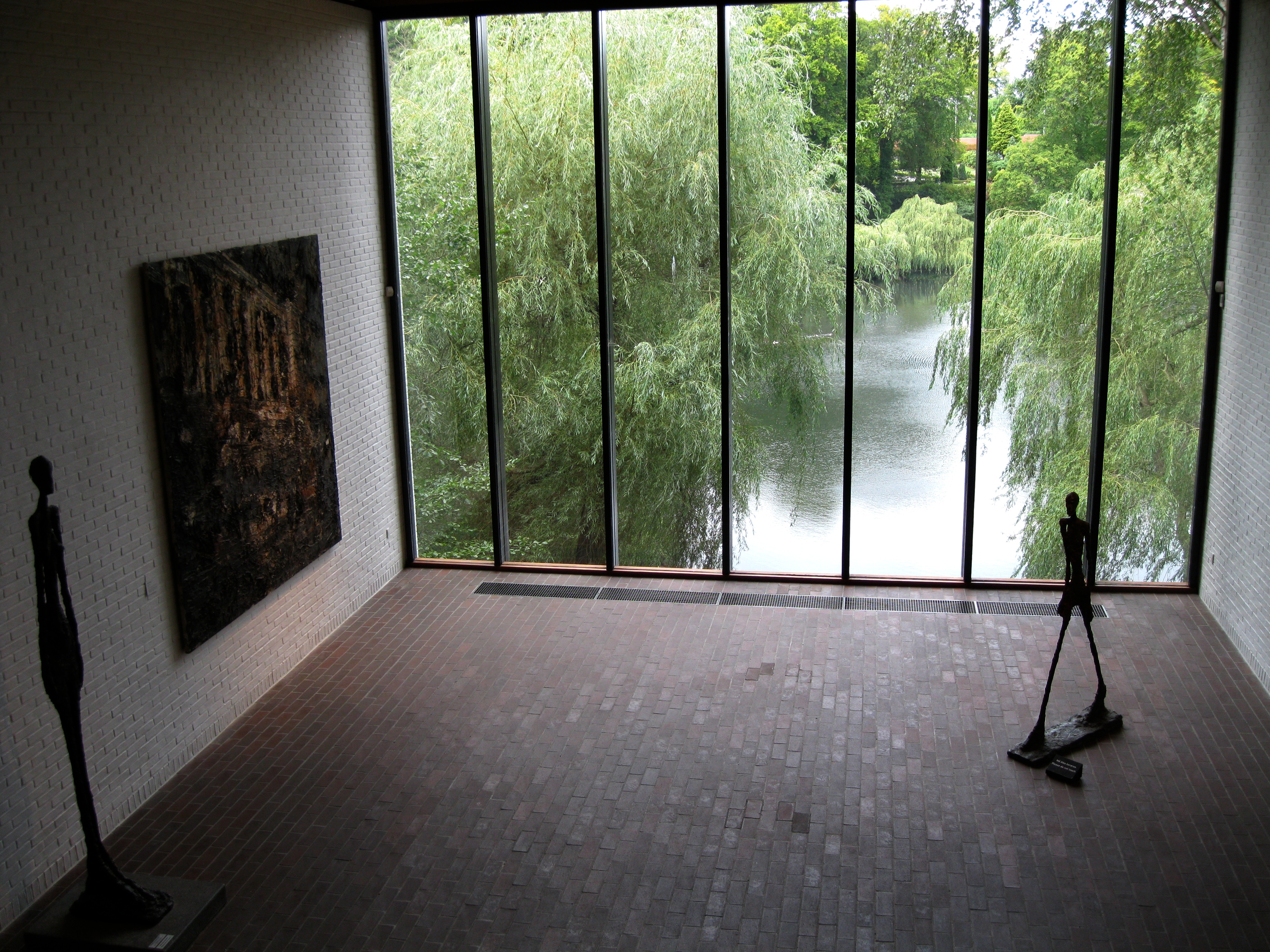
From Louisiana Museum of Modern Art

Be sure to visit the Louisiana Museum of Modern Art. In addition to the outdoor and indoor contemporary art, you should settle down on the patio overlooking the sea and enjoy a fine selection of Danish open sandwiches.

Fire Under Snow
Fire Under Snow

In 2016 there will be several interesting current exhibitions. The first one, Fire Under Snow, launches a number of new video works and films in The East Wing of the museum. Set to be a grand tour of the moving pictures of video art, here you will be sorrounded by captivating stories about people, history and society, visions and the future. It runs from 26 January through 8 May.

Eye Attack
Eye Attack

The second exhibition called Eye Attack is presenting Op Art and Kinetic Art 1950-1970. This is the first major presentation of Op Art and Kinetic Art in Scandinavia for more than 50 years. Louisiana opens the door to a visual experimental laboratory with the whole range of media and techniques. This exhibition runs from 4 February through 5 June.

Kronborg Castle, Helsingor

Very near Humlebaek, the home of the gallery, lies Helsingor, long renowned as the home of Hamlet’s castle. The Danish take full advantage of this Shakespearean connection with seasonal theatre festivals featuring the play, special performances for children, a tourist brochure announcing the town as ‘the hometown of Hamlet’ and Yorick’s ‘skull’ (in various sizes!) available in the gift stores.

Maritim Museum
Maritim Museum

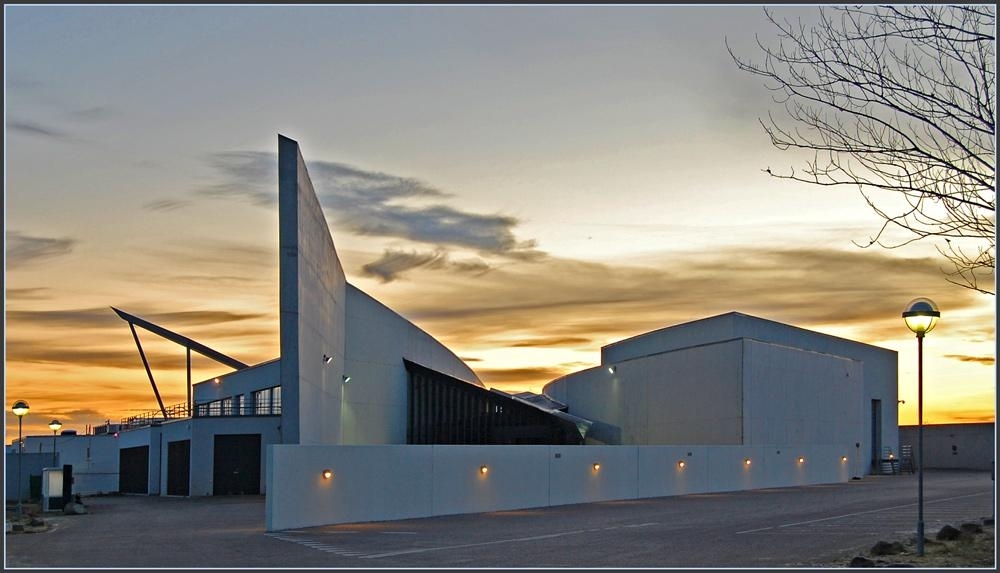
Beneath the castle lies one of the region’s latest attractions, the Maritime Museum of Denmark, which celebrates the country’s maritime history from the age of sail to modern shipping. It is the architecture here that makes this museum so special. From a distance the ‘building’ cannot be seen, for most of it is underground, located in what was once the dry dock of the Helsingor shipyard. Green lawns and wide walkways suspended above the old dry dock are all that can be seen from outside. National Geographic magazine described this museum as “one of the ten museums to travel to for its stunning structure.”

Frederiksborg Castle

Driving through the countryside to the town of Hillerod, you arrive at the Fredericksborg Castle, which is northern Europe’s largest, and arguable most magnificent Renaissance castle. In 1859 the castle’s interior was badly damaged by fire, whereupon the founder of the Carlsberg Breweries – J.C. Jacobsen – took an active interest in the restoration of the castle and proposed turning it into a museum of Danish history.

It contains a collection of paintings, furniture and decorative arts displayed in the castle’s splendid halls, chambers and chapel. The beautiful baroque gardens are of special interest. There are boat trips on the adjoining lake, and you may enjoy a meal at a restaurant in the town with a patio overlooking the splendor of a bygone age.

Ordrupsgaard Museum
Ordrupsgaard Museum

Art lovers should not miss Ordrupgaard, a villa out of town which is home to an astonishing collection of French impressionist art. In a mansion, once owned by collectors Henny and Wilhelm Hansen, you’ll find one of Monet’s paintings of London’s Waterloo Bridge, a Degas ballet dancer, works by Renoir. Matisse, Gauguin, Cezanne and many more. Don’t miss the modern architecture and the delightful gardens with sculptures, an extension that will interest those enjoying modern architecture.

Arken Museum, Ishoy
Arken Museum, Ishoy

Located on the shores of Ishoj Harbor and Konge Bay you find a stunning modern gallery called Arken (The Ark). It is home to works by the likes of Britain’s Damien Hirst and China’s controversial Ai Weiwei. Also here the architecture and the lovely ocean view are important parts of the experience.

Feature image (on top): Arken Museum, Ishoy

Denmark is more than Copenhagen, written by Tor Kjolberg

No Country is Topping Norway

0

The UN released its annual Human Development Report December last year. It contains an assessment of basic human development in 188 countries, called the Human Development Index (HDI). According to CNN “for the 12th year in a row, the land of lefse and lutefisk has earned the number one spot.”

The HDI was created to emphasize that people and their capabilities should be the ultimate criteria for assessing the development of a country, not economic growth alone.

080216-HDI-world-2015

The index accounts for three primary categories, including education, per capita income, and life expectancy. Norway’s qualification for the highest in human development indicates that it is a place where people generally experience long and healthy lives, access to knowledge, and a high standard of living. Norway has also been recognized as the most prosperous country in the world.

The HDI can also be used to question national policy choices, asking how two countries with the same level of GNI per capita can end up with different human development outcomes. These contrasts can stimulate debate about government policy priorities.

080216-2015-human-development-report
Australia and Switzerland came in after Norway as second and third in the Human Development Index. The first 49 countries on the index fall into the category of the highest levels of development.

080216-Human-Development-Index
The health dimension is assessed by life expectancy at birth, the education dimension is measured by mean of years of schooling for adults aged 25 years and more and expected years of schooling for children of school entering age. The standard of living dimension is measured by gross national income per capita.

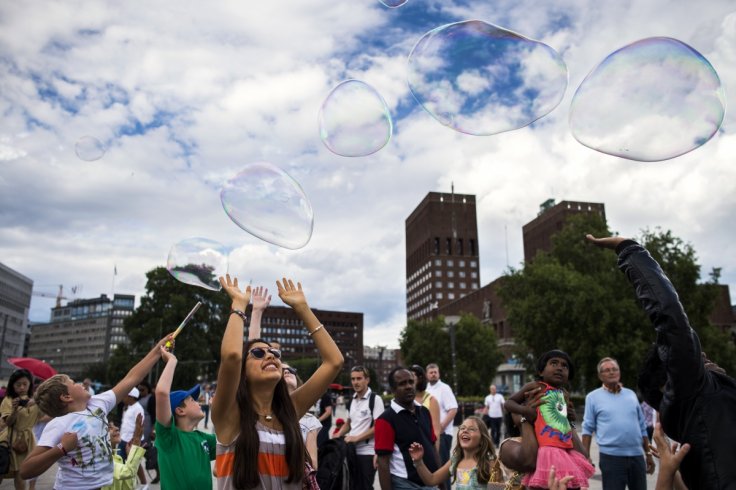
Happy people in Oslo. Town Hall in the background.

Syria and Libya saw the steepest decline in their standing in the Index this year, slipping 15 and 27 places respectively.

While the UN’s assessment determines that two billion people have advanced beyond low human development in the last 25 years, there are still 830 million people that could be classified as “working poor,” earning less than $2 per day.

080216-HDI-2015
A fuller picture of a country’s level of human development requires analysis of other indicators and information presented in the statistical annex of the report.

Feature image (on top) Reine in Lofoten

No Country is Topping Norway, written by Tor Kjolberg

Playground of Contemporary Art in Denmark

0

A new art playground opens in Charlottenlund on the coast north of Copenhagen in May this year. Olafur Eliasson, Jeppe Hein and other major figures in the art world will be contributing to the new art playground at Ordrupsgaard, thanks to a DKK 16.9 million grant from Nordea-fonden.

Mike Doug Starn, Big Bamboo
Mike and Doug Starn, Big Bamboo

In May 2016 the popular museum Ordupgaard will be adding an art playground to its grounds, where children and the young at heart can have fun with art in the open air.

The project will last for three years, and the works in the Art Playground have been created by Danish and international artists, and are designed to offer opportunities for play and sensory experiences.

Olafur Eliasson’s sculpture envelops its surroundings in fog every time the wind changes direction (feature image, on top).

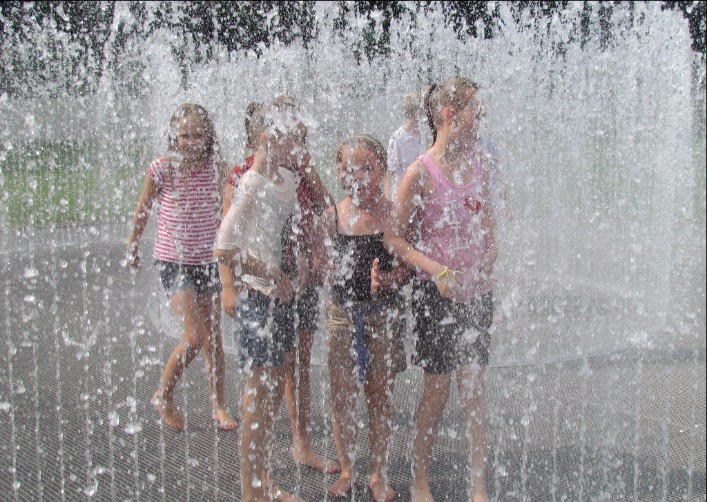
Jeppe Hein, close-up of water pavillion

Jeppe Hein’s water pavilion tempts you into a world of water jets.

The Japanese artist Terunobu Fujomori invites visitors into a teahouse among the park’s treetops, while US artist duo Doug & Mike Starn provide a labyrinthine bamboo construction for playground guests to climb around and through.

Terunobu Fujimoro, Teahouse, Kanagawa, Japan, 2003

All of the works are being created especially for Ordrupgaard, and are intended to encourage free play, far from hushing custodians and admonishing fingers.

Anne-Birgitte Fonsmark

“Free play is important, and it has a positive effect all the way into adulthood,” explains Ordrupgaard’s Director, Anne-Birgitte Fonsmark. “Play is where we challenge ourselves. It’s how we explore, sense, act out and experience important aspects of being a human being. Through play, the child develops the basic skills required to become a competent and active participant in society, and Ordrupgaard aims to support this development through the works in the art playground, while at the same time creating a platform where children and adults can share experiences of art in a playful universe within a natural setting.”

Mogens Hugo
Mogens Hugo

“The Art Playground represents a fun and playful way to experience major works by leading contemporary artists. We are pleased to be able to give children and adults free access to step on both the grass and the art in the park at Ordrupgaard,” says Mogens Hugo, chairman of Nordea-fonden. “Our aim is to support activities which promote living the good life.”

The Art Playground will be free to visit, and with the support of Nordea-fonden, Ordrupgaard will also be offering a wide range of other activities, such as a children’s art parade, play days and treasure hunts linked to the artworks.

The artworks of The Art Playground will be installed at Ordrupgaard in 2016-18 as features located round about in the museum’s art park, carefully integrated into the natural surroundings. The first work, the sculpture Vær i vejret (‘Be in the Weather’) by Olafur Eliasson, will be the first to be inaugurated in May 2016 with a large garden party, to which all are welcome.

Playground of Contemporary Art in Denmark, source: Ordrupgaard

St. Moritz of the North

0

Once known as, ‘The St Moritz of the North’, Norway’s Geilo ski resort, has been a popular tourist destination since the late 19th century.

Here are some really great destinations for winter with beautiful winter scenery and great adventures awaiting you, some of them not even far away!

270116-Geilo-skiing
Norway doesn’t get enough attention as one of the top winter sports locations in Europe. The village of Geilo, located midway between Oslo and Bergen, is a true winter paradise.

Imagine: a nice hot cup of tea or coffee and a light breakfast, then bundle up and out into nature. It doesn’t always have to be the standard downhill or cross country skiing or riding a sleigh. Have you heard of snowkiting, ice diving or ice climbing?

270116-snowkiting-in-haugastol-norway
Boasting 39 downhill slopes, over 500 kilometres of marked cross-country skiing pathways, 5 snowparks and a dedicated children’s area, you’ll never want to leave once you arrive.

270116-geilo-map
Waymarked trails in and around Geilo are dotted with adorable little huts serving hot chocolate and other warming treats to keep you going as you ski your way around the area.

After getting active outside you then go home, light the fireplace, get into a hot sauna and let the day wear out. This sounds like the perfect combination, doesn’t it?

Geilo by night
Geilo by night

Geilo’s skiing really took off in the early 1950s when the first ski lifts were installed. This was the resort’s heyday, when international tourists were drawn by cheap prices and quality powder.

Today the area between Geilo and Haugastol is one of the best places in the world for snowkiting! The Hardengervidda plateau offers endless lakes and hills that are perfect for this sport. And plenty of wind of course! Standing on a snowboard or a pair of skis you are pulled along by your snowkite. Geilo is in fact one of the few places in the world where you can try out snowkiting!

Harakiri Snowkiting Trip to Geilo 2015

Depending on how skilled you are you can get pretty fast and can maybe even try a jump! Everybody can snowkite and it is a lot easier to learn than surfing on water if you are thinking about your own feeble attempts at standing on a surfboard. Still, it makes sense to visit a snowkiting school first to learn the most important tricks from a pro.

270116-snowkiting
Geilo is situated in the mountain region of Hallingdal, in south-central Norway’s Buskerud County. It is overlooked by the Hallingskarvet mountain range (the highest peak is the 1,933m/6,342ft Folarskardnuten) and bordered by Hardangervidda, the largest mountain plateau in Northern Europe.

270116-geilo-map
Geilo is a very pleasant resort, emphasized by its title as a ‘National Park Village’, due to its close proximity to the large national parks of Hardangervidda and Hallingskarvet. It is also easily accessible, located halfway along the main route between Norway’s two largest cities, Oslo and Bergen.

St. Moritz of the North, compiled by Admin

People and Trolls in Copenhagen

“Does humor belong in Art?” asks Sverre Følstad, an expert on the Norwegian artist Theodor Kittelsen (1857-1914). Of course, it does! Danish Robert Storm Petersen (1882-1942), better known as Storm P., has proved this by transforming his parody of ordinary life into fine art. Now you may experience the works of Theodor Kittelsen at the Storm P museum in Copenhagen. The exhibition opened yesterday, 21 January.

Self portrait
Self portrait

Who was Theodor Kittelsen?
Few artists have been more understood and loved by Norwegians than Theodor Severin Kittelsen, best known for his drawings of trolls, illustrating the collection of Norwegian fairy tales by Asbjornsen and Moe. As a young boy he was “discovered” and was given free lessons by the architect Wilhelm von Hanno at the School of Art in Christiania (today Oslo).

After two years with von Hanmo, Kittelsen was granted sufficient financial support to continue his studies in Munich.

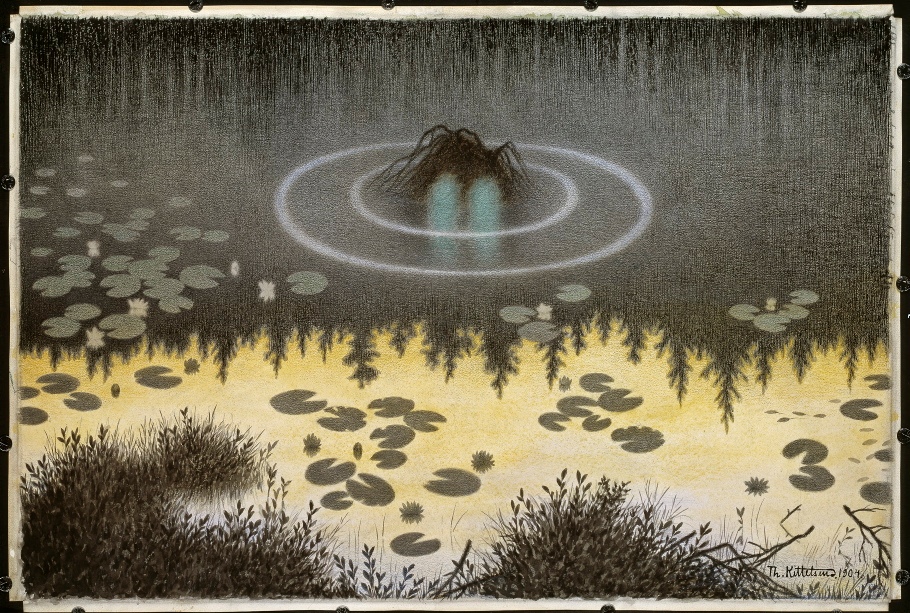
Water sprite
Water sprite

His first encounter with sea ghosts and the water sprite was when he joined forces with his sister and brother-in-law, who made their way north to tend a lighthouse on the wind-swept little island of Skomvær in Lofoten.

150216-troll-by-theodor-kittelsen
He wanted to make a book named “Troll Magic” together with the novelist Jonas Lie, who was to write the text. However, nothing came of this, and Kittelsen became responsible for both drawings and text.

In 1910 Kittelsen was a sick and broken man. The civil grant for his artistic achievement, voted him by the Norwegian Parliament in 1911, was a great source of encouragement.

Troll in Karl Johansgate (main street) in Oslo

In 1912 he purchased a property at Jeløya near Moss, with Edvard Munch at Grimsrød as his nearest neighbor, where he died January 21, 1914.

Some trolls may appear as fairly harmless, merely mischievous, or very tiny creatures. Others are huge, absolutely gigantic, frightening or downright terrifying.

According to some Norwegian fairy tales, trolls only come out at night. If exposed to the sun, they could turn into stone – like when they’re cursed. Theodor Kittelsen shows us what might happen when a mountain troll sees the sun.

Winter evening
Winter evening

The exhibition at the Storm P Museum  in Copenhagen, “Life and Death, People and Trolls”, consists both of original drawings to the fairy tales and his own series “Have animals got soul?” and “The Black Death”, drawings, wooden work and works in different techniques.

Kittelsen completed the illustrative work “The Black Death in 1896, and this his highest peak of achievement as a black-and-white artist.

The basis for the exhibition is borrowed from Blaafarveværket, with additional loans from other art galleries and private collectors.

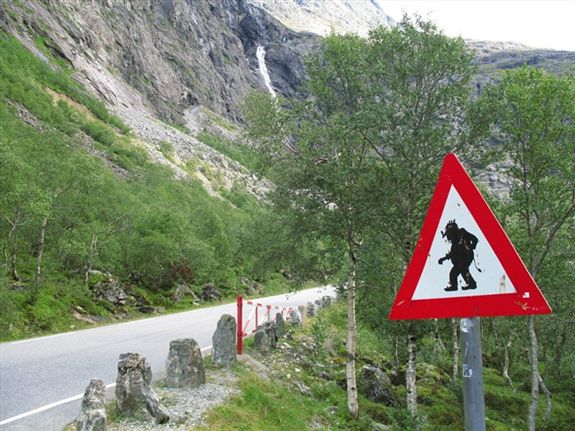
Maybe you don’t believe that trolls exist. But if you happen to be traveling on Norwegian roads, watch out. You just might see a “Troll Crossing” sign!

150216-troll-crossing-sign-in-norway
The exhibition runs through 17 April.

People and Trolls in Copenhagen, written by Tor Kjolberg

A Danish Furniture Icon

0

Børge Mogensen (1914–1972) started his career as a cabinetmaker in 1934. In 1936 he went on to study at the Copenhagen School of Arts and Crafts under Professor Kaare Klint before entering the Royal Academy of Fine Arts from where he graduated as an architect in 1942.

210116-borege-mogensen-portraitHe became head of design at FDB (the Danish co-op) in 1942 before establishing his own design office in 1950.

During his years at the Copenhagen School of Arts and Crafts the young Mogensen developed a close partnership with his mentor Kaare Klint and subsequently also assumed Klint’s approach to simple and functional furniture design. Later on Mogensen was to work as Klint’s teaching assistant at the Royal Academy.

Børge Mogensen was one of the most influential designers in shaping Danish Modern design and present day Fredericia’s founding designer from 1955 until his death in 1972. He found inspiration all over the world in his quest to create everyday objects that would endure for generations. Mogensen’s most recognised pieces were developed during his collaboration and friendship with Fredericia CEO Andreas Graversen.

Functional is the word which best describes Børge Mogensen’s design. The majority of his furniture was designed with industrial production in mind and is characterized by strong and simple lines. His true genius is to be found in his almost scientific analysis of the functionality of a piece of furniture.

Spanish chair
Spanish chair

A smaller but essential part of Mogensen’s work was the cabinetmade pieces, one of them being “the Hunting chair” from 1950 made by Erhard Rasmussen. A simple low easy chair with an oak frame from where the strong natural leather seat and back is stretched.

Fredericia oak sofa
Fredericia oak sofa

In 1948 Mogensen participated in MoMA’s international furniture competition ”low-cost furniture” together with his friend Hans J Wegner. Back home in Denmark, inspired by the exhibition, he experimented with plywood shells and fused the international modernist movement with his own design identity. Mogensen also found inspiration in ethnic arts & crafts, lithography and Japanese wooden carvings.

Shell chair 1949
Shell chair 1949

In 1950, the Copenhagen Cabinetmakers’ Guild’s exhibition presented furniture under the theme ”A Hunting Lodge”, in which Mogensen had, for the first time, designed furniture using a solid wood framework with saddle leather forming the seat and back. The methodology was inspired from medieval Spanish furniture construction, something that Mogensen would return to time and time again.

Sofa 1945
Sofa 1945

Other important pieces include “The Spokeback Sofa” designed in 1945, which with its lightness and simple, open construction differed from most sofas at the time, and “The Spanish Chair” from 1959, a low, robust easy chair.

Fredericia has had the rights to Børge Mogensen’s design since 2005.

Soborg Madklubben Vesterbro, Copenhagen

In 2014, Madklubben Vesterbro had 128.698 visitors, making the restaurant the most frequented in Denmark, according to the online booking portal, DinnerBooking. Søborg by Børge Mogensen was chosen as the dining chair for the popular restaurant.

Low chair
Low chair

The lacquered oak version of the chair with black steel frame lends an industrial expression, which fits into the rough, urban style of the restaurant. Most importantly, Søborg provides excellent seating comfort for enjoying a night out.

Feature image (on top): Photo Villy Lund

A Danish Furniture Icon, source: Felicia.com

A Room With a View

0

Norwegian photographer Knut Bry worked several years taking photos in Balestrand, a municipality and tourist attraction located by the Sognefjord in Norway. Writer Idun A. Husabø was working alongside Knut and has written a series of essays about people living in Balestrand.

The book was published by Skald (in Norwegian only).

260116-Balestrand-Norway-Knut-Bry-book-cover
One evening in the late 1990s Knut Bry photographed the view east from room 222 at Kviknes Hotel in Balestrand. After the photo was published in the column “A Room With a View” in the travel magazine Condé Nast Traveler, room 222 became especially popular.

260116-room-with-a-view-kviknes-hotel-balestrand-norway
“Relatively unchanged since the time of the Vikings, the country boasts some of the world’s most beautiful landscapes,” wrote Condé Nast Traveler.

260116-kviknes-hotel-balestrand-norway
Kviknes hotel is one of Norway’s largest tourist hotels. The hotel houses an extensive collection of artworks and antique and its view of the Sognefjord is mesmerising. So much so that the hotel has had its fair share of celebrity guests including several prime ministers, presidents, royal families and film stars.

It’s difficult to describe a place when you feel there are no words that do it justice. This is exactly the kind of effect Balestrand has on people.

260116-balestrand-map
Suzel, the managing director at Taber Holidays in Great Britain claims that “Balestrand is her favourite place in the world.” That’s a huge compliment from a woman who has travelled the width and breath of Norway, as well as all the other Scandinavian countries.

The mountains in the distance, the reflections of the sky and the water creating a special light have attracted artist from all over the world since the late 1800s. The paintings of these artists have been exhibited abroad and basically functioned as the first tourist brochures. In Kviknes Hotel you can experience historic photos and paintings og artists for whom Balestrand was the source of inspiration.

“Most people think the First World War broke out when Franz Ferdinand, the Austraian Crown Prince, was shot” Sigurd Kvikne, the hotel owner, told us, showing us a chair. “But it didn’t. It brought something in motion, there was an ultimatum and alliances were formed, so the tension grew over the weeks after the shooting. But where do you think the German Emperor, Kaiser Wilhelm II, was at the time the war broke out? He was here in our hotel, sitting on this chair.”

Even the threat of war did not stop this loyal and royal guest from going on his annual holiday to Balestrand.

A Room With a View, written by Tor Kjolberg