
The Inviable Lifestyle in Helsinki

Helsinki is a small city with really modern architecture, and it’s easy to get to know. Everything works well and the quality of life is really high. Learn more about the inviable lifestyle in Helsinki.

Some call the capital of Finland ‘the leafy egalitarian capital’, the reason probably being that Helsinki’s enviable lifestyle is the result of several factors. It is among the greenest and cleanest capitals in the world with a city hall that listen to its residents and constantly seeks to improve.

Most people in Helsinki speak English, so for visitors or expats it doesn’t feel like such a foreign country. However, one of my expat friends living in Helsinki said: “Just because people speak English, it doesn’t mean anything is written or spoken in English. In the beginning, my grocery runs took extremely long, since I constantly had to use the Google translate app camera function”.

The Inviable Lifestyle in Helsinki
The area around the central railway station might feel unwelcoming and quite unsafe at night.

Helsinki has a vast number of beautiful landmarks, all with their own captivating history. It doesn’t take very long to realize how much Helsinki has to offer, with its rich architecture that leaves you wanting to know more and more after learning the details of Finland’s incredible past.

You can transition from an enjoyable bicycle tour around the city to adventuring through its many surrounding islands (there are roughly 330 islands within the Helsinki archipelago) almost instantly. There is never enough time to do it all.

Helsinki is safe and egalitarian. Parents in Helsinki even leave their €1000+ Bugaboo strollers outside with the baby inside, because apparently the cold air is good for babies and can often help them sleep. But more importantly, people don’t fear their children getting kidnapped. Elementary school kids on public transportation travel alone.

However, the area around the central railway station is unwelcoming and feels quite unsafe at night. With the country now under far-right rule, Helsinki should strive to be a sanctuary that support foreign talent.

The Inviable Lifestyle in Helsinki
Helsinki has a vast number of beautiful landmarks. Above, the Olymic Stadium. Photo: Wikipedia

*********************************************
Related: The Nordic Paradox
*********************************************

While Finns can get their higher education for free, expats have to pay for their grad schools.

Basic healthcare is free, and even covers dental work. Most companies also provide additional private healthcare insurance at no cost to the employee. If health is wealth, then you might consider yourself a ‘rich’ person in Finland.

The Metro line in Helsinki is literally just a straight line going from one area to the next, so it is as easy as it gets. It is close and accessible for everyone, which is also good if you’re heading out to some of the coolest and most charming bars you are ever likely to visit.

The Inviable Lifestyle in Helsinki
When winter comes, darkness ensues as white walkers march down from the North, slaughtering all in their path, it gets a little dark and depressing. Or does it? Photo: Arttu Kokkonen/Visit Finland

Life in Helsinki has improved with the opening of major new transport infrastructure, pedestrian zones and several top-quality restaurants. On the other hand, retail flight has continued, and the high street has lacked the oomph that it once had. Quality of life has also in recent times been weighed down by too many roadworks.

Speaking of public transportation, there is no need to have a car in Helsinki. The public transportation here consists of trams, subways (called the Metro), and busses. It costs €60/month for an unlimited pass.

However, when winter comes, darkness ensues as white walkers march down from the North, slaughtering all in their path, it gets a little dark and depressing, and this is the time when socializing becomes very important! But there are many exciting things you can do to take your mind off of the misery, like walking on the sea, and skiing!”

No matter what company you work for, it’s the law to get five weeks of vacation in Finland, so you have plenty of time to escape the hash winter here.

This year, the boom and bust in the food and drink scene that followed the height of the coronavirus pandemic, has meant that many much-loved establishments have had to close down. However, bars and restaurants have been opening in vibrant neighborhoods such as Punavuori and Kaliio.

The Inviable Lifestyle in Helsinki
Helsinki Cathedral. Photo: Wikipedia

*****************************************
You might also like to read: Global Trends: How Different Cultures Approach Athletic Training Equipment
*****************************************

The expat community in Helsinki is extremely well organized, and incredibly helpful towards other expats. There are many groups that task themselves with supporting the community in various ways such as giving advice on finding employment, accommodation, and many other important things that can massively benefit people who have either just moved to Helsinki, or have lived here for many years.

Talking in general about Helsinki, my opinion is that the capital needs better retail and a more vibrant downtown. Much of the development, such as new residential areas and shopping centers, take place in the suburbs, with high rents and drives people and businesses away from the inner city.

The Inviable Lifestyle in Helsinki, written by Tor KJolberg

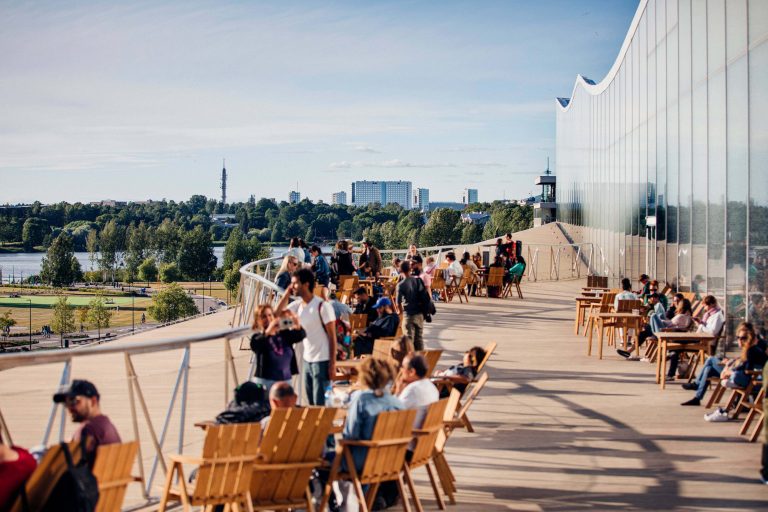
Feature image (on top): Oodi Library terrace © Jussi Hellsten/Visit Finland
Copenhagen Islands

The Australian architect Marshall Blecher came to Copenhagen to finish his architectural education. He lived in a houseboat in the Danish capital’s harbor environment – and there the idea for Copenhagen islands struck him.

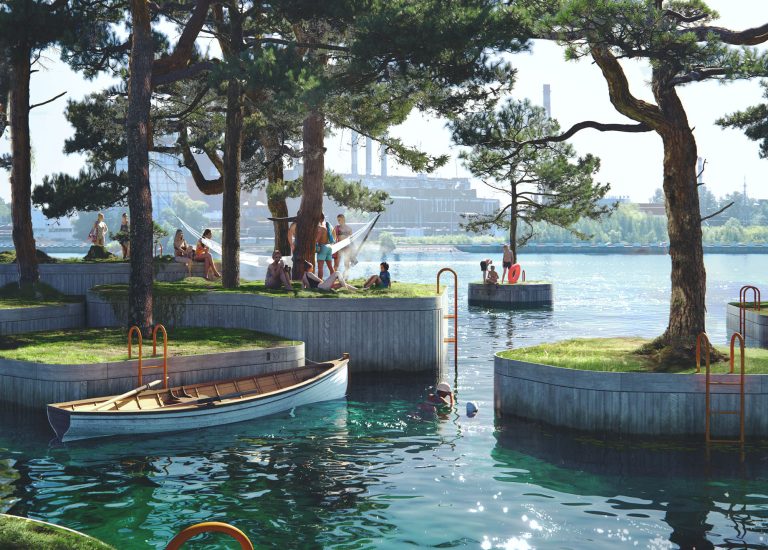
Blecher’s project introduced a new archetype of urban space to the city; a “parkipelago” of floating islands, open and free to be used by an increasing number of boaters, fishermen, kayakers, stargazers and swimmers.

Copenhagen islands
The first island, CPH Ø, is 20 square meters (215 sq. ft.) and was set out in Copenhagen’s harbor basin in July 2017

Together with Danish design studio Studio Fokstrot Blacher is essentially creating a network of small floating parks made from sustainably sourced and recycled materials in the city’s harbors.

****************************************
Related: Copenhagen’s New Recreational Hub
****************************************

Copenhagen Islands
Australian architect Marshall Blecher

The first island, CPH Ø, is 20 square meters (215 sq. ft.) and was set out in Copenhagen’s harbor basin in July 2017 and is financed with contributions from the Danish Arts Foundation and Havnekulturpuljen.  The island became immediately a popular destination for swimmers and kayakers.

Copenhagen Islands
The islands have become a popular feature in the harbor

According to a statement from Studio Fokstrot, the park provided a changing green space for visitors, “moving from place to place, hosting part of a photography exhibition, a series of talks and many seaside picnics.”

It became a popular feature in the harbor, and several new islands have been launched since CPH Ø was launched.

The islands reintroduce wilderness and whimsey to the rapidly gentrifying harbor with endemic plants, trees and grasses above and anchor points below providing a habitat for birds and insects, seaweeds, fish and mollusks. the islands bring a constantly changing, green space into the center of the city. The project also hints at a new type of climate resilient urbanism, inherently flexible in its use and only using sustainably sourced and recycled materials.

Marshall Blecher is from sunny Sydney, but Scandinavia is not just summer and sun. There are also winter storms with snow and ice. Therefore, the islands are towed in for winter storage in sheltered parts of the harbor.

***************************************
Related: Copenhagen is Growing
***************************************

Copenhagen Islands
The islands are constructed by hand in the boatbuilding yards in the south harbor of Copenhagen .

The islands are constructed by hand in the boatbuilding yards in the south harbor of Copenhagen using traditional wooden boat building techniques and are moved seasonally between underutilized and newly developed parts of the harbor, catalyzing new life and activity.

The project, which is supported by the city council, was awarded the Taipei International Design Award for public space and the award for social design. It was also a finalist in the Beazley Design Prize at the London Design Museum and was a finalist in the Danish Design Prize.

Copenhagen Islands, written by Tor Kjolberg

All images © Copenhagen Islands.

Arctic Autumn

“Autumn is the best time of the year”, say locals in Northern Norway about the Arctic autumn.

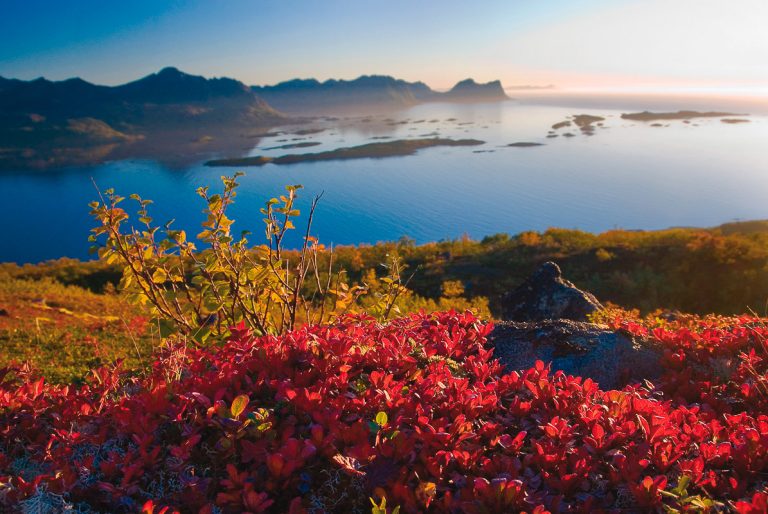
The locals love the flaming autumn colors dressing the landscape, the crystal waters, the fresh, nippy air allowing you to see far.

As evening darkness is back, the locals light candles, sit around the campfire and gaze up at the stars. And, out of nowhere, the Northern Lights appear.

Quiet at first, but soon rising to a grand overture to the Northern Lights season. The experience is so different from the mid-winter auroras.

Autumn days invite to hikes, to kayaking, boat rides and mountain biking – and dogsledding on wheels for natural speed.

The locals are crazy about wild berries and mushrooms. Restaurants serve crispy veg from northern farms, mutton flavored by summer herbs, succulent seafood from colder waters and the sought-after sweet berries.

Arctic Autumn
As evening darkness is back, the locals light candles and sit around the campfire. Photo: Rune Dahl

*******************************************
Related: Tourist Board of Northern Norway Adopts Sustainable Marketing Guidelines to Promote Responsible Tourism
*******************************************

A Local Favourite

Autumn is a cherished season by locals in Northern Norway, not only for its vibrant colors, but also for the quiet return of everyday life. This time of year is ideal for hiking amidst the stunning autumn palette, with clear waters and fresh air providing exceptional visibility. As the people of Northern Norway settle back into their routines after a busy summer, travelers have the unique opportunity to experience how Nordland residents live, and their way of life.

Arctic Autumn
Siw Sandvik, Leader of Communication and Marketing at the Northern Norway Tourism Board.

“Autumn in Northern Norway presents a feast for the senses, with dark evenings unveiling one of the season’s best-kept secrets: the Northern Lights”, according to Siw Sandvik, Leader of Communication and Marketing at the Northern Norway Tourism Board.

Differing from the mid-winter auroras, the end of September and beginning of October is usually the best time to experience the Northern Lights due to usually stronger auroras. The fall equinox creates a unique magnetic effect, enhancing aurora activity. Sandvik highlights this unique experience and the whole science behind it, inviting visitors to embrace the tranquility, culture, and rich natural offerings of the region during this time of year.

Experience the region’s natural wonders without the crowds

The campaign underscores significant investments aimed at enhancing the autumn experience. These include the bolstering of infrastructure for outdoor pursuits, the refinement of facilities for optimal Northern Lights viewing, and the introduction of innovative culinary experiences showcasing the region’s rich bounty of local produce.

“The campaign presents a multitude of experiences designed to fully embrace the unique offerings of the season. From the enchanting dance of the Northern Lights to the thrilling display of storm-watching along the rugged coast, each activity promises an unforgettable adventure”, Sandvik explains.

********************************************
Season, Weather and Climate in Northern Norway
********************************************

Arctic Autumn
Photo: Steffen Fossbakk

Autumn is the best time to see far

After a buzzing, hectic summer, nature slows down in autumn. The crisp air bites your fingertips. Summer haze and biting bugs have all gone; from a viewpoint, you can see a long way. In streams and lakes, life has quietened, so the water is crystal clear, shining in the low light. Autumn is a time for horizons.

Arctic Autumn
Photo: Kristoffer Vangen

Autumn is the best time to sense

Autumn is decay: crumbling undergrowth, withering flowers, seeds ripening and falling to the ground. Aspens turn lemony yellow, birches become ochre, and rowans range from red through orange and yellow to a striking violet shade. Then, on a stormy night, it all blows away. We are left with dry straws blowing in the autumn wind. Leaves on the ground are strewn with crystals from the first frost. Rowan berries await the birds’ feast.

Arctic Aurumn
Photo: Øystein Lunde

Autumn is the best time to look up

Timid at first, Aurora borealis makes her first small performances in August, striving to outdo the reds and golds of the sunset. By early September, Aurora can dance the night away for hours. Before the autumn equinox, the sun and the planet align harmoniously, opening doors for direct energy from the sun. Electric blue, baby pink, deep purple. The Northern Lights season is here, with more to come.

Arctic Autumn
Photo: Kristoffer Vangen

Autumn is the best time to put on your hiking shoes

The crisp autumn air invigorates. Paths lead into colorful forests, along clean and clear streams, up onto the moors and to impressive viewpoints. Those that allow you to see far, across clear lakes and fjords, to distant mountains or the endless horizon of the Atlantic. The sun sits lower, casting a golden hue over the landscape, or autumn rain drips off decaying vegetation. Take a deep breath and embrace it all.

Arctic Aurumn
Photo: Steffen Fossbakk

Autumn is the best time to have two desserts

Autumn is abundance. Colder waters make shells and crabs firm yet succulent. On tussocks in dry areas, lingonberries ripen into a rich ruby colour. This year’s lambs have roamed herb-filled mountain pastures and heather all summer. The reindeer have enjoyed a lazy summer on the coast. It’s time to harvest succulent carrots, small yellow turnips, new potatoes, currants, and fragrant herbs from the garden. It all becomes a feast for the palate.

Arctic Autumn
Photo: Ingvild Telle/Alta Museum/Visit Alta

Autumn is the best time to be together

When you haven’t seen dusk and darkness for a while, you welcome it. All of a sudden, it’s time for that feeling of “kos”; lighting candles, placing comforting tidbits on the table, and simply being together. Around café tables, candles flicker, conversations pick up, and the mood is mellow. Time to talk. Thethe loud craziness of summer is no more.

Arctic Autumn
Photo: Steffen Fossbakk

Autumn is the best time to be alone

Autumn evenings are deep blue. Perhaps you feel a bit blue too. It’s perfectly fine to sink into the sofa, gaze at the moon and stars, or watch the rain streaming down your window. Summer has faded, winter and darkness lie ahead. Time to think. To reflect. Autumn signifies change.

“Arctic Autumn” is a new campaign from the Northern Norway Tourism Board  The initiative highlights the mesmerizing shoulder season from September to November, showcasing the region’s stunning autumn scenery and distinctive experiences.

Arctic Autumn, based on a press release from the Northern Norway Tourism Board
Feature image (on top): Photo by Reiner Schaufler
All images © nordnorge.com, if not otherwise stated  

Swedish Researchers Diagnose Alzheimer’s at an Early Stage

0

There was huge public interest when, a few years ago, Oskar Hansson’s research group at Lund University, Sweden announced the discovery of blood-based biomarkers that could be used to diagnose Alzheimer’s disease. We now know that a simple blood test can discover the disease even before the patient has shown any symptoms. Read more about how Swedish researchers diagnose Alzheimer’s at an early stage.
 
It can take several years before Alzheimer’s disease breaks out so that family and friends notice it. For most people who get Alzheimer’s, poorer memory is the first symptom. Many receive the diagnosis at a late stage, when the disease has become a noticeable problem for themselves and their family.

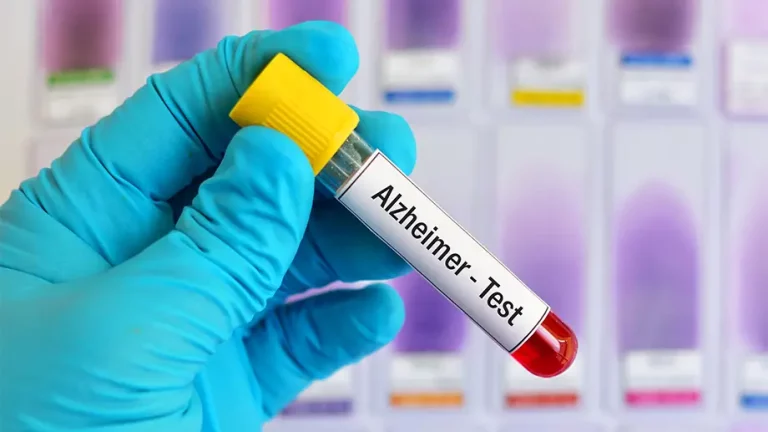
The commercially available blood test has now been trialed in routine healthcare. “The blood test showed about 90% reliability even in primary care. This may have major implications for all those individuals who seek help for memory loss and suspected Alzheimer’s,” say the researchers behind the study.

Swedish Researchers Diagnose Alzheimer’s at an Early Stage
Oskar Hansson, professor at Lund’s University.

However, much remains to be done before the method can be used on a large scale in primary healthcare. Now, Oskar Hansson’s Torsten Söderberg Academy Professorship in Medicine has been granted ten million Swedish kronor over a period of five years.

***************************************
You may also like to read Norwegian Nobel Prize Winners in Medicine 2014 Discover Our Inner Positioning System

***************************************

Last year, Oskar Hansson was awarded the ERC Advanced Grant worth EUR 2.5 million to further develop and advance his research project. “This type of stable, long-term funding is incredibly important for planning our research. It gives us new opportunities to really push this project forward and to conduct bolder research. It is also a huge honor, both personally and for my entire research team in Lund,” says Oskar Hansson, professor at Lund’s University.

Swedish Researchers Diagnose Alzheimer’s at an Early Stage
The commercially available blood test has now been trialed in routine healthcare.

Alzheimer’s disease affects one in five women and one in ten men over their lifetimes, but diagnostic tools remain cumbersome and often inaccessible in primary care. While specialist memory clinics often utilize advanced diagnostic methods such as PET scans and cerebrospinal fluid tests, there is a pressing need for simpler and quicker diagnostic tools for use in primary care.

The biomarker Plasma Phospo-Tau217 is the key behind the new blood test that can reveal Alzheimer’s. “If we look at the loss of good life quality in years, then dementia diseases are the most rapidly increasing cause. And, if we look simply at the economics, these diseases cost society a huge amount because the elderly people who are affected cannot look after themselves in the long run,” says Oskar Hansson.

The research into this innovative blood testing method began in 2019. The studies indicate that the blood test can detect Alzheimer’s-related changes before symptoms are evident and track progression as the disease advances.

Hansson is now in the USA to present the study at the Alzheimer’s Association International Conference. It starts today in Philadelphia. At the same time, the Swedish study on the blood test is published in the renowned Journal of the American Medical Association.

Twenty years ago, when Hansson started working in this field, methods were based on deciding who had the disease purely by their symptoms.

The study at Lund included 1,213 individuals experiencing mild memory symptoms, a potential early sign of Alzheimer’s. Of these, 515 were evaluated in primary care and 698 in a specialist memory clinic. These patients were tested using the blood test, and the test results were then confirmed with cerebrospinal fluid tests that can indicate Alzheimer’s disease pathology.

Swedish Researchers Diagnose Alzheimer’s at an Early Stage
The biomarker Plasma Phospo-Tau217 is the key behind the new blood test that can reveal Alzheimer’s.

It is sufficient to take the blood test only once. Hansson explains that the blood test is so safe that most patients can avoid more complicated examinations.

*********************************************
You may also like to read House for Several Generations to be Built in Aarhus, Denmark
*********************************************

FACTS about the blood test

The blood test shows positive or negative results for Alzheimer’s disease but can also indicate if the result is unclear and further investigation with a PET-camera or cerebrospinal fluid test is required for a more secure diagnosis.

The blood test measures the relationship between phosphorylated and non-phosphorylated versions of the tau217 protein, a biomarker in the blood that is specific to Alzheimer’s disease. Tau is a protein that stabilizes a structure in the cells called microtubules, which are important to the transport system within the cell. In Alzheimer’s disease, the tau proteins become hyperphosphorylated and then form neurofibrillary tangles, which are strongly linked to cognitive ability being affected. Phosphorylation means that one or more group of phosphates binds to the protein.

The study is underway at more than 20 health centers in south-west Skåne and the memory clinic at Skåne University Hospital.

Swedish Researchers Diagnose Alzheimer’s at an Early Stage
For most people who get Alzheimer’s, poorer memory is the first symptom.

FACTS about Torsten Söderberg Academy Professorship in Medicine

The Academy Professorship promotes internationally leading medical research by allowing holders to devote themselves to full-time research at a Swedish medical faculty for five years. The Torsten Söderberg Foundation donates ten million kronor to each Academy Professorship. Five of these run in parallel. The appointments are considered and decided by the Royal Swedish Academy of Sciences using a peer review process.

Swedish Researchers Diagnose Alzheimer’s at an Early Stage, written by Tor Kjolberg, based on a press release.

The Benefits of Employing Expats

The benefits of employing expats usually far outweigh the disadvantages. Expat employees typically bring a unique perspective to the workplace thanks to their exposure to best practices from more than one part of the world.

Sending employees abroad to work as expats is also a great way to kickstart your international growth strategy.

There are several reasons why companies may choose to hire expats (expatriates), individuals who are living and working in a country other than their home country. These reasons can vary depending on the specific circumstances and needs of the company.

Diversity, equity and inclusion (DEI) has become an integral part of today’s workplace. DEI is important for companies to consider, especially those employing diverse people from all over the world.

Companies use expatriate employees as part of their global expansion strategy to reap benefits such as business consistency, expertise continuity, and overcoming talent shortages. I discuss the advantages of using expats in this article.

The Benefits of Employing Expats
Companies use expatriate employees as part of their global expansion strategy. Photo: Expatica

**********************************************
Related: Insider Tips and Advice from Expats Living in Scandinavia
**********************************************

Specialized Skills and Expertise

Expats often bring specialized skills, expertise, and experiences that may be difficult to find locally. Certain industries or roles may require specific technical knowledge or experience that is more readily available in other countries.

But when expats move to a new country, it can affect them both professionally and personally. They must deal with issues of finding a home, schools and communicating with healthcare professionals in their new country. Cultural differences and nuances can make this process especially daunting. Therefore, it’s critical to ensure your top talent is armed with the right information to help prepare them for their move.

Consistency

Expatriates bring local office culture and processes to a new international location, helping ensure workplace consistency across markets. Since expats are existing employees, they offer deeper business understanding – a crucial component when establishing a new office in a new country.

Expats also offer greater protection for intellectual property safekeeping; sharing business secrets with new international employees could compromise a business’s competitive edge.
An expat working in a foreign office also maintains communication that is consistent with other markets where the business is located. An open line of communication with an expat in a new market makes it easier for domestic teams to do business with their foreign operation.

The Benefits of Employing Expats
Talent shortages are among the major issues facing companies. Photo: Ecovis International

**************************************************
Related: Conquering Challenges as an Expat in Scandinavia
**************************************************

Global Perspective and Diversity

Expatriates can provide a diverse perspective and enhance cultural diversity within the organization. Their international background and experiences can bring fresh ideas, different approaches to problem-solving, and a broader understanding of global markets.

Solving Talent Shortages

Talent shortages are among the major issues facing companies. According to recent statistics, 75 percent of businesses ranking leader and key talent shortages as their top challenge. With this in mind, it becomes more efficient to relocate top talent rather than spend an extended period searching for the right talent locally.

Knowledge Transfer and Training

Expats can facilitate knowledge transfer by sharing best practices, industry standards, and skills from their home country or previous experiences. They can also train local employees and help in developing the skills of the local workforce.

Bridge Language Gaps

On a more practical level, expat employees can help businesses bridge language gaps, as they are likely to be multilingual. Data has shown that companies that invest in ethnic and cultural diversity are more commercially successful than those who fail to see the benefits of DEI.

Company Expansion and Global Presence

When a company is expanding its operations into new international markets, expatriates with knowledge of the company’s culture, processes, and values can help establish a foothold and ensure consistency in operations across different locations.

The Benefits of Employing Expats
On a more practical level, expat employees can help businesses bridge language gaps. Photo: InterNations

How to support diverse expats

Companies seeking to fully reap the benefits of having an expat employee on their staff will, however, need to ensure they provide them with comprehensive support.

Moving to a new country can be a stressful yet exciting experience and to certify that expats settle well into their new home, companies must provide information, pre-departure training, and local as well as ongoing support. It is also essential that those who will be managing expat employees are informed on DEI in each destination and how this may affect the employee’s move.

Another key factor for businesses to consider is the repatriation process, which can sometimes be equally jarring for expats.

The Benefits of Employing Expats, written by Tor Kjolberg

Feature image (on top): © RWE – Remote Work Europe

Swedish Architects with Nobel’s Stamp of Approval

Swedish architects Ahrbom and Partner has set its mark all over Stockholm with the Court of Justice, the KTH Library, theatres and university buildings on their list. Read more about the Swedish architects with Nobel’s stamp of approval.

Ahrbom and Partner was founded in 1990 but has its origins and working methods in a tradition stat stretches back to the 1960s. Since the beginning, they have worked long-term and purposefully and are today one of Sweden’s leading architectural firms.

Swedish Architects with Nobel’s Stamp of Approval
“We enjoy creating unexpected solutions by uniting old and new, and are constantly challenging ourselves by taking on new kinds of people,” said founding partner Per Ahrbom.

A major focus has been to build with sufficiently high quality, both conceptually and technically, to give the buildings the conditions for a long life. Ahrbom and Partner believe that this is sustainability in the deepest sense of the word.

Swedish Architects with Nobel’s Stamp of Approval
Architect Per Ahrbom’s drawing of the renovated library building from 2000 – 2002. Image: Architect Ahrbom & Partner

In 2016, a renovation and transformation of the KTH Library were carried out in the Library Hall, among other areas. Per Ahrbom was once again engaged to tackle the challenges of the modern era. The tall bookshelves were dismantled and moved to other parts of the library. The Book Hall was renamed the Library Hall and made space for social areas and opportunities for group work. The round furniture also serves as low bookshelves.

Swedish Architects with Nobel’s Stamp of Approval
Between 2000 and 2002, the KTH Library underwent extensive renovations and extensions.

Ahrbom & Partner has extensive experience in restoring and developing buildings within Stockholm city center. By combining old traditions and new impulses it has been involved in some of the most culturally important projects in Stockholm. “We enjoy creating unexpected solutions by uniting old and new, and are constantly challenging ourselves by taking on new kinds of people,” said founding partner Per Ahrbom.

*****************************************
You might also like to read: The Tallest Timber Building in Sweden
*****************************************

Swedish Architects with Nobel’s Stamp of Approval
Ahrbom & Partner currently consists of around fifty architects, interior designers, engineers, communicators, project economists and receptionists.

The office is located in Gamla Stan, Stockholm and currently consists of around fifty architects, interior designers, engineers, communicators, project economists and receptionists. They are as many women as men, with backgrounds from more than ten different countries and with an age range of sixty years. The diversity in the office lays the foundation for the dynamic and inclusive climate that Ahrbom and Partner strives for.

Swedish Architects with Nobel’s Stamp of Approval
The Court of Justice, Stockholm.

Royal Opera, The Stockholm City Theatre and the Court of Justice are all represented in the portfolio, in addition to educational institutions such as the Royal Institute of Technology and the Stockholm School of Economics.

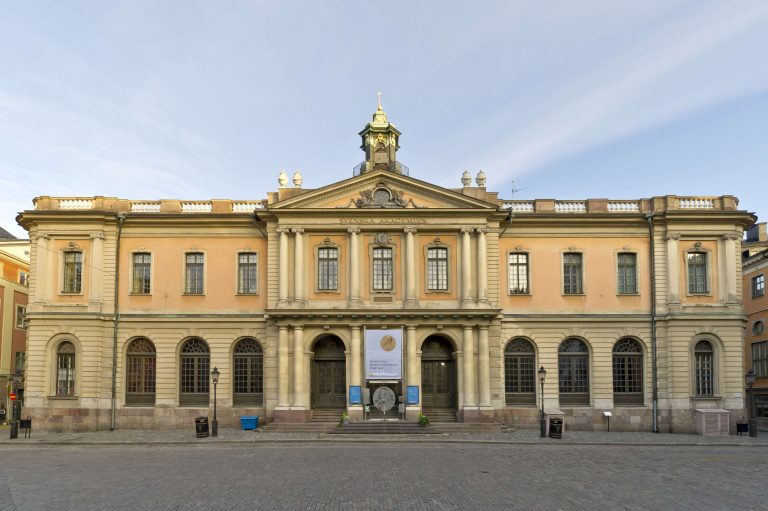
The Nobel Museum opened in the spring of 2001 for the 100th anniversary of the Nobel Prize. Its name was changed to Nobel Prize Museum in 2019, in conjunction with Erika Lanner becoming the museum’s new director. The building was originally the Stock Exchange Building, erected  between 1773 and 1778 from construction drawings by Erik Palmstedt. A building extension was added in 1980 by Per Ahrbom. The stock exchange moved out of the building completely in 1998.

Swedish Architects with Nobel’s Stamp of Approval
The University of Lund

Commissioned by the Swedish Property Agency, Ahrbom & Partner was recently given the honor of being the responsible architects for the upcoming renovation of the University of Lund.

Swedish Architects with Nobel’s Stamp of Approval , written by Tor Kjolberg

Feature image (on top): Nobel Prize Museum, Stockholm.

Summer in Sweden – the Locals’ Favorites

Who knows Sweden best? Evidently, it is the local population, those who live and work where we holiday. We asked four people from different areas about their best summer tips. Here are local tourism experts’ best tips for a summer holiday in Sweden. Summer in Sweden – the locals’ favorites.

Cycling tours along the Göta canal, surfing on the west coast or a visit to a historic Finn farm are some of the local tips for a summer in Sweden. Here are summer holiday tips from some Swedes:

Finnish forest experiences and cultural history just across the border

Emelie Röjeskog works as a destination developer in Torsby municipality in Värmland, and for her, Finnskogen is at the top of her bucket list this summer:

“If I were to recommend two Finnish forest favorites for the family, it would be Kvarntorp and Mattila. At both locations the whole family can participate in activities. In Mattila, several adventures await in the forest, with a guide or on your own. At Kvarntorp you can experience life from earlier times in beautiful surroundings, and you can get up close to the animals. Don’t miss tasting the Finnish forest dish motti and pork! A must for many locals in the summer”, says Emelie.

Summer in Sweden - the Locals' Favorites
Emelie Röjeskog from Torsby recommends experiences in Finnskogen.

Visit the Finn farm Kvarntorp and experience a bygone era

A winding and hilly gravel road takes you to the Finn farm Kvarntorp in Lekvattnet on Finnskogen in the Torsby area. Here you can experience sheep, horses, cows and chickens, and learn more about life on the farm from the farm boy Rolf. For those who really want to feel the wings of history, the traditional Finnish forest dish motti with pork is served, and for those who want to go for something a little more familiar, waffles and coffee are also available.

You can also learn more about Klara at Kvarntorp, the last owner of the farm, Klara Persson Liukkoinen, was a strong-willed and energetic woman. She ran forestry and agriculture on the farm and was the first to acquire a tractor in the area. After her death in 1950, the farm became a memorial and visitor farm for the Finnish forest culture. If you want to learn more about the Finnskogen, a visit to the Torsby Finnskogen Center can also be recommended.

Find peace and silence in Mattila – in the border area between Sweden and Norway

Summer in Sweden - the Locals' Favorites
Idyllic surroundings in the Finnskogen. Photo: Tommy Pedersen.

Do you want to learn more about Forest Finns’ mysticism and culture? Then Mattila is the place to visit. Enjoy nice hiking trails, experience the cultural reserve Juhola Finngård, Jussi Kajsa’s residence and life story, or the wonderful “Vita Stone” in Mattila, which is said to have healing powers. Download the Vägvisare Mattila app and discover the area on your own, or order your own Finnish forest guide. Mattila is located in Röjdåfors in the Torsby area.

Active nature experiences at lake Hjälmaren

Summer in Sweden - the Locals' Favorites
Sanna Rosell is thriving at Lake Hjälmaren in the summer. Photo: Visit Örebro.

Travel blogger Sanna Rosell (34), who lives in Örebro, singles out lake Hjälmaren as her summer favourite.

“Lake Hjälmaren really offers wonderful summer excursions in Örebro. One of my favorites is cycling around Hemfjärden and taking a break at the summer cafe along the way, kayaking and camping on uninhabited islands, and taking a tour boat to Vinön. This provides summer memories that show the best of the water city of Örebro”, says Sanna.

On two wheels around Hjälmaren

The cycle tour Hemfjärden stretches 38 km around lake Hjälmaren. On the round trip there are many different sights along the way, such as nature reserves, historic sites and fantastic views over the water. Halfway on the round, there is a cozy summer cafe by Norra Ässundet, where you can have a coffee or lunch and swim at the pier nearby.

Boat trip on the lake

Summer in Sweden - the Locals' Favorites
Paddling trip on Hjälmaren. Photo: Hanne Marit Tobiassen

A boat trip on Lake Hjälmaren offers idyllic summer surroundings and opportunities for delicious baths. There are daily boat trips from Hamnbron, right in the center of Örebro. Join a short lunchtime tour with sightseeing or take a longer tour, where you also get to experience the Hjälmaren canal. If you want a better meal, jump off at Katrinelund. Katrinelund Gästgiveri, which is located right next to Hjälmaren’s beach, offers fantastic food and accommodation in scenic surroundings. Here you can take a morning bath from the jetty and enjoy a better meal in the White Guide restaurant Sjökrogen or at the guest house’s other restaurant, Verandaen.

Surfing and cycling along Sweden’s riviera

Catharina Edin from Varberg is one of Sweden’s best kite surfers. She has won two WC bronze medals, and when she is at home in Halland this summer, she uses the opportunity to go on bike rides around beautiful Varberg and visit new bars and cafes.

Summer in Sweden - the Locals' Favorites
The Kattegattleden cycle path, which runs from Gothenburg to Helsingborg, stretches through Halland. Photo: Felix Mostrom and Christopher Lanaway

“I cycle a lot on country roads on the nice roads around Varberg. If I can, I go out to Åkulla and stop at Strömma Farmlodge for a coffee. I think it’s great fun to come home and experience Halland by bike. And another thing I like is that there are so many more and better restaurants and cafes in Varberg these days. It almost feels like Copenhagen. It’s cool that several places in Varberg have been opened by girls my age. The Glou-Glou wine bar, located in the harbor, is one of them. It’s relaxed and really good”, says Catharina.

Perfect surfing conditions and long sandy beaches

In the seaside resort of Varberg lies one of Sweden’s best surfing beaches, the horseshoe-shaped Apelviken. For anyone who enjoys surfing, kiting, SUP and other wave activities, this is the place to go in the summer. The town of Varberg is widely known for windsurfing, and as soon as you arrive in Apelviken, you almost feel California vibes. Surfing culture is fully cultivated here, and in the summer thousands of surfers from home and abroad come to experience Sweden’s number one surfing city.

The two most popular beaches in Varberg are Apelviken and Läjet, and it was here that the Swedish wave sport first started in the 1980s. In addition to excellent conditions for surfing, kitesurfing and windsurfing, there are more wind directions and more excitement than you might think. And everything is framed by surf shops, a 5-star campsite, cottage town and restaurants. A smart tip for beginners is to rent equipment and attend surf and kite schools to learn the basics.

Varberg can compare with all other surfing spots in Northern Europe, if you ask me. A good day at the beach in Varberg offers really good kitesurfing. If you want to combine surfing and kiting with accommodation, Villa Surf Garden is the place. It is a small oasis, a well-kept bed and breakfast with pool and jacuzzi and everything. And then they have electric bikes that you can take down to the beach”, says Catharina Edin.

Experiences along Sweden’s blue ribbon, Göta canal

Alf Mölleryd from the border region of Western Sweden is 67 years old and lives in the town of Sjötorp by the Göta canal. He likes to cycle on long and short trips along the canal in the summer and recommends visitors to take the trip.

Summer in Sweden - the Locals' Favorites
Alf takes tourists on a bike ride along the Göta canal. Photo: Visit West Sweden.

“I would like to advise on different types of cycle tours that take you around Sjötorp and show you what the area has to offer. A bike ride along the Göta Canal, including experiences with locks and boats is perfect for the summer holidays. A nice trip is to cycle from Sjötorp to Torsö and take the ferry out to car-free Brommö, which offers wonderful sandy beaches”, says Alf.

Göta canal – Sweden’s blue ribbon

Göta Canal, which stretches from Sjötorp in the west to Mem in the east, is one of Sweden’s biggest construction projects of all time. The canal runs through the landscape between Vänern and the Baltic Sea via the Vättern, and winds its way through the landscape like a blue silk ribbon. Göta Canal has 58 locks, starting in Sjötorp, and along the canal there are charming cafes, cozy B&Bs, beautiful nature and the occasional refreshing ice cream!

One of the best ways to experience Göta Canal is by bicycle. The old construction road that runs along the canal is well equipped for cycling. Along the way you can enjoy the view of the canal and the boats gliding past. Best of all, you don’t have to worry about car traffic – the 87 km long road is completely car-free.

Read more about the Göta canal here.

Summer in Sweden - the Locals' Favorites
Beautiful Göta Canal. Photo: Visit Sweden.

Meet the locals

In Western Sweden, it is easy to get in touch with the local population through the Meet the locals concept. Here, local residents of western Sweden make themselves available and organize various activities for tourists. Join a guided tour in a vintage car, go on a garden walk, cuddle with the animals on a farm or have a coffee out in nature – all in the company of someone who knows the place, its history and culture. Read more about Meet the locals here.

Summer in Sweden – the Locals’ Favourites, based on a press release from Opplev Sverige

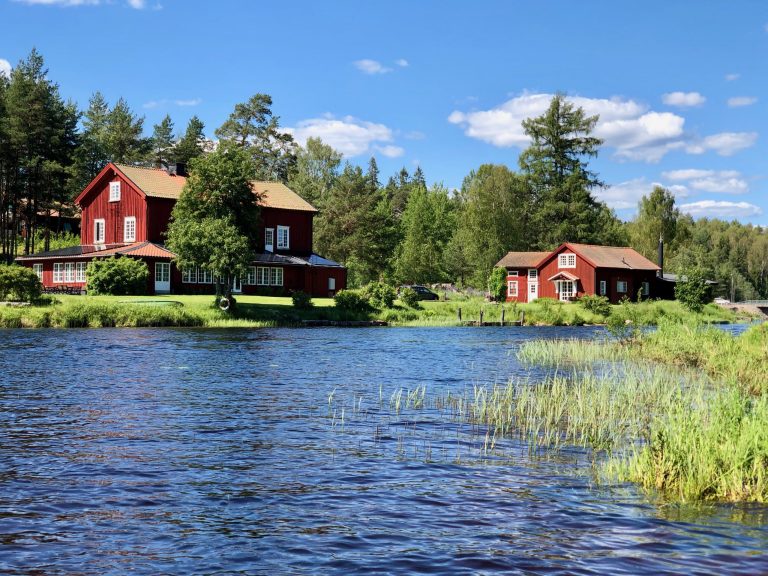
Feature image (on top) Torsby Lodge © Opplev Sverige

A Travel Guide to All the Places Edvard Munch Lived and Loved

The book “My Castles” (Norwegian text only), is a travel guide to all the places Edvard Munch lived and loved. It was released in 2018, contains 124 pages and is illustrated throughout.

Edvard Munch often referred to his various residences as “castles” or “châteaux”, and with his own words as a backdrop for several of his paintings. The Munch Museum has issued a comprehensive overview of his many “castles” and haunts in Norway.

A Travel Guide to All the Places Edvard Munch Lived and Loved
In this book you are taken to all the places Munch lived or nurtured a close relationship with.

“I feel very well in my “chateau” when I otherwise feel at ease”, wrote Edvard Munch in a letter from 1899. “I sit in the garden or lie in a hammock, and I always have an unpainted canvas conveniently near me”, he continued.

A Travel Guide to All the Places Edvard Munch Lived and Loved
‘The Sun’ by Edvard Munch. (Oslo University)

In this book you are taken to all the places Munch lived or nurtured a close relationship with – Oslo, Løten, Fredrikstad, Vågå, Åsgårdstrand, Kragerø, Jeløy and Ramme. Munch’s mother’s family came from Fredrikstad, and his father’s family came from Vågå.

Edvard Munch was born on the farm Engelaug Østre in Løten on 12 December 1863. At birth he was so weak that a priest was sent so that he could be baptized urgently. Before he was one year old, the family moved to Kristiania (now Oslo), but the artist visited Løten repeatedly during his life. The Munch Center in Løten is located at the Klevfos Industrial Museum at Ådalsbruk.

A Travel Guide to All the Places Edvard Munch Lived and Loved
Personage Ullinsvin at Vågå.

Edvard drew inspiration for several central motifs from Åsgårdstrand and Kragerø, and lived for periods on Jeløy, in Moss and at Ramme gård in Hvitsten.

The book provides an overview of the places where Munch stayed a lot and felt connected to. He constantly returned to his roots in Løten, Fredrikstad and Vågå, and he established new ties to Åsgårdstrand, Kragerø, Jeløy, Hvitsten and Ekely in Oslo.

A Travel Guide to All the Places Edvard Munch Lived and Loved
‘Dance of Life’ by Edvard Munch.

Through text and pictures, this book tells about the time he spent at his many haunts, while also showing how some of his most famous motifs are connected to the various places.

“Mine slot” is richly illustrated with Munch’s own artworks and sketches, photographs and photographic self-portraits. In addition, it contains information about viewpoints and experiences connected to each of Munch’s places, illustrated with new and historical photographs.

A Travel Guide to All the Places Edvard Munch Lived and Loved
From Ekely in Oslo.

When Munch bought the old Swiss villa at Ekely in Oslo in 1916, he mestablished himself permanently in the capital for the first time. He lived there until his death. It was his last chateaux.

A book on Edvard Munch in English I highly recommend is MUNCH Through New Eyes by Haakon Mehren, published by Orfeus Publishing

A Travel Guide to All the Places Edvard Munch Lived and Loved, written by Tor Kjolberg

Feature image (on top): From Holmestrand

Hope and Ambition in Stockholm

In the past few months, the levels of gang-related crime have gone up and the housing market has wobbled. However, hope and ambition in Stockholm remain strong.

According to Statistics Sweden, the Swedish housing market is now struggling, amidst falling property demand and construction activity, coupled with an ailing economy.

During 2023, the national house price index fell by 6.31%, worse than the prior year’s decline of 3.73% and in stark contrast to y-o-y increases of 15.78% in 2021, 10.26% in 2020, and 3.9% in 2019. Last year was the country’s worst showing since 1993. When adjusted for inflation, house prices declined by a huge 11.24% in 2023.

Hope and Ambition in Stockholm
From June, Stockholmers could again, after a lengthy renovation enjoy Vattentorget, a section of the city’s water-lock area connecting the old town with Södermalm in the south. Illustration: DBOX Foster Partners

Sweden now has the highest crime rate in Northern Europe, according to a study compiled and released by the NGO Global Initiative (GI). The study, claims that Sweden had a 4.7 rating out of 10 on its Organized Crime Index, and is the highest of eight Northern European countries, which includes the Scandinavian region and the Baltic states.

The conflict is largely based in the Stockholm region and involves a notorious gang leader known as the Kurdish Fox, real name Rawa Majid, along with his rivals.

Hope and Ambition in Stockholm
According to Statistics Sweden, the Swedish housing market is now struggling, amidst falling property demand and construction activity, coupled with an ailing economy. Photo from Rinkeby – Wikipedia.

Luckily, change could be afoot. The police now have a remit that incorporates national cooperation, which many see as a promising strategy.

Organized crime poses a serious threat to the Swedish society. The deadly violence and the criminal financial structures used by organized crime actors, and parallel social structures at local level, affect the safety and security of Swedish citizens. Also, the impact of organized crime damages citizens’ trust in public institutions. The strategy calls for action and outlines priorities, measures, and objectives, towards further resistance against organized crime.

Hope and Ambition in Stockholm
Sweden now has the highest crime rate in Northern Europe. Photo: Forsvarsmakten/Alexander Karlsson

House prices are ticking steadily back upwards and those hoping to sell are setting their sights on further recovery the next few months.

Meanwhile, the city, which is run by a green-red coalition, will enact the world’s first fossil fuel-free zone later this year, making it a pioneer of implementing robust, on-the-ground climate policies. In the spring of 2023, Stockholm was adopted as one of 100 selected climate cities in the EU. These cities will strengthen the work and contribute to faster transition throughout the union. This is done, among other things, by the city clarifying activities, investments, and collaborations needed to achieve climate neutrality in an EU-level climate contract. This also creates good opportunities for developed European cooperation.

Hope and Ambition in Stockholm
North of Brommaplan and south of Bromma Airport, Riksbydalen is emerging.

From June, Stockholmers could again, after a lengthy renovation enjoy Vattentorget, a section of the city’s water-lock area connecting the old town with Södermalm in the south. Vattentorget opened officially on 6 June at Slussen, a new social place for Stockholmers to gather on the waterside.

Stockholm is a growing city. In 2025, its population is expected to surpass the one million mark. Though housing stock is tight, plans for an entirely new neighborhood are in the works near Bromma Stockholm Airport, a 20-minute drive northwest from the city center. Bromma is one of Stockholm’s most attractive areas, known for its neighborhoods of large villas in garden cities. North of Brommaplan and south of Bromma Airport, Riksbydalen is emerging. When fully developed, the mixed-use neighborhood will house approximately 4,000 new homes, schools, parks, offices and more.

Hope and Ambition in Stockholm
In the spring of 2023, Stockholm was adopted as one of 100 selected climate cities in the EU.

Optimism is high in Stockholm. Smart new restaurants and shops are springing up to capitalize on the good vibes and returning spending power in the capital. Hope and ambition in Stockholm remain strong.

Hope and Ambition in Stockholm, compiled by Tor Kjolberg

An Expat Guide to the Norwegian Healthcare System

0

Norway is renowned for its high quality of life, and the Norwegian healthcare system is a significant contributor to this reputation. For expatriates, understanding the healthcare system is very important so they can receive the medical care they need while living in the country. Here’s  an expat guide to the Norwegian healthcare system.

This guide covers everything you need to know about the healthcare system in Norway, from registering for healthcare to understanding the costs involved.

Step One—The Relocation

Relocating to Norway involves meticulous planning and preparation. One of the key steps is ensuring a smooth move, which is why many expatriates choose to hire experienced international moving pros. The right professionals can handle the complex logistics of your move, take care of your valuable possessions, and allow you to focus on settling into your new home before tackling bureaucracy and the healthcare system.

Overview of the Norwegian Healthcare System

The Norwegian healthcare system is publicly funded and operates on principles of universal access, decentralization, and free choice of provider. Designed to provide comprehensive healthcare services to all residents regardless of their financial situation, the system is primarily funded through taxation.

An Expat Guide to the Norwegian Healthcare System
Designed to provide comprehensive healthcare services to all residents regardless of their financial situation, the Norwegian health care system is primarily funded through taxation. Photo: Internations.

This means most healthcare services are free at the point of use, although some out-of-pocket expenses exist. These expenses are kept relatively low, ensuring that healthcare remains affordable for everyone. The system also emphasizes preventive care and early intervention, contributing to better overall public health outcomes.

What’s more, Norway’s healthcare system is known for its high standards and efficient services, making it one of the best in the world.

Registration for Healthcare Services

When you move to Norway, the first step in accessing healthcare services is registering with the National Registry (Folkeregisteret). This process involves obtaining a personal identification number (personnummer), which is essential for accessing all public services, including healthcare. Once registered, you will be assigned a general practitioner (GP) or fastlege, who will serve as your primary point of contact for medical issues.

A happy couple signing up for the Norwegian healthcare system
Make sure to register with the National Registry. Photo: RDNE Stock project/Pexels

How to Register

To register, you need to visit the National Registry Office with identification, proof of address, and other relevant documents. After obtaining your personal identification number, you can choose a GP through the Norwegian Health Economics Administration (HELFO) website. If necessary, you have the option to change your GP up to twice a year.

Primary Healthcare Services

In the Norwegian healthcare system, the GP plays a central role. They handle routine check-ups, preventive care, and referrals to specialists. If you need medical attention, your first step is to contact your GP, who can then refer you to a specialist or hospital if necessary.

Services Provided by GPs

GPs in Norway provide a range of services, including routine health check-ups, prescriptions for medication, referrals to specialists, and preventive care such as vaccinations. They are also important because:

  1. They act as gatekeepers to the rest of the healthcare system, ensuring patients receive the appropriate care.
  2. GPs are also responsible for managing chronic conditions, offering lifestyle advice, and conducting regular screenings for common health issues.
  3. They provide guidance on mental health concerns and can coordinate care with mental health professionals when necessary.
  4. The relationship with your GP is pivotal, as they are your primary contact within the healthcare system and play a crucial role in your overall health management.
An Expat Guide to the Norwegian Healthcare System
GPs in Norway provide a range of services. Photo: New in Norway

Specialist Care and Hospitals

If your GP determines that you need specialized care, they will refer you to a specialist. Norway has a wide range of specialists covering all medical fields, and you may be referred to either a public or private specialist, depending on your needs.

Public vs. Private Specialists

The public healthcare system covers public specialists, but you may face longer waiting times. On the other hand, private specialists generally offer faster access but come with higher out-of-pocket costs. Public specialists are well-qualified and provide high-quality care, though the waiting period can be challenging for those needing urgent attention.

While more expensive, private specialists often have shorter wait times and may offer more flexible appointment scheduling. Patients sometimes choose private care to avoid delays, especially for non-emergency treatments or elective procedures. It’s important to weigh the costs and benefits of each option to make an informed decision based on your healthcare needs and financial situation.

Hospitals and Emergency Care

Norway has a network of hospitals that provide a wide range of services, from emergency care to specialized treatments. In case of an emergency, you can go directly to the emergency room (legevakt) or call the emergency number (113).

Types of Hospitals

Local hospitals provide general medical services, while regional hospitals offer more specialized treatments. University hospitals conduct research and provide highly specialized care.

An Expat Guide to the Norwegian Healthcare System
The public healthcare system does not cover adult dental care in Norway. Photo: Life in Norway

Dental Care

The public healthcare system does not cover adult dental care in Norway. Children under 18, however, receive free dental care. Adults must pay for dental services, although subsidies are available for certain conditions and low-income individuals.

Dental Services

Dental services in Norway include routine check-ups, fillings and extractions, orthodontics, and emergency dental care. Both public and private dental clinics provide these services.

Mental Health Services

Mental health is taken seriously in Norway, and various services are available to support mental well-being. These services range from counseling and therapy to inpatient care for more severe conditions.

Accessing Mental Health Services

You can access mental health services through a referral from your GP, or in some cases, self-referral without a GP’s recommendation is possible. Private mental health services are also available for those seeking immediate care, though they come at a higher cost.

Costs and Insurance

While the Norwegian healthcare system is publicly funded, there are some costs associated with healthcare services. However, there are annual caps on out-of-pocket expenses to ensure that no one pays an excessive amount for healthcare.

Out-of-Pocket Expenses

Though both are subsidized, there is typically a small fee for GP visits and higher fees for specialist visits. The public system partially covers prescription medications. Annual caps on out-of-pocket expenses help manage these costs.

Health Insurance

Most residents rely on the public healthcare system, but some expatriates opt for private health insurance to cover additional services such as private specialists or faster access to care.

An Expat Guide to the Norwegian Healthcare System
Register with the National Registry as soon as possible to access healthcare services. Photo: Accenture

Tips for Navigating the Norwegian Healthcare System

To make the most of the local healthcare system, remember the following:

  • Register with the National Registry as soon as possible to access healthcare services.
  • Familiarize yourself with your rights and responsibilities within the system.
  • While many healthcare professionals speak English, learning some Norwegian can help in communication.
  • Keep a list of emergency numbers handy, including your GP’s contact information and the emergency number (113).
  • Be aware of the annual caps on out-of-pocket expenses to plan your finances accordingly.

An Expat Guide to the Norwegian Healthcare System – To Summarize

The Norwegian healthcare system is designed to provide comprehensive and accessible medical care to all residents. By understanding how the system works and taking the necessary steps to register and access services, expatriates can ensure they receive the healthcare they need while living in Norway. From primary care and specialist services to emergency and mental health care, the system is structured to support the well-being of its residents.

An Expat Guide to the Norwegian Healthcare System
Khalid Duncan

An Expat Guide to the Norwegian Healthcare System, written dedicatedly for Daily Scandinavian by Khalid Duncan. Khalid is an expat in Norway with firsthand experience navigating the Norwegian healthcare system. With a background in healthcare communication, he specializes in creating informative and SEO-friendly content to help fellow expatriates. Khalid enjoys sharing practical advice and insights to make transitioning to life in Norway smoother and more manageable.

Feature image (on top) © Norden.org/Christiaan Dirksen