
Discover the Beauty of Scandinavia with These Unique Tours

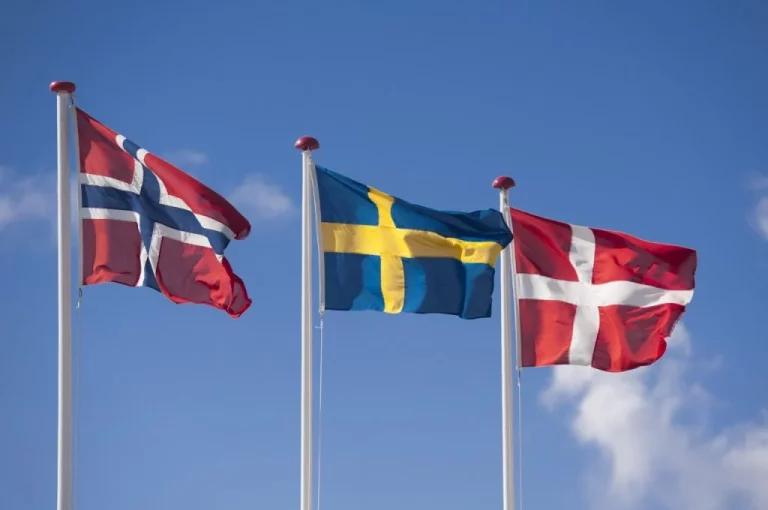
While the name does sound like its own country, Scandinavia is not an actual place, but rather a subregion of Northern Europe, with strong historical, cultural and linguistic ties between its constituent peoples, namely those of Denmark, Finland, Iceland, Norway and Sweden.[1] These five European countries form a group that has affinities with one another, and the region is sometimes also referred to as the Scandinavian Peninsula. Read on and discover the beauty of Scandinavia with these unique tours.

Regardless of which of these incredible places you’re looking to visit, it’s never a bad idea to read up on its history and know a little bit about the culture as well as the currencies used there. Today’s article will focus on the unique life and way of living in Iceland, defined by its dramatic landscape covered by volcanoes, geysers, hot springs and lava fields. A once-in-a-lifetime experience and a bucket-list item for sure.

Stay Bundled Up

For the fact that Iceland, and Reykjavik in particular, is so cold, the people of Iceland sure do love to be outdoors. Perhaps they’ve gotten used to the weather or maybe the sights are that spectacular, well worth being dressed head to toe in insulating gear. Whatever the case may be, a Scandinavian tour & activities offered here are what dreams are made of. Picture the contrast of black sandy beaches against crystal-clear waters and floating icebergs that decorate the landscape while you enjoy a trip to the Jökulsárlón Glacier Lagoon. This is a spectacular area that includes Diamond Beach located near the Glacier Lagoon, receiving its name thanks to the floating icebergs that look like giant diamonds. The next stop is Stjórnarfoss Waterfall located near the town of Kirkjubaejarklaustur, featuring two waterfalls of about 15 meters that spring from the mossy cliffs. A breathtaking sight.

Discover the Beauty of Scandinavia with These Unique Tours
Enjoy a trip to the Jökulsárlón Glacier Lagoon. Photo: Visit South Iceland

What’s also paramount to note about Iceland is the safety it offers everyone, but especially female solo travelers. Iceland is among the cleanest, greenest and safest countries in the world, giving solo travelers the ideal space to explore, either on their own or by taking advantage of one of the many interesting tours on offer. Feel free to join a Humpback and Minke whale watching tour to Faxaflói Bay from Reykjavík, or partake in a 1-day Golden Circle tour from Reykjavik, where a local guide will accompany you to the stunning Gullfoss Waterfall, the incredible Geysir and the UNESCO World Heritage Site Thingvellir National Park. Iceland, and Scandinavia as a whole, has places and things to see that only nature can provide, no man-made structure will ever be as breathtaking as the natural beauty of this northern part of the world.

*******************************************
You may also like to read Iceland’s Extraordinary Women
*******************************************

The Great Outdoors

Due to its position, Iceland is not as populated as other European countries, and the tourism, albeit busy, has not caught up to places like Italy and France. However, what Scandinavia has to offer may be just what outdoor-lovers need. It’s a very different feeling to get dressed up and go into town to eat a pizza in a sun dress in July, than it is to wear thermal gear and explore the almost unbelievable scenery of Iceland. Not one or the other is better or worse, it’s just a whole different experience.

Discover the Beauty of Scandinavia with These Unique Tours
A Meradalir Volcano Day Trip may give you a new perspective and some insight. Photo: Iceland the Beautiful

Nature, including simple things like going for a walk, is known to heal the souls of people, almost like pressing a reboot or restart button on one’s life. And that is amplified if the place you have chosen to hike on has a history dating back hundreds and hundreds of years. The history that you are literally walking over during a Meradalir Volcano Day Trip may give you a new perspective and some insight. Put your phone away, breathe in the fresh, crisp air and let your imagination and passion run wild in the great outdoors that is Iceland.

****************************************
You may also like to read Re-Unification of Iceland and Norway
****************************************

Never Forget the Northern Lights

You don’t have to be an avid traveler to know about the Northern Lights, simply open a book or magazine and you’ll find something incredible written about them, like several articles in Daily Scandinavian. The Northern Lights most commonly occur within the geographic area beneath the auroral oval, and Iceland is not the only country lucky enough to witness this spectacle; other countries include northern parts of Sweden, Finland, Norway, Russia, Canada and Alaska as well as southern Greenland. However, Reykjavík—because of its northern location—is said to be the ideal place to see the Northern Lights. If visitors are temporally gifted and fly to Iceland at the right time, they can be treated to the Reykjavik Northern Lights Bus Tour offered by local tour guides very familiar with the area, especially the countryside that the bus will be taking you to.

Discover the Beauty of Scandinavia with These Unique Tours
The Reykjavik Northern Lights Bus Tours are offered by local tour guides very familiar with the area.

Unlike other countries, it’s quite a challenge to explain Iceland to people who have not visited yet, simply because of its unqiue features and characteristics. Scandinavian countries are known for their fantastic public transport, good food and exceptional level of hospitality and safety, with Iceland, Sweden and Denmark being at the top of the safety-conscious list. However, the natural beauty of these Northern countries is on par with the safety, something that can’t be said for many other places. For anyone who enjoys being outside, connecting with flora and fauna, and likes to leave the digital world behind them, visiting Scandinavia may just change your life. As the saying goes: Look deep into nature, and then you will understand everything better.

Discover the Beauty of Scandinavia with these Unique Tours, written for Daily Scandinavian by John Cunningham. John is an enthusiastic content creator renowned for skillfully crafting compelling and enlightening articles. Possessing a journalism background and a profound fascination with technology, travel and lifestyle subjects, John infuses each of his creations with a unique outlook. His captivating narrative style and thorough investigative approach aim to not merely educate but also ignite inspiration within his audience. Beyond his writing endeavors, he can be discovered venturing into unexplored destinations, delving into photography experimentation or immersing himself in the pages of a captivating book.

[1] Scandinavia consists of three countries, Denmark, Norway and Sweden. This fact is often confusing, even for natives, since the Nordic region also includes Finland and Iceland. (Editor’s note).
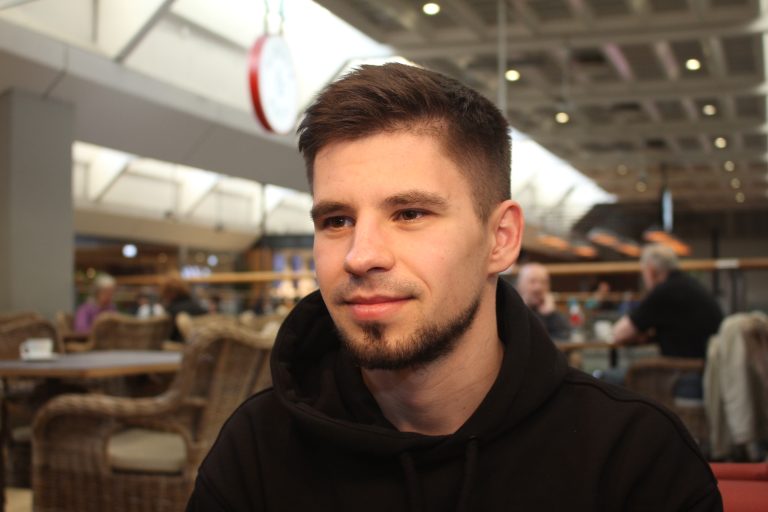
Interview with an Ukrainian Expat in Norway

Artem Myronchuk was born in Donetsk in the eastern  part of Ukraine, not far from the Russian border and the airport of Donetsk. He came to Norway as a refugee in 2022, 22 years old. Read the whole interview with the Ukrainian expat in Norway.

I was curious why a young man from Ukraine fled from his home country (before the full invasion of Ukraine by Russia in 2022). I met him last month for a conversation.

When the Russian invasion took place in 2014, he was 14 years old and he moved with his mother to Kropyvnytskyi in the central part of Ukraine.

He tells me that he was enrolled in the university in Kyiv and earned a bachelor’s degree in management of international business. His interest in crypto and blockchain led him to take part in a start-up company creating computer games and enabling participants to invest in cryptocurrencies.

*************************************************
Related: The Turbo Expat in Norway
*************************************************

Interview with an Ukrainian Expat in Norway
Artem was born in Donetsk in the eastern part of Ukraine.

“Unfortunately, two major crypto projects failed, and the company went bust,” he says. “However, I still had a job in the same project, related to computer games on blockchain. It started in Ukraine and finished in Portugal.”

He moved to Norway in 2022 as a Ukrainian refugee, since his mother was already there, working as assistant Professor at the University of Oslo.

“The only thing I had in my procession when I arrived here was my bachelor’s degree. I registered at the National Arrival Center and was interviewed by the regional police. After one month I was granted my refugee status and was offered a place in a small room, I think 10 square meters, together with three other Ukrainian refugees, the oldest being about 65 with mental problems.”

For four months Artem had to adapt to this situation. It was far from comfortable, and it also turned out that the management of this private hostel was corrupt. Much of the money received from the authorities was not used for the refugees which influenced the food as well as the facilities.

“Let me emphasize that the manager was not a native Norwegian,” Artem says. “I’m not sure if this hostel still exists. After four months, I managed to find an apartment supported by the government. It’s far from luxury, but I survive.”

Artem moved to Norway in 2022 as a Ukrainian refugee, since his mother was already there.What do you consider as your biggest problem?

“I experience my biggest problem is related to communication. There is a refugee program, but it’s a lot of waiting to get involved, which gives me plenty of time to reflect; reflect about my own situation as well as others.”

He tells me that he is somewhat annoyed about some of his countrymen coming to Norway because they’ve heard that Norway is a rich country with a lot of benefits for refugees, and in particular Ukrainians right now. Some of them, especially from Western Ukraine own their own apartments there without having any financial commitments to Norway, he says.

“I think that’s wrong when others are in a much worse situation. If a rocket had struck their homes, it would have been a different thing. We cannot just move to another country and expect to have all the benefits.”

However, a lot of his Ukrainian friends have had really serious problems with their properties in Ukraine, and their lives have been destroyed by the Russians.

************************************
Related: Insider Tips And Advice from Expats Living in Scandinavia
************************************

Interview with an Ukrainian Expat in Norway
Part of Donetsk today. Photo Andalou Agency.

What is your biggest challenge at the moment?

“The most crucial thing for me now is to find a job. Officially, I have only been in Norway as a refugee for one and a half year. I hope to find a job and maybe at the same time enroll for one kind of master’s program. I must say the authorities here are very helpful and positive. They have invited me to visit schools and professional courses in Norwegian. These are courses with really professional teachers and management teams. However, my bachelor’s degree is of little value before I can speak better Norwegian, and it seems there are not enough networks to fit me in.”

Interview with an Ukrainian Expat in Norway
“The only thing I had in my procession when I arrived here was my bachelor’s degree,” says Artem.

Artem is 23 years old and want to stay in Norway. “I do believe I’ll succeed in landing a job someday and improve both my language skills and professional career. Norway is a country with good opportunities,” he says.

Artem Myronchuk interviewed by Tor Kjolberg
All photos of Artem by Tor Kjolberg/Daily Scandinavian

Danish High School Caters for Students from Several Nations

A semester at Krabbesholm Højskole in Skive, Denmark is a tour de force through experiments, lectures, discussions, workshops, exhibitions, parties, excursions, concerts, conversations, swimming trips in the fjord, walks in the forest, delicious food and much, much more. The Danish High School Caters for Students from Several Nations.

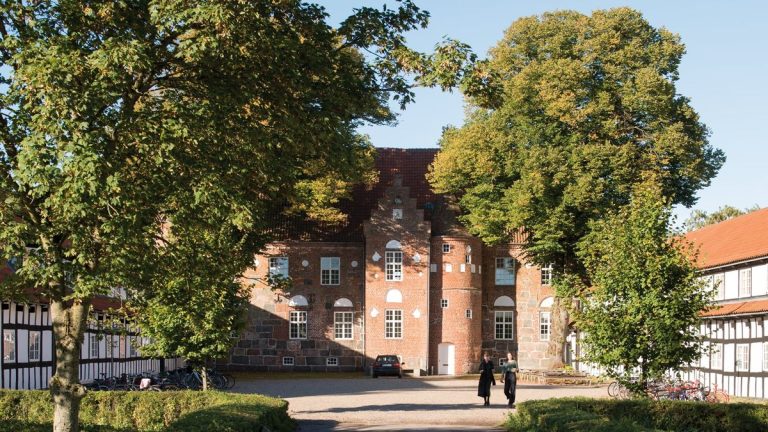
Creativity, community and special interaction are at the heart of the teaching at the school in Skive, northern Denmark. The school for adults focuses on courses in art, design, architecture and visual communication. The højskole concept dates back to the 19th century and is uniquely Danish. Krabbesholm Højskole was founded in 1885.

Danish High School Caters for Students from Several Nations
Krabbesholm Højskole was founded in 1885.

Partly funded by the government, the højskole institutions occupy a special niche between a secondary school and a university, and students of all ages can spend six months to a year receiving a different kind of education in almost any subject. Krabbeskolen is, however, one of the few that focuses on the creative industries.

************************************
Related: The top 3 secrets to Scandinavian innovation in education
************************************

The school teaches five main subjects: arts, architecture, graphic design, product design, and photography. The school is recognized as having high academic standards and a creative environment.

Danish High School Caters for Students from Several Nations
Riddersalen at Krabbesholm højskole

Going to Krabbesholm does not require any special prerequisites. Here you can explore, develop and strengthen your skills within art, architecture, design and visual communication. You can practice together, strengthen your self-esteem, and learn to look at the world with even more open eyes.

There are no exams, no grades and no degrees at the end of it. There aren’t even admission requirements. Students and teachers live at the school, where they are encouraged to participate in community living through singing in the morning assembly, sports activities and philosophical discussions.

“At Krabbesholm, we are interested in the history that has not yet been written. We look for currents that point towards new forms of life and relate to today’s problems, sustainability, democracy, gender and sexuality,” is a statement on the school’s website.

The school is located in the Krabbesholm manor, which dates from 1565. The manor is composed of several farms that were inherited by Magdelene Banner, who then gave it to her husband Ivar Crabbe, after whom the farm is named.

Danish High School Caters for Students from Several Nations
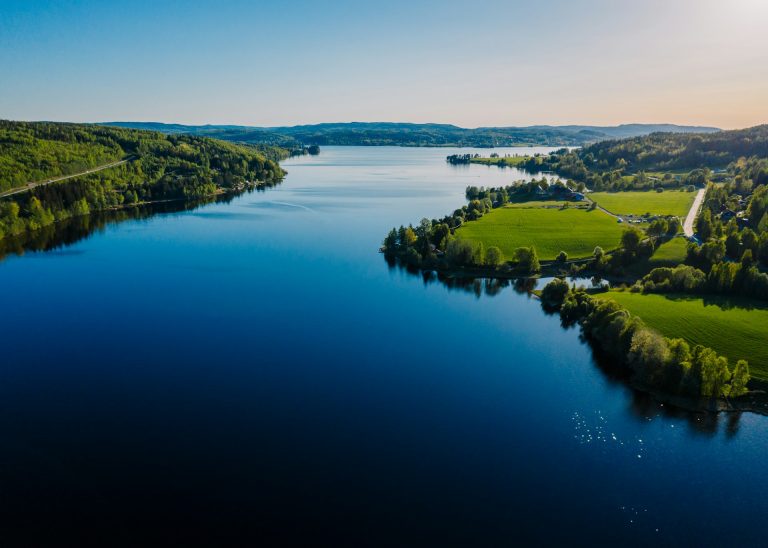
Facing the Skive fjord, the school has gradually expanded over the years.

Facing the Skive fjord, the school has gradually expanded over the years to include workshops for carpentry, ceramics, sewing, analogue photography, and printmaking. The majority of the 122 students are between the ages of 18 and 24 and from Denmark and Norway. Some of them focus creating a portfolio to apply to art school but most of them see their time here as part of a gap year, an opportunity to explore crafts they wouldn’t normally have access to.

**********************************
Related: Careers in Higher Education in Scandinavia
**********************************

The school is home to the Four Boxes Gallery, designed by Japanese architects Atelier Bow-Wow, a three-storey building conceived as four stacked boxes used to exhibit work by both students of the Krabbesholm Højskole and invited artists.

Danish High School Caters for Students from Several Nations
Four Boxes Gallery is designed by Japanese architects Atelier Bow-Wow. Photo Anders Sune Berg.

“We present you with traditional craftsmanship as well as new, digital techniques. Our workshops and fantastic, architect-designed drawing rooms are open for you around the clock. Here you will experience a warm, social and supportive community outside the normal teaching hours. Krabbesholm is also a way of being together that is creative, innovative, and supportive,” states the management.

It’s an outlook tied to another untranslatable Danish word often referred to at Krabbeskolen; “dannelse”. Similar to the German “Bildung”, it can be described as a kind of “self-cultivation” – a personal journey involving education and philosophy. This means no subject is taught for its own sake. Instead they must be connected to to their impact on the words, an approach that is helping Karbbesholm deliver a new generation of socially conscious designers.

Krabbesholm is avant-garde, freedom and punk. Rebellion, passion and commitment. Only the imagination sets limits and that the release of the students’ creative potential is a gift for life.

Danish High Scholl Caters for Students from Several Nations, written by Tor Kjolberg

The Role of Nature in Scandinavian Mental Health and Well-being

Scandinavians are renowned for their excellent mental health and well-being. This is backed up by data collected by the World Happiness Report, which found that folks who live in nations like Finland, Norway, Denmark, and Sweden are amongst the happiest in the world. Learn more about the role of nature in Scandinavian mental health and well-being. 

Scandinavian well-being isn’t simply down to higher taxes and progressive policies on issues like healthcare and climate change. For many, it is a close connection to nature that gives them a sense of fulfillment and boosts their health.

This notion that nature is a core component of health and happiness is reflected in Scandinavian traditions like “friluftsliv”, which encourages folks to get outside and enjoy fresh air as often as possible. These ideas have deep roots in Scandinavian culture and continue to promote health and well-being today.

The Role of Nature in Scandinavian Mental Health and Well-being
The concept of friluftsliv first appeared in the 1800s in the work of poet and playwright Henrik Ibsen. Photo: Høgskolen i Volda/Marius Beck Dahle

The History of Nature as Nourishment

The concept of friluftsliv first appeared in the 1800s in the work of poet and playwright Henrik Ibsen. To Ibsen, friluftsliv involves communing with nature so that one might enjoy the freedom and refreshment it offers. As the concept has grown in popularity, scholars have further refined its meaning to “deriving pleasure from engaging with nature alone”.

Interacting with nature isn’t just calming, it’s good for your wellbeing, too. Spending time in nature is positively associated with lower blood pressure, decreased heart rate variability, and improved levels of vitamin D. Spending time outdoors gets you moving and improves physical indicators of mental health like lowered cortisol levels and decreased stress indicators.

As awareness of friluftsliv has grown, folks from around the world have started to adopt the philosophy and other, similar, practices. This may be why concepts like forest bathing, a Japanese tradition, have grown in popularity in recent years. These simple practices give folks a chance to reconnect with nature and engage with the world around them.

The Role of Nature in Scandinavian Mental Health and Well-being
Scandinavians are keen sports enthusiasts. Photo: hkdest.se

Sport

Scandinavians find joy in spending quiet time in nature. However, they’re also keen sports enthusiasts and find ways to turn the mountains, valleys, lakes, and seas into a playground. This is why the most popular sports in Scandinavia involve outdoor recreation, like:

Sporty folks who live in Scandinavian countries are well supported by local infrastructure, too. In Sweden, there are cycle routes that extend 332 km and sailors in Denmark can rent boats for day use in the capital city of Copenhagen. This makes the Scandinavian region the perfect place to visit for those who love exploring the great outdoors.

The Role of Nature in Scandinavian Mental Health and Well-being
The Scandinavian region boasts hundreds of thousands of campgrounds for folks to explore and enjoy. Photo: Biltema

Camping

The Scandinavian region boasts hundreds of thousands of campgrounds for folks to explore and enjoy. In Sweden alone, there are 75,000 established camping pitches and campers have the right-to-roam (meaning they can camp almost anywhere in the country). The region is milder than most people imagine, too, meaning you can camp in comfort no matter the season by:

  • Bringing plenty of layers and rain gear in the spring months when rainfall is higher
  • Packing plenty of sunblock and water during summer months when high temperatures can quickly lead to dehydration
  • Wear breathable fabrics that can be taken off during the autumn when the weather is less predictable
  • Invest in thermal clothing and plenty of heating when camping in the winter

If you do decide to camp in Scandinavia in the winter, check in with the campground first. You’ll want to stay in a caravan on the motorhome and should ensure that your heating is working correctly before hitting the road. Bear in mind that, when camping in the north during the summer, the sun does not set. This means you’ll want to bring some eye masks to drift off at the right time.

The Role of Nature in Scandinavian Mental Health and Well-being
Folks who live in colder countries like Norway and Sweden make good use of saunas and cold pools. Photo: Novavita

Saunas and Hydrotherapy

Folks who live in colder countries like Norway and Sweden make good use of saunas and cold pools. These can improve cardiovascular health and give people a much-needed break from the busyness of the natural world. They may also protect against conditions like dementia and reduce stress. Many saunas are located in remote locations far from busy urban city streets, too.

Scandinavians also regularly utilize hot tubs as a form of hydrotherapy. Folks who take retreats to cabins and campgrounds with hydrotherapy enjoy the full benefits of hot tubs, which include:

  • Lowered stress
  • Reduced anxiety
  • Improved sleep
  • Less joint stiffness and muscle pain

These benefits can be a real boon if you are planning a vacation to a rural Scandinavian area and want to make the most of the benefits of nature. By planning some time for sauna and hydrotherapy, you can tackle stress and ensure that you’re able to get a restful night’s sleep while away.

The Role of Nature in Scandinavian Mental Health and Well-being – Conclusion

Nature plays a central role in many Scandivian’s lives. Whether walking in the foothills or skiing down mountains, folks from Northern Europe know how to get the most from the natural world. You can follow suit by planning a trip to a country like Norway, Finland, Denmark, or Sweden that features hydrotherapy, outdoor recreation, and plenty of downtime.

The Role of Nature in Scandinavian Mental Health and Well-being
Ainsley Lawrence

The Role of Nature in Scandinavian Mental Health and Well-being, written dedicatedly for Daily Scandinavian by Ainsley Lawrence. Ainsley is a regular contributor to Daily Scandinavian. She is a freelance writer from the Pacific Northwest. Ainsley is interested in better living. through technology and education. She is frequently lost in a good book.

Feature image (on top): © Peter van der Meulen / Unsplash

Norway Becomes the First Country in the World to Open the Door to Deep-Sea Mining

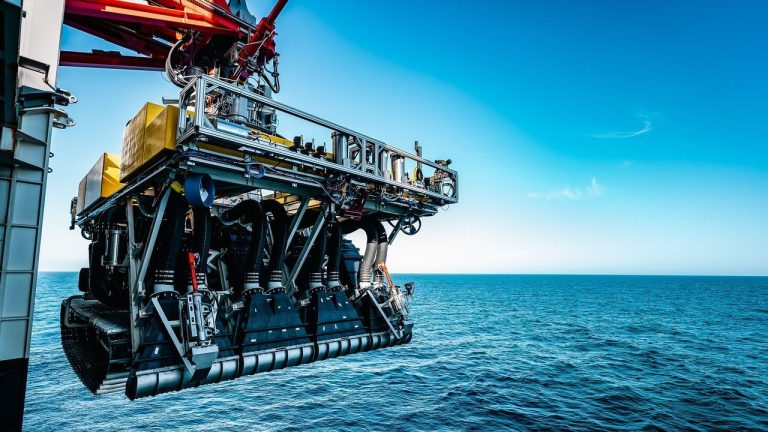
Norway is the first country in the world to start commercial mining on the seabed. The fact that Norwegian political decisions are constantly at odds with environmental councils feels disturbingly familiar. Norway becomes the first country in the world to open the door to deep-sea mining

On January 9, 2024, Norway’s Parliament approved a government plan to open a large part of its seabed to mining exploration, despite uncertain environmental impacts of deep-sea mining and warnings from scientists and activists.

The proposal, voted in by 80-20 by Norway’s parliament after attracting cross-party support, is expected to speed up exploration of minerals – including precious metals – that are in high demand for green technologies.

WWF has flagged that it will sue the Norwegian state for having taken a decision on the basis of an insufficient impact assessment. If you believe that it is possible to fully investigate a silent dark deep sea with species and biodiversity beyond human comprehension, you must be strong in your faith.

Norway Becomes the First Country in the World to Open the Door to Deep-Sea Mining
Seabed mineral sulfid i-od-20202

******************************************
Related: The World’s Largest Underground Deposit of High-Grade Phosphate Discovered in Norway
******************************************

However, the ministry’s recommendations specify that opening up an area will not automatically lead to extraction. At first, licenses will be granted for commercial exploration activity, which is defined in the Seabed Minerals Act as “the search for and mapping of mineral deposits for commercial purposes”. It is only after exploration has been carried out that companies will be able to apply for an extraction license, which the ministry will approve if it judges that the extraction can be done in a sustainable manner.

While the decision will initially apply to Norwegian waters, it will expose an area larger than Britain – 280,000 sq km (108,000 sq miles) – to potential mining by companies, which will be able to apply for licenses to mine minerals including lithium, scandium and cobalt. It is anticipated that an agreement on deep-sea mining in international waters could follow later in the year.

Norway Becomes the First Country in the World to Open the Door to Deep-Sea Mining
Norwegian deep sea mining areas

Industrial interests believe that extraction can be done gently. For a place less explored and less accessible than the Moon and with huge amounts of venture capital at stake, this must be said to be an impressive conviction.

The first plans for the actual extraction of seabed minerals will have to be approved by the parliament, and not only by the ministry.

Norway Becomes the First Country in the World to Open the Door to Deep-Sea Mining
“The wave of protests against deep sea mining has only begun,” says Frode Pleym, head of Greenpeace Norway.

“It is embarrassing to watch Norway positioning itself as an ocean leader while giving the green light to ocean destruction in Arctic waters,” said Frode Pleym, head of Greenpeace Norway. “But this doesn’t end here. The wave of protests against deep sea mining has only begun.”

It seems that the role of the sea as our most important climate regulator is taking a backseat to it being able to become a new main supplier of metals.

****************************************
Related: Why is Scandinavia sauch an essential region for mining?
****************************************

Norway Becomes the First Country in the World to Open the Door to Deep-Sea Mining
Lønne Fjærtoft, global policy lead for WWF’s No Deep Seabed Mining Initiative.

But the decision to only allow exploration for the time being and not actual extraction offers a “small glimmer of hope,” according to Lønne Fjærtoft, global policy lead for WWF’s No Deep Seabed Mining Initiative. “This gives parliament the opportunity to say no to exploitation, which is a significant change to the government’s proposal”, she said in a statement.

Norway Becomes the First Country in the World to Open the Door to Deep-Sea Mining
“Deep-sea mining is a pursuit of minerals we don’t need,” says Steve Trent, chief executive and founder of the Environmental Justice Foundation (EJF).

Steve Trent, chief executive and founder of the Environmental Justice Foundation (EJF), said: “Deep-sea mining is a pursuit of minerals we don’t need, with environmental damage that we can’t afford. We know so little about the deep ocean, but we know enough to be sure that mining it will wipe out unique wildlife, disturb the world’s largest carbon store, and do nothing to speed the transition to clean economies.”

However, there are divided opinions. Researchers on the extent of the minerals are emphasized by the authorities and industry, while experts on species and consequences for the ecosystem in the same ocean depths are met with arguments that one cannot necessarily know for sure.

The highly controversial vote comes as opposition grows against seabed mining worldwide. In November, 120 European Union (EU) lawmakers wrote an open letter to the Norwegian MPs, urging them to reject the project, while a petition received over 500,000 signatures. Over 800 marine scientists and policy experts across the world also called for a pause to deep-sea mining.

Norway Becomes the First Country in the World to Open the Door to Deep-Sea Mining
Industrial interests believe that extraction can be done gently.

While more than 20 countries want variations of a ban or a postponement until more knowledge is in place, the Norwegian government sees seabed materials as “a new industrial adventure”. However, the ongoing debates, protests, new lawsuits and lack of political consensus may prove to slow down the process and in the meantime raise awareness of possible environmental consequences.

Norway Becomes the First Country in the World to Open the Door to Deep-Sea Mining, compiled by Tor Kjolberg

Feature image (on top): GEO365.no

Norway Ranked Among the Best Countries in the World for Cybersecurity

An estimated 2,200 cyber attacks occur each day that’s expected to cost $10.5 trillion per year by 2025. This year alone, cybercrime is foreseen to set back the world an astounding $9.5 trillion according to Cybersecurity Ventures. Norway ranked among the best countries in the world for cybersecurity.

Now, more than ever, are cybersecurity measures urgent to reduce financial losses. Norway is one of the lucky countries in the world that has a solid online data security. The rankings compiled by GDS took into account different data sources starting with the National Cyber Security Index (NCSI) which categorized each country based on the strength of its data security measures. It also looked at the Global Cybersecurity Index 2020, a report prepared by the International Telecommunications Union (ITU). Another source of data was the Base AML Index which assesses the risk of money laundering and terrorist financing in each country. In addition, the risk faced by internet users was also considered as well as the strength of anti-cybercrime legislation in each country. To that end, Norway performed well and grabbed one of the top spots in the world for its excellent performance in data security.

Norway Ranked Among the Best Countries in the World for Cybersecurity
The Norwegian Personal Data Act includes extra details and specific regulations for certain sectors.

Robust Legal Framework

Considered as one of the most comprehensive data privacy laws in the world, the General Data Protection Regulation (GDPR) is a European Union (EU) law covering data privacy and security of individuals in the union as well as the European Economic Area (EEA) to which Norway is a part of. GPDR is strictly enforced and there are hefty fines for non-compliance. Hence, Norway’s data privacy law follows the same core principles and requirements of the GPDR.

Complementary to this is the ‘Personopplysningsloven’ or the Norwegian Personal Data Act, the national Norwegian law. It reinforces the GPDR applying its provisions to the specific Norwegian context. The Personal Data Act includes extra details and specific regulations for certain sectors. For example, the healthcare sector has additional data privacy requirements. Basically, individuals in Norway have the right to access and correct their data, erase it, and restrict its processing. Moreover, organizations and entities must be transparent about their data collection and processing practices. Essentially, the Personal Data Act strengthens data privacy protection for individuals following closely the GPDR core principles.

*********************************
Related: Scandinavia among the most cyber-secure countries in the World
*******************************

Norway Ranked Among the Best Countries in the World for Cybersecurity, article continues below the image.

Norway Ranked Among the Best Countries in the World for Cybersecurity
Internet penetration in Norway is at 99% indicating a familiarity and comfort level with technology.

Tech-Savvy Population

Internet penetration in Norway is at 99% indicating a familiarity and comfort level with technology. The country itself is one of the ‘most technologically advanced countries and territories’ in the world placing10th in the rankings made by Global Finance. Several parameters were adopted in assessing technological advancement such as the number of internet users as a percentage of population and LTE or 4G users as a percentage of population. The third metric is Digital Competitiveness Score including tech knowledge, current technology capability, and ability/readiness to produce new innovations. Lastly, the amount dedicated to research and development (R&D) as a portion of Gross Domestic Product (GDP) was also taken into account.

Therefore, it is safe to assume that Norwegians embrace new technologies readily and digital tools are integrated seamlessly into daily life. Unfortunately, technology is becoming more complex and it is still possible to encounter issues with data security. For example, AKVA Group ASA, a Norway-based aquaculture technology specialist, experienced a cyberattack in 2021 leading to key systems being shut down. Apparently, the attackers were after ransom money and the company reported financial losses after the incident. This shows that while a strong cyber security is in place, cyberattacks and data breach can still occur whether it’s caused by human error, outdated technology, or weak encryption.

Norway Ranked Among the Best Countries in the World for Cybersecurity
Norwegian Minister of Justice and Public Security Emilie Enger-Mehl

Focus on National Security

Norway emphasizes the importance of online security as part of its national security. It has adopted the GPDR into its national legislation and enacted the Personal Data Act as it applies to the Norwegian setting. Furthermore, the Norwegian government plays a proactive role in safeguarding critical infrastructure such as power grids, transportation systems, and financial institutions against online attacks. It works closely with private sector companies to craft solid security measures as well as perform joint exercises to test defenses. Information sharing between different stakeholders is facilitated as well by the government so that potential threats are detected early and coordinated responses to cyberattacks identified.

Specifically,  the government has a clear national virtual security strategy that outlines its priorities and initiative to protect the country from online threats. To illustrate, the National Cyber Security Centre (NCSC) is a government agency responsible for coordinating national cybersecurity efforts. It provides guidance and advice to businesses and public institutions as well as raise public awareness on online threats and risks.

Cybersecurity is a vital part of the nation’s daily functions. It is backed up by a solid legal framework and a tech-savvy population while the government prioritizes cybersecurity as part of national security.

Norway Ranked Among the Best Countries in the World for Cybersecurity
Karoline Gore

Norway Ranked Among the Best Countries in the World for Cybersecurity, written dedicatedly for Daily Scandinavian by Karoline Gore. Karoline is a freelance writer from Stoke on Trent in the UK who left the corporate grind when she started a family and has never looked back. She enjoys contributing to a range of online publications on the topics that are important to her.

Feature image (on top) ©  rivage / Unsplash

Elegant Swedish Battery Lamp

The elegant Swedish battery Lamp Faro is inspired by Corrubedo, a vibrant Galician fishing village in Spain, where you’ll find the designer David Chipperfield’s own Bar du Porto.

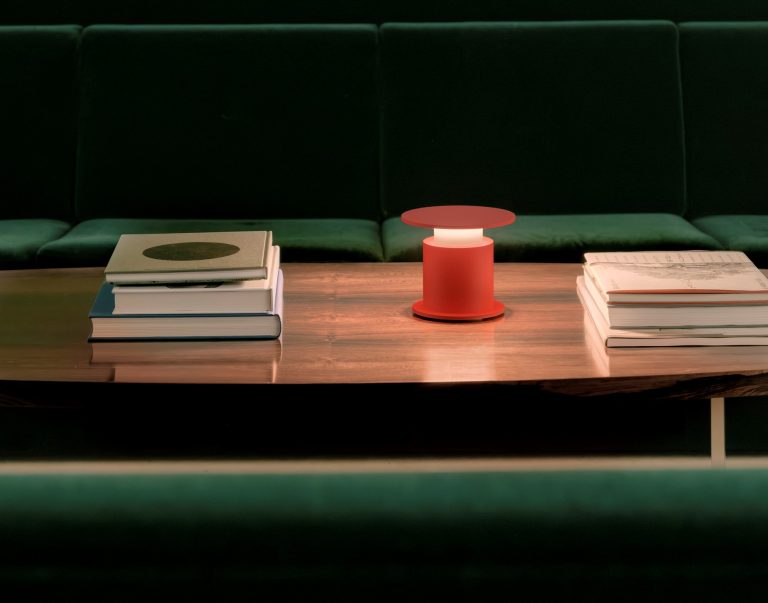
The popular Swedish battery lamp Faro is the result of the collaboration between Swedish manufacturer Wästberg and David Chipperfield. It is inspired by historic lighthouses.

Magnus Wästberg, founder and CEO of Wästberg’s, grew up in Sweden with light, and lighting. His father ran a lighting company, and while Magnus was initially determined not to follow in his footsteps, it didn’t take long before he found himself working with him.

Elegant Swedish Battery Lamp
Magnus Wästberg, founder and CEO of Wästberg’s.

During their years together, their travels took them to all kinds of lighting environments. Even when they met every regulation and standard, Magnus was struck by the fact that almost all of them felt harsh, unwelcoming, or just uncomfortable.

*************************************
Related: A Danish Company’s Tribute to Famous Lamp Designers
*************************************

Elegant Swedish Battery Lamp
Architect and designer Davide Chipperfield. Photo: Christian Werner.

David Chipperfield first established his reputation designing store interiors in London, Paris, Tokyo and New York. Among Chipperfield’s early projects in England was a shop for Issey Miyake on London’s Sloane Street. His shops in Japan led to commissions to design for a private museum in Chiba prefecture (1987), design for a store for the automotive company Toyota in Kyoto (1989), and the headquarters of the Matsumoto Company in Okayama (1990). His firm opened an office in Tokyo in 1989. His first commission to design an actual building was for a house for the fashion photographer Nick Knight in London in 1990.

The lighthouse-shaped silhouette of Chipperfield/Wästberg’s Faro lamp encapsulates the dimly lit Mediterranean milieu which has been the two collaborators’ guiding light.

“I came to understand that the good light cannot rely on measurable qualities alone. There are other immeasurable qualities that are equally essential. Qualities that speak to our human nature, our emotions and needs,” says Magnus Wästberg on the company’s website.

******************************************
Related: The Norwegian Designer Who has Seen the Light
******************************************

Faro is a portable, rechargeable lamp that can be used both inside and outdoors. With its compact form it is an ideal companion for various settings, such as on a dining table, in the garden or on a balcony. Moving fluidly between various lighting settings, it can provide both strong, focused illumination, as well as emitting a gentle, diffused glow to create a more intimate atmosphere.

Elegant Swedish Battery Lamp
Faro is a portable, rechargeable lamp that can be used both inside and outdoors.

Crafted from aluminum, the sleek piece balances modesty and grandeur. It’s a marriage of Chipperfield’s minimalistic style and Wästberg’s flair for crafting lower-energy alternatives to conventional lights.

The lighting company Wästberg was established in 2008, when the founder set out of his mission to create well-being through good light.

The color range of the w241 Faro lamp originates from David Chipperfield’s Bar do Porto, which features the same color palette.

Elegant Swedish Battery Lamp, written by Tor Kjolberg

Wonderful World in Stavanger

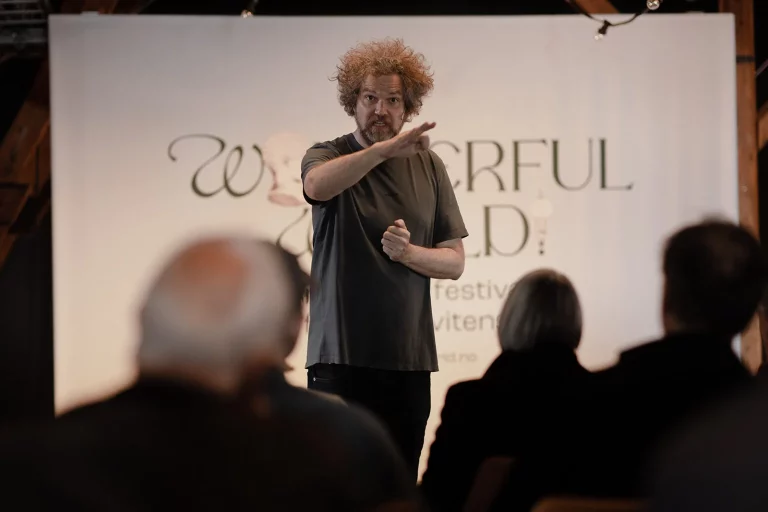
The second Wonderful World Festival in Stavanger, Norway, opens tomorrow and will convey ideas, philosophy, and science. The festival last through the weekend.

Philosophy and science must be found inside our heads and hearts, and in the public sphere and the big conversation – which is really needed now. Norway lacks proper wisdom and knowledge festivals. Stavanger is a suitable city in which to hold a Nordic festival for philosophy and science.

Wonderful World in Stavanger
Stavanger is a suitable city in which to hold a Nordic festival for philosophy and science.

This year, as last year, Wonderful World promises to offer wonder and a community of wonder. It promises to take the public out to the research front and to the edge of knowledge, from where understanding might be explored in a wider perspective.  “We must offer enlightened understanding, which the Norwegian-born political scientist Robert Dahl believed was the most important ingredient for a functioning democracy – but also the most difficult to achieve,” states the organizer.

Wonderful World in Stavanger
Festival manager Jan Inge Reilstad

Among this year’s program entries are “The biotechnological future man”, “How free is humor in 2024?” and “Genetic technology and global food security – is the West standing in the way?”. In addition, the philosopher Philip Goff will give the lecture “What’s the Purpose of the Universe?”

Wonderful World in Stavanger
Philosopher Philip Goff will give the lecture “What’s the Purpose of the Universe?”

You can see the entire program here.

Wonderful World in Stavanger
Old Tou Brewery, Stavanger

The festival takes place in and around the old Tou Brewery in east Stavanger.

Wonderful World in Stavanger, written by Tor Kjolberg

Feature image (on top): From the 2023 Festival. Photo: Tiril Hauan.

Moving to Scandinavia: A Step-by-Step Guide

So, you want to move to Scandinavia? Upping sticks and moving somewhere new is not always easy – and Scandinavia has its fair share of hurdles and administrative headaches for incoming expats to leap over. But with some careful planning and a healthy dollop of patience, you’ll soon be settling into your new life in Scandinavia. Moving to Scandinavia: Here’s a step-by-step guide.

Why relocate to Scandinavia?

The benefits of living in Scandinavia are plentiful – there’s a reason why it’s one of the top destinations for expats around the world. As well as good job opportunities, high salaries and a great work-life balance, internationals in Scandinavia enjoy a high quality of life and a convenient, central location for exploring the rest of Europe.

Salaries Denmark, Norway, Sweden

On the downside, however, Scandinavian countries are renowned for their heavily bureaucratic administrative processes, and some expats report finding it difficult to settle into life in the region.

How to move to Scandinavia: A step-by-step checklist

To help you navigate the process of moving to Scandinavia and ensure you get settled sooner rather than later, we’ve put together this step-by-step checklist for you to work through.

Moving to Scandinavia: A step-by-step guide
If you’re coming from outside the EU and want to stay in a Scandinavian country for longer than 90 days, you will need a national visa.

Sort your visas for immigrating to Scandinavia

First things first, you’ll need to sort out your right to live and work in Scandinavia (or study if you’re coming as a student).

Work in Denmark, Norway, Sweden.
Study in Denmark, Norway, Sweden

Generally speaking, if you’re an EU citizen, you don’t need any visas or residence permits to immigrate to Scandinavia. You have the right to freedom of movement within the EU and simply need to register your address after arriving in one of the Scandinavian countries.

If you’re coming from outside the EU and want to stay in a Scandinavian country for longer than 90 days, you will need a national visa, which you can then convert into a residence permit after arriving. Your visa / residence permit will be tied to the purpose of your stay in Scandinavia – for instance, whether you want to work, look for a job, or study.

How to obtain national visa in Denmark, Norway, Sweden.
How to obtain residence permit in Denmark, Norway, Sweden.

Moving to Scandinavia: A step-by-step guide
Look into your personal finances.

Get your finances in order

As you probably already know, relocating to a new country costs a fair bit of money. Whether it’s paying deposits for rental accommodation, hiring a moving company, or just the cost of your flight tickets, the bills can stack up pretty quickly. In advance of your move, therefore, it’s a good idea to tot up these different costs and start saving up the funds to cover them.

Rental accommodation in Denmark, Norway, Sweden.

This is also a good time to look into your personal finances, to consider whether you can transfer your pension to a Scandinavian country and what kind of bank accounts you’ll need after arriving. You can open a bank account in a Scandinavian country once you’ve arrived there. but it helps if you already know which bank you’d like to use. You must, however, have a social security number before you can open a bank account in Norway.

Pension from another country to Denmark, Norway, Sweden
Open a bank account in Denmark, Norway, Sweden.

Moving to Scandinavia: A step-by-step guide
You’ll need a lot of paperwork for setting up your new life in one of the Scandinavian countries.

Sort out your paperwork

You’ll need a lot of paperwork for setting up your new life in one of the Scandinavian countries – to register, take out health insurance, open a bank account, you name it. It’s a good idea to check in advance what documents you’ll need, and make sure you have them to hand. This could include your passport and birth certificate, and depending on your circumstances, your employment contract, proof of a blocked bank account, enrolment confirmation for your university in Scandinavia, or your marriage certificate.

Paperwork for settling in Denmark, Norway Sweden

Depending on your nationality or country of origin, you may need to get your documents translated and / or certified. If you have foreign qualifications, you may also need to get them recognized by your chosen Scandinavian country. This is the case if you want to work in one of the so-called “regulated professions”, such as doctors, lawyers, nurses or engineers. You can apply to your local recognition authority for this.

Moving to Scandinavia: A step-by-step guide
, it’s a good idea to try to secure (at least temporary) accommodation in advance of your arrival.

Find somewhere to live

This might be one of the hardest steps on this list, especially from a distance, but if you are moving to Scandinavia, it’s a good idea to try to secure (at least temporary) accommodation in advance of your arrival. This gives you a base from where you can start setting up your life and, also gives you an address so you can register with the municipality and get started on your administrative tasks.

If you’re lucky, you’ll have friends or family you can stay with when you arrive, but if not, it might be worth looking at some short-stay accommodation to cover you for the first couple of weeks. Housing is in high demand and short supply in Scandinavian countries, especially in the larger cities, so affordable options can be hard to find. It pays to start your search as soon as possible.

Short-stay accommodation in Denmark, Norway, Sweden.

Moving to Scandinavia: A step-by-step guide
it’s time to start packing up your belongings.

Arrange for your belongings to be shipped

As the date of your move approaches, it’s time to start packing up your belongings and getting them shipped over to Scandinavia. Of course, you could travel light and just bring a suitcase, but if you have a lot of belongings, it might be worth contacting a moving company specializing in international moves.

If you’re planning to transport a motorcycle to Scandinavia, using a reliable motorcycle transport service can ensure your bike arrives safely and hassle-free.

The benefit of working with a moving company is that they can sort out all of the paperwork for you – for instance, if you’re coming from outside of the EU, you might have to declare your belongings to customs as “imports”.

If you are planning on bringing medicines with you, you might need proof that they are for personal use. You can do this with a medication passport, which you can get from your GP at home or a pharmacy.

Bringing medication to Denmark, Norway, Sweden.

If you’re bringing a pet, make sure you research the guidelines on bringing animals into the EU. They will need to be microchipped and have a valid rabies vaccination. Note also that Scandinavia has some tougher rules on what it classifies as dangerous dog breeds.

Bringing a pet to Denmark, Norway, Sweden.

Moving to Scandinavia: A step-by-step guide
In order to give new arrivals a head-start at adjusting to life in Scandinavia, there are several options in the Scandinavian countries.

Enroll in an integration course

In order to give new arrivals a head-start at adjusting to life in Scandinavia, there are several options in the Scandinavian countries. Some people are obliged to take integration courses to qualify for residency, while others can voluntarily opt-in. This is an effective and affordable way of learning one of the Scandinavian languages.

Integration courses in Denmark, Norway, Sweden.

If you’re not eligible for an integration course, it’s still worth enrolling in a Scandinavian language course. You’re of course not obliged to learn a Scandinavian language, but it will increase the quality of your life immeasurably if you’re able to communicate with locals on at least a basic level. Outside the big Scandinavian cities especially, although English is widely spoken.

If you don’t have a job yet, learning a Scandinavian language will increase your chances of landing one, while knowing some stock phrases will make interactions with everything from the citizens office to the bank to the supermarket a little bit easier.

Language course in Denmark, Norway, Sweden.

Moving to Scandinavia: A step-by-step guide
If you have a driving license, you’ll need to check to see if it will be valid to drive in Scandinavia.

Consider how you’re going to get around

Once you’ve arrived in Scandinavia, you’ll want to get exploring. Scandinavia has a great network of long-distance trains, ferries, and buses, connecting its countries and cities, as well as excellent public transport within cities and towns in the form of metros, trams, buses, and ferries. It’s worth looking at the different kinds of passes and tickets on offer (including monthly subscriptions for different transport companies.

Travelling within Scandinavia

If you don’t fancy forking out for a public transport subscription, plenty of people also choose to cycle, as many Scandinavian cities are well-kitted out for cyclists.

If you have a driving license, you’ll need to check to see if it will be valid to drive in Scandinavia. You might be required to retake the theory and/or practical driving test before being allowed to exchange your license for a Scandinavian one. For that, you’ll need to brush up on Scandinavian road signs and traffic rules. As for getting your own set of wheels, you can buy a car, import one from abroad, or look into car leasing.

Driving license in Denmark, Norway, Sweden
Road signs in Denmark, Norway, Sweden.
Buying a car in Denmark, Norway, Sweden.
Importing a car to Denmark, Norway, Sweden.
Leasing a car in Denmark, Norway, Sweden.

Make an appointment to register your address

One of the first things you need to do after touching down in Scandinavia is register your address. You will also need a tax ID for submitting a tax return or obtaining a bank ID.

Register your address in Denmark, Norway, Sweden.
Tax ID in Denmark, Norway, Sweden.
Bank ID in Denmark, Norway, Sweden.

Moving to Scandinavia: A step-by-step guide
Health insurance is compulsory in Scandinavia. Photo: HELFO / Morten Rakke

Get your health insurance sorted 

Health insurance is compulsory in Scandinavia. If you’re applying for a residence permit, you’ll need to show proof of cover before your application is approved, and as a student, you won’t be allowed to enroll in your university without a student health insurance plan.

Health insurance in Denmark, Norway, Sweden.
Student health insurance plan in Denmark, Norway, Sweden.

The entire resident population of the Nordic region is covered by publicly financed comprehensive healthcare systems. These guarantee access to high quality healthcare at minimal or no direct patient cost. Access, treatment and public health are the three key dimensions to healthcare policy in the Nordic countries.

Moving to Scandinavia: A step-by-step guide
If you’re bringing your family with you to Scandinavia, then you’ll also need to plan and prepare for your children’s new lives, and their education.

Think about schools for your children

If you’re bringing your family with you to Scandinavia, then you’ll also need to plan and prepare for your children’s new lives, and their education. You’ll need to decide whether you want to send them to an international school or a Scandinavian school. If you go for the latter, you should do some research on the particularities of the Scandinavian school system.

International school in Denmark, Norway, Sweden.
School system in Denmark, Norway, Sweden.

If your children attend a Scandinavian school, they will be given extra help to boost their language levels, but you might want to consider starting at least a little bit of Scandinavian language learning at home before you move, to help them adjust.

After you arrive, you can register your children at the same time as yourself at the citizens’ office. As for enrolling your child in a school, the process differs from country to country.

School registering in Denmark, Norway, Sweden.

Consider working with a relocation company

If you would like some support with your relocation, you could consider working with a relocation company. They can help you with many of the administrative tasks associated with relocating, from sorting out visas and permits and securing accommodation, to shipping your belongings and finding a school for your child.

Relocation companies in Denmark, Norway, Sweden.

Moving to Scandinavia is easier with careful planning

Relocating can be a complicated and challenging process, but once you know the scale of the task ahead of you, you can start ticking items off your list. The excitement of heading somewhere new will carry you through, and before you know it, you’ll be packing your bags and getting on that plane. Good luck!

Moving to Scandinavia: A step-by-step guide
Send me an email and get our free extensive ebook for expats moving to Scandinavia.

To learn more about moving to Scandinavia, you can get our free e-book “Your Guide to Expat Life in Scandinavia” by sending me an email at editor@dailyscandinavian.com

Just write e-book in the title fields and your first and last name in the text field.

Moving to Scandinavia: A step-by-step guide, compiled by Tor Kjolberg

ABBA’s First Struggling Years

When ABBA won the European Song Contest in Brighton in 1974, Swedes gave the group a cold shoulder. This is the story of ABBA’s first struggling years.

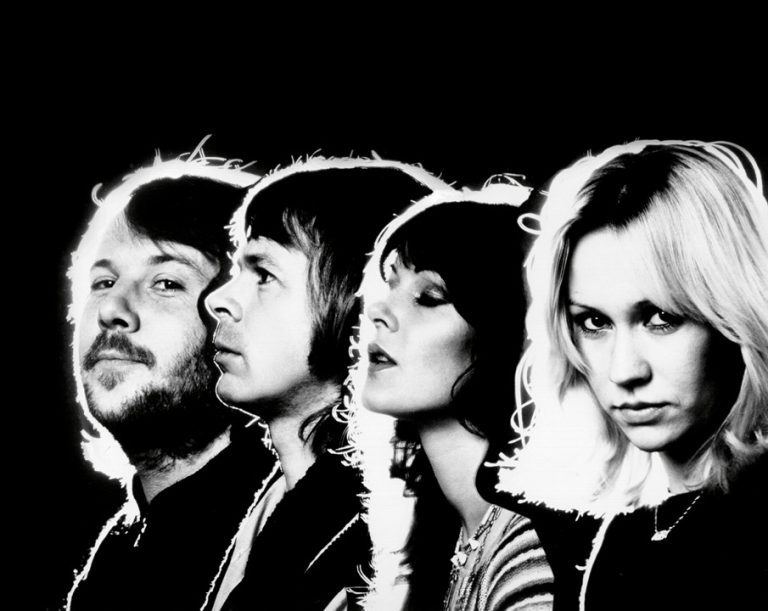
The ABBA story begins in Sweden, more than five decades ago. In June 1966, Björn Ulvaeus (born 1945) met Benny Andersson (born 1946) for the first time. Björn was a member of the Hootenanny Singers, a very popular folk music group, while Benny played keyboards in Sweden’s biggest pop group of the 1960s, the Hep Stars. The Hep Stars performed covers, among other things, of international hits and some nicknamed them “the Swedish Beatles”.

In June 1966, Ulvaeus and Andersson decided to write a song together. Their first attempt was “Isn’t It Easy to Say”, a song later recorded by The Hep Stars.

By the end of the 70s, Ulvaeus and Andersson had established a regular partnership as composers. By that time, Benny had left The Hep Stars, while the Hootenanny Singers only existed in the recording studio. The Hootenanny Singers released their records on the Polar Music record label, owned by Stig Anderson (1931–1997), who was to become ABBA’s manager. Stig also contributed lyrics to many ABBA hits during the first years of the group’s career.

ABBA’s First Struggling Years
In the spring of 1969, Björn and Benny met the two women who were to become not only their fiancées but also the other half of ABBA.

In the spring of 1969, Björn and Benny met the two women who were to become not only their fiancées but also the other half of ABBA. Agnetha Fältskog (born 1950) had been a successful solo singer since releasing her first single in 1967. She and Björn were married in July 1971. Anni-Frid Lyngstad (born 1945), also known as Frida, started her recording career shortly before Agnetha. Frida was of Norwegian origin but had moved to Sweden at a very early age. Benny and Frida didn’t get married until October 1978.

It started as singing for fun

An attempt at combining their talents occurred in April 1970 when the two couples went on holiday together to the island of Cyprus. What started as singing for fun on the beach ended up as an improvised live performance in front of the United Nations soldiers stationed on the island.

ABBA’s First Struggling Years
The Eurovision Song Contest on April 6, 1974 turned out to be the most famous moment in ABBA history.

In the same year, the attractive sound of their four voices combined gave them the idea to put together a cabaret act named Festfolk (which had the double meaning “engaged couples” and “party people”). However, this first attempt at a collaboration was not a success.

In the spring of 1972, the group recorded a song called ‘People Need Love’, garnering a medium-sized hit in Sweden. Encouraged by this success they entered the 1973 Melodifestivalen, the Swedish selection for the Eurovision Song Contest, with the song ‘Ring Ring’. They finished third, but the single and the album of the same name were the biggest hits of the year in Sweden.

At this time, the group called themselves Björn & Benny, Agnetha & Anni-Frid. A competition to find a suitable name for the group was held in a Gothenburg newspaper. Among the entries were names like “Alibaba”, “FABB” and “Baba”, but in the end all suggestions were ignored, and it was officially announced that the group was known as ABBA.

However, there was a seafood company with the name ABBA, and the group had to obtain permission from the company. The company agreed to let the group use the initial letters of the four members’ names.

ABBA’s First Struggling Years
ABBA claims they never expected to win the Eurovision Song Contest in Brighton. Screenshot from YouTube.

Waterloo

ABBA entered Melodifestivalen again in 1974, this time with ‘Waterloo’, which took them all the way to the Eurovision finals in Brighton, England. The Eurovision Song Contest on April 6, 1974 turned out to be the most famous moment in ABBA history.

ABBA claims they never expected to win the Eurovision Song Contest in Brighton. Surprised by their success, ABBA was also bewildered by the furious reaction it triggered in Sweden, culminating in a huge demonstration on the streets of Stockholm against the country hosting the following year’s contest: it is said that 200,000 people took to the streets, some armed with violins and flutes.

The 1975 event did finally take place in the Swedish capital, but an alternative festival of folk, rock, jazz was staged alongside it in a bid to combat the commercialization of music.

ABBA’s First Struggling Years
The U.S. was a difficult market for the group.

Faced with this backlash, Sweden neither participated in nor broadcast the Eurovision in 1976, in spite of ‘Waterloo’ being Number One on the charts all over Europe, even reaching the Top Ten in the US, where the Eurovision Song Contest had no impact. The album of the same name was also a huge hit in Sweden.

The U.S. was a difficult market for the group, although they also had a night on TV with Olivia Newton-John. At that stage, they started to become influenced by the disco fever raging at the time, though that trend was also to run out of steam, meeting with furious opposition that triggered the Disco Demolition Night in Chicago in July 1979, when a mass destruction of disco vinyls was organized. The U.K. did finally come round to ABBA, and the group managed to fill Wembley Stadium for six consecutive nights in November 1979.

Against the odds

All this is included in a new BBC documentary ABBA: Against the Odds, a shocking account of the band’s ups and downs. Directed by James Rogan, it examines their five years together, from Brighton to the early 1980s, and winds up on the eve of their separation, which was never made official. They simply stopped recording and performing.

However, the “stigma” of being winners of the Eurovision Song Contest made it difficult for ABBA to be taken seriously when they tried to follow this first success. It wasn’t until some 18 months later that they got a major worldwide hit again with ‘SOS’, taken off their third album, simply entitled ABBA.

‘Mamma Mia’, also from the ABBA album, returned the group to the UK Number One spot, which they occupied a total of nine times between 1974 and 1980. ‘Mamma Mia’ was Number One for ten weeks in Australia, which was the first territory to release it as a single. Over the next couple of years, Australia would be caught up in a virtual ABBA fever, giving the group a total of six Number One hits.

ABBA was the first group to come from a non-English-speaking country to enjoy consistent success in the charts of English-speaking countries.

ABBA’s First Struggling Years
In late 1976 ABBA’s fourth album, Arrival, was released.

In late 1976 ABBA’s fourth album, Arrival, was released. The album stormed up the charts and spawned hits such as ‘Money, Money, Money’ and ‘Knowing Me, Knowing You’. This was followed by a concert tour of Europe and Australia between January and March 1977. The tour was a complete success with capacity houses everywhere. When the tour reached Australia, work was also begun on the feature film ABBA – The Movie. The premiere of the film in December 1977 coincided with the release of ABBA – The Album. Hits from the album included ‘The Name Of The Game’ and ‘Take A Chance On Me’.

The rest is history

And as the saying goes: The rest is history. The ABBA Museum opened in 2013, same year as Daily Scandinavian was launched.

On May 27th 2022, the ABBA Voyage Arena opened in London. Agnetha, Björn, Benny and Anni-Frid have created the kind of concert they always wanted, performing for their fans at their very best: as digital versions of themselves backed by today’s finest musicians.

Blurring the lines between the physical and digital, see the magic of ABBA brought to life using the latest in motion capture technology.

ABBA’s First Struggling Years, compiled by Tor Kjolberg