



Every brand wants attention. Yet every day, thousands of companies invest millions in marketing that is nearly impossible to notice. A storyteller’s job is to make the audience clearly “see” ideas. If ideas stand out, they’ll be noticed. So don’t blend in; don’t keep your brand invisible.
You can learn what attracts attention by examining its opposite: camouflage. Most marketing literature asks, “How do we get attention?” Very little asks, “Why do so many brands become invisible?”
Studying camouflage can reveal the mechanisms of attention. Nature, military strategy, psychology, and branding all teach the same lesson: what makes something hard to notice often reveals what makes it impossible to ignore.
What if we paused our study of attention for a moment—and instead studied camouflage?

Nature’s Greatest Storytellers
Nature has spent hundreds of millions of years perfecting camouflage. Consider how the stick insect survives by looking exactly like a twig, how a snow leopard disappears against mountain rocks, and how the octopus changes both its color and texture.
Likewise, the leaf-tailed gecko becomes almost impossible to distinguish from dead leaves.
These animals survive because they match expectations. Brands disappear for exactly the same reason.
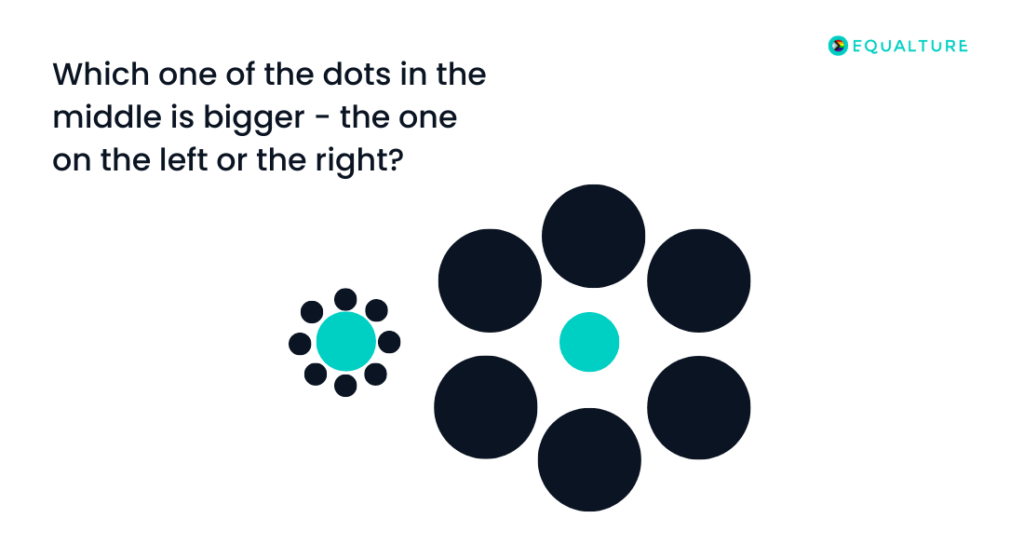 The Brain Doesn’t Notice the Expected
Our brains are prediction machines. Every second, they ignore enormous amounts of information because processing it all would be exhausting. Attention is drawn to surprise, contrast, novelty, movement, emotion, conflict, and unanswered questions.
Everything else fades into the background. This explains why so many advertisements fail. They look like every other advertisement.

Corporate Camouflage
Corporate camouflage appears whenever companies use language like “innovative solutions,” “customer-centric excellence,” “trusted quality,” or “industry-leading expertise.”
Nothing is wrong with these phrases. The problem is that thousands of competitors use the same vocabulary. Camouflage isn’t created by poor quality. It is created by similarity.
The Psychology of Contrast
Attention depends on contrast. A whisper draws attention in a noisy room. A bright flower draws insects in a green forest. A handwritten note stands out among printed letters. An honest admission draws attention in a world full of perfection.
Contrast draws attention because the brain immediately detects deviation.
Storytelling Is the Opposite of Camouflage
Stories naturally create contrast. Instead of saying, “We deliver excellent customer service”, tell the story of the employee who drove three hours after work to return a forgotten wedding ring.
Instead of saying, “We are innovative”, tell the story of the engineer who spent six months solving one tiny problem that nobody else believed mattered.
Specificity defeats camouflage.
Five Types of Brand Camouflage
| Camouflage | Result | Storytelling Solution |
| Generic language | Invisible message | Specific details |
| Generic images | Ignored visuals | Authentic moments |
| Predictable headlines | No curiosity | Unexpected questions |
| Talking about the company | Low engagement | Talk about customers |
| Listing features | No emotion | Tell transformation stories |

Lessons from Military Camouflage
Military camouflage doesn’t simply hide objects. It breaks up recognizable patterns. Sometimes the goal isn’t invisibility. It’s confusion.
Many brands accidentally create confusion by trying to appeal to everyone, communicating too many messages, constantly changing their identity, or copying competitors.
Ironically, attempting to fit in often makes a brand impossible to remember.
The Camouflage Test
If you are responsible for approving a campaign, ask yourself the following questions:
- Would a competitor be comfortable publishing this exact sentence?
- Could you remove your logo without anyone noticing?
- Are your photographs distinguishable from stock photography?
- Does your story contain a surprise?
- Would a journalist find anything genuinely interesting?
- Would a customer retell this story to a friend?
If the answer is “yes” to the first two—or “no” to the last four—the brand may be camouflaged.

A Formula
Camouflage = Similarity + Predictability + Familiarity
Attention = Contrast + Curiosity + Meaning
Storytelling is one of the most effective ways to create contrast because it introduces people, conflict, choices, stakes, and change—elements the brain is naturally attuned to notice.

The Invisible Brand – Conclusion
Evolution rewarded animals that mastered camouflage because staying unnoticed meant survival. Brands face the opposite challenge. Their survival depends on being remembered. The danger is no longer being seen by predators—it is being overlooked by customers. Every story you tell should answer one simple question: Are we blending into the background, or giving people a reason to stop, look, and remember?
However, camouflage is not always a mistake. In nature, it is a strategy. Brands can also choose camouflage deliberately—for example, when a luxury brand relies on understated design, when a company seeks to communicate humility rather than flashiness, or when a product is meant to integrate seamlessly into customers’ lives. The strategic question is not whether to stand out all the time, but when visibility creates value and when restraint does.
 Take-away
If you learned something from this article, I believe you’ll also enjoy my recent book, “How I’ve Survived as a Storyteller for Over 50 Years: 12 Survival Techniques.” Get your FREE e-book copy by sending me your name and e-mail address, and including “Storytelling” in the subject line. Thank you for reading!
Seven Strategies for Increasing Customer Participation in Brand Stories, written by Tor Kjolberg.
More articles on Storytelling by Tor Kjolberg you may like:
Brand Masters of Storytelling 3
Stop Chasing Case Studies: Build a Living Library of Customer Stories
The Anatomy of a Brand Story for Destinations
Brand Stories Are Boring
Travel Stories Designed for the Adult Part of Our Population