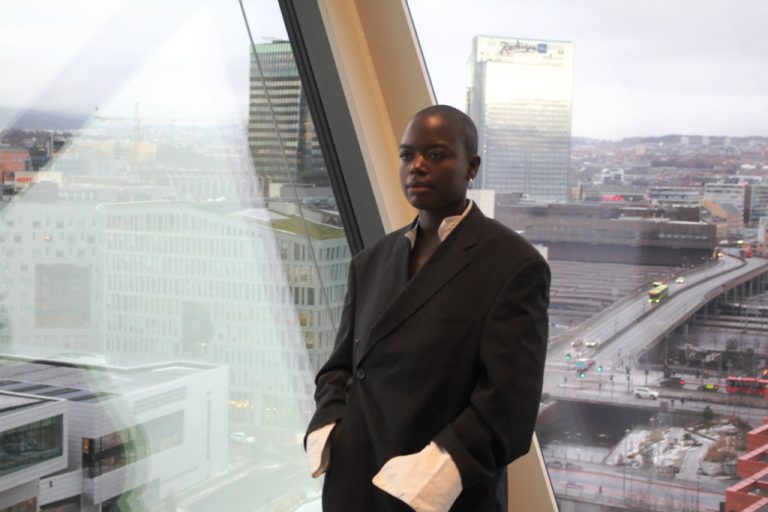
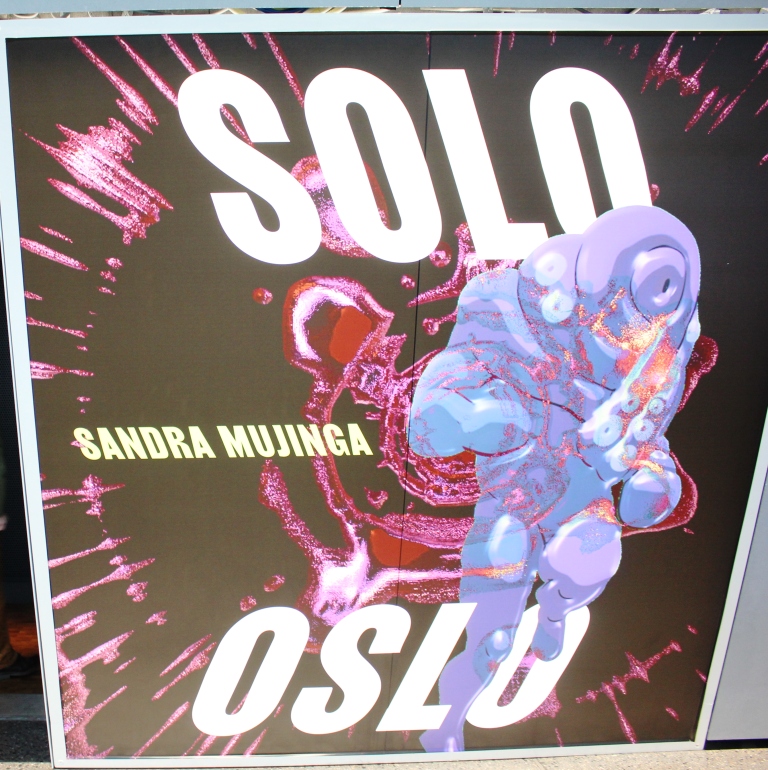
Solo Oslo is a series of exhibitions in the Munch Museum in Oslo. The exhibitions focus on Oslo-based contemporary artists who get the opportunity to develop their practice. First out is Sandra Mujinga (b. 1989), one of Norway’s most pioneering young contemporary artists – and communicator Zeenat Amiri (b. 1988). Both examine issues related to belonging and alienation. MUNCH presents SANDRA MUJINGA in SOLO, the OSLO series, through April 2022.
In today’s digital culture, where our lives are tracked and documented in detail, it can be difficult to hide. At the same time, the Internet offers endless possibilities for re-creation and manipulation; to hide behind avatars or clone themselves on social media.
Solo Oslo is a series of exhibitions in the Munch Museum in Oslo. Sandra Mujinga is first out.
One of MUNCH museum’s most spectacular rooms
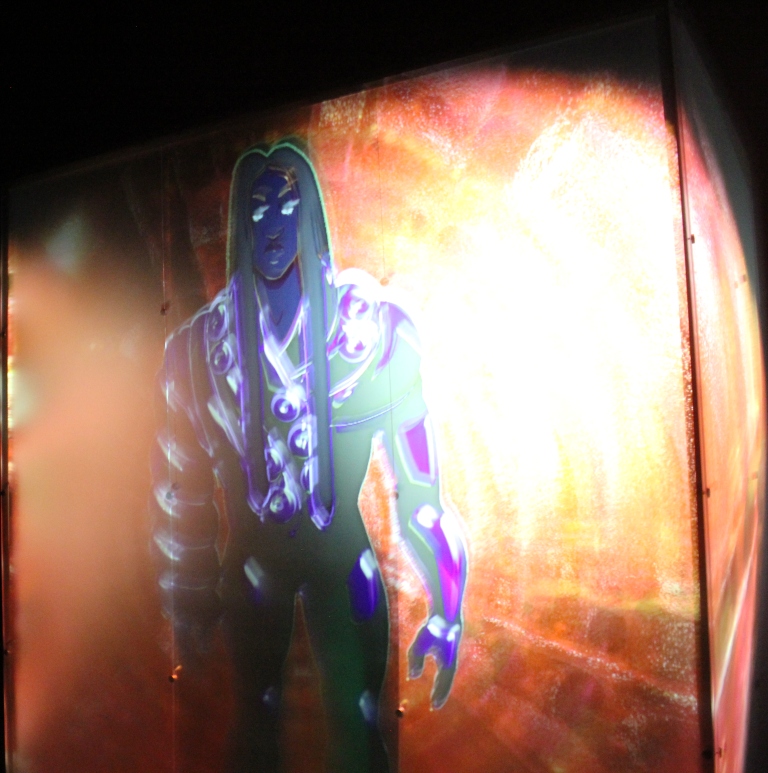
This is the backdrop for Sandra Mujinga‘s solo exhibition at MUNCH. In one of the museum’s most spectacular rooms, with eight meters high ceilings, a number of monster-like sculptures project vivid images of an avatar figure on partially transparent glass walls. The audience’s shadows mix with the character’s, which is inspired by cartoon heroes, science fiction and what the artist herself calls «speculative deep – sea creatures». The figure can be described as «post-human»; it is neither animal nor human, real or invented, but alternates between these states. The installation is bathed in Mujinga’s characteristic green light and has a subtle soundtrack of synth and string instruments that creates an alienating, almost extraterrestrial atmosphere in the exhibition rooms.
The audience’s shadows mix with the character’s. Press photo: MUNCH
Not what you can do – but what you can experience In her accompanying dissemination project, Zeenat Amiri highlights an alternative viewer role in the museum that is not about what you can do, but what you experience. In the dissemination project, Amiri shows that contemporary art is something you can experience and understand on your own terms. Here you can hear the audio files Amiri has produced as part of her dissemination project.
SOLO OSLO
SOLO OSLO is supported by Talent Norway and Canica. The exhibition series will highlight the local art scene with young artists and communicators. Five solo exhibitions are planned for the period 2022-2026.
A number of monster-like sculptures project vivid images of an avatar figure on partially transparent glass walls.
«SOLO OSLO is a unique opportunity for contemporary art and its dissemination, and we are very much looking forward to the exhibition series now starting. Sandra Mujinga’s art and Zeenat Amiri’s communication skills are very exciting, and we have great faith that SOLO OSLO will be a key step in her career and an international opportunity for participating artists and communicators. Our initiatives are characterized by the fact that we collaborate with leading environments and institutions as well as highly competent private contributors. It places great demands on all parties to develop top talent and Talent Norway is therefore very pleased with the collaboration with MUNCH and Canica,” says general manager of Talent Norway, Maria Mediaas Jørstad.
Sandra Mujinga is among the most exciting contemporary artists we have in the country.
Young artists and new communication methods
«Young contemporary art is a major investment in new MUNCH. By presenting young artists and new communication methods, we will be relevant and attractive to new audience groups. MUNCH wants to promote young Norwegian artists and communicators with close follow-up from MUNCH’s professional staff. Stability and long-term perspective are important when working with development of talent, and we are proud and happy to have two solid players such as Talent Norway and Canica AS with us. It is crucial for MUNCH to create income and activity through collaboration with public and private actors, and we are therefore very happy to finally be able to kick off this exhibition series,» says director at MUNCH, Stein Olav Henrichsen.
The charachters are inspired by cartoon heroes, science fiction and what the artist herself calls «speculative deep – sea creatures».
One of the most exciting contemporary artists in Norway
«Sandra Mujinga is among the most exciting contemporary artists we have in the country. Her art is a bit like the science fiction writers she is inspired by: her installations imagine new worlds, create alternative scenarios and process existing material in innovative ways to create extraterrestrial beings. Yet it is something that strikes us as human beings on an emotional level. Mujinga creates sensory experiences that allow for reflection and innovation around major themes such as life, death, time, visibility and human relationships with other creatures and each other,» says curator of the exhibition, Tominga O’Donnell.
Sandra Mujinga tells us that she has been working on this project since 2020. The exhibition proves that she has pushed the boundaries of visual experience. Three dragon-like projectors let us see bodies, eyes and body parts under water as well as in space; bodies changing forms like a squid. Are they humans or avatars? “It might be an escape from surveillance or the modern society,” says Sandra.
«Young contemporary art is a major investment in new MUNCH,” says director at MUNCH, Stein Olav Henrichsen.
«I’m so proud of this,» says City Councilor for Culture, Sports and Volunteering, Omar Samy Gamal. SOLO OSLO is one of MUNCH’s biggest investments, and not least Sandra Mujinga is a fantastic artist. We need young artists who challenge the established art environments and institutions which opens up new expressions, new stories. Then we must ensure that our most important platforms have room for precisely those artists. It is also about taking seriously how it is experienced by different people to enter a place like MUNCH, and that for some it is experienced as completely foreign. MUNCH and Zeenat Amiri’s associated dissemination project goes right to the heart of this, and shows the way. It’s so cool to see,» adds the city councilor.
The SOLO exhibition runs through April 2022.
MUNCH Presents SANDRA MUJINGA in SOLO, the OSLO series, written by Tor Kjolberg
Denmark, Norway and Sweden’s e-commerce markets are growing exponentially. These are thus countries of high interest for e-retailers to expand to. Scandinavia is also frontrunner, leading the way for the rest of Europe in technology and sustainability. Learn more about Scandinavian e-commerce trends 2022.
During the Covid-19 pandemic, many companies were forced to move their business online. Some of them found the juicy fruits of e-commerce and kept focusing on online, even though the pandemic restrictions ended and it allowed them to get back to the offline.
M-commerce
M-commerce, or mobile commerce, is definitely the trend that should be at the very beginning of this article. The strength of smartphones and tablets is on rising and so is the popularity of shopping via phones. More than half of all purchases will be done via phones! Do you have your web-shop optimized for AMP? If not, we would highly recommend you to put it as priority number one. M-commerce is all about speed
We are currently experiencing business moving online. It may be thanks to the world pandemic situation, it may be due to technological developments or it may be just a natural process of business evolution. If we take a look at the numbers, we see that the growth of the e-commerce industry is continuously accelerating.
The Scandinavian countries have been very early adopters of the internet and have a highly developed infrastructure. Online shopping is extremely popular in the region, yet research reveals that there is still growth potential here.
The process of entering the Scandinavian e-commerce market can be challenging with several obstacles. Scandinavian consumers are not easily attracted to foreign websites. The reasons may be foreign language or reluctancy to shopping at foreign web-shops.
Even if Scandinavians in general speak English almost fluently, translating a website into the native language of the country directly contributes to local success. Illustration by British Council
Native language is important Even if Scandinavians in general speak English almost fluently, translating a website into the native language of the country directly contributes to local success. This mainly has to do with consumer trust in a website. If it is in their own language, the look and feel are familiar, and the consumer will be more inclined to trust the e-retailer and thus place an order. Alongside translation and local customer service, currencies, and practices, local payment, and delivery options must be considered (PostNord, 2016).
PostNord and Direct Link have published the E-commerce in Europe 2021 report, where many similarities in terms of ecommerce consumer behavior and preferences between the Nordic countries are seen. The four Nordic countries (including Finland) have the highest proportion of consumers shopping from abroad when compared to all twelve markets studied in the report. Another similarity is that they all have German fashion online retailer Zalando as number one when it comes to marketplaces they make purchases from.
In Scandinavia, the most common payment methods e-retailers provide are credit card and debit card of local bank transactions via the web-shop. Illustration by Braintree Payments
Payment methods
In Scandinavia, the most common payment methods e-retailers provide are credit card and debit card of local bank transactions via the web-shop. Online banking is also a popular payment method, especially in Sweden (almost 70% of most visited web-shop provide this option). The tool After Pay is provided by more than 50% of e-retailers in Norway and Sweden. Not offering the preferred payment methods of a consumer base is known to be a reason not to shop at foreign web-shops (Statista, 2021), and is thus very important in an e-retailer’s localization strategy per country.
The Scandinavian countries have quite a lot of strong domestic brands, and large marketplaces established themselves later in Scandinavia than in many other European countries. Over the past several years, we’ve seen many major global brands go completely global in some parts of the world. Disney, one of the world’s biggest brand names, recently closed all their in-person stores in north America, and many others have done the same. In fact, in 2019, for the first time, Amazon overtook brick and mortar retailers in several key areas.
Consumers want updates on logistics and the opportunity to have choices. The ability to choose the method and place of a return, such as a pickup point or collecting from home, can positively impact consumers’ purchase intentions (PostNord, 2019).
The most provided delivery option is home delivery followed by delivery at a pickup point. Furthermore, evening delivery is proven to be a popular delivery option in Denmark. Machine pickup points, automated parcel lockers where customers can collect and send packages are an up-and-coming delivery option in the Scandinavian countries. Although this option is not provided by e-retailers in Norway and Sweden, 20-25% of e-retailers in Denmark offer machine pickup points. Around 60-80% of Scandinavian e-retailers offer returns via postal service, which is the most common return option. Returning via a local return point is almost never used by Scandinavian e-retailers.
Offering a general policy, privacy policy, and security policy is important in maintaining consumer trust. Illustration by Termly
Privacy and security policy Offering a general policy, privacy policy, and security policy is important in maintaining consumer trust. Almost all the e-retailers in every Scandinavian country notify web visitors about their policies. More than 90% of the e-retailers of Denmark, Norway and Sweden are offering information about privacy, security, and general terms and conditions.
As of 1 July 2021, a new VAT rule for international e-commerce is applied throughout the EU Single Market. This rule states that all imported goods from non-EU countries are taxed with VAT. Although Norway is not a member of the European Union, the country is part of the European Free Trade Association and member of the European Economic Area. Norway must therefore comply with the same terms as the other European Union members and is an equal partner in the internal market.
To maintain the trust of the consumer and their data, a security trust mark can be implemented on the website, preferably shown on the homepage of the website.
Sustainability has played a big role in the last few years and it has also entered the e-commerce industry. Illustration by Eco Matcher
Sustainability
Sustainability has played a big role in the last few years and it has also entered the e-commerce industry. Due to packaging for delivering products to the customer, there is more waste produced. Consumers are more interested in products whose production, packaging and delivery process is sustainable. According to the European E-commerce report 2021 for all countries in the EU, customers are more likely to buy products that are made and delivered in a sustainable way. The difference between countries is at the point where the customers have to pay extra for that. Western and northern countries are willing to pay extra for sustainable products while other countries with lower GDP per capita are not. Anyways, the number of customers who are supporting sustainability in e-commerce is increasing year by year in every country. We can’t say if sustainability will be the trend of 2022, but it certainly has its importance in e-commerce and at the same time it is an attractive topic for a huge part of consumers.
Advertising, posting to social media and other kinds of digital marketing are a good way to be seen. Illustration by EBU
Social media
Advertising, posting to social media and other kinds of digital marketing are a good way to be seen. But once someone gives you permission to access their email inbox with your message, you’ve got a real relationship going.
Email marketing has changed a lot over the years. These days, it’s all about them – not what you want to say. But for brands that can find the right words, offers and experiences to deliver by email, the sky is still the limit for this digital marketing strategy.
Many brands, in the past, have used loyalty programs to track their customer’s spending and shopping habits. Illstration by Shopline
Membership programs
Many brands, in the past, have used loyalty programs to track their customer’s spending and shopping habits. But when you’re operating in an e-commerce world, it makes sense to take it to the next level. Membership programs not only track and reward loyalty but are the ultimate kind of personalized marketing. Whether it’s member only discounts or free shipping, member perks are a big draw. Just ask Amazon. Prime has been one of their biggest success stories.
Real, genuine stories are the ones that are rising to the top. Illustration by The Writing Cooperative
Storytelling
Most people don’t watch TV anymore though. Those that do use streaming or their PVR, so old fashioned advertising tends to fall flat.
People don’t want to be sold to anymore anyway. They want to connect and engage with brands that they relate to. They want to know who you are, what matters to you, and why they should care.
Which is why brands that tell real, genuine stories are the ones that are rising to the top. It’s not enough to be a soulless corporation with a big ad budget anymore. If you want to get under your customers’ skin, you have to let them see under yours first.
Consumers love video content more than ever before. Illustration by Wikipout
Video Content This is a little bit of a conundrum for digital marketers because search engines sill use text-based content for their algorithms. Consumers, however, love video content more than ever before. Product demos, clever “hacks” and even blooper reels are some of the most viewed, shared, and liked content on the internet right now. That shows no sign of slowing either.
The way you offer options to users about which data you can process, which not and how you will do that is a key to building trust with the customer. Illustration by Termly
Cookies
Are cookies a trend? No, cookies themselves are not a trend, just a necessary part of the user’s data processing. But the way you offer options to users about which data you can process, which not and how you will do that is a key to building trust with the customer. Show users respect for their privacy and allow them to feel comfortable on your web-shop. Understanding this method will help businesses build a brand’s good reputation and potentially gain long-term relationships with customers.
Sweden is the largest e-commerce market in Scandinavia. Sweden is also the third largest country in the EU by area, has the eight highest per capita income in the world, and spends a little under 9 billion Euros online every year. Quite a figure for a country with a population of only 10 million people.
The reason is evident: Swedes have a lot of disposable income, and they like to spend it online. Which makes it perfect for ecommerce businesses.
Most people in Sweden prefer to buy from large marketplaces. It’s the convenience of going to one site, and being able to buy clothes, electronics, health products and pet stuff in the same place, and that’s not going to change soon! So, while you can have a standalone store, you should consider selling on sites like Selected Scandinavian Web-shops (launched by Daily Scandinavian soon).
When Google introduced “Mobilegeddon” in 2015, some people were surprised that they chose to penalize websites that weren’t mobile friendly. However, since more than half of all global web traffic comes from mobile devices and mobile shopping hit $359.32 billion in 2021, estimates indicating it will double by 2025 (Source: Supplygem.com), we have to take these facts into consideration.
We’re not only shopping on different devices either. With social networks hopping on the bandwagon and creating their own ecommerce offerings, more people are buying from stores on social platforms too.
Sweden is different from Norway and Denmark, by not having Clothing and footwear as the number one category.
As shoppers around the world get more used to shopping online as the norm rather than the exception, they’re starting to expect the same or similar experiences everywhere.
Sweden is very concerned about omnichannel marketing. It means that if you sell online, in a real-world store and from an app, all of the customer experiences should be similar. Many ecommerce tech providers are already on the omnichannel bandwagon, and with clever tools like geolocated push notifications, you can integrate some of your digital marketing methods into a real-world experience – and vice versa.
There are many people in Sweden who deride so called influencers. Some say that it’s not a real career. Others make snide comments about doing things “for the gram.” But there’s no denying that influencers have a huge, captive audience. Which makes them one of the best marketing channels out there.
Not only do influencers usually speak directly to a defined niche, but their whole brand is about their lifestyle. So, if your product fits that lifestyle, and your target market fits their niche, influencers are a match made in marketing heaven.
Denmark is the southernmost of the Scandinavian countries. GDP of this country in 2019 reached US$348.08 billion. It was the lowest score among all Scandinavian countries, but it doesn’t mean that its GDP is critically low. Denmark is placed at the 37th (globally) in the case of nominal GDP.
In 2021, Denmark was number one in DESI, the European Commission´s Digital and Society Index. This means that the country is considered as the most mature digital economy in the EU.
When it comes to ecommerce, Denmark is doing quite well. Last year its ecommerce market was placed as the 29th largest ecommerce in the world.
In Denmark the top three categories are Clothing and footwear, Home electronics and Cosmetics and skin care.
Norway was a founding member of the European Free Trade Association, but isn’t part of the European Union, although the country was twice invited. Norway also doesn’t have the euro, instead it uses the Norwegian krone as its currency.
Norway has a very high share of people being online. According to data from Statistics Norway, the share of population aged 16 to 79 that used the internet during the last months was at 98 percent in 2019. The same study shows that 31 percent used the internet for selling goods or services, while 41 percent bought films or music online, 45 percent ordered clothes and sports goods and 61 percent bought travel or holiday accommodation online.
In 2018, the estimated amount per person spent online in an average month was 210 euros. This corresponds to 2,522 euros per year. And according to data from Statistics Norway, 92 percent of the population aged 16-79 uses a smartphone.
In Norway the top three are Clothing and footwear, Cosmetics and skin care and Pharmacy products.
When it comes to paying for the products ordered online, many consumers in Norway like to pay with credit card. This method is more popular than VIPPS, invoice or PayPal. Card payments account for 52 percent of preferred payment methods, with VIPPS following at 21 percent.
More Norwegian women than men are fond of invoice, but more men than women are keen on PayPal and ApplePay.
Based on data from J. P. Morgan, e-commerce in Norway was worth EUR13.8 billion (US$15.8 billion in 2019). In Norway, the most popular product category is formed by clothing and shoes (36 percent). This is followed by consumer electronics and media (both 25 percent), sports & leisure (14 percent), beauty & health, furniture, and groceries (all at 10 percent) and baby & toys (6 percent).
Some of the most popular and biggest online stores in Norway are consumer electronics store Komplett.no, consumer electronics retailer Elkjøp (known as Elgiganten otuside Norway) and online grocery store Kolonial.no.
Scandinavian e-commerce trends 2022 – to sum up
Localization is one of the most important factors to be successful in global e-commerce. Despite Scandinavian countries often being lumped together under one umbrella, localization is crucial if one wants to be truly successful in these e-commerce markets. These differences may seem slight, but they are important to take into consideration in a global e-commerce strategy.
Scandinavian e-commerce trends 2022, compiled by Tor Kjolberg
There are many reasons why it is enjoyable to travel to Scandinavia. One of the biggest reasons is that the region is incredibly picturesque and full of stunning landscapes. Prepare yourself by exploring thebest movies about Scandinavia to see before travelling.
People in Scandinavia are also incredibly friendly, welcoming, and hospitable, which makes for a memorable travelling experience. Similarly, the Scandinavian countries are well-developed and offer a wide range of cultural experiences and activities. If you’re looking for a fascinating travel destination, don’t miss Scandinavia.
Whether you’re interested in history, nature, or just want to experience a different part of the world, these countries should be at the top of your list. Watching some movies set in Scandinavia is a worthwhile idea if you plan on visiting this part of the world soon. By doing so, you’ll get an idea of what to expect and maybe even be inspired to visit some of the locations featured in the films. Here are five of our favourites.
Five must-watch films from Scandinavia
After the Wedding has a star-studded cast includes Sidse Babett Knudsen and Mads Mikkelsen. Press photo
After the Wedding (2006)
In 2006, Susanne Bier wrote and directed the drama film After the Wedding. A star-studded cast includes Sidse Babett Knudsen and Mads Mikkelsen. Jacob is an orphanage director who has dedicated his life to helping poor street children in India. He is faced with the challenge of saving it after its closure due to too expensive costs. A Danish man named Jorgen offers Jacob one million dollars for the orphanage, but Jacob must first travel to Denmark.
It shows some of the tourist attractions in Denmark, such as Krystalgade, a street in central Copenhagen that was seen during the hotel scenes. The offices of businessman Jørgen are situated on Højbro Plads, a rectangular public area in Copenhagen’s city centre. Tureby Church, near Turebyholm manor, was used to film the church and graveyard scenes. Denmark, its culture, and its people are fascinatingly depicted in the movie.
The Girl with the Dragon Tattoo is based on the book of the same name by Stieg Larsson. Press photo
Girl with the Dragon Tattoo (2009) The Girl with the Dragon Tattoo (2009) is a suspenseful thriller set in Sweden. If you’re planning to travel to Sweden, it’s a wise idea to watch the movie first so that you’ll know what to expect from the country. The film is based on the book of the same name by Stieg Larsson. It follows the story of Lisbeth Salander, a computer hacker who becomes involved in a missing person’s case.
Although parts of the movie are fictionalised, it provides a helpful overview of life in Sweden and some of the country’s customs and traditions. The movie offers a unique perspective on Swedish life that you won’t find anywhere else and will give you a sneak peek at their culture and society.
Elling provides a fascinating look at the power of friendship and hope. Press photo
Elling (2001)
If you’re in the mood for something quirky and offbeat, check out the Norwegian film Elling (2001), about two socially inept brothers trying to make it on their own in Oslo. The movie provides a fascinating look at the power of friendship and hope. Director Petter Næss does an excellent job of balancing comedy and tragedy, and the cast is fantastic. The two actors who play Elling and Frank give stellar performances.
The film takes you on an unforgettable journey through the gorgeous countryside while also providing insight into Oslo, Europe’s fastest-growing city. With endless dining options and museums galore (not to mention its rich history), this modern metropolis offers more than enough to keep any visitor satisfied. So, grab some popcorn and settle in for a memorable cinematic experience. You won’t regret it.
The Danish Girl tells the story of Einar Wegener (played by Eddie Redmayne), who becomes one of the first people to undergo gender reassignment surgery in the early 1900s. Photo credit: Focus Features
The Danish Girl (2015)
If you’re looking for a movie to watch that will make you think and feel deeply, The Danish Girl is a wise option. This film tells the story of Einar Wegener (played by Eddie Redmayne), who becomes one of the first people to undergo gender reassignment surgery in the early 1900s. The Danish Girl is beautifully made, with powerful acting and an inspiring message. It’s definitely worth watching.
Filming took place in Belgium, the United Kingdom, and Denmark. The majority of the Danish scenes were shot in Copenhagen, the country’s capital and most populous city. Denmark’s capital city depicted in the film is Copenhagen City Hall, the seat of the municipal council and the Lord Mayor. This film also features the Royal Danish Theatre, a well-known Danish building. Originally built in 1748, this theatre was the king’s theatre before becoming the country’s theatre.
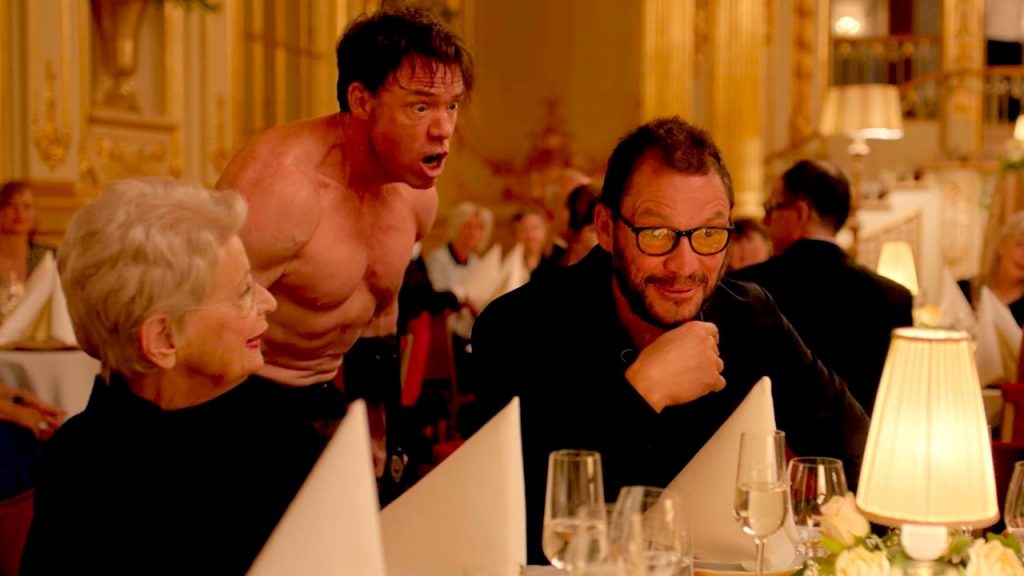
The Square is a movie set in Sweden that takes a look at the art world and the challenges that come with being an artist. Press photo
The Square (2017)
The Square is a movie set in Sweden that takes a look at the art world and the challenges that come with being an artist. The film has received high praise from critics, and it’s easy to see why. The Square is a thought-provoking, well-made movie that is sure to leave audiences thinking long after they leave the theatre. If you’re looking for an interesting, intelligent movie to watch, be sure to check out The Square. You won’t regret it.
Watching The Square will give you a more insightful look into modern Swedish culture and Stockholm’s quirks. For example, the gallery shown in this movie is housed at Royal Palace which also happens to be where much of the scenes were shot in the city. Stockholm is portrayed beautifully in this film, showcasing the Swedes’ witty sense of humour.
Best Movies About Scandinavia To See Before Travelling – Ending Note Scandinavia is a popular place to travel because there is so much to see and do. You can visit charming small towns, explore stunning landscapes, and experience Scandinavian culture. There are also plenty of activities to enjoy, such as skiing, hiking, and fishing. Plus, Scandinavia is known for its high quality of life, which makes it a pleasant place to relax and recharge. If you’re looking for an unforgettable travel experience, be sure to add Scandinavia to your list.
Many people create YouTube videos featuring their favourite Scandinavian films. We hope that by reading our selections of the finest Scandinavian movies, you will find one that appeals to you. From comedies to dramas to thrillers, these films will give you a taste of the Scandinavian spirit and prepare you for your travels. Whether you’re gearing up for a trip to Scandinavia or just looking for an excuse to watch some entertaining movies, we’ve got you covered. So, pack your bags, get cosy on the couch, and enjoy.
Best Movies About Scandinavia To See Before Travelling is a promotional article from veed.io
Denmark’s Gudenå river, also called the River of Gods, is the longest river in Denmark and home to outdoor activities and historic market towns. It’s a 150 km of playground in Denmark.
Known as the River of Gods, Gudenå is the longest river in Denmark, and traces of settlements dating back to the Antiquity, can be found along its banks. The river has served as a means of transport, a source of power and an area for fishing – now visitors come to visit historic cities and experience a wide range of outdoor activities.
Known as the River of Gods, Gudenå is the longest river in Denmark. Photo: Store norske leksikon
“We have old cities situated on the edge of the river and wonderful outdoor activities,” says the local tourist director and chairman of the Association of River Gudenaa. “It’s quite an unusual combination – we call it 150 km of playground.”
From Skanderborg. Photo: Visit Skanderborg
Old market towns
Viborg – Denmark’s former capital – is here alongside medieval Randers, Silkeborg, lakeside Skanderborg and Horsens, all with easy reach by air, road and rail. These old market towns offer stress-free shopping om pedestrian streets and in new shopping-centers, as well as a host of cafés, bars, restaurants, places to stay and activities.
Silkeborg’s Aqua Aquarium & Wildlife Park is home to Europe’s largest freshwater aquarium
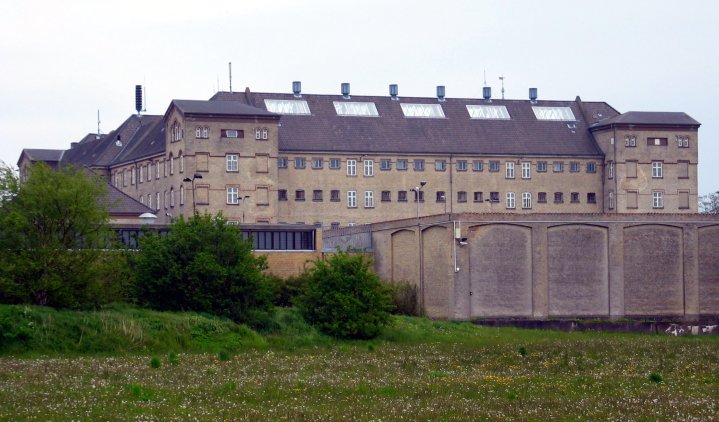
Europe’s largest freshwater aquarium Silkeborg’s Aqua Aquarium & Wildlife Park is home to Europe’s largest freshwater aquarium and is ideal for families, or get locked in Horsen’s Prison Museum. It’s the site of one of Denmark’s most audacious escapes, when burglar Car August Lorentzen used a spoon to dig a 20m tunnel. It took him nine months, and when he got out on Christmas Eve 1949, he left a note behind: “Where there’s a will, there’s a way.” He was recaptured one week later.
Horsens State Prison. Photo: WikipediaGraceland Randers – a museum, shop and diner dedicated to Elvis Presley. Photo: Wikipedia
Graceland Randers And don’t miss Graceland Randers – a museum, shop and diner dedicated to Elvis Presley. Inspired by the King’s home in Memphis. The 80th anniversary of his birth was celebrated on 8 January 2015 with visitors from around the world.
The star routes on foot or by bike Viborg’s circular Star Routes are a great way to experience the outdoor – on foot or by bike. Take a tourist boat in Randers or the Lakelands, or canoe down the river, stopping at campsites or old inns for the night. And fishing permits are easily available online or from local tourist offices. If you want to drop a line in the water – up to 20 species have been recorded along its length, including salmon, trout, perch and zander.
150 km of Playground in Denmark, supported by the European Agriculture Fund for Rural Development, investing in rural areas and central Jutland.
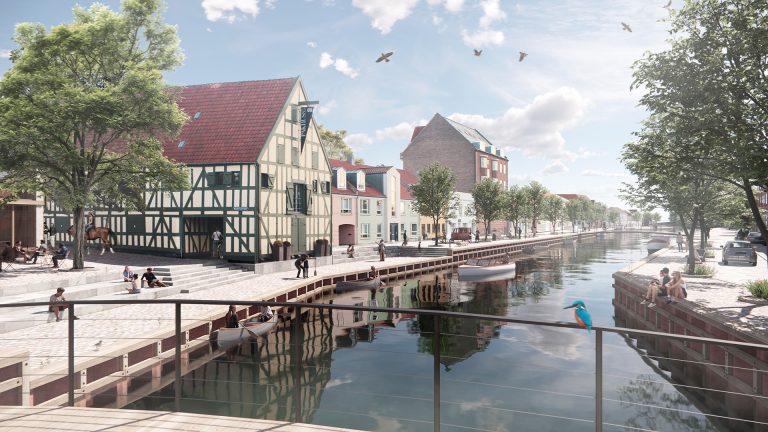
Feature image (on top): From Horsens. Illustration by Vandkunsten Architects.
Norwegian athletes could boast another rush of gold medals that topped all other nations in the Beijing Winter Olympics 2022. However, for the chef of missions, Tore Øvrebø, enjoying themselves and creating good relationships were more important than winning. Learn more about the Norwegian gold rush in Beijing Winter Olympics.
Cool official Norwegian winter sports outfit, Norwegian flags and the Norwegian anthem were really in the spotlight when Norwegians entered the medal podiums 37 times during the two week’s games, 16 of them gold. That’s an increase of 14 since the last record-breaking Winter Olympics in South Korea.
Norway finished a narrow second in the Sochi 2014 Winter Olympics, but really won considering Russia’s spectacular cheating scandal.
Norwegian athletes could boast another rush of gold medals that topped all other nations in the Beijing Winter Olympics 2022
Norway’s last gold medal before the 2022 winter games ended was claimed by veteran cross-country skier Therese Johaug (34), when she won the exhausting 30-kilometer race over the weekend. Johaug had already won gold in the opening 15K race and the 10K, but she lacked an individual Olympic gold medal and succeeded this time. According to the athlete this is her last Olympic games.
Norway’s last gold medal before the 2022 winter games ended was claimed by veteran cross-country skier Therese Johaug (34). Photo: Screenshot from TV2
Some critics claim that Norway should have claimed more gold in biathlon and cross-country races, but Øvrebø measures success in different terms. “The main objective for us is to make the athletes have fun all the way through the Games,” he said when Norway won the men’s cross-country team sprint for a 13th Beijing gold.
Norwegians entered the medal palls 37 times during the two week’s games, 16 of them gold. Photo: China Morning Post
But how can a small country like Norway, with only 5.5 million inhabitants outpace countries with much larger contingents and even much similar climates? The answer is a genuine sporting spirit from childhood to old age. In spite of this, a Norwegian Broadcasting Company reporter claimed that the Beijing 2022 Olympic Games was weak. “It has been 46 years since only one Norwegian woman won only one Olympic gold medal in cross-country skiing,” he said. Cross-country skiing is often viewed as Norway’s national sport.
Tore Øvrebø – director of Olympiatoppen since 2013. Photo: Eurosport
Tore Øvrebø explains the Norwegian success has a three levels approach. First, to achieve development over time you have a very high quality of daily training. Second, working specifically with the competitions, preparations and executions. Last, but not least, is to establish and develop good and safe relations between the athletes themselves and also between the athletes and their coaches and the staff around.
Snowboarder Mons Røisland (25) was “blown away” by his silver medal. “It’s hard to explain Norway’s success,” he says. “We’re not many people, but we’re a people with passion. There are so many athletes out of Norway, and it’s so impressive and inspiring to see what everyone does to be here and be part of the crew.”
In spite of the Norwegian gold rush during the games, it was nonetheless an unusual Corona-plagued Olympics that prevented spectators from abroad to attend. No members from the Royal Norwegian family or the government attended, not because of a diplomatic boycott over China’s human right abuses or crackdowns on democracy in Hong Kong and freedom of expression anywhere under China control, but Corona-related reasons.
“The Norwegian sports model, which is being practiced all the way from childhood, should be physical activity based on fun, many types of activities, variety and different sports,” says the 56-year-old former Olympic rower Tore Øvrebø – director of Olympiatoppen since 2013.
The Norwegian Gold Rush in Beijing Winter Olympic, written by Tor Kjolberg
The Danish artist Jeppe Hein is famous for making benches, fountains and a bar. Many Scandinavians have walked in his sculpture Path of Silence at the Kistefos Museum outside Oslo. You’re hereby invited to look, feel and play with the Berlin-based Danish artist.
Hein studied at the Royal Danish Academy of Art between 1997 and 2003 and at the Städelschule in Frankfurt between 1999 and 2000 (while registered as an associate student of the Danish Academy). As a student Hein was co-founder of OTTO, a non-commercial organization that organized art exhibitions at various venues in Denmark between 1997 and 2000.
Hein’s art addresses the senses and curiosity of the audience. You don’t really know if you should call his works art, architecture or technology. However, the viewer is always of the utmost importance to him. He is particularly known for large sculptures and installations in the outdoor space, often with a social and interactive dimension.
Between September 2009 and January 2010, Hein stayed at Alexander Calder’s studio in Saché, France, as a part of an artist in residence program. In the middle of the magnificent Norwegian nature Hein has installed his greatest work till date, Path of Silence.
Artist Jeppe Hein. Photo: Kistefos
Kristan Sveaas’ sculpture park Kistefos at Jevnaker outside Oslo houses five of the artist’s modified social benches – made in a blue color that is exclusive to the museum. They bulge and challenge the way we sit, and appear to be connected underground. First and foremost, a formidable labyrinth of water, nature and 450 steel columns is just a short walk away, which with its several hundred square meters is the largest installation the Dane has ever made. Hein had the mission in mind while going on a pilgrimage from Dombås in 2014. When he came back, the idea was ready.
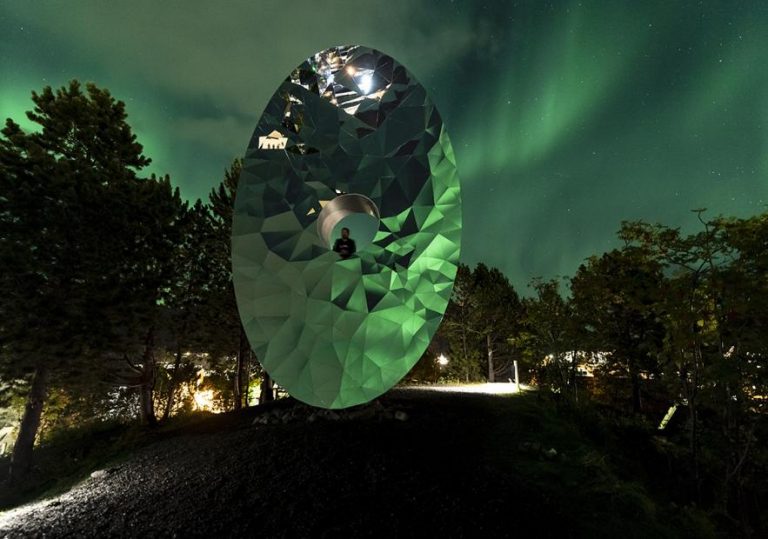
Eye of the North is an eight-meter-high and five-meter-wide mirror installation located on Lofoten, Norway. Standing on a small hill, the installation is visible from afar and allows visitors to look into the landscape. The elliptically shaped sculpture, with a concave vaulted front and a convex vaulted back, has a round opening in the middle with a diameter of 1.5 meter that can be reached via a small stair.
“My works are an incongruous dialogue between the art and the viewer and to use humor to broaden the limits of conceptual art. I want to show that the work isn’t anything on its own, it is only what the public informs it with. The viewers’ role brings the piece to the center of attention,” he says.
Social bench at Kistefos
Working in the overlap of art, architecture, design, and technical interventions, Jeppe Hein has always considered the social potential of art a driving force. With focus on the intuitive, physical, and emotional experience of art, he insists on addressing people of all ages, backgrounds, and levels of education, promoting a dialogue between the work and its surroundings and, more importantly, among the viewers themselves. He invites us to look – feel – and play!
Look Feel and Play with Berlin-Based Danish Artist, written by Tor Kjolberg
Feature image (on top): Eye of the North (Lofoten) by Jeppe Hein
On 18 February, Fotografiska in Stockholm opened its doors to the museum’s major spring exhibition; окна featuring images by the Russian photographer Elizaveta Porodina. With her experimental, dreamlike and occasionally surreal photography, she invites us to merge the past and the contemporary – a journey through time and space. Experience theRussian star photographer on display in Stockholm
A rising star within fashion photography
34-year-old Elizaveta Porodina is currently one of the leading names in fashion photography, working with fashion houses such as Dior, Moncler and Carolina Herrera. Born in Moscow, Elizaveta Porodina moved to Germany together with her family at the age of 12. Although coming from a professional background in clinical psychology, she decided to pursue a creative career in photography and soon received recognition from both the fashion and the art world. She is currently residing in Munich, yet she considers the world as her home.
34-year-old Elizaveta Porodina is currently one of the leading names in fashion photography. Photo: Artpil.com
While many photographers downsized their work during the pandemic, Elizaveta Porodina chose a different path: she instead increased her unique techniques via zoom and style that quickly became both popular and widely imitated. Elizaveta says that she saw no other option; “Developing and adapting is the true nature of the artist.”
A surreal and dreamy reflection The exhibition окна (Russian for window) reflects the past few years of the photographer Elizaveta Porodina’s life and work. Her imagery is surreal, dreamy and intimate, on occasion frightening, haunting and delicate. Tears and water are recurring themes in her images and she draws inspiration from her childhood in Russia, art, history, film and religion.
While many photographers downsized their work during the pandemic, Elizaveta Porodina chose a different path
The exhibition in Stockholm is the global premiere, and it will remain on display until 12 June 2022. The exhibition will then be shown at Fotografiska Berlin and Fotografiska New York.
Russian Star Photographer on Display in Stockholm, a press release from Fotografiska
Scandinavia is renowned for its long, cold, dark winters. Getting through these requires mental and physical strength. It’s therefore hardly a surprise that Scandinavia is also renowned for its emphasis on self-care. Scandinavian spas have long played an important role in this. Here is a history of the Scandinavian spas.
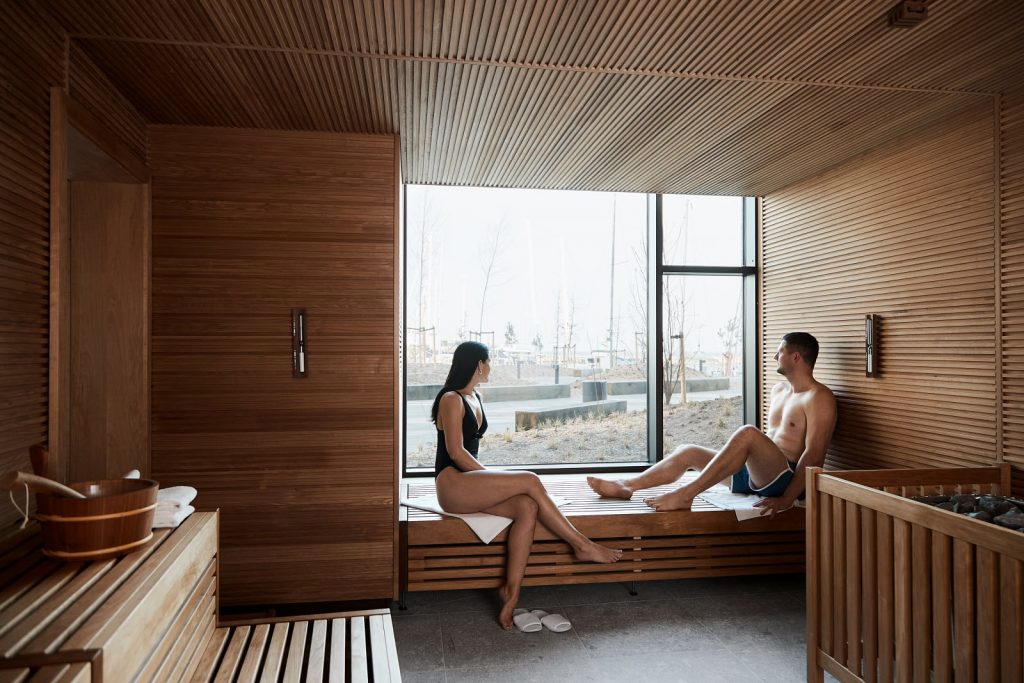
The original Scandinavian spas For many people, the phrase “Scandinavian spa” effectively means “sauna”. There’s a lot of truth in this. Saunas were the original Scandinavian spas. They are still hugely important today. Nobody knows exactly when or where saunas were invented, let alone by whom. Saunas were, however, definitely around in Northern Europe by about 2000 BC.
Vidalux sauna 2 person full spectrum
Saunas for survival Modern saunas are used to enhance health and wellness. In the early days of their existence, however, they were used to help people survive. The original saunas were essentially tents made out of animal skins. They were places for people to live, often together with animals.
During the day, a fire was kept burning underneath a pile of rocks. At night, when the fire went out, the stones continued to warm the tent. People learned to pour water onto the rocks to make steam. This made the tents even warmer and cosier.
Although the main benefit of these early saunas was heat, they also helped to promote cleanliness. Even in the 21st century, steam is regarded as being one of the best cleaners there is. This cleanliness (by the standards of the time) helped to keep people healthy. It also provided a relatively sanitary environment for activities such as childbirth.
People began to make the connection between the atmosphere in the sauna and their health and wellness. Photo: Ron Lach/Pexels
The development of the sauna As human civilization developed, the sauna developed along with it. Dwellings improved but for a long time they remained dependent on saunas for heat. People began to make the connection between the atmosphere in the sauna and their health and wellness. It was far too early for this connection to be validated by science but it was grasped by the public.
The basic principle of the sauna spread far and wide, literally across the world. Its precise implementation varied from place to place. In some locations it was a sweat lodge, in others a public bathhouse. The underlying concept, however, was always essentially the same. There was heat and water and at some point in the experience, these were usually combined to create steam.
Scandinavian spas by country Over time, the basic practice of having a sauna developed into a more formalised health and wellness experience. As it did so, different parts of Scandinavia developed their own individual variations of it. Here is a quick guide to Scandinavia spas by country.
A typical thermal bath experience will involve taking dips in hot, cold and scented pools. Phoyo: YouTube
Norway Modern Norway still has saunas but nowadays thermal baths are more popular. Since Norway does not really have natural hot springs, thermal baths tend to be public facilities. They are often provided at hotels and spas. A typical thermal bath experience will involve taking dips in hot, cold and scented pools. These may be indoors or outdoors.
Another key part of the Scandinavian spa experience in Norway is “friluftsliv”. This is often translated as “forest bathing” although it doesn’t have to involve forests or even trees. It simply means getting out and about in the fresh air. The benefits of this have been recognized in Norway for hundreds of years. Science is now catching up with them.
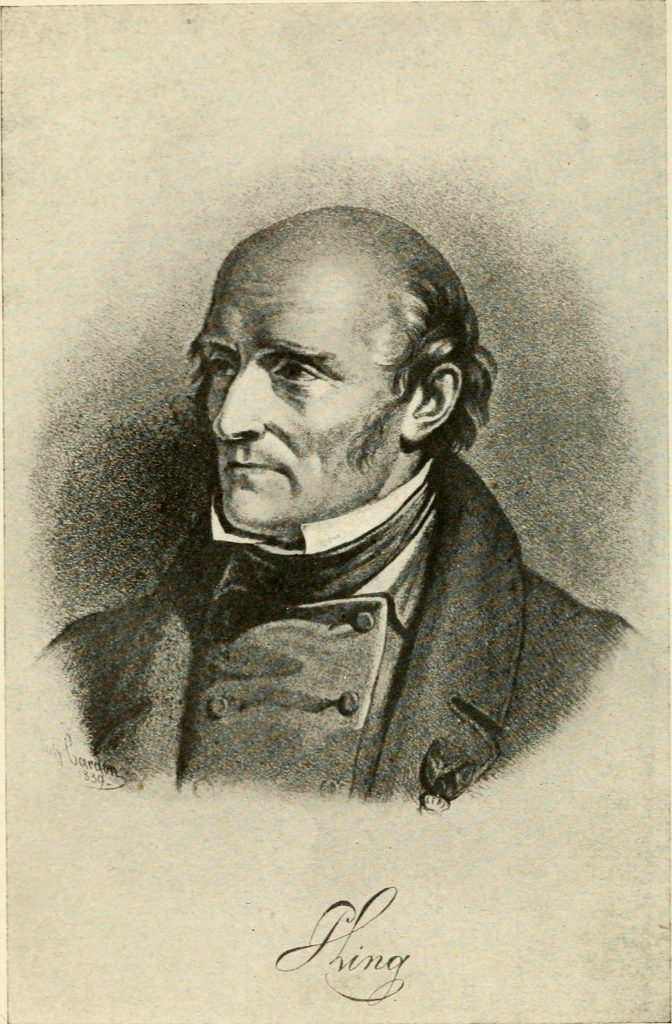
Swedish educator Pehr Henrik Ling is often considered the father of Swedish massage (and modern gymnastics). Photo: Wikimedia commons
Sweden Sweden is another country that prefers thermal baths to saunas. What Sweden is really famous for, however, is Swedish massage. Swedish educator Pehr Henrik Ling is often considered the father of Swedish massage (and modern gymnastics). He did not exactly invent it but he did study, prove and publicise its benefits.
Today, Swedish massage is available all over the world. In fact, it’s considered an essential skill for many health-and-wellness professionals. Its spiritual home, however, remains in its native Sweden.
Swedish massage stimulates the body’s systems. It therefore encourages the delivery of oxygen and nutrients and the removal of waste. It also eases any tension in the muscles and helps the mind to relax.
Saunagus at Scandic Amager strand. Photo: Gusmaster.dk
Denmark Up until relatively recently, saunas were fairly niche in Denmark. Over recent years, however, the sauna has been making a major comeback. Its use, however, is very different from established sauna practice in neighbouring countries. Instead, it’s been driven by the practice of saunagus.
This actually originated in Germany (where it’s known as Aufguss) but has become popular in and popularised by Denmark. Saunagus combines elements of a traditional sauna with aromatherapy and mindfulness. It’s been practised in Denmark since the late 19th century but only really went mainstream fairly recently.
Even though saunagus is becoming increasingly popular, it’s still nowhere near as popular as Denmark’s two major wellness trends, hygge and winter swimming. Hygge is the principle of cherishing simple acts and small pleasures. These can and often do involve spa experiences, particularly home spa experiences such as having a bath or even a shower.
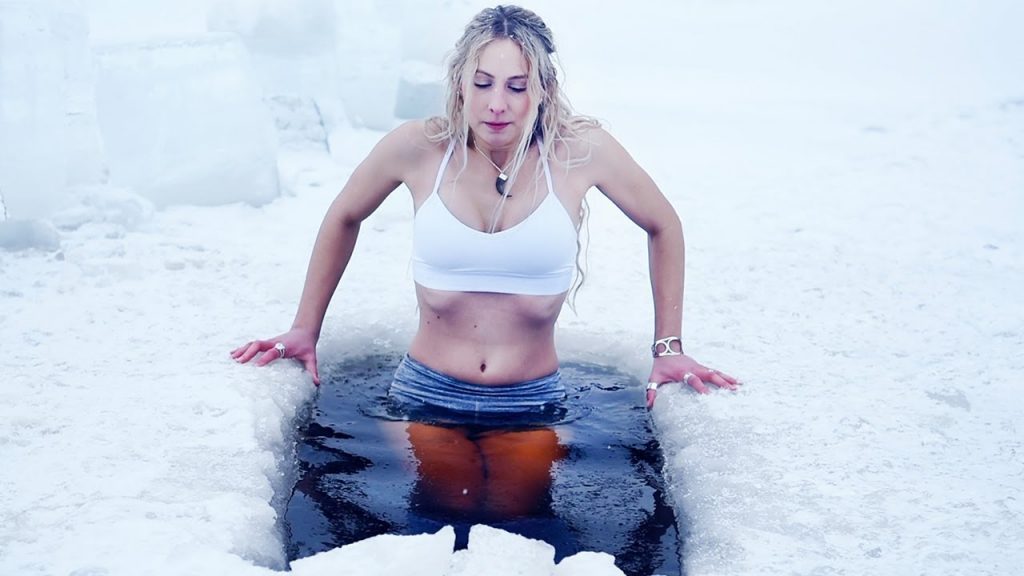
Winter swimming is one of Denmark’s oldest wellness traditions (although it’s practised in other countries as well). It’s long been believed that it stimulates the body and the mind. Science now agrees. Scientists have studied the effect of cold on the body and agree that it can be stimulating. In particular, it can boost the production of white blood cells. These are the cells that fight off infection.
People insaide sauna in Lahti. Photo: Julia Kievala/Visit Finland
Honourable mentions to Finland and Iceland Neither Finland nor Iceland is a part of Scandinavia. It would, however, be unfair to finish an article on wellness traditions in Scandinavia without an honourable mention of them. Finland is widely regarded as the home of the sauna. The country is certainly the sauna’s spiritual home and has done a lot to keep the tradition of the sauna relevant to a modern world.
Iceland may well have provided the inspiration for the thermal baths that are now so popular in Norway and Sweden. Unlike Scandinavia, Iceland is famously blessed with hot springs. These have been popular with residents throughout the entirety of human history. They are now a major tourist attraction. It helps that they’re famously full of minerals and often come with great views!
Andrew Ellis
A History of the Scandinavian Spa, written exclusively for Daily Scandinavian by Andrew Ellis. Ellis is the owner of Steam Shower Store. Andrew is an avid sauna user, wellness enthusiast and a leading expert and an extremely well-respected voice in his field having been published and featured in many leading publications.
In Södertälje near Stockholm crows are being trained to pick up cigarette butts that are littering the streets. This is a persistent waste problem and the crows are being recruited and rewarded with a small amount of food for every butt they deposit in a bespoke machine. Read more about the crows which are ‘paid’ to pick up cigarette litter in Sweden.
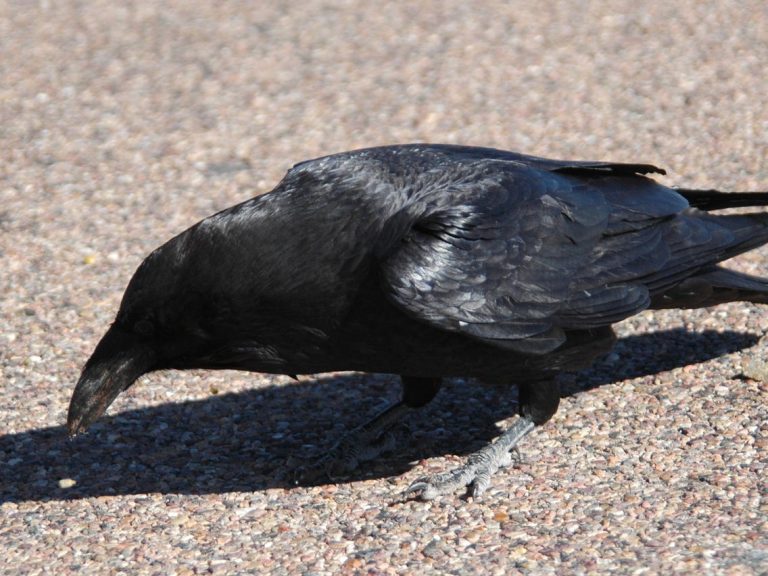
These intelligent birds are putting humans to shame by picking up street litter. The method is part of a pilot project by The Keep Sweden Tidy Foundation. “They are wild birds taking part on a voluntary basis,” said Christian Günther-Hanssen, the founder of Corvid Cleaning, the company behind the method.
The wild birds are being trained through a step-by-step process. Photo: Thakoni
Christian Günther-Hanssen, the founder of Corvid Cleaning, the company behind the method. Photo: Twitter
Some studies suggest that crows could be the smartest animals on the planet besides primates with a level of reasoning equal to a seven-year-old. “They were chosen for the job precisely because of their intelligence,” Gunther-Hanssen told Swedish news agency TT. He estimates his method could save at least 75% of costs involved with picking up cigarette butts in the city.
And it isn’t the first time crows have helped with a waste problem. In 2018, the Puy du Fou theme park in the west of France taught crows to pick up cigarette butts and other small pieces of litter in return for food.
The estimation for the cost of picking up a cigarette butt today is around 80 öre [Swedish change]Related: Responsible Recycling in Norway
The wild birds are being trained through a step-by-step process. “They are easier to teach and there is also a higher chance of them learning from each other. At the same time, there’s a lower risk of them mistakenly eating any rubbish,” says Gunther-Hanssen.
He adds, “the estimation for the cost of picking up cigarette butts today is around 80 öre [Swedish change] or more per cigarette butt, some say two kronor. If the crows pick up cigarette butts, this would maybe be 20 öre per cigarette butt. The saving for the municipality depends on how many cigarette-butts the crows pick up.” He estimates the use of crows could save Södertälje, which currently spends 20 million Swedish kroner (£1,601,518) on street cleaning, at least 75 per cent of costs.
A Swedish startup trains crows to pick up trash. Photo credit https://interestingengineering.com/
However, Tomas Thernström, a waste strategist at Södertälje municipality, said the potential of the pilot depends on financing.
Cigarette butts are the most abundant form of plastic pollution in the world. Currently, The Keep Sweden Tidy Foundation says that these persistent pieces of plastic pollution make up around 62 per cent of the litter.
“When we can teach crows to pick up cigarette butts, we may also be able to teach people not to throw them on the ground,” concludes Gunther-Hanssen.
Crows ‘Paid’ to Pick Up Cigarette Litter in Sweden, written by Tor Kjolberg
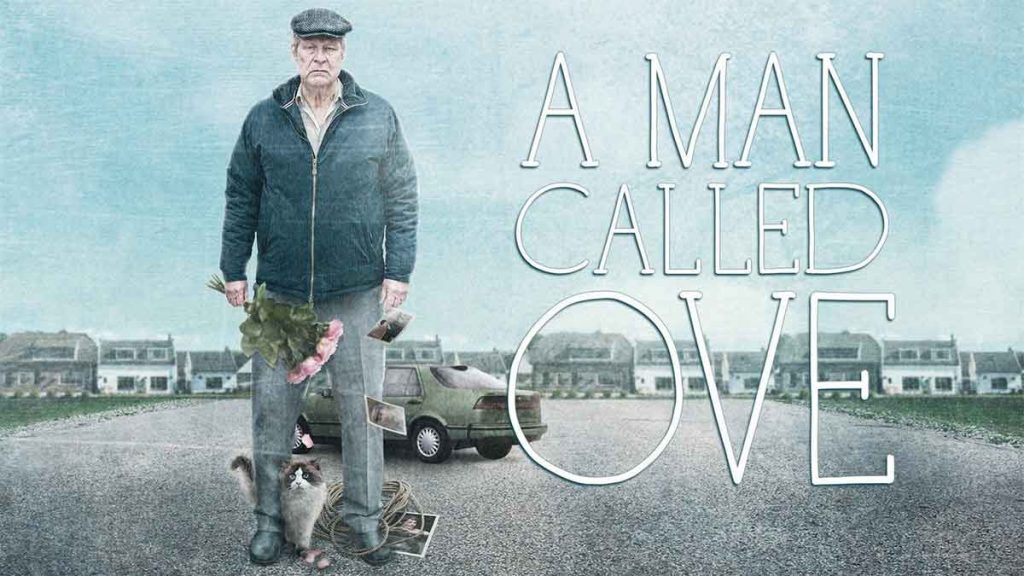
When the Swedish success film “A man named Ove” is transformed into an English version, Ove changes his name to Otto. Old Man Hanks is ready for the lead role in the American film adaptation of Fredrik Backman’s successful novel. Read more about theEnglish version of Swedish film starring Tom Hanks.
The 2012 book by Fredrik Backman was a mainstay on The New York Times best-seller list for a consecutive 77 weeks and has been translated into 43 different languages. A Man Called Ove was nominated for two Academy Awards last year and was the highest-grossing foreign language film in the United States in 2016. In addition, the film was awarded with Best Comedy prize at the European Film Awards in 2016.
A Man Called Ove was nominated for two Academy Awards last year and was the highest-grossing foreign language film in the United States in 2016. Ove played by Rolf Lassgård.
Starring Tom Hanks – Producer Fredrik Wikström Nicastro
The film company SF Studios states that they are changing the main character’s name to Otto to adapt the film to the American market. The shooting of “A Man Called Otto” began earlier this month in Pittsburgh.
“We are thrilled and extremely happy to have joined forces with Tom Hanks and the very successful Playtone in this project,” says CEO of SF Studios Michael Porseryd. Producer Fredrik Wikström Nicastro continues, “I strongly believe that A Man Called Ove is a universal story that resonates strongly with an American and international audience. Making this film with one of the world’s best and most acclaimed actors gives A Man Called Ove the best possible opportunity to once again touch the hearts of audiences worldwide.”
“We are thrilled and extremely happy to have joined forces with Tom Hanks and the very successful Playtone in this project,” says CEO of SF Studios Michael Porseryd. Photo: Bonnier
The Plot The film stars a widower (Hanks) who seems to enjoy his loneliness and misery. Though he has frequently tried to end his life, something always seems to go wrong. His life suddenly takes a change when a mixed-race couple moves into the neighborhood. Ove beings to form a friendship with the couple that will significantly improve his way of life.
I strongly believe that A Man Called Ove is a universal story that resonates strongly with an American and international audience,” said producer Fredrik Wikström Nicastro. Photo: YouTube
Global rights to Sony
Sony has taken global rights to the red-hot package from CAA Media Finance for around $60 million and is planning a wide domestic theatrical release in December.
English Version of Swedish Film Starring Tom Hanks, written by Tor Kjolberg














 Sweden is the largest e-commerce market in Scandinavia. Sweden is also the third largest country in the EU by area, has the eight highest per capita income in the world, and spends a little under 9 billion Euros online every year. Quite a figure for a country with a population of only 10 million people.
 Denmark is the southernmost of the Scandinavian countries. GDP of this country in 2019 reached
  Norway was a founding member of the European Free Trade Association, but isn’t part of the European Union, although the country was twice invited. Norway also doesn’t have the euro, instead it uses the Norwegian krone as its currency.