In Södertälje near Stockholm crows are being trained to pick up cigarette butts that are littering the streets. This is a persistent waste problem and the crows are being recruited and rewarded with a small amount of food for every butt they deposit in a bespoke machine. Read more about the crows which are ‘paid’ to pick up cigarette litter in Sweden.
These intelligent birds are putting humans to shame by picking up street litter. The method is part of a pilot project by The Keep Sweden Tidy Foundation. “They are wild birds taking part on a voluntary basis,” said Christian Günther-Hanssen, the founder of Corvid Cleaning, the company behind the method.
The wild birds are being trained through a step-by-step process. Photo: Thakoni
Christian Günther-Hanssen, the founder of Corvid Cleaning, the company behind the method. Photo: Twitter
Some studies suggest that crows could be the smartest animals on the planet besides primates with a level of reasoning equal to a seven-year-old. “They were chosen for the job precisely because of their intelligence,” Gunther-Hanssen told Swedish news agency TT. He estimates his method could save at least 75% of costs involved with picking up cigarette butts in the city.
And it isn’t the first time crows have helped with a waste problem. In 2018, the Puy du Fou theme park in the west of France taught crows to pick up cigarette butts and other small pieces of litter in return for food.
The estimation for the cost of picking up a cigarette butt today is around 80 öre [Swedish change]Related: Responsible Recycling in Norway
The wild birds are being trained through a step-by-step process. “They are easier to teach and there is also a higher chance of them learning from each other. At the same time, there’s a lower risk of them mistakenly eating any rubbish,” says Gunther-Hanssen.
He adds, “the estimation for the cost of picking up cigarette butts today is around 80 öre [Swedish change] or more per cigarette butt, some say two kronor. If the crows pick up cigarette butts, this would maybe be 20 öre per cigarette butt. The saving for the municipality depends on how many cigarette-butts the crows pick up.” He estimates the use of crows could save Södertälje, which currently spends 20 million Swedish kroner (£1,601,518) on street cleaning, at least 75 per cent of costs.
A Swedish startup trains crows to pick up trash. Photo credit https://interestingengineering.com/
However, Tomas Thernström, a waste strategist at Södertälje municipality, said the potential of the pilot depends on financing.
Cigarette butts are the most abundant form of plastic pollution in the world. Currently, The Keep Sweden Tidy Foundation says that these persistent pieces of plastic pollution make up around 62 per cent of the litter.
“When we can teach crows to pick up cigarette butts, we may also be able to teach people not to throw them on the ground,” concludes Gunther-Hanssen.
Crows ‘Paid’ to Pick Up Cigarette Litter in Sweden, written by Tor Kjolberg
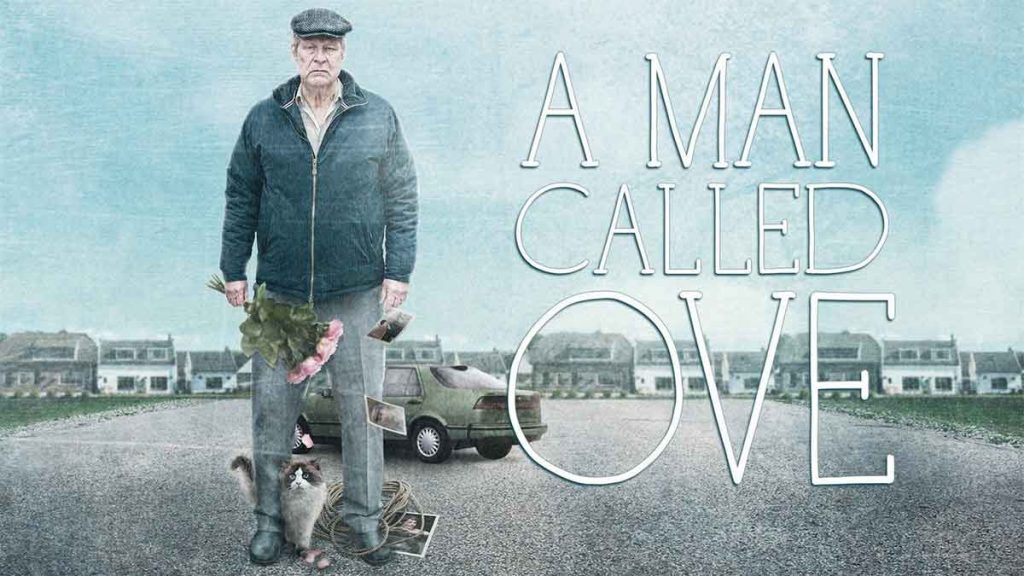
When the Swedish success film “A man named Ove” is transformed into an English version, Ove changes his name to Otto. Old Man Hanks is ready for the lead role in the American film adaptation of Fredrik Backman’s successful novel. Read more about theEnglish version of Swedish film starring Tom Hanks.
The 2012 book by Fredrik Backman was a mainstay on The New York Times best-seller list for a consecutive 77 weeks and has been translated into 43 different languages. A Man Called Ove was nominated for two Academy Awards last year and was the highest-grossing foreign language film in the United States in 2016. In addition, the film was awarded with Best Comedy prize at the European Film Awards in 2016.
A Man Called Ove was nominated for two Academy Awards last year and was the highest-grossing foreign language film in the United States in 2016. Ove played by Rolf Lassgård.
Starring Tom Hanks – Producer Fredrik Wikström Nicastro
The film company SF Studios states that they are changing the main character’s name to Otto to adapt the film to the American market. The shooting of “A Man Called Otto” began earlier this month in Pittsburgh.
“We are thrilled and extremely happy to have joined forces with Tom Hanks and the very successful Playtone in this project,” says CEO of SF Studios Michael Porseryd. Producer Fredrik Wikström Nicastro continues, “I strongly believe that A Man Called Ove is a universal story that resonates strongly with an American and international audience. Making this film with one of the world’s best and most acclaimed actors gives A Man Called Ove the best possible opportunity to once again touch the hearts of audiences worldwide.”
“We are thrilled and extremely happy to have joined forces with Tom Hanks and the very successful Playtone in this project,” says CEO of SF Studios Michael Porseryd. Photo: Bonnier
The Plot The film stars a widower (Hanks) who seems to enjoy his loneliness and misery. Though he has frequently tried to end his life, something always seems to go wrong. His life suddenly takes a change when a mixed-race couple moves into the neighborhood. Ove beings to form a friendship with the couple that will significantly improve his way of life.
I strongly believe that A Man Called Ove is a universal story that resonates strongly with an American and international audience,” said producer Fredrik Wikström Nicastro. Photo: YouTube
Global rights to Sony
Sony has taken global rights to the red-hot package from CAA Media Finance for around $60 million and is planning a wide domestic theatrical release in December.
English Version of Swedish Film Starring Tom Hanks, written by Tor Kjolberg
Are you interested in traveling to Scandinavia? Make sure you are prepared and ready to see places with scenic beauty and hospitable people. Learn how to make your journey to Scandinavia unforgettable.
Known for its spectacular coastlines, glaciers and winter wonders for skiing or hiking, Scandinavia has so much to offer. Let the culture and history of the country inspire you.
Scandinavians are sporty, so you can easily do any kind of sport in the cities and in nature, like kayaking on rivers or cycling. Modern art and architecture can be seen in the big cities, but small villages have kept the traditional medieval style and architecture.
Explore with us the possibilities to make your trip to Scandinavia unforgettable.
Top Destinations in Scandinavia (husky sledding northern lights) There are numerous cities you should have on your bucket list when in Scandinavia. Start with Norway. Oslo and its urban architecture, coupled with the green hilly landscape, is a good place to start.
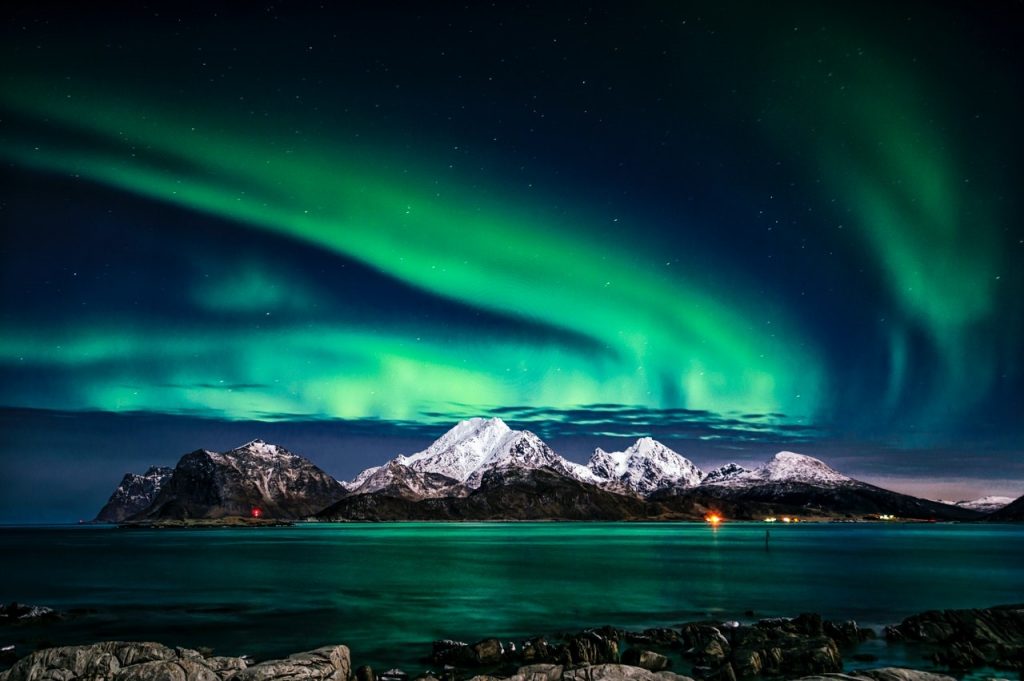
Don’t hesitate to visit the Lofoten Islands in the Arctic Ocean. You will be amazed by the colorful houses of these small fishing villages. If you plan to visit the islands in winter, don’t miss the Northern Lights.
Don’t miss the Northern Lights
And don’t forget to take your camera with you and capture your unforgettable memories. After all, what’s better than creating an amazing photo board by using a mood board template when you’re back home?
From Sweden, you will definitely want to visit Stockholm, where the culture and history are paramount. Gamla Stan and the Nobel Museum are just a few of the stops you could make. If you visit Sweden in winter, you should try ice skating and husky sledding!
Gothenburg is another wonderful place to visit in Sweden. Explore the neoclassical architecture and romantic canals that crisscross the city.
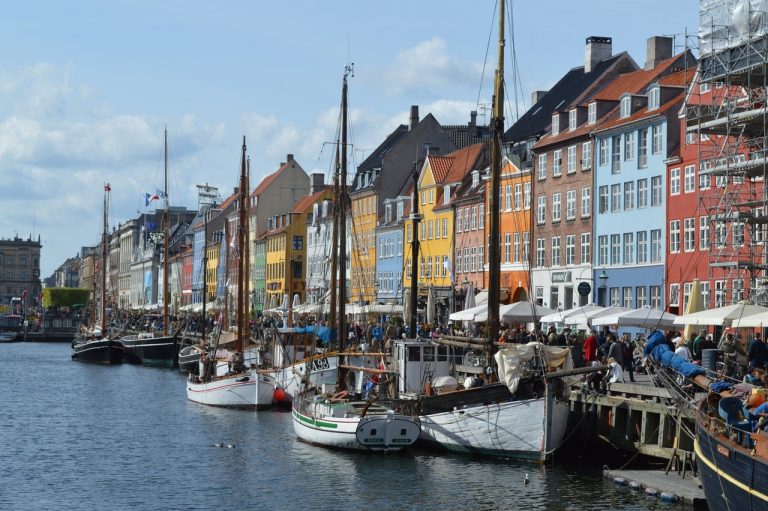
In Denmark, you should visit Copenhagen, where you will need several days to explore all the cultural and historical monuments like Amalienborg Castle.
Do a Scandinavian Road Trip Explore Scandinavia at your own pace with an unforgettable road trip. After all, what better way to get to know a place than on a road trip? You can make several stops in smaller or larger towns and villages and get to know the locals.
You can easily do any kind of sport in the cities and in nature, like kayaking on rivers or cycling.
Another good reason why you should visit Scandinavia on wheels is that you can create your own itinerary and get to know the natural landscape better. You will have the opportunity to take a hike or a bike ride to the non-touristy parts of each country.
Traveling by motorhome is ideal if you are adventurous. Norway is very well organized with campsites for motorhomes in the most beautiful places.
If you visit the Scandinavian archipelago on a road trip, head to Stallhagen, where you can taste the oldest preserved beer in the world!
Take Cultural Tours in Capitals (saunas) If you want to learn about the culture and history of the Scandinavians, one of the best ways to do that is to take any cultural tour. Especially in the big capitals of the countries, these are very well organized.
Another way to explore Scandinavian culture is to meet the locals and follow their “traditional” habits. A good cultural example that you might didn’t know is that Scandinavians love coffee. They even have “coffee parties” (fika) where people hang out together, drink coffee, and eat buns and cakes!
Swedes have “coffee parties” (fika) where people hang out together, drink coffee, and eat buns and cakes!
Another local habit is saunas. They combine the warm sauna with a refreshing dip in the cool water. This combination may seem strange to you, but it will definitely make you feel awake and alive.
These are some tricks to explore the Scandinavian culture. If you follow our advice and take tours and meet the locals, you will definitely understand their culture and everyday life better.
Cruises are the Best Another wonderful way to explore Scandinavia is by boat. We definitely recommend a cruise so you can see the extraordinary water landscapes with your own eyes.
A cruise around Scandinavia and the Baltics is the best way to have an adventure in several countries.
A cruise around Scandinavia and the Baltics is the best way to have an adventure in several countries. You will have the opportunity to see some of the most beautiful coastal cities.
Another great option is to cruise the fjords and coast. The fjords of Norway are famous for a reason. You will fall in love with this unique scenery and extraordinary landscape.
If you have time, you can spend 5-7 days on this cruise so that you see all the highlights.
Best Time to Visit Scandinavia It all depends on when you plan to visit Scandinavia. You can choose any season and do different things. Of course, you can do many activities in more than one season.
The best weather and longest daylight hours are in July and August
For example, the best weather and longest daylight hours are in July and August. In winter, the cities are less crowded and you can explore them at your own pace.
The famous Northern Lights can be seen in the dark skies in the Arctic region between October and March.
How to Make Your Journey to Scandinavia Unforgettable – Wrap Up In any case, Scandinavia is worth visiting at any time of the year and more than once. You will love the nature with its unique landscapes and the cities with their fusion of urbanity and tradition. Just bring your smile and your good mood!
How to Make Your Journey to Scandinavia Unforgettable is a promotional article written by VistaCreate.
Norway is a truly majestic choice when it comes to nature, adventure, and getting in touch with what matters in life. It might be difficult for some to plan their trip because of geographic location, but once you get to the country, everything is worth it. However, this should not mean it is a good idea to just hop on a flight and go. Here are9 things you should know before you visit Norway.
There are several things you should know to make your Norway visit better. Here are some you should remember.
It Is Not That Common To See Polar Bears A very common misconception about Norway is that polar bears are everywhere. In reality, you will find zero polar bears on the mainland Norway area. The country is actually quite civilized and the cities are modern. But, this does not mean you cannot see some polar bears. You can go to Svalbard for that. There, there are fewer people present than polar bears and you will be happy to hear incidents are rare.
The currency used is NOK, which means Norwegian Krone. Photo: Bergen guide
Norway Does Not Have The Euro As The National Currency The currency used is NOK, which means Norwegian Krone. If you think Euro bills are enough, you would be mistaken. Fortunately for travellers though, NOK is weaker than it used to be. This means your trip will be cheaper.
We should also highlight that the use of debit and credit cards is constantly growing. You can now even take taxis and pay with your card. In most parts of the country, it will not be a big problem if you do not have cash on you. However, if you visit some of the remote or underrated Norway destinations, it is best to plan ahead and have some cash on you.
Talking to strangers is not something you should worry about. Photo: University of Bergen / Eivind Senneset
Speaking English Is Fine Learning Norwegian is difficult for many nationalities but this should not be a problem for you if you know English because most locals speak the language. It is common to see people who are shy when it comes to having conversations but they can understand and answer your questions when you have them. Talking to strangers is not something you should worry about.
Norway Is Very Safe For Tourists Some documentaries might make you think Norway is not safe but we are talking about one of the safest options in the entire world. Crime rate is low even when looking at the major cities like Stavanger, Bergen, or Oslo.
Obviously, as a tourist, precautions are a very good idea. But, you will not have problems walking at night. Most Norway crimes are office and home burglaries. And you do have pickpoketers in touristic areas, es everywhere else. If you use your due diligence, you will not have a problem.
Norway’s weather changes quite a lot between the seasons. Photo: Visit Norway
Take Extra Clothes With You Norway’s weather changes quite a lot between the seasons. You do need to make sure you have enough clothes with you. This is particularly important when you plan hikes. An extra layer can be a huge difference even during summer. Rain jackets and fleeces should be present in your backpacks since weather can changes really fast while temperature drops can be serious as you reach higher altitudes.
Wild Camping Is Possible In Most Of The Country Allemannsretten dictates that everyone is allowed to pitch their tents in the country wherever they want, unless something else is stated in a specific area. For the locals, the outdoors can only be considered as very important. The only rule is that you should leave no traces so nature is not damaged by your stay.
In Norway, there are several really affordable campsites tourists love. Photo: Visit Norway
In the country, there are several really affordable campsites tourists love. They are perfect if you want to use tents when you travel since you get the opportunity of taking a shower, charging batteries, and cleaning clothes.
As an extra thing to remember, you can access public lands for free. This means most outdoor locations and the national parks have no entry fee.
Eating Out Can Be Expensive Although traveling to Norway is not as expensive as many think, if you decide to only eat out, your budget will be drained fast. Restaurants are great and Norwegian salmon is the best in the world, but if you do want to save money, you do want to buy your own food. Supermarket purchases are simply a lot cheaper.
The Outdoors Are Quite Safe The polar bears we mentioned above are basically the only dangerous animals you can find in Norway. Generally, the wild is quite safe for humans. Obviously, you will want to avoid some animals but most will just run away as they see you.
Visiting Norwegian families during Fridays means there is quite a high chance you will see them eating tacos. Photo: Joses Taco and Quesadillabar, Vulkan, Oslo
Norwegians Love Taco Last but not least, here is a very funny fact for visitors. Visiting Norwegian families during Fridays means there is quite a high chance you will see them eating tacos. These are very popular and surprise most tourists when they learn about it.
9 Things You Should Know Before You Visit Norway, written exclusively for Daily Scandinavian by Boris Dzhingarov.
Since ancient times, mathematics and architecture have been related. In ancient Egypt, Greece and India, buildings were laid out with specific proportions. It was applied to pyramids, mosques, temples and palaces mostly because of religious reasons. Today, architects still use math and geometry in multiple ways. For example, these two are needed to define the spatial form of a building, create harmonious forms, lay out buildings according to aesthetic principles and decorate them. Learn more aboutmathematical tendencies with their influence on Scandinavian architectural design.
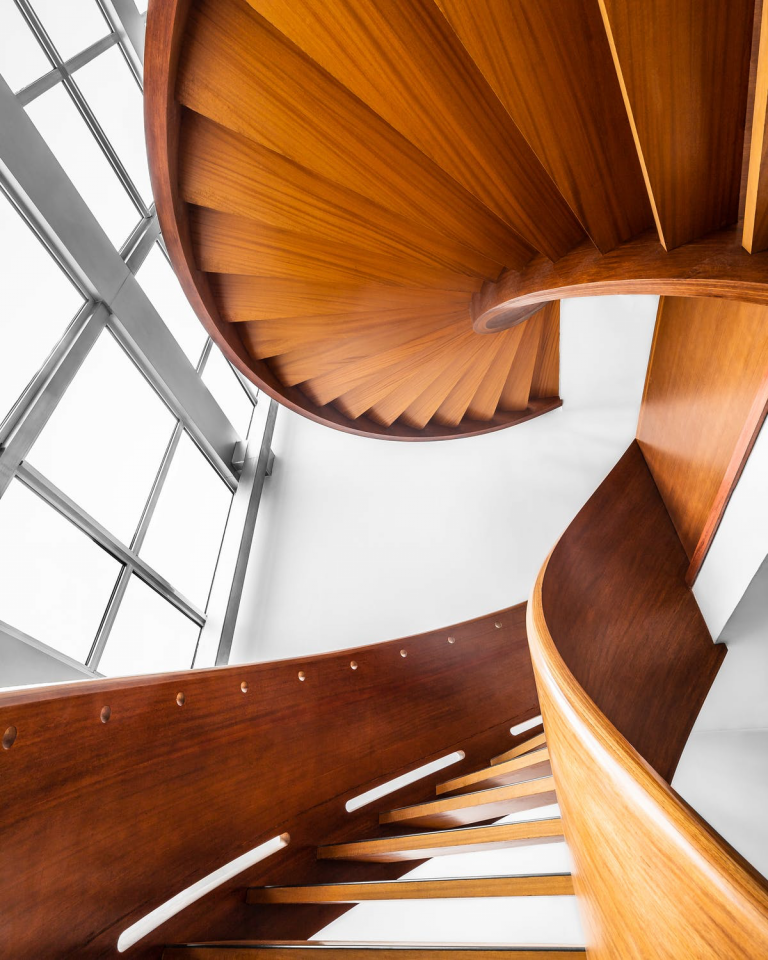
Scandinavian architecture Scandinavian architecture is a relatively new concept that emerged in the early part of the last century. When speaking of this style, it incorporates clean lines and generous use of natural light. Scandinavian architecture draws direct inspiration from nature. It also focuses on creating ecologically sustainable and energy-efficient buildings.
Scandinavian aesthetic is both simple and comfortable, modern and traditional. Architects incorporating this style are experts at blending vernacular styles with up-to-date technology. This way, they create a beautiful space that aims to make people’s lives better.
One of the core characteristics of the Scandinavian approach is minimalism. That means designs usually have a lack of decoration, being functional and balanced. Alongside a sense of simplicity, Scandinavian buildings make an impression of being inviting.
Scandinavian architecture incorporates clean lines and generous use of natural light. Photo: Pexels
The most famous architecture agencies in Scandinavia A lot of spectacular architects come from a land of fjords and sky-scraping mountains. Since they are inspired by the surrounding landscapes, they can create harmonious works of Scandinavian design. Let’s consider some of the most renowned architecture companies.
Biotope specializes in unique natural designs.
Rever & Drage makes unusual residential spaces for the Scandinavian market. Reiulf Ramstad Architects is known for its simple architecture connected to the Norwegian landscape. Helen & Hard sees opportunities for experimentation in every project. Jensen & Skodvin gained an international reputation for its modern buildings.
JVA believes buildings should be interesting rather than conventionally “pretty”.
Kleihues + Kleihues makes timeless modern designs.
Rintala Eggertsson strives to combine architecture and art for family homes and workspaces, using “space, light materials, and the human body”. Saunders focuses on exploring dynamic architecture that shapes human interaction.
The mathematics of design Students usually place math in the list of the most challenging college classes. And no wonder why! This subject is really complicated. Especially when it’s taught by unprofessional instructors. If you have difficulty understanding equations and inequalities or other math concepts, you can always get help online. Luckily, there are a lot of websites that provide clear explanations on any topic and inspire you to learn more about different things. So, if you would like to dig deeper into the mathematics of design, keep reading the article!
The Fibonacci sequence shown alongside a statue of Fibonacci (Leonardo of Pisa).The Fibonacci sequence There is a special sequence of numbers, which is called the Fibonacci sequence: 0, 1, 1, 2, 3, 5, 8, 13, 21, 34, and 55. Why is it special? Because if you take a closer look at it, you will see that every number is the sum of the two prior numbers. How does it relate to art and design? So, imagine that each number is a shape. For example, if the number 1 represents a 1-inch square and the 55 is a 55-inch square, then the combination of those squares can form the golden rectangle. You can find this rectangle in Scandinavian architecture.
Sun Temple Modhera is an example of fractal architecture. Photo: Researchgate
Fractals Fractals are basically repeating patterns created via the mathematics of design. By the way, they appear in nature, for example in crystals, blood cells, snowflakes, waves, DNA, citrus fruit, and animal color patterns. Fractals can be noticed regardless of scale. To understand this concept better, imagine that you are using a microscope and no matter how closely you zoom in, you will continue to see the same repeating patterns, which is known as self-similarity. Fractals can be created with mathematical formulas and it’s believed that they are both soothing and aesthetically pleasing. That’s why fractals are often used in Scandinavian design.
Polyhedra in architecture. Photo: Worldarchitecture
Polyhedra A polyhedron is defined as a 3D structure that consists of polygons joined along their edges. For centuries, architects have incorporated polyhedra into designs. Nowadays, this approach distinguishes buildings among thousands of others. Polyhedral nets contain fascinating patterns that you can often see in mosaics and houses with geometric patterns.
Mathematical Tendencies with Their Influence on Scandinavian Architectural Design– Final thoughts
Undoubtedly, math and architecture are inextricably linked. Since the human brain appreciates consistency, mathematics goes hand in hand with architectural design. Many construction concepts, including symmetry, balance, exactness, and proportion, have direct ties to mathematical discoveries. So, if you are an architect or you are going to start a career in this field, you should know how to incorporate math principles into your work. Hopefully, now you understand how mathematics can act as a game-changer.
Mathematical Tendencies with Their Influence on Scandinavian Architectural Design, written exclusively for Daily Scandinavian by Emma Rundle. Emma is an architect and writer. She publishes articles in popular design magazines, sharing her insights on modern architecture. In her free time, Emma enjoys watching documentaries about the history of architecture and writes her own web blog.
In Copenhagen, there used to be a sausage wagon on every corner, but suddenly the hot dog fell out of fashion. However, a new generation of pølsemænd (sausage men) has put sausages back on the Copenhagen map. Read aboutthe rise, fall and rise again of Denmark’s favorite fast food.
Street hotdogs were popular in Germany during World War I and soon caught on in Sweden and Norway. However, it wasn’t until 1920 that Denmark got its first hotdog vendors. For various reasons applications to city councils to sell hotdogs from street wagons after restaurants closed until 2:30 were rejected.
In 1917, a municipal authority in Aarhus wrote, “It would be sad to see people standing on the streets eating sausages”.
It wasn’t until 1920 that Denmark got its first hotdog vendors. Photo: Visit Denmark
Early history But in 1921, Charles Svendsen, a Dane who had been running a successful hotdog business in Oslo (at that time Kristiania), was granted permission to open his hotdog vans at several locations around Copenhagen. The sausages with mustard on the side, costing around 25 Danish øre (cents) was at that time a luxury meal. If you were to splash it out with a roll, you had to add another 5 øre.
Soon, the hotdog became an important part of Danish culture with the quality of being able to gather the people. It’s all about coziness, humor and conversation between people across social classes. It is informal and a part of the Danish popular culture.
“Try a Danish hot dog – simply the best you can get” I have been to several Christmas markets in Copenhagen, and I must admit, buying a red hotdog from one of the pølsevogn (sausage wagons) was one of the highlights of the day. I was tempted by the poster, claiming “Try a Danish hot dog – simply the best you can get”.
The hotdog became an important part of Danish culture. Photo: Stryhns, Copenhagen
It’s a classic (almost romantic) sight in Copenhagen to see a hotdog vendor calmly pulling his van behind him on a busy city road. Hotdogs, and the people who sell them, are adored in Denmark, and for good reason. Although hot dogs are eaten less and less frequently, a local pølsevogn still holds a place of affection for most Danes. Be you vegetarian or carnivore, it would be a shame to pass through Copenhagen without trying a traditional Danish hot dog.
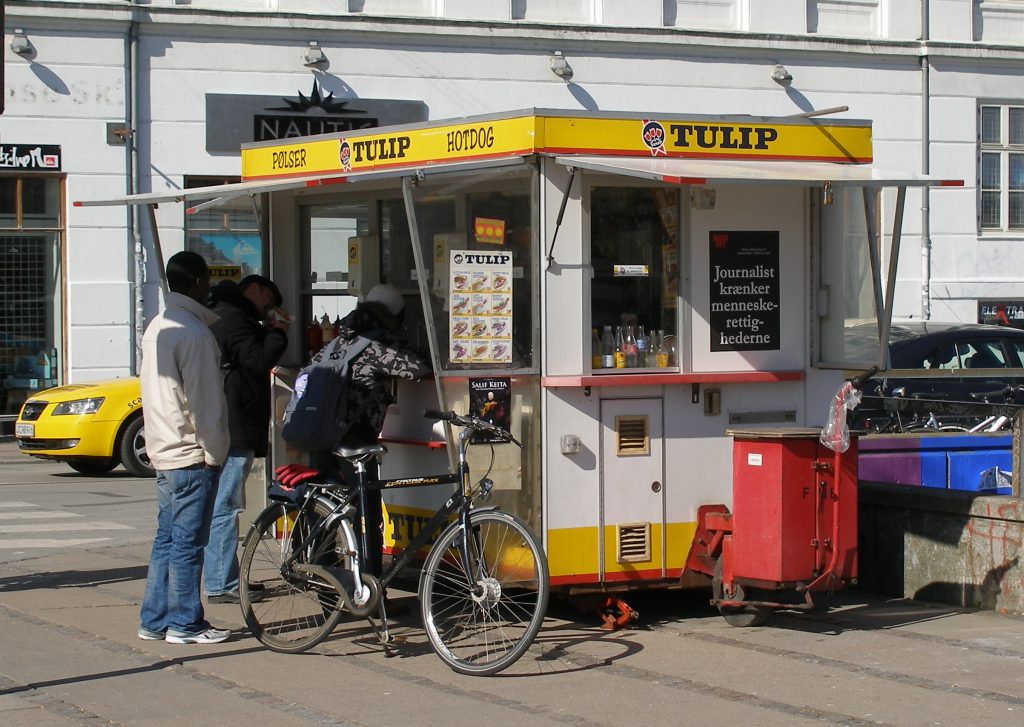
The first Danish hotdog vans were nothing like the ones we know today. They were small, wooden push carts with large wooden wheels, and only the fancier ones had a shelter for the vendor to stand under. A modern hotdog stand has wheels underneath and it is completely self-sufficient. This means that it doesn’t need fixed power and water supply and it can be charged up. It can have its own engine and the whole thing can be packed away in about 15 minutes.
Pølsevogn at Nørrebro. Photo: Wikipedia
The decline of the Danish pølsevogn
Once there were around 800 pølsevogn in the Danish capital. Today, the number is closer to 75. The proliferation of the American fast food might be one of the reasons, but Big Mac isn’t entirely to blame.
Another reason might be that the mobile hotdog stands are being transformed into stationary stands, which give them the opportunity to expand their selection. The reason for the restructuring is that it’s difficult to survive merely on the sale of hotdogs.
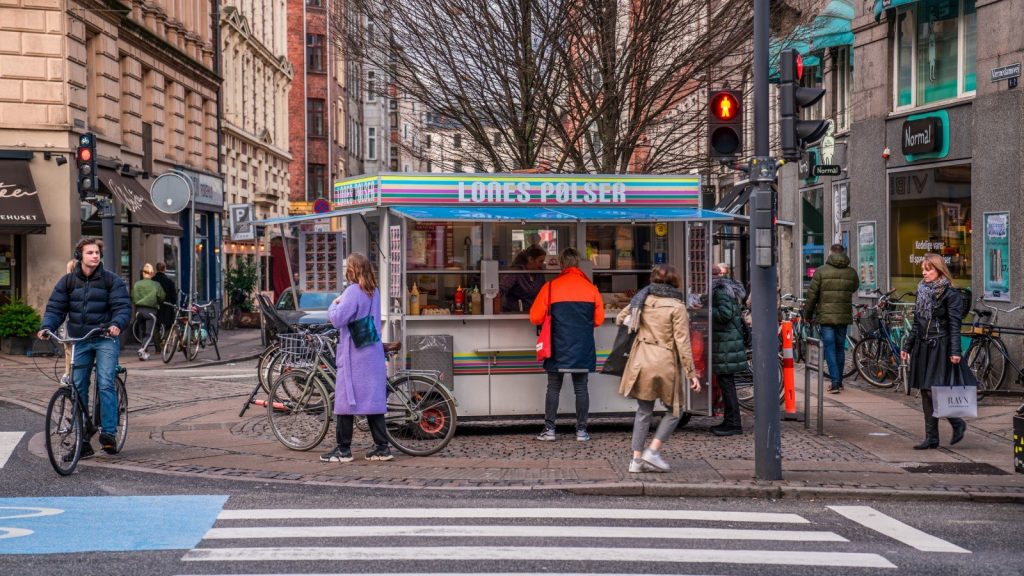
The classic Danish hotdog was a boiled red sausage (red Vienna sausage). Traditionally vendors painted the sausages red to indicate that the meat was a day old. But the dyed sausages became popular. At one point, all hot dog sausages in Denmark were red regardless of meat quality.
Lones pølser. Photo: Visity Copenhagen
On the wrong side of the gastronomic revolution
In later years, the hot dog found itself on the wrong side of the gastronomic revolution, although you can buy it with both ketchup, mustard, remoulade, raw onion, crispy fried onion, marinated cucumber salad and different dressings. As Copenhagen transformed from culinary backwater to serious food destination, with the world-beating likes of Noma preaching the virtues of local, seasonal and foraged produce, the hot dog, with its starchy, sugary buns and mystery meat, looked like pre-Enlightenment food, a relic from the 20th-century.
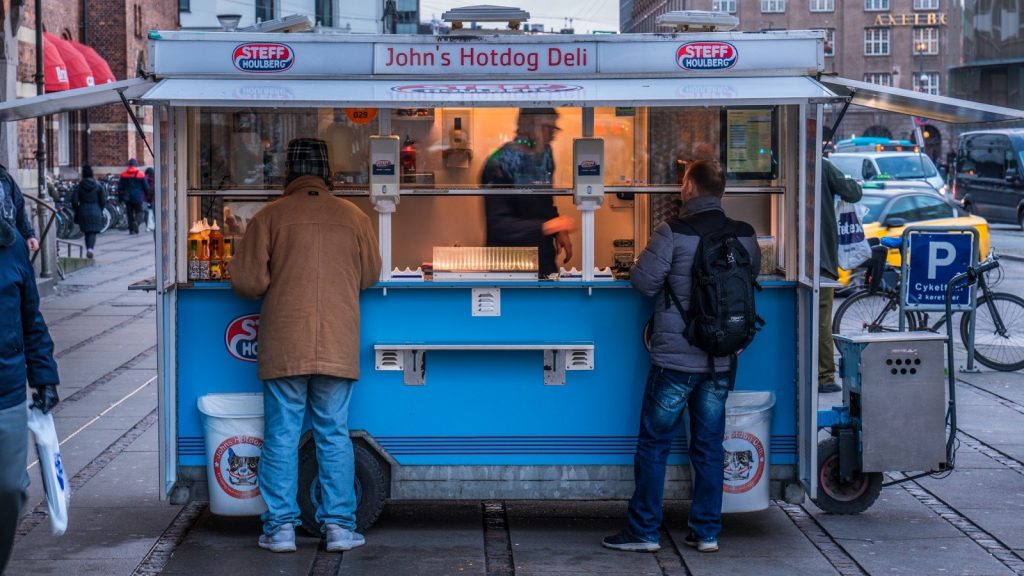
Johns Hit Dog Deli. Photo: Visit Copenhagen
Another thing that makes the hotdog stands disappear from the streets is the fact that the authorities won’t grant stalls the stands. A hotdog man in Aarhus lost his licence to keep his hotdog stand in the street because of city renewal. He had applied to be given a new place in Aarhus C, but was rejected by Aarhus municipality. As a result, he packed the hotdog stand away for the last time in 2002. And so, there are no mobile hotdog stands left in East Jutland.
Hotdogs, and the people who sell them, are adored in Denmark. Photo: Asko
Tolerant sausage vendors
Nevertheless, almost everyone eats hotdogs and, therefore, the hotdog vendors of Denmark have a reputation for being not only kind, but also very tolerant people. For those looking for the full Danish experience today, order your hot dog with a Cocio (a Danish chocolate milk drink). Or double down on the meat with a bacon-wrapped sausage (ristet hotdog i svøb).
The Rise, Fall and Rise Again of Denmark’s Favorite Fast Food, read on….
A group of sausage-happy Danes are now updating hotdogs for the post-Noma era, while trying to hold onto its unique place in Danish society. The humble hot dog isn’t merely the food of childhood treats and late-night drunken snacking, a kind of culinary embodiment of Danish hygge. History shows, it also helped destroy the Copenhagen restaurant mafia and increase workers’ rights.
The classic Danish hotdog was a boiled red sausage (red Vienna sausage). Photo: Asko servering
Post-war sausage vendors
in 1940s Denmark, in order to work as self-employed, applicants had to prove to the council that they was disabled or otherwise unable to work in a normal job. This changed the hotdog landscape in Copenhagen, and many other parts of Denmark, dramatically. Now that it was no longer just a job, hotdog vendors started putting more care into their business and into the hotdogs themselves. Selling hotdogs in Denmark became a very personal thing.
In later years, the hot dog found itself on the wrong side of the gastronomic revolution. Photo: Visit Denmark
Introduced in Denmark in the 1970s, a French hot dog is a hollowed baguette, filled with a mayo-based French dressing and stuffed with a ristet wienerpølse. Lining the baguette evenly with sauce is the secret to making the perfect French hot dog. In fact, seasoned eaters know a trick or two to prevent the sauce from pooling at the bottom.
. Selling hotdogs in Denmark became a very personal thing. Photo: Wikipedia
The comeback of the Danish hotdog In 2012, Ole Trolsoe, food editor at the largest Danish business daily Børsen and with a soft spot for the old pølsevogn, established a Hot Dog Championship. His ambition was to save the mobile Danish sausage-stands, that was the only and the original vendors of Danish street-food.
These championships are now history. However, the breed of gourmet dogs that triumphed at these championships contributed to a new dawn for the Danish sausage tradition. Located in the gritty Meatpacking district, the affordable, fuss-free John’s Hotdog Deli is a dining institution. According to Condé Nast Traveler, “here, you won’t find fancy new Nordic plates; quite the opposite, in fact. This is a low-key hotdog joint where you can do what true fans of the delicacy love to do: build your own».
If Copenhagen’s sausage vendors move with the time, their future is as bright as rød pølse.
The Rise, Fall and Rise Again of Denmark’s Favorite Fast Food, written by Tor Kjolberg
The region separating Lake Vänern from Lake Vättern offers rich pickings for visitors. This is the province of Västergötland and the cradle of Sweden.
In 1746, the indefatigable Swedish botanist Carolus Linnaeus said, “Truly no one could ever imagine such splendor as in Västergötland who had not seen it for himself.”
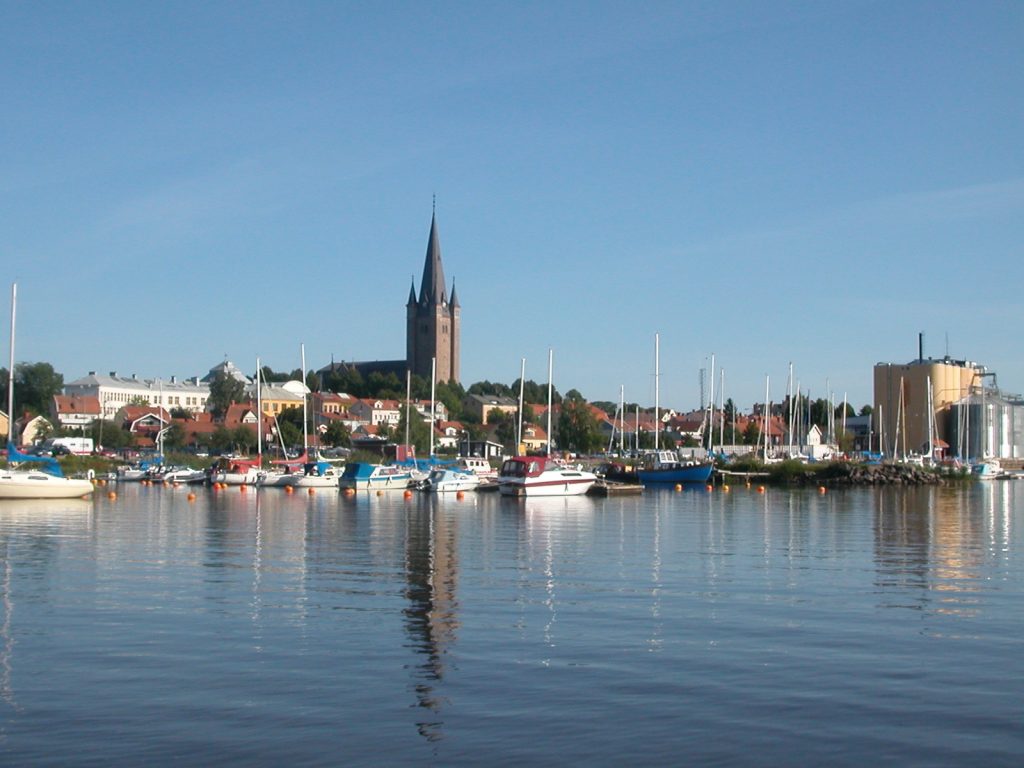
Mariestad skyline. Photo: Wikipedia
Mariestad
Heading south along the eastern shore of Vänern, you come to Mariestad, dominated by the spire of the 17th-century Renaissance-style cathedral, one of the few churches of this period remaining in Sweden.
Most Swedes learn in school that the king who first united Svea and Göta tribes, Olof Skötkonung (994-1022), was baptized in 1008 at Husaby Källa (Husaby Spring). True or not, Husaby is considered to be the cradle of the Swedish state.
Next to the spring, the 12th-century Husaby Church is an imposing three-spired edifice with beautiful ceiling-paintings inside.
Lidköping, the porcelain town Nestled into Kinneviken (Kinne Bay) 51km (32 miles) south of Mariestad, is Lidköping, a town founded in 1446 and once renowned for its porcelain. Its most famous company Rörstrand, the maker of the Nobel china, no longer has a factory in Lidköping (its fine china is now manufactured in Hungary and Sri Lanka), but a new Rörstrand museum opened here in 2008, and there is a large factory shop. Lidköping has several fine cafés, including the renowned Garströms Konditori, established in 1859, on the main square.
Photo: Västsverige
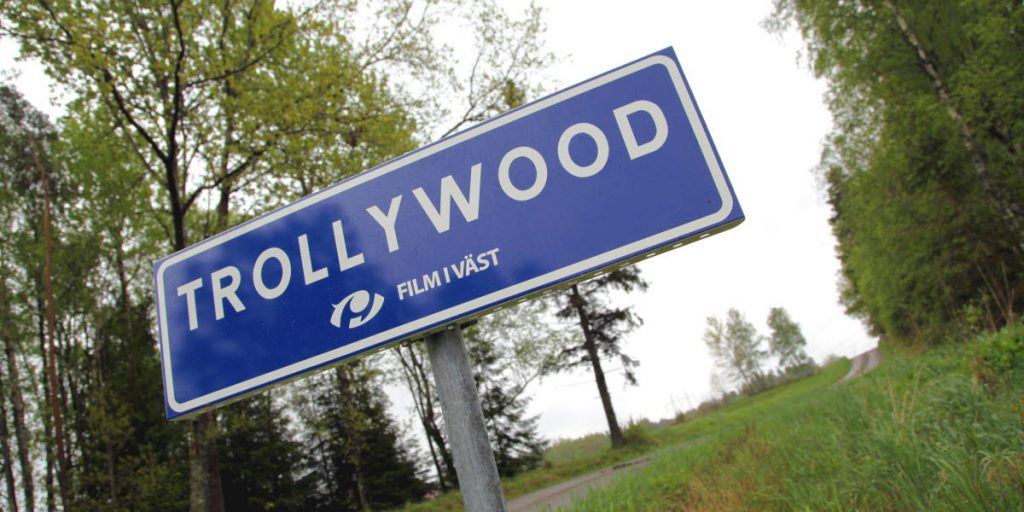
Trollywood
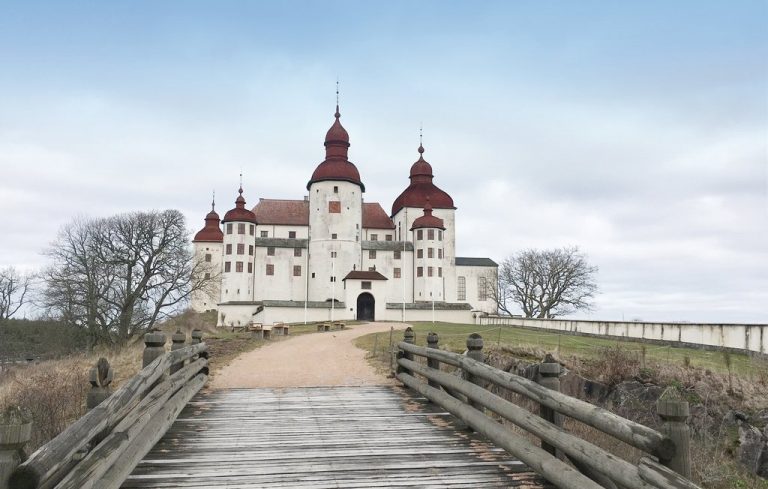
North of Lidköping on the Källandsö peninsula stands the restored Baroque-style 17th-century Läcko Slot, one of the most impressive castles in Sweden. In summer it holds cultural exhibitions and is a venue for outdoor concerts.
Trollhättan, at the southern tip of Lake Vänern, was the hometown of Saab Automobile and has a rich industrial heritage: it’s also known as “Trollywood” thanks to its film production! The town has long been famous for the magnificent 32-meter (105ft) falls of the Göta River. Today, the river is diverted to generate electricity and the falls are silent. But during the annual Falls Festival in July it is released to follow the old course, providing an impressive spectacle.
Läcko Slot. Photo Wikipedia
Heartland of Sweden’s textile industry The southern part of Västergötland is still the heartland of Sweden’s textile industry, with the focal point at Borås, where there is a Textilmuseet (Textile Museum).
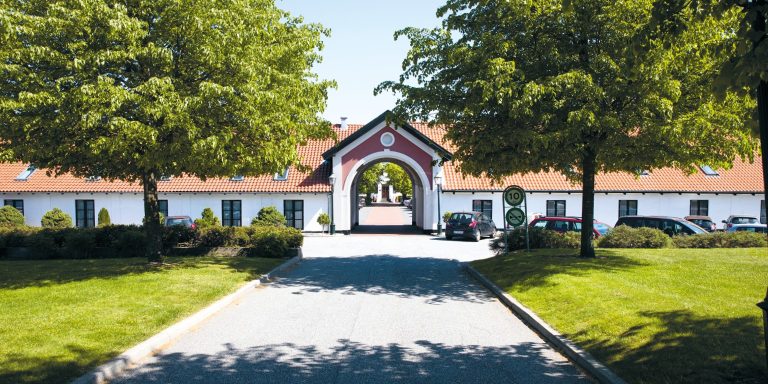
Located in the outskirts of Aalborg, the four-starred Best Western Hotel Scheelsminde offers guests a historic stay in one of Denmark’s beautiful old manors. The historic building, which has been in the hands of the family Bühlmann for three generations, is a favorite location for weddings, conferences as well as weekend breaks. Learn more about the manor house atmosphere close to Aalborg city center.
By means of the many facilities and opportunities, Scheelsminde is the perfect place for both couples, families, business people and others who want great experiences. The hotel offers a little bit of everything – from high-level gastronomy to party rooms, to relaxation with pool and spa.
The hotel houses a total of 96 modern and cozy rooms
Historic manor house
Built in 1808 by Christian Paul Scheel, a prominent member of the Judiciary, Scheelsminde manor was turned into a small hotel by the current owner Anemette Bühlmann’s grandparents in 1960. Since then, the hotel has been carefully extended, modernized and renovated. Today, the hotel houses a total of 96 modern and cozy rooms, as well as meeting rooms, conference and banquet facilities, swimming pool, spa and an international restaurant. Still, the manor’s special charm and atmosphere has been preserved.
A green oasis Hotel Scheelsminde is located in a quiet residential area surrounded by a large park which is constantly being developed and updated to ensure that guests can both enjoy their stay while recharging their batteries for a new and effective work day.
The hotel offers a little bit of everything – from high-level gastronomy to party rooms, to relaxation with pool and spa.
“What we try to do is create a small oasis in Aalborg with a quality-orientated service. We have a lot of regulars who tell us that they feel as if this is their second home and that’s exactly the feeling we try to create. We want our guests to feel that they are staying at a family-owned hotel and not just another corporate chain hotel,” says hotel director Anemette Bühlmann.
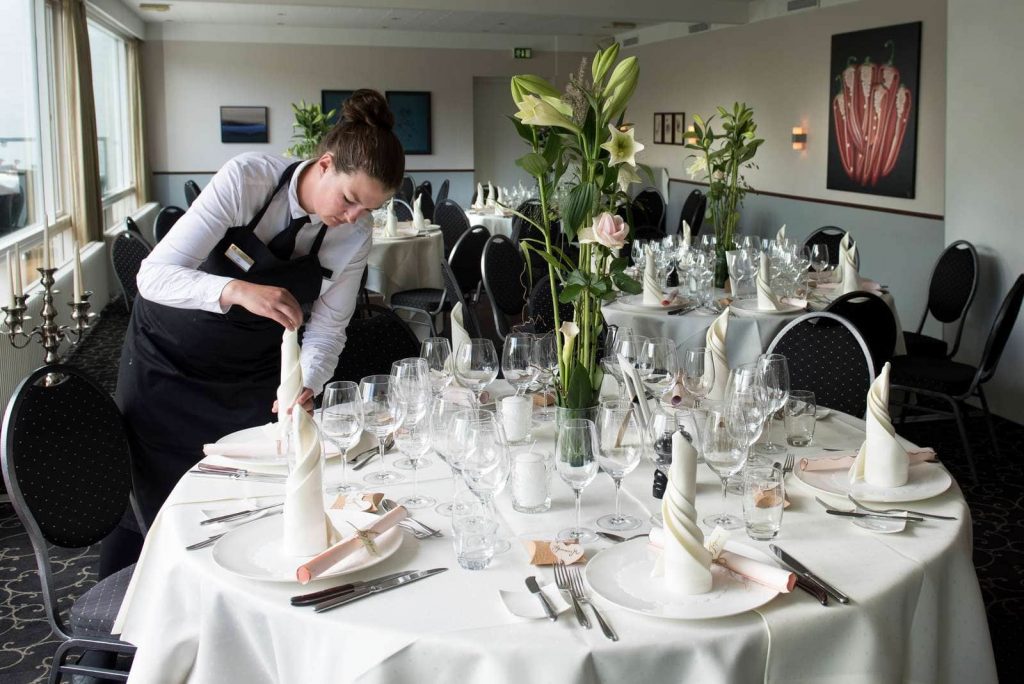
Several types of stays The modern conference center can accommodate more than 100 guests and there are all imaginable facilities. However, the hotel offers several types of stays e. g. gourmet stays and golf stays. You have the opportunity to find what suits you. Whether it is to immerse yourself in the hotel’s library or a bike ride, or something else, the manor house offers a lot of exciting experiences.
“What we try to do is create a small oasis in Aalborg with a quality-orientated service,” says hotel director Anemette Bühlmann.
The hotel is located no more than a ten-minute bus or car ride from the center of Aalborg. “A lot of our weekend guests come here just to relax and enjoy Aalborg. What we offer is a green oasis within a short distance from the city and the shopping center,” says Bühlmann.
Manor House Atmosphere Close to Aalborg City Center, written by Tor Kjolberg
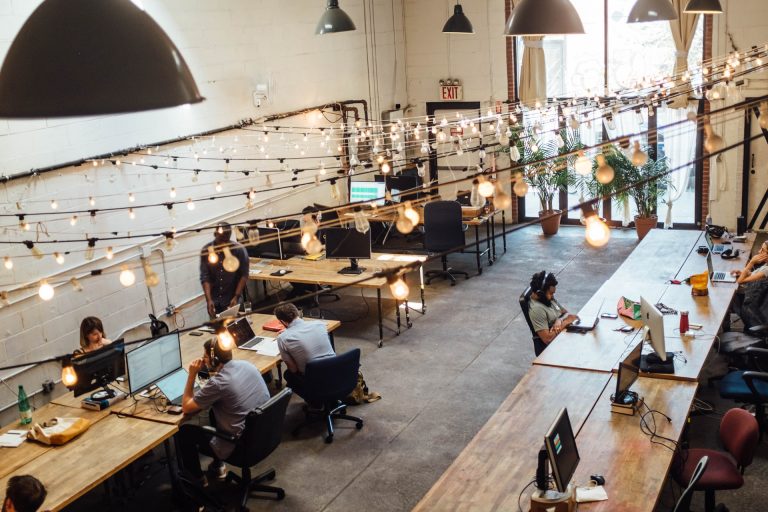
The COVID-19 pandemic forced millions of us to start working remotely. That meant we got to spend more time at home, and less time stuck in traffic jams and crowded offices. Learn more aboutthe coworking culture in Scandinavian countries.
Many employees found that remote working wasn’t all it was promised to be. Instead, working from home presented an entirely new set of challenges, as kids, dogs, and everyday distractions got in the way of our desire to work.
So, now that we approach the end of the pandemic, plenty of folks are ditching their kitchen-table-office setup, and are opting to work in coworking spaces.
While this idea is novel for most people, it should come as little surprise that Scandinavian countries already have a strong coworking culture — they always seem to be a step ahead! Here’s a quick intro into that vibrant culture, with some tips to help you fit in.
While this idea is novel for most people, it should come as little surprise that Scandinavian countries already have a strong coworking culture. Photo by Copernico
Coworking Spaces Most folks who have fled their home office in search of a coworking space do so because they want to work in a clean, distraction-free environment where collaboration is possible. Booking these coworking spaces works somewhat like a hotel — in fact, the largest network of Scandinavian coworking spaces is run by the hotel chain Scandic.
You can expect to pay something around €19 per day, and for that fee, you will gain access to working spaces that suit your style. So, that means you can look to find spaces filled with other people who also buzz off busyness, or you can reserve a quiet, secluded nook or room so you can get your head down and work. Depending on the coworking space you choose, you might also gain access to other services like a printer and refreshments.
You can expect to pay something around €19 per day, and for that fee, you will gain access to working spaces that suit your style. Photo by Copernico
Hoffices Coworking spaces are great for getting out of the house and rediscovering your productive spark, but the peak of Scandinavian coworking culture is something known as “Hoffices.” Hoffices are “a self-organizing network for co-creating temporary workplaces.” Or, more simply put, they’re office spaces in someone else’s home.
At first, the idea of using a home office in someone else’s house sounds like an invasion of privacy — but how many times have you had “hoffice” envy in the past 18 months? Better yet, the idea of Hoffices is social and voluntary, meaning many folks who offer a Hoffice on Facebook aren’t looking to make a profit.
The peak of Scandinavian coworking culture is something known as “Hoffices.” Photo by Helena Lopes
Improving Your Hoffice You don’t necessarily need to have a Hoffice of your own to join a Hoffice network, but it is the norm. That idea might sound a little anxiety-inducing, particularly if your work-from-home setup is a blend of Albert Einstein’s desk and your children’s crayons. However, there are a few simple changes you can make to create the ideal gathering space:
Keep Private Things Private: first things first, exit your home and walk-in again with a set of “professional” eyes on. This will help you decide what can stay on display, and what should be stored away when coworkers visit. So, for example, the family pictures might stay out, but the towels you hang on the office door need to go.
Color and Lighting: no one wants to work in a busy, distracting environment. So, if you’re thinking about renovating your office, start by choosing soft colored paints or wallpaper, and opt for lighting that won’t bring on headaches.
Furniture: the key to hosting a hoffice space is in setting up your workspace so that other people feel “invited” in. The best way to ensure you cater to other workers is to offer a few workstations — one near your own workstation, one in a secluded spot, and perhaps one more in an “interesting” part of your home.
Outdoors: speaking of “interesting,” there’s nothing wrong with opening up your garden to the folks who come and work with you. Particularly if the weather is good, or if you take pride in gardening. This will be a great conversation starter, and being outside always brings on positive energy to guests.
Etiquette Coworking culture is fantastic, and it’s little wonder that more people are adopting this flexible, productive working option. However, for the uninitiated, there are a few basic pieces of etiquette to be aware of:
Introductions: making a good first impression is difficult at the best of times. However, when meeting new people in a coworking space you needn’t overthink it. Try to read the room, and see if the person you’re working next to wants to say “hello” first. Then, try to keep chatting to a minimum — after all, you’re both there to work and feel productive.
Zoom Meetings: if you know that you’ll be headed into remote meetings, you simply must reserve a quiet, private space. This will improve the quality of your call, as you won’t be drowned out by background noise, and will allow other people in the space to stay focused.
Food and Drink: stinky foods are a big “no” in any workspace, as it is nearly impossible to work when the stench of someone’s lunch is floating around.
Book: if possible, book your space ahead of time. There’s nothing wrong with showing up on the day, but people like to plan, and booking ahead will give everyone an accurate idea of how busy the coworking space will be that day.
The Coworking Culture in Scandinavian Countries – Conclusion Coworking allows you to stay focused and recapture your love for work. It also allows you to take full advantage of the flexibility we now have due to remote work. This means you can travel to some of the best destinations for remote workers in Scandinavia while you embrace a flexible blend of travel and productivity.
Ainsley Lawrence
The Coworking Culture in Scandinavian Countries, written exclusively for Daily Scandinavian by Ainsley Lawrence. Ainsley is a freelance writer from the Pacific Northwest. She is interested in better living through technology and education. She is frequently lost in a good book.
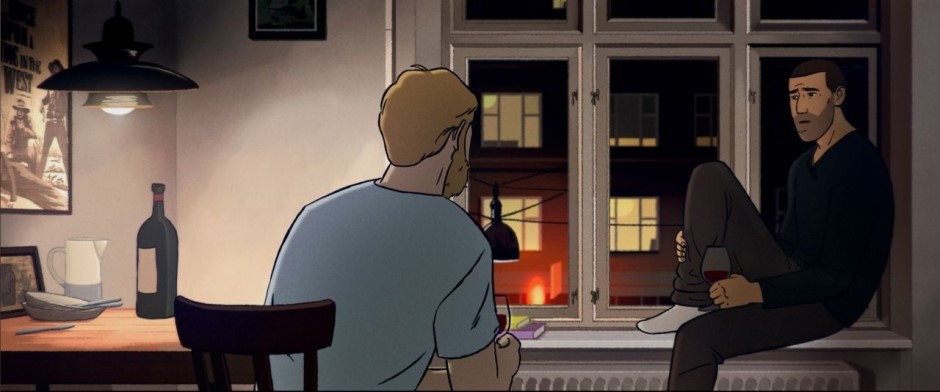
Danish film director Jonas Poher Rasmussen’s intimate, award-winning animated documentary Flee has helped his long-time friend — an Afghan, now a successful academic, who found refuge in Denmark as a child — by discussing his traumas. Learn more aboutthe Kabul boy who found happiness, cats and husband in Denmark.
Before escaping to Denmark across the Baltic, Amin Nawabi (pseudonym) lived as a gay Muslim in Afghanistan. Eventually he found love and a new life, and Amin’s often harrowing story has turned out to be an uplifting, award-winning animation.
Amin as a boy enjoying the music of A-ha
Prestigious awards and nominations
However, Danish filmmaker Jonas Poher Rasmussen has a confession to make: “I can’t draw at all,” he says with a big laugh. The only shot where his handiwork can be viewed is a scene late in the film as interview subject Amin and Poher Rasmussen are depicted in a New York hotel room. On the bed sits a scribble of a notebook barely to be seen in which the director’s character is recording the conversation. Poher Rasmussen drew the notebook. Animation director Kenneth Ladekjær wanted it in the shot.
Flee had its world premiere at Sundance Film Festival, was the official selection of the Cannes Film Festival, received the Crystal award as best feature at Annecy, an Annie Award nomination for Best Independent Animated Feature, Critics Choice and Golden Globe award nominations, and winner of both Best Documentary and Best Animated Feature at last year’s European Film Awards.
Danish filmmaker Jonas Poher Rasmussen. Photo: YouTube
A documentary
Amin’s story is strong evidence of the high prices paid by poor people to brutal traffickers and corrupt police for the tough, cruel, and dangerous passages.
Jonas Poher Rasmussen says that almost all of the story takes place in the past and his aim was to show what Amin’s childhood back home looked like, what Afghanistan looked like in the 1980s, and Moscow in the ‘90s, when he was there. But even more importantly, Amin wanted to be anonymous, which made animation seem like the perfect way to tell the story as it allowed both Amin and the filmmaker to mask his identity and revive his memories.
The heartbreak summer
When Amin arrived in the little village in Denmark, Rasmussen, then 15, became the newcomer’s friend and confidant. Both were teenagers at that time – and their closeness endured into adulthood. When they both suffered bad break-ups in their 20s, Rasmussen went to stay with Amin. This period is now referred to as “the heartbreak summer”. Rasmussen still don’t know the whole truth about how his friend came to Denmark.
A story of memories and trauma
Rasmussen and Amin held the first interviews in 2014 and recorded up to 20 sessions over the next three to four years. The interviews in the animation are real voices from those interviews, the only difference is the way the characters look.
Rasmussen may not be a great visual artist, but the director had been making radio, TV and theatrical documentaries for years when he took a short animation course at the Animation Workshop in Viborg, Denmark. He was then inspired to tell the story of his close friend Amin in the form of an animated documentary.
Flee is made as a documentary.
Flee is very much a story about memories and trauma and the animation allowed the makers to be a lot more expressive visually than they could have ever been with a regular camera. Every time Amin talks about something traumatic or something he has a hard time remembering, the animation gets a lot more simplistic and graphical, telling the story in a way that feels a lot more honest to the feelings he goes through.
A combination of interviews and dramatizations
Flee alternates between scenes of Rasmussen interviewing his friend, dramatizations of Amin’s perilous journey to Copenhagen via Moscow, and present-day interludes showing him house-hunting with his boyfriend in which the concept of settling down presents unique challenges for someone who has spent his life running. Aside from the occasional excerpt of archive footage – the war-scarred streets of Kabul, the unruly waves seen from a boat smuggling people across the Baltic – every frame of the movie is animated, most of it in a simple, straightforwardly realistic fashion that matches Amin’s narration.
Flee is very much a story about memories and trauma and the animation allowed the makers to be a lot more expressive visually than they could have ever been with a regular camera.
In its core Flee is a documentary, so it has been important to use archival shots throughout the film to remind people that this story is tied to historical events. Everything Amin goes through is because of factual things that happened in the same world we all live in. It’s not fiction.
Life of a refugee
When Amin frolics as a child in his sister’s dresses or bops happily to the sound of A-ha, the mood is bright and buoyant. In moments of trauma, the animation grows into a nightmare: faces appear without features, surroundings become scratchy and abstract.
“I wanted the film to show that being a refugee is not an identity – it’s a circumstance that can happen to anyone,” said Rasmussen in an interview.
The Kabul Boy Who Found Happiness, Cats And A Husband In Denmark, written by Tor Kjolberg
All images (except portrait of Rasmussen) by Cinephil



















 Mathematical Tendencies with Their Influence on Scandinavian Architectural Design, written exclusively for Daily Scandinavian by Emma Rundle. Emma is an architect and writer. She publishes articles in popular design magazines, sharing her insights on modern architecture. In her free time, Emma enjoys watching documentaries about the history of architecture and writes her own web blog.












 Etiquette