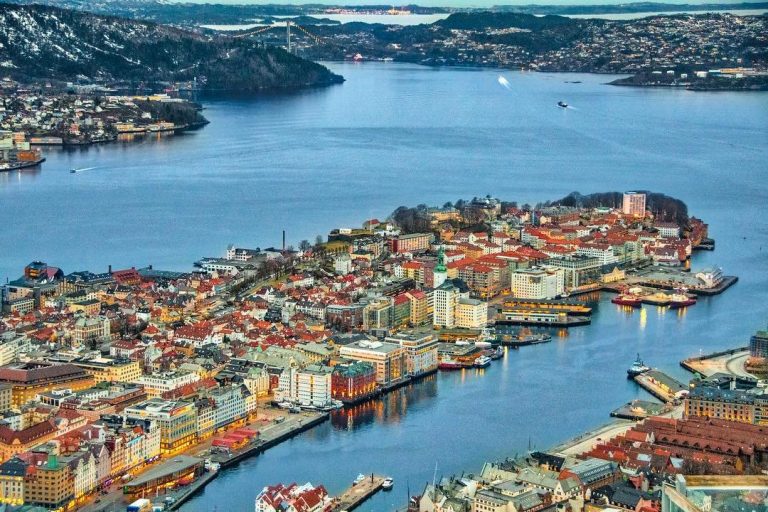
Bergen, Norway is a UNESCO World Heritage City and a European City of Culture. If you want to explore the beautiful hometown of the great Norwegian composer Edvard Grieg, you should experience it the way a patriotic native does it. Learn about five authentic ways to connect with native Bergen, Norway.
Let the capital of Western Norway tempt you with Edvard Munch, musical entertainment and mountain experiences close to the city center. See the city’s world-famous and hidden art and cultural treasures. The nature of western Norway is captivating by itself, and Bergen is the city with deep traces of the old days, and at the same time modern and vibrant. According to the inhabitants, Bergen is a suitably large city.
Bryggen (the wharf) in Bergen is one of the best-known urban areas from the Middle Ages (12th century) in all of Norway. Photo: Foap / Visitnorway.com
The Wharf
Bryggen (the wharf) in Bergen is one of the best-known urban areas from the Middle Ages (12th century) in all of Norway. A fire in 1702 reduced the whole city to ashes but Bryggen was rebuilt on its foundations and is thus basically unchanged and included on UNESCO’s World Heritage List. Take your time and stroll along the old buildings, enjoy the charming shops and excellent restaurants. Exploring the area is relaxing as well as food for thoughts.
Fløibanen Funicular
Another of Norway’s best-known attractions is the Fløibanen funicular. A ten-minute walk from the heart of Bergen, you find the lower station, and a buggy will take you the steep way up to Fløyen, 320m above sea level, with the most spectacular view over the Bergen area.
A walk in the wooden house area around Skansen and Skuteviken or on Nordnes is a matter of course for a Bergen resident with his heart in the right place. Photo: Lucija Ros / visitnorway.com
Charming walkways
But please, don’t take the Fløibanen back down again. Use this opportunity to walk down the charming twisting and turning walkway to central Bergen. It will take you around one hour walking, including taking photographs and enjoying the view over the city and wonderful sights of charming old wooden buildings.
There are many benches along the route, placed so that you can really take in the great view. Almost at the bottom, you can spot the lovely Skansedammen which is popular for skating during wintertime.
A walk in the wooden house area around Skansen and Skuteviken or on Nordnes is a matter of course for a Bergen resident with his heart in the right place. Skansen is located close to the lower Funicular station. At Skansen, you can also see the charming old wooden fire-watchers’ station. The Nordnes park is a popular hiking destination and the Bergen Aquarium is nearby.
Søstrene Hagelin servers fish cakes, fish burgers. A long running institution in Bergen. Photo: Wikimedia Commons
Authentic Norwegian Seafood
Don’t miss a visit to Søstrene Hagelin (the Hagelin Sisters) and try one of their authentic Norwegian seafood classics from their original 1929 recipes. There are plenty of interesting eateries in Bergen.
Concert at USF Verftet. Photo: USF Verftet
Artistic Bergen Modern Bergen has also a lot to offer. USF Verftet is located in a former sardine factory building where you’ll find five venues for presentations of music, theatre, films and contemporary arts. There are also several artist studios and offices in the building. Bergen is a city of art and artists.
If you really want to get to know Bergen and its pulse, including the city’s attractions, you need more than a short visit. But Bergen is worth it!
Five Authentic Ways To Connect With Native Bergen, Norway, written by Tor Kjolberg
Like any other country, Sweden has some professions that are growing and some that are waning. If you’ve been thinking about moving to Sweden or anywhere abroad, it’s a great opportunity to consider how your career could come into play. Learn more about growing job fields in Sweden.
Some of the jobs that are the hardest to get hired for include receptionists, caretakers, and shop assistants. These industries tend to always have enough people ready to jump into the working world and take on a position.
The healthcare sector is growing throughout the globe, and Sweden is no exception. Photo: National Cancer Institute / Unsplash
Other industries, however, are starting to see exponential growth and a lack of qualified workers to keep up with them. So, if you’re considering a move, let’s look at some of the fastest-growing job fields in Sweden to determine whether your skills and experience could help you to land a job quickly in an industry that needs your help.
If you already have the training and expertise for nursing (or any other positions), chances are you’ll be able to get a job quickly within the country. Photo>: CDC / Unsplash
If you already have the training and expertise for these (or any other) positions, chances are you’ll be able to get a job quickly within the country. But, even if you don’t have the education needed, you can choose to study right in Sweden to make sure you’re learning everything necessary to be successful.
For example, if you want to become a nurse practitioner, you can take the proper courses and training programs right within the country. You may even end up shadowing at a local hospital or getting an internship, which will make it easier to land a job when you’re ready.
As a healthcare worker, you shouldn’t limit yourself. Your passion should be to go where people are most in need. Right now, because of a shortage of workers, Sweden is definitely in need and will continue to get worse unless workers from other countries come to help.
The Education Sector There is a teacher shortage in Sweden. Unfortunately, that statement is putting it lightly. It’s estimated that in less than 15 years, the country will be lacking 45,000 qualified teachers if current trends continue.
Most of these teachers are needed in larger metropolitan areas of the country, but there is a growing problem within the Swedish school system: inequality.
Unfortunately, students from certain communities don’t always have the same access to qualified teachers as others. The school system in Sweden is growing, and the National Agency for Education hopes that it will continue to get stronger. But, to do so, more teachers are needed. As it stands today, the forecast for getting those teachers isn’t great.
As a result, the country is actively seeking workers from other countries who have the qualifications to teach. Nearly every level of schooling is lacking at the moment, but the country is really in need of teachers who specialize in specific subjects at a higher grade level. That includes higher education jobs if you have the qualifications to be a professor.
If teaching is truly your passion, you might want to consider making a move to a place where teachers are desperately needed right now and will be for quite some time.
There is a teacher shortage in Sweden. Photo: Taylor Wilcox / Unsplash
How to Make the Most of a Career in Sweden Getting a job in Sweden is much like getting one anywhere else. Even though certain careers are in-demand, you’ll still have to go through the process of searching, applying, and potentially going to interviews.
Start with a solid resume and cover letter
That starts with having a solid resume and cover letter. You want to showcase your experience and why you’re the best person for the job concisely and professionally. So, make sure your resume is strong, easy to read, and free from any grammatical errors like:
Improperly-placed apostrophes
Mismatched verb tenses
Mistaken homonyms
Reliance on a passive voice
Even just a few grammatical errors can make your resume seem less professional and may keep you from getting your shot.
Additionally, it’s important to think about how long you want to spend in Sweden. Obviously, if you get hired into a full-time position, you’ll be in the country for a while. But, maybe you don’t want to move there permanently. In that case, you may need a work visa. A work visa will allow you to stay in the country legally as long as you’re employed. But, every country’s immigration policy is slightly different. So, make sure you do your research before applying.
Taking on a job in Sweden could be a life-changing experience. When you start working in a field that is in desperate need of help, you’ll feel great in knowing you’re doing your part and offering your skills and expertise where it’s truly needed.
Beau Peters
Growing Job Fields in Sweden is written exclusively for Daily Scandinavian by Beau Peters. Beau is a creative professional with a lifetime of experience in service and care. As a manager, he has learned a slew of tricks of the trade that he enjoys sharing with others who have the same passion and dedication that he brings to his work. When he is not writing, he enjoys reading and trying new things.
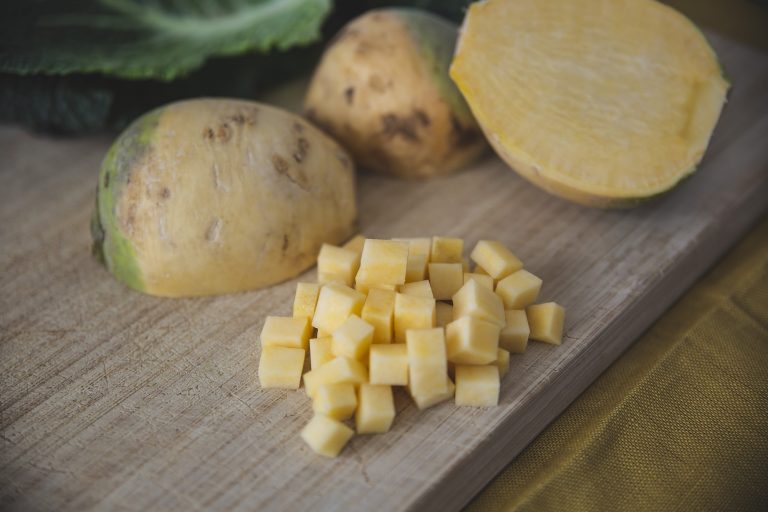
The large, round root, a subspecies of the cabbage, is known as rutabaga in the US, and neep in Scotland. It’s called kålrabi or kålrot in much of Scandinavia, which is confusing to foreigners because it sounds similar to Kohlrabi, the name for German turnip. The name Swede is an abbreviation of ‘Swedish turnip’ the name indicating this root’s origin. Confused? Read more about a cabbage called Swede.
Swede is one of the hardiest of all root crops and is the perfect winter vegetable for the cool climate of northern Scandinavia, where it is immensely popular and widely grown. Traditionally, it has less of a following in southern Scandinavia, though with the growing demand for local, seasonal vegetables its popularity is on the rise.
Swede is one of the hardiest of all root crops and is the perfect winter vegetable for the cool climate of northern Scandinavia. Photo: Wikipedia
How it grows Swedes are easy and undemanding to grow, like huge beetroots and mature in October.
Appearance and taste A swede can be up to 20cm in diameter, and is usually a purple-green color on the outside, and yellow-fleshed inside. Basically, the swede is a large turnip, though it tastes very different. The sweet, nondescript flavor, somewhere between cabbage and potato, is nothing like the taste of the crisp-fleshed, spring-grown turnip. As a vehicle for butter, the swede is perfect, and its soft texture and mildness are inviting in a comfortable way, particularly for kids.
Culinary uses Swede is often prepared with potatoes as a mash, thick soup or gratin, but is versatile enough to be included in any dish calling for mixed root vegetables; mixing it with mashed celeriac and potatoes, make a nice change. As with all sweet-fleshed roots, you need to balance the swede’s bland sweetness: salt, chili, lemon, horseradish, herbs, vinegar, ginger and butter are all good additions. A plain dish of ‘bashed neeps’ (mashed swede) with mace and butter goes well with any succulent Scandinavian stew (see recipe below).
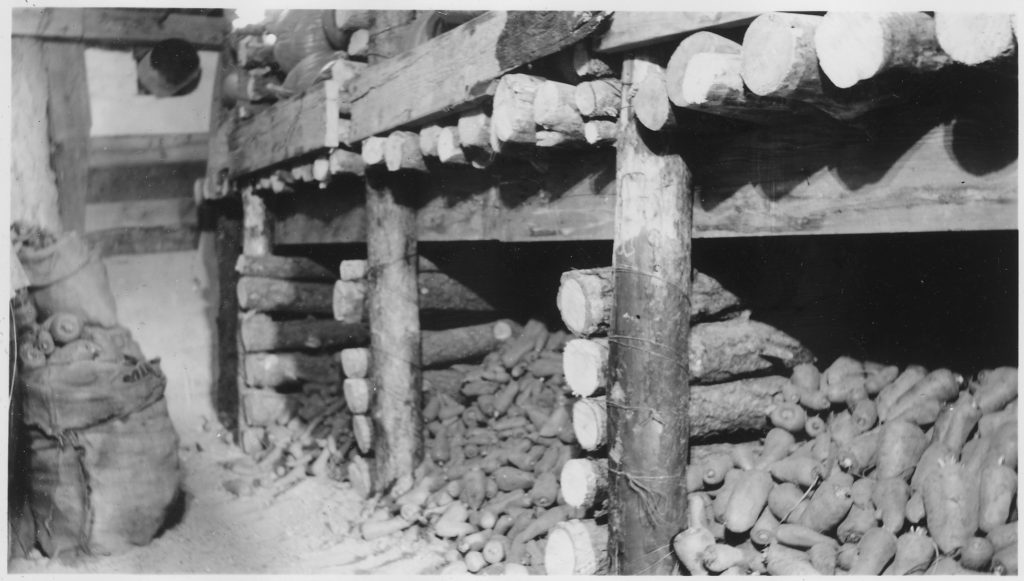
Root cellars were dug into the ground, often into a hillside, so you would not have to dig so deep, and to facilitate entering. Photo: Wikipedia
Root cellars Storing was a great concern for all our forefathers; to keep food for many winter months without it decaying, safe from rodents and scavengers and, further north, from frosts. It was ingeniously done for centuries in beautiful root cellars, dug into the ground, often into a hillside, so you would not have to dig so deep, and to facilitate entering. They could be anything from a hole in the ground to a walk-in ‘cupboard’ lined with stones like a burial chamber, with shelves and boxes of all you needed to take your family safely through to the nest summer.
Root vegetables, cabbages and apples were stored so deep in the ground that frosts could not reach them, and the natural humidity of the soil would keep them fresh until the new crops of vegetables were ready to eat. It was a perfect energy-saving system, which the modern food industry tries to copy using loads of unnecessary energy.
Bashed neeps. Photo: Coop
Bashed neeps Bashed neeps are a traditional accompaniment to the Norwegian pinnekjøtt – salted and smoked ribs of mutton served at Christmas – but work well with any meat. This is a big quantity, but you might as well make it while you’re at it, and turn leftovers into a crispy gratin, dusted with Parmesan or Västerbottenost, breadcrumbs and butter, the next day.
1kg swede
1kg floury potatoes
500ml warm milk
100g salted butter
1 teaspoon ground mace
1 ½ tablespoon coarse sea salt
1 teaspoon ground black pepper
Peel and dice the vegetables, then boil separately in plenty of unsalted water. Mash the potatoes and swede together, with the milk, butter, mace and pepper. Reserve the salt for when the roots are all mashed as it will make the consistency gluey if added at the beginning.
The Swedish government is now commissioning key defence and security agencies to establish a national cyber security center (NCSC) after national infrastructure and private companies have been targeted with constant cyber-attacks, including the industrial security group Gunnebo. Read more about thenew national cyber security center to be established in Sweden.
Sweden is the latest Nordic country to bolster its cyber defense in the face of heightened threats. Almost a third of top VPN’s are secretly owned by Chinese companies or owners based in countries with weak or no privacy laws.
The Swedish NCSC will be managed by the Swedish Armed Forces (SAF) and the National Defence Radio Establishment, aka Signals Intelligence (Signit) branch of the SAF. Also, Säpo (Säkerhetspolisen), the Swedish national security agency tasked with counter-espionage and counter-terrorism roles which operates under the jurisdiction of the Ministry of Justice, will be included in the formation.
The Swedish NCSC will be managed by the Swedish Armed Forces (SAF) and the National Defence Radio Establishment, aka Signals Intelligence (Signit) branch of the SAF. Photo: ABB
The fourth partner in the NCSC alliance is the Swedish Civil Contingencies Agency (MSB), which also operates under the Ministry of Justice and is charged with protecting Sweden’s critical infrastructure and managing local and national emergency responses.
The Swedish government has allocated SEK440m to meet the NCSC’s projected operational costs in the period 2021 to 2025. NCSC will be crucial in Sweden’s long-term desire to boost its capacity to prevent, identify and deal with the increasing cyber threats that target critical IT infrastructure.
Peter Hultqvist, defense ministry, said that the usage of technology and digitization are increasing and there is a visible proportionate rise in threats and vulnerabilities. Therefore, the National Cyber Security Center is said to provide a security tier for IT networks preventing cyber crooks from disrupting networks and indulging in data thefts.
Peter Hultqvist, defense ministry, said that the usage of technology and digitization are increasing and there is a visible proportionate rise in threats and vulnerabilities. Photo: Wikipedia
The NCSC initiative will strengthen Sweden’s ability to deliver a new layer of security that shields the country from disturbances to its economic competitiveness and prosperity as it moves forward in the digital age.
New National Cyber Security Center To Be Established in Sweden, written by Tor Kjolberg
Norway has stringent tobacco measures to protect its citizens from health risks associated with the substance. But even with these measures, vaping has been growing in popularity over the years and by 2020, 13% of people aged 16 to 74 years vaped regularly as opposed to 9% who smoked regularly in the same age bracket. Learn more about Norwegian regulations on E-cigarettes – insights for vapers.
Over the years, the lawmakers have been amending the legislation, especially on the importation, packaging, selling, advertising, and the use of tobacco and nicotine-containing products, whether to be smoked or vaped.
During the importation, the e cigarette regulation requires the products, whether hardware, vape juice, or accessories to meet the EU level standards as agreed on the directives.
General Vaping Regulations Between 2020 and 2021, regulations on tobacco and nicotine e-cigarettes are expected to change a lot. Before then, the e-cigarette regulation in Norway banned the sale of vape juice containing tobacco and nicotine. As such, the residents had to import their products and use them privately.
The e-cigarette regulation also required the tobacco and nicotine-free vape juices to be sold exclusively to people over the age of 18 years. But according to the lawmakers, this is likely to change.
Once the law is passed, Norway will have nicotine as a legal product. But they will not leave it at this and numerous other guidelines will be upheld and others amended to make this work.
Norway has strict measures on the packaging of tobacco and nicotine products, including e-cigarettes. Photo: Screenshot from YouTube
E-Cigarette Importation and Packaging Regulations Norway has strict measures on the packaging of tobacco and nicotine products, including e-cigarettes. This should be plain packaging to avoid promoting the products during the process.
During the importation, the e cigarette regulation requires the products, whether hardware, vape juice, or accessories to meet the EU level standards as agreed on the directives. This is expected to come into place by 2021. So, even as you visit the ePuffer website to buy vape juice, devices, and other accessories to sell in Norway, ensure that they meet the EU products before the importation.
Lastly, it is worth mentioning that the e cigarette regulation in Norway requires sellers to clearly display health warnings on the packing before selling to consumers. This should be a combination of text and messages that are clear for every user to see and be warned.
Why Norway is Strict on Nicotine E-Cigarettes Nicotine is a product derived from tobacco. If you are a vaper, you can tell that most e-juice varieties have traces of nicotine from tobacco, especially if they come with names such as nic salts, tobacco, and the like. Nicotine brings great satisfaction to the users, but the catch is that it is very addictive. The increasing number of e-cigarette users in Norway can be partly linked to the presence of nicotine in vape juice.
According to health experts, tobacco and nicotine are linked to some health risks such as heart diseases, cancer, and breathing problems. As such, Norway has come up with e cigarette regulation to primarily protect the citizens from these dangers and bring awareness so that anyone can make well-informed decisions.
Norwegian Regulations on E-Cigarettes – Insights for Vapers – Conclusion If you are from Norway, you now know where the stand of the authorities about e cigarette regulation. From the insights, it is easy to make smart decisions. Basically, you will avoid problems with the authorities, and most importantly, take good care of your health.
Norwegian Regulations on E-Cigarettes – Insights for Vapers, written exclusively for Daily Scandinavian by Bailey Merton. Bailey is a prolific health and lifestyle researcher and writer. Having spent over two and a half years of his career writing articles across several niches, he has written over 200 health and lifestyle articles.
After a short acting career, Iranian-Swedish Laleh Pourkarim (born 1983) entered the music industry in 2005 with her debut album “Laleh”, which won several Swedish prices. Read more about the Iranian refugee who became a Scandinavian pop star.
Laleh Poukarim was born in the harbor town of Bandar-e-Anzall on the Caspian Sea in Iran. Her mother, Asefe, was a literary scholar and mathematician and her father, Houshang, a poet, author and journalist whose political involvement forced the family to flee their home country for Azerbajan and later Minsk in the former Soviet Union before Lelah was one year old. The family moved to East Berlin after six years and to Sweden after the fall of the wall when they settled in Hammarkullen in Gothenburg. She spoke a number of languages before she was eight.
Laleh Poukarim was born in the harbor town of Bandar-e-Anzall on the Caspian Sea in Iran. Photo: Wikipedia
At Hvitfeldtska High School she was enrolled in the music program, growing up with classical music, ballet and circus music. She was later interested in punk, reggae and jazz. She also learned to play guitar. She went on to teach herself to play percussion and saxophone.
“Changeability has played a major role in my life,” she says. She became known to the Swedish audiences when she starred as Yasmin in the lauded film “Jalla! Jalla!” (2000) after which she established the jazz band Bejoia.
Her musical breakthrough came with her debut album in 2005, after which she has released seven albums, all produced, written, recorded, engineered and performed by herself. In addition to her parents’ native tongue, Persian, she has sung in both English and Swedish.
In 2011, she participated in a popular Swedish television show and her performances were lauded by both critics and the public. The media was eager to announce that Laleh had been given “a second breakthrough”.
One of the myths surrounding Laleh is that she is shy, determined and tough. She manages her own career and protects herself as best she can. One story is about the tough prodigy from the suburban developments in Gothenburg who came to the record company with a finished demo and her own production company, called “Lost Army”, and said: “Give me a budget, and I’ll produce it all by myself, damn it!”
Her 2012 album, Sjung (Sing), was released across Scandinavia on 25 January 2012
Her 2012 album, Sjung (Sing), was released across Scandinavia on 25 January 2012 to generally positive reviews. Laleh does not just write and produce all her material herself, but she also plays the majority of the instruments on all the recordings. Laleh has often been described as a control freak, and she admits she knows what she’s doing. “I’m totally in control,” she says.
In January 2014, she signed to Island Records and released the Boom EP. In 2016, she released the album Kristaller (Crystals) and in 2019, the album Vänta (Wait!). Laleh’s magical ability to write songs that go straight into the heart simply cannot be underestimated.
Kristaller is a collection of ten songs, five of which were in Swedish and which Laleh defines as “glimpses of something”. If pop stars sing mainly about love, Laleh is an exception from the rule. She has written extensively about death and her 2012 song Some Die Young became an unofficial tribute to those who lost their lives or loved ones during the 2011 terrorist attacks in Norway, after she performed it during the one-year anniversary memorial.
“There is too much rumination today,” she says. “Many trifles and unfinished love griefs. If you write ten songs about someone leaving you, you are spoiled. If I were to write about the same things over and over again, I would be bored. ”
Both Laleh’s parents have passed away – her father in 1994 and her mother just days after the album Colors was released in October 2013. She moved to Los Angeles in 2014 and says, “I’m working in my own studio, like I always have done.”
Her song “Speaking of Truth” was featured in the E! Channel original scripted series The Royals in March 2015. In 2015, Laleh co-wrote “Stone Cold”, “Yes” and “Father” from Demi Lovato’s fifth studio album, Confident, and two songs for Tori Kelly’s first album Unbreakable Smile. She was also featured on Adam Lambert’s single “Welcome to the Show”. Lambert and Laleh performed live at American Idol.
in late 2016 she toured in Sweden, performing in indoor arenas, including a sold out concert at the Ericsson Globe Arena. Her show included a symphony orchestra.
Her last official concert was in Skellefteå, Sweden in August 2019.
The Iranian Refugee Who Became a Scandinavian Pop Star, written by Tor Kjolberg
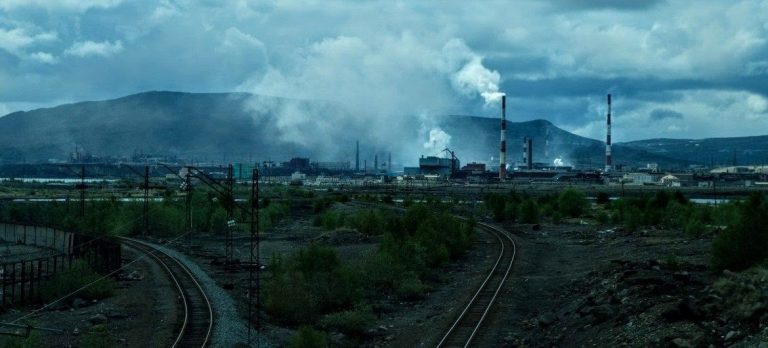
The metallurgical workshop in the Russian Arctic city of Monchegorsk closed on 20 March. Shop’s closure will reduce sulfur dioxide emissions, and with the shutdown of the smelting shop in the town of Nikel, the emissions in Kola Peninsula in 2021 will be 85% lower compared to 2015. Learn more about air quality in Finnmark, Norway is to become cleaner – because Russia shut down copper plant.
Metallurgical shop in russian Arctic Monchegorsk has been shut down on March 20th, 2021. It was previously a major source of sulphur dioxide emissions in the region, Russian owner Norilsk Nickel said in a press release.
Nornickel was previously a major source of sulphur dioxide emissions in the region. (Press photo)
The environmental impact will be evident next year
Immediately after the shop’s closure, Nornickel will start cleaning up the production facilities and the metallurgical units from the copper-containing materials. This work will last throughout 2021, and the dismantling of production facilities and buildings will start in 2022.
“The results of the company’s efforts to reduce the environmental impact are evident: next year, we expect Kola MMC’s emissions to be 22,000 tonnes per year, of which 8,000-9,000 depending on the season are emissions from the power plant, which also heats homes in Monchegorsk,” said Evgeny Borzenko, General Director of Kola MMC. – We plan to upgrade the power plant in order to reduce emissions from this energy source as well. In the future we will act to reduce the negative environmental impacts: air emissions, discharges into the water bodies, land reclamation, waste management”.
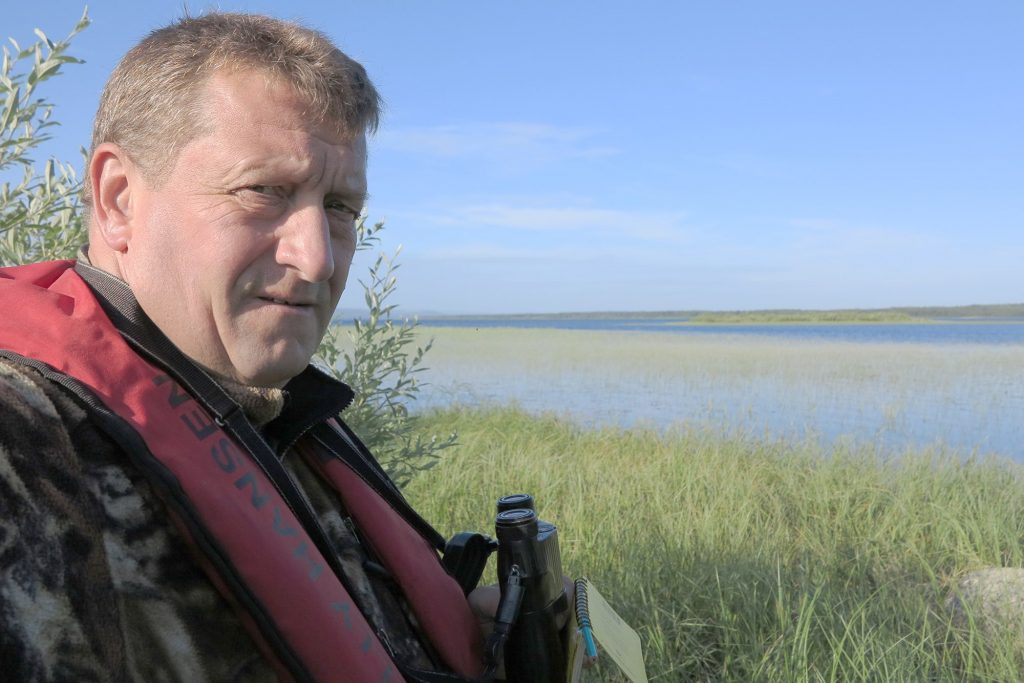
“From the perspective of nature protection, the stopping of SO2 and other pollutants from the Nickel- melting plant will make the nature to recover slowly,” says Paul Eric Aspholm, a researcher at NIBIO Svanhovd or the Norwegian Institute for Bioeconomic Research. Photo: Paul E. Aspholm / NIBIO
Some changes in nature are already visible
Paul Eric Aspholm, a researcher at NIBIO Svanhovd or the Norwegian Institute for Bioeconomic Research, positively views the situation.
“From the perspective of nature protection, the stopping of SO2 and other pollutants from the Nickel- melting plant will make the nature to recover slowly. Already, there are some changes in the nature as a response to the lowering emissions since the 1990-thies. The process of recovery is slowly but visible through some decades, i.e. horsehair lichens. Further, the common frogs have become more common and the mice (voles) reach higher number of individuals during the maximum of population cycles,” noted the scientist.
Scientists from the Finnish Meteorological Institute also follow the news from Russia. Scientists have learned from the media about the modernization program of the Russian mining giant Norilsk Nickel and believe that this is good news.
“In general, this is good news, but only if the new facilities in Monchegorsk are modern from an environmental point of view,» says FMI scientist Pia Anttila.
Changes in Russian industry might improve the environment
«Yes, we followed the news about this reform with great interest. We learned from the media that the Nickel complex, which is closest to the Finnish border, will be closed and activities will be transferred to the Monchegorsk block, located 250 km from the border. In general, this is good news, but only if the new facilities in Monchegorsk are modern from an environmental point of view» noted by FMI scientist Pia Anttila.
She also expressed the hope that these changes in the Russian industry could improve the environment, air quality and the content of heavy metals in the air in the future will decrease compared to the observations of previous years.
The shop’s closure is part of a global strategy aimed at transforming Norilsk Nickel, also known as Nornickel, into an environmentally friendly company. Photo: Nornickel
The shop’s closure is part of a global strategy aimed at transforming Norilsk Nickel, also known as Nornickel, into an environmentally friendly company – or at the very least, limiting its environmental impact.
Martin Berg
Air quality in Finnmark to become cleaner – Russia shut down copper plant, written exclusively for Daily Scandinavian by Martin Berg. Martin is a Danish freelance journalist currently based in Oslo. For the past 15 years writing for different newspapers and web publications covering social and environmental issues.
Denmark, Norway and Sweden wish all Daily Scandinavian visitors a Happy 2021 Easter by sharing some of the region’s traditions with you. Happy Easter from Scandinavia!
All the three Scandinavian countries have different unique Easter traditions. Here, we share a few of them with you. Around Easter time People in Scandinavia are starting to wake up from “winter hibernation” and time for celebrating Easter. Although the Easter of 2021 will be somewhat restricted due to the pandemic, most people in Scandinavia will enjoy most of their most beloved Easter traditions.
Many Danes will even take the week days prior to Easter off
DENMARK
Maundy Thursday, Good Friday, Easter Sunday and Easter Monday are national holiday (påskeferie in danish). Almost everything is locked down during these days – it’s a really serious celebration. Many Danes will even take the week days prior to Easter off (no wonder they are among the happiest people on Earth).
Many Danish families are heading to the countryside during these holidays to their summerhouses. It is common for Danes to have a “country” home, considered a very private place where guests are welcomed “by invitation” only.
Easter witches
Children dress up as witches and warlocks and go door-to-door asking for candy, the kids give the people something in return. They give for instance each house a decorated willow branch, as thanks for the chocolate gifts they’ve received. These willow branches are believed to bless the owner’s house.
“Gækkebrev” (Fools’ letters)
The tradition is that children are supposed to collect as many eggs as possible. To achieve this, they have been sending “gækkebrev” since the 6th Century. A “gækkebrev” is a homemade letter containing an amusing message that is sent to family and friends. If the recipient guess who the sender is, they get a chocolate Easter egg.
Påskefrokost (Easter lunch)
Påskefrokost is commonly the first event of the season at Danish summerhouses. It is normally a day long meal stretching from lunch to dinner, including plentiful amounts of alcohol. Traditionally, the Easter breakfast consists of herring, liver paté with bacon, fish fillet, smoked salmon, meatballs and rye bread, washed down with påskebryg, a special beer that is launched every year early in March and only available until Easter It is of course accompanied by Danish aquavit.
A traditional Danish dish is “skidne æg” (in English translated into “Dirty Eggs”). It consists of boiled eggs and homemade mustard sauce.
Palm Sunday marks the start of the Easter holidays, and many Norwegians take the whole week, including Easter Monday off, and many spend the Easter in their mountain cabins together with family and friends and enjoy getting a tan (påskesol).
In the mountains they go cross-country skiing, bringing with them chocolate bars (Kvikk-lunsj) and oranges in their backpacks. On average, Norwegians eat four oranges per person during Easter, totaling 20,000. Many Norwegians also grill sausages along the way in the snow. Some people organize informal ski jump or ski race competitions with neighboring cabins, with fun prizes for the winners.
In the evenings, drinking hot chocolate and reading crime novels (“påskekrim”) are popular activities. So are quizzes and table games.
Some prefer an Easter at home to enjoy a so called bypåske (city Easter).
Easter Chicken and eggs
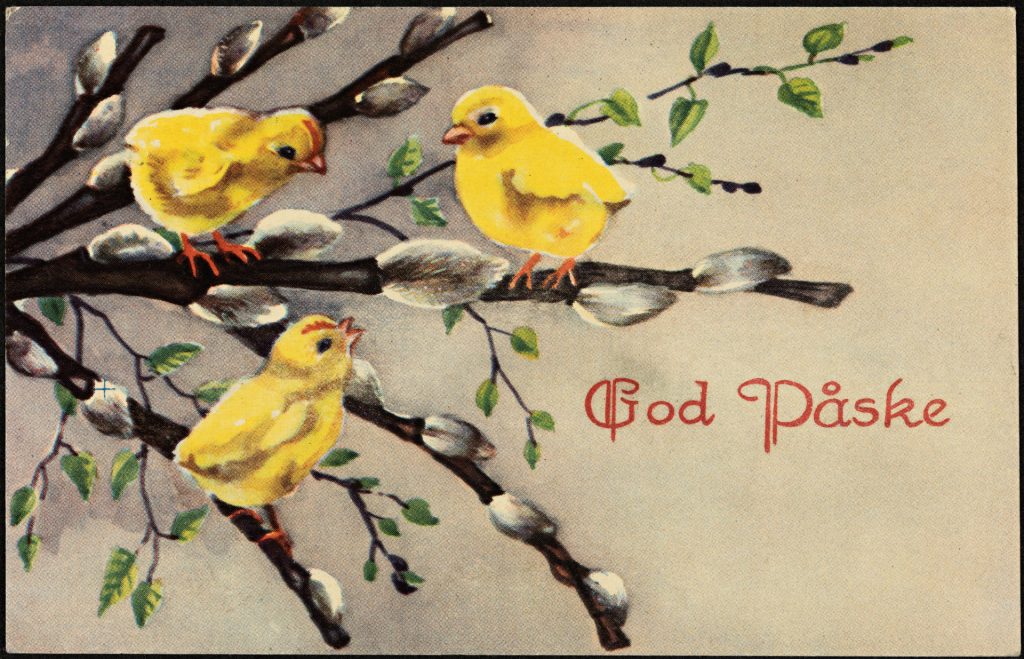
Easter Chickens and eggs are the usual symbols of a Norwegian Easter. The egg symbolizes rebirth and the chicken has been a symbol of fertility since ancient times. Yellow is the most traditional color of a Norwegian Easter. Lush green is also popular as it symbolizes life and growth.
Easter crafts Easter crafts are a usual activity – painting and decorating eggs, making paper baskets and cards, and sewing or knitting Easter ornaments. Yellow candles are very popular and so are yellow flowers such as daffodils and tulips.
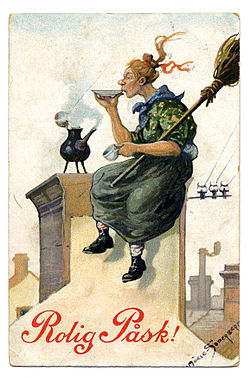
Sales of candy increase by 50% during the Easter week in Sweden, and the biggest candy day is Maunday Thursday. On this day, children dress up as witches and “go witching” to neighboring houses, where they exchange their homemade Easter letters with drawings and greetings for candy and small gifts. This Swedish folk tradition states that around this time of year, witches would fly on their broomsticks to dance with the devil at Blåkulla.
Easter has become a secular holiday in Sweden and most people celebrate it at home (or at their holiday cottages) with their families and relatives. It is an opportunity to take a break and celebrate the long holiday weekend of the spring with family and friends. Unlike Denmark and Norway, Maunday Thursday is not a holiday.
Easter Fire In West Sweden, there’s an old tradition with the intention to keep the witches away. Many thousand people gather around a large bonfire.
Smörgåsbord A permanent fixture in Swedish culinary celebrations is the “smorgasbord” containing various types of pickled herring, cured salmon and the potato and anchovy gratain “Janssons frestelse” (Jansson’s temptation).
Rolig påsk!
Daily Scandinavian wishes all readers a Happy Easter (Glædelig påske – God påske – Rolig påsk).
Happy Easter from Scandinavia, written by Tor Kjolberg
Many interesting facts related to Scandinavian culture, tradition, and mentality make this region specific. The first similarity you will notice is related to their flags. Their colors are different, but they all contain the Nordic cross and their structures are identical. Learn about the 5 best contemporary Scandinavian writers you should read.
The most entertaining thing about Norway, Denmark, and Sweden is their language similarities. Officially, all these languages are different, but people can easily understand each other.
Because of that, the job of contemporary Scandinavian writers is much easier. They can dedicate their work to three different markets without any need to translate it into a foreign language. However, successful contemporary writers usually do not stop there. Contemporary literature is often translated to English, Spanish, and other languages.
A wide range of options can sometimes be tricky. That is the reason why you should know some of the best contemporary Scandinavian writers. You will make your free time more entertaining and get familiar with Scandinavian culture at the same time. Let’s go!
Fredrik Backman’s latest book, Anxious People, is published in 2020
Fredrik Backman Fredrik Backman is a Swedish contemporary writer that is popular in all parts of the world. He is the author of a New York Times bestselling book under the name A Man Called Ove. Some of his most popular books are also My Grandmother Asked Me to Tell You She Is Sorry, Us Against You, and others.
His latest book, Anxious People, is published in 2020. The storyline talks about a crime that never took place. The main characters are eight anxious people that meet each other and realize they have many things in common. Their wannabe robber friend disappears, and they are not sure whether organizing a robbery is a smart decision or not. All the characters have some secrets that make the book more entertaining and dramatic.
Arne Dahl’s last book, Hunted, was published last year
Arne Dahl Are you a big fan of contemporary crime books? If the answer is “yes”, Swedish crime author Arne Dahl deserves your attention. His real name is Jan Arnald, and he released a couple of books under his real name. These books are “Maria Och Artur” and “Barbarer”. The first time he used his pen name was when publishing a series of crime novels about imaginary crime investigators under the name “The Intercrime Group”.
His last book, Hunted, was published last year. The storyline describes the life of two investigators that are trying to solve a murder. Thanks to imagination and creativity, Arne Dahl proved once again he is one of the best crime writers in Scandinavia.
However, this writer does not hide his bad habits. The creative methods he uses are not always healthy. For instance, Arne often refuses to sleep because has to finish a chapter. Future writers should not follow his example. Proper sleeping brings different benefits; it can improve their mood, focus, and concentration. All these advantages are important for writing creativity.
Nata Marie’s books all talk about a mix of happiness, beauty, horror, trauma, and other emotions.
Naja Marie Aidt Naja Marie Aidt confirms that creative writing can boost the mental health of a person. Readers will manage to find the origin of their emotions, practice mindfulness, and free their minds of all the negative thoughts.
Danish Naja Marie Aidt lost her son in 2015 in a horrible accident. That is the reason why Naja could not write for many years. However, she somehow realized that writing will help her move forward. Her book “If Death Has Taken Something From You, Give It Back” tells how her family and she managed to cope with the loss.
Nata Marie’s books all talk about a mix of happiness, beauty, horror, trauma, and other emotions. After some reading, you will probably find yourself crying. The author always knows to use the appropriate language to get under your skin.
Angela Baker, the creative writer, editor, and proofreader at GetGoodGrade considers Naja Marie Aidt her idol. “All the stories she writes are personal. She will know how to make you laugh and make you cry at the same time. Even if Naja’s book has 500 pages, you would want to read it more” – Angela said in one of her interviews.
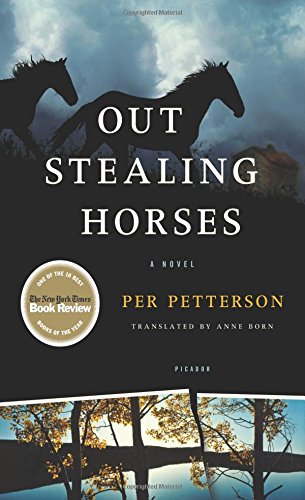
Per Petterson’s book, Out Stealing Horses, talks about the 67-year-old man who decides to move to a peaceful area and start a quiet life.
Per Petterson The Norwegian novelist started his journey in 1987 with a collection of short stories. After that, he released his famous books To Siberia (1996) and In the Wake (2002). The second book describes a young man who lost the family in the Scandinavian star ferry disaster. The book is probably based on the real-life of the writer as Petterson lost his parents and younger brother in a disaster as well.
His other book, Out Stealing Horses, talks about the 67-year-old man who decides to move to a peaceful area and start a quiet life. However, after some time, the old man meets his neighbor that wakes up his memories from the period after World War II. Petterson uses beautiful language to describe all the memories and tries to confirm how childhood events can change someone’s life forever.
The book got two rewards – the Bookseller’s Best Book of the Year Award and the Norwegian Critics Prize for Literature. These rewards confirm the book deserves your attention.
In 2011, Merethe Lindstrom’s book Days of the History of Silence won two rewards – Nordic Council’s Literary Prize and the Norwegian Critics’ Award.
Merethe Lindstrom In 1983, 20-year-old Merethe Lindstrom released a collection of short stories and made her first steps in the writing industry. The first reward Merethe got was in 1996 for the book The Stone Collectors. However, that was only the beginning of her successful career.
In 2011, her book Days of the History of Silence won two rewards – Nordic Council’s Literary Prize and the Norwegian Critics’ Award. The storyline of the books describes the life of a couple Simon and Eva, the parents of three grown-up daughters, that spent most of their lives together. Yet, the family is not the only thing that keeps them together. They both have secrets from the past that could not be hidden anymore.
The book talks about nostalgia, silence, and different psychological dilemmas. Eva is a specific female character that even younger generations will admire. She is open-minded, independent, and educated (she is a former teacher). Her attitude and approach make the book even more interesting for reading.
5 Best Contemporary Scandinavian Writers You Should Read – Final Thought Reading a book will relax you, improve your mood, and expand your vocabulary. You only need to find a genre of the book that will make your free time more entertaining. The writers from the list cover different topics and their writing styles are not the same. However, they will surely add a mix of emotions to your everyday routine. It is something we all need!
Dorian Martin
5 Best Contemporary Scandinavian Writers You Should Read, written exclusively for Daily Scandinavian by Dorian Martin. Dorian is a content writer and consultant for educational and technology blogs. Currently, he works with a Trustmypaper research paper writing service providing help to grad students.Throughout his career, he served as a writer and proofreader and worked with experienced copywriters and bloggers.
Two of Europe’s largest lakes, Vänern and Vättern, lie in the heart of southern Sweden. In this area of farmland and forests, painted churches, grand castles and literary hideaways abound. Read more about the great lakes in Sweden.
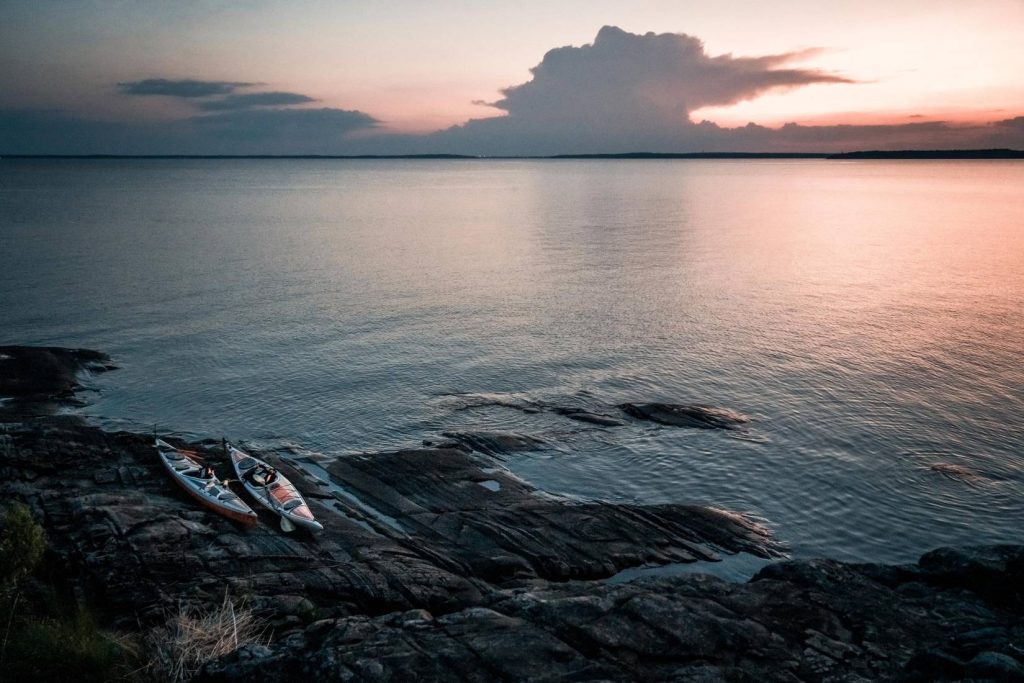
Two enormous lakes, Vänern and Vättern, dominates the map of Sweden. The larger of the two is Vänern, a vast stretch of water with an area of 5,585 sq km (2,156sq. miles) and the largest lake in Western Europe. Its western shore embraces two provinces, Dalsland and Värmland.
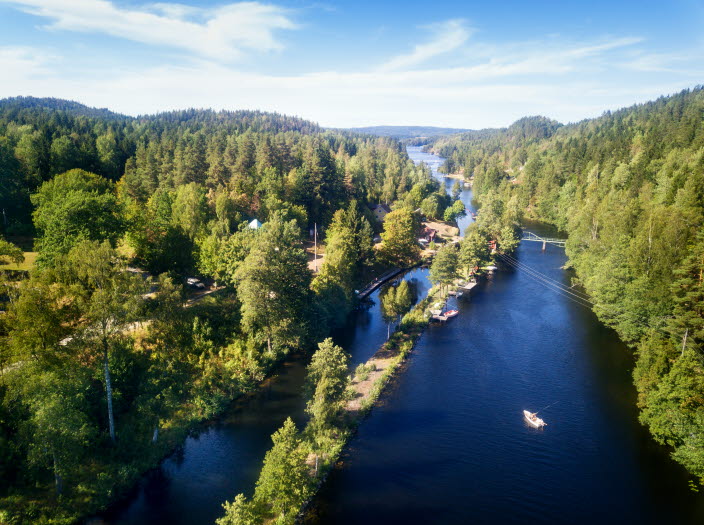
A local feature is the Dalslands Kanal. Photo: Jonas Ingman / Dalslandskanal Väst-Sverige
Dalsland is a province of neat farms and prosperous small towns and villages, with empty roads running through its forests. The greatest attraction here is nature and thus, the most interesting activities are outdoors: namely, camping, hiking and canoeing.
The upland area of Kroppefjällen is a nature reserve, and one of the best ways to explore the region is to hike along the 15km (9-mile) Karl XIIs Väg (Karolinerleden), a historical walking trail; maps can be obtained from the tourist office in Mellerud.
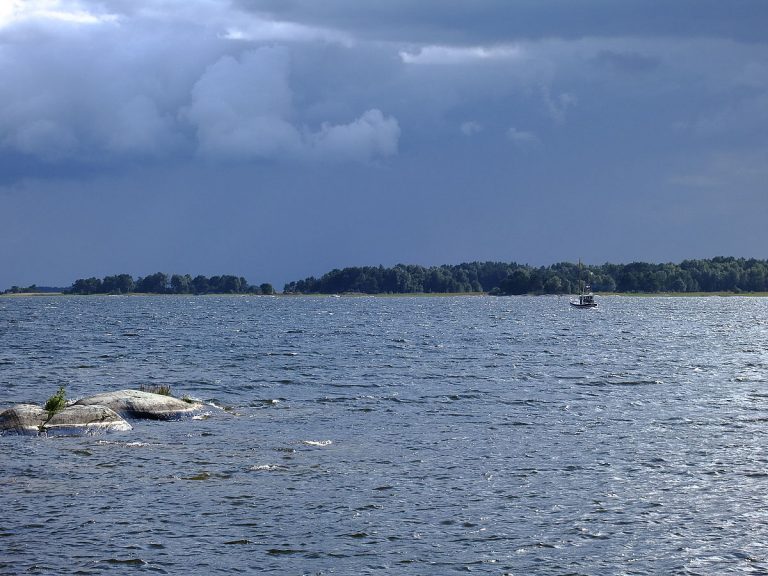
Vänern has a vast stretch of water with an area of 5,585 sq km (2,156sq. miles) and the largest lake in Western Europe. Photo: Linda Skernberg / Visit Sweden
A local feature is the Dalslands Kanal, a network of interconnected lakes and rivers. It was designed by Nils Ericsson and built between 1864 and 1868 to provide better transport for the local ironwork and sawmills. Today, it is popular for sailing and canoeing.
The aqueduct at Håverud, 14km (9 miles) north of Mellerud, is a dramatic piece of engineering. Made of iron and 33 meters (108ft) long, it carries the canal over the rapids of the River Upperud.
The Great Lakes in Sweden, written by Tor Kjolberg