Scandinavia has always been considered rife for adventure. From its historical roots as a region that spawned global explorers — the Vikings made it to America long before Columbus — to its reputation for harsh yet beautiful landscapes, this is a part of the world that has so much to offer. Whether you are choosing to visit for just a few days, or you have spent your entire life here, there is always something new and unique to experience during the summer months. Reaqd about these unique Scandinavian summer adventures you don’t want to miss.
Understandably, there will often be the usual tourist spots that visitors might want to visit. Yet, this ignores the fact that Norway, Denmark, and Sweden each have some exciting and enriching activities that you can undertake that are slightly off the well-worn holiday trail.
There’s a lot to uncover, but we’re going to take a moment to look at three unique ideas for enriching experiences during your Scandinavian summer.
One tour company has produced an experience, called Vildmark i Värmland (wilderness in Värmland) that guides visitors through constructing their own rafts using timber from the forest. Photo: Vildmark.se
Crafting and Rafting in Sweden Scandinavian countries have gained a well-deserved reputation for being chilled-out places to vacation. However, with such an incredible environment and a rich culture, it would be a shame not to find a way to bring the potential for exploration together with relaxed activities. In Sweden, they have done exactly that with a unique crafting and rafting experience in the Värmland region.
The area is home to an impressive waterway — the Klarälven river — that winds its way through the forest landscape. Historically, this acted as a method for lumber businesses to transport their loads down toward civilization. However, one tour company has produced an experience, called Vildmark i Värmland (wilderness in Värmland) that guides visitors through constructing their own rafts using timber from the forest. They then use these vessels to float downriver on the same type of journey that the logs would have taken in years passed.
This isn’t a break-neck white water rafting experience. It’s gentler but exposes you to areas of outstanding natural beauty that you would experience in no better way. Not to mention that research has shown that simply spending time surrounded by nature, in this case largely untouched by industry, is beneficial to your physical, mental, and social wellbeing. This tour gives you elements of creativity and exercise that can help you feel more revitalized, and to drift along the river at a gentle pace as you explore for up to 6 days, camping in the woods each night.
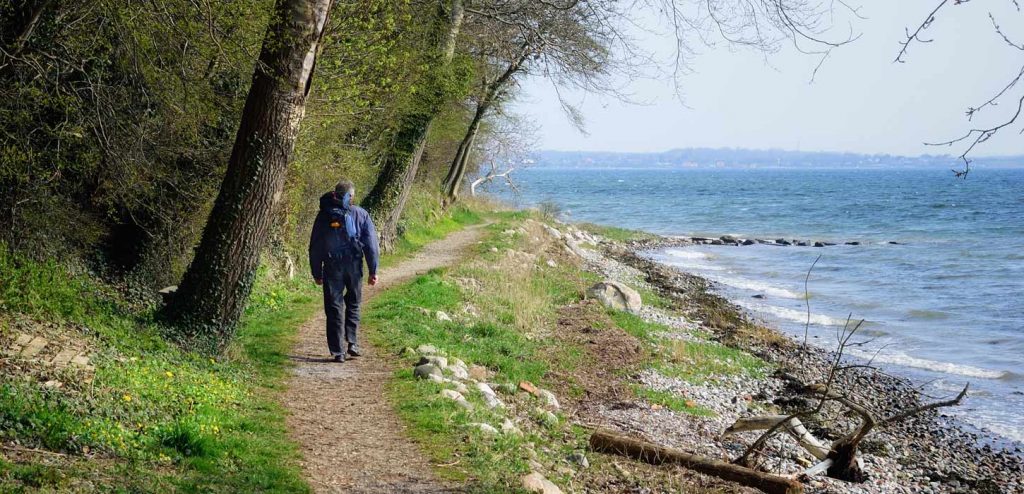
An adventure doesn’t necessarily have to include long trips into the wilderness. Photo: Visit Sønderborg
Unique Hiking in Denmark An adventure doesn’t necessarily have to include long trips into the wilderness. Scandinavia has some incredible opportunities to take your family on shorter hiking experiences. While this may not immediately seem the natural choice of unique activity, you’ll find that Denmark, in particular, offers the chance to see landscapes you can find in few other places around the world.
The North Jutland region has become a popular draw for hikers looking for something a little different. This isn’t just as a result of the sweeping beauty to be found in its Rubjerg Knude sand dunes, or the cliff-top views that open out onto the North Sea. It also sports an intriguing lighthouse that is partially buried in the sand. This hike isn’t always for the faint-hearted, as the coastal winds often whip at the sand dunes — be certain to bring sufficient face coverings so you don’t get a mouthful! But the lighthouse, which was recently moved 70 meters back from the cliff edge to prevent it from falling into the sea, is open to the public and you can climb to 90 meters above sea level to take in some breathtaking vistas.
Denmark has also become the only other area aside from Sydney that you can take a hike not just across a bridge, but overtop of it. The Old Lillebælt Bridge in Middelfart dates back to 1925 and remains one of the most important passageways for both cars and trains traveling from Funen and Jutland. Since 2015, skilled climbing guides have taken tourists on a walk from a welcome center before connecting them to a security system at the foot of the bridge. For around 2 hours, you get to hike 60 meters above the Lillebælt Strait while cars and trains shuttle along the bridge beneath you. Even if you’ve lived in Scandinavia your whole life, you have the chance to see Denmark in a way that you can’t almost anywhere else.
The waterways of Scandinavia are some of the crispest and most pristine in the world. Photo: Mattias Fredriksson / Visit Norway
Explore Lofoten by Kayak in Norway The waterways of Scandinavia are some of the crispest and most pristine in the world, with beautiful lakes, fjords, and coastlines to discover. While it may be more traditional to see the region by road, parts of Norway are best experienced when you navigate them by kayak.
Lofoten, an archipelago located in the Nordland county of Norway, has become a draw for watersports. Often this is due to the impressive waves it offers surfers in the winter months. In the summer, though, adventure can be found by paddling through along the inner shore, taking in the historic fishing villages, the dramatic mountain peaks, and even coastal land that remains untouched by civilization. There is something for kayakers of all abilities, too. Paddling for the weekend along the shores of Ballstad is perfect for beginners and can be coupled with some gentle hiking and dinner at the local lodge.
However, for more advanced kayakers, the outer coast of Moskenesøya provides a unique challenge. It takes around 4 days to travel down from the northeast tip of the island — uninhabited mountainside shoreline on one side of you, the wilds of the Atlantic on the other. This is known as Moskstraumen (maelstrom), and the only times you will be out of your kayak will be the few areas ashore that you can camp overnight in. Seeing nature under the power of your own paddling is also great for green vacationing. However, it’s just as important to be aware of the carbon footprint you’re leaving along the way. Reduce your waste production, use renewable energy resources for lighting and heat, and even use clean transport where possible to get to the region. This area is unspoiled and should remain so.
Unique Scandinavian Summer Adventures You Don’t Want to Miss – Conclusion The Scandinavian summer holds incredible prospects for unique adventures. Whether you take to the water in Norway and Sweden or hike in Denmark, you can discover experiences you won’t find anywhere else. There is always something for visitors of all abilities to enjoy, so step outside of the normal tourist traps, and engage more meaningfully with the region.
Beau Peters
Unique Scandinavian Summer Adventures You Don’t Want to Miss, written exclusively for Daily Scandinavian by Beau Peters. Beau is a creative professional with a lifetime of experience in service and care. As a manager, he has learned a slew of tricks of the trade that he enjoys sharing with others who have the same passion and dedication that he brings to his work. When he is not writing, he enjoys reading and trying new things. Check out his website Stories by Beau Peters.
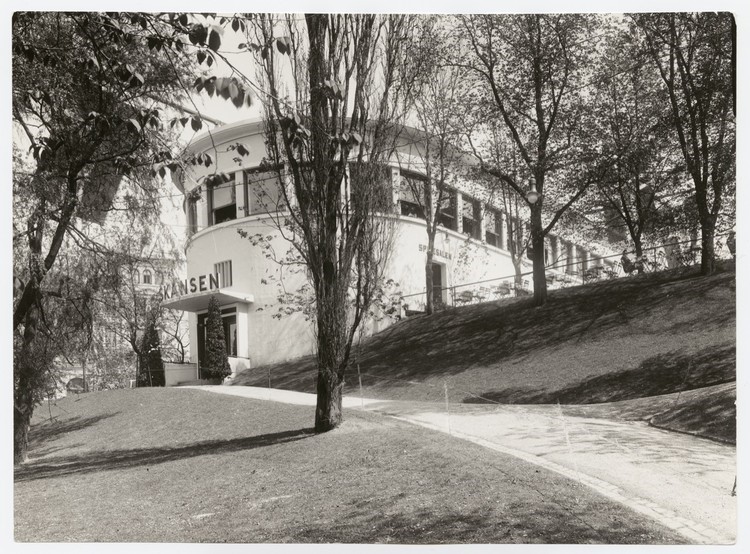
In May 1927, a new type of building that the residents of Oslo had not seen before was completed. The elongated, bright yellow restaurant Skansen was able to serve 2,000 guests on the outdoor terrace. Inside the building, there was a ballroom with ceiling paintings of bold female figures by the Norwegian painter Axel Revold. The architect was Lars Thalian Backer, who unfortunately died only 38 years old in 1930. The building was demolished in 1970. Read more about the Breakthrough of Modernism Architecture in Norway.
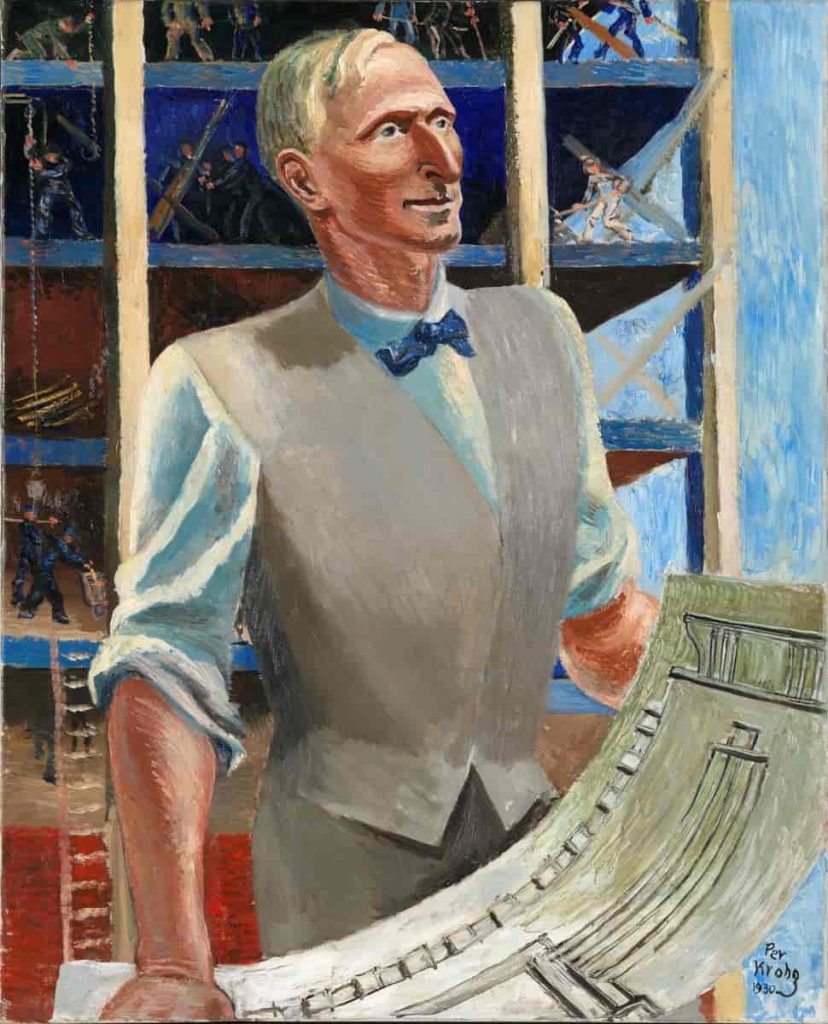
Lars Backer was educated at the Oslo National Academy of the Arts and the Royal Institute of Technology in Stockholm. He also attended the Architectural Association School of Architecture in London.
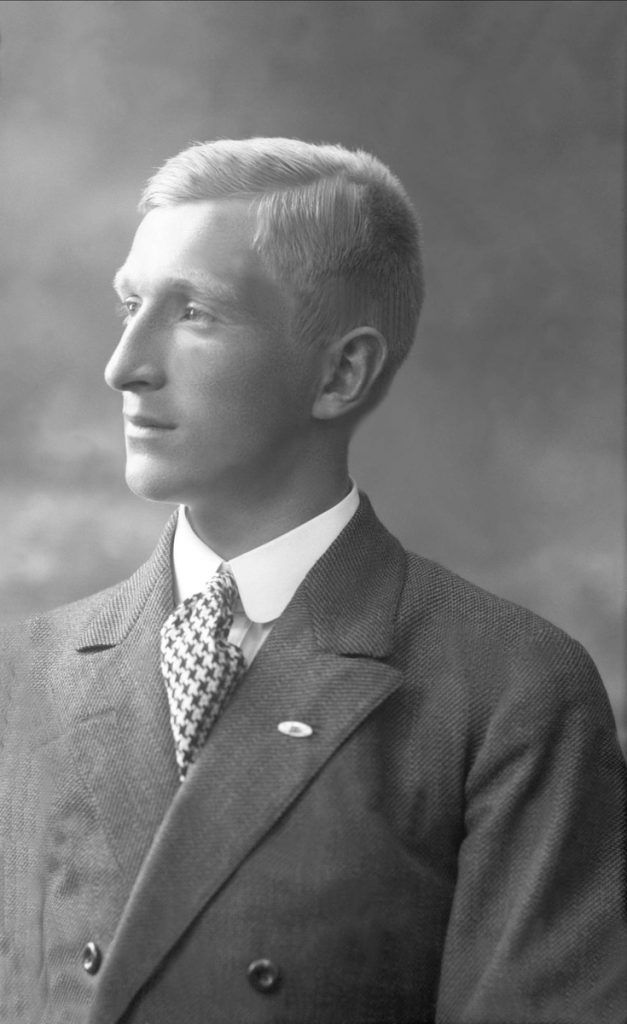
Lars Backer, 1911. Photo: Wikipedia
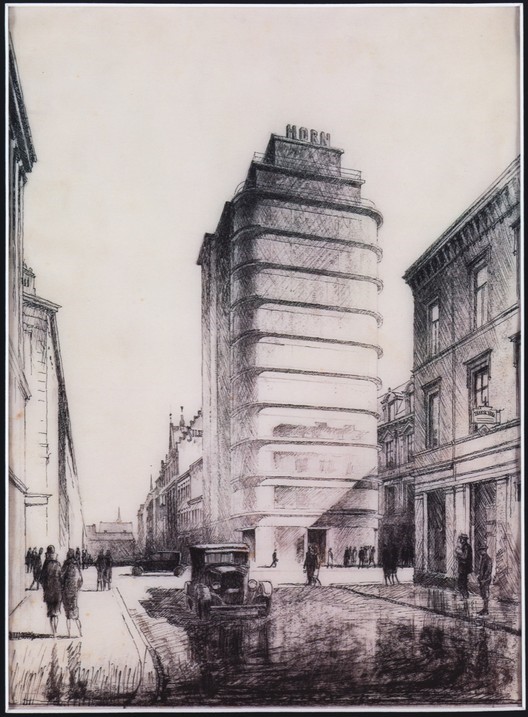
With his designs for Skansen Restaurant, Ekeberg Restaurant and the first high-rise office building in the capital of Norway, the Horn Building, Backer brought the International Style in architecture to Norway. Many people had felt that a new era was imminent, and now it had arrived.
«Skansen captures the fjord with open arms, at the same time as it has a good and open view of the city,» wrote a journalist in the newspaper Aftenposten about the new building at Akershus fortress two weeks before the opening. He added: «Fresh air, flowers and trees, sun and sea, beauty and idyll and yet in the middle of the German city.” Critics in the same newspaper, on the other hand, claimed that the restaurant “looked exactly like the gondola in a giant airplane deprived of wings and tail”.
Restaurant Skansen in Oslo, 1927. Image unknown/National Museum, Oslo
A time of transition
The mid-1920s were a time of transition in Norway. Neoclassicism was still the predominant architectural style: power stations, banks, housing developments, sports facilities, museums and cinemas all bore the hallmarks of Ancient Greek and Roman architecture. Lars Backer contributed to this movement with his Frogner Cinema, the beautiful Villa Larsen, and a university project executed in the neoclassical style.
In a richly illustrated book (in Norwegian only) about Lars Backer, architectural historian Ulf Grønvold describes the architect as “an athlete who could climb straight up a flagpole. A man with ambitions to reach the top. A pathfinder. A hero who gave us access to the future. ” For the sake of safety’, he also points out that “the Norwegian rebel leader was beautiful and blonde.”
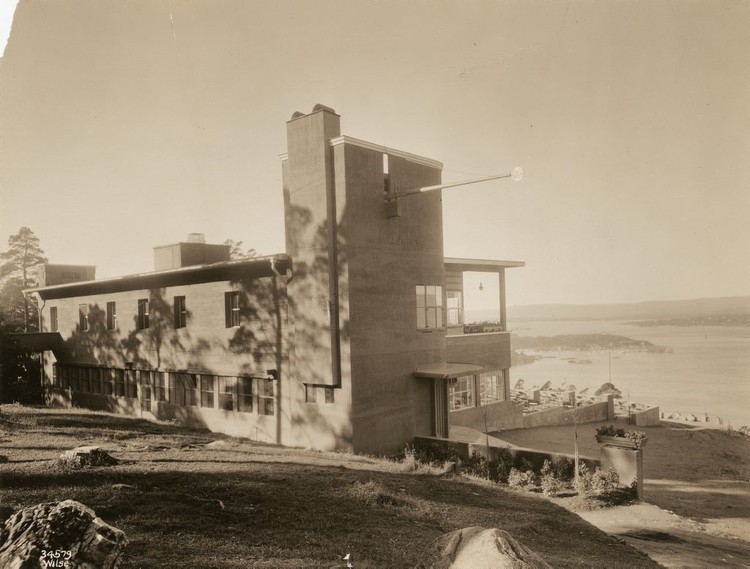
Ekeberg restaurant, Oslo 1927. Image: Anders Beer Wilse Teigens architects
The breakthrough of Functionalism
In Norwegian and Nordic architecture, the year 1930 marked a watershed. A major exhibition in Stockholm that summer presenting a vision of architecture in the future aroused great public enthusiasm. In Scandinavia, the new style was nicknamed “Funkis” (an abbreviation of the word “Funktionalism”).
The Horn building, Oslo 1929-1931. Illustration: National Museum, Oslo
The last years of the 1920s were in every way Backer’s golden age. Just before he died of a streptococcal infection in 1930, only 38 years old, he was overwhelmingly active, according to Grønvold’s book. He completed two restaurants, as well as the main works the Ekeberg restaurant and the Horn building, a couple of large detached houses, four shop fittings, the tennis hall at Skøyen and the hippodrome at Vinderen. He excels in the competition for the new Crown Prince’s Palace at Oscarshall, participated in a competition for the festivity and cinema premises in Horten, made proposals for tenements in Uelandsgate, kiosk and concert hall on Bestefartomta (Grandfather’s ground), workers’ housing at Amalienborg in Copenhagen and redevelopment of Grand Cafe in Oslo.
Lars Backer was educated at the Oslo National Academy of the Arts and the Royal Institute of Technology in Stockholm. Painting: Store norske leksikon
Lars Backer was buried at Vestre gravlund in Oslo. Several members of his firm carried on his work and made names of their own, including Frithjof Stoud Platou who completed the design work on Horngården, an eight-story building on Egertorget.
The Breakthrough of Modernism Architecture in Norway, written by Tor Kjolberg
Feature image (on top): Restaurant Skansen, 1927. Illustration by Platour Architects
Funen is the third-largest island of Denmark and is located in the central part of the country. The main city is H. C. Andersen’s birthplace, but you should not miss the two peaceful towns of Fåborg and Svenborg in South Funen.
Fåborg is a charming little town where Klokketårnet, Europe’s largest carillon, chimes out a hymn four times a day. Other low-key attractions include Fåborg Museum for Fynsk Kunst, an art gallery featuring the “Funen artists” (1880-1920), including Peter Hansen, Fritz Syberg and Johannes Larsen with sculptures by Kai Nielsen.
The heather-covered Svanninge Bakker about 10km (6 miles) of Fåborg, is a natinal park. Svendborg is a beautiful market town and makes a good center for touring. Along Fåborg, it is the gateway to the southern islands, called the South Funen Archipelago including some 55 low-lying Danish islands, including Ærø, Tåsinge, Thurø, Lyø, Strynø and Avernakø.
The unmissable Egeskov Slot north of Svendborg is one of Denmark’s most famous historic sights, a moated castle set in magnificent Baroque and Renaissance gardens. Egeskov means oak forest – legend says that an entire forest of the threes was felled around 1540 to form the piles the castle stands on.
The castle and grounds are filled with wonders, including a mysterious Wooden Man sculpture, the awesomely detailed doll’s house, Titania’s Palace, three mazes, a tree-top walk and nine museums, including a Veteranmuseum (Veteran Motor Museum), containing a fine collection of vintage cars, aircraft and motor cycles.
The Two Peaceful Towns in South Funen, Denmark, written by Tor Kjolberg
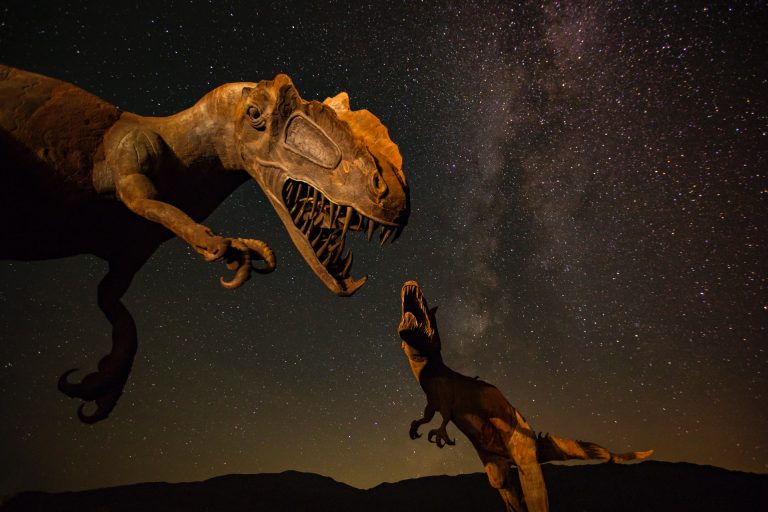
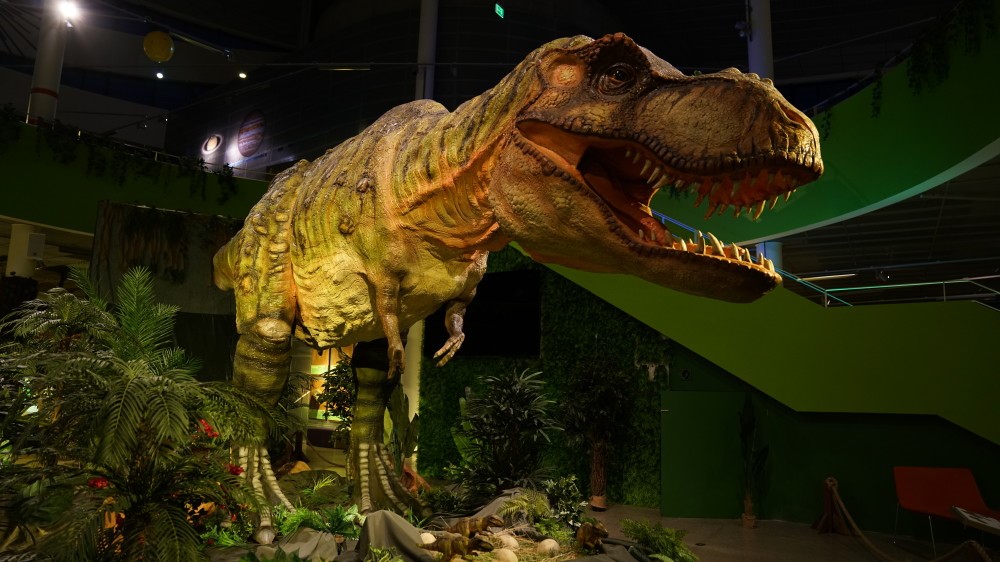
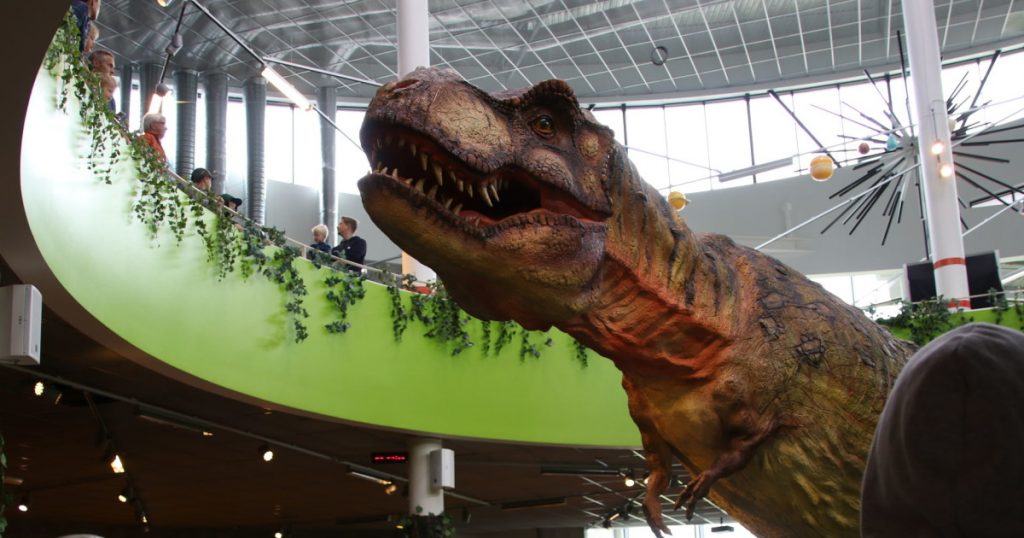
INSPIRA Science Center in Sarpsborg, an hour’s drive from Oslo, opens its doors in July and invites visitors to experience an exhibition of the creatures that dominated the planet for nearly 160 million years. The exhibition includes the neck of a long neck, and two new tough guys named Allosaurus and Carnotaurus as well as a pair of flying lizards. Learn more aboutthe dinosaurs which are coming to Norway this summer.
The exhibition called “Dinosauria” will contain 20 dinosaurs, real size models, moving and making noise. They are made by the reputable Mexican supplier Dinosauriosmexico and will be exhibited from July 1.
Rough family entertainment in Sarpsborg this summer
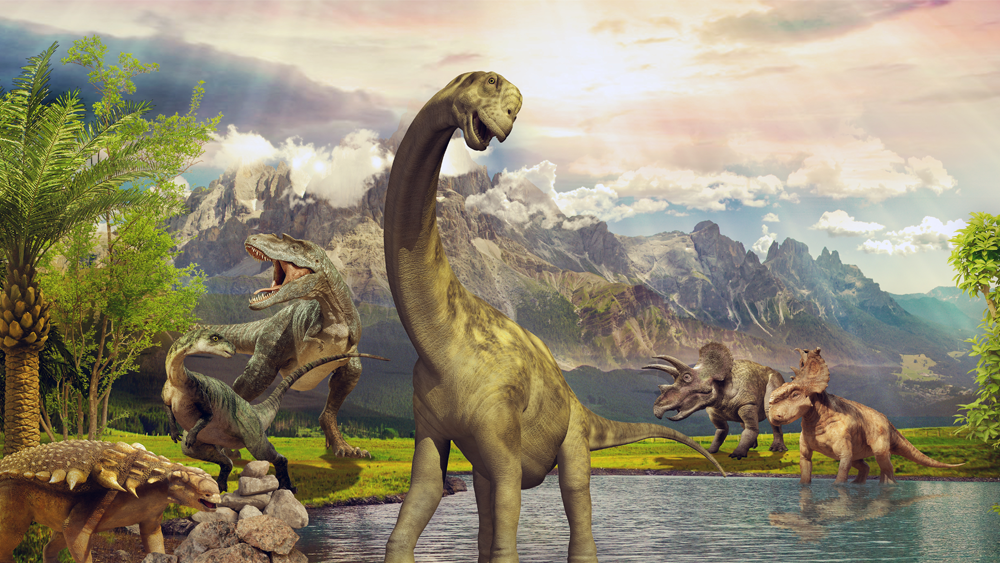
“Dinosauria” is the scientific name for dinosaurs, and derives from Ancient Greek: “Deinos”, meaning “terrible, potent or fearfully great”, and “sauros”, meaning “lizard or reptile”. Dinosaurs are among the most successful animals in the history of life on Earth. They dominated the planet for nearly 160 million years during the entire Mesozoic era, from the Triassic period 225 million years ago. It was followed by the Jurassic period and then the Cretaceous period, which ended 65 million years ago with the extinction of dinosaurs.
In addition to planning the actual dinosaur exhibition that is on its way with ships from Mexico, the INSPIRIA’s team is now working on deciding what kind of activities, performances or shows that will be included in this summer’s offer.
The roaring dinosaur king Tyrannosaurus Rex soars 4.5 meters in the air at INSPIRIA science center in Sarpsborg
Ankylosaurus magniventris
Period: Late Cretaceous (65 million years ago) Known locations: United States and Canada Diet: Herbivore Size: 9 m long Its name means “fused lizard”. This dinosaur lived in North America 65 million years ago during the Late Cretaceous. This is the most widely known armoured dinosaur, with a club on its tail. The final vertebrae of the tail were immobilized by overlapping the connections, turning it into a solid handle.
The tail club (or tail knob) is composed of several osteoderms fused into one unit, with two larger plates on the sides. The skull was narrow and triangular, wider than it was long. Like other Ankylosaurians, Ankylosaurus was a herbivore, its mouth having small leaf-shaped teeth, suitable for cutting vegetation. Both the bones of the skull and those of other regions of the body were fused together to increase their strength and rigidity.
That the Dilophosaurus had a flashy collar is actually a myth! This was something the creators of the Jurassic Park movie came up with, and the myth spread quickly.
Fun fact: The armor extended to the animal’s bony eyelids, acting as blinds to protect the eyes from attackers.
Baryonyx walkeri
Period: Early Cretaceous (120 million years ago) Known locations: England Diet: Piscivore Size: 9.5 m long Its name means “heavy claw”. This dinosaur lived in England 125 million years ago during the late Cretaceous. Perhaps its most distinctive features were its long claws of almost 30 cm and its crocodile-like muzzle with many teeth.
The first Baryonyx fossil, one of its claws, was discovered in a British shale pit in January 1983 by an amateur collector. British scientists at the Natural History Museum excavated an almost complete skeleton at the site. Baryonyx’s long snout and abundant teeth suggest a piscivorous diet.
Deinonychus, with its terrible claws and fast hind legs, was an extremely dangerous predator that lived for approx. 110 million years ago.
Fun fact: Baryonyx’s jaw is weak compared to other carnivorous dinosaurs, and it was found to be associated with several fish fossils, suggesting that it was rather a fish-eater.
Deinonychus antirrhopus
Period: Early Cretaceous (119 million years ago) Known locations: United States Diet: Carnivore Size: 3.4 m long Its name means “terrible claw”, it belonged to the dromeosaurid family, cousin of the famous Velociraptor Mongoliensis. It was characterized by having a very curved and retractable claw of up to 13 cm on each leg, which was used to tear into the flesh of its prey. Its tail, supported by ossified and elongated tendons, was very useful as it helped keep its balance while running, preventing it from bending and falling.
The discovery of this fossil in 1964 altered the previous conception of dinosaurs, from clumsy animals to agile hunters. Thanks to the fact that remains of the herbivore Tenontosaurus have been located along with teeth of Deinonychus in several places, it is now known that the latter hunted other dinosaurs in packs.
Fun fact: Other species of the Dromeosaurid family found in China have shown the presence of feathers, suggesting that this group is related to the birds we know today.
Deinonychus antirrhopus
Period: Early Cretaceous (119 million years ago) Known locations: United States Diet: Carnivore Size: 3.4 m long When paleontologists find dinosaur remains, the skeleton is usually fossilized, since the soft tissue (muscles, internal organs, etc.) is rapidly disintegrated by organisms in charge of decomposing it (bacteria, worms, and fungi). Therefore, the main reference tool is the comparative anatomy, which allows to recreate how the animal’s body was and what its possible movements were.
Fun fact: Biomechanics is the branch of biology that studies and analyzes how animals move, based on the shape of their bones, which is very necessary when building dinosaur robots.
The exhibition called “Dinosauria” will contain 20 dinosaurs, real size models, moving and making noise
Dilophosaurus wetherilli
Period: Early Jurassic (190 million years ago) Known locations: United States Diet: Carnivore Size: 6 m long Its name means “two-crested lizard”. It was first described in 1954 by Sam Wells as belonging to the genus Megalosaurus, but it was not until almost a decade later that it was re-evaluated and reassigned to the new genus Dilophosaurus. Its most prominent feature were the plate-shaped crests on its skull, which may have served as a visual display for attracting a mate. It is believed in popular culture that these crests could spit venom, but this function has not been proven in any dinosaur.
Fun fact: The shape and fragility of the skull and teeth leads one to believe that it possibly fed on carrion. However, this type of teeth would break when attempting to hunt and catch prey.
Ornithomimus velox
Period: Late Cretaceous (70 million years ago) Known locations: Canada, United States and Mexico Diet: Omnivore Size: 4 m long Belonging to the group of the so-called “bird imitators”, these ostrich-like dinosaurs have many features in common with today’s great running birds, but unlike the ostrich, the Ornithomimus velox had a long tail that gave stability when running. Its neck was very flexible, it could be stretched like a spring to catch some food. The presence of this genus has been recorded in Coahuila and Baja California.
Fun fact: The shape of its skeleton suggests that this dinosaur could have reached great speeds when running.
Parasaurolophus walkeri
Period: Late Cretaceous (65 million years ago) Known locations: United States and Canada Diet: Herbivore Size: 10 m Its name means “near crested lizard”. This dinosaur lived in North America 76 million years ago during the Late Cretaceous.
Parasaurolophus could have weighed over two tons. It is known for its large cranial crest, which forms an elongated, curved structure longer than the entire skull. Like other hadrosaurs, it is possible that it walked on both two and four legs. It would probably stand on all fours to search for food but would move on two legs. The skin imprints that are known in Parasaurolophus show a uniform structure of tubercle-like scales, but without any special features.
Fun fact: Inside the crest are two hollow tubes that run from the end to the front of the crest. These tubes may have produced low frequency sounds that traveled over long distances which could have served to communicate with other members of the pack.
Pteranodon
Period: Late Cretaceous (65 million years ago) Known locations: United States Diet: Piscivore Size: 9 m wingspan It is one of the best-known Pterosaurs due to the large number of fossils that have been discovered, about 1,200 specimens have been identified by science, many of them well preserved with skulls and complete skeletons.
The name of this animal means “toothless wing”, as it had no teeth in its beaks. The most distinctive feature of the Pteranodon is its backward crest, which varied in size and shape depending on age, sex and species.
Fun fact: Contrary to popular belief, the Pterosaurs were not dinosaurs; they belonged to the group of flying reptiles.
Stegosaurus stenops
Period: Late Jurassic (150 million years ago) Known locations: United States Diet: Herbivore Size: 7 m long Its name translates to “roof lizard”, as it had several bone plates on its back, alternating in alignment. In addition of serving as protection, the plates had thermoregulatory and display functions.
The bony spikes on its tail were used for defense against predators, which was necessary as the Stegosaurus coexisted with carnivorous dinosaurs such as the Allosaurus and Ceratosaurus. Marks found on a fossil skull indicate that it had cheeks to keep food in its mouth while chewing.
Fun fact: Despite the large size of the Stegosaurus, its brain cavity was no larger than that of a dog, although this does not mean that it was not intelligent.
Megapnosaurus kayentakatae (Syntarsus)
Period: Early Jurassic (200 million years ago) Known locations: South Africa, United States and Mexico Diet: Carnivore Size: 2 – 3 m Megapnosaurus (“big dead lizard”) is a genus represented by two species of cellophysid theropod dinosaurs, which lived in the early Jurassic period, approximately 200 and 190 million years ago, in what is now Africa and North America. It possibly fed on prosaurpodes, small mammals and small lizards. About 46 individuals were found in South Africa including juveniles and adults.
This dinosaur was classified by a skeleton found in 1963 in Zimbabwe. Another species was found in 1977 in the United States which had a bone crest, something that the Mexican specimen may also have had. Recent studies have determined that there was a sexual difference in this type of dinosaur between males and females due to the robustness of their bones. The oldest dinosaur remains in Mexico from the Mid-Jurassic period belong to this species and come from the La Boca Formation, in the Huizachal Canyon of Tamaulipas, in the northeast of Mexico.
Fun fact: Its original name was Syntarsus but this was already assigned to a beetle, so it had to be changed to Megapnosaurus.
Triceratops horridus
Period: Late Cretaceous (65 million years ago) Known locations: United States Diet: Herbivore Size: 9 m long This dinosaur belonged to a group of herbivores better known as “horned dinosaurs”, which lived during the Late Cretaceous (70 million years ago) in North America. It is estimated to have reached about 9m in length. It was characterized by a bony neck frill (a type of body armour) and three horns.
The frill was thought to serve as an armor to protect itself, however, the presence of veins in it suggests that it could have served as a display feature to attract the attention of females with its bright red color.
Fun fact: It is now believed that the Triceratops also includes the specimens previously assigned with the name of Torosaurus, only that the latter were old individuals of Triceratops.
Triceratops sp.
Period: Late Cretaceous (68 million years ago) Known locations: United States and Canada Diet: Herbivore Size: 2 m long Its name means “face with three horns.” It is now known that this dinosaur lived in herds, as the remains of three juveniles were found together in Hell Creek, Montana. It is thought to be one of the most common dinosaurs towards the end of the Late Cretaceous.
The horns in adults could measure up to 90 cm long, and these developed gradually with age, as can be deduced from a young Triceratops specimen found in Montana.
Fun fact: In the United States, traces of a family of Ceratopsids were found in which the remains of the juveniles were at the center and those of the adults were surrounding in a protective position.
Chasing dinosaurs
Tyrannosaurus rex
Period: Late Cretaceous (68 million years ago) Known locations: United States and Canada Diet: Carnivore Size: 11 m long At the end of the Cretaceous, the theropod Tyrannosaurus Rex emerged, a large carnivorous dinosaur that could measure up to 11 m long and reach a hip height of approximately 5 m.
This dinosaur is famous for having a very large skull in proportion to its total body size, and small front extremities (arms) with two fingers. Its skull had two large cavities that helped make it lighter. Its powerful jaws had sharp, curved teeth that could measure up to 18 cm in length. Its remains have been found in Canada and the United States. Only some teeth of smaller cousins like the Gorgosaurus have been found in Mexico.
Fun fact: The position of the eyes in the skull was like that of modern birds of prey, which allowed it to be a skilled hunter, it is also suggested that it had a developed sense of smell like that of scavengers, so it probably was both a hunter and a scavenger.
Tyrannosaurus rex (juvenile)
Period: Late Cretaceous (68 million years ago) Known locations: United States and Canada Diet: Carnivore Size: 4 to 6 m long After hatching, baby Tyrannosaurs were equipped with feathers, which they lost gradually as they grew up. Several juvenile specimens belonging to Tyrannosaurus rex have been found, so there is enough information about the life these animals had, as well as the changes they suffered during their life.
It is known that they reached adult size (age) from approximately 18 years of age and could live up to 30 years; this information was calculated with “Sue”, the largest Tyrannosaurus on record.
Fun fact: It is known that these animals were scavengers because of the thickness of their teeth, their enhanced sense of smell (they had very large olfactory bulbs) and their poor ability to run (same femur and tibia size).
Tyrannosaurus rex (nest)
Period: Late Cretaceous (65 million years ago) Known locations: United States and Canada No Tyrannosaurus rex eggs have ever been found; however, we know that they probably measured up to 50 cm and had a certain incubation time of approximately 30 days. This information was obtained thanks to the similarity they had with a close cousin, the Tarbosaurus, of which fossil material has been found in Asia.
Hatchlings were already born with teeth to be able to eat meat; and it is possible that the parents were responsible for feeding them. This fact is evidenced by the discovery of fossils of adults close to their hatchlings.
Fun fact: It is believed that newborn Tyrannosaurus rex had a similar plumage to that of hatched chickens and lost this protective coat as they grew.
INSPIRIA science center in Sarpsborg is a regional science center where visitors can experience, explore and learn about the world of science.
About INSPIRIA INSPIRIA science center in Sarpsborg is a regional science center where visitors can experience, explore and learn about the world of science. Every year, thousands of visitors come from all over the world to take part in what the center describes as “fun with meaning”. In addition, INSPIRIA promotes science joy through unique school deliveries across the county, and coordinates and implements national education projects. INSPIRIA is also an attractive meeting place for both the business community and the public sector.
The Dinosaurs are Coming to Norway This Summer, source INSPIRIA
Scandinavia, the region in Northern Europe consisting of Denmark, Norway and Sweden, has its own characteristics which you can find more about in this article. Read about e-commerce in Scandinavia.
The total online cross-border market in Europe 2018 was 95 billon euros, in 2019 it was 108.75 and statistics say the total online cross-border market in Europe currently represents a turnover of 146 billion euros.
Scandinavia is not only known for its beautiful landscapes of fjords, mountains and lakes, midnight sun and Northern Lights, which you hopefully have read more about in these pages. It is also praised for its good economy and high standard of living.
Scandinavia is praised for its good economy and high standard of living.
Not surprisingly, IKEA has been the number one on the Scandinavian list of e-commerce companies for the last three years, but also H&M is running up in the Top 10. When it comes to e-commerce in Scandinavia, there is still a lot of unused potential, both outward and inward. Scandinavia is a bit remote area in Europe, surrounded by the Norwegian Sea, the North Sea, the Baltic Sea and the Gulf of Bothnia. Norway and Sweden are connected with Finland, while Denmark also shares a border with Germany and is connected to Sweden by the Öresund bridge.
During the last two years, several smaller Scandinavian companies have succeeded in the European (and international) e-commerce market. The main cause of this is the impact of the COVID-19 outbreak which occurred during the beginning of 2020. Other reasons are state-of-the-art technology, functional logistics as well as inventive products, fashion and interior products in world class.
During the last two years, several smaller Scandinavian companies have succeeded in the European (and international) e-commerce market. Photo: Unctad.org
Denmark’s e-commerce had a forecast to be worth 21.45 billion euros by the end of 2020, Sweden projected 12 billion dollars Norway is the 23rd largest market for B2C e-commerce with a revenue in 2020 of 5 billion euros, placing it ahead of Belgium but behind Austria.
67% of Europeans appreciate the convenience of international e-commerce. Brexit and the spread of the COVID-19, confirm a bright future for cross-border e-commerce in Europe – and Scandinavia.
E-commerce in Scandinavia, written by Tor Kjolberg
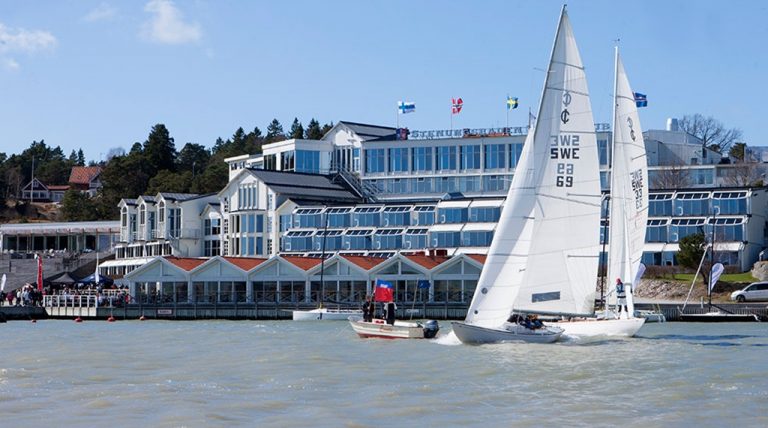
30 minutes’ drive from Gothenburg, right by the Bohuslän port, the Stenungsbaden Yacht Club is the right place for anyone looking for well-being in combination with fun and glamour. Here you can enjoy water sports and outdoor activities, as well as the peaceful surroundings of a lovely spa. Recover energy with a proper workout at this elegant Swedish Yacht Club.
Customers always have fun at Stensungbaden Yacht Club next to the Hake Fjord in Bohuslän. Here you can get active on both land and sea, host creative conferences and recover energy at maximum level in the invigorating Bluewater Sports & Healt Club.
Stensungbaden is great for couples and people who travel alone
On a little island
On this little island, Stensungbaden has served its guests the good life since 1963. Bring your golf clubs, there are five nearby courses, and if relaxation is what you need, stretch out on the sun terrace as you marvel at the rugged landscape of the archipelago or treat yourself to a warm oil massage in the spa.
The character of this spa hotel is much sportier than regular spas and guests are naturally inspired to take part in many different activities to get a proper workout. Sport is a natural element of the resort. Challenge yourself on the Stenungsbaden obstacle course, follow the jogging path or have a real burnout training session. That wonderfully tired but good feeling afterwards deserves a jacuzzi, a spa pool or a sauna as a reward. You’ll find wonderful therapies from head to toe in the treatment list. Every epicurean will love this spa.
At Stensungbaden Yacht Club, you can get active on both land and sea,
Conferences and activities
The hotel has a large gym, and offers a range of different classics such as Zumba, spinning and military fitness seven days a week. As a yacht club, sailing is of course one of the main activities and is practiced all year round. Since the resort is located just in front of the Hakefjorden beach, customers can choose and enjoy all kinds of water sports, such as jet-skis and canoes.
Sport is a natural element of the resort.
Conferences are an important part of the resort’s activities. Holding a conference outdoors combined with some water sports will liven up things. The exclusive conference cottage, J. C. Stevens, is ideal for company meetings and conferences. The hotel has the capacity to host conferences up to five hundred participants. It is equipped with 13 conference rooms and 11 group rooms, and can accommodate 450 guests in 215 rooms.
The Captain’s Table restaurant menu is based on the Swedish cuisine with a twist from the American east coast
Excellent Swedish cuisine
The Captain’s Table restaurant menu is based on the Swedish cuisine with a twist from the American east coast. Of course, the seasons have their influence on the menu, and whenever possible organic ingredients are used from the surrounding area. Choose between the à la carte menu or the delicious 3-course menu that is included in all the packages. With mussels from Orust, oysters from Ljungskile and a bakery just round the corner, the chef lets the flavors do the talking. During the summer months, you can come down to the charming Kookaburra boathouse restaurant right by the water’s edge.
Stensungbaden Yacht Club can accommodate 450 guests in 215 rooms.
Stensungbaden is great for couples and people who travel alone. Enjoy a glass of champagne together with good friends. The dining rooms have a fun party atmosphere at weekends. It is the perfect place to socialize.
Stensungbaden hosts conferences by the sea with RIB trips, seafood and spa. Individual guests can have a yachtified luxury stay.
Proper Workout at Elegant Swedish Yacht Club, written by Tor Kjolberg
Scandinavians are communing by bike, ferries, train and even on ice skates. Scandinavian urban planning emphasizes well-kept parks in connection with office buildings, design exhibits on walkways from home to work and free outdoor gym. Read more about livable Scandinavian cities.
Copenhagen has, for example, during the past 80 years, evolved as a template for what is possible in cities around the world. Scandinavian architecture might just be the perfect example of “organized freedom”.
“In the Nordics, there has long been an emphasis on people in urban life, and putting them at the center,” explains David Pinder, a professor of urban studies at Roskilde University in Denmark.
Scandinavian architecture might just be the perfect example of “organized freedom”. Ramboll City Plan. (Deature Image)
Copenhagen’s Five Finger Plan
Already in 1948, the authorities in Copenhagen issued a “Draft Proposal for a Regional Plan for Greater Copenhagen”. The planner sought to establish urban growth on the basis of an overall regional structure where (a) urban development was concentrated along city fingers linked to the railway system and radial road networks, and (b) the city fingers were separated by green wedges which are kept exempt from development. This became Copenhagen’s Five Finger Plan.
Scandinavians have always had a special bond with nature and that may be one of the reasons for the relatively late advent of industrial revolution in this region. Scandinavians have intrinsically known the basis of functionalism even before it was officially established as a movement.
Uppsala concert- and congress center. Photo: Sweden.se
Building equal societies
According to Pinder, there’s also been emphasis on building more equal societies, an aim accompanied by “a strong discipline of participation” which encourages decision-makers to think about diverse groups when planning new urban areas and include them directly in discussions.
Copenhagen, for example, is known for its bicycles. There are 675,000 bikes and just 120,000 cars in Copenhagen, which means bikes outnumber cars by more than five-to-one. For people living as well as working or studying in Copenhagen, that proportion is even higher – 62%. Every day, Copenhagen’s cyclists covered a total of 1.4 million km in 2016. So widespread are cycles and cycle lanes throughout the city that the term “Copenhagenize” has come to meet adding bicycle infrastructure to a city.
Ever since medieval times, Scandinavians have had examples of cleverly designed homes and objects. Seaweed thatching began on the Danish island of Læsø in the 17th century.
Beautiful houses in Skagen, northern Denmark
Top ranking for quality of living
Copenhagen, Stockholm and Oslo were all ranked among the top 25 cities in the world for quality of living in 2019, in major studies by global consulting firm Mercer and international lifestyle magazine Monocle. Stockholm recently came second for sustainability in the Arcadis Sustainable Cities Index, while Copenhagen, a city of just less than 800,000 people, came ninth in the Economist Intelligence Unit’s Global Liveability Ranking. Although all these studies use slightly different criteria, they each highlight the perceived success of the Scandinavian urban planning model in prioritizing quality of life and striving for a greener future.
Today, and even for a long time now, Scandinavian urban planners know the importance of pedestrian streets and walkable cities and towns. Economically and for health reasons, shopping areas that are pedestrian-accessible make sense because people can easily get from store to store. Infrastructure-wise, you don’t need to worry about parking, traffic, and all the problems that must be addressed therein. Aesthetically, it’s simply more beautiful.
Just like some other European nations, Scandinavians had their own variation of Art Nouveau in the 19th century, called National Romantic style, and even a nationally-based version of Neo-Classicism, called Nordic Classicism. Because Denmark geographically is close to Germany, the Danes started picking up “novelties” and became interested in “new architecture” in the late 1920’s.
Several studies highlight the perceived success of the Scandinavian urban planning model in prioritizing quality of life and striving for a greener future. Illustration: Nordicinnovation.org
Master course in Nordic urban planning
Fueled by rising international interest in why the Nordic countries are doing so well, three of the region’s top universities recently joined forces to launch the world’s first international master’s program specializing in Nordic urban planning.
Taught in English, it is a collaboration between Pinder’s team at Roskilde University, west of Copenhagen, researchers at Malmö University in southern Sweden and The Arctic University of Norway in Tromsø, 200 miles north of the Arctic circle. The first 32 students began the course in September 2019 and spent at least one semester in every location during the two-year program.
The latest developments in Urban Design suggest that all residences in a city should be no more than 300 meters from a green space. This has lead to an interest in creating small green spaces, rather than larger parks and open areas.
Mindful relationship with nature
As mentioned above, the late industrialization in Scandinavia might in some ways explain why Scandinavians have managed to find a perfect equilibrium between two worlds – keeping a mindful relationship with nature, and taking advantage of the improvements brought by the industry. A well-designed Scandinavian house is always corresponding with its natural environment, so that both the nature around the house and the architecture itself get the best out of the process.
One of the participants enrolled in the Scandinavian master program, Leo Couturier Lopez, 32, an urban planner from Paris, said, “I have been travelling around the Nordics and I was very impressed by the green spaces, architecture which combines aesthetics and utility, and mobility in urban spaces.”
The future of contemporary architecture in Scandinavia
As many travelers to Copenhagen during recent years have noticed, there have been massive construction sites around the city. The reason is that Copenhagen has expanded its metro system by 17 stops – a huge accessibility improvement.
Several architectural teams have contributed to contemporary architecture in Scandinavia and will continue to design not only with respect to nature, but also with a brilliant sense of using technology the right way.
Livable Scandinavian Cities, written by Tor Kjolberg
Former Minister for the Environment in Denmark (2011-2014) Ida Auken member of The Liberal Party, is Chairman for The Parliament’s Climate and Energy Committee. She is now a Young Global Leader for the World Economic Forum and author of the book “Dansk” in which she writes about Danish identity and values.
Danes may be the inspiration for many countries. The Danish labor-market model for instance (also called “flexicurity”) offers flexibility and security for workers as well as employees. Contrary to what many Americans tend to believe, Denmark is not a socialist country. Yes, the country has free health care, but at the same time low social mobility.
Book-cover for “Dansk”
The labor-market model is a decentralized system where pay and working conditions are established by collective-bargaining agreements between trade unions and employer’s organizations in mutual respect for each other. If labor agreements are not met, workers have the right to go on strike as well as the employers have the right to lock out workers.
A market economy
In a speech at Harvard University, the Danish prime minister claimed that the Danish model was far from being a socialist economy, but a market economy.
Ida Auken strongly believes that the air in the Danish cities will be cleaner by 2030 because there are fewer cars on the street and the ones still driving there will be electric. Less noise and much more space. And the Danes will be eating more plant-based food, she believes, healthier as well as environmentally friendly.
The Danish labor market model
There are very few working poor in Denmark, not even low-skilled or unskilled workers, who cannot sustain themselves and their families with a full-time job. However, Auken admits that Denmark could do a much better job when it comes to social mobility. “This is something that the new Danish social democratic government is addressing, together with the Social Liberal Party that I belong to. We have agreed to invest in early childhood development in our child-care institutions, especially from ages zero to 6, to try to improve social mobility,” she says.
“We are social democrats with a touch of liberalism,” says Ida Auken. Photo: Wikidata
A vigorous labor market policy Danes are trying out new types of living arrangements with more shared functions and spaces which means more people can afford to live in cities. Wooden houses are a more common sight, and they are nicer to live in and much better for the climate than concrete buildings.
Ida Auken strongly believes that the air in the Danish cities will be cleaner by 2030 . Photo: Visit Denmark
The employment rate in Denmark is very high. Because of the flexicurity model, the Danes will recover more quickly from a crise like the pandemic because companies can easily scale fast up or down. People who were laid off due to restrictions did not need to fear for their future because the high level of social protection and vigorous labor market policy.
The Danish way of thinking is that problems should be solved commonly. When they buy something, it should be something that lasts and because you really need it. “Refuse, reuse, reduce, recycle” is the new way of looking at products.
Danes in general are pleased with the Danish model, according to the Employment Relations Research Center at the University of Copenhagen. The reason is not only that it makes economic sense but also that it creates a sense of common purpose that ensures the dignity of every citizen.
“Flexicurity” offers flexibility and security for workers as well as employees. Photo: Denmark.dk
Democrats with a touch of liberalism “We are social democrats with a touch of liberalism,” says Auken.
In recent years, agriculture has changed dramatically in Denmark. New plant-based alternatives to meat and dairy products have made it harder for traditional animal-based products to compete. Much of the land formerly used to produce animal feedstock has become available.
People living in rural areas benefit from tourism, city people starting to value enjoying nature, hiking and angling, traveling in their regions by train while most airlines to a larger extent are switching to electro-fuels, biofuels or electricity.
The working class in Denmark is being lifted into the middle class. The mobility stabilized the society and avoid it being split into gated communities or projects. Danish kids are growing up and get to know children of other economic, educational and social background.
Danish kids are growing up and get to know children of other economic, educational and social background. Photo: Ashton Bingham / Unsplash
Nothing wrong with being a millionaire
At the same time, Danes in general see nothing wrong with being successful and earning a lot of money. Only a little more than 5 percent of the population is made up of millionaires, and the highest incomes and fortunes are relatively taxed the most. The richest 10 percent pay almost one third of the total tax. Denmark has managed to minimize poverty and reduce huge inequalities.
And it seems like people have stopped buying stuff they don’t need, they have more money to spend on values like gardening, healthy food, cultural events and eating out in the fabulous new restaurants popping up everywhere in Denmark.
By 2030, Auken predicts that Danes will spend more of their money being with family and friends, not buying goods. Perhaps all of us should use some time reflecting on the Danish way of living.
Internationally, Henrik Vibskov is known as THE Danish fashion designer. On his 10th years anniversary he celebrated his fashion brand by issuing a book about his work. The multidisciplinaryfashion designeris also a passionate musician, innovative stage designer and head of his trendsetting eponymous fashion label. In 2019 he opened an impressing fashion store which challenged Danish store norms. Read more about Denmark’s adored fashion designer.
Henrik Vibskov is best known for his avant-garde streetwear, which became immensely popular when the “nu rave” movement took off in 2006. His clothing, baggy and colorful, was a success on the new street blogs that emerged then.
A book he calls monograph
The Henrik Vibskov book was the first comprehensive presentation of his remarkably multifaceted creative vision. Many of the enlightening texts and project descriptions are written by Vibskov himself. The book, or monograph, as Vibskov himself likes to call it, contains photos and texts and is 220 pages long. The monograph is inspirational for anyone working creatively.
From the spring 2021 collection
New store in Copenhagen
Vibskov’s new store, located on Gammel Møntand is designed by London and Copenhagen-based Clover Studio in cooperation with the designer. It features tables suspended by climbing ropes (knotted with a Triple Davy) and stuck to the floor via double sided tape and is indeed worth a visit.
He describes himself as a person who works with textiles. Those textiles can be hanging on a gallery wall or paraded down a Paris catwalk or even adorning the set of an opera or dance production. For seven years he was the drummer in the electronic music combo Trentemøller.
Inside the Henrik Vibskov boutique in Copenhagen
Colorful Vibskov Henrik Vibskov entered the fashion industry in 2001 after graduating from the internationally renowned Central Saint Martins College of Art and Design in London. He was critically acclaimed already from the collection he designed for his graduation. Opting against minimalistic fashion, Vibskov stands out from other Scandinavian designers with his colorful geometric shapes.
He is the only Scandinavian who has been offered a yearly show at Paris Fashion Week and is a member of the Chambre Syndicale de la Mode Masculine. In 2011, he became a laureate of the Torsten and Soinja Söderberg Prize, the highest accolade for a designer in the Nordic region.
Denmark’s Adored Fashion Designer, written by Tor Kjolberg
Visiting the Swedish city of Piteå is almost like entering a new world. Learn more about this Swedish village of magical contrasts.
Just 45 minutes from Luleå Airport and an hour’s flight from Stockholm, you arrive at the idyllic village of Piteå in Norrbotten, Swedish Lapland. Piteå is a village of magical contrasts – warmth and cold, light and dark, mountains and archipelago – and not least, the contrast between seasons is dramatic.
Just 45 minutes from Luleå Airport and an hour’s flight from Stockholm, you arrive at the idyllic village of Piteå in Norrbotten, Swedish Lapland. Photo: Wikipedia
History
The name “Piteå”, has been the object of a variety of different interpretations. Common for all these is that they all begin with the Pite river as the origin. The sentence “A river called Pitu” in a letter from the year 1335 establishes this.
In 1335 Piteå is named for the first time in writing, although there is evidence of settlements, dated to sometime during the 11th century.
During the 15th century two neighboring towns, Piteå and Luleå, became tough competitors, but throughout the years, Piteå has had the forest as its most important industry. Piteå was established in 1620 by 44 settlers and it received its town privileges by the king Gustavus Adolphus a year later.
Its current location was established in 1668, after a great fire had ravished the first location in 1666.
In 1858, the first sawmill was founded in Bergsviken followed by one in Munksund (1861) and in Storfors (1871).
In 1858 the first sawmill in the municipality was founded in Bergsviken and three years later one was founded in Munksund. About 10 years later one more was founded at Lövholmen and between 1883-86 the largest one in Storfors.
In more recent years, the construction of Markbygden Wind Farm is adding new industry to the area. It is scheduled to be finished by 2023.
What to do and see in Piteå Piteå is a small town with around 23,000 inhabitants and is famous for the Westrobothian dialect called “Pitemål” which most of the older generation speak. Their traditional dish is “Piteplat”, a kind of meat-filled dumpling. The historical town has its own traditions with the Bay of Bothnian right next door.
It’s claimed that people living here is generally nicer than for example the stiff upper lips Stockholmers. One might think that they’d behave more “small-town” like, but they don’t. Even southerners feel welcome here. We have a saying in Norway, though, about people living far north. “They are not more hospitable, only more socially ill”.
As a first visit to Piteå, we would recommend traveling there during the summer. The beaches are often called “The Riviera of Sweden”. The coastline of Bothnia Bay is 300km long. Pite Havsbad is a wonderful bathing resort, no matter if you choose to take a swim outside or indoors. It is mainly a beach at the estuary of the Pite River. From being a sandy beach stretching for kilometers, it has developed into a tourist attraction with camping, hotels, pools etc. Expect to see the midnight sun.
The beaches in Piteå are often called “The Riviera of Sweden”. Photo: Piteå kommun
The archipelago of Piteå is home to 550 islands, with fishing villages, nature reserves, sandy beaches and nature at its best. It might be located in the north of Sweden, but the water temperatures in the sea is sometimes among the highest in the country.
Piteå is only about 100 kilometers south of the Arctic Circle, and the winter months set stage for a completely different experience – the ice-covered coastline is illuminated by the Northern Lights.
Long dark nights and plenty of proper winter conditions are the norm. There are outdoor activities all year round and wintertime means the possibility of skiing and dog sledging.
From August to March, the Northern Lights are visible all-over Swedish Lapland. However, chances for experiencing the Aurora Borealis at its best is at Bothnia Bay where there are few lights to interfere and the horizon expands beyond the ice.
Byxtorget and Rådhustorget are the two main squares in the center of Piteå. They are connected by the pedestrian street Storgatan. These squares are full of shops, cafés and restaurants.
How to get there By plane: Luleå Airport (LLA) is located 55 kilometers to the north and connects the area with the Stockholm-Arlanda Airport (ARN) for connections around the globe.
By car: Piteå is located along the highway E4 between Skellefteå and Luleå.
By train: Northbound trains from Stockholm stops in Älvsbyn, from where it is possible to take local buses to Piteå.
By bus: There are regional buses connecting Piteå with the surrounding area.
A Swedish Village of Magical Contrasts, compiled by Tor Kjolberg