Norway’s oil fund, the world’s largest sovereign wealth fund, has bought shares in more than 53 Turkish companies with investments totaling around $800 million up to the end of 2020, according to official figures from Norway’s Norges Bank Investment Management. Read more about Norway’s Sovereign Fund with massive investments in Turkey.
The Government Pension Fund of Norway has invested more than US$1 trillion in assets. It holds a massive market influence globally because it owns 1.5% of the world’s listed shares. It operates under ethical guidelines set by the country’s parliament.
Norway’s oil fund, the world’s largest sovereign wealth fund, bought shares in six Turkish energy companies with investments totaling around $117 million up to the end of 2019, according to official figures from Norway’s Norges Bank Investment Management.
The fund also holds the largest single stake (4.01%) in Turkey’s first automotive manufacturer, Türk Traktor, while its biggest investment overall was in Akbank with $73.4 million for a 1.51 percent ownership.
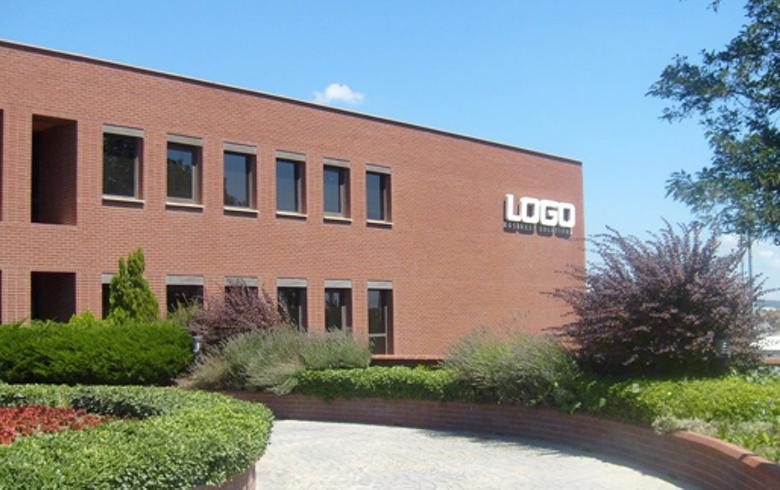
Norway’s fund has also the largest ownership share in one of the biggest Turkish software companies Logo with a 5.05 percent stake.
Norway’s fund has also the largest ownership share in one of the biggest Turkish software companies Logo
The Scandinavian country’s fund also invested in a variety of sectors in Turkey, including communication services, glass and chemicals production, furniture and food and drinks companies.
Norway is Europe’s largest oil producer and the world’s third-largest natural gas exporter after Russia and Qatar.
By the end of 2020, the fund’s market value was 11,028 billion kroner.
By the end of 2020, the fund returned 10.9 percent, or 1.07 trillion kroner ($126 billion).
The fund’s largest fixed-income holdings are in U.S. government bonds.
It owns stakes in more than 9,000 companies globally, with its biggest holdings in tech giants Microsoft Corp. and Apple Inc, followed by Switzerland’s Nestle SA, Google parent firm Alphabet Inc and Amazon Inc.
The fund also holds the largest single stake (4.01%) in Turkey’s first automotive manufacturer, Türk Traktor
The Norwegian government can spend only 3 percent of the fund’s total interest income per year, which is the expected real return on the fund, according to Norges Bank Investment Management, which was delegated by the country’s parliament as the fund manager.
Norway’s Sovereign Fund With Massive Investments in Turkey, written by Tor Kjolberg
Although January is known to be the coldest month across Scandinavia, a distinct nip in the air can be felt all the way into April and beyond in some areas. Regardless of where you live in the world, keeping your house warm during the colder months cannot only be costly, but potentially harmful to the environment as well. Read more aboutEco-friendly ways to heat your Scandinavian home.
Heating systems, and especially those that rely on fossil fuels to operate, can impact the environment in a number of ways, including contributing to global warming. Unvented combustion heating systems such as charcoal furnaces and kerosene heaters are the biggest culprits as far as generating indoor air pollution is concerned. Thankfully, there are a number of ways to keep your Scandinavian home comfortably warm in an eco-friendly manner.
Norwegians love their firewood and wood stoves. Out of 2.5 million dwellings in Norway, 1.2 million use firewood for heating. (Norwegian “kosefyring” translates roughly into “firing with wood for the purpose of relaxation and pleasure”.) Photo: NTNU.
Invest in a geothermal heating system Geothermal heating remains one of the most efficient and eco-friendly ways to heat a home in Scandinavia. These systems, which utilize the earth’s natural and limitless heat, are particularly popular in Sweden. The hot water and steam that can be found underneath the earth’s surface can power a heating system in the same way traditional fuels such as oil and gas can. Although geothermal systems are considered to be quite a large investment, they typically pay for themselves within eight years, while also adding a substantial amount of resale value to a home.
If you have a furnace, make sure it’s well-maintained Although gas furnaces are not quite as popular in Scandinavia as they are in the USA, for instance, they are still being utilized as an eco-friendly home heating method. Furnaces that make use of natural gas are by far more environmentally-friendly than their electric or oil counterparts. In order for a gas furnace to remain in tip-top shape and not have a negative impact on indoor air quality and the environment as a whole, it has to undergo regular maintenance and swift repairs when needed. Some of the most common issues to look out for include faulty blower motors and hot surface ignitors. If your furnace continues to give problems despite all major parts seemingly functioning well, you might have to have a closer look at your furnace control board.
Solar heating is always a winner Over the past decade, the use of solar power has grown exponentially in Scandinavia. This is no surprise, considering that solar heating is believed to be the most eco-friendly heating solution available at present. Although a solar heating installation does require an upfront investment, it is generally not as expensive as it is believed to be, and also serves as a virtually-free heat source for life. Solar heating systems all require a solar panel installation, which is both easy and quick to complete. A homeowner does have to decide on a type of heating system though, as this will determine what further installations are required.
There are a number of ways to do heat your Scandinavian home without having a negative impact on the environment. Photo: Sigmund / Unsplash
During the cold Scandinavian winters, it is essential to keep your house warm. Luckily, there are a number of ways to do this without having a negative impact on the environment.
Karoline Gore
Eco-Friendly Ways To Heat Your Scandinavian Home, written exclusively for Daily Scandinavian by Karoline Gore. Karoline is a freelance writer from Stoke on Trent in the UK who left the corporate grind when she started a family and has never looked back. She enjoys contributing to a range of online publications on the topics that are important to her.
In the middle of Scandinavia and the charming Swedish countryside you will find Dalarna. The amazing region is the birthplace of the world famous Dala horse and midsummer traditions. The region is often referred to as “Sweden in miniature”. If you want to experience comfort and luxurious nature experiences in a marvelous Swedish winter landscape, you should experience Dalarnas newest (and first!) high end accommodation, the Fryksås Chalet.
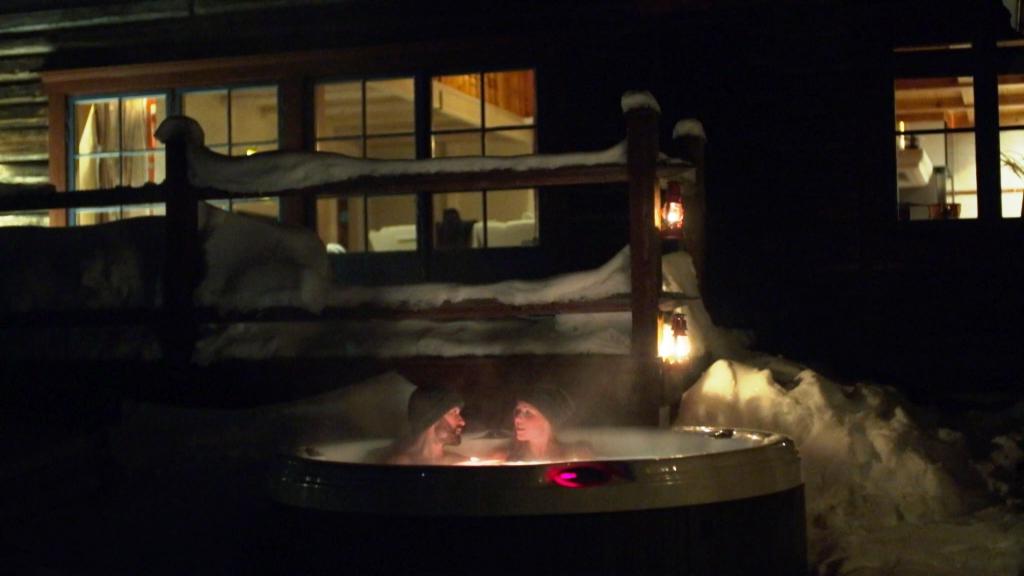
The Fryksås Chalet is an old rustic log house that has been transformed into a place of divine comfort with elegance and style. The big, open fireplace that is the heart of the chalet invites guests to spend hours in front of it. Maybe dreaming of some of the amazing outdoor experiences in the untouched wilderness that can be found just around the corner? Visitors may also indulge themselves in a long sauna session, or practice stargazing while relaxing in the comfortable outdoor hot tub.
Relaxing in hot tub. Still photo
The chalet has three bedrooms, two bathrooms, a sauna, indoor & outdoor bath and a nice social kitchen where private chef dinners may be enjoyed. It also offers a meditation & yoga room and big veranda facing the south with a beautiful lake view.
Dalarna is also known for being one of Sweden’s most important regions when it comes to culture, food and outdoor activities.
Great experiences all year round
Dalarna is offering great experiences all year around and from next winter it is possible to take part of them with great service at Dalarnas newest (and first!) high end accommodation.
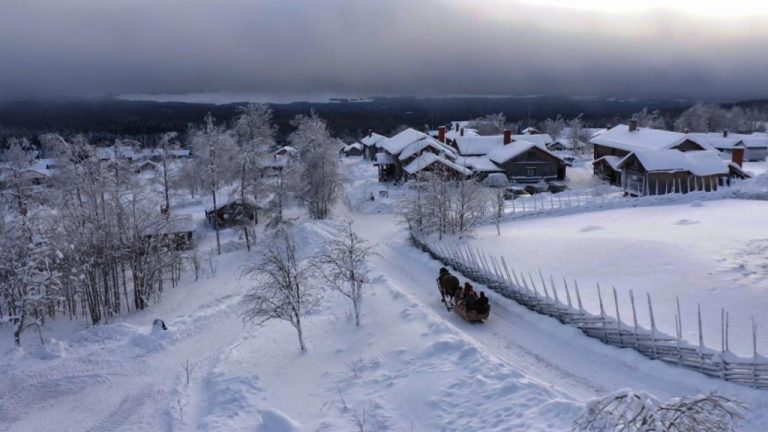
The chalet is found in a beautiful old village that continues to tell stories of a bygone era and the people who lived here. Take part of the history and soak in the traditional red cottages, tranquil nature, deep forests and cool lakes the surrounding area has to offer.
Exclusive add-ons
The days can be filled with eco-friendly activities such as traditional horse-drawn sleigh rides through village, dog sled rides in serene nature or outdoor cooking & dining. Try carving a Dala horse or more adventurous activities like Nordic skiing tracks, snowshoe trekking and downhill skiing. A private guided tour in the nearby predator reserve park or a private meeting and a Swedish fika with Santa Claus are also possible add-ons. At the end of the day a private chef will serve a dinner made with local delicacies, prepared to perfection.
The Fryksås Chalet is the number one choice for couples looking for a relaxing getaway or families that want to spend quality time together. In addition to The Fryksås Chalet guests can also book the “The log chalet” which is a smaller chalet on the same property that can be added for bigger or multi-generation families.
Bookable for next winter season
This experience is bookable now for next winter with the first arrival date on the 1th of December 2021.
The Dalarna landscape is one of mountains, waterfalls and rivers, deep forests with woodland lakes and open rolling farmland. Perfect country for hiking, skiing, cycling, skating, canoeing and other outdoor adventures. Much of the popular imagery of Sweden, culturally and geographically, is from Dalarna; a pretty red-painted cottage, people in brightly-colored folk costumes dance and swirl in celebration of Midsummer and -of course the Dala horse. All very Swedish. All very Dalarna.
Luxurious Nature Experiences in a Marvelous Swedish Winter Landscape, is based on a press release from Visit Dalarna. Visit Dalarna is the Regional Tourism Organization for Dalarna. Our mission is to develop, market and sell the region Dalarna nationally and internationally.
Earlier this month, the world’s largest all-electric ferry went into full operation on the stretch between the two Norwegian cities of Moss and Horten. This is Norway’s busiest ferry route. Read more about the world’s largest electric ferry now operational in Norway.
Norway has had a successful kickstart of electrification of cars, and now the government is focusing on electrifying other forms of transport. In a country with one of the longest coastlines in the world with many fjords, transport by water has been a natural mean of moving people and cargo.
Bastø Electric, made Sefine Shipyard in Turkey, is the first of three battery-powered ferries on a route across the Oslo Fjord
Bastø Electric, made at Sefine Shipyard in Turkey, is the first of three battery-powered ferries on a route across the Oslo Fjord, a route of some 10.5km (5.67 nautical miles). Bastø Electric measures 139.2 meters in length and is 21 meters wide. Top speed is 13 knots (15 mpr 24 km/h). Every year, 3.8 million passengers and 1.8 million vehicles are transported between Moss and Horten. The ferry can carry either 200 cars or 24 trucks, as well as 600 passengers.
All three ferries will be made in Turkey. The battery and fast-charging systems for the ferries are supplied by Siemens Energy from the battery factory in Trondheim. Bastø Electric uses batteries with a capacity of 4.3 MWh. The fast-charging system has a capacity of 9 MW, according to the shipping company. When docking, the ferry is always “charged at lightning speed”.
CEO Bastø Fosen Øyvind Lund (left) and Minister of Climate and the Environment Sveinung Rotevatn. Photo- KLD
The building of Bastø Electric has taken 20 months. This is by no means Norway’s first electric ferry, though, just its largest. The first fully-electric ferry to enter active service in Norway was the MF Ampere which debuted in early 2015.
World’s Largest Electric Ferry Now Operational In Norway, written by Tor Kjolberg
Studying abroad is not just a silly teenage dream but rather a serious life goal as getting higher education in another country is a very serious and advantageous venture. Learning abroad allows you to not only learn a foreign language or get a degree at a globally famous school but also gain some very important life experience, communicate with lots of different people, and simply have fun. Learn how to apply to top 5 Swedish universities.
One of the best foreign Scandinavian countries to visit and study there is, of course, Sweden. Sweden is not only the homeland of IKEA and PewDiePie but is also an extremely culturally open country with some of the best universities in the world.
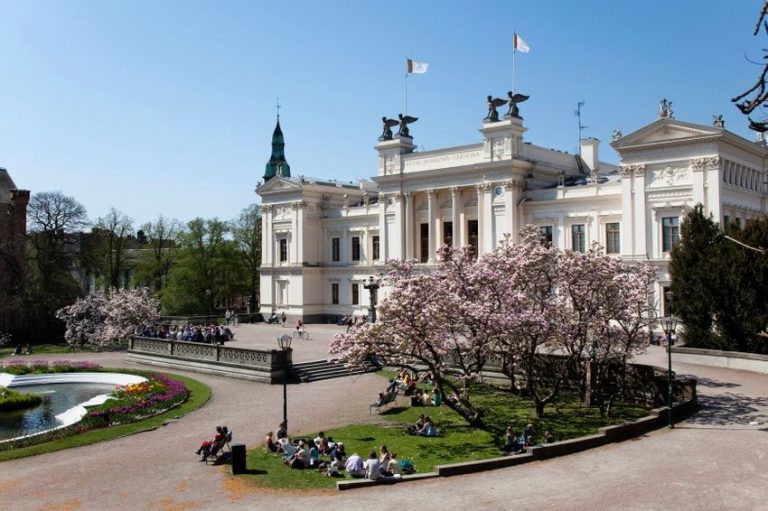
Depending on what you want to learn, there’s a variety of universities in Sweden open for any foreigner and native student alike. Photo: Science in HD / Unsplash
Top Swedish Unis and How to Apply There
Depending on what you want to learn, there’s a variety of universities in Sweden open for any foreigner and native student alike. Still, some of the best universities in Sweden, like in the rest of Scandinavian countries specialize in technology and computer science, so you might want to consider studying this occupation there. Now, for the particular universities. The top 5 universities in Sweden are considered to be the following.
Lund University. One of the oldest and biggest universities in Sweden. It actively supports the international exchange program Erasmus, which makes it particularly attractive to foreign students. Some of the best specializations taught in Lund are considered to be the medical ones.
Royal Institute of Technology. Being in the top 40 technical unis of the world, this school would certainly be of interest to engineers. On top of that, the university has a very positive reputation for being home to the Nobel Prize. Some of the best specializations studied here are engineering, science, and architecture.
Uppsala University. Another older university of Sweden, Uppsala Uni is known for its quality of education and openness to international students. Some of the top specializations to study here are literature, history, arts, and music.
Karolinska Institute. Being established in the early 19th century as the university that would train military surgeons, Karolinska is still considered to be one of the top medical schools in the world. Aside from that, the students also learn engineering and business here.
Stockholm University. Being one of the youngest unis in Sweden, the school in the country’s capital is known for its innovation in education and lots of available specializations. Some of the best and top-rated programs here are law, humanities, math, and natural science.
Some of the best universities in Sweden, like in the rest of Scandinavian countries specialize in technology and computer science. Photo C D X / Unsplash
Now, applying for the program at one of the Swedish unis is not that hard at all. First, you must collect some major documents. Those include the following.
Any documents proving that you are eligible of applying for the bachelor’s or master’s program. That could be your school or college diploma, for instance.
A document proving that your level of English is good enough for a certain program.
A document that proves you are qualified for a certain program.
After that, you just might need to make sure that those documents are in order. That can also mean that you might need to take a look through an online translation services review to find the one that fits your needs the most. And that’s basically it. You can even apply online. Every top university certainly has such an option. The rest will depend on you and your persistence regarding learning. If you’re passionate about what you study and really want to get that degree, success will always follow you whatever happens and wherever you may go. So, buckle up for this wonderful adventure, apply today, and remember to study well!.
Although applying to Swedish university (and pretty much any other Scandinavian uni) is not that hard, it’s still important to pay attention to detail. Photo: Vadim Fomenok / Unsplash
Never Miss Anything
Although applying to Swedish university (and pretty much any other Scandinavian uni) is not that hard, it’s still important to pay attention to detail. Forgetting to translate one of the required documents or failure to study before the exam can severe disappoint and demoralize you. In order to avoid this, keep yourself focused not only on the goal but also on the means of achieving it.
Michael Carr
How to apply to top 5 Swedish universities, written exclusively for Daily Scandinavian by Michael Carr. Michael has a long-lasting and successful career as an experienced author and educator. He managed to study in several countries of the world, thus, being able to understand where and what he can learn better. One of the greatest things Michael has learned is that the best way to learn is to share his experiences with others, that’s why he combines the writing and teaching careers, all to great success.
Copenhagen-based Norwegian furniture designer Martin Solem was inspired by classic Danish design and began working as an intern for one of the oldest surviving Danish cabinet makers, Rud. Rasmussen in 2005. He undertook an MA at the Royal Danish Academy of Fine Arts in 2007, but has always been working with Norwegian materials and his Norwegian presence.
Since 2011, Solem has worked as a full-time designer at HAY Studio in Copenhagen, while pursuing solo projects and collaborations with international brands such as Cappellini and Bernhardt Design. Every year since 2015, he has appeared with Norway in Milan, and he received the Young Talent Award from the Norwegian Design Council in 2015.
A full-time designer at HAY design studio in Copenhagen, Martijn Solem also continues working on various solo projects
Many solo projects
A full-time designer at HAY design studio in Copenhagen, Solem also continues working on various solo projects. He is for example also doing textile projects taking the idea of ‘traces’ as its starting point, using ancient, naturally occurring Norwegian materials and digitally transforming them into new patterns. His first textile designs were inspired by Norwegian Larvikite – particularly its formation millions of years ago from the melting and mingling of different minerals miles below the surface, and the way that its monochrome appearance from a distance reveals more complex color tones close up.
In his work, which strives to introduce progressive elements alongside established design tradition, he places usefulness and realism at the forefront, and as a result he has exhibited broadly, in cities including Cologne, London, Milan, New York, Paris, Oslo and Stockholm.
An innovative designer
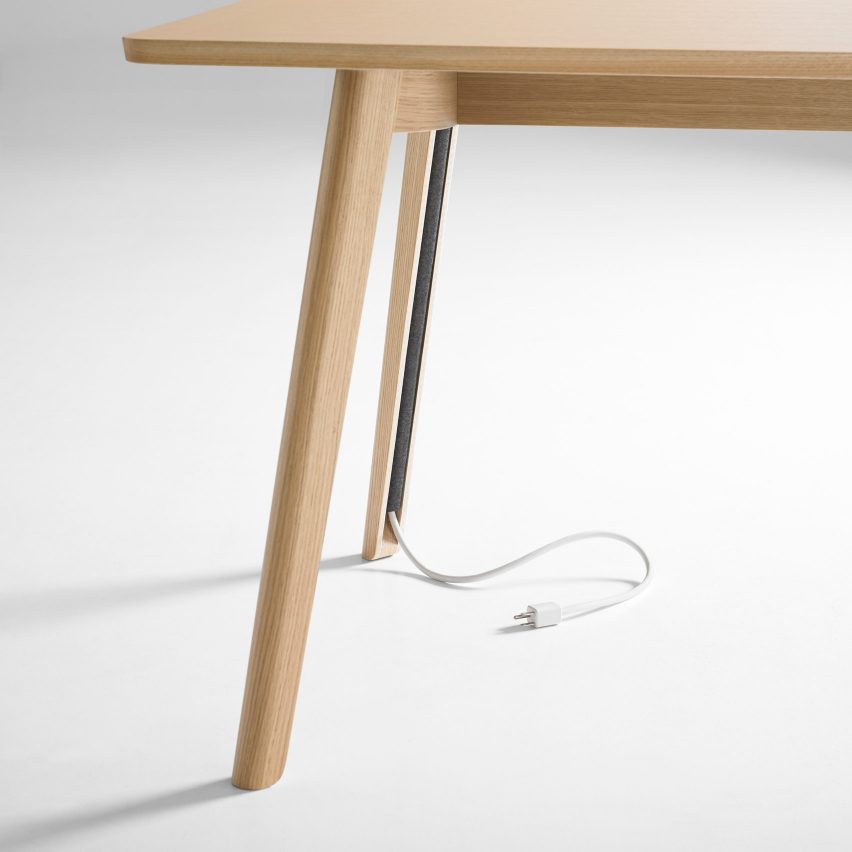
Last year, Solum explored the idea of using the strength of molded-wood veneer material to create innovative, light and strong constructive furniture profiles and 100% Norway exhibited a table Martin designed for the project; built using a low-cost production process to enable it to be produced cheaply and efficiently.
The table keeps cables tidy with hidden storage in each leg
Martin Solem describes his work: “I try to always be innovative, for me a product has to be realistic and useful to be considered a good design. What I try to accomplish is to combine these fundamental thoughts with innovative design.”
Norwegian Materials – Norwegian Presence, written by Tor Kjolberg
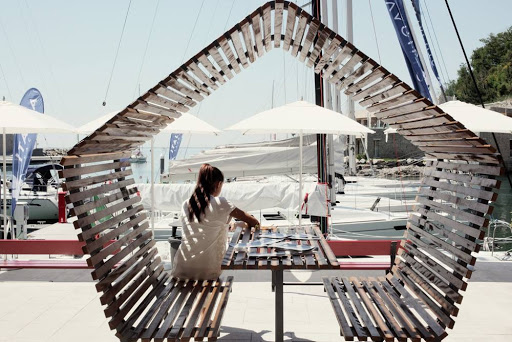
Feature image (on top): Martin Solem’s Urban shelter / The Italian Lab
Bornholm’s Biennials for contemporary glass and ceramics have been arranged biannually since 2005. Hundreds of European artists flock to the small Danish island to take part in the European Ceramic Context. The Danish Glass and Ceramics Biennial is the only one of its kind in Europe.
The biennial exhibits works of leading artists from all over Europe and offers a string of workshops, master-classes and other events. The biennial has always been a visionary collaboration between partners representing the commercial, cultural and educational sectors of Bornholm. The program takes place in the school at Nexø.
The biennial exhibits works of leading artists from all over Europe and offers a string of workshops
The Royal Danish Academy, Design, Program for Crafts in Glass and Ceramics, is one of Europe’s leading educational institutions within the field of glass and ceramics. Its Professional Bachelor program is rooted in the strong tradition of Danish craftsmanship within glass and ceramics. “We investigate processes, materials and practice and develop an artistic voice and a professional language throughout the 3 ½ years of education,” is a statement on its website.
Way back in time, Bornholm, an island of only 36,000 inhabitants, has rich clay deposits to thank for its prominence in the field of ceramics and glass. Already in the 18th century the first ships exporting pottery took off from the island’s shores. The ceramics industry continued to flourish until the mid- 20th-century when the focus shifted to a growing sector of skilled individual craftsmen and women. During the following years, Bornholm’s artistic profile continued to grow as its rugged beauty attracted a string of artists, including a number of glass-artists who landed on the island.
The biennial is motivated by a desire to promote the disciplines and trades of glass and ceramic art at European and global levels. The event aims to show a changing biannual overview of contemporary glass and ceramics. The workshops provide a living incubator for teaching, research and experiments of high quality, which attract visitors from all over the world and bring new perspectives to the area.
The Royal Danish Academy has excellent facilities, with both analogue and digital technologies for the use in working with the two materials, glass and ceramics. Bornholm’s strong artistic community still at the core of the island’s identity, the reason the Biennial takes place on Bornholm and not mainland Denmark.
Today, European Glass and Ceramic Context has become a significant event that not only conveys the development of the contemporary European scene in the form of exhibitions throughout Bornholm, but an essential platform that connects practitioners, researchers, curators and intermediaries. In addition, the Biennale communicates contemporary glass and ceramics to a broad art-interested audience in a multitude of exhibitions, talks and events.
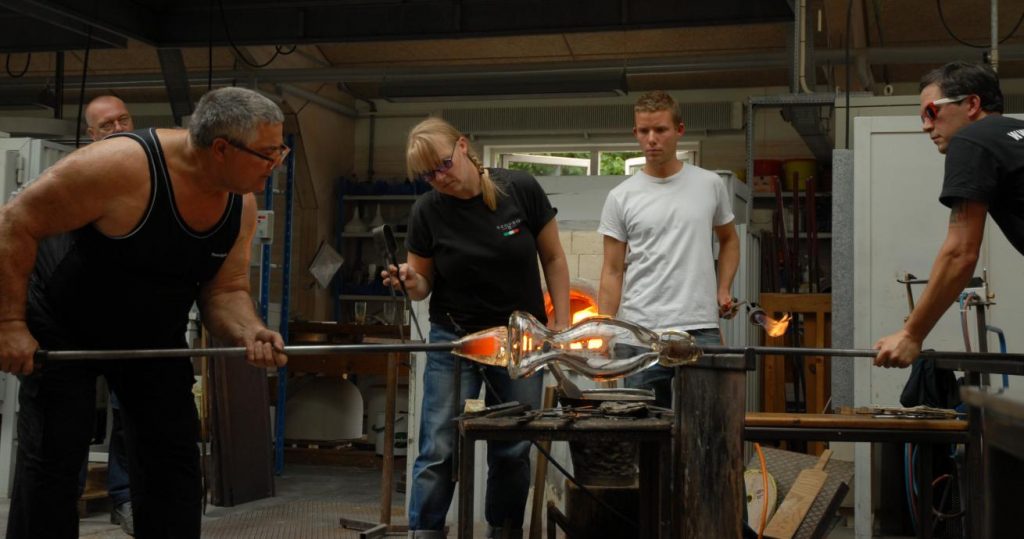
Students, teachers and researchers can work on ceramics on every conceivable scale and with both cold and hot glass
Students, teachers and researchers can work on ceramics on every conceivable scale and with both cold and hot glass. The workshops, which are closely related to the number of students admitted, can accommodate approximately 70 working students.
In 2021, European Glass Context (11.09 – 21.11) will focus more on the UN’s World Goals and Sustainability and, moreover, sharpen the Biennale’s program points to further emphasize and develop the experimental scene. Bornholm Biennials for contemporary European glass and ceramics are jointly organized by Bornholm Art Museum, Royal Danish Academy – Crafts in Glass and Ceramics and Grønbechs Gård, where the Royal Danish Academy is the main partner.
The Danish Glass and Ceramics Biennial, written by Tor Kjolberg
Spanish low-cost airline Vueling strengthens the connectivity between Scandinavia and Spain. Vueling is the largest airline in Spain measured by fleet size and number of destinations. The new flight connections between Scandinavia and Spain will be available from June 2021.
According to a press release from airline Vueling, a part of IAG (International Arlines Group), the company reinforces its commitment to the Nordic market and thus ensures connectivity with a region of great interest to the tourism sector. The airline today announced that it will operate four new routes from Barcelona – El Prat to Gothenburg (Sweden), Billund (Denmark) and Bergen and Stavanger (Norway).
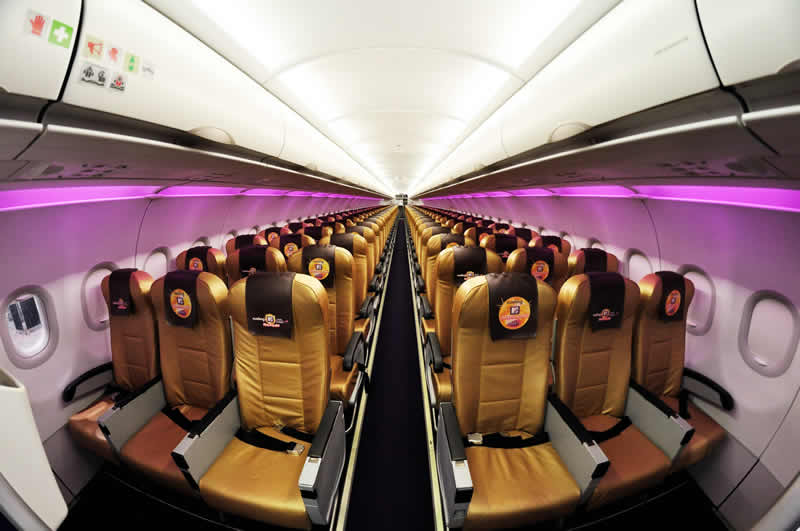
To face the current epidemiological situation, the airline has adopted all sanitary measures against COVID-19 in all its operations
Connections from Barcelona to Gothenburg (Sweden) will be available from June 11, with two weekly frequencies, every Friday and Sunday. On June 18, the route to Billund (Denmark) will be launched, with two weekly flights, every Monday and Friday. Bergen and Stavanger (Norway) will be connected to Barcelona from June 19 and 20, respectively, with one weekly flight: every Saturday in the case of Bergen, and every Sunday in Stavanger.
In addition to the new routes announced, Vueling will operate four other routes during the summer season that are already part of its regular program from Barcelona to Copenhagen, with two daily flights; Stockholm, on a daily basis; Aalborg, with two weekly frequencies; and Oslo, where the airline increases its offer and goes from three weekly flights to a daily frequency.
Health & Safety Vueling is one of the main low-cost airlines in Europe, part of IAG (International Airlines Group – British Airways, Iberia, Level, Aer Lingus). To face the current epidemiological situation, the airline has adopted all sanitary measures against COVID-19 in all its operations, in order to offer all the guarantees to its customers and crew.
In this way, and following the measures established by EASA (European Aviation Safety Agency), in collaboration with the European Center for Disease Prevention and Control, the company has adopted measures in its operations such as: reinforcing cleaning and disinfection of all their aircraft (both in terms of frequency and in the use of specified products), the mandatory use of masks – surgical or superior protection – has been established and, once on board, the aircraft’s HEPA air filters renew the air every three minutes, preventing the spread of bacteria and viruses with an efficiency of 99.99%. In addition, the company has adapted its routes, frequencies, and procedures to the requirements of the authorities of each destination to minimize the incidence of the pandemic.
On the other hand, Vueling has also redefined its product portfolio to adapt them to the current context of maximum flexibility for its customers, allowing it to make changes to the route, date, time and even passenger, without any additional cost.
New Flight Connections Between Scandinavia and Spain, based on a press release from Vueling
After ‘Young Alien’ (2019) and ‘Jalousy’ (2020), Norwegian singer/songwriter Sval has released her potentially “breakthrough moment” with her song (I can’t be your) Medicine. It’s obvious that this alt-pop single is something special. Read more about the Norwegian singer/songwriter’s potentially “breakthrough moment”.
Sval proves that she is a creative genius when it comes to writing impactful music, and she is a strong performer too.
Her 2011 Breakthrough Sval’s real name is Sval Rosenløv Eeg, (born 1998) and she won Norwegian Song Contest for Juniors in 2011. Her later single Tidsfrist (Deadline), released in 2014 was streamed about 1.5 million times. According to her record label Warner Music Norge, she has been streamed more than 11 million times.
Sval writes her own songs but says she has been given great guidance of among others the hit producer Jasper Borgen. “I come up with an idea I have written in my room, and from there it develops into a full production in the studio.”
Performing with a sense of purpose
Sval details a battle to save someone from themselves. “It’s about caring for someone so much and wanting to do everything for them and then realizing that you can’t really save anyone alone, but you can do your very best to try,” she says. “I think we all have our demons and our struggles, and this song is about trying to help someone, whilst also trying to make them want to help themselves.”
This time, Sval has been writing and is performing with a sense of purpose. Norwegian Singer/Songwriter’s «Breakthrough Moment”, written by Tor Kjolberg
Feature image (on top): Photo Jonathan Vivaas Kise
For many years, the Scandinavian nations have topped the PISA list of the nations with the highest percentage of an educated population. The high scores did not come easily but the governments had to restructure the education system and come with better innovative ways. Learn the top 3 secrets to Scandinavian innovation in education.
The Scandinavian government had first to create a conducive environment for all children to join a school and continue learning to the highest level. Teachers also needed incentives while teaching. An overhaul in the Scandinavian education system was done through the following steps.
Education is not about exams Most education systems internationally are test-based systems where students learn for a given period and then sit for tests before graduating to the next phase. Test-based education systems have major challenges that affect teachers, students, parents and governments.
On one hand, teachers rush through syllabuses to evade blame that the students failed because they didn’t cover the whole syllabus. On the other hand, students are preoccupied with passing exams and therefore, they spend their time cramming notes instead of understanding concept.
The Scandinavian no exams policy has helped teachers and students to focus on quality instead of quantity. Photo: Taylor Wilcox/Unsplash
Parents and governments put pressure on students and students and judge their performance by the number of As students score. The Scandinavians were quick to notice this gap and the governments chose to focus on knowledge-based education.
They scrapped off exams from early childhood to the junior high. Students only sit for an exam when they are preparing to join higher education. The no exams policy has helped teachers and students to focus on quality instead of quantity.
It has also helped ease off the pressure on students and teachers that can come from parents and government demanding exam-based performance. Instead, students are graded individually and it is the teacher who sets the grading system.
Buying a college paper College education prepares students for long-term work life. One of the best ways to prepare the students away from lectures is assignments which can include homework, essays, dissertations and research paper.
Due to inexperience, the college student can be faced with challenges on how to structure their papers. One solution to this challenge is asking for a help from the professional writing service writix.co.uk. Assignments require students to commit themselves to study and research and this is where the writing will help you immensely.
The policy of the balanced school and work-life In the traditional education system, teachers are rewarded according to hard work. The measure for hard work is done by the number of hours the teacher spends in class and how fast they cover the syllabus.
Students are also rewarded according to hard work. They need to study as many books as possible and possibly spend their entire school life on books. Teachers also spend every free minute they get to prepare notes for the next lesson or marking homework and assessment tests.
The Scandinavian governments believes that an educated population can be better innovators. Photo: Anita Jankovic/Unsplash
A visit to Scandinavian schools will reveal a different scenario. Lessons are sufficiently balanced to create time for relaxation in between. Lessons take forty-five minutes, followed by a 15-minute break. The purpose of the break is to help teachers relax before they go for the next lesson.
Students also spend this time relaxing and catching up with their on a few conversations with their classmates. In the Scandinavian education system, there is nothing like wasted time.
The many breaks between lessons help students and teachers to relax and you will rarely meet a stressed teacher or student. They always have fresh energies before the start of any lesson.
One of the best ways to prepare the students away from lectures is assignments which can include homework, essays, dissertations and research paper. Photo: Anthony da Cruz/Unsplash
The free mandatory education system It is possible to meet with children who dropped from school due to lack of fee. Every year, thousands of students drop from basic education schools, high schools and universities because of fee-related challenges. Nations end with a generation where half the population is learned and half is not.
The Scandinavian nations were able to overcome this challenge by declaring education free and accessible for all citizens. At the age of six, children join the mandatory early childhood classes.
The mandatory classes continue up to junior high school. In senior high school and university, the education system is not mandatory but remains free. The government believes that an educated population can be better innovators.
The top 3 secrets to Scandinavian innovation in education– Conclusion
The Scandinavian education system took many years of reforms to become what it is today. Although the political leadership in the Nordic region actively took the initiative and pioneered reforms in their education systems, the generation population was supportive even today. The result was an educated population and the benefits can be seen in Nordic technology, arts and innovation. Governments around the world can replicate the Nordic secrets of the knowledge-based education system to produce a productive population.
The top 3 secrets to Scandinavian innovation in education is written exclusively for Daily Scandinavian by Emma Rundle. Emma works in the sales department of an engineering and technology firm and her work is mostly at the B2B level. Her side gig as an academic writer for a thesis writing agency is something she really admires. Her free time is for drawing cartoons, enjoy skiing and meditating.
Feature image (on top): Photo by Annie Spratt / Unsplash

























 The top 3 secrets to Scandinavian innovation in education is written exclusively for Daily Scandinavian by Emma Rundle. Emma works in the sales department of an engineering and technology firm and her work is mostly at the B2B level. Her side gig as an academic writer for a thesis writing agency is something she really admires. Her free time is for drawing cartoons, enjoy skiing and meditating.