Inside the World’s Largest Secure Seed Storage – Svalbard Global Seed Vault

0

The Svalbard Global Seed Vault is a secure backup facility for the world’s crop diversity on the Norwegian island of Spitsbergen in the remote Arctic Svalbard archipelago. Let’s have a look inside the world’s largest secure seed storage.

The Seed Vault, carved into virgin solid rock, was opened on 26 February 2008. The seed storage area itself is located more than 100 meters inside the mountain, beneath layers of rock that range from 40 to 60 meters thick.

Climate change has been affecting farms for years, with floods washing away crops, unpredictable weather wiping out harvests, and drought killing whole yields. Seed banks are a clever way to make sure that thousands – sometimes millions – of fruit and vegetable varieties don’t go extinct despite these threats.

Svalbard globale frøhvelv provides long-term storage for duplicates of seeds from around the world, conserved in gene banks. This includes the security of the world’s food supply against the loss of seeds in gene banks due to mismanagement, accidents, equipment failures, funding cuts, war, sabotage, disease, and natural disasters. The Seed Vault is managed under terms spelled out in a tripartite agreement among the Norwegian government, the Crop Trust, and the Nordic Genetic Resource Center (NordGen).

Inside the World's Largest Secure Seed Storage - Svalbard Global Seed Vault
“Perpetual Repercussion”, an illuminated fiber optic art installation created by the Norwegian artist, Dyveke Sanne, that decorates the entrance.

A global icon

The entrance portal is a simple concrete construction that has gained status as a global icon, in part due to “Perpetual Repercussion”, an illuminated fiber optic art installation created by the Norwegian artist, Dyveke Sanne, that decorates the entrance. Many Svalbard visitors go to the Vault’s entrance to take selfies and tick off “been there”.

The massive vault, set amid cold, dry permafrost, now holds thousands of varieties of essential food crops, including beans, wheat, and rice. There are over 1,378,238 samples of 6,521 crop species, and the volume is constantly growing.

Inside the World's Largest Secure Seed Storage - Svalbard Global Seed Vault
Seeds arriving the seed vault.

“During 2024, 61 seed gene banks deposited 64,331 seed samples, including 21 from institutes that deposited seeds for the first time this year,” says Åsmund Asdal, the Svalbard Global Seed Vault coordinator.

Around 75 per cent of global domestic vegetable varieties have been permanently lost since the 1900s because of monoculture farming, according to the FAO. This popular farming technique involves growing just one crop species in a field at a time.

Items that preserve and store genetic material, such as seeds, tissues, or DNA samples – are sent from all over the world to Svalbard in a bid to keep native – and sometimes ancient – crop varieties alive.

The Norwegian government entirely funded the Seed Vault’s approximately 45 million kr (US$8.8 million in 2008) construction cost. Norway and the Crop Trust pay for operational expenses. Storing seeds in the vault is free to depositors.

Inside the World's Largest Secure Seed Storage - Svalbard Global Seed Vault
The seed storage area has a cooling system to maintain a temperature of -18 °C and keep it constant.

Cooled to minus 18°C

The mountain mass has permafrost, with a stable temperature range of -3 to 4°C. The seed storage area has an additional cooling system to maintain a temperature of -18 °C and keep it constant. The public power plant in Longyearbyen provides electricity for the Seed Vault. In addition, the Seed Vault is equipped with generators that provide electricity in the case of a power outage.

While countries may have their own national or even regional seed banks, it’s crucial, like any critical data, to have a ‘backup’. For gene banks, this is Svalbard, where the Arctic tundra provides an ideal, secure climate for storage.

Inside the World's Largest Secure Seed Storage - Svalbard Global Seed Vault
There are over 1,378,238 samples of 6,521 crop species, and the volume is constantly growing. Photo: Dag Endresen/Wikimedia commons

The Seed Vault functions like a safe deposit box in a bank

The bank owns the building, and the depositor owns the contents of their box. The Government of Norway owns the facility, and the depositing gene banks own the seeds they send. The deposit of samples in Svalbard does not constitute a legal transfer of genetic resources. In gene bank terminology, this is called a “black box” arrangement. Each depositor signs a Deposit Agreement with NordGen, acting on behalf of Norway.

The Agreement makes clear that Norway does not claim ownership over the deposited samples and that ownership remains with the depositor, who has the sole right of access to those materials in the seed vault. No one has access to anyone else’s seeds from the seed vault. NordGen maintains the database of samples and depositors.

Inside the World's Largest Secure Seed Storage - Svalbard Global Seed Vault
Illustration of Svalbard Global Seed Vault.

The Facility

The seed store facility consists of three halls, each with a base measuring about 9.5 x 27 meters. Each hall can accommodate about 1.5 million seed samples, giving the Seed Vault a total capacity of 4.5 million seed accessions. Only one of the three halls is in use, cooled to -18°C, and equipped with shelves for seed boxes. When this hall reaches capacity, the second storage hall will be prepared and cooled to the level needed for seed conservation.

Inside the World’s Largest Secure Seed Storage – Svalbard Global Seed Vault, Tor Kjolberg reporting.
One of the World’s 100 Most Incredible Places – In Helsinki

According to Time Magazine, Löyly Sauna and Restaurant in Helsinki is one of the world’s most incredible places.

The ancient tradition of public saunas had its renaissance in Finland in 2016 after architect Ville Hara and his partner Anu Puustinen spent six years completing the magnificent Löyly building in Helsinki.

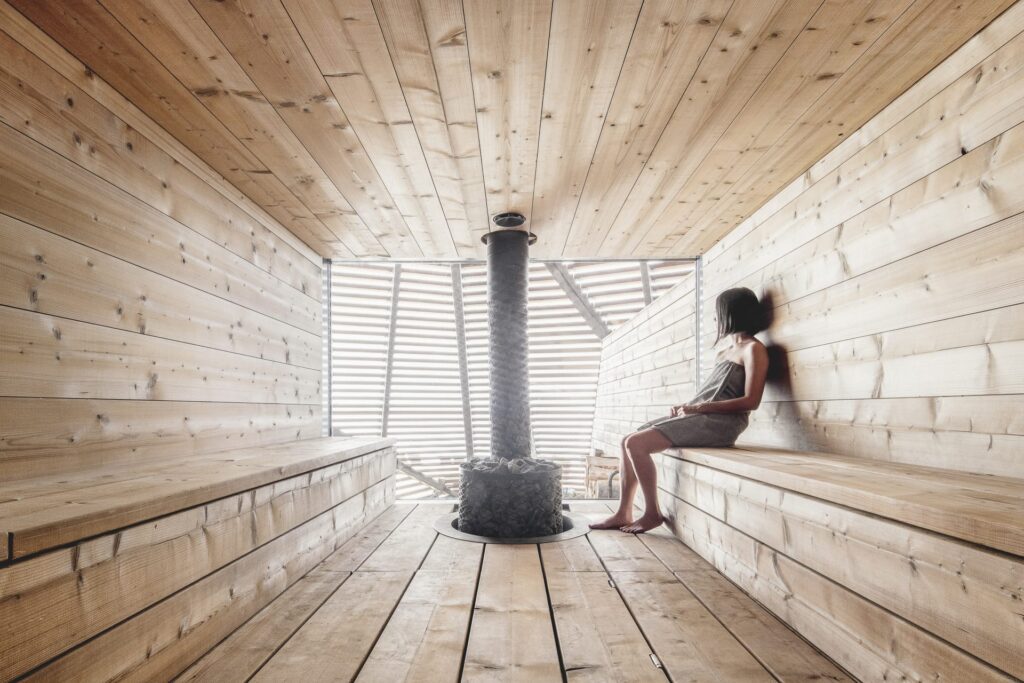
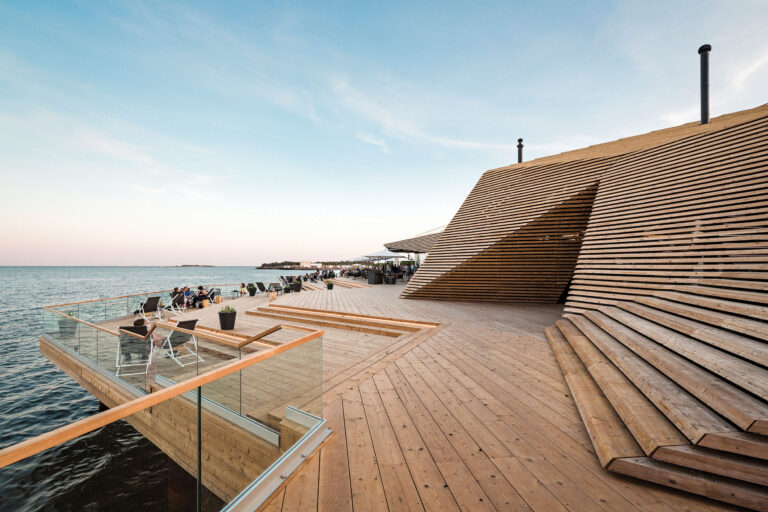
Loyly is a traditional wood-fire sauna perched right on the Baltic Sea (the term löyly refers to the steam rising off the hot stones).  This means it offers fantastic views during the day, and provides immediate access to the freezing water for a shocking plunge between sauna sessions.

One of the World’s 100 Most Incredible Places – In Helsinki
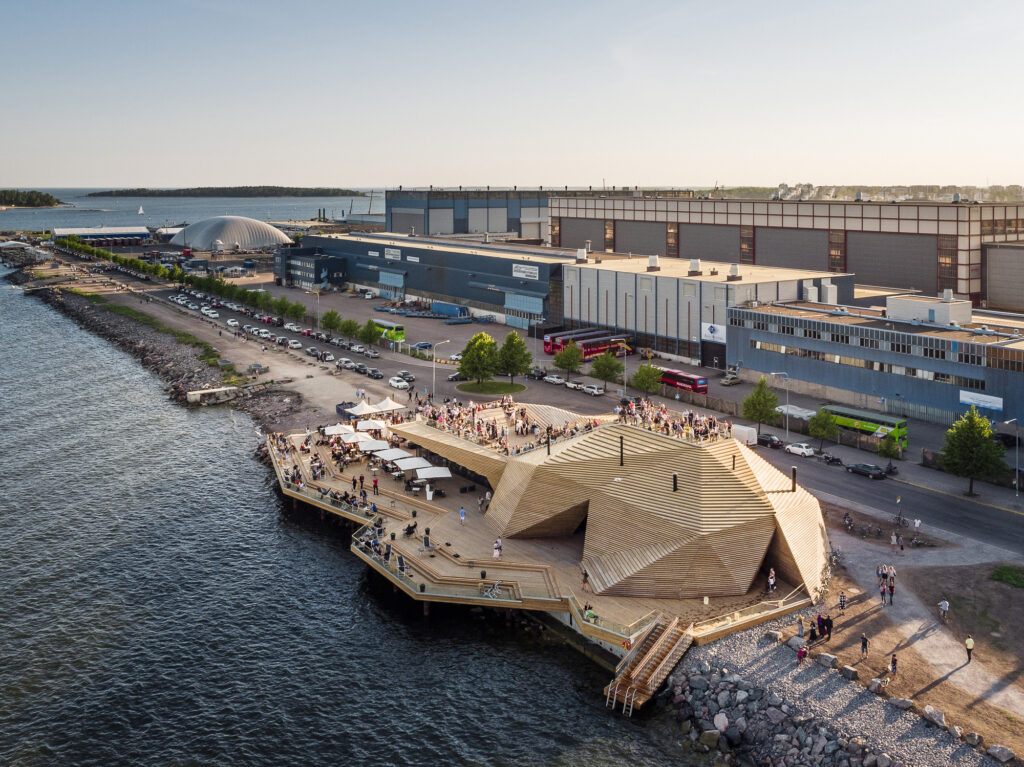
. Being less than 2 kilometers from the city center, Löyly is very central, yet its landscape resembles that of the outer archipelago.

The project started in a former industrial area

The project started with the city of Helsinki’s initiative. Hernesaari is a former industrial area on the Helsinki seashore that is being developed into a residential area. New uses have been developed for the area while awaiting future changes. There is a cruise ship harbor in Hernesaari, and the city wanted to activate the area with new functions and to serve visitors with new attractions. The project began in 2011, with the design of a temporary sauna village at the farthest end of the peninsula. The concept proved financially unsustainable, so the first client left the project. Then, with the second client, a floating sauna was developed, but the idea proved impossible because the site faces the open sea, and a floating structure couldn’t withstand high waves and ice pack pressure.

“Sauna is almost a religion here in Finland. There are countless ways to heat saunas, and everyone has their own rituals they think are best. The art of creating the best possible löyly is a bit like wine tasting. Foreigners probably don’t notice the difference,” says Hara.

*****************************************
Related: All You Need to Know About the Scandinavian Sauna Culture
*****************************************

One of the World’s 100 Most Incredible Places – In Helsinki
Loyly is a traditional wood-fire sauna perched right on the Baltic Sea.

Like being in the outer archipelago

There are many saunas in Helsinki, and most hotels offer one as well.  But Löyly regularly comes up in recommendations from both tourists and locals.  The site is unique. Being less than 2 kilometers from the city center, it is very central, yet its landscape resembles that of the outer archipelago. The plot is situated in a future coastal park that will be part of a broader “Helsinki park” connecting the capital city to the sea. The building was designed to be slim and elongated to avoid cutting the narrow park strip. The volume is kept as low as possible to avoid blocking views from future residential blocks. Instead of building a conventional structure, the sauna is developed as an easygoing, faceted building that is more part of the park than a traditional building. When the wooden building turns gray, it will become more like a rock on the shoreline.

One of the World’s 100 Most Incredible Places – In Helsinki
On weekends, there is a DJ and a bar in the typical Scandinavian minimalistic restaurant.

Helsinki’s hottest hangout

Since opening, the sauna has become Helsinki’s hottest hangout, and not just because of the temperature. The sauna is partially submerged in the water, allowing guests to take a dip, or they can lie on the terrace, which is built on stilts. On weekends, there is a DJ and a bar in the typical Scandinavian minimalistic restaurant. If you feel like having a sauna trip, you can bring drinks into the sauna with you, so why not enjoy a Finnish Long Drink while sweating your face off?

The building consists of two parts: public saunas and a restaurant. The saunas and public spaces open to the sea, offering interesting views of the city center and even the open sea. The atmosphere is calm, and the spaces are dimly lit. Different areas are conceived as spaces within a space. Interesting views open between closed spaces as you move from one location to the next.

One of the World’s 100 Most Incredible Places – In Helsinki.
The building consists of two parts: public saunas and a restaurant.

Combining fine dining with a sauna

You enter the restaurant, a light, open space. From there, a dimly lit sauna path leads to the bathing area. Shoes are left in a wardrobe before you go to the reception desk, where you get a locker key and a towel. Dressing rooms and showers are separate for men and women. A leather curtain covering the door indicates entry into the unisex area, where visitors must wear a bathing suit. Traditionally, men and women bath separately and naked.

“We wanted to develop sauna culture so that there would be a possibility to bathe together with your friends, regardless of gender. This makes the sauna experience available to foreign visitors who might not be used to bathing naked,” says the management.

One of the World’s 100 Most Incredible Places – In Helsinki, reported by Tor Kjolberg.
All images © Löyly. Feature image (top), photo by Ulla Makela.

How Denmark Redefines Urban Sustainability

0

Denmark sets fresh standards for forward-thinking cities. Modern urban areas need new models that support people and the planet. Many cities face rising pollution, housing pressure, and limited green space. These issues grow daily as populations increase. Denmark redefines urban sustainability and shows strong leadership through smart planning and climate-focused action.

Many places still rely on outdated systems. However, Denmark links innovation with social wellbeing and nature, creating models that other cities can adapt with success worldwide today. This approach stands out through its focus on community, clean energy, and resilient design that keeps life healthy and enjoyable for residents.

Smart City Planning Rooted in People and Nature

Cities in Denmark use smart planning that puts people and nature first. Human-focused design guides housing, transport, and public facilities to support daily life and wellbeing. Green pockets sit within neighborhoods to keep residents close to nature. Many cities pack buildings tightly, offer limited outdoor space, and push cars as the main transport option. That approach harms health and community connection.

Denmark, on the other hand, promotes walkability and safe cycling routes that link homes, schools, and workplaces. Planners create social spaces that inspire interaction and active lifestyles. People enjoy healthier routines and stronger community ties. Car-heavy layouts in other places reduce movement and weaken local connections. Denmark’s model inspires balanced, nature-friendly urban growth.

Copenhagen: A Living Model of Sustainable Urban Mobility

Copenhagen demonstrates how effective mobility design supports daily life and community health. Residents choose bicycles, trains, and buses because the system works for short and long trips. Of course, cycling paths stay wide, safe, and connected across the city. Public transport integrates well with these routes, so people switch transport options with ease. Many places still rely on cars, which increases congestion and pollution. Then again, Copenhagen shows that cities improve air quality and reduce noise with smart transport choices. Investment in bike lanes, reliable buses, and metro lines lifts the quality of life for residents. Active travel strengthens physical health and builds stronger neighborhood connections through everyday contact and movement.

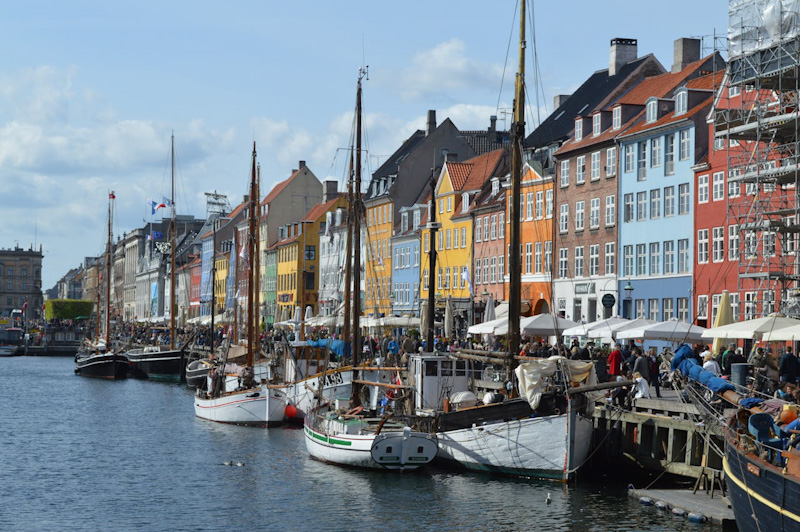
Boats near colorful houses
Copenhagen shows how safe cycling, reliable public transport, and reduced car use improve health, air quality, and daily life. Photo: Pixabay/Pixels

Clean Energy Transition Powering Urban Living

Denmark leads with clean energy solutions that support modern city life. Wind turbines supply large amounts of electricity and reduce carbon output—district heating networks warm homes with energy that would go to waste in other places. Solar panels appear across schools, offices, and homes to support local power.

Cities that depend on fossil fuels struggle with high emissions and rising energy costs. Denmark shows that renewable energy fits daily life without disruption. Residents gain reliable power, lower long-term costs, and cleaner air. Hence, families, businesses, and public services function with less impact on the planet. Denmark’s model inspires cities to upgrade energy systems with practical, community-focused solutions that support both comfort and climate goals.

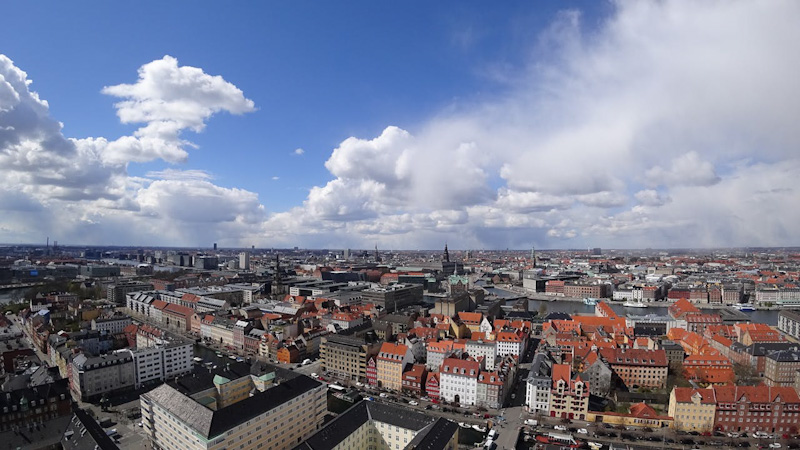
An aerial view of a city
Denmark powers city life with wind, solar, and district heating to cut emissions and support cleaner, more affordable energy use. Photo: Pixabay/Pexels.

Moving Abroad to Greener Cities: Lessons for Global Residents

People who dream of relocating to greener cities look at Denmark for guidance. Families, students, and professionals explore life in Copenhagen or Aarhus to enjoy cleaner living and strong communities, even moving overseas and starting fresh here. Many start preparing for an international move after comparing lifestyles and long-term benefits. Denmark offers efficient transport, safe cycling, and easy access to nature, which attracts global attention.

An international relocation demands research, planning, and realistic expectations. Newcomers learn local customs, climate habits, and community values to fit in smoothly. Denmark’s model inspires people to seek places that support wellness, fairness, and environmental care. Relocating to a greener city shapes future habits and nurtures healthier daily routines.

A woman standing next to her bike
Many people consider relocating to Denmark after seeing how Denmark redefines urban sustainability, offering healthier living, strong community values, and greener daily habits. Photo: Zhicheng Zhang/Pexels.

Circular Economy Culture That Reduces Urban Waste

Denmark supports a circular mindset that cuts waste and keeps materials in use for longer. People reuse, repair, and recycle instead of discarding items. Local schemes collect organic waste to produce biogas for heat and electricity. One of Denmark’s key environmental actions is reducing greenhouse gas emissions by 70% by 2030 compared to 1990 levels. Schools and community groups teach repair skills to reduce landfill pressure. In contrast, many cities still depend on single-use items that fill landfills quickly. Denmark treats waste as a resource with value. To support this culture, cities encourage:

  • Shared repair workshops
  • Deposit-return programs for packaging
  • Reuse centers for furniture and goods

Companies innovate with packaging, clothing, and building materials to reduce waste. This approach cuts pollution and inspires responsible habits across generations.

Waterfront Regeneration and Climate-Resilient Architecture

Danish cities redesign waterfronts for public use and climate readiness. Parks, swimming zones, and cultural sites sit next to the water and stay open to everyone. However, these areas also protect neighborhoods from storms and rising sea levels. Architects design buildings with elevated structures, flood-ready foundations, and strong materials. Many coastal cities focus on short-term construction and face damage during extreme weather.

Denmark invests in designs that guard people and infrastructure without blocking access to nature. Green roofs, energy-smart insulation, and water-saving systems cut costs and support healthy living. Similarly, public involvement shapes waterfront plans so communities gain active and safe spaces. Denmark proves climate-ready design creates value, recreation, and long-term security.

Community-Driven Ecosystems Encouraging Social Sustainability

Danish neighborhoods grow stronger through community-driven spaces and programs. Residents meet, share ideas, and support each other through local projects. Co-living concepts reduce isolation and bring people of different ages together. Community gardens, shared kitchens, and workspaces invite participation and learning. Nevertheless, some cities design housing with limited interaction, which weakens social ties. Denmark includes young people in planning events, school projects, and environmental actions. This involvement develops confidence and a mindset of responsibility for shared spaces. Local councils encourage open decision-making that invites feedback and builds trust. Residents develop pride and protect neighborhoods. Denmark shows that social support and inclusion stand at the heart of a healthy, sustainable urban life.

How Denmark Redefines Urban Sustainability: Global Lessons Cities Can Learn

Cities worldwide study how Denmark redefines urban sustainability to shape stronger urban strategies. Leaders explore housing ideas, transport models, and clean energy systems that support daily life. Denmark shows progress grows from people and nature working together. Cities should adapt Danish ideas to local culture, climate, and budgets, not copy them without thought. To clarify, Danish success comes from community involvement, strong values, and long-term planning. Consequently, cities that prioritize health, green access, and social connection see lasting improvement. Denmark encourages open cooperation between residents, schools, and city councils to build trust and action. After all, positive change starts with small steps. Denmark inspires cities to act today and create places that support wellbeing, respect the planet, and improve life for everyone.

Final Thoughts on Denmark’s Urban Model

Denmark shows a clear direction for greener, healthier cities. How Denmark redefines urban sustainability inspires action grounded in people, nature, and smart design. Cities gain cleaner air, stronger communities, and better daily living through simple, steady change. Start small, act with purpose, and create urban spaces that support both life and the planet.

How Denmark Redefines Urban Sustainability
Alex Fisher

How Denmark Redefines Urban Sustainability, written dedicatedly for Daily Scandinavian by Alex Fisher. Alex writes about sustainable living and smart urban development. He shares practical insights that help readers understand how cities improve daily life through greener choices. Outside of writing, Alex explores eco-friendly communities around the world to learn and share real solutions.

Norwegian Cabins Among Finalists for AHEAD Awards Europe 2025

The Norwegian Panorama Cabins (Panoramahyttene), located in the Haugesund region, are among the finalists for the prestigious AHEAD Awards Europe 2025, celebrating the best in hospitality and design worldwide.

With annual ceremonies in Singapore, New York, Dubai, and London, the AHEAD Awards celebrate the world’s most inspiring hospitality design and the creative teams behind it. As the only Norwegian finalist, Panoramahyttene brings international attention not just to the project itself, but to the entire Haugesund region.

“It feels almost surreal to see Panoramahyttene among the finalists for such a prestigious award. Looking at both this year’s and past finalists, we’re truly honored to be in such a great company,” says Tove V. Bråthen, Marketing and Operations Manager.

Norwegian Cabins Among Finalists for AHEAD Awards Europe 2025
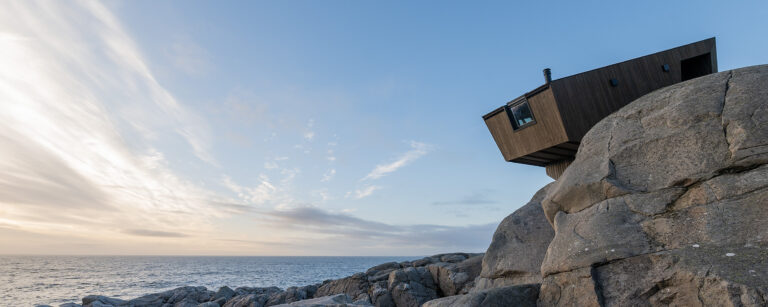
Nestled in the dramatic coastal landscape of Western Norway, Panoramahyttene stands out for its seamless blend of architecture and raw natural beauty.

Recognized for their spectacular cabins by the sea

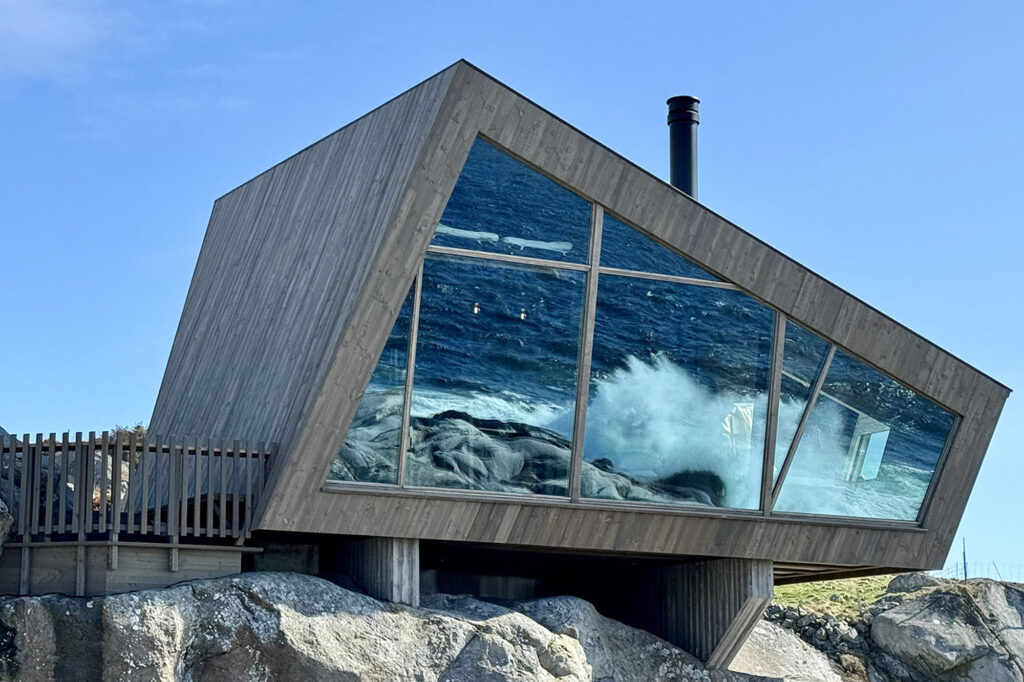
Nestled in the dramatic coastal landscape of Western Norway, Panoramahyttene stands out for its seamless blend of architecture and raw natural beauty. Here, the sky feels endless and the horizon stretches wide, with shifting light and weather adding a new layer to the experience.

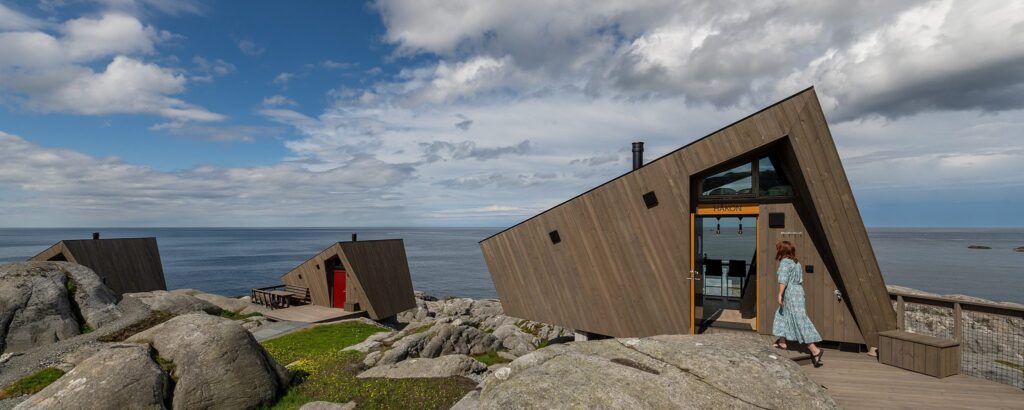
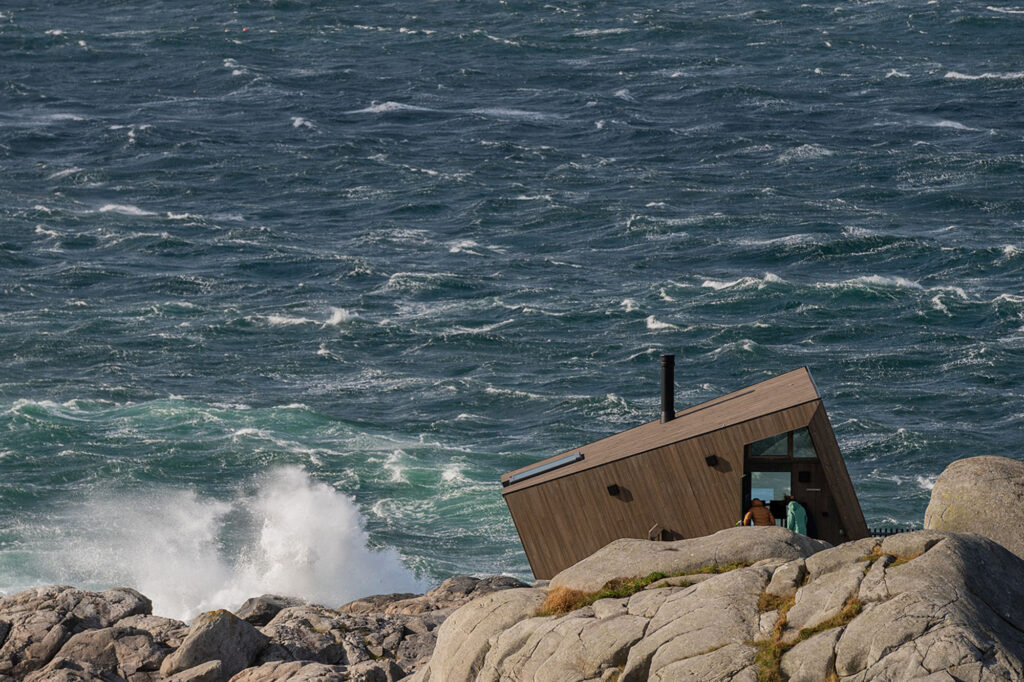
Perched on the rocky edge above the sea, the cabins invite guests to experience nature up close, yet from a calm and comfortable space. Elevated placement provides an unbroken 180-degree panorama, with large windows on the front, sides, and roof drawing the landscape into the interior.

Norwegian Cabins Among Finalists for AHEAD Awards Europe 2025
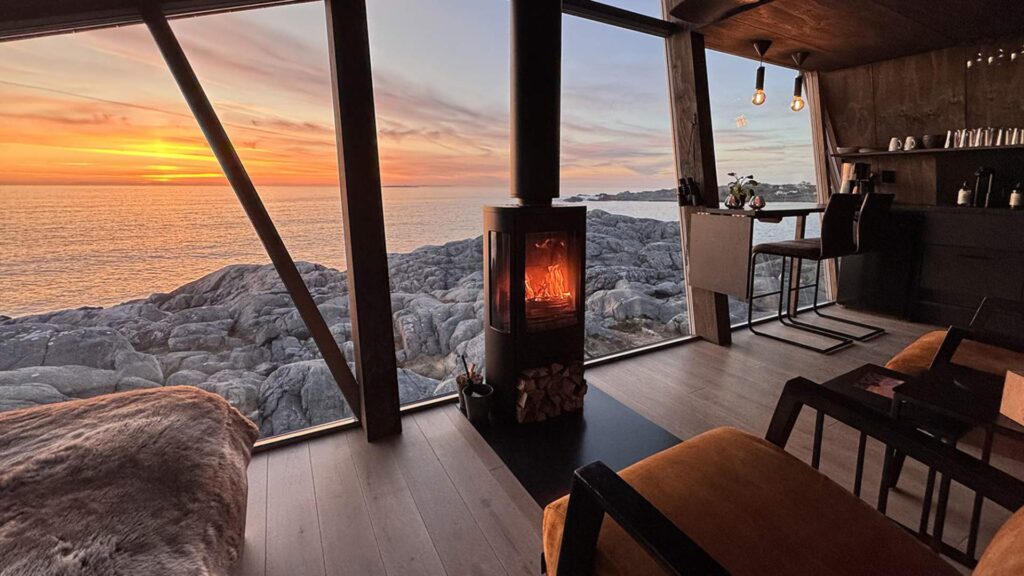
Inside, dark tones frame the ever-changing light, turning nature itself into the artwork.

Inside, dark tones frame the ever-changing light, turning nature itself into the artwork. No television is needed. Here, the 7.5-metre window offers an uninterrupted, real-time view of Norway’s raw coastal drama.

Designed by HOLON arkitektur – inspired by nature

When designing the cabins, the architect looked to nature itself for guidance. Inspired by Ice Age boulders scattered across the terrain, he created cabins that seem carved by time; sculptural yet subtle, luxurious yet low-impact, entirely in tune with the landscape around them.

Norwegian Cabins Among Finalists for AHEAD Awards Europe 2025
Architect Roald Bø

The architect Roald Bø explains: “Our goal was to let the architecture follow the rhythm of the terrain.” The cabins aren’t placed in nature; they’re part of it.

The way the cabins are designed, with their longitudinal orientation towards the sea and large panoramic windows, provides a unique landscape experience.

The winner is…. revealed in November

The winners of the AHEAD Awards Europe will be announced later this month at a ceremony in London.

“We look forward to attending the ceremony, and no matter the outcome, it’s a huge recognition for Panoramahyttene to be a finalist in the category “Lodges, Cabins & Tented Camps”, Bråthen concludes.

************************************************
Related: Experience Norway’s Stunning Fjords and Coastline by Ferry

************************************************

Norwegian Cabins Among Finalists for AHEAD Awards Europe 2025
Perched on the rocky edge above the sea, the cabins invite guests to experience nature up close, yet from a calm and comfortable space.

Panoramahyttene among finalists for AHEAD Awards Europe 2025

Panoramahyttene, located in the Haugesund region, has been shortlisted for the prestigious AHEAD Awards Europe 2025, celebrating the best in hospitality and design worldwide.

With annual ceremonies in Singapore, New York, Dubai, and London, the AHEAD Awards celebrate the world’s most inspiring hospitality design and the creative teams behind it. As the only Norwegian finalist, Panoramahyttene brings international attention not just to the project itself, but to the entire Haugesund region.

“It feels almost surreal to see Panoramahyttene among the finalists for such a prestigious award. Looking at both this year’s and past finalists, we’re truly honored to be in such a great company,” says Tove V. Bråthen, Marketing and Operations Manager.

Norwegian Cabins Among Finalists for AHEAD Awards Europe 2025
The way the cabins are designed, with their longitudinal orientation towards the sea and large panoramic windows, provides a unique landscape experience.

About Panoramahyttene

Location: Sandhåland in the Haugesund region, Western Norway. Established: 2023. Design: HOLON arkitektur. Contractor: Byggmester Helge Kvale. Concept: Minimal-impact luxury cabins blending architecture and nature—capacity: 3 cabins, with a capacity of 4 adults each.

Norwegian Cabins Among Finalists for AHEAD Awards Europe 2025, a press release from MyNewsDesk.
All images © Ida K. Vollum

New Trilogy by Norwegian Nobel Prize Winner Jon Fosse

0

In his first novel since winning the Nobel Prize in Literature in 2023, Fosse navigates the dark waters of a coastal Norwegian town. ‘Vaim’ is the first book in a new trilogy by Norwegian Nobel Prize winner Jon Fosse.

Jatgeir travels from the fishing village of Vaim to the city of Bjørgvin in search of a needle and thread. Cheated twice, he returns to his boat, where he falls asleep as waves rock the hull. Soon, he is awakened by a woman calling his name from the quay. There stands Eline, the secret love of his youth—and the namesake of his boat—with a packed suitcase. Eline pleads to come aboard. In what follows, this single encounter reverberates across three narrators, three deaths.

In his new novel, Fosse navigates the dark waters of a coastal Norwegian town. ***************************************
Related: The Struggle of a Norwegian Writer
***************************************

As the story unfolds, relationships become complicated and the stakes higher, and Fosse shows his mastery of the unnerving atmosphere and page-turning plot.

***************************************
Related: A Norwegian Novel About a Passionate and Destructive Love Affair

***************************************

New Trilogy by Norwegian Nobel Prize winner Jon Fosse
‘Vaim’ is the first book in a new trilogy

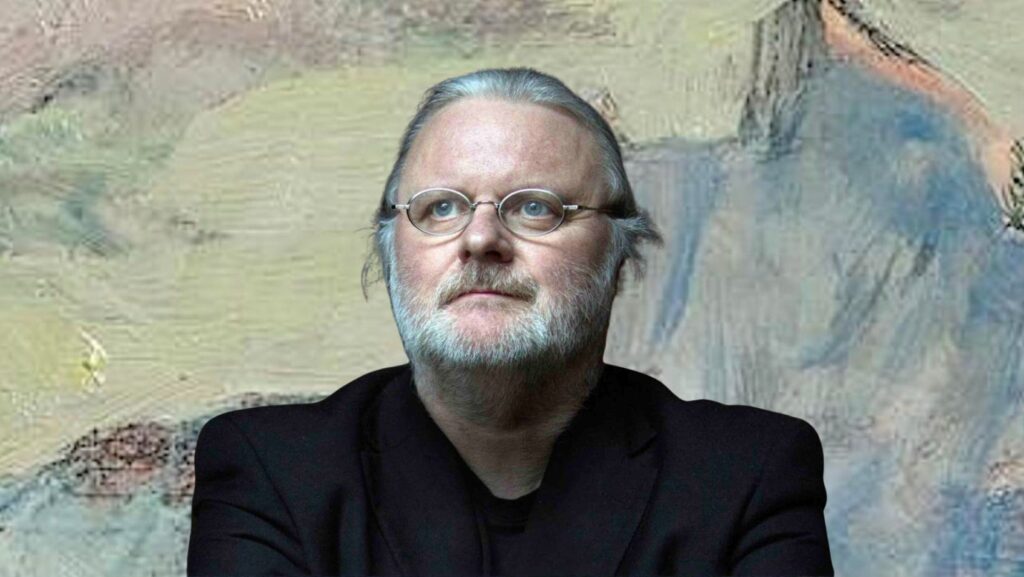
“The act of writing,” the Nobel Prize-winning novelist and playwright Jon Fosse has said, “is one of listening.” His novels, for all their stylistic experimentation and temporal slipperiness, have a distinctly oracular quality: tales of complex lives in Norway’s fjords, they compress lifetimes into shining moments, and they are told to us earnestly and directly, if poetically.

New Trilogy by Norwegian Nobel Prize winner Jon Fosse, reported by Tor Kjolberg

Neo- the Norwegian Robot Taking Care of Housework

0

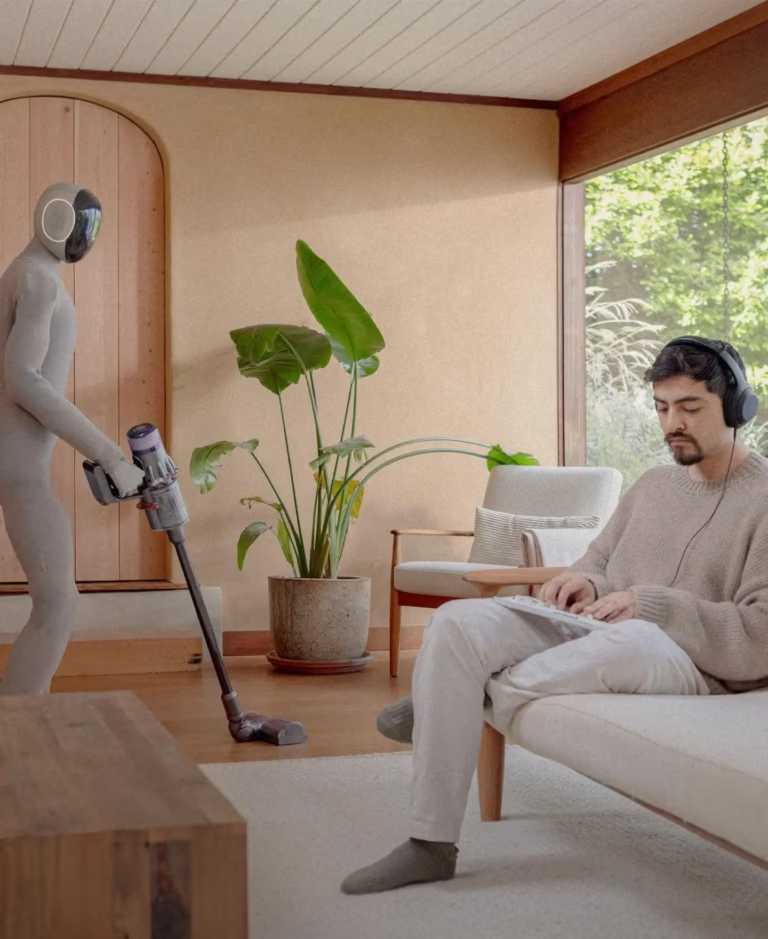
“Building a world where we do more of what we love, while our humanoid companions handle the rest,” states the Norwegian tech company 1X Technologies, which is launching Neo, the Norwegian robot taking care of housework.

1X Technologies is a Norwegian-American robotics and artificial intelligence company developing general-purpose humanoid robots for home environments. The company is headquartered in Palo Alto, California, with primary manufacturing operations in Hayward and additional manufacturing in Moss, Norway.

The company calls Neo the world’s first humanoid robot made for everyday consumers. 1X Technologies is an AI and robotics company on a mission to build a truly abundant society through general-purpose robots capable of performing any work autonomously.

Neo-  the Norwegian Robot Taking Care of Housework
Bernt Børnich, CEO and founder of 1X Technologies.

“Neo closes the gap between our imagination and the world we live in, to the point where we can actually ask a humanoid robot for help, and help is given,” says Bernt Børnich, CEO and founder of 1X, in a press release.

*********************************************
Related: Modular Construction: Scandinavia’s Answer to Urban Housing Challenges

*********************************************

“We believe that to understand the world and grow in intelligence truly, humanoid robots must live and learn alongside us. That’s why we’re focused on developing NEO—our flagship product—a friendly home robot designed to integrate seamlessly into everyday life and handle chores for you,” he adds.

1X Technologies was founded in 2014 by Norwegian roboticist Bernt Øivind Børnich under the name Halodi Robotics. The company initially focused on developing safe actuators and full-body control systems for industrial and healthcare robotics.

In 2018, it released its first humanoid robot, EVE, designed for logistics, security, and medical environments.

In 2022, the company rebranded as 1X Technologies and shifted its focus to domestic robotics, developing humanoid assistants for private homes.

In March 2023, 1X raised $23.5 million in Series A2 funding, led by the OpenAI Startup Fund, with participation from Tiger Global, Sandwater, Alliance Ventures, and Skagerak Capital.

Neo-  the Norwegian Robot Taking Care of Housework
Neo closes the gap between our imagination and the world we live in.

**********************************************
Related: Post-Pandemic Tech Investments: Where Scandinavian IT Companies are Allocating Resources

**********************************************

In 2024, the company introduced Neo Beta and shared the robot with the world for the first time, following a commitment to develop humanoids alongside humans.

Neo Gamma, launched this year, is the updated version of NEO, better suited for home use and bringing X1 one step closer to entering homes across the US.

Neo has built-in artificial and visual intelligence that will allow it to have natural conversations, recognize ingredients, and suggest dishes to make.

Neo-  the Norwegian Robot Taking Care of Housework
Neo Gamma, launched this year, is the updated version of NEO, better suited for home use.

The robot comes in beige, gray, and dark brown. It weighs 30 kilograms, can lift 70 kilograms, and carry 25 kilograms. Neo can now be pre-ordered in the United States for $ 20,000, equivalent to approximately 200,000 Norwegian kroner, with delivery in 2026. Later, a subscription model will also be available for $ 499 per month.

The robot will be available in other markets from 2027, according to 1X. It is not known when it will be available in Norway.

Neo – the Norwegian Robot Taking Care of Housework, Tor Kjolberg reporting.
All illustrations © 1X Technologies.

The Swedish Researcher Who Never Ends Her Hunt for a Missing Hot-Air Balloon Expedition

0

Throughout her adult life, Swedish researcher Bea Uusma has followed in the footsteps of “the world’s most failed polar expedition.” The Swedish researcher never ends her hunt for a missing hot-air balloon expedition.

At the age of twelve, Swedish-Estonian Bea Uusma and her older sister wrote a song they called “Trikiner i det!”, intended for Eurovision. A few years earlier, ABBA had won the competition with a song about Napoleon’s defeat at Waterloo. Trikiner (Trichinosis) is a parasitic roundworm that infects animals and can be transmitted to humans if the meat they eat is not properly cooked.

The song refers to the polar bear meat that the Swedes Salomon Andrée, Nils Strindberg, and Knut Frænkel ate to survive what has been called the world’s most failed polar expedition, a hot air balloon trip to the North Pole that ended on Kvitøya, in the far north of Svalbard, in October 1897.

The Swedish Researcher Who Never Ends Her Hunt for a Missing Hot-Air Balloon Expedition
From Kvitøya

In the mid-1990s, she sought to learn what happened to the expedition’s members, and her research resulted in the book The Expedition, published in English by Head of Zeus in 2014, for which she was awarded The August Prize in 2013. The book explores the fate of Andrée’s balloon expedition.

Last year, in August, she and a group of researchers from the Norwegian Institute for Cultural Heritage Research and the University Museum of Bergen returned to Kvitøya in search of more answers about the ill-fated expedition.

Kvitøya is one of the most remote islands in the Svalbard archipelago. On this island, S.A. Andrée and his two expedition members landed after an unsuccessful attempt at becoming the first in the world to reach the North Pole by air.

The Swedish Researcher Who Never Ends Her Hunt for a Missing Hot-Air Balloon Expedition
The Andrée expedition

The Northeast and Northwest Passages had already been conquered. Leaving only the North Pole remained to be reached. Previous expeditions had attempted to get to the pole by ship but had to turn back due to sea ice. Andrée, a forward-thinking Swedish engineer, aimed to fly to the North Pole with a hydrogen balloon, crossing the ice from above. In 1897, they set out from Virgohamna on the northwest coast of Spitsbergen, Svalbard’s largest island. However, they disappeared without a trace.

“I’ve been trying to solve the medical polar-historical puzzle about what happened to the Andrée expedition for two decades. Thirty-three years later, the remains of their last camp were found frozen in the snow and ice on a remote island in the middle of the Arctic Ocean. When they finally set foot on Kvitøya, they had all they required to survive the winter. But despite warm clothes, supplies, and working rifles, they perished on the island, one by one. What happened?” asks Uusma.

The Swedish Researcher Who Never Ends Her Hunt for a Missing Hot-Air Balloon Expedition
The German edition of The Expedition

The 2024 project was a collaboration between polar researcher Anne-Cathrine Flyen, archaeologist and drone pilot Jani Causevic from NIKU, and Dr. Bea Uusma, a physician at Karolinska Institutet in Stockholm. Dr. Uusma has researched the cause of death of the Andrée expedition for two decades and is the author of the award-winning factual book ‘Expeditionen,’ published in 13 countries. Dr. Björn Nilsson, archaeologist and department head at the Department of Cultural History, University Museum in Bergen, and Dr. Clara Alfsdotter, forensic osteologist and archaeologist, are also part of Dr. Uusma’s team. Additionally, two archaeology dogs participated in the expedition and fieldwork on Kvitøya.

However, due to six polar bears permanently in the area, no landing was possible, and the team was unable to visit the site. Thus, documentation was made with video and photographs taken from the air/ drone. Both the site itself and the nearby area were documented from the drone.

“The Andrée expedition is my life project, and it never seems to come to an end. The more I learn, the more I realize I don’t know,” says Bea Uusma, still searching for answers.

The Swedish Researcher Who Never Ends Her Hunt for a Missing Hot-Air Balloon Expedition, written by Tor Kjolberg.

Swedish Fashion Company Promotes “the Pursuit of Less”

0

The Swedish fashion company Asket’s new ambition is to promote its philosophy, “the pursuit of less”.

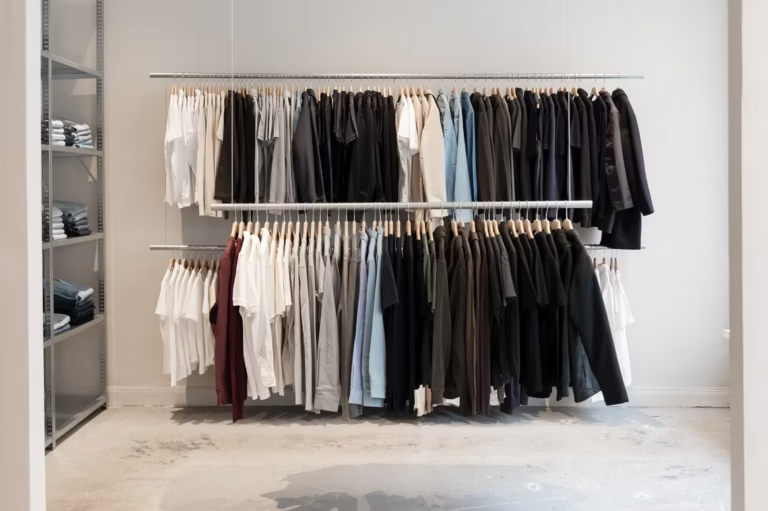
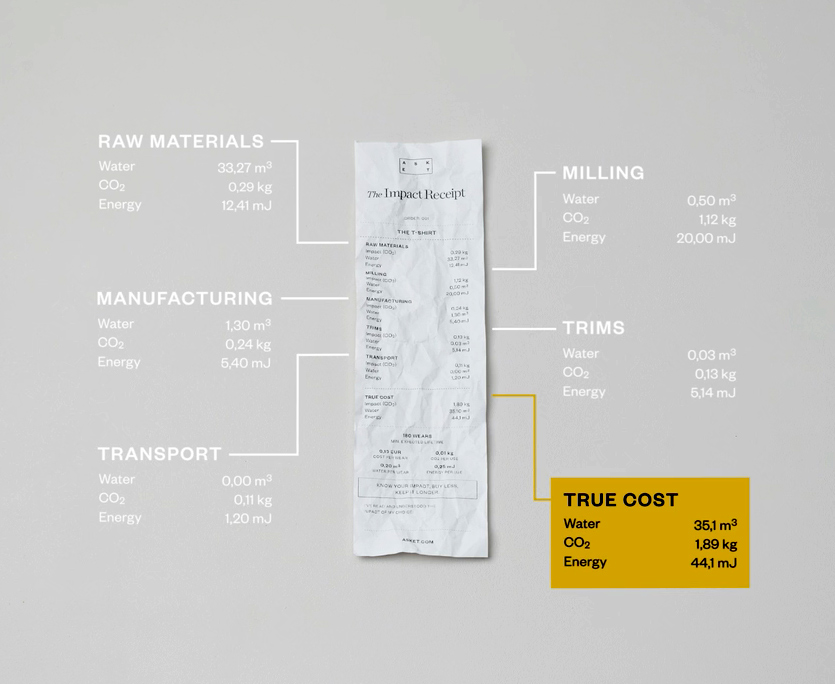
This Autumn, the company is releasing its 50th and final product for men: a pair of Italian merino-wool trousers. Asket’s philosophy focuses on radical transparency, longevity, and sustainability to encourage mindful consumption. Key elements include providing an Impact Receipt detailing the environmental cost of each garment, a permanent collection of timeless basics with no seasonal sales, and a circular model with resale and repair services.

According to the company’s website, it creates and continuously refines a single permanent collection: A strictly limited range of timeless essentials, crafted exclusively in Europe from natural fibers. Proud of the materials, mills, and manufacturers, the company traces its garments back to the farms and invites customers to explore precisely how, where, and at what cost they’re made.

*******************************************
Related: Your Ultimate Goal to Swedish Fashion
********************************************

Swedish Fashion Company Promotes “the Pursuit of Less”
Key elements include providing an Impact Receipt detailing the environmental cost of each garment.

Aiming to refine its collection into a permanent catalogue

Tasket now aims to refine its collection into a permanent catalogue. Instead of chasing novelty for the sake of capturing customer interest, it seeks to perfect the manufacturing of every piece. In other words, Asket is eschewing a business model followed by pretty much every fashion brand.

Core strategic pillars

  • Radical transparency: Asket provides complete transparency on its supply chain, detailing costs, origins, and environmental impact for each product.
  • The Impact Receipt: Customers receive a receipt that shows the water, energy, and CO2e emissions for each garment, aiming to change consumer perception of clothing value and encourage more sustainable choices.
  • Permanent collection: The brand offers a permanent collection of high-quality essentials designed for longevity, with no seasonal collections or sales.
  • Circularity: Asket promotes a circular model through a take-back program for loyal customers and a resale model to make high-quality basics more accessible.
  • Longevity and quality: The brand emphasizes durability and timeless design, encouraging customers to buy fewer, longer-lasting items and see them as investments rather than disposable goods.
  • Education and empowerment: Asket aims to educate consumers about the actual cost of clothing, empowering them to make more conscious purchasing decisions and appreciate their garments more deeply.
Swedish Fashion Company Promotes “the Pursuit of Less”
Instead of chasing novelty for the sake of capturing customer interest, Tasket seeks to perfect the manufacturing of every piece.

********************************************
Related: Swedish Outdoor Clothing Company Navigating in Challenging Terrain

********************************************

Swedish Fashion Company Promotes “the Pursuit of Less”
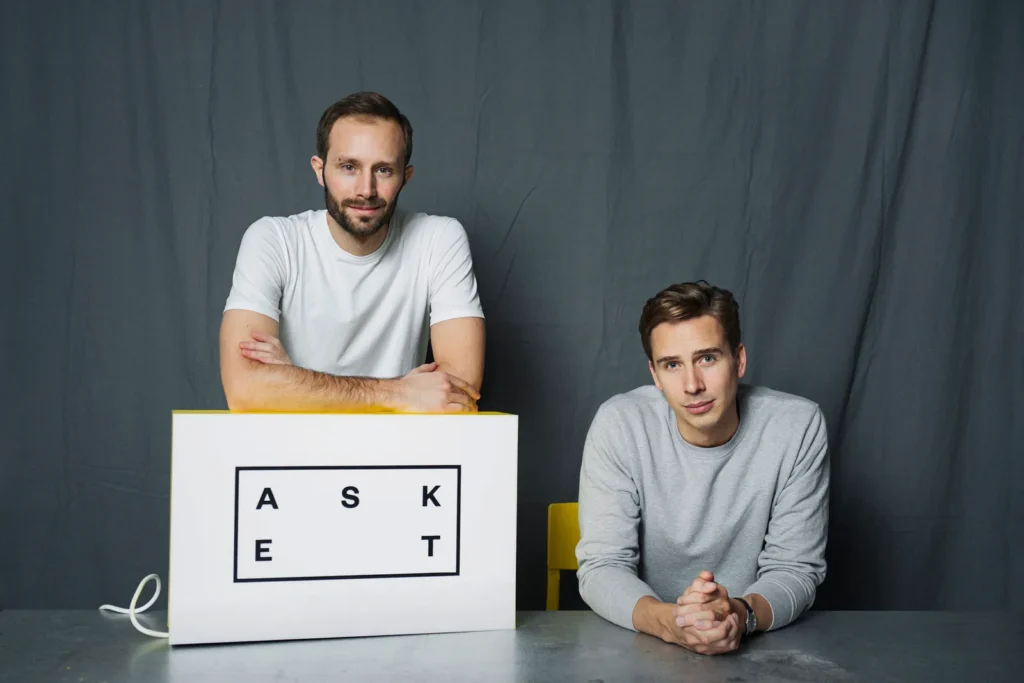
Asket was founded in 2015 by Bard Bringeus and Jakob Dworsky.

Leaving footprints

Asket reports annually on the resources the company consumes and the footprint it leaves as a business, taking into account the impact from upstream and downstream activities. Find the latest impact report below.

View the latest report.

Swedish Fashion Company Promotes “the Pursuit of Less”, Tor Kjolberg reporting.
All images © Asket.

Critically Acclaimed Swedish Filmmaker Criticizes Government-Funded Projects

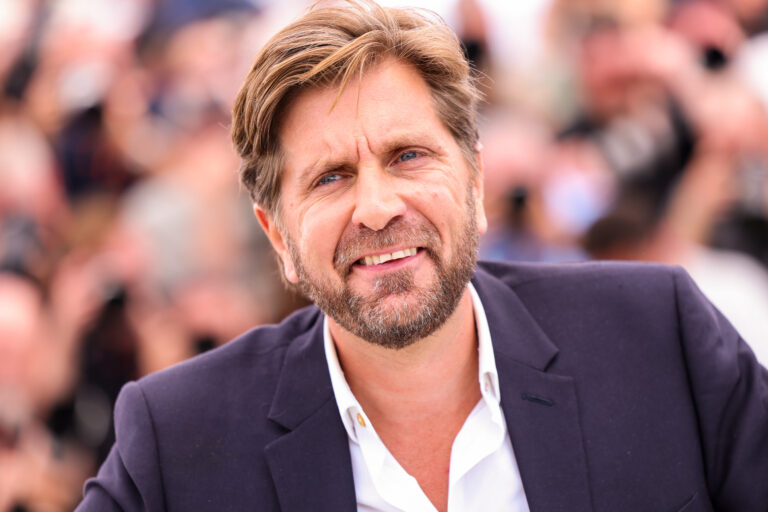
In 2014, Ruben Östlund’s feature film “Force Majeure” won the Jury Prize in the prestigious “Un Certain Regard” side program at the Cannes Film Festival. It was also Sweden’s Oscar nominee. Now, the critically acclaimed Swedish filmmaker criticizes government-funded projects.

“Force Majeure” is about a Norwegian/Swedish couple in their late 30s on a skiing holiday at a luxury hotel in the Alps with their two children. The core family is sitting outside having lunch in idyllic surroundings when suddenly a spectacular avalanche comes down the mountainside. A fantastic sight, everyone takes pictures and films, until they realize that the avalanche will not stop, but will thunder over them. Panic and chaos ensue. Suddenly, the father runs in desperation from the family to save his own life. Then the avalanche stops. Everyone survives. What now?

Critically Acclaimed Swedish Filmmaker Criticizes Government-Funded Projects
Screenshot from Force Majeur (2014)

A follow-up to his Cannes hit “Force Majeure”, his sixth feature, seemed to be one of his most ambitious movies so far. The film titled “The Square” (2017) follows an ambitious museum director (Claes Bang), who is preparing to make a significant impact with a new exhibit. Ruben Östlund was shooting this film in Stockholm, Gothenburg, and Berlin.

This year, Ruben Östlund completed filming in Budapest for his long-awaited movie, The Entertainment System Is Down.

Critically Acclaimed Swedish Filmmaker Criticizes Government-Funded Projects
Ruben Östlund has been likened to Sweden’s new Ingmar Bergman. Photo: Wikipedia.

The dark satire, set on a long-haul flight between England and Australia where the entertainment system fails and passengers are forced to face the horror of being bored, was shot in the Hungarian capital over 70 days from January to May.

In addition to the key cast, which includes Keanu Reeves, Kirsten Dunst, Daniel Bruhl, Nicholas Braun, Tobias Menzies, and Julie Delpy, the film features 150 extras. All of these background artists had to remain in the same seat for continuity. Östlund says that some of them appear in the movie for longer than several named cast members, despite the extras not having any dialogue.

Ruben Östlund has been likened to Sweden’s new Ingmar Bergman, a new Roy Andersson. However, Östlund was never a filmmaker, not one of the young students who sat around studying Godard, Truffaut, or Swedish role models when he began film school in Gothenburg at the age of 25. He had spent several years making ski films and was himself a skilled skier, spending entire seasons in Val d’Isère from his late teens.

“The Entertainment System Is Down”  marks Östlund’s second English-language film and seventh feature after The Guitar Mongoloid (2004), Involuntary (2008), Play (2011), Force Majeure (2014), and his two Palme d’Or winners, The Square (2017) and Triangle of Sadness (2022).

Critically Acclaimed Swedish Filmmaker Criticizes Government-Funded Projects
“The Entertainment System Is Down” marks Östlund’s second English-language film and seventh feature after The Guitar.

A report on how to revitalize the Swedish film industry, led by Eva Bergquist, Director of Culture in the Greater Stockholm Metropolitan Area, was published in March this year. The report was based on an inquiry for which Östlund was one of several experts.

“A problem for Sweden and Europe in general is the state-funded system,” said Östlund in Slano. “Which is great for freedom of expression, but bad in that as soon as we get money from the state, we are economically safe, so you don’t have to push all the way to reach the audience, and we have a bit less of a connection with them.”

Earlier this year, Östlund was critical of a speech made by the country’s cultural minister, Parisa Liljestrand, at the opening night of the Gothenburg Film Festival, for which Östlund is president. He also called the country’s cultural policy “embarrassingly uneducated”.

“Making films adds more problems to life, making it more of a struggle, but it also becomes a more intense life. And isn’t that what we’re looking for?” questions Östlund.

Critically Acclaimed Swedish Filmmaker Criticizes Government-Funded Projects, Tor Kjolberg reporting.

Feature image (top) © IMDb

The Nordics and Japan are Intensifying Collaboration on the Batteries of the Future

Demand for batteries is growing explosively, a trend driven by electrification, the green transition, and the need for energy security. Now, the Nordics and Japan are intensifying collaboration on the batteries of the future.

 The Nordic Region and Japan face a common challenge: how to build robust, sustainable, and innovative value chains that deliver on both competitiveness and climate ambitions.

Nordic Battery Day, an event held in the Nordic Pavilion at EXPO 2025 in Osaka, showcased how the Nordics and Japan can complement each other. The Nordic Region has expertise in sustainable mining, alternative materials, battery recycling, and circular solutions. At the same time, Japan is a global leader in battery production, automation, and advanced R&D. Together, the two have what it takes to develop more sustainable supply chains, recycle more materials, accelerate innovation, and establish joint education and talent programs.

The Nordics and Japan are Intensifying Collaboration on the Batteries of the Future
Håkan Lind, senior adviser at Nordic Innovation (NI), took part in the event and stressed that the Nordic Region’s strength lies in the ability of the countries to work together

*****************************************
Related: EXPO 2025: Japanese Interest in Nordic Hydrogen and Other Energy Solutions

*****************************************

Nordic Innovation sets the framework

Håkan Lind, senior adviser at Nordic Innovation (NI), took part in the event and stressed that the Nordic Region’s strength lies in the ability of the countries to work together:

“We are five small countries, but together we generate results far greater than any of us could achieve on our own. That is the essence of Nordic co-operation – and what we bring with us to Japan.”

Nordic Innovation is a Nordic Council of Ministers’ body that acts as a catalyst for innovation and co-operation throughout the region. In recent years, NI has co-founded the Nordic Battery Collaboration, an initiative run by Business Finland, Business Sweden, and Innovation Norway. Its vision is to make the Nordic Region the home of the most sustainable, competitive, and innovative battery ecosystem in the world.

The Nordics and Japan are Intensifying Collaboration on the Batteries of the Future
Nordic Battery Day, an event held in the Nordic Pavilion at EXPO 2025 in Osaka.

*******************************************
Related: Vietnam and Norway – Partners in Energy Transition

*******************************************

From dialogue to action

The event coincided with the signing of new memoranda of understanding (MoUs) by Japanese and European industry organizations for the battery sector, marking a significant step from dialogue to action.

As Håkan Lind, senior adviser at NI, summed it up in his closing remarks:

The Nordics and Japan are Intensifying Collaboration on the Batteries of the Future
Nordic Innovation is a Nordic Council of Ministers’ body that acts as a catalyst for innovation and co-operation throughout the region.

“Japan and the Nordic Region share the same ambition: to make the battery value chain more sustainable, robust and innovative. This seminar has been an important step in the right direction, but what really matters will be the meetings, partnerships and projects that emerge as a result of it.”

The Nordics and Japan are Intensifying Collaboration on the Batteries of the Future, a press release from Nordic Co-operation.