What Will Be the Impact of Coronavirus in Scandinavia?

Just like every other part of the world, the Scandinavian countries are equally affected by COVID -19. Be it Sweden, Denmark, or Norway, the political, economic, and health impact is significant. Denmark, due to its quick and strict policies, has managed to control the pandemic. However, the stringent measures come at the cost of a sluggish economy. So, what will be the impact of coronavirus in Scandinavia?

Similarly, the resource-rich Norwegians are having a tough time as well. On the other hand, Sweden has not been able to control the pandemic, with more than 2000 active cases, even its neighbors have closed their borders to the country.                                                                                                                                                                                  In this article, I will discuss some effects of this life-threatening virus in Scandinavia:

What Will Be the Impact of Coronavirus in Scandinavia?
Unlike other Scandinavian nations, Norway is different. Photo: World Economic Forum

Norway

Oil and Gas
Unlike other Scandinavian nations, Norway is different. Being the biggest oil producer of Western Europe, it acquires a unique position. With the rise of the contagion, the economy of the country has stumbled. Economic experts say that unemployment has quadrupled since the pandemic. Since Norway is an oil and gas generator, it is likely to be affected the most by the pandemic. The disruptions in demand and price will leave both short and long-term impacts on the country’s economy.
The Wealth Fund
The Wealth Fund is one distinct thing that differentiates Norway from the two Scandinavian countries. It is a saving account of the country for a rainy day. Before the pandemic, the government used to take out 3% of the funds for its budget. However, the corona shock will force the authorities to take out more funds as the entire economy is facing a tough time.

As per economic experts, Norway, which had a strong economy, because of oil and tourism, is likely to be in the same cue with other countries. The only thing that gives hope to the Norwegian government is its savings. Once the pandemic is over, the economy will need to be restarted.

Related: After the Coronavirus: Norway for Norwegians

What Will Be the Impact of Coronavirus in Scandinavia?
Sweden showed a controversial approach to the virus. Photo: World Economic Forum

Sweden

A Relaxed Lockdown
Sweden showed a controversial approach to the virus. Sweden is one of them. The country dealt with the pandemic with light hands. People were often seen hanging out in cafes and bars when a strict lockdown was imposed in other parts of the world. Similarly, restaurants, amusement parks, and schools were seen open with some guidelines of social distancing.
Impact of Sweden’s Plan
The plan of the Swedish government, which was made to secure healthcare without putting much pressure on the economy, has blown away to pieces. With thousands of infected people, the Swedish government was ineffective in controlling the spiraling virus.

In comparison to its neighbors, Norway, and Denmark, the mortality rate in Sweden was higher. Thus, experts have predicted that the country will come into acute economic pressure and a high unemployment rate.

Unemployment and GDP
The rate of joblessness, which was 6 % in 2019, has now jumped to 9%, exports are likely to get affected, and GDP will face a serious downfall. Sweden, which is largely dependent on the exports, will have to halt several businesses. The truck makers Scania and Volvo cars are the best examples of it. These two big companies in Sweden are unable to run their operations due to insufficient supply chain.

Related: Coronavirus in Sweden: Business as Usual

What Will Be the Impact of Coronavirus in Scandinavia?
One thing that makes Denmark stands apart from other nations is its budget surplus and the lowest rate of debt. Photo: World Economic Forum

Denmark

Low Debt Rate
Coronavirus has proved to be highly expensive for Denmark. From cutoffs in monthly compensation to decreased revenues, the virus will leave a long-lasting impact on the country. One thing that makes Denmark stands apart from other nations is its budget surplus and the lowest rate of debt. However, if the pandemic continues, the country will have to face problems.
A Stable Economy
Denmark was enjoying a strong economy before the outbreak. However, this major hit has left severe cracks in its plans. With no clue about when the virus will get over, the government is sitting in a perplexing situation. However, the position of Denmark is far better than many others. The government is satisfied that the country has enough savings to smooth them over until the world economy restarts.
GDP and Exports
As far as the GDP is concerned, it will shrink by 5 % this year in comparison to neighboring Sweden, which will face the shrink by 9%. Experts think that the economic hit will not be highly tough for Denmark as its main exports are based on pigs and drugs. Sweden will have a much larger impact as its exports are on the luxurious side like cars, trucks, and other vehicles. At present, the unemployment rate in Denmark is not that bad. It’s just 4%, but since the government employees are facing great cutoffs, it may increase further.

Related: How is Scandinavia Solving the Economic Corona-Crises?

What Will Be the Impact of Coronavirus in Scandinavia?
If the global economy does not recover soon, Scandinavia will suffer as well.
What Will Be the Impact of Coronavirus in Scandinavia? Final Thoughts
Economic experts are of the view that Scandinavia’s strength is based on exports. Thus, it makes itself dependent on other countries like Germany, U.S, Italy, etc. If the global economy does not recover soon, Scandinavia will suffer as well.

A lack of exports from Scandinavian countries is affecting businesses in other countries as well; Carpet Cleaning Tunbridge Wells in the UK reported that their supply of cleaning products was disrupted as a result of an overall disruption in the supply chain from Scandinavian countries. The same is the case with restaurants, bars, amusement centers, car dealerships, and many more.

Some experts suggest that if the world faces another pandemic, the containment approach adopted by Denmark will be ideal. Their policy of restricting few places instead of imposing a country-wide lockdown seems to have worked best.

At this stage, it will be unreasonable to judge the overall impact of the virus on Scandinavia. It is because the virus is still alive, and some countries are experiencing the second and third rounds. However, it can be said that the unemployment rate has doubled and can decrease further if the situation gets worse. Besides this, exports are facing a significant hit, luxurious goods are experiencing a decrease in demand, and GDP is showing a downward trend.

Authorities need to rise, use the surplus budget, and develop strategic plans to combat the sluggish economy. After controlling the short-term impacts of the virus, steps need to be taken to deal with the long-term impacts. Fiscal policies need to be revised, and a coherent plan is the need of an hour.

Feature image (on top): Shutterstock

What Will Be the Impact of Coronavirus in Scandinavia?
Myhra Abrar

What Will Be the Impact of Coronavirus in Scandinavia? written exclusively for for Daily Scandinavian by Myrah Abrar. Myrah is a computer science graduate with a passion for web development and digital marketing. She writes blog articles for Carpet Cleaning Tunbridge Wells.

Hand-Made Brushes from Sweden

Swedish Iris Handverk officially started in 1953 and is telling the story of how an isolated group reclaimed the right to active participation in society. Today, Iris Hantverk, handmade brushes from Sweden, is acclaimed all over the world.

The brushes of Iris Hantverk are based on over one-hundred-year roots and is the brush-binding business that gave the word hand-made a whole new meaning. It all started out in Stockholm, and still every brush is lovingly crafted by hand by visually impaired craftsmen before they employ incredibly satisfying, beautiful, hyper-specialized machinery to trim the bristles.

Hand-Made Brushes from Sweden
The brushes of Iris Hantverk are based on over one-hundred-year roots and is the brush-binding business that gave the word hand-made a whole new meaning

A long Swedish tadition
Not only are the brushes hand-drawn for exceptional durability and functionality – it tells the story of how industrialization forced people to leave rural areas and move to the cities. It brings a new dimension to the concept of sensitively made by hand.

Related: Doing Business in Sweden

Iris Hantverk is continuing a long Swedish tradition of training and employing visually impaired artists and artisans in a small studio consisting of 16 people who continues to craft some of the best sustainable cleaning solutions out there.

Hand-Made Brushes from Sweden
Iris veggie brush

Related: Sweden’s Museum of Commercial Flops 

Beautiful and functional
Using national materials and Swedish wood exclusively, Iris Hantverk produces brushes that are as beautiful to look at as they are enjoyable to use. All brushes are of exclusive design and is sold in shops all around Scandinavia and worldwide.

Each brush is designed exactly suited to its purpose. However, a brush designed for cooking pots and pans and ideal for cast irons, might also be perfect for cleaning old dirt out of pots and pans in the garden shed.

Related: Durable Scandinavia Workwear

Hand-Made Brushes from Sweden
Every brush is lovingly crafted by hand by visually impaired craftsmen
Hand-Made Brushes from Sweden
With a range of our 100 brushes, Iris Hantverk is so much more than just household products. The brushes are everyday items that age beautifully.

Hand-Made Brushes from Sweden, written by Tor Kjolberg

Historic Viking Longship Discovered in Norway

The 66-foot vessel was discovered in 2018 by NIKU (the Norwegian Institute for Cultural Heritage Research) and Østfold County Council just beneath the topsoil at a depth of 1.6 feet. The archeologists were using newly developed motorized geo-radar systems. It is now stated that the ship, called the Gjellestad ship, is from the Viking Age. Read more about the historic Viking Longship discovered in Norway.

The find has caught worldwide media attention as the archeologists were able to see five long houses, at least 10 burial mounds and a keel of a Viking longship at Gjellestad outside Halden in Norway. The Museum of Cultural History at the University of Oslo is responsible for the excavation.

Related: Rare Viking Boat Burials Uncovered in Sweden

Historic Viking Longship Discovered in Norway
This will be the first excavation of a Viking ship in 100 years in Norway. Overview: NIKU
First Viking Excavation in 100 years
This will be the first excavation of a Viking ship in 100 years in Norway, and the technology behind the spectacular finds is also getting a lot of attention. Parts of the wood and the keel are still missing, but the examinations shows that the timber in the ship was chopped after the year 732, so it probably dates to the period between late 700s and the beginnings of 900s.

In a statement NIKU department head Knut Paasche said, “This will be exciting for all of us, regardless of whether you are an archaeologist or just have a medium interest in our past.”


How the geo-radar system works
The motorized geo-radar system used can be compared to an echo sounder that sends a signal down the ground with a reflex. Based on these signals, archaeologists map out areas that stand out from its surroundings – so-called anomalies.

Related: Exceptional Viking Finds in Denmark’s Oldest Town

Burial of a significant person
“This is the first half of the Viking Age, and it indicates concurrency with the other major ship finds we know in Norway. The ship fits into a context we already know, while at the same time it is a new ship that will further complement the story,” said project manager Christian Løchsen Rødsrud.
Historic Viking Longship Discovered in Norway
Viking longaship. Illustration: Wikipedia commons

Related: Norwegian Viking Saga Confirmed

Although no remnants of people have been found at Gjellestad, the archeologists are sure it has been a person of great significance from the upper social classes buried there. “Or more than one. There were two women in the Oseberg grave, so it doesn’t have to be limited to one,” sais Rødsrud.

Feature image (on top): Illustration University of Oslo

Historic Viking Longship Discovered in Norway, written by Tor Kjolberg

The Two Greenest Countries in Europe 2020 are Scandinavian

According to a new study by British insurance company NimbleFins covering 30 European countries, Sweden and Norway ranked no. 1 and 2, respectively. The 2020 study analyzed the most recently-available environmental data from Eurostat, the European Environmental Agency and the World Health Organization to determine which EU countries are the greenest—both in terms of natural environment and human impact. The Two Greenest Countries in Europe 2020 are Scandinavian – read more.

The best European countries for environmental sustainability are good at limiting landfill, recycling waste, consuming less energy, using a higher proportion of renewable energy and having clean air, plus they have a substantial proportion of natural land like forests and ample renewable freshwater. With this in mind, the scoring system for 2020 uses relevant publicly-available data to rank each country across several categories. Lower scores indicate higher ranks (i.e. greener countries).

The Two Greenest Countries in Europe 2020 are Scandinavian
Sweden is the standout greenest country in Europe. Photo: Frank Vessla/Unsplash
Sweden – the greenest country in Europe
Sweden is the standout greenest country in Europe. It ranked in the top 3 countries for greenhouse gases emissions, air quality, energy and land. For example, PM2.5 fine particulate matter concentration in the air of 5.9 means Sweden tied for the cleanest air in Europe with Finland and Iceland. Greenhouse gas emissions are the lowest at 5.4 tons per capita. In Sweden, only 0.4% of land is artificial surfaces. But while a high proportion of energy comes from renewable sources (55%), the actual per capita consumption of nonrenewable energy is still one of the highest in the EU (3.0 TOE per person).

Related: Climate Change Threatening Arctic Reindeer

The Two Greenest Countries in Europe 2020 are Scandinavian
From Sognefjord, Norway
Norway- the second greenest country in Europe
Norway ranked as the second greenest country in Europe, largely due to their strength in the energy category where they ranked 1st with a 73% share of energy from renewable sources (the highest in the group). Norway also has a great supply of renewable freshwater resources, with 74.4 thousand cubic metres per capita (second only to Iceland). Norway didn’t perform as well in the waste and greenhouse gas categories, due to high volumes of municipal waste per capita (508 kilograms per capita vs. an average of 460) and greenhouse gas emissions (10.1 tons per capita vs. an average of 9.4).

Denmark ranked 17 on the list and the Czech republic was at the bottom.

The Two Greenest Countries in Europe 2020 are Scandinavian
This study includes a wide variety of data in order to characterize each country’s burden or benefit to the environment
Discussion of Categories
This study includes a wide variety of data in order to characterize each country’s burden or benefit to the environment. The data is categorized into six groups: waste, energy, greenhouse gases, air quality, freshwater and natural land. Each score is based on a country’s rank across these categories.
The Two Greenest Countries in Europe 2020 are Scandinavian
Photo: Jasmin Sessler/Unsplash
Waste & Recycling
Waste puts an incredible strain on the environment, for instance by filling up landfills. Reducing the amount of waste, we produce and increasing recycling rates are both critical steps towards reducing the human impact on Earth. In fact, the EU has set waste targets to recycle 65% of municipal waste and reduce landfill to a maximum of 10% of municipal waste by 2030. Municipal waste includes that from households, commerce, offices and public institutions.

On Waste & Recycling, Germany was on top of the list while Sweden, Denmark and Norway ranked 9, 15 and 17 respectively. Cyprus was on the bottom.

Related: TV Documentary on Earth’s Climate Change Visits Norway

The Two Greenest Countries in Europe 2020 are Scandinavian
Photo: Appolinary Kalashnikova/Unsplash
Energy
Energy consumption is an important environmental factor because non-renewable energy sources such as fossil fuels (e.g., coal, oil, and natural gas) are more harmful to the environment both to extract and burn. To quantify how energy consumption compares, the study ranked countries on both the amount of non-renewable energy consumed per capita and also the percentage of consumed energy sourced from renewable sources such as hydropower, solar, wind, geothermal and biomass energy.

Norway ranked 1st in the energy category with 73% of energy coming from renewable sources and 2.8 tons of oil-equivalent non-renewable energy consumed per capita. Iceland ranked 2nd, with a 72% share of energy from renewables and Sweden ranked 3rd, and Denmark 5th with Luxembourg on 30th.

The Two Greenest Countries in Europe 2020 are Scandinavian
Greenhouse gases. Photo: Kouji Tsuru/Unsplash
Greenhouse Gases
Greenhouse gases trap heat in the atmosphere and contribute to global warming, which is responsible for rising temperatures and more extreme weather conditions around the globe. Extreme weather includes severe storms and associated flooding in some areas to extended droughts in others; or record-breaking heat waves and cold streaks across the globe. Greenhouse gases include those from international aviation. For interest, we include sub-data for gas emissions from agriculture and cows.

Sweden, Malta, Croatia and Romania ranked as the countries with the lowest levels of greenhouse emissions in our study. Sweden releases just 5.4 tons of greenhouse gases per capita a year. In contrast, Luxembourg is the worst country according to this metric and is responsible for 20.3 tons of greenhouse gases per capita annually. Denmark and Norway ranked 18 and 21 respectively.

The Two Greenest Countries in Europe 2020 are Scandinavian
Photo: Sweden.se
Air Quality
The most damaging air pollution particles are PM2.5 (particles less than 2.5 micrometers in diameter) because they can penetrate deeply into the lungs when we breathe due to their small size. A study in the US showed that PM2.5 increased the rate of death by chronic obstructive pulmonary disease (+3.3%) and heart disease (+2.1%). More locally, a study in Estonia showed that PM2.5 decreased life expectancy by nearly 8 months. Common sources of PM2.5 are traffic and local heating.

Finland, Iceland and Sweden tied for 1st place in the air quality category, with total concentrations of fine particulate matter (PM2.5) of just 5.9 micrograms per cubic meter. Poland has the worst air quality, with 20.5 micrograms per cubic meter—more than 3X as much as Finland, Iceland and Sweden.  Norway and Denmark ranked 5 and 9 respectively.

Related: Climate-Smart Airports in Sweden

appolinary-kalashnikova-unsplash
Photo: Rosie Steggles/Unsplash
Freshwater
Water is a vital yet strained resource, with need already outstripping demand in many parts of the world. Not only is water essential for life, but it is also necessary for agriculture, industry and the running of households. Renewable internal freshwater is defined as the total volume of river runoff and groundwater in a country, in natural conditions, exclusively by precipitation into a territory.

According to data from AQUASTAT gathered via the World Bank, Iceland is the clear winner in the freshwater category, with 519 thousand cubic meters of renewable internal freshwater resources per capital. Second place in the freshwater category went to Norway (74.4) and third place to Finland (19.6). Cyprus (0.7), the Netherlands (0.7), Hungary (0.6) and Malta (0.1) have the least renewable freshwater resources per capita.

Sweden ranked no. 4 and Denmark no. 26.

The Two Greenest Countries in Europe 2020 are Scandinavian
Photo: Federico Respini/Unsplash
Land
Forests and other natural areas are critical to the environmental health of the planet. Besides providing habitats for animals, forests absorb and store CO2, help prevent flooding during heavy rainfall, reduce soil erosion and preserve groundwater supplies. In contrast, cropland and urban areas can put a strain on the environment, through higher temperatures, rainwater runoff problems, poor quality air, displacing wildlife and other environmental perils. The study ranked the countries based on the percentage of land in each country that is natural—that is, neither cropland nor artificial surfaces (including urban and associated areas).
Iceland ranked 1st in the land category overall, with only 0.05% of the land surface taken up by artificial surfaces and 1.2% by crops. Norway ranked a close 2nd, and Sweden 3rd. Denmark ranked nearly on the bottom, a 29th position.
The Two Greenest Countries in Europe 2020 are ScandinavianMethodology
The study focused our data collection on general environmental factors, such as air quality, freshwater abundance, greenhouse gas emissions per capita, energy consumption per capita, share of energy from renewable sources, waste generation per capita, recycling rates and share of natural land. We gathered the data from several reputable sources including Eurostat, the European Environmental Agency, the World Health Organization and the World Bank.

Using these data sets, the team first ranked the 30 European countries for which it could find data based on each metric and calculated an average ranking for each category. In categories where multiple factors were at play, the percentage difference for each country from the average value for a metric was calculated, then averaged these differences and ranked the countries accordingly.

The composite score is an equally weighted average of each category’s score. A lower score indicates a better rank.

Waste data incorporated both the amount of municipal waste generated per capita and the percentage of municipal waste that is recycled to give a picture of a country’s waste production and its efforts to reduce landfill waste through recycling.

Energy data includes the amount of nonrenewable energy consumed (i.e., thousand tons of oil equivalent) per capita, plus the share of energy consumed that comes from renewable sources.

Greenhouse Gases data are from the European Environment Agency (EEA), accessed via Europa.eu, to show the per capita amount of harmful greenhouse gases such as CO2 that are contributed to the atmosphere, exacerbating global warming.

Air Quality data shows the concentration of fine particulate matter in the air that is less than 2.5 micrometers in diameter, to give an indication of the cleanliness of the air we breathe.

Freshwater data includes the amount of renewable internal freshwater resources per capita (i.e., precipitation that replenishes rivers and groundwater) to give an idea of long-term access to this strained resource.

Land data includes the proportion of natural habitat in each country—that is, land that is neither artificial nor cropland, because forests and other natural areas are important for CO2 reduction and the water cycle, to give a picture of the percentage of natural land in a country.

The Two Greenest Countries in Europe 2020 are Scandinavian
Change. Photo: Giving Compass
Changes for 2020
The study has been slightly changed from the study of Greenest Countries in Europe from 2019:

It updated the source for freshwater resources to the World Bank for the inclusion of Iceland and Norway to the study.

The freshwater resources data now reflects internal resources only (not internal and external).

In the land category the study now uses a metric to estimate the natural land in a country by subtracting the cropland and artificial surfaces from the total land area—we had previously used a forest metric to capture the natural area.

The study was changed from 28 EU countries in 2019 to the 30 European countries for which we could source full data for 2020, resulting in the addition of Iceland and Norway to the study. The 2020 study shows that The Two Greenest Countries in Europe 2020 are Scandinavian.

You can read the detailed results here.

Feature image (on top): Caitlin Wynne / Unsplash

The Two Greenest Countries in Europe 2020 are Scandinavian, based on a study from Nimblefins

The Norwegian Skeleton Woman

Norwegian freelance scenographer and artist Signe Becker’s work includes theatre- and dance productions, as well as personal art projects, mainly textile works, sculptures and video. Skeleton Woman is a new performance by Signe Becker and Ingvild Langgård – a site specific work, part choir piece, part scenic performance – and a live sculpture with ritual and mythical aspects. Read more about the Norwegian Skeleton Woman.

Since 2011 Becker has made several collaborations with choreographer Ingri Fiksdal and artist Ingvild Langgård, projects that have been (and still are) touring several countries. Becker’s art work has been represented at exhibitions such as «Høstutstillingen» The Autumn Exhibition in Oslo, «Trøndelagsutstillingen» at Trøndelag Center for Contemporary Art in Trondheim, and The Norwegian Short Film Festival in Grimstad.

The Norwegian Skeleton Woman
Signe Nordli Becker grew up in a small arctic town at the top of Norway
Silent drama
Becker represented Norway at the Prague Quadrennial of Performance Design and Space 2015. In January 2019 Becker started as a PhD student in artistic development work at Oslo Academy of the Arts, exploring the potential for silent drama in the space between the theater and the gallery.

Related: Woven Politics by a Norwegian Artist

Skeleton Woman is part of Becker’s PhD studies at Oslo Academy of the Arts. Ingvild Langgård is a composer, musician and sound artist.

Signe Nordli Becker grew up in a small arctic town at the top of Norway, where you see reindeers on the road with Nordic Light moving in the sky. A trip to Bali to study philosophy made her curious of life and people. She moved to Oslo to work and decided to visit South America for three months. Then suddenly Oslo was too small.

The Norwegian Skeleton Woman
Wishful beginnings, by Signe Becker
From merchandiser to visual culture
She got a job in Paris for the company Sia as a merchandiser and designer in 2000, and since then she has been traveling and creating new designs. In 2006 she earned a bachelor’s degree in scenography from the Norwegian Theatre Academy (NTA) in Fredrikstad and in 2008 a master’s degree in visual culture from Oslo National Academy of the Arts.

Related: Refreshingly Eccentric Young Norwegian Artist

In recent years, she has worked on a number of productions and since 2006 she has been a permanent scenographer at Verk Produksjoner. Their performances have been nominated for the Norwegian Hedda Award for performing arts, the performance Det eviga leendet (2011) and Stalker (2013) won the Norwegian Hedda Award for performing art. Becker have been nominated three times for best Scenography and costume design.

The Norwegian Skeleton Woman
Please please me, by Signe Becker
Inspired by the Sami culture
Becker says her inspiration comes from her childhood nature in the North of Norway, the culture of the Sami as well as art and antique markets in Paris. Her passions are the beauty of nature, colors, arts and what life brings to you.

Related: The Story Behind the Norwegian Peace Clock in New York

Langgård composes and performs sound and music for stage, ensemble, film, as well as live performances and sound installations. She has released two albums under the name Phaedra.

The Norwegian Skeleton Woman, written by Tor Kjolberg

Top Unique Swedish Midsummer Traditions

If to consider the fact that all of the Nordic countries have long winters, it is not a surprise that people make an enormous deal from summer. Sweden is of no exception. This country’s biggest holiday is Midsummer’s Eve. It is not only one of the oldest and most cherished day, but also widely celebrated in the whole country. However, for foreigners, the way those people celebrate this holiday may seem a bit odd. Read more about the top unique Swedish midsummer traditions

 The sad news is that this year’s celebration will look different than in previous years. People will need to get accustomed to the new rules since the coronavirus pandemic is still a major threat, and people’s safety is of the utmost importance. Large gatherings are yet not allowed in Sweden, which is why the government recommends celebrating in small groups and with the closest family and friends.

Related: The Fleeting Return of Long Summer Days

Top Unique Swedish Midsummer Traditions
Midsummer in Sweden. Photo: Lars Dahlström/Visit Sweden
In the middle of the 20th century, it has been established that this holiday will be celebrated on the weekend. So, the actual date varies each year between June 20-26. Read on to find out what are the most bizarre Swedish traditions that people honor in Midsummer.

The Frog Dance
Oh, this tradition is worth mentioning, since it is the one that attracts most of the people’s attention. So, to implement this tradition, people gather around a maypole and dance. But they don’t do the regular dancing that we all are used to. People hop like actual frogs while singing ‘Små grodorna’ – a song about frogs, but it depicts them in a biologically incorrect way.

Related: 55 Reasons to Visit Sweden

Top Unique Swedish Midsummer Traditions
Dancing around the midsummer maypole. Photo: Visit Sweden
The Midsummer Maypole
A maypole, known as the Midsommarstången, is the main attribute when it comes to the celebration of this holiday. People decorate it with greens, leaves, and flowers. Then this pole is placed at some prominent space in the town for everyone to see it. People gather around it, dance, and have fun. You might begin to wonder what it may symbolize. But only the best essay writing service knows what is the true meaning behind the maypole tradition.

The More Herring the Better
As you might have already known, the Swedes’ most favorite thing to eat is herring. They can eat it all day and night long, and it is usually a fixture of most of their celebrations. People cook it in all possible ways – smoked, pickled, with onions, and in many other ways. So, be prepared, there will be plenty of fish.

Related: Drinking in Scandinavia

Drinking Songs
At this point, you may be wondering how can older and respected people dance around a maypole and hop like frogs. The answer to that is simple – they drink alcohol. The two days when the Swedes do plenty of drinking are Christmas and Midsummer. Their most preferred drink at those holidays is flavored snaps. If it happens that you visit such a celebration, be extremely careful with this drink, as it may be much stronger, then you thought.

But the people not only drink but do it while singing songs. One of the most popular drinking songs is Helan Går.

Top Unique Swedish Midsummer Traditions
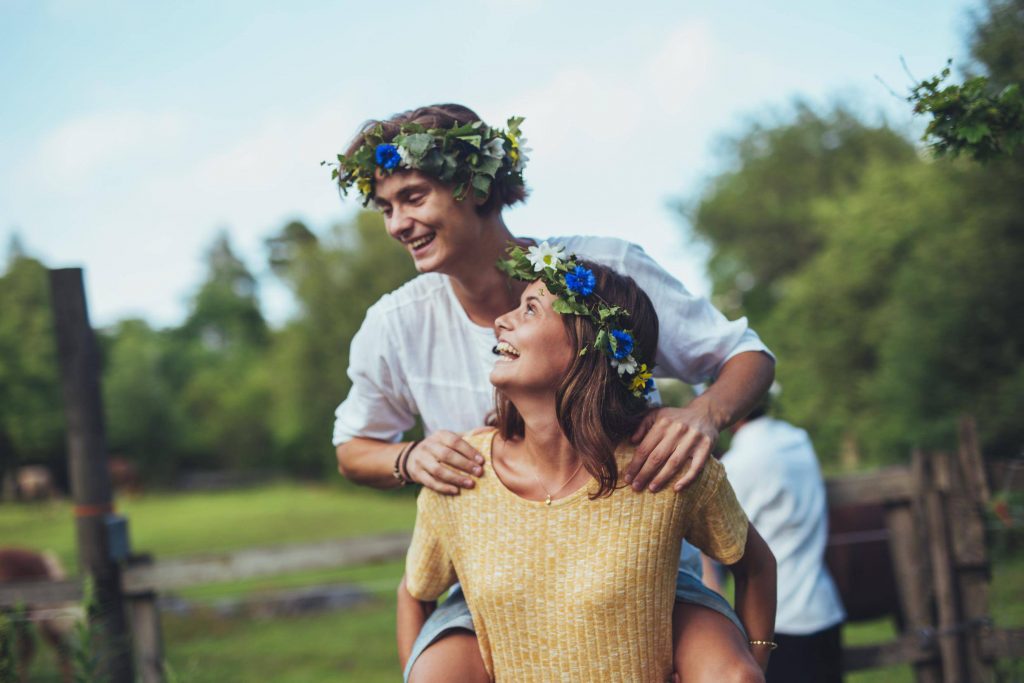
Wearing flower wreaths. Photo: Visit Sweden

Flower Wreaths
Even if you are a man in his 40s, be prepared that you may need to wear a wreath in your hair made of flowers. Despite your age and gender, making and wearing such an accessory is a lifelong tradition that has been cherished decades.

Such attention to flowers is not for no reason. Some of the people think that they can help in building relationships. They believe so not only because the flowers are beautiful and people get attracted to them, but because of an old tradition. It states that if at this holiday you find seven different flower kinds, gather them from seven spots in the forest, and place those flowers under your pillow, you will have a dream and will see your future spouse. It is believed that thanks to those flowers, girls get magical powers and get to foresee the future.

Weather Chat
It is no secret that the weather in Sweden is not always the warmest one. There might be a lot of rain, even in the summer. It is why, despite the fact that the Swedes don’t enjoy small talk a lot, they do have a tendency to talk about the weather before the Midsummer holiday. The whole country guesses what the weather will be like and waits patiently for the weekend to come. And that wait to see whether it will rain or not also brings the Swedes a lot of fun.

Feature image (on top): Swedish midsummer by Tobias Tullius/Unsplash

Top Unique Swedish Midsummer Traditions, written exclusively for Daily Scandinavian

Come Out! To Internationally Acclaimed Art Center In Norway

The new addition to the Kistefos Museum outside Oslo, The Twist Gallery, is an exciting architectural project. It has opened its second summer season with the exhibition “Come Out!which shows a selection of artworks from founder Christen Sveaas’ Art Foundation.  He has recently donated half of his art collection to the foundation, so the foundation has now taken ownership of all the exhibited works. Come Out! To Internationally Acclaimed Art Center In Norway.

When the planned opening exhibition, Declaration of Independence, was stranded in Los Angeles due to the Coronavirus, a new exhibition was urgently curated by William Flatmo, selected from the vast collection owned by Christen Sveaas. So, this summer, visitors can experience works by 32 contemporary artists, including Andreas Gursky, Marina Abramovic, Isa Genzken and Wolfgang Tillman.

Come Out! To Internationally Acclaimed Art Center In Norway
“The program committee really had to totally rethink and work intensely to put in place an exhibition worthy of Twist and Kistefos,” says newly appointed director at Kistefos, Birgitte Espeland

Related: Sculpture Park With a Twist in Oslo

Come Out! To Internationally Acclaimed Art Center In Norway
When the planned opening exhibition, Declaration of Independence, was stranded in Los Angeles due to the Coronavirus, a new exhibition was urgently curated by William Flatmo
New exhibition curated in a few weeks
“The program committee really had to totally rethink and work intensely to put in place an exhibition worthy of Twist and Kistefos,” says newly appointed director at Kistefos, Birgitte Espeland, who for 20 years has been involved in the development of Bogstad Gård in Oslo, and most recently as director at the Holmenkollen Ski Museum in in Oslo.
Come Out! To Internationally Acclaimed Art Center In Norway
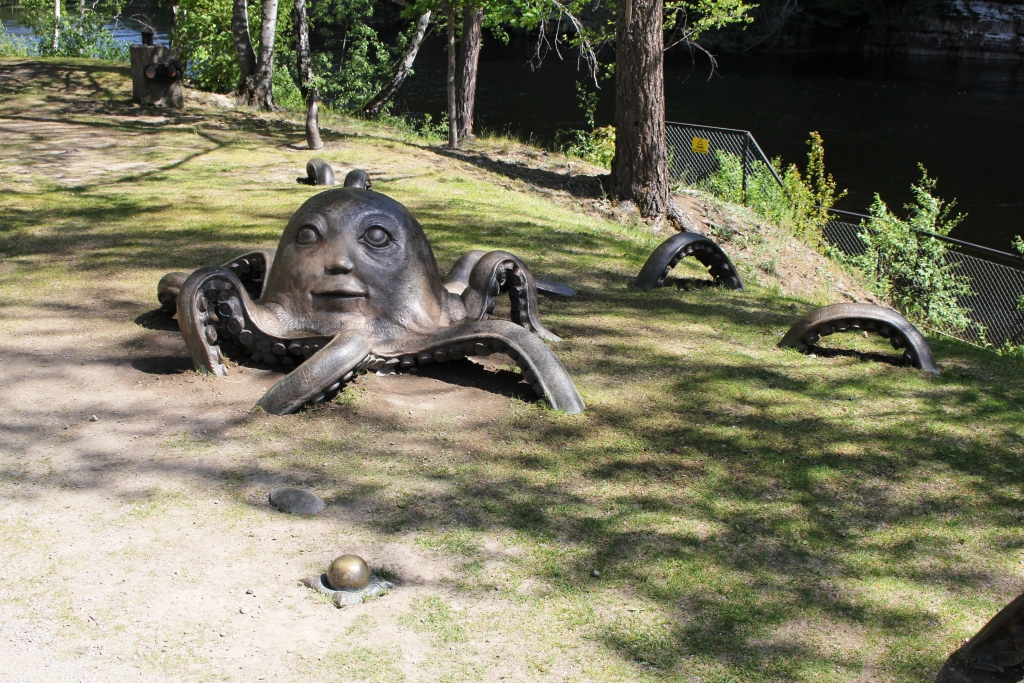
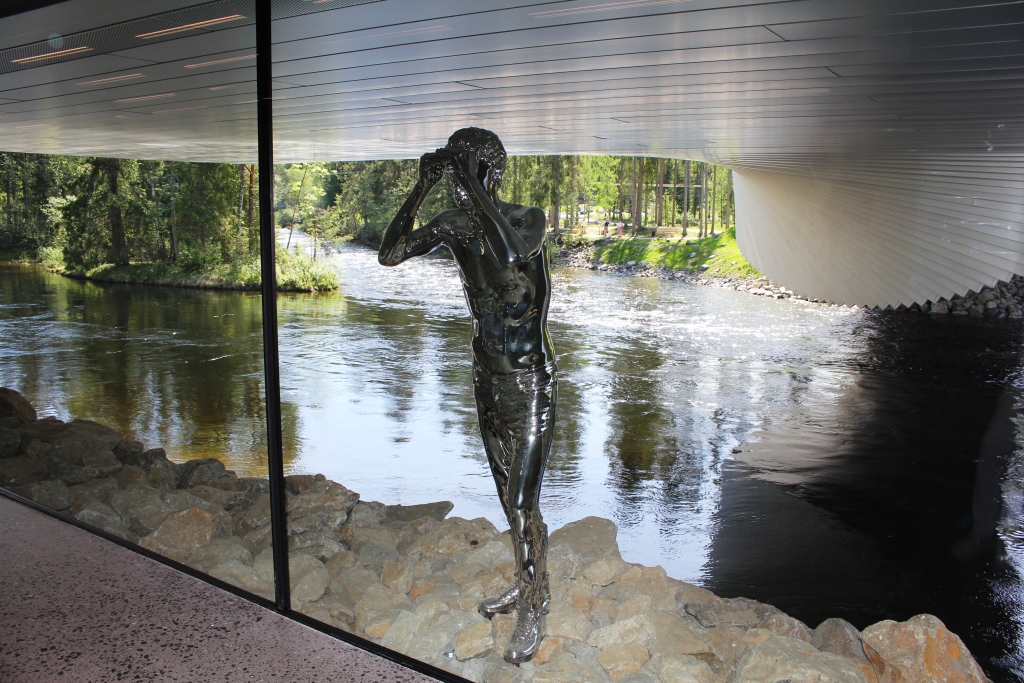
Octopus, by Bjarne Melgaard
Come Out! To Internationally Acclaimed Art Center In Norway
Fredrik Raddum: Best of the Hedonic Treadmill. 2013
An architectonic gem
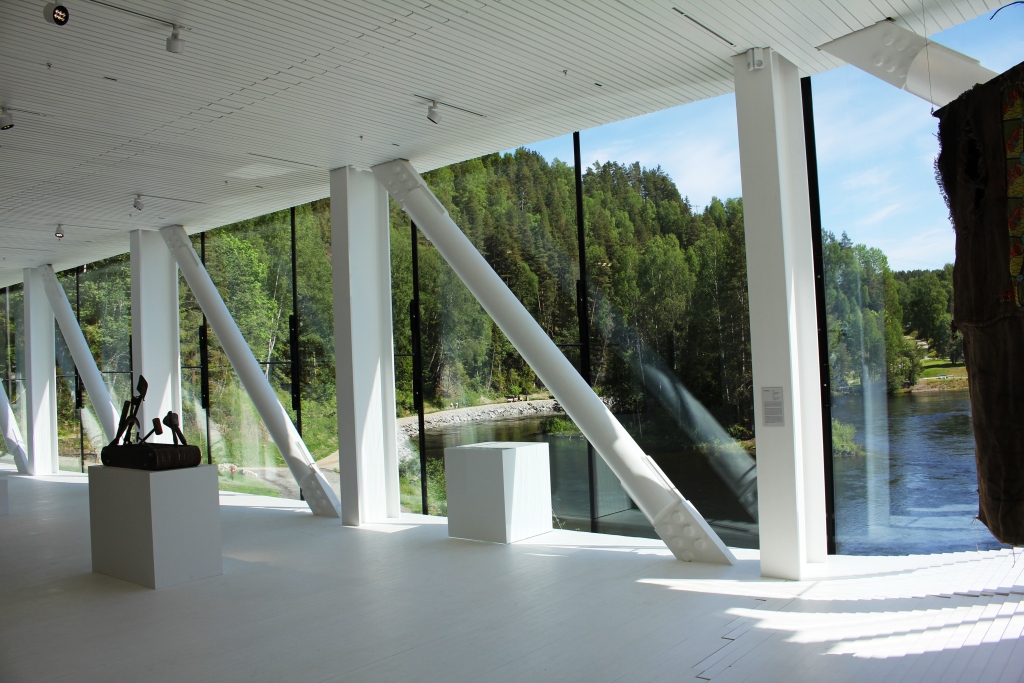
The Twist Gallery, officially opened September 2019, has gotten its name from the arresting 90-degree twist that makes the structure look like a computer-generated vision. The Danish architect Bjarke Ingels Group, called it the ‘inhabitable bridge’, a reference to Florence’s Ponte Vecchio. The Twist connects the two sides of the Randselva River via a multipurpose walkway and sits roughly 43 miles north of Norway’s capital.
Come Out! To Internationally Acclaimed Art Center In Norway
The Twist Gallery, officially opened September 2019
Come Out! To Internationally Acclaimed Art Center In Norway
Christen Sveaas wants to present world-class contemporary art to a Scandinavian audience
Related: Exceptional Norwegian Contemporary Art Gallery

An ambassador of art
One of the works in this year’s exhibition is a photograph by American fine-art photographer David LaChapelle, “Deluge”. It shows a group of naked people about to drown, surrounded by consumer products and brands. At the same time, they earnestly take care of each other. It might make someone associate the picture with the corona crisis.

Come Out! To Internationally Acclaimed Art Center In Norway
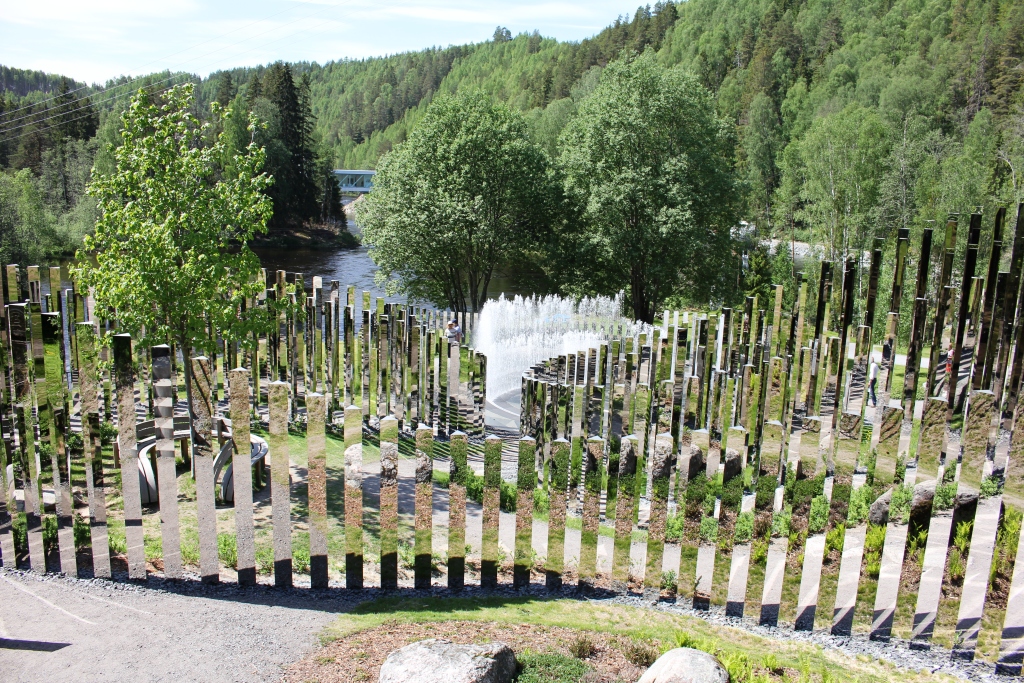
Jeppe Hein, Road to Silence 2018
Come Out! To Internationally Acclaimed Art Center In Norway
Elmgreen & Dragseth, Parts of View, Part II

“Christen Sveaas has ambitions to try new things,” says Espeland. “He donates Norwegian art to foreign museums to show the world the quality and breadth of Norwegian artists. At the same time, he wants to present world-class contemporary art to a Scandinavian audience. He invites international curators to put together exhibitions. At Twist, there is a new exhibition every year, and the sculpture park is expanded with two sculptures a year. Most of the sculptures are site-specific. That is, the artists create their artwork directly with the location in mind.”

Related: Contemporary Art Museum in Oslo Celebrating 25 Years

Come Out! To Internationally Acclaimed Art Center In Norway
Lynda Benglia, Face Off 2018
Come Out! To Internationally Acclaimed Art Center In Norway
In the sculpture park, you can find tranquility, inspiration and aesthetic pleasure, all year round
Swedish artist duo
From June 21 through October 11, a new exhibition by the Swedish artist duo Nathalie Djurberg and Hans Berg will be on display in Nybruket Gallery. The exhibition Flowers in the Attic combines three recent films, as well as the installation The Clearing, and invites viewers into the surrealistic and imaginative dream world of the artist duo.
Come Out! To Internationally Acclaimed Art Center In Norway
Take a break in the cafeteria
Come Out! To Internationally Acclaimed Art Center In Norway
Kistefos has 45 sculptures by prominent contemporary artists

Nathalie Djurberg and Hans Berg have worked together for over 10 years and have developed a distinct and powerful audio-visual language. The strong colors, the cartoonish characters and the atmospheric music create a seductive and accessible expression, while opening the door to the darker side of man’s multifaceted nature.

Come Out! To Internationally Acclaimed Art Center In Norway
Marc Quinn, All Of Nature Flows Through Us, a true copy of Christen Sveaas’ iris. 2011

The Kistefos Museum
Kistefos is one of the largest sculpture parks for contemporary art. It opened in 1999 and consists of 45 sculptures by prominent Scandinavian and international artists. To mention just a few, Yayoi Kusama, Bjarne Melgaard, Kjell Nupen, Fernando Botero, Olafur Eliasson and Tony Cragg.

Come Out! To Internationally Acclaimed Art Center In Norway
The Twist Gallery officially opened September 2019
Come Out! To Internationally Acclaimed Art Center In Norway
At Twist, there is a new exhibition every year
Come Out! To Internationally Acclaimed Art Center In Norway
Visitors to Kistefos can cross The Twist to complete their circuit of the park, while also admiring the bridge as an attraction in its own right. The 1,000-square foot structure links two distinct art galleries, serving as a bridge between the river’s north and south banks.

Perhaps we should interpret the new exhibition “Come Out!” as a call to visit Jevnaker and its internationally acclaimed art center Kistefos.

Come Out! To Internationally Acclaimed Art Center In Norway
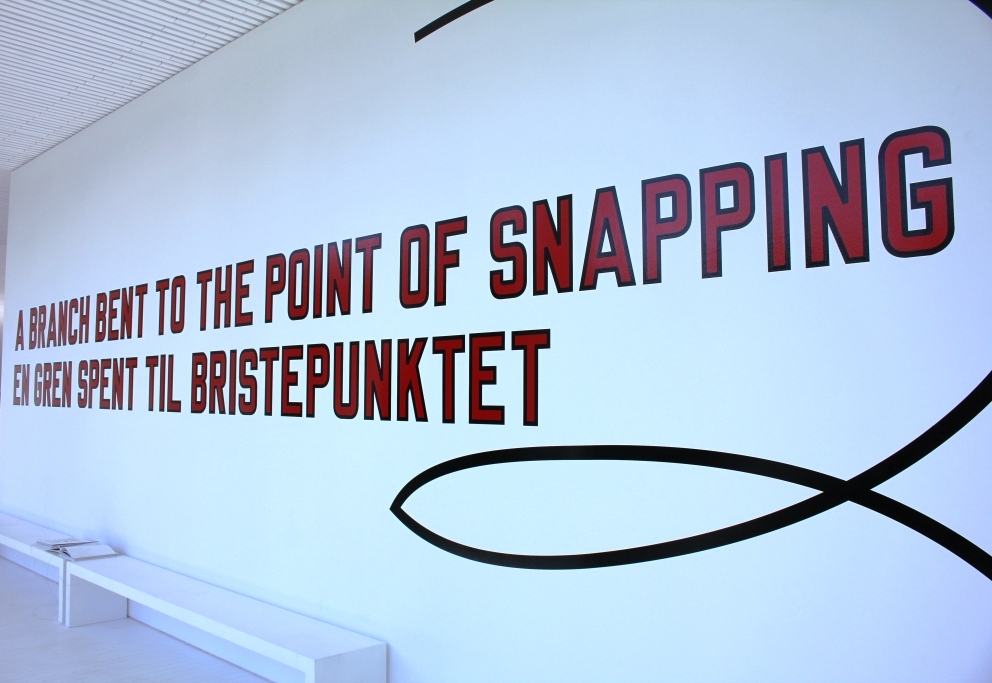
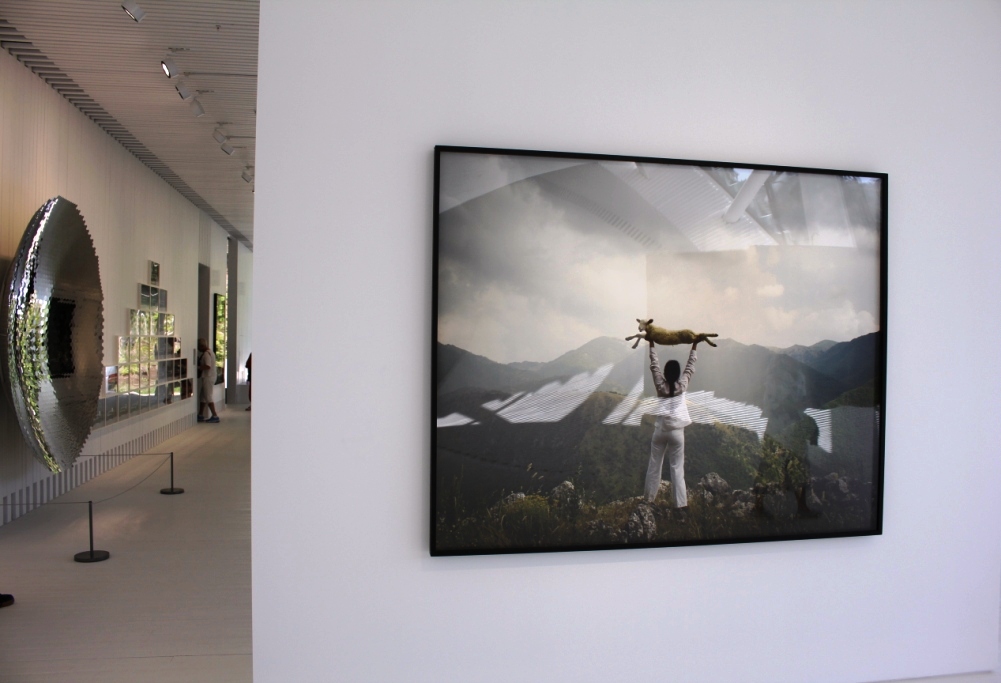
From the Come Out! Exhibition
How to get there
To reach The Twist from Oslo, take advantage of Norway’s excellent public transport system by hopping on a bus or train from Oslo’s Central Station to Hønefoss (75 minutes), followed by a local bus to the stop at Kistefossvegen (15 minutes). From there, you’ll have to walk the last stretch (less than one mile) to reach the museum. It’s worth renting a car to make the trip, however, both to shave a bit of time off the journey—the drive to Jevnaker takes about an hour from downtown Oslo—and also to explore a few other sites in the area.

“We are working on bus departures from the local train station directly to the museum twice a week, but we’re not there yet,” says Birgitte Espeland. “In the future there might be a train connection. The Randsfjord Line which was terminated in 1989 is still in use for freight trains along the Oslo–Bergen route.”

All photos © Daily Scandinavian/Tor Kjolberg

Come Out! To Internationally Acclaimed Art Center In Norway, written by Tor Kjolberg

Denmark Social Taboos That You Must Be Familiar With

Every country has its own social taboos. For people traveling to an unfamiliar country, it might be a surprise that something is considered to be a taboo when the same thing is a friendly gesture in their country of residence. The same applies to Denmark. Learn more about Denmark social taboos that you must be familiar with.

It is essential to learn about the country’s culture and traditions so that you feel welcomed and blend in with the people that live there. But what is most important, find out what their social taboos are. Read on to find out about the most common social taboos that exist in this country so that you will be prepared when you visit it.

Denmark Social Taboos That You Must Be Familiar With
Danes like to have personal space, and the more, the better. Photo Ryoji Iwata/Unsplash
Tell the Neighbors
Remember this taboo when traveling to Denmark and staying in an apartment building. If you meet some of your old friends and decide to have a friendly gathering at your apartment, you must let the neighbors know about it. But don’t do it in person, since it may feel awkward both for you and them. It is best to write a note so that they will be informed and when it gets a little noise during the party, you won’t get into any trouble for that.

Also, Danes are not used to greeting strangers. So, if you walk out of your apartment and see someone from the building passing by, it is best not to say anything. This way, you won’t make anyone uncomfortable.

Related: Danish Happiness Explained

Personal Space
Danes like to have personal space, and the more, the better. They are a friendly nation, but they also respect another person’s space. When meeting a person, it is enough to shake hands, but not give a hug. You are to be very close to that person to hug him/her without giving that person any discomfort. Also, if you are being overfriendly with someone, or making too many compliments, that person may consider your actions being impolite.
Denmark Social Taboos That You Must Be Familiar With
Photo by Shane Rounce/Unsplash

In the US, it is a normal thing to open a door for someone else and let that person go ahead. But in Denmark, by doing this, you will only make that other person feel awkward. The first thing that the person will thing after such a gesture would: “Am I incapable of opening the door myself?”.

Also, another weird social taboo is that it is not acceptable to whistle outside. It distracts people and will draw a lot of unwanted attention to you if you do this, for example, in the park.

Related: The Danish Art of Happiness

Punctuality
If you want to leave a good impression on a potential employer, or a new friend, don’t be late for your meeting. Being punctual is the thing that people in this country respect the most. Punctuality is not just a simple rule for them, but a way of life. If you are late for a meeting, the other person will consider you a rude and disreputable person. But if something happened, and you know that you will be late, it is best to call that person and let him or her know in advance.

Even if you are a student on an exchange program and are studying in Denmark, and for some reason, you decided to buy custom essay online, remember to pay for that work in time, so as not to seem rude to the person that is completing that task for you. Moreover, never be late to class and always submit any of your assignments in time.

Indirect Questions
If you want to ask someone a very personal question, one that is about that person’s family, finances, or religion, it is best to rephrase those questions. Never ask Danes directly about those topics. You may feel rude if you do. Instead, it is best to rephrase them so that the questions will be more subtle.

Related: The Nearly Almost Perfect People

Denmark Social Taboos That You Must Be Familiar With
After you put all of the products that you want to buy on the conveyor belt, remember to place the bar after those products. Photo: https://unsplash.com/@walk_

Conveyor Belt
Whenever going grocery shopping, remember this rule if you want to avoid bad looks. After you put all of the products that you want to buy on the conveyor belt, remember to place the bar after those products. You don’t want people thinking that you don’t care about others.

Denmark Social Taboos That You Must Be Familiar With – The Bottom Line
Many of the foreigners that live in Denmark don’t feel like all of these social taboos exist. It depends mostly on the region of residence of that person. But if you are traveling to this country for the first time, it is essential to be at least aware that they exist somewhere in the country and be prepared, so as not to look weird and feel uncomfortable around Danes.

Feature image (on top) Photo: Ava Coploff/Unsplash

Denmark Social Taboos That You Must Be Familiar With, written exclusively for Daily Scandinavian

Norwegian Sea Eagles Make Success in Ireland

The white-tailed sea-eagles nest in Ireland for the first time in over 100 years. The Irish white-tailed sea eagle was driven to extinction in the early 20th century. But thanks to the White-Tailed Sea Eagle Reintroduction Project the eagles face a new spring in Ireland with the first documented nesting attempt in more than a century. Now, Norwegian Sea Eagles Make Success in Ireland.

The breeding birds that bring new hope to the sea eagle stock are a four year old male and a three year old female originating from the island of Frøya, off the west coast of Norway.

Norwegian Sea Eagles Make Success in Ireland
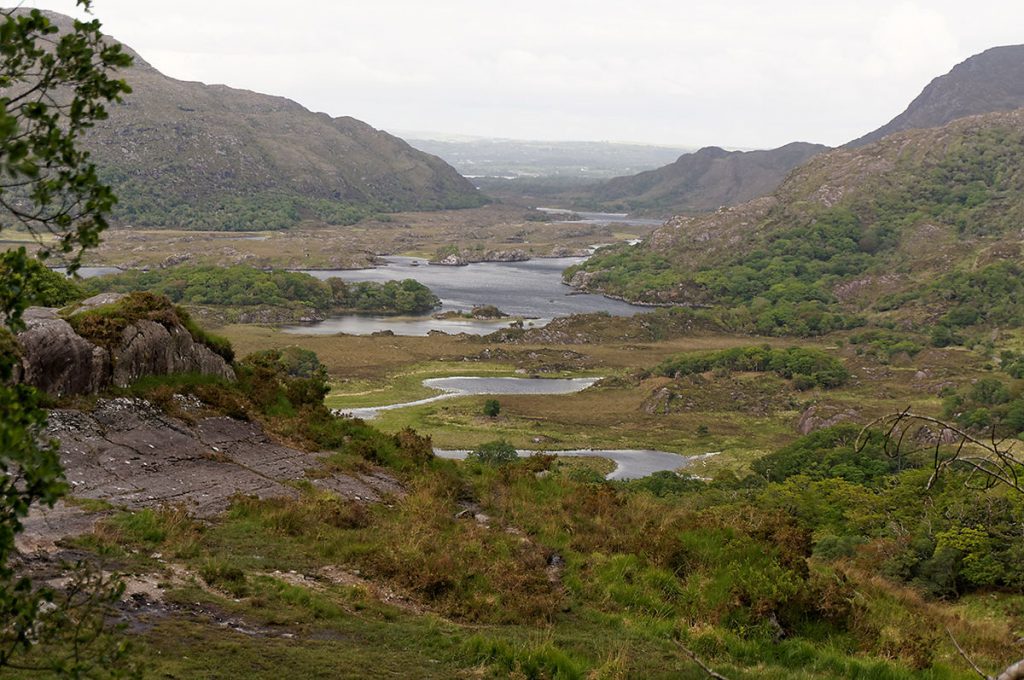
Killarney National Park, Photo: Wikipedia commons

They were released in Killarney National Park in 2008 and 2009, respectively. In 2012, they each found their way to Co. Clare and paired up, and this spring they nested on a small island on Lough Derg, one of Ireland’s biggest lakes, close to the village of Mountshannon.

“This is a truly momentous event,” sayid Dr. Allan Mee, project manager for the Golden Eagle Trust.  “Seeing them nesting in the wild in Ireland is the day we have all been waiting for”.

The future looks bright
First-time breeders lack experience, and breeding success depends on getting everything right. But Mee is impressed by the young couple.
Norwegian Sea Eagles Make Success in Ireland
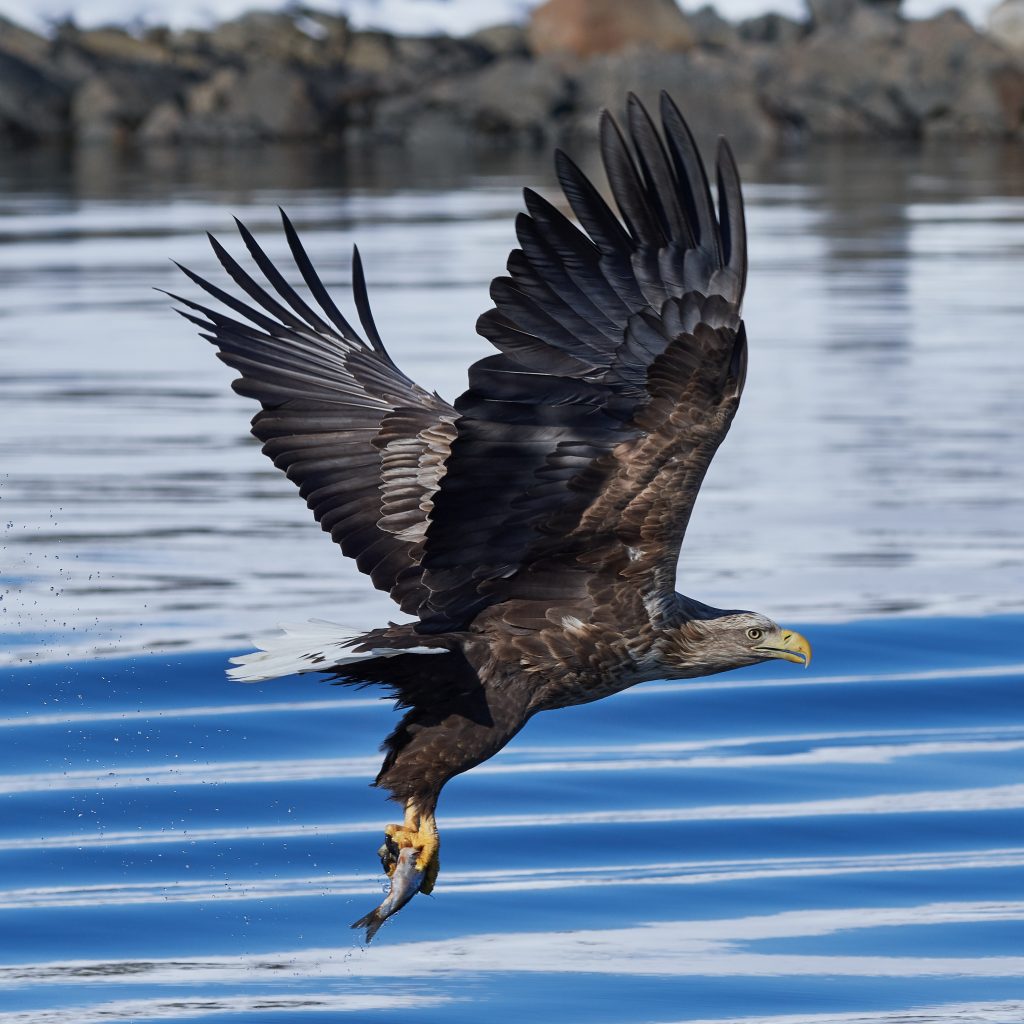
White-tailed eagle. Photo: Wikipedia commons

He said that once the birds settled down to incubate the clutch of eggs both parents were very diligent. The nest has only very rarely been left unattended and birds have been quick to spot potential dangers such as the presence of hooded crows which might predate the eggs.

Related: A Natural Born Birder in Norway

Six weeks to hatch
“Since the eggs take some six weeks to hatch, they still have a long way to go. But so far so good,” said Mee.

And according to Dr. Duncan Halley, the eagles have chosen a good spot for their first attempt.

White-tailed sea eagles usually begin to breed at five years of age. But in this case the lake is shallow and productive, ensuring a good food supply.  In addition, there is no competition from other breeders.

“This combination may explain breeding at this young age,” Halley stated.

Together with Dr. Torgeir Nygård he is responsible for the NINA part of the program.

Related: Watch the Majestic Sea Eagles in Norway

Following the sea-eagles
The sea-eagle population was also threatened at one time in Norway, but increased as a direct result of legal protection in 1968.

Today Norway has the largest breeding population in Western-Europe.

In total one hundred Norwegian white-tailed eagles were released between 2007 and 2011 in Killarney National Park, Co. Kerry.

These birds have dispersed throughout Ireland and beyond. To date 21 birds are known to have died.

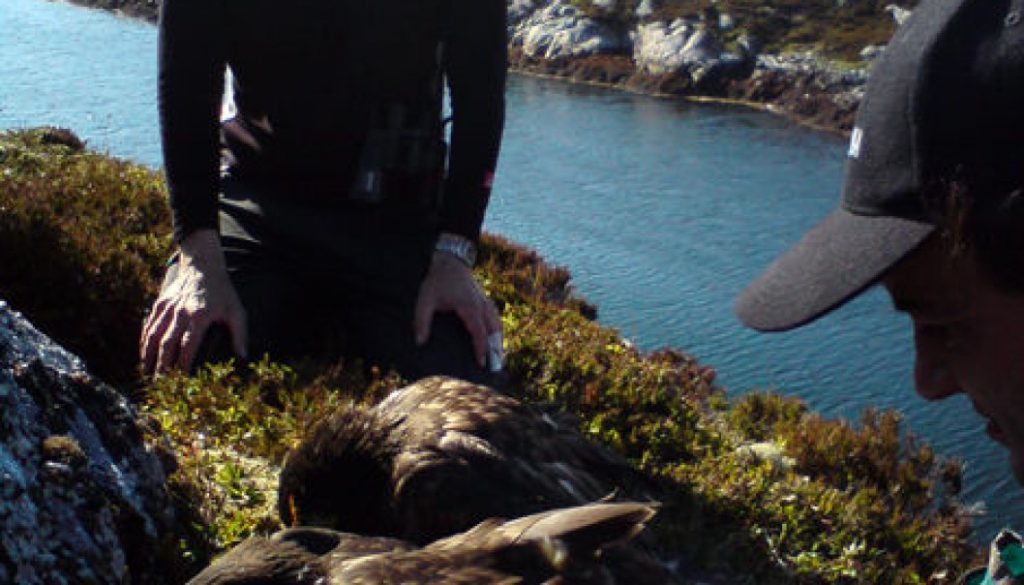
All birds were collected in the Trøndelag area in Norway, one bird only from nests with more than one chick. A time-consuming task, as only 20 percent of the nests have two chicks, or, very rarely, three.

Norwegian Sea Eagles Make Success in Ireland
Sea eagles (like that, above, pictured in Scotland) have been introduced into the Killarney National park from Norway. File image: RSPB/PA
Many local volunteers
“The contribution from the many local volunteer bird enthusiasts has been crucial for the project’s success,” said Halley.

In May he and Nygård are flying to Ireland together with some of the volunteers, and with a lot of luck, to observe the hatching.

The birds are very sensitive to disturbance, and the brooding period is a critical time. The Golden Eagle Trust have constructed a viewing area onshore with a telescope for close viewing. Information on the birds, their ecology and conservation is also available.

Whatever the outcome of this nesting attempt, the signs are good for future breeding in the area.

Sea-eagles can live up to 30 years and generally mate for life with adult pairs remaining within their home range throughout the year.

Related: National Parks in Scandinavia

Norwegian Sea Eagles Make Success in Ireland
Eagle Paradise. Photo: Allan Mae
Update July 2020:
Project started in 2007

In the years from 2007 to 2011, 100 sea eagles were retrieved from nests on the Trøndelag coast. The birds were captured from Leka in the north to Hitra and Frøya in the south, and released in the Irish Killarney National Park.

A recent report summarizes what has happened after exports from Norway:

In 2010, the first couple was formed in Ireland.

In 2012, the first couple built a nest and had a baby bird, that died shortly after.

In 2014, the number of couples had increased to 14.

In 2015, a nest gave birth to two baby birds.

Until 2017, juvenile production increased. Since then, things have gone a little worse. The two most successful pairs died of bird flu in 2018, and the storm Hannah destroyed the nest in 2019 when almost no cubs were born.

This article, Norwegian Sea Eagles Nest in Ireland (except Update July 2020), written by Camilla Næss, was produced and financed by NINA – Norwegian Institute for Nature Research, and was published on Sciencenorway on 3rd May 2012.

Feature image (on top): Argos Team

Enjoy Golden Bornholmers on the Danish Sunshine Island

During the summer months, freshly landed herrings are delivered at Bornholm’s distinctive white smokehouses. Enjoy golden Bornholmers on the Danish Sunshine Island.

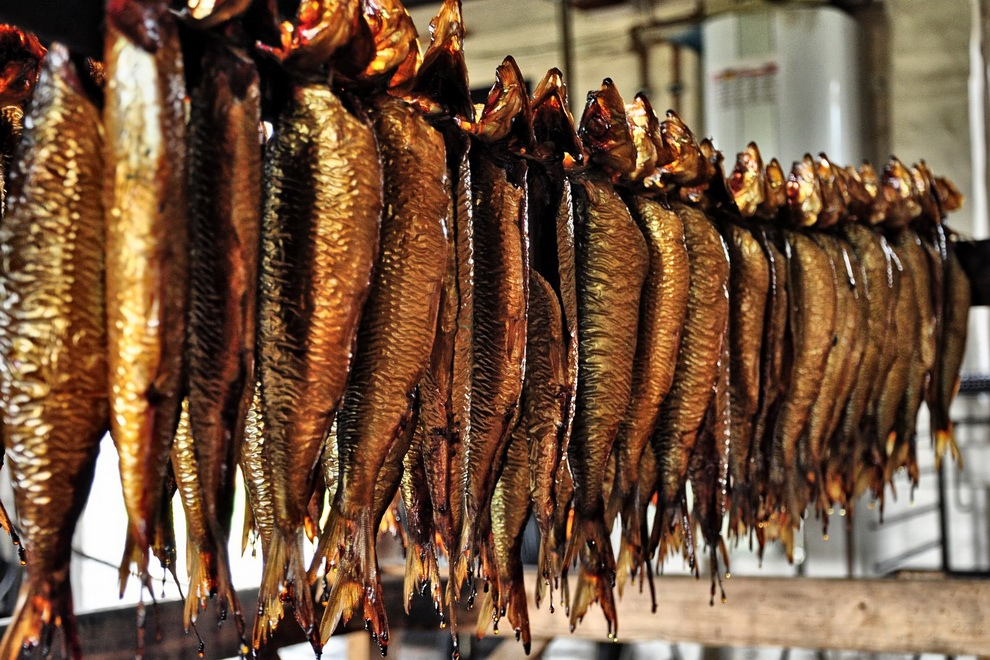
On Bornholm the fish is turned from their original silver color into the ‘golden Bornholmers’ dearly loved by Danes. On the island, you see a lot of them, usually by the sea: four-sided pyramids topped by long rectangular smokestacks: Placed over the alderwood fire give them their special taste. Inside sits a man who knows exactly how to do it. He dips a long-handled stick with a rag into his pail of water and runs the wet rag over the embers to create the required smoke.

Enjoy Golden Bornholmers on the Danish Sunshine Island
the fish is turned from their original silver color into the ‘golden Bornholmers’ dearly loved by Danes. Photo: Wikipedia commons
Related: Scandinavian Herring

Eaten warm or cold
For centuries the abundance of fish in the Baltic Sea has had an important role in the economy of Bornholm. Once there were 135 smokeries on the island, now only a dozen is still in use.

Enjoy Golden Bornholmers on the Danish Sunshine Island
The smoked herrings are either eaten warm from the oven or put on black rye bread. Photo: Team Bornholm

The smoked herrings are either eaten warm from the oven or put on black rye bread, sprinkled with salt, chopped chives, onion and radishes, and topped with a raw egg-yolk – the typical Danish open-sandwich is known as Sol over Gudhjem – “Sun over Gudhjem”.

Related: The Scandinavian Herring Adventure

Enjoy Golden Bornholmers on the Danish Sunshine Island
Once there were 135 smokeries on the island, now only a dozen is still in use. Photo: Wikipedia commons
Delicious Salmon and Herring on Danish Bornholm
Like having lobster in Maine or stopping by a roadside oyster kiosk in Marenne, France, pickled herrings are a lunchtime must on Bornholm. The best spiced herrings are produced at Christiansø Baltic salmon, said to be the finest edible fish in the world, is normally available, too. The act is fraught with protocol. The herring comes whole, still in its shining golden skin; it sits on a newspaper and next to it, within easy reach, stands a chilled Tuborg.

Feature image (on top): Gudhjem, Bornholm. Photo: Visit Denmark

Delicious Salmon and Herring on Danish Bornholm, written by Tor Kjolberg