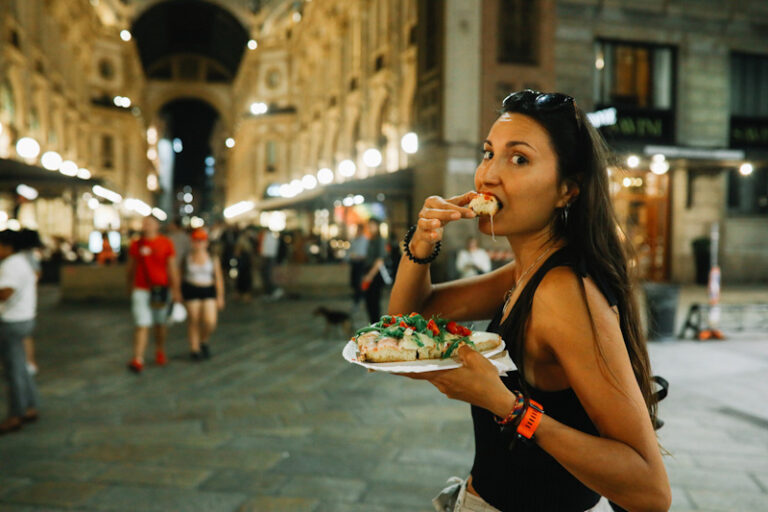
Sampling street food is a great (and tasty) way to experience local culture. However, we recommend following the principle “Boil it, cook it, peel it, or forget it” by avoiding raw foods, such as salads and undercooked meats, as well as unpasteurized dairy. Here, you can find our advice for eating food when traveling abroad.
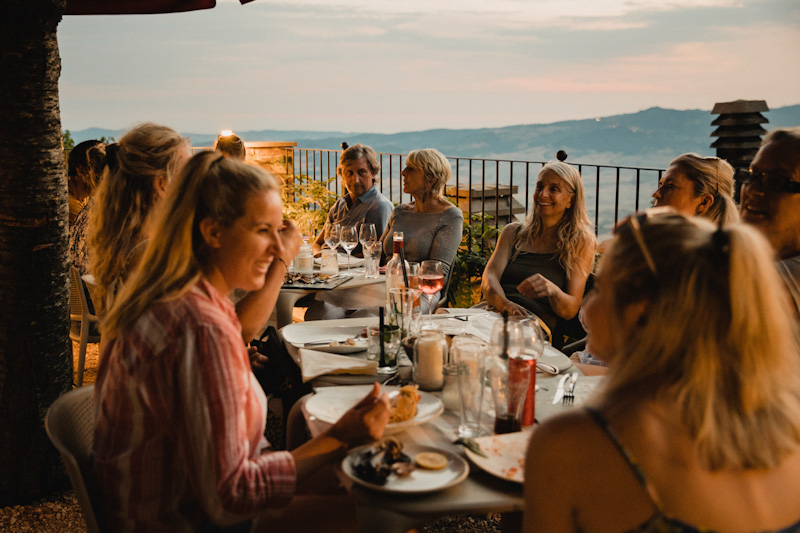
“Vacation eating” is the term used here for the constellation of eating habits that allow us to indulge in when we are on vacation. It involves one or maybe even two sweets a day, a soda with dinner for the kids, way more chips than normal, cocktails in the evening, and a lot of eating out.
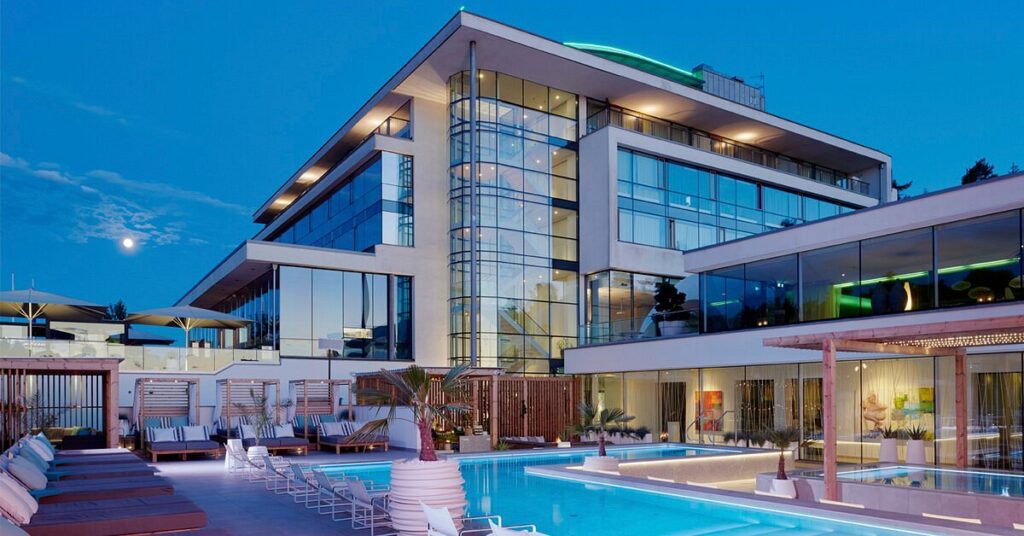
“Vacation eating” is the term used here for the constellation of eating habits that allow us to indulge in when we are on vacation. Photo Acca Hotels.
However, use good judgment when purchasing food from street vendors and sometimes even from restaurants. To safely eat when traveling abroad, follow the principle: Drink only bottled or commercially sealed beverages, and always wash your hands frequently with soap or hand sanitizer. Be cautious when consuming street food and ensure that all food is well-cooked and served piping hot.
Buy local produce or produce that grows well in the area you are visiting. For instance, the tomatoes, cucumbers, and feta are abundant and cheap in Greece, so Greek salads are a delicacy when in Greece. Greece also has beautiful strawberries in season. It’s more affordable and more delicious to eat the things that thrive in the local environment.
In restaurants, however, the food should be steaming when you receive it, as you know it has not been sitting around, allowing harmful bacteria to grow. If possible, inspect the cleanliness of the cooking areas, preparation spaces, and serving utensils. Clean or dirty toilets say a lot about an establishment’s hygiene.
In general, avoid raw fruits and vegetables, especially salads, or only eat those you can peel yourself, such as bananas and oranges.
Consider eating only two meals a day. If you want to sample the local cuisine, consider eating out for a late lunch rather than dinner.
Watch out for food that comes with its fair share of flies or other insects. Also, be on the lookout for the people in line for the street food. If locals are waiting for the street food at a food market, that is a good indicator that the food is not only good but also on the safer side.
Avoid raw or undercooked meats, poultry, and seafood, as these can harbor bacteria and parasites. Eat at tapas-style restaurants rather than traditional three-course meal restaurants. It means you can sample more things and waste less food. Furthermore, this style of dining encourages kids to try more new things since they aren’t committing to eating a whole dinner of something they don’t enjoy.
Consider eating only two meals a day. Photo: iStock/SolStock.
Sometimes there will be other tell-tale signs. On a trip to Goa, we discovered a helpful hint: if there are more rats than people, move on to the next restaurant.
Even with all of these precautions, you cannot guarantee that the food is safe. I ate all kinds of questionable food in Thailand, and it wasn’t the street vendors or questionable restaurants that got me! It was a KFC that ultimately gave me food poisoning.
The Accommodation in Sweden – 2025 Update features a diverse range of accommodation options for individuals who have applied for or received a residence permit under the Temporary Protection Directive, as well as for holidaymakers.
While hotels maintain a strong presence year-round, other accommodation types show distinct seasonal patterns. Camping sites, for instance, experience a significant surge during the summer months, with the southernmost province of Scania boasting the highest number of campgrounds, at 74, as of October 2024.
Expats can find accommodation in Sweden through various channels, including online rental platforms such as Blocket.se, Samtrygg. se, and BostadDirekt.com, which often feature short-term rentals, and by applying for long-term first-hand leases through municipal housing companies. Subletting is a standard option, though competitive, and securing a first-hand lease often requires a Swedish personal ID number, proof of income, and an employment contract.
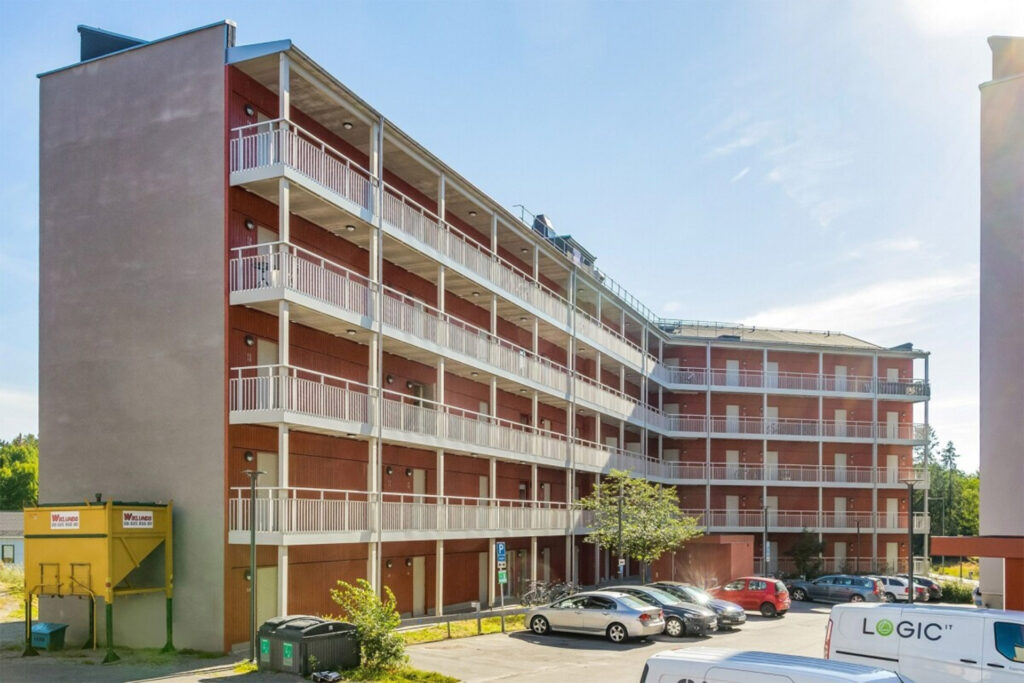
Student housing in Huddinge, Stockholm. Photo: Heimstaden.
Once you have applied for protection under the Temporary Protection Directive, you can choose to arrange accommodation on your own or be offered a place at one of the Swedish Migration Agency’s accommodations. If you are listed in the Swedish Population Register, you are responsible for arranging your own accommodation.
If you do not have your own accommodation, the Swedish Migration Agency can offer you a place in a temporary accommodation.
Living in Swedish Migration Agency accommodation
If you do not have your own accommodation, the Swedish Migration Agency can offer you a place in a temporary accommodation. You do not get to choose where you will live. You will be assigned accommodation where there are places available. You will then be assigned to an accommodation in a municipality. This may mean that you need to move to another municipality.
First-hand leases (Førstahandsuthyrning) are a long-term option
Contact municipal housing companies: Many municipalities have their own housing companies where you can join a waiting list for a first-hand lease, though waiting times can be long.
Requirements: You will likely need a Swedish personal ID number (personnummer), proof of income, and an employment contract.
Types of accommodation
Apartments: Available as short-term sublets or long-term first-hand leases. You can find furnished apartments or studios that are often ready for immediate occupancy.
Rooms: It’s also possible to rent a private room in a shared flat or house, often called lodging.
Student housing: If you are a student, consider student residences or flats, which can be a good way to socialize and find a room in a shared apartment with other students.
Subletting
Subletting (Andrahandsuthyrning) is a widespread and often more accessible option for newcomers, though it may be short-term and competitive, so be cautious. Always confirm the landlord approves the subletting to avoid fraud, and never transfer money before viewing the apartment in person.
If you choose to arrange accommodation on your own, you will need to pay the accommodation costs yourself.
You must notify the Swedish Migration Agency of your address if you arrange your accommodation on your own. To do so, send the “Adressanmälan eller adressändring” [Notification of address or change of address] form to the nearest Unit for Reception:
Sweden offers a diverse array of accommodation options that reflect its varied landscapes, ranging from coastal archipelagos with seaside cottages to mountain ranges featuring cozy lodges and hotels. However, for their domestic trips, Swedes tend to prefer mid-priced hotels in larger cities, such as Stockholm, which has the highest accommodation revenue in the country. Overall, the revenue of hotels in Sweden peaked with 32.5 billion Swedish kronor in 2024.
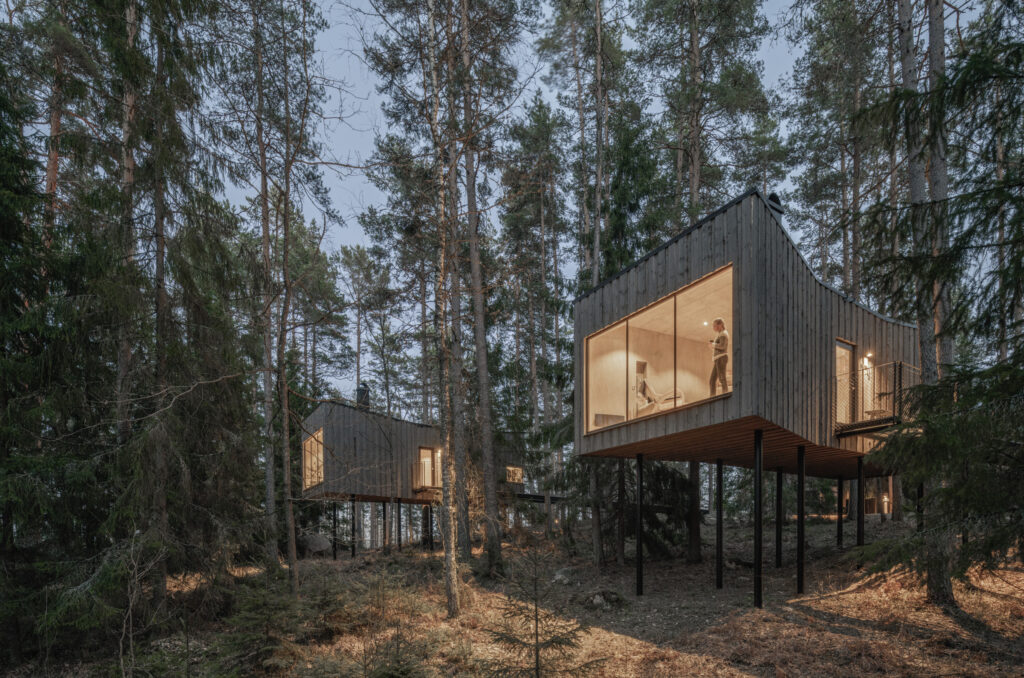
Unique accommodations that stand out from ordinary hotel rooms. Photo: Visit Sweden.
Hotels remained the preferred accommodation choice for tourists, as more than half of the available establishment types consist of hotels.
Leading companies
The leading hotel company in Sweden is Scandic Hotels Aktiebolag, which has the highest revenue in the market, with nearly 6.7 billion Swedish kronor as of March 2025. It had 87 hotels in the country, out of a total of 263 establishments in the Nordic region. The Swedish company has approximately 18,600 hotel rooms in the country. Additionally, the second-leading company is SkiStar, which accumulated around 2.9 billion Swedish kronor. It focuses on alpine tourism and generates revenue from, among other things, ski passes, slope maintenance, and its accommodation properties. It manages a noteworthy number of establishments, with over 36,100 bed places in ski lodges or flats and 4,200 beds across seven hotels in Sweden and Norway.
Moreover, the fourth-leading hotel company is Elite Hotels, which had a revenue of 903 million Swedish kronor. Its net sales reached 888 million Swedish kronor.
Sweden’s accommodation industry is diverse and adaptable, offering a range of establishments catering to various types of leisure and outdoor travel. Photo: Swedish Tourist Association.
Sweden’s accommodation industry is diverse and adaptable, offering a range of establishments catering to various types of leisure and outdoor travel. The cities feature a range of hotels that cater to varying preferences.
Due to varying update cycles, statistics can display more up-to-date data than referenced in this text.
Accommodation in Sweden – 2025 Update, compiled by Tor Kjolberg.
Swedish actress Noomi Rapace (born 1979) landed her first small film role as a seven-year-old in the Icelandic Viking drama “The Shadow of the Raven” and decided then and there to pursue a career in acting. The Swedish actress’s career spans a wide range, from portraying an Icelandic Viking to portraying Mother Theresa.
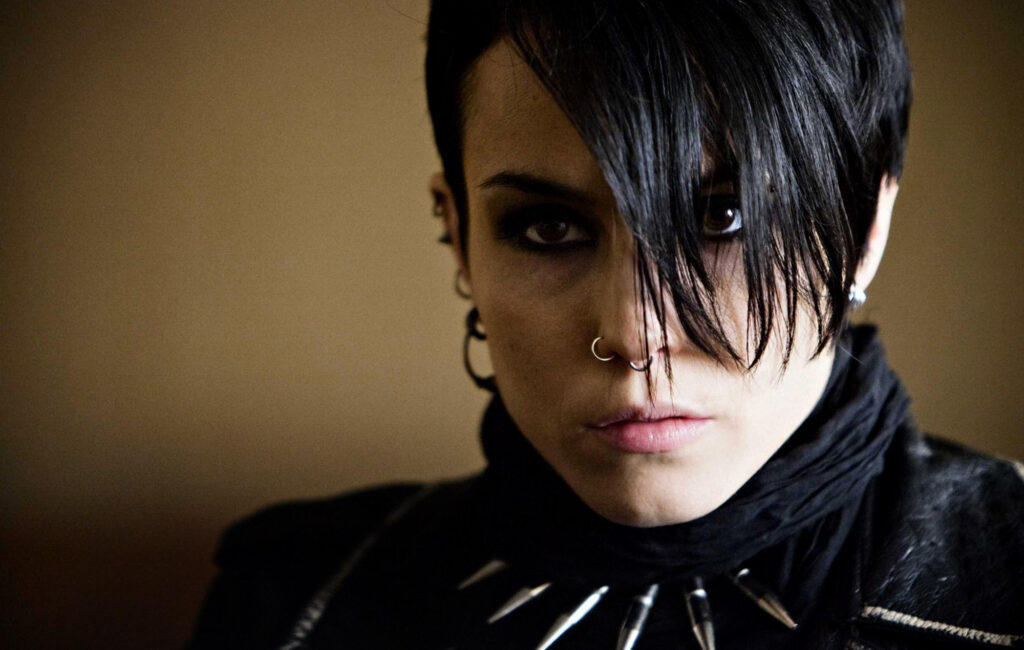
Noomi Rapace achieved international fame with her portrayal of Lisbeth Salander in the Swedish film adaptations of the Millennium series (2009): The Girl with the Dragon Tattoo, The Girl Who Played with Fire, and The Girl Who Kicked the Hornets’ Nest. For her performance in the Millennium series, Rapace won two Nymphe d’Ors, a Guldbagge Award, and a Satellite Award as Best Actress, amongst others, and was nominated for a BAFTA Award, an International Emmy Award, and a European Film Award. Following the success of the Millennium series, Rapace has gone on to star in American movies.
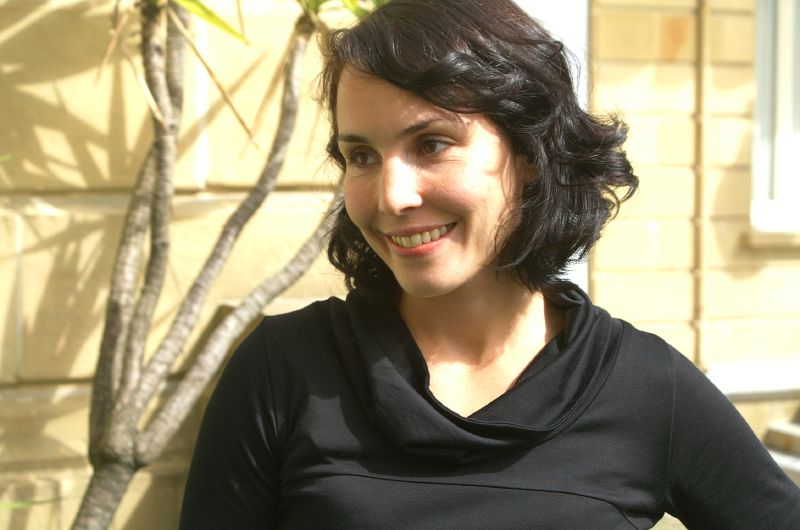
In recent years, Noomi Rapace has been commuting between filming and preparing for roles in the United States, Europe, and Scandinavia. Photo: Noomi Repace Online.
Image: Rapace played goth hacker Lisbeth Salander in the ‘Girl With The Dragon Tattoo’ series. CREDIT: Alamy
Following her breakthrough, she starred in Pernilla August’s “Skyggesiden” (“The Shadow Side”). In 2011, she played Madame Simza Heron in the sequel to “Sherlock Holmes” and starred in the Norwegian thriller “Babycall,” directed by Pål Sletaune.
She left home at the age of 15 and enrolled in a theatre school in Stockholm.
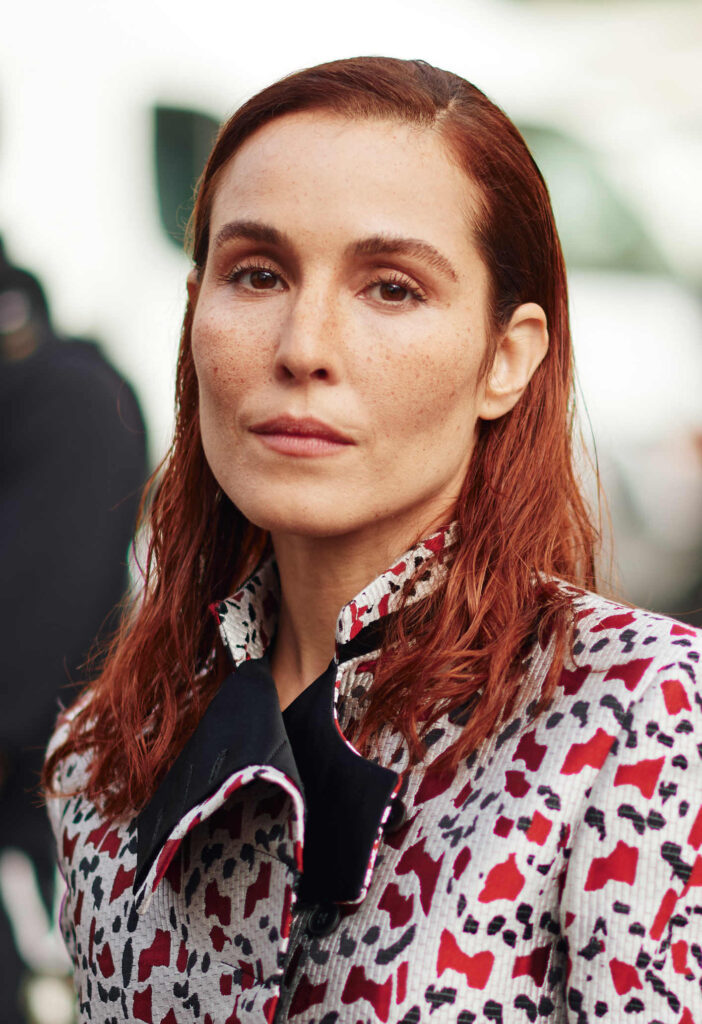
“I never read about myself. I never read reviews or criticisms,” says Rapace. Photo: Wikimedia Commons.
In 2009, at Södra Blasieholmen in Stockholm, Noomi held her first international press conference, where she panicked when reporters asked if they had called her from Hollywood yet. Did she really understand what the role of Lisbeth Salander entailed?
International success
In November 2012, she appeared in a Rolling Stones video for the single “Doom and Gloom”, shot in the studios of the Cité du Cinéma by Luc Besson in Saint-Denis. In 2013, she starred alongside Rachel McAdams in Brian De Palma’s erotic thriller Passion, an English-language remake of the 2010 French psychological thriller Love Crime. They both appeared in Sherlock Holmes: A Game of Shadows, but did not share scenes. Rapace also appeared in Niels Arden Oplev’s crime thriller Dead Man Down, alongside Isabelle Huppert and Colin Farrell.
Noomi Rapace has no address. In recent years, she has been commuting between filming and preparing for roles in the United States, Europe, and Scandinavia. Not having a base is not a problem, she says. She has never needed a haven.
In 2014, she appeared as Nadia in Michael Roskam’s thriller The Drop, alongside Tom Hardy, Matthias Schoenaerts, and James Gandolfini. In September 2014, she was the subject of the short film A Portrait of Noomi Rapace, directed by artist and designer Aitor Throup and scored by Flying Lotus. In the same year, Rapace appeared in the video for the single “eez-eh” by Kasabian. In 2015, she starred as Raisa Demidova in Daniel Espinosa’s Child 44, opposite Tom Hardy (her co-star in The Drop), also starring Gary Oldman, Vincent Cassel, Jason Clarke, and Joel Kinnaman.
According to Nomi Rapace, there are no limits to how far she can allow herself to disappear into a role. Photo: Wikipedia
“I never read about myself. I never read reviews or criticisms,” says Rapace. “The celebrity machine is built on uninteresting and short-term constructs: The celebrity press constantly needs new people to write about, amazing people, people who make mistakes, who are too fat or too anorexic.”
She starred in the 2016 spy thriller Unlocked, alongside Michael Douglas, John Malkovich, Orlando Bloom, and Toni Collette, as well as in the science fiction horror film Rupture by Steven Shainberg. In 2017, she led the sci-fi/actioner What Happened to Monday opposite Glenn Close and Willem Dafoe. The same year, Rapace played an elf in the urban fantasy action Bright.
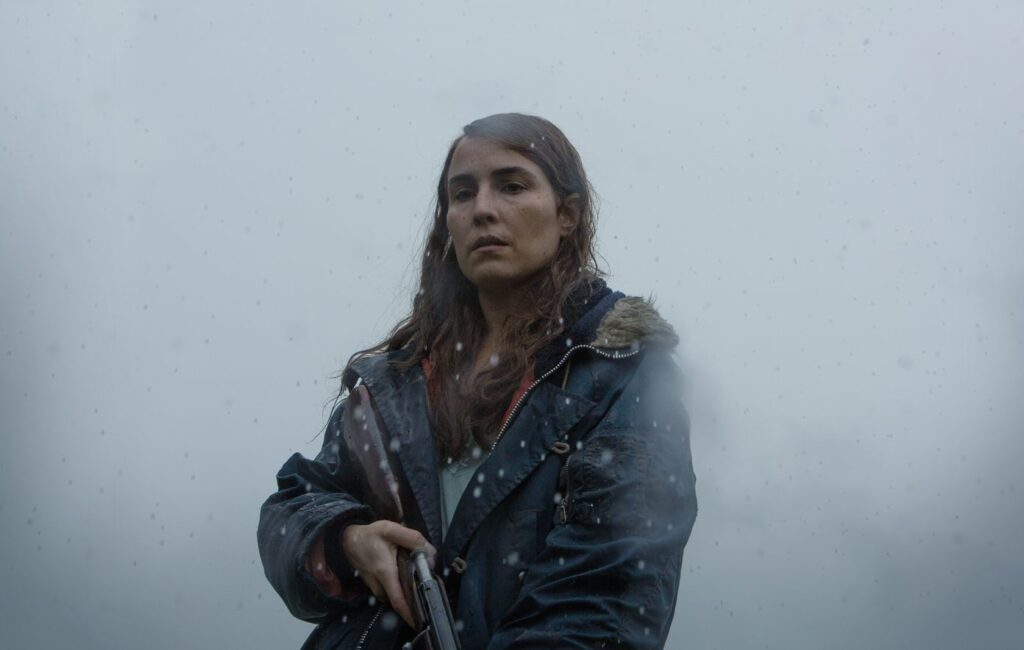
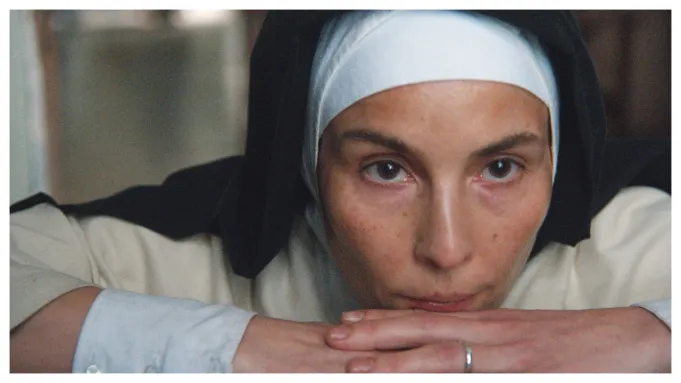
Noni Rapace in Lamb. Photo: MUBI
According to Nomi Rapace, there are no limits to how far she can allow herself to disappear into a role. What she strives for is total freedom, and to achieve that, she has to dispel her own vanity. “Going back to your own life after something like that can be pretty brutal,” she says.
In 2019, Rapace starred in the action thriller film Close, released on Netflix on January 18, 2019. That same year, Rapace starred in the psychological thriller Angel of Mine and in the television series Jack Ryan. In 2020, Rapace starred in the thriller The Secrets We Keep. In 2021, the Icelandic folk horror film Lamb premiered at the Cannes Film Festival, where Rapace played the leading role of Maria. Rapace’s performance in the movie garnered significant attention, and she won the award for Best Actress at the 2021 Sitges – Catalonian International Film Festival. She was nominated for the Best Actress award at the 2021 North Texas Film Critics Association Awards.
Noni Rapace in Dragon Tattoo. Photo: Alamy.
This year, Teona Strugar Mitevska takes on Mother Teresa in the Venice premiere “Mother.” She aims to “demystify the perfect saint,” with the help of Noomi Rapace, cast in the title role.
Noomi as Mother Teresa in “Mother”.
The director says that Rapace looked for the vulnerability of the Nobel Peace Prize winner. “Noomi’s strong and audacious, and it’s evident. But nobody is just strong and ferocious, and nobody is just a saint. We had to find her fragility and her imperfections. Her human side, her imperfect side, her childish side, her obsessive side.”
Swedish Actress – From Icelandic Viking to Mother Theresa, Tor Kjolberg reporting.
President Donald Trump wanted it in 2019 during his first presidency, and now he wants it again. Greenland is not for sale, Mr. Trump.
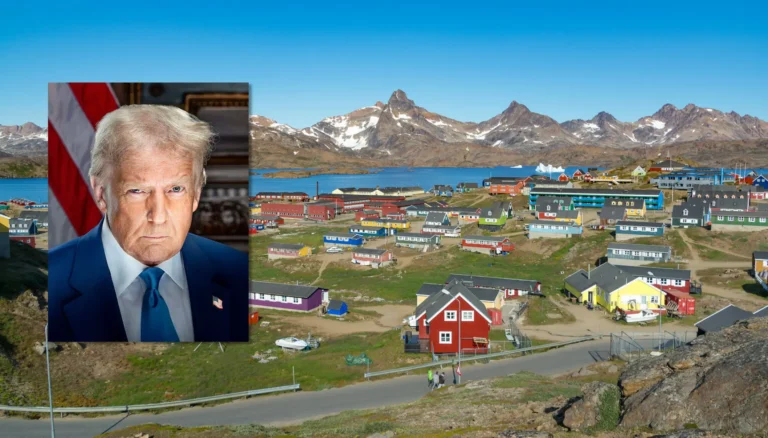
Greenland has once again stated that it is not for sale, following a comment by US President-elect Donald Trump that he wanted to take control of the territory. “Greenland belongs to the people of Greenland,” its prime minister said, the day after Trump repeated comments about the Arctic island that he first made several years ago.
In January, Donald Trump sent a message to Greenlanders on his social media platform, Truth Social, stating that it would benefit both the U.S. and Greenland if the Arctic island were to come under American ownership.
Greenland, an autonomous Danish territory, is home to a large US space facility and lies on the shortest route from North America to Europe.
Trump further stated that he would not rule out using military or economic force to make Greenland part of the United States. This has sparked an emerging foreign policy crisis for Denmark concerning the world’s largest island, although Donald Trump is not the first US president to suggest buying Greenland. The idea was first mooted during the 1860s under the presidency of Andrew Johnson.
Shy and reserved Greenlanders suddenly found themselves in the international spotlight as Donald Trump Jr jetted into Nuuk to lunch with the homeless, ahead of his father’s inauguration.
Greenland, an autonomous Danish territory, is home to a large US space facility and lies on the shortest route from North America to Europe, making it strategically important for the US.
March’s election saw the largest international press pack ever descend on Greenland. Weeks later, Vice President JD Vance dropped in to the US Pituffik Space Base, home to an early warning missile radar system, to deliver a snarky lecture to Denmark about neglecting Greenland’s security. (The irony of the shrinking US military presence in Greenland was lost on him. The base has 150 military personnel, down from 10,000 during the Cold War.)
Miriam Cullen, an associate professor with the Centre for European, Comparative, and Constitutional Legal Studies at the University of Copenhagen, calls the idea of Denmark being able to sell Greenland absurd. She explains that it would clearly violate both the Greenland Self-Government Act and international law for Denmark to hand over Greenland to the U.S. in exchange for money.
“You cannot sell Greenland, where people live, work, and have self-government. The Self-Government Act makes it very clear that the people of Greenland must make any decision about Greenland’s independence,” Denmark’s Prime Minister Mette Frederiksen says. Whether Greenland remains part of Denmark or becomes independent is ultimately a decision for the people of Greenland.
Shy and reserved Greenlanders suddenly found themselves in the international spotlight as Donald Trump Jr jetted into Nuuk to lunch with the homeless, ahead of his father’s inauguration. Photo: YouTube
Foreign Minister Wang Yi told his Danish counterpart at a press conference in Beijing on May 13 that China fully respects Denmark’s sovereignty and territorial integrity on the Greenland issue.
Greenland has once again stated that it is not for sale, following a comment by US President Donald Trump that he wanted to take control of the territory. Photo: YouTube.
Greenlanders also have the right to decide if they want to join another country, says Frederik Harhoff, professor emeritus at the University of Southern Denmark and an expert on the Danish Commonwealth. But first, they would need to separate from Denmark.
The United States already has something close to “full military sovereignty over Greenland”. This is in part thanks to the exploits of a rogue Danish envoy to Washington during World War II (depicted in the 2020 film The Good Traitor).
Greenland is not for Sale, Mr. Trump, Tor Kjolberg reporting.
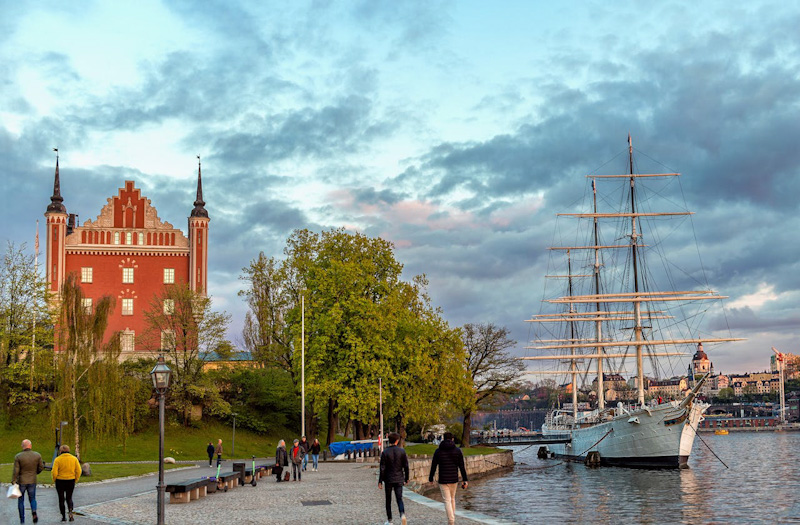
Living as an expat in Stockholm offers both excitement and adjustment. Sweden’s capital blends modern design, efficient systems, and natural beauty. For newcomers, the city feels safe, organized, and forward-thinking.In this article, you can learn more about what it’s like living as an expat in Stockholm.
Work opportunities attract professionals, while cultural traditions add depth to everyday life. However, settling in means adapting to new routines and expectations. From housing challenges to building a social circle, expat life brings unique rewards and lessons. This guide explores what daily living truly feels like.
Stockholm’s First Impression for Expats
Arriving in Stockholm, many expats immediately notice the city’s balance between order and creativity. Streets are clean, transportation is smooth, and people value structure in their daily lives. The city combines natural landscapes with urban bustle, creating a unique environment where forests and lakes sit alongside offices and cafés.
This mix surprises newcomers who expect a cold, distant atmosphere but find warmth in design, culture, and outdoor life. Architecture blends historic charm with modern minimalism, offering a strong visual appeal. Though locals may appear reserved at first, they are often kind and helpful once approached, leaving expats with a positive initial impression.
Living as an expat in Stockholm is a unique experience. Photo: Pexels/Vicente Viana Martinez
Finding a Home in Stockholm
Securing housing in Stockholm is often the first hurdle for newcomers. Demand is high, and rental apartments are in short supply, making early planning crucial. Many expats rely on short-term rentals before securing a more permanent arrangement. Popular areas include Södermalm, known for its creative vibe, Vasastan, with its quiet streets, and Kungsholmen, offering waterfront living.
Living as an expat in Stockholm can feel challenging during the search, especially with long waiting lists for rent-controlled flats. Still, furnished sublets and company housing make the process easier. Understanding rental rules, deposit expectations, and contract details helps avoid setbacks. With patience and research, finding a suitable home becomes manageable.
Work Life and Career Opportunities
Stockholm offers strong career opportunities, especially in technology, design, finance, and green industries. Many companies use English at the workplace, which eases the transition for foreign professionals. Swedish work culture emphasizes balance, equality, and respect for personal time. Meetings are often direct, and hierarchies are flat, encouraging open discussion.
Generous perks, such as paid parental leave, flexible hours, and extended vacations, make employment highly appealing. Punctuality is highly valued, and teamwork plays a central role in most jobs. While competition for roles can be intense, motivated expats find rewarding opportunities. Networking events and industry meetups help newcomers establish critical professional contacts.
The Challenges of International Moves
Relocating to Stockholm is exciting, but it also brings unavoidable challenges. Paperwork, visas, and residence permits require careful preparation and meticulous attention to detail. Many expats struggle with the strict processes around registration, banking, and healthcare access. However, with reliable support, newcomers avoid many common mistakes.
To alleviate this stress, it is helpful to understand the qualities of a trusted international moving company. It is essential to choose the proper assistance for shipping belongings, organizing customs, and planning arrival. Without guidance, the experience can feel overwhelming. However, once the essentials are in place, expats can focus on enjoying their new city and establishing a daily routine.
Organizing a smooth move is essential for a good start. Photo: Mart Production/Pexels
Daily Life and Transportation
Stockholm makes daily living convenient thanks to its reliable and efficient public transport. The SL system covers metro lines, buses, trams, and ferries, allowing easy movement across the city. Cycling is also popular, with safe bike lanes and accessible routes. Winters, however, bring shorter days and colder conditions.
Many expats need time to adjust to Swedish weather, especially when learning to navigate icy sidewalks and long periods of darkness. Despite this, locals embrace outdoor activities year-round, from skiing in winter to swimming in summer. Weekend trips to nearby islands or forests also offer peaceful escapes and add variety to daily routines.
Cost of Living in Stockholm
Living in Stockholm can feel expensive, especially for housing and dining out. Rent consumes a significant portion of many expats’ budgets, while dining at restaurants and cafes is also costly. However, healthcare, education, and childcare are publicly supported, easing some financial pressure. Groceries are priced higher than in many European countries; however, affordable options are available in larger supermarkets and discount chains.
Public transportation is often more cost-effective than owning a car. Careful planning helps expats strike a balance between spending and saving. Cooking at home, shopping at second-hand stores, and taking advantage of free outdoor activities make daily expenses more manageable while still enjoying what the city has to offer.
The city boasts beautiful nature, providing opportunities for numerous outdoor activities. Photo: Jonathan Petersson/Pexels
Building a Social Life
Making friends in a new country can take time, but Stockholm offers many opportunities. Living as an expat in Stockholm becomes easier when you join communities and attend social events. Locals may seem reserved, but once connections form, relationships are strong and lasting. Fika, the Swedish coffee break, often opens doors to conversations and friendships.
To meet people and feel included, expats can explore:
Expat clubs and cultural associations
Networking events for professionals
Language exchange meetups
Sports groups and hobby classes
Online communities for international residents.
Family and Education for Expats
Stockholm is often described as a family-friendly city, offering safe neighborhoods, clean parks, and strong community values. Schools include both international and bilingual options, making it easier for children to adapt. Healthcare and childcare services are reliable, accessible, and supported by public funding. Sweden is among the best countries for raising kids, thanks to generous parental leave and supportive policies.
Families benefit from affordable extracurricular programs, sports clubs, and outdoor activities year-round. With an emphasis on equality, children grow up in an environment that encourages independence. For expat parents, this combination of safety, education, and support makes family life in Stockholm a rewarding experience.
Culture, Food, and Entertainment
Stockholm offers a rich cultural life that appeals to both locals and expats. Museums, theaters, and music venues showcase history, innovation, and creativity. Seasonal traditions, such as Midsummer and Lucia, give newcomers insight into Swedish heritage. Food plays a central role in daily life, with classics such as meatballs, pickled herring, and cinnamon buns enjoyed during fika. International cuisine is also readily available, reflecting the city’s diverse population.
Entertainment ranges from lively festivals to a dynamic nightlife, especially in Södermalm and Östermalm. Outdoor concerts and markets add to the atmosphere. With so many choices, expats can enjoy both Swedish culture and global influences.
From Challenges to Rewards: Life in Sweden’s Capital
Living as an expat in Stockholm presents both challenges and numerous rewards. From housing and careers to culture and family life, the city offers growth and connection. With patience, preparation, and an open mind, expats discover a place that feels both practical and inspiring for long-term living.
What It’s Like Living as an Expat in Stockholm, written for Daily Scandinavian by Rachel Nichols. Rachel is a travel writer and cultural enthusiast with a passion for exploring life abroad. Having lived in several European cities, she shares practical insights for expats adjusting to new environments. Her writing focuses on daily life, culture, and personal growth through international experiences.
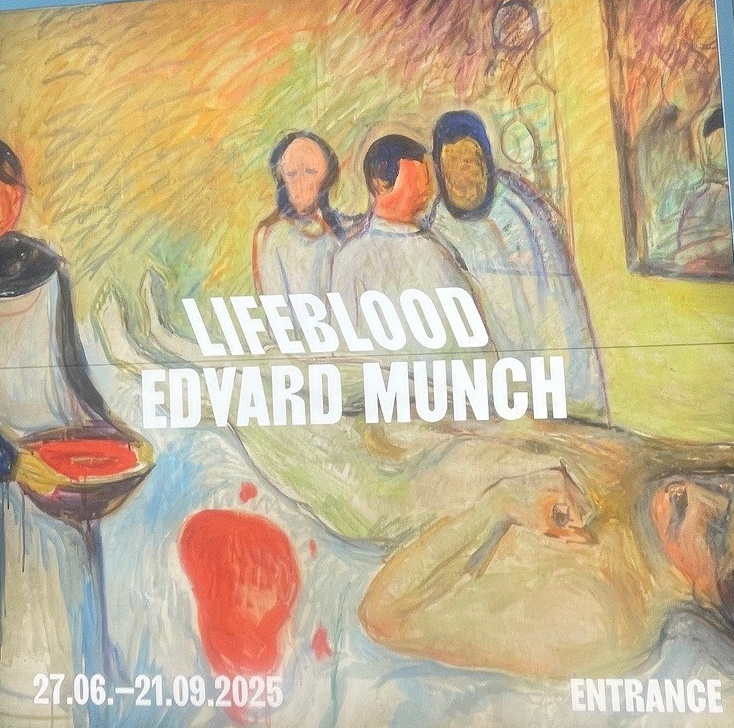
“Lifeblood” is a profound and thought-provoking exhibition that connects Edvard Munch’s artistic universe to the evolution of medical practice, inviting the public to reflect on the body, care, and health from both historical and personal perspectives. This is a unique Munch exhibition that focuses on health and medical advances.
The exhibition at the Munch Museum in Oslo offers a unique perspective by placing Munch’s art—featuring themes such as illness, death, and vulnerability—in direct dialogue with historical medical objects, including respirators and other medical equipment. The illnesses experienced by Munch and his family are central themes in the paintings selected for this context. His mother died of tuberculosis at the age of 31 when Munch was a child. He himself suffered from various illnesses throughout his life, including the Spanish flu in 1919.
Curator, Profesor Allison Morehead, attending the opening. Photo: Anne Marit Muri.
“Illness followed me throughout my childhood and youth – the tuberculosis bacillus planted its blood-red flag so victoriously on the white handkerchief… One Christmas Eve, I lie there, 13 years old – and the blood pours from my mouth – the fever raged in my veins – fear screamed within me.”
Curator Dr. Allison Morehead. Photo: Munch
The quote above appears in the Lifeblood catalogue, published in connection with the exhibition. It features contributions from 27 writers from various disciplines, offering insights into Munch’s relationship with the body and illness, and showing how profoundly he was affected by sickness from an early age.
From the exhibition. Photo: Tove Kravik/Munch Museum.
Munch considered his illnesses as pets—he nurtured all his ailments like cherished creatures, explains curator Allison Morehead during the exhibition’s press preview in July 2025.
Sick hild, by Edvard Munch. Photo: Børre Hostland/National Museum, Oslo.
For the first time, the public gains insight into Edvard Munch’s life, including his struggles with illness and his encounters with the modern medical system. His artworks are placed in direct conversation with historical medical objects such as infant incubators and vaccination certificates. This connection aims to shed light on our modern experiences of health, disease, birth, death, and care. Munch’s art is powerful and visceral—it conveys the vulnerability of the human body and the healing promise of medicine.
When Edvard Munch was born in 1863, few people in Norway—or elsewhere—were born or died in hospitals. By the time he died in 1944, births and deaths in hospitals had become standard practice in many parts of the world.
rom exhibition Lifeblood. Photo Anne Marit Muri.
Visitors are invited to reflect on their own experiences of illness, disability, and health. The exhibition features items on loan from various institutions, including the Norwegian Museum of Science and Technology (Oslo), the Welcome Collection (London), the Deutsches Hygiene-Museum (Dresden), the Musée des Moulages (Paris), and others.
“Lifeblood” is a remarkable exhibition that merges medical history with Munch’s art. It deeply touches viewers by highlighting vulnerability, human care, and medical progress through an artistic lens.
Facts:
Lifeblood opened on June 27, 2025, and ran through September 21, 2025. The exhibition included 150 works by Munch and 150 historical medical objects loaned from collections in Norway, Denmark, France, Germany, and the UK.
Works from the MUNCH collection depict hospitals, asylums, sanatoriums, doctors, patients, and nurses. Among the featured works are the original version of The Sick Child (1885–1886), Munch’s monumental Self-Portrait with the Spanish Flu (1919), and his atmospheric Night in Saint-Cloud (1890).
The exhibition “Lifeblood – Edvard Munch“ (English title: Lifeblood) is curated by Allison Morehead, professor of art history and cultural studies at Queen’s University in Kingston, Canada, who also leads the exhibition’s research theme. She initiated the exhibition with a focus on Munch’s health and medical developments. Art historian Signe Marie Endresen, who earned her PhD from the University of Oslo in 2015, collaborated with Morehead through MUNCH to bring the exhibition to life.
A catalogue titled “Lifeblood,” published in connection with the exhibition, is a hardcover book in Norwegian, edited by Heidi Bale Amundsen, and published by MUNCH Publishing. Released on July 10, 2025, it includes texts by curator Allison Morehead and a wide range of contributors—27 in total—including art and medical historians, healthcare professionals, activists, artists, and authors—who reflect on the themes of the body, health, and care through Munch’s artworks and related medical objects.
Anne Marit Muri
Unique Munch Exhibition – Focus on Health and Medical Advances, written exclusively for Daily Scandinavian by Anne Marit Muri. Muri is a former editor of, among others, Magasinet Kunst, and has written reports on art and culture for several years.
She is the author and initiator of the book Kunstnerliv, Portraits of 19 Contemporary Artists, which was published in 2018 and voted the year’s most beautiful art book in 2019 by Grafill. She is also the author of the book, Det gåtefulle lyset, Svalbard, which was published in autumn 2022 by the publisher Utenfor Allfarvei in Harstad.
Muri is educated at the University of Oslo and the University of Bergen. She is currently pursuing a master’s degree in media development at Oslo Met, in addition to developing new book projects, and is a writer for several magazines. She is a regular contributor to Daily Scandinavian, writing about fine arts, culture, and lifestyle.
Editor’s remarks: Unfortunately, this article has been published after its closing date due to technical problems.
KONE lift engineering focuses on designing, manufacturing, installing, and maintaining innovative and eco-efficient elevators, escalators, and automatic doors to improve urban life and building flow. Now, Finland’s top lift maker is elevating.
Kone has been making people’s journeys safe and seamless since 1910. Over the years, KONE has consistently demonstrated its ability to adapt to the challenges of a rapidly changing world. Its offerings have ranged from industrial cranes to emergency room patient monitors, ice-skate blades, and nylon socks. But the elevator and escalator business has always been its primary focus.
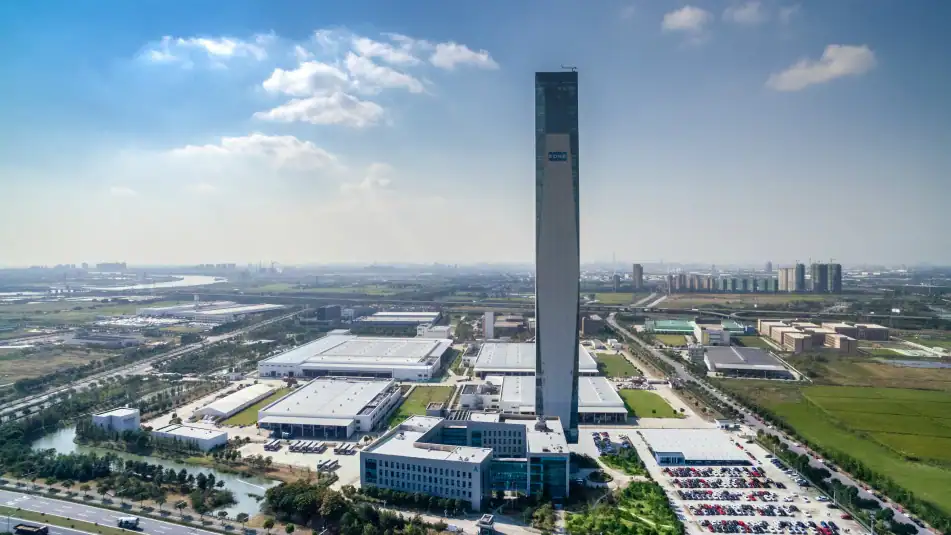
Kunshan test tower in China is the Asian twin of KONE’s high-rise laboratory in Finland. Towering 235 meters above land, this is where cutting-edge high-rise innovations undergo rigorous testing.
Kone now operates in nearly 70 countries and employs over 60,000 staff. Its products move a staggering two billion people every day. The company leverages its extensive engineering expertise and advanced technology, including 3D design tools, IoT solutions, and AI-powered monitoring, to create connected, sustainable, and user-friendly people flow systems that meet the demands of modern urban environments. KONE also provides comprehensive technical data and design resources for elevator consultants and offers training programs to develop skilled lift engineers.
Breakthrough technologies, including the machine-room-less elevator and a superlight hoisting rope that enables elevator travel of up to 1 kilometer, have earned KONE a reputation as a global innovator.
KONE provides a suite of People Flow® solutions for The Node – a 130-meter-high, 32-storey office building in the Pasila neighborhood of Helsinki, Finland.
The increasing digitization of how buildings operate is Kone’s next frontier, and the firm is hoping to rise to the challenge. Its elevators now connect to the cloud and communicate in real-time with building systems, maintenance teams, and, increasingly, with users themselves, to help anticipate maintenance needs, shorten wait times, or even turn on the air-conditioning in your office as you enter the building.
KONE is a leader in elevator technology, holding over 3,000 patents. Engineering efforts prioritize energy efficiency and sustainability, creating solutions that contribute to smarter, greener cities.
Stable ownership by four generations of the Herlin family has created a strong and supportive environment for development, enabling KONE to continue responding to the people flow challenges of an increasingly urban future.
Kone now operates in nearly 70 countries and employs over 60,000 staff.
As cities become more vertical and digital, the way that people move within them is becoming increasingly important and complex. Kone’s answer is to build tools that are elegant, intuitive, and all but invincible. Its products seek to make movement feel seamless, whether you’re stepping into a metro station, navigating an airport, or returning home at the end of the day.
The core mission of KONE’s engineering is to enhance the flow of urban life, making cities more accessible and efficient for large and growing populations.
Finland’s Top Lift Maker is Elevating, Tor Kjolberg reporting.
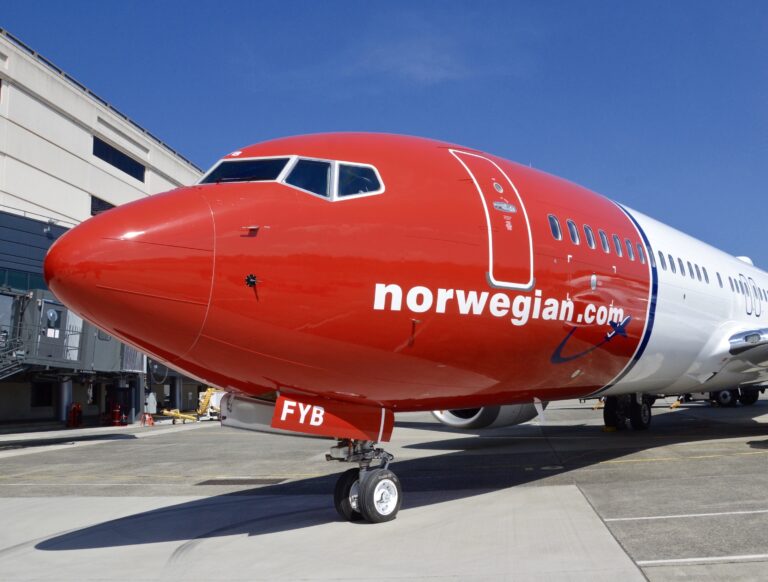
Norwegian Air Shuttle launches eight new routes from Norway, Sweden, and Denmark for the summer season 2026.
The new routes offer travelers even more opportunities to combine big-city culture and beach life during the summer season of 2026.
Direct flights will start from Oslo to Tangier in Morocco and Palermo in Sicily. Direct routes will open from Bergen to Riga, Latvia, and Palanga, Lithuania. In total, Norwegian will fly to over 120 destinations in the summer of 2026.
“For the summer of 2026, we are opening two new routes from Bergen and two from Oslo. We continually assess how to develop our route network and offer customers more attractive destinations. The route to Tangier is our third to Morocco, and comes in addition to the routes to Marrakech and Agadir, which have been popular especially in the winter months,” says Magnus Thome Maursund, Commercial Director at Norwegian.
Tangier offers an exciting mix of African, Arabic, and European cultures. Photo: Norwegian
Oslo – Tangier
Tangier offers an exciting mix of African, Arabic, and European cultures. Here you can wander through the lively medina with its markets and narrow streets, visit the historic kasbah, or enjoy the view over the Strait of Gibraltar. The city also boasts beautiful beaches and serves as a good starting point for day trips to the mountains or the famous blue town of Chefchaouen.
The route will be flown once a week, on Mondays, from June 22.
Palermo, in Sicily, offers a unique blend of Sicilian and Arabic culture. Photo: Wikipedia.
Oslo – Palermo
Palermo, in Sicily, offers a unique blend of Sicilian and Arabic culture. The city’s cathedrals, palaces, and markets provide a historical setting for the visit, while beaches and nearby mountains offer opportunities for sunbathing, swimming, and hiking.
The route will be flown on Wednesdays and Saturdays from June 20, 2026, in high season.
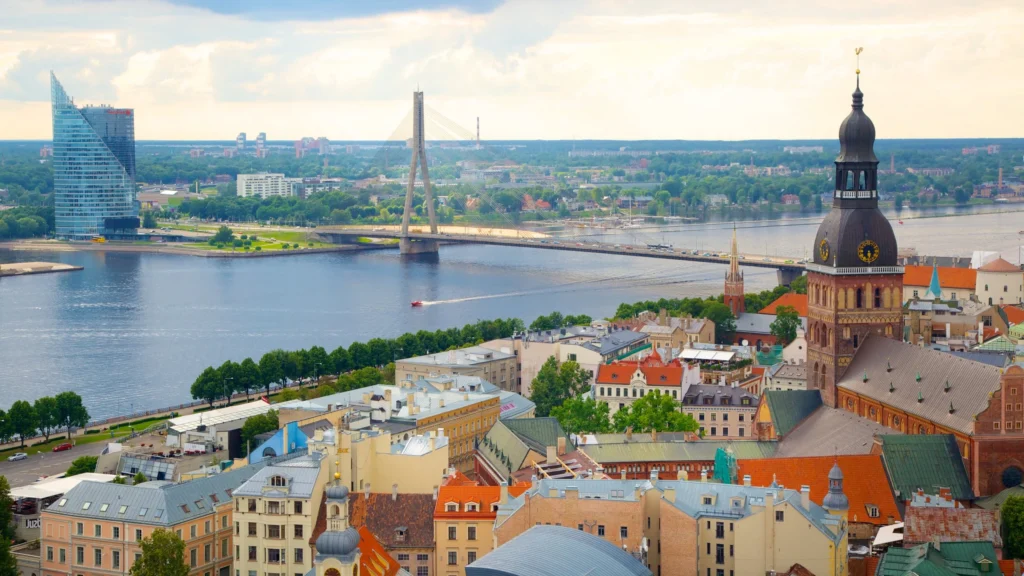
Riga is a popular metropolitan destination with a rich cultural offering, including the Riga Bourse art museum, a lively market, and a vibrant nightlife. Photo: Expedia.
Bergen – Riga
Riga is a popular metropolitan destination with a rich cultural offering, including the Riga Bourse art museum, a lively market, and a vibrant nightlife. The old town is a UNESCO World Heritage Site, and the city is known for offering great value for money in terms of both restaurants and hotels.
The route will be operated on Tuesdays and Saturdays from March 31, 2026, until the end of October.
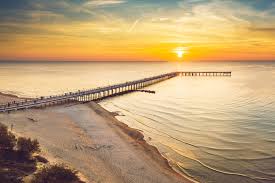
Palanga is Lithuania’s most famous seaside resort on the Baltic Sea. Photo: Lithuania Travel.
Bergen – Palanga
Palanga is Lithuania’s most famous seaside resort on the Baltic Sea, known for its lively atmosphere and summery vibe. Highlights include the botanical garden and the amber museum in the Tyszkiewicz Palace. The city offers a wide range of cafes, bars, an active nightlife, and several music festivals during the summer season.
The route will be operated on Tuesdays and Saturdays from March 31, 2026, until the end of October.
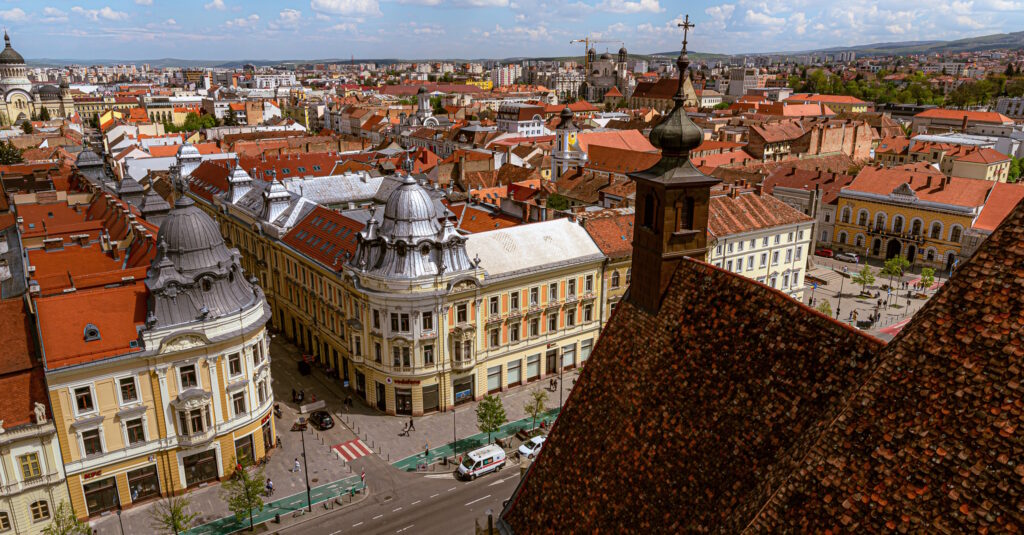
A new direct route will commence from Copenhagen to Cluj, Romania. Photo: Wikipedia.
Several new direct routes from the Nordics
In addition, Norwegian is opening three new routes from Sweden, between Arlanda and Milan Malpensa as well as Hamburg, and between Gothenburg and Tirana. From Denmark, a new direct route will commence from Copenhagen to Cluj, Romania.
Norwegian Air Shuttle Launches New Routes for the Summer Season 2026, a press release from Norwegian.
It seemed like an eccentric choice when members of the Carlsson family in southwest Sweden planted an organic vineyard in rural Sweden.
In 1946, the Carlsson family took over a small farm at Ästad, Halland, which featured a variety of crops and animals. In 1985, it was time for their son Rolf, together with his wife Ann-Catrine, to inherit the premises. Unfortunately, the profitability of small-scale agriculture had begun to decline at this time, making farming a challenging endeavor.
Ästad Vineyard and its Sinnenas Spa are located about half an hour inland from Varberg. It is a truly rural location, where there is not much else but forest, meadows, and a few farms. This part of the country has become a highly popular destination in recent years, featuring a winery, hotel, spa, and two restaurants. The finer of these, restaurant Äng, has been awarded a star in the Michelin Guide.
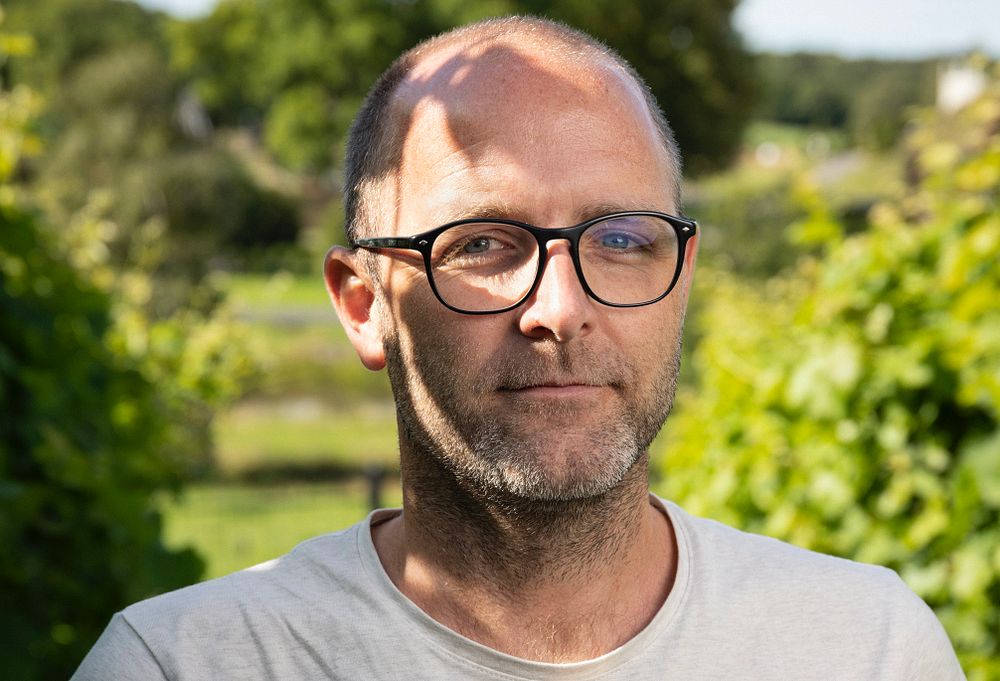
“This is the kind of place that I love to visit when I’m travelling,” says Daniel, CEO and partner. “I wanted to build that right here in my family home.”
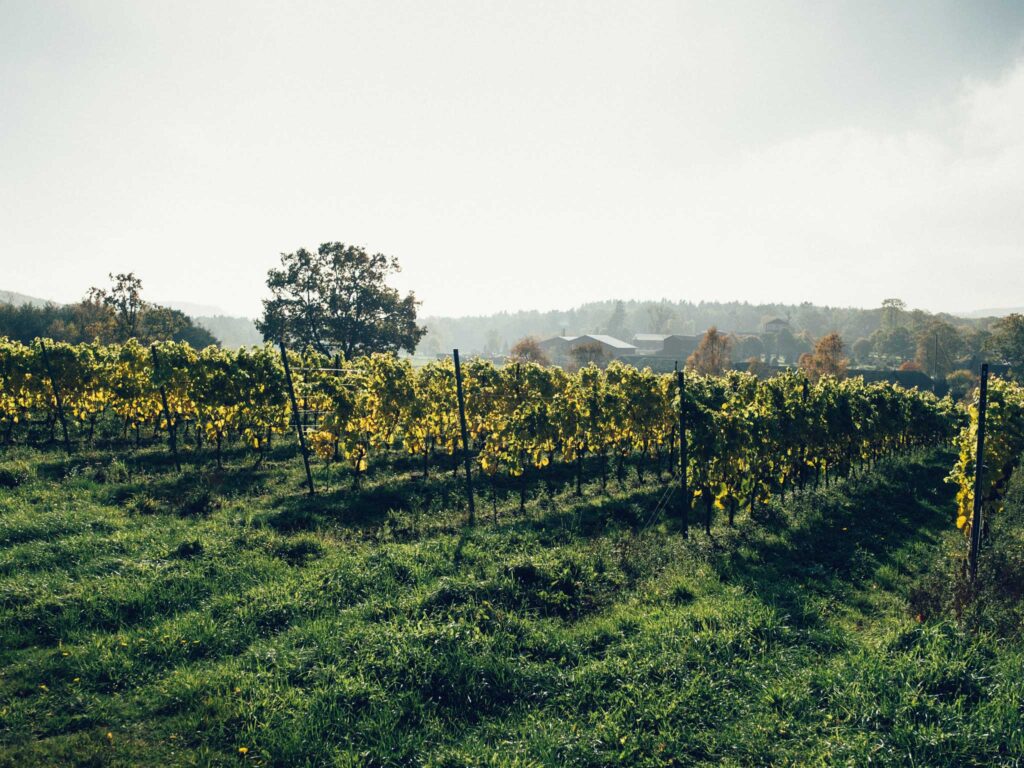
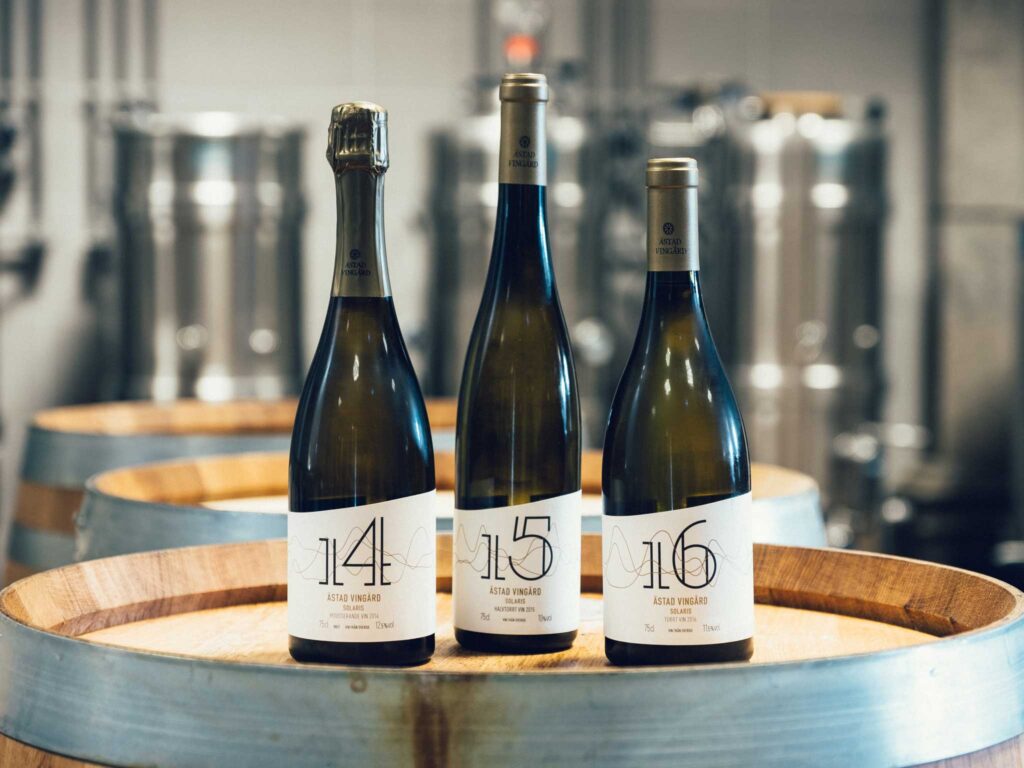
After working on the farm since childhood, the grandchildren Linda, Mattias, and Daniel took over Ästad Gård in 2010. Soon after that, Ästad returned to its roots as a place for agriculture once again. However, it has since been proven that grandson Daniel Carlsson was right when he acted on his dream of creating something unexpected in the countryside of southwest Sweden. About 30,000 vines of the Solaris grape are now grown on the premises.
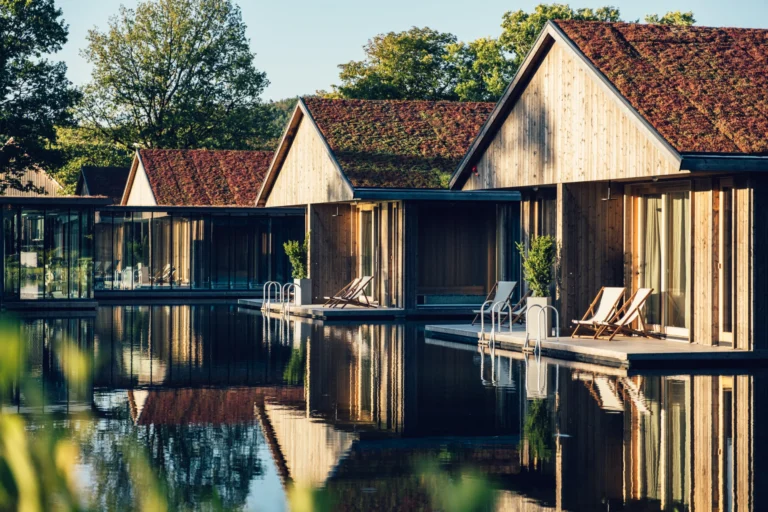
The Carlsson family tapped Copenhagen’s Norm Architects to design their hotel, Sjöparken.
We have made two visits to Ästad Vingård. One in a simpler room with a simpler dinner package, and the other in a superior room with a sauna and dinner at the Äng restaurant. The Sinnenas spa is truly an experience beyond the ordinary. It is likely one of the best spas to visit in Sweden.
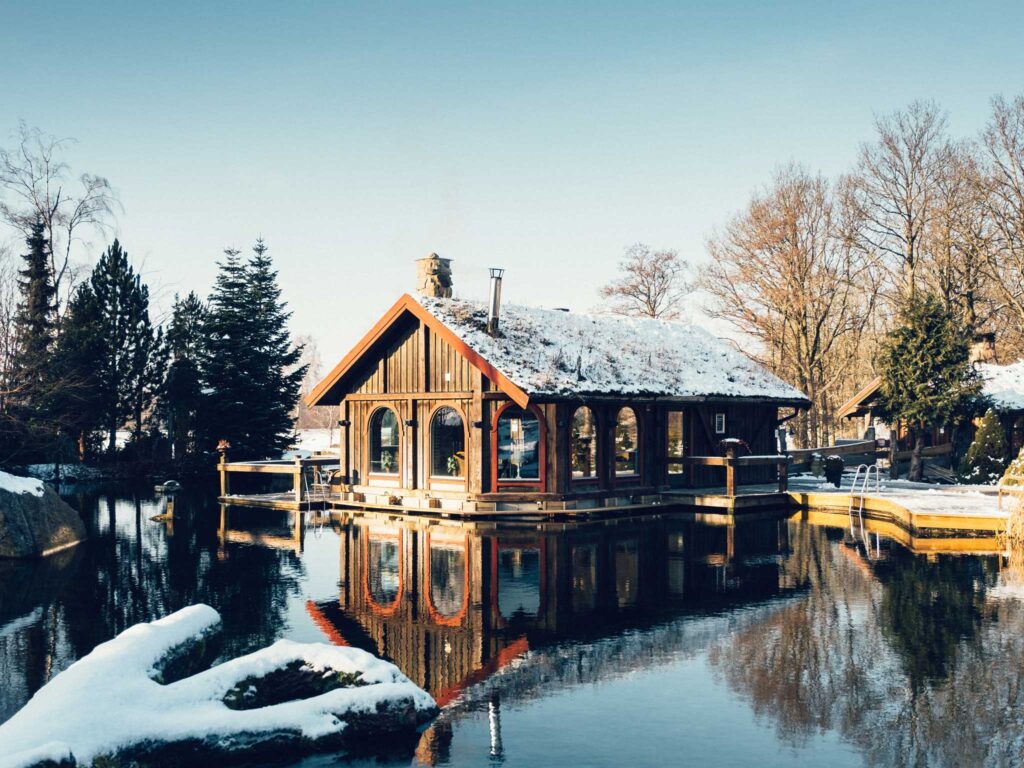
Ästad Vineyard in winter.
With his siblings Linda and Mattias, Daniel has transformed his grandparents’ organic milk farm (which was among the first in the country) into Ästad Vingård, a spa and hotel with an organic certified vineyard and a Michelin-starred restaurant.
“We also have about a hundred vines of Chardonnay and Pinot Noir. We are convinced that Solaris excels as a sparkling wine, and therefore, every step is tailored to create the best sparkling wine possible. The cultivation is organic, and our wines are sold only at Ästad Vingård,” says Daniel.
“We also have about a hundred vines of Chardonnay and Pinot Noir,” says Daniel.
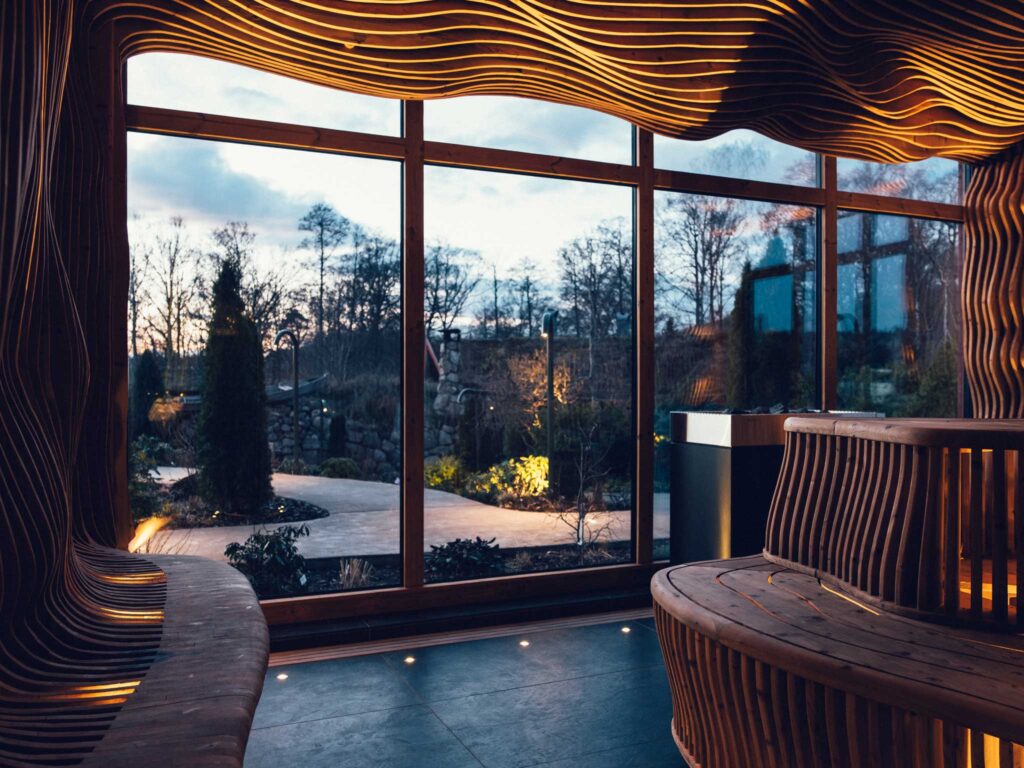
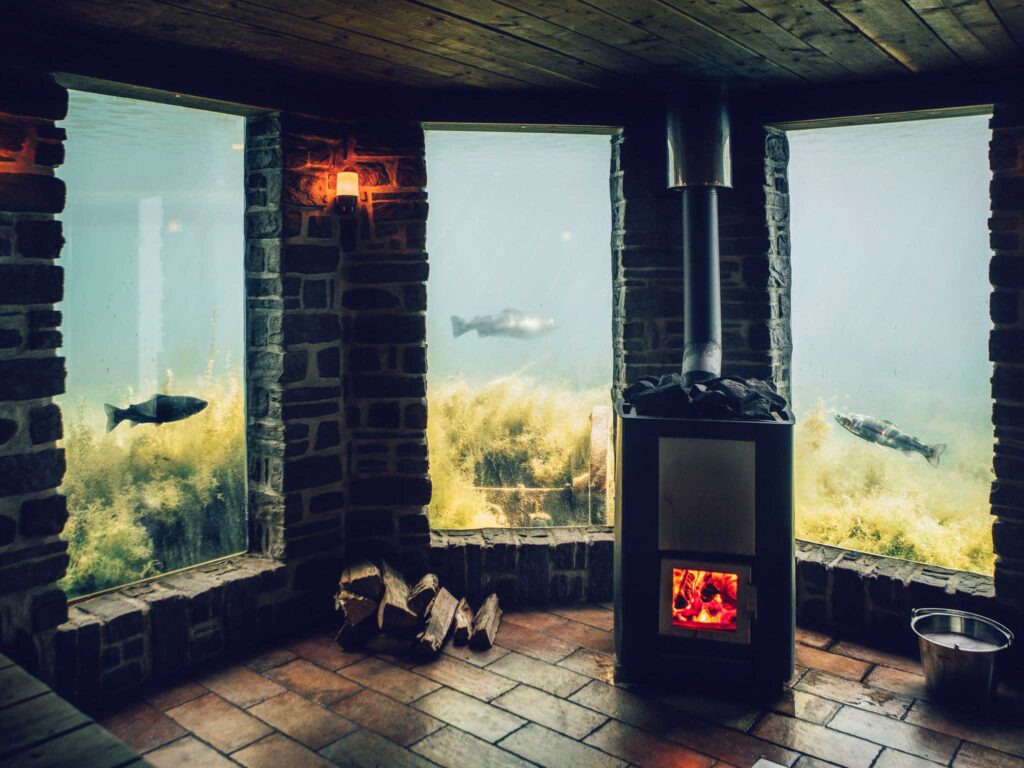
The best part of the experience at Sinnenas Spa is undoubtedly the outdoor sauna environment. This opportunity is only available until 6:00 PM, so please ensure you check in on time to participate in the experience. There is, for example, an underwater sauna, a sauna in a rapids, and several opportunities to take a cold bath in the various ponds. Compared to all other spas in Sweden, Ästad Vingård offers no equivalent outdoor experience, making it a great reason to visit.
Wine-tasting at Ästad Vineyard
“This is the kind of place that I love to visit when I’m travelling,” says Daniel. “I wanted to build that right here in my family home.”
The spa is a place for relaxation and new impressions. “We went to the neighboring nature reserve Åkulla Bokskogar, located around the vineyard, and brought home some nature. Authentic sounds have been recorded in the forests, and the unique scents, created together with fragrance experts, are inspired by nature reserves.”
From Sirenas Spa.
The experience showers at Sinnenas Spa are also a very valuable experience. You lie down on your stomach and then choose between four different treatments, where water of varying temperatures and intensities sprays over your body. It is akin to a form of massage or tactile stimulation that is soothing and encourages continued use. Our last visit to Ästad included at least five times in the experience shower.
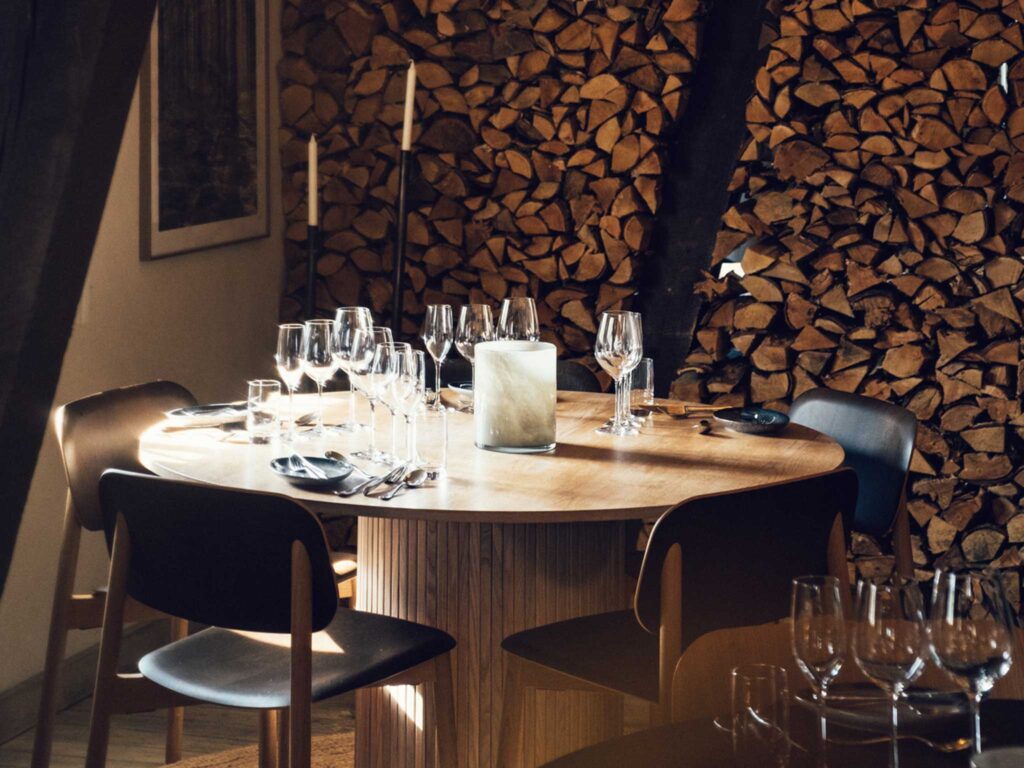
The Carlsson family tapped Copenhagen’s Norm Architects to design their hotel, Sjöparken, and Äng restaurant, both of which are understatedly Scandinavian delights. They planted their first grapes in 2011 and only reaped a good harvest seven years later.
“There are three restaurants at Ästad Vingård—the Smakbaren at Sinnenas Spa, Restaurant Logen, and our creative Restaurant ÄNG. We strive to always work with local ingredients and flavors from the region.”
It’s hard to find anything but less great about Sinnenas Spa. If you really try, the decor is not our favorite style. It has a distinctly French farmhouse feel, which we don’t think really aligns with the spa concept. On top of that, it’s a spa with a bar, and some people can definitely get over-invigorated when sitting at the bar with a few too many units of bubbly.
“We live in hectic times,” says Daniel. “It felt special to work on something that can’t be rushed.”
Fine dining at Restaurant Logen.
Ästad Vingård is a Nordic Eco-labelled destination (the Svanen label). “Our vineyard cultivation is organic. Restaurant ÄNG (and its vegetable cultivation) holds a two-star KRAV label. The KRAV label signifies food produced without artificial chemical pesticides, ensuring good animal welfare, a reduced climate impact, increased biodiversity, and improved working conditions. We only buy green electricity. If you drive an electric vehicle, you can charge it at our charging stations.”
Sinnenas Spa is a complete spa experience that you really must visit at least once if you are interested in spas in Sweden. We thoroughly recommend the experience.
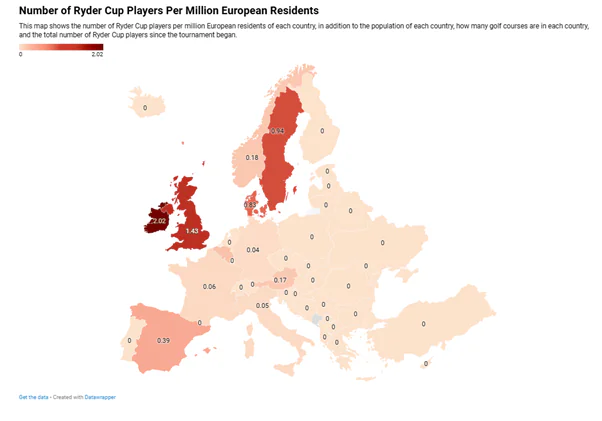
As the 45th Ryder Cup tees off in New York, the spotlight is not just on the players but also on where they come from. Stewart Golf has analyzed the birthplaces of every Ryder Cup player, comparing them with population and golf course numbers, to uncover which regions punch above their weight. Read on and learn more about Sweden’s Ryder Cup pedigree.
While giants like the United Kingdom and the United States dominate the raw totals, Sweden has emerged as one of Europe’s most efficient producers of Ryder Cup stars.
Sweden has produced 10 Ryder Cup players, an impressive figure given its population of just over 10 million and 653 golf courses.
Sweden has produced 10 Ryder Cup players, an impressive figure given its population of just over 10 million and 653 golf courses. This translates to 0.94 Ryder Cup players per million residents, placing Sweden inside the global top 10 for efficiency and ahead of many larger nations. By comparison, powerhouse states like California and Texas produce more players overall but fall behind on a per capita basis.
Robert S. Karlsson. Photo: Facebook.
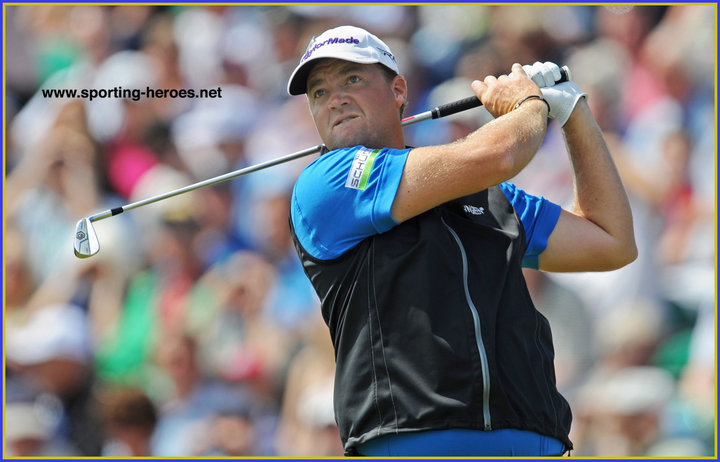
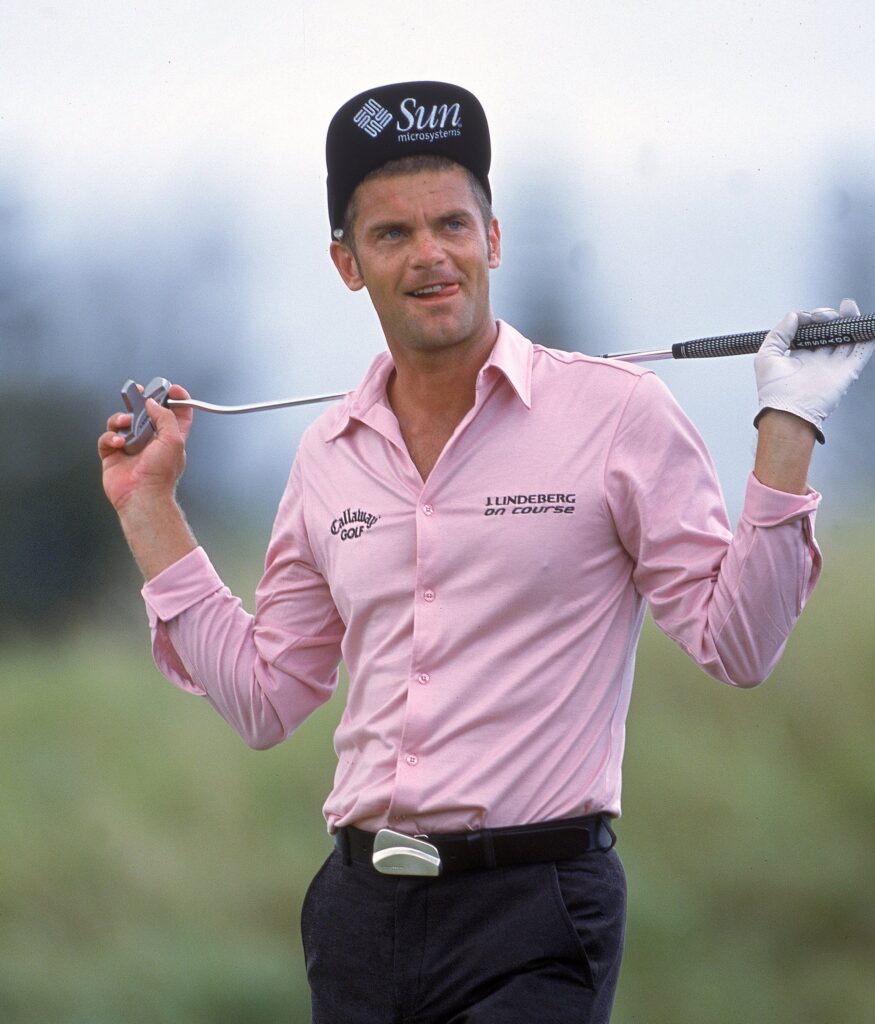
Notable names include Henrik Stenson, who memorably sank the winning putt at The K Club in 2006, and Jesper Parnevik, one of the most flamboyant and recognizable European players of the 1990s. Robert Karlsson and Peter Hanson have also been stalwarts of Team Europe, proving that Sweden consistently delivers talent capable of performing on golf’s biggest stage.
Punching above its weight
Sweden’s ratio of players to population places it ahead of countries such as Denmark (0.83 players per million, with a total of five players) and even central US states like Texas (0.75 players per million, with a total of 24 players) and California (0.71 players per million, with a total of 28 players). This efficiency highlights the remarkable strength of Sweden’s golfing infrastructure relative to its size.
Per Hansson. Photo: George Herringshaw.
The country’s 653 golf courses provide a solid foundation, and with golf being one of Sweden’s most popular summer sports, participation rates are consistently high. This culture of accessibility and widespread interest in the game has created a pipeline of elite players far outstripping what might be expected from a nation of its size.
There are several reasons why Sweden continues to excel in producing Ryder Cup talent. First, the country has invested heavily in junior golf programs, with organizations like the Swedish Golf Federation nurturing talent from a young age. Second, Sweden’s golfers benefit from intense international competition, with many young players encouraged to test their skills abroad early in their careers.
Climate has also played a surprising role. With a short golfing season at home, Swedish players often spend winters training overseas, which exposes them to diverse playing conditions. This adaptability has proved invaluable in the Ryder Cup, where versatility and resilience are tested to the limit.
Jesper Parnevik. Photo: X
How Sweden compares with the giants
The United Kingdom remains the undisputed leader in Europe with 96 Ryder Cup players, while Ireland has the highest per capita rate at 2.02 players per million. Yet Sweden’s 10 players put it firmly in the second tier of European contributors, standing shoulder to shoulder with golfing nations that have longer traditions and larger populations.
Sweden’s ratio also places it ahead of golf-rich Germany, which, with more than 700 courses, has produced far fewer Ryder Cup representatives. This reinforces Sweden’s status as a model for how effective development structures can outperform raw population or infrastructure numbers.
Henrik Stenson
Looking to the future
With a proven track record and a system that continues to produce world-class players, Sweden is well-positioned to add to its Ryder Cup legacy. Rising talents nurtured at home and abroad could soon follow in the footsteps of Stenson and Parnevik, ensuring Sweden remains a key player in European golf’s collective strength.
Pride for Sweden
As Europe looks to defend its crown in New York, Swedish fans can take pride in the knowledge that their country has already punched well above its weight in Ryder Cup history. With 10 representatives to date and one of the best per capita records in the world, Sweden has proven that it does not need the size of California or the tradition of the UK to leave its mark on golf’s most fantastic team competition.
Sikandar Hayat
Sweden’s Ryder Cup pedigree, written for Daily Scandinavian by Sikandar Hayat. Sikandar is an SEO and digital marketing specialist with a strong focus on white-hat link building and content strategy. He helps founders, agencies, and brands expand their online presence through high-quality backlinks and authority-driven content, leveraging years of experience across multiple niches, including health and lifestyle, business, and technology. Sikandar is passionate about creating sustainable strategies that deliver real, measurable results.