Heading north from Malmö in southern Sweden, you arrive at four charming towns, Lund, Glumslöv, Helsingborg and Höganäs.
University town
Lund is a university town, with the towering cathedral, Domkyrkan at the center of the town, built circa 1090-1145. Don’t miss Kulturen (Cultural History Museum), an open-air museum with dozens of buildings, silver, textiles, ceramic and art. Along with the University of Uppsala, Lund is one of the two ancient Swedish universities.
Map of Southern SwedenLund is a university town, with the towering cathedral, Domkyrkan at the center of the town, built circa 1090-1145
Archeologists date the foundation of Lund to around 990, when Scania was part of Denmark. From 1103 it was the seat of the Catholic Metropolitan Archdiocese of Lund. Denmark ceded the city to Sweden in the Treaty of Roskilde in 1658, and its status as part of Sweden was formalized in 1720.
Memorable views in Glumslöv
About 30 km (19 miles) north, along the coast, Glumslöv offers memorable views. From the hill above the church, on a clear day you can see 30 churches and seven towns, including Copenhagen and Helsingør in Denmark.
About 30 km (19 miles) north, along the coast, Glumslöv offers memorable views
Gantofta til Glumslöv is a 18.3 kilometer point-to-point trail located near Gantofta, Skåne, Sweden that features beautiful wild flowers and is rated as moderate. The trail offers a number of activity options.
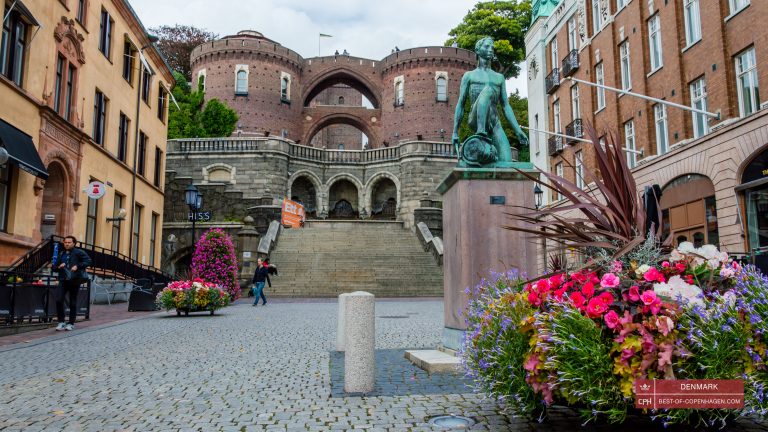
The streets in Helsingborg vary from wide avenues to small alley-ways.
Historical Helsingborg
Helsingborg, 60 km (37 miles) north of Malmö is an interesting town of cobbled streets, dominated by the ruined 600-year-old fortress Kärnan. The streets vary from wide avenues to small alley-ways. Kullagatan, the main pedestrian shopping street in the city, was the first pedestrian shopping street in Sweden.
More than 70 ferries to Helsingør in Denmark leave from its busy harbor.
Following the Swedish orthography reform of 1906 the spelling of many place names in Sweden was modernized. In 1912 it was decided to use the form Hälsingborg. In preparation for the local government reform in 1971, Hälsingborg city council proposed that the new, enlarged municipality should be spelled Helsingborg.
From Höganäs habour
The ceramics town
Höganäs, 20 km (12 miles) north is nationally known for its ceramics industry and artists. The large pottery, Höganäs Keramik, merits a visit. Höganäs AB is one of the world’s biggest iron powder manufacturer with subsidiaries around the world. The company was founded by Count Eric Ruuth in 1797 which makes it one of Sweden’s oldest companies.
Höganäs began as a small fishing village in the parish of Väsby, documented in 1488 in the written form Høyenæss. In the middle of the 17th century it had 17 homes. Coal was found in the area, and mining started in 1797. In 1798 a railway with wooden rails was built. It was the first of its kind in Sweden and was used to transport coal from the mine to the harbour.
The population started to grow and new dwellings were built for the miners. During the 19th century more industries were built using clay for making ceramic products. The coal mines were closed in the 1960s. In 1936, when Höganäs got the title of a city it had 6,915 inhabitants. Since 1971 Höganäs Municipality, encompassing the Kullaberg peninsula has totally around 24,000 inhabitants.
Feature image (on top): Road to Kärnan Tower in Helsingborg
Four Charming Towns in Southern Sweden, compiled by Tor Kjolberg
The tragedy on Utøya July 22, 2011 made us all both shaken and thoughtful. A pitiful figure, who, with his supernal delusions, fantasized about depriving an entire people of their freedom – with massive bombing and deadly machine guns. But there is still beam of light over Norway.
He was the only person who achieved the boundless freedom through inflicting so much fear, suffering, pain and sorrow in just minutes and hours.
“For me, as for everyone else, Utøya will forever be seen in a different light today than before July 22, 2011,” Terje Rakke
For me, as for everyone else, Utøya will forever be seen in a different light today than before July 22, 2011. The painful images I have on the retina are etched forever, but all that pain should not erase the most beautiful memories I have from Tyrifjord and Utøya. In a little while, the time will come to show us something else from this area than what a cold-blooded killer full of hatred and malice unfolded.
“As a photographer, I have for 25 years been attracted to the areas around Tyrifjord and Utøya,” Terje Rakke
As a photographer, I have for 25 years been attracted to the areas around Tyrifjord and Utøya. In my daily work I have had the opportunity to travel Norway throughout my adult life. In my eyes, there is almost nothing in Norway that can compare with this magnificent landscape area, perhaps especially in winter time.
“In my eyes, there is almost nothing in Norway that can compare with this magnificent landscape area of Tyrifjorden, perhaps especially in winter time,” Terje Rakke
Therefore, I will use my photographs from Tyrifjorden and Utøya to create something beautiful – a poetic representation in sound and image. Provide a small respite and a beam of light, tranquility and silence – in all its wintery grandeur and splendor.
“When the temperature creeps below 20 minus, I like to go here,” Terje Rakke
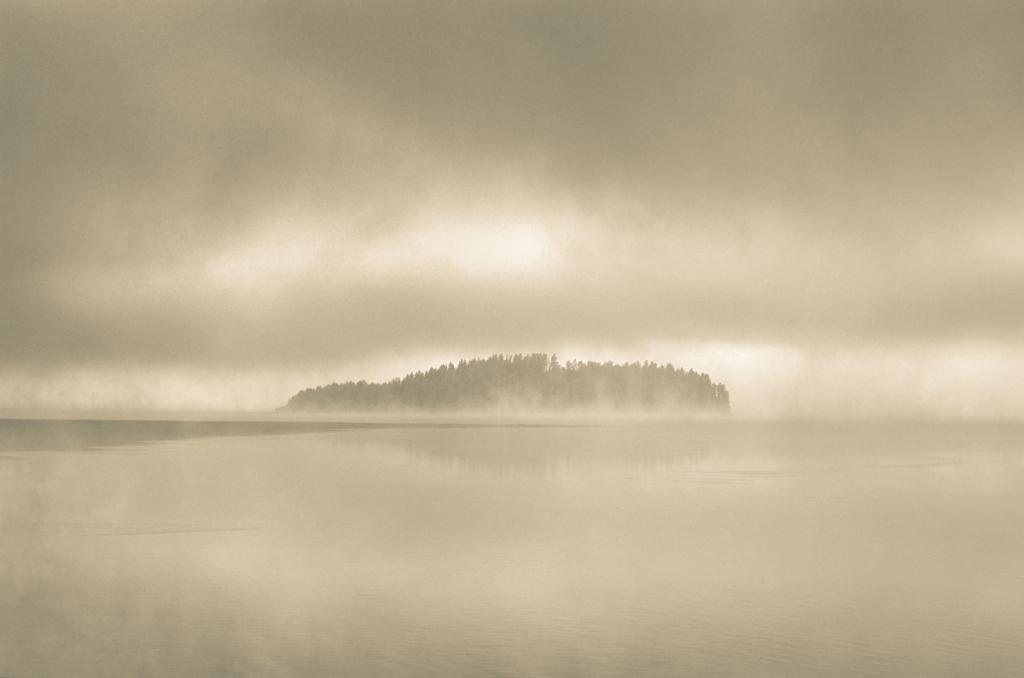
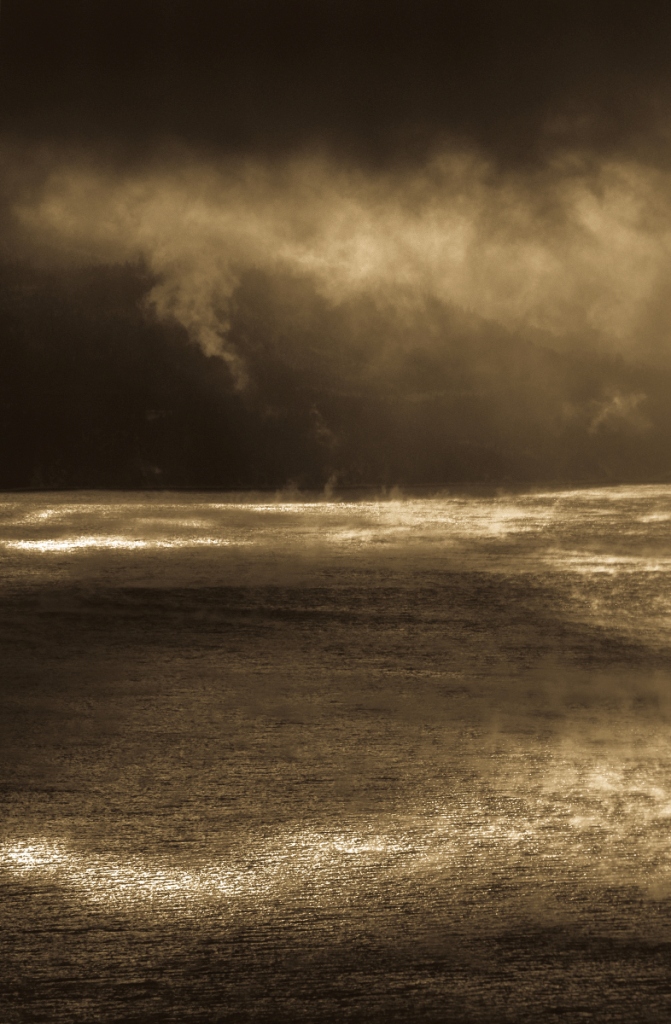
When the temperature creeps below 20 minus, I like to go here – to take in the wonderful surroundings and the special winter light that arises when the frosty smoke floats over the water.
And the snow – untouched by human hands.
WE WISH ALL OUR VISITORS A HAPPY NEW YEAR!
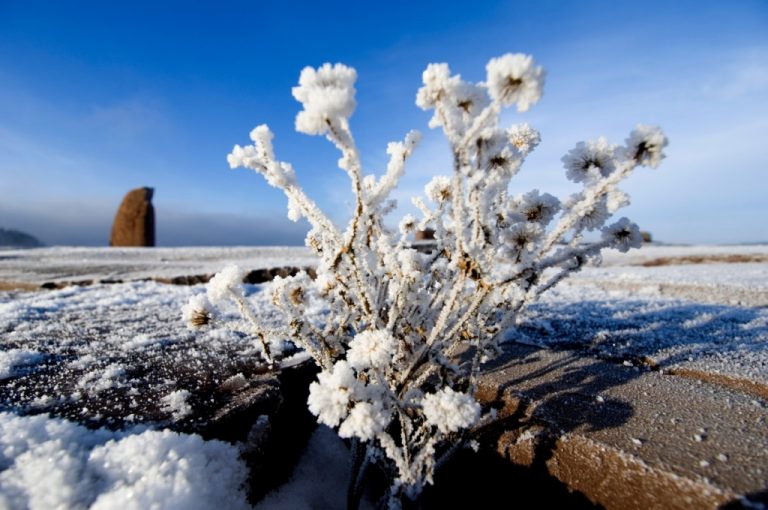
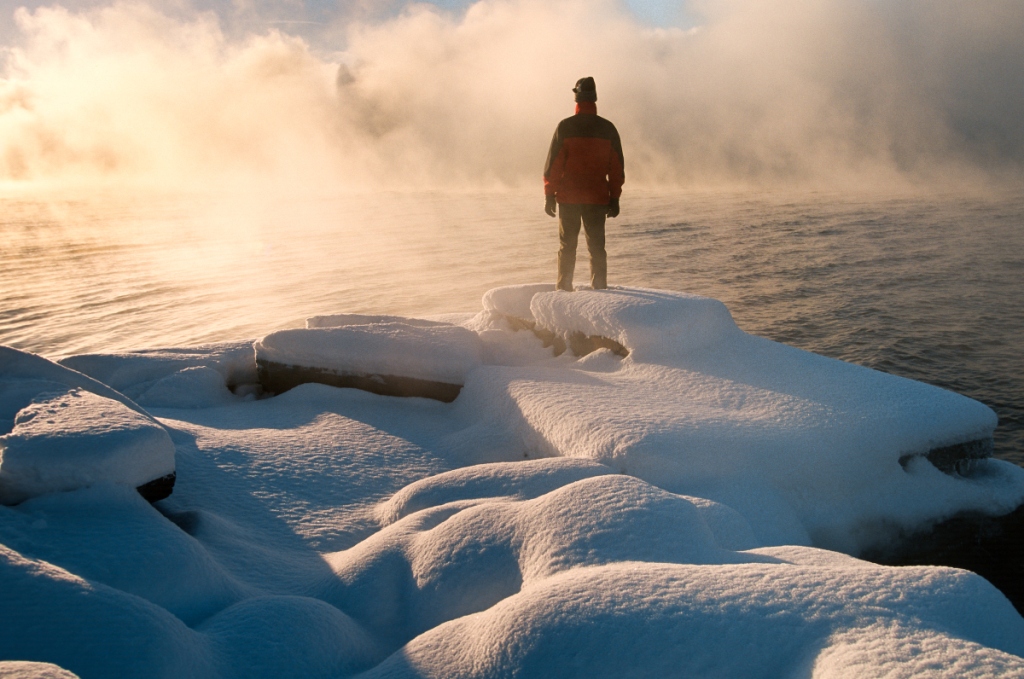
Feature image (on top): Snowbound plant near Utøya
All photos: Terje Rakke/Nordic Life
Beam of Light, written by Terje Rakke Nordic Life, translated into English by Tor Kjolberg
Norwegian Petter Stordalen (57) enjoys wearing expensive fashion clothes, rappelling down hotel facades, collecting art and investing in environmentally friendly companies. Last year, the assets and shares of his company Strawberry Holding Group were transferred to his three children although he still is in charge of the family business. Read the portrait of Scandinavia’s “King of Hotels”.
The Norwegian businessman and billionaire is a self-proclaimed environmentalist with an estimated net worth of USD 1,4 billion (according to Forbes) stemming from investments in hotels, shopping centers and property. The family owned company Strawberry Holding Group consists of ten companies in real estate, finance, hotels and art.
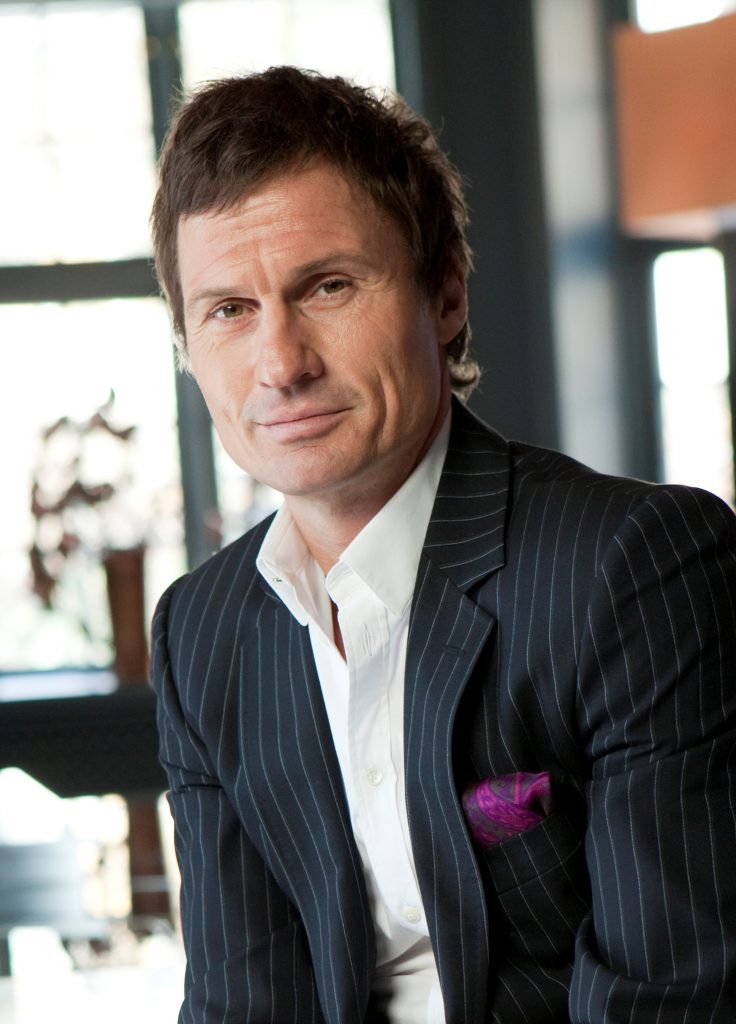
The Norwegian businessman and billionaire is a self-proclaimed environmentalist with an estimated net worth of USD 1,4 billion. Photo: Wikipedia
Nordic Choice Hotels
His hotel chain Nordic Choice Hotels with just under 200 hotels is the biggest hotel chain in Scandinavia. The Strawberry Hospitality Group consists of over 200 hotels employing about 17,000 people. Last month Stordalen bought 40% of the shares in the Scandinavian division of recently bankrupted Thomas Cook.
Petter Stordalen was born in Porsgrunn, Telemark, and since he was very little, he wanted to take over his father’s grocery shop. At age 12, he started to sell strawberries in his local market. That is the background for the name Strawberry Holding.
From Amerikalinjen Hotel, Oslo
Norway’s best strawberry salesman
On his corporate website Stordalen writes: “I often envied the other sellers who had larger and fresher berries than mine.” However, his father had advised him to “sell the berries he had because they were the only berries he could sell. “The strawberry philosophy is about taking what you have and making the best of it.”
In a local Porsgrunn paper he was named “Norway’s best strawberry salesman” in 1974.
However, Petter had bigger ambitions than working in his father’s grocery shop his whole life and left his hometown Porsgrunn in favor of Oslo. He recently bought hotel, Amerikalinjen in Oslo, which was named the 12th-best hotel in the world by the Condé Nast Traveler Reader’s Choice Awards.
In the early 90s, Stordalen served as the CEO of the historical department store Steen & Strøm, the largest holder of commercial estate in Norway
His first corporate assignment
In Oslo, Stordalen completed his degree at the Norwegian School of Marketing and his first corporate assignment was managing the City Syd shopping center in Trondheim, at age 24. After turning that shopping center into the largest in Norway, he made his first million.
In the early 90s, Stordalen served as the CEO of the historical department store Steen & Strøm, the largest holder of commercial estate in Norway. Together with a group of investors he bought the company. In 1996, however, there was a disagreement between him and the largest shareholder, and he was asked to step down.
In 1999, Stordalen aquired several Swedish and Danish hotels and at 37 he became a billionaire (in Norwegian kroner).
A wave of acquisitions
The purchase of Steen & Strøm signaled the start of a wave of acquisitions. In October same year, 1996, Stordalen teamed up with Norwegian investor, Christen Sveaas, and bought 68 percent in the Scandinavian operations of Choice Hotels, at the time consisting of eight hotels across Scandinavia.
In 1999, Stordalen aquired several Swedish and Danish hotels and at 37 he became a billionaire (in Norwegian kroner). In 2012 Stordalen opened his biggest hotel to date, the 500 room 40 000 square meter Clarion Post Hotel in Gothenburg, Sweden. Stordalen, known for being an adventurous, high-energy leader, dropped out of a helicopter attached to wires and walked down the facade of the building as if he was auditioning to be the next James Bond in front of 10 000 Gothenburgers who had gathered to watch the grand opening.
The Thief Hotel In January 2013, Stordalen opened a new hotel called The Thief, in the Tjuvholmen neighborhood in Oslo. Every one of the 119 rooms has unique original art from artists like Sir Peter Blake, Chris Gianakos and Tony Cragg.
The Thief has signed a sponsorship-deal with the neighboring Astrup Fearnley Museum of Modern Art that gives the hotel access to the museum’s vast art library. Under the agreement, The Thief can borrow some signal work for strategic locations in the hotel. Stordalen has world leading collections of artists like Jaume Plensa, Alex Katz and Franz West. He also owns some of Andy Warhol’s best interpretations of Norwegian artist Edvard Munch.
M/S Roald Amundsen
Shipowner Petter Stordalen
In October 2014, Petter Stordalen’s company Home Capital AS together with Norwegian investor Trygve Hegnar, bough a considerable part of the shares in Hurtigruten ASA, the coastal public route transporting passengers and cargo between ports from Bergen to Kirkenes. Today, Stordalen is the sixth-largest shareholder in Hurtigruten, which recently launched the world’s first hybrid cruise ship. The 450-passenger ship MS Roald Amundsen is currently taking leisure cruises to Antarctica, but is designed to cut emissions by 20% by running on a combination of low sulfur diesel fuel and battery packs.
Environment-friendly Petter Stordalen
On the Strawberry website, Stordalen writes that he will pursue investments that “contribute favorably to society, the environment, and the future of our children.”
Stordalen has pursued a number of philanthropic endeavors in recent years together with his newly divorced wife, doctor and environmentalist Gunhild. He has donated large amounts of money to various charitable organizations within environment/climate change and scientific research programs through the Stordalen Foundation, established in 2011.
In 2016, Stordalen was named the Brightest Business Mind in Northern Europe
Family Business
In recent years Petter Stordalen’s daughter Emilie has been involved in the family business. With a bachelor’s degree in hospitality from Cornell University in the USA and a master’s degree from Imperial College in London, she is currently a deputy manager at the Hub Hotel in Oslo which opened last year. The same year he transferred the assets and shares of Strawberry Holding to his three children Emilie (27), Henrik (24) and Jakob (21). Although he only holds 0.01 percent of the shares, Petter Stordalen is still in charge of the family business.
In 2017, Stordalen said to the Norwegian financial paper Finansavisen, “Today, I’m really grateful that they fired me. Without their resolute action, I would never have experienced the adventure that would be far greater … Nordic Choice Hotels.”
Portrait of Scandinavia’s «King of Hotels”, written by Tor Kjolberg
Besides Norway, only Russia had a permanent population and industrial operations onthis archipelago up north covered by ice. The name Svalbard means “cold coast”, and the first written mention of the archipelago appears in 12th century Icelandic writing. This is a homage to Svalbard.
Dutchman Willem Barents rediscovered the islands in 1596 and the sea around the archipelago was named after him. Various European nations hunted around the islands for 250 years, and vast coal reserves were discovered there in the mid-1800s. Mining started and with the battle over sovereignty in 1925, it was agreed that Norway should administer the area.
The group of islands represents Europe’s northernmost point at just over 80 degrees north. Photo: Thon hotels
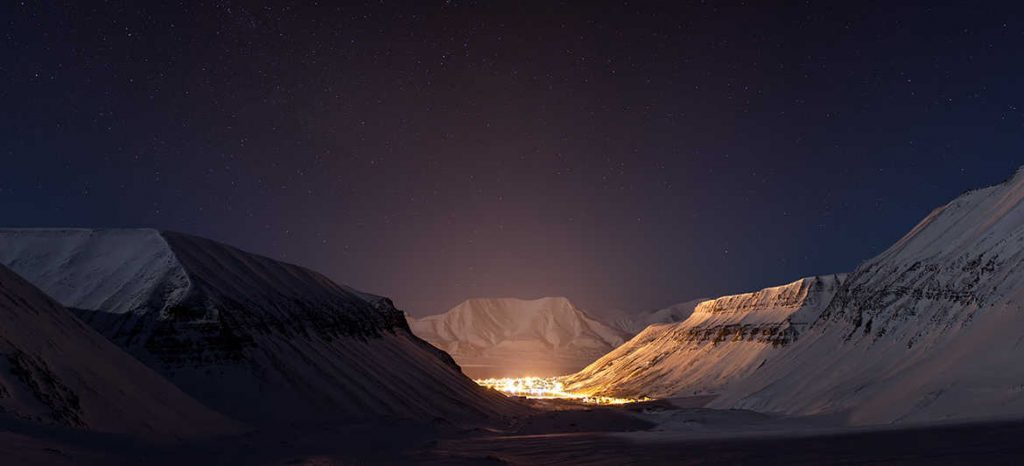
Majestic mountains and dramatic glaciers On 80 degrees north without any daylight in the dark season the high Arctic and the taste of Svalbard attracts people from all over the world. The group of islands stretches from Bjørnøya in the south to Rossøya in the north and represents Europe’s northernmost point at just over 80 degrees north. The liveliest and most populated town in the Svalbard Islands has just over 2,000 inhabitants.
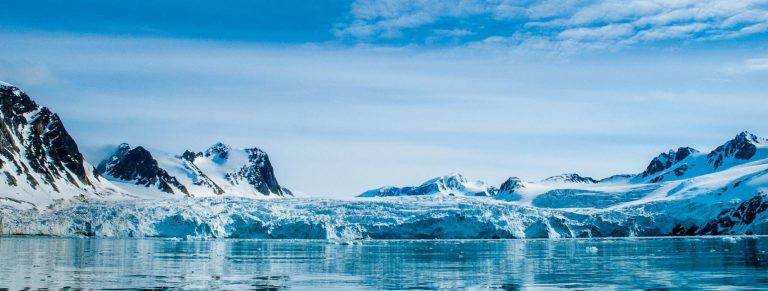
Dramatic glaciers, majestic mountain formations and beautiful colors greet you in summertime. Bussing bird mountains, endless arctic tundra and unparalleled silence await you on Svalbard. The midnight sun shines from early spring until autumn and makes the surroundings works of art.
Dramatic glaciers, majestic mountain formations and beautiful colors greet you in summertime
Svalbard has a relatively mild climate compared to areas at the same latitude. In Longyearbyen, the average temperature ranges from -14°C during the winter to +6°C during the summer. However, the weather can shift very quickly, and local variations are often considerable.
Certification of Sustainable Destination
International authorities have awarded Svalbard Islands the certification of Sustainable Destination due to the intensive commitment of Longyearbyen’s citizens to reducing the negative impact on tourism on their land. Even though people have been visiting Svalbard for years, it was not until 1990 that the Norwegian authorities permitted general tourism.
Polar bear with kids. Photo: Asgeri Helgestad/Arctic Light/Visit Norway
If you want peace and space for thoughts and dream, a stay on Svalbard is a perfect choice. Mountains, valleys, glaciers, the sea, flowers, and exciting wildlife attract you to adventures you will never forget. Although the permafrost can go down to 500 meters and only the upper 2-3 meters thaw out in the summer, some particularly hardy plants cling to the soil in the coastal regions.
Polar bears
A large number of polar bears can be found on the surrounding islands east of Spitsbergen, but the impressive bears can be encountered anywhere on Svalbard. Young bears walk with their mothers until they are about two years old. But be aware, a polar bear attacks quickly without warning. The population of polar bears is about 3,000 animals, and the size of a grown-up bear varies from 200 to 800 kg. The polar bear is protected.
Svalbard has a relatively mild climate compared to areas at the same latitude. Photo: Store Norske Leksikon
There are daily flights to Longyearbyen from Tromsø. In fact, Longyearbyen is the northernmost place in the world you can visit on a regular scheduled flight. Both Norwegian and SAS offer flights to Svalbard. And there are first-class hotels and restaurants as well as exciting activities for visitors. Maybe you didn’t expect there’s an impressive wine cellar at “Huset” and excellent beers at Svalbard Brewery or Karlsberger Pub.
Bring the right thermal clothing
However, the right thermal clothing and polar equipment are necessary to fully enjoy a visit to Svalbard. Geologically, the islands are one of the most interesting areas in the whole world. Geologists can run through prehistory from pre-Cambrian to Quaternary period. Around half of Svalbard’s land area was protected in 1973 and three national parks and two large nature reserves have been created.
There are daily flights to Longyearbyen from Tromsø
The Svalbard Museum of Longyearbyen is an ethnographic museum which opened in 1979 and is devoted to the 400 years of history of the archipelago. The museum is divided into different sections that provide a comprehensive illustration of the diversity of arctic marine and animal life as well as geological features.
Spanish flu
Between 1918 and 1919, Svalbard was in a unique way connected to the deadliest epidemic of Spanish flu in history which caused the death of more than forty million people and decimated Europe. Thanks to the low temperatures of the Arctic Circle, muscles and organs from buried bodies kept intact for over 70 years revealed new information about the terrible epidemic.
Svalbard islands stretches from Bjørnøya in the south to Rossøya in the north
The North Pole Expedition Museum recounts the heroic efforts made to reach the North Pole by aviation pioneers and includes the story of three airships, departing from Svalbard, and their flights towards the North Pole in 1906, 1907 and 1909.
Famous expeditions
The nations that participated in these historical events include Norway, Russia, Italy, America, Sweden, Holland, France and Finland. Umberto Nobile was a great celebrity of Italian aviation, a general, an explorer and engineer who represented Italy on an important expedition. It was on 12 May 1926 when Nobile, together with Amundsen and Ellsworth, travelled on board the first airship to fly over the North Pole. This semi-rigid airship was built in Italy by the engineer Nobile himself and was named Norge.
An Italian manufacturer of men’s clothing, Svalbard Islands, owes its name to these lands.
It was not until 1990 that the Norwegian authorities permitted general tourism to Svalbard
A homage to Svalbard
Enjoy the untouched arctic wilderness and unique wildlife in a setting that is both rugged and fragile at the same time.
December is the darkest time of the year in Scandinavia. So, there is no better time than December to make some light with candles which give emphasis with lights and wisdom and other Christmas light decorations that brighten up their surroundings. Read more about Scandinavian Christmas decorations.
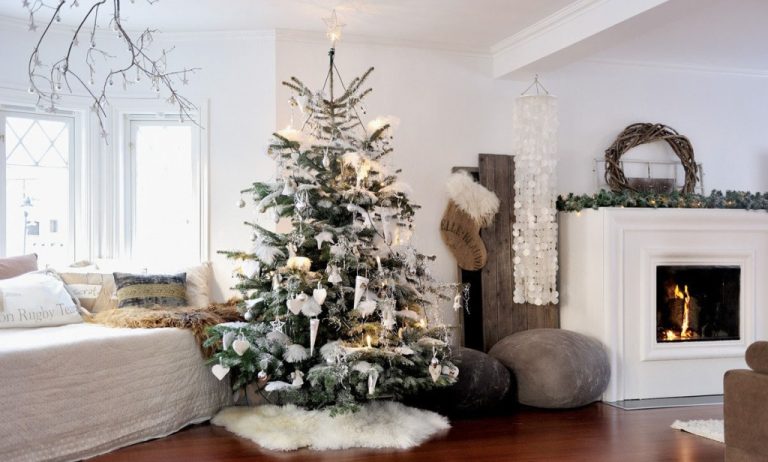
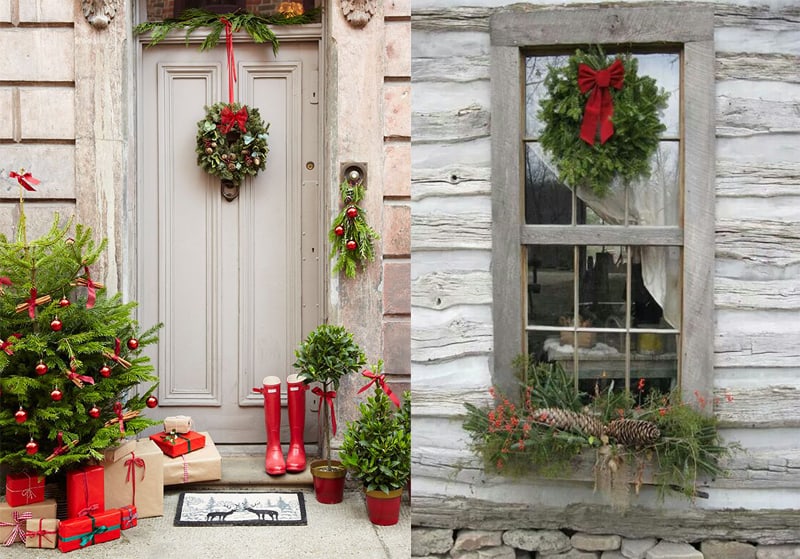
Located at the top of Europe in the northern hemisphere, Scandinavia is composed of Denmark, Norway and Sweden. The Scandinavian Christmas style is famous for its beautiful celebration of the holiday season. The sleek silhouettes depict a simple palette from Northern Lights to its snowy winter scenes. The Nordic countries have for centuries been a great inspiration for homes all over the world – from bringing outdoors to the dining table to sophisticated decorations placed on walls and trees outside their homes.
The ideal setting for the right Christmas mood
Rustic elements, glamorous fur details and natural evergreens give warmth and brightness to a Scandinavian Christmas. With the holiday season right around the corner, we love to share with you the joy of a Scandinavian Christmas and how Scandinavians brighten up the dark season – with style.
Scandinavian Christmas table decoration
Candles, stars, Christmas balls, mini stuff toys and figurines create a wonderful outcome. Imagine a cold winter outside and a well heated Scandinavian home and you have the ideal setting for the right Christmas mood. A Christmas tree is a must, that be a fresh tree from the woods or an artificial tree inspired by nature.
The Scandinavian Christmas style is famous for its beautiful celebration of the holiday season
Less is more
A typical Scandinavian holiday color palette is a white base woven with silver sparkle and bold pops of red. Scandinavian design is known for its sweet simplicity, and also when it comes to Christmas decorations less is more. It is about scaling back and letting a few hey elements shine against a mostly white backdrop.
A Scandinavian winter look is supposed to feel like a breath from fresh mountain air. Adding greenery and some favorite natural textures, is a great way to capture this nature-inspired feeling. Soft pillows and furry throws in a room styled with wood and evergreens become often a huge part of the décor.
Scandinavian Christmas Decorations
Tea-lights everywhere in the home is a classic Scandinavian look. Many Scandinavian homes will also have a gingerbread house as decoration on the dining room table to get all the family involved in the Christmas spirit. Speaking of the dining table, linens in the traditional colors of the holiday, silver white and red, are commonly used.
Scandinavian design is known for its sweet simplicity
Traditional bakes include kransekake and the “seven types” for Christmas: donuts, Sand Cakes, Syrup Cakes, Goro, Curved Cakes, Poor Man and Berlin Wreath – and Gløgg – a homemade Scandinavian mulled wine usually served with blanched almonds, raisins and ginger biscuit to dunk.
Gløgg is a homemade Scandinavian mulled wine usually served with blanched almonds, raisins and ginger biscuit to dunk
A traditional Scandinavian Christmas meal ends with a buffet of sweets, including lots of marzipan. There you have it, Christmas decorations and traditional Christmas food and drink, and everybody have a Scandinavian holiday party to remember.
We wish you all a Merry Christmas!
Scandinavian Christmas Decorations, written by Tor Kjolberg
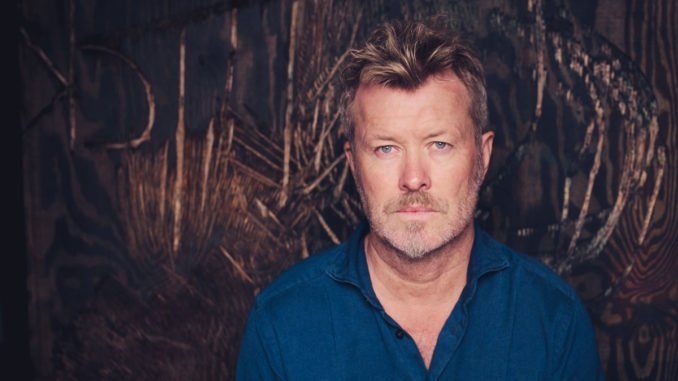
A-HA’s lead singer Magne Furuholmen has released his third solo-album, White Xmas Lies, which is an album with a different take on Christmas. It’s all about loneliness in the darkest period of the year. We’re tempted to say, White Xmas Lies is the most miserable Christmas album ever.
Magne Furuholmen is most known for his work with A-ha and co-writing the group’s most famous hit ‘Take on Me’. And now, as a solo singer, he has released an album about a dark and melancholic Christmas. The album contains 15 original songs with titles like A Punch-Up on Boxing Day, Hells Bells, The Season to be Melancholy and Dark Days. The album also includes two surprising cover-versions.
‘White Xmas Lies’ From Norway Magne says White Xmas Lies is more a winter album than a Christmas album, a kind of a Nordic take on Christmas that would somehow be meaningful. A little bit more musical quality to Christmas celebrations.
White Xmas Lies album cover
‘I am lucky to have a family around me, but for many people, Christmas is a rough time, and a harsh reminder of loss, longing, and crippling loneliness. I wanted to try and make an album which would be meaningful also to those who fall outside our commercial Christmas frenzy – an album which looks at the more melancholic, darker sides to Christmas: broken family ties, things we sweep under the rug, resentment hidden behind fake, jocular smiles – an album for holiday contemplation, not just sentimental décor,’ he says.
The gloomiest Christmas album ever Christmas is the most miserable time of the year. Songs about family punch-ups and crippling loneliness feature on White Christmas Lies, the gloomiest Christmas album ever. Christmas is supposed to be a happy family thing, but for people who for some reason don’t share the sentiment, it might seem like a materialistic hyper-fest where they don’t feel connected.
‘I am ashamed to be part of a Christmas which these days seems to be mostly about buying more and more shit that no one needs or even really wants…a tacky, superficial celebration in stark contrast to the original Christmas message of hope, charity, and compassion,’ says Furuholmen.
An album for maximum misery White Xmas Lies is a double album for maximum misery and includes “broken family ties, things we sweep under the rug and resentment hidden behind fake, jocular smiles”. Christmas sneaks up on us, because we’re all part of the world of entertainment, the world of consumerism. Magne says he wanted to make this record as a gift to people who otherwise wouldn’t feel included. He wanted to describe as many situations as possible that we can all relate to, but that we somehow sweep under the carpet at Christmas time.
The result is a double-album with a rich blend of unusual and thoughtful Christmas material, ranging from brooding introspection and piercing observation, to hopeful, uplifting songs.
You can read about the different formats and order here.
‘White Xmas Lies’ From Norway, written by Tor Kjolberg
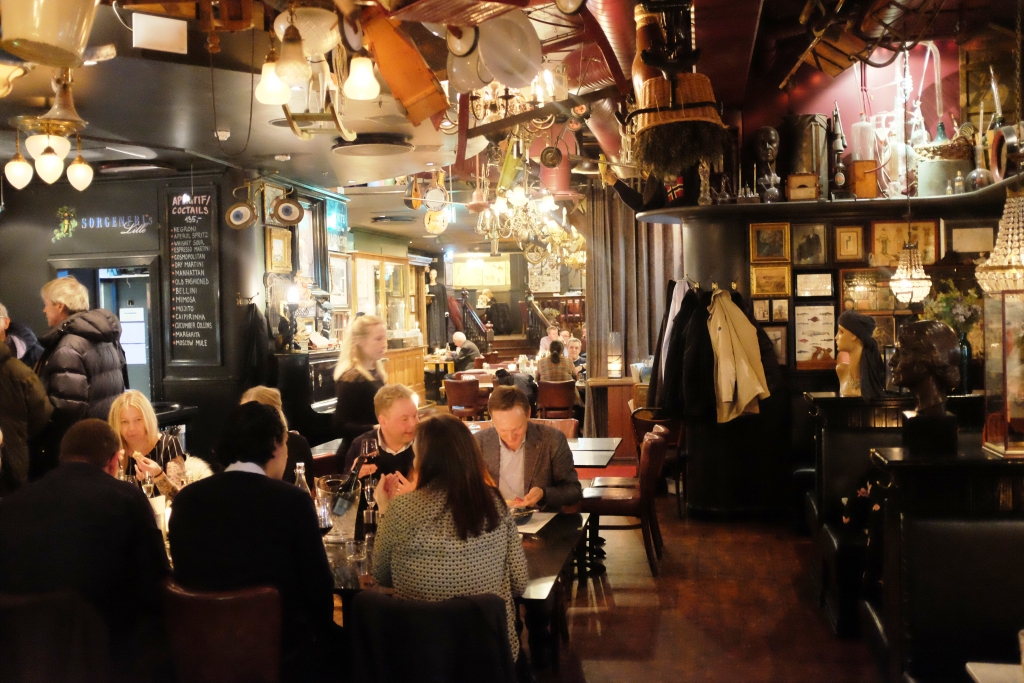
We must admit it, grown-ups in Norway are looking forward to the Christmas season mostly because of traditional Christmas meals and drinks. All December is Christmas party-time in Norway. Every company or social group hold their own julebord (Christmas party), which means Norwegians attend at least one during the month of December. This season Daily Scandinavian enjoyed its Christmas party at the Sorgenfri restaurant in Oslo to enjoy the taste of a typical Norwegian Christmas.
Sorgenfri (closed down Octorber 2020) at Aker Brygge is a popular down town restaurant all year round and is not overwhelmingly decorated for Christmas. The restaurant has a calm-down atmosphere which suites us perfectly. Head waiter Lilje Sverve Antonsen served us this evening and was kind enough to shoot pictures of the dishes too.
Ribbe at Sorgenfri. Stockphoto
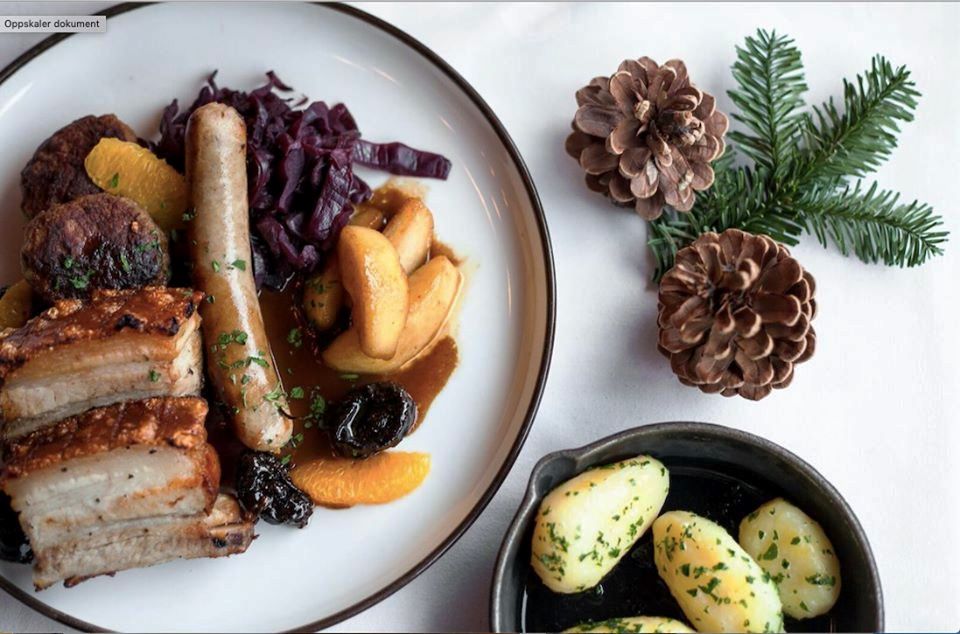
Ribbe The most popular Christmas dinner in central Norway is ribbe, which consists of pork ribs. In the old days this Christmas meal gave energy for the rest of the winter. There are several side dishes to the “ribbe” and the most common is sauerkraut, red cabbage, patties, sausages and potatoes.
Lutefisk
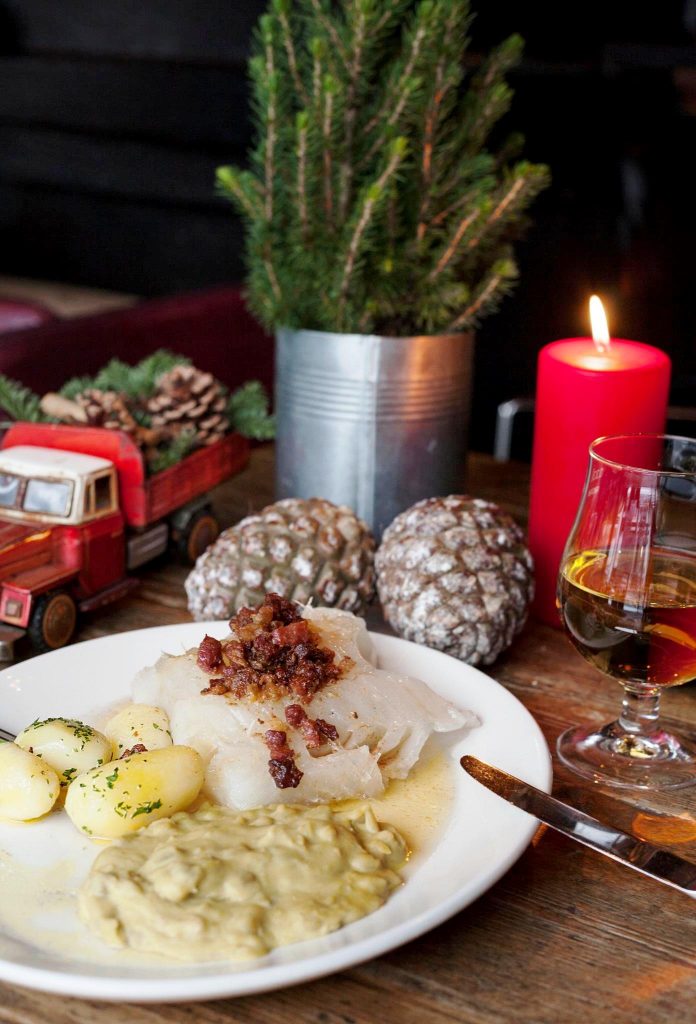
Our main dish, however, was lutefisk. Lutefisk is usually served with a variety of side dishes, including, but not limited to, bacon, green peas, green pea stew, potatoes, lefse, gravy, mashed rutabaga, white sauce, melted or clarified butter, syrup, geitost (goat cheese), or gammelost (“old” cheese).
Happy guests at Sorgenfri, Oslo. Photo: Tor Kjolberg
Lutefisk means literally “lye fish” and is made by mixing lye of potash and water and soaking dried cod in it. It has an extremely strong, pungent odor which is mostly avoided by foreigners not used to the dish. I have, however, encountered more and more visitors to our country, claiming that they love the taste of the fish and side dishes – and not least the accompanying schnaps, aquavita and beer. Lutefisk is rarely eaten more than once a year.
According to forskning.no, lutefisk has been a common Christmas dish for a lot longer than people realize. It was eaten on Catholic holidays as long ago as the mid-16th-century.
The Julebord tradition is an important part of the Norwegian culture. Norwegians normally dress casually, but the Julebord is one of the rare occasions when they dress up in formal attire.
Pinnekjøtt
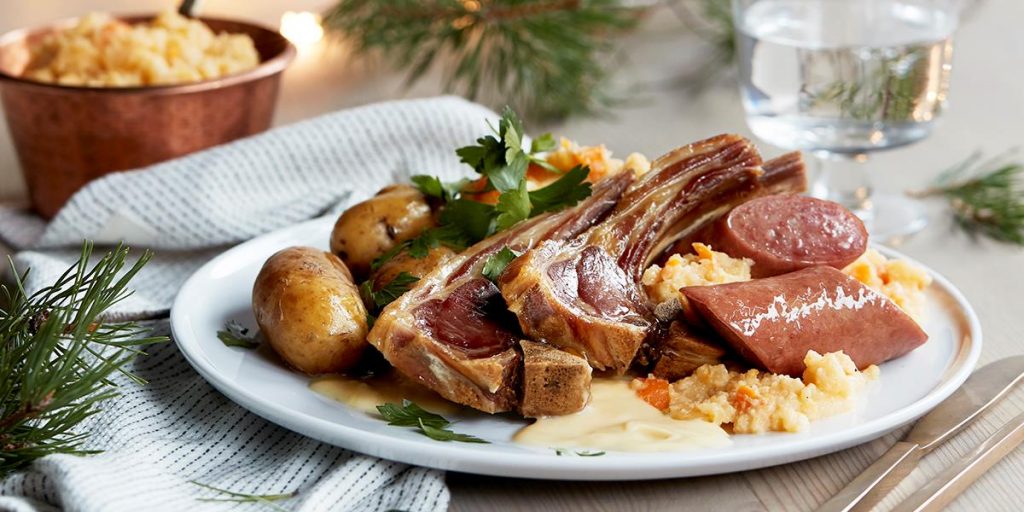
Pinnekjøtt (racks of lamb or mutton cured in brine or coarse sea salt) is another main Christmas dish in Norway, mainly in Western Norway. Pinnekjøtt has, however, rapidly gained popularity in later years also in other regions. Its unique flavor comes from the traditional preservation methods of curing, drying and in some regions also smoking as means of inhibiting the growth of micro-organisms.
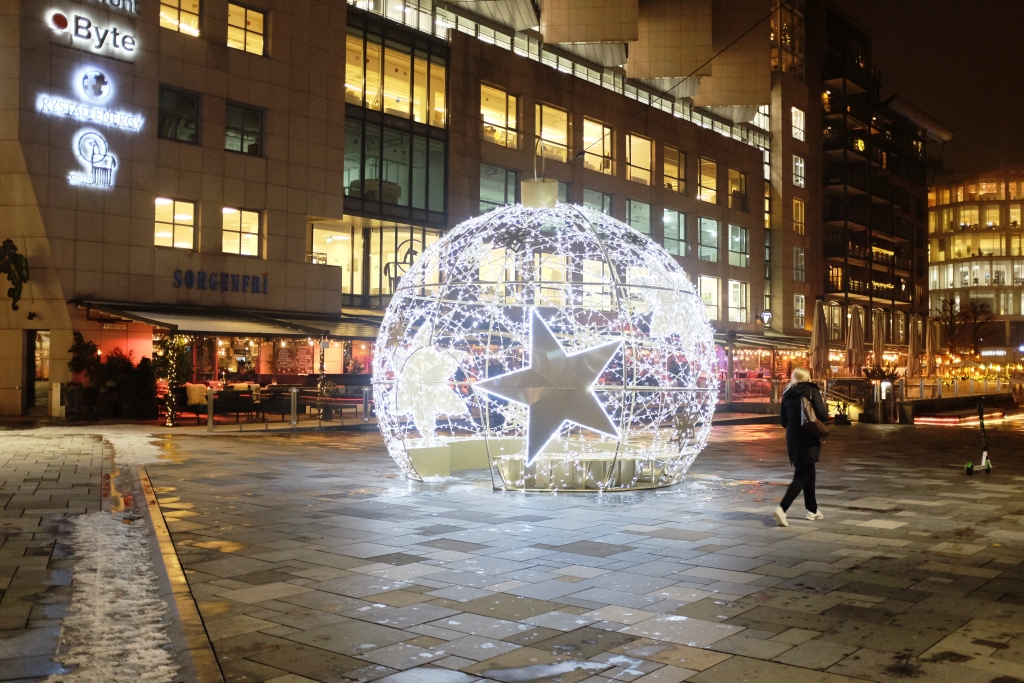
Christmas at Aker Brygge. Photo: Tor Kjolberg
A traditional Norwegian Christmas dessert is Riskrem (Rice Pudding), which is made from leftover rice porridge and whipped cream, with some sugar and vanilla added. It is usually topped with a red berry or served with fruit sauce. It is fluffy and creamy with a little tang from the sauce.
Sorgenfri at Aker Brygge is a popular down town restaurant all year round and is not overwhelmingly decorated for Christmas
Juleøl
During the season, most breweries release batches of Christmas beer (juleøl). These are Christmas versions of their beers, usually darker and spicier than their regular brews. Today, aquavit and beer often accompany the meals due to its use at festive and ceremonial occasions.
Juleøl. Stockphoto
Not everyone in Norway celebrates Christmas with dishes described here, but most people more or less enjoy the season according to these traditions. In later years, many immigrants also celebrate, using elements of the traditional Norwegian Christmas.
All photos by Lilje Sverve Antonsen if not otherwise noted.
The Taste of a Typical Norwegian Christmas, written by Tor Kjolberg
TIME Magazine has compiled its first annual list of the World’s 50 Coolest Places. Biblo in Oslo, a library created for young people ages 10 to 15, and NASA’s Space Center in Houston, USA are both on the list in the new ranking. Read more about the Coolest Library in the World for Kids – in Norway.
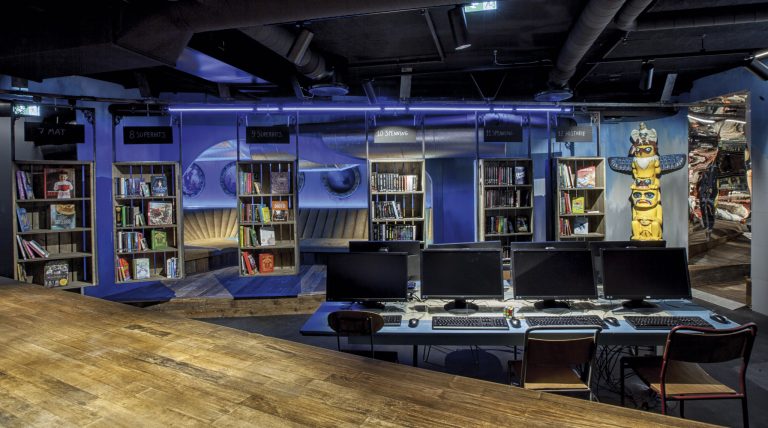
Time for Kids’ Magazine ranks the children- and youth-library in Oslo as one of the world’s 50 coolest places of 2019! The library is praised for its design to inspire with many colorful exhibits and surprises. Grab a seat in a pillow-packed wheelbarrow, a vintage pickup truck, or a repurposed ski lift. The best part? This library is just for kids—no adults allowed!
In the library there’s Teddy, an old Volvo truck, with a functional kitchen in the back and a sofa in the hood
Changing Library Rules Oslo Public Library (Deichmanske bibliotek) is breaking and changing library rules. In the library, children and adolescents between the ages of 10 and 15 can do homework, cook, borrow books, experience author visits, film nights, concerts and theater, or explore and express themselves through art, performance and digital technology. No charge.
To rethink and redesign the library space the design team went directly to the source – young people – to find out their wants and needs. The result is a cool and comfortable alternative between school and home where they can learn, explore, and not least -be themselves.
The library is praised for its design to inspire with many colorful exhibits and surprises
Fun and educational activities
The dedicated staff at Biblo wants to inspire visitors to love learning and reading books through fun and educational activities such as drama, music, cooking, computer programming and 3-D printing. In the center of the library there’s Teddy, an old Volvo truck, with a functional kitchen in the back and a sofa in the hood. The entire library embodies and encourages creativity and imagination.
Oslo Public Library (Deichmanske bibliotek) is breaking and changing library rules
The design team went directly to the source to begin their mission to rethink and redesign the library space. They held focus groups with young people to find out their wants and needs. The youth said they wanted a place to hang out, relax, and escape parents and siblings. In addition, they needed a safe place to socialize and said it should be a space where they can create and do things together. The library has achieved these goals by creating a cool and comfortable ‘third’ space between school and home where youth can learn, explore, and be themselves.
Many floating elements
The space is filled with a sense of weightlessness and ease due to the many floating elements, including bookshelves. This project was a truly unique endeavor that allowed the design team to cater to an extremely important target audience. The result is probably the most fascinating library you will find – anywhere.
The entire library embodies and encourages creativity and imagination
World’s Coolest Library in the World for Kids – in Norway The Biblo library is located at Tøyen Square in ‘Old Oslo’, an area that is being modernized to compensate for the removal of the Munch Museum from the quarter. Biblo opened in 2017.
Gondolas at Biblio in Oslo. Photo: Marco Heyda/Jan Willem van Bruggen
“Libraries are special places where kids can read, learn, and create. Deichman Biblo Tøyen is one of the coolest of them all. This striking library for children ages 10 to 15” wrote TIME for Kids.
The Coolest Library in the World for Kids – in Norway, written by Tor Kjolberg
If Norwegians are not generally very interested in Germany, it was certainly not the fault of late Norwegian author Jahn Otto Johansen (1934-2018), who worked tirelessly to promote German-Norwegian understanding. Read more about a Norwegian author’s love for Germany.
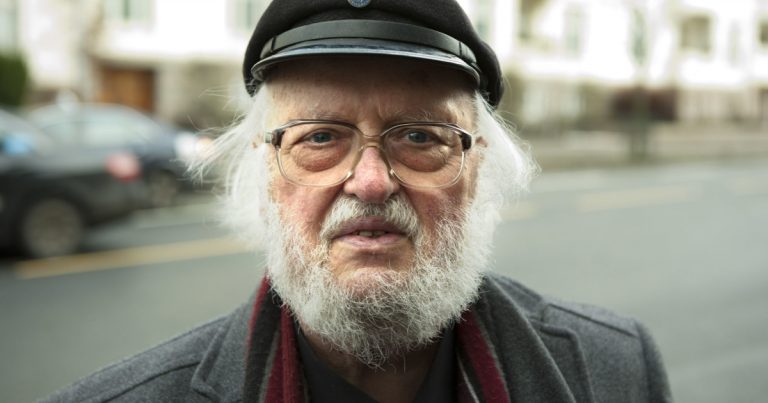
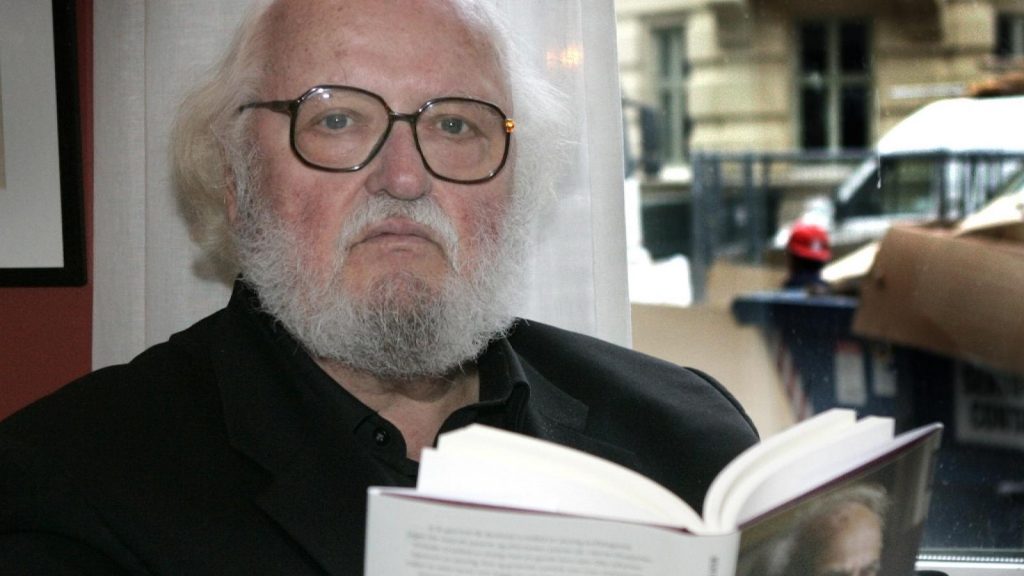
Jahn Otto Johansen with his familiar face with a bushy white beard atop a figure whose bulk was clear evidence of its owner’s love for the good things in life, was easy to recognize. Jahn Otto Johansen had a long career as a foreign correspondent for the Norwegian Broadcasting Corporation in Moscow, Washingtodn D. C. and Berlin, and author of several books about the relationship between Germany and Norway.
Jahn Otto Johansen with his familiar face with a bushy white beard atop a figure whose bulk was clear evidence of its owner’s love for the good things in life
Love for traditional German dishes The inspiration for his number of books and articles about Germany came largely from the old-fashioned bars of Berlin. Ensconced at a table at the “Schildkröte” or the “Schweibelfish” he enjoyed traditional German dishes such as pork shank, potato soup, stuffed cabbage leaves and herring, while listening to other guests’ views on political issues of the day. His pictures hang on the walls. People came in and asked where he was – because they thought that was where he sat – at the time – in the bar!
And he did not mind sharing his own strong views with his fellow guests who listened with interest to this familiar figure. There is probably no one in Norway over the age of 45 who would not rank him as one of the country’s most important foreign correspondents of all time.
Jahn Otto Johansen had a long career as a foreign correspondent for the Norwegian Broadcasting Corporation in Moscow, Washingtodn D. C. and Berlin
Mini-America When he realized that fewer and fewer children in Norway chose to study German in school, Johansen was quick to respond. “It is tragic that Norwegian youngsters are choosing not to study German in school. By doing so they are denying themselves knowledge of a rich culture, that not only comprises 82 million Germans, but the whole of German-speaking Europe. There are not many people in the Norwegian media who can even read German any more, so you cannot take what they write or say seriously. Germany is Norway’s most important supporter in the EU and our biggest market for gas and fish,” he wrote.
“So, the lack of interest in Germany is completely incomprehensive, if is not simply a matter of the language, although that is important. Nor can you carry on blaming the war. The explanation lies rather in the fact that Norway is one of the most Anglo-Americanized countries in Europe. That is the answer,” he concluded.
Jahn Otto Johansen was author of several books about the relationship between Germany and Norway.
Love of nature If Norwegians are going to Germany, it is often to the big cities. But when Germans come to Norway, they are looking for fjords, mountains and fishing opportunities. But what do Germans really know about Norway?
“That depends on where in Germany they come from,” said Johansen. “Germans from the south of the country tend to think of Norway as being a long way away. Those from the north know a lot more about our country and are keen to visit us.”
Love of the city Johansen did loose count of the number of Norwegians he and his wife, Siv Kirsten, had accompanied on visits to Berlin.
“What we want is for Norwegians to experience the real Germany, which is exciting, interesting and hospitable, with an ancient and important culture. A country which is going through a difficult transition phase.”
The book on the German Patient has not been translated into other languages
The German Patient
This is something he explained in detail in his prize-winning book, “Den tyske pasient” (“The German Patient”), which was published in 2006. In the book, Johansen addressed the reforms and economic problems that was facing Europe’s oldest and best-developed welfare state.
After the costly reunification, the country simply could not maintain the welfare schemes its citizens had been accustomed to enjoying. “And Germany’s role as a driving force in the EU and “engine” in the European economy meant that the problems sooner or later would hit the entire continent – probably Norway, too,” says a spokesperson of packimpex.de.
The book has not been translated into other languages.
A Norwegian Author’s Love For Germany, written by Tor Kjolberg
Though Bergen is known as the capital of Norway’s fjord country, Rogaland county centered on the west-coast port of Stavanger, has some of Norway’s most spectacular sights. It also has the country’s highest average temperature. In winter there is little snow. And the fertile fields are green for most of the year. Rogaland county is ideal to experience some of Norway’s most spectacular sights – all year round.
The Ryfylke area northeast of Stavanger is true fjord country. It starts with Lysefjord and stretches north past long narrow lakes that once were open fjords, until it reaches Vindafjord, Saudafjord and Suldalsvatn.
Pulpit rock
Pulpit Rock
Every visitor should try to make the trek to stand on Prekestolen (Pulpit Rock), a dramatic table of rock soaring 597 meters (1,958 ft) above Lysefjord, and the country’s most famous vantage point. It can be reached via a two hour’s trail from the Prekestolhytta (hut) along a steep but well-paved path that gives way to steeper, rather soggy terrain, then to thrilling granite slabs and windswept cliffs. There are also buses which link up the ferries, that provide a different perspective from the water below.
Ulstein Kloster
The sheltered bay north of Stavanger, and other islands such as Karmøy, protect Ryfylke’s inshore island from the North Sea. Christianity flourished early here under the protection of the bishops of Stavanger, and the islands are sprinkled with churches, notably the 12th century Utstein Kloster on Mosterøy.
Ulstein kloster (Monastery)
Bird-watching, sailing and canoeing
The many lighthouses are not only landmarks for islanders and seafarers but make excellent bird-watching sites. The waters around these peaceful islands are well trafficked. Most of the island grocers also provide boat services, and it is easy to hire rowing boats and small craft with outboard engines.
In the northeast highlands of Rogaland, the fjords, lakes and rivers are rich in fish and fine for sailing and canoeing. There are good cross-country skiing tracks in winter and excellent Alpine slopes.
Sand Salmon Observation Studio
Salmon Observation Studio Among the best holiday areas is the Suldal district, stretching from Sand on Sandsfjord, along the Suldalslågen River. At the Sand end of Suldalslågen is Laksestudioet, an observation studio built under a waterfall.
Kolbeintveit Old Farmstead Museum
Old Farmstead Museum
Also worth a visit, the Kolbeinstveit Old Farmstead Museum (Ryfylke Museum), dating to the 1850s and has recreated traditional farm life in a number of authentically restored buildings.
Some of Norway’s Most Spectacular Sights, written by Tor Kjolberg