The lofty aim behind the new Danish ‘humane’ prison is to reduce recidivism by good architecture and design.
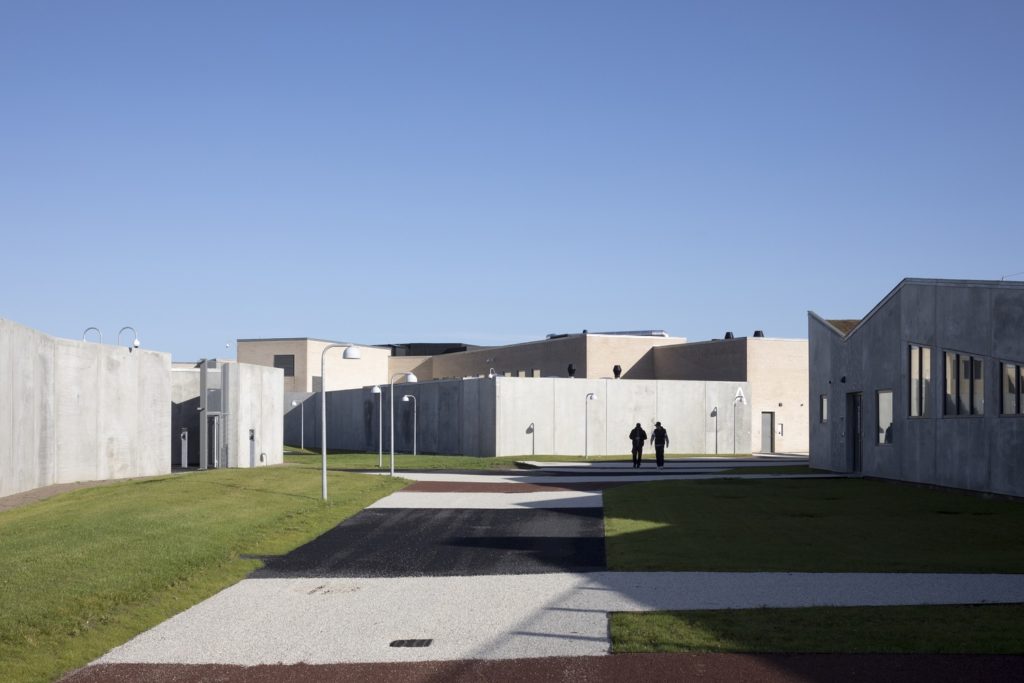
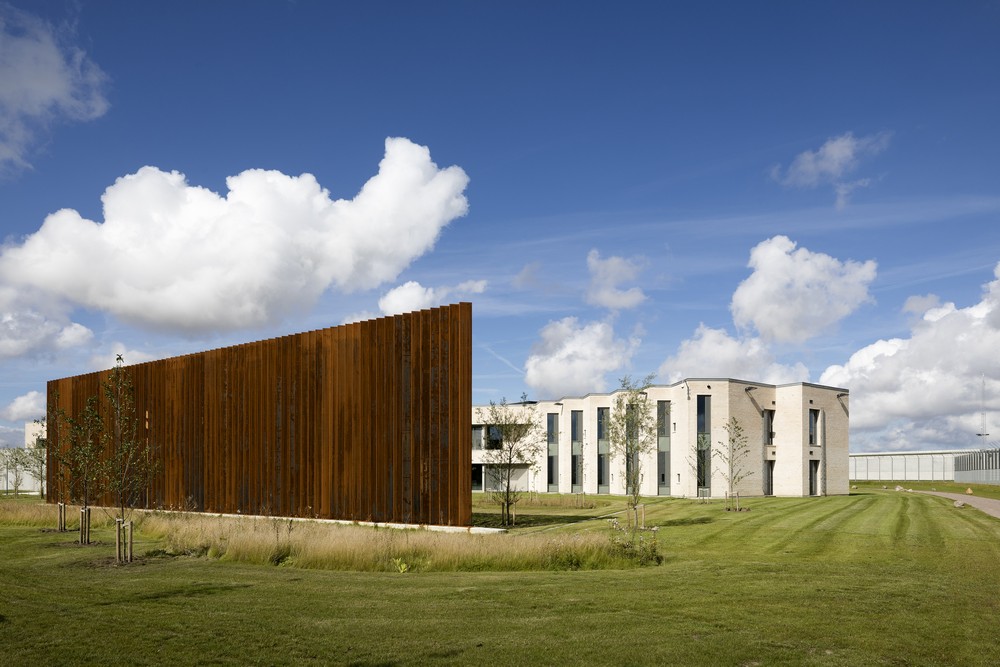
Storstrøm Prison, located in the town of Gundslev, about 70 miles southeast of Copenhagen, is a maximum-security prison designed to teach prisoners to change their ways. It contains a grocery store, workshops and lots of glass. You might think it’s more like a college campus than a prison. And that’s in fact the idea.
Storstroem prioson. Photo: Torben Eskerod
It has taken five years to build the prison, costing over 100 million US dollars. It can hold 250 inmates in its 40 square foot cells. In cooperation with the Danish Prison and Probation Service, architecture firm CF Møller has designed what they’re calling the ‘world’s ‘most humane” maximum-security prison.
Mads Mandrup, a designer at CF Møller Architects, says that they have aimed to reduce recidivism, emphasizing on rehabilitation with a typical Scandinavian approach, modeled after a regular Danish village, with open space and buildings with distinctively Scandinavian architecture. “We truly believe, and evidently the statistics support us in this, that a hard and less-stimulating environment creates more re-offenders,” he says.
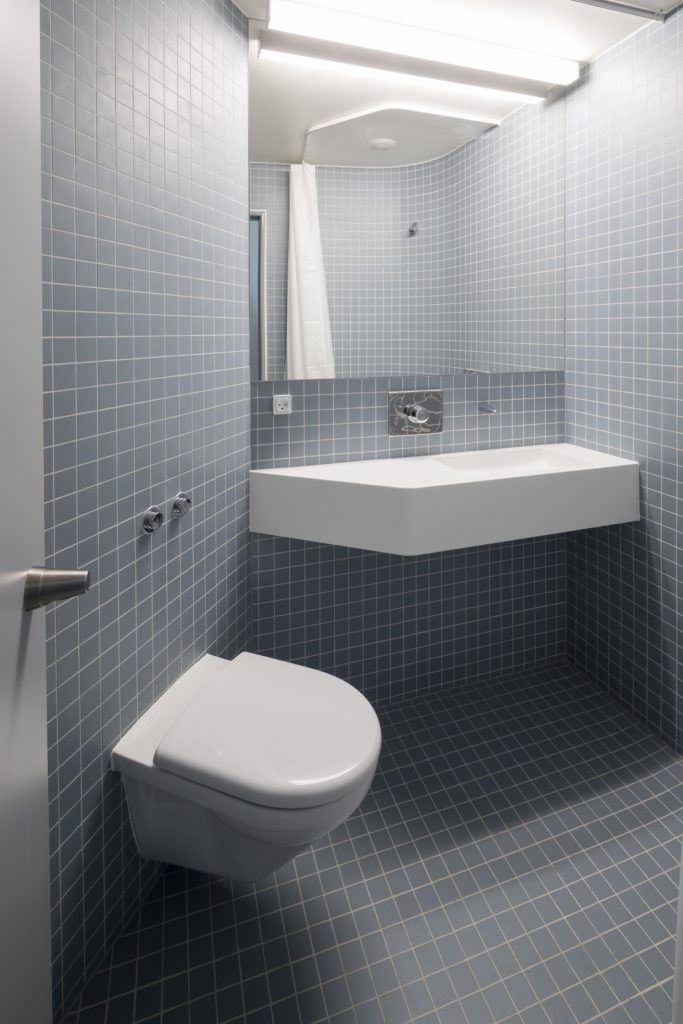
Bathroom in Storstroem prison. Photo: Torben Eskerod
At Storstrøm Prison each prisoner gets a fridge, 22-inch TV, long window, wardrobe, a private bathroom and access to spacious communal rooms.
To reduce the recidivism rate Scandinavia’s approach hinges on creating an environment that’s as close to normal day-to-day life as possible. Photo: Torben Eskerod
To reduce the recidivism rate Scandinavia’s approach hinges on creating an environment that’s as close to normal day-to-day life as possible. The individual cells look more like dorm rooms, and the living areas have been furnished and painted so it doesn’t have an institutional feel. Denmark’s recidivism rate is about 27 percent, roughly half the rate of the U.S., which ranges from 49 percent to 80 percent depending on the crime.
Related: Prison Life in Scandinavia
Aeral photo by Steen PAulsen of Storstroem prison
“It would be naive to think that architecture can achieve this alone,” says Mandrup. “Therefore, the general master planning and overall functionality of our scheme is a balancing act of creating a human interface, not only among the prisoners themselves but also towards the staff that play an important role in the many daily resocialization routines of the prison.”
Airyard at Storstroem prison. Photo: Torben Eskerod
Still, the prison is very secure. It’s separated from the surrounding area–mostly rural farmland–by a 20-foot-tall concrete wall. There are over 300 cameras in the prison and the floor plans of the buildings are arranged so that guards can easily see everything.
Black lobster (homarus gammarus) is the most delicious of all crustaceans, and the black lobsters living in the cold northern waters, which reduce the creatures’ growth to an incredibly slow pace, are as delicious as they come.
They are caught in relatively shallow waters, especially in summer, when they migrate to the North Sea shores.
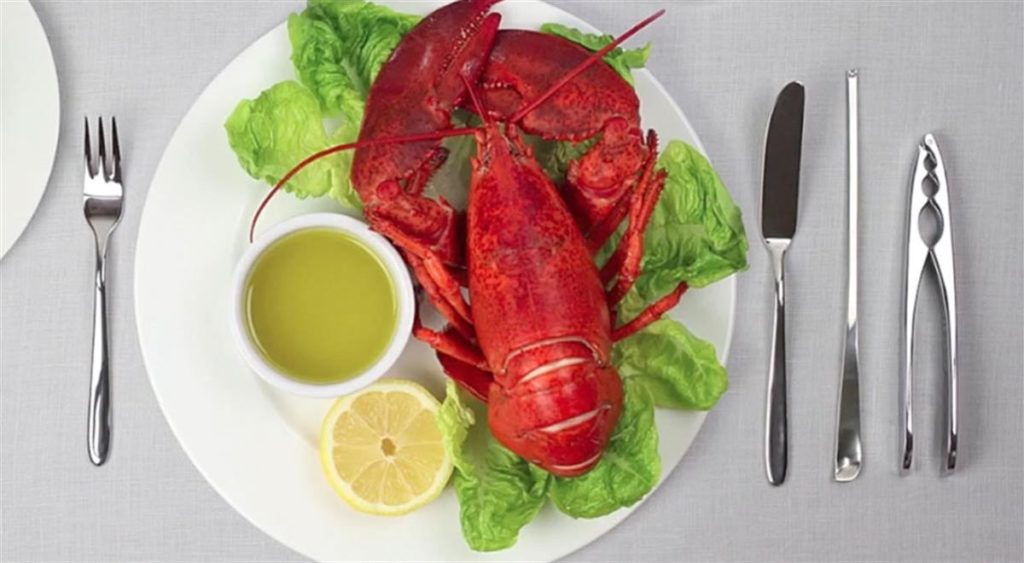
Boiled lobster serbed with potatoe-, fennel- and corn- salad
Small lobsters are the most expensive, but we know from experience that even large lobsters are just as good to eat, as well as much cheaper. I remember I once bought one really scary monster of a lobster in a Danish fishing town. It measured nearly one meter from its tail to the tip of the two tremendous claws, each the size of a grown man’s hand.
It was ridiculously cheap because everybody believed that this creature, which must have been 50 years old, would be tough to eat. Even if we had a huge fish kettle at our disposal we still had to cook the lobster in two goes. We ate it simply with a dill mayonnaise, crusty bread and lemon, and I have never forgotten it in the past 50 years. We were ten privileged guests and there was more than enough to go round.
Small lobsters are the most expensive, but we know from experience that even large lobsters are just as good to eat. Photo: Lerøy Seafood
Appearance and taste Lobsters are usually a beautiful shiny black, but they can also be greenish, or almost every nuance of dark blue. Once cooked the lobster will turn scarlet red, and while it should smell of fresh seawater when alive, it should smell spicily shellfishy once boiled.
The flesh of a freshly cooked lobster is sweet and dense, almost elastic, and eating it is like taking a deep breath on a summer’s day, evoking the smells of a fishing port and a taste of ozone and sex, spiced with a weak whiff of iodine and just-awakened baby.
Buying and storing Lobsters must be very much alive when you buy them. They are sold with a thick rubber band around their fierce claws, and there is a reason for this: the pincers can easily cut your fingers off. Frozen or ready-cooked lobsters are not remotely of the same quality as the ones you cook yourself, and the fact that they’re cheap is not a good enough reason to buy them.
For a starter, half a lobster per person is fine; for a more substantial dish allow one lobster weighing around 500g per person. Once boiled in their court-bouillon, lobsters will, in principle, keep in the fridge for several days, but the true romance lies in eating them when they have just cooled.
Scandinavian lobster – a delicious meal for any celebration
Culinary uses You can create all kinds of flashy dishes with lobsters, but unless you are lucky enough to have lobster all the time, the most beautiful way is just to boil it plain, as for crayfish, and serve it with flavored mayonnaise.
You need to allow 90 seconds in the court-bouillon for every 100g of lobster. Take it out of the pan, let the stock cool to room temperature, then put the lobster back for a flavor-enhancing bath.
Scandinavian Lobster for New Year’s Eve, written by Tor Kjolberg
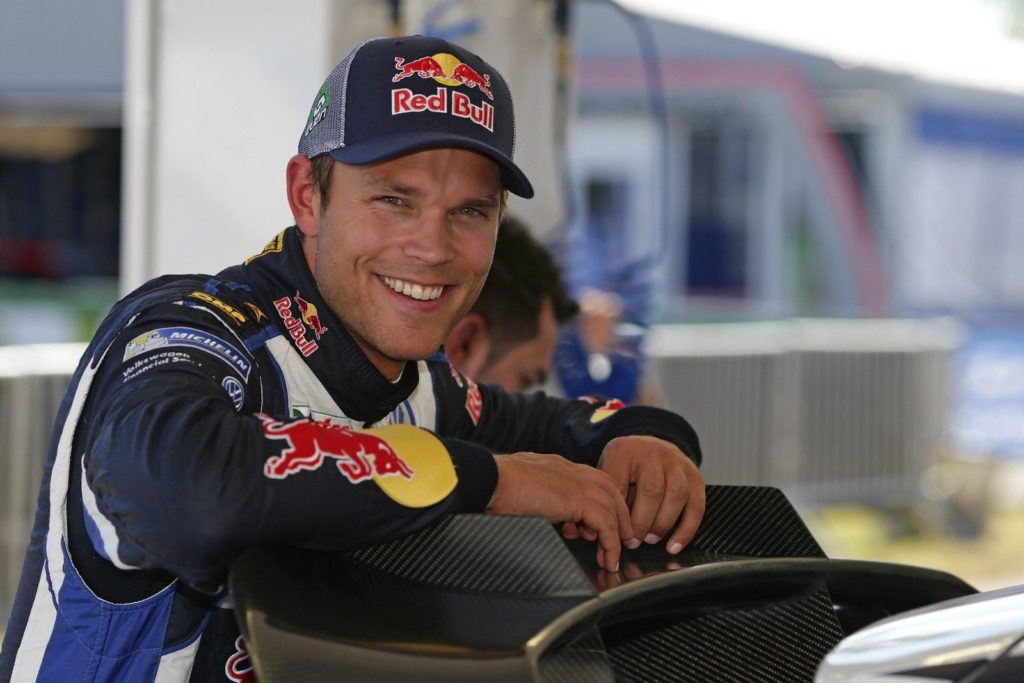
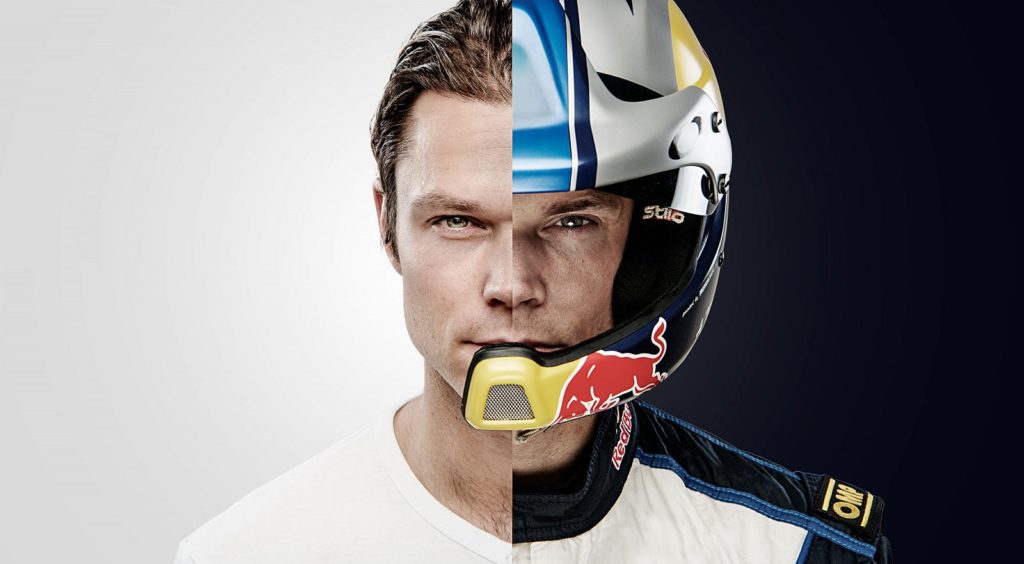
The young and talented Norwegian WRC champion Andreas Mikkelsen is groomed by Hyundai to be a 2018 WRC champion.
Andreas Mikkelsen started off on skis, being a member of the Norwegian junior ski team at the age of 12. However, he switched to rallying after a knee injury when he was 16.
Norwegian rally driver Andreas Mikkelsen in Australia 2016
He moved to Great Britain in 2006 when he made his debut in the World Rally Championship and since then he has several WRC victories.
Now Andreas Mikkelsen has joined Hyundai ready to fight for the World Rally Championship title next year for the first time
A few weeks ago Andreas Mikkelsen was on course to take home the victory at Rally Australia, when a double puncture forced him to retire after finishing stage 10.
Andreas moved to Great Britain in 2006 when he made his debut in the World Rally Championship
Now Andreas Mikkelsen has joined Hyundai ready to fight for the World Rally Championship title next year for the first time. The Hyundai agreement runs through to the 2019 season. So far, he has only competed 3 events for Hyundai Motorsport, but Andreas says he already feels at home in the car. “The car is absolutely fantastic, the team is great and everything is in place for us to fight for the championship,” he says.
The 2018 World Rally Championship will be launched at Autosport International, held on January 11-14.
This holiday season we bring you a wonderful Christmas playlist with some pretty excellent Scandinavian artists who have put their voices on some great Christmas tunes.
The playlist kicks off with the Swedish group ABBA’s a presentation of “Swedish Christmas Music”. However, ABBA remained away from any songs that could be restricted to any seasonal event, with the one exception ‘Happy New Year’ (on Super Trouper, 1980). But over the years the individual members have made quite a few forays into the Christmas market. Enjoy!
Then follows two Danish Christmas songs. Many Danes go to church during the day on the 24th. It’s not because they’re religious; most just enjoy the tradition of singing Danish carols together in church.
And you shouldn’t miss St. Olaf Choir from Minnesota singing Christmas carols in the Nidaros Cathedral in Trondheim, Norway. This concert from 2014 was the 10th in a popular series of PBS holiday concerts featuring the St. Olaf Choir that have aired on public television over the past 28 years. The concert celebrated the centennial of the choir’s first concert tour to Norway in 1913, under the direction of its first conductor F. Melius Christiansen, a Norwegian immigrant and founder of the college’s now-famous music program. In 2005 the St. Olaf Choir, under the direction of Anton Armstrong, performed another Christmas concert, A St. Olaf Christmas in Norway, for PBS from Nidaros Cathedral.
The Daily Scandinavian team wishes you a Merry Christmas and a Happy New Year!
The Swedish Mora Knife (Morakniv) has been made in Ostnor, in the area around Mora, in Frost-Erik’s timber sled factory since 1891.
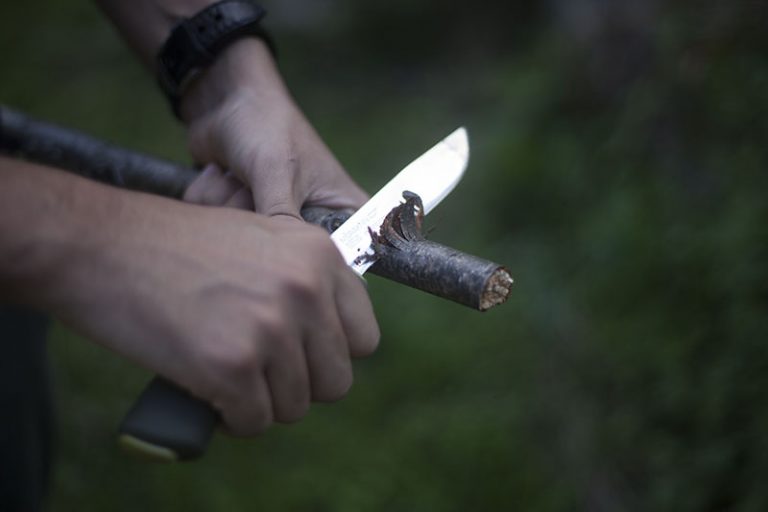
A Morakniv is the ultimate all-around knife. While in the woods, on a hike, hunting or at sea, the Mora Knife is always your perfect partner. Sweden’s Dalarna County is a place that takes most Swedes back to childhood days of woodwork, fishing and attempts at carpentry.
In the woods, on a hike, hunting or at sea, the Mora Knife is always your perfect partner
Mora has taken local handicraft out to the world. The knife-makers today manufacture knifes by hand, just like they did back in the 1700s. Morakniv AB treats the Swedish steel to enhance strength and long-lasting sharpness. The classical Mora knife with its red shaft has become almost a national symbol.
Mora has taken local handicraft out to the world
The entire knife making process, from steel to complete knife, takes place in the Mora premises and ensures full control over all parts of the production. No matter if you want to split the firewood for starting a fire or skinning a deer, the flexibility of this outdoor favorite knife will be there for you.
The classical Mora knife with its red shaft has become almost a national symbol
The Mora knife has conquered the world. In the Hamptons outside New York City, the Mora steak knife has made its appearance in restaurants where prominent guests were using knives designed by Swedish chef Mathias Dahlgren and Mårten Cyrén at the 5th Swedish Culinary Summer events last July and August.
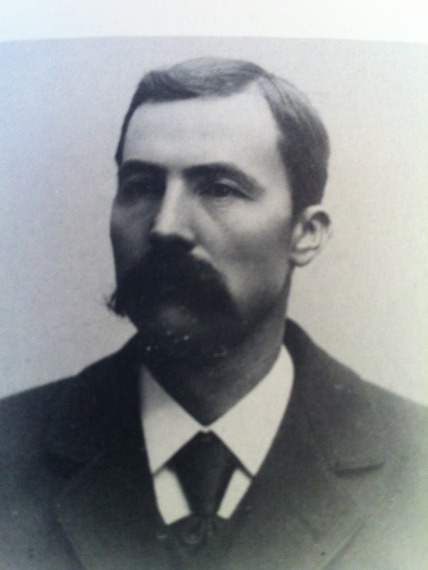
Frost-Erik Ersson
But it all began back in 1891 when Frost-Erik Erson returned to his home village of Ostnor after a four years’ stay in North America. There were many small cottages and barns in the area, the cattle grazed on the plot outside and every morning started before sunrise with milking the cows and goats. That was the scenery of the Swedish fäbod, a place where people historically spent their summers working and let their cattle run free in the surrounding nature. Many of these fäbodar still exist today.
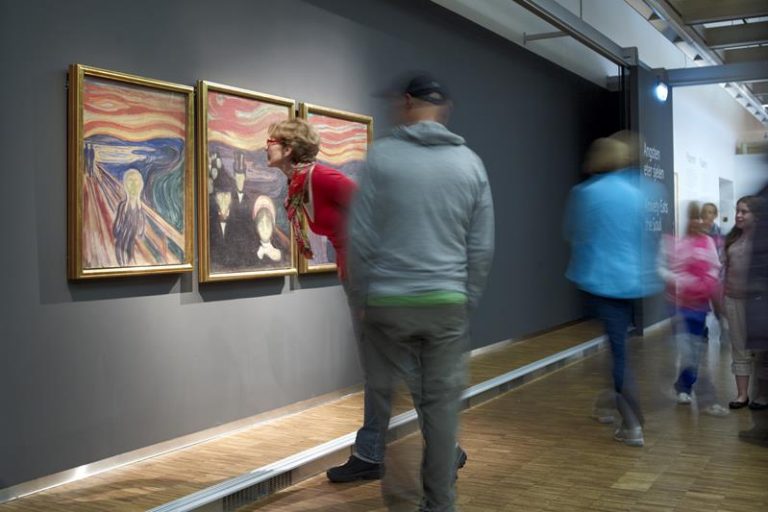
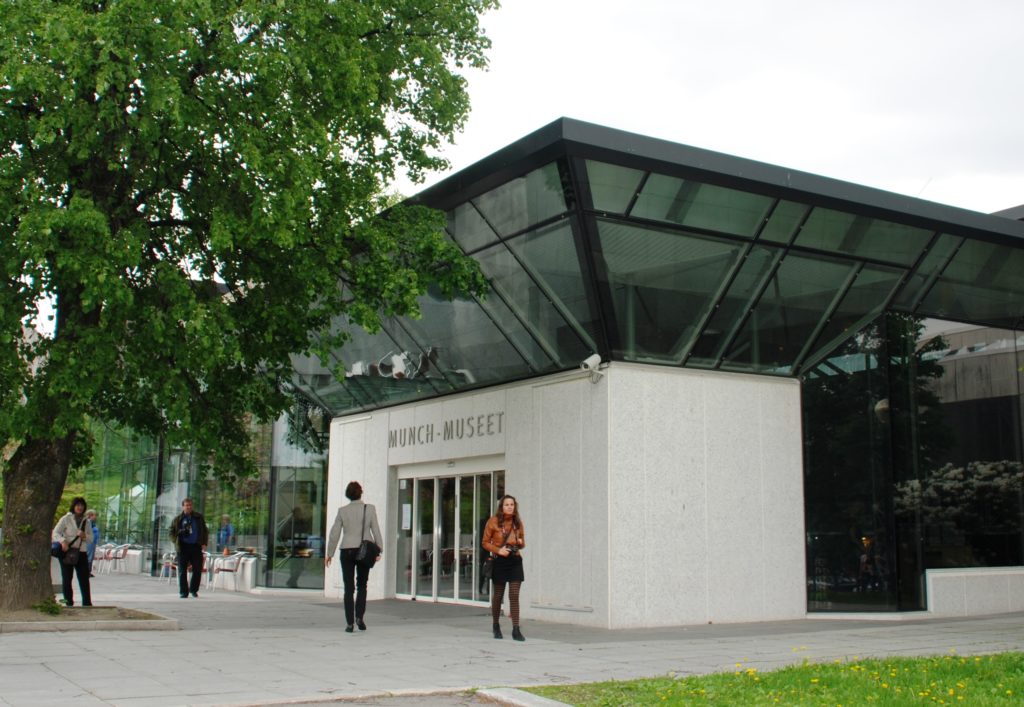
The splendid National Gallery, the Historical Museum and the Munch Museum in Oslo are for many reasons all worth a visit. The National Gallery for its comprehensive collection of 19th century Norwegian masterpieces plus some French impressionist paintings and Russian icons, the Historical museum for covering Norwegian history over 9,000 years and the Munch Museum for an in-depth study of Edvard Munch’s life and work.
The main attraction at the National Gallery is, however, a version of Skrik (The Scream) by Edvard Munch on display with some other of his best-known works.
But there are many more lesser-known works to discover, like the landscapes of J.C. Dahl and Kitty L. Kielland, and the powerful domestic portraits by Harriet Backer and Christian Krogh. For a more in-depth exploration of Munch’s life and work, visit the Munch museum.
The Historical Museum, occupies one of Oslo’s most elegant Art Nouveau buildings, dating to 1904
The Historical Museum, occupies one of Oslo’s most elegant Art Nouveau buildings, dating to 1904. It highlights the Viking Age and medieval times with Scandinavia’s largest collection of Viking gold. There are also displays on indigenous Nordic cultures.
Munch’s life and work can be explored in the Munch Museum
Both the National Gallery and the Munch Museum are scheduled to open at new locations by 2020. The Munch Museum will move into a 12-story tall building that stands on a 3-story base named Lambda, and the National Gallery will find its new home in a pristine new museum.
Three Unique Museums in Oslo, written by Tor Kjolberg
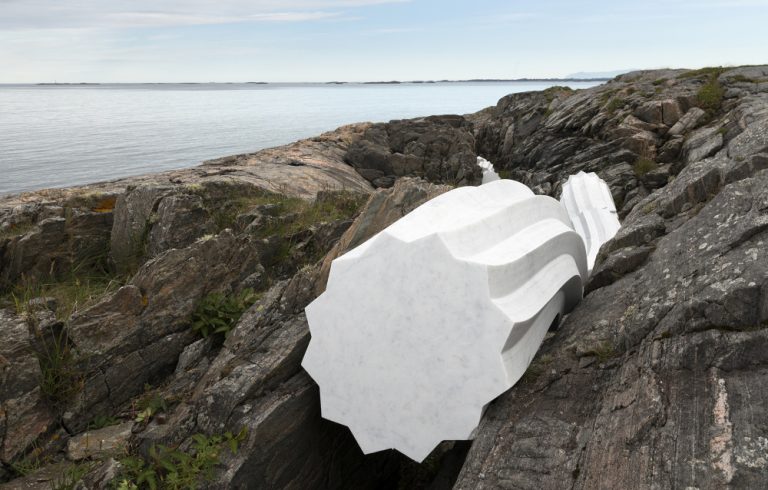
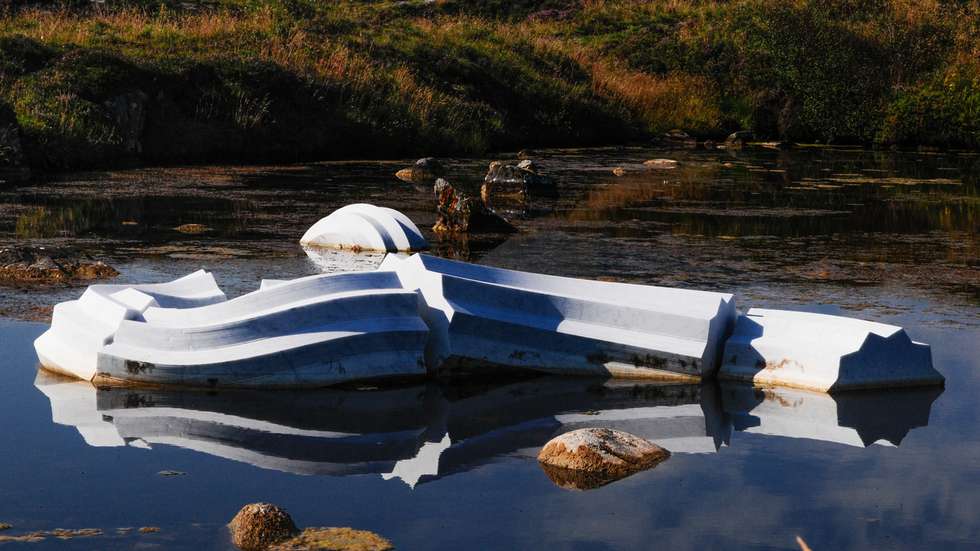
The Atlantic Road on Norway’s west coast is like a real-life rollercoaster hopping from island to island along the outermost edge of the coast. The most distinctive features of the Atlantic Road, runs between Bud and Kårvåg. Columna Transatlantica is a sculptural work, situated by the Atlantic road.
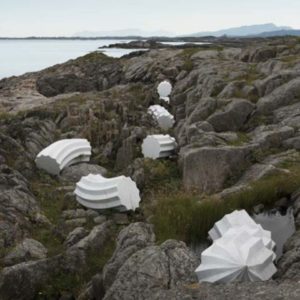
According to Norwegian artist Jan Freuchen, Columna Transatlantica is a reminder of how Norway through history has used the seaway to communicate with the outside world. The sculpture is made of about 40 elements of white marble laid out across a stretch of 90 meters by the ocean.
According to Norwegian artist Jan Freuchen, Columna Transatlantica is a reminder of how Norway through history has used the seaway to communicate with the outside world
The Atlantic Road is one of Norway’s 18 official national tourist routes. It opened in 1989 and was voted “Norway’s Engineering Feat of the Century” in 2005.
“Our country and culture is the result of communication with the countries with which we share the same ocean,” says Freuchen. The artist’s disposition and direction of the different elements suggests that the individual elements were at some point connected into one continuous piece. It has become an important work along a road many consider as one of the world’s most beautiful drives.
Some have called Columna Transatlantica the “marble-worm”
The artwork of “Columna Transatlantica” is about communication, and the shape of the sculptures can give associations to a broken Greek column, but its sharp profile, spaghetti-like and seemingly soft shapes simultaneously suggests otherwise: The ornamental character of Columna Transatlantica can also look like whipped cream from a cream dispenser, from a futile attempt to decorate and beautify the pristine landscape of Vevang.
Some has said it looks like toothpaste. Others have called it Norway’s ugliest tourist attraction. However, the artwork consists of 40 marble elements that have been placed in a winding and broken line on the islets at the edge of the sea. «Columna Transatlantica» is the result of a competition held in 2013, which was won by Jan Freuchen.
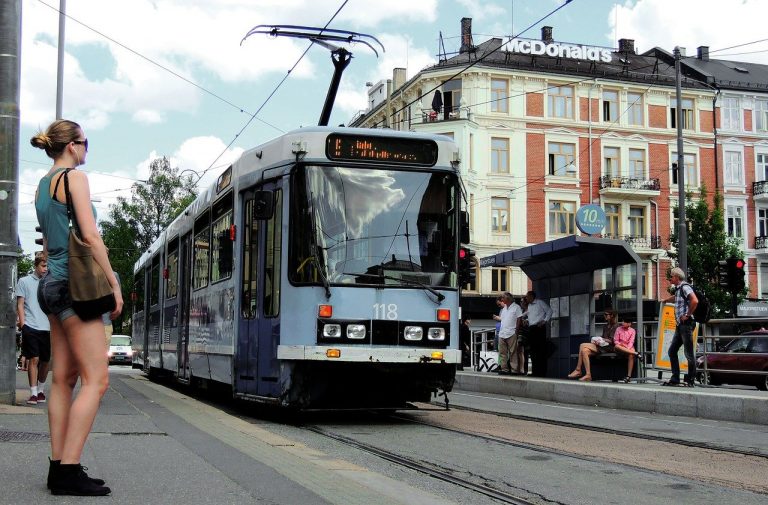
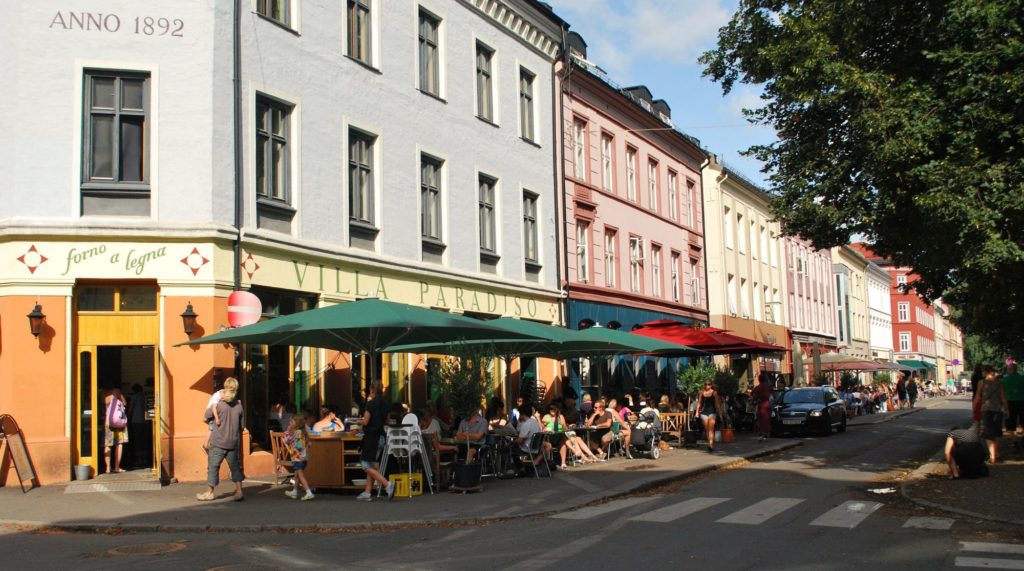
Grünerløkka in Norway’s capital Oslo, known as ‘Løkka’ by the locals, was once just a solid working class residential area. Today it has been adopted by creatives and is the coolest region in Norway’s capital.
Reinventing a city is difficult. Not only has Oslo through a cash injection over the past few years got its futuristic architectural projects, such as the Opera House, Barcode and Fjord City, but the capital seems to enjoy a completely new invigorated lifestyle, offering everything from culture and nightlife to restaurants and shopping.
Grünerløkka, Oslo. Photo: Visit Oslo/Thomas Johannessen
The Grünerløkka region of Oslo has from the late 20th century onwards, become one of the most fashionable areas of Oslo. It has it all, populated as it is with a dynamic mixture of old industrial buildings, vintage designer boutiques, bohemian cafés and bars, and not least cutting-edge exhibition spaces.
Café de Concert, originated by pianist virtuoso and comedian Axel Kolstad, was established in 2003. It has been on the move in Oslo for several years but have now found its home at Vulkan. Last Thursday night every month Kolstad invites music lovers to a free concert where he serves the audience champagne and hot dogs.
Cafe de Concert has now become his atelier, displaying art as well as being a small music venue, where he works and performs.
Cyan Studio opened in 1998 as an art collective for independent freelance photographers and on the last weekend of each month it is transformed into a gallery space, presenting new and thought-provoking exhibitions, encouraging a dialogue between artists and audiences.
In Møllergata 34 you can experience contemporary camera-based art in Fotogalleriet. The non-profit institution was established in 1977 by a trio of artists, Dag Alveng, Bjørn Høyum and Tom Sandberg. It became a foundation in 1979 supported among others by the Norwegian Association of Free Photographers.
The gallery holds an important position in the Norwegian art scene as the only non-commercial institution that fosters contemporary visual art with a particular focus on photography.
In its over 30 year history, the gallery has exhibited works by celebrated and renowned photographers from all over the world.
Gallery Schäffersgate 5
On the ground floor of a charming 1890s tenement building, Schæffersgate 5, you find Galleri Schæffersgate 5, just around the corner from several charming cafés and bars. There are two intimate rooms, the Vestibule and the Gallery, accommodating various two-dimensional visual art. The street name is in fact named after Henrik Ernst Schæffer, a Norwegian teacher who set up a grant in the 1800s to support young artists, so the location of the art gallery is indeed appropriate. The gallery, established in 2011, is run by owner, musician and avant-garde filmmaker Mark Steiner (originally from New York), and visual artists and curators Irene Christensen and Grete Marstein.
Grünerløkka Kunsthall is situated in a 10-piece studio collective, originally constructed in 2009 as a project space for internal use. Today it is a small but chic and minimalistic non-profit gallery, presenting exhibitions from both local and international artists, as well as being the home to several individual artist studios.
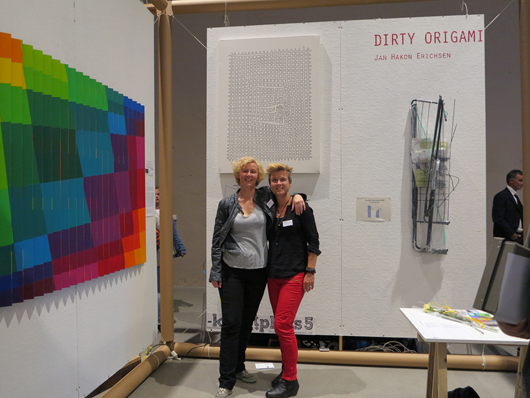
Henriette Stensdal and Viveke Hermansrud in Kunstplass 5
Kunstplass 5is one of Grünerløkka’s newer contemporary art venues, established in 2012. It’s an artist-driven venue, which has presented numerous Norwegian and international artists with a variety of artistic expressions. Kunstplass 5 exhibits a number of genres, including painting, photography, installation and video art, but specifically focuses on art with political undertones that challenges and surprises while also hosting short-term events such as performance art and talks from artists. In its short history, the gallery has presented several thought-provoking exhibitions.
Focusing on promotion of innovative and experimental art and architecture, the non-profit organization ROM, came about in 2005, following the merging og two organizations established in the late 1980s. Today ROM hosts exhibitions, lectures, conferences and organizes public art installations and events.
Located in a former soda water factory near Oslo’s Akerselva River, ROM features an interior exhibition space and a courtyard for large-scale installations, attracting a diverse crowd from the vibrant local community.
S9 Gallery, established in 2009, is a family-owned gallery in central Geünerløkka on the corner of number nine Sverdrupsgate, thus S9. Some of the family members also live in the building. On 80 square meters, S9 Gallery offers art lovers an intimate environment in which to view a diverse body of work from artists working in a variety of genres and mediums that include photography, metal art, sculpture and glass-based art.
Tenthaus, launched in 2011 by Oslo-based artists Helen Eriksen, Ebba Moi and Stefan Schröder, is an artist-oriented project and exhibition arena with an international focus. The context of contemporary art practice is re-examined through a broader field of activity with exhibitions, workshops, artist’s talks and live performances. Tenhaus Oslo also presents a program of live performances, art workshops, and artist talks.
Young Osloites who are used to a more traditional Nordic lifestyle have whole heartedly embraced the change and simply love the diversity of cafés and restaurants in the region.
The food at Bass Oslo in the area’s main street Thorvald Meyersgate is pure and potent as its minimalistic interior. Cured duck with pickled fennel is the locals’ favorite. We enjoyed asparagus with cheese cream, brown butter, and hazelnuts.
Delicatessen is a neighborhood tapas restaurant well worth a visit. They don’t take reservations, but it is the perfect place to pout over some serrano ham and twelve-month manchego with a glass of cava. There’s an informal atmosphere in an intimate and cozy setting and they have served classic and modern tapas since 1999.
Oslo’s oldest winebar,Dr. Kneipp’s in Markveien, features maps of different wine producing countries on the wall and gives you an idea of the many smooth and delightful tipples this bar has on offer. Dr. Kneipp’s also has a decent menu and is absolutely worth a visit.
Restaurant Kontrast, Vilkan
Restaurant Kontrast in Mathallen has a Michelin star and advance booking is necessary. Kontrast is a modern Scandinavian restaurant with a focus on using ingredients that are both local and at the peak of their season. The chefs at Kontrast are experimental, using the ingredients in unique ways.
At the intimate six-table bistro Ostebutikken let your waiter recommend a plate of the market’s latest offerings. Their homemade cassoulet is a find, although cheese is the name of the game.
Located on the banks of the Akerselva River, Vulkan was once a Norwegian industrial centre. After being somewhat left to ruin, a regeneration project has seen the urban area given a new lease of life. A real draw for many is Mathallen; a humungous indoor food market filled with thirty stalls. Many who work in the area head to Mathallen for lunch. You can get your hands on traditional Nordic food to Asian street cuisine.
Also in Thorvald Meyersgate, you’ll findMunchies serving one of Oslo’s best burgers with sweet potato fries. If you’re starving after a long night out, Munchies will do the trick.
Café/bar Oslovelo is a living proof of the outdoor loving Norwegians. The neighborhood’s perhaps coziest bar and coffee house doubles as a bike repair shop, and in winter the staff tunes your skis of necessary while you enjoy a drink in the winter months.
Territoriet in Markveien is the spot for both serious and aspiring oenophiles. There are no table reservations, so just pop in. The friendly, extremely knowledgeable staff will guide you through an encyclopedic wine list, make selections based on your preferences, and even teach you how to open the bottle properly.
The Basque-style Txotxhas specialized in pintxos and shared plates, like salty bacalao or grilled oysters.
Looking for menswear? Then Dapper should be on your must-visit list. The combination of a menswear shop, a bike shop and a barber shop is a unique concept, and the prices are affordable too.
Ensemble is a painfully cool Scandinavian boutique established by the former stylist Marte Økelsrud, who has an excellent eye for showing Scandinavian brands alongside international favorites.
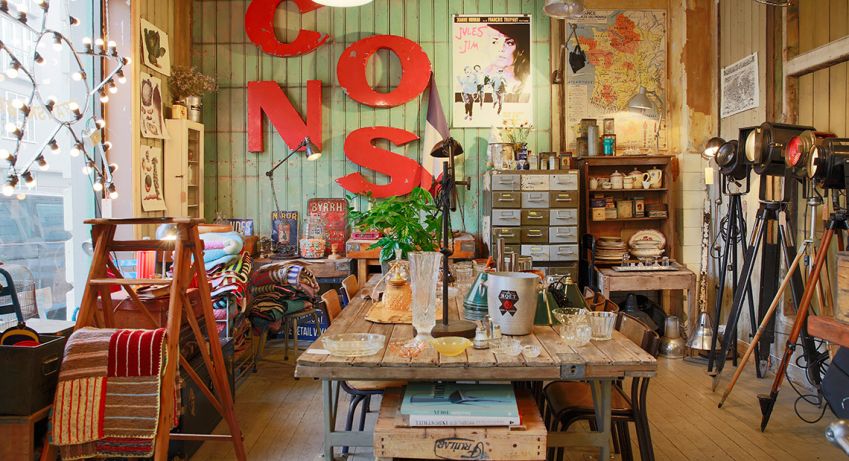
Fransk Bazaar
The antique shop Fransk Bazar was established by a French expat and has a unique mishmash of high-end trinkets, gadgets, and objects collected from all over Europe. The French/Norwegian couple is very helpful and has always new exciting merchandise like furniture, lamps and gadgets in store.
Stylish jewelry with a Scandinavian imprint, often inspired by Norwegian nature, is designed and made in Hasla’s studio in Valle, in the Setesdal Valley. The shop Hasla
in Grünerløkka displays the rich handcraft traditions, which Hasla has developed and maintained over many years. Hasla designs and makes timeless high quality jewelry based on a simple, stylish and Scandinavian design philosophy.
Åsa Gorsmark, owner of Vwlouria Vintage
Vintage lovers will fall in love with the unmissable Velouria Vintage. Looking for treasures, just start digging. You may find brands like Prada, Chanel and Hermes; silk shirts, party dresses or just a pair of your favorite Levi’s.
Well, that was it. There are plenty more places to visit. We just wanted to give you a selection of what might remind you of for instance the Montmartre district in Paris.
Just north-east of Oslo, on the road that winds into the woods in Eastern Norway at the Swedish border, you find Rømskog Spa & Resort, originally founded as a Zen resort by the Norwegian shipping heiress Tone Bergesen.
Silence. View of a forest lake. Vegetarianism. Massage. Yoga. No children. Japanese atmosphere with bamboo sandals and kimono – in the middle of Norwegian wilderness. Shipping heiress Tone Bergesen was convinced of success when she realized her spa dream at Vortungen Lake in Rømskog, Østfold and opened her 4,000square meter spa and resort facility in 2008.
Rømskog Spa & Resort, press photo
However, 2 years later, her dream was broken and new owners took over and transformed the Zen facility into a luxury spa and resort hotel, still emphasizing silence and well-being.
Rømskog Spa & Resort was established as a Zen center
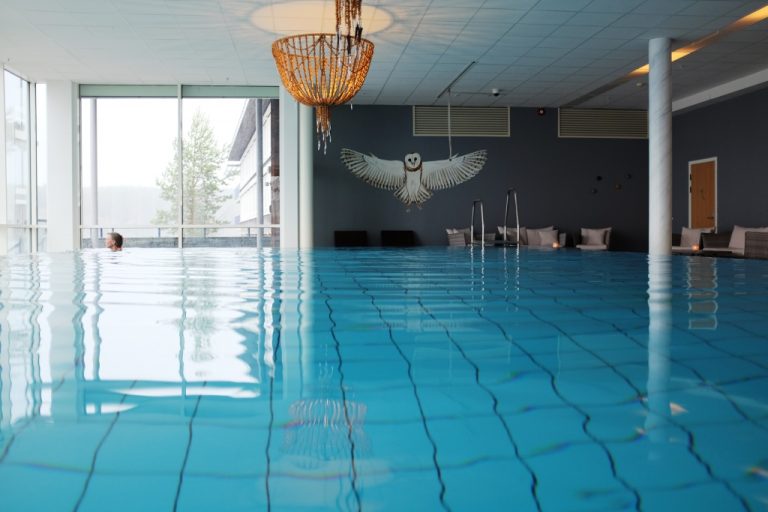
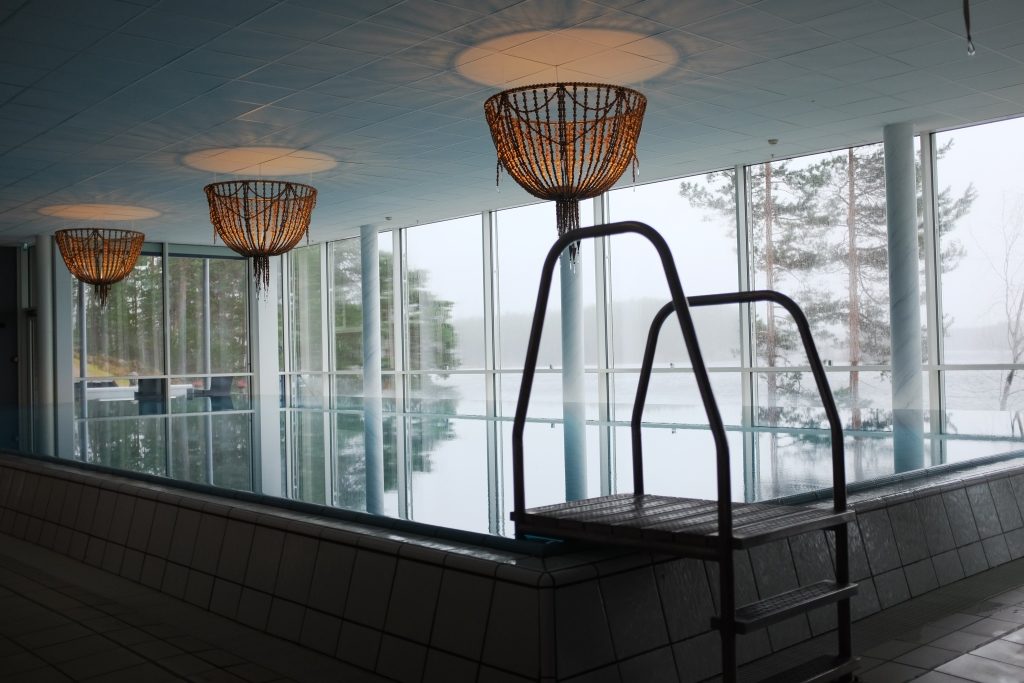
Only 90 minutes’ drive from downtown Oslo, located at the tranquil shores of Lake Vortungen, you find one of Norway’s leading luxury spa hotels, Romskog Spa & Resort. The resort is deductively relaxing with views of the lake from every room and from the restaurant and reception as well as the indoor and outdoor swimming pools.
Behind the hotel is the lake and acres of forests where you can bike, walk, canoe or rent a boat for fishing in the summer months. In autumn there are plenty of delicious berries and mushrooms to be found along the lush wooden paths. Winter season is perfect for cross country skiing.
Some of the original Japanese artwork is still intact
On the outside of the original Zen center, still with some of the Japanese artwork intact and all floors made from pressure treated bamboo, it’s a modern looking concrete, wood and glass construction. Inside, there’s the comfort of a modern luxury hotel.
Behind the hotel is the lake and acres of forests where you can bike, walk, canoe or rent a boat for fishing in the summer months
If you want to hire bikes, a boat for fishing, canoe or paddleboards, the reception personal will readily assist you. Because of the hotel’s lovely setting, the hotel is popular for wedding parties, celebrations, business meetings and conferences or just relaxing. 18 wedding parties took place at Rømskog Spa and Resort in 2017.
Marketing manager May-Therese Kilde Halvorsen and Managing director Niclas Norman
Silence is golden at Rømskog Spa & Resort. The Swedish hotel manager Niclas Norman tells us the story of an Asian guest staying at the hotel. “One day he was missing for lunch. They started looking for him, and found him not far away, laying on his back by the lake. When asked if something was wrong, he smiled and answered, “No, not at all. I am just lying down listening to the silence. I have never heard that before!”
The big draw at Rømskog Spa & Resort,is the excellent spa
The big draw at Rømskog Spa & Resort, though, is the excellent spa, where a big central pool is surrounded by Japanese bath, steam sauna, sauna and a cold pool and an on-site spa center offers various healthy treatments for the whole body.
Wall decoration at Rømskog Spa & Resort
The rooms are simple, but comfortable, most of them looking towards the lake. There are 39 rooms and 5 suites.
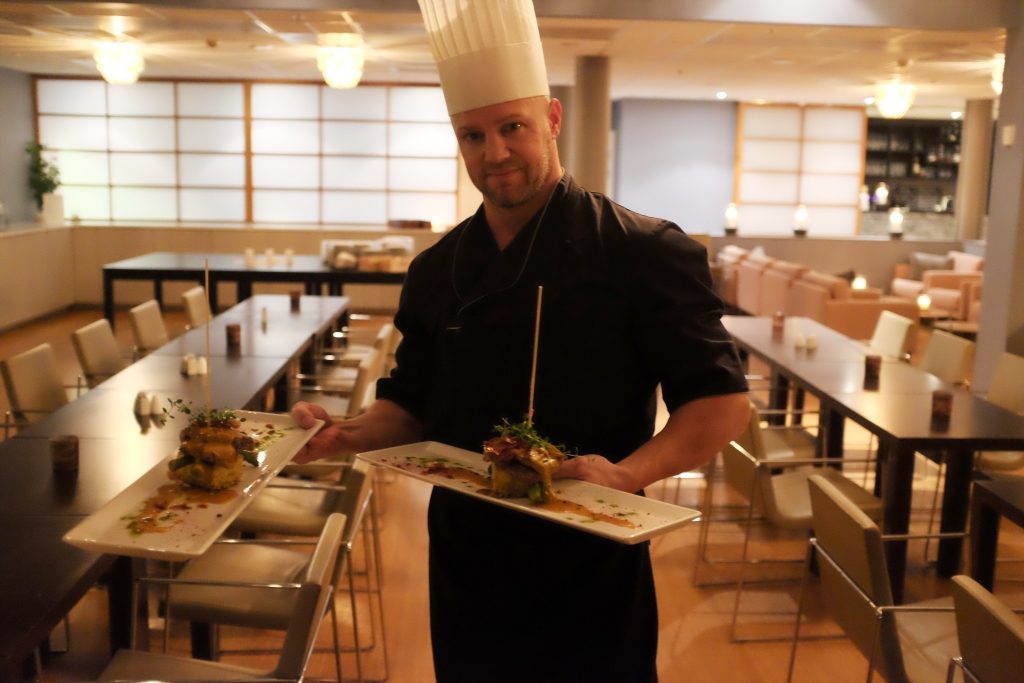
Anders serving beef medallions
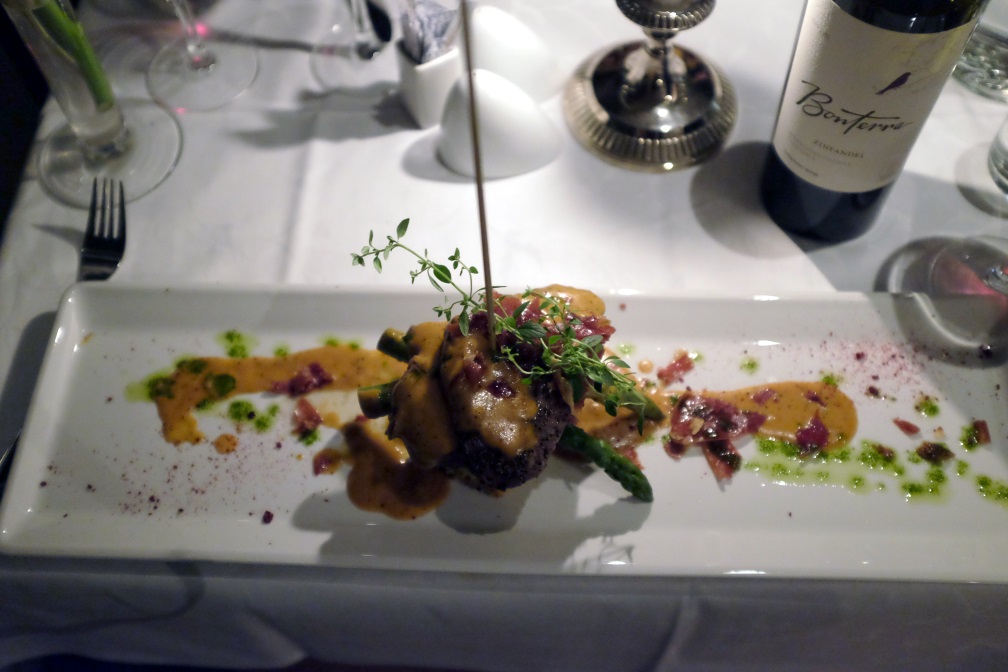
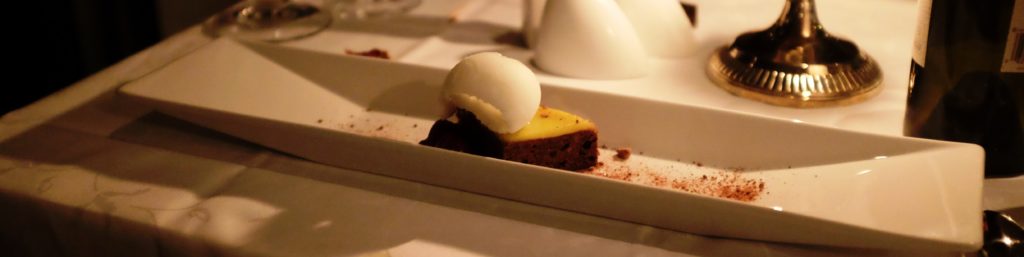
The restaurant offers a set menu every evening. We chose a 3-course dinner consisting of a delicious creamy lobster soup, beef medallions with pepper sauce, Cognac sauce, potato cake and asparagus and for dessert a lovely cherry cake.
Delicious creamy lobster soupBeef medallions with pepper sauce, Cognac sauce, potato cake and asparagusFor dessert a lovely cherry cake
There is also a charming bar offering after dinner snacks and drinks.
Enjoy a drink in the bar
“There’s also a lavvu (a temporary dwelling used by the Sami people of northern Scandinavia) outside the hotel, accommodating 30 people and a barbeque station that is popular all year round,” says marketing manager May-Therese Kilde Halvorsen. “There are many hiking trails, an obstacle trail and a quiz trail. We tailor-made activities and always make sure that we meet our customers’ specific wishes,” she adds.
Relaxing atmosphere at Rømskog Spa & Resort
“The last two years we’ve had a very pleasant increase in number of guests,” says Norman. “And we’re looking forward to welcome more guests next year,” he concludes. and Swedish hotel manager Niclas Norman, who is very proud of the hotel’s flooring, made by pressure treated bamboo. And then he tells us about an Asian guest
Sound of Silence in Luxury Spa Hotel Outside Oslo, Norway, Text and Photos, Tor Kjolberg
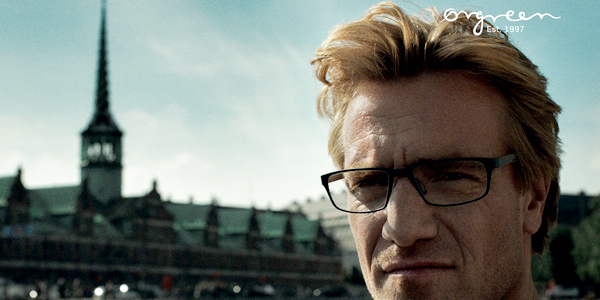
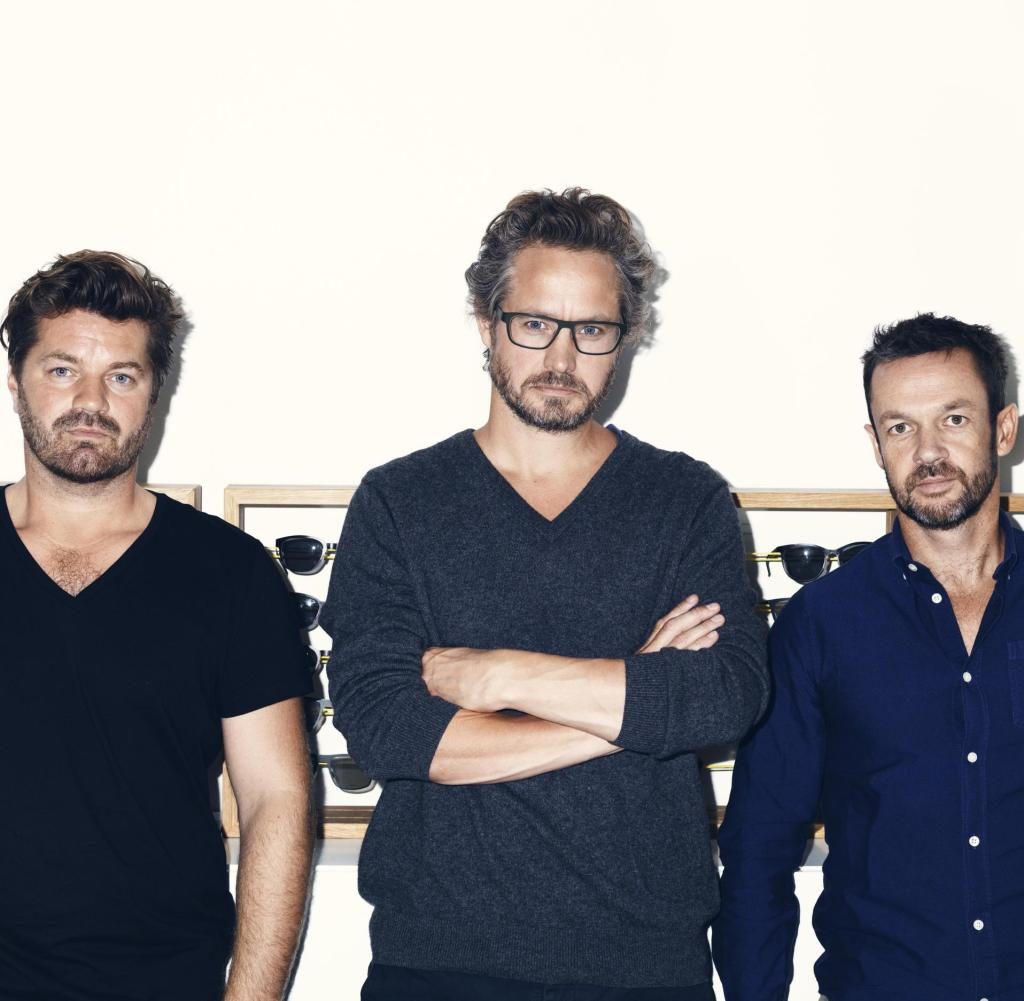
In 1997 three Danish friends founded Ørgreen Optics in the design capital Copenhagen. They wanted to design strong and timeless frames for quality-conscious individuals all over the world. This brand has established itself as Danish design at its best and continues to expand its titanium success story with the support of optical retailers worldwide.
The Ørgreen trademark symbolizes quality prescription eyewear and sunglasses made in titanium and beta-titanium designed to last. The Ørgreen optics look is playful, dynamic and sometimes provocative. They are made by hand in Japan, known and respected for high standards and irrefutable quality, individually crafted with more than 100 processes, each frame can take up to six months to achieve its penchant for perfection.
The three friends, Henrik Ørgreen, CEO and founder and Tobias Wandrup, the creative force behind the brand and Gregers Fastrup proudly declare that “boring is over”. They tug at traditions, challenge them and continuously set new design agendas.
The Ørgreen trademark symbolizes quality prescription eyewear and sunglasses made in titanium and beta-titanium designed to last
Their colors are developed in-house and skillfully carried out at some of the world’s leading color labs in Japan, with a coloring process that consists of more than 15 individual steps.
Orgreen’s Ursula 398 Moody
The company started with sunglasses and planned to be the first ever sunglass brand to come out of Scandinavia. Their first product came out in 1999. Rather than build on fleeting trends, Ørgreen has created a style that is recognizable and consistent throughout all timeless designs. Today there are more than 400 signature colors that are exquisitely composed in an array of opposites, from strong to fragile, intense to tranquil, raw to refined, sweet to serious and audacious to understated.
From left: Tobias Wandrup, the creative force behind the brand, Henrik Ørgreen, CEO and founder and Gregers Fastrup
“The eyewear market has become competitive, complex and more serious. It is to our advantage that we entered the market as a new independent brand over 15 years ago – there were only probably around 5 or 10 brands then that were actually emerging,” says Henrik Ørgreen.
Ørgreen has created a style that is recognizable and consistent throughout all timeless designs. Today there are more than 400 signature colors that are exquisitely composed in an array of opposites
The values and design concepts of acclaimed Danish designers Arne Jacobson and Louis Poulsen are embodied in each frame, with an Ørgreen twist of unique details and subtle touches, inspired by street culture, extreme sports and classic cars. The Ørgreen aesthetic is playful, dynamic and sometimes provocative, but never arrogant.
Ørgreen has created a style that is recognizable and consistent throughout all timeless designs
It has of course been attempts by other companies to reproduce the Ørgreen concept, but the impact of being the innovator of design has ensured the company its place on the map in terms of innovation and new ideas.
With retailers in more than 40 countries world-wide, Ørgreen still keeps close to the city where it all started 20 years ago. The company HQ is thus situated in an historic building in the heart of Copenhagen.
Signature Style Optics from Denmark, written by Tor Kjolberg