
Scandinavian Eel

Anguilla anguilla. Eels are mythic creatures, spending their youth in the sea but their adult life in fresh water.

As tiny fry (elvers) they take the grand tour of their life, spending three years swimming from the Saragossa Sea off the American coast thousands of miles across the Atlantic, bound for the streams and rivers of Europe and North Africa.

They then live their very long adult life in fresh water, before going on the long pilgrimage back to the warm sea of their youth to spawn and die.
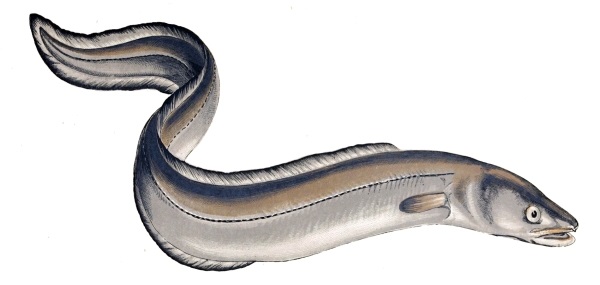
141116-eel
These days, wild eel is a threatened creature. This is partly due to overfishing – including in rather mean ways, using flares to illuminate the water at night, when the eels are most active. However, the most serious threat is the damage to the eels’ habitat caused by pollution and intensive drainage.

Nowadays, eel farming is big business, and the farmed eels are actually good to eat.
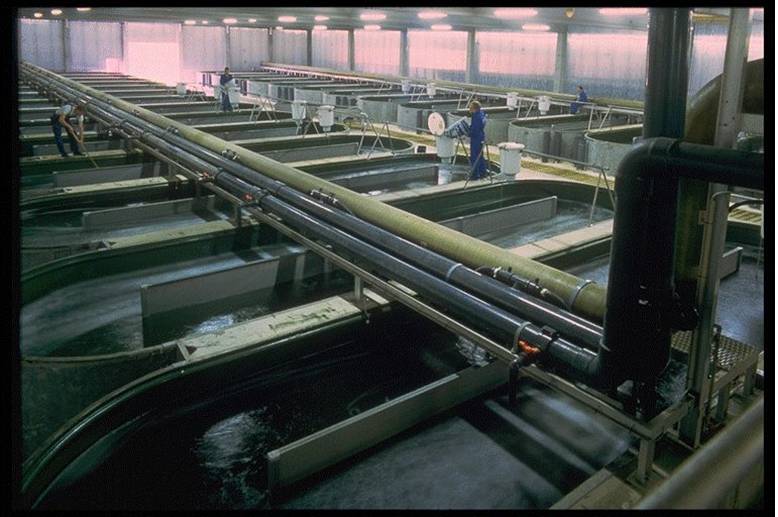
Scandinavian silver eel

In Scandinavia, eating eel is a male initiation rite, a contest, the proof of manhood being the number of times the bones can reach around the plate, and there is schnapps to go with most of the pieces of eel.

141116-eel-as-food
Appearing and taste
Eels have small heads and very tough, black skin. They wiggle like a snake and they even taste very much like snake. They are more popular dead than alive – as living creatures, most women find eels nasty, slimy beasts. Wild eels can reach 1.5 meters in length, although specimens this big are rarely seen. Most eels for frying are 30-40cm long. Those for smoking need more fat, which comes with age.

Eels in bucket
Eels in bucket

Buying and storing
Smoked eel must be shiny, firm and with absolutely no wrinkles. Eel will not keep more than a day, so cook it on the day it is bought; once cooked, eel will keep for several days in the fridge.

141116-eel-dish
Culinary uses
Eel flesh is rich and robust enough to cope with strong flavorings, including serious spices, vinegar, lemon, beer, horseradish and/or garlic.

Eel has a great, rough taste and the flesh is fine, very firm and very, very fatty. When it is smoked the fattiness is a virtue, but if you are boiling or frying it, eel needs special care to get rid of some of the fat, and be as wonderful as it really can be. Grilling is the perfect way to cook fresh eel with the skin on; the fat has time to drip away, leaving succulent meat.

If you are pan-frying it, the eel should be skinned. Fry it once until the fat and juices run, then transfer it to a colander and wash it in cold water. Dry the eel, dip it in seasoned flour, then fry again in browned butter.

Grilled eel
Grilled eel

The traditional trimmings are creamed potatoes, though honestly this combination is not very easy to survive as the fat content is alarmingly high. It’s tasty but devastating. You have to stay in bed for a day to digest, like a snake that has swallowed a whole goat.

There are other delicious ways to eat eel without the health alert: I suggest new potatoes and a vinegary cucumber salad with dill. Or, as the recipe below, braised in dark beer. Leftovers are beautiful if soused.
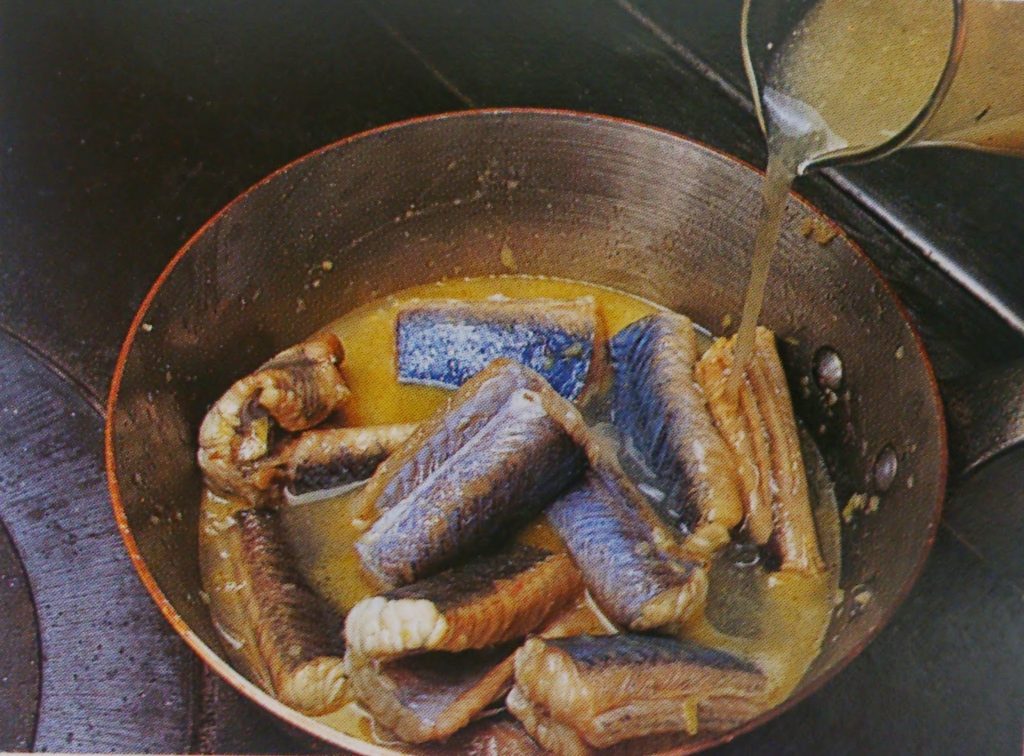
141116-braised-eel
Eel braised in beer
The interesting flavor if this dish comes from the dark beer, lots of herbs and a touch of vinegar, contrasting with the delicious fatty fish. The strange thing about cooking with beer is that the bitterness from the hops diminishes during cooking, leaving an arousing, pleasant complexity. Eat simply with new potatoes.

800g eel, cut into large chunks
2 tablespoons salted butter
4 tablespoons cider vinegar
A sprig each of fresh tarragon and sage
1 bay leaf
1 teaspoon fresh thyme leaves
250ml dark, strong beer
200ml sweet cider
Coarse sea salt
1 teaspoon ground black pepper
150ml whipping cream
500g chopped mixed fresh herbs: parsley, dill, chives, chervil and sorrel
(Serves 4)

Fry the eel in butter in a deep, thick-based pan, browning it lightly all over. Add the vinegar and fry it until the liquid has evaporated. Add the sage and tarragon sprigs, bay leaf, rhyme leaves, beer, cider, salt and pepper. Leave to braise slowly for 15 minutes until tender. Remove the eel from the pan. Pour in the cream and reduce to a thick sauce over a high heat. Add the chopped fresh herbs, and salt and pepper to taste.  Return the eel to the pan and then serve.

Feature image (on top) Smoked eel

Written by Tor Kjolberg
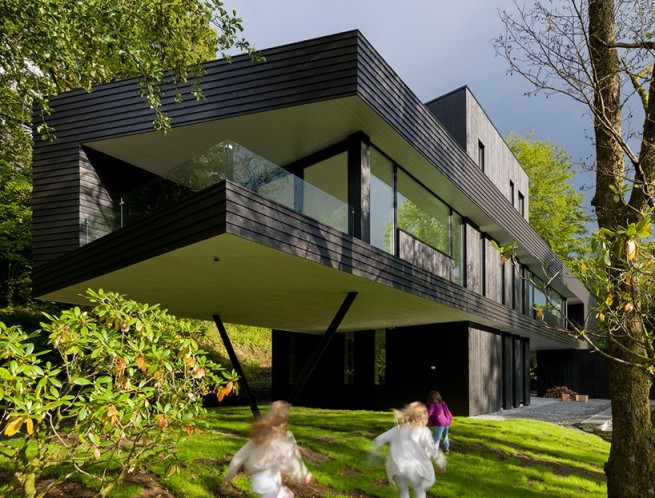
Villa Saunders in Bergen

0

Bergen-based, Canadian born architect Todd Saunders’ self-designed home is a soaring symphony in Norwegian wood.

Todd Saunders of Saunders Architecture completed his project of designing his own family home in 2014. The house, nestled in an abundant suburb of Bergen, Tveirerås Garden City, is 35m long and 6m wide, consisting of two main structures, cladded in a stained, dark wood.

Villa Saunders in Bergen
Todd Saunder’s own family home was completed in 2014.

The suburb was laid out by pioneering local architect Leif Grung in the early 1930s. Grung’s elegant functionalism has weathered well, and the immaculately maintained plots, with their verdant planting and far-reaching views, create an oasis of calm.

https://www.dailyscandinavian.com/villa-saunders-in-bergen/
Due to the colder climate of the northern hemisphere, the rooms are warmed by underfloor heating powered by geothermal energy.

About his house, Saunders said “it’s like three sticks, stacked on top of each other.” The residence displays clear modernistic, architectural elements with flat roof, ribbon windows and subtle details. Due to the colder climate of the northern hemisphere, the rooms are warmed by underfloor heating powered by geothermal energy.

081116-villa-saunders-bergen-2
The lifted element contributes to the illusion that the house is floating in the forest, as well as creating a covered outside space.

https://www.dailyscandinavian.com/villa-saunders-in-bergen/
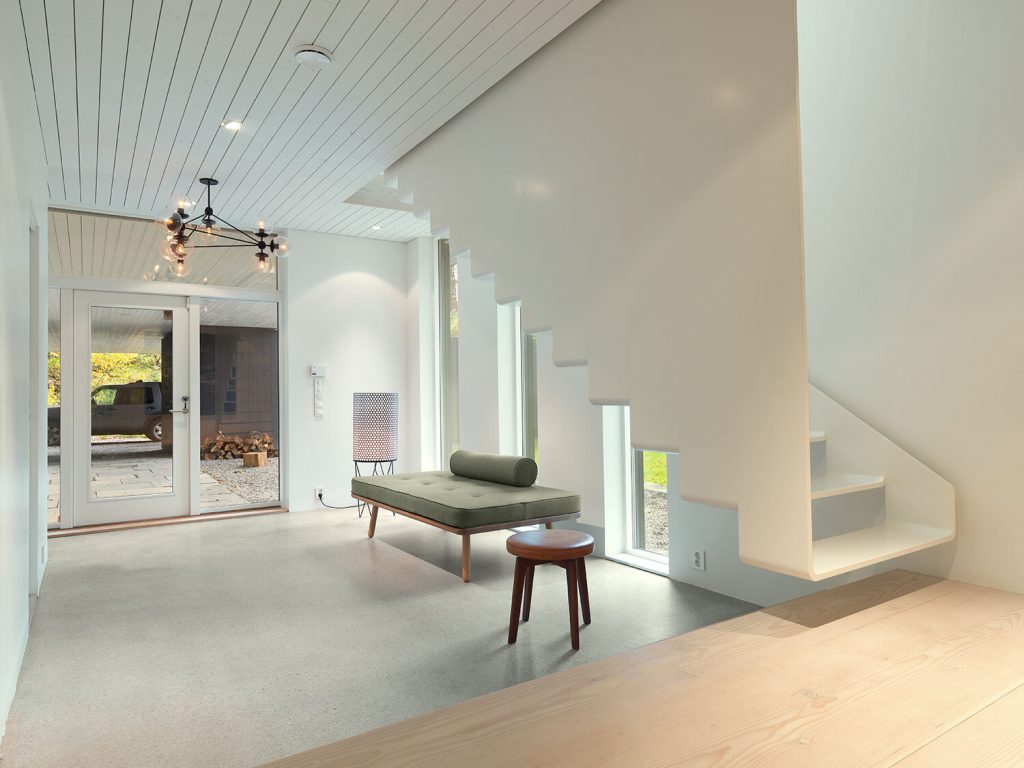
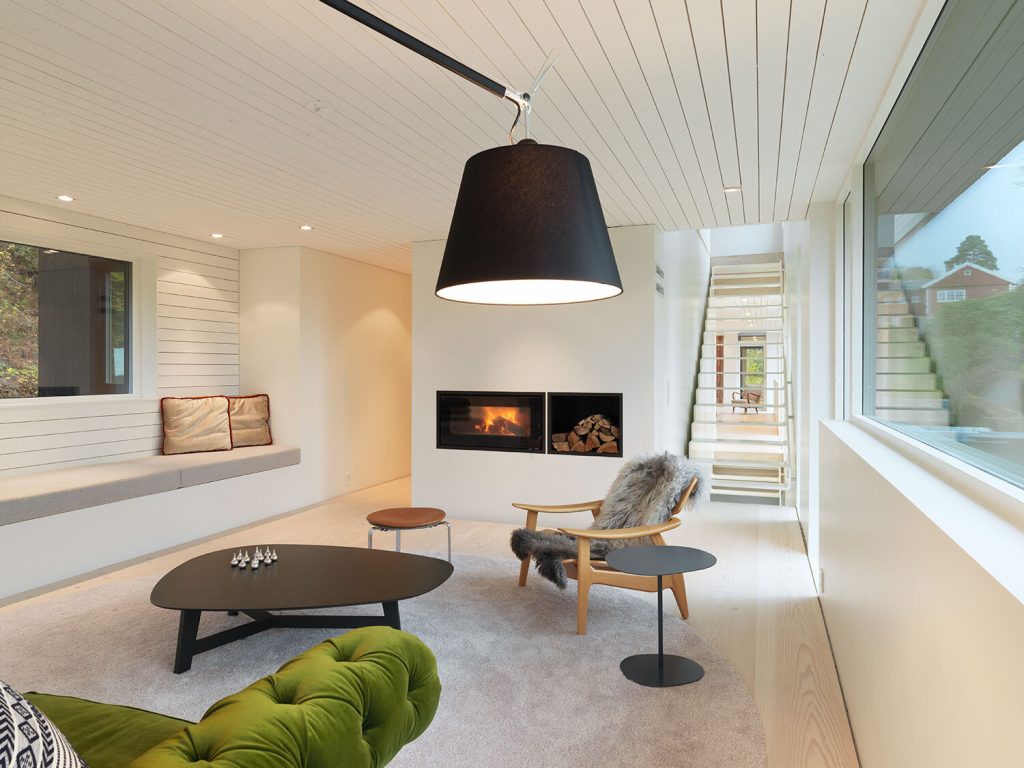
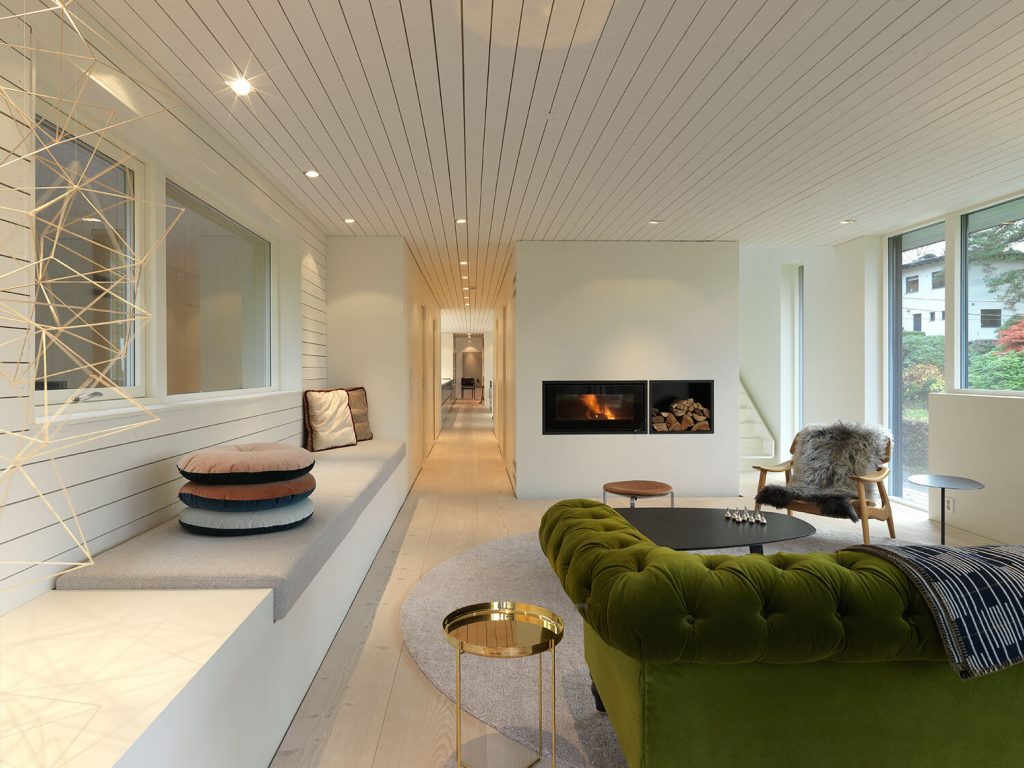
The bright livingroom.

Internally, the first floor contains the main entrance and the storage areas of a bicycle pod, kayak pod and technical pod. A library is situated in the roof of the vertical element, while a large roof terrace can be enjoyed above the horizontal structure.

Related: Artistic Architecture in Norway and Newfoundland

Villa Saunders in Bergen
in contrast with its dark exterior, the rooms are light and illuminated by large windows.

The first view of the house is up a steep, narrow driveway, from which one gets tantalizing glimpses of the ribbon windows, flat roofs and shuttered facades of the vintage Grungs. in contrast with its dark exterior, the rooms are light and illuminated by large windows. Additionally, the architect collaborated with Hannes Wingate for the interior design, resulting in the use of light and refined materials, mix of Nordic and vintage furniture pieces.

Related: Mathematical Tendencies with Their Influence on Scandinavian Architectural Design

Villa Saunders in Bergen
The architect collaborated with Hannes Wingate for the interior design.

Set on an east-west alignment, just like its 80-year- old neighbours, the new house feels utterly integrated into the site. The last remaining plot in Grung’s masterplan, the land was originally designated as a communal park but had been abandoned to vegetation.

Villa Saunders in Bergen
Bathroom

Overall, villa S is an exercise of contemporary house design which addresses the lifestyle, climate, and connection between the natural and built environment- making for an ideal family space.

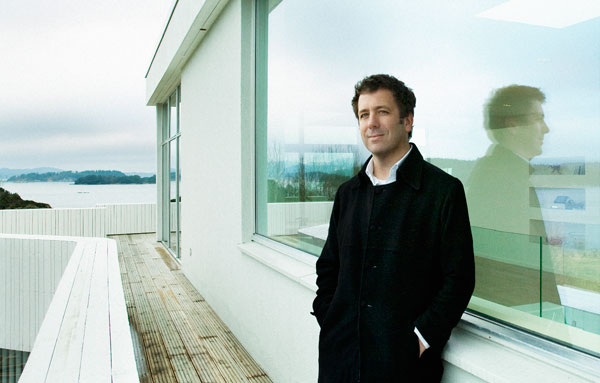
Todd Saunders outside Villa Saunders

Todd Saunders
Born 1969 in Gander, Newfoundland, Canada
Master in architecture from McGill University, Montreal
Company: Saunders Architecture, Bergen
Guest professor at Cornell, New York
Considered one of the world’s five best architects by Huffington Post
Listed on Baunetz’ 100 Best Archictects
Villa S, completed 2014

Villa Saunders in Bergen, written by Tor Kjolberg
All images by Saunders / Bent René Synnevåg


14 Funny Facts about Scandinavia

Usually Scandinavia is associated with winter sports and fjords; countries inhabited by tall, statuesque blondes and Vikings.  Yet there is so much more to these Northern countries. We’ve compiled a list of strange, silly and superb Scandinavian facts. Read on!
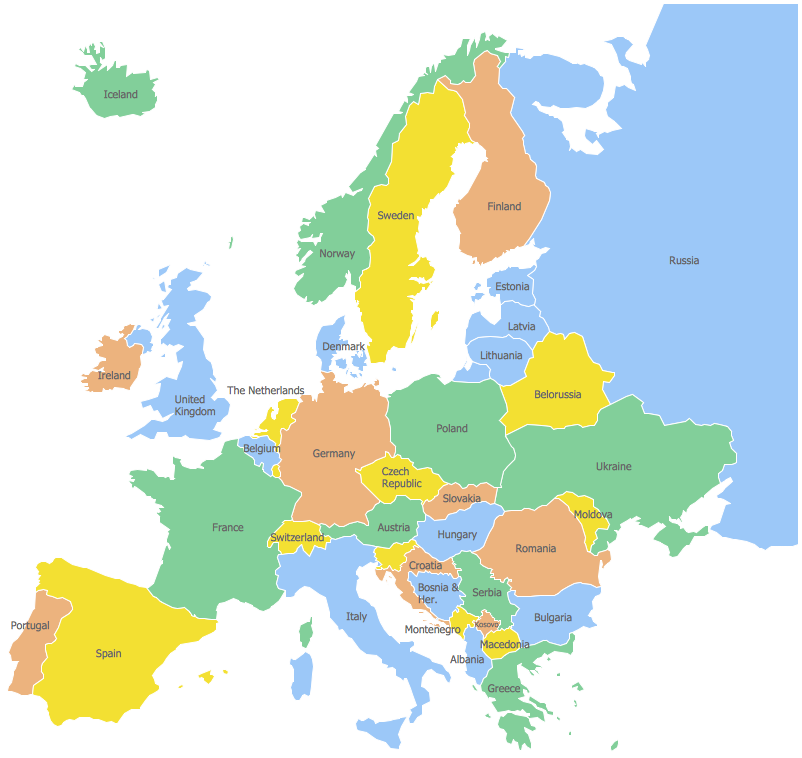
111116-europe-map
1) Norway
During Norway’s Polar Nights, the sun is up for only 3 hours a day in some parts (and not at all in others).

Polar night in Norway

2) Denmark
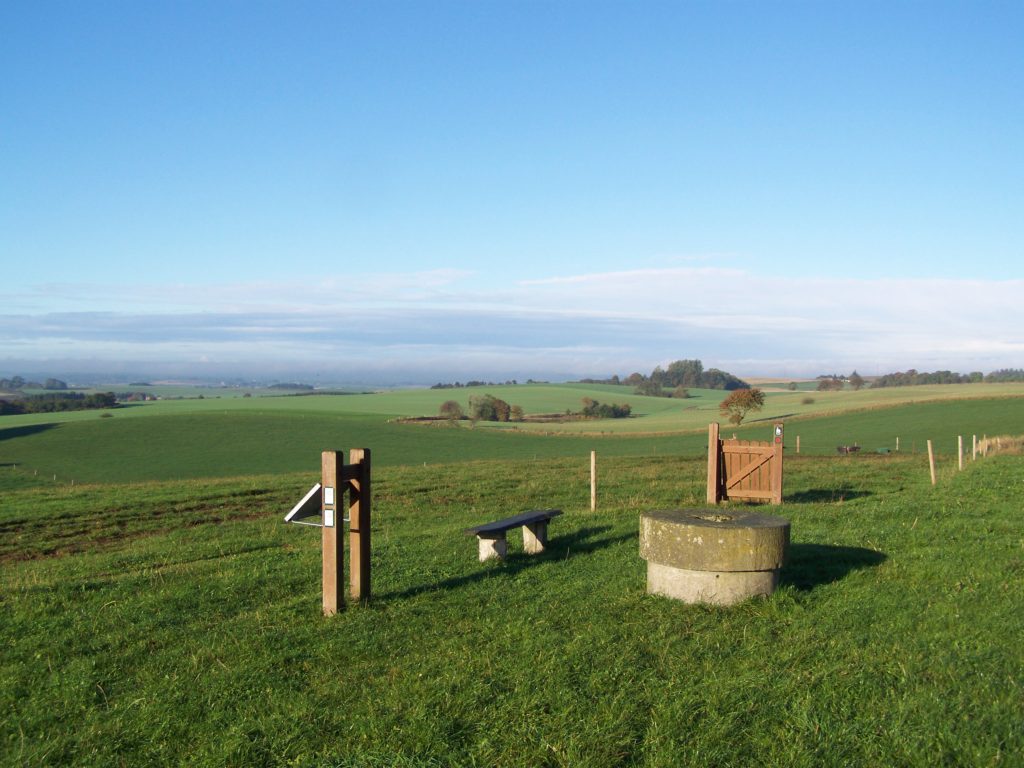
Denmark doesn’t do mountains. Their tallest ‘hill’ is a mere 170 meters high. It’s called Møllehøj.

Denmark's highest mountain, Möllehöj
Denmark’s highest mountain, Möllehöj

3) Sweden
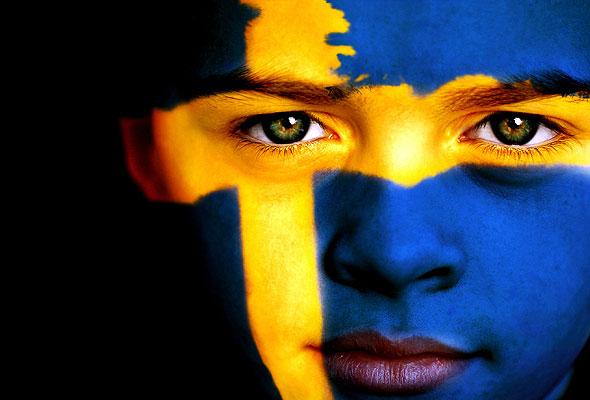
The most popular souvenir in Sweden is the commonly seen “moose-crossing” warning sign. Many are stolen from the roadside every year.

Moose crossing sign from Sweden

4) Denmark
In Denmark, if you’re not married by the age of 30 you get a pepper shaker as a gift. Men are called Pepperman (“pebersvend”) and females Peppermaid (“pebermø”). We don’t know why…

Pepper man cake in Denmark

5) Sweden
Sweden is a trailblazer when it comes to inventions and innovations. The zipper, the fridge, the pacemaker and the computer mouse are Swedish. Not forgetting IKEA and H&M. The stylish lot.

Did you know that the zipper is a Swedish invention?

6) Denmark
The inventors of LEGO® got things started in Billund, Denmark in 1932 manufacturing not toy bricks, but stepladders! Naturally, Billund is now the home of Legoland Theme Park.

111116-lego-denmark
7) Norway

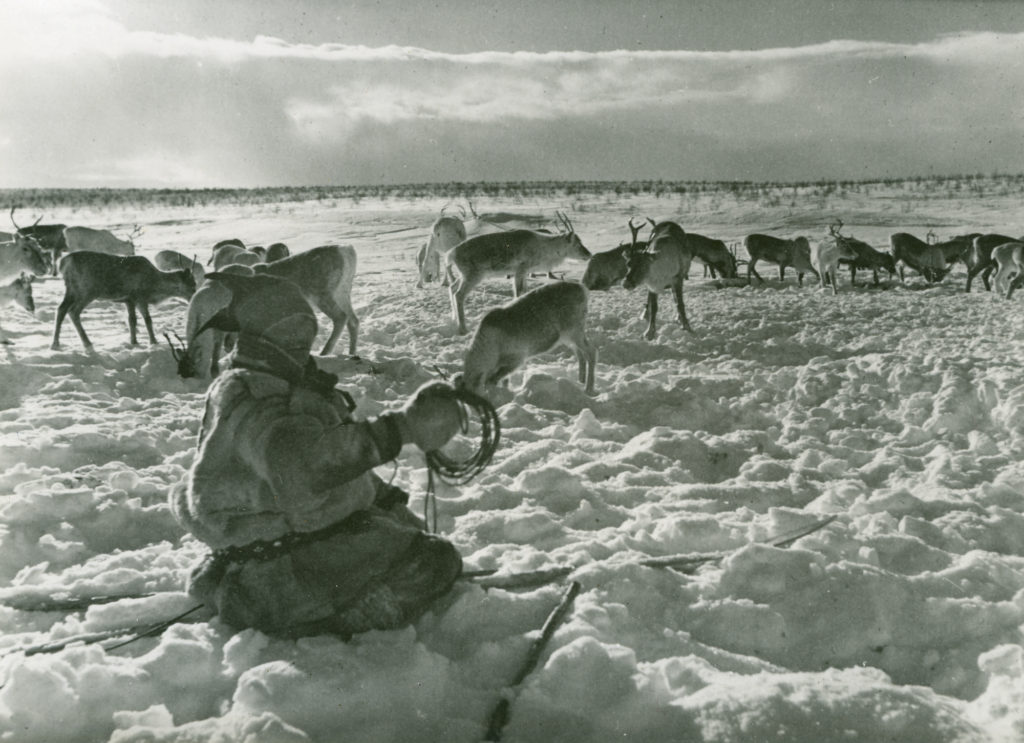
You herd it here first. The world’s largest population of arctic reindeer herders can be found in Norway!

Sami people noth of the Arctic circle in Norway

8) Norway
Norway is just a little bit larger than the US state New Mexico and two thirds of Norway are mountain regions.

Just have a look at the map above.

9) Sweden
During Easter in Sweden, which is a well-known holiday here, children dress up and go from home to home asking for candy, similar to Halloween!

Easter in Sweden
Easter in Sweden

10) Sweden
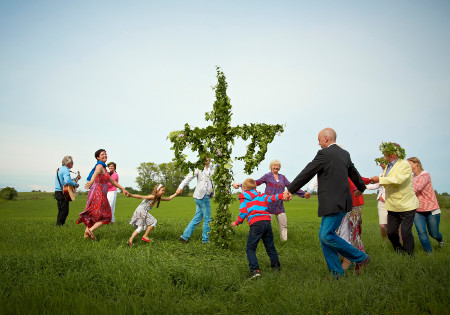
During Midsummer, the Swedes dance around a maypole and sing songs where they pretend to be frogs, pigs, horses… ridiculously catchy too, if you’re lucky enough to get to experience this, you’ll be humming the songs for the rest of your holiday.

Midsummer in Sweden
Midsummer in Sweden

11) Denmark
The Danes were recently crowned as the happiest people in the world

Happy Danes
Happy Danes

12) Sweden
The Swedes recycle so much of their waste, so they have to import it from Norway so they can fuel their energy programs.

111116-recycling-sweden
13) Norway

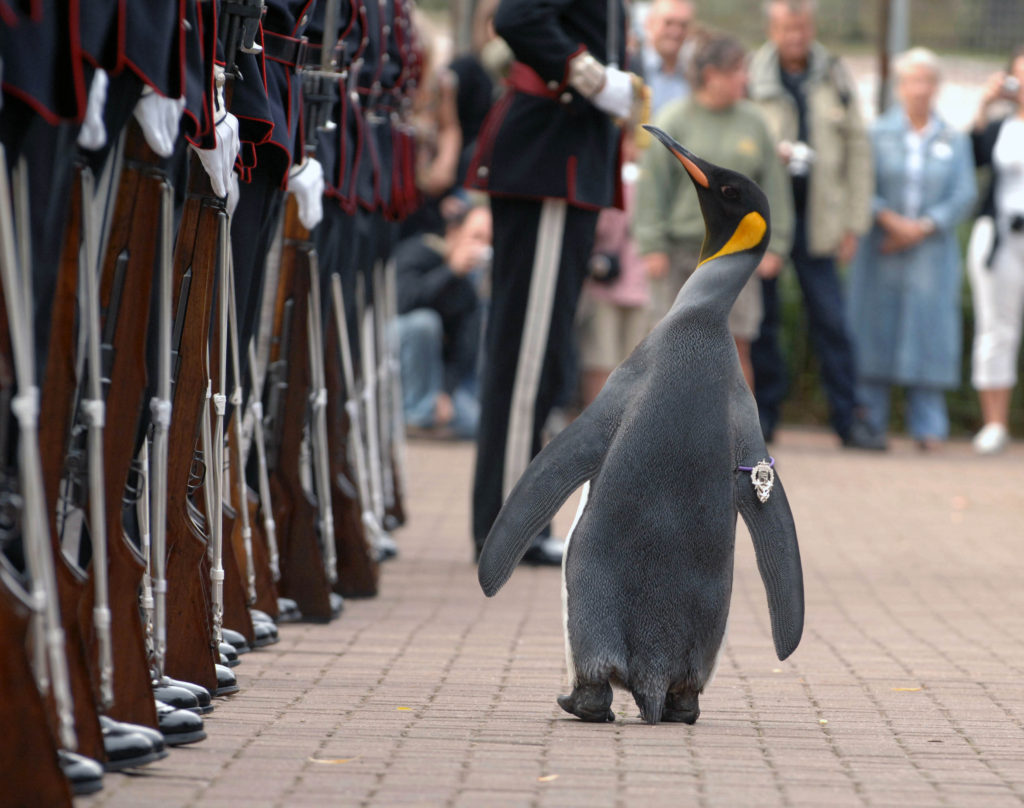
In 2008, Norway knighted a penguin! The penguin in question is called Nils Olav and prior to his knighthood, was promoted to Colonel in Chief of the Norwegian Army.

Nils Olav the Penguin inspects the Kings Guard of Norway after being bestowed with a knighthood at Edinburgh Zoo in Scotland. The King's Guard adopted the penguin as their mascot in 1972 during a visit to Edinburgh for the annual Military Tattoo.
Nils Olav the Penguin inspects the Kings Guard of Norway after being bestowed with a knighthood at Edinburgh Zoo in Scotland.
The King’s Guard adopted the penguin as their mascot in 1972 during a visit to Edinburgh for the annual Military Tattoo.


Danish boy feeding himself spaghetti

14) Denmark
The Danes eat more pasta than any other country in the world.

14 Funny Facts about Scandinavia, compiled by Admin

Roald Dahl – First Norwegian Air Shuttle’s British Tail Hero

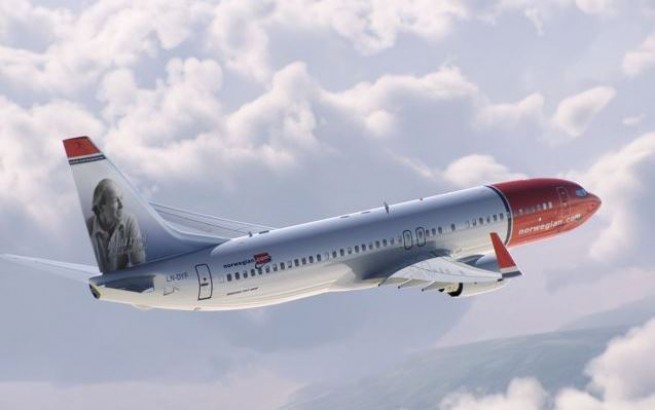
The author Roald Dahl becomes Norwegian Air Shuttle’s first British distinctive person to be featured on a Norwegian Air Shuttles’ vertical plane tail marking the author’s 100th anniversary this year.

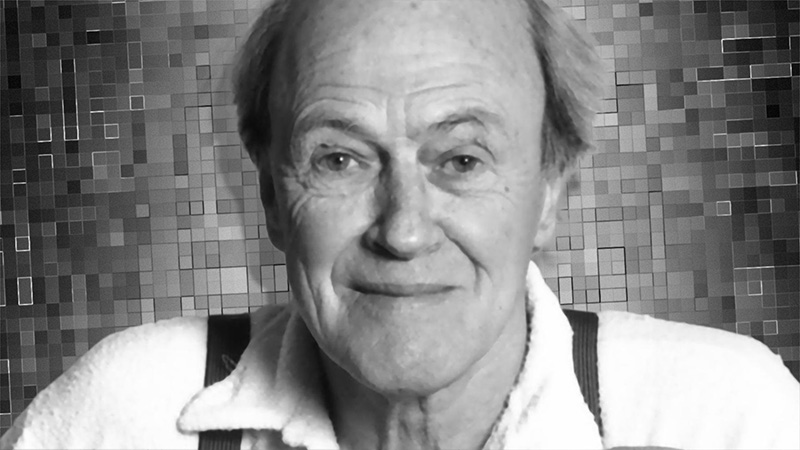
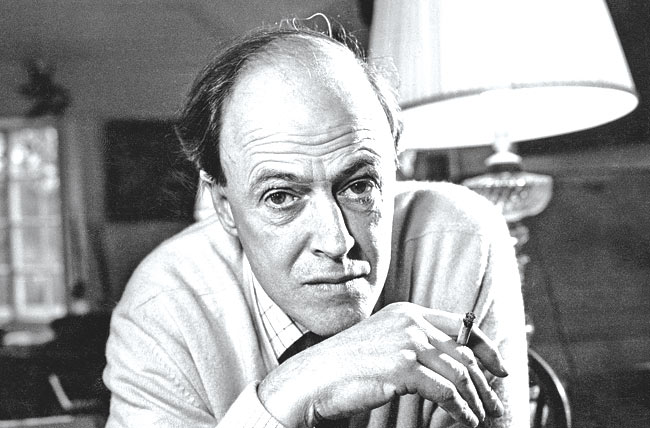
Roald Dahl is known worldwide for his children’s books. He grew up in England with Norwegian parents.

“The launch of our first British tail hero is a result of our presence and plans for further expansion in the UK. Roald Dahl has inspired adults and children for generations, and it is an honor for us to get the world renowned and beloved author on one of our plane tails,” says commercial director Thomas Ramdahl in Norwegian.

011116-norwegian-air-shuttle
Roald Dahl comes on the tail of one of Norwegian’s new Boeing 737-800.

Norwegian currently flies four million British passengers annually to more than 40 destinations from London Gatwick, Manchester, Edinburgh and Birmingham.

Victor Borge on a Norwegian Air Shuttle's Tail
Victor Borge on a Norwegian Air Shuttle’s Tail

Norwegian’s tail heroes are people who have challenged the established society and inspired others. Examples of tail heroes are Norwegian Roald Amundsen, Swedish Greta Garbo, Danish Karen Blixen, Finnish Minna Canth and Spanish Christopher Columbus.

011116-roald-dahl
“Roald Dahl is widely regarded as the world’s number one storyteller. Many elements of his universally-loved stories are said to have roots in the Norwegian tales that he heard from his family and from visits to Norway as a child. To be recognized for his connection to Norway in this centenary year, and for him to be made the first British tail fin for Norwegian, is something we are extremely proud of,” says Bernie Hall, Brand Marketing Manager, Roald Dahl Literary Estate.

011116-roald-dahl-2
About Roald Dahl
Roald Dahl was born in Cardiff in 1916, and his parents were Norwegian. He is in particular known for children’s books like “Charlie and the Chocolate Factory,” “The Witches” and “Matilda.” Roald Dahl was even a pilot during World War II. He enlisted at 23 with the RAF and served as a fighter pilot during the second World War until a plane crash left him with a severe back injury which prevented him from flying aircraft again. Air planes have been a theme throughout his writings, especially in “James and the Giant Peach” and “BFG”.

Ronald Dahl earned a reputation as a talented wordsmith honored also by the Oxford English Dictionary today by the official entry of several of his scrumdiddilyumptious scribenings into the revered reference of the English language.
Roald Dahl – First Norwegian Air Shuttle’s British Tail Hero, written by Tor Kjolberg / Source: Norwegian Air Shuttle

Danish Researchers on Music and Memory

Does music affect memory? Danish researchers are testing a hypothesis that children with musical skills such as rhythm and melody also develop stronger memories.

School children aged 6-19 are guinea pigs for research assessing the effect good rhythm and melody skills can have

The project involves 30,000 school children at public school and gymnasium and is being conducted by the Centre for Music in the Brain at the University of Aarhus in conjunction with the Royal Academy of Music. Professor and neuroscientist Peter Vuust is the lead researcher.

Peter Vuust
Peter Vuust

“We developed this hypothesis following studies of very small groups of adults that showed that the ability to maintain and manage information was better among musicians than non-musicians,” Vuust told Videnskab.

There’s an app for that
The children in the study will train their musical abilities using an app. Pupils from 450 schools across Denmark are included in the mass experiment that started on Monday. It is one of the largest studies ever undertaken in Denmark.

281016-musicbrain
“First, students will take a test that looks at the two most basic parts of musicality: rhythm and melody,” said Vuust. “Then there is a memory game that features combinations of numbers. We will see how many they can remember.”

The children will train their musical chops for two weeks, after which test number two will examine whether two weeks of musical training has changed anything.

Peter Vuust
Peter Vuust

From Green Day to calculus
Vuust said the experiment should not be viewed as an absolute guarantee that if a student is good at music they will also excel at maths, but that previous results did suggest that musical ability did correlate with a good working memory.

Along with the memory test, the experiment on the 30,000 children and adolescents will also collect data on their ages, gender, language abilities, musical habits and whether they play or sing.

“What I find most interesting is chatting about the musical landscapes to the different age groups for the first time ever,” said Vuust.

In December last year Massachusetts Institute of Technology (MIT) announced that neuroscientists at the university were able to identify a neural population highly selective for music … for the first time ever!

“The brain is a highly organized and complex organ that functions as the coordinating center of sensation and intellectual and nervous activity. Each area of the brain directly corresponds to a very specific function (emotions, movement, visual processing, memory, etc.), but, up until two days ago December 14), scientists were unable to decipher exactly which area of the brain corresponded to music perception.

281016-peter-vuust-2
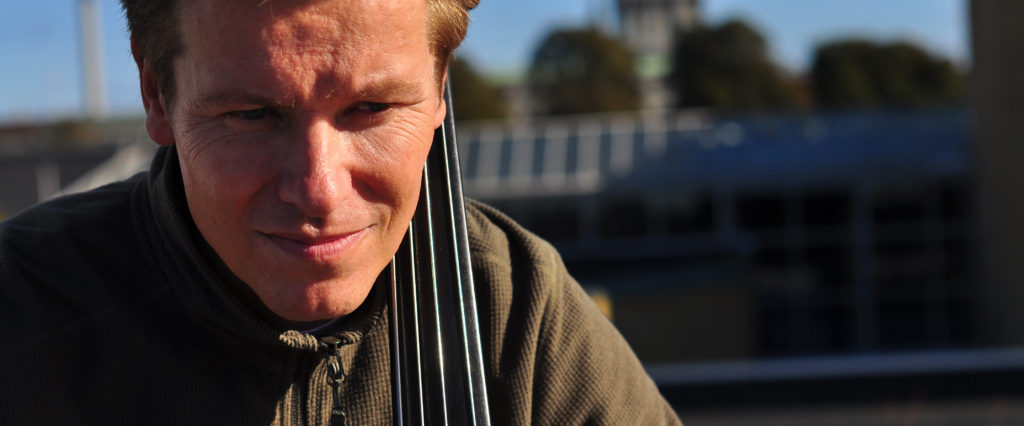
Peter Vuust, jazz basist and Professor at Royal Academy of Music, Aarhus and associate Professor at Center of Functionally Integrative Neuroscience, Aarhus University

Peter is a unique combination of a world class musician and a top-level scientist. He plays and records with international jazz stars such as Lars Jansson, Tim Hagans, John Abercrombie and Jukkis Uotila, and appears on more than 85 records, 6 of these as band leader. Based on his distinguished music and research career, he was appointed Professor at RAMA in 2012. After graduating from AU in Mathematics, French and Music, he devoted ten years to playing music, before resuming an academic career in 2000. He wrote a book on polyrhythms in Miles Davis’ quintet that laid out the musicological framework for his PhD in neuroscience in 2006 concerning the neural processing of polyrhythms.

Danish Researchers on Music and Memory, compiled by Tor Kjolberg

Sweet Dreams in Scandinavian Hotels

During the summer months, guests at all Clarion hotels in Norway and Sweden have had the opportunity to contribute to the environment through the hotel chain’s commitment to “Green Stay”.

The initiative allows guests to opt out of cleaning the room, and instead give money to UNICEF’s project “Sweet Dreams”. Instead of keeping loyalty points guests can choose to donate them to combat human trafficking in Cambodia.

261016-green-stay-clarion
“Combining environmental commitment and simultaneously contribute to UNICEF feels really good,” says Henrik Berghult, senior vice president of Clarion Hotels. He adds, “This is also a great tribute to our creative staff, who has received the chain’s award “This Year’s Strawberry”.

Henrik Berghult, senior vice president of Clarion Hotels

Green Stay is developed on the basis of Nordic Choice Hotels’ environmental strategy, which aims to become a climate neutral company. In its pursuit of reduced consumption of chemicals and water, Clarion Hotels promote the chain’s and the visitors’ interest to preserve the environment.

Aurora hotel, Tromsoe, Norway

Guests staying more than one night have the choice to opt out of cleaning for a maximum of 3 nights per stay. Clarion rewards the guest for the active environmental choice, with the points in the chain’s loyalty program. Guests can keep the points or donate them to the Nordic Choice project, Sweet Dreams, in collaboration with UNICEF.

Clarion Spa Hotel, Stockholm

This summer, 15-20% of the guests have chosen Green Stay when they stay more than one night, a number that is likely to increase, as the program becomes more familiar. 70% of the Green Stay guests chose to donate their points to UNICEF, rather than keep them for themselves.

Table eatery at Social Clarion hotel, Stockholm

“Considering that business now replaces summer visitors, we hope that the positive trend continues,” says Berghult.

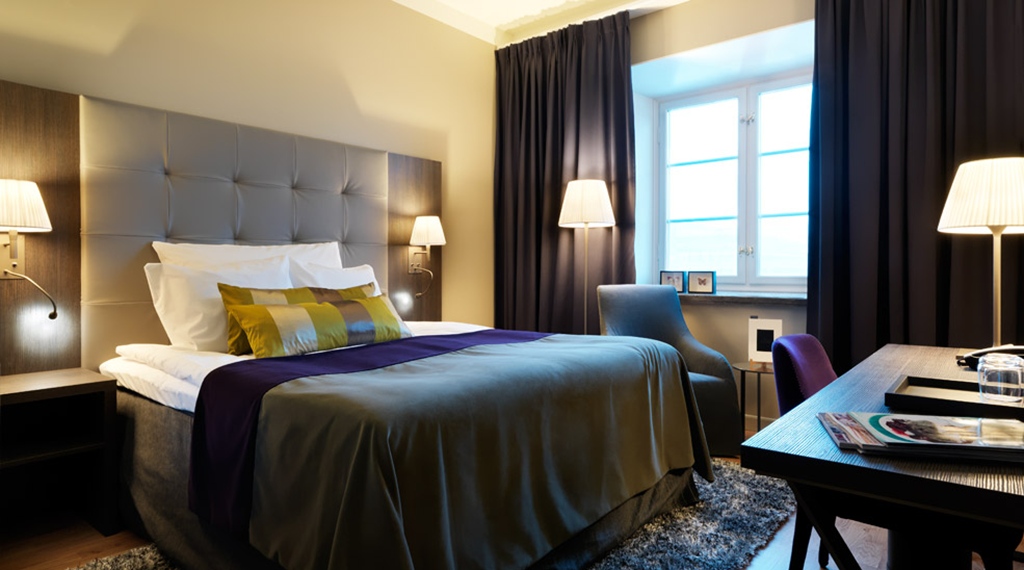
Room in Post hotel, Gothenburg

The four best Clarion Green Stay Hotels are Clarion Hotel Visby, Clarion Hotel & Congress Trondheim, Clarion Hotel Malmo Live and Clarion Hotel Amaranten, Stockholm.

Feature image (on top) Clarion Hotel Sign, Central Stockholm

Sweet Dreams in Scandinavian Hotels, source: Clarion Hotels

400 Norwegian Gems Online

Tourists from all over the world want to experience real and exciting Norwegian traditional destinations when they travel. 400 of Hanen’s rural gems are now available both through their website and a new app.

Easily accessible
“We have been told that experiences outside the major cities are difficult to find, and therefore we have worked hard to solve this problem. Today people use digital information channels in order to plan their next trip or vacation, and therefore it is important that our member companies are easily found,” says Bernt Bucher-Johannessen, CEO of the trade organization Hanen (The Rooster). In addition to the website hanen.no the organization launched a free app this summer.

"It is important that our member companies are easily found,” says Bernt Bucher-Johannessen, CEO of the trade organization Hanen
“It is important that our member companies are easily found,” says Bernt Bucher-Johannessen, CEO of the trade organization Hanen

Visitors can thereby create their own itineraries, get information about nearby rural attractions and contact them directly through the app. This has been a success both for the member companies and travelers.

In the shade of an old maple tree
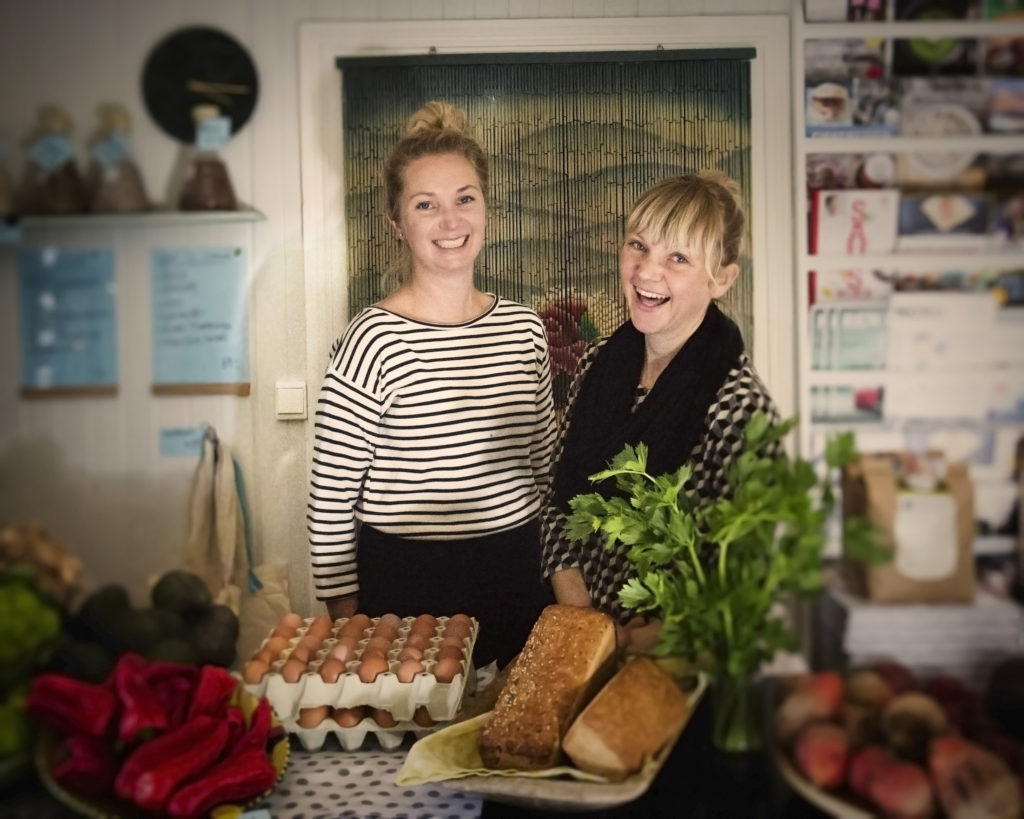
Thea Dark Engelstad runs a farm shop Fat and Fe (Dish and Cattle)outside Sandefjord, and is very pleased to be available on the application. “This summer we experienced on several occasions that summer tourists used the app when searching for new and exciting destinations. It’s much nicer when they may stretch their legs and eat ice cream in the shadow of our old maple tree, than standing in line at the nearest gas station,” says Dark Engelstad.

 farm shop Fat and Fe (Dish and Cattle)outside Sandefjord. (Photo: Marit Junge
Farm shop Fat and Fe (Dish and Cattle)outside Sandefjord. (Photo: Marit Junge)

Merete Larsmon runs Rytne, an accommodation and activity business at the head of the Dalsjord in Sogn og Fjordane. Larsmon has experienced an increased demand from both national and international traevelers after she created a company presentation on hanen.no. “We are very satisfied with the response, and has already been contacted by a Swedish family who have booked a stay with us next summer,” says Larsmon.

Just a click away
Autumn holidays are right around the corner and many people are planning trips in Norway. It may then be practical to use the Hanen website or app, where you can filter on different categories and get excellent tips on accommodations, dining and activities across the country.

HANENs-management–from-left-Bernt-Bucher-Johannessen-Nadja-Hartikkala-Line-Uldal-Ole-Jonny-Trangsrud
HANENs management – from left Bernt Bucher-Johannessen, Nadja Hartikkala Line Uldal and Ole-Jonny Trangsrud

“Fortunately, more and more people are seeking exciting destinations off the beaten track. Our ambition is that both Norwegian and foreign tourists will discover that the unique experiences only is a keystroke away,” says Bucher-Johannessen.

All images: Hanen

Feature image (on top) Rytne Farm – Dalsfjorden

400 Norwegian Gems Online, source: Hanen

You may also like:
10 Years on Norwegian Roads

Life in Lappland

The indigenous Sami of northern Scandinavia, a hardy semi-nomadic people, can trace their roots back thousands of years. Learn more about life in Lappland

The Sami call themselves “the people of the eight seasons”. They are indigenous people who live in Sweden, Norway and Finland’s most northerly provinces, and can trace their heritage back more than 8,000 years.

Related: In Search of the Sami in Scandinavia

They have their own language, religious traditions and customs. While the life of the Sami has changed in modern times (snowmobiles have become ubiquitous in the last decade), the annual cycle of the reindeer – rutting, herding, separating, slaughtering, calving, marking – continues to shape the Lappland calendar.

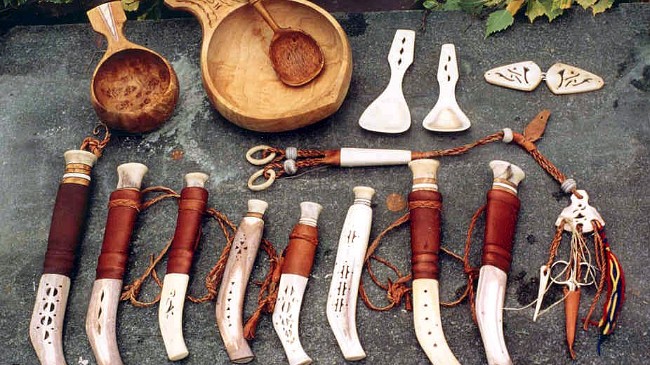
Sami handicrafts
Sami handicrafts

The winter round-ups are among Europe’s most colorful events, resembling scenes from a Wild West film transposed to an Arctic setting. Visitors can enjoy this ancient culture at festivals and ceremonial occasions held throughout the year, where one can sample reindeer delicacies and marvel Sami handicrafts.

Life in Lapland
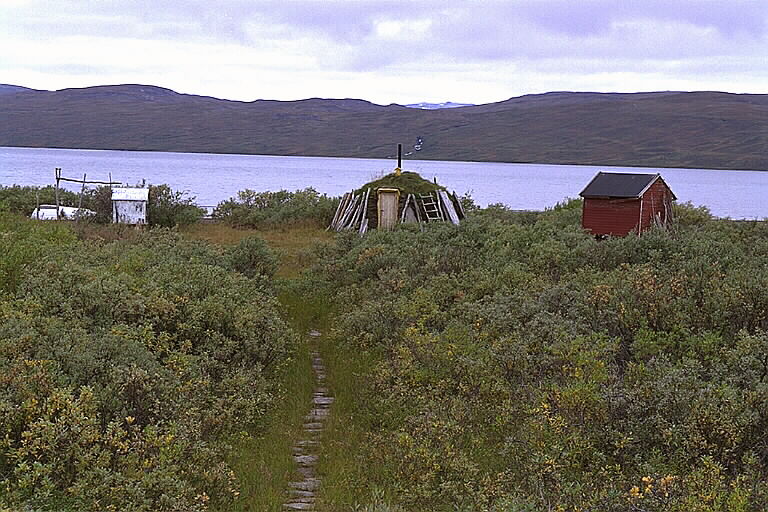
Vastenjávrre (Vastenjaure) Photo: Wikimedia Commons

A vivid way to experience the Sami lifestyle and landscape is in spring and summer, when the mountain blossom with heather, globe flowers, cloudberries and countless other species, inviting the visitor to take to the trails and woods of the many national parks in the Sami regions of Scandinavia.

Winter reindeer
Winter reindeer

Padjelante (“the higher mountain” in Sami) is the biggest national park in Sweden. It is one of Sweden’s most beautiful areas, with rolling plains, gently rounded mountain massifs, huge lakes such as Vastenjaure and Virihaure, and small streams, which the Lapps call jokk. It has always been an important pasture for their reindeer herds.

Midningt sun golfing. Photo: Visit Bodoe
Golf is the fastest growing sport in Scandinavia, and its popularity has exploded. In Scandinavia’s far north enthusiasts like to play golf under the Midnight Sun. Photo: Visit Bodoe

For golf enthusiasts, nothing can quite top the thrill of golfing under the Midnight Sun in the glorious days of summer, where (depending on latitude and cloud cover) the sun is visible for up to 70 summer days.

Dogsleighing. Photo: Hurtigruten

Anglers will find true paradise in the primeval wilderness of the north, laces by swift rivers and streams and punctuated by lakes and pools.

Salmon fishing in the Acha river

To enjoy the wintry wilderness in an entirely different way, try dog-sledging, which is offered by many firms in northern Scandinavia. Drive the dog-sledge yourself or sit back in the vast silence of the mountains and be driven by a team of huskies. Your guide will tell you how to take care of a sledge dog and share bits of trivia, like the fact that in the Inuit language there are 18 different words for snow.

Related: The Arctic Part of Sweden
Northern Lights in Arctic Norway

Dog-sledging, common in Greenland, is now well established in Sweden and Norway and is growing in popularity. The Sami winter vistas can also be enjoyed on reindeer sleigh rides and snowshoe treks.

Sami girl
Sami girl

Ice climbing is popular, too. Fishing through the ice is common on most lakes and rivers.

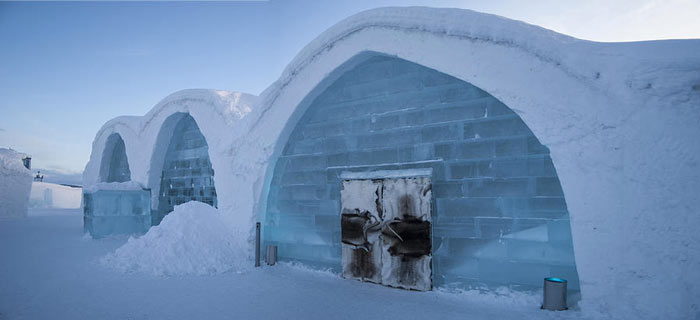
To soak up the hard life of the Sami fully, the visitor can stay in the world’s largest igloo, the Jukkasjärvi Ice Hotel in Sweden. Each autumn, as the Arctic temperature plummets, Lapplanders rebuild this celebrated igloo, from thousands of tons of snow and ice.

Ice hotel Jukkasjan
Ice hotel Jukkasjan

Inside it houses a church, hotel, gallery, golf room, cinema and bar, named appropriately Absolute Ice. Guests sleep in warm sleeping bags on mattresses of spruce bough and reindeer skins. Temperature average -4 ͦC (25 ͦF).

Life in Lappland
Ice hotel church in Jukkasjärvi. Photo: Wikimedia Commons

The hearty fare served from the kitchen and the activities waiting outdoors don’t leave guests much time to feel cold. Next morning the hotel will issue a certificate of survival. It’s not quite the same as herding reindeer, but it brings you one step closer to understanding how climate, custom and sheer human persistence have made the Sami what they are today.

Life in Lappland, written by Tor Kjolberg
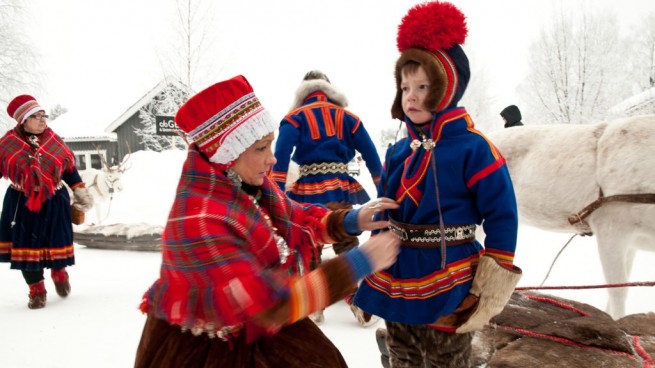
Feature image (on top): Sami folk costume from Jokkmokk, Arctic Sweden. Photo: Visit Sweden.


Ten Hours with the Trolls in Norway

My heart sank as I looked at the itinerary. Saturday 4 June – leave hotel 7.45am, arrive at next hotel 5.45pm. In between, two train journeys and a three and a half hour bus ride. Ten hours of travelling. Transfers for ten whole hours. Experience ten hours with the trolls in Norway.

Who on earth would force people to go through that on a fam trip?

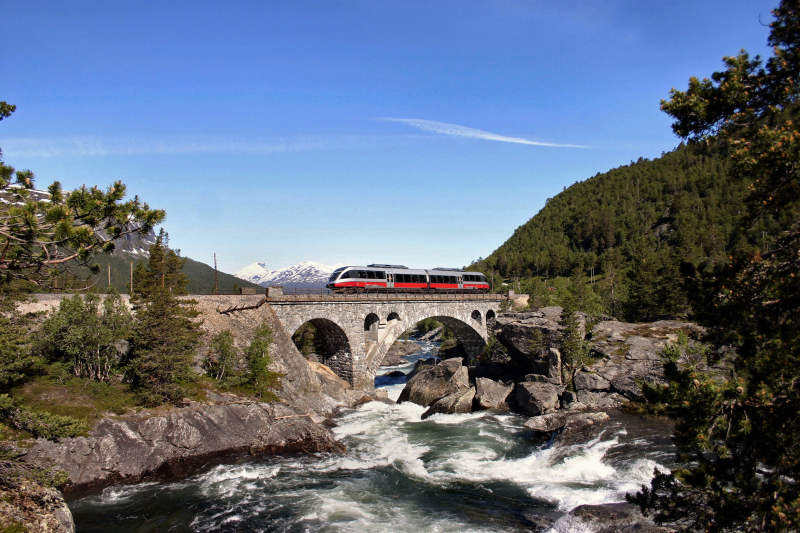
The Rauma railwauy. Photo: Visit Norway

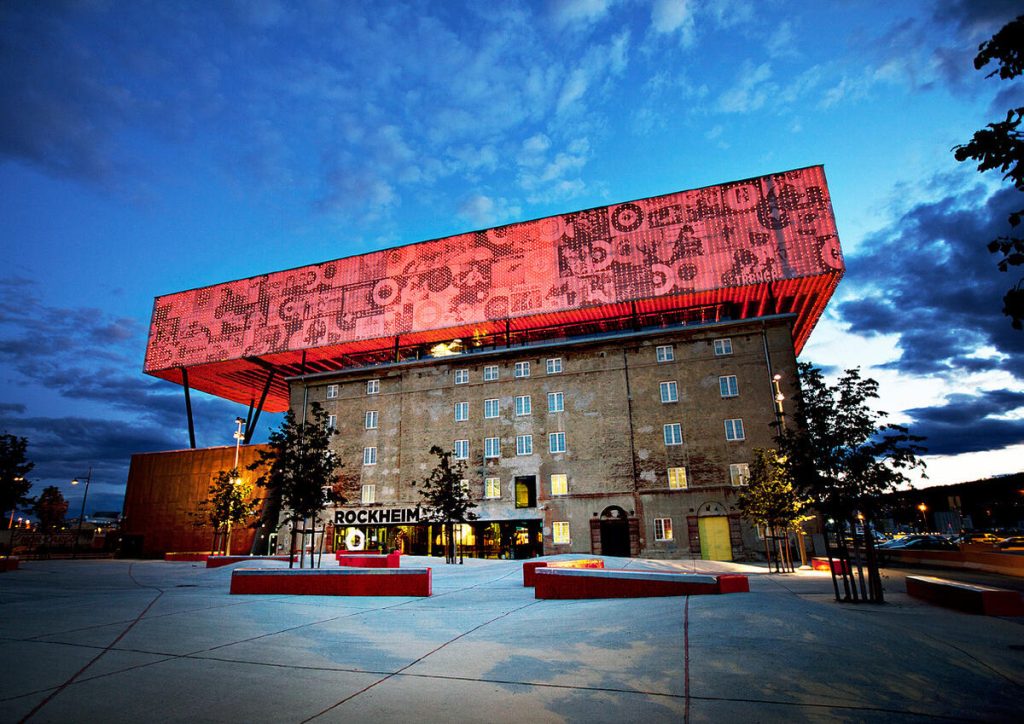
Then, of course, it turned out to be one of the most memorable days I’ve ever had. The Norway Cool Agency Challenge, organized by Visit Norway, saw more than 30 event professionals arrive in Trondheim a Thursday lst summer, before an action-packed Friday that saw us whizz out on the fjords on a RIB, taste beer in at a sun-kissed brewery, complete a GPS city exploration challenge and rock out at Rockheim, the Norwegian museum of popular music.

Ten Hours With the Trolls in Norway
Rockheim, Trondheim

But it was the Saturday that proved most intriguing, as the group split up into four to go and explore four other cities, namely Oslo, Bergen, Tromso and Alesund.

I was in the Alesund group, and so it was that as the three other groups headed to the airport to their respective destinations, we found ourselves chugging across Norway on a train. With the run of the carriage, we found the trip to our first stop Dombas flew by as eight of us in the group nattered away and got to know each other a bit better, while outside the landscape slowly became ever bigger and more breathtaking.

Ten Hours With the TRolls in Norway
The Sunnmøre Alps. Photo: Wikipedia

Our next train, from Dombas to Adalsnes, known as the Rauma Railway, is one of those routes that regularly pops up in “Top 10 train journeys to take before you die” lists. And with good reason; it is an hour and a half of sheer wonder. The gradient is too steep to go directly from A to B, which means that the track winds its way slowly down the valley to its final destination, giving you ample time to take in the towering peaks, the lush valley, the raging waterfalls and the overwhelming beauty of Norway’s west coast.

Trollveggen (Troll's Wall)
Trollveggen (Troll’s Wall)

The highlight is the Trollveggen, or the Troll Wall, the tallest vertical rock face in Europe, more than a kilometer in height and capped off with vicious jagged teeth along its extensive summit ridge.

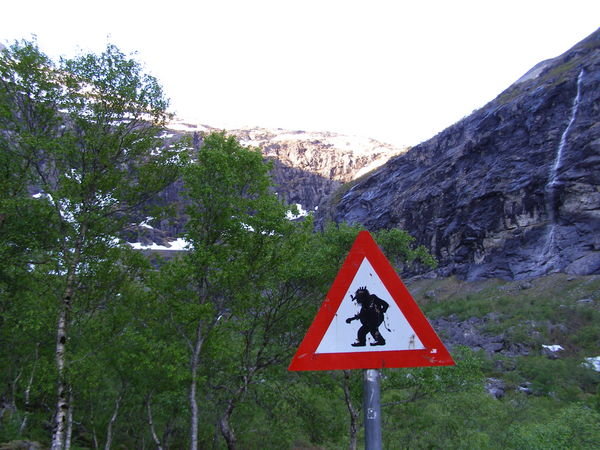
Once we’d got our breath back from that, we found ourselves on a bus heading towards the Trollstigen (also known as the Trolls’ Path – they’re really into trolls in Norway), a series of steep inclines and 11 hairpin bends that scale the almost sheer face of the mountainside.

271016-trollstigen-trolls-ladder

It felt like we could be on course to recreate the end of The Italian Job at any second, but thankfully we made it up to the viewing platform at 700 meters where we were able to finally relax and take in the mind-boggling mountain scenery.

Storfjord Hotel, Skodje

Being up so high, the tops still had a healthy covering of snow, and so it was that a little further on we stopped to make snow angels, an activity that quickly descended into a pretty vicious snowball fight. Whether by accident or design, this wore out the group and we dozed happily all the way over into the next valley as we approached our final destination, the Storfjord Hotel in Skodje.

Troll sign
Troll sign

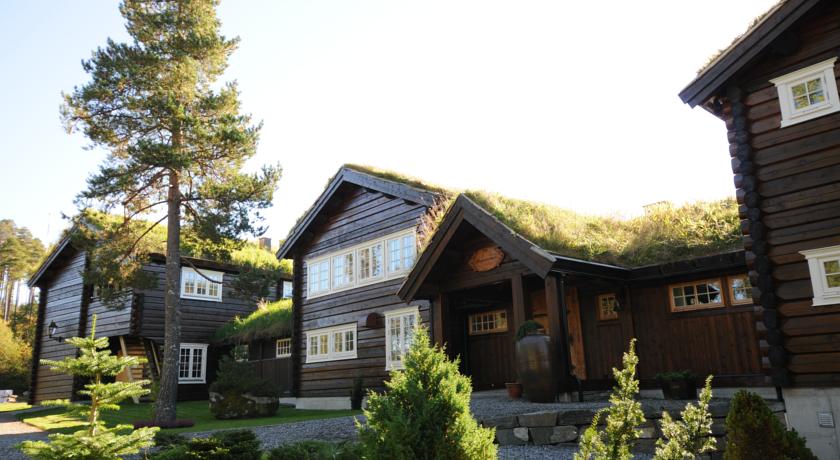
A secluded luxury boutique hotel on a hillside overlooking a fjord and a mountain range, the Sunnmøre Alps, I can’t think of a more picturesque place to find yourself for the night. The wooden cabins, the roaring log fires, the four poster beds – and on top of all this a high-end restaurant turning out food to die for.

Over a stunning evening meal, we reminisced about the day’s activities and one thing was agreed – in most places, 10 hours of travelling would be a chore, but when your surroundings are as staggeringly beautiful as they are in Norway, 10 hours of travelling is a very rare pleasure indeed.

Written by Paul Harvey

Feature image (on top): Dombås – Åndalsnes by train

Ten Hours with the Trolls in Norway, was published in Meetpie. We thank editor Gareth Roberts for his kind permission to reprint the article.

Swedish Prize Winner Shooting a Follow-Up

Swedish film director Ruben Ostlund is now shooting a provocative satire, a follow-up to his Cannes hit “Force Majeure” (2014). His sixth feature looks to be one of his most ambitious movies so far.

The film titled “The Square” follows an ambitious museum director (Claes Bang), who is preparing to make a major impact with a new exhibit. Ruben Östlund is now shooting his new film in Stockholm, Gothenburg and Berlin.

Tuben Östlund
Ruben Östlund

US actress Elisabeth Moss, who won a Golden Globe in 2013 for her performance in the Top of the Lake TV series and most recently starred in US director Jason Lew’s The Free Wold (2016), will star alongside Danish actors Claes Bang (The Bridge) and Christopher Læssø, and Swedish actress Marina Schiptjenko.

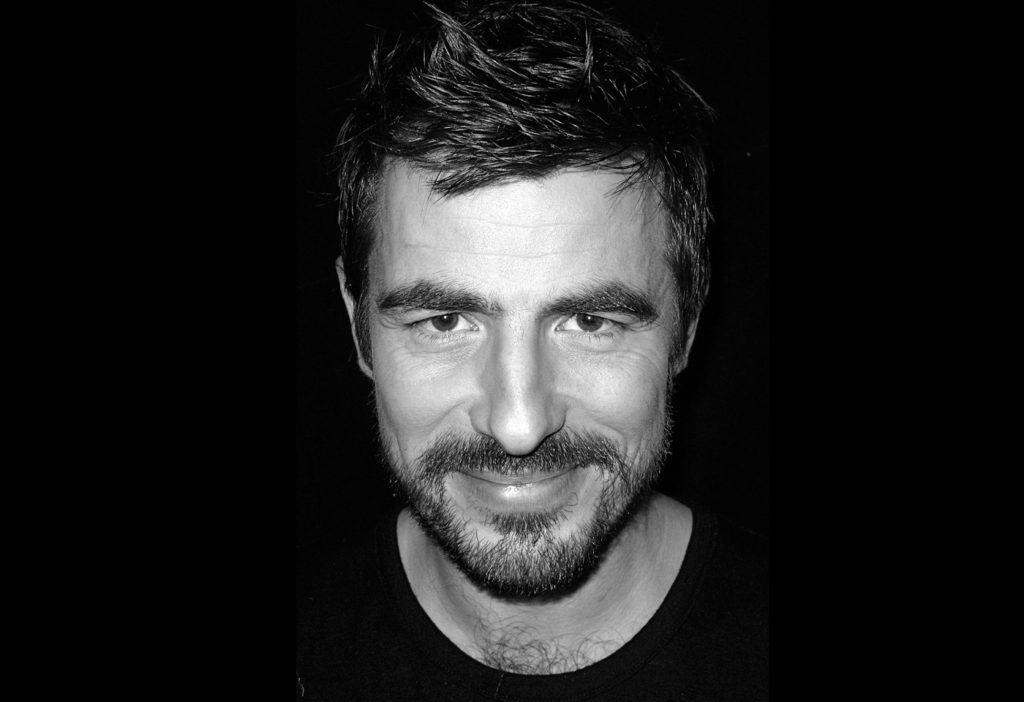
Claes Bang
Claes Bang

“The Square” is set in a renowned museum where an artist is exhibiting a square, an installation that is meant to promote altruism. The movie’s protagonist is the manager of the museum who hires a ruthless PR firm to build some buzz around the installation but things get out of hand (it is an Östlund film, after all) when the museum’s PR team goes too far with their publicity plans, sparking a public uproar and exposing the hypocrisy of the media.

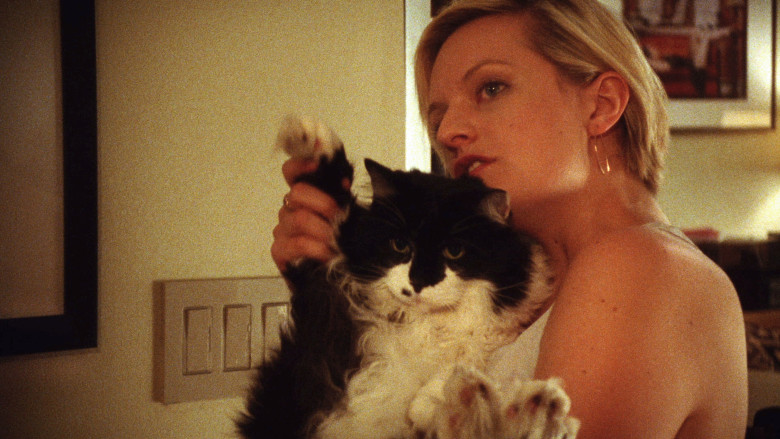
Elisabeth Moss
Elisabeth Moss

Elisabeth Moss, playing a reporter who is on the beat of the exhibit, is meant to provide people with “a symbolic space where only good things can happen.”

“I want to shed light on the confidence crack that is slowly but surely widening between people when society is becoming increasingly individualistic and higher ideals are being sacrificed, using the international art world as a contemporary backdrop,” explained Östlund as he introduced the project at Cannes in May.

Marina Schiptjenko
Marina Schiptjenko

“The situations that unfold are examples of how we humans tend to act in public. The difficulties we face when we see another individual in need of assistance, when we are confronted with our insecurities, when the fear of violence and of losing face frightens us into a passive state—situations that are easy to relate to, but that give rise to difficult issues with regard to ourselves,” according to Östlund.

Christopher Laessoe
Christopher Laessoe

Ostlund is also making his TV debut with “You Know That Weekend You Were Away With The Kids?” an English-language comedy turning on adultery.

Ruben Ostlund in Italian Alps

Ruben Östlund
Born 13 April 1974. Swedish film director and playwright.
Began producing films on skiing in the Italian and French Alps and Canada after high school.
Educated at University of Gothenburg – College of Photography and Film (2001)
Produced the features “Gitarmongo” (2004), “Involuntary” (2008), “Play” (2011) and “Force Majeure” (2014), winning the Jury Prize at Un Certain Regard in Cannes.
Runs his production company Plattform in Gothenburg together with producer Erik Hemmendorff.
Professor at Valand Academy at Gothenburg University.

Swedish Prize Winner Shooting a Follow-Up, written by Tor Kjolberg