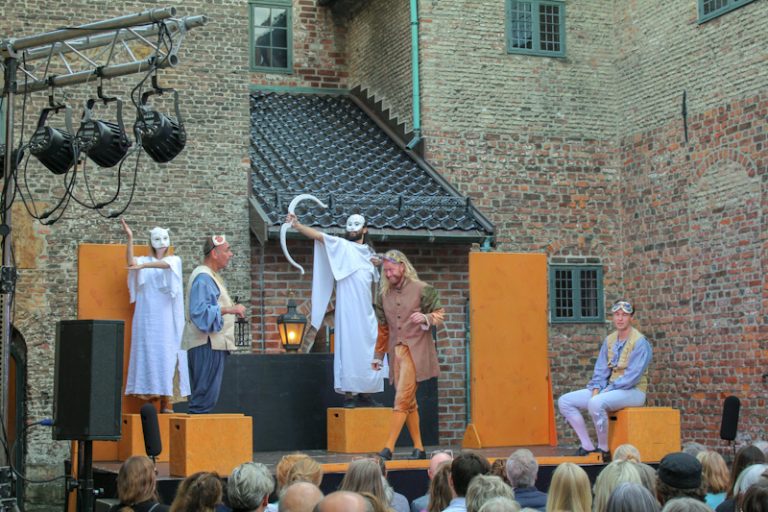
As a part of an extensive tour, the TNT Theatre Group presented Romeo and Juliet at Akershus Fortress in Oslo earlier this month. Daily Scandinavian attended the performance and interviewed Nina Schlautmann and Leo Benedict about their starring roles. Read more about Romeo and Juliet castle performance in Oslo.
As stated in the program, Romeo and Juliet is neither a classical tragedy nor even a traditional romance. It is a play that has become a myth, and the myth obscures the play. At the Akershus Fortress in Oslo the audience could experience Shakespeare’s great love story as an Elizabethan audience might have done at a London theatre some four hundred years ago.
His Majesty’s Ambassador to Norway, Ms Jan Thompson, surprised by declaring Shakespeare at the opening performance in Osdlo.
Though the play ends horribly for its two star-crossed lovers, it has many witty moments and even plays with comedic conventions in its early acts. The production fascinated me with touch and proximity. Producer Grantly Marshall’s interpretation is carefully crafted and intensely visual and with some very interesting choices.
Romeo and Juliet is a play that has become a myth,
“I never knew Shakespeare could be so entertaining,” wrote CNN TV about the performance.
Romeo and Juliet has many witty moments and even plays with comedic conventions in its early acts.Nina Schlautmann as Juliet does a good job of what could have become a very bland one.Love scene from Romeo and Juliet
Leo Benedict as Romeo is expertly capturing Romeo’s impulsive nature, and while Nina Schlautmann as Juliet is outshone by Benedict, she does a good job of what could have become a very bland one.
All in all, it was an excellent performance that moved fluidly from excitement to grief.
Nina Schlautmann has studied at Laurence Mitchell Home Studio in London
Nina Schlautmann has studied at Laurence Mitchell Home Studio in London and tells that she was suggested by a friend to go for an audition and was lucky enough to be chosen for the leading role.
DS: Outdoor performances may be a daring project. What happens when it’s pouring down?
“The outdoor elements can also be serving,” she says. “At the performance at Ulstein Monastery in Bergen, it was fantastic weather until – at the right moment – raindrops were falling from the sky. It has been one of the most beautiful places I have ever visited.”
Nina says she works very much in her head
About the role as Juliet, Nina says she works very much in her head, more than in the body. “I am constantly thinking,” she says, “I should follow my body more, so there’s room for improvements.”
Nina is also writing theatre plays. She loves making comedy about serious things. Her favorite playwright is Samuel Becket.
Leopold Benedict says that seeing the world and sharing Shakespeare’s works is a privilege.
Leopold Benedict has a broad theatre education
Leopold has studied at Royal Academy of Dramatic Arts in London, at Conservatoire National Ken Braicough, Conservatoire National Supérieur d’Art Dramatique in Paris as well as at Cambridge University.
DS: Outdoor performances may be a daring project. What happens when it’s pouring down?
“We have raincoats, but it can be horrible at times. My worst experience was in Leipzig where it was raining cats and dogs. But the show must go on.”
“Seeing the world and sharing Shakespeare’s works is a privilege,” says Leopold
He says that every performance is different. It varies with weather and audience. The actors communicate with the audience, and today’s performance was definitely different from the day before. “We have to address the audience,” he says. “Almost the same way as with football manager Joey Barton, it’s all about sharing. It’s about response. I was a different Romeo today than yesterday.”
Leopold Benedict says he is a great admirer of Henrik Ibsen, and he has played the priest Brand.
“Will alone that mars or makes,
Will, that no distraction scatters.”
His next project is a London audition. He is open for film, TV or theatre, but Shakespear is in his blood.
Every performance is different. The group interplayed with the audience in Oslo
Romeo and Juliet Castle Performance in Oslo, written by Tor Kjolberg
TNT Theatre has developed an international reputation for presenting dynamic, exciting and direct productions of Shakespeare’s major works. The tragedy ROMEO and JULIET by William Shakespeare is now on a castle tour in Scandinavia 2023.Click the image below to read more.
Click the image
It’s Still Midsummer in Scandinavia
Back in summer 2019, TNT Theatre in BRITAIN & ADG EUROPE performed William Shakespeare’s most popular comedy A Midsummer Night’s Dream at several Scandinavian venues. To read more, just click the image below.
Something old, something new, something borrowed / Something blue / I’ve still got memories to tell me. The lyrics by songwriters Roger Frederick Cook, Roger John Reginald Greenaway and Tony Macaulay gave inspiration to this compilation of what to experience in Copenhagen. The best of the best in Copenhagen 2023 refers to previously published articles in Daily Scandinavian plus some additions. Let us entertain you!
Copenhagen has been named the World Capital of Architecture for 2023, so architecture in the capital will have its well-deserved place in this compilation.
If you download the new free app from the Danish Architectural Center you will be armed with in-depth details about hundreds of notable sites.
Copenhagen has a distinctly European feel, a friendly street-life, and unique café culture that will make you want to return time and time again. The city is perfect for wandering through at your leisure, or alternatively, make like a local and hop on a bike, the preferred mode of transport for many.
the nearly 140 years-old restaurant Grøften in Tivoli. Photo: Visit Copenhagen
If you have made your visits to Copenhagen Tivoli before, it’s not an excuse not to repeat it, if only to eat in the nearly 140 years-old restaurant Grøften. We wrote about it in 2014.
With so many things to see and do, it can be overwhelming to plan your itinerary. That’s why we’ve made this compilation to make it easier for you. Just pick your choices, and you’re guaranteed the best of the best in Copenhagen.
One of the most frequented and top Copenhagen sights is the town hall or Radhuspladsen. Photo: Visit Denmark
One of the most frequented and top Copenhagen sights is the town hall or Rådhuspladsen. The main square of Copenhagen is simply called Copenhagen town hall square or Rådhuspladsen. It is fashioned in an Italian Renaissance style with Danish influence that was popular during the timeframe of its build. On the main tower of the town hall is a large ornate world clock created by Jens Olsen, one of the pre-eminent clock markers who created one of the most accurate, large-scale devices in the world. The façade of the main town hall is ornate with beautifully detailed craftsmanship created by local designers and craftsmen.
National Museum (Nationalmuseet), a must-see attraction for anyone with an interest in Danish history and culture.
An easy 10-minute walk from Tivoli along Vestergade brings you to the National Museum (Nationalmuseet), a must-see attraction for anyone with an interest in Danish history and culture.
Some impressive runic stones are on display here, and the Danish history collection includes a sun chariot (cult object in the form of a cart) that is more than 2,000 years old, Romanesque and Gothic church fittings, Danish porcelain and silver, and collections of antiquities and coins.
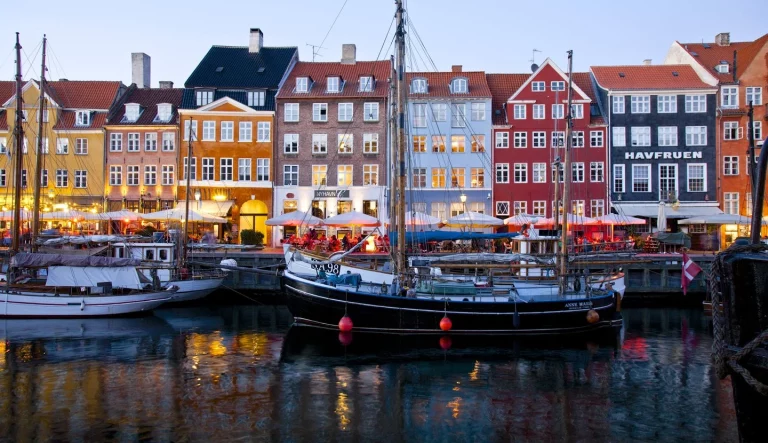
The colorful Nyhavn Quayside is a famous landmark from 1661. Photo: Wikipedia
The colorful Nyhavn Quayside is a famous landmark from 1661. It’s a must to visit, be it at morning, noon, or night. It’s also a favorit place for the locals, slowing down to enjoy the sun and do some people watching along the boardwalk. Nyhavn is a part of the historical central district of Copenhagen.
You can’t visit the Danish capital without seeing the Little Mermaid. Photo: Visit Copenhagen
Not been there yet? You can’t visit the Danish capital without seeing the Little Mermaid, so head along the waterfront from Nyhavn to Kastellet (less than two kilometers) and take in the iconic statue and surroundings. Many boat tours also pass by the mermaid, but seeing it on land offers a much better vantage point.
Kastellet is the former Citadel of Frederikshavn, the oldest parts of which date from 1625. The Citadel buildings are well maintained and well worth exploring. The Little Mermaid (Den lille Havfrue), which you’ll see from the shore, is the official emblem of Copenhagen.
The bronze sculpture, created by Edvard Eriksen in 1913, is based on a theme from one of Hans Christian Andersen’s fairy tales, which tells the tale of a mermaid who once came up out of the depths of the sea because she’d fallen in love with a prince. Sadly, as the prince didn’t reciprocate, she was forced to leave the human world and return once more to the sea.
You won’t be able to get right up to the mermaid herself, perched on rocks just offshore, but there are plenty of perfect spots to pose in front of this famous statue.
Larsbjørnstrædet. Photo: Martin Heiberg/Visit Copenhagen
Also known as Indre By, is a must-visit destination for anyone exploring Denmark’s capital. This charming area is filled with cobblestone streets, colorful buildings, and historic landmarks that showcase the city’s rich cultural heritage. From grand royal palaces to cozy cafes, there’s something for everyone in this vibrant neighborhood.
One of the top sites of Copenhagen to visit is Strøget street. Photo: Erik Hageman/Visit Copenhagen
One of the top sites of Copenhagen to visit is Strøget street. Copenhagen’s largest outdoor shopping street in the central district is called Strøget, a popular shopping venue with pedestrian only promenades filled with popular stores. The main square around Strøget is called the Amagertorv with an ornate stork fountain done in Dutch renaissance style. Located in the center of the square, the fountain was built to celebrate the silver wedding anniversary of King Frederik VIII to Queen Louise – the fountain was given to them by the city council and commemorated in 1894. Strøget has many of the world’s international fashion and product brands including H&M, Prada, Gucci, Louis Vuitton and many well-known designers. One of the fun things to do in Copenhagen is explore the main promenade which feature many local design shops and specialty Danish stores including: Mads Nørgaard design, Birger Christensen, the Hay house, Trollbeads and Sand which features Danish designs for men’s and women’s wear.
The Round Tower (Rundetårn) is a 36-meter-high structure built as an observatory in 1642.
On Købmagergade is the Round Tower (Rundetårn), a 36-meter-high structure built as an observatory in 1642. It now also houses a small collection connected with the famous Danish astronomer Tycho Brahe.
A particular treat is the platform, reached by a wide spiral ramp. From the top are magnificent panoramic views over the city. A new attraction is the glass floor hovering 25 meters above the ground where you can peer down into the castle’s core.
Fans of Hans Christian Andersen will be interested to know that the tower features in his well-known story The Tinderbox – “eyes as big as the Round Tower.”
A canal cruise is the preferred way to visit the canals and restored warehouses. Photo: Wikipedia
A canal cruise is the preferred way to visit the canals and restored warehouses that have been converted to living and working buildings and enjoy the views from a water vantage point. Or you can take a leisurely walk around the neighborhood to soak in the slower pace and details of daily life around this vibrant area.
Rentals from GoBoat or FriendShips start at 549 kroner for one hour. Photo: Visit CopenhagenSailing the Copenhagen harbor
No license or previous experience is required to captain an electric boat that seats up to eight (rentals from GoBoat or FriendShips start at 549 kroner for one hour). Get an early start to beat the birthday parties and bachelorette groups (alcohol is allowed aboard) and putter through the narrow canals of Christianshavn and around Christiansborg Palace, the seat of Danish Parliament. When passing under the Højbro bridge, peer into the depths on the port side to spot the bronze underwater sculptures of “Agnete and the Merman,” by the Danish artist Suste Bonnén.
One of the most popular public parks in Central Copenhagen is Ørstedparken. Photo: Wikipedia
One of the most popular public parks in Central Copenhagen is Ørstedparken which is located along the old fortification ruins of the city. The moat is still left over with large ponds in the middle of the park with trails, flower gardens and grassy hills. Some of the hilly areas contain an old bastion and rampart with wonderful views to the surrounding areas and city center. During the summertime, the park is filled with colorful flower gardens. It’s a perfect spot for locals and visitors alike to have a nice picnic or just take a long afternoon nap. It’s a perfect respite from the crowded urban crawl around the historic center of the city.
A cool new hangout spot and hipster place to visit in Copenhagen is right next door to the Torvehallerne and Orstedparken. Photo: Martin Heiberg/Visit Copenhagen
A cool new hangout spot and hipster place to visit in Copenhagen is right next door to the Torvehallerne and Orstedparken, on the cutting edge, made with shipping containers repurposed into street food, beer stations and public entertainment venues all in one setting. The area has an edgy vibe with cool DJs spinning, live bands and performances, dances and the weekend outdoor craft fares happening all around the park like setting.
If you are looking for a trendy and fun area to hang out with the locals, then go to Little Copenhagen from Thursday to Sunday evenings and enjoy all the entertainment and delicious street food. You’ll enjoy visiting this very local Copenhagen attraction on the weekends to see and live the vibe of this fun neighborhood in town.
At Selma you can enjoy tasty sandwiches all day long. Photo: Daniel Rasmussen/Visit Copenhagen
Danes tradition is that smørrebrød should be eaten only at lunch. Not so at Selma, where you can enjoy these tasty sandwiches all day long. It has even earned the restaurant a Bib Gourmand in the Michelin Guide in 2021. Opened by the Swedish chef Magnus Pettersson, this restaurant serves exquisite seasonal creations (and a non-smørrebrød tasting menu for sticklers).
Reserve a table in the cozy dining room, with warm pendant lighting, wooden tables and floral Josef Frank wallpaper, where recent highlights included green-anise-flavored herring on Danish rye topped with petal-like pieces of pearl onion, wild-garlic cream and tiny dollops of herring caviar.
To drink, try the house-made aquavit — a bracing local spirit that here is infused with flavors like herbaceous lovage and brown butter — and a draft beer (the restaurant partners with the Copenhagen craft beer pioneer Mikkeller and local microbreweries are well represented).
One of the cool and new Copenhagen’s sights to hang out in is the Meat packing district at Vesterbro which is located next to the main train station. Photo: Martin Heiberg/Visit Copenhagen
One of the cool and new Copenhagen’s sights to hang out in is the Meat packing district at Vesterbro which is located next to the main train station. The area is now considered Copenhagen’s ‘Red light district’ but with more yuppie appeal and bustling with hip cafes, clubs and the occasional strip show venue. The new hipster zone is a fun spot to visit the many design galleries and stores, interesting old architecture or just walking through and enjoying the street life.
Of course, if your main interest is mostly the club scene and red-light appeal, then nighttime at Vesterbro is definitely the best time to explore the area.
On a side street in the lively Nørrebro neighborhood, Pompette is a local favorite for its well-priced natural wines — 60 kroner a glass — and laid-back vibe. After dinner, join Danes for a drink. Or head northwest to Autopoul, a pop-up bar that opened last year in a former car-repair shop in the Nordvest area, where crowds gather around tables in the old garage and parking lot to sip Danish ciders, vermouth, natural wines and craft beers from the neighborhood’s Flying Couch Brewing.
Rosenborg castle was originally built by Christian IV as a pleasure palace. Photo: Thomas Hyrup Christensen/Visit Copenhagen
Less than 10-minutes’ walk from the Round Tower and now home to some of Denmark’s greatest cultural treasures, this castle was originally built by Christian IV as a pleasure palace.
Inhabited by the royal family until 1720 and after that used as a summer retreat, the castle and contents became a museum in 1838. In the basement are the Danish crown jewels and royal regalia.
Of particular interest are the Marble Room, a Baroque reception room, and the Knights’ Hall with the Coronation Throne (used between 1871 to 1940), as well as the famous Rosenborg Tapestries, which have adorned the walls since 1693. Exquisite porcelain is also on exhibit, including the famous Flora Danica service.
A fun cultural Copenhagen tourist attraction is the Ny Carlsberg Glyptotek . Photo: Wikipedia
A fun cultural Copenhagen tourist attraction is the Ny Carlsberg Glyptotek which is Copenhagen’s signature art museum. Named for the iconic Carlsberg benefactor, the museum is mostly a personal collection of Carl Jacobson who created the museum and donated it to the city. Even for non- museum goers, this is a must see place because of the stunning exterior and interior details, including the spectacular views from the rooftop deck.
The Glyptotek museum exhibits rotating shows along with their permanent collections of mostly ancient antiquities of mostly Egypt, Rome and Greece. There is also a collection of modern art with French Impressionist and Post Impressionist masterpieces, works by Rodin and a collection of paintings of the Danish Golden age. A popular place to visit during bad weather. The museum is one of the top places to visit at winter time in Copenhagen. The museum is a beautiful refuge to enjoy art and collections in a beautiful space away from the elements and changing conditions in the city.
Folkehuset Absalon is a welcoming community house in a former church. Photo: Giuseppe Liverino/Visit Copenhagen
Folkehuset Absalon, a welcoming community house in a former church, hosts many events, including weekend dance parties. Think of Absalon as an extension of your own living room, filled with friends, table tennis, music, backgammon, film, bingo, food, dance, coffee, chess, yoga, markets, parties, talks and everything in between.
Christiansborg boasts more than 800 years of history. Photo: Mikkel Grønlund/Kongelige slotte
The main palace at Christiansborg is open for the public to view many of the public and administrative halls in the palace. The seat of imperial Denmark, the palace retains many of its splendid royal halls which the queen still uses for many state dinners and events. With the price of admission, you can also visit the royal stables, the underground ruins of earlier medieval castles, the palace chapel and the court theater. Inside the palace are beautiful collections of porcelain, tapestries, artwork and statues, chandeliers, and other richly decorated ornaments.
The palace is also a working government building housing all three branches of the Danish government including: the executive, legislative and judicial powers of the country. Since the early 15th century the palace has been the base of central administration and now the current day parliament of Denmark. It is the only government building in the world that houses all of its government branches within one impressive building.
From Cisternerne. Photo: Visit Copenhagen
Cisternerne is a subterranean exhibition space with a kaleidoscopic art installation in a former water reservoir.
A popular green belt and lake area in central Copenhagen is Peblinge lake. Photo: Wikipedia
A popular green belt and lake area in central Copenhagen is Peblinge lake, in fact a series of three rectangular lakes that formed originally from a stream and converted into dammed lakes as fortification for the historic central district in the early 1700s. Now the lakes and green belts are used for recreational purposes and offer beautiful skyline views on the city center.
There is a good reason locals get up extra early during weekends to buy their bread at Juno in residential Østerbro. Photo: Martin Heiberg/Visit Copenhagen
Juno the Bakery, There is a good reason locals get up extra early during weekends to buy their bread at Juno in residential Østerbro. On both Saturday and Sunday mornings, there is a line all around the block. It has actually become kind of a tourist attraction just to watch people queue that long for a bun! The owner has worked at the best restaurant in the world, Noma, and you can tell from the pastries he has that kind of mindset. Everything they serve is perfect.
The National Gallery of Denmark displays the largest collection of Danish art from the 1700s to the present day. Photo: Visit Copenhagen
The National Gallery of Denmark displays the largest collection of Danish art from the 1700s to the present day, as well as impressive works from around the world.
Highlights include the Danish and Nordic art exhibition, which spans 150 years, as well as paintings by the Dutch Masters, Edvard Munch, and Picasso among others.
Natural light floods the upper floors giving the gallery a wonderful, airy ambience. Be sure to pick up a map before exploring all the collections, so you don’t miss any of the impressive works.
Once you’ve finished appreciating the art, take a break at the on-site café. It is particularly pleasant and a great place to unwind and soak up the surroundings.
It’s worth visiting this charming lane in Copenhagen, called Little Paris. Its charming cafes and shops offers a well-deserved break from museums and other attractions. Stop for a panino at Italo Caffé. Then pop around the corner to Thiemers Magasin, an independent bookstore with an English-language section well-stocked with Danish authors. Down the block, CAN Family is the place to unearth rare vinyl from the collector Martin Aalykke Kristiansen as well as paintings and ceramics made by his wife, Stine Maria Aalykke. Next door, Shrig Shop stocks limited-edition prints, posters and postcards with whimsical illustrations from the British artist David Shrigley. For mint-condition designer vintage, cross the street to Tootsie, or visit IBlameLULU, a nearby shop that often has recent-season voluminous dresses from the Danish rising-star designer Cecilie Bahnsen.
The former industrial district has become one of Copenhagen’s hippest areas and a hub for creativity, alternative urban development. Photo: Visit Copenhagen
In recent years, the former industrial district has become one of Copenhagen’s hippest areas and a hub for creativity, alternative urban development, festivals and great foods of very different kinds. Easily reached by bike, bus or even harbor bus, the island is an integral part of the city but with its very own identity.
Den Bla Planet (a.k.a. the National Aquarium Denmark) was built to resemble a whirlpool. Photo: Visit Copenhagen
Although you won’t likely notice this from the ground, Den Bla Planet (a.k.a. the National Aquarium Denmark) was built to resemble a whirlpool. Think that’s cool? Head inside where the aquarium’s wow factor is even more impressive!
The largest aquarium in Northern Europe, Den Blå Planet is one of the best attractions in Copenhagen. The building’s aluminum-covered walls evoke rolling ocean waves while the aquarium’s inner pathways flow like tributaries from the central core through eight sections.
These paths are lined by close to 50 aquariums and installations that house everything from eagle rays to turtles to hammerhead sharks to seahorses to moray eels to alligators. There is no shortage of creatures to see here.
Whether you’re hoping to spot ocean animals up close or are interested in the marine life that call tropical rivers and lakes home, you’re sure to find something inspiring in this venue. Watch the otters play, touch a creature in the tropical touch pool, or visit the café for a treat.
Nordhavn (North Harbor) is an industrial area being transformed into a series of waterfront neighborhoods packed with glass-and-steel architecture. Photo: Visit Copenhagen
Nordhavn (North Harbor) is an industrial area being transformed into a series of waterfront neighborhoods packed with glass-and-steel architecture, climate-neutral housing and clever green spaces. Take the Nordhavn metro, which opened in 2020. Familiar yourself with astonishing architecture, like Konditaget Lüders (see below), the Portland Towers, the Silo, FN Byen and CopenHill, a sloping power plant with a rooftop ski hill and vertiginous climbing wall. Order a cortado (38 kroner) at the artisan bakery Andersen & Maillard, then continue to the Sandkaj harbor bath, a popular spot for swimming and sunbathing with a wide wooden boardwalk along the water.
Car parks of the future should contribute to life in the city. Photo: Ja-Ja architects
According to JAJA Architects, car parks of the future should contribute to life in the city. In Nordhavn – a relatively new Copenhagen neighborhood – there is not much room for recreational activities on street level. In this densely built-up area, the 2,400 m2 rooftop provides an alternative urban space and playground that’s open to everyone. JAJA Architects designed a building that rises 24 meters from the ground, offering a beautiful view of the Sound and harbor from the roof.
The Carlsberg breweries is a must at the town of Valby, which is close to the city center. Photo: Visit Copenhagen
One of the cool and satisfying Copenhagen attractions is a visit to Carlsberg. For beer lovers, a visit to the Carlsberg breweries is a must at the town of Valby, which is close to the city center. Valby is the location of the first Carlsberg brewery in Denmark. Outside of the main brewery, there are many warehouses and beautiful brick buildings that are being repurposed into mixed used places for locals and eventually tourists to visit. The old brewery is open to visitors to tour the historical facility and buildings, art collections and stable grounds. With the entry price, there are free guided tours with an overview of the history, brew making story and architecture at Carlsberg.
The brewery is famous for its beautiful brick buildings constructed in the early 19th and 20th centuries with gorgeous facades and ornamentation and details. The brewery also has two gardens, stables, villas and an art museum worth visiting.
Sunset at Amalienborg Castle. Photo: Martin Heiberg/Visit Copenhagen
Less than one and a half kilometers from Rosenborg in the Frederiksstaden quarter, you’ll find Rosenborg’s sister palace, Amalienborg, along with its serene waterfront gardens.
The four palaces facing onto the square were originally built as homes for the nobility, but were taken over by the Royal Family after a fire at Christiansborg in 1794. The palace takes its name from Queen Sophie Amalie who had a sumptuous summer retreat on the site, which also burned down in 1689.
The area was designed to be a model society with the King as focal point and the aristocracy (the four palaces) surrounding him. Today, Queen Margrethe II and her family occupy the upper story of Christian IX Palace, and the Moltke Palace is used for official purposes. The soldiers of the Royal Guard with their bearskins and blue (on festive occasions red, white, and blue) uniforms are a unique symbol of the city.
Slotsholmen has been the active ruling seat since the middleages and into modern times. Photo: Nikolaj Kirken/Wikipedia
The central core island in Copenhagen’s main harbor was formed into the city’s ruling power and eventually expanded to Christian Town and other outlying areas which eventually formed the city center. Recognized as the center of Denmark’s government, Slotsholmen has been the active ruling seat since the middleages and into modern times. The historic island is filled with historical monuments and important architectural buildings including: Christiansborg Slot, Denmark’s parliament (Folketing), the royal residence (Christiansborg Palace), the Supreme Court, national archives and the prime minister’s office all one confined area.
You can easily spend days just visiting the many museums on the island. This includes magnificent buildings that house the following: the Danish Jewish Museum, the royal stables at Christianborg Palace, the Theater Museum, ruins at Christianborg Palace, the Royal Arsenal Museum, Thorvaldsen Museum.
Christiania is one of Denmark’s most loved tourist attractions. Photo: YouTube
Starting out as a hippy settlement more than 40 years ago, this unique and controversial area was firstly designated as a social experiment and is now owned by the residents.
Christiania is one of Denmark’s most loved tourist attractions, and each year, this “freetown” lures up to a million visitors. Admittedly, it may not be to everyone’s taste, however, it is a functioning alternative society, a place where many accepted norms simply don’t apply, and people live by their own rules.
Cars are banned, bicycles are the main mode of transport, and horses roam free. Highlights are the handmade houses and buildings and the large lake where children splash around with each other on hot summer days. The small shops and cafés use a special Christiania currency.
Zoological Garden (Zoologisk Have) was founded in 1859 and one of the oldest and largest zoos in Europe. Photo: Visit Copenhagen
To the west of Copenhagen, a little more than three kilometers from the city center, lies the Zoological Garden (Zoologisk Have), founded in 1859 and one of the oldest and largest zoos in Europe.
The enclosures imitate the animals’ natural surroundings as closely as possible. Here, you can watch polar bears, seals, lions, and other animals being fed. At the entrance, there’s an observation tower.
Favorite exhibits are the bird lake with storks and pelicans, reptile house, monkey house, and lion’s den among others. Of particular interest is the Norman-Foster-designed elephant enclosure.
Bakken amusement park is a folksy version of the Tivoli. Photo: Wikipedia
About a 20-minute drive north of Copenhagen, Bakken amusement park is a folksy version of the Tivoli, with numerous restaurants, cafés, and fun things to do — especially for younger children.
Believe it or not, this has been a leisure facility since 1583. There are no less than six roller coasters and more than 30 different rides, including a ghost train. Entrance into the park itself is free, allowing those who just want to stroll about and take in the atmosphere to do so without paying a fee.
The surrounding wood and parkland is particularly pleasant, and there are excellent train and bus links from the city-center for those who aren’t driving. Nearby, you’ll find Klampenborg with prestigious villas and excellent bathing.
The Louisiana Museum of Art, in Humlebæk 55 km (22 mil) north of Copenhagen opened its doors in 1958. Photo: Royal Danish Academy.
The Louisiana Museum of Art, in Humlebæk 55 km (22 mil) north of Copenhagen opened its doors in 1958 with its brilliant Alberto Giacometti collection and seaside sculpture garden just up the coast. At that time, its founder, Knud W. Jensen, intended it to establish a home for modern Danish art. However, a few years later he changed course and Louisiana became an international museum of modern art. But why is there a Louisiana Museum of Modern Art in Denmark? Click the link to learn more.
With its incredible history, breathtaking architecture, lively culture, and mouth-watering cuisine, Copenhagen is a city that caters to every traveler’s desires. It’s no wonder why Copenhagen consistently ranks among the most livable cities in the world. So why not start planning your trip today and experience the magic of this captivating city for yourself?
The Best of the Best in Copenhagen 2023, compiled by Tor Kjolberg
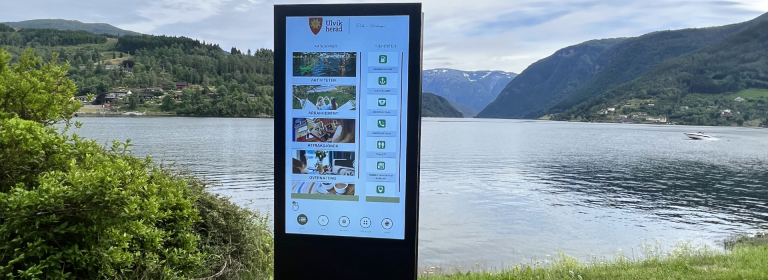
Between majestic mountains by the idyllic water’s edge, in Ulvik in Hardanger, you can now explore more of what this beautiful region has to offer at the municipality’s new digital tourist kiosk. With a few keystrokes on the screen, you get access to all the exciting attractions in the region. Beautiful Ulvik in Norway with digital tourist information.
Whether you are a visitor or a proud local resident, this interactive kiosk will be your personal guide to secret (and not so secret) experiences in the area.
The digital tourist kiosk in Ulvik is designed to enrich tourists’ stay and give them an exciting experience while they explore one of Norway’s most beautiful regions. The municipality hopes that visitors will embrace this resource and be guided to the hidden gems and natural wonders that Ulvik has to offer.
Exciting information in Ulvik of interest to all
Procon Digital AS, together with Ulvik municipality, has developed the solution, which welcomes everyone at the water’s edge with a user-friendly touch screen. The solution is built on Procon DigitalTurist in the cloud solution Procon Cloud, and adapted especially for Ulvik in Hardanger.
The tourist kiosk in Ulvik reveals exciting information with the latest technology, such as info about local attractions, activities for everyone, where to eat and drink, and other practical information such as e.g. weather forecast, public transport, etc.
Regardless of whether you are an experienced and adventurous hiker, boating enthusiast or culturally interested, the municipality’s new digital tourist kiosk will guide you to the best activities that suit your interests.
Many banks across the country have embraced Procon solutions. Photo: Melhusbanken
Every third municipality uses Procon solutions
The Norwegian company Procon Digital AS has delivered digital tourism solutions to a number of places in Norway and Sweden this year. Since 1990, the company has developed various digital cloud-based self-service solutions for many industries, and Procon solutions can be found in more than every third municipality in Norway and in many banks across the country. Also the health sector and many other businesses have embraced Procon solutions.
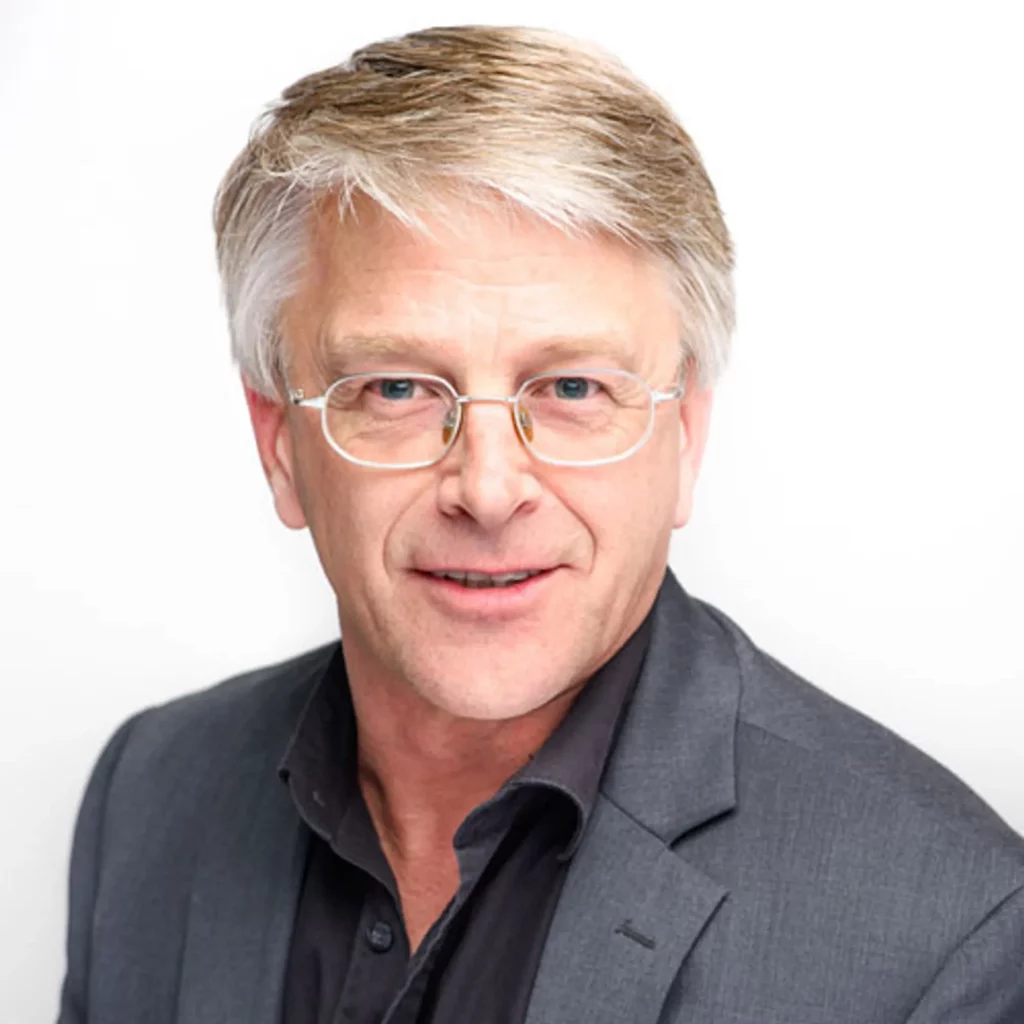
CEO Tor-Arne Lie Jensen in Procon Digital AS
“We are proud that our new tourist solutions are placed outdoors directly at the tourist spots in municipalities in Norway and Sweden, and especially here in Ulvik where the digital solution is surrounded by the beautiful Hardanger nature right at the water’s edge,” says CEO Tor-Arne Lie Jensen in Procon Digital AS.
Beautiful Ulvik in Norway With Digital Tourist Information, written by Tor Kjolberg
Want a taste of Hardanger? Just click the image below.
Click the image
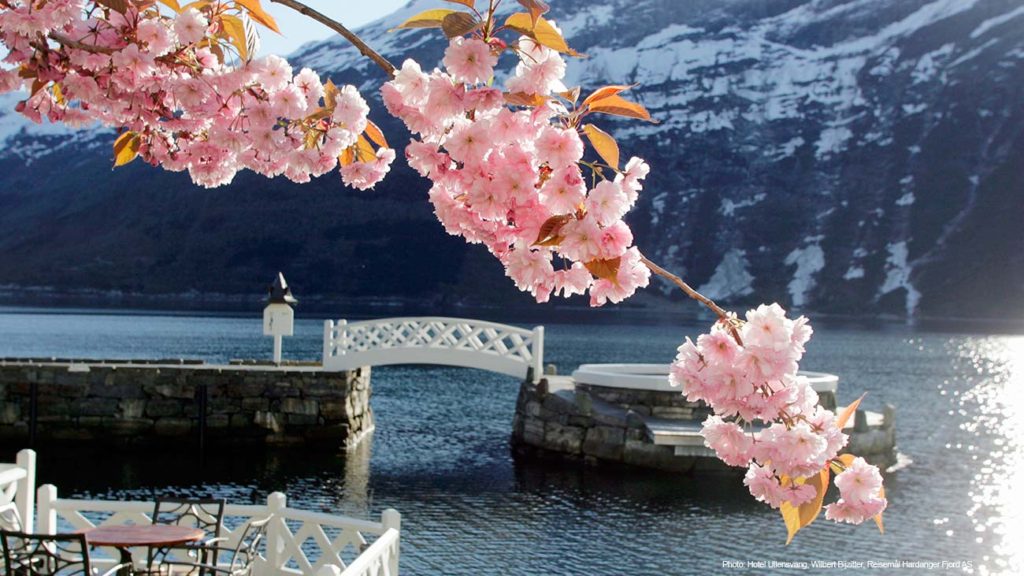
There’s nothing more beautiful than Hardanger in apple blossom time. Find out more by clicking the image below.
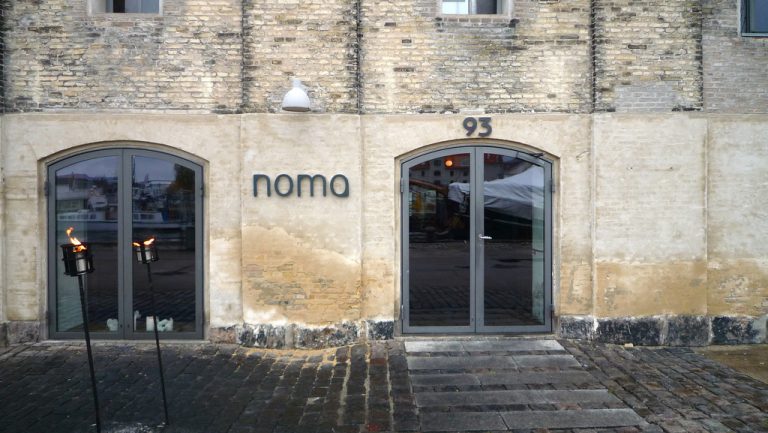
The three-Michelin stars restaurant Noma in the Christianshavn neighborhood of Copenhagen, voted the best restaurant in the world by Restaurant magazine’s World’s Best Restaurants in 2010, 2011, 2012, 2014 and 2021, closes its doors. But chef and co-owner René Redzepi is constantly on the lookout for an authentic Scandinavian taste identity. Read more about what happens when the world-famous Copenhagen restaurant closes down.
Redzepi was born in Copenhagen, Denmark, to an immigrant father from the Republic of Macedonia, in Yugoslavia, and a Danish mother. Redzepi is noted for his work on the reinvention and refinement of a new Nordic cuisine and food that is characterized by inventiveness and clean flavors. According to an article in the New York Times Redzepi has plans to transform the kitchen into a full-time laboratory.
At NOMA, Redzepi served as far as possible only food that naturally grows and lives in the Nordics.
At NOMA, he served as far as possible only food that naturally grows and lives in the Nordics, e. g. cod liver rather than foie gras and apples rather than mangoes. For most, it was completely unthinkable that Redzepi would succeed with such a concept.
You might also like to learn about other Scandinavian top listed restaurants. Just click on the image below.
Rwene Redzepi. Click mage to read more.
Redzepi left high school when he was 15 years old and enrolled in a cooking school with a friend.
When he was 19 years old, he went to work at Le Jardin des Sens in Montpellier in Southern France.
Redzepi sources much of his food locally and does research by foraging for food in the wild. He said that this comes from his time living in Macedonia, where food was local and fresh. Much of the approach to the menu and food at Noma was based on seasonal themes of what was available at the time. Redzepi has always focused on fermentation and dehydration, experimenting with using as much of the plants, meat, and fish as possible.
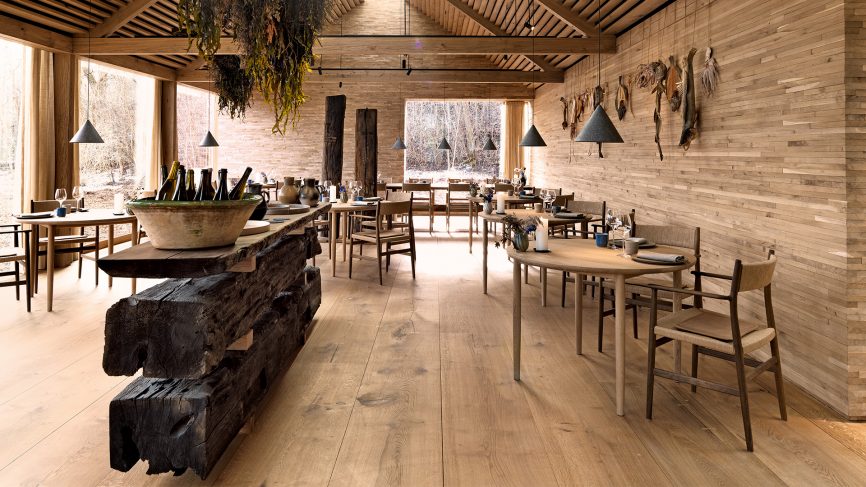
NOMA interior
It is not the first time Redzepi focuses on research. Nordic Food Lab in Copenhagen was the brain child of gastronomic entrepreneur Claus Meyer and head chef René Redzepi. Read more about it by clicking the image below.
Click the image to read more.
At the end of 2024, regular operations at his restaurant will cease and the kitchen will be transformed into a full-time laboratory focusing on recipe creation and goods for its e-commerce platform, Noma Projects.
There is enough food in the world, but it is the wrong food. 1.5 tons of food goes through an average human body in one year. More people get too much and the wrong food than go hungry. Redzepi admits it hurts to close the restaurant but says he cannot afford to produce top notch cuisine while also paying his nearly 100 employees a fair wage and at the same time produce diners at a reasonable price.
The Noma Project will research the food of the future.
The Noma Project will research the food of the future. There are 80,000 edible plants in nature. We get 90 percent of our calories from just 30 of them. We can eat saltwort from the water’s edge, pea flowers from the meadow, mushrooms and seeds from the forest. Few know what untapped culinary resources are hidden in domestic hedgerows or bog landscapes or the Arctic North.
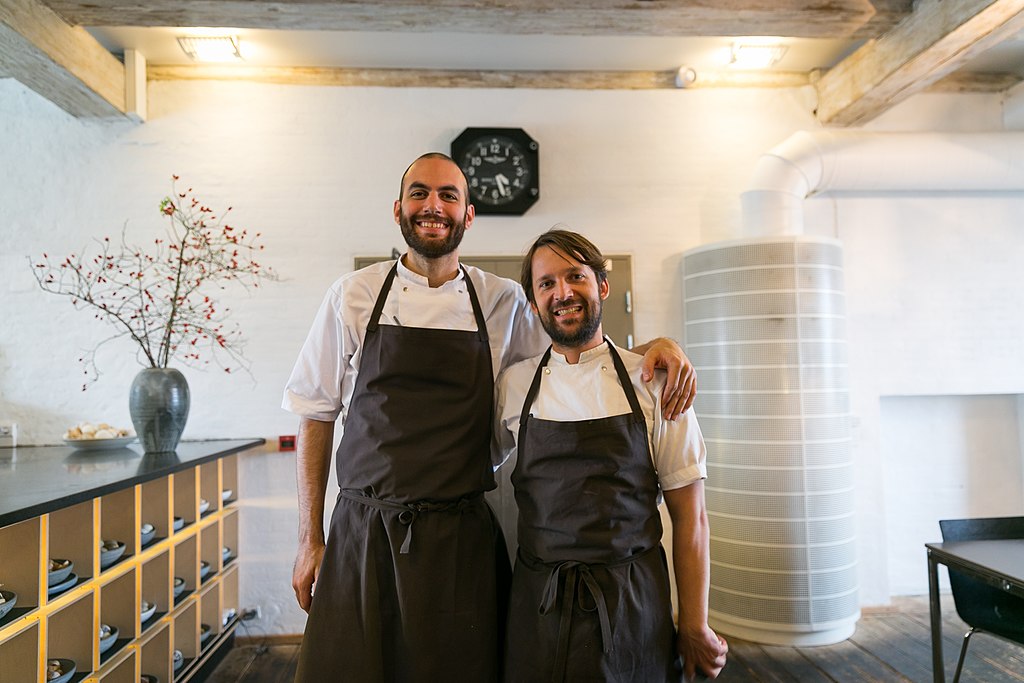
Chef de Cuisine Daniel Giusti (left) and Rene Redzepi. Image: Wikimedia Commons
“We have to completely rethink the industry,” Redzepi says. “This is simply too hard, and we have to work in a different way.”
World-Famous Copenhagen Restaurants Closes Down, written by Tor Kjolberg.
With its beautiful fjords, northern lights, and stunning natural landscapes, Norway attracts numerous tourists yearly. However, for those who enjoy vaping or electronic cigarettes, it is important to know the rules and attitudes toward these activities in this Scandinavian country. Read more about rules and attitudes about vaping and electronic cigarettes in Norway
Vaping & Electronic Cigarettes in Norway
In Norway, the attitude towards vaping and electronic cigarettes is rather conservative and cautious. Authorities aim to reduce tobacco and nicotine consumption, including vaping. In 2018, a law was introduced in the country prohibiting the advertising and sale of electronic cigarettes with flavours that could appeal to young people.
The sale of nicotine-containing liquids in Norway is restricted to those with a medical prescription.
Additionally, the sale of nicotine-containing liquids is restricted to those with a medical prescription. This makes access to nicotine products more limited compared to some other countries.
According to information from Norwegian news published in Moja Norway on July 2nd, the Ministry of Health of Norway has introduced a bill aimed at regulating electronic cigarettes in light of the increasing number of young people in the EU resorting to the use of electronic cigarettes.
The essence of the proposal includes the following measures:
Ban on adding flavourings other than tobacco to electronic cigarette liquids. This proposal is based on similar principles already in effect in countries such as Finland and Denmark.
Introduction of standardized packaging for electronic cigarettes and similar products. Similar rules are already in place in other countries like Denmark and the Netherlands.
In addition, the Ministry of Health is suggesting some minor changes to the legislation, including:
A clear prohibition on restricting smoking to account for new types of tobacco products emerging in the market.
A ban on the visible display of tobacco products.
Introduction of consistency to ensure compliance with existing rules.
This bill was presented by the government on June 9th and will be reviewed by the Parliamentary Committee on Health. After its approval by parliament, the revised rules will come into effect.
Rules for Tourists Who Vape in Norway
Vaping in public places such as cafes, restaurants, and public transport is prohibited.
If you are a tourist planning to visit Norway and vape, you must know the following rules:
Vaping in public places, such as cafes, restaurants, public transportation, and other public buildings, is strictly prohibited in Norway. This rule applies to both nicotine-containing and nicotine-free products without a prescription.
Some hotels and rented apartments may have rules that prohibit vaping indoors. It is recommended to inquire about this before making accommodation reservations.
Selling or providing vapes to minors is considered a crime and is punishable by law.
To purchase nicotine products, including vape e-liquids, you may require a special document.
Advertising of vapes and electronic cigarettes is prohibited in Norway.
Vaping has become an alternative to traditional cigarettes and, in some cases, has helped reduce the number of smokers in Norway.
Places to Buy Vapes and Vape Accessories
In Norway, there are several vape shops where you can purchase vapes and related products. However, as mentioned earlier, you may require documents to buy nicotine-containing products. You can also order e-cigs from online vaping shops in Norway. Besides physical stores, you can also order vape products online and have them delivered to your place of residence.
Norway is a beautiful and unique country, but vapers and enthusiasts of electronic cigarettes should adhere to strict rules and restrictions related to nicotine consumption and vaping. Respecting local laws and norms is crucial to avoid legal issues and ensure an enjoyable travel experience in this wonderful country.
Despite the limitations, Norway remains an excellent destination for enjoying nature. Tourists, including vapers, can savour the unique natural beauty of this country, provided they follow local rules and respect the laws. Remember that health and safety should always be a top priority, regardless of where you are.
Rules and Attitudes about Vaping and Electronic Cigarettes in Norway is written exclusively for Daily Scandinavian by Dennis Forman. Dennis is a journalist, PR, and an experienced vaper with a mission to help smokers quit tobacco smoking due to his informative and helpful articles. Every word he puts down about fighting against cigarette addiction comes from his life experience and is learned from the school of hard knocks. He is also a professional writer, and a person who is willing to share his comprehensive knowledge of vaping.
The realm of sports is a universal entity, but the approach to athletic training varies significantly across the globe. These differences are often shaped by cultural, geographical, and socio-economic factors. Learn more about global trends: How different cultures approach athletic training equipment.
As athletes from various nations compete on the world stage, the equipment they use and the training methodologies they follow become subjects of intrigue and inspiration for many. In this piece, we explore the global trends in athletic training equipment and how different cultures uniquely approach their preparations.
One of the leading platforms that offers insights into global sports equipment trends is AthleteSite. Their comprehensive database on athletic training equipment showcases a tapestry of diverse techniques and tools hailing from different parts of the world.
Photo by Xinhua
East Asia: Tradition Meets Innovation
Countries like Japan, China, and South Korea seamlessly blend traditional training methods with cutting-edge technology. For instance, while martial artists might still use wooden dummies and traditional apparatuses, many modern training centers are also equipped with state-of-the-art biomechanical tools that analyze an athlete’s movement in real-time.
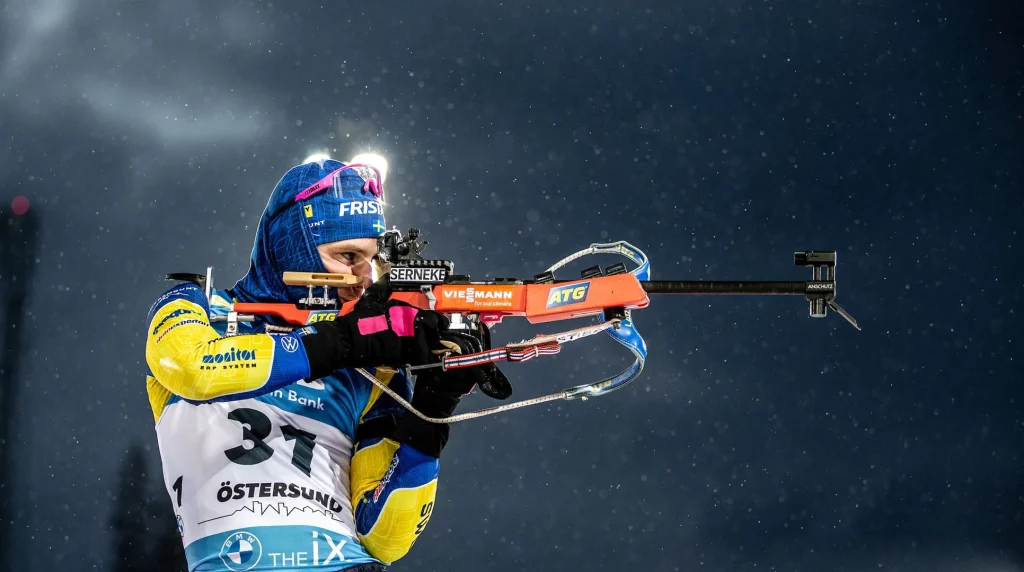
Biathlon in Scandinavia. Photo: Nordicwintersportsconference
Europe: Precision and Specialization
European nations, known for their sporting prowess, are heavily invested in specialized athletic training equipment. In football-loving nations like Germany or Spain, you’d find advanced simulators and motion analysis systems designed to hone an athlete’s skills. Meanwhile, Nordic countries like Norway or Finland emphasize winter sports, leading to the development of high-tech ski simulators and ice training facilities.
VR-sports. Photo: Viar360
North America: The Tech Frontier
North American athletes, especially from the USA and Canada, often have access to the latest in athletic training technology. With a strong emphasis on research and sports science, training here often incorporates VR simulations, hyperbaric chambers, and recovery technologies, setting trends that the rest of the world often follows.
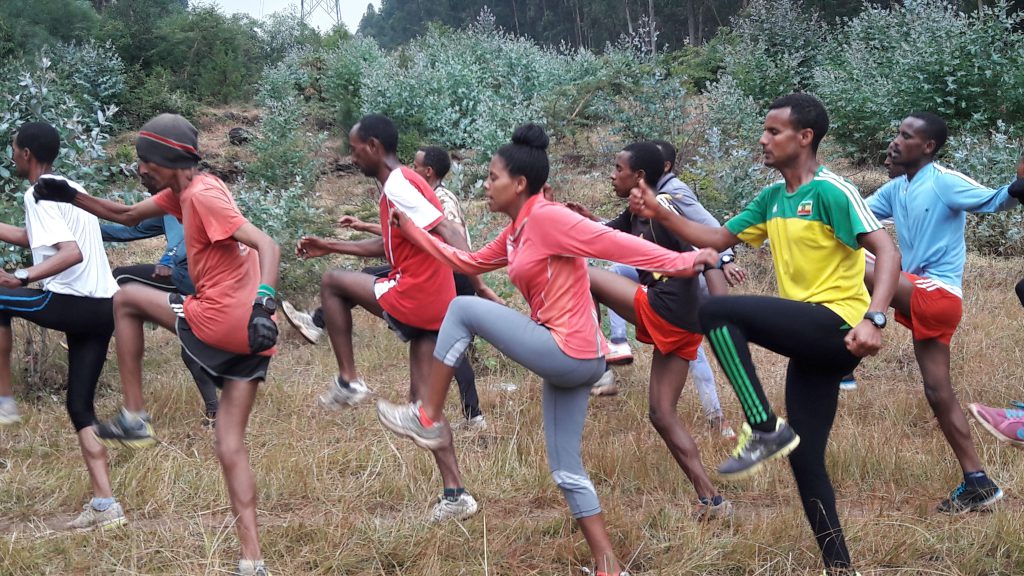
Photo: Training Partnership for Change
Africa: Ingenuity and Resourcefulness
While many African countries might not always have access to high-end, expensive training tools, their approach to athletic training equipment is a testament to human ingenuity. Makeshift weights, naturally occurring obstacle courses, and community-built training facilities are common. Countries like Kenya and Ethiopia, renowned for producing world-class runners, often focus on high-altitude training without the need for any advanced equipment.
Brazilian soccer. Photo: YouTube
South America: Passion Fueled Training
Football is a religion in most South American countries. While there’s an abundance of sophisticated training equipment available in facilities, many athletes also train using rudimentary tools that are steeped in tradition. Beach workouts, incorporating natural terrains, and community-based training sessions play a significant role in an athlete’s regimen.
Bells Beach surfers. Photo: Wikipedia
Australia and Oceania: Nature’s Playground
The geographical diversity of countries like Australia and New Zealand means athletes often use the natural environment as their training ground. Surfing, mountain biking, or rock climbing, the athletic training equipment here is often designed to complement the outdoors. Environmental sustainability also plays a role in the choice of equipment, emphasizing durability and eco-friendliness.
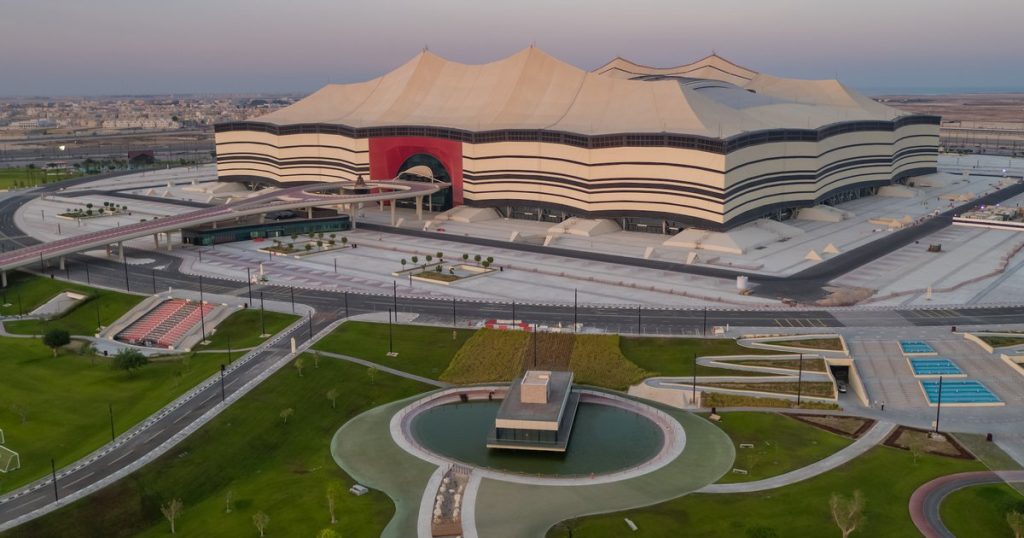
Al Bayt Stadium, Quatar. Photo: Quatar Museums.
Central Asia and the Middle East: A Blend of Old and New
From the wrestling pits of Iran to the state-of-the-art stadiums of Qatar, this region showcases a unique blend. While traditions and age-old training methods are still revered, there’s also a rapid adoption of new technologies, especially in wealthier nations aiming to make their mark in global sports.
Making the Right Choice: A Global Perspective
With such a myriad of options stemming from global influences, how does one choose the right athletic training equipment? Here are some considerations:
Understand the Origins: Knowing where a particular training method or equipment originates from can offer insights into its effectiveness.
Stay Open to Diverse Methods: Embracing a global perspective can enhance one’s training regimen, incorporating the best from different cultures.
Technology Isn’t Always Superior: As seen in regions like Africa, sometimes, the most straightforward methods can be incredibly effective.
Respect Traditions: While innovation is crucial, respecting and understanding traditional training methods can offer holistic development for an athlete.
Photo: Right to Education.
Adapting to Cultural Nuances: The Key to Global Athletic Training
The interplay of cultural nuances and athletic training equipment offers an additional layer of understanding in global sports trends. Different cultures not only have unique equipment but also distinct philosophies behind their training methodologies.
For instance, in India, the ancient practice of Yoga is often incorporated into athletic training. Even though Yoga doesn’t require sophisticated equipment, its principles of balance, flexibility, and mental focus are deemed invaluable for athletes. Traditional mats or simple wooden tools become critical assets in such training.
Similarly, Brazil’s native martial art, Capoeira, combines dance, acrobatics, and music. Athletes training in this discipline use traditional instruments like berimbaus and atabaques, not just for rhythm, but as integral parts of the training process to develop rhythm, timing, and spatial awareness.
Russia, with its storied history in sports like gymnastics and weightlifting, emphasizes the importance of foundational strength. Basic, time-tested equipment like kettlebells are revered and extensively used, showcasing that sometimes, simplicity yields the most effective results.
These cultural nuances underscore an essential aspect: Athletic excellence isn’t just about having the most advanced equipment. It’s about understanding the deep-seated philosophies and traditions that each culture brings to the table. Embracing these facets can lead to a more enriched, versatile, and holistic training approach, bridging the past’s wisdom with the present’s innovation.
Conclusion
The world of athletic training equipment is as diverse as the cultures that populate our planet. Each region, with its unique challenges and advantages, shapes the way its athletes train. By understanding these global trends, athletes can incorporate a rich tapestry of methods and tools into their regimen, ensuring a well-rounded and globally-informed approach to their sport. Whether it’s the high-tech simulators of North America or the resourceful innovations of Africa, there’s something to learn, adopt, and admire from every corner of the globe.
Global Trends: How Different Cultures Approach Athletic Training Equipment, written dedicatedly for Daily Scandinavian by Naum N.
Hornsberg strand-park was created in Stockholm, alongside Kungsholmen’s north-western shoreline as a big living-room as opposed to a pretty park. The project consists of a 700-meter-long waterside pathway on reclaimed land, that allows access to the water via a riprap bank with ladders down into the water at regular intervals. Follow us down by the river in Stockholm.
Stockholm is made up of a smattering of islands connected by countless bridges, so it is obvious that water plays a huge role in day-to-day life for the Swedes. Hornsbergs Strandpark, designed by Nyréns Arkitektkontor in 2012, was awarded the Swedish Association of Architecture’s own price, Sienapriset.
If you want to learn more about royal parks and gardens in Stockholm, just click the image below.
To learn more about royal parks and gardens in Stockholm, just click the image
The well-planned but organic project says a lot about the core principle of one of Sweden’s largest architecture firms. Solution-focused attention to detail comes first. Specializing in the design and delivery of full-scale, complex projects, Nyréns is industry leading within urban architecture and landscape design as well as research and education environments. In 2013, the studio was nominated for two awards at the annual World Architecture Festival in Singapore.
Solution-focused attention to detail comes first.
Popular by residents
Three floating piers of different lengths project to take advantage of the light on the water. Pilings driven into the solid rock and bonded to the surface with a large concrete crown extend the area of green space.
In fact, the whole neighborhood seems to have had an urban facelift, as new playgrounds and landscapes filled the entire island. The spot is popular by residents, especially on hot summer days, when they go to the park for a barbecue, to swim or just have contact time with the water. The non-native vegetation in the park was not intended to look like a garden, so it is deliberately of an informal design. Trees and underplanting are placed in dense groups to provide shade and a space between groups or users for events and functions.
You can enjoy nature in Stockholm and boost your wellbeing. To learn more, just click the image below.
Want to enjoy nature in Stockholm and boost your wellbeing? Just click the image.
As urban as parks get
Hornsbergs Strandpark is a linear park which edges one of Stockholm’s many islands. As the park stepped down to the water, the level changes were accentuated visually by different ‘earthy’ materials. The first, being a timber wall cut with holes for climbing plants to take over. At the water’s edge, the tiered concrete path was divided by a tapered rock wall.
A more than 700-meter long park with four different parts, including the Moa Martinsson square, the park is as urban as parks get, allowing the resident’s of Stockholm’s Kungsholmen to make the most of its waterside location. Three floating piers is a jetty for sunbathing.
Nyréns has always had multiple head architects, and they change over time. So, there is no such thing as a typical Nyréns building. The firm has created countless public spaces over the years, and though some of them have a lot in common, each project is unique.
The whole neighborhood seems to have had an urban facelift, as new playgrounds and landscapes filled the entire island.
Important to environments
On the negative side, access to and from the water is not easy due to the steep riprap embankment and ladders into the water. That being said, I tend to think when people engage with waterfront areas, they’ll become more aware of today’s important environmental issues like river pollution due to changing climate and that architects can make a real impact to prevent. Landscape architecture can make a positive impact on everyday life.
Down by the River in Stockholm, written by Tor Kjolberg
Are you planning a family vacation to Norway? From breathtaking landscapes and majestic fjords to the lively cities of Oslo, Bergen, and Trondheim, there’s no shortage of sights and activities for the whole family. Here are four family friendly activities to try in Norway.
You’re sure to find plenty of opportunities to create memories that will last a lifetime while having an enjoyable family experience in this picturesque land. Read on for our top four recommendations of memorable family friendly activities to try in Norway.
Kayaking in the fjords
A bucket list activity that grownups and children can enjoy equally, kayaking through the majestic fjords is a must on your Norwegian adventure. Savour some of the region’s most spectacular vistas as the world-famous fjords provide the backdrop for your kayaking expedition. Taking to the water is also a wonderful way to get closer to nature and spot some of the marvellous creatures that live here.
If you’re looking to spend some time on the water in a kayak or canoe, it’s important to do your research ahead of time since some of the fjords will be more suitable for this type of activity than others. In the most popular areas for tourism, you’ll find plenty of businesses offering kayak rentals. Or, consider heading on a guided tour with a local expert, who will give you more information about the country’s history and fascinating landscapes as you float along the perfectly clear water.
You might also like to read about lighthouse kayaking in Sourhern Norway. Just click the image below.
Click the timage to read about lighthouse kayaking in Sourhern Norway.
Go on an Arctic safari
Despite the extreme conditions felt in Norway’s Arctic north, the animal kingdom continues to thrive. Arctic foxes, polar bears, reindeers, dolphins, whales and much more besides can be spotted in this diverse corner of the country. In fact, it’s suggested that as many as 55,000 different species are currently living wild in Norway, making it a haven for nature-loving families.
Unfortunately for tourists, lots of these creatures have mastered the art of camouflage and are hard to spot by the untrained eye. That’s why if you are interested in finding out more about Norway’s wildlife and even experiencing a few animal encounters, the best option again is to head on an organised tour. This will give you the best opportunity to see as many animals in their natural habitat as possible while also learning about the conservation efforts that are ongoing in the region. Experiences like this can stick with children for a lifetime, and even inspire a passion for the natural world.
Read also the fascinating tale of the Norwegian Arctic wilderness. Just click the image below.
Click the image to read the fascinating story about the Norwegian Arctic wildwerness.
Explore the culture in the capital
Granted, immersing themselves in the culture of a new place may not be top of a typical travelling tot’s to-do list. However, if you’re staying in and around the capital of Oslo, there are so many interactive ways to explore the city so you can take part in a history lesson without the kids even realising it.
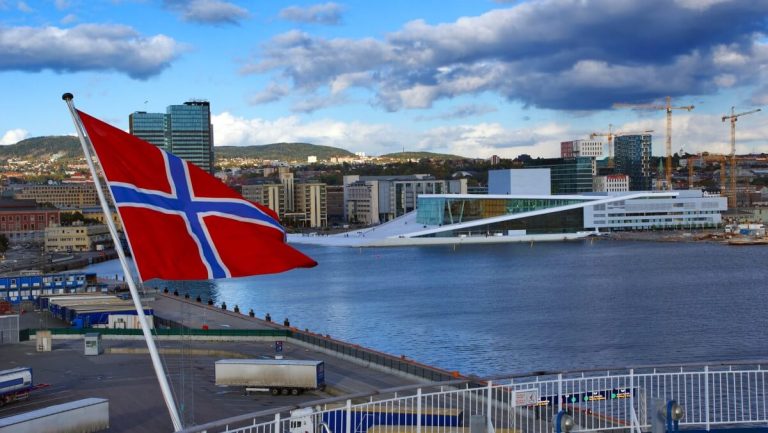
Oslo Opera House. Photo: Visit Norway.
There are plenty of interesting collections across the city that are child-friendly, including the Natural History Museum and Norwegian Maritime Museum. Whether you’re looking to learn more about the wonderful creatures that’ve called Norway home throughout history, or perhaps spend the day like a Viking, exploring original boats and shipwrecks, there is an exhibition to suit your clan.
According to recent statistics, a third of parents cited letting their children learn and grow as a key reason for deciding to travel as a family. Providing them with the opportunity to experience different cultures is a great way to broaden their horizons and give them a more well-rounded perspective when they return home.
Lilleputthammer. Photo: Visit Lillehammer.
Visit a big kids’ playground
Any family holiday itinerary wouldn’t be complete without a mention of a theme park or two. Fortunately, there are plenty of world-class attractions across the country, meaning wherever you’re based, you won’t be far from a fun day out for all the family. What better place to start than at Norway’s largest amusement park? Tusenfryd is located in Vinterbro, 20 km south of Oslo, and is packed with over 30 attractions and experiences for the whole family.
If there’s little ones in your travelling party, Lilleputthammer is a wonderful place to explore. This family-focused amusement park is tailored towards younger kids, meaning you won’t find any height restrictions on their attractions. There is plenty to keep them entertained, including a treasure hunt, ferris wheel and a climbing trail. But the star of the show here is the miniature village which depicts Storgata in Lillehammer in the 1930s. Walk among giants as you explore the traditional shops, hotels and cafes, keeping an eye out for the intricate details that bring this magical display to life.
If you’re looking to find your thrills in some of Scandinvania’s best amusement parks, you’ll be spoiled for choice in Norway.
Four family friendly activities to try in Norway, written dedicatedly for Daily Scandinavian by Clay Morrison.
Scandinavians are known for their minimalistic design. In general, they also know how to travel light – and smart. Learn more about traveling light – the Scandinavian way.
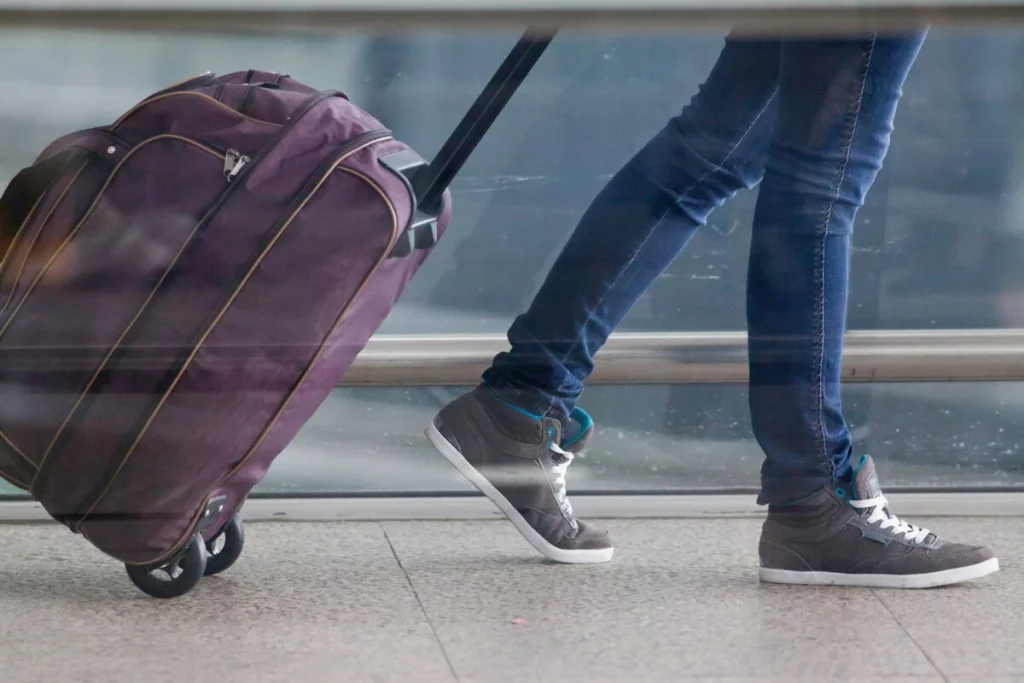
As a frequent and experienced traveler, I am mostly traveling with only one carryon-size suitcase. The length of my stay may vary depending on my assignment, but very seldom I need more than my well-used travel bag. It will also be easier to get on and off the plane, and you won’t have to pay to check a bag.
It’s all about getting together the essentials, not filling up a suitcase with your whole wardrobe. Too much baggage will weigh you down during your travels, and it can be expensive if you’re traveling by plane. Fortunately, traveling heavy is completely avoidable. By downsizing your luggage, packing more efficiently, and being selective with your clothes, you can travel light on your trip.
It’s all about getting together the essentials, not filling up a suitcase with your whole wardrobe.
The article continues below the image. Our writer Shawn Mack has written an article on what to wear in Scandinavia. By clicking the image below, you can read his article.
Laearn what to wear in Scandinavia by clicking the image.
Most people find themselves packing all sorts of stuff that they think they might need, but actually don’t. It’s perfect natural. It gives most people a sense of control over an unknown situation.
Small suitcases or bags will force you to be efficient during the packing process. When you’re shopping for luggage, look for a size you think would hold everything you need, and then choose a suitcase or bag in a size down. You’ll be more selective about what to bring when it comes time to pack your bag.
The article continues below the image. Ellie Coverdale has given our readers packing suggestions for a trip to Norway. You can read her article by clicking the image below.
Get advice on packing suggestions for a trip to Norway by clicking the image.
When you don’t check luggage, there’s no need to worry about your bag being lost, damaged, stolen or even just not arriving on the same flight as you.
My travel packing revolves mostly around clothing, a jacket (blazer), pants and shirts. I bring two shirts (light and dark) and two pairs of casual slacks (also light and dark, matching both pants). I wear the blazer on, so it doesn’t take up space in my bag.
If you’re not so experienced, sit down and make a list of all things you think you need, and stick to that list. Next time you travel, you can use the same list, or adjust it, according to your last experience.
My footwear is a pair of good walking shoes. They make acceptable dress shoes and can double as hikers if necessary. For pools and boats and strolls on the beach, I take a pair of flip-flops or sandals.
Most people find themselves packing all sorts of stuff that they think they might need, but actually don’t.
Throw in two t-shirts (light and dark), some socks, some boxers, and a packable rain jacket. That’s it for clothing.
If cold weather is expected I just adjust the above base and add a sweater or two. As I’m wearing almost half of the above while actually flying, everything else takes up about 3/4 of the space in my roll-aboard suitcase. The rest of the space is filled with laptop, tablet, my camera, charging plugs and a Ziploc toiletry bag. I’ve never failed to find anything else I might have forgotten at my destination.
As I know my trip itinerary before packing, I list my plans for my trip — restaurants I will visit, events to attend and attractions I’ll write about. Knowing what you have planned will tell you exactly what clothes and other items to bring so you’re not packing for the unknown.
Travel Light – the Scandinavian Way, written by Tor Kjolberg
From the iconic silhouette of Oslo’s Town Hall to the fjords and mountains in Western Norway and the Nordic lights high up north, the beauty of Norway’s culture and landscape has drawn people from around the world for centuries. This is the second article in our new series Expat in Scandinavia. Read aboutMoving to Scandinavia – Part 2 – Norway.
While the country’s diverse economy and liberal immigration policies once made it easy for expats to move to Norway, immigration requirements have become tighter over time. Now it’s generally expats with specialist skills that are in demand. Free movement in EU countries is, however, a fundamental right guaranteed by European Treaties. Article 2 of the Schengen Agreement states that “internal borders may be crossed at any point without any checks on persons carried out.” Norway is an associated EU member, so this rule complies.
The article continues below the image. You can read our first article in our series Expat in Scandinavia, Moving to Scandinavia – Part 1 – Denmark, by clicking the image.
You can learn more about Moving to Denmark by clicking the image.
Living in Norway as an expat
There are a number of strong sectors in the Norwegian economy, including IT, engineering, finance, healthcare, energy, construction, oil and gas. Expats with experience and sought-after skills in these sectors will find that there is plenty of scope for career progression in Norway.
The quality and affordability of housing in Norway varies widely. While expats may struggle to find spacious, high-quality accommodation that doesn’t break the bank in notoriously expensive Oslo, there are many areas in Norway where it’s much easier to find appropriate housing at a decent price.
The article continues below the image. By clicking the image, you’ll be directed to our article Understanding Norway: Cultural Etiquette for the First Time Traveler.
Click tye image to learn more about cultural etiquette in Norway.
Public transport in Norway is generally of a high standard and the quality of road infrastructure is relatively good.
The Norwegian health care system is financed by taxation, together with income-related employee and employer. and out-of-pocket payments (co-payments). Photo: Nordic cooperation.
The Norwegian health care system is founded on the principles of universal access, decentralization, and free choice of provider. The National Insurance Scheme (NIS) is often said to be one of the country’s greatest assets. The standard of hospitals and facilities in Norway is good and expats will find that doctors and medical staff are well trained and knowledgeable.
It is financed by taxation, together with income-related employee and employer contributions and out-of-pocket payments (co-payments). All residents are covered by the National Insurance Scheme (Folketrygden, NIS), managed by the Norwegian Health Economics Administration (Helseøkonomiforvaltningen, HELFO). Private medical insurance is limited.
Visitors from the European Union can receive public healthcare services in Norway just like locals would, providing they hold a European Health Insurance Card or EHIC. An EHIC is free but must be obtained in your home country before you travel.
If you’re a professional living and working in Norway, you can ensure your medical needs are met by choosing a suitable international health insurance plan.
Expat in Scandinavia: Moving to Scandinavia – Part 2 – Norway – the article continues below the image.
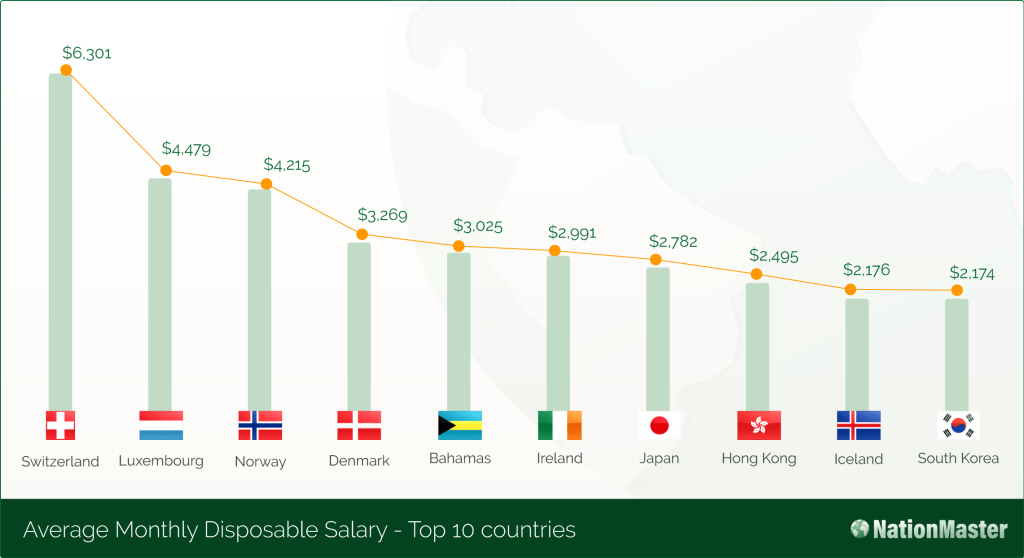
Average disposable salary top counties: Source: Nationmaster.
Cost of living in Norway
As with any country, the cost of living in Norway varies depending on expat’s lifestyle choices and location. Major cities such as Oslo have a well-earned reputation of being pricey to live in, and while life in the rest of Norway is by no means cheap, the cost of living is substantially lower outside he capital area.
You can learn more about cost of living in Norway by clicking this link.
Expat families and children
Schooling in Norway is mandatory for all children aged six to 16. Education is guaranteed by the Norwegian state and is free to all children at public schools. However, many expats choose to send their children to private or international schools. The variety is, however, limited, in particular outside of Oslo.
Climate in Norway
Hardly known for its desirable climate, most of Norway has a maritime climate with mild winters and cool summers. Because of the influence of the North Atlantic Ocean, Norway has a much warmer climate than its latitudinal position would indicate. Although Norway is in northern Europe, the warm waters of the Gulf Stream make the climate relatively mild.
Ultimately, Norway is a fantastic option for skilled expats, and for raising a family. It is also well positioned for easy and affordable travel to Europe and beyond.
From Lysefjorden, Norway. Photo: Nordic cooperation.
Fast facts
Population: 5,474,360 (2023)
Capital city: Oslo (also the largest city)
Neighboring countries: Norway shares a land-border with Sweden, Finland, and Russia. It is separated from Denmark by the Kattegat Sea.
Geography: The majority of Norway borders water, including the Skagerak inlet to the south, the North Sea to the southwest, the North Atlantic Ocean (Norwegian Sea) to the west, and the Barents Sea to the north.
Major religion: Christianity.
Political system: Parliamentary, constitutional monarchy.
Main language: Norwegian. English is mostly fluently spoken.
Money: The currency of Norway is Norske kroner – Norwegian crowns (NOK), which is subdivided into 100 øre. In order to open a bank account in Norway, most banks require proof of a local address and a form of official identification, such as a passport.
Time: GMT (GMT +2).
Electricity: 230V, 50Hz. The power plug sockets are of type F (flat two-pin plug).
Internet domain: .no
International dialing code: +47
Emergency contacts: Fire 110, Police 112, Health 113.
Transport and driving: Driving is on right-hand side. There is a variety of public transport options available in Norway and the transportation network is generally well formed both across the country and within most cities. All the major cities and towns in Norway have airports with both international and domestic flights. In fact, there are more than 50 airports throughout the country that are serviced through regular routes, making even remote places such as the Lofoten Islands, the North Cape and Svalbard easily accessible by plane.