A concern for the planet’s ecosystems has led the Norwegian artist Jana Winderen to explore unknown soundscapes. Among other things, she has captured the sound of both Oslo’s rats and life underwater. Learn more about the Norwegian artist who champions the well-being of the planet.
Her latest record, Blue Beyond, was launched in August. It’s a 2-track vinyl LP with fine art print released in an edition of 1000 copies only, the first 100 copies numbered and signed by the artist. Mastered and cut by Jason at Transition. Artwork and photography by Jon Wozencroft. The Blue Beyond is produced by Touch and Audemars Piguet following Audemars Piguet Contemporary’s commission of two new compositions by Jana Winderen in 2019.
The Oslo-based Norwegian artist, Jana Winderen, champions the well-being of the planet through her immersive soundscapes. Born in 1965 in Bodø, Norway, and having grown up close to the forests, mountains and seas, and read books on Thor Heyerdahl, a Norwegian adventurer and ethnographer with a background in zoology, botany and geography, she has always loved to be in or by the ocean, rowing or swimming.
The Oslo-based Norwegian artist, Jana Winderen. Photo: Audemars Piguet.
The Blue Beyond offers edits of two sound compositions for installations, Du Petit Risoud aux Profondeurs du Lac de Joux (2019) and The Art of Listening: Under Water (2019). Du Petit Risoud aux Profondeurs du Lac de Joux was first presented at Art Basel in Basel from 13 to 16 June 2019. A live performance of the piece was given at HEK (House of Electronic Arts Basel) on 11 June 2019. The Art of Listening: Under Water (2019) was first presented in the Rotunda, Collins Park, Miami Beach, in the context of Art Basel in Miami Beach, from 4 to 8 December 2019. The Art of Listening: Under Water installation was made in collaboration with Tony Myatt. It travelled to the Lenfest Center for the Arts, Columbia University School of the Arts, New York, from 3 to 13 February 2022.
“There is so much unknown and I have always liked to explore,” says Jana. As a child, she had spent every summer by the sea, often with her grandfather, Lars Winderen, an ear, nose and throat specialist who was an idealist in terms of protecting coastal areas and land from being built on, with a passion for plants and animal life.
The art of listening under water.
He and her mother were environmentalists, which had a great influence on the young Winderen. In the ’70s, she was afraid and outraged when she learned that a lake near her home was about to die from algae overgrowth and of the Norwegian government’s decision to build a dam where the reindeer fed and the indigenous Sámi people lived.
After studying mathematics, chemistry, biochemistry and fish ecology at the University of Oslo, Winderen graduated in fine arts from Goldsmiths, University of London in 1993. Initially making sculptures at school, she quickly pivoted to sound in 1992, refusing to make objects that would later become landfill and intent on leaving the smallest carbon footprint as possible.
“There is so much unknown and I have always liked to explore,” says Jana. Photo: Audemars Piguet.
Jana Winderen often draws the fish, amphibians and plankton she meets. The Blue Beyond release consists of a drawing of two fish that probably would never meet; the pike from the freshwater Lac de Joux in the Jura Mountains and the snapper from the saltwater environment by Miami.
Today, Winderen’s practice focuses on sound and knowledge production. The artist seeks to raise awareness of the environmental issues we face as a society.
Norwegian Artist Champions the Well-Being of the Planet, compiled by Tor Kjolberg
Sweden stands out as a country that offers an extraordinary blend of culture, nature, and cuisine.Learn more about unique travel experiences in Sweden.
When it comes to unique travel experiences, Sweden stands out as a country that offers an extraordinary blend of culture, nature, and cuisine. From the vibrant streets of Stockholm to the pristine landscapes of Lapland, Sweden beckons travelers with its diverse and unforgettable adventures. If you’re seeking to explore the best of Sweden, whether it’s during a quick getaway or a week-long family adventure, we’ve got you covered. Join us as we dive into the top five travel experiences that will make your visit to Sweden truly exceptional.
Dog Sledding Through Lapland’s Winter Wonderland
For those seeking a private jet charter adventure of note in the pristine wilderness of northern Sweden, dog sledding in Lapland is an experience like no other. Picture yourself gliding through snow-covered forests and across frozen lakes, all while being pulled by a team of energetic Siberian huskies. As you whoosh through the trees, keep a keen eye out for the region’s native wildlife, including the majestic moose, elusive red foxes, and the iconic reindeer.
You can read more about dog sled vacations in Sweden by clicking the image below.
Click image.
Embark on a West Sweden Seafood Safari
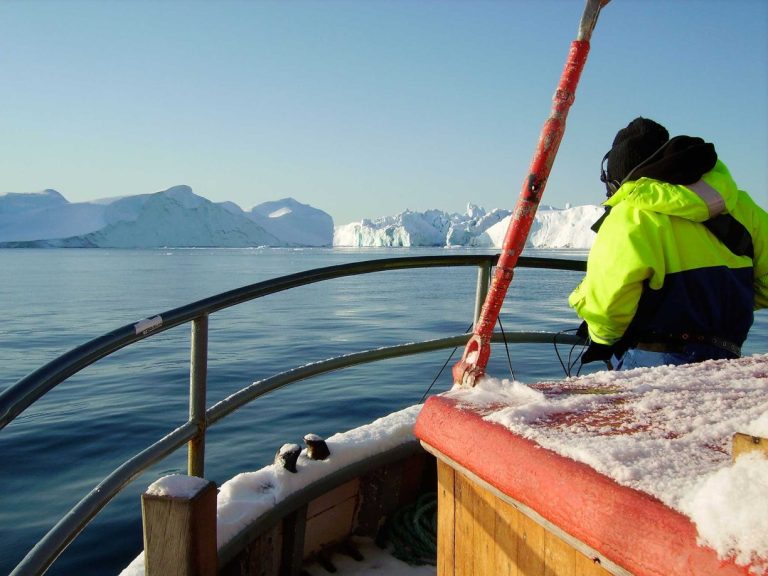
If you’re a seafood enthusiast, West Sweden is your gastronomic paradise. Head to the charming harbor town of Lyckorna on the west coast and sail with local fishermen on a mussel safari. These sheltered waters are teeming with delectable mollusks, and you can actively participate in hauling in the mussel-covered chains. For the freshest seafood experience, you can savor these delectable mussels right onboard or on a nearby local beach, prepared by the fishermen who caught them. It’s a culinary adventure that’s not only delicious but also deeply connected to the rich maritime heritage of Sweden.
You can read more about shellfish safaris in West Sweden by clicking the image below:
Click image
Immerse Yourself in Sami Culture in Lapland
Delve into the unique culture of the indigenous Sami people. Historically, the Sami were nomadic reindeer herders, and their way of life still plays a significant role in their culture today. Spend time with a local Sami family to gain insights into their traditional lifestyle, where reindeer husbandry remains a cornerstone, providing both sustenance and materials for handicrafts.
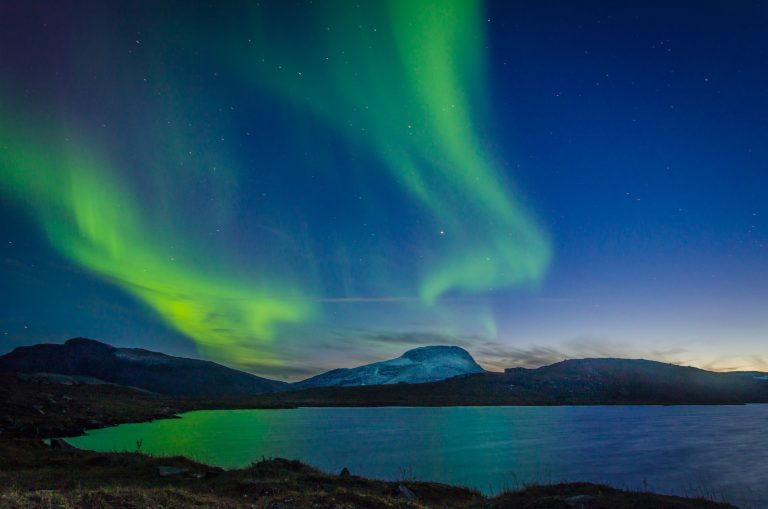
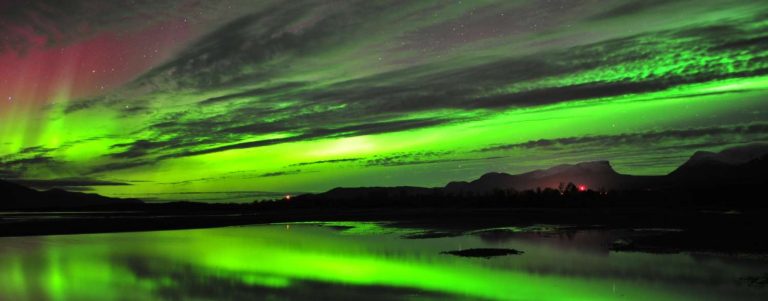
Swedish Lapland stands as one of the premier destinations in the world to witness the mesmerizing Northern Lights. Photo: Vincent Guth/Unsplash
Chase the Northern Lights in Swedish Lapland
A discussion of unique travel experiences in Sweden would only be complete by mentioning the mesmerizing Northern Lights. Swedish Lapland stands as one of the premier destinations in the world to witness this ethereal natural phenomenon. During the depths of winter, particles collide in the Earth’s atmosphere, creating breathtaking bands of color that shimmer across the night sky. What sets Swedish Lapland apart is its minimal light pollution and remote locations, providing optimal conditions for Northern Lights viewing. Yet, even in this pristine environment, nature’s whimsy prevails, and there’s no guarantee of a sighting. The Northern Lights are a natural wonder transcending human control, making each sighting an extraordinary event.
A Journey Beyond Expectations
Sweden, with its inventive culinary scene, designer stores, and well-planned cities, offers a plethora of reasons to explore its diverse landscapes. From award-winning glamping sites to architect-designed treehouses, the country’s connection to nature runs deep from award-winning glamping sites to architect-designed treehouses. Even in the heart of major cities like Stockholm and Gothenburg, you can immerse yourself in the great outdoors by kayaking, swimming, and cycling amidst the stunning natural backdrop.
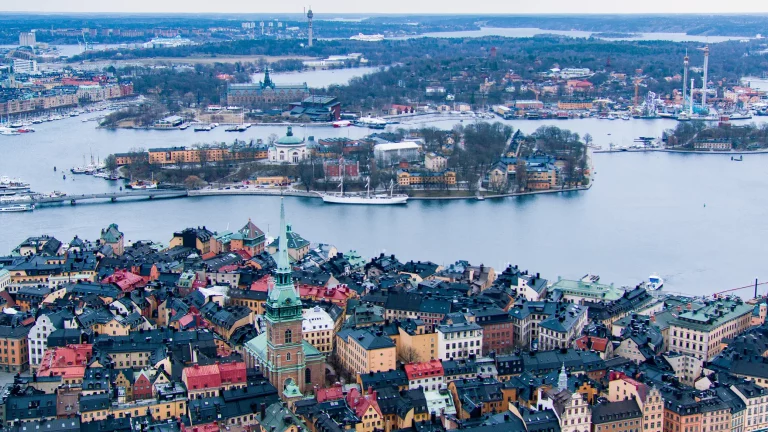
From Stockholm. Photo: Ana Borquez/Unsplash
Sweden’s unique shopping scene combines international fashion retailers with kooky independent boutiques and some of the world’s best thrift and retro stores. The culinary adventure continues with Michelin-starred restaurants, bustling food halls, and a fusion of cuisines from around the globe. Take advantage of the opportunity to savor plant-based and locally sourced ingredients, perfect for those searching for inventive vegetarian dishes.
The accommodation options in Sweden are nothing short of extraordinary. The country boasts an array of unique hotels, from the world’s first Icehotel to the Treehotel, Arctic Bath Hotel, and more. Whether you’re seeking the allure of glass roofs or the charm of castle hotels, Sweden’s diverse lodging options cater to all tastes. Moreover, Sweden’s public right of access, known as “Allemansrätten,” allows you to camp for free almost anywhere in the countryside, offering a chance to connect with nature on an even deeper level.
Three Climate Zones, One Spectacular Country
Sweden’s diverse landscape spans three distinct climate zones, offering a wide range of natural wonders. You can explore the Arctic tundra of the north, traverse the majestic mountains of the northwest, or immerse yourself in the lush forests and mighty rivers of central Sweden. Down south, you’ll discover a temperate climate boasting some of Europe’s most extensive beech forests.
The country’s coastlines are equally captivating, from the rugged High Coast in the northeast to the fashionable West Coast, the sandy beaches of Skåne’s Österlen, and the rocky archipelagos of Stockholm and Gothenburg. Few countries can rival Sweden’s combination of modern, minimalist design and untouched natural beauty.
Whether you’re yearning for snowmobile and husky tours, serene yoga retreats, forest bathing experiences, or the vibrancy of city life, Sweden offers it all. The country’s rich tapestry of experiences ensures that every traveler finds their own unique adventure, making Sweden a destination that promises to exceed your expectations.
Sweden’s diverse landscape spans three distinct climate zones, offering a wide range of natural wonders. Photo: Ines D. Anselme/Unsplash
Unveiling Sweden’s Best-Kept Secrets
In conclusion, Sweden’s allure as a travel destination extends far beyond the well-known tourist attractions. It’s a land of hidden gems and extraordinary experiences that beckon explorers to delve deeper into its culture, nature, and cuisine. Whether you’re savoring the maritime history of the Vasa Museum, mushing through the snow with huskies in Lapland, or the freshly harvested mussels on a seafood safari, Sweden’s uniqueness knows no bounds.
Immerse yourself in the captivating Sami culture, witness the awe-inspiring Northern Lights, and indulge in a smorgasbord of culinary delights. With a multitude of extraordinary accommodations and varied landscapes to explore, Sweden invites you to embark on a journey of a lifetime, where each moment is as unique as the country itself.
Unique Travel Experiences in Sweden, written dedicatedly for Daily Scandinavian by Nine Moons.
Settling down in Denmark can take a while, but once you know what you’re doing, it’s a great idea to start exploring and experience some of the country’s most wonderful scenery. Whether you’re working, studying or simply living in the country at the moment, there are some really great places for you to visit in Denmark when you have a day off! In our opinion, these are among the 7 best places to visit in Denmark.
If you’re looking for a day out to remember, here are some of our favorite places to visit in Denmark.
Denmark’s Love Island
A sleepy little island on the southern edge of Denmark called Ærø is one of Europe’s most popular romantic destinations for weddings and honeymoons.
Ærø measures roughly 20 km from northwest to southeast and varies in width from around 4 to 8 km. There are three small towns on the island. in 2020, the largest is Marstal with a population of 2,111. Ærøskøbing has 942 inhabitants and Søby 438. Fourteen villages and a number of farms complete the island’s pattern of settlement. To read more, just click the image below.
Click the image to read more.
The Wonderful Plant Rich Island in Denmark
The variety of plant life on Bornholm is astounding. The northern part of the island is extremely rocky and by radiating heat picked up from the sun, the rocks keep the surface warm enough for figs, grapes, mulberry, trees and other plants from Southern Europe to grow well.
Sweet cherry trees blossom in June and give a colorful show. Red orchids are common on the banks, in the river valleys and thousands of woodland flowers, especially blue, yellow and white anemones, cover large areas. About 25 percent of Bornholm is woodland. Click the image to read more.
Click the image to read more.
The Louisiana Museum outside Copenhagen
The Louisiana Museum of Modern Art in Humlebæk 55 km (22 mil) north of Copenhagen opened its doors in 1958. At that time, it’s founder, Knud W. Jensen, intended it to establish a home for modern Danish art. However, a few years later he changed course and Louisiana became an international museum of modern art.
Today, Louisiana Museum of Modern Art has an extensive permanent collection of modern and contemporary art as well as special exhibitions and is the most visited art museum in Denmark. Claude Monet was the focus of a major exhibition in 1994. When you enter through the modest courtyard and old country villa, you immediately will be surprised what opens up. To read more, click the image below.
Click the image to read more.
On Foot or by Bike on the Oxen Trail in Denmark
If roads could speak the Danish Hærvejen (Oxen Trail) would recount tales like few others. Throughout history this route, which starts just on the other side of the German border and runs down the spine of Jutland, has borne the weight of Danish hopes – as well as livestock.
A source of great pride for modern day Denmark, many of its secrets still lie by the roadside, yet to be discovered. It is probable that the route has been trodden for millennia and an air of historical significance hangs over every part of it. Click the image below to read more.
Click the image to read more.
Hamlet’s “Castle of Elsinore”
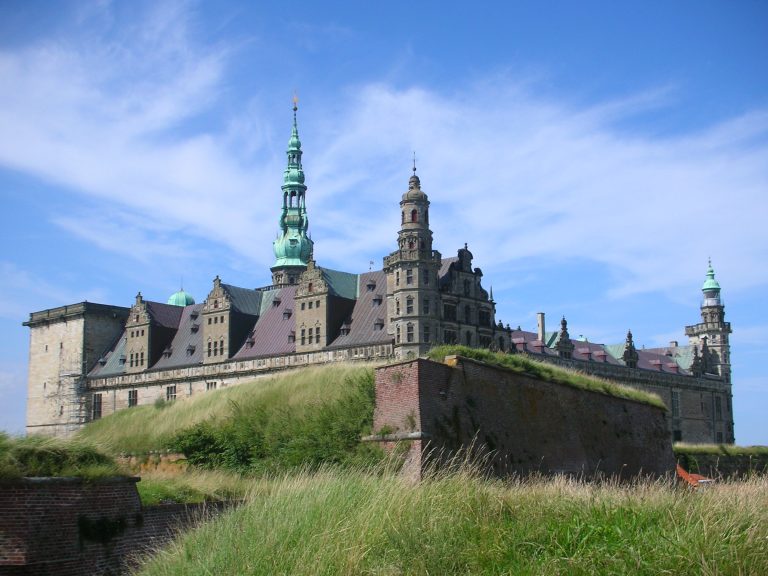
Helsingør in Denmark is best known for its massive Renaissance-style Kronborg, Hamlet’s “Castle of Elsinore”. However, the area has much more to offer than Hamlet’s “Castle of Elsinore”.
Originally built by King Eric of Pomerania when he introduced the “Sound Dues” (fees paid to the Danish crown by all ships passing through to the Baltic.) Kronborg has been rebuilt several times. It has provided a backdrop for many productions of Shakespare’s Hamlet. Click the image below to learn more.
Click the image to read more.
Adventure Tower
A 45-meter hour-glass observation tower in the preserved forest Gisselfeld Klosters Skove (approx. 50-minute drive south of Copenhagen) has opened in a Danish forest. The Danish architecture firm EFFEKT has completed a giant rounded observation tower.
It is now the highest point in the Zealand region, coming in at 135 meters above sea level. Camp Adventure Park opened its doors on the 31st of March 2019 and visitors are taken to new heights as the 900-meter long boardwalk welcomes the public from near and far. Click the image to read more.
Click the image to read more.
History and Art in Kolding
Kolding, located in Southern Jutland, Denmark is often overlooked by tourists. The city has, however, plenty of things to offer- especially when it comes to art, design, nature and history. Experience 750 years of art and history in Kolding, Denmark.
Kolding is in fact the home of the most interesting tourist attractions in Southern Jutland. The city is located in the mouth if Kolding Fjord which has a host of outdoor activities. In and around Kolding you will also find a great variety of historical attractions. An added benefit in visiting Kolding is its very central location within Denmark, which makes it an ideal home base for the many interesting attractions within the region. Click the image to learn more.
Click the image to read more.
We hope to have inspired you to take a trip out for a day somewhere in Denmark and visit one of our favorite spots. Make sure to check the weather forecast before heading out on an outdoor visit, and consider booking ahead at indoor destinations to avoid missing out. Most of all, enjoy exploring!
7 Best Places to Visit in Denmark, compiled by Tor Kjolberg
With its fairytale-like castles, engaging museums, and Viking past, Denmark is rapidly becoming one of Scandinavia’s most popular countries to visit. It boasts a temperate climate and beautiful beaches to enjoy in the summer months, as well as the cozy conviviality of hygge to embrace during the wintertime. What are the most visited places in Denmark? Read on to find out.
If you’re planning a visit to Denmark, you might be wondering which destinations you should add to your itinerary to discover the best this country has to offer. This article covers seven of the top places to visit, both in the capital and beyond. When it comes to finding accommodation during your stay, you’ll find a wealth of options at Rentola Denmark. It lists properties in all corners of the country, including apartments in Copenhagen and holiday cottages in Jutland. Thanks to an efficient railway network, you’re never far from the country’s highlights, no matter where you choose to stay.
Christiansborg Palace, Copenhagen
If you want to see how the Danish royals live, then don’t miss a visit to Christiansborg Palace. You can step inside the opulently decorated Royal Reception Rooms and visit the Royal Kitchen where banquets were prepared in times gone by. It’s also possible to tour the Royal Stables and admire horse-drawn vehicles dating back to the 18th century. Hidden beneath the palace are the remains of a 12th-century castle, which can be explored on guided tours. Just a stone’s throw from Christiansborg Palace are all the rides and attractions of Tivoli Gardens.
You can read more about the Castle Island in Copenhagen by clicking the image below.
Click the image
Viking Ship Museum, Roskilde
If you’ve ever wanted to experience life on a Viking ship, then this fascinating museum in Roskilde is not to be missed. Its exhibits center around five original ships that were excavated in the 1960s and detail how they were constructed and how they are being restored. A highlight of the Viking Museum is the “Climb Aboard” experience, which allows you to dress up and discover what it was like to sail in rough seas. Adjacent to the museum is a boatyard where traditional methods are being used to bring antique vessels back to life.
Kronborg Slot, Helsingør
In the town of Helsingør is one of Denmark’s most famous castles, which provided the inspiration for Elsinore in Shakespeare’s “Hamlet”. It is now designated as a UNESCO World Heritage Site, with much of its current structure dating from the mid-17th century. After marveling at its Renaissance architecture, you can tour the Knights’ Hall and admire the centuries-old tapestries on display in the West Wing. Throughout your visit, hear about the castle’s role as a garrison and a fortress, protecting the important trade waters of the Øresund.
You can read more about fairytale castles in Denmark by clicking the image below.
Click the image
LEGO House, Billund
Billund is the birthplace of LEGO and these iconic bricks are celebrated at the family-friendly LEGO House. It is home to 25 million miniature bricks and occupies an innovative modern building inspired by LEGO. In addition to paid experiences, there are several free areas that include themed playgrounds and a 15-meter-high LEGO Tree of Life. Adult fans of LEGO will appreciate the Masterpiece Gallery, which reflects the creativity of older builders, and the LEGO Vault where unopened editions of every LEGO set ever produced are on display.
Den Gamle By, Aarhus
Translating as “The Old Town”, this open-air museum recreates life in Aarhus in times gone by. It lies within the city’s picturesque botanical gardens where more than 70 historical buildings are on display. In addition to 16th-century half-timbered residences, a post office and a theater, there are workshops where traditional artisans are busy at work. Also within the complex is the Danish Poster Museum, the Gallery of Decorative Arts, and a history display titled “Aarhus Story”.
Egeskov Slot, Kvarnstrup
Completed in 1554, Egeskov Slot is a magnificent water castle and among the best-preserved of Europe’s moated fortifications. It has been owned by several families throughout its storied past before being opened to the public in 1959. The Renaissance architecture of Egeskov Slot is best admired from its landscaped park, which includes four hedge mazes, a vegetable garden, and one of Denmark’s largest collections of fuchsias. Also within the grounds is the half-timbered Ladegården, a collection of vintage cars and automobiles, as well as a museum detailing the agricultural heritage of the area.
Hans Christian Andersen Museum, Odense
The fairytale writer Hans Christian Andersen is one of Denmark’s most famous exports and this museum in Odense is a “must” for anyone who loves his work. It occupies a small yellow house where he was born in 1805 and has functioned as a museum since 1908. In addition to personal belongings and sketches by Andersen, there are interactive exhibits that help to bring his writing to life. Also part of the museum is Hans Christian Andersen’s childhood home, Andersen’s Barndomshjem, which is located a short stroll away.
What are the most visited places in Denmark? Written dedicatedly for Daily Scandinavian by Uliana Veremchuk.
It all started on 2nd October 2013, the day Daily Scandinavian was launched. The online publication was established to promote Scandinavian destinations, attractions, and issues regarding culture, including fine art/music, architecture, food & drink, business, news, and views. Now, ten years after its founding, Daily Scandinavian has evolved to an essential and visible resource for our community with over 2.500 articles.
At this moment, I am delighted to highlight ten milestones and highlights from the past 10 years. And quoting from the first editorial I published in 2013, because that’s exactly how I felt and what I’m feeling right now: I am about to share wonderful Scandinavia with my readers, filled with emotion and enthusiasm.
Ten Milestones and Highlights in 10 years
1. Starting out alone 2. Authors and photographers 3. Readers and reviewers 4. Acknowledgements 5. Serving the hospitality community 6. Special Issues and columns 7. Global visibility
8. Fine Arts/Music 9. Scandinavian explorers 10. Expat in Scandinavia
1. Starting out alone
It all started on 2nd October 2013 with my very first published article on Daily Scandinavian, Gliding Through Sweden’s Heartland. When Daily Scandinavian was founded, I wanted to leverage my long experience and insight with the Norwegian (and international) trade press. I had a desire to create a publication to make the exchange of Scandinavian insight freely available to all, regardless of geography. Our statistics soon proved that about 33% of our readers was US citizens, 27% was Scandinavians, 18,5% was living in UK and the rest was spread throughout the world.
Gliding through the Sweden’s heartland.
My aim was to publish one article every weekday (hence Daily Scandinavian). I had retired from my job as a PR advisor and the main reason was to keep my second language, English, alive and my brain fresh and updated. Plus, I must admit, have some fun. I have done so now for 10 years – and feel I’m still going strong.
Daily Scandinavian Celebrating a Decade of Publishing: Ten Milestones and Highlight in Ten Years – continue reading.
2.Authors and photographers
First of all, I’d like to express my deepest congratulations and appreciation to our supporting writers and photographers. Since our second year, Daily Scandinavian has adopted editorial supporters and technical advisors as co-working mechanisms. Their dedication and efforts were instrumental in Daily Scandinavian’s success. Unfortunately, I cannot name everybody here (this article is long enough as is), but I want to give honor to a selected group of people who has contributed to the quality of our content – representing all others – not mentioned, but not forgotten.
The loyal contributing writers I want to highlight are (in alphabetical order):
Karoline Gore
Karoline is a freelance writer from Stoke on Trent in the UK who left the corporate grind when she started a family and has never looked back. She enjoys contributing to a range of online publications on the topics that are important to her. You can read one of her articles, Debunking Myths About Scandinavians by clicking the link.
Ainsley Lawrence
Ainsley is a freelance writer from the Pacific Northwest. Ainsley is interested in better living. through technology and education. She is frequently lost in a good book. You can read one of her articles Nordic Necessities: Essential Car Maintenance for Scandinavian Winters by clicking the link.
Shawn Mack
Shawn is a content writer who offers ghostwriting, copy-writing, and blogging services. His educational background in business and technical field has given him a broad base from which to approach many topics. You can read one of his articles Health and Medicine in the Viking Scandinavia by licking the link.
Nadine Westwood.
Nadine is a registered dietitian, travel blogger & fitness lover. In her spare time, she helps save stray animals. Nadine really does enjoy sharing her fitness journey with others who might need help with weight loss or finding a stress reliever. You can read one of her articles 4 Great Reasons to Move to Scandinavia from the USA (and 5 Practical Tips) by clicking the link.
Photographers who have contributed to the high quality of image material are (in alphabetic order):
Jon Arne Foss
Jon Arne is an experienced landscape photographer, based in Oslo, Norway. His pursuit of motifs has taken him around Scandinavia for well over two decades now. His talent for rare captures of amazing light and fleeting atmosphere imbue his portfolio with a sense of the majestic and the bold.
Terje Rakke
In 2001, after working with the international agency Image Bank / Getty Images for 13 years, as partner in Image Bank Norway and as an international photographer, Norwegian photographer Terje Rakke established his own photo agency. Its specialty is photography from Norway and Scandinavia. You can read more about him here.
Lasse Tur
Lasse is one of the Daily Scandinavians’ excellent photographers. In 2010 his first book “Oslo seen from above”, one of a series of aerial photo books brightened his career even further. Now, he has a new book project with one of Norway largest publishers. You can read more about Pictures From Above by clicking the link.
3. Readers and reviewers
Since 2015, I’m obliged to our readers and reviewers. During the past ten years, Daily Scandinavian has published over 2.500 articles submitted by over 100 writers. It’s our worldwide authors’ high-quality contributions that fundamentally nourish Daily Scandinavian and support our rapid increase in submissions.
Accompanied by increased submissions, inevitably, more burdens were placed on the reviewers. It’s their professional, unbiased, and timely evaluations and comments that helped improve the manuscripts to convey a better message to our broad readership.
And I thank our readers for keeping a very close eye on Daily Scandinavian and the many constructive suggestions for Daily Scandinavian to improve its quality or impact, or who has evidence of promoting Daily Scandinavian in public/social media/conferences/webinars/workshops/forums, and published articles/books/presentations.
Jann Bromann interviewd by Tor Kjolberg in 2015.
I have always had an eye for photography, although I am an amateur myself. In 2015, Fotografiska in Stockholm celebrated it’s 5 years’ anniversary. We published an article and since then we’ve kept a close relationship. We were invited to interview co-founder Janne Bromann in 2016.
Daily Scandinavian Celebrating a Decade of Publishing: Ten Milestones and Highlight in Ten Years – continue reading.
Federico Maltese
4. Technical advisors
In November 2016, Daily Scandinavian launched a new design. It featured a whole new look with mobile-first responsive design, and a new focus on sharing with our readers Scandinavian active lifestyles, destinations, accommodation, attractions, history, arts and music, architecture, fitness, recipes and more. Our web-designer and webmaster at that time, Amir Hussain, did an excellent job. Our webmaster through the years, Federico Maltese, has been a valuable resource and solved many technical challenges. He helps small business with optimizing IT systems, increase productivity and reduce costs with focus on IT Security.
5. Acknowledgements
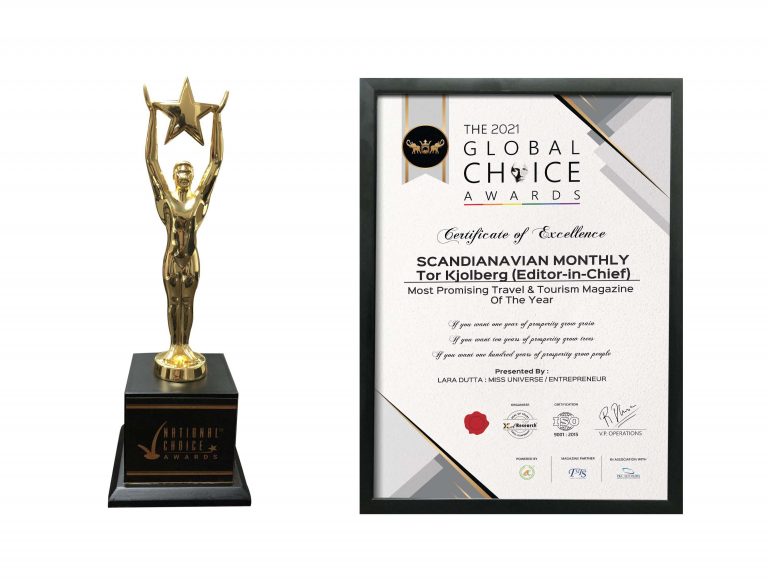
Our hard work was not overlooked. In 2018, Daily Scandinavian was awarded the 3rd ranking award on “Top 50 Scandinavia Travel Blog” by Feedspot. In 2019, it was proclaimed that we were accepted on the Expertido’s list of the 25 Best Scandinavia Travel Blogs, and in 2020, we were contacted by Corporate Live Wire, announcing that we’ve been awarded the Prestige Award of the year. “The judges were impressed with your personal touch, consistency of reviews and community feel. The passion for what you do really comes across and I hope this achievement brings more success in 2021,” said Rocky Singh at CLW.
6. Serving the hospitality community
To highlight the important topics, events, and people in the hospitality community, we have reviewed hotels all over Scandinavia, given honest comments on both positive and negative issues.
We’re in particular proud of being honored guests of several Classic Norway hotels, the Thief and Raddison Plaza in Oslo and the Well in Kolbotn outside Oslo. I will use this opportunity to thank hotel managers Stephen Meinich-Bache (Classic Norway Hotels), Robert Holan (The Thief), Tarje Hellebust (Raddisson Plaza) and André Julseth (The Well – now managing director at Sommerro hotel in Oslo) respectively for their kind collaboration.
In 2021, during the covid pandemic, Stephen Meinich-Bache navigated his chain during touch times.
Stephen Meinich-Bache, Classic Norway HotelsRobert Holan, the ThiefTarje Hellebust, Raddisson PlazaAndre Julseth, the Well
6. Global visibility
Daily Scandinavian has gained high visibility all around the world. We’ve received comments from 65 countries, and downloads from more than 100 countries and were widely spread through the world’s major travel portals and social media channels (Facebook, Twitter, Instagram, and LinkedIn).
Here are just two examples of recent comments:
Ginger Young and her husband from Texas
Message Body: “I read an article you wrote about this cheese. We are a small goat-dairy in Texas and my husband tasted that cheese a long time ago and since we have a creamery and do make cheese we decided to make Gjetost. We’ve tried twice and it hasn’t turned out well. We tried once in a crockpot with whole goat milk, and this week we tried fresh whey after making Swiss cheese and added cream towards the end. Do you know of any resources we can use to make this wonderful cheese successfully?”
“Thank you very much for your very nice article! I just read it and everything was right. I’m going happily to link to it from our website!
It may be interesting for you to know that we just two weeks ago were awarded both gold and silver price in ADCs international architecture competition. If you look into the website, you can see we awarded for the same project that was featured in Grand Designs.”
Daily Scandinavian Celebrating a Decade of Publishing: Ten Milestones and Highlight in Ten Years – continue reading.
7. Special Issues and columns
With over 2,500 articles, Daily Scandinavian has become a resource for many of our visitors. Some claim that the publication is like a living encyclopedia. E. g. If you use the search function and type ‘Vikings’, you’ll have 120 Viking-related articles to choose from. We know that some articles are more visited than others, from 88,000 views to 500, the average being about 7,000.
Based on this information, in 2021, we decided to launch a new category, Scandinavian Explorers (see below).
Articles on the Viking Age are among our most read articles.
8. Fine Arts/Music
Fine arts/music is a topic I personally like to share. However, I wanted to give our articles a more professional touch. Earlier this year, I met Anne Marit Muri at an art exhibition in Oslo. We talked about art, her career, interests and Daily Scandinavian and we immediately felt we were on the same wavelength.
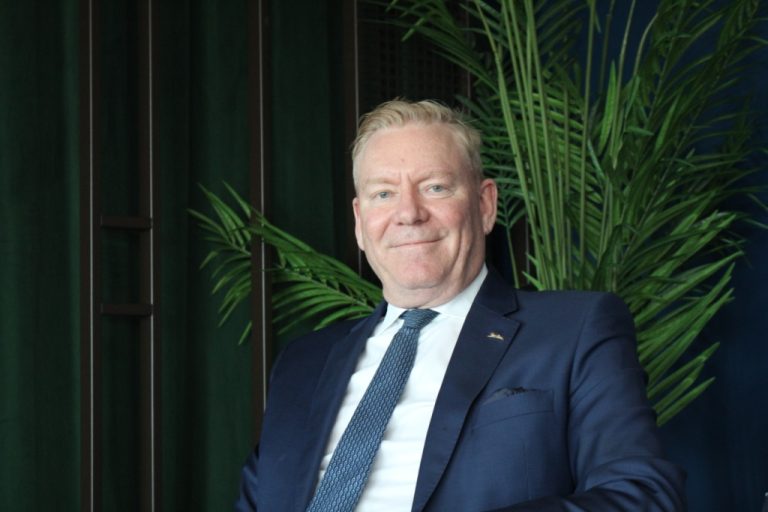
Anne Marit is a former editor of, among others, Magasinet Kunst, and has written reports on art and culture for a number of years.
She is the author and initiator of the book, Kunstnerliv, portraits of 19 contemporary artists, which was published in 2018, voted the year’s most beautiful art book in 2019 by Grafill. She is also the author of the book, Kåre Tveter – Det gåtefulle lyset, Svalbard, which was published in autumn 2022, by the publisher Utenfor Allfarvei in Harstad.
Muri is educated at the University of Oslo and Bergen. She is currently working on a master’s degree in media development, under the auspices of Oslo Met, in addition to developing new book projects and is a writer for several magazines.
Now, she is not only a regular writer on fine arts for Daily Scandinavian, but also a partner for future strategies.
9. Scandinavian Explorers
In our series Scandinavian Explorers, we present not only famous explorers from the Viking age to our present time, but also fascinating and exotic destinations for modern Scandinavian ‘explorers’. We have recently visited Bordeaux in France, Tallin in Lithuania, and Dubai in the United Arab Emirates is on our bucket list.
Our Bordeaux article will be published in the course of this month
Our Bordeaux article will be published in the course of this month.
10. Expat in Scandinavia
At a conference in 2022, I met Soumitra Bhattacharya from India. He moved to Norway 21 years ago to work with one of the largest IT corporations in Norway and has been here since.
Soumitra Bhattacharya from India
Examining Daily Scandinavian, he told me, “I wish I had this information long time ago. Expats in Scandinavia is a market for you.”
I am not always easy to convince, but this time it screamed Eureka! We have just launched a new series “Expat in Scandinavia” and are now in the process of preparing a twice a month newsletter for the target group. Soumitra is from time to time advising me on important issues.
10 years
Ten years is definitely a short period in communication history, but what has been done in this period could perhaps change a new generation of influencers. Looking back at the past decade, the whole Daily Scandinavian team can proudly say that we have tried our utmost and wholeheartedly to serve the people in hospitality and tourism. Scandinavian co-operation has firm traditions in politics, the economy, and culture. The region plays steadily a more important role in European and international collaboration and aims at creating a strong Nordic community in a strong Europe.
The editor humbly celebrating Daily Scandinavian’s 10th Anniversary. Photo: Anne Marit Muri.
I believe we have achieved our primary goal. We have made successful progress, some of which I could not have even dreamed of 10 years ago!
I am confident that Daily Scandinavian and Expat in Scandinavia will be able to open new horizons in the future and inspire us to say, “Look, we have a mission!”.
Thank you for reading Daily Scandinavian Celebrating a Decade of Publishing: Ten Milestones and Highlight in Ten Years to the very end.
This month, nights are turning longer and darker, making it the perfect time to seek out the Northern Lights. Especially in the winter months, popular viewing locations can become bottlenecked with tourists, and light pollution from well-populated areas makes the chances of seeing the Aurora Borealis slim. As a local, here are the places I’d recommend seeking out the Northern Lights in Northern Sweden slightly off the beaten path.
Vindelfjällen Nature Reserve or Sarek National Park
Lapland is often recommended as a tourist destination; however, given its scale covering almost a quarter of the country, it offers a vast range of hiking experiences. I’d recommend the Vindelfjällen Nature Reserve or Sarek National Park for solitude and jaw-dropping views.
Most hikes in these regions range from moderate to difficult, so I’d recommend these trails to hikers with experience who are up for a multi-day adventure. Vindelfjällen Nature Reserve and Sarek National Park have pristine visibility, increasing your chances of seeing the Northern Lights.
Kiruna Region
Suppose you feel tired already just thinking about a multi-day hiking excursion. In that case, I recommend hiking in the Kiruna region, which offers more low-stakes options, such as portions of the E1 trail between Abiskojaure and Unna Allaka’s Fjällstuga, a relaxed hike through birch forests. While in the region, I’d recommend a visit to the famous Icehotel, where you might even catch the Northern Lights from the comfort of your ice room.
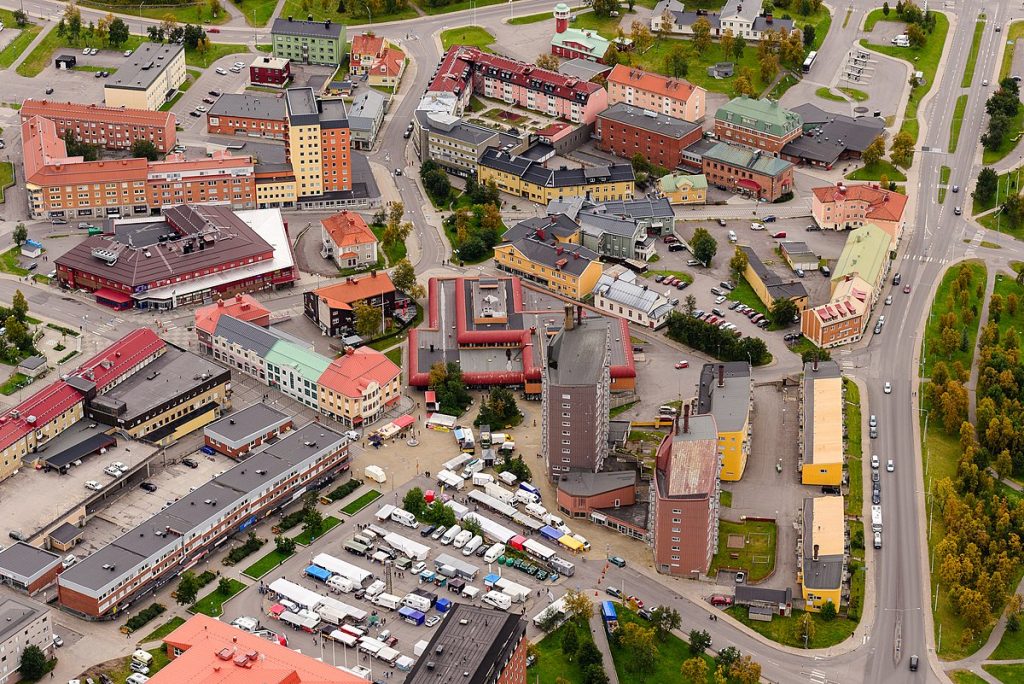
Kiruna was first settled in the 1800s. Now, Kiruna is being relocated approximately two miles to the east because of the risk posed by expanding mining operations. Read more about it by clicking the image below.
Click the image to read more about Kiruna being relocated.
Abisko National Park
The Abisko-Nikkaluokta Trail already has a reputation for being a popular trail in Sweden to find the Northern Lights. It’s one of the most Northern points in Sweden, and it boasts clear skies with minimal light pollution, significantly increasing chances of seeing the Aurora Borealis. Even though this trial is considered challenging, there are mountain cabins to rent along the way if you need a respite, as well as restaurants and shops lining portions of the trail.
Learn more about Abisko National Park by clicking the image below.
Click the image to read more about Abisko National Park.
Torneträsk Lake
During the winter, I recommend taking a detour from the Abisko-Nikkaluokta Trail to the nearby Torneträsk Lake because the Aurora can reflect on the frozen lake, making it a once-in-a-lifetime experience.
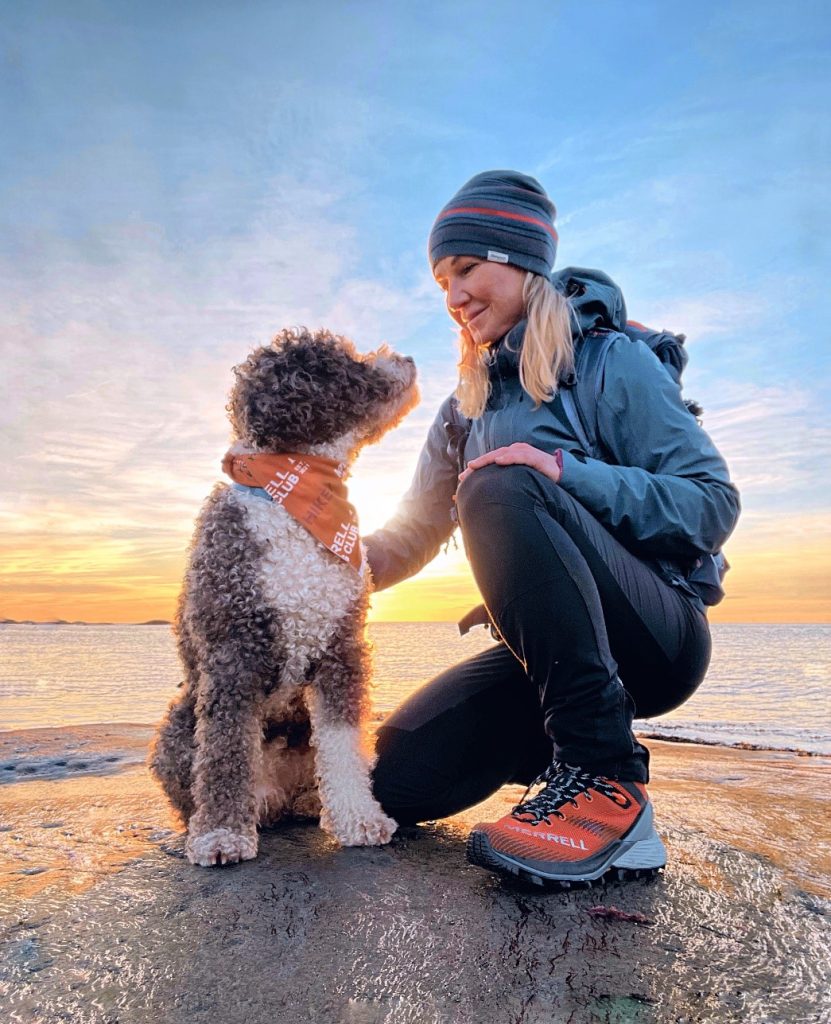
Annelie Pompe and her dog.
Jokkmokk Region
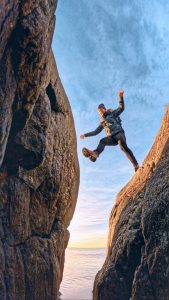
Adventurer Annelie Pompe in action.
Last but not least, I recommend the Arctic Circle Trail in the Jokkmokk region of Sweden. Aside from being a great place for seeing the Northern Lights, the trail also offers incredible views and miles of seemingly untouched nature.
If you do decide to go on a hiking adventure at night, please remember to equip yourself with proper gear, including extra batteries for light sources and operate a buddy system when hiking at night.
Seeking Out the Northern Lights in Northern Sweden Slightly Off the Beaten Path, written for Daily Scandinavian by Annelie Pompe. Annelie is an experienced Swedish hiker and brand ambassador for Merrell Hiking Club, a women-centric community which aims to empower, inform and inspire female hikers.
Visit Svalbard, on behalf of the Svalbard Tourism Council (SRR), has announced the implementation of its comprehensive set of sustainable marketing guidelines. Read more about how theTourist Board of Northern Norway adopts sustainable marketing guidelines to promote responsible tourism.
With a steadfast commitment to responsible tourism, Visit Svalbard aims to create a positive impact on the environment, local communities, and wildlife by promoting the destination in an ethical and sustainable manner.
Drawing from the core belief that responsible marketing leads to sustainable tourism, Visit Svalbard acknowledges its responsibility in fostering an environment where travelers can experience the beauty of Svalbard without causing harm to its delicate ecosystems. As such, the new marketing guidelines steer away from misleading practices, such as using close-ups of polar bears, which could give visitors false impressions of their wildlife encounters on the archipelago.
Learn more about Svalbard by clicking the image below:
Click the image to learn more about Svalbard.
Sustainable tourism starts with responsible marketing
“We firmly believe that sustainable tourism starts with responsible marketing. Our aim is to present the reality of visiting Svalbard to prospective travelers, without sensationalizing or distorting the experiences they can have with our unique wildlife and landscapes,” says Håkon Daae Brensholm, Sales and Marketing Coordinator at Visit Svalbard.
Striking the right balance
Visit Svalbard recognizes that sustainable tourism is not about attracting a high volume of guests at any cost, but rather about striking a balance that preserves the pristine nature of the destination. By targeting the right volume of the right guests, in the right place, and at the right time, Visit Svalbard aims to ensure that tourism contributes positively to the local communities and fosters respect for the fragile Arctic environment.
Key elements of Visit Svalbard’s sustainable marketing guidelines include:
Authentic representation: Ensuring that promotional materials accurately depict the experiences visitors can expect, avoiding any exaggerations or misrepresentations.
Wildlife respect: Refraining from close-ups or intrusive shots of wildlife, particularly polar bears, to emphasise that encounters with wild animals are respectful and unobtrusive.
Community-centric approach: Highlighting the unique culture and traditions of Svalbard’s communities and promoting responsible interactions between travelers and locals.
Seasonal awareness: Encouraging visitors to come at appropriate times to minimize impact on wildlife breeding and migration seasons.
Leave no trace: Promoting the leave no trace principles to encourage responsible behavior among travelers.
The aim of the handbook is to collect general and specific guidelines for responsible marketing in one document, so that the destination can be protected and preserved.
Responsible marketing is a homage to Svalbard. Learn more by clicking the image below:
Click the image to learn more about Svalbard
Empowering travel industry partners
By adhering to these guidelines, Visit Svalbard seeks to set an example for the global travel industry, proving that sustainability and success can go hand in hand.
“Svalbard is a unique destination with conditions that require different considerations than you might be used to. By clarifying how we will communicate such considerations in the handbook, it will also be easier for new employees to familiarize themselves with these,” Brensholm says.
The organization firmly believes that a responsible marketing approach not only safeguards the future of Svalbard as a pristine destination, but also enriches the experiences of visitors who come to explore this Arctic wonderland. Visit Svalbard invites travelers, businesses, and fellow organizations to join them in this commitment to sustainable tourism.
Håkon Daae Brensholm, Sales and Marketing Coordinator at Visit Svalbard.
“This comprehensive handbook not only sets clear criteria for responsible marketing in specific situations, but also acts as an invaluable guide for all our endeavors, regardless of the topic at hand. I firmly believe that our handbook empowers us to assess all our communications and by working together, we can guarantee that the enchanting magic of Svalbard is preserved for generations to come,” he concludes.
The landscapes of Scandinavia are pretty breathtaking, especially in the winter when you can see the snow-covered mountains in Norway and take in other amazing sights. However, while snow and cold can be nice to break up the seasons, if you’re driving in it, you’ll need to be prepared. Nordic Necessities: Essential Car Maintenance for Scandinavian Winters.
From winterizing your tires to charging your electric car before a long journey, there’s a lot you can do to prepare, and spending some time maintaining your vehicle before you leave can save you a lot of hassle and help you enjoy the glory of Scandinavian winters without worry.
One of the most significant issues during winter is the potential for icy roads. Photo: Trasvelers Insurance
Have Fun, But Be Smart This Winter
If this is your first trip to the Scandinavian Peninsula, you’re in for a treat, especially during the winter. Wear warm and comfortable clothes, and you can have fun ice skating, sledding, snowshoeing, cross-country skiing, and more. It’s truly a winter wonderland. However, you must be careful, especially if driving during your visit.
The countries of Scandinavia can get quite cold during the winter season. Areas like Northern Norway can get down to -40 degrees Celsius near the inner part of the country. That’s not typically every winter, but it can happen. On average, the winter temperatures in Scandinavia are closer to 20-25 degrees Celsius. Snowfall is also common, especially in Sweden and Norway. The point is that there will be some cold temps and precipitation, and one of the best ways to prepare your vehicle is to know the common issues that could occur.
One of them is potential issues with your exhaust system. When you drive down the road, the exhaust system under your vehicle can sustain damage if you go over potholes and ice chunks. Additionally, the salt that often gathers under cars during the winter can corrode the pipes and lead to exhaust leaks. To mitigate the problem, wash your vehicle regularly, and don’t forget the undercarriage. Bring the car in for an inspection if you hear any rattling or vibrating metal.
One of the most significant issues during winter is the potential for icy roads. If you lose control of your vehicle, you could veer off the road and potentially hurt yourself and the other passengers. The main defense against ice and winter hazards is good tires. Your tires must have strong treads because they grip the road and the snow so you can remain in control. Driving a car without good tires is like driving with a faulty engine because you won’t get anywhere without them, especially during a Scandinavian winter.
Nordic Necessities: Essential Car Maintenance for Scandinavian Winters – the article continues below the image.
When you drive around with a half or near-empty gas tank during the winter, condensation can form on the walls of the tank and then drip into the existing gasoline. Photo: Driving tests.org
Do What You Must To Keep Your Vehicle Moving
While there’s plenty of beauty and gorgeous landscapes across the various Scandinavian countries, there will also be long stretches of road where you’ll be driving without mechanics, service stations, and places that can help if your car breaks down. If you’re not properly dressed, being stuck in the cold could mean frostbite, hypothermia, and more, so you need to ensure that your vehicle gets to the destination without incident.
Another common issue is what can happen if you don’t keep enough gas in your tank during cold weather. The problem here is that when you drive around with a half or near-empty gas tank during the winter, condensation can form on the walls of the tank and then drip into the existing gasoline. Once the water drips to the bottom, it can get into the fuel lines and freeze them, and it can be a costly repair. Fill your tank when you can to avoid this possibility.
Just like you need enough gas in your tank to get where you’re going without issue, if you have an electric car, you must also ensure you have a full charge. While many countries are adding charging stations along their roadways, you can avoid the possibility of not getting a boost when you need it by charging your car at home.
A home charging station is worth the investment, and you can choose from a level one EV charger and a level two EV charger. Of course, level two will charge faster, but either is essential in the garage of an EV owner. A level one charger can take up to 24 hours for a full charge, while a level two charger can have you ready to go in four to five hours. No matter what, be sure you have a full charge before you hit the road during the winter.
Scandinavian winters are just too gorgeous to ignore. Photo: Rhino Car Hire
Other Maintenance To Consider
The most essential step to take before driving long distances is to check your fluids, including your engine coolant and windshield wiper fluid. You’ll also want to check your oil if it’s been over 5,000 miles. All of these fluids ensure seamless and safe travel, so don’t leave things to chance.
Changing your oil during the winter won’t always be a picnic because it’s cold outside, and the oil should be warm so it thins out and drains faster. As a trick, run the vehicle for five minutes before you begin so the engine is warm. It’s also smart to keep the wrench you use in a warm place before changing the oil, or it can be so cold that it can be hard to do the job at hand.
If it recently snowed, clear the frost and ice from all windows and mirrors before you start your long drive so your vision is not obstructed. You should also brush off the top of the car so it doesn’t blow into your line of sight while you’re on the road.
Scandinavian winters are just too gorgeous to ignore, so consider these car maintenance tricks and enjoy the season while staying safe and secure.
Ainsley Lawrence
Nordic Necessities: Essential Car Maintenance for Scandinavian Winters, written dedicatedly for Daily Scandinavian by Ainsley Lawrence. Ainsley is a regular contributor to Daily Scandinavian. She is a freelance writer from the Pacific Northwest. Ainsley is interested in better living. through technology and education. She is frequently lost in a good book.
Want to step into your home and immerse yourself right into a serene Scandinavian sanctuary? Who doesn’t? Warm woods, crisp whites, clean lines–the hallmarks of Nordic design. Imagine if these striking spaces got a sprinkle of floral elegance… Exciting, isn’t it? Infusing Scandinavian Design with Elegance: New Ways of Floral Arrangements for your Space.
This article breaks down wonderful ways of infusing your Scandinavian abode with beautiful blossoms. Buckle up for transforming every corner through refreshing floral arrangements.
Opt for blooms with simple structures. Photo: Unsplash
The Magic of Minimal Blooms
In essence, Scandinavian interior design emphasizes functional simplicity. A floral arrangement for this style subscribes to the same understated elegance.
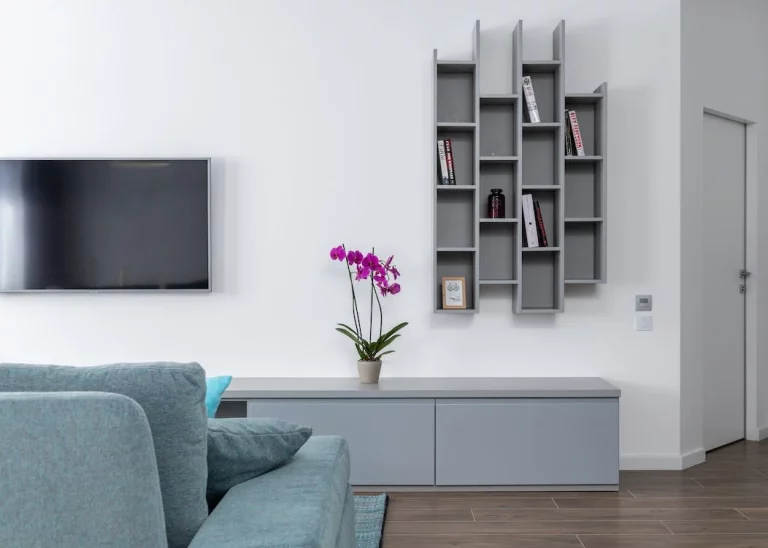
Opt for blooms with simple structures, such as tulips or orchids. Group them in odd numbers, leaning towards fewer stems to maintain a minimal yet effective impression.
Remember, sometimes less is truly more.
Position your blooms on coffee tables, wall shelves, or even as a centerpiece.. Photo: SilkFlora
Livening Your Living Room with Florals
To amplify the tranquil ambiance of your living room, choose delicate florals that match the simplicity of Scandinavian aesthetics.
To decorate your home with flowers like the Scandinavians do, consider esthetically pleasing blooms like hydrangeas or succulents in muted tones for the living room. Position them on coffee tables, wall shelves, or even as a centerpiece.
This element of nature will add an unexpected burst of life to your Nordic-inspired space.
The key is to play with variety. Photo: TLC Interiors
The Kitchen’s Not Just for Cooking, Add Some Floral Elegance!
Bring a whiff of freshness to your minimalist kitchen with artful floral arrangements. Try using fresh herbs like rosemary or mint in small, unconventional vases – perhaps a quaint teapot?
The key is to play with variety but retain the understated elegance prevalent in Scandinavian design. Plus, imagine the delightful aroma while you’re whipping up your favorites!
A study or home office can benefit visually from the addition of florals.. Photo: FNP
Place Florals at Your Study Desk For Enhanced Productivity
A study or home office set up in a Scandinavian design can benefit visually and emotionally from the addition of florals.
Using monochromatic vases that blend with your furniture will ensure the sight isn’t too distracting, just soothing enough to improve focus.
Infusing Scandinavian Design with Elegance: New Ways of Floral Arrangements for your Space – the article continues below the image.
Romancing the Bedroom with Flowers
A Scandinavian bedroom is all about tranquility and relaxation, and what better way to boost these vibes than with charming flowers?
Opt for blooms known for their soothing properties, like chamomiles or peonies.
Place them in ceramic vases on your bedside table, they will not only add to the aesthetics but also promote a better sleep. Here, modernism meets Mother Nature!
Artistic Arrangements: Homage to Scandinavian Diversity
Incorporating florals into your Scandinavian decor doesn’t have to be literal all the time. Consider artwork featuring simple and soulful floral designs.
From a panel painting on the wall to a cushion cover with botanical prints, these subtle incorporations contribute to an organic yet stylized aesthetic, adhering to an authentic Nordic feel.
Balm vase by Ann Kristin Einarsen/northern.no
Use Unconventional Flower Vases: Beyond Glass and Ceramics
We’ve touched on vases quite a few times above. This is because part of the charm of Scandinavian decor lies in its innovative use of everyday objects.
Twist your floral arrangements by using earthy, unconventional vases such as vintage milk bottles, woven baskets, or metallic cans.
This approach not only adds personality but also respects the Scandinavian love for functionality and eco-friendliness.
Seasonal Sensations: Rotating Flowers for Constant Change
To keep the look fresh and engaging, consider rotating your floral decor with the changing seasons. Sunflowers for summer or chrysanthemums for autumn, it gives a dynamic touch to your timeless Scandinavian style.
And that’s a wrap!
Now you’re all set to revamp your minimalist home with this lively twist. Remember, it’s all about striking the right balance between simplicity and elegance. Let your space bloom!
Nadine Westwood
Infusing Scandinavian Design with Elegance: New Ways of Floral Arrangements for your Space, written dedicatedly for Daily Scandinavian by Nadine Westwood. Nadine is a registered dietitian, travel blogger & fitness lover. In her spare time, she helps save stray animals. Nadine really does enjoy sharing her fitness journey with others who might need help with weight loss or finding a stress reliever.
From the cluster of some 30,000 islands and skerries which form the beautiful Stockholm archipelago, the magnificent nature of the Skåne country in the south and to breathtaking northern lights high up in the north, the beauty of Sweden’s culture and landscapehas drawn people from around the world for centuries. Moving to Scandinavia – Part 3 – Sweden is part of our new series Expat in Scandinavia.
While the country’s diverse economy and liberal immigration policies once made it easy for expats to move to Sweden, immigration requirements have become tighter over time. Now it’s generally expats with specialist skills that are in demand. Free movement in EU countries is, however, a fundamental right guaranteed by European Treaties. Article 2 of the Schengen Agreement states that “internal borders may be crossed at any point without any ch3ecks on persons carried out.” Sweden is an EU member country.
Article 2 of the Schengen Agreement states that “internal borders may be crossed at any point without any ch3ecks on persons carried out.”
Living in Sweden as an expat
There are a number of strong sectors in the Swedish economy, including IT, engineering, finance, healthcare, energy, construction, oil and gas. Expats with experience and sought-after skills in these sectors will find that there is plenty of scope for career progression in Sweden.
The quality and affordability of housing in Sweden varies widely. While expats may struggle to find spacious, high-quality accommodation that doesn’t break the bank in notoriously expensive Stockholm, there are many areas in Sweden where it’s much easier to find appropriate housing at a decent price.
Public transport in Sweden is generally of a high standard and the quality of road infrastructure is excellent.
Visitors from the European Union can receive public healthcare services in Sweden just like locals would
The Swedish health system performs well in general, life expectancy in the country is high and the general health among the population is good. Reports from the World Health Organization (WHO) and the Organization for Economic Co-operation and Development (OECD), among others, confirm that healthcare in Sweden provides good access to high-quality care.
Visitors from the European Union can receive public healthcare services in Sweden just like locals would, providing they hold a European Health Insurance Card or EHIC. An EHIC is free but must be obtained in your home country before you travel.
If you’re a professional living and working in Sweden, you can ensure your medical needs are met by choosing a suitable international health insurance plan.
As with any country, the cost of living in Sweden varies depending on expat’s lifestyle choices and location.
Cost of living in Sweden
As with any country, the cost of living in Sweden varies depending on expat’s lifestyle choices and location. Major cities such as Stockholm have a well-earned reputation of being pricey to live in, and while life in the rest of Sweden is by no means cheap, the cost of living is substantially lower outside the capital area.
Sweden is a fantastic option for skilled expats, and for raising a family.
Expat families and children
Public schools in Sweden are supported by their municipality (i.e., the state or province) and thus paid for by Swedish taxes. The government body that oversees education across the country is the Swedish National Agency for Education. This body of government is responsible for ensuring all students in Sweden have access to high-quality education regardless of where they live in Sweden. Public schools follow the Swedish National Syllabus, which teaches all general subjects.
If you are not planning on staying in Sweden for long, one of the best ways to keep your child up to date with the education system of their home country is by sending them to an international school. You can easily find resources for Swedish translation services to help your child’s transition and integration into the local culture and academic environment. Thanks to their diverse international population, Sweden contains many international schools to suit the needs of students from across the globe.
Ultimately, Sweden is a fantastic option for skilled expats, and for raising a family. It is also well positioned for easy and affordable travel to Europe and beyond.
Climate in Sweden
Winter and summer temperature differences in Sweden are extreme, but generally the country enjoys a temperate climate, thanks to the Gulf Stream. Above the Arctic Circle, winter is severe with temperatures going below -30°C, while summer temperatures here, and in the rest of the country, regularly hit +20°C.
From Bottna. Photo: Visit Sweden
Fast facts
Population: 10,618,203 (2023)
Capital city: Stockholm (also the largest city)
Neighboring countries: Sweden shares a land-border with Norway and Finland. It is connected to Denmark (Copenhagen) by the Öresund bridge.
Geography: Much of Sweden is heavily forested, with 69% of the country being forest and woodland, while farmland constitutes only 8% of land use. Sweden consists of 39,960 km2 of water area, constituting around 95,700 lakes. The lakes are sometimes used for water-power plants, especially the large northern rivers and lakes.
Major religion: Christianity.
Political system: Parliamentary, constitutional monarchy.
Main language: Swedish. English is mostly fluently spoken.
Money: The currency of Sweden is svenske kroner – Swedish crowns (SEK), which is subdivided into 100 øre. In order to open a bank account in Sweden, most banks require proof of a local address and a form of official identification, such as a passport.
Time: GMT (GMT +2).
Electricity: 230V, 50Hz. The power plug sockets are of type F (flat two-pin plug).
Internet domain: .se
International dialing code: +46
Emergency contacts: 112.
Transport and driving: Driving is on right-hand side (from 1968). There is a variety of public transport options available in Sweden and the transportation network is generally well formed both across the country and within most cities.










 Karoline Gore
 Ainsley Lawrence
 Shawn Mack
 Nadine Westwood.
 Jon Arne Foss
 Terje Rakke
 Lasse Tur







 Anne Marit is a former editor of, among others, Magasinet Kunst, and has written reports on art and culture for a number of years.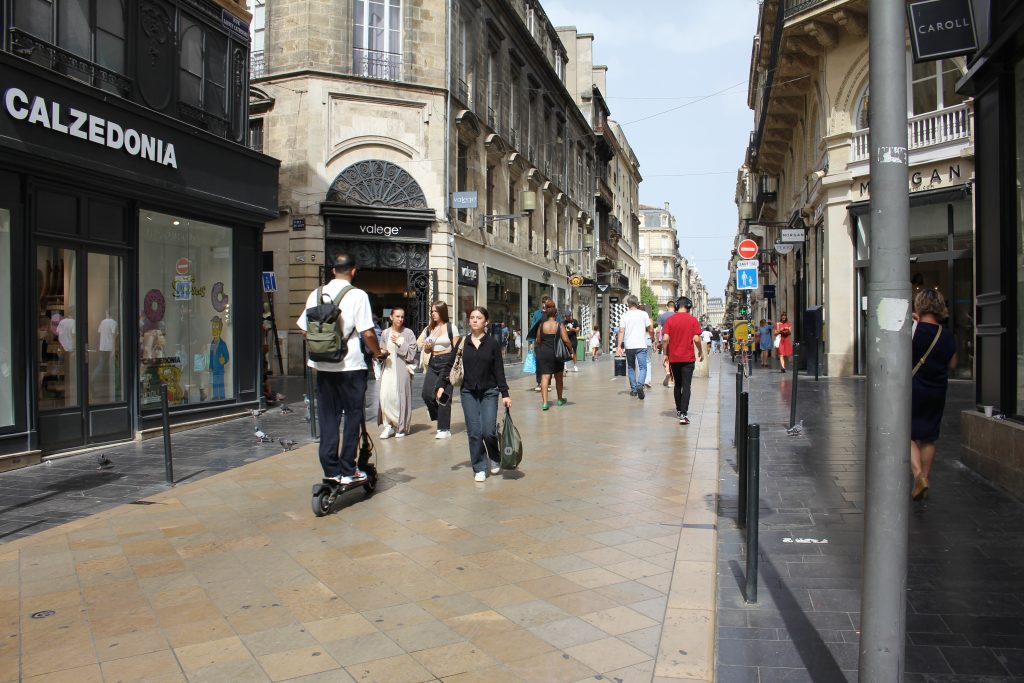
 At a conference in 2022, I met Soumitra Bhattacharya from India. He moved to Norway 21 years ago to work with one of the largest IT corporations in Norway and has been here since.








 Romancing the Bedroom with Flowers