Norwegian designer Torunn Gullaksen and creative director, writer and modelBetty Bachz, founded sunglass brand Møy in 2017. Since then, the brand has developed a niche following and customer base with its distinguishably unique designs with uncompromising quality. Learn more about theexclusive eyewear brand with Scandinavian heritage.
The founders aimed to create exclusive sunglasses for a more inclusive world. The sunglasses has been named as the independent eyewear brand to watch by British Vogue and worn by the likes of supermodels and A-list celebrities alike, such as Kate Moss, Jourdan Dunn, Tina Kunakey, Phoebe Dynavor and Nathalie Emmanuele.
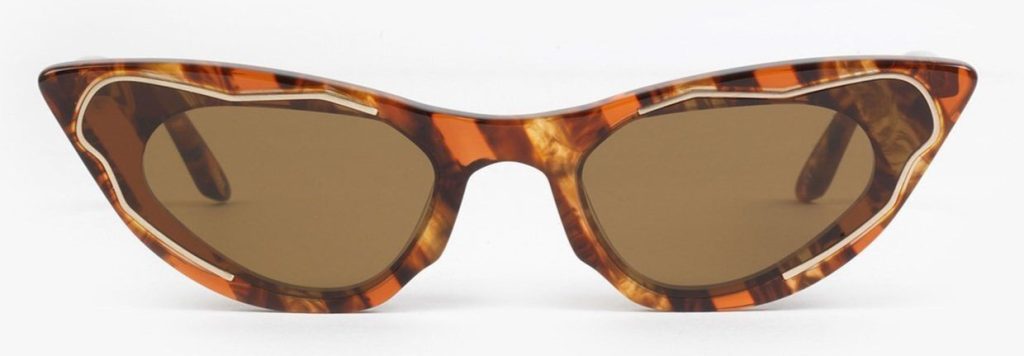
“Come fly with me”. Tortoise stripes front.
Related: Signature optics made by Danish designer, click image below to read more:
Ørgreen Optics
MØY – a virgin in mind and spirit
Translated from Norse, MØY means a young woman, someone who is open to new ideas; a virgin in mind and spirit – a philosophy expressed by its bold output. The brand specializes in designer eyewear exclusively handcrafted by artisans in Japan with materials sourced from Italy. The brand has a strong focus on sustainability and is committed to respect our planet and deliver eco-friendly collections based on 100% recyclable and biodegradable bio-acetate frames combined with bio-nylon lenses.
With a Norwegian design team working alongside Betty, the sunglasses are grounded in Nordic style, combined with a playful 1970s spirit. Further inspirations come from Betty’s interest in the role and reputation of femme fatales throughout history, the later days of the golden age of cinema, and ancient Egyptian artistry.
Today, Møy’s sunglasses are inspired by retro styles and crafted by Japanese artisans at Studio Pantechnicon
Nordic design – Japanese craft
Today, Møy’s sunglasses are inspired by retro styles and crafted by Japanese artisans at Studio Pantechnicon. The glasses are equipped with transparent lenses.
“We prefer to see the eyes of the person we are having a conversation with, even in bright sunlight, it feels more honest,” Gullaksen said in an interview when the brand was launched. “In these days of so much lying in politics, there’s just no room to hide.”
Exclusive Eyewear Brand with Scandinavian Heritage, written by Tor Kjolberg
Swedish architect Gert Wingårdh (born 1951) and his family live in an old cottage in a picturesque setting near Marstrand in Kungsälv Municipality, in sharp contrast with the modernist style and skyscrapers with squares and sharp edges that he designs in his professional life in his company Wingårdh arkitektkontor. Here’s a portrait of the Swedish star architect.
Gert Wingårdh is one of Sweden’s most esteemed living architects. He has brought Sdwedish architecture out of the tradition of the international style and into contemporary times with his playful design spirit and love of eye-catching materials. With his use of bright colors and geometric motifs, his recent buildings have been described as “Maximalist” or “Modern Baroque.”
Wingårdh studied economics, art history and architecture in the 1970s at Gothenburg University and Chalmers University of Technology and has in interviews stated that it was a visit to the Pantheon, Rome, that made him decide to become an architect. Originally, his dream was to be an art-gallery owner.
He started as an interior decorator in the 1970s. He received his degree in architecture from Chalmers in 1975. After graduating he joined an architectural firm for a short while before setting up his own office in 1977.
The next 10 years saw Wingårdh take on small commissions before his critical breakthrough in 1988 with his design for the Öijared Executive Country Club outside Gothenburg. The building rendered him the first of his record 5 Kasper Salin Prizes, the highest award in Sweden for excellence in architecture.
In recent years, he has had a number of assignments in the United States and Germany. Wingårdh is also the creator of the Swedish embassy in Washington D.C. (2006), known as the House of Sweden and the Swedish embassy in Berlin. Most of his realized buildings, however, can be found in Sweden and in particular in the area of metropolitan Gothenburg.
Emporia, Malmö. Photo: Tord Rikard Söderström
In 2007 Wingårdh won a major international competition for a large new shopping center in Malmö, and in the same year seven of the twelve hottest architecture projects in the capital Stockholm – listed by a Swedish national daily – were designed by Wingårdh.
He has attracted some controversy in his home country for his embrace of skyscrapers. His Victoria Tower (2011) is one of the tallest buildings in Stockholm, and a recent design for a 237-meter, 75-story tower in south Stockholm has been put on hold due to outcry that it may not meet zoning requirements.
In 2015, Wingårdh released “What is Architecture? And 100 Other Questions,” a popular book that provides both long and short answers for what he believes are the most pressing questions in architecture today. Wingårdh answers the titular question by responding that architecture is “the built image of ourselves.” Looking at his work through this lens, it is clear that Wingårdh now believes the greatest human attribute is our capacity for playfulness.
His ambition to “give the client what they did not know that they wanted” reveals his will to provoke as well as to adapt.
Portrait of a Swedish Star Architect, written by Tor Kjolberg.
Unforgettable concerts, world-renowned artists and fun events, the Swedes have plenty to tempt with cultural highlights in the coming months. Visit this amazing country and join Sweden’s diverse cultural offerings! Find out more about the8 cultural highlights in Sweden you don’t want to miss this summer.
This year, a lot is happening on the cultural front in Sweden. The world-renowned Chinese artist Ai Weiwei comes to Pilane Skulpturpark in Bohuslän, on Gotland there will be a medieval festival with games, markets and tournaments, Gothenburg celebrates 400 years as a city, and famous artists take stages all over the country. Here we list eight highlights:
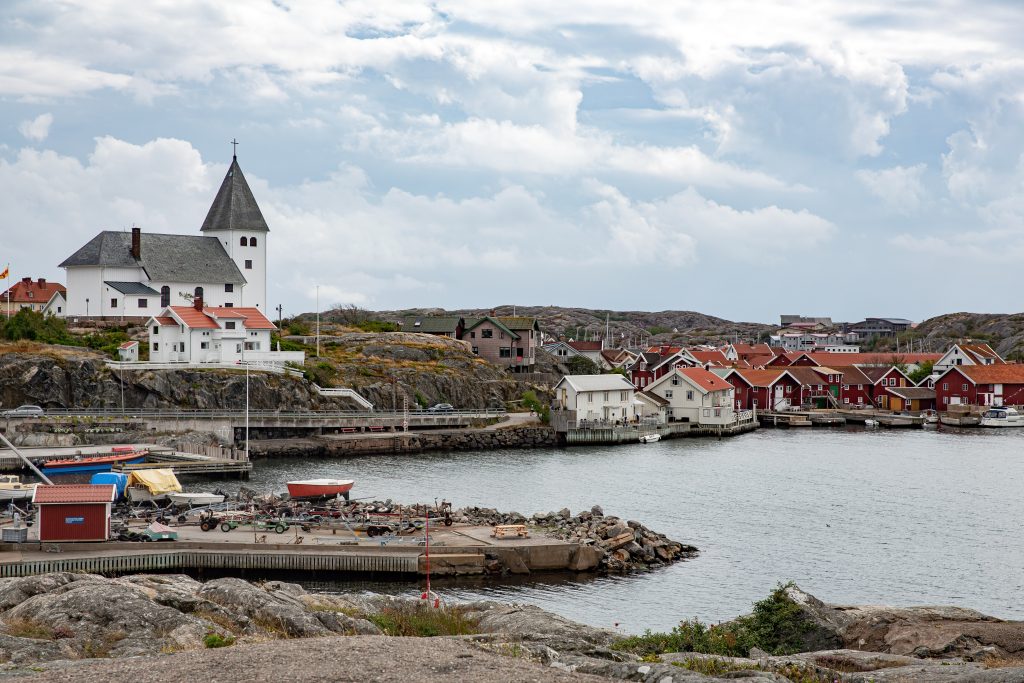
Skärhamn, Tjörn, Sweden
1. World-renowned artist to the island of Tjörn
13 May – 24 Sep – Tjörn, Western Sweden
Øya Tjörn in Bohuslän, goes by the name “Island of art” for its diverse offer of art experiences. This year, the world-renowned artist Ai Weiwei is visiting the Pilane sculpture park on the island. Weiwei is exhibiting the exciting installation Roots – seven gigantic underground roots. The Pilane sculpture park is an eight-hectare cultural landscape that houses, among other things, the iconic work Anna by Jaume Plensa.
In addition to Weiwei, Charlotte Gyllenhammar, Tony Cragg, Maria Miesenberger, Hans Gothlin, Anna Fasshauer, Ingela Palmertz and Ingrid Ogenstedt also exhibit their works on the island in the North Sea. Close to the sculpture park is also the Nordic Watercolor Museum, which this year is showing the exhibition “Animal kingdom”, with works by 14 different artists from five different centuries. Together they shed light on the forces that shape the natural world and our perception of humans’ role in it.
A boat trip from Tjörn out into the sea gap awaits yet another unique experience. Out there you will find the award-winning hotel Pater Noster, an old lighthouse that has been transformed into a design hotel in a class of its own. This summer you can visit the exhibition “Guardian of water” out on the small island. The exhibition is a tribute to the sea and photographers Christy Lee Rogers and Zena Holloway are strongly engaged in issues surrounding biological diversity and life in the world’s oceans.
Gothyenburg Anniversary Festival 2023
2. Anniversary celebration in Gothenburg
02.juni – 03. september
In 2021, Gothenburg turned 400 years old, and this year the city will be celebrated a couple of years late with a bang and a bang throughout the summer. There will be events, concerts and exhibitions all over the city and it will all end with the final weekend on 3 September, when the Kulturkalaset, the Ö-fest at Ringön, Frihamnsdagarna, the Göteborgsvarvet Marathon and the big Jubilee Parade will also take place. The Kulturkalaset will fill the city with music, dance, theater and art, the Öfest transforms Järnmalmsgata into a festive street party and the Jubilee Parade will be a party and celebration together.
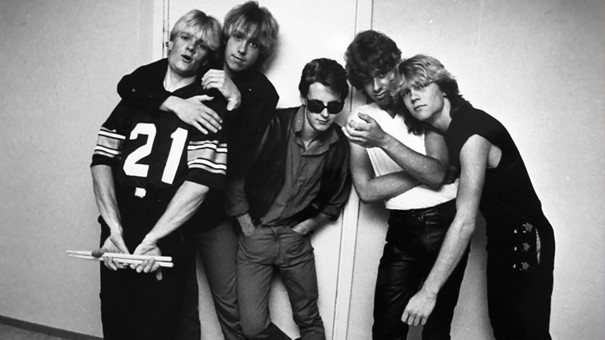
Gyllene Tider
3. Unforgettable concert with Gyllene Tider
01 – 08 July – Halmstad, Halland
Experience the Gyllene Tider (Golden Times) in its home county Halland this summer. The legendary Swedish group plays two concerts filled with joy, nostalgia and summer feeling at the beginning of July. For more than 40 years, the Halmstad group has delighted listeners with new and old songs, and in July they invite you to a sing-along and a fantastic concert experience in the summer town of Halmstad.
8 Cultural Highlights in Sweden You Don’t Want to Miss This Summer, the article continues below the image.
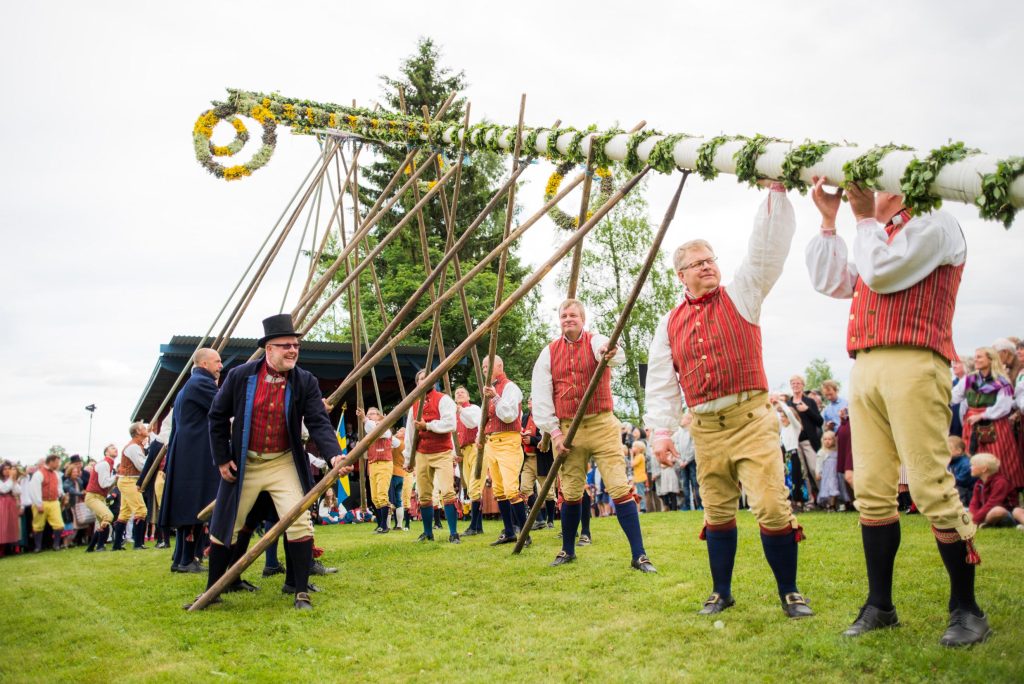
Maypole, Dalarne. Photo: Per Bifrost
4. Midsummer celebration in Dalarna
Last week in June – Dalarna
Join the Swedes’ biggest celebration! The traditional midsummer celebration is a tribute to light and summer. On Midsummer’s Eve, which this year falls on Friday 23 June, Swedes dress up in bright summer clothes, decorate their hair with flowers and gather to eat good food, sing and dance around the Maypole. The celebration takes place all over the country, but the most traditional one can be found in Dalarna.
Here there will be a celebration with flower-decorated cornstalks, wreath-tying, dancing, music, food, parties and a good atmosphere. At Rättvik Gammelgård and Våmhus Gammelgård outside Mora you can experience authentic midsummer celebrations with fiddlers, while the biggest celebration takes place in Leksand, where more than 20,000 people gather each year.
Unique to Dalarna is that they don’t just celebrate on the 23rd, but both before and after the day itself. Every town and small town have its own celebration both days and weeks before and after Midsummer’s Eve itself. It is thus possible to join the midsummer celebration on several dates.
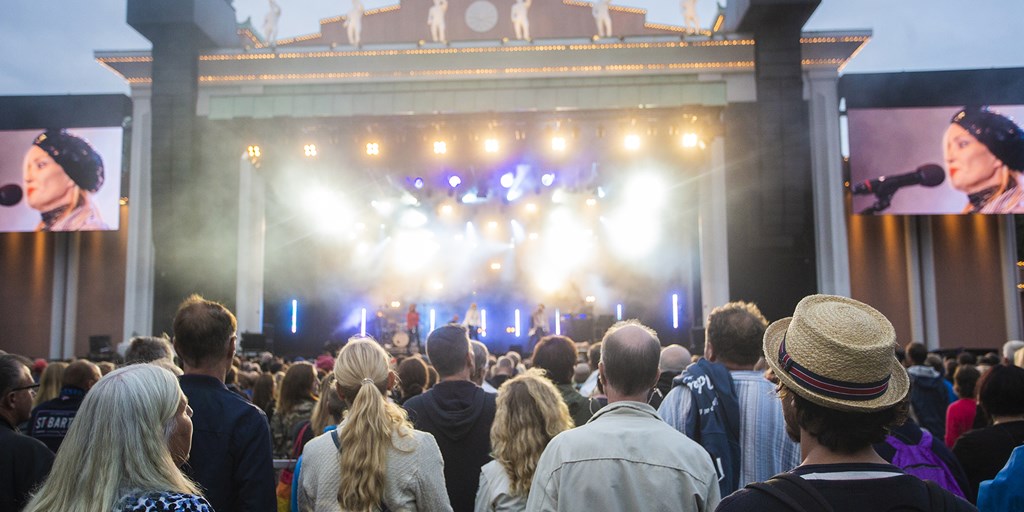
Live Concert, Stora scenen, Liseberg amusement park
5. Concerts in the Gothenburg amusement park
Gotheburg’s Liseberg amusement park celebrates 100 years and dishes out an impressive festival program. This summer you can experience some of Sweden’s biggest artists and world-renowned bands on stage. Shake your rocking feet to artists like The Offspring, In Flames, Monica Mac and Sean Paul.
Örebro castle. Photo: Visit Sweden
6. Gustav Vasa moves into Örebro Castle
June 6 – September 17 – Örebro
This year it is 500 years since Gustav Vasa was elected king of Sweden and it is marked, among other things, with a separate exhibition at Örebro Castle. The exhibition “Gustav Vasa speaks from his beard – an exhibition about power” is about power, manipulation and propaganda. The exhibition is curated by Kalmar Castle, Livrustkammeren (which also has an epic Instagram profile) and a creative team of designers, architects, historians, graphic artists and playwrights.
Challenge each other in the Vasakampen, join a guided tour of the Vasa Castle or let the children visit the ghost Laban. In addition to the Vasa exhibition, the castle also has an exhibition called Manga Royals, which combines royal history with manga drawings. This year it is 500 years since Gustav Vasa was elected king of Sweden and it is marked, among other things, with a separate exhibition at Örebro Castle. The exhibition “Gustav Vasa speaks from his beard – an exhibition about power” is about power, manipulation and propaganda. The exhibition is curated by Kalmar Castle, Livrustkammeren (which also has an epic Instagram profile) and a creative team of designers, architects, historians, graphic artists and playwrights. Challenge each other in the Vasakampen, join a guided tour of the Vasa Castle or let the children visit the ghost Laban. In addition to the Vasa exhibition, the castle also has an exhibition called Manga Royals, which combines royal history with manga drawings.
Concert Summer in Örebro
Sweden’s fourth largest city, Örebro, invites you to a number of exciting concerts this summer. At the luxury camping Gustavsvik you can experience Benjamin Ingrosso, Carola, Hooja, Miriam Bryant and Veronica Maggio, while Håkan Hellström occupies Brunnsparken in central Örebro.
Dalhalla is the concert stage located in a disused quarry and described as one of the most powerful and beautiful outdoor arenas in Europe.
7. Magical concert evenings in a disused quarry
In the Dalarna region, there will be concerts with international and national artists in a completely unique concert setting. Dalhalla is the concert stage located in a disused quarry and described as one of the most powerful and beautiful outdoor arenas in Europe. Artists such as The Hives, Bon Iver, First Aid Kit, Mamma Mia the musical and KISS themselves will come here this summer.
Medieval week, Gotland
8. Medieval week on Gotland
August 6-13 – Visby, Gotland
In week 32 every year, a large-scale medieval festival is held in the middle of Visby on Gotland, and this year the Medieval Week celebrates 40 years. The historic houses in the town and the old ring wall form a perfect backdrop for a medieval festival, where people dress up in historical clothes and markets, performances, concerts and games are organized in authentic medieval style.
8 Cultural Highlights in Sweden You Don’t Want to Miss This Summer, a press release from Visit Sweden
Feature image (on top):Photo left: ROOTS Ai Weiwei Courtesy the artist and Lisson Gallery. Photo: Gao Yuan. Photo credit: Visit Dalarna
The world’s first Al sculpture “The Impossible Statue” is on display at Stockholm’s National Museum of Science and Technology. A historical dream team of five master sculptors has come true. Learn more aboutthe world’s first AI-generated statue – in Sweden.
Five master sculptors, Michelangelo, Rodin, Käthe Kollwitz, Takamura Kotaro, and Augusta Savage, have been used to train artificial intelligence to design a sculpture dubbed the Impossible Statue, now on show in Stockholm.
A true statue
“This is a true statue created by five different masters that would never have been able to collaborate in real life,” said Pauliina Lunde, a spokeswoman for Swedish machine engineering group Sandvik that used three AI software programs to create the artwork.
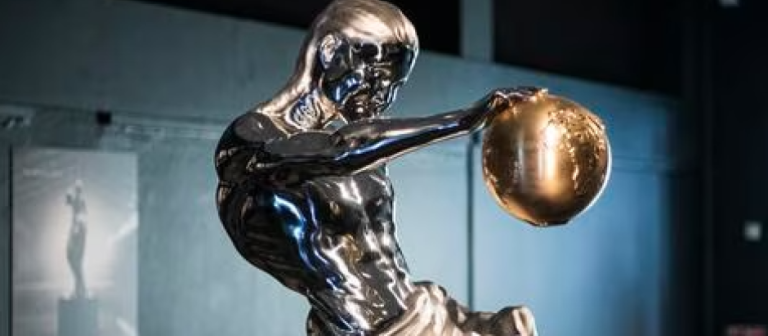
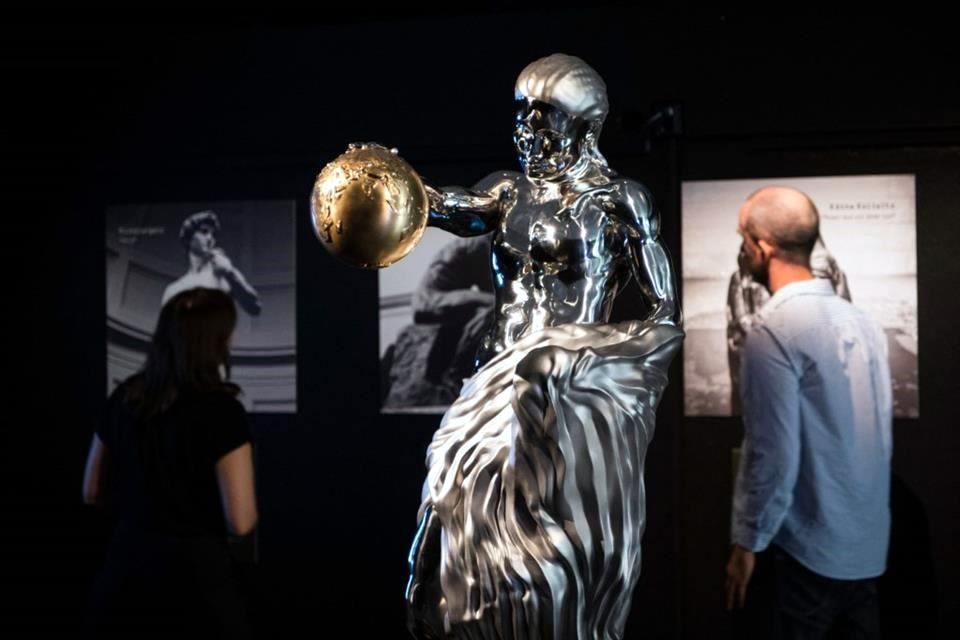
Shaking up traditional conceptions about creativity and art, the stainless steel statue depicts an androgynous person with the lower half of the body covered by a swath of material, holding a bronze globe in one hand.
The statue appears almost like an oversized awards trophy.
From afar, it seems hardly remarkable, a human-shaped swirl of stainless steel clutching an orb. It appears almost like an oversized awards trophy. Only upon investigation does the singularity of the five-foot work, a fusion of generative AI and precision manufacturing, become apparent.
On show at Stockholm’s National Museum of Science and Technology
On show at Stockholm’s National Museum of Science and Technology, the statue measures 150 centimeters (4 feet 11 inches) and weighs 500 kilograms (1,100 pounds).
“Something about it makes me feel like this is not made by a human being,” Julia Olderius, in charge of concept development at the museum, told AFP.
Though this project is art-centric, the manufacturing methods involved in creating The Impossible Statue differed little from other tasks, said Nadine Crauwels, president of Sandvik Machining Solutions: “By using all our capabilities, we can significantly improve manufacturing efficiency, reduce waste, and ensure the highest quality.”
“Though this project is art-centric, the manufacturing methods involved in creating The Impossible Statue differed little from other tasks”, said Nadine Crauwels, president of Sandvik Machining Solutions
Visitors may note the muscular body inspired by Michelangelo, and the hand holding the globe inspired by Takamura.
After settling on a design, Sandvik converted the 2D image into a 3D model using both depth-estimator software and human pose estimation, a computer task that identifies different part of the human body within a scene. The company then thoroughly tested the manufacturing process in a series of digital simulations, cutting the amount of steel used in the process by half. The statue it produced was composed of nine million polygons, 17 separate steel pieces, and differed from the digital design by less than 0.03 mm.
“Something about it makes me feel like this is not made by a human being,” Julia Olderius, in charge of concept development at the museum.
“I don’t think you can define what art is. It’s up to every human being to see, ‘this is art, this is not art’. And it’s up to the audience to decide,” Olderius said and added: “I don’t think you have to be afraid of what AI is doing with creativity or concepts or art and design. I just think you have to adapt to a new future where technology is a part of how we create concepts and art.”
The World’s First AI-Generated Statue – in Sweden, written by Tor Kjolberg
The Norwegian artist Toril Johannessen (b. 1978) entered the Bergen Academy of Fine Arts (KHIB) and found her way towards science through her graduation project “In Search of Iceland Spar”, a meticulous search for the mineral calcite, from the Helgustadir mine in Iceland. It was the beginning of her mixing science with art. Learn more about the Norwegian artist who is famous for her use of scientific methods in art.
On her website she says that she works methodically and research-based across media, such as prints and information graphics, textiles, copy and installation.
Johannessen has hunted for plankton in the Arctic and explored concepts such as time and space with sculptural concepts. She writes, photographs, draws diagrams and searches for connections between words such as “crisis and miracles”, “hope and reality” and “the art of
research”, creating interest in her art all over the world.
Last year she shared her insight into the process of two public art projects she worked on in Northern Norway, dealing with memory policy and border areas with Russia. Johannessen discussed examples of how the invasion of Ukraine has changed the situational understanding, the writing of history and the prerequisites for art moving through the terrain of the “High North”.
The “High North” is not a place with a clear geographical border, but rather a fluid concept whose meaning has changed over the past decades. By drawing maps showing linguistic phenomena in this approximate area, Toril Johannessen traces fragments of military presence and geopolitical affairs in the everyday language and in the landscape.
“Personally, the project is an investigation of the region I come from, as I grew up in Harstad in Northern Norway, and is a reflection on how «politics of the High North» in a broad sense is written into consciousness both as real experiences and interpretations,” she says.
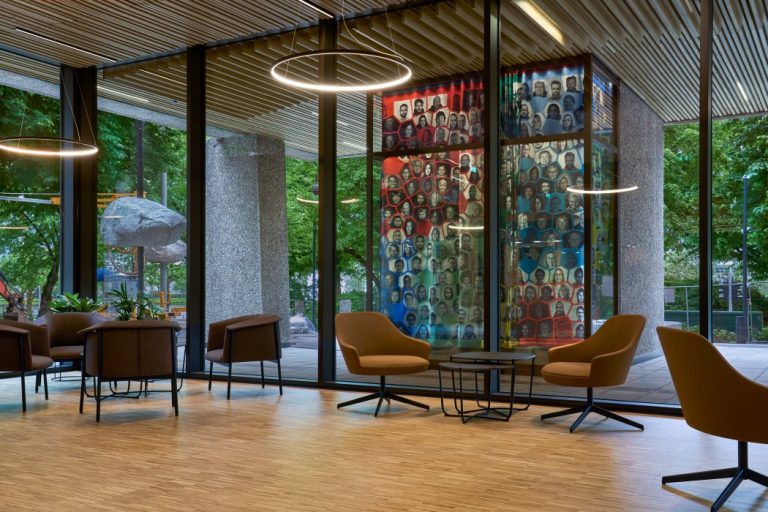
The work is permanently installed in two locations in the town hall: One part is a draped carpet installed in a glass vitrine by the main entrance of the building. The vitrine is integrated in the facade and is publicly available at all times.
The other part is installed in two meeting rooms on the top floor where the work can be seen by employees, politicians, bureaucrats and others who visit this part of the building. Here, the work has a function as curtains. When the curtains are closed, the design is displayed in its entirety.
The data generated portraits in the design are made by machine learning technology and a specific collection of photographs as source: “Through the image collection campaign titled Gruppebilde Bergen I collected portraits from residents in Bergen. The campaign took place in the Fall and Winter of 2020/2021 and was an open call to the people in Bergen to submit a portrait of themselves,” she says.
Johannessen pondered for a long time what time really was
Does time really exist?
“Combining historical data with my own investigations, and with an attention to how Western scientific methodologies coexists with other frameworks for knowledge, the impact of historical conditions and technological developments on modes of perception is a recurring theme in my practice,” says Johannessen.
Not everyone can digest Niels Bohr’s atomic theory or the genesis of quantum physics, but Johannessen impresses with her approach. She pondered for a long time what time really was, and since Nils Bohr, who died in 1962, explored the relationship between energy and time – the two physical forces in Einstein’s theory of relativity, she had to get in touch with him. The result of conversations through a spiritist medium and “conversations” with Niels Bohr, resulted in the diagrams “The Energy Circle” and “A Message from the Spirits”.
The Norwegian Artist Who is Famous for her Use of Scientific Methods in Art, written by Tor Kjolberg.
Don’t know what a Red Snapper is? It’s the original Bloody Mary cocktail made with gin and a hint of orange juice. We have tested cocktail bars in Copenhagen and the best Red Snapper in Copenhagen is probably served at Salon 39 in Fredriksberg. You should indeed enjoy a Red Snapper in Salon 39 in Copenhagen.
Salon 39 was established in 2005 by chef Kasper Georg Jensen, a Michelin-star trained chef from Hotel Vier Jahrzeiten in Hamburg and bartender Thomas Raae Rasmussen. It is a cocktail bar and restaurant in the Frederiksberg neighborhood just across the Western Bridge, on a corner of a quiet street leading to Danas square.
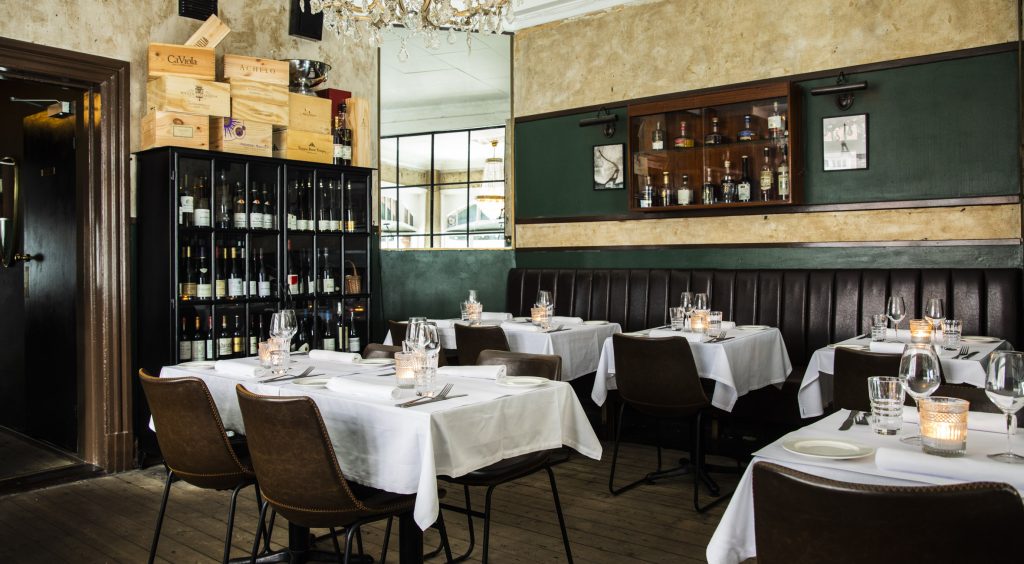
This hidden gem furnished in 1920s style is tucked away on the edge of Frederiksberg. Salon 39 is a small place with an amazing ability to mix a few ingredients together to create outstanding flavors in both food and drinks. The aim is to create great cocktails while serving a few simple dishes and snacks so people would hang around instead of leaving to go get food elsewhere.
Salon 39 was established in 2005 by chef Kasper Georg Jensen, a Michelin-star trained chef and a trained bartender from Hotel Vier Jahrzeiten in Hamburg and bartender Thomas Raae Rasmussen.
Approaching the bar it almost feel as if we could be anywhere else in Europe. The immediate surroundings have a sense of spaciousness and familiarity, inviting us to slow down and enjoy the present moment. The terrace setting is somewhat reminiscent of many European cultures where hedonism is woven throughout everyday life and culture, a place where you can sit down without feeling overwhelmed by traffic, yet still feel as a part of a living city, the ideal set up to enjoy a scrumptious meal and well concocted drink.
Sunday brunch and evening menu are inspired by Italian food and Danish home cooking respectively. Food is prepared with lots of love and great ingredients, cocktails are made with the best liquors imported from around the world.
My main reason for loving this place is the management’s insane passion for making sure that both food and cocktails are the very best.
Salon 39 holds a privileged position in the space and is beautifully set in what appears to be a welcoming area, with small tables along the windows, and direct access to the bar. A nice way to arrive and land before having a meal.
New owners, who took over the management a year ago, claim they will continue the concept as is.
For solid food, Salon 39 offers 39 different varieties of poached eggs and omelets, wiener schnitzel, steak Bismarck, fresh fruit, yoghurt, American pancakes and fresh bread. Red Snapper is recommended for eggs and sausages, which go well with the tomato-based and lightly spiced drink.
Sunday brunch and evening menu are inspired by Italian food and Danish home cooking respectively.
The drinks menu includes classics such as Sazerac and Red Snapper, but also the house’s own specialties such as Hemingway Punch (absinthe, orgeat, cream, lime, orange blossom water, apple juice and egg white), Jackie Brown (Fitzgerald 12Y bourbon (possibly whisky), Benedictine liqueur, maple syrup, bitters and dark chocolate and Mona Lisa (chamomile brandy, lemon slice and champagne).
The soundtrack is vinyl jazz records. My main reason for loving this place is the management’s insane passion for making sure that both food and cocktails are the very best. Probably not the most fancy, but the very best!
Enjoy a Red Snapper in Copenhagen, written by Tor Kjolberg
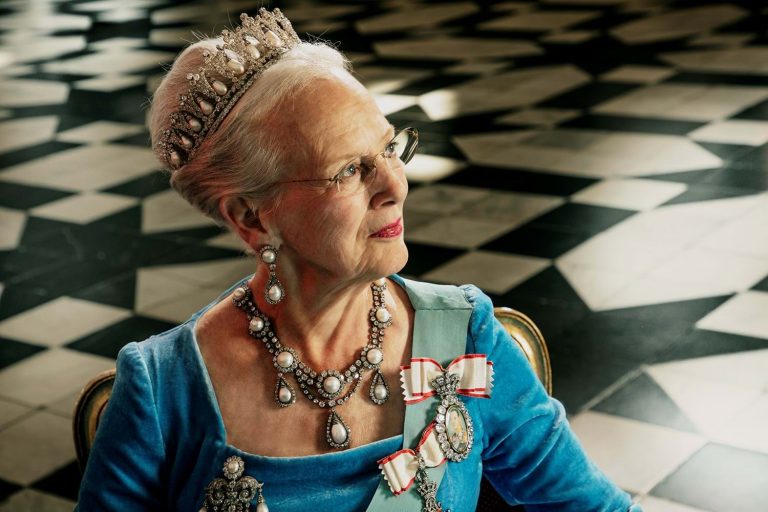
She’s been called the ‘people’s monarch’. Denmark’s Queen Margrethe II, now 83, was born on April 16, 1940, a week after Nazi Germany had invaded Denmark. Learn more aboutthe much-loved, chain-smoking Danish queen.
Her nickname is Daisy and she’s known from doing her own supermarket shopping, being hired for Netflix film and her less-than-harmonious family relations (including a husband who refused to be buried beside her).
Queen Margrethe II is Europe’s longest-serving current head of state. Photo: Geo.tv
Denmark’s Monarch for over 50 years
Margrethe II of Denmark has reigned as Denmark’s monarch for over 50 years, she is Europe’s longest-serving current head of state and the world’s longest-serving current female head of state.
In 1960, together with the princesses of Sweden and Norway, she travelled to the United States, which included a visit to Los Angeles, and to the Paramount Studios, where they met several celebrities, including Dean Martin, Jerry Lewis and Elvis Presley.
She outstripped all other royals in terms of the longevity of her reign when her third cousin Queen Elizabeth II died aged 96 last September, after 70 years as monarch.
Queen Elizabeth II smiles whilst speaking to Queen Margrethe II of Denmark whilst watching a performance showing the process of D-Day through to post-war piece on Sword Beach during the Commemoration of the 70th anniversary of the Normandy landings, Ouistreham, France. Screendump from itvx
Close relationship with Queen Elizabet II
Margrethe enjoyed a close relationship with the Queen, having bonded during several official visits to each other’s countries down the decades – most recently in 2000, when Margrethe was received at Windsor.
Margrethe attended the funeral of Queen Elizabeth but underwent major back surgery in February and was unable to be at the Coronation.
There are, however, also some Danes who dislike the monarchy and the roughly 100 million kroner they cost Danish taxpayers each year. These people call the royal family Denmark’s biggest welfare recipients.
Qeen Margrethe II by Andy Warhol
Her many passions
Margrethe is known for her strong archaeological passion and has participated in several excavations, including in Italy, Egypt, Denmark and South America. She shared this interest with her grandfather Gustaf VI Adolf of Sweden, with whom she spent some time unearthing artefacts near Etruria in 1962.
Almost everyone likes her, even if she last year caused a furore by stripping grandchildren of their royal titles. Support for the monarchy in Denmark has, however, been and remains consistently high at around 82%, as does Margrethe’s personal popularity.
The Queen is the head of the Danish state church, and the Danish state – she still signs all the laws. But the Queen is also an artist. Her real entertainment is in designing her own clothes, and often chooses rather un-Danishly bright colors. She paints, and draws, and has designed stage sets for the Danish Royal Ballet.
The Queen is the head of the Danish state church, and the Danish state. Screenshot
May God give me help and strength
“The task that my father had carried for nearly 25 years is now resting on my shoulders,” she says. “I pray to God to give me help and strength to carry the heavy heritage. May the trust that was given to my father also be granted to me.”
The Much-Loved, Chain-Smoking Danish Queen, written by Tor Kjolberg
Norwegian filmmaker Tommy Wirkola (b. 1979) clearly showed his talent in 2007 with his first film, co-written with Stig Frode Henriksen, Kill Buljo, a spoof of Quentin Tarantino’s Kill Bill (2003), earning ten times its $106,000 cost. In 2009, Wirkola and his co-writer made the horror comedy Dead Snow. It seems to have been a habit for the Norwegian filmmaker transferring black comic genre movies to mainstream Hollywood movies. In 2011, he moved from Alta in Norway to Los Angeles.
Tommy Wirkola was educated from Bond University in Australia. His first film Kill Buljo was a low-budget parody of the Kill Bill films shot in his home county of Finnmark in Norway. It was populated with characters such as Unni Formen (a policewoman) and Mr. Handjagi (an Asian martial artist). “The fact that we succeeded with Kill Buljo was simply because there was a market there,” says Wirkola.
His first film Kill Buljo was a low-budget parody of the Kill Bill films shot in his home county of Finnmark in Norway. Photo: Filmweb
With Stig Frode Henriksen (Wirkola’s regular co-screenwriter and co-star), Wirkola’s second feature was the cult hit Dead Snow (2009), about an attack by Nazi zombies in Norway, receiving its U.S. premiere at the Sundance film festival and released by IFC Films.
The film was not primarily distinguished by its originality. “Someone has finally constructed a horror film completely out of clichés,” wrote the American reviewer Roger Elbert when it was staged as the only Norwegian film that year. Elbert added mitigatingly: “They even know they’re doing it”.
In 2010, the filmmakers collaborated on the film Kurt Josef Wagle and the Legend of the Fjord Witch and In 2012, he directed and produced a television series, seven 30-minute episodes, called Hellfjord.
His first English-language film, co-written by Dante Harper, was also his first large-budget film, Hansel & Gretel: Witch Hunters, released in 2013. This was a twisted retelling of the Brothers Grimm tale starring Jeremy Renner, Gemma Arterton, Famke Janssen, and Peter Stormare, earning over $226 million worldwide.
Wirkola and Henriksen cashed in on the success of Dead Snow with the sequel, Dead Snow 2: Red vs. Dead (2014), receiving its world premiere at the Sundance film festival and going on to gross a modest $1.2 million worldwide.
A sequel to Dead Snow, named Dead Snow 2: Red vs. Dead, was released in 2014. A science fiction film starring Noomi Rapace and Willem Dafoe, and The Trip, also starring Rapace, were released in 2017 and 2021 respectively. His most recent film, Violent Night, was released in December 2022. It is a twisted take on Santa Claus coming to town written by Pat Casey and Josh Miller, starring David Harbour, with John Leguizamo, Cam Gigandet, and Beverly D’Angelo.
In 2022, Wirkola also served as producer on the Alex Herron-directed Norwegian horror movie, Leave, starring Ellen Dorrit Petersen.
In Violent Night 2 a team of elite mercenaries breaks into a wealthy family compound on Christmas Eve, taking everyone inside hostage. Photo: Digital Spy
In January 2023, Tommy Wirkola confirmed in an interview with The Wrap, that he has started developing the sequel to the David Harbour-led holiday action comedy. He also revealed that Violent Night 2 will once again be written by original scribes Pat Casey and Josh Miller, who previously worked together in the live-action Sonic the Hedgehog movies.
In the film, “a team of elite mercenaries breaks into a wealthy family compound on Christmas Eve, taking everyone inside hostage. But the team isn’t prepared for a surprise combatant: Santa Claus (Harbour) is on the grounds, and he’s about to show why this Nick is no saint.”
“I would argue that no matter how unique and original a story you make, it is impossible – just because of the number of films that are made – to come up with anything one hundred percent innovative. I don’t know when it last happened. It might have been the Danish dogma films,” Wirkola stated in an interview before moving to Hollywood.
Norwegian Filmmaker Transferring Black Comic Genre Movies to Mainstream Hollywood Movies, written by Tor Kjolberg.
Stokmarknes in Vesterålen, Norway finally gets a brand-new hotel. And finally, Petter Stordalen’s company Strawberry can establish itself in Vesterålen. The hotel opens its doors on 30 June 2023! Learn more about the new hotel in the heart of extraordinary natural treasures in Norway.
Quality Hotel Richard With will be the leading conference hotel in the region, with meeting rooms and a conference hall with space for 150 people. The hotel also houses the restaurant 1893, named after Hurtigruta’s first voyage, and in front of the hotel guests can use a floating sauna while enjoying the view. On 30 June, the hotel will be completely ready, and hotel director Yngve Skog Rodal has invited the locals to a party.
“The location of the new Quality Hotel Richard With could not be better,” says an enthusiastic Petter Stordalen. Here in front of his Oslo-based hotel Amerikalinjen.
The Quality Hotel™ Richard With has a fabulous location right by the water’s edge in Stokmarknes right in the heart of Norway’s Vesterålen district, an area of outstanding natural beauty. The hotel provides the perfect starting point to explore the wonders of Northern Norway. With magical views and exquisite food inspired by local culinary traditions, this is the ideal place to plan a trip, be it for business or pleasure! This hotel offers so much more than just a place to stay.
Hotel director Yngve Skog Rodal. Photo: LinkedIn
“The location of the new Quality Hotel Richard With could not be better. Here you can see the Lofoten Wall, northern lights, midnight sun and a sparkling beautiful sea, and in addition this is the perfect starting point for fantastic activities, whether with family or colleagues,” says an enthusiastic Petter Stordalen about the new hotel in Stokmarknes.
The hotel fuses into the sea, being located right by the water’s edge and just a stone’s throw from the Hurtigruten Museum. Despite this immense natural setting, Stokmarknes Airport is just 8 minutes from the hotel, meaning that it’s easy to get here, even for those living further afield. If you’ve ever seen a documentary about Northern Norway or read an article about this unique landscape, you’ll be able to imagine yourself in this setting. Imagine yourself on a fishing boat with saltwater spraying in your hair as you gaze out over the horizon trying to catch glimpses of whales or eagles.
The restaurant
Maybe you’ll glide through the glistening sea on a kayak or head up to the nearest mountain top? Regardless of your preferences for adventure, you’re certain to have magical experiences here that will last a lifetime…and probably tempt you back! Vesterålen is a great starting point for exploring the extraordinary natural treasures that Norway has to offer!
“Anyone who wants to see the new hotel is most welcome to the folk festival on 30 June. We offer popcorn, soft ice cream, screenings, meals and fun activities, and one of my colleagues also plan to offer a director’s plunge from the floating sauna,” says managing director Rodal.
The 8-storey Quality Hotel™ Richard With will be Vesterålen’s largest hotel and forms part of the lovely harbor promenade in Stokmarknes. This will be the ideal venue for both big and small events with flexible meeting facilities and fabulous experiences that await.
From the reception
The hotel will become an important cornerstone business in Stokmarknes with close to 50 employees, and Rodal says that the reception locally has been outstanding.
“It has been incredibly motivating for us with all the support we experience locally. Now we must pay back and give Vesterålen what they have long deserved. We will help define Vesterålen as a destination, and I am looking forward to the continuation,” concludes Rodal.
New Hotel in the Heart of Extraordinary Natural Treasures in Norway, based on a press release from Quality Hotel Richard With.
For many years, Karen Bit Veijle’s paper cutting art was just a secret hobby. Then she was commissioned to create window displays for the French fashion house Hermès. The first museum of paper art in Europe is founded by the Scandinavian artist Karen Bit Veijle.
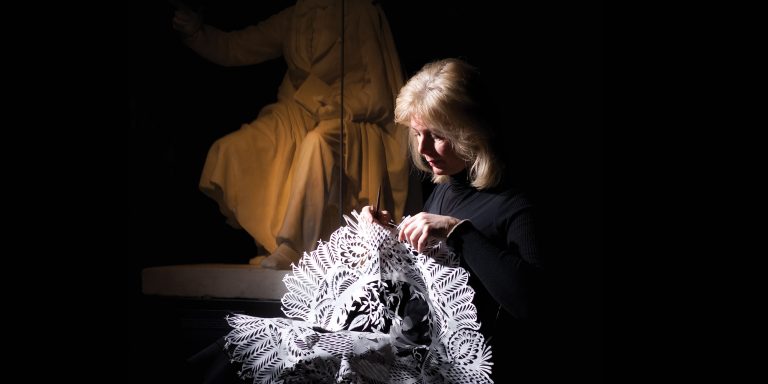
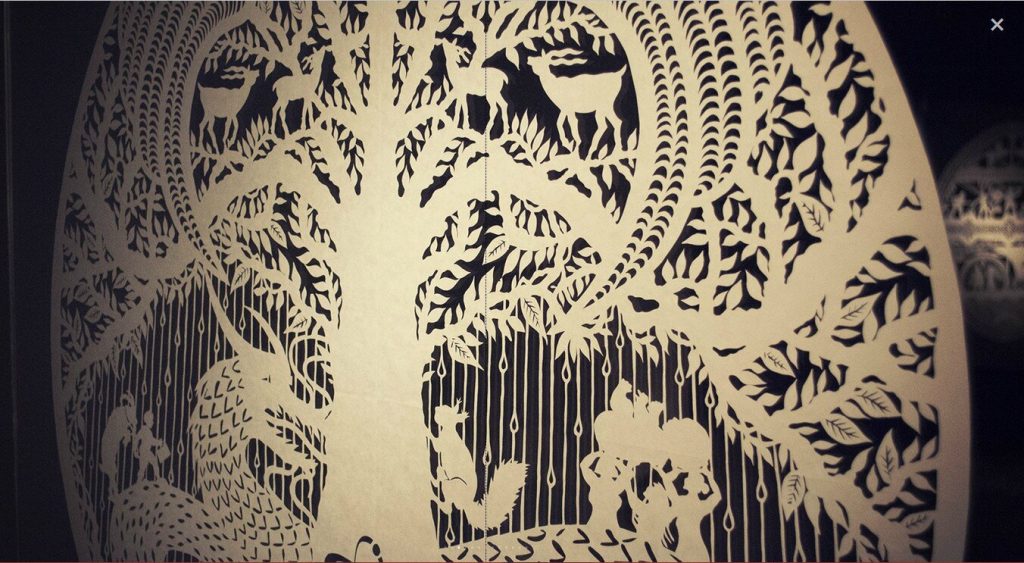
For some 40 years Karen Bit Veijle had been neatly folding and tucking her paper masterpieces away under her rugs. She had been using a little pair of scissors to cut out elaborate scenes and patterns.
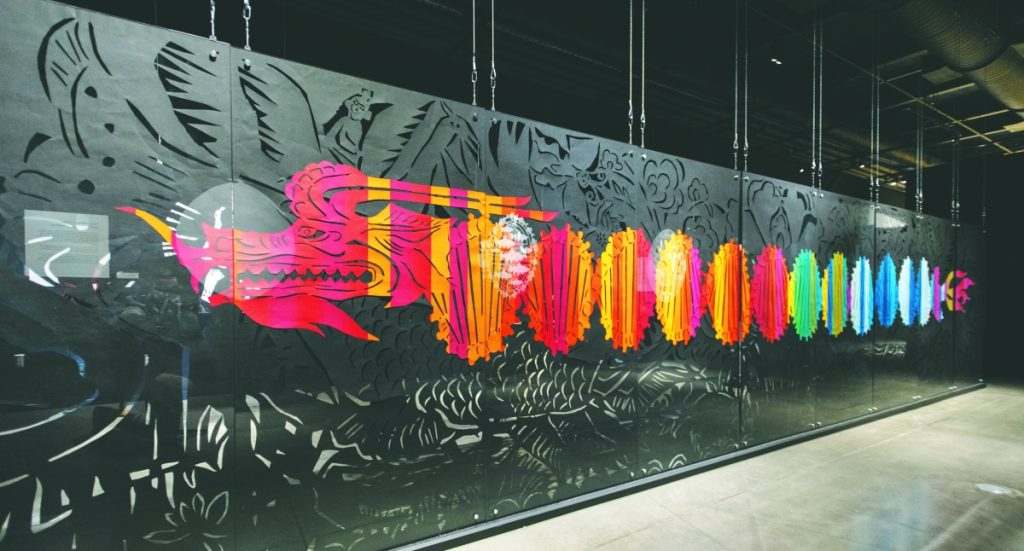
Dragon dna by Karen Bit Veijle
The art is called psaligraphy, which literally means the art of drawing or painting with scissors. She opened her first exhibition at The National Museum of Decorative Arts in Trondheim, Norway in 2008, and in few years her art has spread throughout Scandinavia and all the way to the USA and China. Her artistic work spans from the travelling exhibition Scissors for a Brush to commissioned work for several renown international companies, such as Hermès and Georg Jensen.
Fold and cut. Unfold, and your image is revealed. Who hasn’t cut snow crystals with scissors as a child?
As a teenager, Karen was ashamed to spend so much time on papercuts while others were out doing “cool” things. As an adult, she continued to literally sweep her art under the rug because she had no desire to advertise her skill or display her work. It was simply a meditative feeling of enjoyment.
While cutting she was listening to music and there was also a great degree of humor in her world of imagery. However, not always. Sometimes she confronts deep seriousness and themes intended to cause involvement and reflection. Her works are captivating surprise packages, evoking both astonishment and inspiration.
With her mother’s old embroidery scissors, Veijle, or Bit as she uses her name today, creates small fairytale characters, flowers and ornaments in the ancient art form when paper was an expensive commodity, and which has long been forgotten.
Costume by Karen Bit Veijle
“My heart and soul are at peace when I have the scissors in hand and the paper dances between the blades,” she says. She has used her art to cope with her chronic illness, myalgic encephalopathy, a neurological disorder characterized by chronic pain and exhaustion.
Contrary to almost everything else in the world today, psaligraphy is a slow art. It takes time to master, plan and perform it. The works are formed from a large, continuous piece of paper and cut with only a small pair of scissors. Every single scissor cut is carefully planned, as the slightest mistake can have disastrous consequences for the end result. This is a slow art of painstaking patience that demands the utmost concentration. Which part shall be cut out, and which shall not?
In ancient China, a bride-to-be was judged on how skilled she was with scissors and paper.
Bit had a career as a television producer, but she was forced to take leaves of absence because of her condition. During one such absence, a colleague came to visit her at home. He knocked on her door, and opened it to find bits of paper littered all over the floor. “What in the world are you doing?!” he asked.
Three years later, she quit her television job to be an artist. Her ambition was to bring old traditions back to life, and now she designs logos for gourmet restaurants, blankets for Røros Tweed and porcelain for Royal Copenhagen.
Her magical cuttings are rooted in a tradition that has known a long journey through history, beginning in the first century, when paper was first invented by the Chinese. In fact, the Chinese started cutting in paper before they used it for writing. The art of psaligraphy has developed differently throughout the world but is particularly rooted in Chinese and other Asian cultures, and also in Bit’s native country of Denmark. However, Bit has created a personal style and technique that is entirely her own.
The art is called psaligraphy, which literally means the art of drawing or painting with scissors.
Since then, her works have been exhibited in museums all over the world, and her art has decorated the storefront windows of luxury retailers. In March 2018, she opened her own papercut museum in Denmark, the Center for Papirkunst.
Bit always, always uses scissors – either his mother’s old embroidery scissors or a modern pair of scissors from Fiskars.
The First Museum of Paper Art in Europe Founded by Scandinavian Artist, written by Tor Kjolberg.