Once upon a time, in the time period of Bonnie and Clyde, bank robberies were common, also in Denmark. However, in 2022 there wasn’t a single bank robbery in Denmark. Denmark’s fight against bank robberies has succeeded. How?
Data released by the industry association Finance Denmark last month stated that there was not a single bank robbery in Denmark in 2022. The reason? A rise in online banking and declining cash services. So, cash is no longer king – at least not in Denmark.
Bank heists have been declining steadily since 2000, when 221 took place, or one for nearly every day that branches were open.
Declining cash services are part of the reason for the success.
“Just amazing,” said Steen Lund Olsen, as spokesman for Finance Denmark. “Bank robberies put an absolutely extreme strain on the affected employees every time they happened. It’s something you can’t even begin to understand the emotional impact of if you haven’t experienced it yourself,” he added.
Steen Lund Olsen, a spokesman for Finance Denmark
“It was very nice to see this statistic, especially because of the people working in the banks, and that they’re not being exposed to that anymore,” said Michael Busk-Jepsen, Finance Denmark’s director of digitization.
In his opinion, increased camera surveillance, improved alarm systems and stronger cooperation with the police have helped to bring the number down.
Michael Busk-Jepsen, Finance Denmark’s director of digitization
Denmark’s Fight Against Bank Robberies Has Succeeded, read on…..
According to the association, only 20 of around 800 national bank branches now have cash holdings, a figure that has consistently fallen over the years — from 219 in 1991 to 56 in 2021. As such, the number of bank hold-ups have fallen in tandem with the decline in cash circulation, with 221 bank robberies recorded in 2000, 121 instances in 2004, to just a single incident in 2021. Cash withdrawals have fallen by about 75% over the last six years, according to a Bloomberg report.
Busk-Jepsen says these crimes were common for two reasons. One, it was easy. And two, it was fruitful. He has a warning though: “Despite the welcome change, criminals in the digital era will for certain find new ways to pick people’s pockets.”
There was not a single bank robbery in Denmark in 2022. Photo G4S.
Other nations are also noticing a decline in bank robberies, as a global shift toward online transactions takes place. American banks recorded 1,724 robberies in 2021, falling from 7,556 in 2004.
Denmark’s Fight Against Bank Robberies Has Succeeded, written by Tor Kjolberg
Olav Haraldseid and Winifred Patricia Johansen have written a revealing book on the value of ‘diversity capitalism’ – the value of complementary skills. ‘Though we are different, we are able. It is our differences that when blended move the human race forward’ say the authors. In this book, the Norwegian authors stress the value of complementary skills.
This book should be required reading by all leaders, department managers and HR specialists dealing with different types of personality, attitudes, character traits, skills, and competencies. In this book you can learn how the neurodiverse benefits your company and make it more profitable, which is the reason for the chosen book title ‘Diversity Capitalism’.
In this book the two authors Olav Haraldseid and Winifred Patricia Johansen describe how the neurodiverse benefits your company and make it more profitable. Photo: Maria Tatsi
Divided in four parts
The book is divided in four parts in which the first is a general introduction to the concept of diversity and inclusion, as something to be sought after, and not simply tolerated. How can the diversity benefit your company and make it more profitable?
The second part discusses the profitability of diversity and explores existing and foundational theories on inclusion, not least exploring the differences between Norway and USA when it comes to successful gender diversity.
This book is all about diversity and inclusion, as something to be sought after
The third part focuses on invisible diversity and how different diagnosis come with their own sets of challenges.
The last part offers leaders the practical tools to ensure successful and profitable inclusion.
Norwegian Authors on the Value of Complementary Skills, read on….
The book offers leaders the practical tools to ensure successful and profitable inclusion.
Self-experienced cases
Throughout the book you can learn about the authors’ self-experienced cases, giving the content an in-depth understanding on how diversity capitalism can benefit persons or companies. For instance, as an example of humanity and empathy, when one of the authors, Winifred, was conducting contractual negotiations in London and happened to get stuck in traffic-jam on her way to Heathrow airport. It was a Friday afternoon, and her plane was the last flight to Oslo.
By the time she got to the check-in counter, her seat had already been given to someone else. The plane was full, and the author was completely devastated. Not making that flight meant that she would not be there to make it for her son’s birthday. She had, despite a hectic job never missed important days in her children’s lives. Needless to say, it would not have been easy for her then husband to host twenty-ten years olds for a party in the house without some help. She was so desperate and stressed that she phoned her manager who was on the same flight and asked if he would give up his seat for her. He understood her situation, and being a parent too, he disembarked, and spent the night at the airport so that she would be able to make it home that evening.
Throughout the book you can learn about the authors’ self-experienced cases. Photo: Maria Tatsi
Norwegian Authors on the Value of Complementary Skills – read on….
Benefitting from diversity rather than suffering from it
Neurodiversity, like Asperger, ADHD, dyslexia, Dyscalculia and dyspraxia are sensitive subjects. So is gender diversity. Many people steer clear of these topics at work altogether rather than risk offending or upsetting colleagues. However, ignoring the issues is not at all the answer. Diversity Capitalism makes the case for benefitting from diversity rather than suffering from it. Olav Haraldseid and Winifred P. Loum Johansen argues that diversity has a greater potential to be profitable for businesses as well as for individuals and is vital for future value creation. Diversity Capitalism is a guide to help managers build and lead diversity. It addresses key issues in diversity management such as recruitment for diversity and points out the obstacles to diversity and inclusion.
Notable Quote:
“Here’s to the crazy ones, the misfits, the rebels, the troublemakers, the round pegs in the square holes…the ones who see things differently – they’re not fond of rules. You can quote them, disagree with them, glorify or vilify them, but the only thing you can’t do is ignore them because they can change things They push the human race forward, and while some may see them as the crazy ones, we see genius, because the ones who are crazy enough to think that they can change the world, are the ones who do.” (Steve Jobs, 1997).
On writing the book
I asked co-author Winifred Johansen what tempted them to write a book on this subject.
“I had serious covid infection in early 2020. While I was in bed, I needed to do something to take my mind away from my misery. I took a deep dive into my doctorate research. I looked at character strengths and failed leadership in relation to long-term crises and started writing about that. Then at some point, I read The Natural Hair Bias in Job Recruitment, research paper by Koval and Rosette on prejudice towards black women with natural hairstyles. Well, as my hair fit the bill of what constitutes bad hair, I started writing a career guidance book with a comical twist entitled “How to build a career with a head full of bad hair!’ (It is on editorial revision).
At some point, Olav and I met, and we shared our book ideas, he was working on a diversity book, and we decided to join forces.”
How did you share the workload when writing the book?
At some point, Olav and I met, and we shared our book ideas, he was working on a diversity book, and we decided to join forces,” says Johansen. (From the book cover. Photo: Maria Tatsi
“We both wrote, but from very different perspectives. I was writing an academic piece of work that would benefit MBA students, researchers, and academics, Olav was writing a business book for business leaders. My task was to braid his work and mine, find research to back his statements and experiences, as well as put more of my business experience into my writing (I had written a book void of me!). Content-wise, we ended up on 50-50”.
I did the structuring, referencing, layout, compiling, editing, and liaison with the illustrator, editor, cover designer, etc. (I like the invisible work). Olav is more extrovert, and great on the marketing side of things.
Norwegian Authors on the Value of Complementary Skills – About the authors below
Olav Haraldseid holds a master’s degree in sports psychology from the Norwegian University of physical education and ports specializing in attitudes, motivation and self-confidence. He has been working as a CHRO/HR director in large multinational corporations such as Equinor, Norgesgruppen, Circle K and Apotek 1.
He is a sought-after speaker and runs his own consulting firm specializing in enhancing organizational performance, diversity, developmental assessments and management training.
Winifred Patricia Johansen
Winifred Johansen is senior vice president for commercial affairs for Quantafuel ASA and sits on multiple boards in the UK and Norway. Winifred is an engineer, business strategist and lead researcher. With more than two decades of industrial experience (Automotive, Oil and Gas as well as Circular Economy) she has vast experience both in business development and working across cultures.
Winifred holds and M.Sc. in Mechanical Engineering from the Norwegian University of Science and Technology (NTNU) and Politecnico di Milano, an MBA from the Robert Gordon University, Aberdeen and is currently a doctorate researcher on Transboundary Crisis leadership at the University of Bradford.
Norwegian Authors on the Value of Complementary Skills, written by Tor Kjolberg
Scandinavians adore strawberries. During the short and rather hectic season – usually just four weeks – strawberries are eaten almost every day for dessert. Learn more about Scandinavians and strawberries.
We also make sure that we by enough to eat on the way home and to have strawberries on top of the morning muesli or junket as well.
Children thread strawberries like beads on a string. Photo: Ellen E. Tybring/Twitter
When the main season is over, there are still the wild wood strawberries, scattered over the forest floor and along country lanes all over Scandinavia. These are my favorites. They produce unbelievably flavorful, small, dark berries. Children thread them like beads on a string, to avoid the ripe, soft berries getting mushy in small hands. These are the ultimate treat, eaten on a picnic, or gathered for a special meal. You can even be lucky and find enough to make a small portion of jam.
How it grows Professional growers in Scandinavia grow mostly less flavorful, but transport-friendly modern cultivars, as is the case all over Europe. In modern large-scale thinking, strawberry quality is equal to a long shelf life. Many people do not agree, however, and grow their own or visit PYOs to get smaller, more fragile and sweeter berries they remember from childhood. If you have been put off the idea of growing your own strawberries because your garden is havocked by birds, you could try a very sweet, creamy white wood strawberry (a cultivar of Fragaria vesca) which is much harder to spot than its bright red cousins.
Northern strawberries are thin-skinned and juicy. Photo: Plantasjen
Taste and appearance Northern strawberries are thin-skinned and juicy, and the cold climate and long summer day give extra sweetness and flavor. There are many wonderful local cultivars, from strawberries that are almost orange and look like cock’s combs, to huge midseason berries the color of promegranate seeds and late berries that are blood-red all the way through. These old cultivars have been cherished through generations and still survive in private gardens. The small, dark strawberries, which are sweet but with a high acid level, and make the best jam, come at the end of the season.
Panna cotta with strawberries. Photo: Meny
Buying and storing Strawberries must be completely ripe for eating, with all berries thoroughly colored, fresh, unblemished and fragrant. Never keep them in the fridge, as this will take every bit of taste away. If you need to keep strawberries overnight, coat them with sugar. Do not wash strawberries. If you must, do it before hulling.
Garden strawberry Fragaria ananassa. Photo: Wikipedia
Culinary uses We northerners tend to eat strawberries very simply, with cream or ice cream, until the end of the season, when we grow just a little tired of them and prepare more complicated strawberry desserts. Late season is the time for everybody’s summer favorite rødgrød med fløde, made when strawberries are on their way out but raspberries and blackcurrants have started to appear. If you are very lucky, your birthday is in the summer. The strawberry layer cake, for which there are variations all over Scandinavia, should maybe compensate a little for the fact that all your friends are away on holiday.
Strawberries and cream crisp cones.
Strawberries and cream crisp cones This is the perfect platform for freshly cooked strawberry jam. The cones are made from a tuile batter, thin, crisp, eggy and delicious. They are eaten filled with cream and strawberry jam, but I must admit that raspberry or cloudberry jam is just as nice. Whatever you do, do not make this for more than six people, and do not fill the cones in advance. They go soggy in a minute. The shaping of the cones takes some practice – the first are bound to be too thick, you will burn your fingers, or shape them into elephant’s ears instead of cones. But it is definitely worth the struggle. If I were a child, I would wish that someone would cook something as delicious as this for me.
3 eggs
The same weight each of butter, sugar and flour as the eggs
300ml cream, whipped
400ml homemade strawberry jam.
SERVES 6
Cream the butter and sugar until the sugar is dissolved. Stir in the flour and eggs. Spread the butter on parchment paper with a rubber spatula in very thin ovals, roughly 10 x 15cm.
Bake for 5 minutes at 180˚C/gas mark 4, until they are browned slightly at the edges, and no more. Bake only a few at a time, as there must be time to shape them into cones, while the next batch is baking.
While they are warm, take the ovals off the paper and shape into cones. Stick them into a bowl of sugar, or suspend them in small glasses until cooled, when they will hold their shape. If they cool down prematurely, you can heat them vary carefully until pliable again. When they are cold, you can stack them gently inside each other.
The cones are best the day they are made but will keep for a couple of days in an airtight tin. Put them on the table with the cream and jam, for people to fill themselves.
Scandinavians and Strawberries, written by Tor Kjolberg
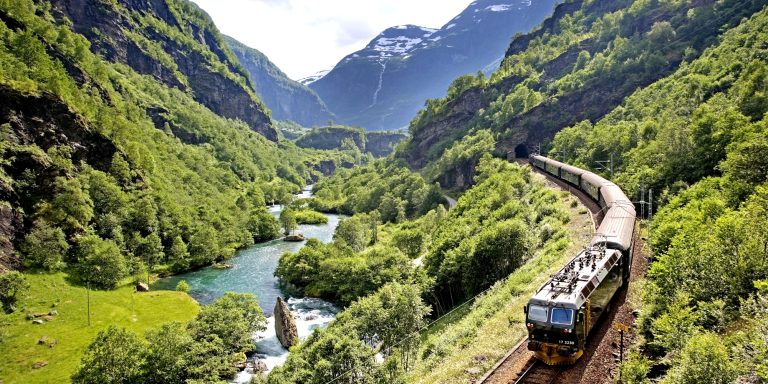
The Oslo-Bergen railway has ranked regularly among the world’s most beautiful train journeys. Tom Hall in Lonely Planet considered it Europe’s best train journey.
Norway’s legendary train journey from Oslo to Bergen may just be one of the most beautiful rail journeys in the world. However, make sure to book a day journey and book a window seat on the left side of the train (from Oslo) or right side (from Bergen) to get the best views.
The train ride is 496km (308 miles) long and lasts six-and-a-half-hour and passes through the Hardangervidda plateau, one of the worlds highest stretches of railway tracks. It is also one of the oldest in Europe – and one of the most scenic.
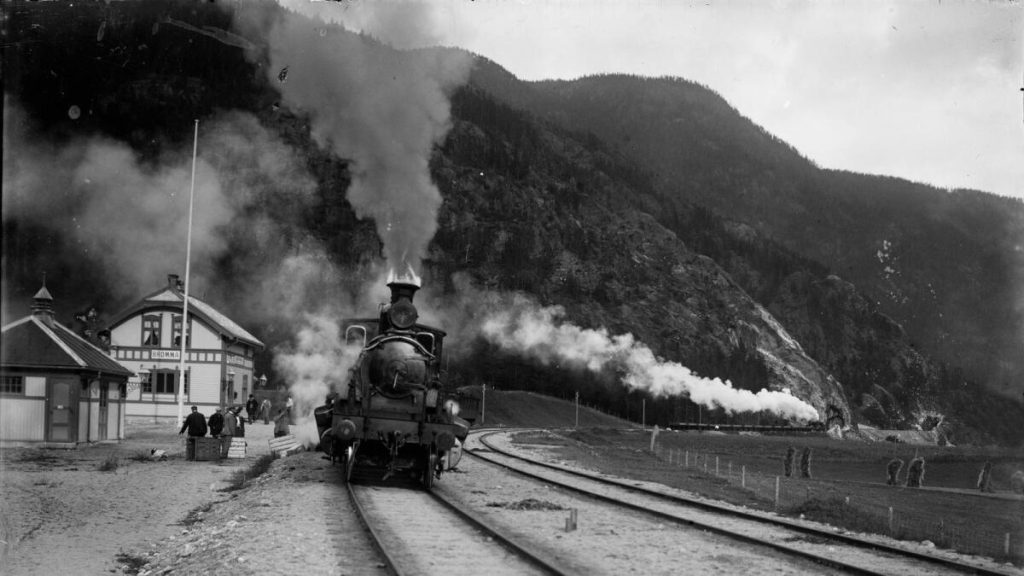
The route was completed in 1909 and took 34 years to complete (1875-1909). Here from Bromma station (1909). Photo: Nasjonalbiblioteket.
Speeding away from the Oslo city center, you have glimpses of the Oslo fjord with elegant wooden homes climbing the hillsides, passing Sandvika, which was declared a city in 2003, crossing the fjord and after half an hour or so come to a short stop at the commuter city of Drammen.
Speeding away from the Oslo city center, you have glimpses of the Oslo fjord with elegant wooden homes climbing the hillsides. Photo: Vy
Among the World’s Most Beautiful Train Journeys, read on….
In Drammen, the track turns for the north. All in a sudden, the hills are higher and pristine alpine meadows and pine-clad foothills scales deep valleys studded with small villages and farmhouse clinging to precipices.
Anywhere else in the world, the Bergen Line would be herald as a wonder of the world. Norwegians in general consider it only as a way of linking two of the nation’s most important cities. The route was completed in 1909 and took 34 years to complete (1875-1909). There are five daily departures (four in the winter), including one overnight journey. The journey includes 180 tunnels and 21 stops.
Roughly two hours from Oslo, you arrive at the Hallingdal Valley, which offers a long list of outdoor activites, among them Bjørneparken (the Bear Park). This zoo is home to elk, lynx, and other species that roam free in a vast woodland park.
In the town of Gol, you can catch a bus to nearby Hemsedal, which draws skiers in the winter and hikers in the summer.
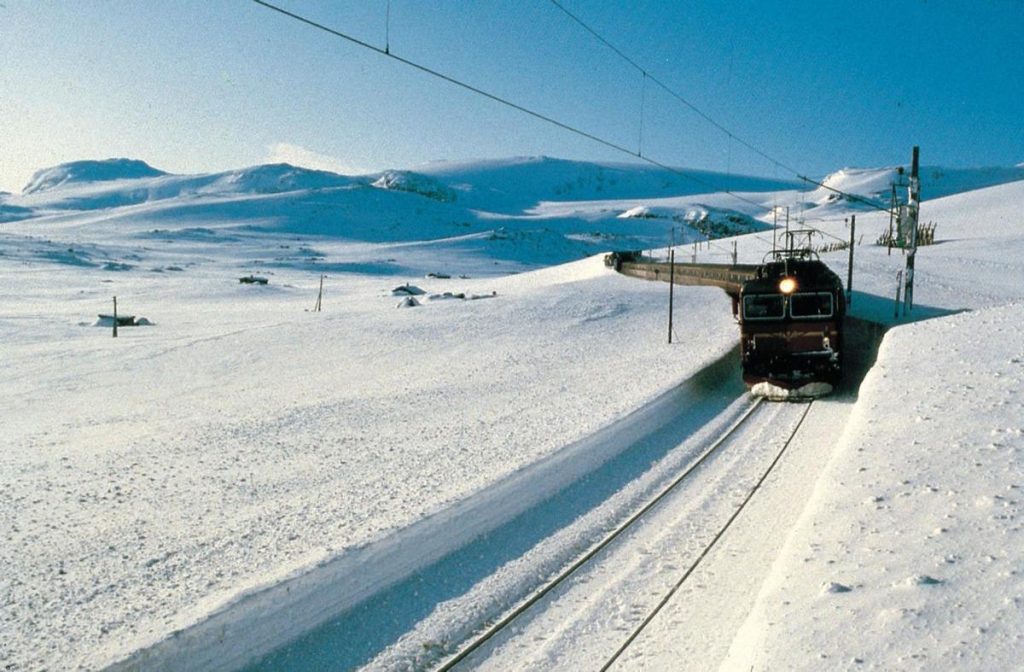
Along the way, the station signs proudly display just how high the train is going, and now the snow on the ground is getting heavier. The journey’s midpoint is the ski town of Geilo, altitude 794m.
Bergen line in winter landscape. Photo: SNL
Geilo is an essential stop and a perfect way to break up the journey. The alpine town draws both skiers and hikers and is the gateway to two of the country’s largest national parks. Norway’s best ski resort is also located near Geilo.
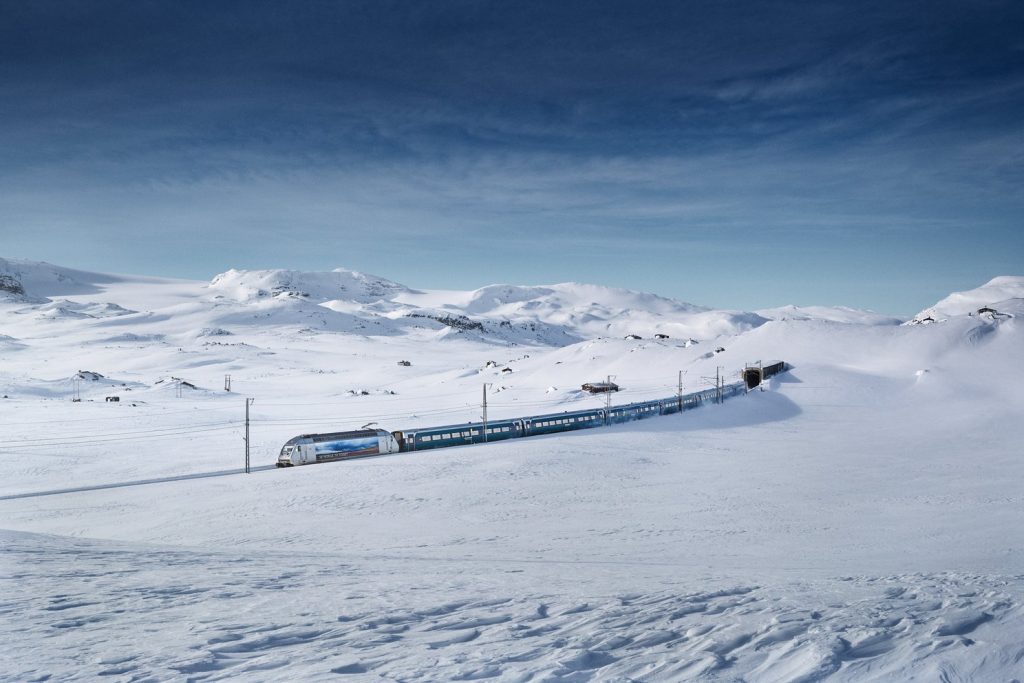
After about four hours, you emerge from a tunnel and into the high snows of the vast mountain plateau Hardangervidda at an altitude of over 1,200 meters. Hardangervidda covers nearly 6,500 sq km. and is one of the oldest geological formations on the continent’s north.
The highest point on this journey is the Finse station, at 1,222 meters above sea level. Photo: Vy
Among the World’s Most Beautiful Train Journeys, …. the journey continues
The highest point on this journey is the Finse station, at 1,222 meters above sea level. As the train then descends and makes its way to Bergen, it passes many fjords, waterfalls, and rivers.
Myrdal Station (867m) is clearly on the maritime coast of Norway, milder and damper than what’s come before. At Myrdal a train waited on a branch line that is one of the steepest railway lines on Earth. From Myrdal to Flåm, down by the banks of Aurlandsfjord, an inner arm of Sognefjord, the track twists and dives down through 20 tunnels, losing 866m in altitude in just 20km, falling at a gradient of 1:18.
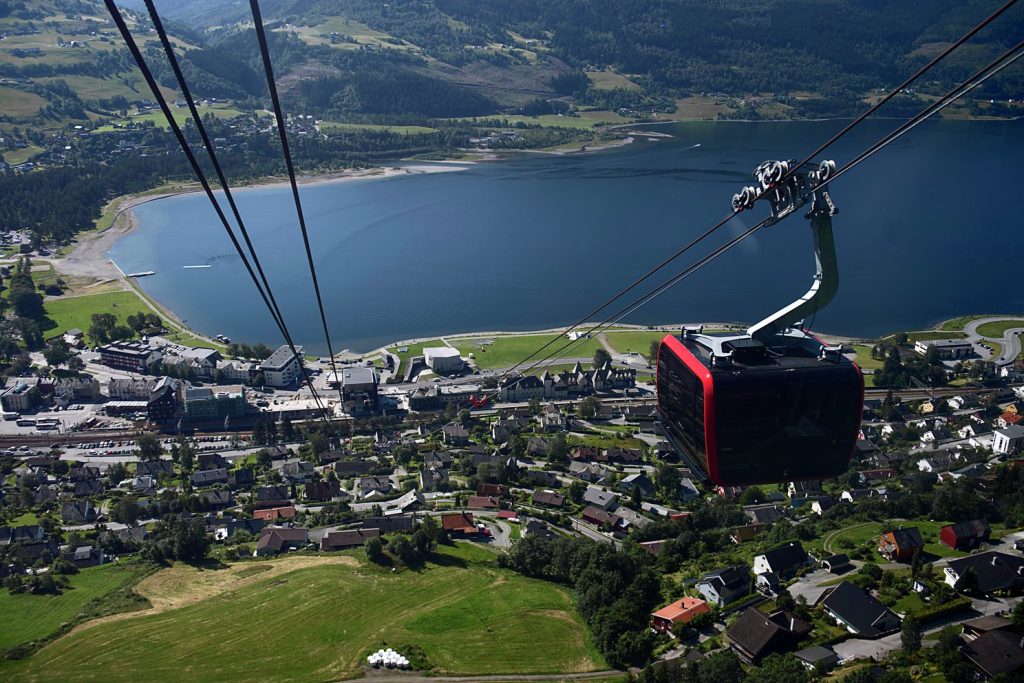
Voss Gondola Lift. Photo: Vy
The descent to the town of Voss happens gradually. The snow is thinner, the earth becomes green, and rivers, lakes and then fjords are clear and blue. Here is yet another Norway, one where the track hugged one fjord after another. Voss is a picturesque town popular with athletes interested in adventure sports.
And then, Bergen. The train weaves between the seven hills and seven fjords of this graceful city. Whitewashed wooden buildings climbed the hillsides above the city center. It is a fitting end to a memorable journey.
The old wharf of Bergen. Photo: Riksantikvaren.
The train’s café car serves hot and cold snacks and more substantial dishes, and there is also wi-fi, though it can be unstable and often cuts out thanks to all the tunnels. There is a storage area for bikes and luggage, as well as a car with a designated play area for children.
Tickets can be purchased up to 90 days in advance from the Vy website, the primary train operator in Norway. Tickets do sell out in advance, especially during holidays and busy periods, so it makes sense to book ahead of departure. You can also buy tickets at Oslo S (Central Station) or Bergen Station from the vending machines or ticket office.
Note that there are discounts offered to children, students, and seniors. If you are travelling with dogs or bicycles, there will be additional charges.
Among the World’s Most Beautiful Train Journeys, written by Tor Kjolberg
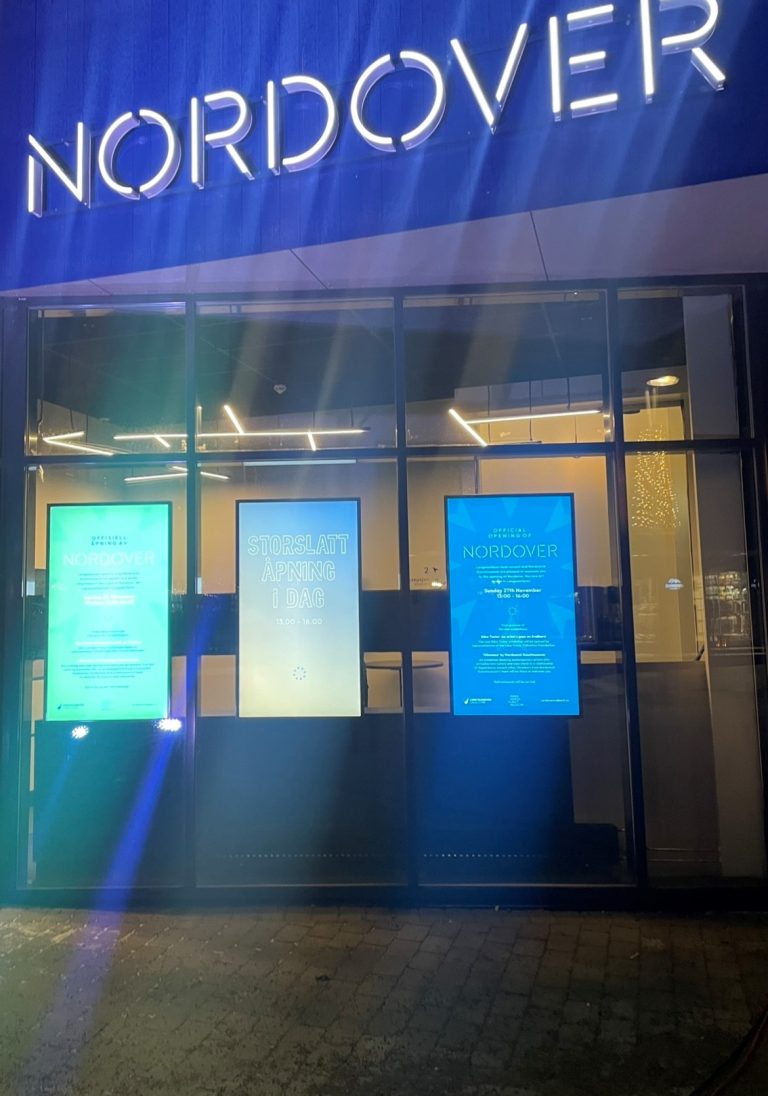
The new art center in the middle of Longyearbyen on Svalbard has received international attention. It is no longer just polar adventures and wild nature that characterize Svalbard. You can also experience art at a high level, in the middle of Longyearbyen, at the brand-new cultural center, Nordover (Up North), which opened at 78 degrees north last November.
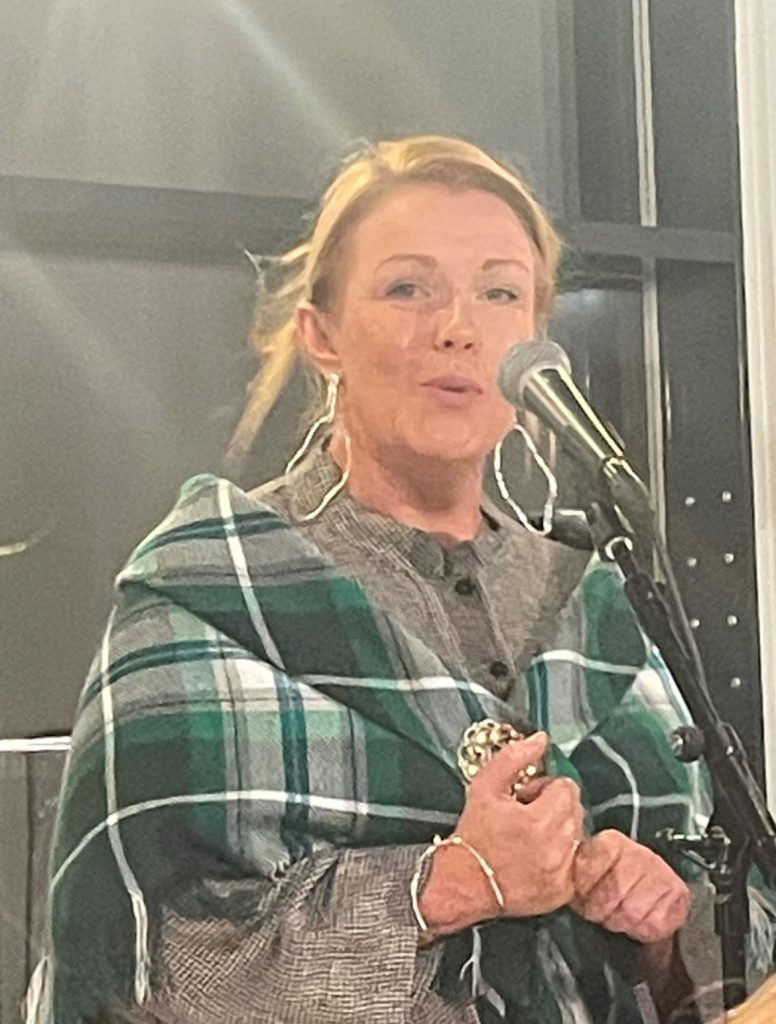
“I hereby open Nordover, to connect people, to gather perspectives and to create dialogue,” said former local board leader of Longyearbyen, Christin Kristoffersen, on Sunday 27 November 2022. She had the honor of opening the extremely successful and modern art center Nordover in Longyearbyen.
Christin Kristoffersen, former local board chairman in Longyearbyen – gives the opening speech at Nordover art centre.
In the bright and modern premises, there is a permanent Kåre Tveter art collection, temporary exhibitions, museum shop, café, cinema and youth club. Nordover collaborates with the Nordnorsk Kunstmuseum and will promote exhibitions of international standard. The venue is furnished in modern Scandinavian design, and everything is planned down to the smallest detail. Project manager has been designer Tom Warner with good support from the former unit manager for culture and sport in Longyearbyen local government, Are Nundal.
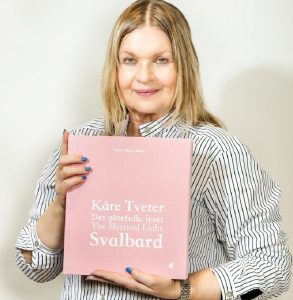
Two employees of the Nordnorsk Kunstmuseum leafing through the book, “Kåre Tveter, The Mystical Light”.
Permanent Kåre Tveter art collection
The renowned and popular painter Kåre Tveter was born in Sør-Odal, in 1922 – hundred years ago. The artist lived until 2012 and was 90 years old. The now permanent Kåre Tveter exhibition was previously shown at Galleri Svalbard, which opened in 1996. Now Tveter’s art, which was given as a gift to Longyearbyen by the artist himself, flourishes even better in brand new and state-of-the-art premises.
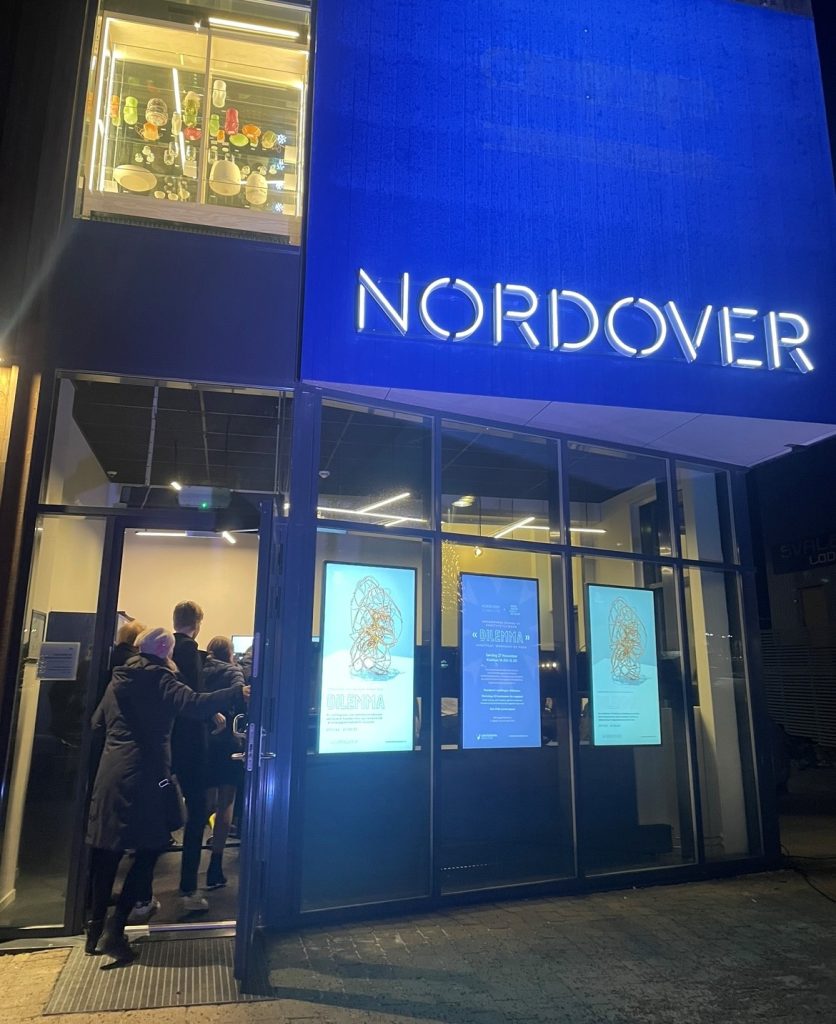
Exterior Nordover – well signposted art center in the middle of Longyearbyen.
The Svalbard store is also located here in the heart of Longyearbyen. In connection with the 100th anniversary of the artist’s birth, two new Tveter books have been published in 2022, including the book: Kåre Tveter, Det gåtefulle Lyset (The Mystical Light), published by the publishing house Utenfor Allfarvei, based in Harstad.
“The Arctic areas are now in a time when a peaceful and democratic common-state ambition for the Arctic is challenged by global and local effects of climate change, erosion and dramatic ecological changes in the Barents Sea and great power rivalry. We live in a demanding time. We have gone from a worldwide pandemic, closed communities and what the mayor of London called the pandemic of loneliness. Just three weeks after our country was opened, Russia invaded Ukraine and we are experiencing world wars closer to us geographically. We need tools to understand each other, to recognize and protect nature and search for the power we need to live and develop sustainability.
Kåre Tveter is profiled in a permanent exhibition.
We must create that power, with knowledge, with solidarity and with love. We must find each other, because we need each other, we need DIALOGUE – because we are about to, and must, deal with both individual and societal dilemmas,” said Kristoffersen.
Temporary exhibition entitled: Dilemma.
The first temporary exhibition at Nordover is entitled Dilemmas, curated by NNKM (Nordnorsk Art Museum), which shows art by invited artists using different techniques to interpret their relationship with nature.
“Art and culture have historical and identity related values for both individuals and society and are both important for habitability and for the desire to live in the Nordic areas and the Arctic,” said Kristoffersen.
She also highlighted the following: “A living democracy where everyone is free to express themselves, and where diversity, creative power and creativity are highly valued”, citing from the Culture Report 2018-2019. Museums have been given the responsibility for being democratic pillars. A pillar for participation and for the understanding of who we have collectively been, who we are, and who we want to become.
Art opens doors
“This is a responsibility that we recognize in our local government here in Longyearbyen, which is responsible for democracy at the top of the world and at the forefront of many global developmental features. And I am very pleased that the Local Board has decided to locate the youth club here as well. Because everything we do is for the citizens of the future,” she emphasized.
Anne Marit Muri (left) and Annette Bjørum Lynne in front of photography of Kåre Tveter.
According to the Norwegian art historian Knut Ljøgodt, the artists’ fascination with the Arctic and the northern regions is both historically relevant and important for the development of the northern regions in relation to the situation we know today. Many of the Romantic painters participated in or were inspired by the 19th century polar expeditions, such as François Auguste Biard, Frederic Church and Edwin Landseer. The expeditions resulted both in an increasing awareness of the indigenous population in the northern regions, as well as the fact that people began to exploit the natural resources in the Arctic, initially through trade and hunting for e. g. whales and polar bears.
“Why are art and culture so important?” asks Kristoffersen. She answers: “Because it abstracts politics and diplomacy and opens other doors to community and interaction. Cultural cooperation has a great influence on the outside world and reflects the foundation of shared values on which we stand. At the same time as the eyes of the world are focused on the geopolitical development in the Arctic, the northern regions and Svalbard are becoming a spearhead in Norwegian and international art life. And we must ask good questions, to find hope and not brutality. Culture is a catalyst for new opinions, for new policies and new visions of society, which in turn will shape the development of society. We need the art as a mirror and its reflections – think along – empathize with – and as a tool for dialogue”, she emphasized.
Facts:
Nordover (Up North) is the northernmost art museum in the world, in Longyearbyen, on Svalbard, near the Arctic Circle.
Opening hours are currently Friday to Sunday from 11-16.
Anne Marit Muri
The World’s Northernmost Art Museum (the article), written by Anne Marit Muri. Muri has a Master’s degree in social science from the University of Bergen in addition to art history from the University of Oslo. She has been an editor for various magazines for more than 20 years, including the magazine KUNST. Muri is the author of the book Kunstnerliv (Artists’ Life). Annette B. Lynne, who founded and owns Polaris Art Gallery, wanted Muri to write the book about Tveter (Kåre Tveter – The Mystical Light – Svalbard). She has been responsible for the book’s concept and text and has connected publishers, photographers, contemporary artists, etc. through her network.
The first thing you should know about Scandinavia is that it’s a beautiful place. The countryside is lush and green, with rolling hills and mountains in the distance. There will plenty of variety in your DIY tour as well. Scandinavia consists of four countries: Denmark, Norway, Sweden, and Finland (*), each country with its unique culture. Discover Scandinavia: Places to visit on a DIY tour.
Traveling can be stressful, especially if you plan everything by yourself. But, you can rest assured that your trip across Scandinavia will not cause you much anxiety with the local CBD stores that can offer you relaxing experiences.
You can plan your own route or use one of the many tours available online. If you prefer to see as much as possible on your trip, then consider taking a guided tour through Scandinavia. However, if you want more flexibility (and don’t mind doing some research), then here are some facts to help you make your own itinerary.
Discover Scandinavia: Places to Visit on a DIY Tour, let’s go….
Denmark is the smallest of the Scandinavian countries. Photo: Open Access Government.
Denmark
Denmark is a beautiful country, with a lot of great attractions. There are many ways to travel around Denmark, including by trains, buses, and cars – the major cities are connected by all transportation means for convenient navigation.
It is the smallest of the Scandinavian countries, but still offers a lot to see. Copenhagen is the capital city of Denmark and has many great attractions like the Little Mermaid statue, Tivoli Gardens, Amalienborg Palace, and Rosenborg Castle.
Camping in Sweden. Photo: Visit Sweden
Sweden
Sweden is known for its fascinating nature. It is a country with many forests and lakes, which makes it perfect for nature lovers. In Sweden, you can find everything from the snow-capped mountains to the white beaches on the Baltic Sea coast.
There is also a lot of history to discover in Sweden; many historical buildings can be found all over the country – especially in Stockholm. The city itself holds so much history that it would take days to discover it all! One example is Gamla Stan (Old Town), which has been around since 1350!
Discover Scandinavia: Places to Visit on a DIY Tour, read on….
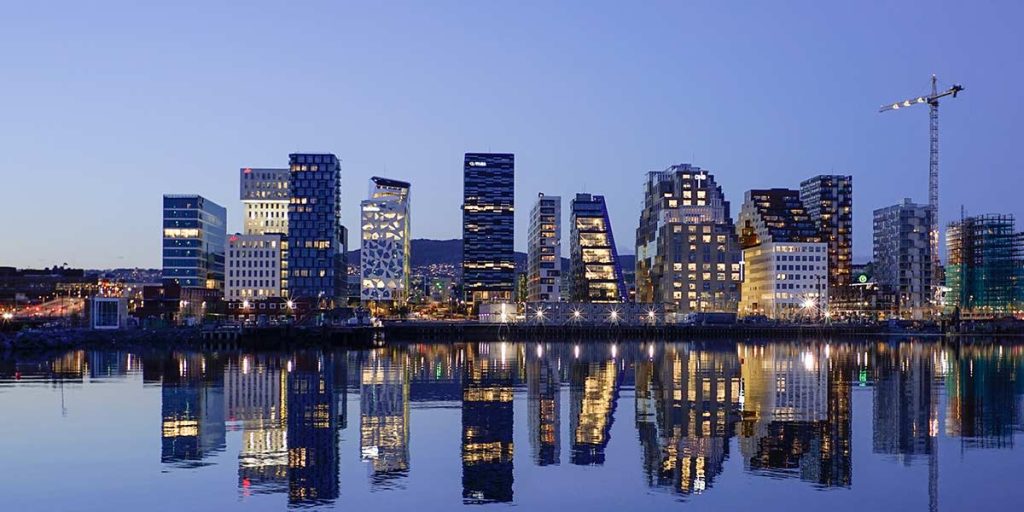
Barcode, new development, downtown Oslo. Photo: DFDS
Norway
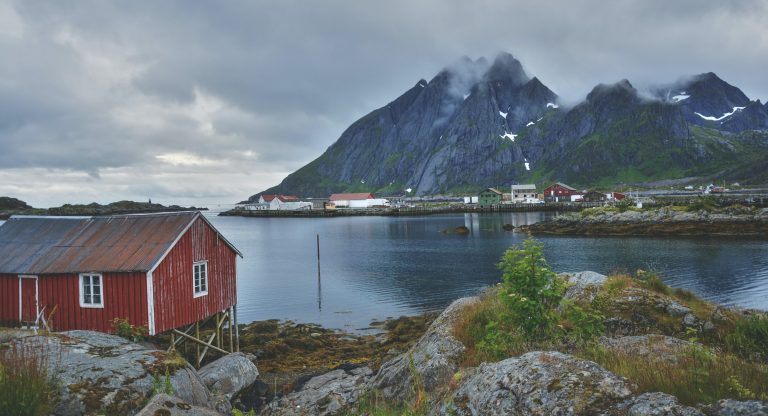
One of the must-see destinations in western Norway is the fjord country around Bergen, with its rich history and cultural heritage. The city itself has a lot to offer to visitors, both in terms of culture and activities such as hiking or biking through beautiful nature trails.
In addition, Oslo has many important museums like the National Gallery and the Norwegian Folk Museum. This capital city not only offers great opportunities for sightseeing but also provides plenty of things to do during your stay: From street art tours to guided walks through historic areas such as Gamlebyen (Old Town) or Grünerløkka (Green Lake).
Santa Claus in Rovaniemi. Photo: Xavier Turpain/Pixabay
Finland
Traveling through Finland can be done by train or car. The main cities in this country are Helsinki and Turku, but there are many smaller towns that are worth visiting as well (e.g., Savonlinna). If you decide to take the train from Helsinki to Turku, you will cross over one of Europe’s longest bridges: the Åland bridge.
If you would rather drive yourself around Finland then make sure not to miss out on Lappland where reindeer herding takes place during summertime! You can see how this traditional lifestyle still lives on today by visiting Rovaniemi where Santa Claus has his official residence at Christmas time each year.
Discover Scandinavia: Places to Visit on a DIY Tour – Conclusion
If you are planning a trip to Scandinavia and want to see as much of it as possible, then the best way to do this is by organizing a DIY tour. The freedom that comes with a self-drive tour allows you to travel at your own pace, ensuring you don’t miss any important sights along the way.
Discover Scandinavia: Places to Visit on a DIY Tour, written dedicatedly for Daily Scandinavian
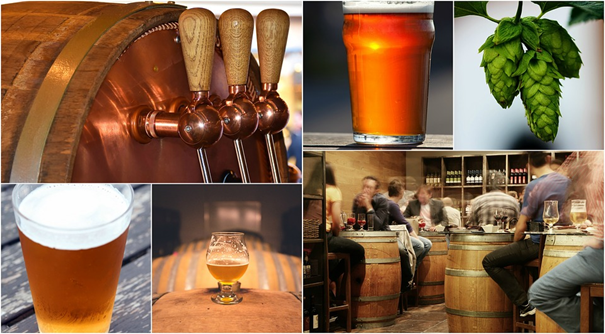
Copenhagen is definitely the place to be for anyone who enjoys a good beer! From regular visits to local brewery tours, craft beer lovers can explore some of Denmark’s most iconic brewing establishments and sample amazing brews. Learn more about brewery tours in Copenhagen and great craft beers to try.
Join us while we explore Copenhagen’s craft breweries, from their golden pilsners to small-batch ales. Come discover why this city deserves its reputation as one of the best places in Europe for great craft beer! Read on for further details about what you should try and where you should go…
An In-Depth Look at the Best Breweries in Copenhagen
From Brus. Photo: Daniel Rasmussen/Visit Copenhagen
Are you passionate about craft beer and looking for a unique experience? If so, then touring some of Copenhagen’s finest breweries must be on your list. From renowned microbreweries offering special tours and tastings to mid-size establishments with their own custom brews— there is something for everyone.
Beer lovers are encouraged to book organized tours or go exploring alone if they want a unique adventure! So, if sampling delicious new flavors and meeting like-minded people appeals to you, why not take the plunge?
From IPAs to Pilsners: Expert Tip on Hamlet Brewing
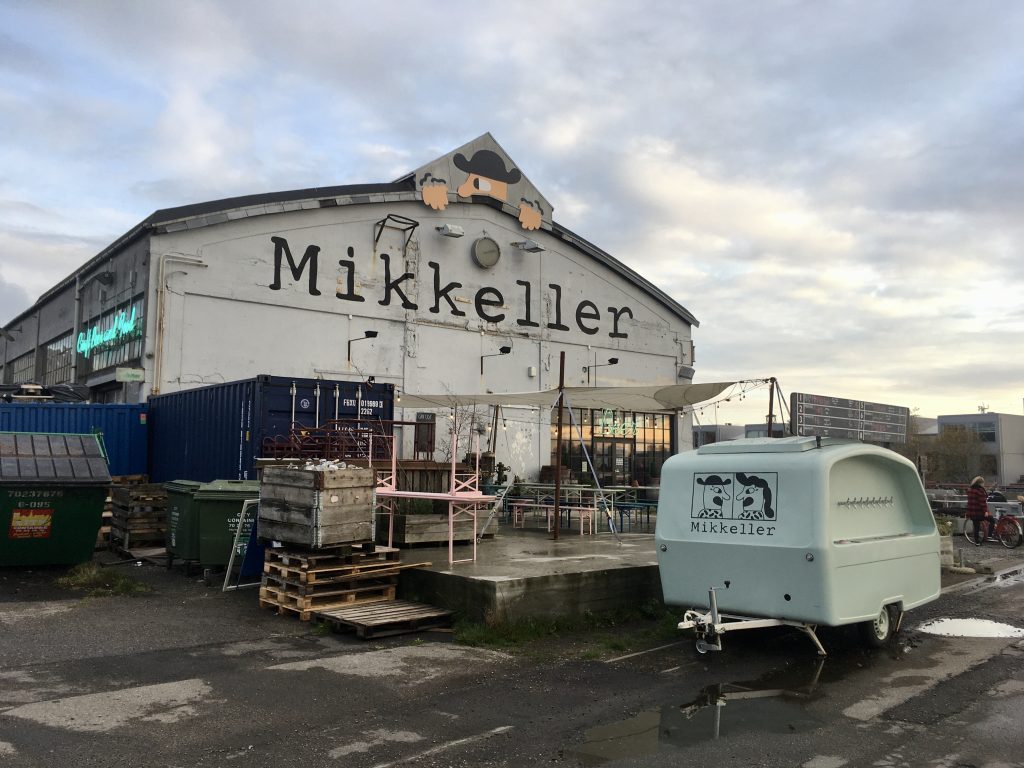
Mikkeler. Photo: Wikipedia
Brewing beer is an art form that many find both rewarding and therapeutic. If you enjoy making your own craft beers, then carefully selecting the right essential ingredients is a must! This especially applies when it comes to dry hopping – an age-old technique employed by top brewers in Copenhagen and worldwide.
Some factors to consider when dry hopping your beers include the flavor profile, bitterness level, style of beer, and even brewing equipment setup. When done correctly, the result is simply perfection in a bottle!
Whether you’re making IPAs, pilsners, or lagers, getting your dry hopping process correct promises an outstanding taste every time. And this is among the biggest secrets behind the success of Copenhagen’s Hamlet Brewing.
Exploring the Art of Small Batch Brewing and Cask Ale
There are countless brew pubs around just about every corner in Copenhagen. Photo: Visit Copenhagen
Discovering the niche art of small batch brewing and cask ale can be a truly rewarding experience for all craft beer enthusiasts.
Whether you intend to start making your own ale or are simply interested in appreciating what’s available on tap, one thing’s for sure. It’s an exciting exploration into different flavors, process techniques, and traditional brewing methods that only a select group of brewers understand.
In Copenhagen, there are endless opportunities to immerse yourself in this historic practice. There are countless brew pubs around just about every corner, each with its own unique stories flavored and bottled up within them.
Sample some beers while learning more about how they were brewed. Go ahead and explore the fascinating world of small batch brewing & cask ale.
Brewery Tours in Copenhagen and Great Craft Beers to Try, Read on….
Get Your Taste Buds Ready: Award-Winning Beers You Should Try!
Freon Baghaven. Photo: Visit Copenhagen
Why visit Copenhagen and not taste the award-winning beers that are produced here? If you want to skip the breweries, grab a few bottles of these highly sought-after craft beer masterpieces. From stouts to porters, lagers, IPAs, and even alcohol-free options, there’s an ever-growing selection of specialty brews available across Denmark.
Although some options might be seasonal, you have no excuse to shy away from asking. Including some of the best Scandinavian beers, below are some options you should consider sampling during your Copenhagen brewery tour.
Mikkeller’s “Beer Geek Breakfast” – An oatmeal stout that has won numerous awards for its rich, complex flavor profile.
Amager Bryghus’ “Hr. Frederiksen” – A smoked porter that’s well recognized for its smooth and smoky flavor.
American Blonde Ale from Carlsberg and Warpigs Brewpub
Amager Bryghus’ “Let There Be Darkness” Imperial Stout
Evil Twin Brewing’s “Even More Jesus” – An imperial stout that has bagged awards for its complex and rich flavor profile.
This means exciting times for craft beer lovers in Copenhagen, so let your taste buds be your guide!
Go Behind the Scenes – Take a Tour of Famous Breweries in Denmark
Experience the brewing process up close and personal by taking part in one of Copenhagen’s many brewery tours! Photo: Visit Fredriksberg
Are you keen to gain insight into the brewing process? Experience it up close and personal by taking part in one of Copenhagen’s many brewery tours! From larger establishments like Mikkeller, BRUS, and Braunstein, to smaller craft breweries such as To Øl and Warpigs, and even craft beer bars like Dry & Bitter, there are endless places to explore.
You will meet passionate brewers who do their best every day with beer enthusiasts from all over the world.
Brewery Tours in Copenhagen and Great Craft Beers to Try – Conclusion
To sum up, beer lovers can enjoy some of the most delicious craft beers in Europe when visiting Copenhagen. With extensive tours at a variety of breweries and award-winning craft beers to sample – there is something here for everyone! So go ahead, let your taste buds experience traditional and modern brewing methods on this beer extravaganza around Denmark’s capital!
Nadine Westwood
Brewery Tours in Copenhagen and Great Craft Beers to Try, written dedicatedly for Daily Scandinavian by Nadine Westwood. Nadine is a registered dietitian, travel blogger & fitness lover. In her spare time, she helps save stray animals. Nadine really does enjoy sharing her fitness journey with others who might need help with weight loss or finding a stress reliever.
In addition to second-hand products, recycled materials like suede, denim and duck canvas can be remade and be given new life. Sustainability and second-hand is the new e-commerce revolution in Sweden.
Two of three Swedish consumers have bought at least one second-hand item in the past year. The largest categories within the second-hand segment include furniture, consumer electronics and clothing, each of which is estimated to have a turnover of more than SEK 3 billion per year.
The average second-hand consumer in Sweden makes four purchases per year, where most transactions are made within the clothing sector. Given the economic and environmental benefits that second-hand implies, the growth is expected to remain strong.
Two of three Swedish consumers have bought at least one second-hand item in the past year.
It all started in 2015, when the Swedish Environmental Research Institute (IVL) rolled out the Second Hand Effect-project.
Sweden is big on sustainability, and sustainable practices like waste sorting and second-hand shopping are almost a norm. Besides buying vintage products at a bargain price, shopping second-hand helps reduce carbon emissions, saves resources, and prevents waste.
“We see great potential for second-hand purchases and a lot of advantages in fostering its growth. In particular, it goes hand in hand with our sustainability focus. We have worked hard to develop a consumer-friendly and convenient C2C service and look forward to making it available to Swedish consumers,” said David Lundqvist, Chief Commercial Officer at Instabox.
The assumption is that each used product sold replaces the production of a new equivalent product.
Here are some popular places for second-hand e-shopping in Sweden.
Blocket is a massive second-hand site where you can buy fairly-used cars, furniture, bicycles, electronics, and more. To shop on Blocket, you need to register on the site by entering some personal details, however, registration is absolutely free. After you have registered, enter your location, what you are searching for, and click away!
Facebook Marketplace is one of the most popular places to shop for second-hand items in Sweden. Whether you are looking to buy clothing, books, furniture, household equipment, shoes, kitchenware, bicycles, cars, or children’s toys, this is your one-stop shop. More so, you may get high-quality items for free if you are lucky.
Sellply
Sellpy is an online store for buying second-hand items like clothing, accessories, and footwear. On this site, you will find second-hand items from popular brands like Zara, H&M, ARKET, Ralph Lauren, Nike, Adidas, Monki, and the likes. The great part is that you get the same quality at a very affordable price.
Tradera is an online marketplace where you can easily buy second-hand items. You can search for anything on the site, from kitchenware, clothing items, footwear, antiques, to accessories. Tradera also has an app that you can download on Applestore or Playstore.
And if you happen to be in Sweden, you’ll find a brick-and-mortar second-hand store in nearly every city in Sweden. Here are just a few suggestions:
Arkivet: This is one of the most fashionable second-hand stores in Sweden. They sell a great variety of clothes from popular brands, and the best part is that their clothes are way cheaper and always in perfect condition!
Beyond Retro: If you are a vintage clothing lover, this store is a must-visit. Their prices may not be as budget-friendly, but you will find a range of special pieces.
Busfrö: You can find their stores in many cities in Sweden, they usually have clothes for children, women and men, and also items for the house.
Erikshjälpen, Linköping
Erikshjälpen: If you are in Gothenburg or its environs, you may want to check out Erikshjälpen. Their stores are located in the city center, Västra Frölunda, and Kungsbacka. They sell mostly clothing for children and adults, antiques, kitchenware, furniture, footwear, and toys. Their items are usually neat and prices are very affordable. Have a look at Erikshjälpen website as they have many stores around the country and also an online shop.
Myrorna: You can find this store in nearly all of the big cities in Sweden. Their store in Gothenburg has four floors! The first floor has all the furniture, textiles, and kitchenware. From the second floor and up you can find a great selection of clothes beautifully displayed by color.
Stadsmissionen: They sell everything from clothes to interior designs at very affordable prices. If you are in Gothenburg or Stockholm, you may want to check out their branches scattered around the cities. You can also donate some items that you no longer use to the store.
Remember this: Secondhand trade is an important contribution to a sustainable world.
Second-Hand is the New E-Commerce Revolution in Sweden, compiled by Tor Kjolberg
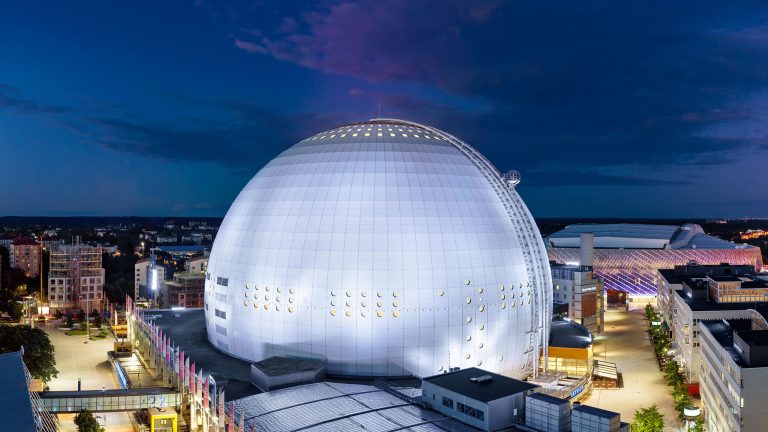
Avicii Arena, simply referred to as Globen, originally known as Stockholm Globe Arena and previously as Ericsson Globe (after its sponsor), is the biggest spherical building on Earth and has hosted some nail-biting sporting final in its 34-year history. Avicii Arena Stockholm is an indoor arena located in Stockholm Globe City in the Johanneshov district.
Globen (The Globe) is one of the most distinctive landmarks of the Swedish capital. The Globe is always in the limelight, and this year it will host international stars like Robbie Williams and Michael Bublé (March) as well as Cirque de Soleil and Peter Gabriel (May), among others.
The Globe is always in the limelight, hosting international stars.
The building took two and a half years to build and has a diameter of 110 meters (360 ft) and an inner height of 85 meters (279 ft). Globen has a seating capasity of 16,000 spectators for shows and concerts, and 13,850 for ice hockey. In the upper area there are 40 VIP boxes and a restaurant. The Globe is the world’s largest scale model of the Solar System.
The Globe has a diameter of 110 meters (360 ft) and an inner height of 85 meters (279 ft).
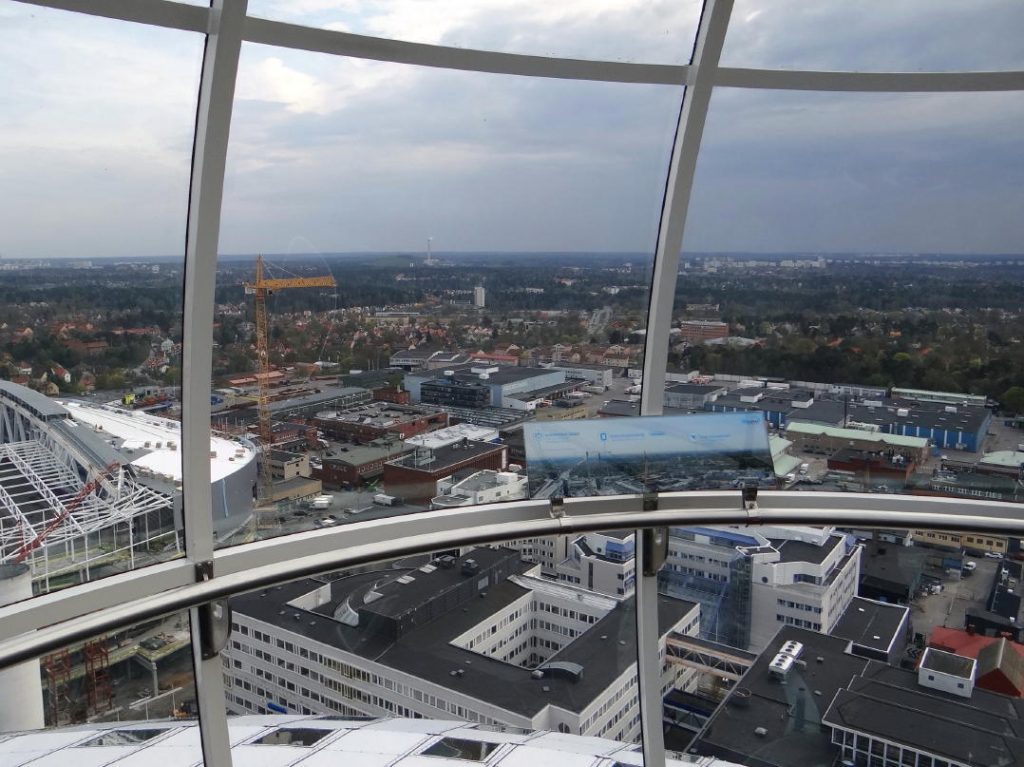
Since February 2010, the Globe has a spectacular attraction on its outside, the SkyView. The SkyView is a kind of glass elevator with which you can drive on the outer skin of the Globe to its very top. Even if sequins aren’t your thing, the Globe’s SkyView ride is a great way to see the city at any time of year. Its two gonolas depart every 10 minutes on a 20-minute trip that gives great, 360 degrees views of Stockholm from the building’s apex, 130m above sea level. Not one for those with vertigo.
The SkyView is a kind of glass elevator with which you can drive on the outer skin of the Globe to its very top.the Globe’s SkyView ride is a great way to see the city at any time of year. Photo: Wikimedia Commons
The SkyView trips are usually booked over the Internet, particularly during the Swedish holiday season from midsummer until mid-August. Especially on sunny summer days it is advisable to book tickets in advance. Otherwise, there is a risk that you only see the gondola from below.
There are about 3,000 runestones in Scandinavia (out of a total of about 6,000 runic inscriptions). This runestone was uncovered outside the capital of Oslo in 2021ahead of construction on a railway line. This is probably the world’s oldest runestone – and found in Norway.
The Norwegian researchers believe it is the oldest runestone as yet discovered. They say the inscriptions are up to 2,000 years old and date back to the earliest days of runic writing.
The Norwegian researchers believe it is the oldest runestone as-yet discovered.
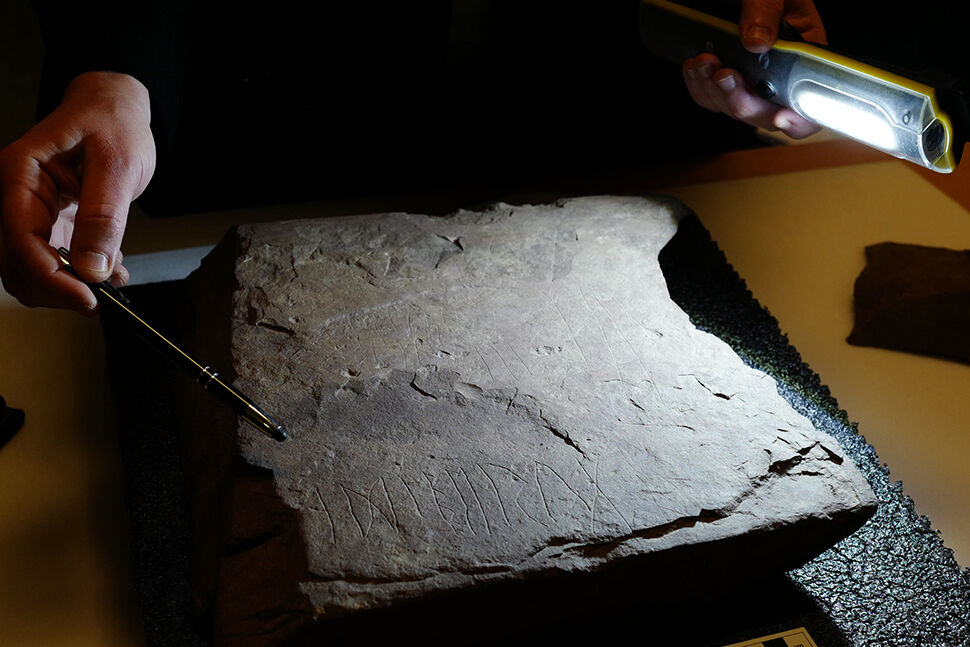
The runestone was found in a flat field grave, under a burial mound, in a burial ground by Tyrifjorden northwest of Oslo in Hole municipality. Findings in the tomb make it possible to date the stone’s inscriptions to between the years 1 and 250.
The World’s Oldest Runestone Uncovered in Norway – read on….
A square brown sandstone rock
The runestone was found under a burial mound, in a burial ground by Tyrifjorden northwest of Oslo
The square brown sandstone rock, measuring about 30 by 30 centimeters (12 by 12 inches) has carved inscriptions which may be the earliest known example of words recorded in writing in Scandinavia, according to the Museum of Cultural History in Oslo. This is, however, not the oldest known runes, but the oldest on stone. The earliest known runic find is on a comb made of bone found in Denmark.
The discovery, which could date from the time of Jesus Christ, is “a dream for runologists”
The discovery, which could date from the time of Jesus Christ, is “a dream for runologists”, who study ancient runic alphabets, inscriptions and their history.
runologist Kristel Zilmer, professor at the University of Oslo, of which the museum is a part.
“We thought that the first runes in Norway and Sweden appeared in the years 300 or 400, but it turns out that some runestones could be even older than we previously believed”, runologist Kristel Zilmer, a professor at the University of Oslo, of which the museum is a part, told Norwegian news agency NTB.
“This find will give us a lot of knowledge about the use of runes in the early Iron Age. This may be one of the first attempts to use runes in Norway and Scandinavia on stone,” she told the Associated Press (AP).



























 Tradera