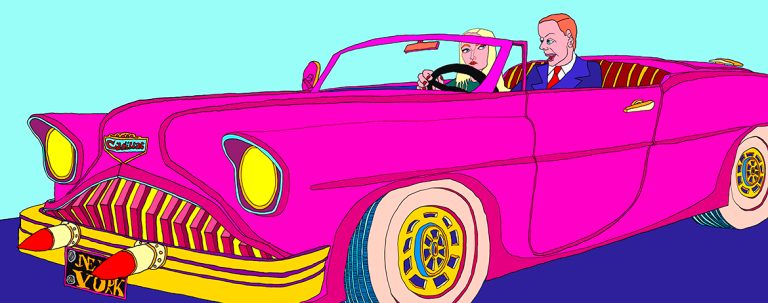
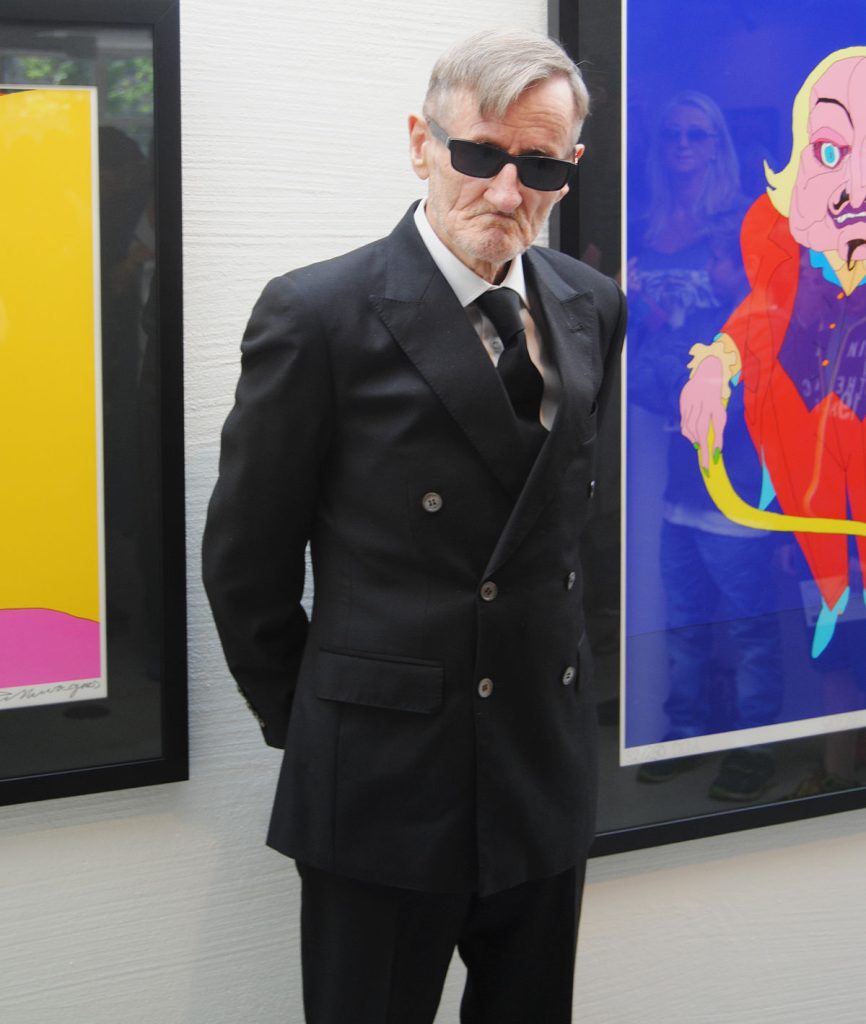
On 13th February the Norwegian recognized comics creator Håkon Aasnes turned 80, and the publisher Egmont Norway celebrated this productive cartoonist by releasing an 80 pages book including much of his work.Learn more about thisHomage To One Of Norway’s Most Recognized Comics Creators.
The book is enlightening and appetizing, but at the same time also a little sad since too much of Aasnes’ impressive catalogue is not readily available.
Håkon Aasnes was born in Oslo (13 February 1943) and started drawing at the age of two.
Håkon Aasnes was born in Oslo (13 February 1943) and started drawing at the age of two, with a carpenter’s pencil on wrapping paper. He self-published his early comics, such as ‘Avkroken’ (1960) and ‘Zantar’ (1964) while working. He had already created the first version of his character ‘Tobram’ in 1960, when he was seventeen.
From 1976 to 1979, or intermittently until 1993, Aasnes wrote and illustrated several stories for the magazine Donald Duck & Co, drawing Disney characters licensed for Norway. He was the very first Norwegian to work for Disney with his Donald Duck stories, and whose own drawings, stories, and scenarios based on his own ideas received official publication by Disney.
Nevertheless, Håkon Aasnes may not be an artist many non-Norwegians know but in the last 50 odd years he has drawn over 440 different comic stories including his own creations the Phantom, Vi på Eiketun, Annika, Gråtass and Olsenbanden. However, in the last decade or so, he has produced some amazing commissions for phans from around the world celebrating his favorite era of the Phantom universe.
Homage To One Of Norway’s Most Recognized Comics Creators, text follows below illustration.
From 1983 Aasnes has written and illustrated the comic strip Smørbukk
Aasnes made his debut in 1972 by selling the humorous adventure series “Seidel and Tobram” to Norwegian newspapers. The series was published until 1991, was published in over 17 newspapers and consists of more than 5,000 strips. This is the saga of two loafers looking for easy money in rural Norway. The series has never been published as a collection, with the exception of a small selection of tiny booklets more than 30 years ago.
he has produced some amazing commissions for phans from around the world celebrating his favorite era of the Phantom universe.
From 1983 he has written and illustrated the comic strip Smørbukk, and from 2005 also the comic strip Nr. 91 Stomperud.
Many consider that the series “Vi på Eiketun” is Aasnes’ greatest achievement. This is a children’s series which, over the course of 1159 pages, developed into “an advanced family series” and finally a purely adult series that contains most of the practical problems and moral dilemmas that can arise in a Norwegian farming community.
According to the records of Mine tegneserier, he has contributed to 440 cartoons.
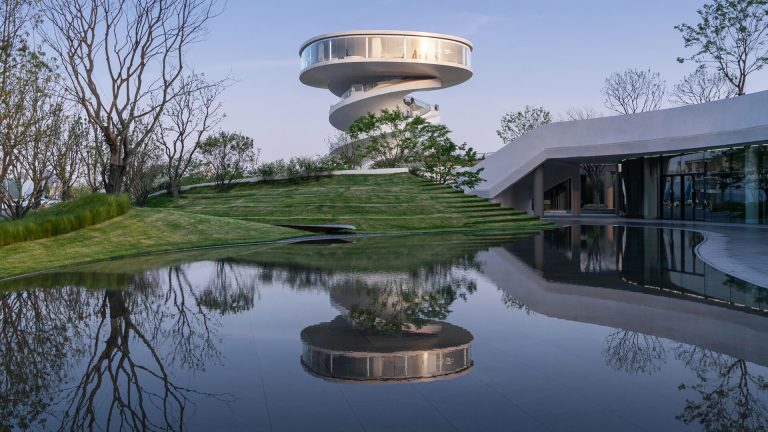
The Oslo-based architectural company Nordic Office of Architecture has a mission: To build a more sustainable society through exceptional architecture that transforms, inspires, and enhances the environments in which we live. Learn more aboutexceptional architecture made in Norway.
Dedicated individuals from more than 30 different countries have specialized in complex projects such as airports and hospitals. Nordic has branches in Copenhagen, Reykjavik and London and is actively involved in projects in various countries across Europe, Africa, the Middle East and Asia. It has become one of the largest architectural practices working in the national and the international arena.
Over the years, the company has gained extensive expertise through a wide variety of projects ranging from urban masterplans to furniture and interior fittings. The architects work in integrated multidisciplinary teams, combining planning specialists with architects, to achieve the most innovative and sustainable solutions.
The practice was founded as Narud Stokke Wiig Architects and Planners in 1979 but changed name in 2012. Having continuously developed and adapted to the numerous changes in the industry for over 40 years, Nordic Office of Architecture has specialized in complex and function-specific facilities from the largest and most gigantic areas in Norway to private housing.
This way of working also makes for a flexible, project-based organization that allows participating in competitions and projects of all scales globally. Nordic covers the following fields: Master planning, urban planning, architectural design, interior design, furniture and product design and visualization as well as film design and BIM management.
Since 1991 Nordic Office of Architecture has been involved in the design and planning of Oslo Airport, following the decision that the main airport would move to Gardermoen from its previous location at Fornebu. The airport opened in 1998, and Nordic has been involved in the continuous improvement works and the current vast expansion including a new pier, as part of Team_T. Team_T is a collaboration between Nordic Office of Architecture, COWI, Norconsult, Aas-Jakobsen and Per Rasmussen AS.
“Through the encouragement of individual development for our members of staff, we aim to achieve a collective culture with the ability to offer our clients and society more sustainable, elegant, functional and surprising solutions,” says John Arne Bjerknes, Senior Partner, Head of Residential and Commercial at Nordic Office of Architecture.
Exceptional Architecture Made in Norway, written by Tor Kjolberg
It doesn’t matter when you plan on visiting Northern Europe; whether at the start of the year or around June, there are a few clothes you must pack for your trip to enjoy your stay there. In this piece, we’ll cover everything you need to carry to ensure you’re well-prepared for any occasion. Here’s our advice on what to Wear in Scandinavia: All-Season Packing List.
Essentials Items to Pack in All Seasons
Hiking Boots
Scandinavia and even Northern Europe are well known for its gorgeous countryside and beautiful mountains, so whether the weather is sunny or wet, you must carry your hiking boots or best walking shoes to explore all these places during your visit. How will you even enjoy a big city break without your walking shoes?
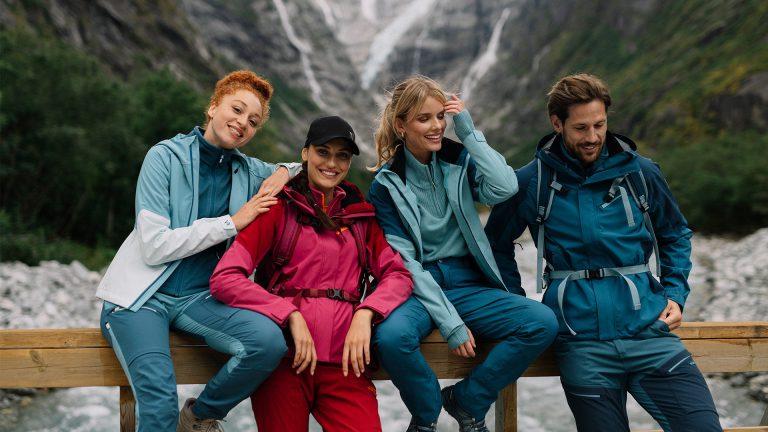
The first thing everyone tells you to pack while you tell them you’re visiting Northern Europe is a raincoat. This one is made by Norwegian Rain.
Rain Jacket
The first thing everyone tells you to pack while you tell them you’re visiting Northern Europe is a raincoat. The weather there can change so fast, and even on hot days, you may encounter heavy rains lasting around 15 minutes, so if you don’t have your coat, you will not like the experience.
Extra Layers
Choosing the best outfit for a day in Scandinavia and even Northern Europe can be difficult because even on a nice day, cold winds could spoil the fun. That’s why putting on some extra layers inside is advisable so that if the winds start blowing early, you will not have to quit having fun. Keeping warm in such cases also helps you avoid catching a cold. Getting sick during such a highly anticipated visit is the last thing you want to imagine.
Umbrella
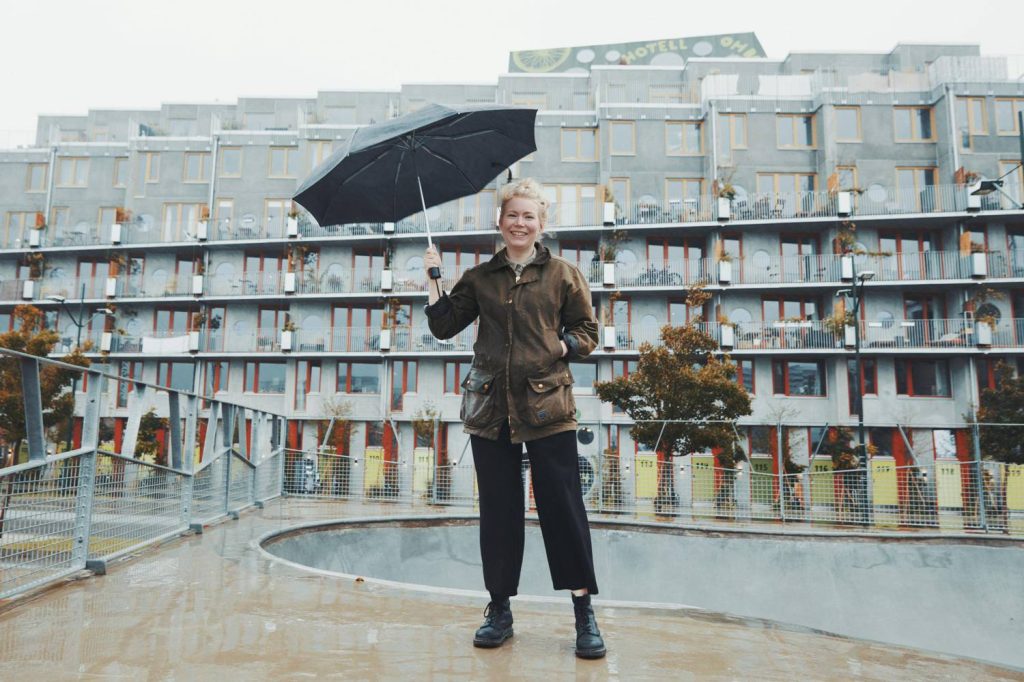
A raincoat could keep you safe on a rainy day, however, it can get too hot and uncomfortable when it’s raining on a sunny day, and in this case, your umbrella, or “brolly” as locals call it, will be the best option. Ensure you are careful because winds could damage your umbrella, and you’ll also be exposed to rain. It means you have to pack a strong umbrella.
What to Wear in Scandinavia: All-Season Packing List., read on….
You have to pack a strong umbrella. Photo: Visit Sweden
A Packing List for a Spring Visit to Scandinavia
Carrying the wrong clothing for a trip can ruin your experience, so if you want to visit Northern Europe in Spring and have the best time of your life, here’s what you need to carry.
Jumpers
You will sometimes encounter the winds while walking in Scandinavian countryside or when visiting the Scottish Highlands, but if you carry your woolly jumper, you will have nothing to fear. You will see many people wearing jumpers in Northern Europe; since the country has many sheep, wool is not a problem.
Windbreaker
During Spring in Northern Europe, the weather will most likely be windy when it’s not raining, and in this case, a windbreaker is the best outfit to wear.
Shorts and Jeans
Although you don’t often wear jeans, ensure you have a pair when you visit Northern Europe. Jeans, made of strong material, are great when you need to go for a wilderness hike because they protect you from bug bites and nettle stings. Shorts are also a must-have for the few sunny days during the spring.
Although you don’t often wear jeans, ensure you have a pair when you visit Northern Europe.
The Best Summer Packing List for Scandinavia
Summer in Northern Europe and Scotland is almost like in other places, so you’ll need the same clothes you would require elsewhere but remember to carry your umbrella in case anything happens. Fairfield House Hotel is a lovely place to spend a summer break, so is a new concealed gem resort just outside the capital of Norway.
The Best Summer Packing List for Scandinavia
Sunglasses
Sunglasses are essential for your summer holiday, especially if you are exploring the mountains since the sun can be blinding, hindering visibility. If you can see well as you hike, the trip can be risky since you can quickly find yourself in an accident.
Sun Hat
Carrying a sun hat is an optional choice, depending on your preference, however, having something to cover your face and head when the sun is burning in the afternoon will make you comfortable.
Short-sleeved T-shirts
You must have short-sleeved t-shirts for your summer holidays, and this also applies to Northern Europe. There’s a common saying for Scottish summertime, and it goes like this “sun oot, guns oot”, so remember to carry your short-sleeved t-shirt so you can show off the guns!
Swimwear
There are great beaches on Northern Europe’s west coast, for example, the one found at Troon. Dipping yourself in the sea to overcome the heat at the beach is one of the best feelings.
A Packing List for a Tour to Scandinavia in Autumn
As summer comes to an end and autumn begins, everything in Northern Europe looks beautiful, and although you’re likely to get wet, autumn country walks are the best.
Autumn country walks are the best. Photo: Mall of Norway
Hoodies
Hoodies are perfect for many occasions, one of which is the midges you’ll most likely face on your evening walks.
Light waterproof jacket
Autumn weather is not that bad, but you’ll realize that rain showers will start to occur more often as time goes by. That’s why you must have a light waterproof jacket, especially as autumn begins, around late August and early September.
Flannel Shirts
Flannel shirts are a unique fashion, and they are also warm. You can button them up with your jeans and favorite jacket or wear them casually with a t-shirt. If you’d like to explore the nightlife, this is the attire for that endeavor.
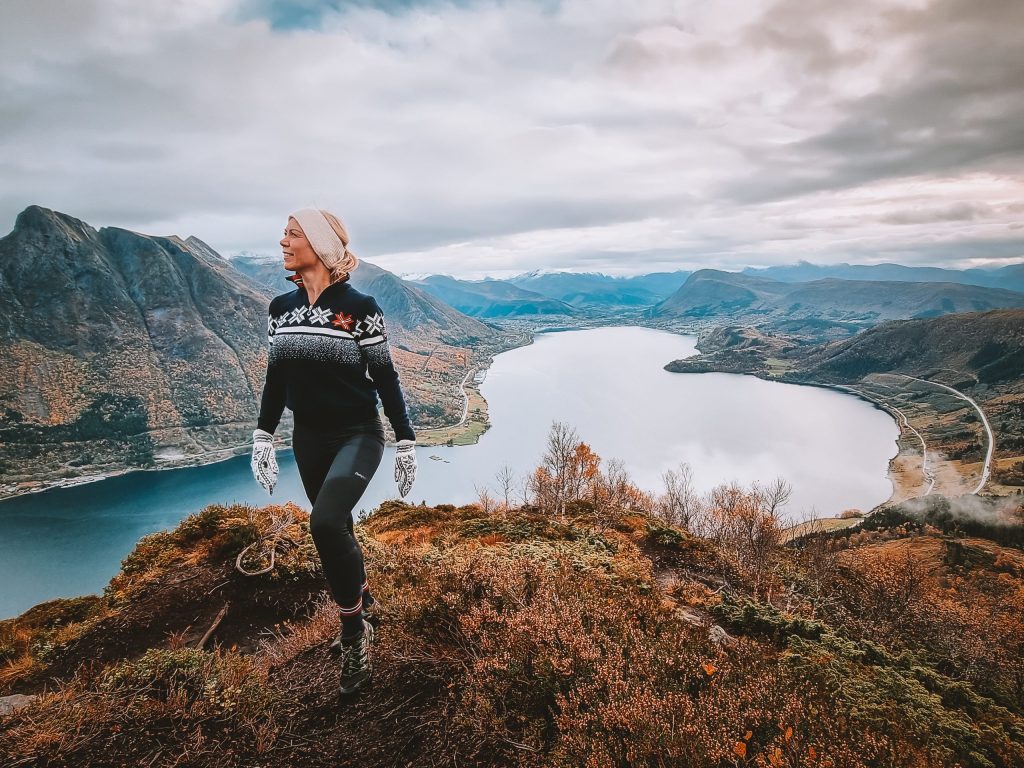
If you carry your woolly jumper, you will have nothing to fear. Photo: With and Wessel
Essential Items to Pack for Winter in Scandinavia
Although Scandinavian and Scottish winters are beautiful, they are usually harsh and very cold. The following items will make life easier for you during the winter in Northern Europe.
Warm Socks
Imagine having numb toes while shopping for a Christmas party in the city center. If you want to avoid being in such a situation, don’t forget some warm socks (fluffier ones are the best).
Hats and scarves
The winter comes with icy winds that cut through the jawbone and ears, so you should put on your hat and scarf every time you leave the house.
Fleeces
Fleeces are an excellent addition to have under your winter jacket because they are warm, lightweight, cheap, and comfortable. They are better than jumpers because they are softer, so they will fit well with the other layers.
Thermal layers
You must have thermal layers if you’re planning to explore the mountains during winter because temperatures may fall below zero, and you’ll find yourself chittering when you stop to take a breath.
What to Wear in Scandinavia: All-Season Packing List – Final Thoughts
It’s important to be prepared for the changing weather conditions in Northern Europe, as the seasons can bring drastic temperature changes. Layering is key, and investing in high-quality, warm, and waterproof clothing and footwear will ensure you stay comfortable and stylish throughout your travels.
Shawn Mack
What to Wear in Scandinavia: All-Season Packing List, written dedicatedly for Daily Scandinavian by Shawn M. Shawn Mack is an experienced outreach expert at The Pro Linkers. He is known for his excellent communication skills and ability to build strong relationships with influencers and media outlets. With a sharp eye for detail and a commitment to delivering results, Shawn is the go-to expert for all things SEO outreach.
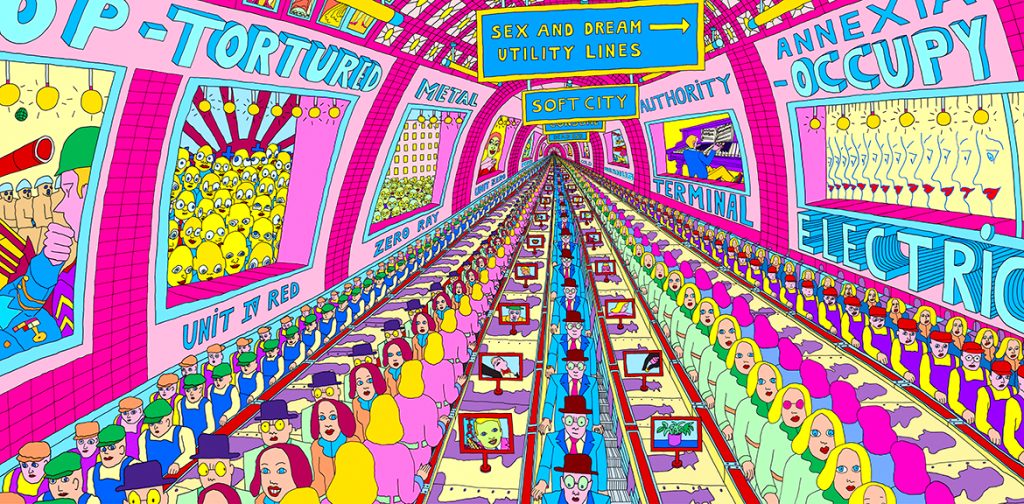
Terje Brofos, better known by his pseudonym Pushwagner (1940-2018), clearly left his mark on Norway and internationally. The artist has even been compared to Norway’s Edvard Munch after his death. The popular Norwegian painter had indeed dystopian visions of the future.
He was born during a bomb attack in May 1940, less than a month after the invasion by Nazi Germany. he was raised in Berg, a neighborhood in the North End of Oslo. In 1944, he was severely injured in a traffic accident. His father Fritjof was an engineer who struggled with alcohol. His mother Sonja worked as a biochemist.
Dystopian Visions of the Future by Popular Norwegian Painter, text follows below image.
Pushwagner has been hailed as one of Norway’s most important contemporary artists whose life was as tragic and colorful as the pictures he created. Photo: Wikipedia
Childhood and youth
As a child in Oslo, Pushwagner didn’t just suffer from claustrophobia, he said, but he was also quite paranoid – especially about his parents who said “phew” to anything he wanted to do – except drawing. Pushwagner’s first sketchbooks contain expressive scribbles of football players and Indians, motorcyclists and bloody boxing matches he made up in his own mind.
During his youth, he excelled in both summer and winter sports. He became one of Norway’s best tennis players and in 1955 played in a double’s final for the Norwegian championship with Arne Melander, a match which the duo lost.
Dystopian Visions of the Future by Popular Norwegian Painter, text follows below image.
Pushwagner, Sex and Dreams
Hailed as one of Norway’s most contemporary artists
Pushwagner has been hailed as one of Norway’s most important contemporary artists whose life was as tragic and colorful as the pictures he created. “He has been a living miracle,” Jan Christian Hermann Mollestad, a friend and work partner, told state broadcaster NRK. He noted that Pushwagner had come close to death several times during his years as a heroin addict and homeless person living on the streets.
Pushwagner finished his education at the State’s School of Art and Design of Oslo in 1959. He stated that he quit drawing for a period after his studies and that he struggled for several years to find his personal style.
Pushwagner met the Norwegian author Axel Jensen in 1968 and the two lived together for a time. Pushwagner illustrated Jensen’s book “Og resten står skrivd i stjernene” (And the Rest is Written in the Stars) (1995). Fascinated by comics since childhood, Pushwagner was inspired to start the series “Soft City” and “Doktor Fantastisk” during this period.
Dystopian Visions of the Future by Popular Norwegian Painter, text follows below image.
A day in the Mann family
Commercial breakthrough in 2008
His commercial breakthrough didn’t come until 2008, after various periods of addiction and living on the streets. His art began to be bought up by museums after exhibitions in Berlin and Sydney and he also won the top prize at Norway’s annual fall art exhibit in Oslo.
Among his most famous works are “Soft City”, the satirical cartoon about a mechanical everyday life in a horror society of a big city, and “A day in the Mann family” with the same theme.
One of the last things he made before his death was a book cover in collaboration with the famous American cartoonist Chris Ware.
In an introduction to a new release of the book Soft City, Chris Ware writes that when he first encountered Soft City, he mentally catalogued it as “The Stanley Kubrick Comic Book.” The name fits the visuals. The book is cinematic, and Ware compares Soft City to a group of films: Fritz Lang’s Metropolis (1927), Charlie Chaplin’s Modern Times (1936), Andrei Tarkovsky’s Solaris (1972), and Jacques Tati’s Playtime (1967). The skyscraper cities in these films are dense, impersonal, and often oppressive. Like them, the Soft City of Pushwagner’s imagination is a prescient vision of a future that we don’t want, but that may have already arrived.
“He’s been an outstanding character in Norwegian art history,” said NRK’s cultural commentator Agnes Moxnes, who noted how his art also attained “outstanding success” in recent years.
“It made him very happy to experience how enthusiastic folks were about his art, and that he became so dear to the public,” said Petter Mejlænder, who wrote a biography of Pushwagner. “He won support in the most unexpected corners. He made pictures that everyone saw something in.”
Dystopian Visions of the Future by Popular Norwegian Painter, written by Tor Kjolberg
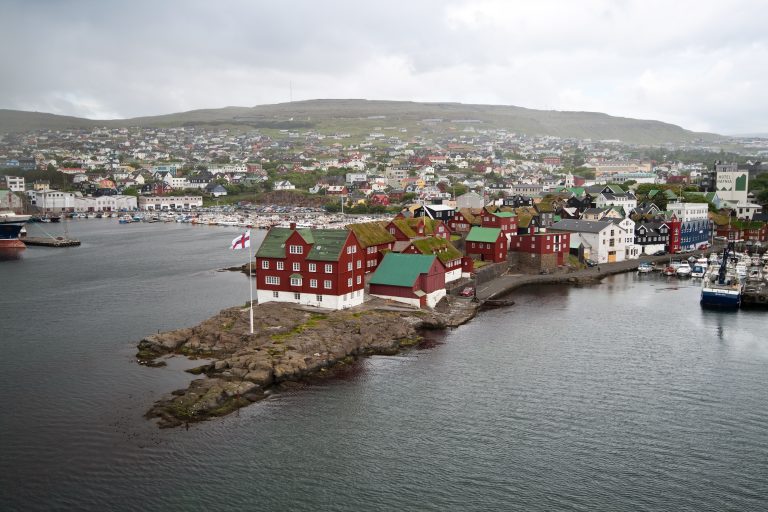
There is a lot to experience in small Tórshavn, usually locally referred to as simply Havn, and the distances mean that you can always walk to most of the attractions. Learn more about hiking in the capital in the Faroe Islands.
Tórshavn, the capital and largest city of the Faroe Islands, has a population of 14,001 (2022), and the greater urban area has a population of 21,078, including the suburbs, and makes it one of the smallest capitals in the world.
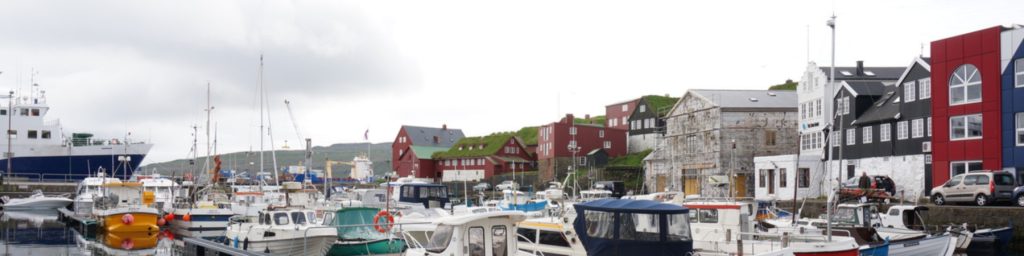
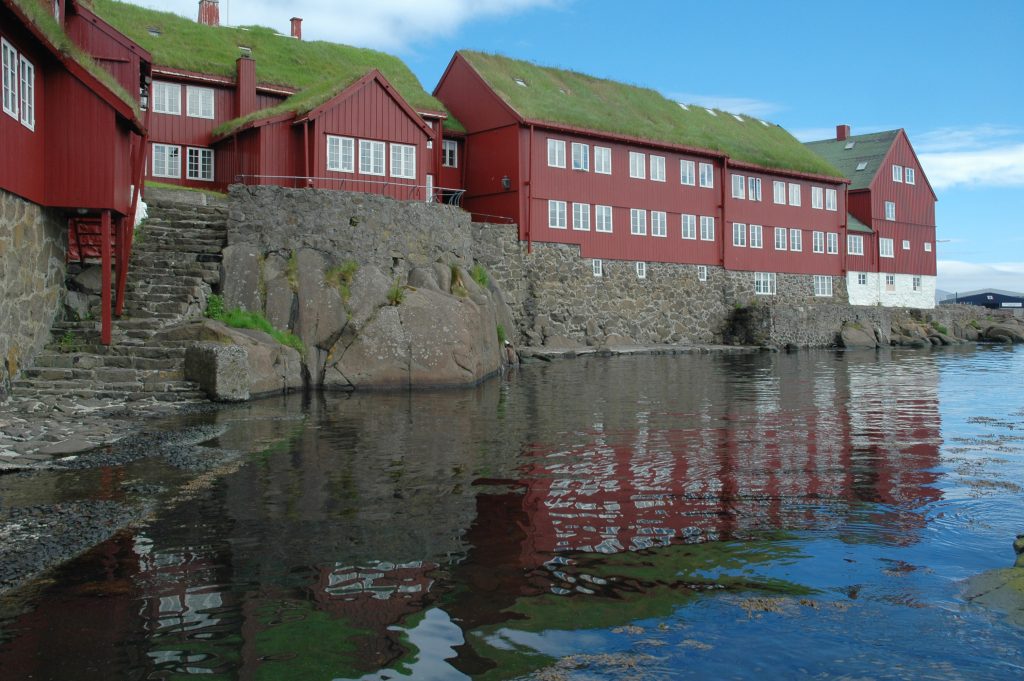
The old town of Tinganes is a special experience. With its grass roofs and government building, the Lighthouse at Skansen, the Viarlundin city park with green plants, trees and benches, Torshavn church, the boat harbor and not least a walk through the city, will undoubtably be a memorable experience.
Tórshavn, the capital and largest city of the Faroe Islands, has a population of 14,001 (2022). Photo: Wikitravel
The parliament on the Tinganes peninsula was established by the Norse (Scandinavians) in AD 850 and became the capital of the Farao Islands and has remained so ever since.
Tórshavn is a cosmopolitan municipality, where history and 21-century modernity meet to create the city’s unique charm and appeal. It is the place where old stories are narrated and new ones are written, where the traditional Faroese ballads are still chanted (and danced to) and contemporary music is composed; a place where the traditional Faroese attire is proudly used on special occasions and designer woolen clothing is created.
The city offers a rich cultural life, impressive art exhibitions, recreational activities, traditional experiences, excellent hotels, and restaurants, all nested in a beautiful landscape. Photo: Wikipedia
A trip to one of the city’s European-style pubs or music bars is also worth taking. Traditional and international cuisines satisfy a variety of tastes. Feel free to also take a look at the many funny statues that can be found scattered around the city. The city offers a rich cultural life, impressive art exhibitions, recreational activities, traditional experiences as well as excellent hotels and restaurants, all nested in a beautiful landscape.
Tórshavn features a subpolar oceanic climate, with strong moderation from the Atlantic Ocean’s Norwegian Current. Because of its cloudiness and the ice-free water surrounding Tórshavn, its winter temperatures are exceptionally mild for such a northerly location, with winter daytime temperatures usually oscillating around 6 °C (43 °F). However, summer temperatures are much lower than those found in continental Scandinavia on similar latitudes, and barely exceed 13 °C (55 °F) in the warmest month.
You are never far from the “wilderness” on the Faroe Islands, not even in Torshavn. Travel to Svarifossur and enjoy the beautiful waterfall, wildlife, and fresh air. The small but beautiful waterfall is only two kilometers up from the harbor and is today part of the city. The area is protected and used as a hiking area by the locals. Geese, horses and of course sheep graze in the area.
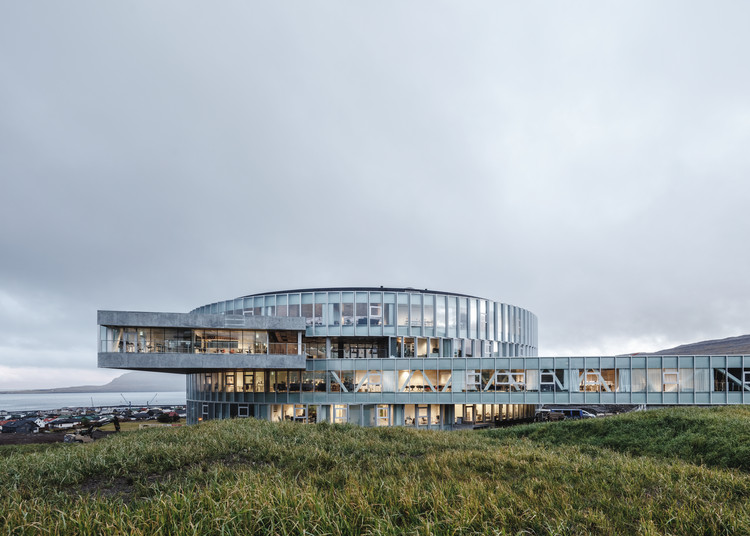
Glasir – Thorshavn’s College. Photo by Rasmus Hjortshøj
Public transportation in Tórshavn is free of charge and the city buses have free Wi-Fi. The twin goal of this initiative was to reduce traffic in the town’s center and lower fuel oil use and CO2 emissions. As a result, Tórshavn Municipality received the national Faroese Environmental Award in June 2008 for having sponsored the best event designed to promote environmental protection, sustainable development, and sustainable tourism.
Hiking in the Capital in the Faroe Islands, written by Tor Kjolberg
Scandinavia continues to draw tourists from around the globe. This shouldn’t be surprising, given its combination of rich culture and epic natural landscapes. Aside from these obvious draws, the region is also making it practical for a more diverse range of tourists to visit. This is through a continued commitment to accessibility. Learn more about touring Scandinavian countries with a disability – it’s an accessible region.
The changes being made here are the result of key public and private collaborations. In essence, Scandinavian businesses and governments recognize the provision of accessible options as a human right. The result is that more facilities and resources are available to people that live with a range of challenges.
So, what should you know about touring Scandinavia with a disability? Let’s look at a few key aspects and how to make the most out of them.
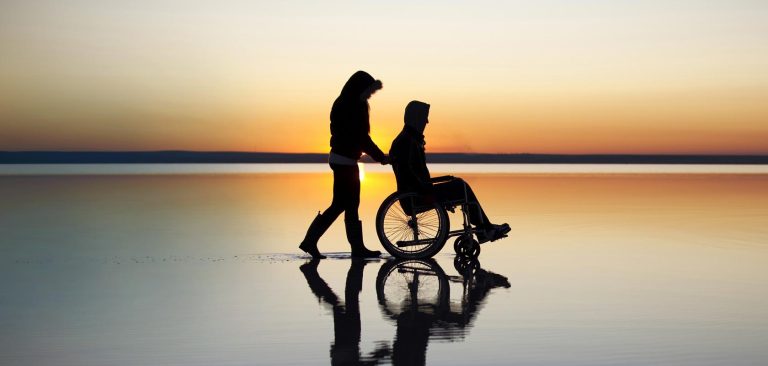
Scandinavian countries are often considered to be among the most committed to ensuring visitors and residents alike have equal access to services and experiences. Photo: Nordic council of Ministers
Planning Ahead
Scandinavian countries are often considered to be among the most committed to ensuring visitors and residents alike have equal access to services and experiences. However, it’s important to the success of your tour not to simply assume that resources will always be in place. After all, some historical buildings or areas of outstanding natural beauty may not have had the necessary adjustments made. A little planning before you leave can help you avoid issues.
Research the accessibility of potential Scandinavian accommodations. While many hotels in this part of the world offer specialized rooms and services, it’s important to make certain that these are in line with your individual needs. Some Scandinavian countries have services that can help you narrow down your search in this regard. For instance, in Denmark, there is the God Adgang (Access Denmark) service. This allows visitors to search for accommodation providers that meet high accessibility standards. However, it’s still important to reach out to individual providers if you have less common needs that require additional assistance.
It’s also worth planning your itinerary with your accessibility needs in mind. This doesn’t necessarily mean that you need to forgo spontaneity or adventure. Rather, consider what tools you may need for each part of your trip so you can arrange them beforehand. For instance, in Sweden, some hotels provide assistive technology that allows guests to engage in activities such as horseback riding. Arranging these elements in advance can cut down on the time you spend waiting to obtain them, extending your ability to explore what Scandinavia has to offer.
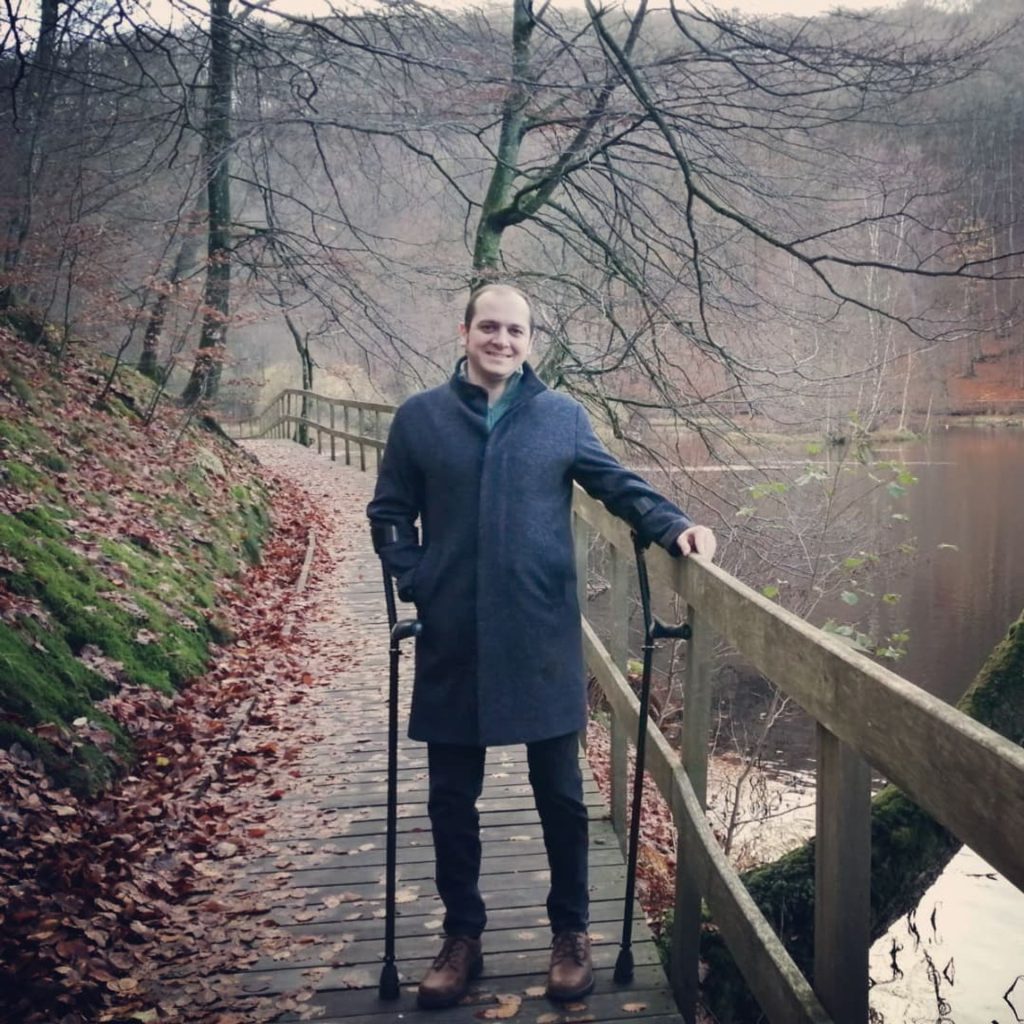
Travel resources throughout Scandinavian regions are often more accessible, as governments have made this a priority. Photo:Nordic Capital
Travel Arrangements
Travel resources throughout Scandinavian regions are often more accessible, as governments have made this a priority. A good example of this is Sweden’s national objective for disability. This places a shared responsibility on government and public agencies to ensure people with disabilities can fully participate in society. Therefore, you’ll usually find that the public transportation facilities that enable you to get around cities, such as trams and buses, will be designed with assistive facilities.
That said, it’s important to make certain that accommodations are in place with key forms of transport. If you’re flying or taking a ship to a Scandinavian country, the provider may have assistive elements for you while you’re on board. However, it may be necessary to seek assistance embarking and disembarking. In most cases, this will be the duty of the individual airlines or shipping operators and it’s important to inform them of your needs ahead of time. Though, Scandinavia has some options for assistance for your travel by train within the region. For instance, train stations in Denmark offer help with getting on and off the trains and handling luggage.
If you’re taking a more independent approach, a road trip touring around the Scandinavian countries can be a great way to see the epic landscape. You should, however, check that your car hire or sales company can provide the right vehicle modifications that suit your specific accessibility needs. This may involve a wheelchair ramp or extra height if you’re using a power wheelchair. It can also be worth researching government grants for modifications beforehand if you live in Europe and plan on retaining a vehicle in the long term. This can also make future trips around Scandinavia more practical.
To get the most out of allthe incredible ctivities in Scndinavia,, it’s important to consider which are either already suited to your needs or have adaptation possibilities. Photo: Study in Sweden
Activity Considerations
Scandinavia certainly has no shortage of incredible activities. To get the most out of these, it’s important to consider which are either already suited to your needs or have adaptation possibilities. For something more relaxed, the Old Town in Stockholm and Denmark’s Amalienborg Palace have both been adjusted to improve overall wheelchair access. You’ll also find that many of the popular museums, such as Stockholm’s ABBA museum, the National Museum of Denmark in Copenhagen, and Oslo’s Nobel Peace Center all keep high standards of accessibility.
If you’re for something a little more active, there are plenty of options here too. Kayaking around the Norwegian fjords and reindeer safari tours in Finland are frequently undertaken by people living with mobility challenges. You can also hire adapted snowmobiles and skis at resorts in both Norway and Sweden.
That said, it is important to understand that each person going on these outdoor activities — whether hiking Norway’s Nigardsbreen glacier or exploring Iceland’s ice caves — is expected to take personal responsibility for their safety. Make certain that your wheelchair or walking aid is designed for the terrain you’ll be visiting. You’ll also need to get your specialized equipment to difficult outdoor locations. If you have a power wheelchair or mobility scooter, investing in a hitch-mounted carrier can help ensure your device can be carried by a range of vehicles. Though, it’s important to make certain this is both measured to fit your device and lightweight enough to avoid going over the vehicle’s tongue weight.
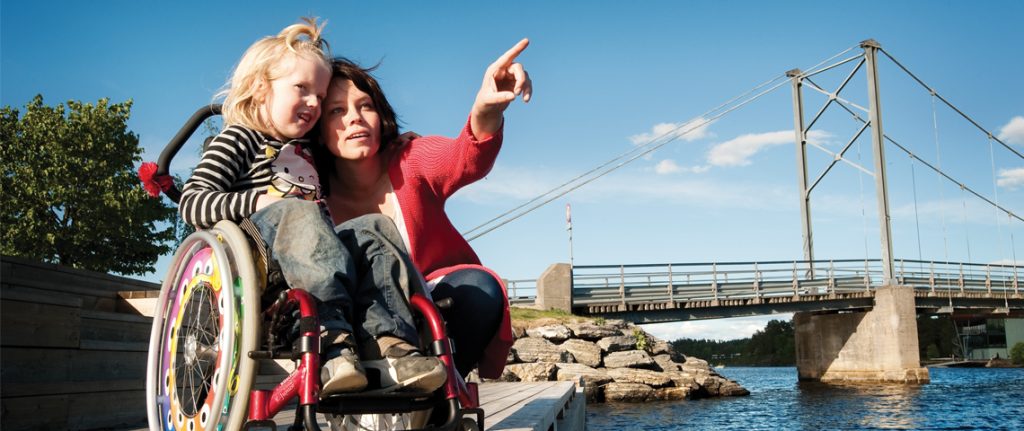
Scandinavian countries continue to be committed to making touring more accessible to visitors. Photo: Norges handikappforbund
Accessible Region: Touring Scandinavian Countries With a Disability – Conclusion
Scandinavian countries continue to be committed to making touring more accessible to visitors. Many hotels have adaptive rooms and other elements available, though it’s important to perform a little research to check if your specific needs are supported. Public transport in Scandinavia is designed to be accessible, but you may need to arrange assistance on planes, ships, and trains. There are some incredible indoor and outdoor activities available, too. Nevertheless, it’s important to ensure you can gain and utilize adaptive equipment. With a little additional planning beforehand, you can make the most of what Scandinavia has to offer.
Ainsley Lawrence
Touring Scandinavian Countries With a Disability, written dedicatedly for Daily Scandinavian by Ainsley Lawrence. Ainsley is a freelance writer from the Pacific Northwest. She is interested in better living through technology and education. She is frequently lost in a good book.
South Jutland has some of the most patriotic Danes in the country, particularly the generations who remember the area when it was officially part of Germany’s Schleswig duchy from 1864 to 1920.
Kolding was a border town on the Danish side at the time, and historical sights abound. Of particular interest are the remains of Koldinghus Slot, a castle built in 1268, and Trapholt, with a fine collection of modern art.
Driving south 15km (9 miles), the Danish Moravian town of Christanfeld is famous for its scrumptious honey cakes. Further south, close to the German border, Sønderborg is a striking town on Als Island, with a colorful harbor and the mighty Sønderborg Slot, a fortress built around 1100.
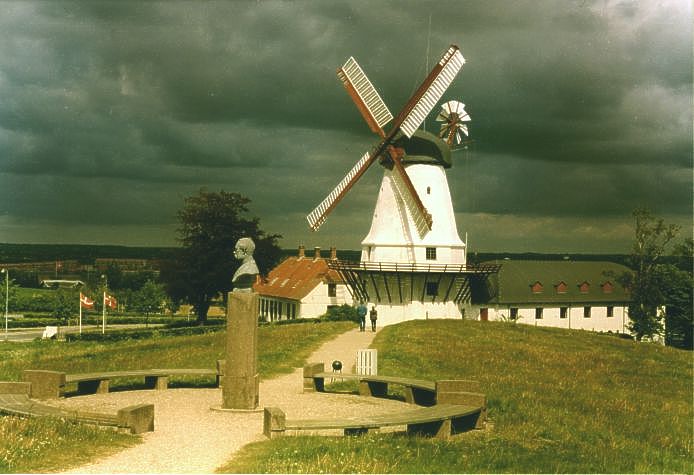
Just to the west, Dybbøl was a key battlefield in the 1864 war with Germany; the Danish army suffered a huge defeat. Dybbøl Mill, restored and painted white, is now a national historic park and its Dybbøl Banke history center, dedicated to the battle, is open to the public.
Dybbøl mill. Photo: Wikipedia.
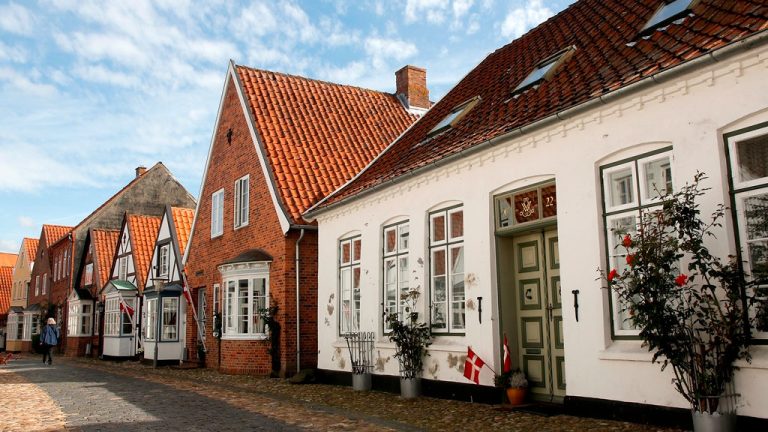
On the western side of south Jutland is Tønder, a lace-making center in the 17th century, documented in Tønder Museum. Tønder has attractive 17th– and 18th-century houses, many with distinctive painted doorways, and hosts Denmark’s biggest folk festival at the end of August at Møgeltønder, 3km (2 miles) to the west. The village street is lined with lime trees.
Schackenberg Slot is home to Prince Joachim (fourth in succession) and his second wife, Princess Marie, who he married in May 2008. The couple have two children, Count Henrik and Countess Athena. They no longer hold a princely title. The prince expressed his sadness at his mother’s decision to make that change.
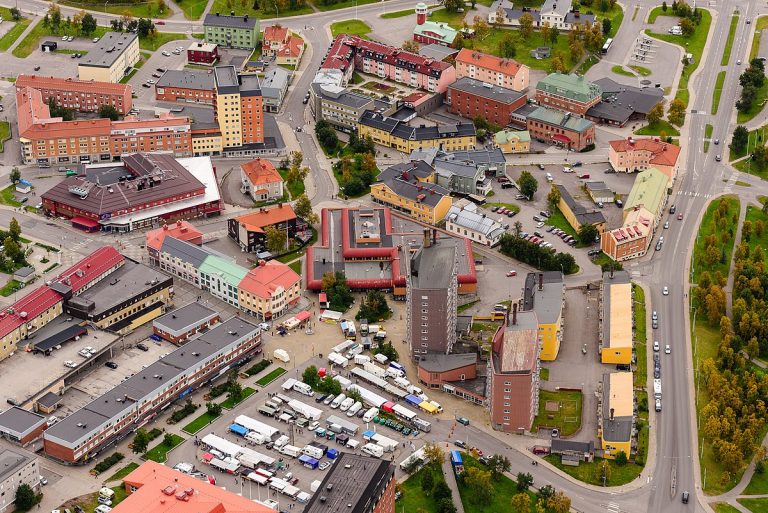
The northernmost town in Sweden, Kiruna, is being relocated approximately two miles to the east because of the risk posed by expanding mining operations. The town is on the move, building by building. Learn more about the Swedish mining town on the move.
Since Kiruna was first settled in the 1800s, the community has in fact been settled on top of its iron ore mine and has become the largest underground iron ore mine in the world. Rather than shutter the mine, in 2018, the state-owned mining company LKAB paid 22.3 billion Swedish krona (or about $2 billion), to move the entire town. LKAB is producing 80% of the EU’s supply.
The old, cozy terracotta-colored church was once voted the most beautiful building in the country. Photo: Expedia
LKAB’s first managing director Hjalmar Lundbohm founded Kiruna adjacent to the mine. There was logic behind this location, as the nearby mountains provided protection from Arctic winds. What would have been his thoughts if he had known that 100 years later, the only way to continue the lucrative operations would be to relocate all the buildings above his chosen location for Kiruna?
The old, cozy terracotta-colored church was once voted the most beautiful building in the country. Its fairytale rooftop points is designed to resemble a hut of the indigenous Sami People. The church was inaugurated in 2012 with almost no religious symbols and has been described as “the living room of the community”.
In 2018, the state-owned mining company LKAB paid 22.3 billion Swedish krona (or about $2 billion), to move the entire town. Illustration: White Architects.
The Kiruna clock tower was moved in 2018 and the total Gothic Revival church, one of the largest wooden buildings in Sweden, is slated to be moved by 2026. The entire 600-ton wooden building will be loaded on to trailers and moved to a spot near the local graveyard three kilometers (1.9 miles) east of the old town.
The ratification of the masterplan and LKAB’s investment in Phase 1 marks a significant milestone for Kiruna. It means that the citizens no longer have to put their lives on hold and can start planning their future. Illustration: White Architects.
Altogether, 20 historical or heritage buildings will be moved in the next decade. Kiruna is moving because subsidence from the local iron ore mine is threatening to swallow the town. Cracks have already appeared in the hospital and a school is no longer safe for its pupils. The town has a population of about 18,000.
Some of the buildings will be lifted and relocated while others must be dismantled and reconstructed. In September last year, officials cut the ribbon on Kiruna’s temporary new town center. By 2035, some 6,000 residents will have moved into 3,000 new homes. The move was voted on and approved by the residents.
Altogether, 20 historical or heritage buildings will be moved in the next decade. Illustration: White Architects.
An exhibition at Stockholm’s national center for architecture and design (ArkDes) put the eyes on this rare urban relocation project.
The project will include several phases across a two-decade span, with Gällivare also benefiting from the addition of facilities such as a new sports center and schools.
“People are really affected, both positively and negatively,” says Annika Fredriksson, the CEO of the Swedish Lapland Visitors Board, and added, “It’s hard to get a grip on it. But it’s a vibrant time and a vibrant moment.”
By 2035, some 6,000 residents will have moved into 3,000 new homes. Illustration: White Architects.
Centuries before LKAB began tearing up the earth, Sami people were herding reindeer throughout the Arctic lands. Now they fear that way of life – already threatened by the climate crisis, which is making it harder for reindeer to find their main winter food source, lichen.
LKAB is now aiming to be at the forefront of Europe’s green industrial revolution and drive for autonomy in natural resources, in response to the climate crisis and alarm about Europe’s dependency – often on autocratic foreign governments – on vital metals and minerals.
An exhibition at Stockholm’s national center for architecture and design (ArkDes) put the eyes on this rare urban relocation project. Photo: White Architects.
The first fossil-free sponge iron was produced in 2021, by replacing coal with hydrogen produced from green electricity. In addition, it recently announced that it was sitting on the largest known deposit of rare earth elements in Europe, metals that are vital to produce electric car batteries and wind turbines.
“Sweden is literally a goldmine,” the deputy prime minister, Ebba Busch, who is superintending climate and business, told reporters inside the mine, 500 meters below ground. “Europe needs to learn the lesson, to not be so highly dependent on one single country for gas in the way we were on Russia.”
The Kiruna clock tower was moved in 2018 and the total Gothic Revival church, one of the largest wooden buildings in Sweden is slated to be moved by 2026. Photo: Expedia.
However, Kiruna isn’t the only town in Swedish Lapland on the move. The town of Luleå is the Swedish destination that started this town-moving trend. Back in 1649, the maritime settlement was forced to relocate about six miles closer to the shoreline. It was not mining operations that were the culprit here, but the waters of its bustling harbor became too shallow. The result of a process known as glacial rebound was the reason which moved the community.
After moving homes, businesses, landmarks, and all Kiruna is now ready to welcome back visitors.
Swedish Mining Town on the Move, written by Tor Kjolberg
Feature image (on top): Photo: Kiruna, September 2017 by Wikidata.
Norwegian artist Vanessa Baird is known for her surreal, and sometimes grotesque, tableaus in watercolor and drawing on paper. Learn more about the watercolors of the Norwegian artist.
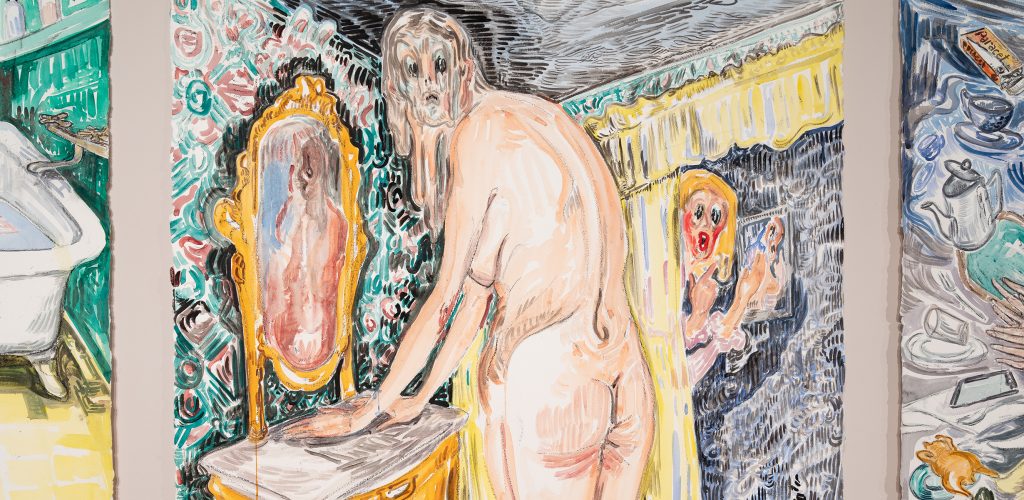
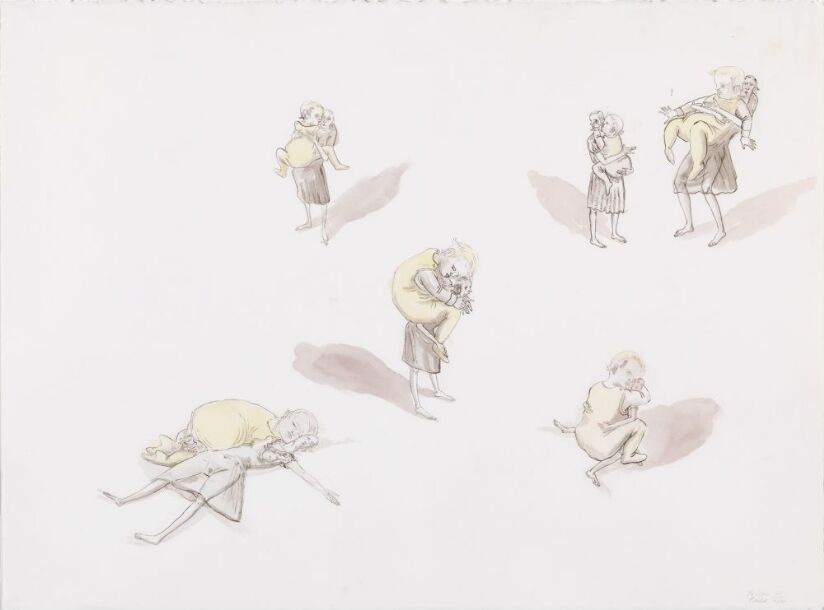
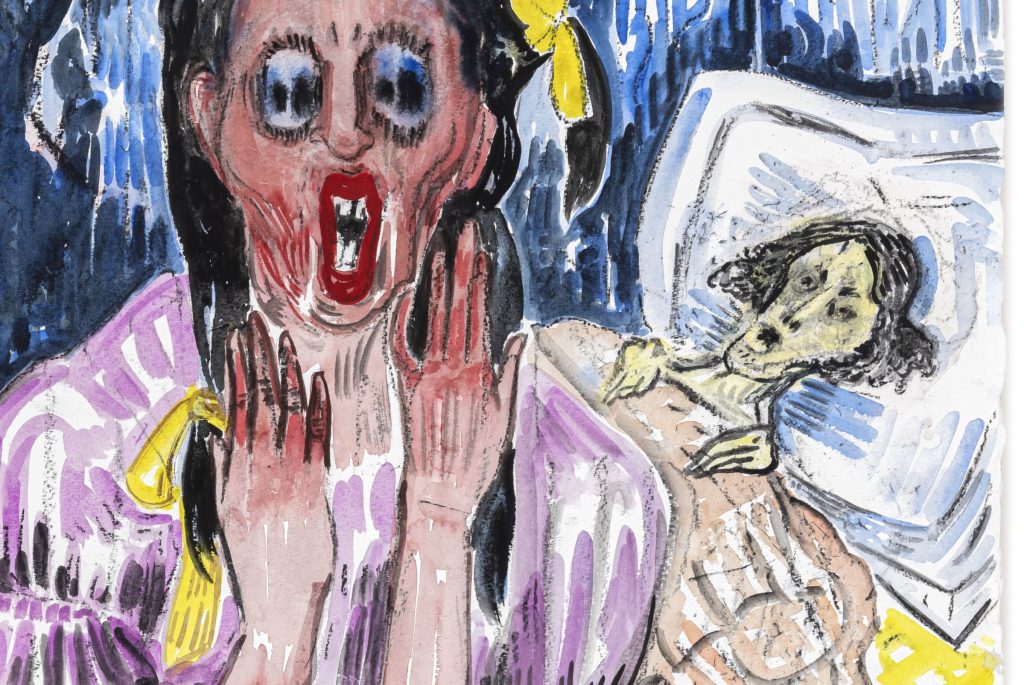
Born and raised in Oslo to a Scottish mother and Norwegian father, Vanessa Baird still lives in her childhood home and has been drawing almost every day for half a century. Most of her art is largely drawn from her everyday family life, often claustrophobic compositions and slightly exaggerated versions of the truth. But she is using humor to make them palatable.
Domestic Nightmares, by Vanessa Baird
Baird depicts a pressure-cooker life, it’s a rackety life. Boiling with intergenerational resentment, annoyance and domestic incident of one sort or another, she is in a way unaccountable.
She says she was pushed reluctantly into art, with coercion from her father and threats from her mother. She is versatile. She has e. g. illustrated Karl Ove Knausgård’s book “Om høsten” (In Autumn).
Vanessa Baird painting purchased by Oslo National Museum
To Baird, drawing comes naturally. “It’s a way of writing, really,” she says. She doesn’t have a studio in her house, or a living room. She works in the space which is available, and there are few limits or boundaries in her art, which refers to her everyday experience, her fantasies, her frustrations and the dynamics of artistic and family life. Her brain also seems to be occupied by the ghosts of Edvard Munch and the playwright Henrik Ibsen.
In 2015, she won the Lorck Schive Art Prize for a series of large scale wall drawings, which she titled “I don’t want to be anywhere, but here I am”.
Originally scheduled for June 2020, the exhibition “I Get Along Without You Very Well” is on display at the Glasgow Women’s Library and draws on a wide range of references from her own lived experience as well as Scandinavian and contemporary folklore and literature, as well as her proud Scottish heritage. Her Mother, Maureen, was born in Glasgow and her grandfather was a medical doctor in the city at the turn of the Century. Vanessa spent a lot of time as a child coming to Scotland for the school holidays. The exhibition in Glasgow runs through 25 February 2023.
The Watercolors of a Norwegian Artist, written by Tor Kjolberg
Feature image (on top): Vanessa Baird at Fine Art, Oslo
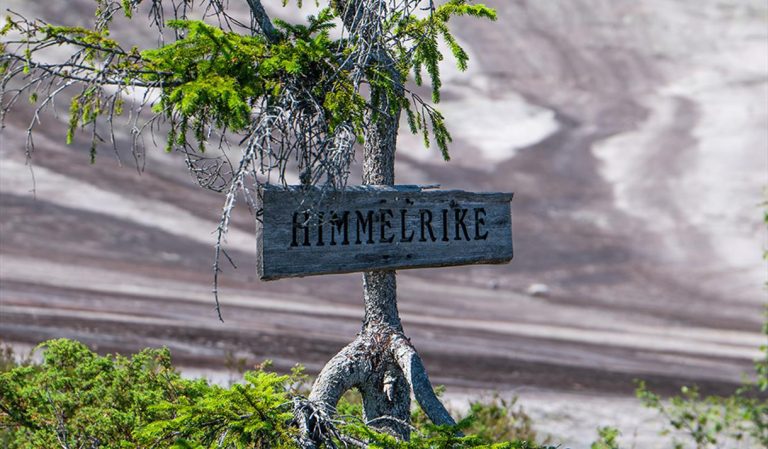
Have you ever visited a new place and felt ‘wow’ about it? For many visitors, it happens at Gautefall – and a place in fact called Himmelrike – Kingdom of Heaven – and it’s easy to find – two kilometers (1.4 miles) only from the popular ski center Gautefall in the municipality of Telemark in Norway.
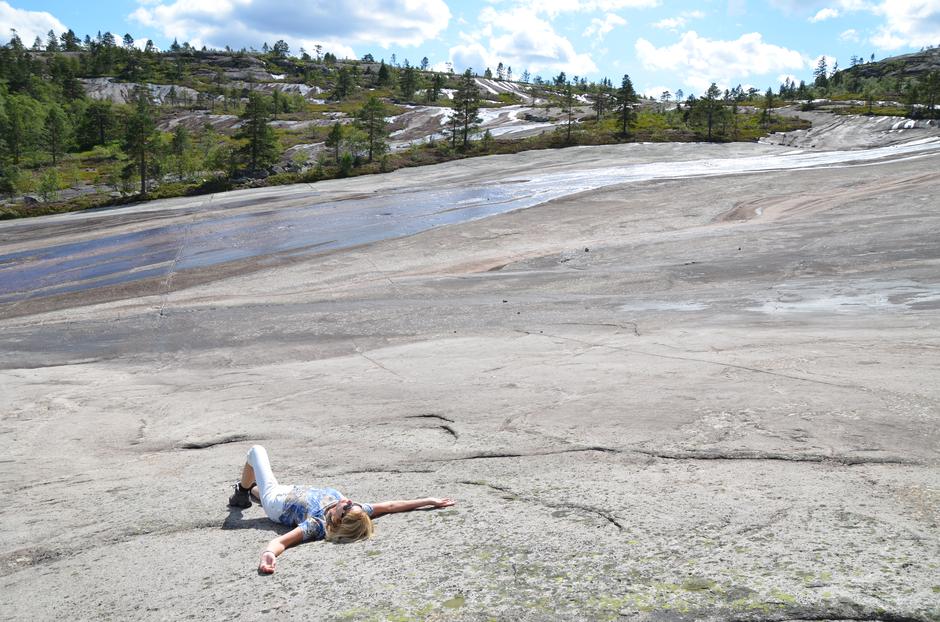
After a slight uphill walk over boulders, heather and paths, the glory is revealed before you. Himmelriket, also known as Jørundskårheia, traverses vegetationless areas, mountains, pine tress groves and heath oases. One of the most popular hiking trails at Gautefallheia is 3.9 km long and is marked by blue poles from the Gautefall Ski Lodge. At the end you will experience large, smooth, glacial granite slopes, a formation created by a glacier during the last ice age. There is also a large, abandoned bear cave located here.
Gautefall is about an hour’s drive from the coastal town of Kragerø
Gautefall may not be as popular as other ski destinations in Norway, but don’t let that fool you. Gautefall is a smaller but beautiful upcoming tourist destination that is worth a visit. You will be surprised by some of the unique things to do and places you can explore at this hidden destination.
Kingdom of Heaven in Norway – more below….
It undeniably feels a little otherworldly when the Kingdom of Heaven appears in all its glory and with all its shades of color. However, the rocky area with the divine name is nature’s own creation. The large open area is reminiscent of a Roman amphi theater in the middle of one of Telemark’s best ski areas.
You will experience large, smooth, glacial granite slopes, a formation created by a glacier during the last ice age. Photo: Visit Telemark
Gautefall Ski Resort is one of the largest alpine centers in Telemark. It is home to 15 slopes, 1 chairlift, 5 surface lifts, and a roll band. It has a total capacity of 7000 people per hour. The terrain park also offers small jumps, big jumps, and various rails. The children park has conveyor belts and a ski school. The ski center connects to 100 km (62 mi.) of cross-country skiing trails. It is popular for winter sports such as Telemark skiing, alpine skiing, snowboarding, slalom skiing, cross-country skiing, as well as hiking.
Gautefall is about an hour’s drive from the coastal town of Kragerø, between the center of Drangedal and Treungen in Nissedal.
The rocky area with the divine name is nature’s own creation. Photo: DNT Telemark
The center of Gautefall consists mostly of vacation homes and cabins. Enjoy this mountainous area whether you like skiing, hiking, fishing, hunting, swimming, or other recreational activities. We have a hunch that if you include this destination in your travel plans, you will be thrilled you did so.
Kingdom of Heaven in Norway, written by Tor Kjolberg