The musicians represented in the trio Gurls are exponents of a new generation in Norwegian music life. The music is so rich and intangible, and the presentation methods so fresh, that the label ‘Norwegian jazz’ is hardly adequate anymore.TheNorwegian jazz trio is remixing European jazz culture.
In her book ‘Remixing European Jazz Culture’ Kristin McGee writes that “GURLS has gained a reputation for both their compelling live performances and for the originality of their newly composed material as represented on their last album ‘Run boy, run’ (Grappa 2018). The compositions and lyrics of this trio, composed primarily by saxophonist Paulsberg, reflect these relatively young musicians’ experience of jazz labor, music desire, media and global culture in the new Europe.”
The compositions and lyrics of this trio, are composed primarily by saxophonist Paulsberg
“Run, boy run” is in fact the trio’s debut album and a playful collection of songs full of humor and irony, addressing gender, sexuality and life as as single, among other subjects. In their performances the three ladies appear as a very original (and funky) unit with their combination of vocals, saxophone and double bass. Each of them is rising stars in the Norwegian jazz scene.
GURLS. Photo by Julia Marie Nagelstad/Norsk Filminstitutt
Hanna Paulsberg, Ellen Andrea Wang and Rohey Taalah have each managed to leave their mark in Norway and abroad, and will most likely tickle our ear canals for decades to come. With the whimsical instrumentation of tenor saxophone, double bass and soul jazz vocals, Gurls does not have particularly tough competition in the market. Paulsberg’s saxophone harmonizes the other two voices to form eight minor triads progressing from tonic to dominant and back to tonic.
The ensemble’s arrangements take full advantage of the unique timbres and colors afforded by no drums, piano, or guitar. Sometimes Paulsberg and Wang sing backup harmonies to Taalah’s main vocals, and other times only one voice casts in harmony with the bass and tenor saxophone. As band leader and composer, Paulsberg fluently adapts her instrument to reconfigure the quintessential and expected ‘jazz voice’ of live instrumental jazz culture.
Rohey Taalah with GURLS at the DnB-stage at Grefsenkollen. The concert was part of Over Oslo and took place on 23. June 2018 in Oslo. ..Lineup:.Ellen Andrea Wang (double bass).Hanna Paulsberg (saxophone).Rohey Taalah (vocal).Elias Tafjord (drums). Photo: Wikipedia
In particular moments, the saxophone momentarily relinquishes its role as the solo instrumental object to become a harmonized and mimetic human voice. At other moments, Taalah adapts her vocal timbres and textures to promote her instrumentalism as established within jazz performance practice.
Singer Rohey Taalah celebrates success in Norway with the soulful jazz of her band Rohey. In Gurls she reveals a remarkably adventurous and challenging side of her talent. Saxophonist Hanna Paulsberg is also making name with her own jazz group and she has previously played with international greats such as Chick Corea, Bugge Wesseltoft and Bobo Stenson. Double bassist and singer Ellen Andrea Wang has already performed at the BIMHUIS with her band Pixel and she has collaborated with, among others, Sting and Manu Katché.
Paulsberg is known for writing songs about boys, also in her other bands, and she likes to talk about them between the songs, live. Just listen to her wonderful jazz hit “Catalan Boy”. So, she is something as rare as an autobiographical singer/songwriter who operates in an instrumental jazz format.
According to JazzFlits ‘Gurls operates in the area between jazz, pop and hip-hop, in songs with an urgency and fierceness that will lift you out of your seat. Gurls makes music that cannot be ignored’.
Ellen Andrea Wang has already performed at the BIMHUIS with her band Pixel and she has collaborated with, among others, Sting and Manu Katché. Photo: Ole B. Steinsvik/Moldejazz
Paulsberg’s solos captures the moody, millennial malaise of her jazz aesthetic when arranged and filtered through Taalah’s lyrical voice, and although Paulsberg exhibits much virtuosity and technical control, her improvisational approach resides an unbridged, indulgent style or an earlier Northern European jazz collectivism.
GURLS is performing at the Molde Jazz Festival in Norway just now.
Norwegian Jazz Trio Remixing European Jazz Culture, written by Tor Kjolberg, inspired by the album ‘Run boy, run’ and the book ‘Remixing European Jazz Culture’ by Kristin McGee.
Feature image on top photographed by Julia Marie Nagelstad/Norsk Filminstitutt.
Stockholm is a city that always has something to surprise you with. Whether it’s a new pizzeria, a gallery, a trendy club, a golf course, or just one of the classic attractions, one thing is clear – you will definitely not be bored there. However, what if suddenly you have a desire to change the scenery and see the other side of Sweden without spending crazy money? Fortunately, we have something to offer you. Learn about 5 perfect travel destinations to go near Stockholm.
Pick up a car rental Stockholm and drive outside the city! Visiting a few notable places off the beaten tourist track will give you a different understanding of the Swedish spirit. In addition, traveling by car will give you the freedom to move you have long dreamed of.
Thus, book a rental car, pack your lunch, and expect incredible adventures. In the meantime, we will tell you about some amazing places within a short drive from Stockholm.
Toro, Nynashamn – 67 km, 55 minutes drive The main feature of the area is the white pebble beach. You can’t walk barefoot on it, as your legs will hurt. However, it looks beautiful, especially when combined with waves, the sea, pine trees, and private villas.
Speaking of waves, this is perhaps the only place in Sweden suitable for surfing. Even on cold days, you can see rare people swinging on the waves. The town comes to life during the warm season, when summer houses are filled with guests from Stockholm and other cities. During the rest of the year, it’s usually quiet and calm, but this is more of an advantage for those who just want to wander among the forest houses, walk along the white pebble beach, and watch the waves. In addition to the beach, there’s also a tiny church, a pier where you can rent a kayak, as well as a couple of cafes and restaurants.
5 Perfect Travel Destinations to Go near Stockholm – read on….
Tiresta National Park, Tyreso
Tiresta National Park, Tyreso – 25 km, 30 minutes drive This national park is suitable for those who like to spend the night in a tent, enjoy a short hike in the mountains, or just take a walk in the forest. The main entrance is available in the village of Tyresta By, so it’s best to start from here. Here you can get all information about hiking trails, travel tips, buy food, and get water.
The village itself also deserves attention – the 18th-century buildings have been preserved in their original form. Hiking and camping in the park are free of charge. If you wish, you can order a basic tour, which costs € 6 per person.
The park really has something to see, including 8 lakes, 55 kilometers of hiking trails of varying length and complexity, and a wide variety of animals and birds. If you want to stay longer, book a room at a local hotel.
Artipelag is one of the largest contemporary art centers in Sweden. Photo: statflickr.com
Artipelag, Gustavsberg – 23 km, 25 minutes drive Artipelag is one of the largest contemporary art centers in Sweden. Its main feature is a kind of fusion of art and nature. The gallery is located on the rocks, surrounded on one side by a forest, and on the other by a bay.
The top of the mountain overlooks the bay, while the water in the bay looks clean and clear. Naturally, you can swim there or sunbathe on the bedspreads right on the rocks when the weather allows. Also, you will find a café with a spacious terrace on the spot.
The Arts Center often hosts exhibitions related to nature or climate, but topics such as fashion or architecture also appear from time to time. Also, the whole area is full of large and small sculptures and installations.
Solna is a huge area located on the north side of Stockholm. Photo: Unsplash
Solna – 8 km, 10 minutes drive Solna is a huge area located on the north side of Stockholm. Basically, it represents residential buildings, but, apart from that, you can find several interesting objects there.
Firstly, here is the Mall of Scandinavia, the second largest shopping center in Scandinavia. Nothing fancy, but it’s a great option if you want to enjoy shopping. It houses most of the popular brands, both local and foreign, and many places to eat and have fun.
Nature lovers can visit Brunnsviken Lake and Haga Park, located near the mall. The surrounding area offers to see almost any landscape, including cliffs, cliffs, forests, parks, and beaches. Also, the park hosts the Haga Palace, built in the 19th century, and two museums – a park museum and a museum of zoology.
Vaxholm is part of the Stockholm archipelago. Photo: Erwan Hesry/Unsplash
Vaxholm – 36 km, 35 minutes drive Vaxholm is part of the Stockholm archipelago. This is a very cozy town surrounded by water. Its main feature is wooden houses, which are usually empty during the cold season and filled with life in summer.
Vaxholm exudes its own special atmosphere, which resembles a resort town, placed in Scandinavian nature. And on a tiny island nearby is the Vaxholm fortress, built in the 16th century. At one time, the fortress served to protect Stockholm, and now it’s a hotel and a museum. Unfortunately, you won’t be able to get to the island for free unless, of course, you have booked a hotel room. However, you can be satisfied with the breathtaking view of the fortress from the bank of Vaxholm.
As you can see, the surroundings of the Swedish capital hide many travel gems. Thus, you can greatly diversify your trip if you pick up a rental car and go to explore the area around Stockholm!
5 Perfect Travel Destinations to Go Near Stockholm is a promotional article from 14cars.com
People travel from all over the world to go fishing in Norway. The country has incredible mountain peaks and amazing rivers where you will find all different types of fish including pike, perch, and of course, trout. If you’re planning a fishing trip to Norway, here’s what you need to know.
Fishing season During the summer months, people come from all over to hike, camp and bike around this unique country. Many of these tourists travel with a fishing rod because there are lots of great places to catch fish. The fishing season begins at the beginning of May. Most people who enjoy fishing visit Hardanger, while others head for the Hardangervidda.
Although tourists don’t need a fishing license to fish in Norway, it’s of vital importance that you buy a fishing permit in the area you plan to fish in. Here from sea fishing in northern Norway.
Finding accommodation in these areas isn’t hard. There are lots of hotels and tourist lodges, but if you enjoy the great outdoors, you might want to consider camping. Preparation is key to having a good time in Norway, so if you plan on camping, invest in quality travel gear before you arrive. You will find lots of quality camping gear available on the internet on sites like Cortazu.
Planning a fishing trip to Norway? Read on.
Fishing license Although tourists don’t need a fishing license to fish in Norway, it’s of vital importance that you buy a fishing permit in the area you plan to fish in. If you want to fish for certain types of fish like Salmon, you must first buy a national permit. Tourists can purchase a national permit on the Norwegian Environment Agency’s official site. If you didn’t buy the national permit, speak to local land owners or organizations in the area. They might be able to issue a permit for the area you plan to fish in.
If you are hoping to export some of the fish you caught while visiting Norway, keep in mind that you can only take 15kg out of the country with you.
If you don’t want to travel with fishing gear, some tour companies have fishing rods for rent. Photo: Femund Engerdal/Visit Norway
You don’t need experience If you are new to the world of fishing, Norway is a great place to start. Whether you have been fishing for years or you are a total ‘newbie’ to the popular activity, you should consider hiring a tour guide.
There are several fishing tour companies operating in Norway. Over the pandemic, most of these companies struggled to keep their businesses afloat, but with strict Covid-19 regulations being lifted, its business as usual.
With a local guide by your side, you will learn the different techniques needed to catch fish in Norway. They will show you unique fishing spots and the different type of bait needed to catch fish.
Fishing equipment explained in Lofoten. Photo: Aurora Stenersen/Visit Norway
Not all tour guides in Norway speak fluent English, but most do. Consider contacting the tour agency before arriving in Norway for more information. While fishing, don’t rely on Google translate to communicate with your tour guide. In many secluded locations in Norway, connecting to the internet won’t be easy. Most tour companies have an official website, and an online presence on popular social media platforms. If you don’t want to travel with fishing gear, some tour companies have fishing rods for rent.
Planning a fishing trip to Norway? Read on.
Tips Tourists are advised to wear a lifejacket at all times while on a boat while fishing. Consider bringing a bag for trash with you, because the locals want to keep their country clean. Under no circumstances should you litter while visiting Norway.
Sea fishing in Norway
The weather can change in an instant, so make sure that you prepare your equipment and clothes before going fishing. The government encourages tourists to treat both wildlife and fish with respect.
If you sustain an injury while fishing in Norway, finding a medical professional won’t be easy. Tourists are advised to know first aid before they begin a fishing trip.
It’s against the law to fish for protected species. In certain areas, like Oslofjord, fishing for cod is banned throughout the year. It’s also against the law for international tourists to sell what they have caught while visiting the country.
Research online Planing a fishing trip to Norway has never been easier thanks to the world wide web. You’ll find lots of useful content online to ensure your trip goes smoothly. Consider reading reviews about the different fishing tour agencies in your desired travel destination, and see what other travelers have to say about the areas they have visited on forums and travel websites. Honest reviews posted by tourists that have hired a fishing tour agency in Norway will give you an insight into the different tours available, the cost of the tour, what type of clothes and fishing equipment are needed, and the type of fish you can catch.
There are fishing apps available for those wanting to go fishing in Norway. These apps are free to download, and they are available in different languages including Russian and English.
Planning a Fishing Trip to Norway? Here’s what you need to know is a promotional article from Cortazu.
The Danish peninsula Jutland has captured the imagination of both painters and holiday makers, while music-lovers head for Århus, ‘the world’s smallest big city’. Learn more about the dune-fringed shores of Danish Jutland.
Jutland (Jylland) is the Danish Peninsula that juts up above Germany, the “mainland” in this nation of islands. When Copenhageners talk about the provinces, they usually mean Jutland. Nuggets of Denmark’s oldest and richest history – prehistoric bog bodies and Viking runestones – are to be found here, as well as youthful attractions, like Legoland. Jutland’s rolling hills are crisscrossed with rivers, patched with forests, crusted with castles and edged in fine sandy beaches.
The pointed spire of the Cathedral of St. Clement (Domkirken) is 93 meters (316ft) high. Photo: Store danske lex
Jutland’s capital city Århus (population 336,411 in 2017), Denmark’s second largest city, is a lively university town known for its music, theatre, ballet, art and cafés, and its Aarhus Festival (26 August – 4 Sept, 2022). The pointed spire of the Cathedral of St. Clement (Domkirken) is 93 meters (316ft) high and offers a superb view from its belfry. Nearby are the winding, cobblestone streets of the Latin Quarter, with quirky boutiques and trendy cafés and restaurants.
ARoS Århus Art Museum (Kunstmuseum) gives and overview of Danish art from the 18th century to the present. Photo: Anders Trærup/Aros
ARoS Århus Art Museum (Kunstmuseum) gives and overview of Danish art from the 18th century to the present.
The City Hall (Rådhus) was built in 1941, and designed by Arne Jacobsen, one of Denmark’s most notable architects and designers.
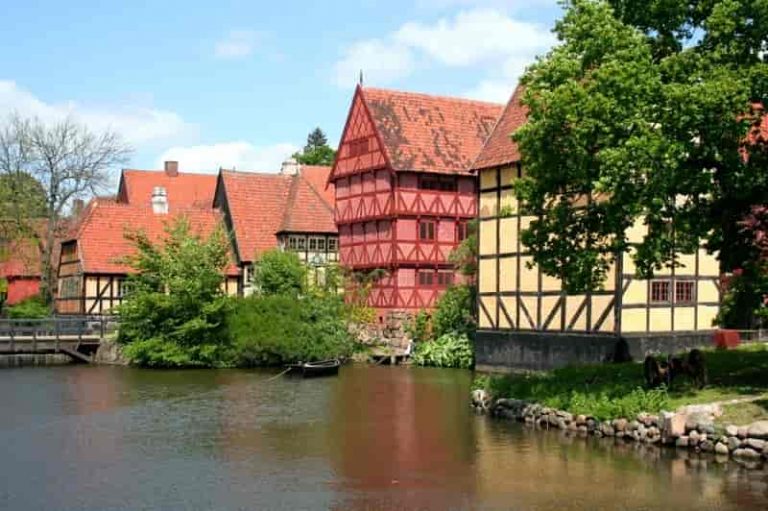
Den Gamle By (Old Town) is an open-air, national museum of culture and history with reconstructions of 75 Danish town buildings – with merchant and artisan houses and workshops, gardens, shops, stalls, streets and alleys.
The City Hall (Rådhus) was built in 1941, and designed by Arne Jacobsen. Photo: Wikimedia Commons
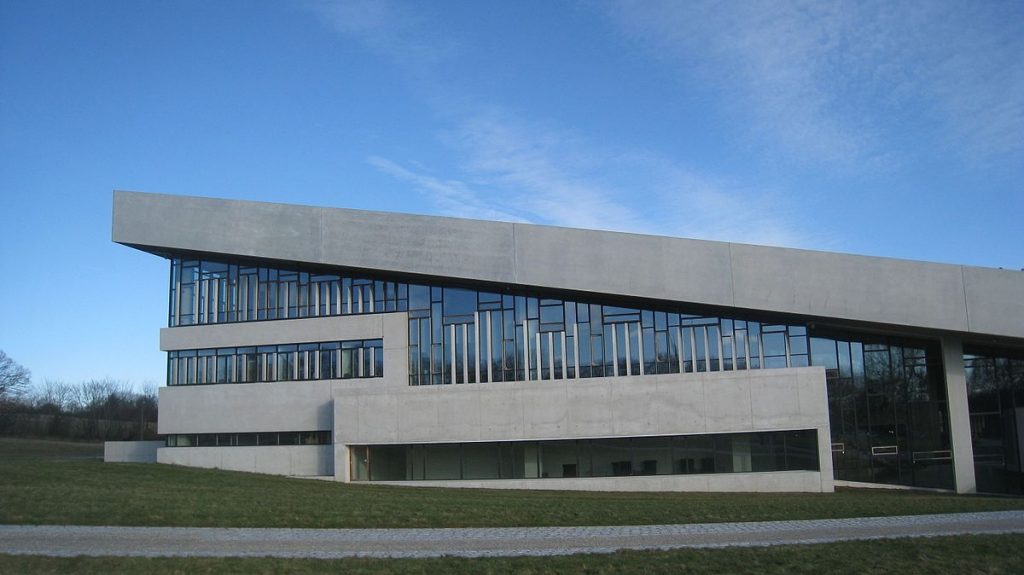
One of the best museum exhibits in Denmark is the 2,000-year-old Grauballe Man at the Museum of Prehistory (Moesgård Museum) at Moesgård, 9km (5 miles) south of Århus. To stand centimeters from the twisted body of this Iron Age Man, found perfectly preserved in a peat bog in 1952, is a chilling experience.
The new building at Moesgård Museu,. Photo: Wikipedia
The ruins of Kalø Slot, built in 1313, stand on a small island north of Århus bay, linked to the island by a causeway. The nearby hills of Mols Bjerge where Vikings relics abound in beautiful nature, are well worth a visit. Several artists have set up shop on the pretty Djursland peninsula.
Main attractions: Århus
Grauballe Man – Moesgård Museum
Legoland
Ribe
Langholm Høje
Jelling stones
Blåvands Huk
Aalborg
Skagen peninsula and the Grenen Headland
The Dune-Fringed Shores of Danish Jutland, written by Tor Kjolberg
Feature image (on top): Old Town Århus. Photo: Store norske leksikon.
The ceramics company Kähler was founded by the Danish potter Herman J. Kähler in the town of Næstvedt on the island of Zealandin 1839. Up until 1974 the company was owned by the Kähler family but since then changed hands many times before landing in the hands of architect Frantz Longhi. Learn more about the universe of the Danish ceramics design company.
For many years, Kähler was very much a one-man-show, making simple kitchenware and heating stoves. Joachim’s son Herman A, Kähler attended the Technical School in Copenhagen (1864–65) while studying privately under Herman Wilhelm Bissen. Thereafter he travelled to Germany, Switzerland and Paris, returning to Næstved at the end of 1867.
Together with his younger brother Carl Frederik Kähler took over the family business in 1872 and began searching for new and innovative ceramics techniques.
Carl became responsible for producing faience while Herman specialized in manufacturing tiled stoves. In 1875, after Carl withdrew and the original factory had burnt down, Herman built a new factory on the town’s outskirts where he produced both stoves and pottery. Inspired by Vilhelm Klein, Herman A. Kähler started to experiment with more appealing designs with glazed finishes. In 1886, he succeeded in attracting the artists H. A. Brendekilde, L. A. Ring and Carl O. J. Lund.
Kähler Kontur vase
As a result of his collaboration with the artist Vilhelm Klein, Kähler became interested in obtaining the red lustre glaze known as maiolica which had been produced in Gubbio, Italy, in the 16th century. In 1888 he developed the now-famous “Kähler red,” a ruby red lustre glaze in the maiolica-tradition. This launched him and the company to global recognition when he showed at the Great Nordic Exhibition in Copenhagen, followed by the World Expo in Paris in 1889. From then on, Kähler was cemented as a ceramics brand that could not only make basic home items like tiles and kitchenware, but also ceramic art.
Bowl with ducks, designed by Karl Hansen Reistrup. Uranium
Kähler became known for making art, but in a democratic and affordable way. This is also what’s kept them contemporary.
The designer Karl Hansen Reistrup (1863–1929) joined the enterprise and assisted in the production of finely formed, artistically decorated items, especially vases.
Kähler was sold to Næstved Municipality in 1974. Though today the ceramics are no longer made in Næstved, the brand is still dear to the city’s heart. The Næstved Museum now has the world’s largest collection of historical Kähler pieces (although they are not yet on display).
Kähler went through several hands before seriously relaunching in 2007. The brand was revitalized, most notably with the introduction of the Omaggio vase, a collaboration between Stilleben studio and Kähler, in 2007.
In 2015, the Hammershøi collection was launched. Created by Norwegian designer Hans Christian Bauer, the silhouette is inspired by the work of Svend Hammershøi. It’s both minimalist and engaging, with an all-over ridged pattern that makes it pleasingly tactile, while the shiny glaze keeps it sleek and modern.
Rosendahl Design Group bought Kähler in 2018 and the ceramics company has continued to grow, bringing in more design collaborations, such as the recent partnership with Turi Heisselberg Pedersen – called the Kontur vase – that was available at Illums Bolighus from October 2019. Kähler continues to give customers high levels of craftsmanship at reasonable prices, while offering a chance to own ceramics by innovative artists.
The Universe of a Danish Ceramics Design Company, written by Tor Kjolberg
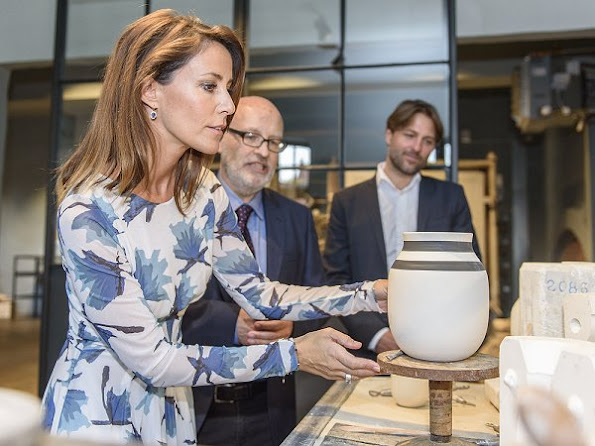
Feature image (on top): On September 27, 2016, Princess Marie of Denmark attended the opening ceremony of old ceramic art company Kähler’s historic ceramics factory at Kähler in Naestved, Denmark. Kähler was founded in 1839 and the exhibition has many of the first designs and production methods on display. Photo: newmyroyals.com
Tjörn is known as the Swedish Island of Art. But the country’s sixth largest island is just as good for cycling, beach life, seafood and enjoyment of life.
Like the rest of Bohuslän during the summer, the island hosts tourists from around Sweden, Norway, Denmark, and Germany. However, what many visitors don’t know is that a little further inland in Pilane resides a very unique sculpture park. This Swedish sculpture park is a unique combination of ancient ruins and modern art. You do not need a map to find Pilane. Just follow the coast north and look for the big white head. That is Anna by the Spanish artist Jaume Plensa, 14 meters high, from plinth to hairline (photo on top). And she is a beauty! Her timeless face is turned to the sea while the seasons flow around her. It is one of the world’s largest and most beautiful works of art.
At Tjörn one of Sweden’s most beautiful landscapes opens up before you.
The open-air museum has several dozen sculptures spread over eight hectares, but there is no doubt about which of them gets the most attention. However, the park features a beautiful heath with undulating terrain. Around the park are around 90 different historical sites from the Iron Age such as stone circles, burial mounds, and cairns.
Together with the Nordic Watercolor Museum in Skärshamn, Pilane has made art a trademark for Tjörn.
The Nordic Watercolor Museum in Skärshamn. Photo: Anders A. Rena
From the jetty at the Nordic Watercolor Museum, you can dip your paintbrush in water while you dip your toes in the sea. From the cliffs of the historic landscape of Sculpture in Pilane, you can gaze out over the sea with the sculpture Anna by your side. Across the water stands Pater Noster, the king of lighthouses, where you have a world-class design hotel that offers you a home on the horizon.
With its magical location by the sea on the outskirts of Skärhamn, the Nordic Watercolour Museum has an atmosphere of clarity and creativity. Since the museum opened in 2000, it has hosted a series of world class international exhibitions. Among the exhibitors have been Salvador Dali, Bill Viola, Louise Bourgeois and Swedish favourites such as Elsa Beskow, Anders Zorn and Lars Lerin.
Nordic Watercolor Museum. Photo: Jonas Ingman
Hiking and cycling between your art experiences
From the Nordic Watercolour Museum in Skärhamn, way markers lead you past fishing boats and boathouses, through the charming streets of this coastal community. As you leave the village one of Sweden’s most beautiful landscapes opens up before you. The trail takes you on winding paths, over smooth coastal rocks, through wind bent pine forests, and across sea strand meadows, all the way to Sculpture in Pilane.
Paddle your way to art through the world’s most beautiful archipelago Rent your kayak at Kajaktiv in Bleket. From here, paddle north towards Skärhamn, past salt-rimed boathouses, cobs, and skerries, to land on the beach outside the Nordic Watercolour Museum. In calm weather there is also the opportunity to paddle with a guide from Kajaktiv to the small island of Hamneskär, home of the Pater Noster lighthouse.
The Pater Noster lighthouse The Pater Noster lighthouse on the island of Hamneskär guided sailors for over 150 years. The masterful architecture of this legendary lighthouse is now a home on the horizon. The solitary lighthouse keeper’s residence is one of the world’s foremost design hotels, and you are welcome!
The Swedish Island of Art, written by Tor Kjolberg
Planning to visit the Norwegian capital? You’re Welcome! Oslo is beautiful in winter when skiing and sledding are just minutes away from downtown, and the National Theatre opens the Christmas market. However, the city really comes alive in the summer, when the many green areas around it become a mecca for BBQ grills and outdoor activities. Also, the city is perfect for day trips, because you will find many places to go and things to see in the area. Here are5 Outstanding Day Trips to Enjoy in Oslo.
Yes, Oslo is a great starting point for leisure outings. We bring you five outstanding trip ideas. All you need to turn them into reality is a good mood and a hire car at hand. You can pick up a car hire Oslo Airport right after your arrival, which will be the best way to hit the road. To start with, consider the following destinations within driving distance of the Norwegian capital.
Oslomarka is an impressive forested area that stretches around Oslo. Photo: Pixabay
Oslomarka With an area of 1,700 square kilometers, Oslomarka is an impressive forested area that stretches around Oslo. It’s only 20 minutes drive from the city centre, making it a favorite getaway for locals and tourists alike.
In the summer, you can have picnics, bike rides, and book small cottages for the weekend. By the way, there’s almost no tourist infrastructure in the forest park zone, except for small cafes and restaurants. Therefore, you can enjoy wildlife at every turn.
Oslomarka is home to beaver, roe deer, moose, and even lynx. Also, you will find more than 500 lakes with excellent fishing and swimming opportunities in the area.
Sognsvann Lake is a perfect choice for those who want to relax closer to nature and away from the bustle of the city. Photo: Visit Oslo
Sognsvann Lake Sognsvann Lake is a perfect choice for those who want to relax closer to nature and away from the bustle of the city, but at the same time not go far from Oslo. The lake is just three kilometers north of the capital, and getting to it by car is not difficult.
Lake Sognsvann has plenty to do all year round. In summer, visit the well-equipped beaches, which even have special places for the disabled. In winter, go spearfishing. Also, the lake turns into a large skating rink during the cold season.
Nearby, you will find a grocery store with everything you need for a snack, picnic, or barbecue. Parking is also not a problem, as free spaces are available in several places around the lake.
Holidays on Sognsvann Lake offer a perfect opportunity to get out into nature and admire the famous views in Norway! Artists, writers, and simply all those who want to take a break from city life love to spend their days there.
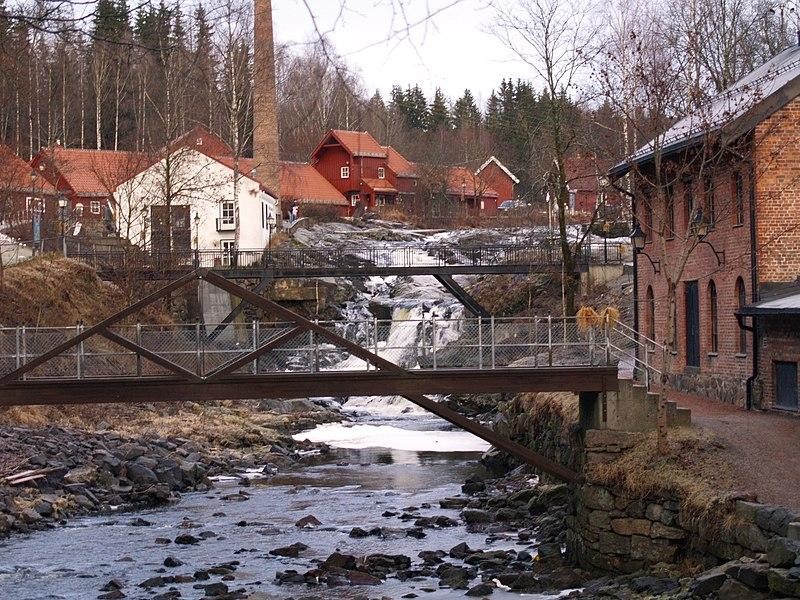
At Bærums Verk, everything reminds us of the past. Photo: Wikimedia Commons.
Bærum Verk This small village near Oslo has a rich history. Bærums Verk was founded at the very beginning of the 17th century and developed thanks to the steel industry. Numerous workshops and forges, factories, and other industrial buildings, which now also house shops and residential premises – everything reminds us of the past.
Today, Bærums Verk doesn’t look like an industrial centre at all. Instead, it’s a cozy village surrounded by fantastic natural beauty. The reason for such popularity was the surprisingly successful combination of excellent cuisine and the peace and tranquility of a small picturesque village. The central streets of the village offer many private shops where you can buy unique souvenirs from Norway.
The trip to Bærums Verk by car will last about half an hour. Please note that entry into the centre is prohibited – almost all streets are pedestrian zones. However, the village is small and you can easily get around all the local sights on foot.
Drobak is one of the few places where any visitor feels like in a fairy tale. Photo: c.pxhere.com
Drøbak Drøbak is one of the few places where any visitor feels like in a fairy tale. This small town is in danger of becoming one of your favorite destinations not only in Norway but in the world.
It would seem that Drøbak’s small houses were created not for people, but for fairy-tale characters. Building in the city centre is prohibited by law, so all the houses look the same as they did a century ago. So, you won’t find houses more than three stories in height. Also, the locals paid a lot of attention to details – flower pots on the windows, carved signs, and small figurines adorn the facades of houses.
Drøbak is also famous for its natural beauty as it stands on the banks of the Oslo Fjord. In summer, a convenient free beach opens on the shore of the city. This is a great place for swimming and relaxing.
The most successful day of the week for a trip to Drøbak is Saturday when a fair appears on the main street of the city. Locals sell handicrafts there, from clothes and shoes to wicker baskets.
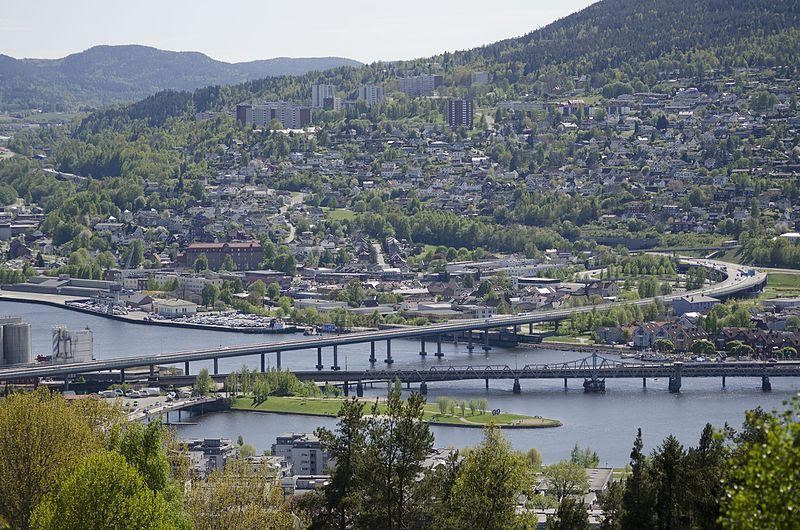
Drammen Immersed in green forests, the city is located at the confluence of the Dramsfjord and the Dramselva River. Many tourists come there exactly to admire a picturesque area.
Drammen is the birthplace of the Vikings – from here they set off on their famous campaigns. Later, merchants from Holland settled in the city and organized the production of ships and the timber trade. Also, they founded the city in 1811.
Today, Drammen is a major port with plenty of interesting places. The main attractions include Mount Bragernes with a magnificent view of the city and its surroundings, Bragernes Kirke, Marienlyst Manor, surrounded by a picturesque park, and Kjosterdjuve Canyon.
In general, visiting sights outside the city is a great way to dilute your trip to the Norwegian capital with new impressions. We have covered the most popular spots, but you can find many other attractions within driving distance of Oslo. The main condition is to have a hire car at hand.
5 Outstanding Day Trips to Enjoy in Oslo is a promotional article from Rental24h
At Gunillaberg in Småland, Sweden, the Danish floral artist Tage Andersen has collected the contrasts of his life. It has become Sweden’s Fairy Land.
In the forest highlands of southern Sweden’s Smaland province, you’ll find the garden and manor house of renowned Danish florist and artist Tage Andersen. Andersen is a polymath: sculptor, chef, designer, author, and the proprietor of a “floral boutique and museum” in Copenhagen.
Danish florist and artist Tage Andersen. Andersen is a polymath: sculptor, chef, designer, author, and the proprietor of a “floral boutique and museum” in Copenhagen.
Gunillaberg is his ultimate vision. In a landscape of pastures, ravines, streams, ponds, and fields, it’s home to farm animals, topiary courtyards, an orangery, and sculptures made by the floral artist himself.
When you approach Jönköping by car and the signs along the road end at ‘hult’, as in Katthult, you have come to Småland, where Emil ravaged in Lønneberget and Ingvar Kamprad started IKEA. Here the earth is barren, the winter is merciless and the people frugal.
It’s a four-hour drive from both Copenhagen and Stockholm. From Copenhagen, make it a straight shot (there isn’t much to stop for). From Stockholm, it’s a proper road trip, with places worth pulling over for and great views of Vättern, one of Europe’s largest lakes, for most of the drive.
In the forest highlands of southern Sweden’s Smaland province, you’ll find the garden and manor house of renowned Danish florist and artist Tage Andersen. Photo: Visit Småland
So, what has Tage Andersen created here?
In the woodland paths you can enjoy birch and aspen trees hung with acrylic paintings or see a huge tree that in fact is a sculpture ‘growing’ from a block of concrete. Gunillaberg was, however, not Andersen’s first botanically trippy venture — garden nuts have been queuing up to see his Narnia-like floral creations since he opened his Copenhagen store in 1987. Gunillaberg is nevertheless by far his most ambitious.
Gunillaberg is Tage Andersen’s ultimate vision. Photo: Visit Sweden
Tage Andersen was born on March 29, 1947 in Thy, Denmark. He is Denmark’s most famous floral artist, originally trained as a pastry chef. The seventeenth-century house set on 42 acres was discovered by Andersen and his husband, Monz, in 2008. They transformed it into a summer retreat/quasi-public garden which is open to the public 11 am–6 pm daily from May 29th to August 31st, and on Saturdays and Sundays in September.
“The former owner was almost 100 when he died,” says Monz. “He’d all but ignored the property, which means the estate was not a garden experience.”
Tage Andersen has exhibited in prestigious castles, gardens and museums in all the Nordic capitals, except Oslo, as well as in London and several German cities.
Scandinavia Ranks on the Top 10 List of World’s Most Competitive Countries. Denmark ranks at the top, while Sweden is no. 4 and Norway no. 9.
For the first time in the 34 years that the IMD Business School has published its World Competitiveness Ranking, Denmark rose from third place last year to the top spot for 2022.
The Danish parliament. Denmark rose from third place last year to the top spot for 2022.
For context, the IMD report analyses and ranks economies based on how the government manages its competencies and policies in domains such as economic, government, business, and infrastructure to achieve long-term value creation, comprising 333 competitiveness criteria which go beyond the realms of gross domestic product (GDP) and productivity levels. The most competitive economy has a score of 100.
After steadily climbing the list from number 6 in 2018, Denmark received high marks for its resilient economy, law and order, social responsibility, stability, cohesion, absence of corruption, openness to trade, adaptability, ongoing education and motivated employees.
Denmark received high marks for its resilient economy, law and order and social responsibility among other factors. Photo: Robert Linder/Unsplash
“Denmark is the most digitally advanced country in the world and now takes the top spot thanks to good policies, advantages afforded by being a European country, a clear focus on sustainability and a push from its agile corporate sector,” Arturo Bris, a professor at the Lausanne, Switzerland-based IMD, said in the statement.
Arturo Bris, professor at the Lausanne, Switzerland-based IMD
At a quick glance, the top 10 most competitive economies globally are:
Denmark (100)
Switzerland (98.92)
Singapore (98.11)
Sweden (97.71)
Hong Kong (94.89)
Netherlands (94.29)
Taiwan (93.13)
Finland (93.04)
Norway (92.96)
United States (89.88)
Source: IMD
Scandinavia Ranks on the Top 10 List of World’s Most Competitive Countries. Photo: Isaac Smith/Unsplash
“This good result reflects that we, in many ways, have an incredibly well-functioning society and some very strong businesses,” Allan Sørensen, chief economist at the Confederation of Danish Industry (Dansk Industri, DI), told DI Business.
“This good result reflects that we, in many ways, have an incredibly well-functioning society and some very strong businesses,” said Allan Sørensen, chief economist at the Confederation of Danish Industry (Dansk Industri, DI). Photo: Heybike/Unsplash
Along with the other Nordic nations, the Danish economy fared better through lockdowns than most of its wealthy peers, helped by strong social safety networks, low debt levels and digital progress, as well as lower dependency on tourism. Denmark’s unemployment is at its lowest level in 14 years and gross domestic product will likely expand 3.4% this year, according to the most recent government forecast.
Scandinavia on the Top 10 List of World’s Most Competitive Countries, written by Tor Kjolberg
The rich history of Scandinavian sailing has grown and developed from the ever-intriguing history of the Vikings’ longboats through the oldest sailing club in Scandinavia and one of the five oldest in the world, the Royal Swedish Yacht Club, founded 15 May 1830 to a number of modern yacht clubs spread all over Scandinavia. One of them, Navigare Yachting, was founded in 2001 by Swedish Jesper Rönngard and Per Abrahamsson.
Jesper and Per were actually skippers from the beginning with deep knowledge of customer experience. Their mission was to give clients the opportunity to sail state of the art yachts in warmer waters with excellent service and security. As students from Lunds University, they skippered in Greece over the summers, and came to the conclusion that they can do much better than the experience the customers were given. Said and done, the business started in Poros, south of Athens in Greece with four Bavaria 44s and by the end of the year the fleet had grown to six!
Navigare Yachting was founded in 2001 by Swedish Jesper Rönngard and Per Abrahamsson.
Today, Navigare Yachting has a fleet of over 300 yachts worldwide, and close to 250,000 sailors have experienced one or more of the company’s yachts either as part of its luxury yacht charter services or the ownership programs.
Jesper and Per are from Malmö and have run Navigare Yachting with commitment and genuine interest in sailing as well as the company’s destinations. Their commitment has now developed into a professional company that operates in many countries, both in terms of sales and operations. Although they are physically in other places in the world most of their time, they consider their hometown Malmö an important meeting point for the parent company.
Charter Cruise with Navigare in the British Virgin Islands
It’s all in the details Jesper and Per’s vision was to give the customers a carefree experience, by among many other things, offer a Carefree Pack with a “Peace of Mind Guarantee” – which means clients don’t have to pay any security deposit or deductible, and they’re never liable for accidental damages they might experience during a charter holiday.
”My family chartered with Navigare Yachting for the first time in 2008 in Croatia when my dad turned 40,” says Emma Lydén, now a member of the staff at Navigare Yachting.
”My family chartered with Navigare Yachting for the first time in 2008 in Croatia when my dad turned 40,” says Emma Lydén. ”Shortly afterwards, my parents realized the value of having a boat with Navigare, and bought a monohull, Jeanneau 509. Not having to take care of all the maintenance and on top of that, escaping the bad conscience when the boat may not be used as much as it should, made the choice to buy a boat with Navigare very easy!” she continues.
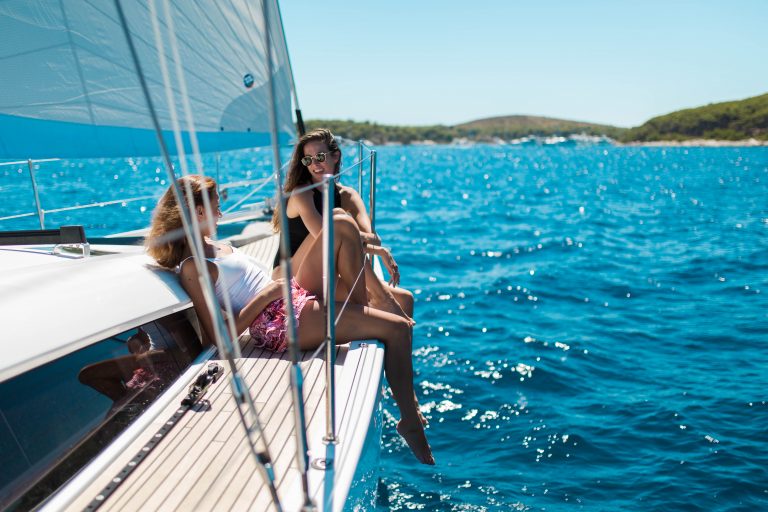
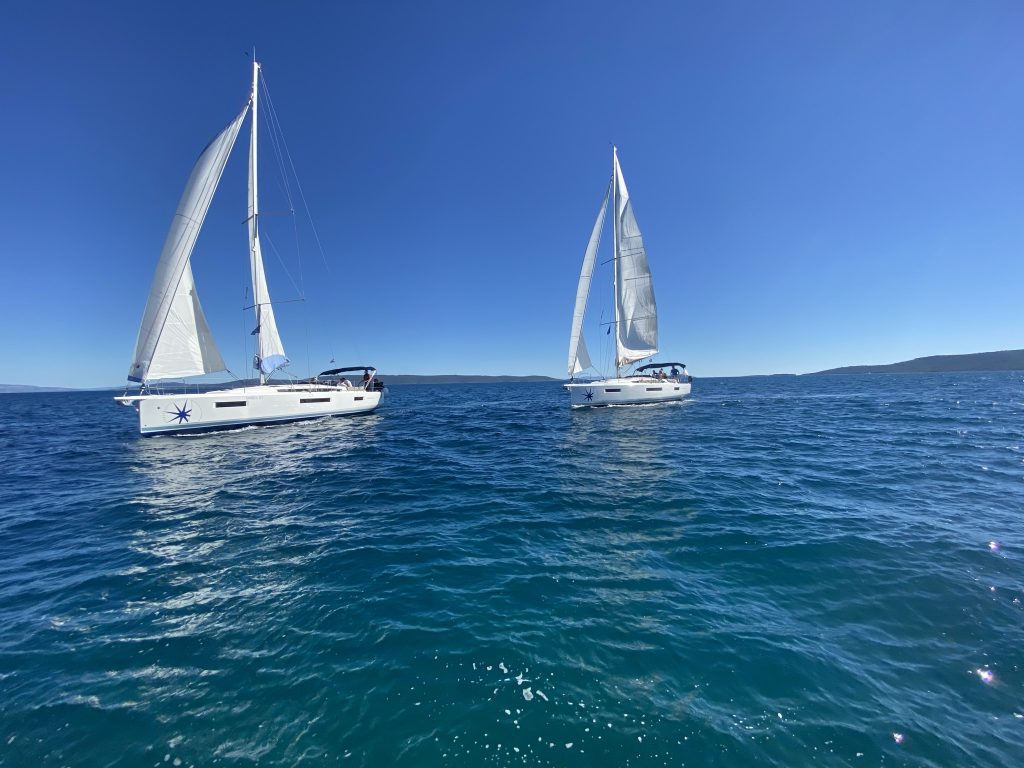
Onboard a Navigare yacht the clients will be blown away by ever changing surroundings and experience full freedom of letting the wind take them to new exciting destinations.
Navigare is all about the experience
Onboard a Navigare yacht the clients will be blown away by ever changing surroundings and experience full freedom of letting the wind take them to new exciting destinations every day.
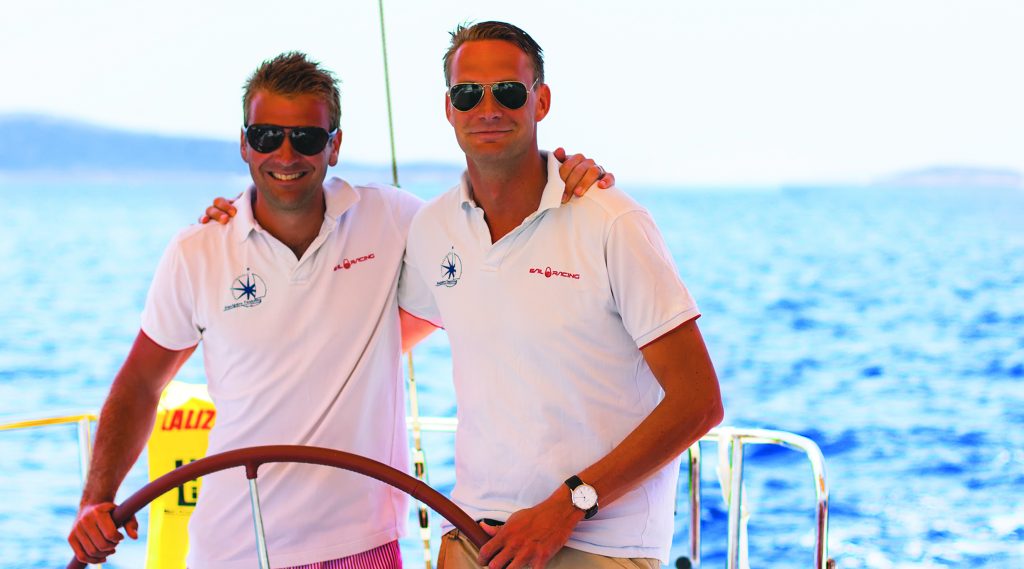
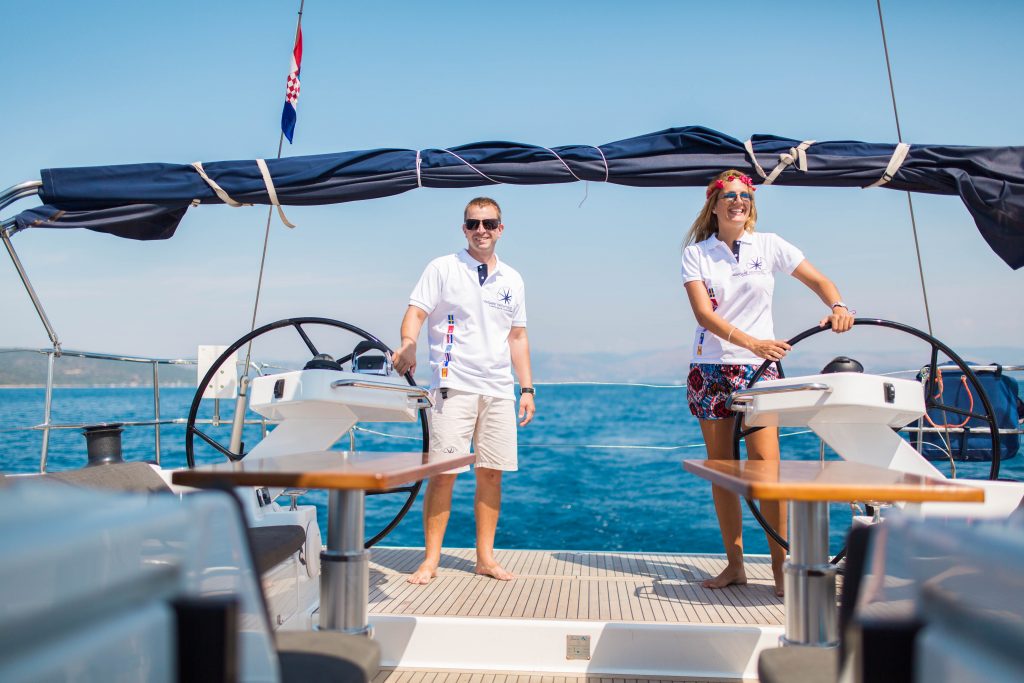
The core and heart of the company rests upon the service-minded and hardworking team members, now 100 full-time employees and as many seasonal staff. It is thanks to their dedication and passion that Navigare has enjoyed such growth and success.
The company expect their guests will want to sail new destinations like the Bahamas and Seychelles.
The company expect their guests will want to sail new destinations like the Bahamas and Seychelles, and access the latest models from the leading yacht builders, both monohulls and catamarans. They are always striving to add new destinations and to update the fleet to keep up with customer demands and desires.
“This year will be the tenth time that we have booked a sailboat via Navigare, and it has always felt safe. You know that the boats are checked, and you get a good overview before departure,” says one client, Lena Kempén and adds, “Our sailing trip in 2021 was the best so far with wonderful weather for two weeks. In the marinas, you are received by helpful staff, who patiently show you how to dock. In smaller bays, you are often greeted by a guy from the local restaurant who helps with providing a mooring. To anchor in a secluded bay, sunbath and swim, and then take the dinghy ashore to a small restaurant in the evening, that is the height of happiness!”
The core and heart of the company rests upon the service-minded and hardworking team members, now 100 full-time employees and as many seasonal staff.
Emma Lydén, Global Project Manager Boat Shows & Events in Navigare, is both a member of the team and a long-time ambassador for the company. She says, “My mother saw the value in letting the boat pay for itself, as it generates an annual revenue each year when it’s chartered via Navigare, and at the same time we have our holidays locked and loaded. We have had the opportunity to sail all over the world, and test both monohulls and catamarans in different waters. Last winter, my parents bought their third boat with Navigare Yachting, after selling their previous boats in the fleet. The new boat, a catamaran (BALI 4.8), will be placed in the Seychelles! In other words, they have made a bit of a journey, and have been able to upgrade the size of the boat thanks to the guaranteed annual Revenue/income.
Quality, Freedom, Reliability
Navigare is a company that delivers quality in all its stages. From first contact with the customer down to the care of the boats. The company also offers its clients the freedom to travel almost anywhere in the world and experience yachting in their own pace. Everything is possible, nothing is impossible. Our planet is diverse and beautiful, what better way to experience it than on the sea close to the elements. Cast off the lines and let the adventure begin!
However, reliability is essential. With bases all over the world, Navigare delivers a consistent high-quality product, and should the client run into issues on their holiday the staff does its utmost to remedy any situation as soon as possible. The clients know what they get, regardless of destination.
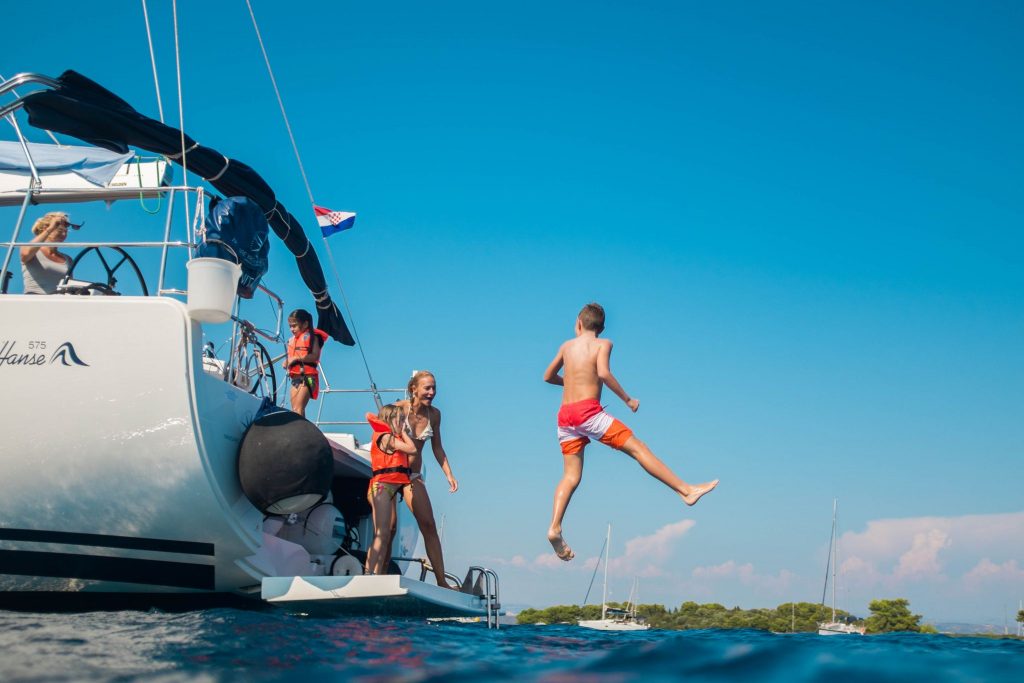
Yachting in Croatia
There are several competitors who deliver the same product but not to the same high level as Navigare. Quality permeates the entire company.
“Navigare Yachting has also launched a Service platform, where boat owners are able to track in real time all performed and planned services on the yacht. This is a great example of the transparency that the company has towards its boat owners who have chosen to place their yachts in Navigares’ fleet, says Lydén and continues, “The service platform generates a complete service book containing all history, which means that the resale value is also significantly higher. This was a big contributing factor to why my parents felt safe investing in a yacht with Navigare, to have insight into the maintenance of the yacht. Even if a charter boat wears to a different extent when it is rented out, it will also receive significantly more hours of professional maintenance than a privately owned boat would. During the winter, all boats are serviced, and after 5 years in the fleet, for example, all sails are replaced on all of the yachts.”
Clients with varying sailing experience Navigare clients vary from experienced sailors who book bareboat charters to “first-timers” who book all-inclusive yacht charters which include a skipper and hostess.
“Excellent service, the boat was in very good condition and ready to go on time. The staff on-site was knowledgeable of the best spots to cruise to and what to see, as well as what was open for onshore dining. They provided a thorough walkthrough of the boats systems and helped me remote trouble-shoot a water pump issue which was easily solved over the phone. It’s my second time with Navigare in Marsh Harbour and we will definitely be back!” says Adam, one of many satisfied customers.
Navigare is a company that delivers quality in all its stages.
The future Numbers show that the demand for catamarans continues to grow and has exceeded the demand for monohulls. The demand for bigger is up, so all yachts are getting bigger.
During and after the pandemic, people have been looking for a way to explore new destinations and travel in smaller groups to avoid crowded places. Sailing is a great way to travel between different places without crowds!
We’re experiencing an increased demand from so called “non-sailors”. Our customers really appreciate the genuine sailing experience, being close to nature and in harmony with the ocean. Exploring secluded bays and untouched nature by sailing there, is something that a lot of travellers really appreciate. Whether you are an experienced salty sailor or an enthusiastic newbie, Navigare Yachting wants sailing to be a carefree and relaxed experience! We want our guests to feel safe onboard, knowing that the boats are taken well care of, and if you hire a crew to sail the boat for you, we want to be able to guarantee that the staff is highly capable and provide our guests the best possible experience! Discover the Scandinavian standard of chartering!
Quality Sailing – The Swedish Way, written in collaboration with Navigare Yachting by Tor Kjolberg.