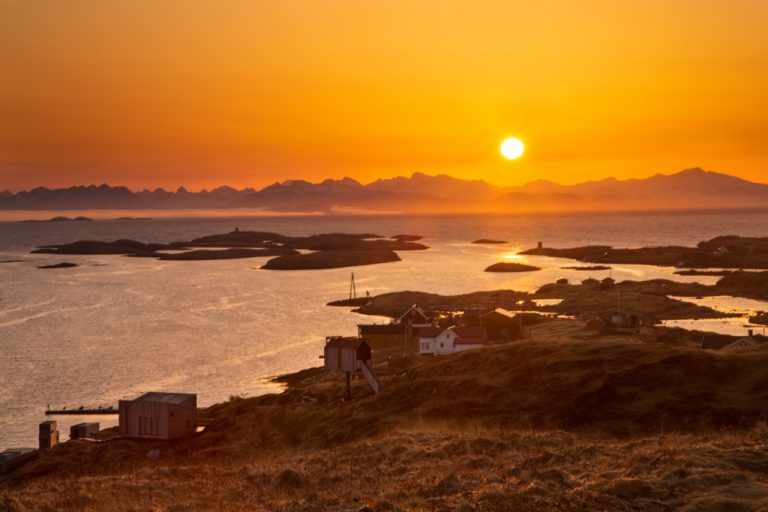
An hour by boat west of Bodø, far out to sea, you will find The Arctic Hideaway. Twelve unique buildings, which together form a holiday destination unlike anything else you have seen or experienced. Learn more about Norway’s Arctic Hideaway.
«Here we are reminded that immersion, calm, and silence is something that nowadays needs to be raised as an intrinsic value. That it is something we must seek out,» said the then President of the Norwegian Parliament Olemic Thommesen in his opening speech in August 2016.
Self-proclaimed manic-expressive Håvard Lund. Photo: Martin Losvik/High North News
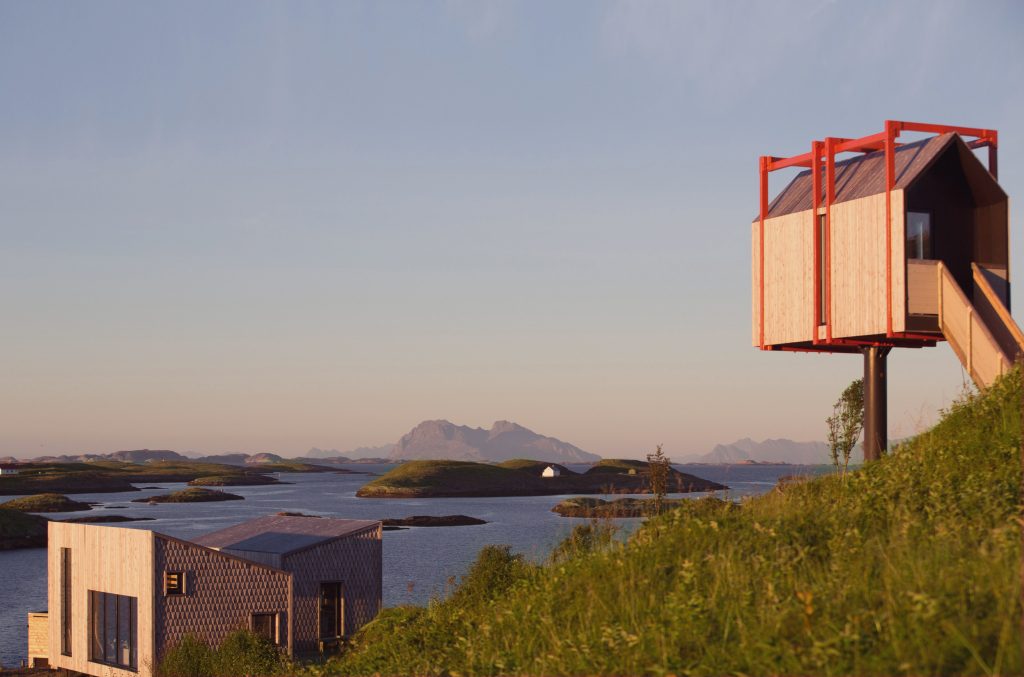
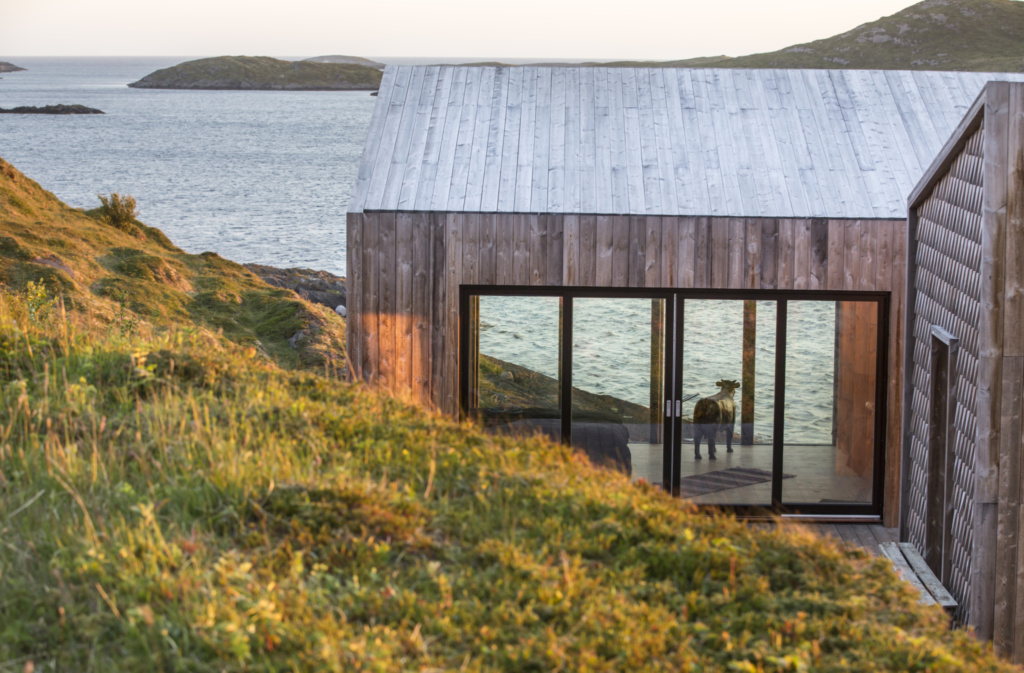
The Arctic Hideaway is an architecturally stunning collection of five individual eco-friendly cabins on the edge of a tiny island in the Fleinvær Archipelago deep in the Arctic Circle of Northern Norway.
Far out to sea, the passionate jazz musician and composer Håvard Lund runs the hospitality project like no other – and it takes all his improvisational skills to keep it going. It’s a destination unlike anything else you have seen or experienced.
The Arctic Hideaway is an architecturally stunning collection of five individual eco-friendly cabins on the edge of a tiny island in the Fleinvær Archipelago
The Arctic Hideaway is designed by local Norwegian architect firm, TYIN tegnestue in collaboration with Rintala Eggertsson architects. Håvard Lund acquired the site in 2004. “initially it was meant as a workplace for myself, a writing lodge of sorts,” explains Lund. “As time went on, I felt an urge, a need, to share what I had found on Fleinvær with others. I wanted to create a workspace unlike anything else in the world.’
The Jesse Beaman Studio
The result is a tiny hotel with just four modernist sleeping cabins. Views from the highest point on the island take in the dark slivers of surfacing whales, soaring sea eagles and the endless expanse of the Arctic Ocean. But perhaps the biggest attraction for visitors is the new perspective they may gain on life.
Your senses will be reset through the absence of artificial noise, or visual clutter. Changeable weather massages you in peace, and provides relaxation that heals. Our guests sleep deeply and grow in appetite out here in the arms of the ocean.
The weather determines whether the meals will be hot or cold, but either way it will be local and fresh.
Whilst it may look like a typical collection of cabins, what’s unique about the Hideaway is that instead of renting particular rooms, the entire facility is 100% yours. This means that the kitchen, studio, bathrooms, sauna, and all five cabins (up to ten beds) are your private space and only the caretaker will be in the vicinity.
Dinner is served at 19:00, and focuses on seafood sourced from our rich, blue storehouse of the ocean.
Visitors arriving by boat are greeted with a sauna that hovers above the water. A former waiting room in the old docks has been refurbished to accommodate overnight guests, while four small sleeping units are found further up the hillside. Two of these are short and wide with twin beds, with the other two each containing two bunk beds. A pathway leads through these lodges towards the concert room and the canteen.
There are no cars or shops on the island, but that does not mean that you will be missing out on the important things.
The Arctic Hideaway is designed by local Norwegian architect firm, TYIN tegnestue in collaboration with Rintala Eggertsson architects. Photo: Katrine Sørgaard
A breakfast buffet is available between 09:00 and 10:00. Simple, fresh, good food to start your day. Lunch is ready at 14:00. The weather determines whether the meal will be hot or cold, but either way it will be local and fresh. Dinner is served at 19:00, and focuses on seafood sourced from the rich, blue storehouse of the ocean.
Activities are decidedly slow paced, and up to you to do as much or as little as you feel you need.
Activities are decidedly slow paced, and up to you to do as much or as little as you feel you need. You can go on trips in the beautiful archipelago, and collect heart mussels, elbow mussels or scallops for the freshest seafood pasta dish.
The Arctic Hideaway is a tiny hotel with just four modernist sleeping cabins.
The Arctic Hideaway operates as a hotel for nine months of the year, supporting a creative residency program for the rest. Some people come looking for space to think and write; others are bird watchers, divers or musicians looking for inspiration in nature. Once they’re here, it’s all about the simple things: exploring the nearby uninhabited islands; watching otters play along the shore; and witnessing orca teaching their young to hunt in the bay.
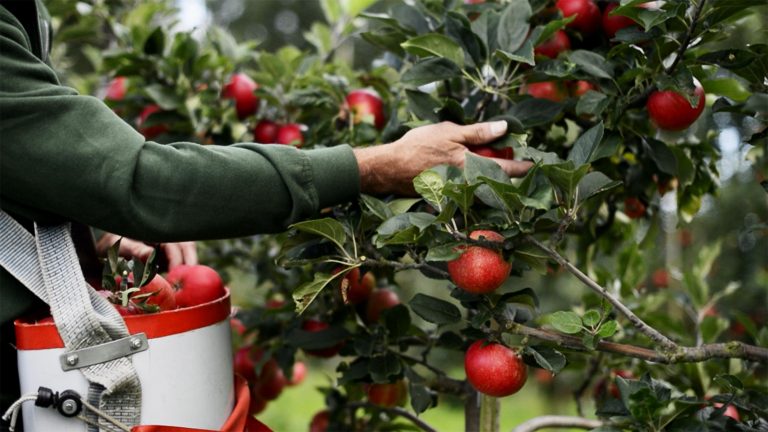
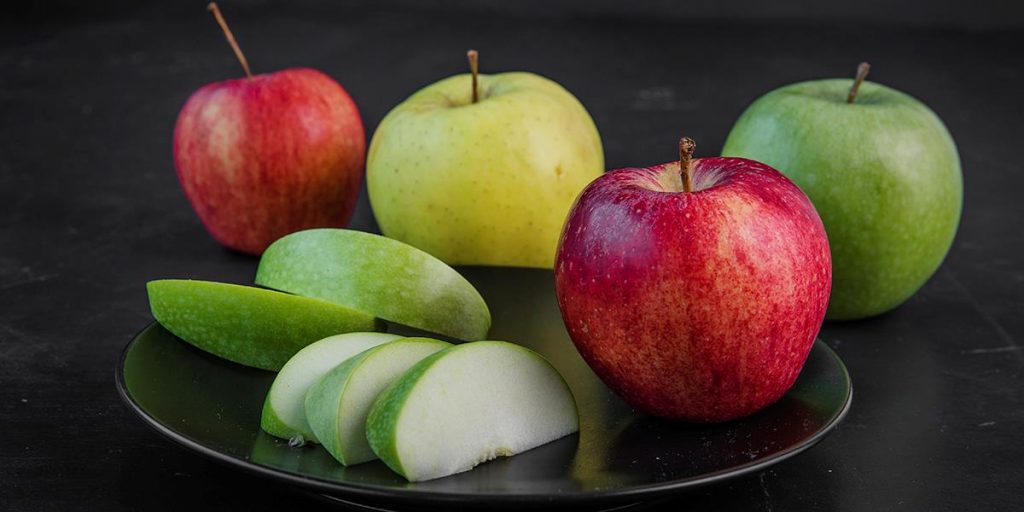
Apples are the most loved, most widely grown and varied fruit crop in Scandinavia. There are thousands of original cultivars, but few of them are known outside the region, despite the fact that apples grown in the northern soils are tastier and crisper than those from warmer, sunnier climates. Learn more about apples from Scandinavia.
Such qualities are being appreciated by a rapidly growing number of people in Scandinavia, who are rejuvenating the fruit-tree trade, grafting at home, planting small orchards, saving aged fruit trees, and demanding old cultivars with more taste in the s’hops. This comes after decades during which imported apples, such as Golden Delicious and Granny Smith, have dominated the scene. It’s high time that we discovered these national treasures, a much too good and interesting heritage to let disappear. It is time that we taught our children that there’s more to apples than sweetness.
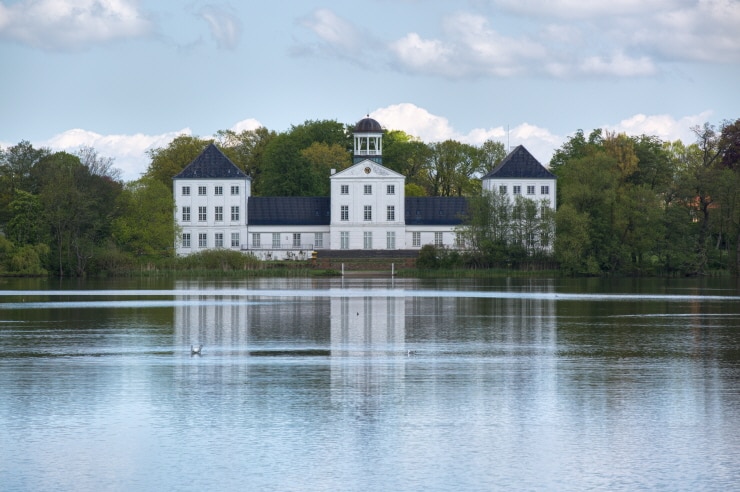
Cultivars There are thousands of original cultivars, some of them known worldwide, such as Gravenstein, Gråsten is the original Danish name, after the royal castle Gråsten, where a very old tree of this cultivar (if not the original tree) still exists.
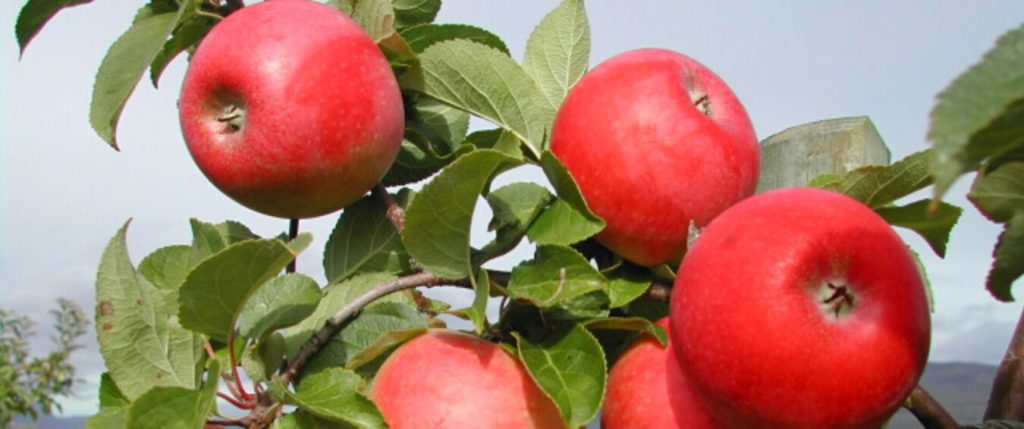
Aroma apples on tree. Photo: frukt.no
The Swedish apple Aroma has also achieved worldwide recognition, a lovely dark red eating apple with a waxy bloom. The Pigeon apple is another very special variety of old ancestry; it is probably even able to reproduce itself true to seed. It is a pretty small, dark red apple with a unique flavor. Traditionally picked in October, it is left to ripen and develop its intense color. Pigeons are eaten at Christmas, and even used to decorate the Christmas tree. They are delicious in salads and dipped in caramel.
Every country has its own cultivars, and many are kept alive in the national arboretums and local pomets (tree museums), where you can see the trees and taste the apples. Naturally, many more have vanished, but some can still be found unnamed, in old gardens and orchards. These multitudes of cultivars are mostly chance seedlings, revealing themselves on compost heaps and wherever somebody threw an apple core. The vast majority are worthless, but are a perfect example of serendipity at work: people have stumbled upon them, tried them and a few have been recognized and grown on for generations, in the neighborhood, long before there was any trade in fruit trees. Vicarages once played a large part in spreading both know-how and planting material of both useful and ornamental plants to their parishes, and before the Reformation the monasteries did the same.
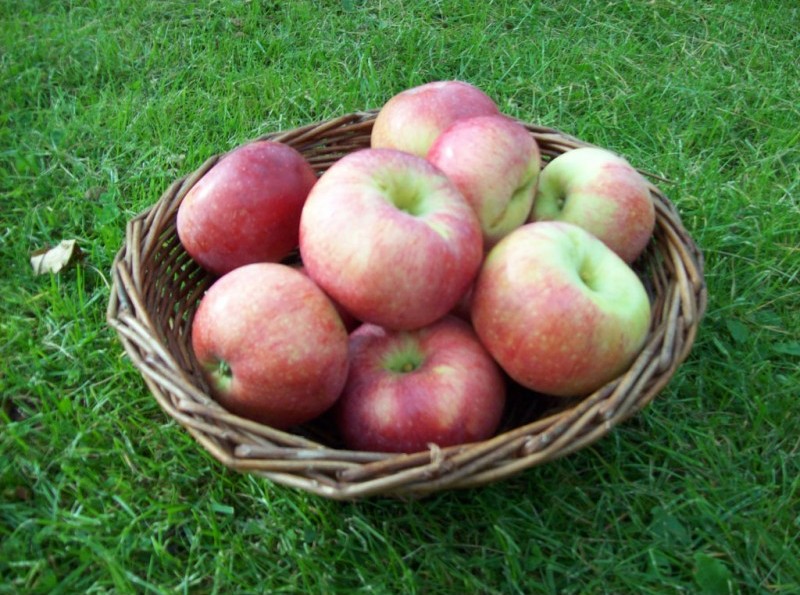
Norwegian apples. Photo: Oslo havebyselskap
Having religion paving the way was a very useful method of spreading the know-how to stubborn peasants, who did not want to use precious land for dainty fruit trees or berry bushes. But it caught on, the women probably realizing first that collecting wild apples of doubtful taste was not as good as growing your own grafted trees that were more prolific, with sweeter, juicier and more useful fruit. Sweetness was precious in old times, before sugar was accessible, when many fruits were dried for winter – and the sweeter the apple were, the better they were dried.
Appearance and taste The cold climate in Scandinavia means that apples grow at a slow pace, allowing the fruit to take up more minerals and other nutrients, which deepen the taste. Also, when the sun is not scorching, the apple do not need to grow such thick skin to stop the fruit from drying out.
Perfection in an apple is far from enough to secure a good fruit. You must know your cultivars, for example, and their uses. There is a huge difference between eating apples and cooking apples (even if cookers can be eaten uncooked late in the season). Eating apples have more acid and sometimes more sugar, keeping them firm while cooking. Cooking apples are lower in both, cooking to a pulp – it’s nice to know the difference if you plan on an apple pie or baked apple. Furthermore, how the apples have been shown to have more taste (as well as more nutrients) than conventionally grown fruit. Modern consumers often refuse to buy imperfect-looking apples with spots, fungi or blemishes, considering looks more important than taste or origin.
The cold climate in Scandinavia means that apples grow at a slow pace, allowing the fruit to take up more minerals and other nutrients, which deepen the taste. Photo: coop.no
Buying and storing If you just buy a bag of apples for immediate consumption, it’s easy – the fruit should be fragrant, firm and without rotten spots. Home-grown apples that you wish to store must be picked off the tree and put in wooden crates very carefully, as the slightest pressure will influence their durability. Store very cool and frost free. The apples should keep all winter – depending on the cultivar, of course. Apples collected from the ground must be used within a few days. Keep cool, but not necessarily in the fridge.
The Swedish apple Aroma has also achieved worldwide recognition. Photo: Aroma
Health benefits Apples are very good for you, particularly if you chose organic fruit, which have a higher and more varied content of minerals, micronutrients and vitamins than conventionally grown varieties. All apples contain serotonin, which helps us to keep happy.
There are a couple of important facts to be aware of. Firstly, modern cultivars are too sweet – actually so sweet that dentists advise us to consider them more like confectionary than fruit. Secondly, if you don’t choose to eat organic apples, you are exposing your body to the residues of pesticides found both on the skin and in the flesh of the fruit. The content may be below a level that is considered harmful, but even small doses are definitely not good for you or your children.
Culinary uses Apples must be the most versatile fruit in the kitchen. They are eaten raw, in salads, or cooked, whether as a sauce, baked, stuffed or fried. As a dessert, in a cake, trifle or simply baked, apples are of course a classic. But they are as useful in savoury as in sweet cooking – and in Scandinavia there is a thriving tradition in both.
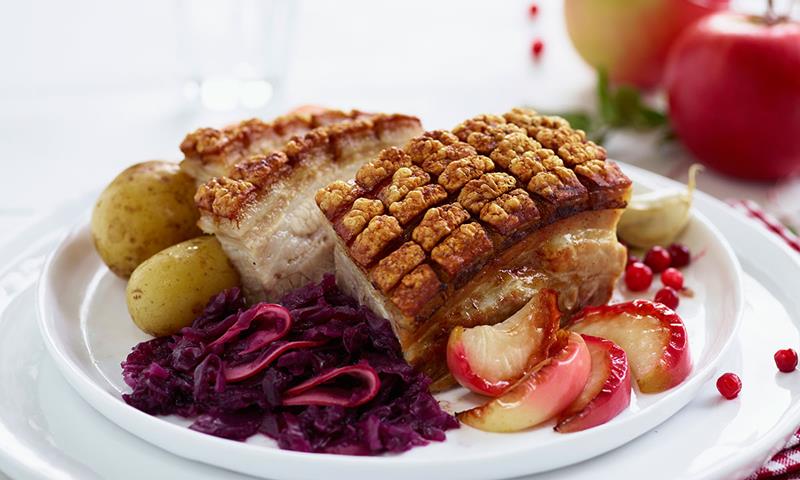
In savoury terms, apples are often paired with fish and pork. The tradition of combining them with meat and fish is celebrated particularly at Christmas, when they are stuffed into the Christmas goose or duck along with prunes and thyme, and on the Christmas lunch table there is apple with the crips roast pork, the herrings and the herring salad.
Braised pork with apples This is a perfect take on the age-old marriage of pork and apples – ideal for Christmas, or a buffet. Once in the oven, it takes care of itself. Serve with potatoes.
2kg pork neck, in one piece, with rind
Coarse sea salt and pepper
4 fresh bay leaves
1.5kg eating apples
1 whole garlic bulb
1kg onions, peeled and quarted
2 cinnamon sticks
1 large sprig-of-fresh thyme
100ml cider vinegar
1 ½ liters unfiltered apple juice (not from concentrate)
SERVES 10
Preheat the oven to 150C/gas mark 2
Using a sharp knife, make slashes in the rind of the pork, then rub the meat generously with salt and pepper, make sure you rub plenty of salt into the cuts in the rind. Stick the bay leaves into the cuts.
Core and quarter the apples, but do not peel. Divide the garlic bulb into cloves, but do not necessarily peel. Arrange the apples, garlic, onions, cinnamon and thyme in a deep dish. This must be big enough to host the meat and vegetables in a layer of about 4cm deep. Squeeze the meat into the middle. Por the vinegar and juice over the vegetables.
Bake in oven for approximately 2 hour, turning the vegetables over once in a while to coat with the pan-juices. The meat is done when the juices run a pinkish brown and the cracking is crispy. If it is not crispy, put the meat on a rack and roast for a few minutes at 240C/gas mark 9, while you watch.
Leave the meat to rest for 20 minutes before carving. Mash the garlic in with the vegetables before serving.
Apples From Scandinavia, written by Tor Kjolberg
Feature image (on top): Apples in Skåne, Sweden. Photo: Visit Sweden
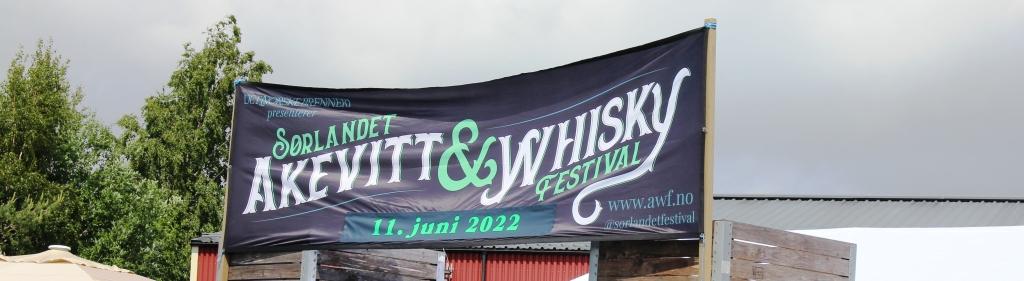
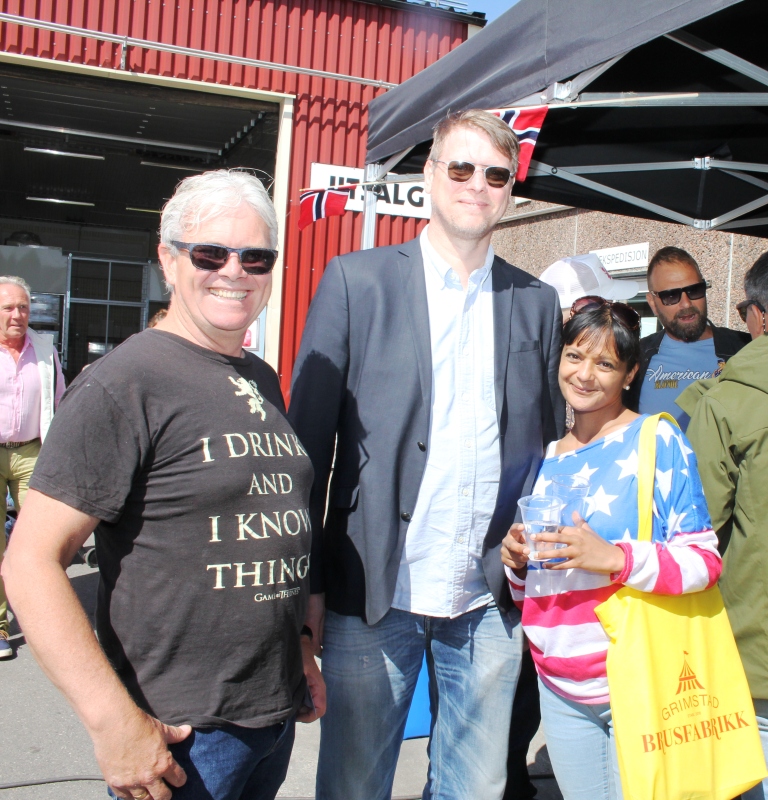
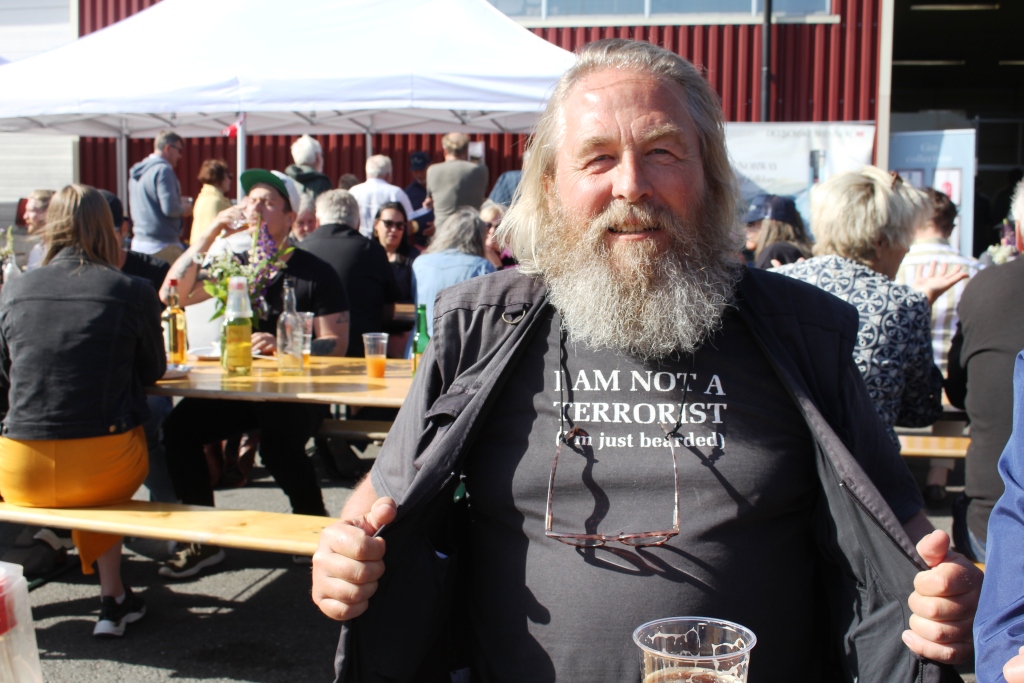
The Aquavit and Whisky Festival was established in 2017. Due to the pandemic, there was no festivals in 2020 and 2021. This year’s festival, held on 11th June, proved that the Aquavit og Whsky Festival in Southern Norway has established itself as one of the most exciting festivals in Norway.
Det Norske Brenneri (The Norwegian Distillery) in Grimstad could once again focus on its exquisite selection of the most celebrated names in the industry. The festival showed beyond doubt to be popular to seasoned experts as well as curious newcomers, everyone celebrating aqauavit’s strong tradition in Norway whilst unveiling the exiting new styles and award-winning gins and whiskys.
The Aquavit and Whisky Festival in Southern Norway left everybody feeling inspired by the contemporary and experimental nature of Norway’s national drink.The extensive program was in itself an award-winning mixology, local food vendors, cutting edge musicians
The extensive program was in itself an award-winning mixology, local food vendors, cutting edge musicians – the Aquavit and Whisky Festival in Southern Norway left everybody feeling inspired by the contemporary and experimental nature of Norway’s national drink.
The festival showed beyond doubt to be popular to seasoned experts as well as curious newcomers.Everyone celebrating aqauavit’s strong tradition in Norway
Polka-Bjørn entertraining at the Festival.From one of the popular Masterclasses
Festival artist of the year was Bjørn Tomren also known as Polka-Bjørn, winner of NRK’s (Norwegian Broadcasting Corporation) Star-War 2021, and festival participants could broaden their horizons at the «Masterclasses» for aquavit and whisky, hosted by some of Norway’s greatest experts.
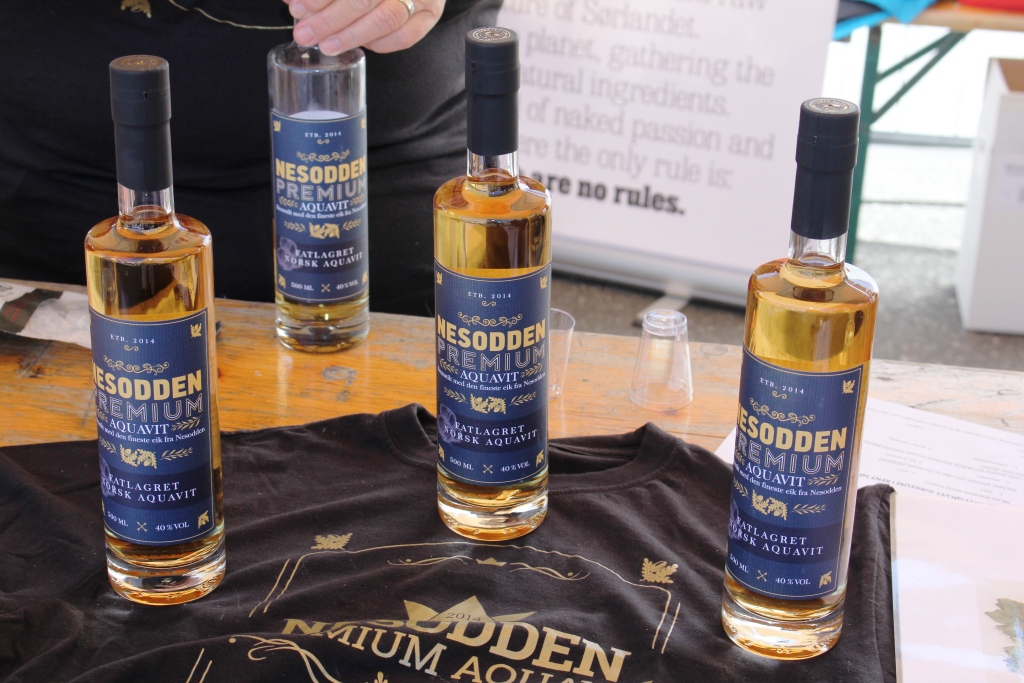
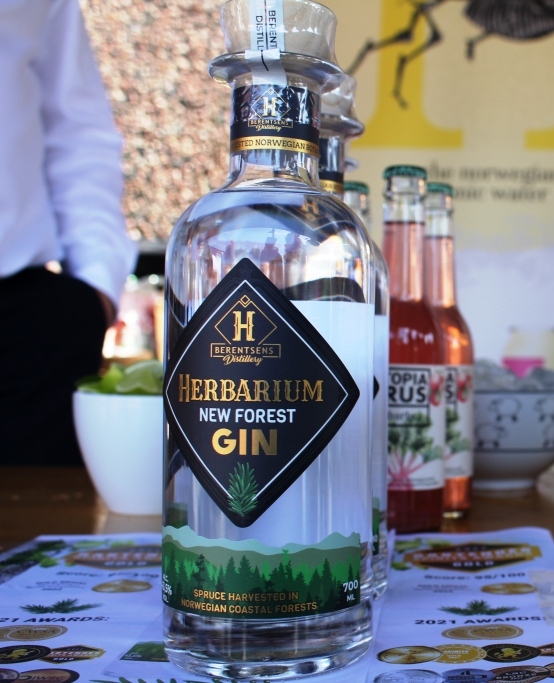
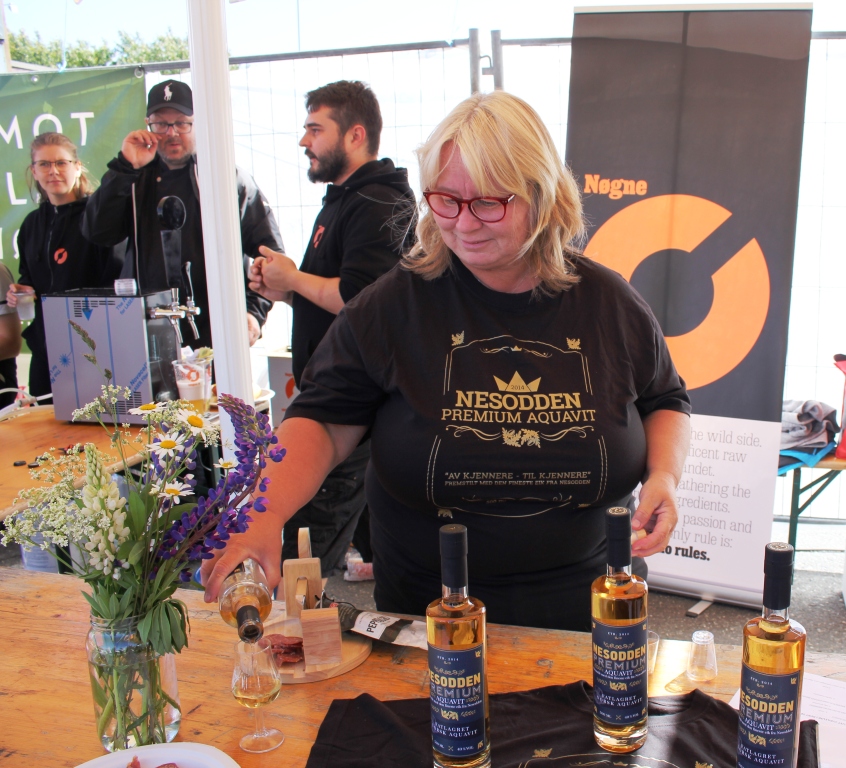
Nesodden Premium AquavitBertelsen Herbarium New Forest Gin
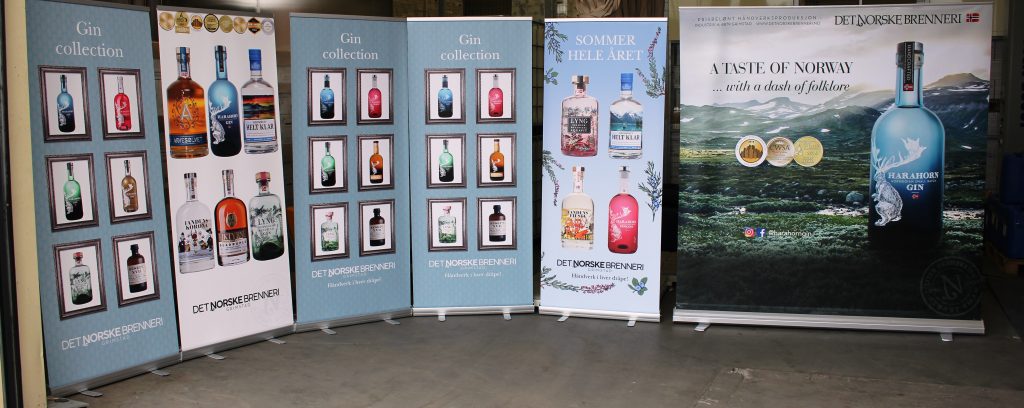
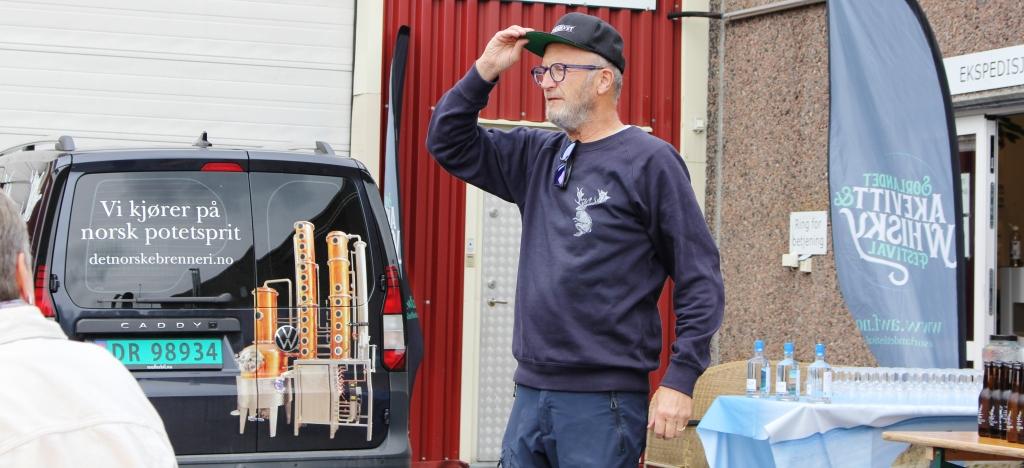
Det Norske Brenneri (formerly Puntervold / Agder Brenneri) has its production and barrel warehouse in Grimstad in Southern Norway. Various aquavit brands and apple spirits have been produced there since the production monopoly in Norway was dissolved in 2005. It was the first private distillery in Norway after more than 80 years of monopoly. Grimstad has a history dating back to the 1880s when it comes to the production of liqueur wines, through the Fuhr brand.
Today, Det Norske Brenneri is best known for its craft products; the aquavits Arvesølvet, Arvesølvet Helt Klar, Høvding and Hellstrøm. In 2012, the distillery launched Norway’s first single malt whiskey, called Audny. The sequel, Eiktyrne, came in November 2015. That year, a new Norwegian gin – based on Norwegian berries and herbs, Harahorn, was launched.
Det Norske Brenneri (formerly Puntervold / Agder Brenneri) has its production and barrel warehouse in Grimstad in Southern Norway.
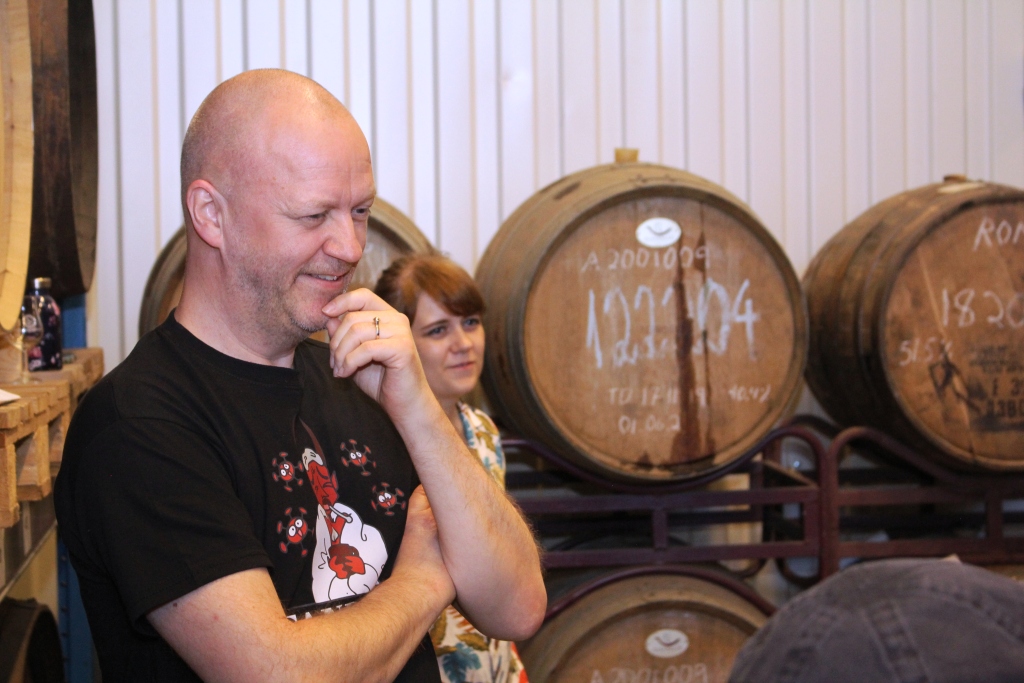
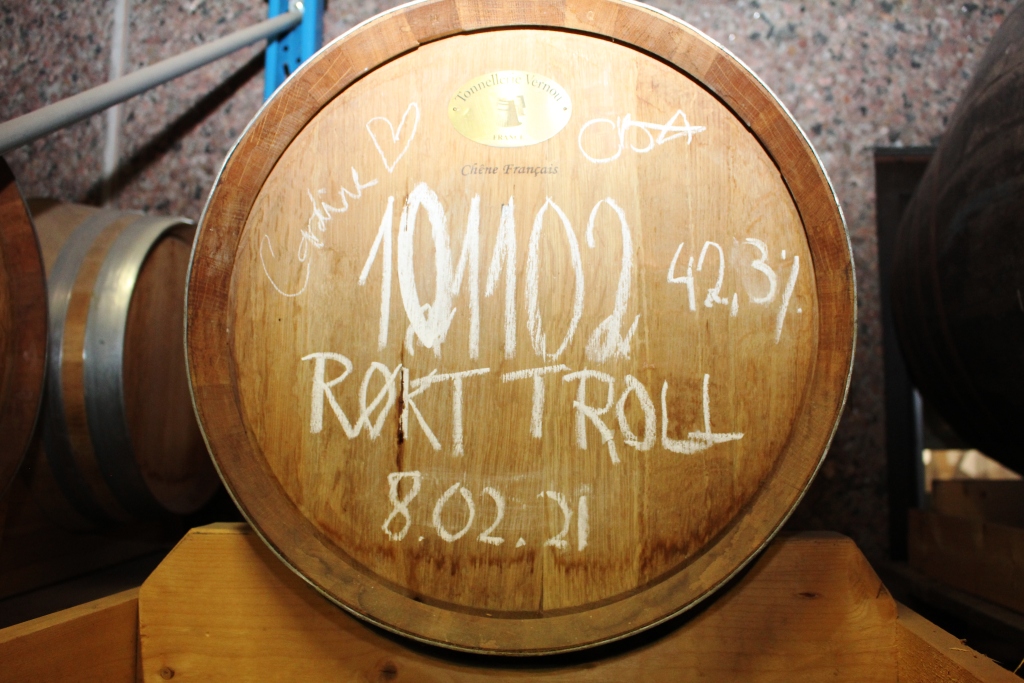
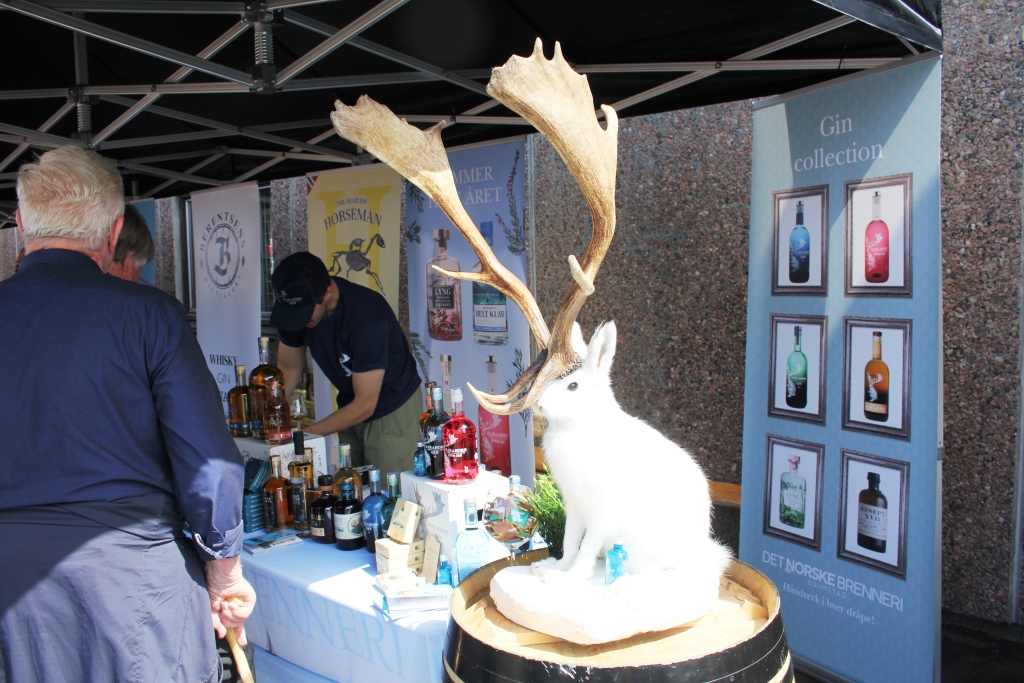
Troll barrelFestival participants could broaden their horizons at the «Masterclasses» for aquavit and whisky.
The English name of the creature that adorns the Harahorn bottles is jackalope. Douglas Herrick was the name of the man who ‘invented’ the first jackalope in 1932. In short, he found a dead rabbit next to a deer horn. With the help of his brother, the deer horn was attached to the rabbit, and jackalope was a ‘fact.’
The English name of the creature that adorns the Harahorn bottles is jackalope.
For many centuries, hunters and mountain men have sworn to have seen the harahorn. Harahorn is also the name of a Norwegian Mountain. From that mountain plateau, beneath the northern lights, the wonderful juniper berries for the Norwegian gin were harvested. Tracing the Harahorn’s tracks through abandoned mountain farms a special quality rhubarb was discovered and blueberries were harvested in the deep forests of the Norwegian lowlands. And there you have it: A handcrafted small batch gin. Palate: F
Lyng botanical gin
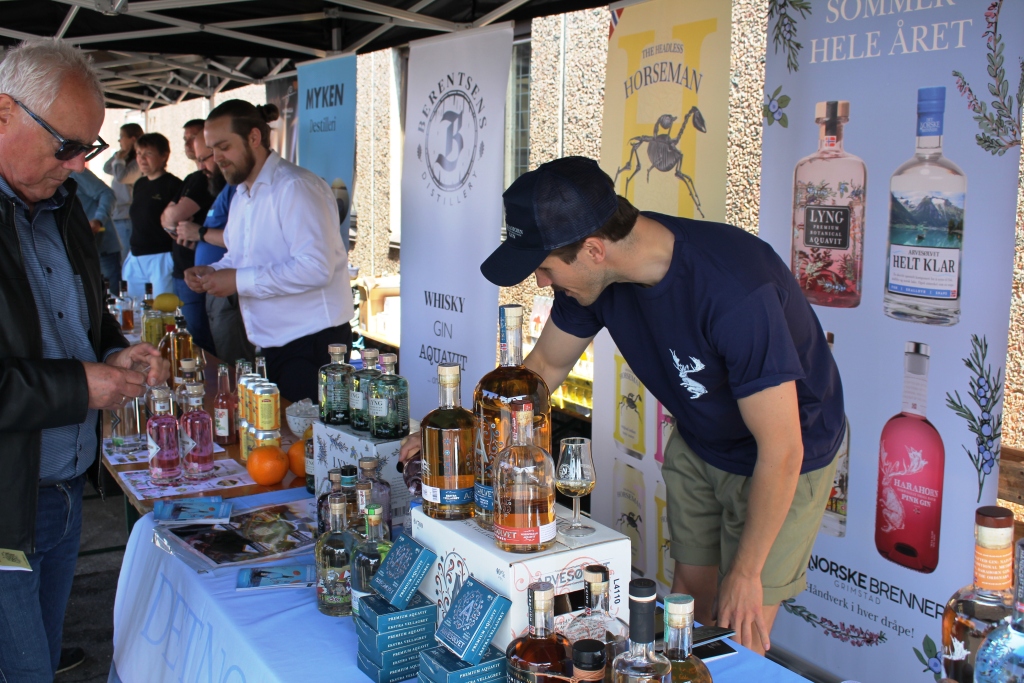
A big surprise at the Festival was the announcement that the distillery’s Lyng Botanical Gin had won this year’s Bartender Spirit Award, one of USA’s most prestigious competitions for spirits from around the world. Impressive 99 points, and best in show! The judges were simply super impressed with the Lyng gin from Norway.
“We are overwhelmed, and this was real fun. Now we will celebrate the victory,” said general manager at Det Norske Brenneri, Odd Johan Nelvik.Festival manager Richard Nordahl
“We are overwhelmed, and this was real fun. Now we will celebrate the victory,” said general manager at Det Norske Brenneri, Odd Johan Nelvik and added, “What characterizes Lyng Botanical Gin are the gentle floral tones. We have used 33 herbs, spices and flowers to bring out the ultimate experience, and obtained plants from mountains and forests”.
Botanist Anita KnutsenThe distillery has its own herb garden cultivating 22 herbs.
That being said, the distillery has its own herb garden a five-minute walk from the premises, cultivating 22 herbs under supervision of botanist Anita Knutsen. Festival guests could enjoy guided tours to the garden.
“We place great emphasis on barrel storage and use only the best Oloroso sherry barrels from Spain,” says Nelvik. “So far this year we have purchased 148 barrels,” he adds. “We now have over 1.300 barrels. A barrel can be used for 25 years. We purchased several fortified wine barrels from France, Spain and Portugal, but also cognac barrels from Bourbon among others.”
Thomas Øhrbom, One of Norway’s most experienced whisky experts. He loves the Eiktyrne whisky from Det norske brenneri.From one of the exhibtor stands
I don’t think I’d ever been so excited to go on a trip. I was going to Grimstad – that magical village where they make aquavit, whisky and gin like no other and was going to mark the releases of several new ones.
For me, it was about visiting a small village where aquavit, whisky and gin play such leading roles
My trip to Grimstad wasn’t just about visiting a distillery. For me, it was about visiting a small village where aquavit, whisky and gin play such leading roles, a village teeming with history. And now, every time I drink an Arvesølvet aquavit, I think about that trip, and it brings back many happy memories.
Aquavit and Whisky Festival in Southern Norway, written by Tor Kjolberg
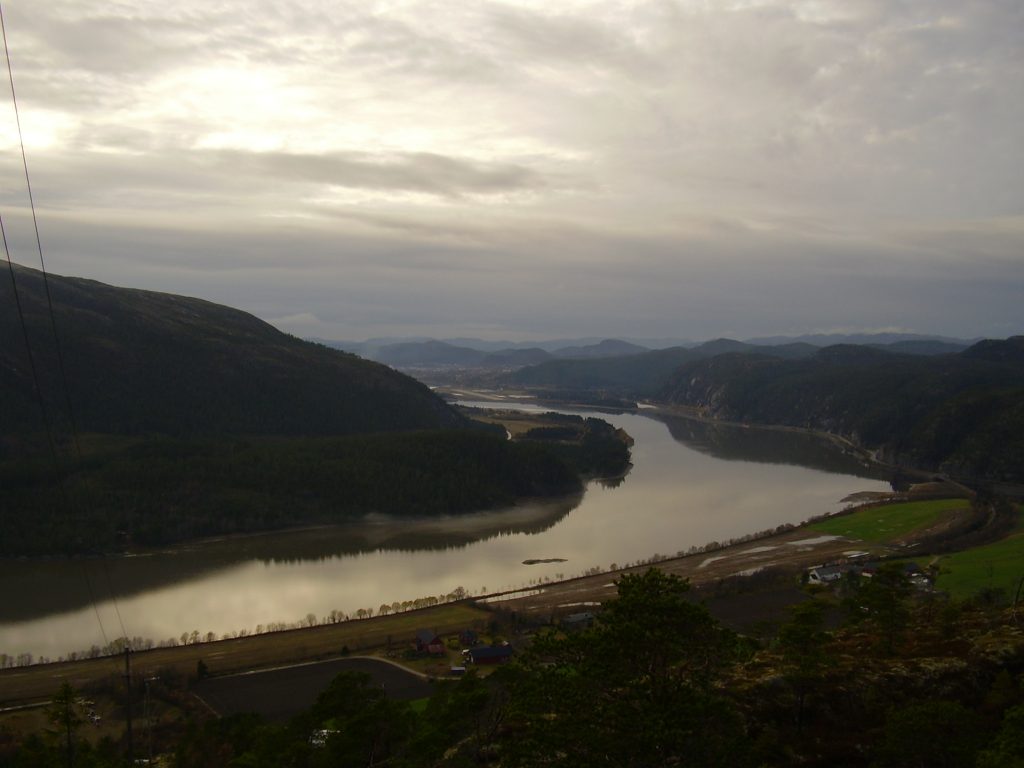
Namsen is a 229-kilometer-long river in North-Trøndelag. Its springs are in the Børgefjell National Park and its estuary near the town of Namsos. Learn more about the Norwegian Queen of salmon rivers.
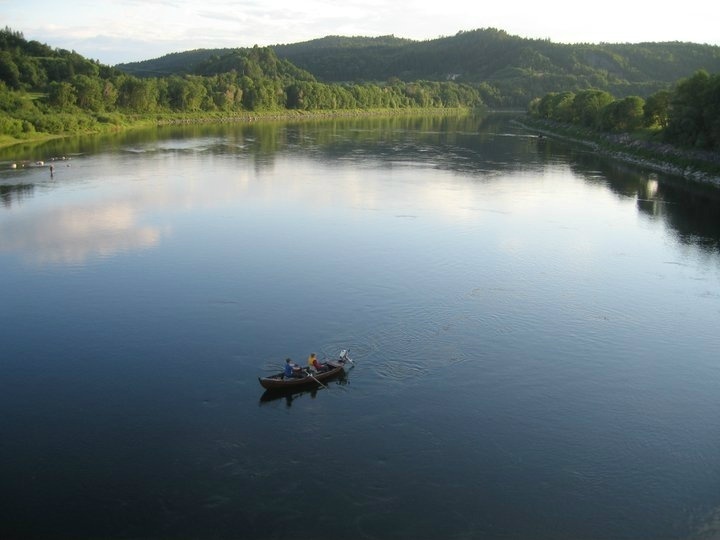
However, the Queen also has several princesses to choose between, and is therefore one of Norway’s best salmon fishing places. The Namsen River runs through the county of Nord-Trøndelag in the northern part of Central Norway. This is the country’s heartland, where rich agricultural plains contrast with majestic mountains and a rocky coastline. Although the Namsen is not the longest river in Norway, it’s certainly one of the most powerful.
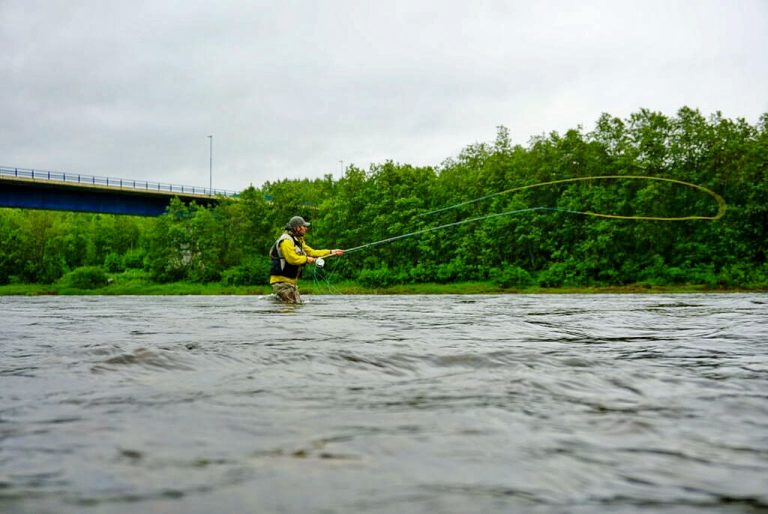
The Namsen is famous for its big salmon, with fish weighing more than 20 kg (40 pound) being caught every year. Fishing by boat – known as harling – is customary, and both the boats and fishing methods used are very traditional. The fisherman can have several rods out at the same time while his private oarsman takes the boat downstream.
The Namsen River runs through the county of Nord-Trøndelag in the northern part of Central Norway. Photo: flydreamers.com
The Sanddøla, Nordelva, Bjøra and Høyland watercourse (which includes Eidsvatnet, Eida, Grongstadvatnet and Søråa) are also wonderful rivers for salmon fishing. In traditional English style, harling is a common fishing method in the Namsen. Combining flair and their knowledge of salmon, skilled rowers guide you down the river while you take care of two or three rods.
The river is steeped in history. It first came to prominence in the 19th century when adventurous British fishermen first started visiting the river, returning with stories not just of the abundance of salmon but also of many huge salmon!
The largest salmon caught on a rod in Namsen weighed 31.5 kilos (69.4 pounds). In 2009, a salmon of 24.7 kilos (54.5 pounds) was caught, which is a record in recent times.
The Namsen is famous for its big salmon, with fish weighing more than 20 kg (40 pound) being caught every year. Photo: Jan Arild Landstad/Visit Namdalen
The Høyland watercourse comprises the following rivers: Søråda, Eida, Flakken and Flåttelva. With an average weight of 5-6 kg, the river Bjøra is known as the river in the Namsen watercourse with the biggest salmon. Read more about salmon fishing in the river Bjøra.
Double-handed rods are almost mandatory as even in low-water the Namsen is a big and powerful river. The fly-fishing on the river really starts to get going from mid-late June when the water levels have dropped. Regardless of when you go, having a full range of flies from floating to fast sink is always recommended.
Namsenn seen from Kvatningenfjell. Namsos in the background. Photo: Wikipedia
In addition to salmon, there is also trout and the salmon species namsblank, a raw cold relict salmon. Relict salmon are salmon species that live their whole lives in fresh water.
The river Sanddøla is ideal for fly fishing from the bank, but fishing from a boat is possible in the lower reaches of the river. The average size of salmon caught in the river is 4-6 kg, which is slightly higher than the average for the river Namsen. Read more about salmon fishing in the river Sanddøla.
During bright sunny days in mid-July sometimes success is best found at the bottom of some of the deeper pools. Although a strict rotation is not in place, the river is roughly broken up into 4 beats. The size of the river and the fact that it is all double-bank means at no time does one feel confined.
Just beaten by the Tana River in Finnmark and the two South Trøndelag salmon paradises Gaula and Orkla, Namsen holds its place as Norway’s fourth best salmon river.
The Middle beat consists of both the excellent and productive Home Pool as well as some of the most scenic stretches of fishing at Namsentunet. Fast streamy water and classic necks and tails make this feel like a very fishy area!
“Salmon have their ways at different water levels. It is the fisherman who gets the fish, but it is the rower who controls the boat, “says a harling boatman.
The Norwegian Queen of Salmon Rivers, written by Tor Kjolberg
Many of us know Denmark as one of the happiest countries in the world and also one of the greatest study destinations in the whole world. Due to these reasons, many young people from the US and beyond consider moving to this country to continue their education and build their lives here. This could be a great decision in many ways. But, since moving to a different country is a big and responsible step, it’s vital that you study the chosen destination thoroughly before jumping into the unknown. So, what does one need to know about Denmark before deciding to study and live here? Here are 8 things to know before moving to Denmark.
In fact, there are plenty of factors to keep in mind. Read on to learn more and make a well-informed decision!
Adult education is also available in Denmark. Photo: Unesco
Top-Quality of Higher Education The first thing you have to know if you want to study in Denmark is that the quality of education here is incredibly high. This means that getting accepted and surviving through college can be pretty tough. I usually just google “write my research paper by WritePaper writers” and get professional academic assistance just in time. You can also get any help you need studying at any university.
Universities in this country often take high positions in worldwide rankings. They are known for their thriving learning environment, high standards of education, and unique teaching and learning styles. What’s more, Denmark is among the top countries that embrace innovation in teaching and create lots of talents across different fields.
Infograph by threemovers.com
Infograph made dedicately for Daily Scandinavian by Threemovers.
One thing that really distinguishes the local educational system is that it’s centered around problem-based learning methods. That is, Danish schools encourage innovative thinking and problem-solving in their students. And they also prefer a more active learning approach.
Higher education in Denmark is free of charge for EU students. Photo: Nick Karvounis/Unsplah
Affordable Tuition Despite the world-class quality of education and a fairly high cost of living, Danish schools remain affordable. Furthermore, the country’s authorities perceive students as a significant part of Denmark’s natural resources. Therefore, they believe that investing in students is a great way to ensure a better future for the entire nation.
Due to this reason, higher education here is free of charge for EU students. But that’s not all. The authorities’ approach to students actually extends to international learners too. Thus, tuition fees for students from beyond the EU are pretty low. This creates an inclusive and accessible higher education and helps drive more young talents that will become the country’s valuable assets in the future.
Many young people forget to consider the weather conditions in the area. Photo: Joy Stamp/Unsplash
The Weather Isn’t That Good When selecting the right study and living destination abroad, many young people forget to consider the weather conditions in the area. And this is a big omission. After all, if you plan to start building your life in a new place, you want to ensure that its climate suits you.
Speaking about Denmark, in particular, we have to admit that the weather here isn’t the best. The geographical region where this country is located is known for pretty rough weather conditions. In winters, temperatures get pretty low. When the cold steps back, the area becomes quite rainy.
But not everything is that bad. In the summer, the weather in Denmark is very temperate and nice. There are no long months of heat. But, at least, you will have a few warm and sunny days for going out.
Another thing you need to know before moving here is that Denmark is very focused on environmental sustainability. Photo: sustainabilitydenmark.dk
Sustainability Above All Another thing you need to know before moving here is that Denmark is very focused on environmental sustainability. The country sets very ambitious sustainability goals. It is one of a few countries that are already actively using renewable energy power plants and wind power. In fact, they even assist other countries with their sustainability goals.
What should it mean for you? First of all, such a major focus on sustainability certainly reflects the quality of the country’s nature. Denmark is known for its fresh air and crystal-clear water. But that’s not all. Secondly, learning about its approach to environmental sustainability, you should know that you have to be sustainability-focused yourself if you want to move here and fit in.
Danes love cycling. Photo: Max Adulyanukosol/Unsplash
Biking Is a Big Part of a Local Lifestyle Speaking about environmental-oriented focus and the ways to fit into Danish society, we also have to emphasize the popularity of biking in this country. Danes love cycling. They love it so much that they have an official cycling embassy. And according to this embassy, nine out of ten citizens own a bike.
Since cycling is such a pivotal element of the Danish way of life, you should ensure that you are also a biking fan before moving here. If you own a bike and cycle regularly, that’s a great way to fit into the local society.
Before you decide to study and live in Denmark, you have to know that taxes here are particularly high. Photo: norden.org
Taxes Are High If you are a student, chances are that you are living on a budget and always looking for ways to save money. If that’s true, before you decide to study and live in Denmark, you have to know that taxes here are particularly high.
The VAT here is 25%. The income tax is even higher – 45%. Thus, compared to many other destinations, Denmark is really pretty expensive. But don’t let this dishearten you. Although taxes and cost of living are high, there are plenty of bonuses and free benefits.
The Danish health system is publicly funded. Photo: Yadid Levy / Norden.org
Free Healthcare We’ve already told you that education in Denmark is either free or quite affordable. And, we also told you that taxes are pretty high. So, here is one more thing you have to know – healthcare is free!
The Danish health system is publicly funded. It is supported by the high taxes paid by residents, which enables the authorities to keep it free of charge. What’s more, the local health system covers nearly everything, including general check-ups and even complex operations.
By becoming a registered resident, you will receive access to the full health system. This will let you save lots of money in the long run. So, as we said earlier, there are plenty of nice bonuses despite high taxes.
For many years in a row, Denmark was known as the happiest place on Earth.
The Happiest Country in the World For many years in a row, Denmark was known as the happiest place on Earth. In 2022, it doesn’t take first place. But, it is still among the top happiest destinations in the world. And this is the last thing you have to know before moving here.
Denmark is widely known for its positive atmosphere. It is also known for its deep economic and gender equality. And there are also many other factors that help Danes keep their spirits so high.
This positive atmosphere of equality and happiness extends to all communities, cities, and campuses as well. Therefore, it has a huge impact on everyone who lives here, including students. What’s more, according to studies, people who move to Denmark eventually feel just as happy as those who were born here. So, moving to this country is a great way to improve your quality of life and happiness levels.
8 Things to Know Before Moving to Denmark – The Bottom Line Located in cold and windy Scandinavia, Denmark is rarely considered by young people as a study and living destination. But, as you now know, that’s in vain.
Denmark is one of the most equal, sustainable, and happy societies in the world. After reading this article, you know everything about Danish education and way of living. Now, all you need to do is to make a well-informed decision on whether it is a good place to move to for you or not.
8 Things to Know Before Moving to Denmark, is a promotional article from writepaper.com
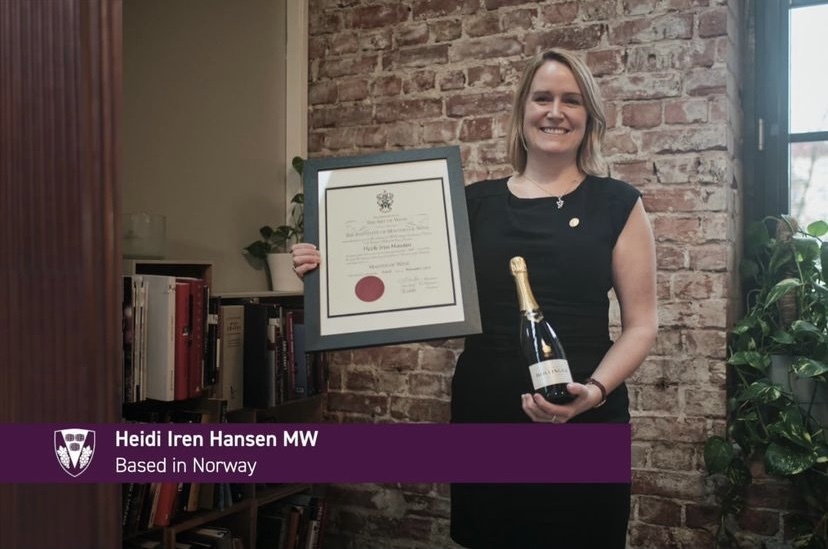
Heidi Iren Hansen MW is the youngest Norwegian to have passed the most prestigious wine study in the world, Mater of Wine. Learn more about the young Norwegian star sommelier.
Heidi lives and works in Oslo. She manages all wine courses and educations at The Culinary Academy of Norway and teaches both the sommelier education and all levels of Wine & Spirit Education Trust (WSET). She was raised in Asker just a short train-ride form Oslo, and she is a self-proclaimed wine-nerd.
Never before has a Norwegian performed at the same level in the wine world’s “Grand Prix”.
Never before has a Norwegian performed at the same level in the wine world’s “Grand Prix”. She started as a cook, completed her sommelier education in 2009 at KA as best in class and achieved the WSET Diploma in Wines and Spirits in 2013 and worked as a sommelier for five years before her current job at KA.
Heidi also loves running courses focusing on food and wine combinations for wine enthusiasts and connoisseurs. When working as a Sommelier, Heidi participated in various competitions. She holds a silver medal from the Norwegian Sommelier championship and a bronze from the Nordic Sommelier championship.
Heidi passed her last exam for Master of Wine on August 26th 2021 becoming the sixth MW in Norway and getting the most prestigious title in the wine-world just held by 418 persons world-wide. She is also the youngest in Norway to achieve the title of Master of Wine.
Heidi passed her last exam for Master of Wine on August 26th 2021 becoming the sixth MW in Norway
The Institute of Masters of Wine is recognized worldwide for its very strict standards. The Masters of Wines currently found worldwide are from 30 different countries. These work, among other things, as wine producers, sommelier, buyers, journalists, consultants, academics and teachers.
Young Norwegian Star Sommelier, written by Tor Kjolberg
The most attractive and desirable are travel destinations where you can’t just go by car – you also need to get there by foot, and sometimes this path is not easy at all.Learn more about these top places in Norway that can only be reached on foot.
This type of vacation is the opposite of vacation, say, in Dubai, where you rent an exotic car and move around the city only on it. However, if the impressions of the itineraries offered by us are not enough, you can always go to the UAE to diversify your vacation even more. After all, here, after the Scandinavian “lagom”, it will be very exciting to experience all the possible luxury of travel by hiring a car and driving around the popular attractions of Dubai.
Despite the fame of the city as the world capital of luxury, car rental prices will pleasantly surprise you with availability, and car rental specialists will help you quickly select and organize everything so that you start your unique driving experience as soon as possible. In this city, you can rent a car of any class, brand and color that you can think of.
We have compiled our list of unexplored destinations in Norway that will take some effort to see. But these routes are not for professional athletes but for people with little experience in sports training, which means that anyone can experience these routes.
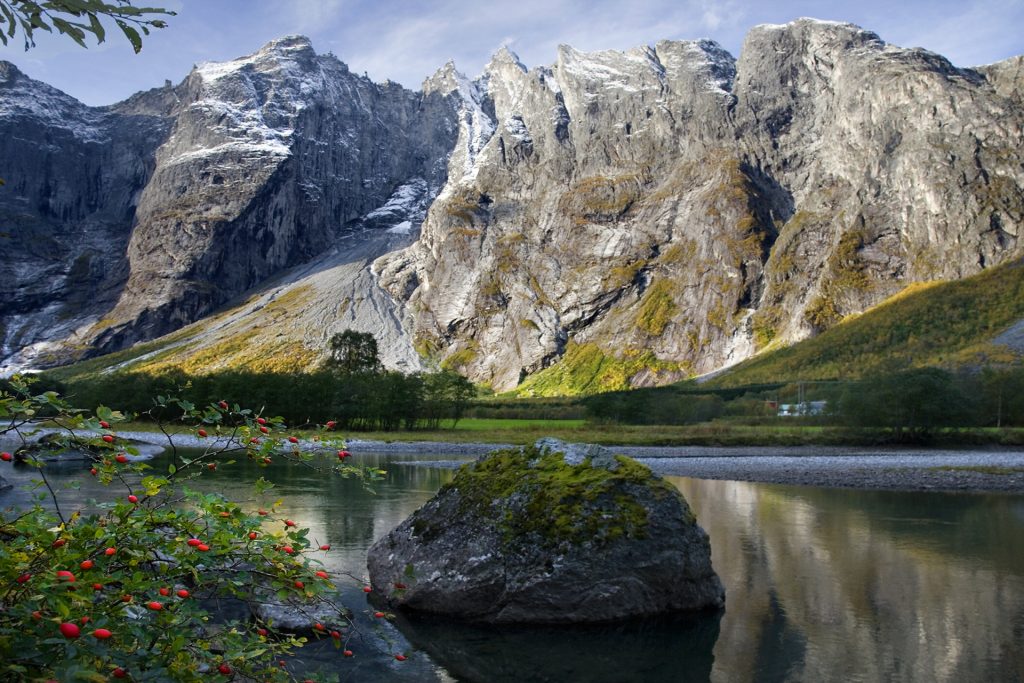
Springtime at Trollveggen. Photo: Fjord Norway
Troll Wall (Trollveggen) This is a section of the Trolltindene mountain range, well known to all climbers. It is popular because the height difference of the wall from the foot to the top is 1700 meters and at the same time the height of the vertical section of the wall is about 1000 meters! Below is a large campsite, from where experienced rock climbers begin their multi-day ascents. Ordinary tourists, on the other hand, get to this wall from the other side, also not the easiest route, overcoming several stone screes and bypassing moraine lakes along snowy trails even in August. Beautiful views accompany all the way, but the view from the observation deck on the Troll Wall itself amazes even the most seasoned tourist. The travel time to the Troll Wall from the tourist center near the upper observation deck to the Troll Stairs (Trollstigen center) and back will be 5-6 hours, elevation difference 850 – 1650m.
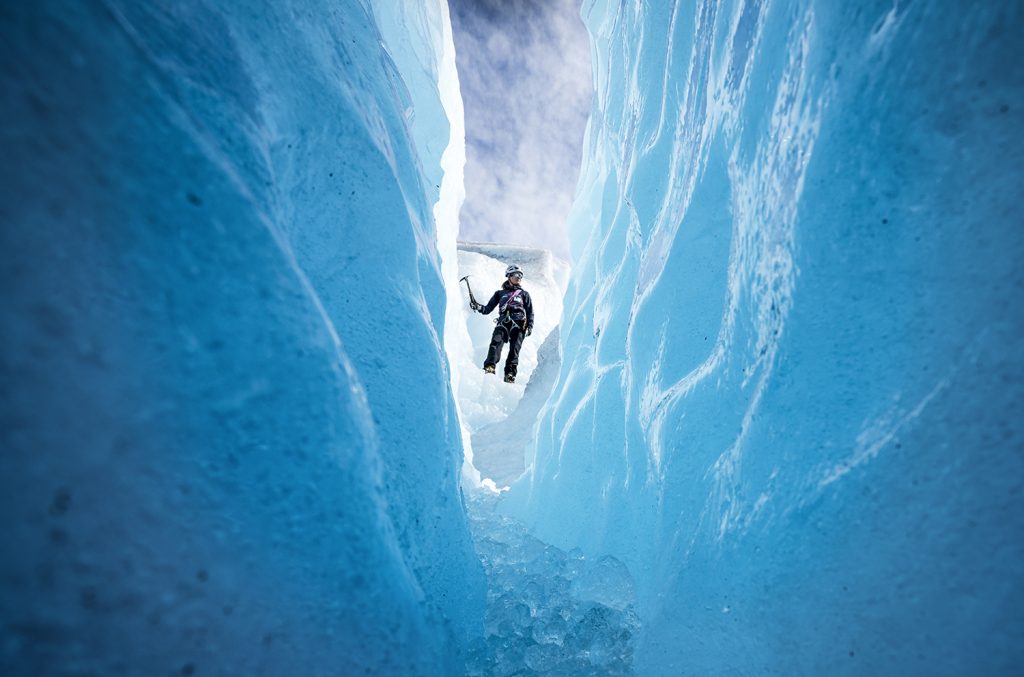
Nigardsbreen is one of the most famous tongues of the Jostedalsbreen glacier. Photo: Visit Norway
Nigardsbreen It is one of the most famous tongues of the Jostedalsbreen glacier, the largest in continental Europe. Very easy and almost flat trekking – only an hour in both directions. But on the other hand, you come to a huge array of real blue ice, from which a rather powerful river also flows. In addition to the opportunity to touch and take pictures, here you can also book an excursion and walk along the glacier in conjunction with a guide. Not cheap, but exciting.
Besseggen is the number 1 trekking route according to the Norwegians themselves. Photo: Besseggen.net
Besseggen This is the number 1 trekking route according to the Norwegians themselves. There are 3 points that give trekking a special charm: gorgeous views and colorful lakes all the way, no need to go back (the way there or the way back is made by boat) and the Bessegen wall itself, overcoming which is associated for many with overcoming oneself, although this wall is not at all dangerous, it is just a mountain range with a large slope. Trekking Bessegen is really iconic. Once a year, mountain runners also overcome it, and these competitions are also extremely popular! The whole journey takes 5-6 hours.
Most tourists first overcome the water part of the route and then calmly go back. In this option, it is more convenient that you have to overcome the Bessegen wall from the bottom up (this is less scary than from the top down, for those who are afraid of heights) and there is no need to rush. If you go on foot from the very beginning, you will have to hurry, as the last boat leaves back around 16h. and then you will have to go down the wall of Bessegen. But you will have almost no fellow travelers – the majority of tourists choose the first option. The highest point of the route is 1850m, the lowest is about 1000m.
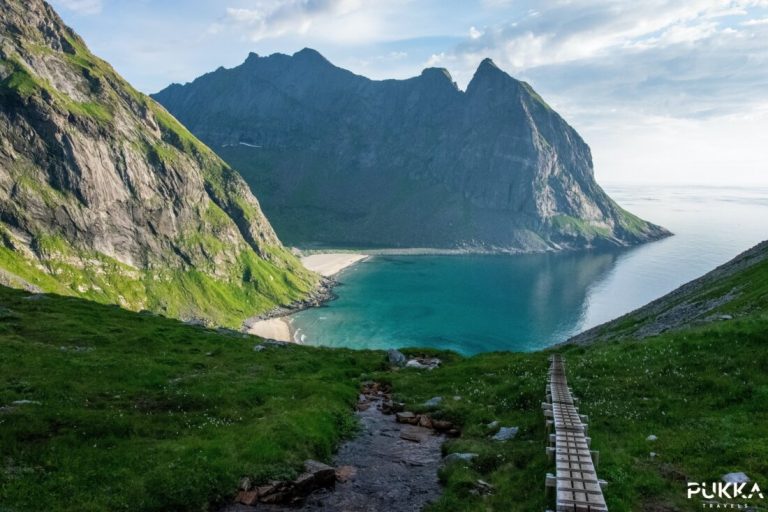
Ryten mountain and Kvalvika beach These Scandinavian pearls are located in the Lofoten Islands, or rather on the island of Moskenesey, the extreme one from the open ocean. Getting there is relatively easy, and the views from the top (only 543m) and all kinds of angles of the bay with two golden beaches and the very atmosphere of this wonderful place make it a must to visit! If you start the journey only to the beach and back, it will take only 2.5-3 hours with a maximum climb of 300m. The route with the beach and Mount Ryten will take about 5 hours up to 550m, in which case you can make a round trip.
Skåla is the most difficult route of this rating. Photo: Sommerferie i Norge
Skåla Perhaps this is the most difficult route of this rating. After all, you have to climb from a height of 50 meters right up to 1850 meters, the road takes an average of 5 hours up and 3 hours down – a full day. But the panoramic views of Innvikfjorden, the emerald lake Lovatnet, the numerous tongues of the largest glacier in continental Europe, Jostedalsbreen Jostedalsbreen, opening up as you rise, will more than pay off your “physical costs”!
TOP places in Norway that can only be reached on foot is a promotional article from evolve.
The Swedish city of Malmo attracted attention recently when it re-programmed two of its talking garbage cans to make users blush. Learn more about the sexy trash cans in Sweden.
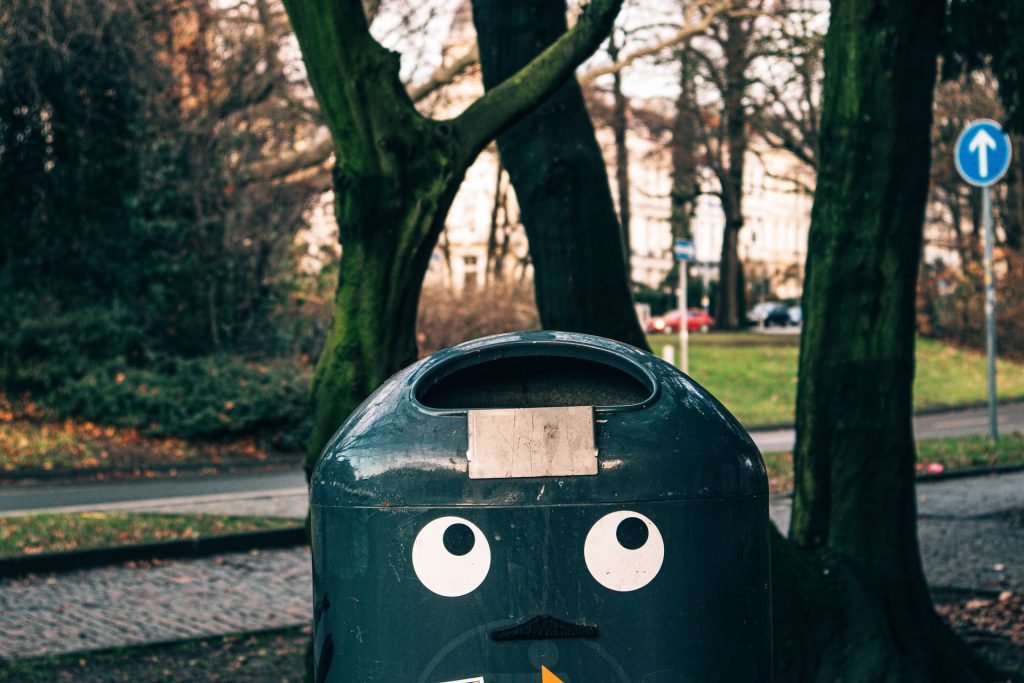
The dirty talking trash cans in Malmö are encouraging citizens to throw their garbage correctly. Pedestrians that drop trash into one of two bins on the city’s Davidshallsbron bridge are rewarded with extremely positive feedback from a sultry female voice, who offers a range of responses.
The dirty talking trash cans in Malmö are encouraging citizens to throw their garbage correctly. Photo: Gary Chan/Unsplash
Five years ago, when the eco-conscious city bought 18 speech-enabled cans, some of the trash cans uttered a family-friendly retort when users dropped something in them. (During covid, some even reminded people to follow social distancing guidelines.)
What are the two trash cans really saying? They have been programmed to respond to users with seductive audio messages like ‘Aaah that was really good’, ‘come back soon and do it again’ and “Mmm, a bit more to the left next time”.
The first 18 trash cans featured a male voice thanking people for disposing their garbage and barking out no-nonsense messages from the public bins. The two new ones, however, represent the sound of seduction.
“The sentences are part of the campaign’s intention to get more people to talk about the dirtiest thing there is: littering,” said Marie Persson, according the Swedish newspaper Sydsvenskan. The goal is to find “a humorous way to get across our message” and offer “a positive reinforcement to people who do the right thing, by giving them a laugh.”
The trash cans have been programmed to respond to users with seductive audio messages. Photo: Alberto Lionardi/Unsplash
Malmö has long been renowned as a pioneer in eco-friendly living, so its latest innovation should perhaps come as no surprise. In February, Södertälje, a city not too far from Stockholm, announced that it was using the services of a company that trained crows to pick up cigarette butts they see on the street, and deposit them in a machine.
This is what we would call a trashy campaign!
Sexy Trash Cans in Sweden, written by Tor Kjolberg
The Danish philosopher, mathematician, designer, poet and all-round smart cookie Piet Hein did amazing work in both science and arts. He is most known for his ‘grooks’, some claiming the word is short for “Grin & sUK” (laugh & sigh in Danish). He wrote over 7,000 of them. Here we present a limited collection of the grooks of the Danish poet Piet Hein.
When you feel how depressingly
slowly you climb,
it’s well to remember that
Things Take Time.
* * * *
Losing one glove is certainly painful,
but nothing compared to the pain,
of losing one, throwing away the other,
and finding the first one again.
Piet Hein was a Danish philosopher, mathematician, designer, poet and all-round smart cookie
Everything’s either
concave or -vex,
so whatever you dream
will be something with sex.
* * * *
Corinna’s scanty evening dress
reveals her charms to an excess
which makes a fellow lust for less.
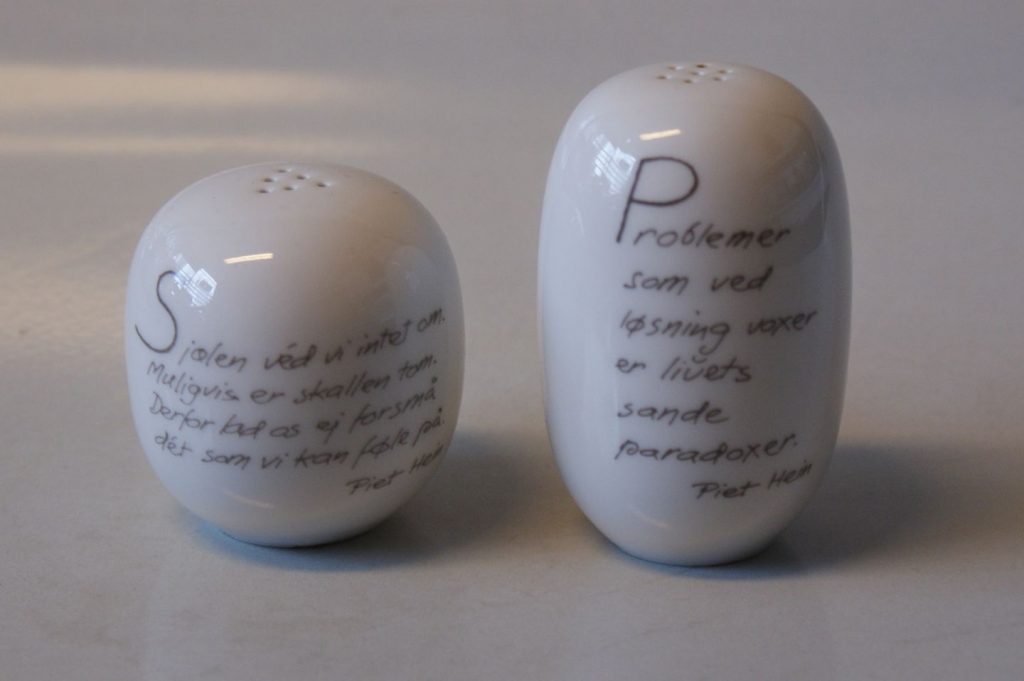
Salt and pepper shakers with Piet Hein Gruks
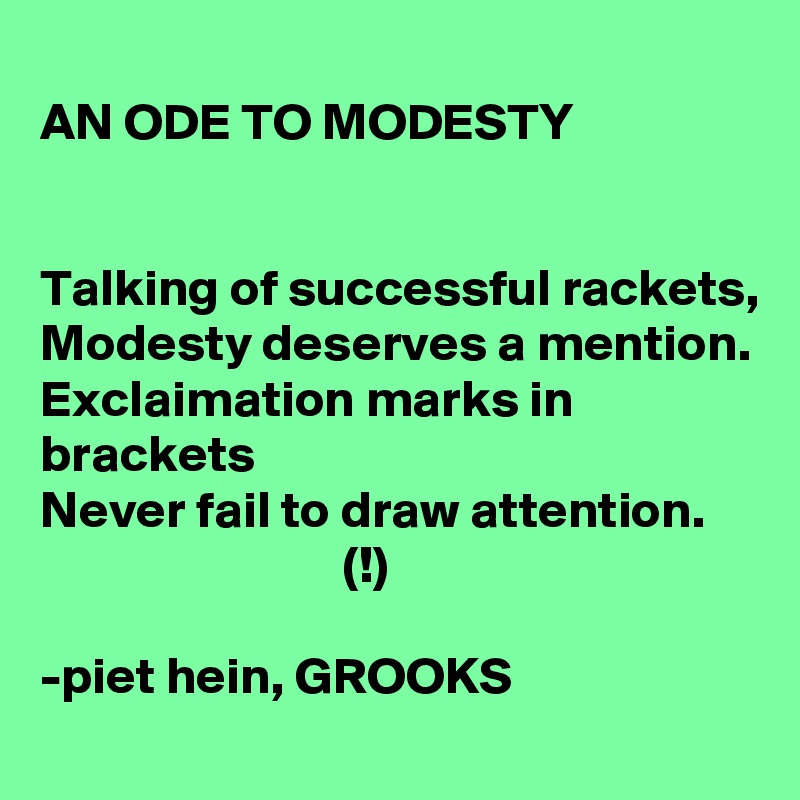
You’ll probably find that it suits your book
to be a bit cleverer than you look.
Observe that the easiest method by far
is to look a bit stupider than you are.
We travel where ever mankind reigns
and find good men in all the worlds domains
and recognize them as a kind of Danes.
Solutions to problems are easy to find:
the problem’s a great contribution.
What’s truly an art is to wring from your mind
a problem to fit a solution.
There’s a rule for proper doses
in the dinner-eaters lore:
one should stop the filling process
while one still has room for more.
And if someone at the table
had reminded me before –
Hallelujah! I’d be able
to absorb a little more.
Ezinne Okparaebo (born 3 March 1988 in the state of Imo in southern Nigeria) is Scandinavia’s fastest woman ever over 60m and 100m, representing Norway. Okparaebo holds the Norwegian national records over 60 meters and 100 meters and has won the 100m nationals 13 times. Learn more aboutthe poster girl for Norwegian athletics!
Okparaebo moved to Norway as a nine-year old and grew up at Ammerud, Oslo. She visited the Haugen skole, where her sprinting talent was discovered on a sports school day. She has been the top female sprinter in Norway since 2005, and is competing for the club IL Norna-Salhus. She won the silver medal at 60 meters for women in the 2009 European Athletics Indoor Championships and the bronze medal in the same discipline in 2011 European Athletics Indoor Championships.
Okparaebo moved to Norway as a nine-year old and grew up at Ammerud, Oslo.
Okparaebo is Norway’s fastest woman of all time and broke through as a 17-year-old in 2005. That year she won NM gold in the 100 meters. She is yet another athlete of Nigerian origin who has found fame and fortune running for the colors of her adopted country. As an athlete, Okparaebo’s fame in Norway is surpassed perhaps only by Gambian-born Jaysuma Saidy Ndure who has PBs of 9.99s & 19.89s in the 100 and 200 meters respectively.
The Puma-sponsored Athlete is the poster child for Norwegian Athletics. Photo: Groruddalen skole
Assuming Okparaebo had represented Nigeria, her time of 11.10s would not place her in Nigeria’s All-time Top 5 list in the 100 metres (Okagbare, Ajunwa, Alozie, Onyali, Osayomi). The Puma-sponsored Athlete is the poster child for Norwegian Athletics, and her stunning good looks and eye for fashion mean that she would be as comfortable on the cover of Vogue or Sports Illustrated as she is on the track.
Okparaebo has founded Ezinne Athletics (EA) which is a unique and long-awaited sports offer for all fitness-loving girls aged 10-16 years.
16 years after she took her first NM gold, Ezinne Okparaebo (33) has decided she is quitting at her highest levels.
Okparaebo has founded Ezinne Athletics (EA) which is a unique and long-awaited sports offer for all fitness-loving girls aged 10-16 years. EA is especially designed for girls with multicultural backgrounds, and aims to strengthen, integrate, and provide hope for girls for generations to come. The offer is a low-threshold offer and thus free. Finances must thus not be a barrier to participation or inclusion in sports.
The Poster Girl for Norwegian Athletics! Written by Tor Kjolberg









 Braised pork with apples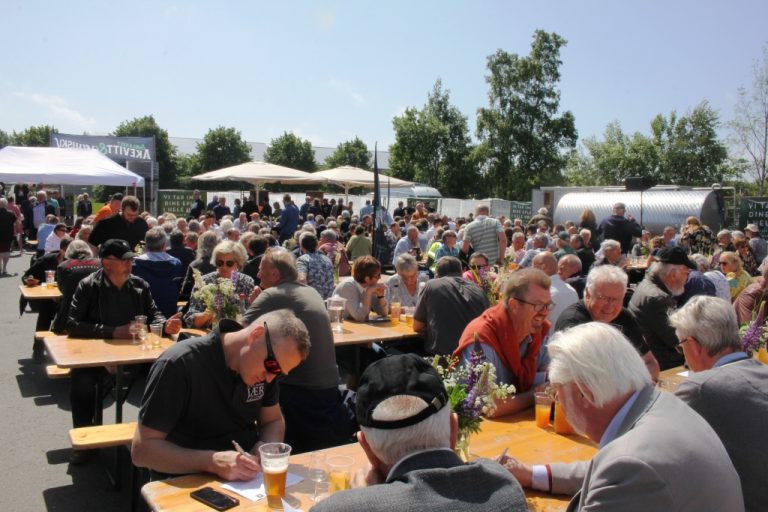


















 Solutions to problems are easy to find:
 There’s a rule for proper doses