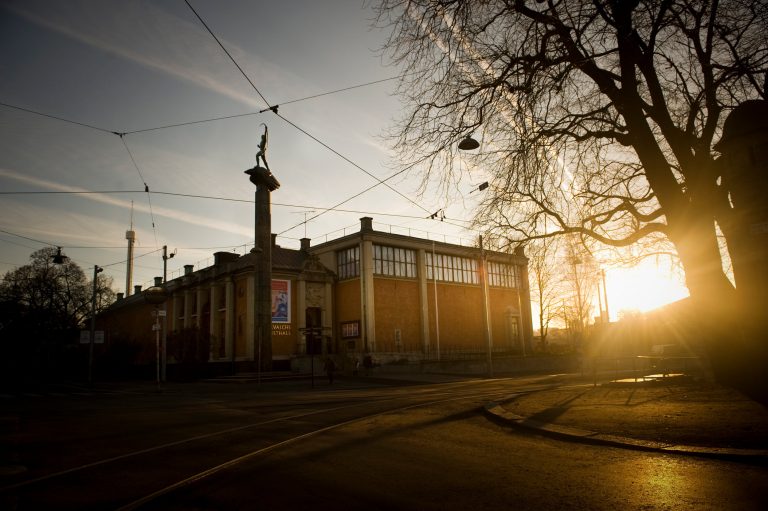
More than century-old history from the inaugural exhibition in 1916 is now on display in Liljevalch’s in Stockholm reminding us of highlights of the art gallery’s history. This year, the engine in Swedish art life celebrates 100 years.
In 1916, the Swedish Artists’ Association achieved the goal of creating an independent art gallery for permanent exhibitions of contemporary art. It all began with the top trio of the time, Carl Larsson, Bruno Liljefors and Anders Zorn, but has always been an art gallery for both art and crafts, internationally and nationally, classics and contemporary.
Painting of Carl Fredrik Liljevalch II 1906. Photo: Wkimedia Commons¨¨
The present exhibition is in fact 48 different exhibitions in which we are reminded of the breakthrough of modernists in 1918 and the Association of Swedish Artists’ Exhibition in 1921 with names such as Sigrid Hjertén and Siri Derkert, about the political 1960s with both The Nasty and Erotic Art, about Kjartan Slettemark’s poodle in 1975 and Hilma af Klint’s temple paintings in 1999.
The queues were long for Andy Warhol’s late works in 2004 as well as for Hanna Pauli, Anna Ancher and other female artists of the 1880s who were shown in De drogo to Paris in 1988.
In several exhibitions the home’s interior design and everyday design was noticed over the years starting in the Home Exhibition in 1917, and famous names such as Carl Malmsten, Märta Måås-Fjetterström and Josef Frank have of course been seen at Liljevalch’s.
Winter landscape with foxby Bruno Liljefors. Photo: Wikipedia
Visitors to Liljevalch’s have been able to enjoy both the Strindberg exposé August, a djefla exhibition in 2012 and the spectacular fashion vision Utopian Bodies. Fashion Looks Forward in 2015 was named Exhibition of the Year.
The Flower Window by Carl Larsson 1894. Photo: Wikipedia
However, the visitor record from 1952 still stands. Mexican art from antiquity to present day was a huge venture that required 12 train carriages for all objects and gained an audience of 212,431 people.
President Nixon by Kjarta Slettemark. Photo: Private
These are just some of the highlights that are being shown in the exhibition which will be displayed through January 16, 2022, in the Bergsten house.
Find out more about Liljevalchs 100 years anniversary here.
The Engine in Swedish Art Life Celebrates 100 Years, is based on a press release from Liljevalch’s.
This Scandinavian country has the right to be considered one of the best countries in the world. For many years in a row, it has been the leader in the human development index. It means that Norway has a high standard of life expectancy, education of the population and general standard of living. These 20 Interesting Facts about Norway might surprise you!
Norway is famous all over the world for its unique northern nature, a rich history of conquest, a progressive society and leadership in world rankings. Despite the harsh climate, it is very beautiful and popular among tourists.
Where else can you find out something interesting about this Scandinavian country? In this collection of 20 facts about Norway!
Norway is still officially a constitutional monarchy and is ruled by King Harald V. Interestingly, before that, kings named Harald were in Norway for the last time in the 12th century. His wife, Queen Sonja Haraldsen, is also known throughout the world.
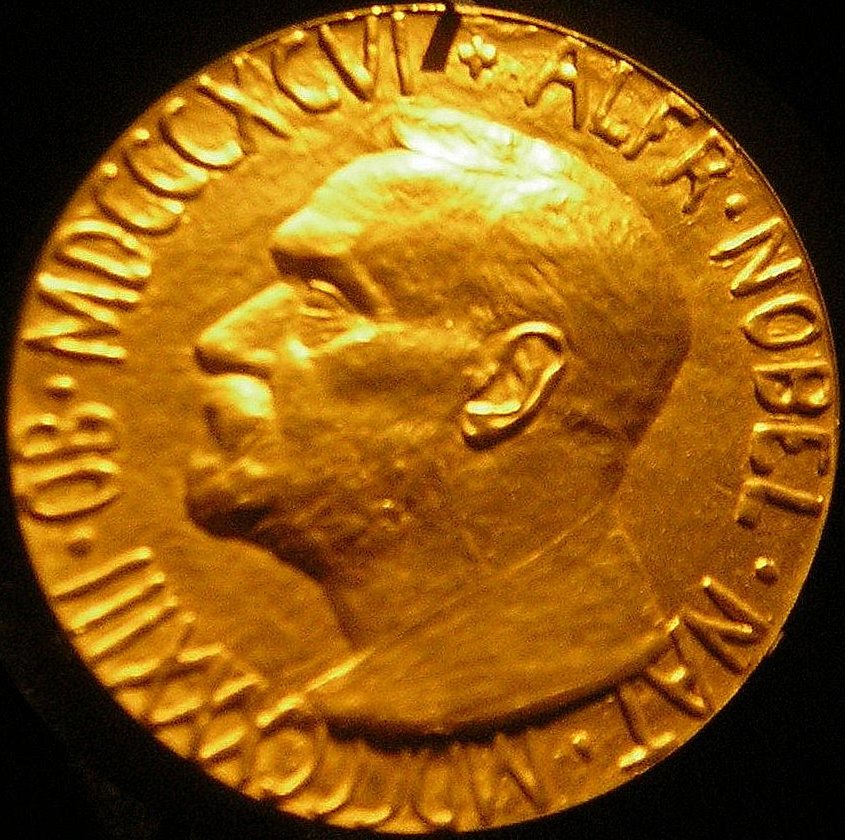
Bobel Peace Medal. Photo: Wikipedia
The Norwegian capital (Oslo) has been the venue for the Nobel Peace Prize almost every year since 1901. The other prizes are awarded in Stockholm, the capital of Sweden.
This country owns the most remote island in the world, Bouvet Island. This volcanic island, which is 93% covered by glaciers, is completely uninhabited. It became part of Norway in 1929, and since then the authorities of the country have preserved it as a protected area. Its area is only 49 square kilometers.
There is 43 kilometers long land border between Norway and Russia, and there is only one checkpoint. It is located in the settlement of Storskog on the E105 highway, and is the northernmost European road border crossing in Europe.
Ancient and modern skiing was invented in Norway. Norwegian Sondre Norheim is considered the father of modern skiing. At the end of the 19th century, he began using ski bindings and developed skiing techniques. However, the very creation of skiing goes deep into Norwegian history. The oldest skis were used in Norway as early as 4,000 years ago. Also, the “ski” words “slalom” and “ski” come from the Norwegian language.
Not surprisingly, Norway is the leader in the medal standings at the Winter Olympics. Throughout 2018, it managed to earn the most medals in winter sports. A total of 368 medals, including 132 gold medals. Its closest rival is the U.S. with 305 medals and 105 gold.
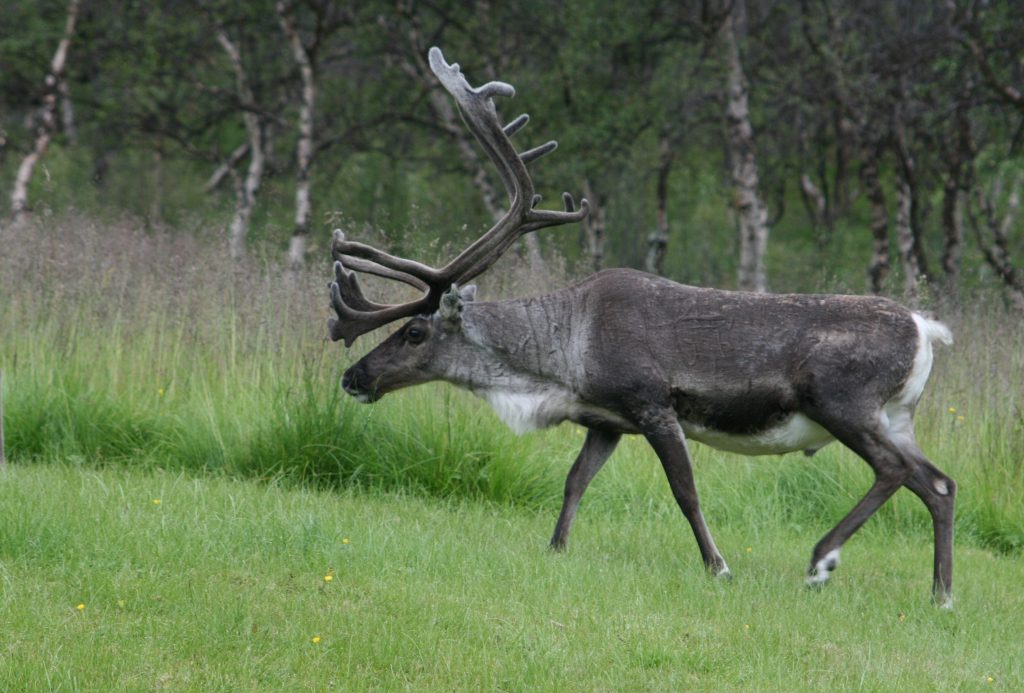
Largest nuber of wild reindeer. Photo: Wikipedia
The largest number of wild reindeer live in Norway – on the largest mountain plateau in Europe – Hardangervidda. The plateau is also the country’s national park and home to 7,000 reindeer. In total, there are about 25 thousand reindeer in Norway, freely walking on the plains.
Norway has two official languages – Nynorsk and Bokmål. Nynorsk is modern Norwegian, and Bokmål is book speech. And in its native, Norwegian, the country’s name sounds differently – in Bokmål Norge, and in Nynorsk Noreg.
About 98% of Norway’s energy consumption is produced by hydroelectric power plants. In the list of countries that produce domestic energy from renewable sources, Norway ranks 9th. However, the state actually produces more energy than all eight countries above it in the ranking combined. The country’s government has tightened energy efficiency standards for buildings and is agitating residents to use wood for heat.
Hornindalsvatnet, the deepest lake in Europe. Photo: Visit Nordfjord
Norway has the deepest lake in Europe, Hornindalsvatnet. It is 514 meters deep, although its area is small – only 51 square meters.
Dads in Norway can also take care of their newborn children. About 90 percent of fathers take a 12-week maternity leave, called pappapermisjon.
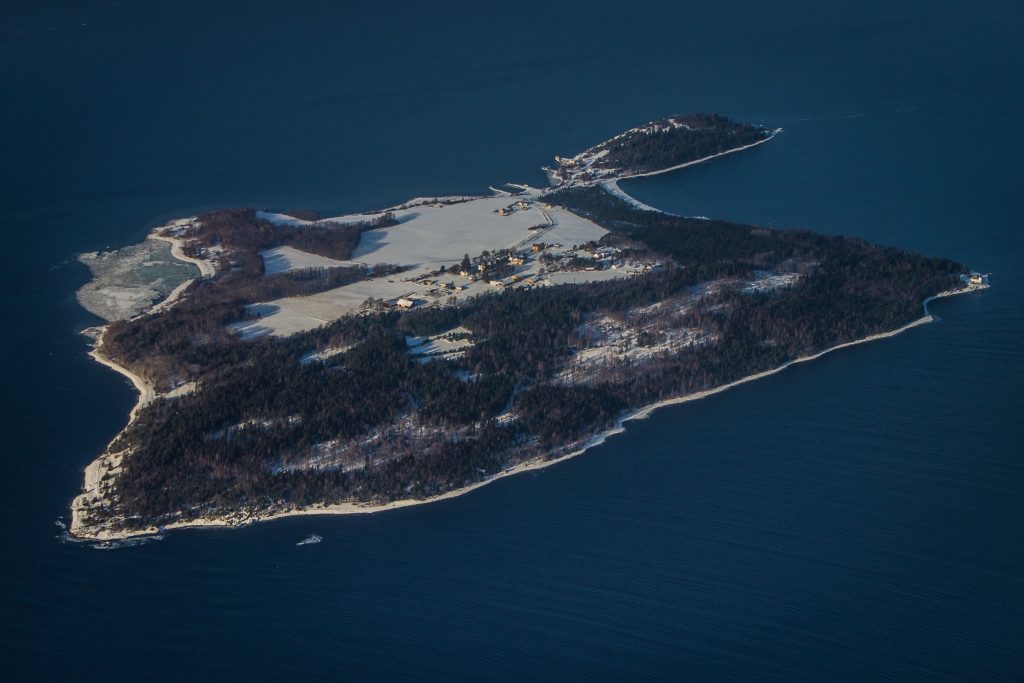
Bastøy, the m,ost comfortable prison in the world. Photo: Wikipedia
The Norwegian prison, located on the island of Bastøy, is the most comfortable prison in the world. The criminals here are quite serious – rapists, murderers and drug dealers – but they live in excellent conditions in wooden houses. At the same time, they walk in the woods and meadows, swim in the sea and work with domestic animals. It’s like a paradise!
In Norway, there is the Lærdal Tunnel, which is the longest vehicular tunnel in the world. it stretches for 24.5 kilometers and is divided into three artificial caves for resting drivers.
This northern country is home to the highest waterfall in Europe, Vinnufossen. Its height of 860 meters makes it sixth in the world ranking.
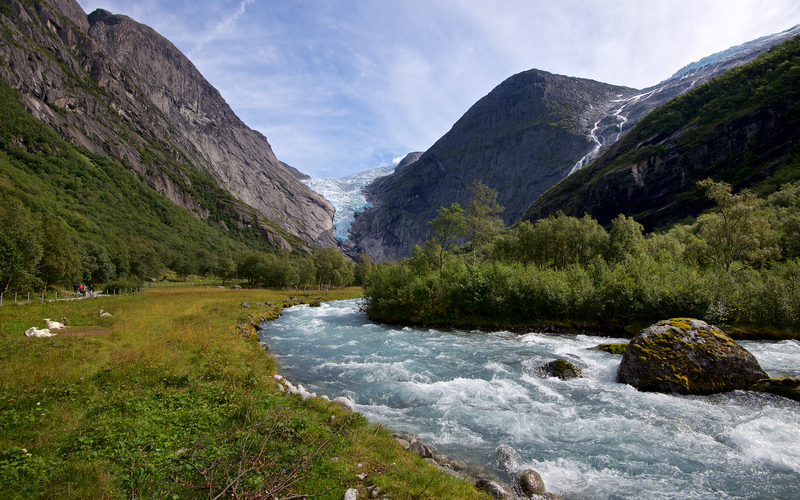
Norway has the largest glacier in continental Europe – Jostedal Glacier. Its area is 487 square kilometers, and there is a national park of the same name.
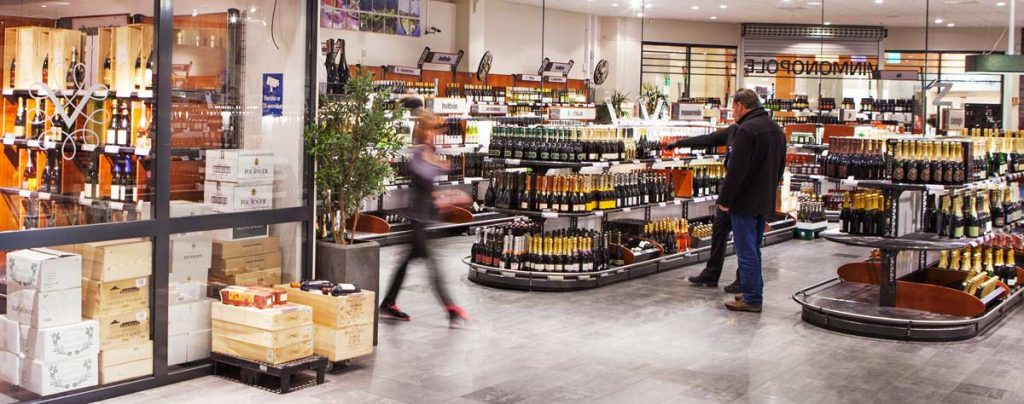
Wine monopoly Norway. Photo Ellen Jarli/Vinmonopolet
Alcohol policy in Norway is quite strict, alcohol is sold only in stores Vinmonopolet. In each city there are only two stores, in the countryside there are none at all. At the same stores on weekdays are open only until six in the evening, and on Saturday – until three.
One of the most prosperous countries in the world is not a member of the European Union. Yes, Norway has repeatedly considered joining the EU, but it never happened.
Akvavit, which translates to “living water,” is the national Norwegian drink with a strength of over 35%. It is made from alcohol that is distilled through potatoes with the addition of caraway seeds, dill and other herbs.
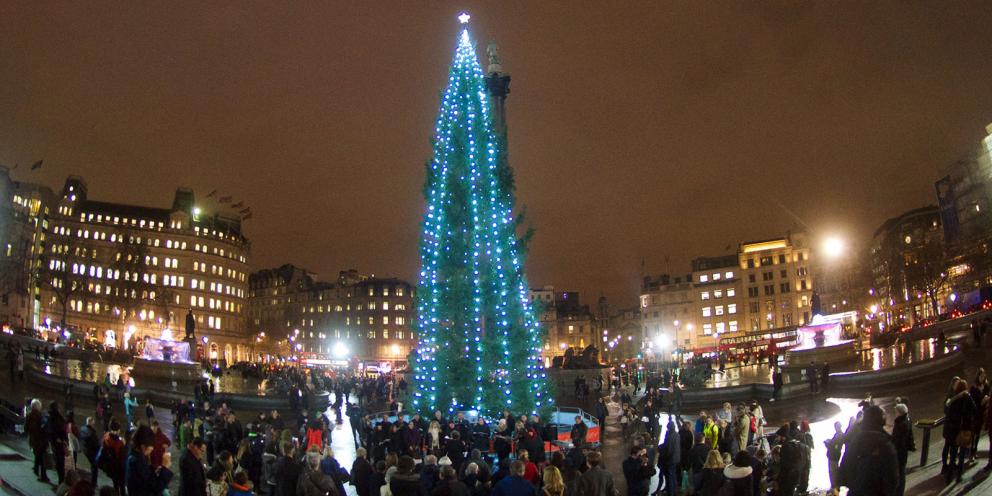
Christmas tree Trafalgar Square in London. Photo: London gov.
The Christmas tree installed in Trafalgar Square in London is a gift from Norway. Every year since 1947, the country has sent a Christmas tree as a thank-you for Britain’s support in World War II.
Norway is an amazing country that combines harsh and beautiful nature with a high standard of living. The country was the birthplace of the Vikings and was the birthplace of the legendary conquerors!
Jean Hartley
20 Interesting Facts about Norway, written by Jean Hartley. Jean is a qualified essay writer and English tutor. Her favorite subject at school was geography and literature. Therefore, Jean is very fond of writing about different countries and their customs.
Feature image (on top): Alexander Ludwig in the HBO Nordic TV series “The Vikings”
Larvik is perhaps best known for its beech forest and as the birthplace of the scientist Thor Heyerdahl. During the Viking Age, Kaupang became a hub for trade. A little-known fact, however, is that Larvik received its charter as a town on 29th September 1671.That’s’ why the town of Larvik celebrated its 350 years anniversary in September this year.
It was in 1671 that Ulrik Fredrik Gyldenløve, the governor-general of Norway, chose Larvik as his main place of residence and built the Manor House and the church at Tollerodden. Located on the shore of Viksfjord, not far from Larvik, it was the first town-like settlement in present-day Norway.
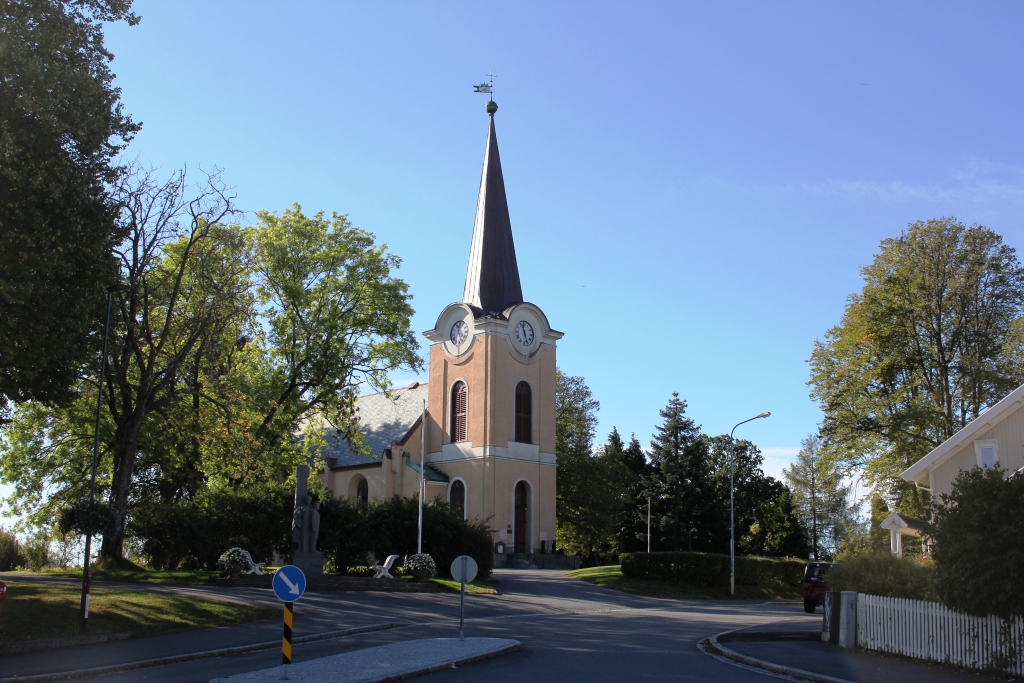
The Trinity Church of Larvik was commissioned in 1677
But according to Larvik Town Museum, we have to go further back in time to understand the history behind the emergence of the city of Larvik.
The Reformation and the change of power in Denmark-Norway in the 1530s opened up opportunities for ambitious nobles. From their new positions as suzerains, they established themselves as business leaders in Norway.
The main farm Fresje by the Farris lake quickly became a center for the important timber trade. At that time, 30 people were in the service of the nobleman Claus Brockenhus, and in total it may have been an “indigenous population” of around 100 people. Eventually, merchant citizens also came from the trading places Tønsberg and Skien on a regular basis.
A monument outside the LKarvik Trinity Church was the creation of Arne VigelandFrom Tollerodden in Larvik
An anniversary is not something that arises spontaneously, rather it is a politically determined act. It points as much forward, as it explains the past. In Larvik, as in many other cities in the early 20th century, there was a strong interest in local history. The “discovery” of Larvik’s past, with Gyldenløve and his genuine count’s residence, became a small national sensation. The story of the creation of the county and the city of residence was so unique and the splendor so strong, that the event overshadowed all previous events.
Let’s make the city’s history visible on its 350th anniversary of the city’s founding, the municipal council decided, and this year the anniversary was celebrated with various activities around the entire city.
Festiviteten, >Larvik. Photo: Wikipedia
One of Larvik’s venerable estates from 1792, Festiviteten, opened its doors after several years of renovation. The Festiviteten has an exciting history.
The municipality spent over 25 million kroner and even more years to save the historic building, but eventually, they gave up. Then, one day, everything changed. When no one else wanted to invest in the old building from 1792, a new owner, Thore Liverød, bought the property for one Norwegian krone. The municipality’s politicians who had tried to give it away, tear it down, refurbish it and sell it, were happy to get rid of the problem.
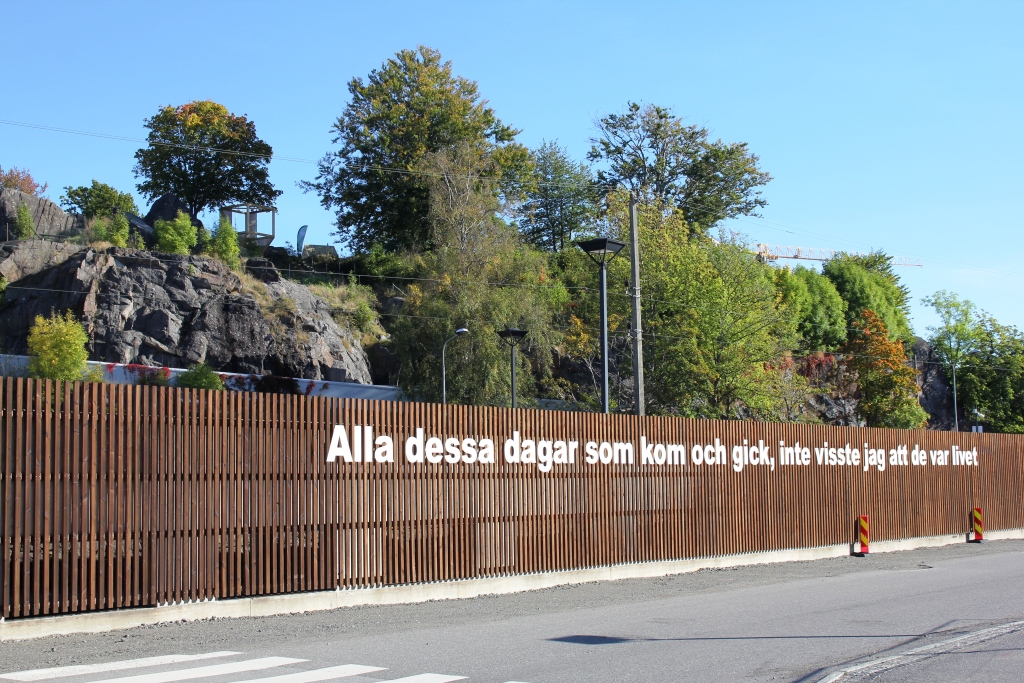
The Poesy City: Don’t complain under the stars about absence of vright spots in your lifeThe Poesy City: Alle these days which cane and went away, little did I know that these were life
Larvik is also called the city of poesy. It has more than 100 installations spread around in the city.
Larvik Mayor Eriok Bringedal arribes at Bøkker mountain
On the Bøkker mountain in the town center the Ritala/Eggertsson Architects in cooperation with the Larvik-based artist Chris Bould have created an art and architectural installation called “Tanzy Fumitory”.
A performance of Arne Nordheim’s fanfare Recalls and Signals, played by Nanset Wind Ensemble conducted by Odd Terje Lysebo
One of them takes the form of a stage, and will be a space for time-limited exhibitions and cultural events for the city’s artists and cultural actors for the next two years. The name Tanzy Fumitory is taken from Chris Bould and his literary work «The Tanzy Fumitory ».
The Nordheim fanfare ended with real gunshots
On the opening night of the Anniversary there was a performance of Arne Nordheim’s fanfare Recalls and Signals, played by Nanset Wind Ensemble conducted by Odd Terje Lysebo.
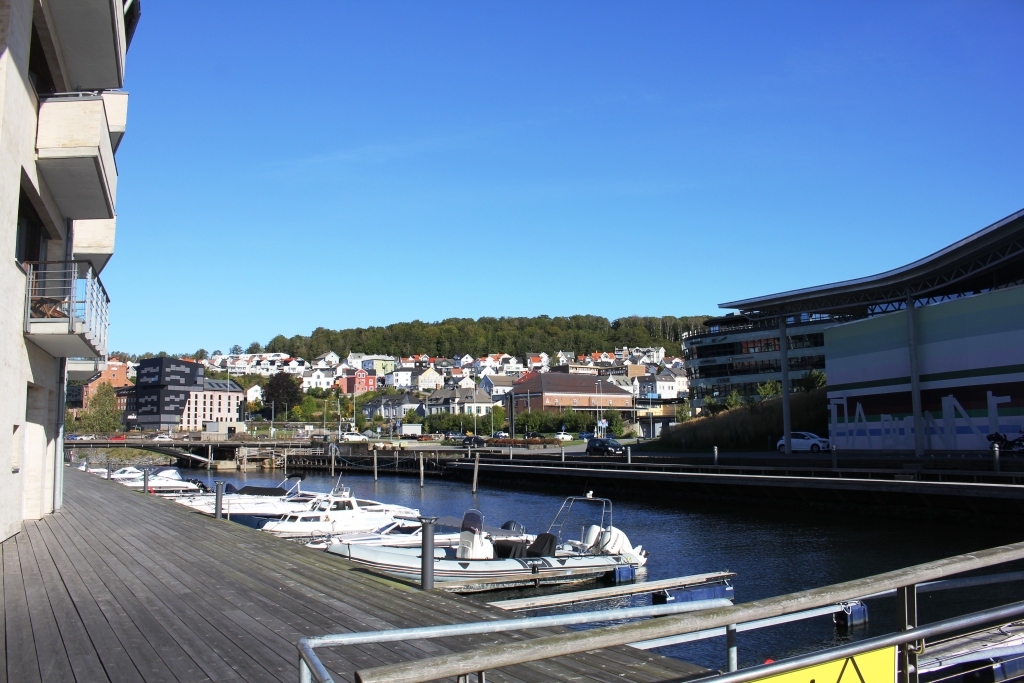
The Wave cultural center
In the culture house Bølgen (The Wave), there were several events with both concerts and exhibitions. The impressive wave-shaped cultural center the Wave houses a gallery that during the festival had an interesting mix of cultural events such as a photo exhibitions and a world premiere of a film on Norwegian ocean landscapes made by the Norwegian photographer Terje Rakke. The Wave was designed by the famous Norwegian architect Niels Torp.
Children learning traditional timber building in the Manor garden
For the occasion, the green oasis Herregårdshagen in Larvik was transformed into a temporary garden with “experiences for all the senses”. 20 students and teachers had joined forces to create this facility as an interpretation of Norway’s first and largest baroque garden facility that was originally located here in the 17th century.
One might think that traditions such as city anniversaries and similar celebrations of events linked to towns and countries, are not suitable for our time. It tastes perhaps a bit of old-fashioned solemnity and squeaky party speeches.
However, the tendency is the opposite; we celebrate more than ever and the need for history as a reference is strong. History is used to create pride and community – in other words, identity. It points as much forward, as it explains the past. In Larvik, as in many other cities in the early 20th century, there was a strong interest in local history.
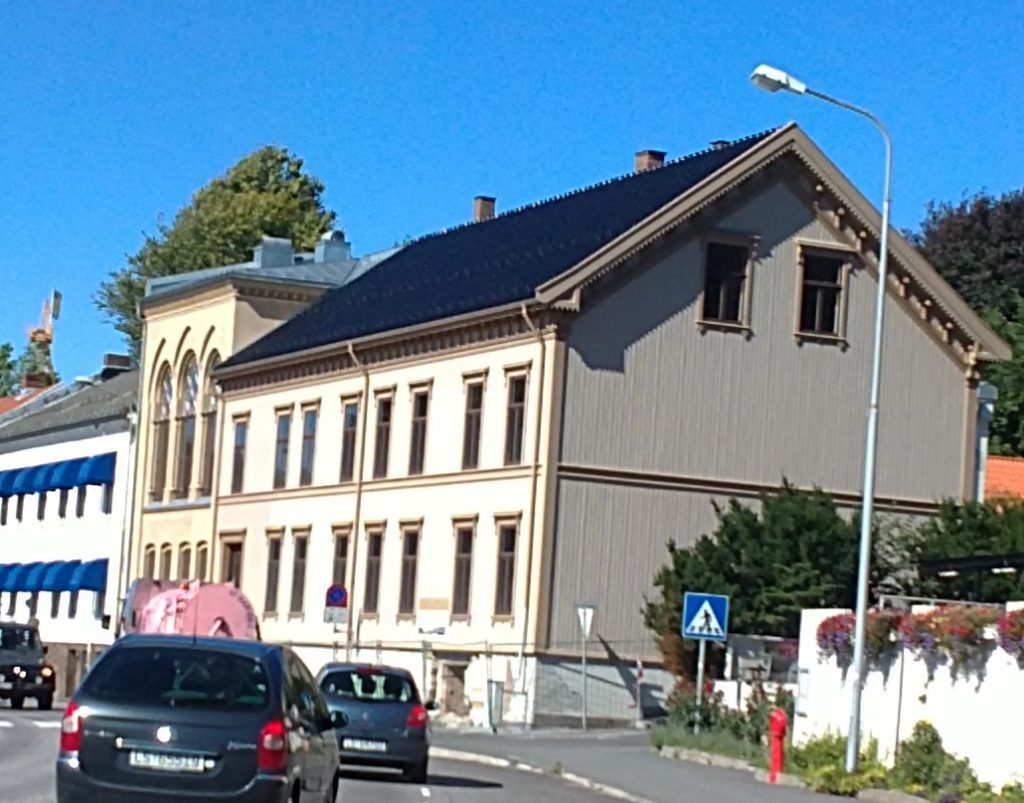
Old house in Larvik main street
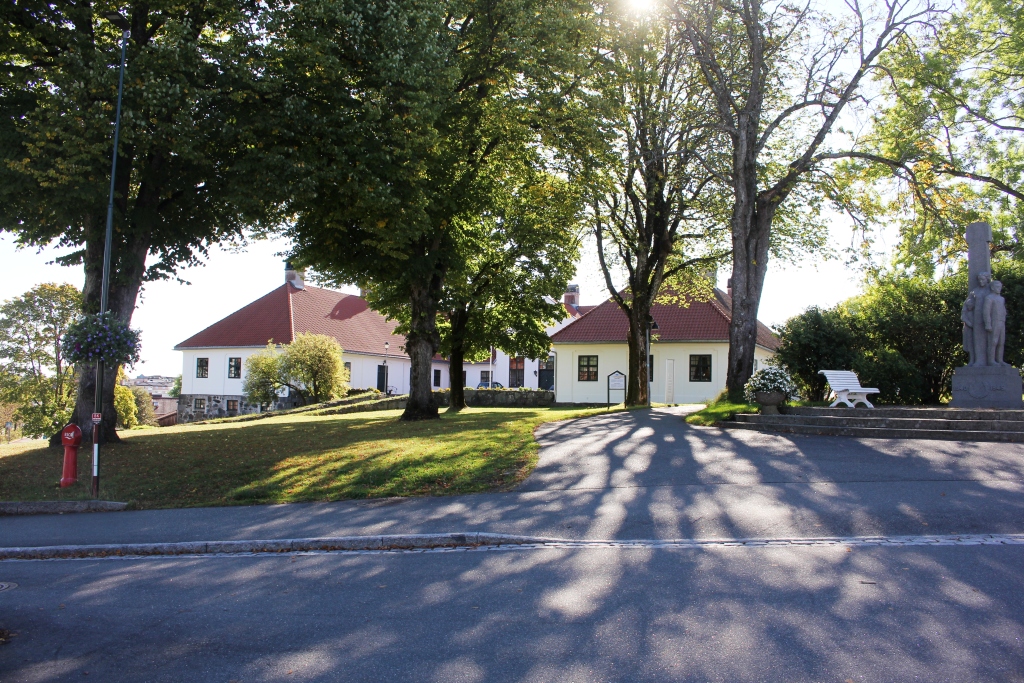
On a stroll at Tollerodden by the port of Larvik, you should pay a visit to the Trinity Church Larvik Kirke. It was commissioned in 1677 and finished in 1763. A monument outside is the creation of Arne Vigeland, who was commissioned to erect a memorial to Norwegians who died in World War II. Inside its chief treasure is Suffer the Little Children to Come Unto Me, an altarpiece painting by Lucas Cranagh that was commissioned by Duke Gyldenløve.
Hotel Farris Bad is THE place to stay when in Larvik. The spa hotel is one of the largest spa-departments in Scandinavia and we’ll give you an extensive review of it in the near future.
From Tollerodden
Famous people from Larvik are among others Thor Heyerdahl, composer Arne Nordheim, master boat builder Colin Archer and author Anne Holt.
Larvik 350 Years Anniversary, text and photos by Tor Kjolberg (except where otherwise noted).
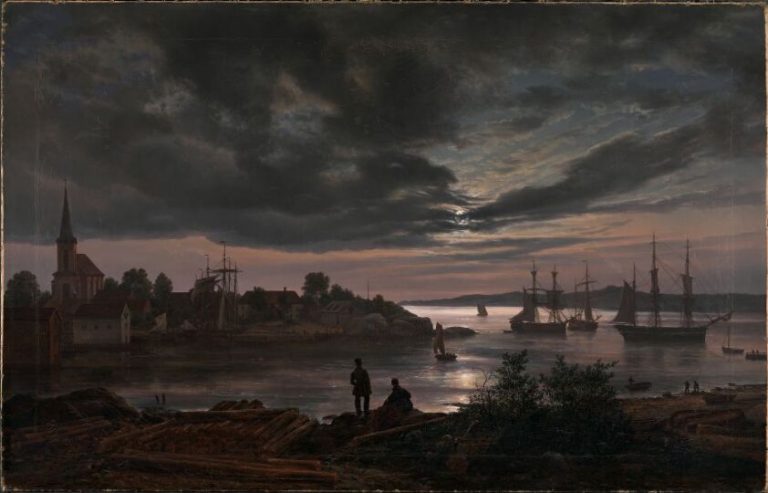
Feature image (on top): Moonshine over Larvik harbor. Painting by J. C. Dahl (National Museum)
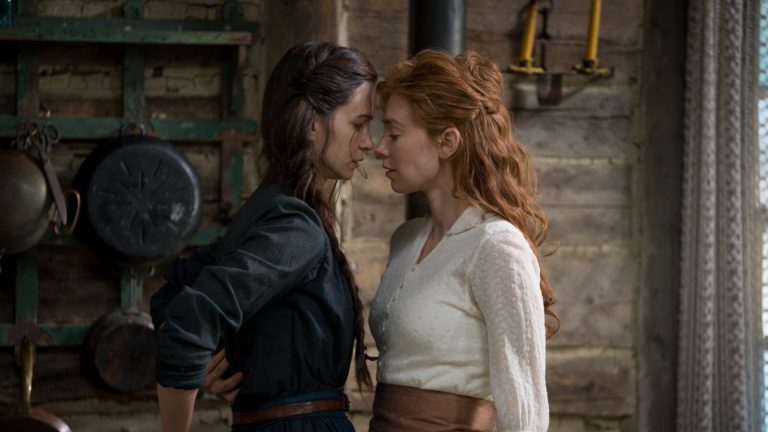
The World To Come is Norwegian filmmaker Mona Fastvold’s second feature film in which Katherine Waterston and Vanessa Kirby interpret two women from the 19th century USA who fall in love with each other. Read more about the Norwegian film director who creates American women’s history.
Her debut feature from 2014, The Sleepwalker, wowed the Sundance public. Subsequently she produced and co-wrote Childhood of a Leader and Vox Lux with her domestic and creative partner Brady Corbet and later The Mustang with the writer of Yardie and Bronson, Brock Norman Brock.
Now, there are whispers of a new genre in the cinema landscape: the lesbian period drama. The World to Come had its world premiere at the Venice Film Festival in September last year, where it won the Queer Lion Award for best film with a LGBTQ theme.
The World to Come is an 1850s frontier romance which moves us into the forests of Schoharie County, in the State of New York in 19th century America. (Screen print)
The World to Come is an 1850s frontier romance which moves us into the forests of Schoharie County, in the State of New York in 19th century America. Abigail (Katherine Waterson) and Dyer (Casey Affleck) own a cold and isolated farm. The farmer’s wife is grieving for her dead daughter, who becomes drawn to Tallie, a glamorous new neighbor. Abigail’s quiet, sensible husband Dyer (Casey Affleck) provides a counterpoint to Tallie’s jealous, suspecting partner, Finney (Christopher Abbot).
It’s a film that has inevitably been characterized as a period, lesbian Brokeback Mountain, and which premiered to rave reviews at Venice last year. There, Fastvold picked up both the Fanart Award and the Queer Palm. By any measure, The World to Come is an auspicious second feature, even if it wasn’t what Fastvold had planned.
It’s worth noting that giving queer stories a period setting has always been one of the safest ways to bring them to the big screen. Historical often equals prestige, and whether it’s Brokeback Mountain, Carol or Call Me By Your Name, Hollywood producers seem to think romance has an extra kick to it when paired with a bygone era.
Mona Fastvold says that there has been no conscious strategy on her part to apply to the USA instead of Norway
Fastvold says that the film project was presented to her by the producer Whitaker Lader, who is Affleck’s producer partner in the company Sea Change Media. “I worked on a different film that I wrote for several years,” says the director. “It was also quite an ambitious film. And I just could never get the budget where I wanted it. I kept being told that I needed to be under a certain price level. And I feel that that’s something that a lot of female film-makers struggle with, because often financiers seem more comfortable with women telling small, intimate stories. To make bigger movies, they want to see the next Kubrick walk in the door. And I don’t look that much like Stanley Kubrick. It’s like people don’t associate female film-makers with auteurs. So they’re scared of taking a chance. Which, of course, is not true. There’s plenty of female auteurs who make fantastic movies».
The director says that there has been no conscious strategy on her part to apply to the USA instead of Norway, but that she felt that the American film industry was just as accessible to her. It’s the first time that Fastvold has directed material she hasn’t originated herself, an experience she describes as “strange and luxurious”. The script came from writing team Jim Shepard and Ron Hansen; the latter previously collaborated with The World to Come star and producer Casey Affleck on Andrew Dominik’s The Assassination of Jesse James by the Coward Robert Ford. The varying authorship creates an interesting to and from between genders. The film is a woman’s story written by men, mediated by a very open and creative set, and the female gaze of the director.
Now, there are whispers of a new genre in the cinema landscape: the lesbian period drama.
The director says that she wanted to give these women a beautiful and sensual love story. She wanted to evoke films of a bygone era. It’s easy to approach period pieces or queer films with a lot of restraints but she wanted it to be lush and seductive.
“I have been in the US for so long, and in a way understood how I could make films within the American model. Before that I worked as a child actor on TV, with soap operas and a lot of different things in Norway, so I learned the subject in an unorthodox way. That background was perhaps not an advantage in Norway, while the knowledge I had was enough for me to put together and finance a film in the USA,” she says.
As the title of the film suggests, the world to come could, and should, be brighter.
Norwegian Film Director Creates American Women’s History, written by Tor Kjolberg
We’ve recently visited Voss, and from this charming little mountain town, we take the train to Bergen. In this article, we’ll concentrate on some of the charming islands just off Bergen Norway.
If you’re going by car, you could drive the E16 from Voss, but as train enthusiasts, we go by train as often as possible. North of the city of Bergen, two islands, Askøy and Osterøy have their own character, while the long narrow island of Sotra to the west shelters Bergen from the North Sea.
The long narrow island of Sotra shelters Bergen from the North Sea. Photo: Wikipedia
Sea-canoeing around small off-shore islands
It’s a good base for sea-canoeing in and out of the small offshore islands and rocks and, in good weather, as far as the open sea to combine canoeing with ocean fishing.
The area around Bjørnafjord (Bear Fjord) to the south of Bergen, is very green and enjoys a particularly mild climate.
Farm family Holset Aqua near Storfjorden. Photo: EA Hofseth Stordahl/Innovation Norway
Fish farming at Nordfjordland Nordfjordland is a district of islands north of Bergen, that stretches as far as Sognefjord. Fish farming is the economic mainstay here, and the region exports salmon and trout all round the world. There is good sea fishing for cod and coalfish, and rosy-colored trout inhabit many of the lakes. Diving and sub-aqua fishing are easy in these transparent waters.
Oil is still important
Oil is a modern, though not conflicting industry in this area, with the Mongstad refinery illuminated at night.
The Briksdal glacier at Nordfjord. Photo: Visit Norway
To the north, the remote island of Fedje was an important navigation point for many centuries, with two 19th century lighthouses. Norwegian maritime rules insist that all ships must carry a Norwegian pilot, which here is vital, as tankers serving the Mongstad refinery navigate through the everchanging waters.
The Islands North and Around Bergen Norway, written by Tor Kjolberg
Feature image (on top): Bjørnafjorden fleeting bridge. Photo: Norconsult
Works by one of the brightest stars of Swedish art history, Anders Zorn, are now on display at Orderupgaard Art Museum in Copenhagen. Zorn has been of great significance for the perception of Swedish culture through his portraits of life in Dalarne. Read more about Swedish art history on display in Denmark.
Based on local life – nature, homelife and local traditions – Zorn evokes timeless ideal images of the good life. Moreover, the works attest to a local social engagement and the belief in the importance of the local community, themes that are highly topical in our own times.
Anders Zorn. Self portrait 1915
50 works on display
The exhibition, collocating fifty works by Zorn plus a few items of furniture from Emma and Anders Zorn’s home in Mora, forms part of a series of exhibitions about Nordic artists’ homes at Ordrupgaard.
The Swedish artist Anders Zorn (1860–1920) was one of the best-loved and most acclaimed artists of his time. Already from a young age, he achieved great success on the international art scene with his flattering portraits of society’s bigwigs from art collectors and financial moguls to American presidents. However, there was another side to Zorn, far removed from metropolitan feted artists’ lives and high social circles. Throughout his life, Zorn always returned to his native area of Dalarna and the local life in which he was deeply rooted.
«I deeply long for the old peninsula, the best under the sun. Soon nothing else will do for me than things Swedish» wrote Anders Zorn in 1884 in a letter to his betrothed, Emma Lamm (later Zorn).
The Swedish artist Anders Zorn (1860–1920) was one of the best-loved and most acclaimed artists of his time.
A testament of the artist’s love for his native town Mora by Lake Siljan Already in 1886, Zorn and his wife Emma bought a plot of land in his native town of Mora by Lake Siljan in Dalarna County. Ten years later, the couple settled permanently in this area. This became a turning point for Zorn, who now turned even more to Swedish nature and the Mora residents portrayed in their original environment. It was not a case of a nostalgic or romantic looking back to a world before it was thrown out of joint, but rather of empathetic and supportive portrayals of the local population, which Zorn himself felt closely associated with, nourished by a deep-rooted wish to pass on the cultural life of this area.
The couple’s engagement in the region resulted, for example, in the establishment of Mora Folk High School which taught local music, dancing, cabinetmaking traditions, and textile art and, later, the setting up of Mora Open-Air Museum.
Important for the understanding of Swedish culture Zorn’s attachment to the area around Mora is manifested in atmospheric portrayals of the archipelago, the seasonal celebrations, the sauna, and popular Dalarna culture. The works are, like Larsson’s, very significant for the understanding of Swedish culture. To the Zorn couple, Mora came to symbolize things that were unspoilt which, in contrast to contemporary industrialization, emphasized local traditions and crafts. Now, hundred years later, their ideas appear visionary and relevant as a contrast to the rising consumerism.
Breakfast in the green. Merchant Adolf Magnus painted by Anders Zorn in 1886. Photo: Wikimedia Commons
The exhibition is now open and lasts through 9 January 2022.
The exhibition is financed by Aage og Johanne Louis-Hansens Fond and Augustinus Fonden
Swedish Art History On Display In Denmark, based on a press release from Ordupgaard
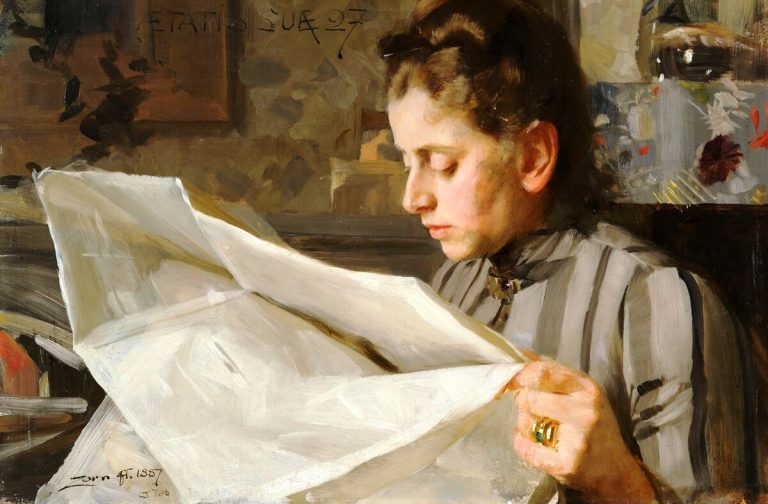
Feature image (on top): Emma Zorn reading. Photo: Store norske leksikon
The summer we met, Lillian had the age of eighteen summers and I was twenty-four. We were volunteers in a work camp in Pollock Castle, Newton Mearns, near Glasgow, under the auspices of the Christian movement “Oekoumene”. It had taken me a whole week to reach Scotland by hitchhiking. Read the story of Swedish Lillian of the Eighteen Summers.
This article has been deleted by request of the author.
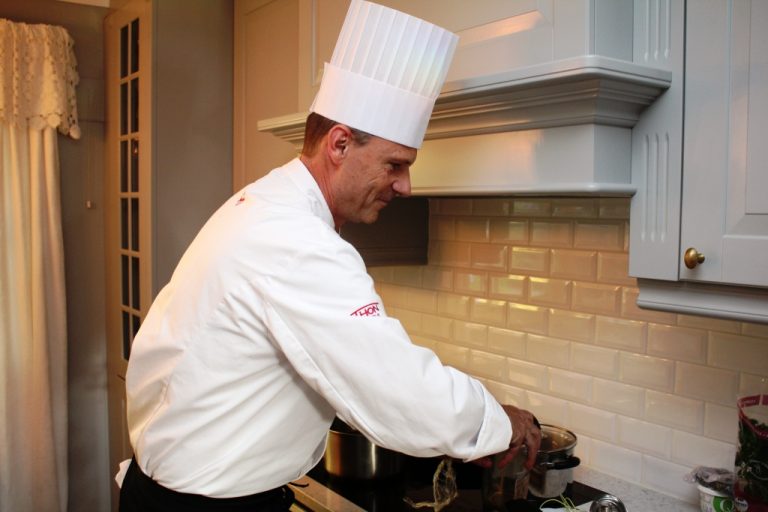
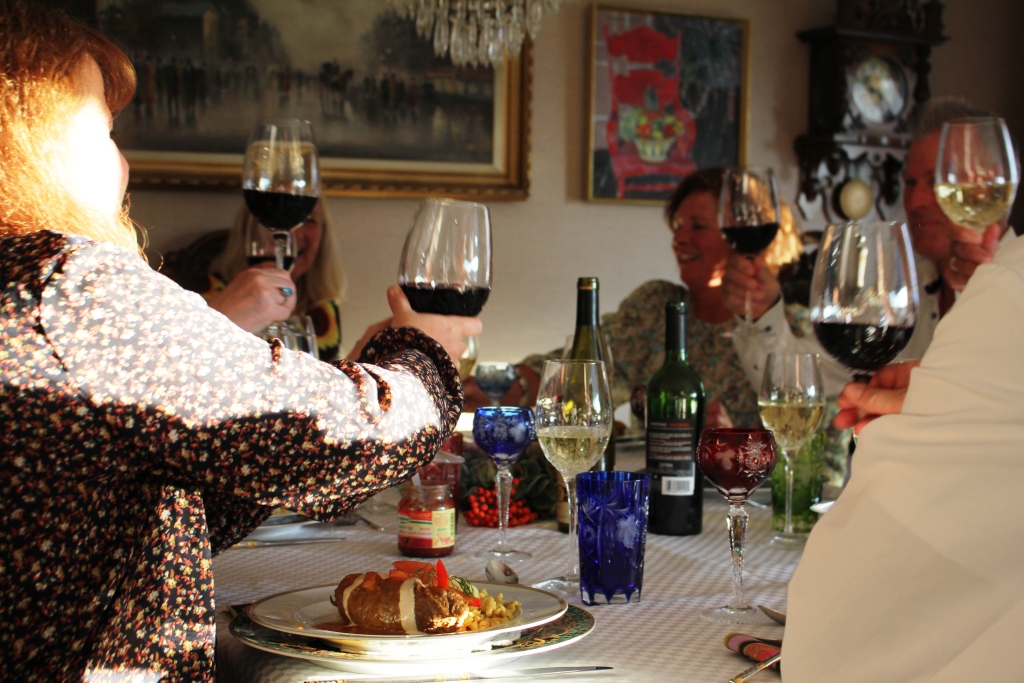
Want a top restaurant-quality dinner in the intimacy of your own home? Invite master chef Laszlo to your apartment where he will treat you to a bespoke gourmet experience where he will work his magic in your kitchen. In fact, we invited him to our home – it was delicious in a relaxed atmosphere. Laszlo is your private chef for luxury private dining in the Oslo area.
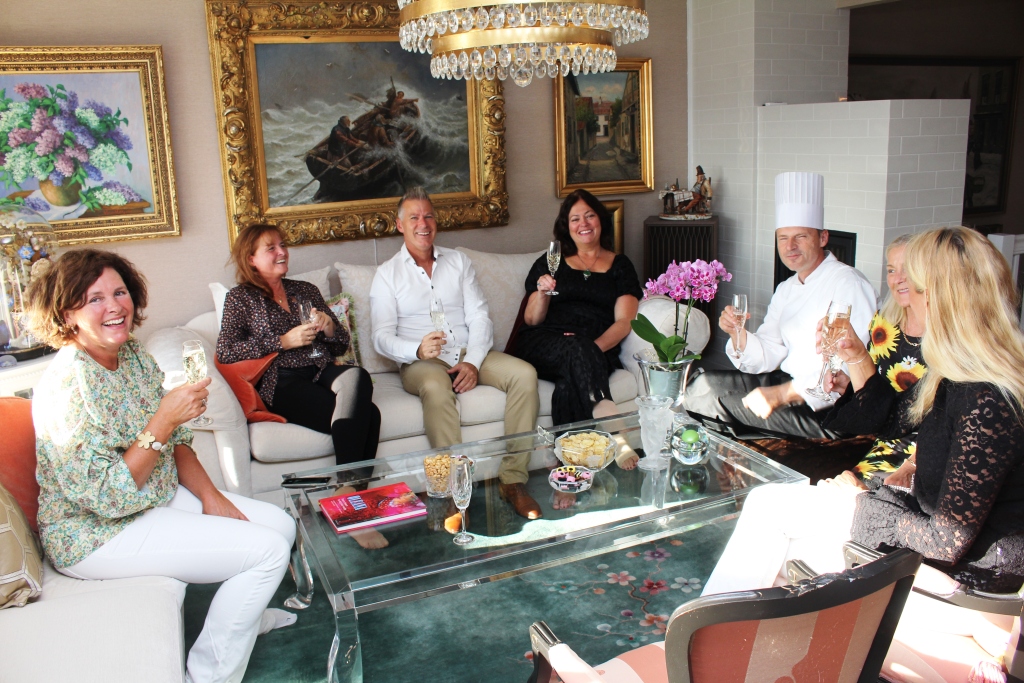
Private dinner parties are a fantastic way of spending quality time with your guests whilst enjoying the treat of fine dining. In our home, we were eight guests, thus, we assure you from first-hand experience, Laszlo can easily cater for dinner parties throughout the Oslo area with menus completely bespoke to your specific tastes and dietary requirements.
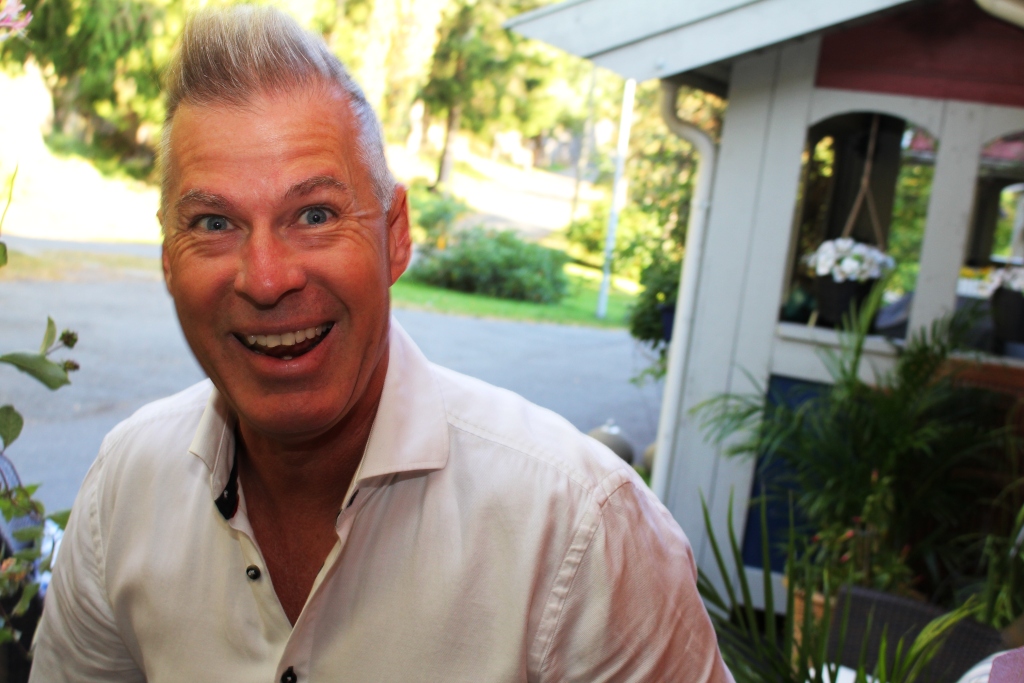
Expectant guest arrivingAperitif – Laszlo explaining about the evening’s menu
Luxury private dining
In collaboration with the host, he creates dishes using the highest quality, seasonal ingredients, offering something for every taste. He has become an expert on the food of many nationalities. He is happy to prepare them or help his clients to make them. He is also more than happy to give advice to those who have eating or health problems to enjoy cooking and eating again.
Since Lazlo is from Hungary, we decided to arrange a Hungarian dinner, where he prepared three dishes:
Starer: Ujhazi – chicken consommé
Chicken consommé
Main dish: Csáky – Beef roulades with wheat balls and paprika sauce
Beef roulades
Dessert: Knödel (dumpling) – Hungarian cottage cheese with strawberry sauce.
Hungarian cottage cheese with strawberry sauce
We have all spent a delightful evening with not only exquisite food creations, but with plenty of great advices about how to optimize our time spent in the kitchen, and how to integrate seasonal ingredients into our everyday cooking habits. Consequently, we have already begun thinking about our next event.
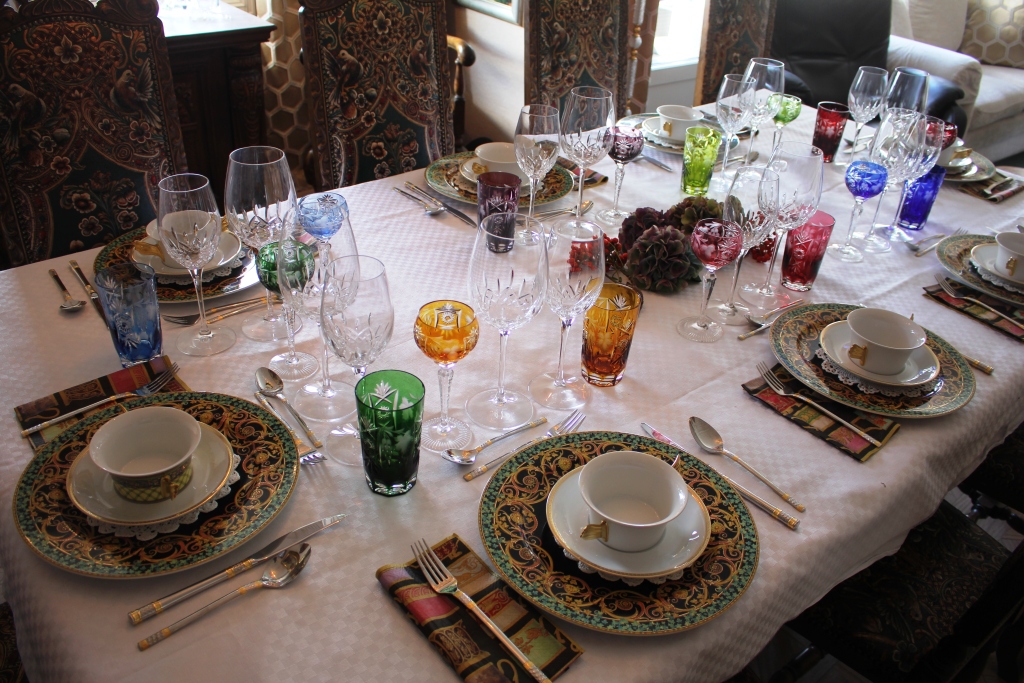
Please be seatedAn elegant settingA successful dinner
Dinners for larger groups
However, small private dinner parties are just one option. What about jubilees, barbeques, business gatherings or weddings? Not forgetting kitchen and fridge optimization, cooking class for your family and business? Because, Laszlo will be there for you.
Dinner for 50 peopleLaszlo in the kitchen with colleague Istvan Solberg
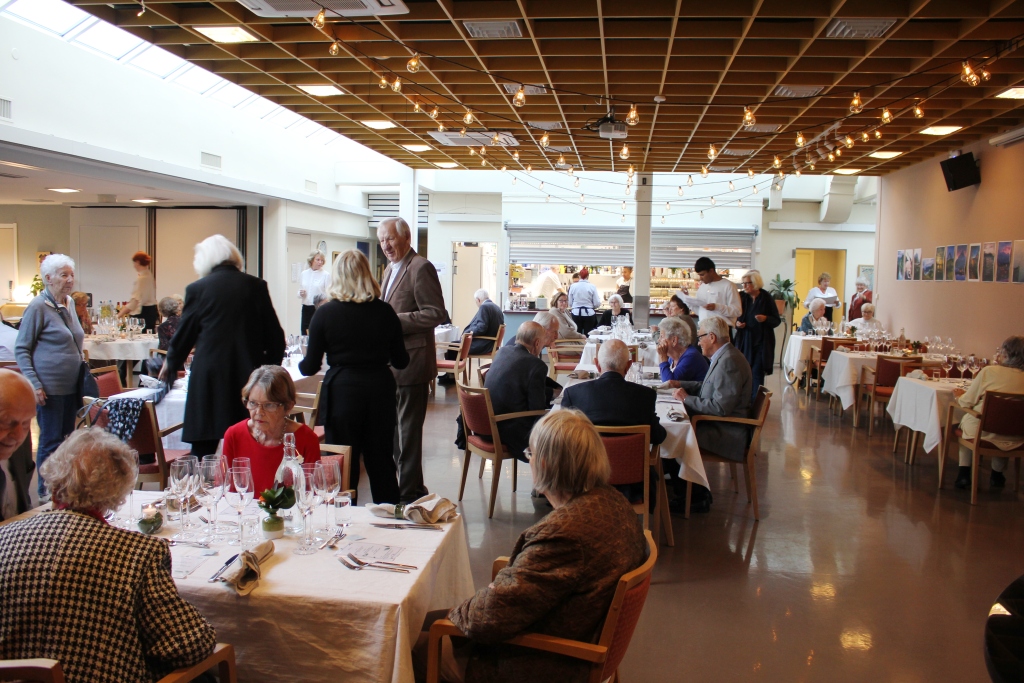
We also attended a community arrangement I Oslo. The district had received funds from the municipality to arrange 5 dinners for residents in one of the capital’s regions In connection with covid-19. Laszlo, together with executive chef at Galla Catering, Istvan Solberg, had created a typical Norwegian dinner:
Starter: Trout tartare with sour cream, lemon, caviar, salad and toast
Trout tartare with sour cream, lemon, caviar, salad and toast
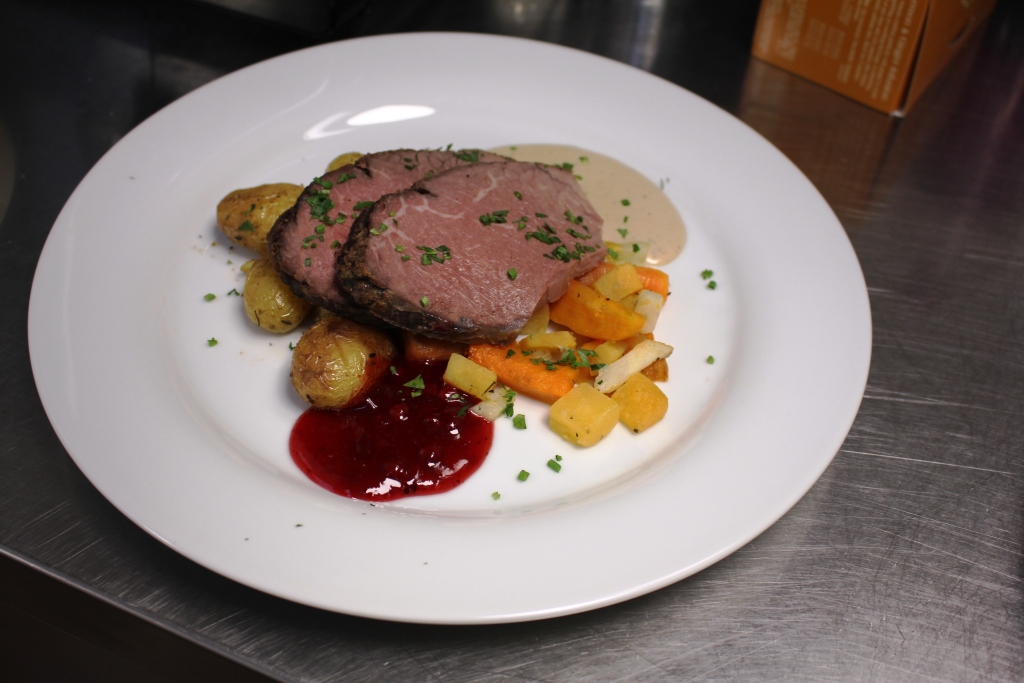
Main dish: Veal roast with creamy sauce, thyme marinated potatoes and root vegetables
Veal roast with creamy sauce, thyme marinated potatoes and root vegetables
Dessert: “Peche melba” (Peaches, piece of cake and whipped cream).
Peche melba” (Peaches, piece of cake and whipped cream)
Two of the guests, Siri Nylandrl and Rosemarie Kurt, living in the Skovheim Allsenter, where the event took place, had participated in three of the dinners and couldn’t praise the arrangement enough. An elderly lady from the area told us she felt like a queen, being picked up by a taxi from her residence, allowing her to attend a heavenly dinner and driven home again when it all was over.
Two of the guests, Siri Nylandrl and Rosemarie Kurt (in the middle one of the evening’s waitors)
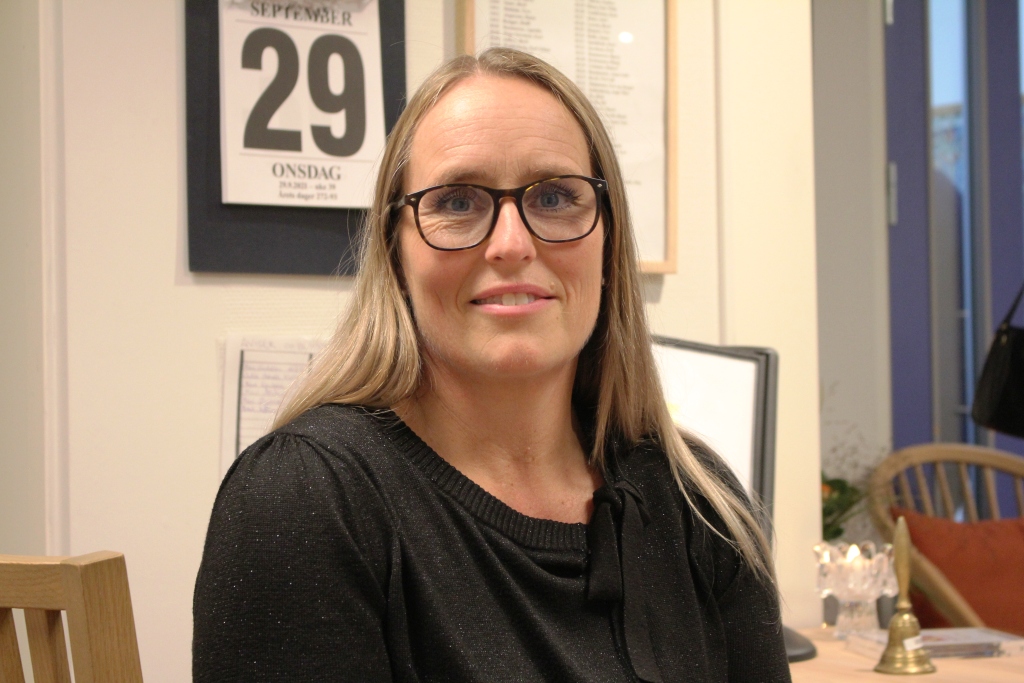
Executive leader of Skovheim, Benthe Vik Andreassen, says she is grateful to have had the opportunity to create these dinner parties for groups of 50 people. “It has been very special and absolutely outstanding,” she says.
Executive leader of Skovheim, Benthe Vik Andreassen
Laszlo Tankovics is from Budapest and is a professional chef, who has established and run acclaimed restaurants in the Hungarian capital. He was in charge of the kitchen of the Norwegian embassy in Budapest for 10 years, where his interest for Norway was established. He moved to Oslo in 2008.
Laszlo Tankovics
Taste the transformation
Now, he proposes his gourmet know-how to a wider public, while he aims to share his decades of culinary experiences with both private and business clients who wish to spend a joyful time in their kitchen or in their dining room. “I have learned so much from hectic kitchen work and since I am also a certified coach, I want to tell people how they can learn to cook and at the same time master private challenges,” he says. He adds, “I love challenges in life and I learn something new out of them, thus I wish to share this knowledge with people in order to help them achieve a healthier, consequently happier lifestyle”.
You can learn more about Laszlo and his Cooking & Couching course at Taste the Transformation. His contact information is also there. Readers of Daily Scandinavian can reach him on telephone 047 93485487.
Scandinavia does not have as many billionaires as many other European countries. The region has 57 billionaires, with Sweden and Norway accounting for 31 and 12 billionaires, respectively. In this article, we discuss 9 of these rich Scandinavians and their businesses.
Even though not many of them are in the region, these few billionaires are not inferior to others from other countries.
Stefan Persson. Photo: Wikipedia
Stefan Persson This Swedish billionaire is the richest in the region, with a $13.5 billion net worth. He was the CEO of H&M (one of the largest fashion groups in Sweden) until he handed over to his son in January 2020 after 11 years of filling that position. However, he remains the largest single shareholder of the company, with over one-third of the company’s shares.
Jorn, Kirsten and Finn Rausing As mentioned in an essay writing service UK, this Swedish family is among Scandinavia’s wealthiest people. The Rausing family is famous in Germany for its Tetra Pak (belonging to Tetra Level Group). Kirsten, Finn, and Jorn are grandchildren of the founder Ruben Rausing and are members of Tetra Laval’s Board of Directors.
Tetra Pak founder Ruben Rausing. Photo: Wikipedia
In addition, these siblings have shares in International Flavors & Fragrances (a New York-based company manufacturing aroma and fragrance substances). Jorn is also involved in Ocado and has a $10.3 billion net worth, while the other siblings are at $9.1 billion.
Andders Holch Povlsen. Photo: Bestseller
Anders Holch Povlsen This is the richest man from Denmark and one of the richest Scandinavians. His fortune is mainly from the fashion industry. He started leading his family company, Bestseller, when he was 28. He also holds shares in several other businesses such as Asos and Zalando, Nemlig, and Klarna. He achieved notoriety after the killing of three of his children in Sri Lanka during a terrorist attack.
Niels Peter Louis Hansen. Photo: Hansen fonden
Niels Louis-Hansen Niels, the deputy chairman at Coloplast (a medical technology company), is another Dane on the list. His father founded the company in 1957, and he is currently the majority shareholder with one-fifth of the shares. He is also a shareholder at Ambu (another medical technology company) and worth $7.4 billion.
Kjeld Kirk Kristiansen. Phot0: Wikimedia Commons
Kjeld Kirk Kristiansen Kjeld Kirk Kristiansen is the owner of the Lego toy icon. The long-time boss at Lego now has over 75 percent of his company’s shares distributed among his three children Agnete, Sofie, and Thomas, to ensure that it remains a family possession.He left his position at the company in April 2019, with his son Thomas being the Board of Directors deputy chairman. Apart from this toy company, they are also shareholders at Legoland amusement park with other investments in real estate and wind farms. He is currently worth $ 6.1 billion.
Frederik Paulsen The billionaire inherited a pharmaceutical company from his father in 1983, and that was the infancy stage of the Ferring group. Today, the annual turnover has grown from $ 15 million to more than $2 billion.
Frederik Paulsen jr. Photo: Wikipedia
The company now has thousands of employees across 60 countries. He remains the chairman of the company’s board to date, and although he is from Sweden, he is based in Switzerland. He currently has a net worth of $5.8 billion.
Melker Schorling. Photo: Melker Schorling AB
Melker Schorling Melker Schorling took over Securitas (Swedish security group) in 1987 as the CEO. He later founded his investment company in 1999 and went public after seven years. He currently holds shares in Assa Abloy (a lock system manufacturing company) and Hexagon (a Swedish technology and software measurement group). He retired from his positions in management in 2017 and handed these offices over to his daughters. Schorling is also one of the largest property owners in Sweden. According to Forbes, the family has a net worth of $ 5.6 billion.
Antonia Axson Johnson. Photo: Wikimedia Commons
Antonia Axson Johnson
Antonia Axson Johnson has led the Axel Johnson Group (an active retail company across Sweden and several other European countries) for about 40 years. She took over this business from her late dad in 1982 and handed the reins of chairmanship in 2015 to her daughter. However, she remains the company’s owner and member of the board of directors. She has a net worth of $ 5.1 billion.
Bertil Hult. Photo: Wikimedia Commons
Bertil Hult Bertil Hult is the founder of EF and started the language trip in 1965 for two teachers and 33 students to England. What was formerly called “European Holiday School” is a group of companies in 114 countries with over 600 offices. The company is now named “Education First.” His sons now run the company after he retired from an operational business in 2008. His net worth is estimated at $ 5 billion, according to Forbes. He has other involvements outside the company, including the “Hult Prize” for budding founders.
9 Richest Scandinavians and Their Businesses – Conclusion While at least 57 billionaires in the Scandinavian region, this article profiles the top 9 billionaires within the region and their businesses.
You should also know how to buy bitcoin cash to start investing and become more financial literate.
John Peterson
9 Richest Scandinavians and Their Businesses is written exclusively for Daily Scandinavian by John Peterson. John is a journalist with four years of experience working in London magazine “Shop&buy.” He is a professional mini-tennis player, and he has written a novel, “His heart.” You can find him on FB.
Danish amateur metal detectorist found buried treasure from the Iron Age just hours after turning on his metal detector. It has created a gold rush in Denmark.
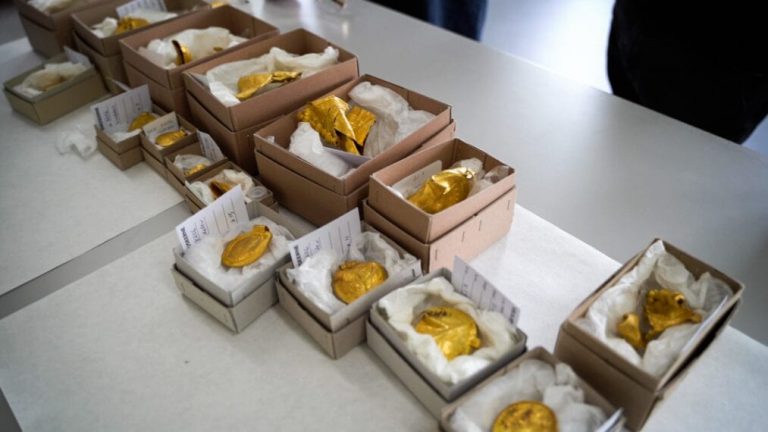
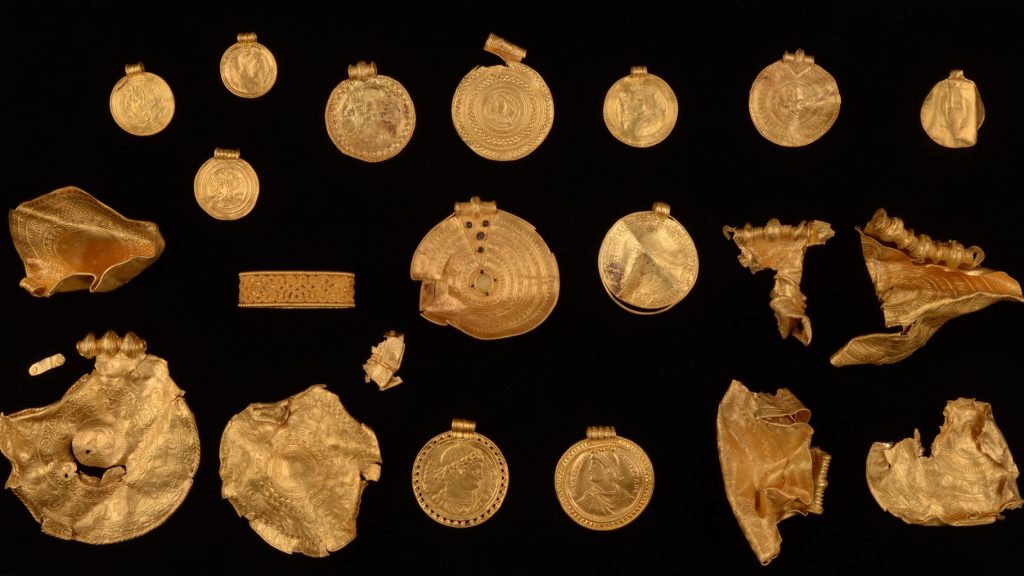
According to a press release from the Vejle Museums in southeastern Jutland, the “enormous” find consists of almost one kilogram (2.2 pounds) of gold buried 1,500 years ago. It is described by the museum as “one of the largest, richest and most beautiful gold treasures in Danish history so far.”
According to a press release from the Vejle Museums in southeastern Jutland, the “enormous” find consists of almost one kilogram (2.2 pounds) of gold buried 1,500 years ago
Ole Ginnerup Schytz stumbled across one of the largest gold treasures in the country’s history; huge medallions the size of saucers, coins, and jewelry, nearly 1 kg (2.2 pounds) of gold. The museum reports that the treasure had been buried for 1,500 years.
Something significant?
The hoard was discovered in Vindelev, near the Danish town of Jelling. An Iron Age chieftain may have buried the gold to appease the gods after a volcano eruption. Ginnerup Schytz found the treasure on land belonging to a former classmate.
Mads Ravn, head of research at Vejlemuseerne, told CNN that he almost fell off his chair when Schytz sent him a photo of an object, asking him if it was anything significant. The first piece he found was full of scratches and covered in mud and looked like the lid of a can of herring.
The hoard was discovered in Vindelev, near the Danish town of Jelling
“Well, that’s the epitome of improbable luck,” the rookie detectorist said in an interview with Danish outlet TV Syd. “Denmark is 43,000 square kilometers, and then I happen to choose to put the detector exactly where this find was.”
The Vindelev Hoard
Over the last nine months, archaeologists from the Vejlemuseerne have carefully excavated the site along with a team from the National Museum, uncovering the treasure.
Over the last nine months, archaeologists from the Vejlemuseerne have carefully excavated the site along with a team from the National Museum, uncovering the treasure
The artifacts were buried in a longhouse by an Iron Age chieftain, revealing that Vindelev was a center of power at the time, says the museum. “Only a member of the absolute cream of society would have been able to collect a treasure like the one found here,” Mads Ravn, head of research at Vejle Museums, said in a statement announcing the finding to the public.
The treasure is now known as the Vindelev Hoard. It consists of decorated saucer-sized medallions known as bracteates as well as Roman coins that were turned into jewelry. One of the bracteates is decorated with a male head and a number of runes, as well as a horse and a bird. A runic inscription on the horse reads “the high one,” according to preliminary research, which could refer to the chieftain or the god Odin. One of the Roman coins depicts the Roman emperor Constantine the Great, who ruled from 285-337 AD.
Chaotic times
At the time, Norse mythology was developing and would have been in competition with more ancient religions, said Ravn, around 300 years before the ancient sagas were written down.
A gold saucer crop
A 2015 study found evidence that an ash cloud from a large volcanic eruption in 536 AD cooled the Scandinavian climate, causing crop failures and resulting in widespread famine. That’s right around the time the hoard was buried. Archaeologists have also found other gold hoards in the nearby area that date to the time period following the eruption. Together, this suggests Denmark’s occupants during the late Iron Age may have buried gold as a means of appeasing their gods during a chaotic time, according to museum experts.
The Vejle Museums in Jutland will exhibit the unprecedented find starting in February 2022.