Scandinavia before the Vikings

Scandinavia is the name of a sub-region in Northern Europe, comprised of the kingdoms of Denmark, Norway, and Sweden. Some geographers consider Finland, Iceland, and the Faroe Islands as part of Scandinavia. Read more about Scandinavia before the Vikings.

Made popular by TV shows and Movies, Vikings are the most notorious feature of this beautiful region. While the fearless, kohl-eyed, and ruthless warriors who nearly took over England are undoubtedly interesting, there is more to Scandinavia than them.

Scandinavia before the Vikings
The scenic beauty of Scandinavia existed long before the Vikings made it their home

In this article, we shed-light on Pre-Viking Scandinavia, a topic which is often ignored but is equally fascinating.

Let’s begin!

The Ice Age: Landscape and the Fjords
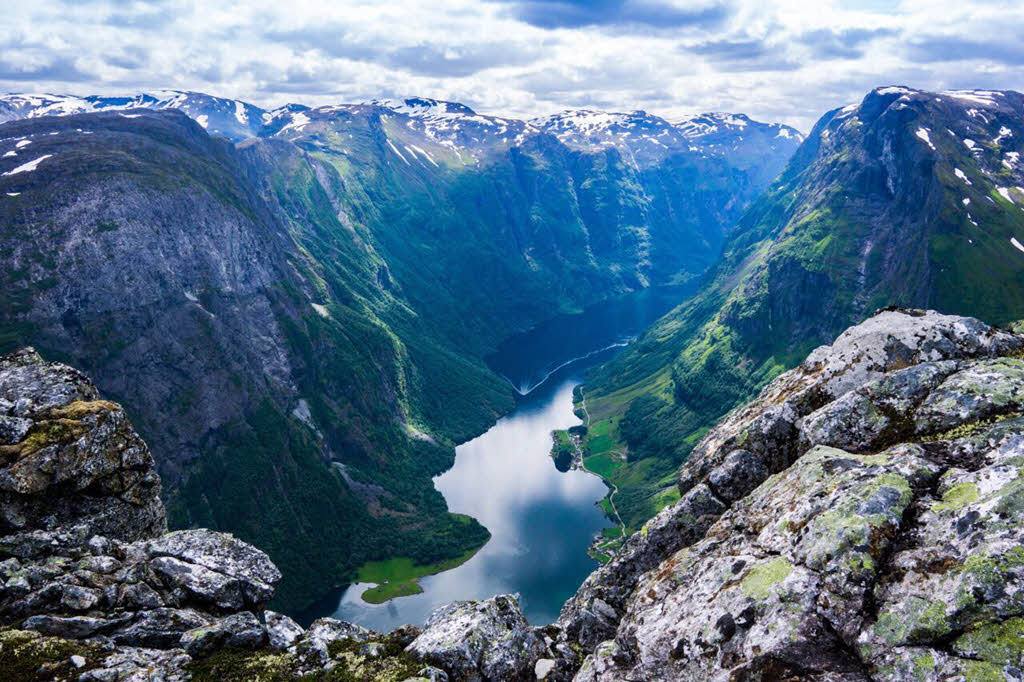
The scenic beauty of Scandinavia existed long before the Vikings made it their home. The Norwegian Fjords, formed during the Ice age, are a world-famous tourist destination. UNESCO has declared some of them as world heritage sites, including Geirangerfjord, a 9.3-mile fjord with many waterfalls and dramatic mountain scenery.
About 2.4 million years ago, the ice started to cover mountains, and the pressure caused mountain pieces to break away, letting seawater rush into the opening. When the ice age ended, and the snow melted away, the mountain pieces that broke away formed a U-shaped wall filled with seawater. These narrow pathways of water surrounded by beautiful sceneries are truly nature’s masterpiece.

Related: Norwegian Beer – Then and Now

Calmer than the sea, these fjords are natural harbors. In the pre-Viking era, small towns settled near the fjord and used the ports for trade, fishing, and other maritime activities. Even today, in modern Norway, many small-towns exist near the Fjords. These towns are the most popular tourist destinations as people from across the world come to visit these wondrous sites.
Scandinavia before the Vikings
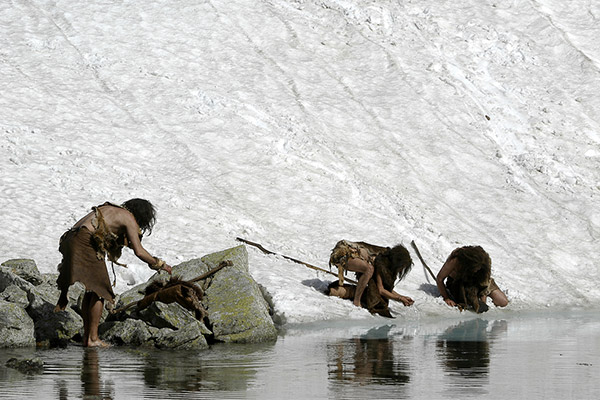
The first settlers arrived on the shores of Sweden and Denmark around 5000 – 9000 BC
The Stone Age: The First Settlers
The first settlers arrived on the shores of Sweden and Denmark around 5000 – 9000 BC. From there, these settlers moved to Norway in the Komsa, Finnmark, and Fosna regions of the country.

Archaeologists found definite evidence of this timeline when they unearthed the remains of a man in Koelbjerg, Denmark. Examination revealed that this man lived in Denmark during 8000 BC, confirming the existence of the population across the region.

Archaeologists report these settlers came to the region for agriculture, but the population included hunters and gatherers as well. Historians note that these early settlers had domesticated dogs and cattle, which hints at the earliest agriculture society. Discovery of coarse tools such as axes and picks suggest that these men and women hunted as well as farmed in their daily life.

Related: Language of the Vikings

Indigenous Scandanavians: The Sámi people
The Sámi people are indigenous people of Finno-Ugric heritage that lived in Scandanavia before the settlers arrived. Traces of these populations are found side-by-side with the settler population; however, while the immigrants inhabited the coastal areas in the south, the Sámi lived inland. Interestingly, these two populations did not come into contact until much later.

The Sámi people lived a simple life; they lived in tent-like homes and adopted fishing, sheep herding, fur trapping, and reindeer herding as their primary source of livelihood. Just like the rest of the unfortunate aboriginal tribes of the world, the Sámi’s also faced forced assimilation by their settlers in the 9th and 10th centuries.

Today, there are only 80,000 to 100,000 Sámi people worldwide; most of them live in Norway, Sweden, Denmark, Finland, and Russia.

Related: Norwegian Viking Saga Confirmed

Scandinavia before the Vikings
Bronze age in the Scandinavian countries is recorded between 1700 BC and 500 BC
Bronze Age: Farmers, Fishers, and Metal Workers
Bronze age in the Scandinavian countries is recorded between 1700 BC and 500 BC. During the Bronze age, the settlers expanded their settlements along the shorelines. Although there were no proper villages or towns, the immigrants built wooden dwellings which housed large families and kinships.

The Bronze age Norsemen developed finer tools and became skilled in farming, fishing, hunting, and trade. As they learned to create superior tools, the Norsemen started farming millet, wheat, and barley, among other grains. Since they lived in coastal areas, fishing remained one of the main sources of livelihood. Some adventurous Scandinavians took expeditions inland to hunt for elk, deer, and other big game.

The most notable thing perhaps was the introduction of trade in the Norse society; the settlers began to trade amber for metal, and therefore they became skilled metalworkers. This society was more civilized than the stone age population, but still a long way away from modern-day civilizations.

Iron Age: Economic and Political Instability and Norse Resourcefulness
The Scandanavian Iron age came to Scandinavia around 500 BC. It was a challenging time for the region climatically and politically. Climatic deterioration in the area severely affected farming, whereas the wars in central Europe and Celtic tribes put a stop to trade.

In these challenging times, the Danes learned to become self-sufficient. They survived on fish and meat from hunting, and they made iron deposits found in swamps into weapons. They also started looking for new trade routes, and that’s how they came into contact with the Roman empire, where the Iron age was well underway.

Through this connection, the Scandinavian countries came into contact with religion, the written word, and modern civilization. Historians note that traders brought back more than just goods, they brought modern ways of building houses, writing, metalworking skills, and even household skills like cleaning, pickling, and drying meat, etc.

During the Iron age, communities expanded, and chieftains became active. Each chief wanted to gain more power and, thus, economic opportunities for the survival of its own community. This battle for dominance led to scuffles and fighting among the tribes. The Norse were hard folk, often living in tough economic conditions due to challenging weather. This infighting made them warriors as well.

The political unrest, economic deterioration, and infighting gave way to the Viking Age, which has dominated the history of Scandanavia.

All images © Shutterstock

Scandinavia before the Vikings
Arslan Hassan

Scandinavia before the Vikings, written for Daily Scandinavian by Arslan Hassan. Arslan is an electrical engineer with a passion for writing, designing, and anything tech-related. His educational background in the technical field has given him the edge to write on many topics. He occasionally writes blog articles for Carpet Cleaning Epsom.
Disney Characters with Scandinavian Connections

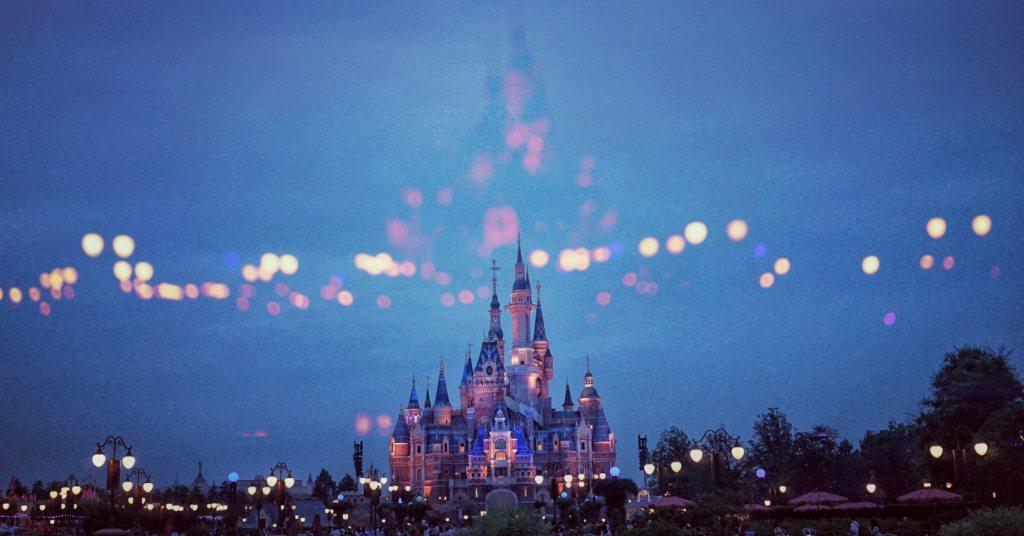
Like almost everywhere else in the world, Disney is big in Scandinavia. In Sweden, for instance, roughly 40 percent of residents tune into a Disney special on Christmas Eve. But Disney’s Scandinavian connection was not built in modern times — it goes back to fairy tales and folklore. In fact, several of the most famous Disney shorts, films, and characters are Scandinavian in origin.  Read more about Disney characters with Scandinavian connections.
Ariel, The Little Mermaid
The original Little Mermaid fairy tale was written by Danish author Hans Christian Andersen. It was published in 1837 and concerns a mermaid (unnamed) who sells her beautiful voice to a Sea Witch in exchange for legs. Disney had considered adapting this story since the 1930s. In 1989, a feature length Little Mermaid was finally released by the company, which gave the title character a proper name. While Ariel is not Scandinavian in the story, her creator, born in Odense, Denmark, is as Scandinavian as it gets.


Elsa, Frozen and Frozen II
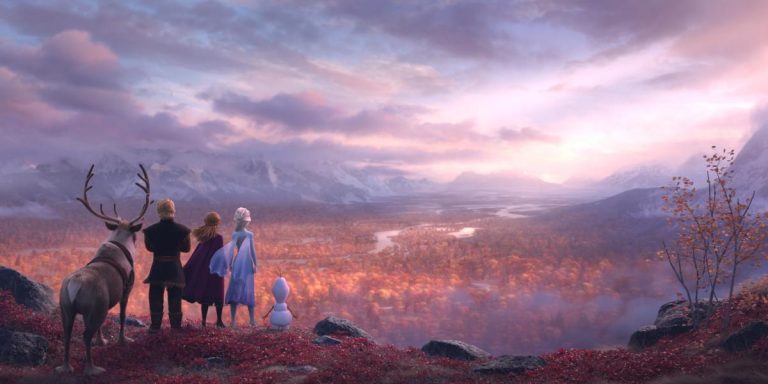
Both of the Frozen films are based on a different Hans Christian Andersen tale, The Snow Queen. In the Disney adaptations, the “Snow Queen” is named Elsa and is much more benevolent than her literary counterpart. While Frozen was first conceived as a pretty faithful rendition of the 1844 tale (again, Disney had been trying to adapt this Hans Christian Andersen work since the 30s), the final product diverged sharply from its source material.

However, Frozen and Frozen II may surpass The Snow Queen in Scandinavian authenticity. According to Frozen’s writers, Norway was their biggest influence on the look of the films. Prominent Nordic landmarks, such as Akershus Fortress, were planted in Frozen. The characters’ clothing was even inspired by 19th century Nordic folk costumes.

The year after Frozen’s release, US tourism to Norway increased by 31 percent. By 2018, Frozen-attributed US tourism to Norway had risen to 170 percent. Today, a wide array of products featuring all kinds of Elsa and Frozen paraphernalia can be shipped throughout the world, many of which are available in popular subscription boxes for kids.

Disney Characters with Scandinavian Connections
Both of the Frozen films are based on a different Hans Christian Andersen tale, The Snow Queen. Image: Pan Xiaozhen/Unsplash
Disney Characters with Scandinavian Connections – Bonus: Donald Duck
While not Scandinavian in the way that Ariel and Elsa are, Donald Duck is actually more popular in Scandinavia than both. As mentioned before, nearly half of Sweden watches a televised Disney special on Christmas Eve. What wasn’t mentioned is that this special revolves around Donald Duck. The special is called Kalle Anka, or “Donald Duck and His Friends Wish You a Merry Christmas”. Watching it is a Swedish tradition dating back 60 years.

Donald Duck’s name is Donald Duck in Norway, Kalle Anka in Sweden and Anders And in Denmark. (Editor’s comments).

Disney Characters with Scandinavian Connections
Donald Duck’s name is Donald Duck in Norway, Kalle Anka in Sweden and Anders And in Denmark.

Several Disney characters originated in Scandinavian fairy tales, of which Ariel and Elsa are most known. Donald Duck, though not Scandinavian in origin, deserves a mention for being the most popular Disney character in Sweden. While his appeal is likely obvious to Swedes, it leaves the rest of us in Scandinavia scratching our heads.

Disney Characters with Scandinavian Connections
Karoline Gore

Disney Characters with Scandinavian Connections, written by Karoline Gore. Karoline is a freelance writer from Stoke on Trent in the UK who left the corporate grind when she started a family and has never looked back. She enjoys contributing to a range of online publications on the topics that are important to her.

Feature image (on top): From Disney Frozen 2 Copyright: Visit Norway

5 Scandinavian Life Philosophies that Can Make You Happier

According to the World Happiness Report, Scandinavian countries have been ranked the happiest countries in the world for several years in a row. Despite there being very little sun, a lot of cold and long winter, Scandinavian people are still the most content in the world. The reason for this is the approach to life they practice. Here are some of the most popular Scandinavian life philosophies that can make you happier. Read more about the 5 Scandinavian Life Philosophies that Can Make You Happier

Fika
It is highly possible that you are already familiar with this term. Despite not being native to the English language, fika is something that has just happened to get successfully adopted into the active vocabulary of English speakers. It has a lot of different uses around the world, so there are various ways in which you might have heard about it. Perhaps, you came across it in popular culture, or maybe it is something your Swedish friends bring up in a conversation from time to time, or it could even be that you visited one of the cafés with this name since it is a popular name for Swedish-style coffee houses around the world. But do you know what fika really refers to?

Related: The Capital of Fika

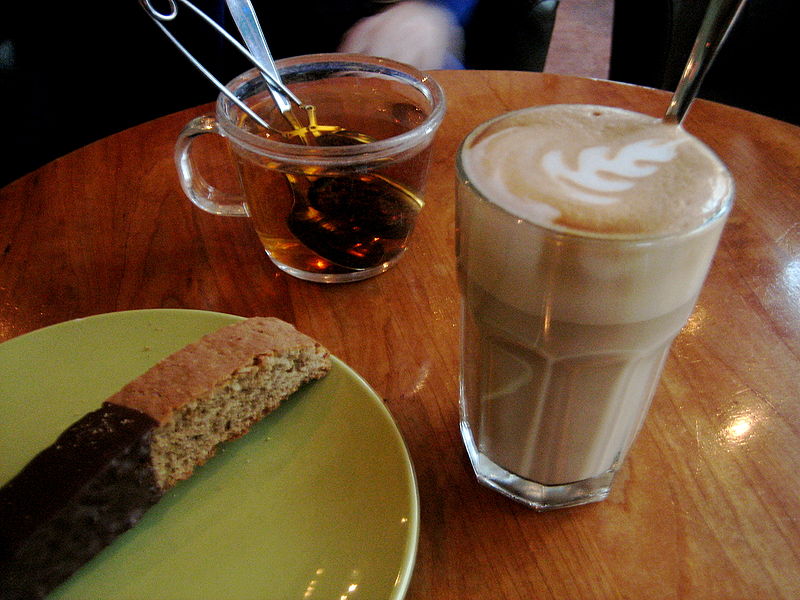
Literally, Fika is simply another name for ‘coffee break’. It was originally formed by changing the syllables in “kaffe,” the Swedish word for coffee. In its essence, however, fika is much more than just a coffee break. In fact, it is a rather specific Swedish philosophy that helps people find their inner peace and alter their attitude towards life in general once adopted.

5 Scandinavian Life Philosophies that Can Make You Happier
Literally, Fika is simply another name for ‘coffee break’. Photo: Wikipedia commons

In order to understand this concept better, it is important to get down to the cultural specifics of having a coffee break in Scandinavian countries. Unlike the rest of the world where caffeinated products are consumed primarily to wake up and focus better on completion of different tasks, in Sweden coffee is a drink symbolic of slowing down and stepping away from all your problems at least for a little while. While Americans and a lot of Europeans treat coffee as a stimulant and something that will help them work faster and will fuel them up (overall, in the minds of a lot of people, a central attribute of a pretty stressful environment), Swedish people, on the contrary, turn to coffee breaks to breathe out and relax for a moment.

Fika culture in Sweden is very peculiar: coffee, or tea, as a matter of fact, is mostly an excuse to savor the moment. It is all about giving yourself a minute to enjoy your life and dissociate from your daily stress. There is no fixed policy on how fika should be done, you can either do it alone, focusing on your own thoughts and contemplating your life or gather with your friends to catch up! One way or another, it should always be something to look forward to, something that gives you peace and allows you to retreat from pressure.

The only thing you need to do is being consistent when incorporating fika in your life. After all, it is a necessity to be able to have a moment for yourself without feeling you are doing that at the expense of your productivity. If you do so, you will immediately become calmer and subsequently happier!

Friluftsliv
Unlike the rest of Scandinavian philosophies outlined on this list, Friluftsliv is a concept that focuses on fostering not only your spiritual well-being but also your physical health.
The concept of Friluftsliv is decoded in the translation of this Norwegian word. It can be translated into English as ‘free air life’. And, in its essence, this is exactly what Friluftsliv is about – spending more time outside and feeling more connected with nature.
5 Scandinavian Life Philosophies that Can Make You Happier
Outdoor life in Norway. Photo: Den norske turistforeningen
Related: 5 Unforgettable Hiking Trails in Denmark

What constitutes a great part of this philosophy is understanding that no matter how urbanistic and busy your life is, what really matters is your inner balance and your harmony with yourself and the world around you. The best way to find it is by establishing a mindful connection between you and the outer world, nature in particular. For a lot of Scandinavian people, this means getting out there to camp and go to the forest. But in reality, Friluftsliv is a philosophy open to interpretation and amendments. You may replace a forest or mountain retreat with a simple half an hour stroll in the park next to your house and still get a lot of use out of it! After all, it is not about the place itself, but rather the experience you get to live through. Forgetting about the never stopping rhythm of a big city and going back to your roots will not only clear your mind and let you think straight but will also improve your health significantly. It is proven that being in the fresh air helps to lower your blood pressure, heart rate, and muscle tension as well as reduce your stress levels. And a healthy person is always a much happier person!

Hygge
Hygge is often regarded as a defining characteristic of Danish culture, which makes complete sense granted that Danish people are among the happiest people in the world. Hygge refers to the practice of appreciating your life no matter what and preaching positivity in everything you do and say.

The term itself can be translated from Danish as “coziness of the soul”. And can best describe the feeling of being tucked in a blanket with your loved one and a hot drink warming up your hands. The moment is absolutely immaculate, care-free, and extremely cozy.

5 Scandinavian Life Philosophies that Can Make You Happier
Hygge by the fireplace
Related: Danish Happiness Explained

If anything, hygge is all about allowing yourself to indulge in things that make you feel good, and things that you enjoy without giving yourself second thoughts and doubting whether you deserve a special moment like that or not. Because the answer is always the same: you do!

Adapting hygge as a part of your lifestyle is an amazing way to heighten the feeling of the world being a happy place since you focus on multiplying the moments when you feel the most content and aligned with your wishes. Besides, by surrounding yourself with the people that you love and the ones that love you back, you create an atmosphere of trust and overall feel more secure, especially if things in the outside world are starting to feel a bit negative.

Lagom
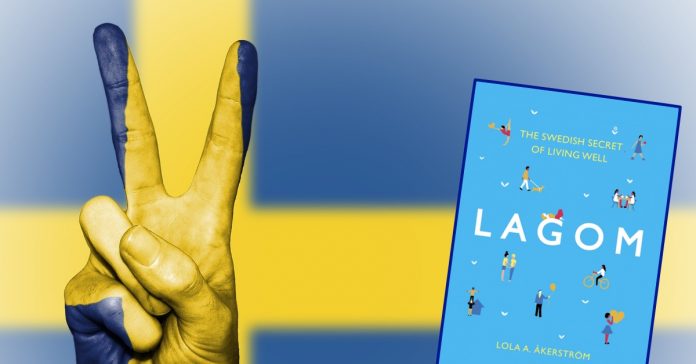
Lagom is a word that originates from the Swedish language and can be best translated into English as ‘optimal’ or ‘moderate’. The name of this philosophy is pretty self-explanatory. The concept teaches people that everything is good in moderation and you should be extreme in neither your beliefs nor your actions.
5 Scandinavian Life Philosophies that Can Make You Happier
Lagom – book cover
Related: Create a Healthier Lifestyle – The Swedish Way

This concept is also great for understanding that you need to be flexible and tolerant when it comes to hearing out other people. While it is important to stand on your own grounds and protect what you believe in, you need to make sure that you are not going overboard and can compromise effectively. If you come to this, you will instantly see how easy it is to be more content with the people around you.

Lagom is all about finding the right balance that would lead to maximum enjoyment. Essentially, it means focusing on listening to your body and learning what your body and soul really need. After all, it is fulfilling those needs as opposed to being too centered on what you think is needed that will bring you true happiness!

Lykke
At last but definitely not at least, Lykke is an important part of the complex of Scandinavian life philosophies that can make you happier.

Lykke is the Danish and Norwegian word for ‘happiness’, so, naturally, the concept of Lykke teaches people to focus on the things that are pivotal for alleviating the levels of joy within themselves.

According to Meik Wiking, the author of the book “The Little Book of Lykke”, happiness comprises several key factors: togetherness, money, health, freedom, trust, and kindness.

In order to be genuinely happy, you need to balance your life out in such a way that you pay close attention to all those parts of your life so that none of them is lacking. While it might sound like a lot of work (fair enough, it is not the easiest thing to complete), you will be surprised how tightly interlinked all these things are once you try to adapt this approach. If you work on your togetherness, you are simultaneously increasing your levels of trust and kindness, while improving your money directly affects your freedom etc.

5 Scandinavian Life Philosophies that Can Make You Happier
Louis Robidoux

5 Scandinavian Life Philosophies that Can Make You Happier, written for Daily Scandinavian by Louis Robidoux. Louis is a blogger who enjoys writing articles that are of great interest to society. After having lots of posts published on different platforms, Louis decided to create his own site deeptop10.com where he’s covering topics about food, interesting hacks and lifestyle.

Feature image (on top): Copyright Visit Denmark

5 Ways To Meet True Friendship In Scandinavia

Scandinavian countries are countries with beautiful natural landscapes and cities that are at the top of the most expensive in the world. To find true friendship in Scandinavia among representatives of another culture requires effort and not everyone succeeds. But if you succeed, you will never regret it. Learn about 5 ways to meet true friendship in Scandinavia.

Gossip builds friendship
In this matter, the difference between the northern and southern Norwegians is obvious. Gossip in Northern Norway is not shameful, and discussing people with friends at dinner is quite normal. Therefore, participating in such friendly gatherings is quite capable of strengthening your friendship with the Norwegians. Southerners are more polite and closed. Here you will never guess with whom you can discuss a third party, and with whom it is better not to do this. Therefore, be careful and observant, and keep your mouth shut for the time being.

Sport is our everything
How do you make friends? If you want to make friends among the Scandinavians, then you simply can’t find a better idea than to start skiing. You will always find a lot of topics for conversation, start asking for advice, and conversations will begin to be tied up on their own. You can read more about similar specific “tricks” in the essays about friendship. These essay examples are full of advice and ideas. After that Scandinavian people won’t seem boring, and there will seem to be something to talk to them about.
5 Ways To Meet True Friendship In Scandinavia
If you want to make friends among the Scandinavians, then you simply can’t find a better idea than to start skiing. Photo: Maarten Duineveld/Unsplash
Usually, the Scandinavians are friends since kindergarten, then as school students, in college, and so on until the end of life. If you want to become their friend, you need to try hard. If it’s not the season for skiing or you just don’t feel like it, you can start cycling. For this, a climate without snow, as in Western Norway, or the spring-summer period, is suitable. Cyclists also come together in interest groups. Finding friends this way is also easy. And there is participation in various competitions, trips abroad, and a lot of common topics.

If you are basically an unsportsmanlike person, there is nothing wrong with starting to get involved in nature and photography. The Scandinavians are the most important fans of their countries and nature. You can easily find a common language for walks in the mountains, photo trips to the lakes.

If the weekend in nature is not on the list of your preferences, and you are a cheerful person who loves parties, then here you can find common hobbies. Locals are fond of dancing. You can choose one of the two most common dance styles: salsa or swing.

Avoid “wrong” topics
It is not customary for the Scandinavians to talk with friends about politics, religion, health, the economic situation in the world, personal problems, income, and work. The list of “allowed” topics is approximately the following: weather, cooking, sports, vacation, free writing, cars, creative paper works, pets, and needlework.
5 Ways To Meet True Friendship In Scandinavia
Keep your distance. Photo: Wiktor Karkocha/Unsplash
Keep your distance
You shouldn’t hug the Scandinavian tightly by the shoulders, gesticulate animatedly in front of their faces, and also look closely in their eyes. For residents of these countries, all these are signs of obsession, poor education, and gross violation of personal boundaries.
5 Ways To Meet True Friendship In Scandinavia
Scandinavians will be delighted if you praise their new phone or scarf. Photo: Mark Fuller/Unsplash
Do not forget about the compliments
Surprisingly, the harsh and restrained Scandinavians are very fond of compliments. They will be delighted if you praise their new phone or scarf. But most of all they value compliments that emphasize the characteristics of a national culture or character. If you sincerely admire the local beer, sauna, Scandinavian nature, calmness and restraint of the townspeople of the country where you are, the friendship contact with people will be provided to you.
5 Ways To Meet True Friendship In Scandinavia – Conclusion:
If the “friend” ribbon is hung on you, then you become the owner of a variety of privileges. Essay samples on this topic give some examples: you can be sure that you will be friends for the next fifty years, even if you do something terribly awkward. Now you will be fed with cinnamon rolls, which someone’s Swedish grandmother baked. Now there is someone to go for medicines with you and help you learn a new health system.

5 Ways To Meet True Friendship In Scandinavia is written for Daily Scandinavian by the editorial team at phdessay.com

The Best Spots and Hidden Gems in Copenhagen

There are plenty of things for you to see in Copenhagen beyond the beautifully colored Nyhavn and the Little Mermaid. There are many great places for you to visit which in most cases tend to be overlooked. You’ll be surprised to know that most of these spots are right next to famous tourist attraction sites that are usually in the spotlight. Here are some of the best suggestions for the best spots and hidden gems in Copenhagen Let’s get started!

University Gardens
Back in the day, the citizens of Copenhagen would spend their weekends dressing up in the finest gowns and visiting the University Gardens. Thanks to this romantic gesture, you can take a step back and enjoy this historical walk down the beautiful pathways among flower beds, groves, rose gardens and woods and creeks.

According to college papers, this is an ideal location for people who want to relieve stress and tension. At the moment, locals and students are the ones who stroll through this serene area because it’s not very close to the inner city. The University Gardens are a must-see for anyone visiting Copenhagen. If you’re traveling with your children, you can also visit the Frederiksberg Gardens with them and round it up with a visit to the zoo in the afternoon.

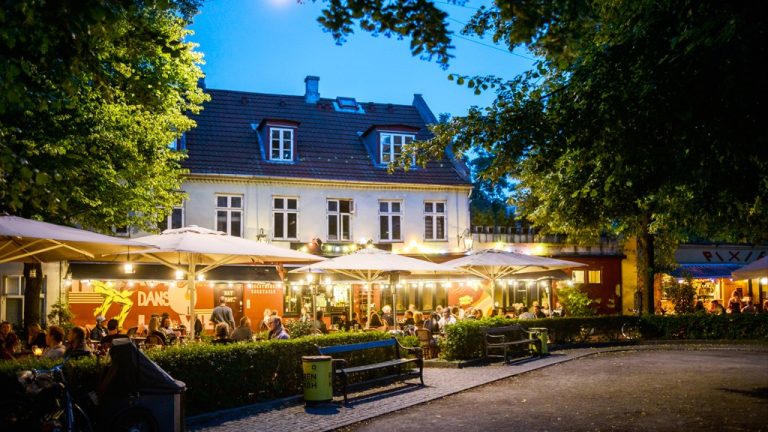
Bopa Plads
Bopa Plads square is in many ways similar to a little Berlin hideaway thanks to the hidden pocket of café relaxation hideout in Ostebro, a quiet residential area. By taking your time to relax in this place, you’ll be in for a wide variety of treats.

You’ll have an opportunity to sit below the treetops and enjoy a glass of lemonade or a cold beer from the adjacent cafes. And this will enhance your peace of mind. The atmosphere is comfy with an edge that displaces it from the neighborhood.

If you are looking to eat in this colorful and inviting place, there are great cafes around the corner such as the Pixie café. You’ll also find antique shops, boutiques, and delis which will make your day.

Assistens Cementry
Copenhagen’s Norrebro is one of the most vibrant and colorful areas thanks to the variety of cultures, bikes, warm greengrocers, ethnic eateries, and students. In the middle of this neighborhood, you’ll find the lovely and peaceful Assistens Cementry (Kirkegard) which hides behind a long yellow wall alongside Norrebrogade.

It is both a cemetery and a park. It’s one of the most charming spots in Copenhagen. Its tranquility sets it apart from the entire city. The majority of grand characters have been laid to rest here including the famous writer H.C. Andersen and philosopher Soren Kierkegaard.

The Best Spots and Hidden Gems in Copenhagen
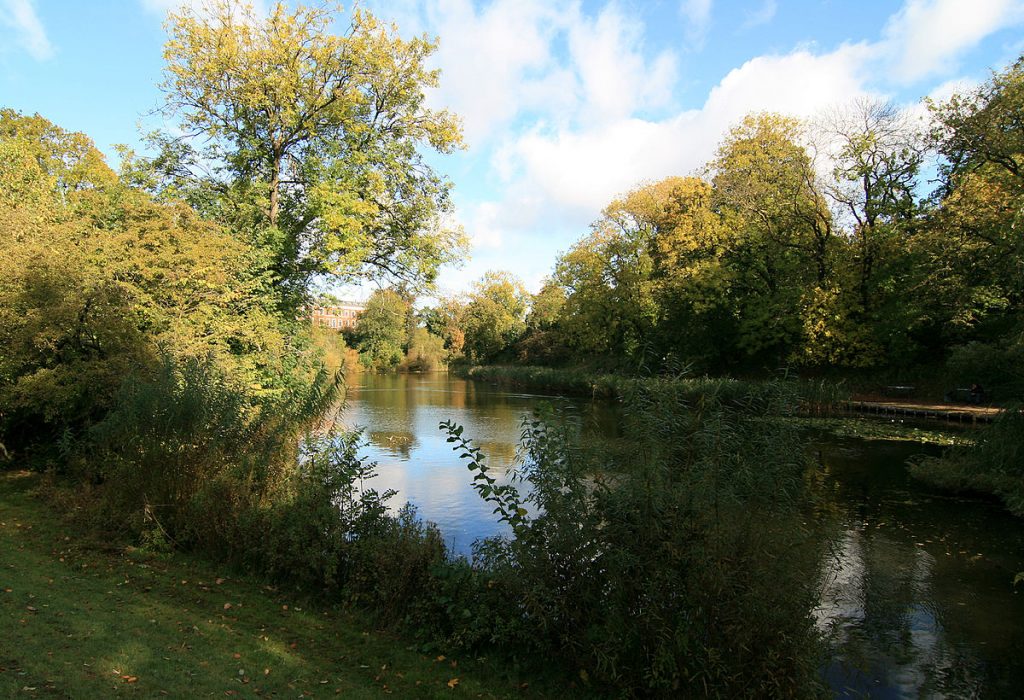
You’ll probably notice, Copenhagen is full of lush greenery. From Østre Anlæg. Photo: Wikipedia commons
Østre Anlæg
As you’ll probably notice, Copenhagen is full of lush greenery, making it difficult to notice when you move away from the city center.

As paper writing service reports, Østre Anlæg is a great example and a perfect hideout located behind the Danish National Gallery. Once you are here, you’ll have the opportunity to peek inside the gallery and get a closer look at a wide of valuable and timeless art collections.

Taking a walk around Copenhagen’s old moat system and bringing your loved ones to the huge plays cape including a paddling pool, tennis court, swings, and fishing vessels will greatly enhance their experience in this area.

Kartoffelrækkerne
This spot is probably what most tourists would imagine Copenhagen to look and feel like. It was built back in the 19th century to accommodate the working class of Copenhagen. The cramped and charming two-story houses are among the best places to live in Copenhagen.

This spot was named Kartoffelrækkerne because it was built on old market gardens and its layout looked like rows of potatoes. The houses are located in the eastern parts of Copenhagen which are quiet and serene. They are also right next to the lakes. This makes Kartoffelrækkerne the ideal spot for strolling and jogging.

The Best Spots and Hidden Gems in Copenhagen
Brumleby got its name from the cows that would move around the area and chew grass all day long.
Brumleby
Brumleby is a small community and one of the earliest social housing examples in Denmark. Once you get here, you’ll see children playing on the streets, cats basking and laundry hanging out to dry in the sun. You’ll just feel calm and at ease, once you get to this place.

According to assignment help, this small village has developed thanks to the love and unity among its inhabitants. The Danish Medical Association created Brumleby for workers back in the 19th century. It got its name from the cows that would move around the area and chew grass all day long. Take a walk and let your children have fun in the twisted playhouses.

The lakes
There are three consecutive lakes near Norreport Station named Peblinge Sø, Sankt Jørgens Sø and Sortedamssøen Sø. The locals simply refer to them as The Lakes. It’s one of the best parks in Copenhagen. The buildings along the lakes are vibrant and beautiful thus making it a great relaxing spot. There are a few benches along the lakes and grassy spots under treetops. The best thing about this spot is it’s located in the center of the town. You’ll find most locals jogging or having a picnic here.
Botanical Gardens
Another park that you should visit in Copenhagen is the Botanical Gardens. It is located near Rosenberg and Norreport Station. It’s a very quiet and serene place despite being in the town’s center. The park has ponds, flower gardens, and trees. There are also greenhouses that you can visit at any time. The Botanical Gardens are quiet and serene thus making it ideal for people who want to relax and have a good time.
The Best Spots and Hidden Gems in Copenhagen
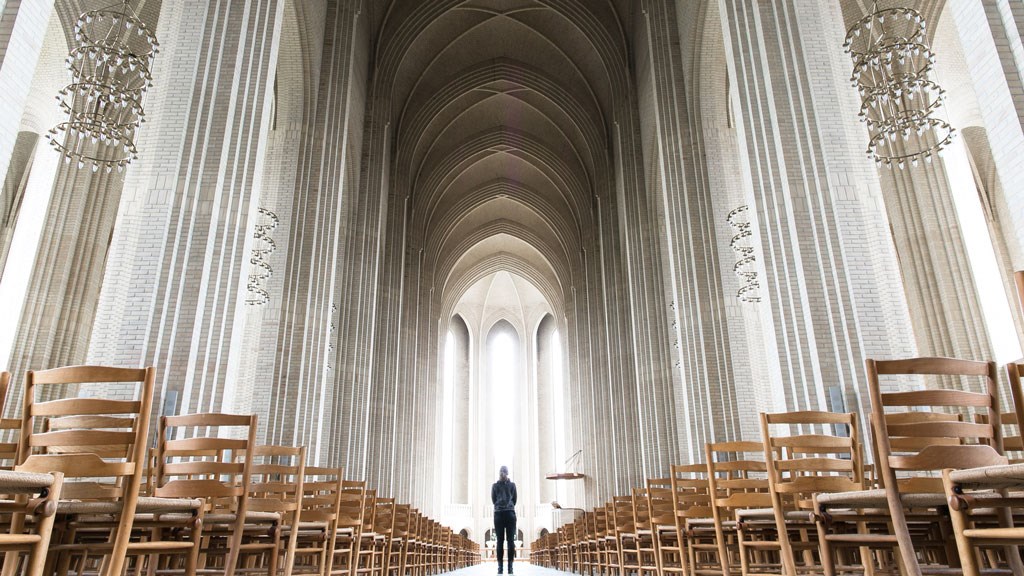
Grundtvig church was built in the 1920s. Photo Visit Copenhagen
Grundtvig’s church
Copenhagen is filled with lots of beautiful churches. Grundtvig’s church tops the list thanks to the hidden gems of the famous Danish philosopher and composer Grundtvig. The church was built back in the 1920s. The architecture is a combination of Brick and Gothic Expressionism. The interior is minimalistic; however, it’s gorgeous.
Vesterbro
According to edubirdie reviews, walking through the neighborhoods of Copenhagen when traveling will greatly improve your experience. Vesterbro is home to some of the famous sights in Copenhagen such as Carlsberg Brewery and Frederiksberg Palace. Most tourists don’t walk through the neighborhood. This means that you’ll have a lot of space to yourself.
The Best Spots and Hidden Gems in Copenhagen
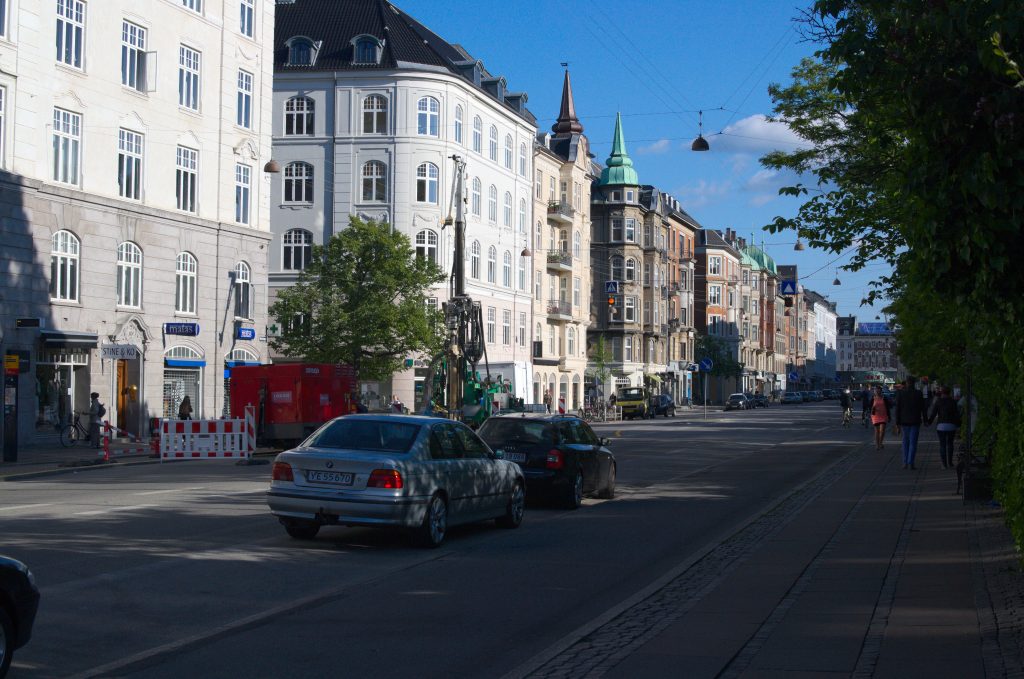
Østerbrogade. Photo: Wikipedia commons
Østerbro
Østerbro is another great neighborhood in Copenhagen with a unique mix of historic and modern architecture. It is home to the largest park in Copenhagen called Fælledparken. You’ll get the chance to see architecture inspired by Victorian. There are also several shops and restaurants in the area.
The best spots and Hidden Gems in Copenhagen – conclusion
Copenhagen is an amazing place for both solo and group travelers. Most of the famous sights in the rea are usually overlooked. And this makes it easier for you to explore these areas and have a wonderful experience. As a local, you can escape the rush of the city by visiting these calm and serene spots.
The Best Spots and Hidden Gems in Copenhagen
Serena Dorf

The best spots and Hidden Gems in Copenhagen, written for Daily Scandinavian by Serena Dorf. Serena has been working as an editor and an essay writer at academic writing, dissertations services and paper writing services in London for 3 years. She is also a professional content writer and journalist in such topics as inspiration, productivity, education, and technologies.

Feature image (on top): Bopa Plads. Photo: Christian Lindgren/Visit Copenhagen

Tragic Loss of Old Norwegian Church Gave Birth to a New Beginning

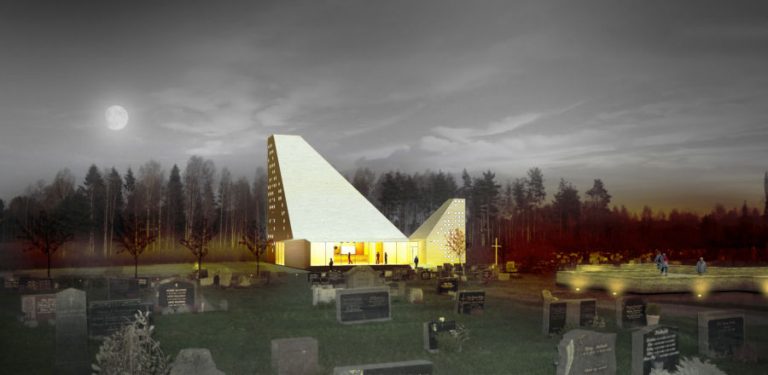
Night to Thursday, May 25, 2009, the 203-year-old Våler church in Norway was completely destroyed by fire. An international architectural competition was announced and resulted in 239 proposals from 23 countries. In 2012, architect Espen Surnevik won the competition with a solution that would give society back the wooden church, but in a form adapted to our time where the art of Espen Dietrichson was to be integrated as a major part of the architectonics. The tragic loss of the old Norwegian church gave birth to a new beginning.

Våler is a small village on the Glomma River. The churchyard is one of the few planned areas of the town centre, and when the old church burned down in 2009, people felt the loss very keenly. The all but impossible task of the new church was to recreate the lost space as a frame for significant events in local people’s lives.

Tragic Loss of Old Norwegian Church Gave Birth to a New Beginning
Together with the artist, Espen Dietrichson, the architects worked with different design elements to manifest the theme through the project

Related: Norwegian Stave Churches

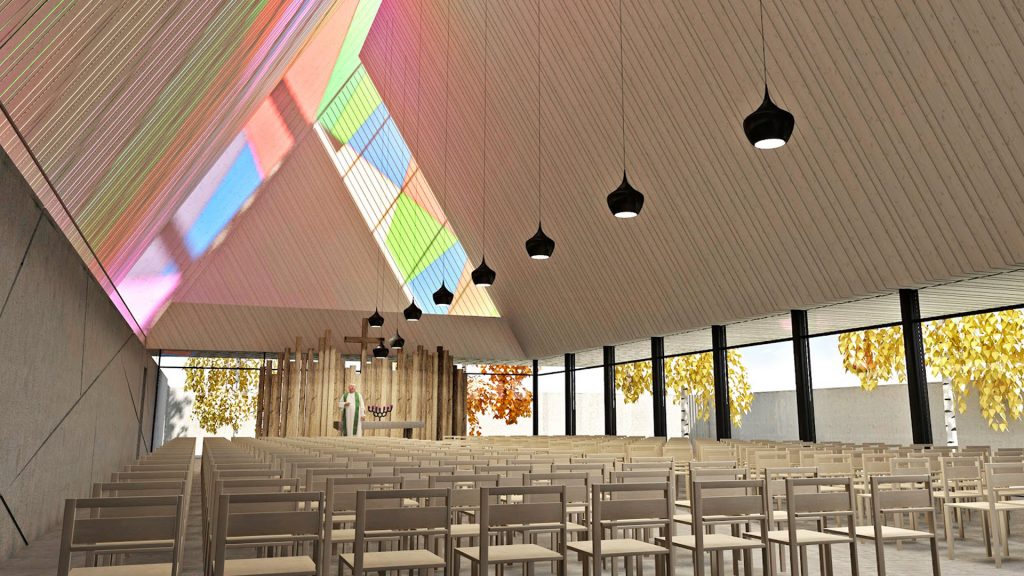
So, the theme of the new church became resurrection. Together with the artist, Espen Dietrichson, the architects worked with different design elements to manifest the theme through the project. The most important element was the work with daylight coming into the church from different daylight openings. This symbolizes hope, and that light defies darkness, after the tragic loss of the old church.
Tragic Loss of Old Norwegian Church Gave Birth to a New Beginning
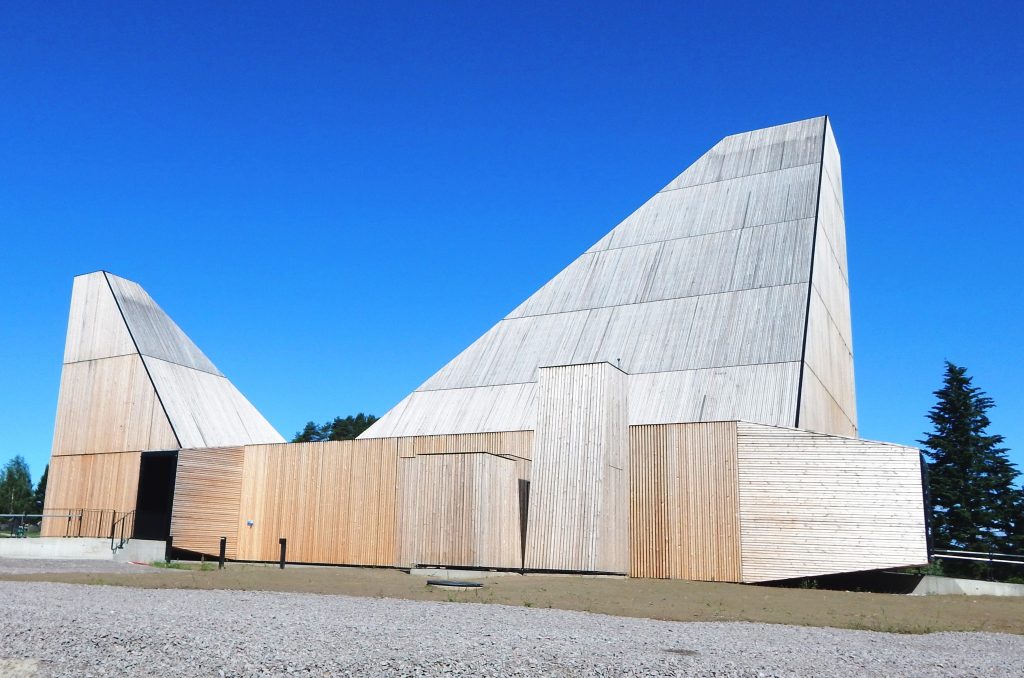
The new church is placed on the existing processional axis, and clad in straight board of heartwood pine, reflecting the local forest landscape. Photo: Wikipedia commons
A collaboration between architect and artists
The new church is placed on the existing processional axis, and clad in straight board of heartwood pine, reflecting the local forest landscape. The natural facades have a long local tradition. Due to climate they slowly get darker before ending up going back to nature. Every fifty years the façade-wood will be renewed, and the church will resurrect as new for every new-born generation.

Espen Dietrichson has painstakingly followed Espen Surnevik’s mathematical instructions, and decorated the entire end wall with a myriad of windows with associated mirror panels and purple-colored glass consoles. At the forefront stands understated liturgical furniture, co-designed by the artist and the architect.

Tragic Loss of Old Norwegian Church Gave Birth to a New Beginning
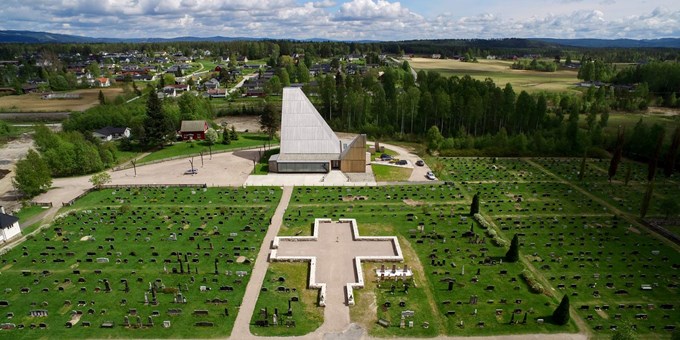
The footprint of the old cross-church, were made into a memorial as a big grave in the middle of the old graveyard, Photo: Visit Hedmark
Related: Experimental Wooden Structures in Norway

The forms of the building are designed by strict geometric rules. The plan is quadratic and divided by a diagonal procession-axis going from a small chappell, placed south, and over to the main church room placed north. Two towers are showing where the liturgics points are placed in the church. The highest tower is 24m high, and the small tower is 12m. The towers have daylight openings on the top, making a view from the audience towards the sky. At the same time, the daylight openings allow daylight to enter the rooms.

Religious aspects worked out in an abstract way
The footprint of the old cross-church, were made into a memorial as a big grave in the middle of the old graveyard. Behind the memorial the new church rises up. The new church is built as a cultural arena, an open-minded gathering-place for the whole community of Våler.
Tragic Loss of Old Norwegian Church Gave Birth to a New Beginning
The natural facades have a long local tradition
“The religious aspects are worked out in an abstract way. As you walk up the aisle, the lines meet a point above the ground that unconsciously lifts your gaze up to something bigger than yourself,” says Espen Dietrichson.

Related: A+ Award to the Community Church in Knarvik, Norway

Tragic Loss of Old Norwegian Church Gave Birth to a New Beginning
Old Våler Church
Tragic Loss of Old Norwegian Church Gave Birth to a New Beginning – Project Details

Client: Våler church-council (Location Våler – Hedmark – Norway)

Architect: Espen Surnevik (1973) – professor at The Oslo School of Architecture

Collaborating structural engineer: Dr. Techn. Kristoffer Apeland AS

Collaborating artist: Espen Dietrichson (1976)

Contractor / Entrepreneur: Martin M. Bakken AS

Project type: Lutheran Norwegian Church.

Location: The eastern part of Norway, close to the Swedish border, two hours driving north of Oslo. Våler-center (place) – Våler (local district) – Hedmark (district) – Norway

Site: Old cemetery form the 17th century.

Project size: The Church is 950 square meters. The large tower is 24m high. Small towers are 12m high.

Awards: Våler Church is awarded with:

Building of the Year 2015 in Norway (Årets bygg 2015)

Norwegian wood-award 2016 (Innlandets trepris 2016)

Archmarathon Award Milano 2016 “Best Religious Building”

The Norwegian Governmental Award of Architecture 2016 (Statens Byggeskikkpris 2016)

Text description provided by the architects.

Tragic Loss of Old Norwegian Church Gave Birth to a New Beginning, compiled and edited by Tor Kjolberg

After the Coronavirus: Norway for Norwegians

For Norwegians, this summer is likely to be spent in Norway. This is important for a hard-pressed tourism industry. However, Norwegians traditionally leave little of their holiday money in their own country. Now, the Norwegian government’s most important instrument for innovation and development of Norwegian enterprises and industry, Innovation Norway, is launching a campaign to give Norwegian tourists knowledge of everything Norway has to offer. Read more about After the Coronavirus: Norway for Norwegians.

Innovation Norway will now turn its usual mission of profiling Norway as an international destination through Visit Norway, to promote Norway to Norwegians.

“This is a special year and a very special situation. The corona epidemic has put a large part of the industry out of play, but if we still want to see something positive in all the sadness, many of those who have previously traveled abroad, now express that they will experience Norway this year. Our job is therefore to inspire and guide holiday-loving Norwegians to use everything that Norway has to offer through our channels. A job we do together with the tourism industry,” says tourism director Bente Bratland Holm.

After the Coronavirus: Norway for Norwegians
Kayaking at Hidra, Flekkefjord. Photo: Visit Sørlandet

Related: How is Scandinavia Solving the Economic Corona-Crisis?

Holidays in Norway – spending money abroad
Figures from 2019 show that just under 14 million holiday trips were added to Norway. This means that 60 per cent of all Norwegians’ holidays already take place in their own country.

In the summer of 2020, even more people will probably choose to vacation in Norway. However, despite the fact that as many as two out of three holiday trips are inland, Norwegians spend two out of three holiday kroner on foreign holidays. The reason is the fact that when Norwegians vacation domestically, more than 6 out of 10 stay overnight in private accommodations, whether this is in their cabin, in a vacation home or with friends.

After the Coronavirus: Norway for Norwegians
“This is a special year and a very special situation;” says Director Tourism in Innovation Norway Bente Bratland Holm.

In 2019, only 12 per cent of Norwegians’ overnight holiday stays took place in hotels. On holidays abroad, however, figures from Statistics Norway show that more than half chose to stay in hotels.

Related: Sweden’s Corona Immunity Strategy Seems To Be Successful

Norwegian campaign inspires to discover ‘the unknown Norway’
Norwegians spent just under NOK 123 billion on holiday trips in 2019. Compared to 2018, spending in Norway was reduced by NOK 12 billion, a decrease of 27 per cent. By comparison, consumption on foreign holidays increased by 3.4 billion.

“If everyone who is now planning a Norwegian holiday in the summer of 2020 also leaves money on hotels, restaurants, cultural and leisure activities and activity providers, then it will mean a lot to Norwegian tourism. For many, it can mean further existence, and that we still will have a vibrant, wide-ranging travel industry in Norway,” says Holm.

After the corona crisis: Norway for Norwegians
Bergen city center with surroundings. Photo: Wikipedia
After the Coronavirus: Norway for Norwegians
To inspire increased spending of the holiday budget is the very message in Innovation Norway’s domestic campaign, which started in March and will continue through the spring. “Through telling stories we want to show Norwegians a Norway they may not know as well. Book a guide and go musk safari, or paddle under the midnight sun. We encourage travelers to experience what has repeatedly placed Norway on international lists of the best destinations,” says Holm.

Related: Coronavirus in Sweden: Business As Usual

Same travel pattern in the EU
Norwegians have always mostly vacationed in their own country, and it is not a particularly Norwegian phenomenon to choose their home country as a destination. More or less, all EU citizens have the same travel pattern as Norwegians when it comes to the distribution between domestic and foreign travel. Figures from the European statistics agency Eurostat show that about two out of three journeys made by EU citizens are in their home country.

After the Coronavirus: Norway for Norwegians
Nærøyfjord, photo: Terese Kvinge/UNESCO

Facts

Norwegian tourists in Norway

  • 72 per cent of Norwegians preferred a holiday in Norway because they wanted to travel less by air. 53 percent would choose destinations that paid attention to environments and 38 percent would simply travel less abroad.
  • Nine out of ten Norwegians have traveled abroad three or more times in the last three years.
  • Norwegian tourists in Norway belong mainly to the older age groups.
  • Norwegians are mainly motivated by big cities, local culture, art and way of life, dramatic, wild nature and beautiful landscape, and pure and unspoiled nature.
  • Main opinion about holidays in Norway: nature, mountains, Lofoten, expensive and beautiful.
  • An interesting finding in the survey is that in a normal year there are no differences based on income level in Norway. All four income levels have remained stable at roughly the same measure over time.

Source: Innovation Norway’s tracker survey from 2019

After Corona: Norway for Norwegians, based on a press release from Innovation Norway.

Feature image (on top): Photo: Visit Bergen

Why do People Want to Live in Scandinavia?

A lot of people adore Scandinavia. Denmark, Sweden, and Norway attract numerous tourists every year. Someone is preparing to move there, some are trying to bring Scandinavia to their own countries, and everyone mentions happiness while talking about it. However, what are the reasons behind that phenomenon? Find out more why people want to live in Scandinavia.

If you have ever wondered what is so special about Scandinavia and why people want to live here, here comes your ultimate answer.

Why do People Want to Live in Scandinavia?
Scandinavian welfare programs contribute to living instead of surviving. Photo: Silje Bergum Kinsten/ norden.org
Government Takes Care of You
Many countries, that are considered democratic and flourishing, are not really comfortable for living. Many people work two shifts at least to pay for rent and food. Still, they have neither time nor money to travel, visit cinemas and theatres, go out to a bar or cafe. If they lose their job, it is over for them.

The situation is quite different in Scandinavia. Even though taxes take away almost 50% of your income, they do not just disappear. Scandinavian welfare programs contribute to living instead of surviving a lot. School and child daycare are free, health insurance is almost free. Consequently, the nation is more educated and they do not have to worry about saving money for insurance or college. Stress and anxiety levels are not as high, if you know that when something goes wrong, your country will have your back.

Why do People Want to Live in Scandinavia?
Scandinavian work-life balance is about being present at the moment and appreciate small things in life. Photo: Danielle MacInnes/Unsplash
Work-Life Balance
We have mentioned happiness at the very first passage of the text, and that is what usually happens when people talk about Scandinavia – the first thought that crosses their mind is happiness. Why though?

Scandinavian people know how to enjoy their lives. They actually dedicate their lives to…. living. It is not about working, surviving, building a career. It is about being present at the moment and appreciate small things in life.

There is one thing that helps to achieve that life philosophy – an amazing work-life balance. They have around five weeks of vacation and many holidays, both national and international. Moreover, they never say no to a vacation. A lot of people sacrifice their days off to getting a promotion. It is the environment we live in – everyone is as productive as possible. In Scandinavia, people will possibly consider you being an idiot for not taking a vacation.

Related: The Nearly Almost Perfect People

Why do People Want to Live in Scandinavia?
While same-sex marriages are banned in more than half countries of the European Union, Scandinavian countries legalized it long ago. Photo: Thomas AE/Unsplash
Equality
No country in the world has achieved complete equality. Yet, Scandinavia is pretty close to getting there.

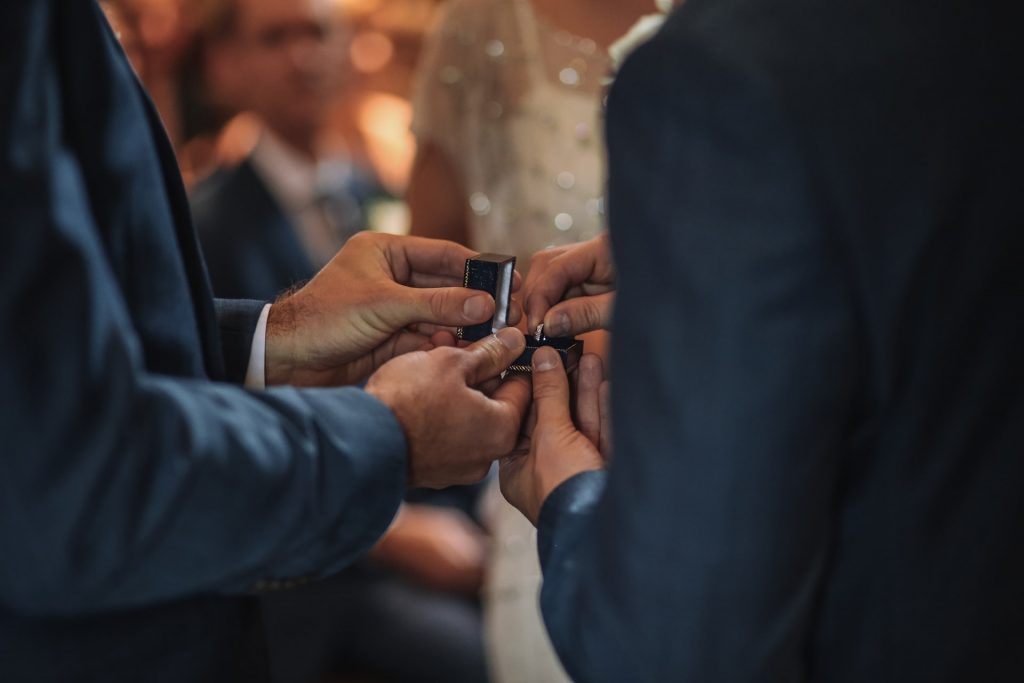
While same-sex marriages are banned in more than half countries of the European Union, Scandinavian countries legalized it long ago. While it is quite difficult and considered as wild to take parental leave for men worldwide, Denmark, Sweden, and Norway do not care what is thought worldwide about that question. They just support fathers, encourage taking parental leave, and being as engaged in the children`s life as moms are.

This makes fathers feel confident while raising their children. It also gets easier for women to get a job since many companies worldwide do not hire female workers while they will take maternity leave one day. Consequently, men are considered more profitable by employers. The situation is different in Scandinavian countries.

By the way, parents get strong financial support from the government while they are not working.

Related: Create a Healthier Lifestyle – the Swedish Way

Why do People Want to Live in Scandinavia?
Aesthetic Scandinavian design
Aesthetic
A lot of people fall in love with the Scandinavian aesthetic instantly.

The Scandinavian peacefulness is present even in the way their apartments look. White color and light shades are dominant in the design. It makes everything look so calm and full of light. Wood that is widely used in the interior adds up to the coziness of the place, as well as fuzzy pillows, carpets, lots of knitted blankets and woven rope do. Lightning is a very special topic there. Never white, always warm, their lightning is a huge part of their happiness philosophy.

Scandinavian people are well-known for their simple, yet stunning style. You do not have to be overdressed and question yourself if trendy purple is a good match with your favorite yellow sweater. Scandinavians focus on nude and black colors, simple forms, and high quality. Our favorite piece of clothing is a coat that looks stylish in 9 cases out of 10. The good news is that you can wear it for almost the whole year!

Why do People Want to Live in Scandinavia?
Scandinavian people appreciate pastry time a lot. Photo: Wouter Supardi Dalari/Unsplash
Food
Food is a thing in every country, and Scandinavia is for people who love pastries. Unlike French pastries, it is very simple (as all Scandinavian things are), it does not have to be all fancy, but at the same time, taste and quality are on the point. Scandinavian pastries are not a sugar and butter bomb, bakers keep everything balanced. They use spices like cardamom, saffron, cinnamon, and vanilla which adds a little special something to Scandinavian pastry.

Scandinavian people appreciate pastry time a lot. They even have special words that mean meeting for a cup of coffee and a cake. They can sneak them from the table after a business meeting. Considering how delicious pastry is, we are not even surprised and would definitely do it too!

Related: Scandinavia Ranked One of the Safest Areas in the World

Why do People Want to Live in Scandinavia?
Biking in Norway. Photo: Visit Norway
Biking Culture
After eating a bunch of pastries, Scandinavians get on their bikes and burn these calories.

In many countries, the progress takes over and the streets are flooded with cars, scooters, and motorcycles. Even if you want to cycle to work or to meet a group of friends, it is fairly dangerous to be a biker in this crazy traffic. Drivers are not really into respecting cyclists.

However, is this kind of progress actually better?

Cycling has a lot of benefits: a decrease in the risk of heart disease, obesity, and diabetics, reduction of air pollution in the big cities and it makes traffic jams way shorter. In Scandinavia, citizens understand that, and the government supports them in that. While cycling is very common, drivers usually take cyclists into account and it is safer to cycle there. Moreover, you will not need to drag yourself to a gym every day which is a very popular thing to do worldwide. In Scandinavia, you just go to work and have your workout done!

Why do People Want to Live in Scandinavia?
Taking into account all the benefits of living in Scandinavia, it is not at all surprising why people want to live there. It is peaceful, it is focused on living and not surviving, they have the nicest food and the way to not worry about eating too much of that foo. The whole concept is beautifully packed in a Scandinavian aesthetic. So you get what you get – a perfect place to live in!
Why do People Want to Live in Scandinavia?
Cheryl Hearts
Why do People Want to Live in Scandinavia? is written for Daily Scandinavian by Cheryl Hearts. Cheryl is a writer and journalist from Boston, Massachusetts. Her passion for writing started at an early age and evolved during the high school years. She enjoyed creating her own stories, so she decided to make writing her career.  After earning a degree in Journalism, Cheryl started running her own blog CherylHearts.com where she’s covering topics of great interest to society.

Feature image (on top): Caitlyn Wynne/Unsplash

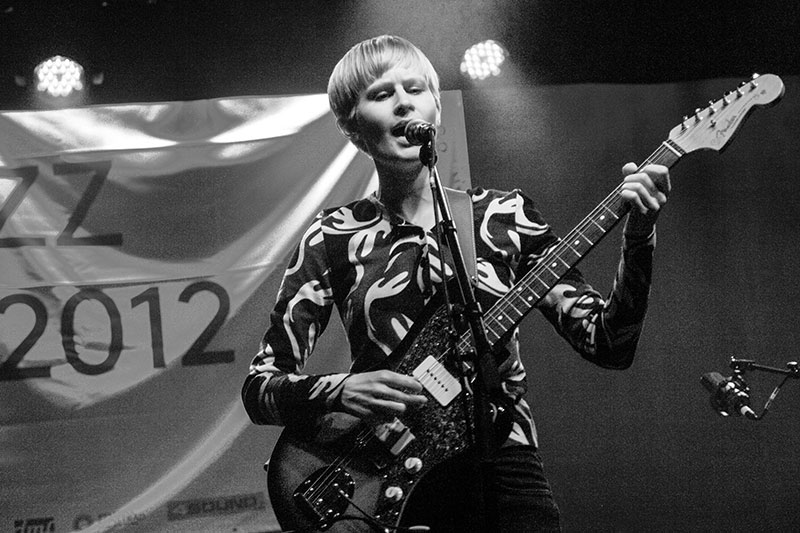
The Norwegian Apocalypse Singer/Songwriter

Norwegian singer-songwriter, record producer, multi instrumental musician and novelist Jenny Hval (b. 1980) started her musical career in the gothic Australian metal band Shellyz Raven. Her fifth album “Apocalypse, Girl” (2015) announced an imminent breakdown. “People say I sing like an angel before they hear what I’m singing about,” she says.

Ella Hval studied at the University of Melbourne, Australia, specializing in creative writing and performance. While studying, she was vocalist in Australian bands iPanic and Folding For Air.

Apocalypse, Girl
Apocalypse, Girl won widespread critical acclaim. Her next album, Blood Bitch was a concept album released the following year influenced by vampires, menstruation and 1970s horror films. Last year, she released her seventh album, “The Practice of Love,” where she has taken love to heart. 90s-sounding synths back her varied vocals, and the lyrics are often whispered, more like a secret than a traditional song.
The Norwegian Apocalypse Singer/Songwriter
Apocalypse, Girl won widespread critical acclaim. Photo: Wikipedia commons
Related: Meet British-Norwegian Singer-Songwriter and Composer Sasha Siem

Ella Hval’s solo music has among other terms been described as avant-garde, art-pop or a kind of experimental folk music.

The Practice of Love
In a statement accompanying the announcement of Thye Practice of Love, she wrote, “Love as a theme in art has been the domain of the canonized, big artists. I have always seen myself as a minor character, a voice that speaks of other things.” That being said, the Norwegian artist manages to take the exhausted topic of love and transform it into something that feels both erudite and primal, a work that encourages both contemplation and movement.
The Norwegian Apocalypse Singer/Songwriter
Ella Hval’s seventh album, The Practice of Love
Related: 7 Years With Norwegian Singer/Songwriter Hanne Kolstø

The song titled “The Practice of Love” begins with musicians Vivian Wang and Lasse Marhaug reading from their own, original writings, and the song feels almost like spoken word. The artists discuss their relationship with the idea of love, saying “I hate ‘love’ in my own language. It contains the entire word ‘honesty’ inside it, which makes it sound religious … purified.”

I love Scandinavian culture
”I love Scandinavian culture, where gender differences are not as aggressively highlighted as in countries with more macho culture,” Jenny says and continues. “At the same time, it’s important to me not to perform wearing a traditional Scandinavian sweater right now.”

The Norwegian Apocalypse Singer/Songwriter
Jenny Hval from video Spells

Related: Norwegian Pop Singer Wearing Nothing

The Norwegian Apocalypse singer/songwriter – and author
Jenny Hval published her novel Perlebryggeriet (Pearl Brewery) in 2009, and has also published article works in journals and anthologies, after studying literature and working as a freelance columnist and writer. An English edition, Paradise Rot: A Novel was translated by Marjam Idriss and published by Verso in October 2018.

The Norwegian Apocalypse Singer/Songwriter, written by Tor Kjolberg

Norway’s Sovereign Wealth Fund Liquidates Assets

Norway’s $1 trillion piggy bank, the world’s biggest sovereign fund, will have to liquidate assets to “give room to maneuver through the worst economic crisis since World War II” according to Norwegian Bank’s Governor Øystein Olsen. Now, Norway’s Sovereign Wealth Fund liquidates assets.

On 12th May the Norwegian government proposed a revised budget for 2020, which called for using US$41 billion (420 billion Norwegian crowns), 4.2 per cent of the fund’s estimated value at the beginning of this year. In its original budget the government had planned to spend just 2.6 per cent of the fund.

Norway’s Sovereign Wealth Fund Liquidates Assets
“It’s part of the general guidelines that in such circumstances you can spend more, says Norwegian Bank’s governor Øystein Olsen. Photo: YouTube

Spending more in time of crisis
In an interview with Bloomberg Television, Olsen said, “It’s part of the general guidelines that in such circumstances you can spend more. It obviously is a positive feature of our society that we have this room to maneuver, unlike a number of other countries.”

Related: How is Scandinavia Solving the Economic Corona-Crisis?

Norway’s Sovereign Wealth Fund Liquidates Assets
Statfjord A plaform 1982. Photo: Wikipedia commons/A. Jarvi

Norway has rarely used more than 3 percent of the Government Pension Fund Global, as Norway’s oil fund is officially known. “To counter the economic fallout of the virus’ outbreak the Government has introduced sweeping measures in successive rounds,” the finance ministry said in a statement.

Both the corona induced lockdown and a historic rout in oil, Norway’s main export, have caused the country’s present crisis.

Norway’s Sovereign Wealth Fund Liquidates Assets
“‘Increased spending has been a necessity in the current situation ,” says Finance Minister Jan Tore Sanner. Photo: screenshot

Increased spending a necessity
“‘Increased spending has been a necessity in the current situation – both to avoid an even sharper downturn and to help healthy companies through the crisis so they can create jobs and growth when normal circumstances return,” Finance Minister Jan Tore Sanner said in a statement.

Related: Coronavirus: What it Means for Your Visit to Scandinavia or Elsewhere

Norway’s government already drew more money from the fund in March than in any other month. The extra spending will pay for a tax shortfall and a range of initiatives announced since a partial lockdown of the country began on March 12, including extra unemployment benefits, cash support for companies and oil industry investment incentives.

Norway’s Sovereign Wealth Fund Liquidates Assets
Corona protection on a bus. Photo: Wikipedia commons 

Last week, Norway slashed its key policy rate to 0 percent in a surprise move. “The downturn is amplified by the severe impact of the pandemic on surrounding countries and by a sharp fall in oil prices. Lower oil prices have contributed to weakening the krone exchange rate,” Norges Bank said in a statement.

Related: Sweden’s Corona Immunity Strategy Seems to be Successful

Norway’s Sovereign Wealth Fund Liquidates Assets
Closed and empty public spaces, here from Fredrikstad. Photo: Wikipedia commons

Reopening after the country’s lockdown
Norway in recent weeks began a gradual reopening of its economy as the rate of Covid-19 infection declined, and has said the revised budget will be followed in late May or early June by a long-term recovery roadmap.

Cutting oil production
Norway has decided it would cut its crude oil production by 250,000 bpd (barrels per day) in June, and then maintain a 134,000-bpd lower rate of production for the rest of 2020. This is the first time Norway has joined oil production cuts since 2002.

Norway’s Sovereign Wealth Fund Liquidates Assets, written by Tor Kjolberg

Feature image (on top): Zbynek Burival/Unsplash