Since we’re a promotor of traveling to Scandinavia, we feel committed to inform our readers about what the coronavirus means to you and your travels. As the situation evolves the article Coronavirus: What It Means For Your Visit to Scandinavia Or Elsewhere is the best place to stay informed.
Our team has been closely monitoring official news and guidance about the coronavirus outbreak in order to support our global community. Prearranged itineraries are continuing to go ahead however, and if you have an upcoming arrangement and you are unsure whether to travel please follow the guidance below:
Given the health and safety risks posed by the virus, we ask all travelers to review local authorities’ travel guidance and health advisories related to this outbreak
Ensure you stay informed
Our focus right now is how we can best support our readers with planned travel. Given the health and safety risks posed by the virus, we ask all travelers to review local authorities’ travel guidance and health advisories related to this outbreak, in addition to global guidance from the World Health Organization. A list of reputable sources can be found below:
Keep up communication
As the situation evolves it is more important than ever that if you have private arrangements, both parties communicate their status and travel plans.
Outbreak of coronavirus per 11 March 2020
Make sure you have a plan B
We always advise that all travelers have a plan B before departure date in case there are any unforeseen circumstances. Given that the coronavirus situation is evolving daily, it is important to make sure you have a plan B which you can rely on if for any reason you are unable to travel.
Check your travel provider
We advise travelers to check that planned transport is going ahead with their travel provider. Due to lack of demand some travel providers have cancelled flights or arranged alternative routes which may result in unexpected delays.
Make sure you have travel insurance
You are also encouraged to arrange any additional insurance you feel is necessary. We strongly advise you look into relevant travel and health insurance.
Make sure your emergency contact is updated
This is important in case you do start to feel unwell while you are away, or if you become delayed as a result of the virus. Keep a note with your emergency contact.
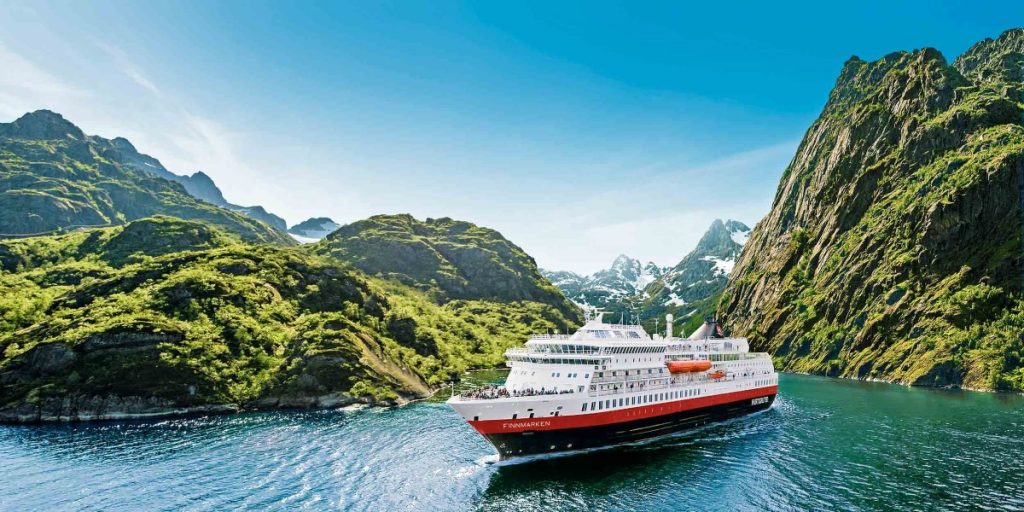
M/S Finnmark (Hurtigruten)
Hurtigruten Hurtigruten introduces a risk-free flexible rebooking-policy – allowing guests to change their bookings to any Hurtigruten cruise until the summer of 2021.
Coronavirus: What It Means For Your Visit to Scandinavia Or Elsewhere, compiled by Tor Kjolberg
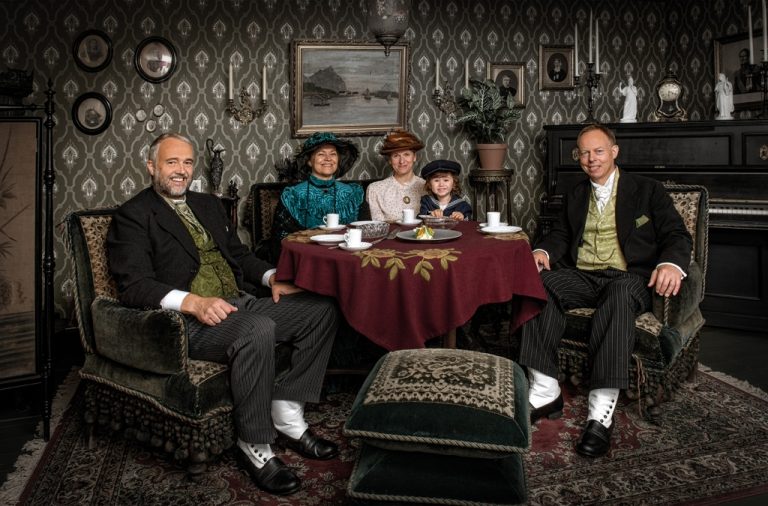
Since the first Hegelund arrived in Norway in 1635, the family has adapted and refined both their own traditions and the culture they came into. When the 35-year old hailing from Denmark, Morten C. Hegelund, travelled north to Norway and settled in the area of Karlshøy, well above the Arctic circle, the event marked the beginning of a near four-century long history for the Hegelund family. Read the fascinating story about House of Hegelund and authentic Arctic food.
Together with the Figenschou family, the Hegelunds soon became one of the leading families in Karlsøy. The gathering of Hegelunds and Figenschous essentially turned into a sort of integrated social system that formed the center of local society.
The trading post on Vannøya
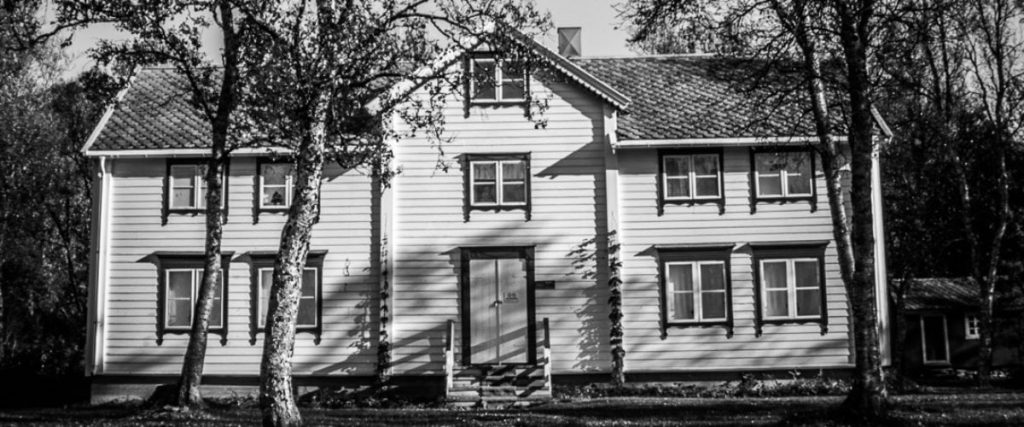
At that time, the northern part of Troms was already a busy place for trade and business. The Kvitnes trading post on Vannøya in the Arctic was established by Jeremias Figenschou towards the end of the 1600s. Kvitnes would become one of the most important farms in the district, in part because it was located on the sailing route to Bergen.
Towards the end of the 19th century, a number of factors lead to the economic weakening of trading posts like Kvitnes and in 1929 the family had to sell the estate, which then came into the possession of the Giæver family. In 1944 the German army burned down most of the North Troms and Finnmark regions in an attempt to slow the Russian forces at the border, and the house played an important role as housing for refugees. Today, the Kvitnes estate has been re-erected at the southern end of Tromsø Island and is managed by the town’s Perspective museum.
Kvitnes would become one of the most important farms in the district, in part because it was located on the sailing route to Bergen
While the Museum will never be able to recreate a living and breathing North Norwegian trading post in this day and age, the old stories of Kvitnes are kept alive with the help of volunteers, artists and others.
Arctic ingredients in old recipes
As soon as Morten Hegelund arrived in the Arctic, he started experimenting with food. Hailing from an educated family in Denmark, he was used to preparing his food not only for survival, but also for culinary experience. He started adapting and innovating his old recipes to fit the new ingredients from the north.
House of Hegelund’s food innovation processes are led by Frode Klingenberg (left) and Erik Rosen (right).
Frode Klingenberg, a direct descendant of Morten Hegelund, has the same thoughts and ideas as Morten, only this time he is able to take advantage of how the food science has come in developing possibilities for preservation and innovation. Frode Klingenberg is the founder and CEO of House of Hegelund, which goal is to become part of the food innovation industry with emphasize on Arctic food.
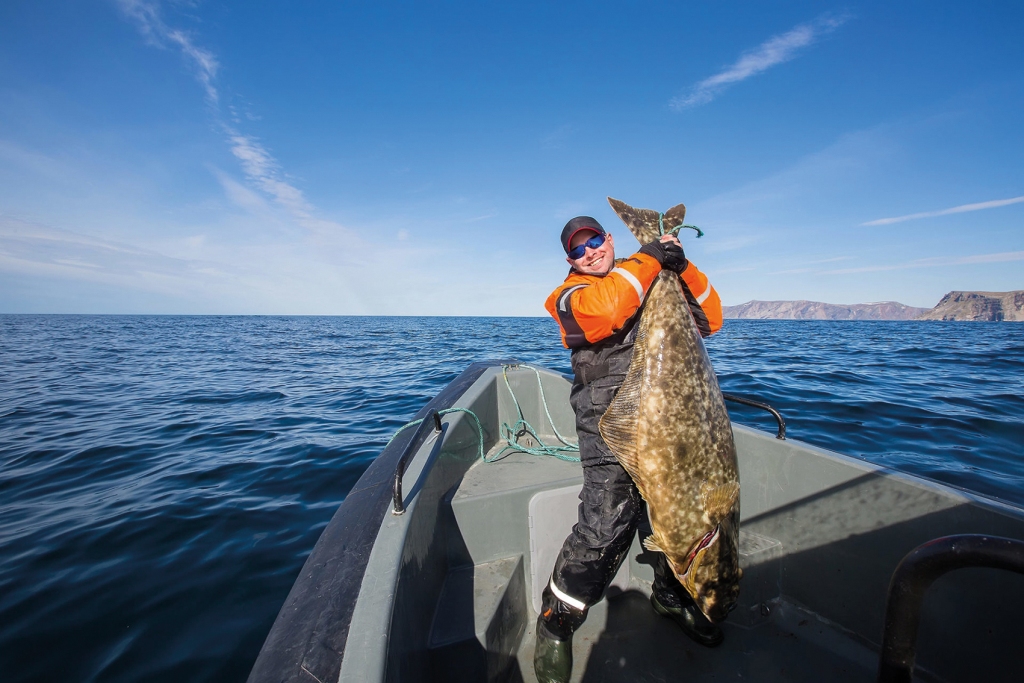
The cold coast of Karlsøy in North Tromsø region abounds with fish like cod, pollock, salmon, monkfish, and especially halibut (picture)
The Arctic kitchen
The Arctic is a region overflowing with ingredients, both on land and sea, and Norway being responsible for about 54% of the global production of Atlantic salmon and only 2% of the cloudberries harvested in the Arctic, there is plenty of room for innovation. “The Arctic is such a respected brand in the world, we should be able to bring this to a finish in our own region,” says Klingenberg.
Within the next few years, House of Hegelund will strive to become part of a market that works to innovate food production by hitting ingredients up the food chain, helping the environment and producing more nutritious food at the same time.
House of Hegeøund 3 pack Gourmet jam
“In ten years the Arctic kitchen is going to be recognized across the world,” concludes Klingenberg, “and House of Hegelund will be the go-to company for quality ingredients and consumer-adopted food.”
Even now, you can sample some of the company’s quality products by visiting their online shop.
House of Hegelund – Authentic Arctic Food, written by Tor Kjolberg
Every year, more than 11 million people visit Norway to take in the country’s incredible scenery. If you have a young family, one of the best ways to do this is by road, so you can set your own agenda and take a pitstop whenever you fancy. The family road trip from Bergen to Flåm takes around three hours without stopping, or you can make lots of little detours to take in the sights.
There are some beautiful farming villages along the way, hundreds of strawberry fields packed with fruit, and of course the incredible Geirangerfjord. Plus, the whole journey is looked over by the impressive peaks of Trollstigen.
Finding your way
From Bergen airport, follow the signs towards Arna and get onto the E16. This is the road that will take you all the way to Flåm. The roads are narrow and scenic, so you will want to take plenty of stops along the way. If you are travelling with young children, taking regular breaks is also important to prevent travel sickness. Around a third of people are actually affected by motion sickness, so breaking up your journey will help greatly with the symptoms. If you are hiring a car, choose one that is compact and easy to drive — the road from Bergen to Flåm is extremely narrow and windy.
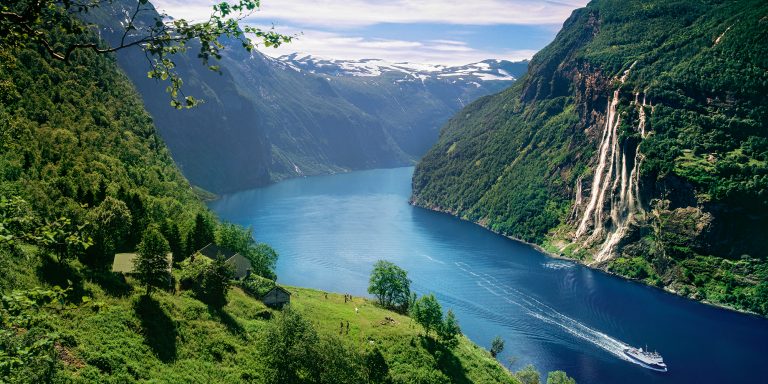
The Geiranger Fjord Area The scenery in the Geirangerfjord area is going to be the highlight of your road trip. This UNESCO-protected fjord has crystal-clear blue waters that will take your breath away. The fjord is 260 meters deep, surrounded by dramatic mountains that are 1700 meters tall. Your children will be excited by the impressive waterfalls carved out by the glaciers. Look out for the Seven Sisters fall about halfway on your trip. There are also some amazing lookout falls at Flydalsjuvet and Dalsnibba.
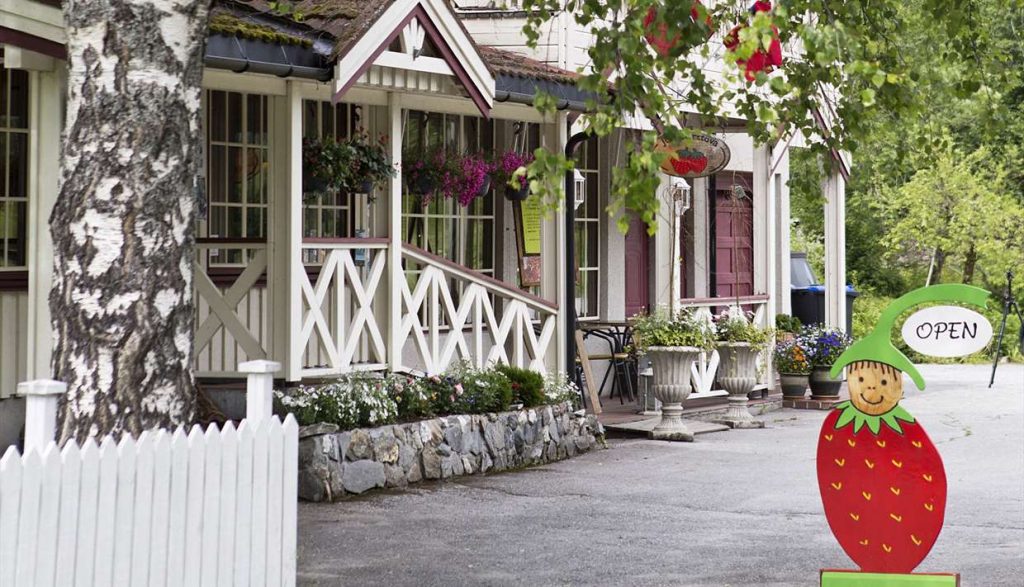
Stopping for lunch Young children need regular sustenance and there are plenty of places to stop for a bite to eat along the way – particularly some of the fruit farms, where strawberries grow enormous in the fresh Norwegian air. Try one of the farms at Valldal like Jordbærstova, where you can try some beautiful homemade dishes, including the popular strawberry cake, all made using local produce, and the Sunday lunch buffet is definitely worth stopping for.
A Family Road Trip from Bergen to Flåm The narrow road from Bergen to Flåm is an amazing road trip for the whole family. The fjords and waterfalls are magnificent and there are plenty of lookouts where you can stop and admire the view.
Feature image (on top): Geirangjer fjord and Skageflå waterfall. Photo: Visit Norway.
Karoline Gore
A Family Road Trip from Bergen to Flåm is written for Daily Scandinavian by Karoline Gore. Karoline is a freelance writer who left the corporate grind when she started a family and has never looked back. She enjoys contributing to a range of online publications on the topics that are important to her and is a regular contributor to Daily Scandinavian.
With so much of our personal data stored online, cybersecurity is of the utmost importance. According to a Comparitech report, Denmark is the most cyber-secure country in the world. Other top-performing countries included Sweden, Finland, Germany, Ireland, Canada and Japan. So, Scandinavia ranks among the most cyber-secure countries in the world.
The rankings released earlier this month suggests Denmark, Sweden, Ireland, Germany, Japan, Canada and Finland are closely ranked at the top of the 72- country study. At the bottom are Algeria, Tajikistand, Turkmenistan, Syria and Iran.
The lowest number of financial malware attacks was in Denmark, Ireland, and Sweden. Image: Flickr
Lowest number of financial malware attacks
The lowest number of financial malware attacks was in Denmark, Ireland and Sweden. In all of these countries, this kind of cyberattacks concerned only 0.1 percent of users.
The study revealed Denmark to be the most cyber-secure country in the world, taking over from Japan, which dropped four places to the fifth most cyber-secure country. Last year’s fourth most cyber-secure country, Denmark, scored incredibly low across the majority of categories, only scoring a little higher in the legislation category due to it not having specific laws that cover content and cybercrime.
The study revealed Denmark to be the most cyber-secure country in the world
Improvement since last year
“We found most countries’ scores improved since last year,” says a summary of the report. “But due to greater cybersecurity efforts from the majority of countries, this means some of the best performers from last year have dropped down the rankings”.
Figure skater Sonja Henie was the world’s best paid movie actor – and misunderstood in her home country Norway. Read the fascinating story about the Norwegian Ice-Queen.
Norwegian figure skater and film star Sonja Henie (1912 – 1969) won more Olympic and World titles than any other ladies’ figure skater. She was three-time Olympic Champion in women’s Singles, a ten-time World Champion and a six-time European Champion. She also made millions with hit Hollywood films like My Lucky Star and Sun Valley Serenade, and sold-out ice shows in the 30s and 40s.
Sonja ranked as one of the most internationally famous Norwegians, but wasn’t very popular at home.
Norwegian figure skater and film star Sonja Henie (1912 – 1969) won more Olympic and World titles than any other ladies’ figure skater
Serious training as a figure skater
She unwrapped her first skates on Christmas morning 1919. That was the only item on seven-year-old Sonja’s Christmas want list. “Such skates to walk around and around on,” she told her dad Wilhelm. Already on the first day of Christmas she glided onto the ice-skating rink on little too big skates. The seven-year old was obsessed.
The Henies were in a position to satisfy Sonja’s every desire. Wilhelm, who came from old money generated by a brush factory and a fur company, was a smart businessman who grew the family fortune. He was also a world-class athlete who’d been a competitive speed skater, and won the track cycling world championship in 1894.
Once Sonja began serious training as a figure skater, her formal schooling ended. She was educated by tutors, and her father hired the best experts in the world, including the famous Russian ballerina, Tamara Karsavina, to transform his daughter into a sporting celebrity.
From the book about Sonja Henie by Ine-Marie Wilmann
Legitimate sport in the Winter Olympics
Henie is credited with being the first figure skater to adopt the short skirt costume in figure skating, wear white boots and make use of dance choreography. Her innovative skating techniques and glamorous demeanor transformed the sport permanently and confirmed its acceptance as a legitimate sport in the Winter Olympics. Sonja had innate musicality, which gave her skating numbers a feeling of well-being. She had a lovely, Astaire-like élan on the ice.
Today, say her name to anyone under 40, and they won’t know that she was the first teen phenom of modern times—that in 1928, months before Shirley Temple was even born, this dimpled imp of 15 was already a child star on the world’s stage. She was nicknamed “the Nasturtium of the North,” “the Ice Queen of Norway,” “the White Swan,” and, less flatteringly, “Little Miss Moneybag”, perhaps because her surname rhymed with “penny”.
The ‘White Swan’ poster
The White Swan
However, an new film “Sonja. The White Swan” (2019) shows that her life wasn’t so super at all. The Norwegian director Anna Sewitsky’s film centers on how Henie, after winning triple Olympic gold, headed for Hollywood in 1936 and became a film star. Then followed ups and downs.
When Sonja Henie and her father arrived in Los Angeles, a number of Hollywood’s top actors were invited. “The result of Dad and my little plan broke all records,” Henie writes. She signed a five years’ contract with Darryl Zanuck at Twentieth Century Fox, which proved to be a monster at the box office, reportedly earning more than $500,000 within the first year. Her sold-out ice shows worked as advertising for her movies. Henie was irresistible and put figure skating on the map and got everyone heading for the ice.
In The White Swan, Henie is portrayed as a sharp businesswoman, full of self-confidence and able to get what she wanted out of Hollywood’s biggest film tycoons at the time. In the film version, Sonja Henie is a stubborn, greedy, egoistical and, at times, downright nasty woman who loved mounting huge parties but could also end up getting hurt.
World War II breaks out
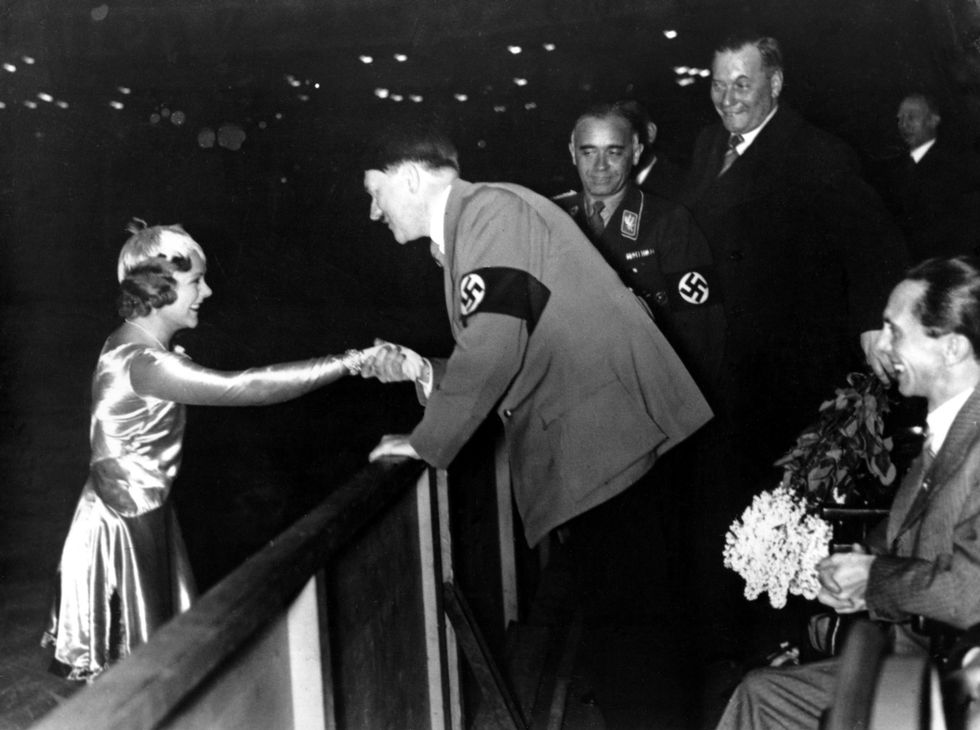
When World War II broke out, Hollywood had become Henie’s new home. In 1941, she applied for US citizenship, which was seen as an insult at home in occupied Norway. The fact that Henie had made a Nazi salute to Hitler during one of her shows a few years earlier also created speculation. “She asked for it”, wrote Norwegian commentator Tor Myklebost about the rumors at home in Norway, claiming Henie had failed to offer more support for her home country during the World War II occupation.
The White Swan includes a memorable scene where, when confronted with concerns about her films’ distribution in Europe, Henie claims “I can call Goebbels in the morning.” She’d had dinner with him at one of Hitler’s homes.
Towards the end of her career, she began to be strongly challenged by younger skaters. However, she held off these competitors and went on to win her third Olympic title at the 1936 Winter Olympics.
Returning to Norway
She eventually returned to Norway, where she hadn’t been forgiven. But shortly after Henie’s return, the Norwegians’ hearts melted again. With her show Holiday on Ice she met Norwegian shipowner Niels Onstad. Both he and she were self-made and not fully accepted in more conditioned environments. So, they stayed abroad and longed for home. However, they experienced the art environment as a comfortable escape and together, the couple built an art collection consisting of 400 works that formed the basis for their Henie Onstad Museum just west of Oslo, which opened in 1968 with Norway’s royal family in attendance.
Her autobiography Wings on My Feet, translated from Mitt livs eventyr and published in 1940, was republished in a revised edition in 1954.
When she died, in 1969, her holdings were estimated at more than $47 million.
Image from Book for children by Ine Marie Wilman, illustrated by Ingebjørg Faugstad Mæland
Feature image (on top): Sonja Henie on a Dutch postcard by J.S.A. Photo Columbia/Flickr.
One of the world’s largest H&M flagship stores was opened in Oslo last year, in the capital’s main street, Karl Johans gate. Five of the six storeys in a listed 20th century building has been brought back to its original purpose.
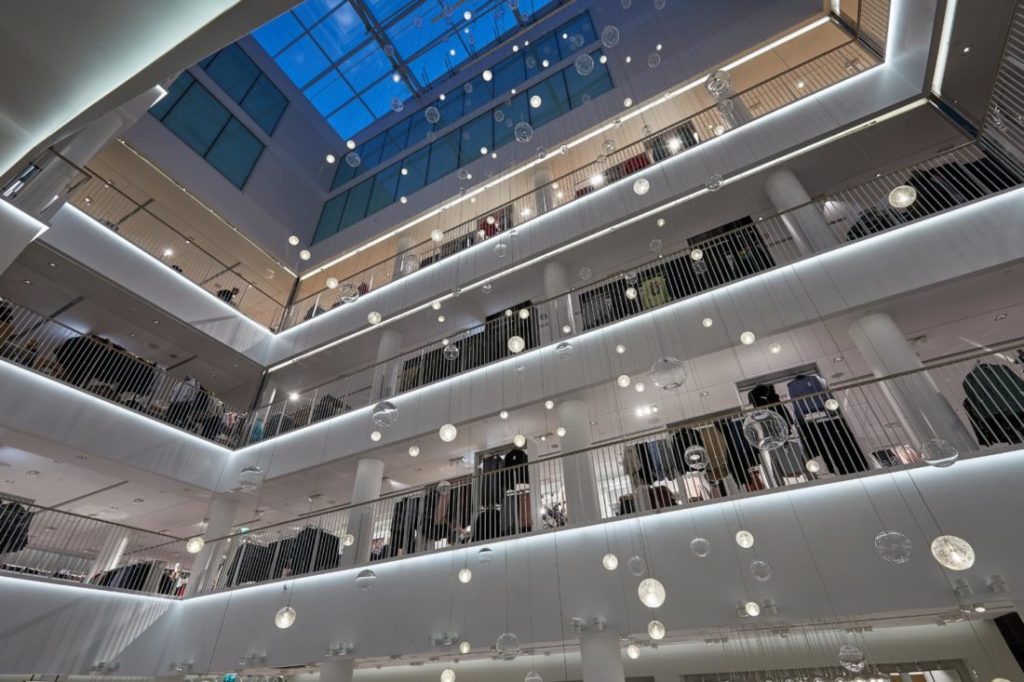
The property has been remodeled to accommodate offices and retail premises for H&M. In the first H&M flagship store in Norway, a five storey retail space is surrounding a large atrium all the way from street level up to the new glassed roof.
Hadeland Zenisk lightning design at H&M Flagships store in Oslo
Related: A Tribute to Oslo -The Capital of Norway in Words and Images One of the World’s Largest H&M Flagship Stores in Oslo
”H&M will have a major impact on the retail business in Oslo now that one of their largest stores in the world opens,” said Joachim Flaten of AVA Eiendom. Overall, H&M will lease more than 10,000 m2 of the property.
The barrel vaulted 17th century basement has also been made accessible to the public. “H&M wants to surprise and inspire our customers and we’ll do that by offering unique
A five storey retail space is surrounding a large atrium all the way from street level up to the new glassed roof
shopping. That’s what this new store is about, and we are very proud to establish one of the world’s biggest flagship stores here in Norway,” said Lucas Seifert, MD of H&M Norge.
The building is returned to its former purpose
The exposed corner will be topped with contemporary tower and roof terrace providing spectacular views of the adjacent Oslo Cathedral and the Oslo city center.
“Now the building on the city’s most famous street will be returned to its former purpose with outward-looking retail on most floors. The property has a particularly excellent location, a historic and beautiful façade, access from several sides, very high ceilings and not least good exposure opportunities,” said general manager Arne Vannebo of AVA EiendomsPartner AS.
Now the building on the city’s most famous street has beeen returned to its former purpose with outward-looking retail on most floors.
Historical building
The property which In recent years was the home of TV2 in Oslo has an interesting history. The University was located here in the early 1800s, The Post and Telegraph Service was headquartered here from 1868, and for many years there was a lamp shop on the corner run by Elektrisitets-Aktieselskapet Watt, which gave the building its name, Wattgården.
Client: AVA Eiendom
Contractor: Veidekke
Architect: NSW Arkitektur
One of the World’s Largest H&M Flagship Stores in Oslo, written by Tor Kjolberg
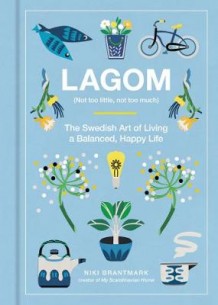
The Swedish concept of lagom can help us to live a happier, more harmonious and balanced life, according to Scandinavian lifestyle coach, Maya Thoresen. Her book “Living Lagom – A Swedish Guide to a Balanced Life” is a 21-day challenge with ideas to help you live a more lagom lifestyle. You can try everything from self-care to new activities, and get useful tips on how to clean up your home and your life once and for all. Create a healthier lifestyle – the Swedish way.
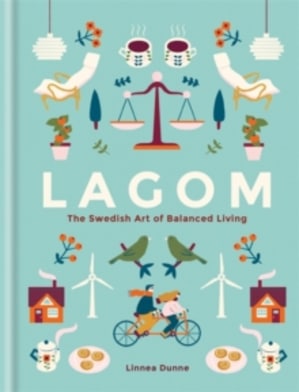
Linnea Dunne is another Swedish author, who has moved to Dublin where she lives with her husband and two half-Swedish kids, trying to achieve that lagom balance against all odds. She has written the book Lagom – The Swedish Art of Balanced Living.
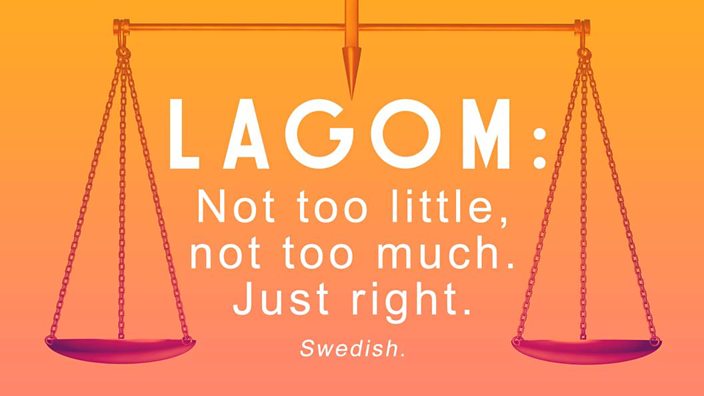
Lagom is used to describe the perfect state when something is neither too much, nor too little.
What is lagom?
Lagom is used to describe the perfect state when something is neither too much, nor too little. However, no translation does the word justice because the word lagom contains a superficial logic. It is a word that dominates life, language and culture in Sweden.
Linnea Dunne has written the book Lagom – The Swedish Art of Balanced Living.
These books were written in 2017 and 2018 respectively and are easy-to-read books with beautiful pictures and essays. The books are detailing how habits and policies are supporting Swedes in achieving a balanced approach to life. Both contain many ideas that are worth adopting for the sake of one’s mental health.
In Sweden, if the question starts with “How much?” the typical answer is “lagom”. It is just enough to make you satisfied. The word implies a distance for extravagance and flashiness, although lagom is always positive, focusing on the absolutely essential, knowing when to stop.
Swedish fika One of the practices espoused is the possible benefits of adopting fika, coffee breaks of fifteen minutes, in the morning and afternoon. This is a very serious part of a Swede’s working day. The books will also show you how lagom can be incorporated into your personal life, family, relationships, work, home, health, and wellbeing. The Swedes apply lagom to most aspects of their life without thinking about it.
Maya Thoresen’s book “Living Lagom – A Swedish Guide to a Balanced Life” is a 21-day challenge with ideas to help you live a more lagom lifestyle
In many ways this is admirable. It is part of the self-restraint that has allowed Sweden to be an egalitarian society, a place where unions work harmoniously with industrialists, where people take their work seriously, but leave before 5pm to be with their families.
Create a Healthier Lifestyle – the Swedish Way
Both books have cheerful, eye-catching covers that clearly represents the contents of the books. In a Vogue article, lagom was explained through the country’s love of mellanmjölk (semi-skimmed milk) that is neither unhealthily full-fat nor flavorless and watery. Linnea Dunne describes IKEA’s sustainable approach to design and lifestyle, something that is not always apparent from the marketing IKEA has done in North America. One of IKEA’s design successes described by Dunne is the Billy bookcase. In fact, my study is full of them!
Thoresen’s book includes some easy Swedish recipes to be enjoyed together with family and friends, a good activity instead of eating out. However, Swedish artists will tell you how much they hate lagom because of the constraints it puts on self-expression and the audacity allowed in ideas.
In conclusion I will say that If you like motivational self-help books, there is no reason why you would not enjoy these in spite of the fact that lagom as a lifestyle trend is increasingly a myth.
Create a Healthier Lifestyle – the Swedish Way, written by Tor Kjolberg
Want to see the northern lights? Well, that’s a great idea. However, there is one subtlety – in this case, everything will depend on the weather and on your luck, of course. Nevertheless, it is really possible to increase your chances of meeting this unique natural phenomenon. And for this, it is enough to choose the right time, the right place and make the right route. Here is a 5 Days itinerary to see the Northern Lights in Norway.
We decided to help you with this task and made a sketch of the route along the northern part of Norway, where each city or village hides the northern lights from prying eyes, and then shows it to the most daring and patient tourists.
Tromsø, aka Northern Paris and the Gates of the Arctic, is considered one of the best places in the world to observe the northern lights.
Day 1 – Tromsø Tromsø, aka Northern Paris and the Gates of the Arctic, is considered one of the best places in the world to observe the northern lights. And although, as the locals say, in many ways it’s just a clever marketing technique and advertising, the percentage of successful trips to catch Aurora here approaches 90%.
What else to see in Tromsø?
You can take a walk along the bridge that connects the main historical part of Tromsø, located on the island, with the new mainland, .admire the world’s northernmost Arctic Cathedral (Hans Nilsens vei 41) with an avant-garde design in the form of ice floes and a bright stained glass window, which was especially good under the daytime sun, climb Storsteinen mountain by the Fjellheisen funicular (Solliveien 12). Funicular gondolas are called “Polar Bear” and “Fur Seal” and depart every half hour.
And the views that open from the observation deck on the mountain are really worth paying almost 200 NOK per person. The opportunity to look at the whole island in the night lights, climb higher up the mountain away from the light of the city in the hope of seeing the northern lights and just being alone with white snow and thousands of stars is definitely worth it.
Related: Northern Lights and Midnight Sun Skiing in Norway
Day 2 – Senja Island This is not a tourist place – the Norwegians themselves, if they want to admire the breathtaking scenery and stare at the ocean from the top of the rocks, choose a trip to Senja Island. The landscapes here are in no way inferior to Lofoten and in many ways even superior: the mountains are taller and sharper, and the photos will go beyond the banal foreshortenings.
The advantage of the island lies in the diversity of the local landscapes: if the western part of the island is rocky, with crazy peaks and rock walls abutting the open ocean, then the eastern part is more gentle, with hills, lakes, deer and a national park. Almost the only way to get to Senja is to rent a car in Tromsø. From October to March, the snow-capped peaks look even more severe, and the northern lights dance almost every day in the sky.
Day 3 – Andenes
After exploring the island of Senha, you can head back to Lofoten in Andenes. Here you can book an excursion into the ocean, where you can see whales. During the tour, you will enjoy beautiful views of the Norwegian Sea and the island of Senja, as well as the Lofoten Islands. In the evening after dinner, do not give up the opportunity to listen to stories about the glorious Sigurd. The northern lights are very bright since there are no big cities nearby, which means that extraneous light will not interfere with the natural picture.
Nature here is so beautiful that you will surely amaze your friends on Instagram or Facebook.
Day 4 – Henningsvær Henningsvær is a small fishing village near Austvogey (island of the Lofoten archipelago), connected to it by a bridge. The indigenous population is a little over four hundred. Most of them are tourists who were attracted by the atmosphere of a fishing village and amazingly delicious seafood dishes. Henningsvær is a staging point between the main tourist destinations and the two largest islands. Travelers visit a secluded place for several hours in order to relax a bit, get acquainted with traditional cuisine and its dishes, enjoy the picturesque views and interesting architecture of the village.
Day 5 – Nusfjord On the last day, make another discovery and visit the village of Nusfjord. Only twenty small houses – this is a real paradise for an introvert. And just one cafe where you can taste the food of maximum freshness – here you can be sure that the fish in your soup swam in seawater half an hour ago.
Nature here is so beautiful that you will surely amaze your friends on Instagram or Facebook. Well, if you want to take a picture of the northern lights, then you should definitely take a tripod with your camera and take pictures at long exposures.
5 Days Itinerary To See The Northern Lights In Norway– Conclusion Hunting for the Northern Lights in Norway is a whole adventure that deserves to remain in your archives. After returning, be sure to write your story and share it with other travelers. Moreover, the best freelance writers from Online Writers Rating are always ready to help you to cope with this task.
Frank Hamilton
5 Days Itinerary To See The Northern Lights In Norway is written for Daily Scandinavian by
by Frank Hamilton. Frank is a blogger and translator from Manchester. He is a professional writing expert in such topics as blogging, digital marketing and self-education. He also loves traveling and speaks Spanish, French, German and English.
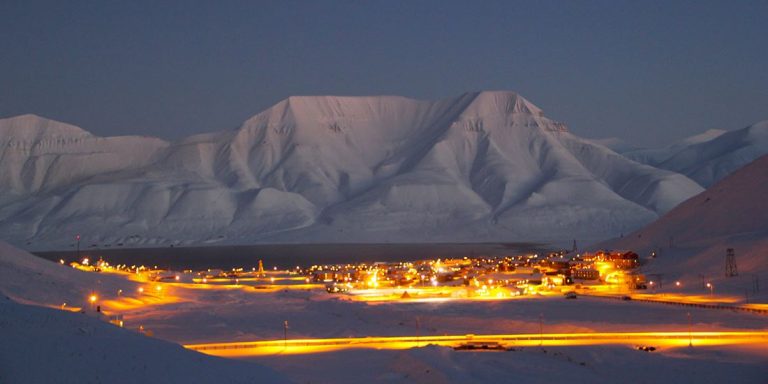
Svalbard, prior to 1925 known as Spitsbergen, is the Norwegian archipelago in the Arctic Ocean situated about midway between continental Norway and the North Pole. The islands were first used as a whaling base, while coal mining started at the beginning of the 20th century. The Svalbard Treaty of 1920 recognizes Norwegian sovereignty, and the 1925 Svalbard Act made Svalbard a full part of the Kingdom of Norway. Svalbard is indeed worth a visit. Most visitors call it Fantastic Svalbard. Here you can find out why.
Svalbard has a fantastic food selection, one of Scandinavia’s largest wine cellars and duty-free zone. Spitsbergen hides more than the eye can see. It is possible to sail to Svalbard, but most visitors fly. There are direct flights from Oslo and Tromsø to Svalbard.
Arctic sledding. Photo: Visit Norway
Arctic sledding
Experience dog mushing in its most natural way and drive into the nearby valleys of the deep Arctic environment. You will be guided out into the wilderness driving your own sled and exploring the beautiful surroundings.
Snow mobiling
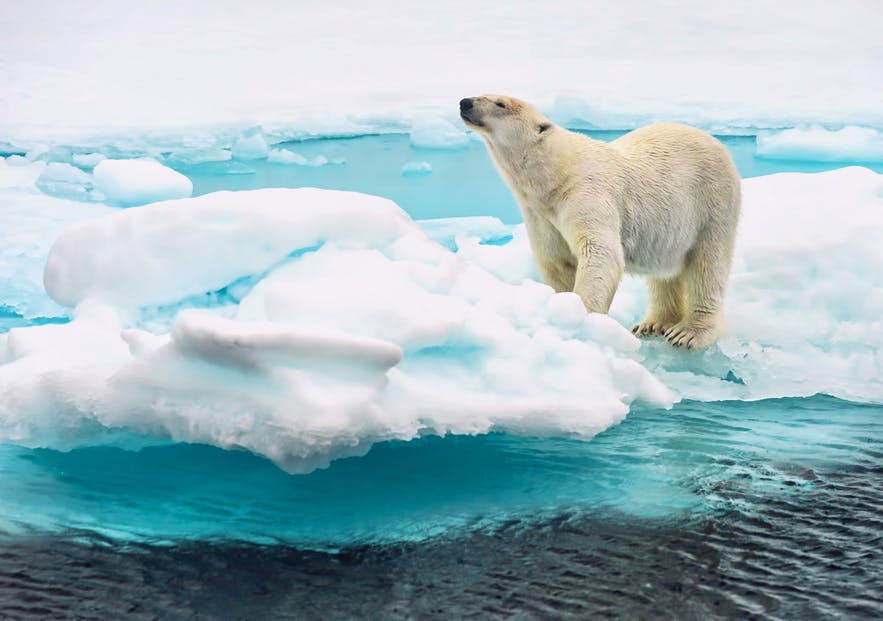
Discover untouched wilderness and experience unique wildlife during an incredible snowmobile activity. Did you know that there are more polar bears in Svalbard than people? Roughly 3000 polar bears live around Spitsbergen and Longyearbyen during the winter months. However, it’s not easy to find them. The best chances of seeing one are on the east coast in Spitsbergen. That’s why your guide will take you there.
Roughly 3000 polar bears live around Spitsbergen and Longyearbyen. Photo: Visit Svalbard
Ice Cave visits
Svalbard’s glaciers contain countless passages formed by the melted waters leading to fascinating ice caves. Luckily, it’s possible to visit some of these.
Have you ever wondered what it looks like inside the ancient ice? Equipped with a headlamp, crampons and a helmet, you can enter this calm and silent world and see the beautiful blue colors, icicles and snow crystals.
Experience the wonderful frozen landscape and be captivated by the beauty in the ancient ice.
Arctic silence on snowshoes
A snowshoeing adventure is elegant in its simplicity. Discover what it was like to be an Arctic explorer enjoying winter walks in one of the most remarkable and un-spoilt areas in the world, lands where few people venture. Here we will find a surprising variety of flora and fauna including Polar Bears, arctic foxes and seals plus glaciers, ice floes and stunning views.
Springtime skiing in Svalbard Cross country skiing expeditions take place in springtime and what better way to explore the beautiful Arctic scenario than to ski through it. On Svalbard, there is a variety of ski touring holidays for a range of abilities both on piste and off piste, both with and without pulks.
Funktionærmessen has been shortened to Funken. Photo: Hurtigruten
Local dining Svalbard offers a surprising number of restaurants for a place with around 2400 inhabitants. One of the restaurants, Huset (the House), offers fantastic food as well as one of the largest wine cellars in Scandinavia with around 15,000 bottles.
In addition to Huset, it is worth mentioning Gruvelageret (the Mining Store), Funksjonærmessen (Officer’s canteen), Vinterhagen (the Winter Garden), Kroa (the Pub) and Stationen (the Station). The price levels in the restaurants are reasonable, especially for those who want to match good wine with their food.
Fantastic Svalbard, Norway
In summer, Svalbard offers great midnight sun, boat trips and cabin visits. But in winter, the islands show their true self.
Feature image (on top) Photo: Thon hotels
Fantastic Svalbard, Norway, compiled by Tor Kjolberg
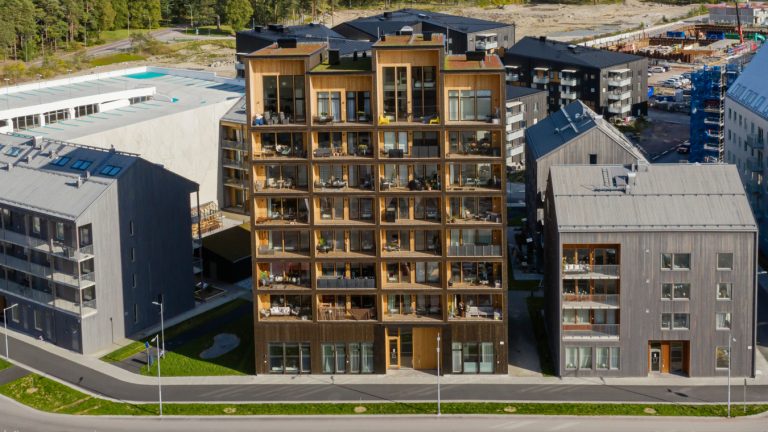
Construction of an 8.5-storey-high apartment block, built entirely with cross-laminated timber has recently been completed in the city of Västerås. The building is secured with mechanical screws that ensures it can be taken apart and reused. It is the tallest timber building in Sweden.
The building has been designed by C. F. Møller Architects and is situated in Västerås, one hour from Stockholm. By being constructed from solid timber, the building radically reduces CO2 emissions and positively affects the indoor climate.
The building has been designed by C. F. Møller Architects and is situated in Västerås
A new landmark
The Residential Tower on Lilludden, in the new district of Kajstaden at Lake Mälaren in Västerås, has become a landmark. Even the walls, joists, balconies, the lift and the stairwell shafts have been made of cross-laminated wood. The architects hope the structure becomes a benchmark for a sustainable future.
The use of CNC-milled solid timber and glulam allows for an airtight, energy-efficient structure without the need for additional cladding.
The double height apartments range from one to five rooms in size
Each floor has four flats, and each floor has taken three craftsmen an average of three days to construct. The low weight of the material also meant fewer deliveries to the construction site and a more efficient, safer and quieter working environment during construction.
Carbon-dioxide savings “The total carbon-dioxide savings from use of solid wood instead of concrete are estimated at 550 tons of CO2 over the building’s life,” explains Rob Marsh, the studio’s sustainability manager. Research also shows that buildings with a wooden frame make a positive contribution to human health and well-being thanks to better air quality and acoustic qualities.
The double height apartments range from one to five rooms in size and all the living rooms are positioned to look out over the harbor. The building is distinguished by its boxy form and staggered roof.
The Tallest Timber Building in Sweden
“Industrial timber technology provides architects with better tools for designing beautiful houses that boast a high degree of detail,” says Ola Jonsson, associate partner at C.F. Møller Architects. Through research projects and several active wood projects, C.F. Møller Architects has focused on innovation as well as developing and implementing multi-storey buildings with solid wood frames.
The Residential Tower on Lilludden, in the new district of Kajstaden has become a landmark