The Norwegian founder of Punkt has invented a revolutionary phone that calls and texts and says, ‘I don’t need the internet with me everywhere I go’. But what’s the big idea behind the smarter smartphone from Norway?
Punkt is a cousin of the feature phone, but it’s still a modern connected device aimed at helping you maintain a normal lifestyle. “A dumb phone for the smart person who still wants to stay connected, the Punkt MP02 4G ditches digital detoxing to tame your tech instead.” If you’re a slave to your smartphone, the Punkt wants to break those chains.
What’s actually the big idea? “It’s a low-tech mobile phone that offers only the most basic functions: call, text and reminders. Everything we do at Punkt is about taming technology,” says founder Petter Neby.
Punkt is a post-modern anti-flagship that suggests putting a full stop to the distractions and diversions of modern life.
A post-modern anti-flagship
In other words, Punkt is a post-modern anti-flagship that suggests putting a full stop to the distractions and diversions of modern life. Punkt’s first phone only had 2G connection, which is gradually being phased out around the world. Adding 4G LTE makes sense for longevity, but because the MP-02 doesn’t have a browser, navigation, email, or social networks, it doesn’t improve the phone itself.
The average person checks their phone 150 times a day. 85 percent of people have no problem using their phones while talking to friends or family. Total daily media consumption has increased from eight hours in 2010 to over 12 hours in 2019. 24/7/365 connectivity isn’t always a good thing. 47 percent of people have tried to limit their phone use, but only 30 percent succeeded.
“I have nothing against technology,” says Petter Nerby. “It’s great, we need it, and we should use it – but the way we use it today can be overwhelming.”
Ruggedness with charaxcter
The hardware design is basically set and the company has no plans to change that. Punkt MP02-4G combines ruggedness with character and a timeless minimalism that probably will look striking decades from now. The buttons and shape of this phone are pleasing to touch and to hold, and the overall construction has a high-end feel that belies the primitive hardware and capabilities contained within.
That being said, when you need to make a call or send and receive texts, the MP02 is all 2020, linking its 4G Voice over LTE (VoLTE) connection with a tablet or laptop to keep you in touch. It also serves as a WiFi hotspot.
Established in 2008
Punkt was established in 2008, when Petter Neby wanted a simple, functional and well-designed alarm clock. The brand’s debut product, the DPOT card-less phone, launched in 2011, shortly followed by the alarm clock, AC01. “Punkt is about using technology to help us adopt good habits for less-distracted lives.”
In spite of having a 4G radio, Punkt MP02 can’t access the internet at all. In spite of being based on Android, it has no apps. Punkt has 16GB of internal storage and the fanciest bit of multimedia, but no camera. Punkt gets a 4G LTE modem, tethering support, and BlackBerry’s security suite. But all you get out of it are some bespoke ringtones. So why bother?
Punkt MP02-4G combines ruggedness with character and a timeless minimalism
Because you can’t buy attention and focus. A smartphone often becomes a deep dive of notifications, updates and time-sucking diversions, while the MP02 is a conscious, principled rebellion against the tethering, often strangling blanket of modern communication.
A smarter smartphone from Norway
“I could never imagine that MP02 would replace my smartphone,” says Neby. “It’s a second device. When I finish work, I would switch off my smartphone, like I switch off my computer, and use MP02 for social calls and messages.”
The price of the Punkt MP-02 is $350, or 295 British pounds which is about the same as the Palm. It may put some would-be adopters off. A $350 price is a lot for a second device, but the Punkt is really designed to be your only phone, for which that cost is not obscene.
The Punkt MP02 does calls, texts, and serves as a handy 4G hotspot when required. It also looks and feels great, and its 2-inch monochrome screen will likely never break. What more do we really need from a phone? You’re making a statement: I’m using technology when I need it. Technology is not using me.
A Smarter Smartphone From Norway, written by Tor Kjolberg
Bornholm, Denmark, was a maritime center in the Baltic Sea during the Iron Age. Jewelry, coins and relics from as far away as Rome and the Near East have been discovered on the island and the scant remains of two forts dating from the Viking period can be found in Paradisbakkerne (The Hills of Paradise). The Viking strongholds in Denmark are worth a visit.
It is generally believed that Bornholm became a part of the kingdom of Denmark at around that time. The Gamleborg Viking Fortress was the first fortress of the Danish island, built around 750 AD. The massive fortress is 264 meters (866 ft) long from north to south and 110 meters (360 ft) wide from east to west. It is Bornholm’s oldest defense works.
Gamleborg fort
The Gamleborg fort
The Gamleborg fort was used as refuge during the tenth century against Viking raids and was abandoned in 1150. Excavations in the 1950s showed the fortifications originated in the Viking period although there is evidence the site was used as a hideout in the Iron Age. The ruins that can be seen today are mainly the result of reconstruction work completed in about 1100.
Almindingen forest, Bornholm
Almindingen forest Almindigen (‘the common’) is one of Denmark’s largest forests, covering 3,800 hectares (9,400 acres), with a number of walking paths, one leading to Gamleborg. Almindingen was fenced in for forestry in 1809 by Hans Rømer, the forest supervisor.
Hammershus castle, Bornholm
Hammershus castle
Perched on a huge rocky knoll on the northwest corner of the island are the impressive ruins of Hammershus. The castle was built around 1200 to defend the island against attack, and is today Scandinavia’s largest castle ruin. At the time the castle was built, Bornholm was owned by the Archbishop of Lund (in what is now southern Sweden, but then a part of Denmark).The archbishop was openly at war with the kings of Denmark.
Viking Strongholds in Denmark
Strong separatist feelings still exist among some Bornholmers. Their banner is a Danish flag with a green cross, instead of the familiar white one.
Feature image (on top) From Gamleborg fort
Viking Strongholds in Denmark, written by Tor Kjolberg
Snuff in Sweden was born in the 16th century when Swedes began to mix tobacco leaves with salt and water to place behind the upper lip. However, Europeans first came into contact with the tobacco plant when Christopher Columbus reached the island of Haiti in the West Indies in October 1492. In early 18th-century Sweden, snus became a moist ground tobacco product originating from a variant of dry nasal snuff. Read this short history of Swedish snus.
In the 1560s, Jean Nicot, French ambassador in Lisbon, came into contact with the tobacco plant, which was then grown in the backyards of Lisbon, and he became so enthusiastic that he took some tobacco plants home to Paris. Carl von Linné used his name for the Latin name given to the tobacco plant, Nicotiana tabacum.
Swedish botanist, zoologist, and physician Carl von Linné
Since Paris was the model for all European courts, it was not long before snus was being used in the rest of Europe. A customs document from 1627 states that snus was brought to Sweden from Porvoo in Finland for the first time.
Snus for the aristocracy
Snus became very popular, almost a must, among men and women of the aristocracy in the 1700s. The cans were small masterpieces of gold and had to be expensive and handled with carefully controlled elegance. It rapidly became a popular gift and the Swedish tobacco industry had its breakthrough. At the end of the 1700s, tobacco was being grown in about 70 Swedish towns and Swedish consumers switched to placing a pinch of snus under the lip. Many farmers, who had their own tobacco plantations, made their own snus by grounding the tobacco in their coffee grinders or in snus mills that they had carved themselves.
During the 1800s, the largest brand being Ettan (Number One). Photo: Wikipedia
Manufacturers began to produce local varieties of the moist snus during the 1800s, the largest brand being Ettan (Number One). When the Swedish government needed funds for the military and the first pension reform in the early 1900s, it was to come from tobacco. In 1915, the tobacco monopoly was re-introduced.
Record levels of snus consumption in Sweden
In 1919, when Sweden had a population og 6 million people, snus consumption reached record levels (7,000 tons, a consumption of 1.2 kg per capita). After a setback to the benefit of other tobacco products, snus regained its popularity in the late 1960. In 1973, the product developers at Swedish Match created a snus flavored with whiskey, it came in portion bags that were not very different from tea bags. The sales curves for portion-packed snus were pointing upwards. Per-capita consumption of moist snuff between 1970 and 2004 increased steadily from 393 to 922 g per person.
During 2003, 193 million cans of snus (6,761 tons) were sold to approximately one million snus users in Sweden, and the usage of snus had taken a step over the customary gender barriers, and women now account for nearly a fifth of snus consumers.
The third largest producer of tobacco products in Europe, Stockholm-based Swedish Match, decided to quit cigarettes in 2016 and steered away from smoke-related tobacco products, focusing instead on snus and chewing tobacco.
Buy snus online SnusDirect.com, established in Grebbestad, Sweden 2010, is the leading online retailer of Swedish snus, known for its wide range of snus products and its express delivery options. All the snus sold by the company is packaged in environmentally friendly packaging. Green packaging has a reduced impact on the environment because it is made of recycled or recyclable materials.
SnusDirect.com offers a wide range of different snus products in varying flavors, both loose and portions. With the catchphrase ‘Sweden at your doorstep’ SnusDirect.com offers home delivery of orders via Swedish postal service or UPS wherever it is legal to send snus. SnusDirect.com offers excellent customer service and support, and operates out of Grebbestad in Sweden.
The web site is easy to navigate with a user-friendly interface. SnusDirect.com takes all credit cards or bank wire transfers through its secure site.
Campaign from SnusDirect. Photo: Scrfeenshot
It amazes me that a small company located in Grebbestad, a small seaside resort in Bohuslän on the west-coast of Sweden, can market and sell high quality snus products in an age where tobacco is increasingly vilified and so many classic brands are a part of large corporations. So, we asked Ellinor Kyrk, Customer Relations at SnusDirect, what is the secret to the company’s success?
“From the very start our main goal has been to offer high quality, fresh snus at a low price. Why not share the Swedish snus tradition that we are so proud of with the rest of the world?” she says.
Reports from buying customers and a report from Trustpilot stating that 79% of customers rate the company as ‘excellent’ prove that SnusDirect indeed is a success story.
Bestseller Lyft
Kyrk admits that selling products online has been challenging, not least selling products all around the world. Changing regulation, shipping couriers and even natural disasters can affect the business. “It is important to keep our promise to the customers with the best quality service we can offer. That is the expectation we have on ourselves and from our customers,” she ads.
Each month new released flavors and strengths in different shapes and formats are released on the market. “One may think the snus market has exhausted their potential in growth and development, but we are surprised each month with what comes next. Of-course we have the oldies but goodies that are on our bestselling lists, and they will most likely always stay, but we also have new innovations on those lists such as the all-white nicotine pouches,” says Ellinor Kyrk.
At the moment it is all about the mint flavors. The company’s top 5 products are all mints in different formats. The fastest growing trend, the top 2 bestsellers, is the tobacco free all-white nicotine pouches. Kyrk emphasizes that these products are hyped up due to their white format, leaving no discoloration on your teeth, and slim fit, making them hardly noticeable.
Women now account for nearly a fifth of snus consumers
Snusdirect’s two bestsellers are quite new on the snus market, they were launched autumn 2018 and quickly climbed the bestselling lists. These all-white nicotine pouches called LYFT are sold all around the world, the most popular ones are LYFT Freeze and LYFT Ice Cool, they are known for their minty freshness along with the nicotine kick! Another strong snus that quickly increased in demand is the Siberia 80-degrees White Dry, this snus is popular due to the super high nicotine level! It is one of the strongest snus brands on the market with 43 mg/g, this is the can all snusers out there want to try to see if they can handle it. “It was launched on our website in 2017 and has been highly sought-after ever since,” says Kyrk.
In fourth place you will find the well-known General Mint White, a longtime favorite with a lovely sweet peppermint flavor and a traditional tobacco taste in the background. The original General recipe has been refined for 150 years. This is one of the older brands with a taste of history.
When I asked Ellinor Kyrk what the future holds, she answered, “our main focus in the future is to improve our product, we want to reach out to all countries and adapt to their specific needs and demands in order to continue offering high quality goods and services. To do so, our goal is to build a more local presence, we recently opened a new online store in Norway, so we are not only available at snusdirect.com and snusdirect.eu. For Norwegian customers we have opened snusdirect.no to meet their needs and demands in order to provide the best quality service with fast deliveries – fresh snus at a lower price”.
Snus is simply placed in the mouth, usually between the upper lip and gums on one side discreetly
Facts about Swedish snus Swedish snus is the popular form of smokeless tobacco, often flavored with exciting and delicious flavors. It is tobacco which is neither chewed nor spat nor smoked, so it does not harm the environment in any way. Simply placed in the mouth, usually between the upper lip and gums on one side discreetly.
It is discreet to carry and use. There are increasing restrictions on smoking, but no restrictions on snus use. Snus can be used in no-smoking areas. People around the snus user are not adversely affected in any manner.
Snus is a pasteurized product, bacteria-free. As it is virtually sterile, it has a long shelf life. In fact, in the freezer it can last for as long as a year.
The best way to see the fjords in Norway is from a boat! You can choose between one-day round-trip-cruises or on an international cruiser going along the coast. Here are some of our favorite choices for cruising the fjords in Norway.
Norway has for many years been marketing itself as “the most beautiful cruise destination in the world,” and the country does in fact offer some of the most scenic places in the world; majestic fjords, waterfalls dropping thousands of feet down rocky cliffs and tiny farms clinging to the side of mountains.
Bergen harbour. Photo: Pinterest
A Day-Cruise from Bergen
You can enjoy the Arctic appeal of Norway through scenic beauty, unique museums and funky foods. A round-trip cruise from Bergen takes you up the 27-kilometer long Osterfjord. Underway, the fjord narrows between steep mountains as the boat brings you safely through the powerful currents of the shallow and narrow Mostraumen strait.
The Disney film “Frozen” has been credited with nearly doubling tourism in Norway since the first movie was released in 2013. Later, the new “Frozen 2” and “Frozen – the Broadway Musical” have given the tourism in Norway a continuing growth.
Smaller villages along the fjords function as transit hubs for excursions out to scenic vistas, and Norway’s cities give the opportunity to explore excellent museums on the country’s maritime history and local culture, as well as shops for its well-regarded woolen products or unusual food items, like brown goat cheese from farms that have been in families for generations.
Car ferry in Lysefjord
Cruises from Stavanger
Stavanger is the jumping-off point for boat trips into the Lysefjord, with its dramatic cliffs (including the towering Pulpit Rock) and gushing waterfalls. It’s also home to some unique museums, including the Norwegian Canning Museum and the Norwegian Petroleum Museum. Don’t miss a walk through the wooden houses of Old Stavanger or the harbor area with its seaside restaurants and local shops.
A one-day roundtrip cruise is out from Stavanger on the Lysefjord. On this exciting fjord cruise, you can enjoy the impressive Lysefjord, Preikestolen (Pulpit Rock), the Vagabond’s cave and get up close to the Hengjane waterfall (you can actually taste the water from the falls!). The cruise is available all year round.
Cruising the Norwegian fjords is never boring. Photo: Pixabay
Cruising the Fjords in Norway
The incredible clouds, drifting across the sky, sometimes puffy and white, sometimes dark and some infused with bright patches where the sun shines through, sparkling on the sea, are amazing when you’re aboard a cruise liner. Cruising the Norwegian fjords is never boring. If you are an adventurous type you might want to follow the coastline all the way north, into the Arctic, to spy on polar bears and abandoned mines and to seek out the midnight sun.
If you’re more of an one-day cruise passenger type, you might want to bring your car on the car ferry on the Lysefjord (see above). On this car ferry you get to admire the Pulpit Rock from sea level as the ferry passes by. But Lysefjorden is the home to several other gems, like Lysebotn, with the 27 hairpin bends up to 600 m.a.s.l. and a spectacular view, and Kjerag – a challenging and jaw-dropping hike. The ferry departs from Flørli, Forsand, Lauvvik, Lysebotn or Songesand.
One of the country’s most beautiful fjords, Geiranger fjord on the west-coast. Photo: Hurtigruten
One of Norway’s most beautiful fjords
The scenery in Norway is so wild and awe-inspiring that visitors sometimes are overwhelmed. One of the country’s most beautiful fjords, Geiranger fjord on the west-coast, is a deep-sea inlet reaching nine miles into the heart of the country and a UNESCO World Heritage Site.
If you start out in Ålesund, you’re able to do 3 fjords in 3 hours! From Ålesund you travel through three different fjords and spectacular scenery before you arrive in Geiranger. You can either choose to stay in Geiranger, or take the boat back again, after a few hours in Geiranger where you can have lunch and go for a short sightseeing tour to the closest viewpoints Ørnesvingen (the Eagle bend) or Flydalsjuvet.
The famous Seven Sisters waterfall
On a car ferry from Hellesylt to Geiranger you can enjoy the Geirangerfjord, see the famous Seven Sisters waterfall and the Bridal Veil (Brudesløret) waterfall and gaze up at the abandoned farms clinging on to the mountain sides.
From Geiranger you may have a day touring by bus taking you high into the mountains on a narrow road full of hairpin turns giving you the chance to have a view to the fjord far below. The cruise liner you’ve left has now been reduced to the size of a toy boat.
Some passengers chose to stay aboard. Perhaps they are afraid of the winding roads. However, most passengers want to sample the country and its people as much as possible. Norway offers plenty of waterside villages that lie in fairy-tale-like settings.
Tailor made cruises Cruise travelers have a lot of choices to tailor their Norway cruises, and with hotel and food prices being sky high, a cruise can in fact be the most affordable way to experience the country. June through August is the peak of the Norway cruise season, but voyages begin in May and run into September, while Hurtigruten and car-ferries sail year-round. (A few lines offer earlier spring or later fall cruises.)
From Flåm. Photo: Sverre Hjørnevik/Flåmbrygga hotell
One of Norway’s busiest summer destinations
On a day round-trip cruise Flåm – Gudvangen – Flåm, you can experience the Nærøyfjord, the narrowest and most spectacular of the inlets of the Sognefjord, at the heart of the UNESCO World Heritage Area. It is available all-year. If you travel from Flåm, you will first sail through the idyllic Aurlandsfjord, which is also inscribed on the UNESCO World Heritage List. Then, the boat continues through the narrow Nærøyfjord before arriving Gudvangen, innermost in the Nærøyfjord. The trip takes around two hours one way.
Flåm is one of the country’s busiest summer destinations and offers a 12-mile mountain railway journey that takes passengers through the beautiful landscapes of the innermost part of the Aurlandsfjord, an arm of the Sognefjord.
The car ferry between Gudvangen and Kaupanger runs daily from May to September. On this 2-3 hours’ long trip you get to see some of the most beautiful and most dramatic fjord landscapes in the world! Booking in advance is recommended due to limited capacity.
Cruise travelers have a lot of choices to tailor their Norway cruises, and with hotel and food prices being sky high, a cruise can in fact be the most affordable way to experience the country
On the west coast
Enjoy unspoilt nature on the cruise from Ålesund to Øye, through the 35 km long Hjørundfjord. The Hjørundfjord is surrounded by the Sunnmøre Alps, with mountains streching up to 1700 m.a.s.l. Pass villages along the way, some without road connection. You can disembark at Trandal, where you can try the world’s most instagrammable swing.
The express boat from Bergen takes you through striking scenery to the village of Rosendal by the Hardangerfjord. In Rosendal you can visit Baroniet, Scandinavia’s smallest “palace” from 1665 as well as the Folgefonn Centre, where you can learn about the global cycle of water and climate changes.
From Nærøyfjord, Flåm. Photo: Fjord Cruise
A cruise on the Fjærlandsfjord starts from Balestrand sailing in towards the village Fjærland. The Fjærlandsfjord is beautiful and majestic as it is surrounded by steep mountains, some still covered with snow on the peaks. The water has a bright green color because of the melt water from the glaciers that flows into the fjord. A fantastic boat trip from the unique architecture village Balestrand through the beautiful fjord arm towards the Jostedalsbreen Glacier.
Åkrafjorden and the Langfoss waterfall are hidden gems. The highlight of the cruise is the view towards the Langfoss waterfall. Langfoss has an impressive drop height of 612 meters, and in 2011 CNN Travel rated Langfoss as one of the most beautiful waterfalls in the world.
Hurtigruten in the Troll fjord. Photo: Hurtigruten
One of the world’s longest coastlines
Norway has the second longest coastline in the world, next only to Canada. The most recent measurements are: mainland 29,750 km + islands 73,187 km = total 102,937 km. Fiords are the nation’s main draw; 100 cruise ships visited them last summer on more than 400 voyages. Figures from the lobby group Cruise Norway show the number of passenger visits is expected to pass four million in 2019. The number was just 2.5 million in 2012. Therefore, Norwegians are concerned that ships are getting bigger and their numbers are multiplying.
“When many ships and visitors arrive at the same time, it creates congestion, pollution and tension in many local communities along the coast,” wrote economic development agency
Innovation Norway in a report that concluded that cruise tourists spend less money locally than other types of tourists.
Departing from a variety of homeports
Cruises to and in Norway depart from a variety of homeports, including Bergen and Oslo. Other popular departure cities are Copenhagen, Amsterdam, Hamburg and a variety of U.K. ports. True Arctic cruises may embark in Svalbard (Spitsbergen). However, there doesn’t seem to be much of a standard Norway cruise. Bergen, built on mountainsides overlooking the sea, is a UNESCO World Heritage City. Although it’s Norway’s second-largest city — only Oslo is larger— it has small-town charm and is known for its outdoor fish market and Bryggen waterfront buildings, which date to 1070.
Bergen is the big city that features on most itineraries, some may include Oslo. Cruises are rounded out with smaller, scenic ports like Stavanger, Geiranger, Alesund and Flam. A surprising number goes as far north as Spitsbergen (Svalbard) in the Arctic – even on weeklong sailings.
Stena Line’s SAGA. Photo: Visit Norway
Temperatures and weather in Norway
Temperatures may be a little lower at off-peak times, but you’ll avoid summer crowds. In general, summer temperatures are warm but not oppressive, with average daytime temps in the upper 50s and 60s in ports like Oslo and Bergen. Though highs can reach into the 80s, weather there can change frequently. Don’t forget that Norway is a terrific place for outdoor activities like kayaking, biking and hiking – that is, when it’s not raining. Weather can be very varied and often wet, so always have a backup plan in case of inclement weather. Take advantage when the sun is out, and, if it’s raining, don’t be afraid to push back an activity – often a rainy day will turn sunny later on (or vice versa). Also be sure to pack a rain jacket and umbrella, and dress in layers.
The king of Norway cruises
The king of Norway cruises is Hurtigruten, which offers year-round service up and down Norway’s coastline, cruising roundtrip from Bergen, going as far north as Kirkenes and the Arctic Circle, and stopping at a myriad of ports, both large and small. While foreigners may treat these journeys like regular cruises, staying onboard for five, six or the full 11 nights, day-trippers use the same vessels as ferry service between ports, and crewmembers unload freight and mail at most stops.
Cruising the Fjords in Norway, compiled by Tor Kjolberg
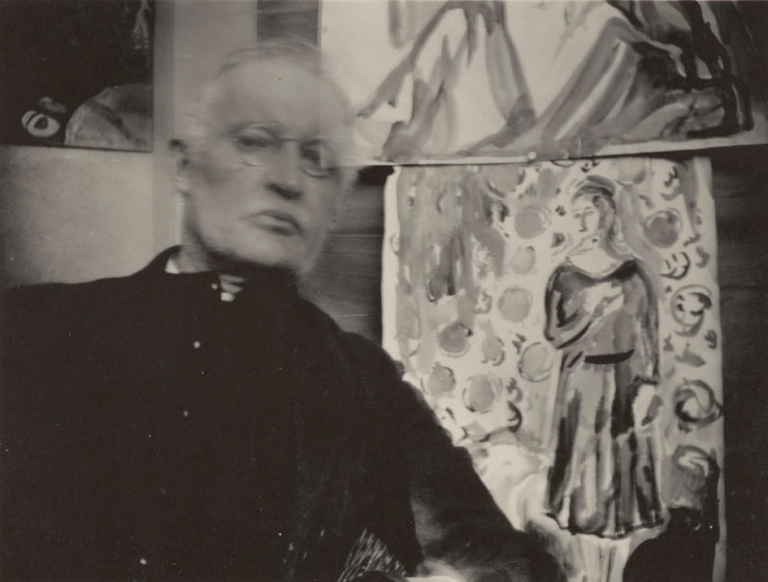
Norwegian painter and artist Edvard Munch (1863-1944) was one of the first artists to take “selfies”. He was a distinctive photographer, and in 1902 he bought his first camera. He used photography as an experimental medium, often placing himself in front of the lens. In his photographs, he often explored the effect of apparent “errors” such as distortions, blurry movements and unusual camera angles. Now, you can experience the experimental self of Edvard Munch at the Thiel Gallery in Stockholm
Edvard Munch pursued photography as an experimental medium and himself as an experimental subject. The unexpected areas of blank, disunified, or undefined form and shadows that replace living bodies mirrored his formal strategies in painting and graphic works. An amateur, he did not exhibit his photographs. Munch’s photographs have been dated to two periods, 1902 to 1910 and 1927 to the mid-1930s.
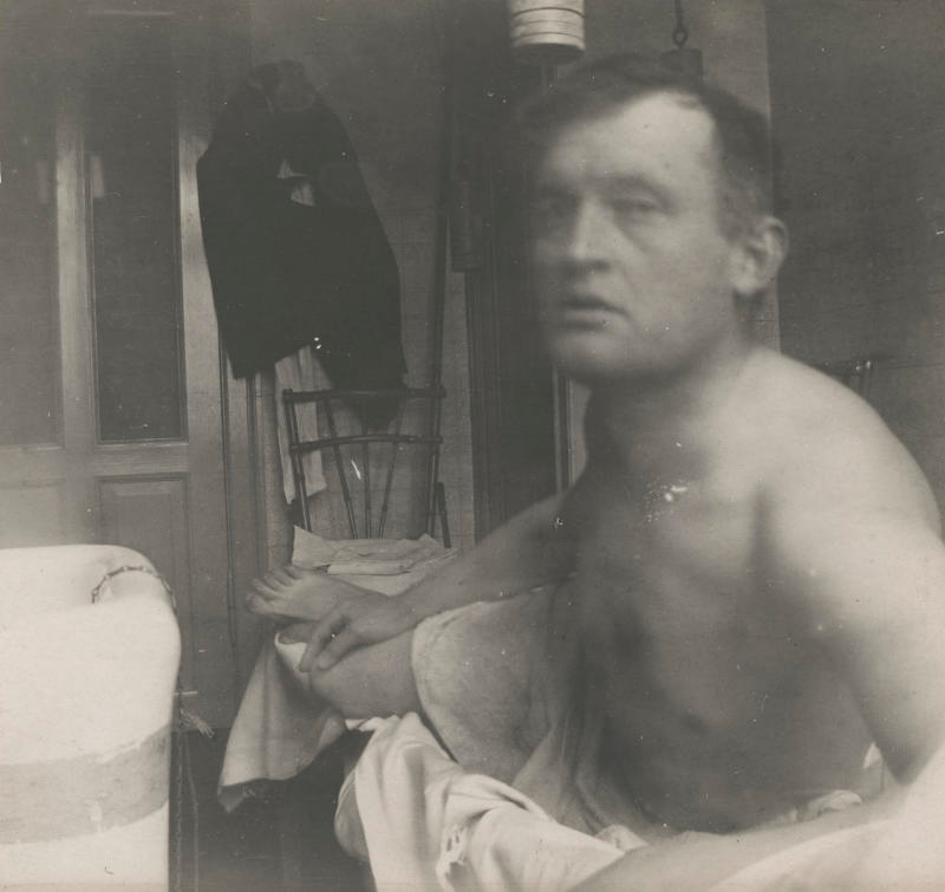
Self-portrait ”à la Marat” by the bathtub at dr Jacobsons clinic, Copenhagen, 1908-09. Photo: Edvard Munch. Munchmuseet, Oslo
Edvard Munch’s ‘selfies’
The investigative and poetic pictures show the artist himself and his immediate surroundings: “selfies” from the nerve clinic, the beach or the garden in his home outside Oslo. Munch took up photography in 1902, the year in which he and his lover Tulla Larsen ended a long relationship with a pistol shot that mutilated one of the artist’s fingers. This event, and an accelerated career, triggered a period of increasing emotional turmoil that culminated in a rest cure in the private Copenhagen clinic of Dr. Daniel Jacobson in 1908-1909.
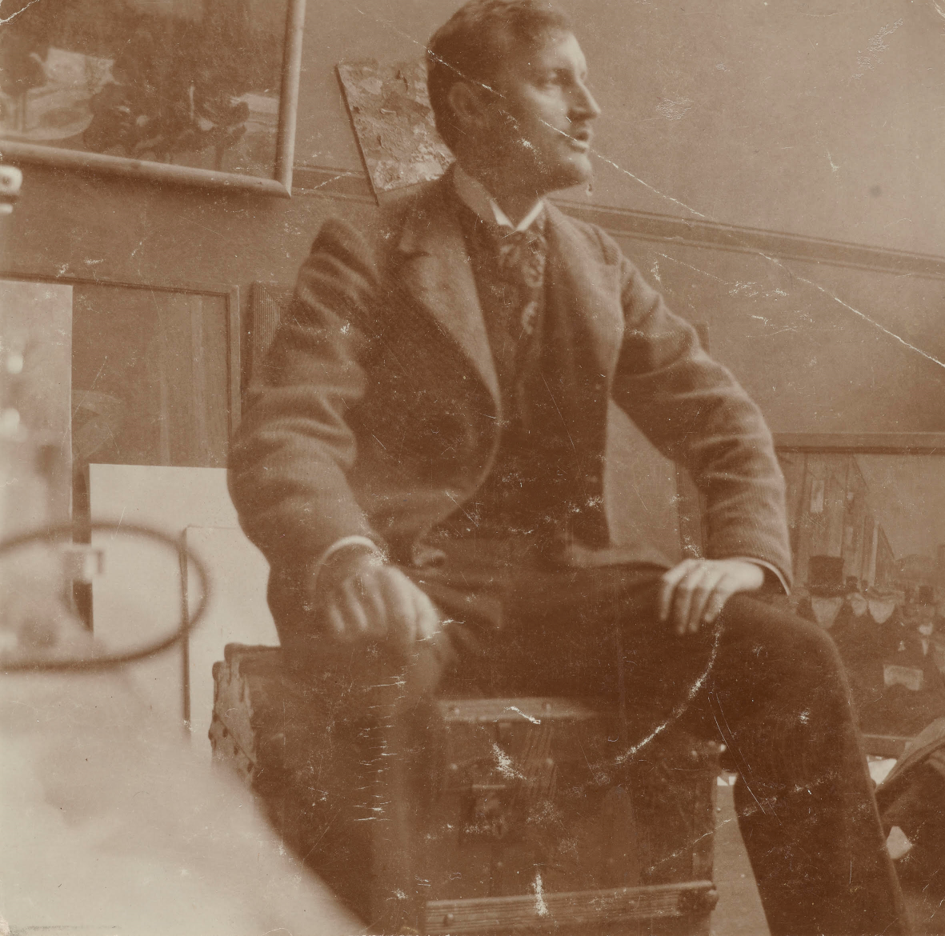
Edvard Munch sitting on his suitcase in his studio at Lützowstrasse 82, Berlin, 1902
At that time, industrialist and art collector Ernest Thiel was one of Munch’s most important supporters, and he acquired a large collection of Munch’s works at the Thiel Gallery. The second period of activity, from 1927 into the mid-1930s, was bracketed by triumphant retrospective exhibitions in Berlin and Oslo. A hemorrhage in Munch’s right eye, temporarily impairing his vision, ended several photo-experiments.
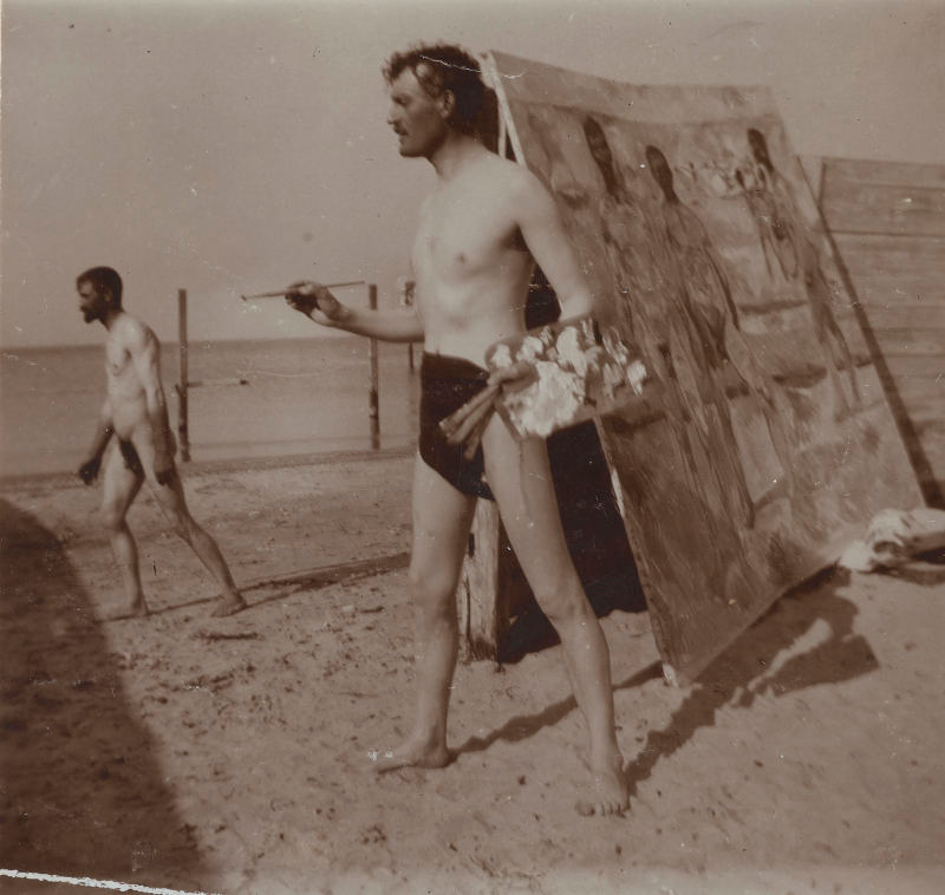
Edvard Munch paining on the beach in Warnemünde, 1907. Photo: Edvard Munch. Munchmuseet, Oslo
The Experimental Self of Edvard Munch in Stockholm
The exhibition «Edvard Munch’s photographs. The experimental chase” is produced by The American Scandinavian Foundation/Scandinavia House, New York in collaboration with Munchmuseet, Oslo. The exhibition at Thiel Gallery in Stockholm runs until 31 May 2020.
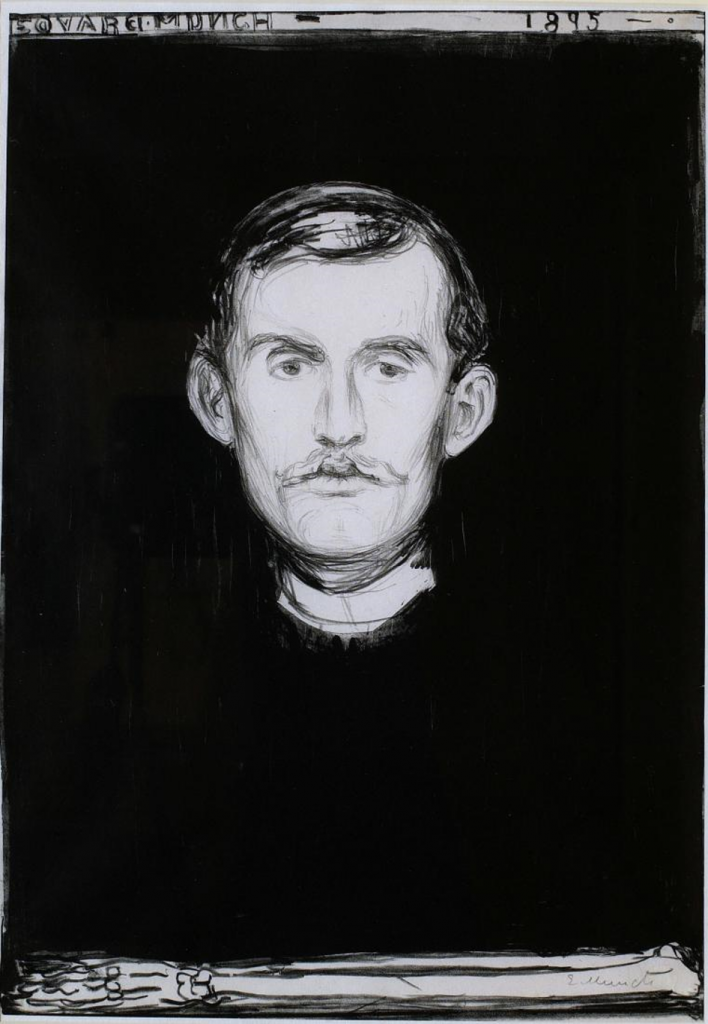
Edvard Munch, Self-portrait, 1895, lithography. The Thiel Gallery
Edvard Munch, Evening, 1902, wood cut. The Thiel Gallery
The exhibition, aims to show a part of Munch’s work that is unknown to many, but was an obvious part of his artistic work. The exhibition contains around 50 photographs provided by the Munch Museum after Edvard Munch’s own originals. A selection of Edvard Munch’s graphic prints, taken from the Thiel Gallery’s own collection, are displayed together with the borrowed photographs. The exhibition is curated by art historian Dr Patricia Berman.
Edvard Munch, The sick child, 1896, lithography. The Thiel Gallery
Feature image (on top): Edvard Munch, wearing glasses, in front of two watercolours, Ekely, ca 1930. Photo: Edvard Munch. Munchmuseet, Oslo
The Experimental Self of Edvard Munch in Stockholm is based on a press release from the Munch Museum in Oslo
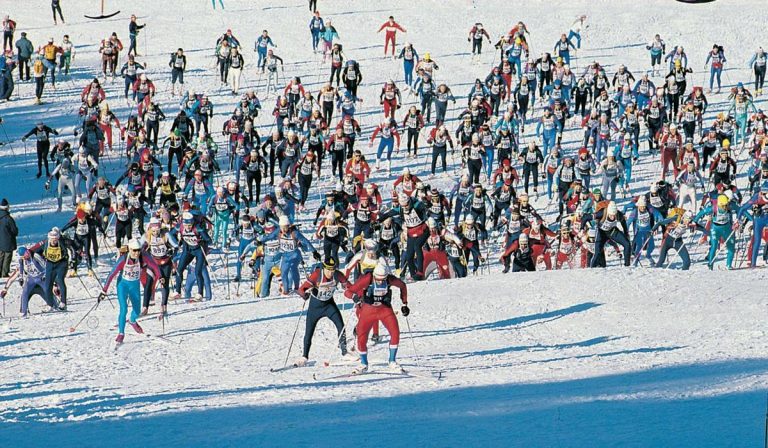
The first Birken Race (Birkebeienrrenn) took place in 1932 with 155 male participants. Much has changed since then. Today several thousand people from around the world are experiencing the joy of skiing in the wild nature of the Norwegian mountains. The legendary Norwegian ski race is a 54 km cross-country race starting in Rena to the finish in Lillehammer.
The race crosses two mountains and the tracks take the participants through breathtaking sceneries. It was in this landscape the king’s son was saved in security in the 13th century and since then hundred thousand of Norwegians have taken up the challenge to go on the trip over the mountains. In later years the race and the Norwegian nature have made Birken attractive to foreigners as well as to Norwegians.
The race crosses two mountains and the tracks takes the participants through breathtaking sceneries
Competitors from all over the world Birkebeinerrennet and its region have a very stable climate with good winters and a lot of wild snow in the high ground, and today competitors from all over the world join the races and create an amazing atmosphere. Competitors must be 16 years old by 31.12.20, and all participants must carry a backpack weighing at least 3.5 kg throughout the race.
The tradition of all participants carrying a backpack was established to symbolize the original Birkebeinere that saved the infant Norwegian king from the rivaling fraction, the Baglers.
In later years the race and the Norwegian nature have made Birken attractive to foreigners as well as to Norwegians
The Baglers
Originally, the Baglers intended to be offensive – referring to their leggings of birch bark, indicating that they were poor and incapable. Today, however, the name carries a sense of pride, strength and endurance – something thousands of people, participating in this historical race every year, keep striving for.
The Legendary Norwegian Ski Race
With its wild snow profile and demanding mountains, Birken makes it a real challenge to all XC skiers and a rite of passage under tough conditions. The position of XC skiing in Norway with the country’s skiing traditions and its stars, makes Birkebeinerrennet a special event for all Norwegians.
Wild boar are sought-after both as a treasured bounty for hunters (as they are really difficult to hunt) and for their meat. For many, hunting wild boar in Scandinavia is motivated primarily by a desire to protect land and livestock: these animals are uncomfortably intelligent (like all pigs) and a grown male boar, with its giant tusks, is downright dangerous, and can wreak havoc on crops.
Appearance
Wild boar piglets must be the cutest creatures in the world with their fuzzy fur and finely striped backs in brown and black, but they grow into rather less pretty and extremely powerful creatures. With its curved tusks, a boar’s snout is an amazing instrument which it inserts into the ground like a plough to search for food, with disastrous results for both farmers and gardeners.
Wild boar piglets must be the cutest creatures in the world. Photo: ABSFFreePic
One boar let loose in your garden will eat everything and turn your topsoil for you, and a herd of boar can wreck a whole field in a matter of hours. (Mind you, the same goes for the domesticated pig, which will turn any field into mud in a very short time.)
Taste of wild boar in Scandinavia
The wild boar is delicious, a tastier forefather to the domesticated pig, with dark, juicy meat, and a spicy flavor from foraging in the wild. Wild boar are omnivores and will eat anything, including roots, small animals, worms and wild greens.
The meat that you usually buy is from farmed wild boar, which are often crossed with domesticated pigs to make them fleshier (and also to give them a more docile temperament). The flesh is nice, but naturally lacks the unique flavor of the wild version.
Culinary uses You can cook wild boar pretty much any way that you would pork or venison; while boar meat is leaner than pork, it shares the same qualities in cooking.
Have you chosen to pursue a Scandinavian study degree? If you have, your choices for education in the US are not very numerous. This type of major is currently offered at a limited number of schools. Nevertheless, you can still find quality programs that aren’t necessarily taught in Scandinavian universities in Europe as long as you know where to look. Read more about the best colleges with Scandinavian studies degrees
In this article, you’ll learn some details about the cost of Scandinavian studies for students, as well as get access to a list of some of the highest-ranked colleges that offer such a degree. The list is based on editorial reviews, college graduates’ success, surveys and reliable sources. Here’s a list of 7 best laptops for college students.
If you’re interested in Scandinavian Studies, you can get many prospects with a degree. Photo: Pexels
List of the Best Colleges to Study Scandinavian Major
Firstly, let’s begin by listing the top rated colleges that offer such a degree.
University of Washington – Seattle Campus, Seattle, WA The world-renowned University of Washington currently offers four Scandinavian Studies degree programs. The university is one of the biggest in the US, with a tremendous selection of different majors and thousands of students enrolled in their programs every year. However, since the interest in these studies is far from big when compared to their remaining majors being offered, they usually have a very low number of graduates in this area. In fact, only 6 students graduated in Scandinavian Studies back in 2015, all of them earning a Bachelor degree.
Don’t think that because of the small number, you’ll have an easy task obtaining this degree. This particular university is highly rated for their quality, yet very strict education processes. My advice is to take this amazing journey, but have some tricks up your sleeve for when your studies get hard. You might want to know about the best custom writing company for when you have a paper due and can’t do it on your own.
Scandinavian study degrees are currently offered at a limited number of schools
University of California, Los Angeles, CA The University of California in Los Angeles currently offers two Scandinavian Studies programs. This is also quite a large university with many different majors and fields of study. According to CollegeCalc, they had only 2 graduates who chose this program back when they made the report.
University of Wisconsin, Madison The third option in this list offers four degree programs in Scandinavian studies. The city it is located in is rather smaller than the previous two, but the university is a large public educational institution with many different programs. In 2015, a slightly bigger number of students received their Bachelor’s degree in this major – 9 students, out of which 7 obtained their doctoral degrees, while 2 obtained their Bachelor’s degrees.
Pacific Lutheran University, Tacoma, WA This university has shown very similar results with their Scandinavian Studies degree programs – 2 graduates back in 2015. The Pacific Lutheran University is a private university, much smaller than the rest in this list. It’s located in a big suburb and has quite the wide choice of different programs, including the quality program for Scandinavian Study degrees.
Concordia College, Moorhead, MN With a total of 2 degree programs in this field, the private university in the suburbs have deserved a nice spot in this list. They have an excellent program and, back in 2015 when the aforementioned research was conducted, they had 2 Bachelor graduates in the area of Scandinavian Studies.
Gustavus Adolphus College, Saint Peter, MN There’s just one Scandinavian Studies degree program offered at the Gustavus Adolphus College alongside their numerous and versatile programs for different fields. This small private university is located in a rather outlying town, but has enjoyed great popularity and, compared to some universities who offer the same program in the list, much bigger interest. They had 9 Bachelors in 2015.
Minnesota State University, Mankato, MN Last but definitely not the least, the Minnesota State University has a great program for Scandinavian Studies, as well as the most attractive price for the program. In 2015, four students graduated and obtained their Bachelor’s degree in this field.
Library at Lund University, Sweden
Best Colleges with Scandinavian Studies Degrees: The Cost According to CollegeCalc, the most affordable bachelor program in Scandinavian Studies is currently offered by the Minnesota State University Mankato at a cost of $26.589 annually. Compared to this, the most popular bachelor program for this major in the US is the University of Washington in Seattle, with a total of 11 degrees awarded per year.
This is a rarely selected program in the United States, but not because of the lack of demand or because it’s not an interesting field to study. If you’re interested in Scandinavian Studies, you can get many prospects with the degree obtained in one of these universities.
Nicole Cowart
Best Colleges with Scandinavian Studies Degrees is written for Daily Scandinavian by Nicole Cowart. Nicole works as a technical writer, as well as a freelance tutor for students who choose to pursue the same major in school. According to her, choosing to study this was the best choice she’s ever made.
Feature image (on top): Students graduating / Pexels
There is no real Scandinavian. Everything we think of as Norwegian, Swedish and Danish is originally Greek, Persian or Turkish. Sincerely, Scandinavian Airlines Systems. So, the acronym could as well stand for Scandinavians Against Scandinavians.
A new two-minute 42 second ad from Scandinavian Airlines, “What is truly Scandinavian”, uploaded to YouTube last week, quickly went viral, garnering more than half a million views in just a few hours. However, it got so many “thumbs down” reactions that the video was temporarily removed and replaced by a “shorter and cleaner” version.
If the ad is targeted at Scandinavians, then telling them “hey, we’re actually small and just copy stuff” it isn’t going to resonate with people who don’t have that outlook.
The ad starts with the narrator saying:
“What is truly Scandinavian?”
“Absolutely nothing.”
“Everything is copied.”
When the message is that the rye bread beloved by Danes and the Swedish meatballs are Turkish, no wonder anti-immigration parties have accused the video of insulting the region’s culture and history. Also, other cultural icons like democracy and parental leave have been tackled in the video.
Nevertheless, SAS claims that the concept of the ad is to promote the idea of being inspired by other cultures, and therefore being inspired to travel. In a statement, SAS says that they plan to continue the campaign and “hope that it emphasizes the core message that travel enriches us”.
What is truly Scandinavian?
“We are no better than our Viking ancestors. We take everything we like on our trips abroad, adjust it a little bit, and et viola. It’s a unique Scandinavian thing. Going out into the world inspires us to think big, even though we’re quite small.”
The updated video received nearly 60,000 dislikes, and comments under the video have been disabled. Søren Espersen, the foreign affairs spokesperson for the populist, right-wing Dansk Folkeparti (Danish People’s Party), said he was “in shock” over the video and called on the Government, which owns 14.24% of the airline, to intervene.
In my opinion, this is in fact a great ad for globalism, but not so great for an airline. “It is regrettable that the film is misunderstood, that some choose to interpret the message and use it for their own purpose,” says a spokesperson for SAS, claiming there has been a “coordinated attack” on social media.
That being said, I think the ad is wonderfully made. The visuals are incredible and the commentary from the narrator almost poetic. But let me emphasize, Scandinavia is a region worth visiting with a genuine culture and heritage.
SAS – Scandinavians Against Scandinavians, written by Tor Kjolberg
Have a website and want to present your content to a broader international audience? Don’t worry, it’s not so difficult or expensive as you might think. There are many translation companies out there, but the Scandinavian translation service Topcontent, with offices in major destinations on several continents, has developed a state-of-the art project managing system helping the company to deliver large volumes of text in a cost-effective manner. The Scandinavian translation service gets your message across – in any major language
We googled ‘translation services’ and received 799 million hits. The language service sector has indeed grown into a $30 billion industry, so no doubt it is difficult to choose the right service. According to European Business Review, nearly 90% of consumers won’t even consider buying from an English website if they don’t speak and can’t read English. What then, if we’re communicating in minor Scandinavian languages like Danish, Norwegian and Swedish?
How do you get an international audience interested in your products or services? You have to speak their language!
If you are looking for a translation service, I have listed 5 factors for you to consider.
Image by Gerd Altmann / Pixabay
1. Global employees in relevant countries Topcontent is one of the few website localization agencies that employ the services of writers who are native speakers to manually translate content. While a person in India can offer you a translation from English to French, perhaps at a lower cost, hiring a French linguist will probably benefit you in many ways.
2. Translation is the translation company’s core business
Translation should never be a side business. Good translation services have become essential, and hiring a freelancer or buy costly software should not be necessary if you chose a company where translation and language services are its core business.
Language: by Oli Lynch / Pixabay
3. Translation quality management
One of the most important determining factors of translation quality is the expertise of the translators. Among the many website translation companies available, Topcontent stands unique in its processes. With the company’s Application Program Interface (API) every item of translated content goes through several stages of quality checks by its editors to ensure consistency and originality.
4. Turnaround Time You should work with agencies that adhere to strict deadlines and have the resources to deal with a project of any scale. Agencies that don’t agree with strict deadlines are often those that scout for freelancers after they have taken up a new project.
5. Cost
you should shortlist few agencies and ask quotes from them before settling for one that promises you the best quality coupled with value for money. It is always important to keep an eye on the cost of a project. Some agencies give unbelievable quotes, and if it’s too good to be true, yes, you know the answer.
Dictionary: by Tessa Kavanagh / Pixabay
Scandinavian Translation Service Gets Your Message Across – in Any Major Language
Topcontent has a large pool of writers with their own set of skills in their own different native languages. The company has created a state-of-the-art project managing system assuring its customer delivery on promised deadlines. Pricing is set per word depending on what quality the client is looking for. The company also offers a subscription service.
In short, clients can order text online, pay directly and keep track of all orders from one easy-to-use dashboard. The control is yours!
“Buying translations from Topcontent is one of the best investments we’ve ever made,” said Carl Månsson, CEO of Dreamled Ltd.
Read more about Topcontent and its translation services here.