Some 40 km (25 miles) southeast of Malmö in Sweden, are the summer idylls of Skanör and Falsterbo. Skanörs Ljung is recommended for bird lovers, particularly in September and October, when a large number of migrating birds gather. Read more about what you can enjoy along the Swedish south coast.
Southeast of Kivik is Bredarör, site of the Bronze Age, Kiviksgraven (King’s Grave). Scientists still debate the mysterious markings on the stones, unearthed in 1748, which are different from any others found in the region.
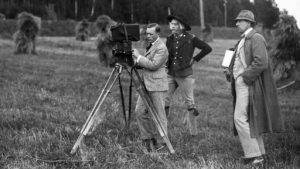
The original studio in Kristianstad (Filmmuseet) is intact and is now a museum where you can watch old films on video. Photo: Regionmuseet, Kristianstad
Kristianstad is the birthplace of the Swedish film industry, which started around 1910. The original studio (Filmmuseet) is intact and is now a museum where you can watch old films on video.
Nearby, Kristianstad Vattenrike (Water Kingdom) is a rich wetland on the Helge River, with a diversity of birds, wildlife and plants.
Along the Swedish South Coast
Blekinge is a tiny province with sandy beaches and Sweden’s most southerly archipelago. It is excellent for sea fishing. You can enjoy peaceful angling in some of the lakes, or good sport for salmon in the Mörrum River. Canoeing is popular.
Driving to Blekinge from Skåne, you first reach Sölvesborg, and the ruins of 13th-century Sölvesborg Castle.
Mörrum, 30 km (19 miles) north of Sölvesborg, is noted for its salmon fishing: at Mörrums Kronlaxfiske you can see salmon and trout at different stages of their development; fishing fans can cast a line here too.
The biggest town in Blekinge is Karlskrona, a naval center built in the 17th century, with wide streets and impressive buildings. In the Björkholmen district you’ll find quaint 18th century cottages built by ships’ carpenters.
The nearby village of Kristianopel is renowned for its smoked herring.
Feature image (on top): From Kristianopel. Copyright: Svenskekartan.
Along the Swedish South Coast, compiled and written by Tor Kjolberg
Director Gunnar B. Kvaran at Astrup Fearnley Museum of Modern Art in Oslo has since 2005 explored the scenes in different countries and on different continents. Previous exhibitions have presented contemporary art from USA, Brazil, India, China and Europe, and now it is Africa’s turn in the spotlight. The exhibition Alpha Crucis represents the final instalment of a series of such exhibitions.
The exhibition Alpha Crucis aims to highlight the originality and diversity of African artists who live and work in sub-Saharan Africa. The museum has invited André Magnin as guest curator. He has a long-standing relationship with Africa, and possesses a deep level of insight, knowledge and experience regarding various local art scenes on the African continent.
The exhibition Alpha Crucis aims to highlight the originality and diversity of African artists who live and work in sub-Saharan Africa
Magnin was one of the main curators behind the legendary Magiciens de la Terre at Centre Pompidou and Grande Halle de la Villette in Paris in 1989, which was the first exhibition to simultaneously display art works by contemporary artists from all of the world’s continents in one place.
The brightest star
Alpha Crucis is the brightest star in the constellation of the Southern Cross, located in the Milky Way. It is one of the most visible in the night sky and indicates the direction of the South. As such, it is often used by navigators, but the star is only visible from the southern hemisphere. For that reason, it was not mentioned in European antique astronomy.
The museum has invited André Magnin as guest curator
The exhibition at Astrup Fearnley Museet gathers seventeen artists from seven African countries. The artists originate from numerous countries, belong to different generations and have diverse practices. The exhibition thus shows an impressive diversity in terms of materials, techniques and narratives.
Contemporary African Art in Oslo
Stars in the sky are not connected to each other; they are associated in constellations and given names by astronomers. Here, the curator acts like an astronomer, ordering the cosmos to give coherence that offers a certain reading of the world.
The exhibition at Astrup Fearnley Museet gathers seventeen artists from seven African countries
The title ‘Alpha Crucis’ makes a statement advocating a reorientation of the polarized art world towards the south, in order to fight the ignorance that has endured too long and to shed new light on contemporary African art.
The exhibition is open through 17 May.
Artists:
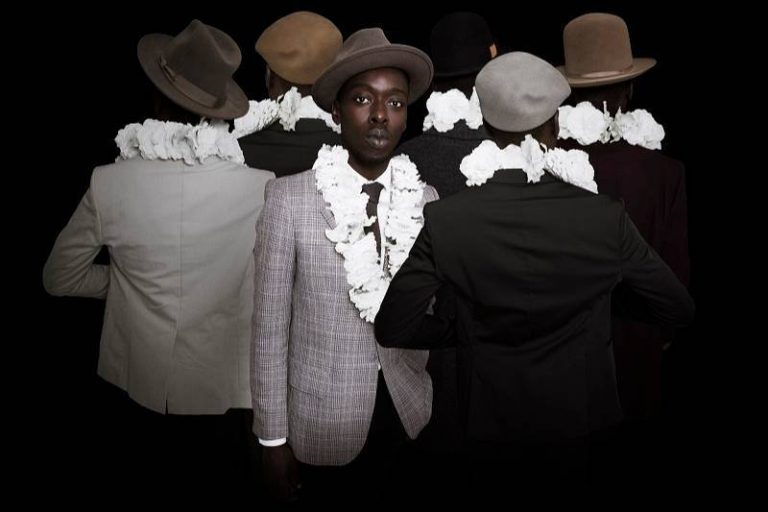
Seyni Awa Camara (1945, Senegal), Omar Victor Diop (1980, Senegal), John Goba (1944-2019, Sierra Leone), Kay Hassan (1956, South-Africa), Romuald Hazoumè (1962, Benin), Nicholas Hlobo (1975, South-Africa), Lebohang Kganye (1990, South-Africa), Houston Maludi (1978, DR Congo), Abu Bakarr Mansaray (1970, Sierra Leone), Senzeni Marasela (1977, South-Africa), JP Mika (1980, DR Congo), Fabrice Monteiro (1972, Benin/Senegal), Rigobert Nimi (1965, DR Congo), Wura-Natasha Ogunji (1970, Nigeria), Chéri Samba (1956, DR Congo), Amadou Sanogo (1977, Mali), Billie Zangewa (1973, South-Africa).
Curator: André Magnin (b. 1952 in Vesoul, France) is an independent curator and researcher and started working on non-western Contemporary Art in 1989 with the historic exhibition Magiciens de la Terre at the Centre Pompidou and at the Grande Halle de la Villette in Paris, an exhibition for which he was co-curator. From 1989 until 2009, Magnin ran the Pigozzi Collection, Geneva, which focused on sub-Saharan African contemporary art. He later founded MAGNIN-A, which promotes contemporary African art within the international market.
Contemporary African Art in Oslo is based on a press release from the museum
Scandinavia is one of the most popular, but also pricey spots for tourists to visit in the world. Nevertheless, there is an interesting food (or, in this case, drink) culture that takes place in a part of Scandinavia – Norway.
Norway is most popular for its beer brewing, a cultural way of life that has lasted for at least 1,000 years. But what makes Norwegian beer brewing unique? In order to understand this phenomenon, one must take a look back at the mythology, history, along with the careful ways that beer is handled and respected in Norway.
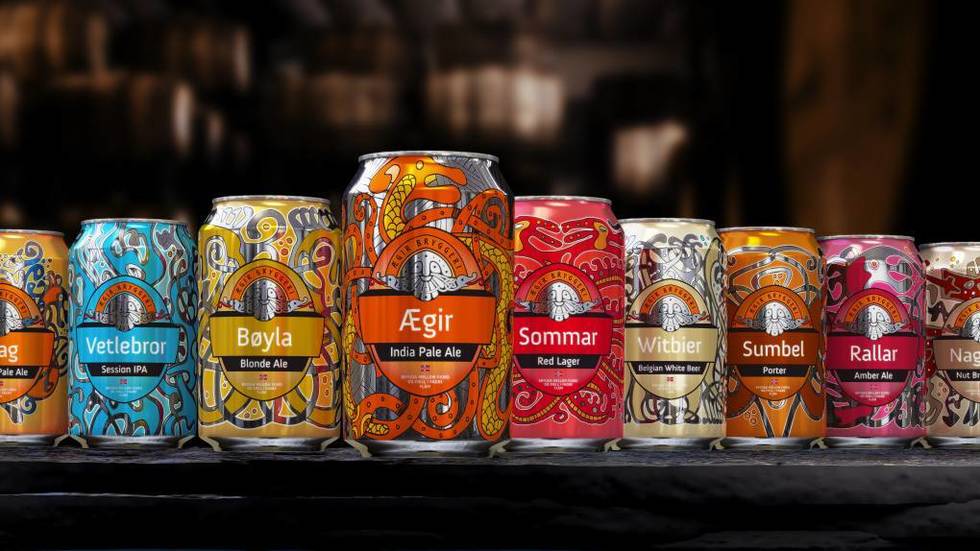
Ægir cans
Mythology Beer-drinking is no stranger to myth. According to Norse mythology, the supposed beer-god Ægir was known to host extravagant parties for the other gods. But the most energized part that happens in these parties was the alcohol. The beer-god was generous with his brew, serving the gods unlimited amounts of beer. Sounds like something from modern times, right?
An overly-generous benevolent host aside, how can the myth equate to part of history? And is the lore a symbol to today in Norway?
History Farms were built to have their own brewing sites during the late Middle Ages, especially in Denmark, the neighboring country of Norway. These designated brewing stations were known as “bryggehus,” or “brewing house”; and the production of beer took place inside these establishments.
Norway immediately took note of this phenomenon. By 1857, Norway was home to 353 breweries. In fact, beer brewing was so popular, that it became law. The Norwegian government mandated the brewing of beer; and the failure to do so would result in punishment.
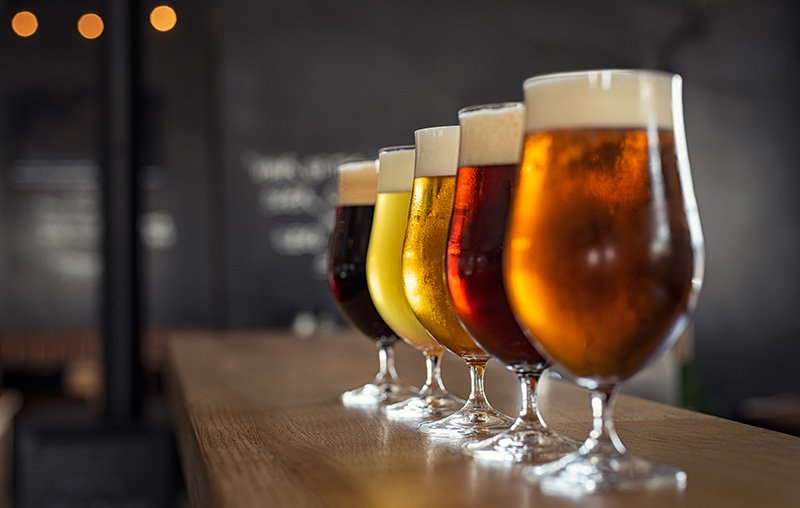
Beer display in a Norwegian Kiwi outlet
“However, these laws were tested, once the growth of industrialization kicked off. Therefore, industrializing brew was the accepted norm; and home-brewing became illegal. Even advertising about alcohol in the 1970s was illegal,” says Julia Thomson, a writer at NextCoursework and Britstudent.
Despite beer-brewing being regulated, the craft of brewing didn’t completely die out. The Norwegian Brewery and Beverage Association has reported that the number of breweries to this day is around 80 – still less breweries than in the 1850s, but still a significant amount.
Drinking Culture Scandinavia is a costly vacation spot, Norway is no exception, especially with the cost of alcohol. A regular 400ml or 500ml glass of pilsner, from most Norwegian bars, ranges from 65 to 95 kr; but expect to pay more in places such as restaurants and airports. Also, ales and craft beers tend to be more expensive, ranging from 85 to 125kr.
The reason why alcohol prices are super high in Norway, is because the Norwegian government imposes taxes on alcohol, the highest in Europe. Any beer subject to tax is anything over 0.7% ABV, but this ultimately depends on the strength of the brew. Basically, the stronger the brew, the higher the tax.
Norway has always been abundant with its beer brewing
In addition, not only will alcohol take a huge chunk out of your wallet, but it’s also imperative to show the shopping schedules for alcohol. In Norway, the cut-off for beer sales Monday through Friday is after 8pm; but the cut-off on Saturdays is after 6pm. Limited hours may be assessed on Christmas Eve, Pentecost Eve, and New Year’s Eve. However, buying beer is forbidden on Sundays, and any public holidays. Yes, the shopping schedule can be so grueling that don’t be surprised to see several stressed-out people waiting in line to buy their beer before the cut-off time. But for the lucky shopper, they can enjoy their drinking “sessions,” which are usually reserved for special occasions, such as birthdays and cabin trips.
“But the great thing about beer in Norway is that the NBBA has made it to where brewing festivals are allowed, for the sake of tourism. Now more than ever, it has become easy and fun to try out new beers from breweries that have been recognized by the NBBA. Beer connoisseurs everywhere are even encouraged to recommend the best places for people to enjoy a beer,” explains Valerie Hilton, a travel blogger at Write My X and 1 Day 2 Write.
Norwegian Beer – Then and Now: Conclusion Norway has always been abundant with its beer brewing, despite its strict limitations and regulations. To this day, Norway is still considered a popular tourist spot for beer-lovers and curious foodies. Reverting to the Norse myth of the beer god, that would be the best representation of the beer culture in Norway today – Happy drinking! (But also, drink responsibly.)
Michael Dehoyos
Norwegian Beer – Then and Now, written for Daily Scandinavian by Michael Dehoyos. Michael is a marketing expert who imparts his expertise as a content marketer and editor at Phdkingdom and Academicbrits while contributing writing to numerous sites and publications including Essay Help Service. Additionally, he offers marketing consultancy to companies in need of strategy.
Although Norway isn’t one of the larger countries of the world, there is so much fun, history, and culture packed into this Scandinavian country that it’s become a favorite for world travelers who want to broaden their horizons. In my opinion, here are the 5 must-see destinations in Norway.
When planning your trip to Norway, you’ll probably plan a stop in the capital city of Oslo, but there are so many must-see destinations in this gorgeous country that it would be a shame to stop your trip after visiting one city. And who knows? You may find your grandest adventure by going off the beaten path.
From Bergen. Photo: Nordic Choice Hotels
Bergen Settled by Vikings nearly 1,000 years ago, Bergen is one of the most historical places to visit in Norway. It’s a popular cruise ship port, so when you’re researching itineraries for Mediterranean cruises, you may stumble upon lots of references to Bergen.
In Bergen, you’ll find some of Norway’s finest dining and legendary Norwegian pizza. You’ll discover one of the most modern art museums (the KODE) in Scandanavia, and have the chance to explore a medieval fortress. Bergen offers a delightful juxtaposition of ancient and modern, and there’s something for everyone.
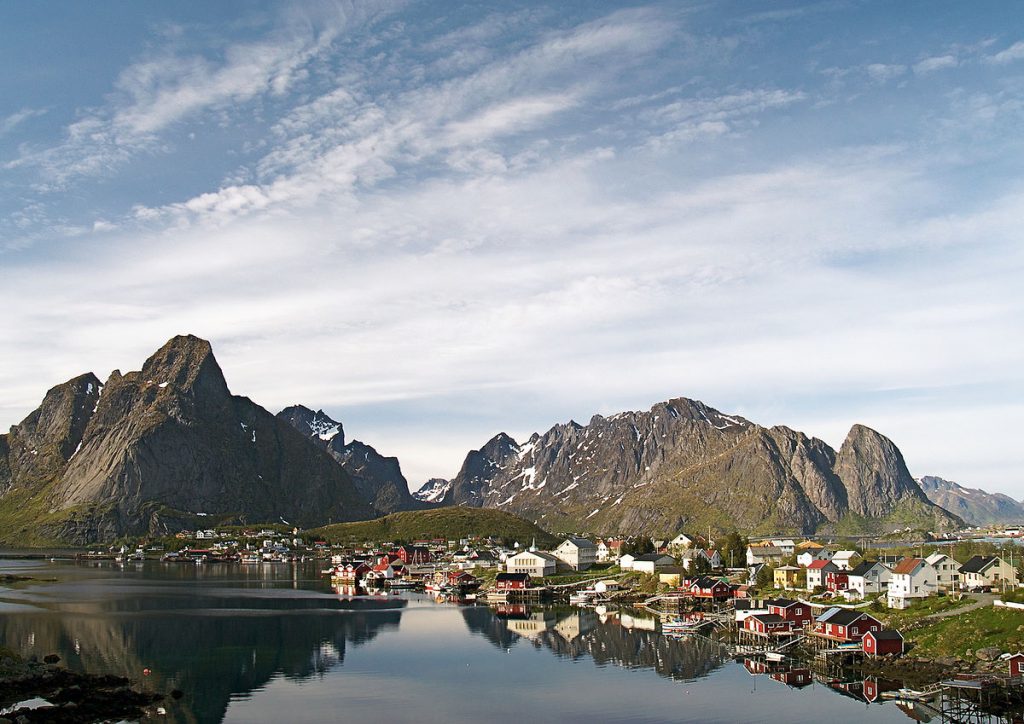
From Reine, Lofoten. Photo: Wikipedia
Reine The picturesque town of Reine is nestled on the island of Moskenesøya and is part of the beautiful Lofoten Islands and archipelago. With a population of fewer than 400 people, Reine has earned a reputation for being a great place to travel alone. You’ll have all the solitude you crave when you stay in one of the converted fisherman’s cabins.
If you want to experience something almost otherworldly, head down to Bunes Beach with a blanket. When you lie down and gaze at the dancing Northern Lights, you’ll have an experience you’ll remember for your entire life. And what a story you’ll have to tell!
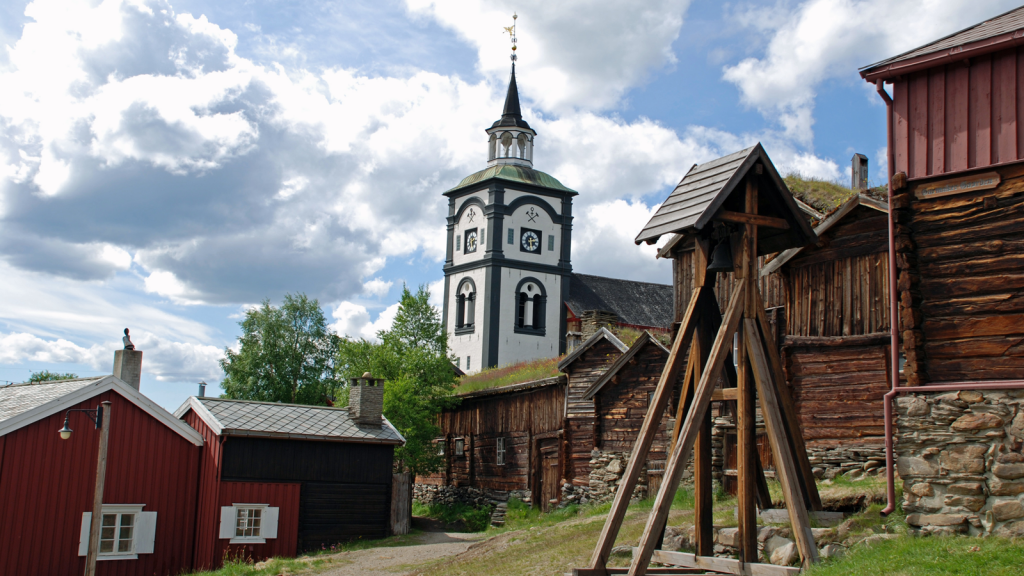
From Røros. Photo: Oppleve Trøndelag
Røros If vintage charm is what you’re looking for, then Røros is a place you don’t want to miss. As one of Europe’s oldest towns of wooden buildings, there is charm galore if you love seeing ancient architecture and homes. In 1980, Røros was added to the UNESCO World Heritage List and gives a glimpse into what a Norwegian mining town may have looked like in the 1600s.
Since it is a living museum, the town center is highly protected. When you explore the narrow streets, buildings, and old courtyards, you’ll be delighted with the unique independent shops and workshops. Popular things to buy include food, clothing, and ceramics.
From Trondheim. Photo: Visit Norway
Trondheim Although it’s the third-largest city in Norway, Trondheim has a cozy small-town feel. Part of what gives Trondheim its coziness is the plethora of colorful wooden cottages on stilts. To get an eyeful of color, take a drive or boat ride along the Nidelva River. You’ll see all of the colors your heart desires.
One of the top attractions in Trondheim is Nidaros Cathedral, an 11th-century gothic cathedral where King Olav II is buried. Trondheim is chock-full of museums and art galleries, so you can feed your craving for culture.
Want to see more wooden buildings? Be sure to check out Bakklandet, a small neighborhood of colorful wooden warehouses, where 17th-century artisans and merchants lived and worked.
From Flåm. Photo: Kviknes Hotel
Flåm Norway is a thoroughly modern country that offers old-world charm with modern conveniences and attractions. However, hidden within all of Norway’s modern cities are villages that seem to exist outside of time. Flåm is one such village.
Located at the innermost bank of the Aurlandsfjord, Flåm is surrounded by thundering waterfalls, steep mountains, and narrow valleys. Even though it seems off the beaten path, Flåm is surprisingly accessible via boat, bus, train, or car, and Flåm’s harbor is a popular stop for cruise ships that glide in the Sognefjord.
Most people who visit Flåm take a cruise through Nærøyfjord for once-in-a-lifetime sightseeing.
Equally popular is the breathtaking scenic Flåm Railway train journey.
So Much Norway, So Little Time
The minute you set your sails (or wings) home after your vacation in Norway, you’ll probably be planning your next trip back. There’s so much to see and do in Norway, and so many exciting contrasts. It’s easy to see why it’s become one of the world’s premier vacation destinations.
Until next time!
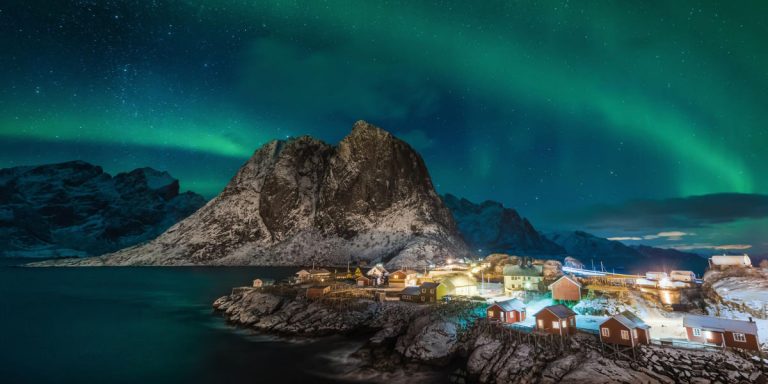
Feature image (on top): Northern lights at Lofoten islands, northern Norway.
Photo: Stian Klo/Visit Norway
Craig Middleton
5 Must See Destinations in Norway is written for Daily Scandinavian by Craig Middleton. Craig is a retired business consultant who has worked in health, real estate, and HR businesses for most of his professional career. He graduated at UC Berkeley with a bachelor’s degree in Marketing and currently spends his days blogging and enjoying his retirement traveling Scandinavia.
The Finnmark 40 Years Anniversary Race invites competitors from all over Europe. The 2020 race keeps the tradition, which means the longest dog sled race in Europe takes place in Norway in week 10, starting on Thursday 5 March. The Norwegian Prime Minister Erna Solberg will officially open the race this year.
Alaska has its manhood test Iditarod. Norway has the longest dog-sled race in Europe, the Finnmark Race, challenging dogs and mushers to explore the limits of their capabilities to perform.
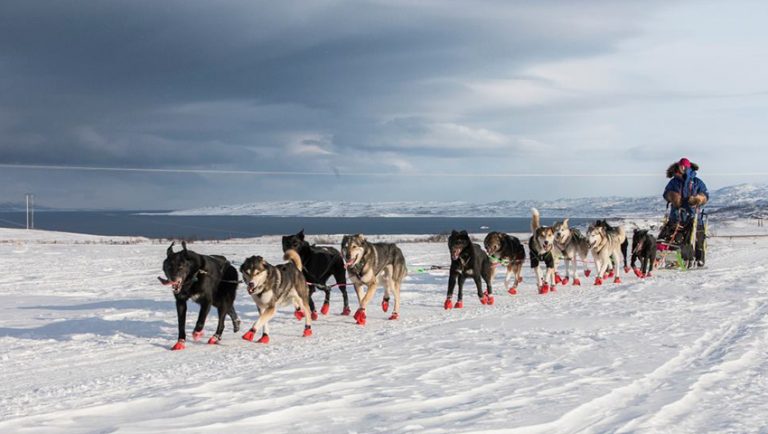
challenging dogs and mushers to explore the limits of their capabilities to perform at the Finnmark Race. Photo: Finnmarksløpet
The Finnmark Race is a big event all over the Finnmark region. Alta and Kirkenes are the venues for the biggest events. The start in Alta is probably the place to be, while Kirkenes is the best place to see a checkpoint and all the logistics around the race.
745 miles across snowy Finnmark
1,200 kilometers (745 miles) with 14 or 8 dogs per sled over 5-6 days will cross snowy Finnmark: 160 teams and more than 1500 dogs will take part in Finnmark Race, a great test of strength and a great winter festival on the roof of Europe. The dogs as well as mushers must be top-trained, but also the dogs need trust and dedication to the mushers to perform.
Ole H. I. Eira and his dogs.
The Finnmark Race takes place every year in March and starts in Alta, crosses Finnmark to Kirkenes and ends back in Alta. It is not only Europe’s longest, but also the world’s northernmost sled dog race.
Without stop from start to finish
There are no stages in the Finnmark Race – it goes without stopping from start to finish. While there are of course obligatory rest breaks, they take place when the teams reach designated checkpoints. The musher must not only work while racing, but also when the checkpoints are reached. He or she must prioritize the dogs before resting. The dogs need good care, plenty of attention, food and rest.
The winner takes around five days and 10 hours to complete the race in good weather conditions, while the last teams cross the finishing line after seven days.
The Alaska husky
The Alaska husky is a dog with very special characteristics; there is no other dog in the world capable of transporting people quickly over long distances. A 25 kg (55 lb) husky needs up to 10,000 calories a day, while a man needs around 2,500. The 500 km race is run with teams of eight dogs each, while the 1,000 km race uses teams of 14 dogs.
A total of 11 veterinarians carry out health checks on the dogs throughout the race, and retire any which should not run any further. If too few dogs are left, the team has to withdraw. There is rarely disagreement between the veterinarians and the mushers, for the mushers keep a close eye on how their four-legged friends are faring.
Geir Stian A. Larsen and his dogs. Photo: Finnmarksløpet
The Longest Dog Sled Race in Europe Takes Place in Norway
The Finnmark terrain is as though made for sled dog racing, with gentle slopes, flat plateaus and forest-clad valleys, which allows the dogs to get up plenty of speed.
The Longest Dog Sled Race in Europe Takes Place in Norway, compiled by Tor Kjolberg
Crown Prince Frederik of Denmark married Mary Donaldson on 14 May 2004 in Copenhagen Cathedral. The couple has four children, Prince Christian, Princess Isabella, Prince Vincent and Princess Josephine. We have collected a series of private photos to accompany a modern “fairytale” romance between a prince and a commoner. Se the private photos of the Danish royal couple.
Prince Frederik of Denmark was visiting Australia during the 2000 Summer Olympics there and met Donaldson at the Slip Inn Pub in Sydney. They conducted a long-distance relationship and Frederik made a number of discreet visits to Australia. On 15 November 2001 the Danish weekly magazine Billed-Bladet named her as Frederik’s girlfriend, and Mary Donaldson moved from Australia to Denmark in December same year.
The Royal couple in their private balcony at the National Theatre, Copenhagen. Photo: Pinterest
A Fairytale romance
The couple announced their engagement in 2003 after Frederik had presented her with an engagement ring featuring an emerald-cut diamond and two emerald-cut ruby baguettes, which are similar to the colors of Denmark’s flag and Donaldson started to study Danish as a foreign language in Copenhagen. The couple’s marriage in 2004 was extensively portrayed by Australian and European media as a modern “fairytale” romance between a prince and a commoner. “I am so happy that you swept me off my feet,” she said to her husband.
The couple lives in Frederik VII’s mansion in Amalienborg Palace, Copenhagen. Photo: PinterestFrom Frederik VIIIs-mansion in Amalienborg Palace. Photo: PinterestThe Crown Princess and her family currently reside at Frederik VIII’s Palace, one of the four palaces that make up the Amalienborg Palace complex. Photo: Pinterest
Donaldson wore a wedding gown designed by Danish designer Uffe Frank and had a small bridal party which included her two sisters and her friend Amber Petty, a radio announcer on commercial radio in Australia. The couple reportedly spent their honeymoon in Africa.
During a Council of State on 2 October 2019, the Queen’s request to appoint Mary a rigsforstander, a functioning regent when the monarch or the heir is out of the country, was approved by the government Photo: Keld Navntoft 2019/Kongehuset
Crown Princess Mary of Denmark
The Danish Folketing (parliament) passed a special law (Mary’s Law) giving Donaldson Danish citizenship upon her marriage, a standard procedure for new foreign members of the royal family.
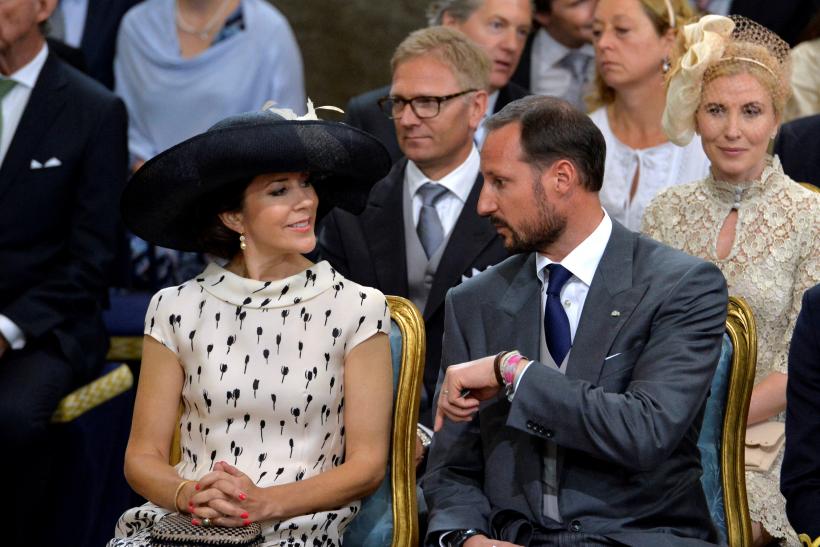
Crown-princess Mary of Denmark together with Crown-prince Haakon of Norway. Photo: Kongehuset
Following the wedding the couple embarked upon a summer working-tour of mainland Denmark aboard the royal yacht Dannebrog, then travelled to Greenland and later to the 2004 Athens Olympics.
Crown-princess Mary takes part in home defence exercise on Bornholm 2013. Photo: Kongehuset
Hans Christian Andersen Ambassador
In 2005, during the celebrations for the 200th anniversary of Hans Christian Andersen, the royal family was involved in related events throughout the year. Frederik and Mary marked the anniversary in London, New York and in Australia, where she was made Honorary Hans Christian Andersen Ambassador to Australia in the Utzon Room of the Sydney Opera House. In 2005 the royal family visited the Faroe Islands.
In September 2007, she formally established the Mary Foundation, with capital from public and private donations, to advance cultural diversity and encourage a sense of the right to belong and contribute to society for those who are socially isolated or excluded.
Woman of the Year
Mary was voted Woman of the Year 2008 by a Danish magazine, Alt for damerne, donating her cash reward to charity. Mary is an active patron of Denmark’s third-highest-earning export industry, the fashion industry, and is Patron of the Copenhagen Fashion Summit. She has been named one of the world’s most fashionable people in Vanity Fair’s annual International Best-Dressed List and has posed and given interviews for several international fashion magazines.
Since becoming Crown Princess of Denmark, H. H. Mary has made a number of international visits. In November 2009 Mary made a surprise visit to Danish soldiers in Helmand Province, Afghanistan.
World Pride Patron
In 2016, on the International Day Against Homophobia and Transphobia, the Crown Princess gave a speech on LGBT rights at a forum in Copenhagen hosted by the Danish government. She called for an end to discrimination, oppression, and violence against people because of their sexual orientation and gender identity. She thus became the first ever member of the royal family to attend the Danish Rainbow Awards (2018). She also attended the awards ceremony in 2019, where it was announced that Crown Princess Mary will serve as the patron of World Pride Copenhagen 2021, making her the first ever royal to serve as patron for a major LGBT event.
During a Council of State on 2 October 2019, the Queen’s request to appoint Mary a rigsforstander, a functioning regent when the monarch or the heir is out of the country, was approved by the government. After having sworn to respect the Danish constitution, she became the first person not born into the royal family to assume the position of rigsforstander since Queen Ingrid in 1972.
The adorable snaps were taken by the proud mother, 47, over the past few months, presumably in Denmark
Adorable kids – private photos of the royal Danish couple
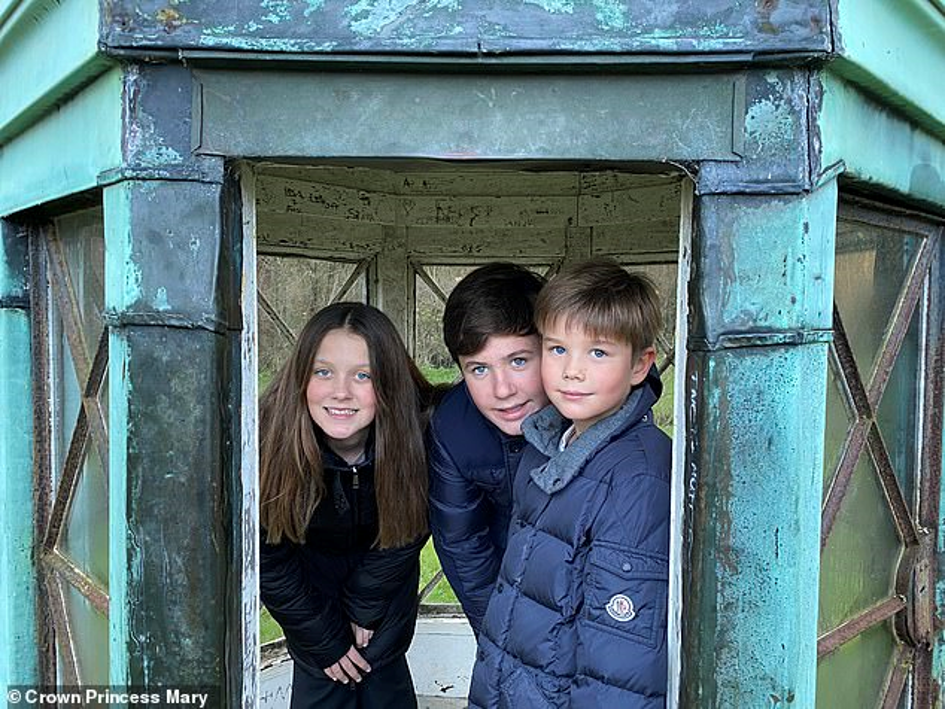
Crown Princess Mary of Denmark recently shared four previously unseen photos of twins Prince Vincent and Princess Josephine to mark their ninth birthday. The adorable snaps were taken by the proud mother, 47, over the past few months, presumably in Denmark.
Crown Princess Mary of Denmark recently shared four previously unseen photos of twins Prince Vincent and Princess Josephine to mark their ninth birthday
The Crown Princess and her family currently reside at Frederik VIII’s Palace, one of the four palaces that make up the Amalienborg Palace complex. From May 2004, they have also resided at the Chancellery House, a building in the park at Fredensborg Palace, during the summer months.
Danish princess with horse
A Crown-Princess’ Life in Denmark
In December last year, in a candid interview with Australian Women’s Weekly, the Crown Princess revealed that moving to the other side of the world was difficult.
‘I did experience a feeling of loneliness – short-term – when I first moved to Denmark. Moving to Denmark was a huge change in my life – a new culture, new language, new friends, and another way of life. So, I see it as quite natural that at times I felt quite alone or a little bit like I was on the outside looking in,’ she told the magazine.
Private Photos of Danish Royal Couple, compiled by Tor Kjolberg
Portraiture has evolved alongside civilization, from painting onto stone in ancient Egypt through depicting royal families and religious figures to photography-like portraits. Today, many artists are pushing the age-old genre in new directions. Here are portraits of four contemporary Norwegian portrait painters who put a modern twist on the age-old genre.
Let’s begin our portraiture by describing the enfant terrible of contemporary art in Norway, Unni Askeland.
Unni Asdkeland
Unni Askeland
Unni Askeland has been shocking the politically correct Norwegian establishment both with her works and her sometimes bohemian lifestyle. She was born in Bergen (1962) and studied at the Art School in Kabelvåg, the Academy of Western Norway, Bergen and graduated from the National Academy of Fine Art in Oslo in 1992.
At the Academy’s Graduate Exhibition Askeland showed Waiting for Picasso, a painting depicting herself in the company of artists such as Edvard Munch, Frida Kahlo, Lena Cronquist and Francesco Clemente. Her visits to New York studios of Brice Marden and Francesco Clemente have been crucial for the development of her so-called Neo-Expressionist movement.
Unni Askeland’s Munch adoption ‘Jalousy’
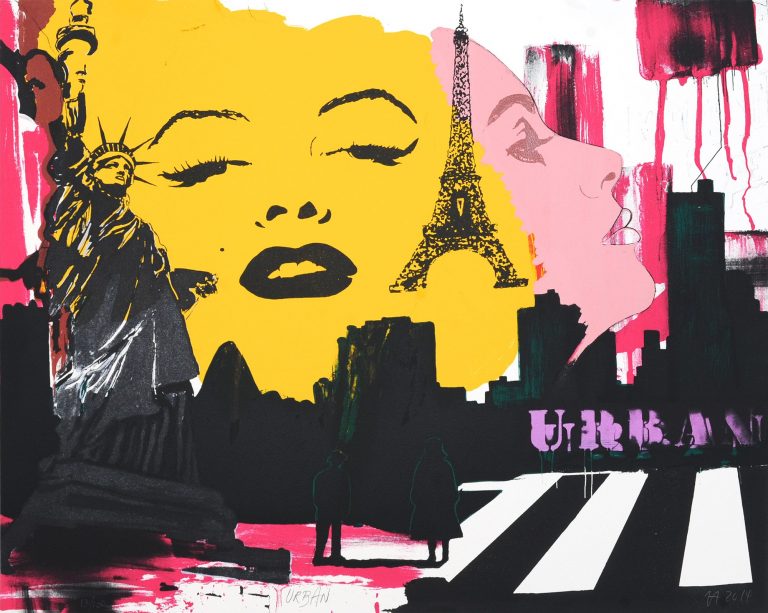
When she was meddling with Edvard Munch’s famous “soul paintings” from the 1890s, in 2004, it caused something of a scandal in the Norwegian milieu. Later she depicted icons of the 20th century like Marilyn Monroe, Mae West and Courtny Love with an obvious reference to the pop art of Andy Warhol.
In 2008, when a series of images inspired by the famous movie Casablanca was aquierd by the National Museum of Art in Oslo, it stirred a new debate, not only about the artist, but also about the museum.
Kristoffer Evang Kristoffer Evang was born in Oslo and was a student of portrait painter Eirik Lütken.
“For me, the eyes are very important. I want to bring out a kindness and vulnerability in the eyes,” says the artist. Evang’s picturesque expression can be defined as contemporary realism and is inspired by American “contemporary realism” although he has a deep knowledge of traditional figurative painting. Through the portrait, which traditionally represents high culture, Evang connects the past with the present. However, what distinguishes these from each other? What happens when you show street art within the gallery’s protective walls? Does street art despise authorities? Does that character change or does street art become a part of the institution the former opposed?
Helene Knoop
Helene Knoop is born in Drøbak in 1979 and is one of Norway’s foremost contemporary figurative painters.
She lives and works in Oslo and calls herself a “Litch-painter” and says good Kitch involves pathos, poetry, drama ans sincerety – all communicated through the mastery of craft. From 2000 to 2003 she studied with the world-renowned Norwegian figurative painter Odd Nerdrum.
In recent years, she has continued to refine her skill, and she has developed her focus on the human figure by studying ancient sculpture in Italy. Knoop always paints from a live model, and she paints the Nordic landscape in plein air.
She is one of the founders of www.worldwidekitsch.com, and she organized the Kitsch Biennale in Munich 2008, and in Venice 2010.
Knoop has had several successful solo exhibitions, including shows in London, Stockholm, and New York. Knoop’s paintings are represented in collections in Norway, Sweden, Denmark, England, Italy, Nicaragua, and the U.S.A.
Marius Martinussen Marius Martinussen (born 1978) graduated with a master’s degree from the Academy of Fine Arts in Trondheim. He is a painter and graphic artist, and is known for his colorful style with references to pop art, expressionism and modernist abstraction. He often works with the dynamic culture and color spectrum of popular culture.
A portrait, by Marius Martinussen
Martinussen has a large number of separate and group exhibitions behind him both in Norway and abroad. Previously purchased by among others Statoil Hydro, the Norwegian Bank, the Norwegian Shipowners’ Association and the Norwegian Cultural Council.
Portraits of Four Contemporary Norwegian Portrait Painters We hope you liked our mini portraits of four Norwegian portrait painters.
Feature image (on top): Urban, by Unni Askeland
Portraits of Four Contemporary Norwegian Portrait Painters, compiled by Tor Kjolberg
Norwegian sound engineer Morten Lindberg (born 1970) was nominated for Grammy Award 28 times before he finally won. Last month, he was awarded a Grammy for “Best Immersive Audio Album” for the release “Lux”. Read more about the Grammy given to the Norwegian sound engineer.
Morten Lindberg has specialized in Nordic classical music productions and holds the record for most Grammy nominations without a win, with 28 through 2019. The release “Lux” is performed by chamber orchestra Tondheimsolistene and Nidarosdomens Jentekor (Girls Choir of the Nidaros Cathedral) conducted by Anita Brevik.
The album LUX, awarded a Grammy for “Best Immersive Audio Album”.
Master of Surround Sound Lindberg is in charge of the sound studio, production company and record label 2L and is known for his “surround sound”, a larger, three-dimensional sound. He prefers to do his recordings in the Nidaros Cathedral and other large church rooms and concert halls. He has also worked with Vladimir Ashkenazy.
A pioneer
Though Lindberg has been nominated in other categories such as “Best Engineered Album – Classical”, he is a true veteran of the Immersive Audio category. He is in fact something of a pioneer when it comes to experimental classical music constructed in a stunning surround sound environment.
Lindberg is in charge of the sound studio, production company and record label 2L
Grammy to Norwegian Sound Engineer
“Lux” is the third release from the 2L Label, released last year. Lindberg was also nominated for the category “Best producer”. However, that award was secured by the award-winning producer Blanton Alspaugh.
Grammy to Norwegian Sound Engineer, written by Tor Kjolberg
The countries of Scandinavia are famous not only for their high standard of living in Europe but also for quite high prices. Yes, there is something to see. But how can you make your trip budget?Meet Scandinavian Countries with Eurail Pass.
The first thing you should start with is to plan a trip and calculate the expenses that await you. Get ready for high prices for food, accommodation, and of course, transport. That is why let’s consider whether it is profitable to go to Scandinavia with the Eurail Pass.
Eurail Scandinavia Pass– Some Features to Take into Account It’s worth starting with the fact that if you are a European citizen, you can travel with the Interrail Pass. This way you can save even more money than you expect.
Well, foreigners can use the Eurail Pass. Eurail presents different types of passes not only for the countries you want to visit but also for the duration of days. Why is it worth considering for a trip to Scandinavia? Because you can immediately visit 4 countries without additional passes purchase. Firstly, it is convenient, secondly, it is profitable.
Therefore, if you plan to visit Norway, Sweden, Denmark, and Finland, then this is a great option. But if you want to travel outside Scandinavia then you should consider the Global Pass.
Why is it better to choose a railway? Here are the main advantages that you get when choosing such transport:
By far, this is the safest mode of transport, which will relieve you from stress while traveling. No traffic jams, convenient schedule, the ability to choose night and day trips.
Stations are located in the city center and have a convenient location for tourists. Hotels are usually located near train stations, and this does not require additional transport costs.
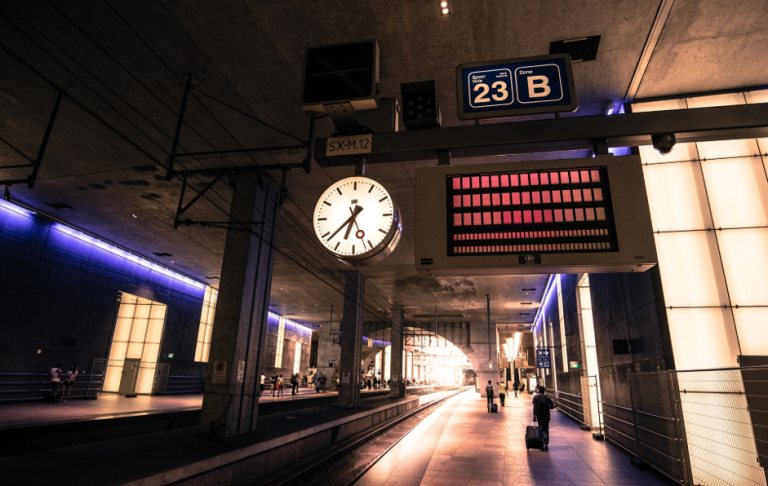
In large cities, it’s easy to go straight from the airport to the train station.
The wagons of the European railway are spacious and comfortable. There are spacious windows, air conditioning, and good service.
You can immediately visit 4 countries without additional passes purchase
Is Eurail Pass Suitable for Traveling in Scandinavia? This is one of the best options apart from renting a car. With Eurail Pass, you have absolute freedom to choose when you want to continue your journey further. You can make a decision at the last minute. This is very true when traveling around Scandinavia. Since you may immediately want to stay at a certain place for more time. Well, this is absolutely not a problem.
You pay for the Eurail Pass once and do it before you start your journey. Everything is very simple, but on the official website, there is detailed information, instructions and support service that will help you if you encounter any difficulties. The main thing is not to forget to read all the rules. Even if you are having difficulty translating any information,The Word Point translations service will help solve this problem.
With the one purchase Eurail Pass, you do not need to buy tickets for each country. The main thing is to have time to use your ticket within a month. Moreover, the Eurail Pass implies various discounts and bonuses. And this will once again help you save money.
If you calculate the cost of each ticket for each country, you will notice that you can save a lot with Eurail Pass. And for those who are going to visit Scandinavia on a budget, saving is becoming #1 priority.
What to Consider When Traveling to Norway? Let’s look at a few recommendations about which avid travelers speak with one voice. Spontaneous trips to Norway portend serious costs. But if you approach the planning of the trip with all responsibility, then there are chances to make the trip budget. So, here are the main recommendations from the guru of travelers to Scandinavia:
Cafe menu Denmark
Go to Scandinavia in the summer. This is the most profitable time when you can get to many places and save money. At another time of the year, there will be a large influx of tourists, and in winter many routes can simply be closed due to snowfalls.
Restaurants and cafes are too expensive. It is much more profitable to purchase products in a store than to eat in restaurants. But of course, the prices in stores are also not cheap compared to some European countries, but much lower than buying lunch in a cafe. So think in advance of the food expenses column.
In Norway, you can pitch a tent in any place that is not fenced. By the way, you are able to save money on hotels with the help of campsites. This is the most budget option of housing, which is equipped with everything necessary. There are not only tents but even small houses. This type of accommodation is great for a short trip. So if you need to stay somewhere before your next trip with the Eurail Pass, consider this type of accommodation.
The Final Thoughts If you decide to look at the beauties of the Scandinavian countries, you just need to get to know the Eurail Pass better. As you noticed, this is not a bad option to make your trip safe, convenient and less costly.
All you need to decide is when you want to go on a trip, and the best time for this would be summer. And of course, familiarize yourself with the conditions that Eurail Pass offers you. Most tourists prefer to use this type of transport and according to their impressions, this is a good solution. Well, all that remains for you is to check their impressions personally!
Frank Hamilton
Meet Scandinavian Countries with Eurail Pass, is written for Daily Scandinavian by Frank Hamilton. Frank is a blogger and translator from Manchester. He is a professional writing expert in such topics as blogging, digital marketing and self-education. He also loves traveling and speaks Spanish, French, German and English.
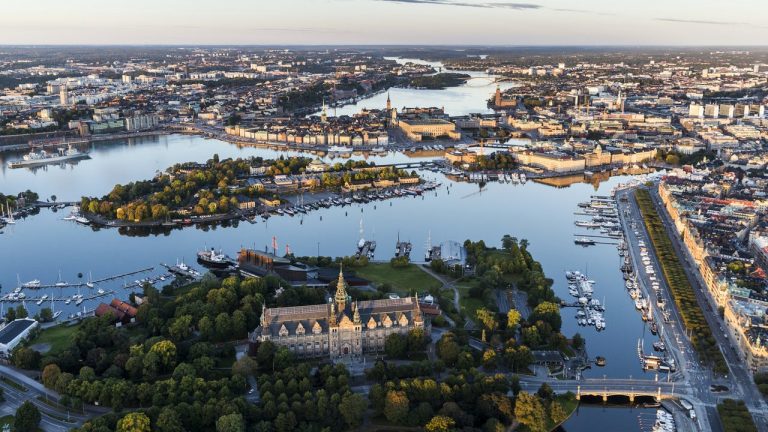
Stockholm has become a staple location for the hipster tourist movement, a place that marries urban bustle with natural scenery. Stockholm is made up of 14 islands and many distinct neighborhoods, each presenting its own unique identity.Stockholm: Combining Natural Landscapes with the Urban Bustle.
Summer is the ideal time to visit this area, but the winter provides certain tranquility. Some of the most renowned attributes of Stockholm include one’s ability to encounter natural landscapes amongst the city cafes and museums.
Off the Beaten Path
Skeppsholmen, Stockholm. Photo: Wikipedia
Skeppsholmen One of Stockholm’s breathtaking natural landscapes, Skeppsholmen, is a hidden island that is ideal for photography, history, and waterfront views. The entire island is encircled by a walkway that can be completed on foot. Skeppsholmen was used as a military training ground for many years. It has since transformed into a site for museums and art galleries, such as the Modern Museum, or the East Asian museum.
A popular summer event that takes place here is the Stockholm Jazz Festival. The Jazz Festival is one of the oldest and most notable festivals in Stockholm. Skeppsholmen can be accessed by bus or ferry from the city center and is an ideal way to spend the day exploring the rich history of Stockholm.
Skinnarviksberget. Photo: Visit Stockholm
Skinnarviksberget Södermalm, often referred to as Sweden’s version of Brooklyn or Shoreditch, is home to the highest natural point in Stockholm. Here is one of the best-kept secrets due to the 50-minute hike that is required to reach the top. At the top, there is a remarkable view of the sunset and the waterfront. Like most things in Stockholm, this spot is ideal in the summer. During this time, locals and tourists alike picnic, play live music and enjoy a few glasses of wine.
During the winter, if the weather allows, the hike and experience tend to be incredibly peaceful. The best way to access Skinnarviksberget is taking the train to Zinkensdamm, and then completing the rest on foot.
Tantolunden. Photo: Visit Stockholm
Tantolunden Tantolunden is cherished by the locals, given that many tourists are unaware that this park exists. This park is known for its’ family-friendly activities such as Frisbee golf, young people swimming, live music, and afternoon strolls. Hands down, this is the most colorful and flourishing parks in Sweden, due mostly to the long-standing community initiative of hundreds of manicured garden plots.
“An afternoon in Tantolunden is free for people to roam and is an excellent example of the local’s dedication to the natural landscape and laid-back lifestyle. Found in the south part of central Stockholm, it is located near the Hornstull Marknad and Zindkensdamn,” suggests Gillian Smith, a travel blogger at Writinity and Draft Beyond.
Fika in Stockholm. Photo by se huishirley Kim from FreeImages
Café Saturnus Saturnus is a local shop that is located at Eriksbergsgatan 6, 114 30 Stockholm. The most notable attribute of this café is the quality service and impressive display of cakes and buns. Many visitors rave about the buns due to their large and dense nature. Locals tend to value the food options and find this a noteworthy place to honor Fika, a daily break for coffee and a sweet treat.
Vete-Katten Offering a unique and differing experience from the new trend of “hipster” cafes, Vete-Katten is a 1920s style café located at 55 Kungsgatan, 111 22 Stockholm. The specialties of this café range from pastries and afternoon tea to snacks and lunch options.
“The words most commonly used to describe the experience found here are cozy and classic. There is an even split between the number of tourists and locals that visit here,” explains Adam Yiset, a writer at Last Minute Writing and Researchpapersuk. With that being said, the price of the food and drink is quite reasonable. All options can be enjoyed in house or can be requested for carry-out.
An Artistic Experience
WIP Dance Studio, Stockholm
WIP;sthlm Located at 117 43, Årsta skolgränd 14B, 117 43 Stockholm, this spot is home to 93 artists and 83 art studios. Known as a hub of artistic creation, WIP;sthlm is creating a space for discussion and exploration in the art community.
Tunnelbanan Tunnelbanan (the Metro) opened in 1950. Stockholm’s Tunnelbana has 100 stations, and almost half of them are located underground. In the past, Tunnelbanan was significantly impacted by the influx of graffiti art. Over the last few years, Stockholm has remedied this and incorporated art into Tunnelbanan’s infrastructure as a whole. Artwork covers a total of 110 km of the line. The inclusion of this style of art brings an experience beyond the typical commute.
Ashley Halsey
Stockholm: Combining Natural Landscapes with the Urban Bustle is written for Daily Scandinavian by Ashley Halsey. Ashley is a professional writer at Luckyassignments.com and Gumessays.com who has been involved in many projects throughout the country. Mother of two children, she enjoys traveling, reading and attending business training courses. Mother of two children, she enjoys traveling, reading and attending business training courses.