Award-Winning Danish Jazz Saxophonist

Danish saxophonist and composer Benjamin Koppel (b. 1974) is one of the most award-winning musicians of his generation, known for his versatility and virtuosity. Read more about the award-winning Danish jazz saxophonist.

In spite of his young age, he’s considered one of Denmarks most talented and sought after saxophonists, both at home and abroad. “Music is a form of communication, and to me it is very important to play both for and with the audience,” says Koppel.

Koppel’s musical background is deeply rooted in his family. He is the grandson of the famous Danish classic composer Herman D. Koppel, and son of musician and composer Anders Koppel, who had great success worldwide with the band Savage Rose. So, the music genre of the family spreads out from classical to jazz and pop and Benjamin Koppel masters all the genres with the outmost perfection.

Award-Winning Danish Jazz Saxophonist
Benjamin Koppel is considered one of Denmarks most talented and sought after saxophonists, both at home and abroad

Related: Scandinavia – the Best Jazz Region in the World?

Summer Jazz
Koppel formed his first band when he was 15 years old and has released nearly 40 CDs as a soloist, composed over 200 pieces of music and appeared on more than 100 CD productions. He has been a visiting professor at universities in the United States and China, and since 2009, he and his company Cowbell Music has been organizing the Valby Summer Jazz (now Summer jazz), a part of the Copenhagen Jazz Festival. This festival takes place just outside the center of Copenhagen in the small suburb of Valby.

Whether you are a complete jazz beginner or a more experienced listener, Summer Jazz has something for everyone.

Related: Nordic Balm

World-class pianist and composer Kenny Werner has also played a major role in the creation of the festival. Every year he and Koppel have worked together on assembling different talented musicians in interesting and new formations. This year is no exception, with great domestic and international names like Benny Werner, Randy Brecker, Benjamin Koppel, Miroslav Vitous, Julian Lage, Brian Blade and The Fellowship Band, Marie Carmen Koppel, Johnathan Blake, Scott Colley, DJ Noize, Shaka Loveless, Pede B, Karen Mukupa, Al Agami and Ataf Khawaja. The festivals runs from 6th through 15th July.

Award-Winning Danish Jazz Saxophonist
since 2009, Koppel and his company Cowbell Music has been organizing the Valby Summer Jazz

Award-Winning Danish Jazz Saxophonist
“I am lucky enough to have played with a wide range of fantastic musicians from all over the world,” says Koppel. “This festival has given me the opportunity to invite some of them to Denmark to play. In collaboration with Kenny, I have assembled special orchestras with musicians who have never played together before. This gives the audience an experience they cannot find anywhere else. It’s very much a once-in-a-life-time experience,” he explains.

Related: The Standard Copenhagen

The variety of Koppel’s musical collaborations is wide, and has established him as a sought-after musician internationally. As a soloist and bandleader, he has performed/recorded with Phil Woods, Kenny Werner, Jim Hall, Joe Lovano, Scott Colley, Daniel Humair, Palle Danielsson, Alex Riel, Miroslav Vitous, Anders Koppel, Inger Dam Jensen, Michala Petri, Adam Nussbaum, Randy Brecker, Chano Dominguez, Charlie Mariano, Portinho, David Sanchez, Sheryl Crow, and others.

Award-Winning Danish Jazz Saxophonist
“I am lucky enough to have played with a wide range of fantastic musicians from all over the world,” says Koppel. Photo Flickr

Unique musical experiences
Today, his company Cowbell Music has developed into a music and event bureau producing concert and unique musical experiences in cooperation with different Danish and international enterprises and cultural institutions. As a musician, Koppel appears both with international jazz stars, Danish pop acts and symphony orchestras in Europe, USA and China.

Koppel has published the book “Out of Music” (Gyldendal).

Award-Winning Danish Jazz Saxophonist, written by Tor Kjolberg

Will Norway Be The First Market For Electric Commercial Flights?

A new plane has already been used for demonstration purposes, but the aim is obvious: Norway pushes to electrify all domestic flights by 2040. Will Norway Be The First Market For Electric Commercial Flights?

State-owned Norwegian airport operator Avinor has been collaborating with partners in the aviation industry on a development and innovation project for electric aircraft, and the first commercial routes are expected before 2030.

Will Norway Be The First Market For Electric Commercial Flights?
Road, rail or boat travel often take a lot longer than a short flight

Related: Climate-Smart Airports in Sweden

A new report
Last month, a report from Avinor and the country’s Civil Aviation Authority stated that electric planes could be a boon to reducing greenhouse gas emissions and tackling climate change. So far, however, there are no airliner-size electric-powered aircraft being built yet, so that’s a major barrier.

Nevertheless, the project is backed by the Norwegian Ministry of Transport and Communications, and ZERO, Widerøe and SAS are also supporting the project designed to bring Norway’s first electric aircraft to the country.

Will Norway Be The First Market For Electric Commercial Flights?
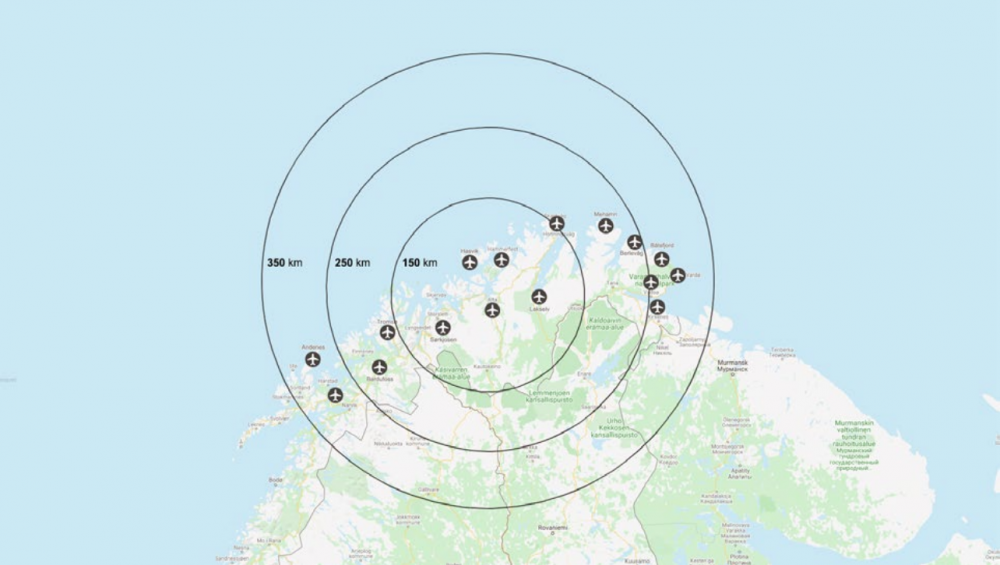
. In the Northern most section of the country, there are 16 airports within 217 miles (350 km) of Alta, a central airport hub

Related: Scandinavian Mountains Airport – Without Air Traffic Control Tower

A multitude of small, short-haul airports
Norway is a large country which has a multitude of small, short-haul airports. In the Northern most section of the country, there are 16 airports within 217 miles (350 km) of Alta, a central airport hub. There are popular regular trips between these airports, as flights are far quicker and far more direct compared to driving.

“Electric aircraft are set to significantly improve the environmental consequences of the aviation industry. It could also be cheaper to fly as operating costs for several aircraft models will be considerably lowered, which will have an impact on ticket prices”, explained Dag Falk-Petersen, CEO of Avinor.

Will Norway Be The First Market For Electric Commercial Flights?
Avinor has decided to start a program to electrify the flights in Norway

Related: Sustainable Shipping in Norway

10 hour by car – 80 minutes by air
For example, driving from Andenes to Alta would take more than 10 hours, and involve a lot of difficult and convoluted driving. On the other hand, a flight takes about 90 minutes.

The board of directors from Avinor visited Airbus in Toulouse about five years ago and were told that the company had been doing a lot of work in this area already. That is the reason Avinor decided to start a program to electrify the flights in Norway.

Will Norway Be The First Market For Electric Commercial Flights?
And Norway is a good place for such experiments. Much of the country’s terrain is mountainous and there are many offshore islands, which means there are a lot of short-haul flights (Avinor runs no fewer than 46 airports in Norway). Road, rail or boat travel often take a lot longer than a short flight, especially during the winter when snow and ice can block roads and tracks.

Will Norway Be The First Market For Electric Commercial Flights? Written by Tor Kjolberg

How to Deal with Language Barriers while Traveling to Scandinavia

Scandinavia is such a beautiful region that can offer you unique travel experience. You have probably read about its culture and fun tourist activities. The pictures of its incredible nature and impeccable architecture must have intrigued you and evoke the desire to see it in person. The only thing that can be holding you back is the language. Here you can read how to deal with language barriers while traveling to Scandinavia.

No matter whether you are traveling to Denmark, Norway, or Sweden, the language can seem very difficult to learn. If you are questioning your decision to travel to Scandinavia because of the language barrier, your dilemma will now be solved. Here are a few handy tips on how to conquer the language barrier on your trip to Scandinavia.


How to Deal with Language Barriers while Traveling to Scandinavia
Everyone can learn the basics

Learn a Few Basic Phrases
Everyone can learn the basics. Phrases such as “Hello”, “Bye”, “Where is the bathroom”, “Where can I find a restaurant”, “Can you help me”, and similar can be sufficient for travelers.

Knowing the basics will help you gather the most important information. Even if you don’t have the talent for learning languages, you can cope with these few sentences.

Related: Scandinavian Translation Service Gets Your Message Across – In Any Major Language

To ensure that you won’t forget them in the time of need, write them down. However, write the phrase how you would pronounce it, not how it is written in the native language. Since you don’t know how to read their spelling, it won’t mean anything.

Have these phrases on your phone because that’s the one thing that you’ll probably always have by your side. Whenever you need it, just pull out the phone and you’ll be all set.

How to Deal with Language Barriers while Traveling to Scandinavia
Don’t be ashamed to use visual cues in order to explain what you want to express

Use Visual Cues
People communicated way before language was formed. If they could do it in the past, why can’t we?

Don’t be ashamed to use visual cues in order to explain what you want to express. Everyone can understand hand gestures and pointers.

Related: Language of the Vikings

Of course, you won’t be able to completely explain what you want but it can get you some answers. For example, if you are looking for a bus station just point at the bus on the road or show the local a picture of a bus station.

What is most important is that you are resourceful and innovative. It can be useful if you have a paper map with you and ask the host to mark your place of stay. Just in case if you get lost at some point you can show the locals where you are staying and they can direct you there.

How to Deal with Language Barriers while Traveling to Scandinavia
No matter whether you are traveling to Denmark, Norway, or Sweden, the language can seem very difficult to learn.

Carry a Pen and Paper
If you don’t know how to explain with gestures and you don’t know the language, there is another solution – sketch it. The idea may seem silly at first, but once you realize how helpful it can be you won’t question this method.

Have a piece of paper and a pen by your side at all times. When a situation occurs in which you can’t explain to the locals what you need, use the pen and paper to draw it.

“I learned this trick from a backpacker I met a few years ago. He told me that a pen and paper got him out of confusing situations many times. Since then I follow this advice religiously,” shares Amanda Willis, a translator at TheWordPoint and passionate traveler.

Related: How to Schedule Learning Swedish

The pen and paper can have another useful purpose. Give them to the local so they can sketch out the road which you need to take when you ask for direction.

If you are good at Pictionary, you will be great at this. This may not be your first choice for expressing yourself, but the more options you have for coping with language barriers the better.

How to Deal with Language Barriers while Traveling to Scandinavia
Prepaid sim cards will give you access to the internet

Buy a Prepaid Sim Card
Those who are staying there for a longer period of time should consider buying a prepaid sim card. This can make your life so much easier.

Prepaid sim cards will give you access to the internet and consequently, you’ll have all the info in the palm of your hand.

Sim cards in Scandinavia are a pretty good deal and it will definitely be a money well-spent. Look at it as an investment in a better travel experience.

Look for a Telenor, Telia, or 3 shop stores. They are mostly situated in the city center. Ask the receptionist or your apartment host where you can buy a prepaid sim card and get that done the very first day.

How to Deal with Language Barriers while Traveling to Scandinavia
The most popular voice translation option is Google Translate

Use Voice Translation
Once you get your internet activated, it is time for you to meet your new best friend – voice translation.

While you are still at home download a voice translating app. Here are a few options:

Translate Voice

Speak and Translate

ITranslate

All you need to do is to speak in your phone what you want to ask or say and the app will automatically translate the sentence in the target language.

However, the most popular voice translation option is Google Translate. Those who don’t like to deal with apps can just go with the well-known Google feature. Type in what you want to say, translate to the target language, and play the translation to the local. Or, simply make the voice input and get it translated.

How to Deal with Language Barriers while Traveling to Scandinavia
Dictionaries can serve as a back-up

Carry a Pocket Dictionary
It is time to go old school. Before cell phones completely altered our lives, people would rely on dictionaries as their language helpers.

Just in case if you use all the battery on taking amazing shots, buy a dictionary. Pocket dictionaries are especially great for traveling. They don’t take too much space and they won’t make your bag heavy.

Dictionaries can serve as a back-up. As great as technology is, it can sometimes fail us. That is why dictionaries can serve as a safety net for communication purposes.

Find travel dictionaries in your local bookstore or buy them on Amazon. The prices are very affordable so it won’t hurt your budget. Check out the following examples:

Swedish-English dictionary

Norwegian-English dictionary

Danish-English dictionary

How to Deal with Language Barriers while Traveling to Scandinavia – Conclusion
As you can tell, there are several resourceful ways that will help you conquer the language barrier. Remember that you shouldn’t focus on the language, you should focus on wonderful experiences and amazing people you will meet along the way.

How to Deal with Language Barriers while Traveling to Scandinavia
Erica Sunjaro

How to Deal with Language Barriers while Traveling to Scandinavia is written for Daily Scandinavian by Erica Sunjaro. Erica Sunarjo graduated from South Texas College majoring in Marketing and Creative Writing. Her career is channeled towards several skills. She works as a professional writer, translator, and editor. Currently, Erica is a copywriter at BestWritersOnline. She writes thought-provoking articles for publications in a variety of media and actively participates in many translating projects.

The Never-Ending Story of a Norwegian Furniture Designer

0

“It all started in 2011 with a dinner at my house where the table was so small that I had to put the serving trays on top of each other,” says Norwegian designer Bjørn van den Berg, who has a master’s in product design from OsloMet University. Read the never-ending story of the Norwegian furniture designer.

After customizing his own shoes, belts and jackets, he became a local success and created his first commercial label in 2012. His inspiration comes from the desire to recreate everyday situations and emotions in his objects. In 2015 he designed his Plateau tray series, which are overlapping each other in different levels of height creating a connection between the elements presented.

The Never-Ending Story of a Norwegian Furniture Designer
Areal floor lamp, by Bjørn van den Berg

Related: A Norwegian Design Pioneer

Featured in international magazines
Bjørn’s works have been featured in many international magazines, like Harper’s, Bazaar, Treats Magazine, Beau Monde and many others. His creative output has continued to impress. In 2016, New York Times named him one of their designers to watch and in 2017, his Aeral Lamp designed together with Falke Svatun won a Wallpaper Magazine design award.

Then his work started to feature in several Dutch national television productions and shows, such as the Voice, Holland’s Next Top Model as well as in several international music videos. During the London Design Festival 2017, he collaborated in the show “Punctuating Space” in which he conveyed concepts and evoke emotion in spaces via tactility, form, color and light.

THIS ARTICLE IS UNDER REVISION

Related: Prominent and Successful Norwegian Designer Duo

Never-ending search for new challenges
Bjørn van den Berg is also part of Klubben, a Norwegian design collective. The group brings together emerging Norwegian furniture designers as well as those in the neighboring fields of textiles and accessories, to promote their work internationally.

Related: Unique Wallpaper Designed by Norwegian Designer

The Never-Ending Story of a Norwegian Furniture Designer

The never-ending story of the Norwegian product designer goes on….

The Never-Ending Story of a Norwegian Furniture Designer, will be updated soon.

Sophisticated Elegance to a Public Facility in Norway

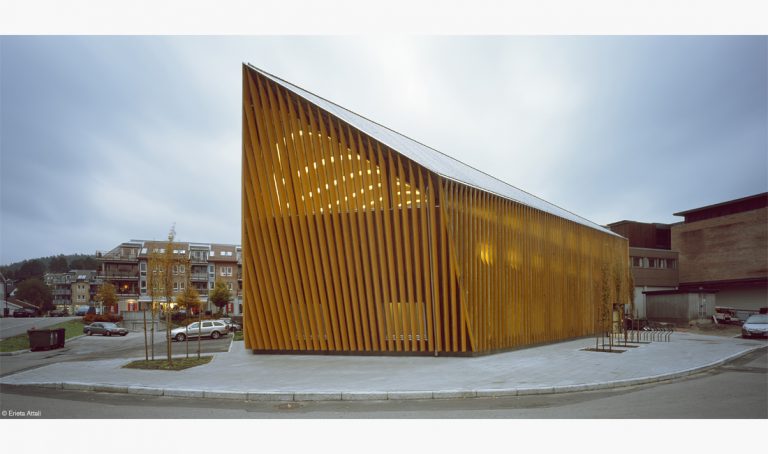
The library in Vennesla, north of Kristiansand in Norway, comprises a library, a café, meeting places and administrative areas and links an existing community house and learning center together. Helen & Hard Architects has supported the idea of an inviting public space. All main public functions have been gathered into one generous space allowing the structure combined with furniture and multiple spatial interfaces to be visible in the interior and from the exterior. The result is a sophisticated elegance to a public facility in Norway.

An integrated passage brings the city life into and through the building. Furthermore, the new building is open and easily accessible from the main city square, knitting together the existing urban fabric. This was achieved by a large glass facade and urban loggia providing a protected outdoor seating area.

A Sophisticated Elegance to a Public Facility in Norway
The new building is open and easily accessible from the main city square

Related: The Unique Energy Design Hotel in Norway

Expressive ribs
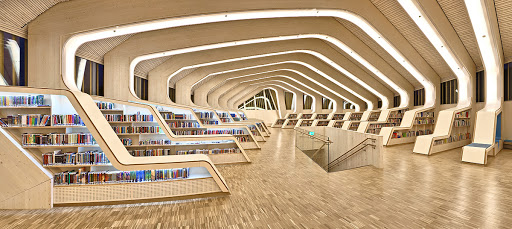
The expressive ribs combine structure, technical infrastructure, and functionality into one architectonic element that creates a dynamic aesthetic identity for the project to meet the client’s original intent to mark the city’s cultural center.

The whole library consists of 27 ribs made of prefabricated glue-laminated timber elements and CNC cut plywood boards. These ribs inform the geometry of the roof, as well as the undulating orientation of the generous open space, with personal study zones nestled along the perimeter. The offset construction of the ribs allows the curves to function as spatial interfaces with inset lighting elements to provide a soft glow to the interiors and acoustic absorbents which contain the air conditioning ducts.

Related: Exporting Norwegian Architecture  

A Sophisticated Elegance to a Public Facility in Norway
The whole library consists of 27 ribs made of prefabricated glue-laminated timber elements and CNC cut plywood boards

Adapting two adjacent buildings
“In this project, we developed a rib concept to create useable hybrid structures that combine a timber construction with all technical devices and the interior,” explains the architects.

The gradually shifting shapes of the ribs are generated through adapting to the two adjacent buildings and also through spatial quality and functional demands for the different compartments of the library. Each end façade has been shaped according to the specific requirements of the site. At the main entrance, the rib forms the loggia which spans the width of the entire square.

Sophisticated Elegance to a Public Facility in Norway
The rib spans the entire width of the building and then slowly condense to create more intimate rooms.  While the building’s roof is formed by the geometry of the curves, the massing along traces the natural lines of the site and responds to the main street by folding down towards it.

A Sophisticated Elegance to a Public Facility in Norway
The rib spans the entire width of the building and then slowly condense to create more intimate rooms

Related: Magnificent International Interest around New Norwegian Tourist Attraction

Typical of Helen & Hard’s work, a main intention has also been to reduce the energy need for all three buildings through the infill concept and the use of high standard energy saving solutions in all new parts. The library is a “low-energy” building, defined as class “A” in the Norwegian energy-use definition system.

The library opened in 2012.


About Helen & Hard
Helen & Hard was founded in 1996 in Stavanger on the west coast of Norway by Norwegian architect Siv Helene Stangeland and Austrian architect Reinhard Kropf. Today, the company has a youthful staff of 26 people drawn from 10 countries, with offices both in Stavanger and Oslo.

The last 10 years Helen & Hard has specialized in using timber as construction material and has developed a close collaboration with the ingenieur Hermann Blumer in Creation Holz. Inventing building systems in timber together with site specific spatial conceptions, which mutually inform each other has resulted in novel spatial designs such as, the Pulpit Rock Mountain Lodge, the Navet Museum and the Vennesla Library.

Sophisticated Elegance to a Public Facility in Norway, edited by Tor Kjoberg based on text description provided by the architects

6 Reasons Why Swedish School Education is Better

0

The main thing about school education in Sweden is to identify and develop each child’s talents and abilities, and to teach students how to set and achieve goals. While working with children, the teacher takes on the role of an assistant rather than a strict teacher with a pointer. Essay writing service EssayShark conducted a study on the advantages of the Swedish education system. Find out more about the 6 reasons why Swedish school education is better.

Personalized Approach and Respect from the Cradle
Formally, the educational process starts literally at the nursery: the vast majority of Swedish children start kindergarten already at the age of 1.5-2 years. Pre-school education is an essential part of the Swedish educational system and is available to all, regardless of the income level. Swedish pre-school education emphasizes the importance of the game in a child’s development. Gender-based education is becoming increasingly popular, with the primary goal of giving children equal opportunities in life, regardless of gender. Every child at the age of 6 is guaranteed a place in the preparatory class, where children are introduced to the first steps of general education.

6 Reasons Why Swedish School Education is Better
Everything about a child’s performance or behavior at school is discussed individually with the child and his/her parents

A child’s personality and dignity are untouchable, and children in Sweden have the same right to be respected and treated equally as adults.

Related: Best Colleges With Scandinavian Studies Degrees

Therefore, despite the fact that most classes at school are in group form, the teacher will never praise some and scold others in public. Everything about a child’s performance or behavior at school is discussed individually with the child and his/her parents. All teachers working in schools, both subject teachers and those working outside the classroom with children, have specialized pedagogical training and are required to be certified. By the way, several top essay writers from essayservice also work in these schools and help not only children but also students from the USA.

No Marks Until the Sixth Grade
Until the sixth grade, students in Swedish schools are not given any marks at all, so as not to interfere with individual development and not to cause a sense of competition and stress. Over the last hundred years, Sweden has tried out many knowledge assessment systems. In 2011, Swedish schools moved from a three-point scale to a six-point scale. Pupils can be given the following grades: A (Exemplary), B (Excellent), C (Good), D (Adequate), E (Acceptable), and F (Fail, not passed).

The student assessment and evaluation system is an eternal subject of heated debate among both politicians and school staff. The Swedes believe that any scoring system is always imperfect and unfair. Therefore, new approaches to the assessment of pupils are regularly discussed in the Riksdag and municipal authorities.

6 Reasons Why Swedish School Education is Better
Until the sixth grade, students in Swedish schools are not given any marks at all, so as not to interfere with individual development and not to cause a sense of competition and stress

Related: Gender-neutral Swedish Preschools Produce More Successful Children

Education as a Game
From first grade to third, the school curriculum is based on mathematics, Swedish, housekeeping, social studies, and natural sciences. Lessons are mostly in the form of a game. Already at the age of 7-10, children are actively involved in social science lessons to discuss what is happening in the world, for example, after watching the children’s news program together. This show is called Lilla Aktuellt and is broadcast daily on Swedish television. It introduces the youngest viewers to the main events of Sweden and the world simply and clearly.

From the third grade, students start learning English. They are not yet bothered with grammar and cramming. They learn simple songs, how to count, and are introduced to some words and expressions in a game form. Physical education is also present in the schedule, but more in the form of mobile games and trips to nature if the weather allows. Housekeeping classes are one of the most favorite. Boys and girls together learn to sew and knit, make toys and uncomplicated household appliances with their own hands, as well as cook and bake with simple recipes.

6 Reasons Why Swedish School Education is Better
Lessons are mostly in the form of a game

Related: 12 Scandinavian Universities Rank Among the 300 Best in the World

From secondary school onwards, the workload and the knowledge and skills requirements of schoolchildren are increasing considerably. There are more homework and opportunities for independent choice of subjects. For example, from sixth grade, you can choose a second language besides English. The most popular languages are German, French, and Spanish.

Psychological Comfort is a Priority
The psychological well-being of children is a priority for Swedish schools. Each school has a supervisor whom children can approach to talk about, for example, their academic performance problems, difficulties with their family or their peers. In addition, teachers regularly have individual conversations with each child, during which they try to find out how comfortable the child feels in class, among classmates, whether he or she has time to learn the material, whether the school or parents need additional help.

At the beginning and the end of each school year, pupils are assessed. It takes place individually, in the form of a conversation with the child and his parents. The aim is to help the child to identify problem areas in his or her studies and to understand what needs to be worked on in the future. The teacher acts only as a moderator, asks leading questions, helps the child to formulate a thought, but does not impose his opinion.

6 Reasons Why Swedish School Education is Better
The psychological well-being of children is a priority for Swedish schools

Prove The Answer If You Know It
When solving problems, for example, in Mathematics, Physics, or Chemistry, the Swedish school pays special attention to how the student thinks and analyzes the problem. In other words, it is essential not only to give the right answer but also to show how you come to a solution.

Education for Everyone
Pupils who find it difficult to read and/or write are entitled to additional individual assistance from teachers. For some children, it can be challenging to focus on what the teacher says. Statistically, almost every class has a child diagnosed with ADHD (Attention Deficit Hyperactivity Disorder). These children need special support to learn to concentrate and not be distracted. An individual learning plan is developed for them so that they can catch up with their peers and open up to the full.

6 Reasons Why Swedish School Education is Better is written for Daily Scandinavian by the EssayShark team.

5 Most Common Mistakes Scandinavians Make When Speaking English

There’s plenty of info on the web on how good Scandinavians are when it comes to the English language. The school systems in these countries employ several top-notch strategies. Those include not only an early focus on communication but also daily exposure to English on campus and outside. Nevertheless, here are the 5 most common mistakes Scandinavians make when speaking English.

During the final year of study, young students receive special career-oriented language instructions, whether that is a vocational school or university.

Even such popular writing services like EssayPro claim that among their customers, there are a few Scandinavian students who tend to order essays in English. Essay Pro is generally quite popular among Scandinavians. Read this Essay Pro review to find out why. This fact is rather revealing that young adults are pretty good at their language skills.

5 Most Common Mistakes Scandinavian Make When Speaking English
In this article we try to figure out some common errors that Norwegians, Swedes, and Danes repeat

Old habits
Nevertheless, there are still many people whose English is far away from profound. This is the case predominantly with adults, who grew up when the education system was less effective.

Now, they simply don’t have enough time to reskill and continue to make the same mistakes. So, let’s try to figure out some common errors that Norwegians, Swedes, and Danes repeat.

Related: Scandinavian Translation Service Gets Your Message Across in Any Major Languag

Translating Idioms
The first one is translating idioms directly.

Idioms are phrases or expressions that we use in our everyday life that don’t necessarily make sense when directly translated. If you are just learning English, try to avoid them.

For example, in Danish, there is a common tragic-comic idiom “At gå agurk,” which means “to go mad,” and is translated as “to go cucumber”. It is hardly possible that someone will get the meaning if this idiom is translated literally.

A word-for-word translation cannot be applied when English is a target language. No doubt, the best way here would be finding an analog or providing explanatory translation.

5 Most Common Mistakes Scandinavian Make When Speaking English
A word-for-word translation cannot be applied when English is a target language

Translating Interrogative Forms
Another common mistake many Scandinavians make is not structuring the questions properly. Many can say, “take your credit card?” instead of, “did you take your credit card?”

They simply forget that the verb needs “do” in the interrogative form.

Misinterpretation of Words
As Scandinavian languages “gave birth” to Old English, many of the words and their meaning are confusing.

For example, the Danish word “sjov” means either fun or funny. When Danes speak English they tend to say “I had a very funny time this morning” or “That was a day full of funny.” With almost everyone being so good at English, it is quite interesting to spot such funny flaws.

5 Most Common Mistakes Scandinavian Make When Speaking English
As Scandinavian languages “gave birth” to Old English, many of the words and their meaning are confusing

Another good example is the Danish verb “lære” means either learn or teach. Many Danes can propose you “to learn to speak Danish,” meaning that they are ready to teach you their mother tongue.

Related: Top Norwegian Words and Phrases for Travelers

Mispronunciation
Probably this kind of mistake is the most common among non-native English speakers. Many tend to calque the voices and sounds from the source language to the target language.

Let’s get over some particular cases of Scandinavian mispronunciation:

Found vs. Phoned. This is a very common mistake you may hear a lot of times. Scandinavians do not distinguish the past participle of “to find” and “to phone”;

Vine vs. Wine. In Scandinavian countries, there is only one sound for “v,” and both of these words could be read (and pronounced) similarly. While in English, the meaning is quite different;

5 Most Common Mistakes Scandinavian Make When Speaking English
Many tend to calque the voices and sounds from the source language to the target language

Fin versus Thin. This is especially hard for all French and German people opting to speak English, but Scandinavians make the same mistake as well;

Free vs. Tree vs. Three. It remains one of the most prevalent pronunciation mistakes you may hear from Scandinavians;

Use vs. Juice. Swedes are the ones who make this mistake most commonly, pronouncing both of the words with the “j” sound;

Wash vs. Watch or Cash vs. Catch. This one is not so prevalent but is still worth mentioning.

Misemphasizing
Putting an emphasis properly is really hard for Scandinavians. It derives from the peculiarity of their languages.

5 Most Common Mistakes Scandinavian Make When Speaking English
Putting an emphasis properly is really hard for Scandinavians

In these countries, people don’t really have emphases in words. For example, saying “economy” in English, we put stress to the second syllable, while in “økonomi” the stressed one is the usual last syllable. The same happens with “democracy” or “anatomy.”

It basically goes for the majority of the English words that derived from Latin or Greek. In Scandinavian languages, these are words that end on “en”, “om”, “am”, “i” like “økonomi” or the words which end on “t” or “et” like “universitet”.

These are the most confusing endings in which Scandinavian put the stresses incorrectly.

5 most common mistakes Scandinavians make when speaking English – Wrapping Up
In this article top five mistakes Scandinavians make while speaking English have been mentioned. Even with the highest results of the Language Proficiency Test, there are still many adults whose English is hardly understandable.

The good news is that Scandinavians do not neglect the issue. Many take several courses of skills development to enrich their knowledge of the second language and be rightfully named as the best non-native English speakers in the world.

5 Most Common Mistakes Scandinavian Make When Speaking English
Michael Brand

5 Most Common Mistakes Scandinavians Make When Speaking English, written for Daily Scandinavian by Michael Brand. Michael is an observer of educational achievements and goals, motivated with the wishing to encourage people exploring the world around and break their limits. Strong educational background and a wide work and life experiences helped to collect a great foundation of knowledges to share with young minds having insecurities in their studies.

Explore The Oslo Fjord Islands

Easily reached from Oslo and filled with wonderful walking trails, great beaches for swimming and historical sites and museums, the islands in Oslo Fjord are well worth a visit. Each island has a distinctive feel and has something to offer every visitor, so be sure to explore the Oslo Fjord islands.

Getting to the islands couldn’t be simpler. There are ferries all year round, leaving from the pier in front of Oslo City Hall. As long as you have a regular ticket from Ruter (the public transport system in Oslo) or an Oslo pass, you can take a Ruter boat to any of the islands from the city.

Explore The Oslo Fjord Islands
Monastery ruins at Hovedøya. Photo: Christian Rafn/Visit Oslo

Hovedøya
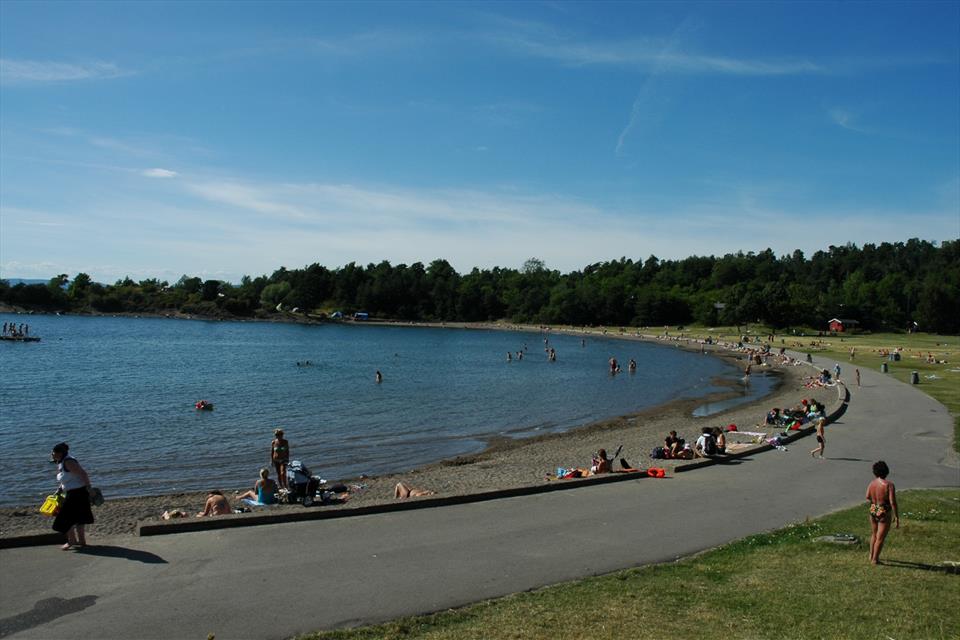
Hovedøya is one of the most popular islands because it is the largest and only 600m from the city center. It is well-known for its sheltered climate and great beaches for swimming. Most of the island is a nature reserve and protected conservation area, which is ideal for walking, as well as seeing some rare plants that grow on the island.

Related: Oslo Fjord Cruises

“If you’re interested in visiting historic sites, then visit Hovedøya,” says Joan Gooding, a travel writer at Top European Writing Services and UKWritings. “You can wander around the ruins of a 12th century Cistercian monastery which was built by English monks. The island also has cannon batteries, dating back to the 19th century, which remain from the years that the island was used by the Norwegian military. It’s worth popping into the Lavetthuset, which now houses a gallery, studios, as well as a monastery library.”

Explore The Oslo Fjord Islands
Langøyene. Photo: Visit Oslo

Langøyene
Langøyene is best known for being the only island in the fjord on which you can camp overnight. Until 1952, Langøyene was a landfill site, but once the municipality opened a new bathing place, it became very popular with locals and tourists alike. Today, it attracts tourists with its large grassy areas (ideal for sports, such as soccer), as well as its beaches and some fantastic walking trails.

Explore The Oslo Fjord Islands
Cabins on Bleikøya

Bleikøya
Bleikøya is one of the most popular cabin islands in the fjord. The northern part of the island is a nature reserve, where you can find some rare flora. It is also home to the largest population of barnacle geese in the fjord, as well as nesting sites for herring gulls, black-headed gulls and common eider.

Explore The Oslo Fjord Islands
Ferry arriving Gressholmen. Photo: Oslofjorden

Gressholmen
Further out in the fjord, you will find the trio of islands Gressholmen, Rambergøya and Heggholmen. Gressholmen is connected to the other two islands via causeways, which are particularly important as they form a bay for sea birds. Gressholmen housed the main airport for the city, which was used to land seaplanes between the First and Second World Wars. Now, the airport is used as a boatyard.

“You can walk to one of the oldest lighthouses in the fjord, which is based in Heggholmen,” explains Alan Overby, a journalist at Essay Writing Service and Big Assignments. “The views back to the city are wonderful and part of the reason this is such a popular destination. If you get a chance, you can also stop in at Gressholmen Kro. It was originally built as a meeting room in 1883 by the Christiana Shooting Club, but now it’s one of the oldest eateries in the fjord.”

Explore The Oslo Fjord Islands
Oscarshall summer palace. Photo: Rolf Thoresen/Visit Oslo

Bygdøy
Bygdøy is a peninsula to the west of the city center and is easily reached by taking either a bus or a boat. It is a popular destination for both its beaches as well as its walking trails. Bygdøy also houses many of the most popular museums and historic attractions, including the Norwegian Folk Museum, the Viking Ship Museum, the Royal Estate, the Holocaust Centre, Oscarshall and the Fram Museum.

Explore The Oslo Fjord Islands
Lindøya. Photo: Lasse Tur/Mapio

Lindøya
Lindøya is a popular island, especially in the summer, as it has about 300 more summer cabins than any of the other islands. It is the only island which has two ferry stops which are served by different routes. This makes it more accessible and affords greater flexibility when visiting. Lindøya’s southwestern corner is especially popular for swimming.

Explore The Oslo Fjord Islands
Whether you are looking to relax on a beach, spend time exploring the nature reserves or playing sports, there is an island for you. Remember to pack some food and drink, as some of the islands only have a small kiosk or shop that may only be open during the summer months. So, which Oslo Fjord island will you visit first?

Explore The Oslo Fjord Islands
Beatrix Potter

Explore The Oslo Fjord Islands is written for Daily Scandinavian by Beatrix Potter. Bea is a professional writer at both Write My Assignment and Cursework Writing services. She writes extensively about traveling, which she enjoys undertaking in her spare time. Bea also tutors students at all stages of education at College Assignment Help website.

Feature image (on top): Norway.no

Car Rental Company in Norway Awarded International Prize

0

Hertz Car Rental in Kongsberg, Norway has been awarded the «Hertz Best Image License 2019” by its licensee Hertz International. “For a long time, Hertz in Kongsberg has been loyal to the brand and making it visible,” wrote the jury. The car rental company in Norway, awarded the international prize, is proud to be the winner.

“We are happy to be recognized with such an award,” says station manager in Kongsberg Bjørn Erik Lund.

The jury emphasized that Hertz Kongsberg has a good reputation in its region and has been proactive in seeking advice from Hertz’s marketing department. The branch has shown an interest in learning more about marketing and has taken its own initiative to promote the brand and services it offers.

Car Rental Company in Norway Awarded International Prize
“We are happy to be recognized with such an award,” says station manager in Kongsberg Bjørn Erik Lund.

Related: Spectacular Driving in Norway

Building an image
The jury wrote the following about Lund and the job he has done in Kongsberg:

“Hertz Kongsberg has invested money and resources to build an image while being both creative and innovative. In addition, they have taken international ideas and made it their own. They have lived up to the slogan ‘Think global and act local’.”

Car Rental Company in Norway Awarded International Prize
Atlantic Ocean Road, Norway; Shutterstock/Hertz 

Driving in Norway
Norway is home to some of the most cultured and charming cities in the world, this destination is also a must-visit for those who love spending time in the great outdoors, as there’s a myriad of exciting things to do on your Norwegian adventure.

Related: The Adventure Road in Norway

From extreme sports to wildlife safaris and taking in the Midnight Sun, the options can seem endless. And then there are the famous fjords.

Car Rental Company in Norway Awarded International Prize
Planning a road trip? Hertz in Norway has a wide number of convenient pick-up locations where you can collect your rental car. The company has more than 100 branches across the nation, at both major cities and airports, so whether you want to pick up a rental car in  Oslo or Bergen, Trondheim or Leknes, Hertz has you covered in .

Related: First Car Tourist in Norway

Enhancing your travel experience
In the past six years, Hertz has increased its overall customer satisfaction score more than any other car rental brand in an annual study by J.D. Power, which surveys leisure and business customers in North America. Earning this year’s No. 1 overall ranking is a result of Hertz’s commitment to delivering caring, personalized service, offering top-rated vehicles, and investing in customer-centric technologies that enhance the travel experience.

Car Rental Company in Norway Awarded International Prize
Norway is a must-visit destination for those who love spending time in the great outdoors

About Hertz
Hertz, one of the most recognized brands in the world and currently ranked #1 in Customer Satisfaction by J.D. Power, has a long-standing legacy of providing a fast and easy experience designed to make every journey special. It starts with top-rated vehicles to fit every traveler’s needs, delivered with a caring touch and personalized services including its award-winning Hertz Gold Plus Rewards loyalty program, Ultimate Choice, Hertz Fast Lane powered by CLEAR, Mobile Wi-Fi, and more. Beyond car rental, Hertz is one of the top 10 sellers of pre-owned vehicles in the U.S. with more than 80 Hertz Car Sales retail locations nationwide. Wherever and whenever you need to go, at Hertz, we’re here to get you there. To learn more or reserve a vehicle, visit Hertz.com.

Hertz pioneered the car rental industry more than 100 years ago and today is owned by Hertz Global Holdings, Inc. which includes Dollar and Thrifty vehicle rental brands and fleet management leader Donlen Corporation. (Source: The Hertz Corporation)

Car Rental Company in Norway Awarded International Prize, compiled by Tor Kjolberg

The Swedish Emigrants

0

During the 19th and early 20th century, Sweden’s population exploded, and many families could no longer eke out a living on the land. So began the years of migration to North America. Read more about the Swedish emigrants.

About 1.3 million Swedes left Sweden for the United States of America. The land of the U.S. frontier was a magnet for the rural poor all over Europe, but some factors encouraged Swedish emigration in particular since the Lutheran State Church practiced social conservation and class snobbery. Population growth and crop failures were other reasons.

The Swedish Emigrants
About 1.3 million Swedes left Sweden for the United States of America

Related: The Great Scandinavian Exodus

Mass exodus
The trans-Atlantic mass exodus is one of the major events in Swedish history during the last two centuries, and the immense network of contacts that was established across the Atlantic has proven very important for the way in which Swedish society then and now has been oriented towards the United States.

Utvandrernes Hus (House of the Emigrants) in Växjö, 70 km (43 miles) west of Kalmar in Sweden, tells the story of the exodus.

Swedish migration to the United States peaked in the decades after the American Civil War (1861–65). Most immigrants became pioneers, clearing and cultivating the prairie, but some forces pushed the new immigrants towards the cities, particularly Chicago.

The Swedish Emigrants
Utvandrernes Hus (House of the Emigrants) in Växjö, 70 km (43 miles) west of Kalmar in Sweden, tells the story of the exodus

Related: Immigration Tensions in Scandinavia

A second generation of Swedish emigrants
As the decades of Swedish immigration to the United States progressed, a second generation of Swedish Americans entered the scene. This second generation was first recorded by the Census in 1890, when some 250,000 persons in the Unites States were classified as second-generation Swedish Americans. During the next decades, this figure increased quickly and by 1910 the second generation had passed the first and numbered 700,000. In 1920, the figure was 824,000.

End of the Swedish emigrants
This caused a national alarm in Sweden and a broad-based parliamentary emigration commission was instituted in 1907, recommending social and economic reform in order to reduce emigration by “bringing the best sides of America to Sweden”. From the mid-1920s, there was no longer a Swedish mass emigration.

Related: New Nordic Heritage Museum in Seattle

The Swedish Emigrants
The trans-Atlantic mass exodus is one of the major events in Swedish history during the last two centuries

Swedish language played an important role
Much of the Swedish American community was centered on the Swedish language. This was seen as a key factor for the culture’s creation and maintenance. The Swedish-language press played an important role in this respect, and it has been estimated that between 600 and 1,000 Swedish language newspapers were published in the United States. The Swedish American press was the second largest foreign-language press in the United States with a total circulation over 650,000 copies in 1910.

The Swedish Emigrants, written by Tor Kjolberg