Celebrated Norwegian architecture firm Snøhetta is designing Norway’s largest astronomical facility. The architects aspire to capture the feeling of being wrapped in nature and at the same time being in space.
The campus, set within a dense forest, 72 kilometers (45 miles) north of Oslo, will include a variety of buildings inspired directly by planets and their orbits. This will be a spectacular destination for astronomy fans. Imagine tripping over a small planetary system in a forest.
The campus, set within a dense forest will include a variety of buildings inspired directly by planets and their orbits
Built for spying during the cold war
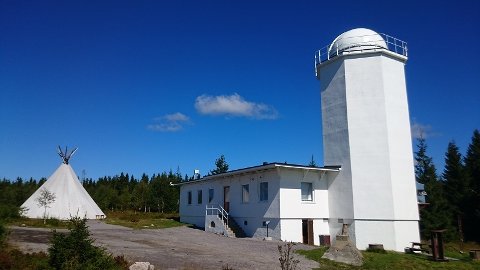
The Solobservatoriet in Harestua was originally built for the total solar eclipse in 1954 and used by the US military to spy on Soviet satellites during the cold war. Today it is operated by Tycho Brahe, an institution whose mission is to perform scientific research and enlighten the public about wonders of the universe.
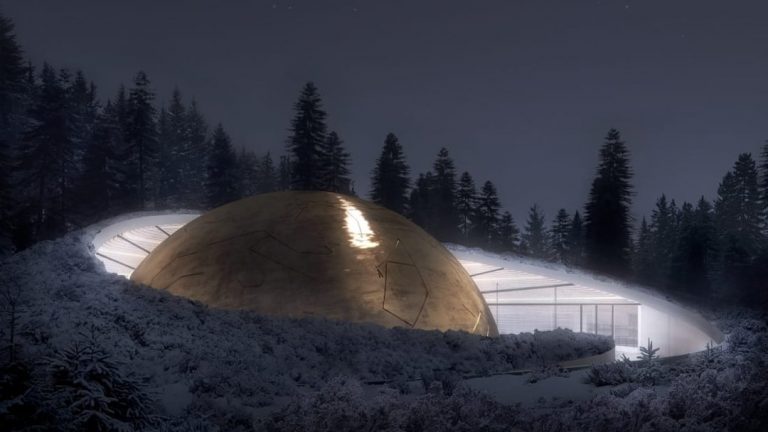
The planetarium will look like a glowing planet
The planetarium will look like a glowing planet, and the dome of the 100 seats “heavenly viewing theater” will be planted with grass, wild heather, blueberry and lingonberry bushes as a smooth transition from soil to sky. Snøhetta’s designers took astronomy classes and were captivated by the architecture of the galaxy. “We learned about the analemma diagram of eight shapes made by the moon and the sun if you look at them from the same point for 365 days,” says Ingebjørg Skaare, a senior architect at Snøhetta who is working on the project.
Serving groups up to 32 persons
Stargazers who want to spend the night in the forest, can use the designated accommodation, serving groups of two to 32. The circular cabins will scatter loose around the planetarium, by design. A local wood company will work with Snøhetta to develop efficient construction techniques for the cabins. Custom-built furniture will be designed for the rooms’ unusual floor plan.
Snøhetta’s redesign will transform Solobservatoriet’s rather modest facility to an international destination
“A cabin can rise slightly above the ground, partially sunken or just touching the ground like a kiss, creating a planetary system on the site,” explains Skaare and adds: “The intact landscape on the site is one of the most important qualities for the experience.”
An international destination
The planned expansion includes a visitors center as well as several small outbuildings to the observatory’s historic telescope tower. When completed in 2020, the 1,500 sq. m observatory will be the largest solar observatory north of the Alps.
The old Harestua solobservatorium
With cafés, dreamy accommodations, even a generous “bowl-shaped” children’s area on the bowel of the planetarium, Snøhetta’s redesign will transform Solobservatoriet’s rather modest facility to an international destination.
Campus for Astronomy Fans is Being Built in Norway, written by Tor Kjolberg
The Man behind the Montana shelving system, Danish Peter J. Lassen invented freedom in a box – and he never turns old.
“Creating good design demands honesty and respect,” says Peter J. Lassen, the creator of Montana shelf system, whose simple and functional designs have become classics. When he developed the Montana System, there was a detailed mathematic and philosophical principle behind it. That’s why the design has been renowned for its simplicity and the functionality of their design.
From a career as a naval officer, Peter J. Lassen switched to the furniture industry in 1954. In 1982 he founded Montana Møbler A/S in Hårby, on the Danish island of Funen. For many years he worked with the architects Arne Jacobsen, Jørn Utzon, Piet Hein and Verner Panton, by whom he has been strongly influenced. The evidence is seen in the clean lines and functionality of his design.
Peter J. Lassen
The mathematic calculations are complex and based on 5.7 cm, but the philosophy is quite simple: Every Montana element should be able to be infinitely combined and be practical, good looking, durable and independent of changes in fashion.
“It must be possible to revolutionize the interior design culture and provide everyone with the potential to put together a room with a personalized touch,” he says. Father-and-son team Peter and Joakim Lassen have designed many of Montana’s products – often in collaboration with Montana’s design team or with external designers.
“Montana has become a system about freedom, not only at the moment the choice is made, but the freedom to alter the style, composition and function, whenever the urge strikes you,” says Peter Lassen.
The Story of a Danish Shelving System, written by Tor Kjolberg
Ekstremsportveko is the largest extreme sport festival in the world, and is hosted every year in Voss, Western Norway. There are competitions in kayaking, rafting, mtb-bmx, skateboarding, skydiving, paragliding, hanggliding, multisport, freeride, big air, climbing, speed riding, cliff diving, biketrial, wind tunnel, BASE and longboarding.
For one whole week, 24 June – 1 July national and international athletes compete and challenge themselves in the elements. However, competitions are not always the main focus for the athletes. The sharing of knowledge, when hundreds of top athletes are gathering this last week of June, is just as important.
Ekstremsportveko is the largest extreme sport festival in the world, and is hosted every year in Voss, Western Norway
The various sports are the main focus of Ekstremsportveko. However, the music program has become an important part of the total festival experience. The last three days of the event, national and international artists spice up the festival with their vibrant music within the genres; pop, rock, funk and reggae!
Slopestyle and bmx at Elstremsportveko
Ekstremsportveko is owned by the non-profit organization Stiftinga Ekstreme Voss – “The Ekstreme Voss Foundation”. Voss Active, Voss Kayak Club, Voss Hang and Paraglider Club and Skydive Voss are the four local clubs who represent Ekstreme Voss. There are two people working in the administration full time all year round. In addition to this, Ekstremsportveko rely heavily on positive and hard working people. Every year 800+ volunteers from all over the world contribute to make the festival a huge success.
Music is an essential part of the festival, and this year the organizer has dug deep into different genres and carefully selected a line up hard to ignore. Extreme sports during the day. During the night rock, hip-hop, electro-rock, electronic new wave, EDM and more.
The following artists are lined up for this year:
DATAROCK
Datarock
Whether you are a music fanatic or not, we believe everyone should have to experience, for themselves, and see their favorite band perform, live. As for rock music fanatics with a touch of the groove, you cannot call your self an “electric rock fan” if you have not, at least once, seen Datarock perform on a stage. Known worldwide for their playful rock music, Datarock tour the world with millions of fans all over the globe. Their music is all about having fun, known famously by wearing red tracksuits and big glasses. Datarock live performances have so much energy and vigor, the energy in the atmosphere is palpable.
ARIF
Arif
If you are a hip-hop music lover, the Norwegian rapper Arif is a must on your playlist. This young artist has proved to be one of Norway’s most important contributions to the rap and RnB genre. He has the ability to play with words making them flow, and his ability to tell today’s generations stories. His music makes necks turn, heads to nod and feet to move with joy and fascination. In attending any of his concerts, you will get to meet major players in the music industry. After selling out one of the biggest stages in Norway, Oslo Spektrum, Arif is now the talk of the town.
WHALES AND THIS LAKE
Whales and This Lake
Electro-pop music lovers must attend Whales and This Lake’s concerts. They are the true definition of electro-pop genre music. This band, comprising of three artists, are doing “whale pop”, which is characterized as a dark and dancy genre of indie electro pop. The three artists originate from the sparsely populated Norwegian countryside where synths are homemade and the drums have been covered by whale skin for thousands of years. Why attend their live concerts? Whether you have never heard them, listened to them for a few days – or finally getting to see your favorite artists live, this is such an immense feeling to experience live. Whales and This Lake band with no doubt will play a major role in the European music scene for the next decade.
THULSA DOOM
Thulsa Doom. Gere as Conan, the Barbarian
There is no better place to enjoy metal music than a live concert. Thulsa Doom is a metal band, formed back in 1999, based in Oslo, Norway. Springing out from the record label Duplex Records, with bands such as Cumshots, The Dogs, Bare Egil Band, Black Debbath and Hurra Torpedo. Their music is inspired by Kyuss and early Black Sabbath. Stoner rock music fanatics know the true meaning of metal music through this band. This is a very famous band in Norway. They have been in the music industry since 1999. As a health benefit, if you get to see your favorite artists perform live, that tends to bring joy and happiness to people, not to mention the calories one burns when in the moshpit.
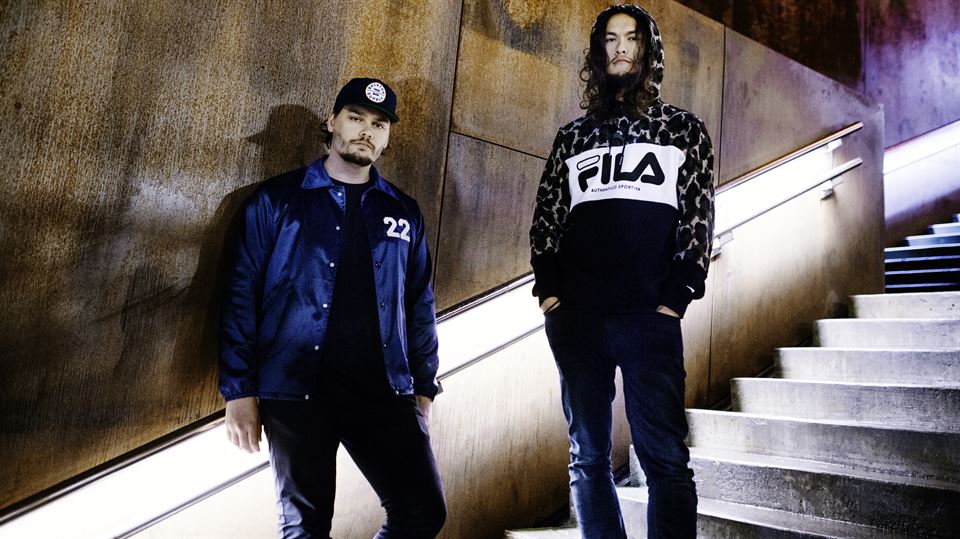
KREAM
Kream
Hailing from Bergen, Norway, and formed in 2015, KREAM features the talents of brothers Daniel and Markus Slettebakken. The Norwegian electronic-based duo is known for their high-energy house-oriented pop music, with gloomy undertones. Attending their concert is a must go for house music lovers. Kream released the song that they co-wrote with Swedish songwriting duo SHY “Taped up Heart” which feature vocals from Clara Hagman. The song has charted on Billboard’s Hot/Dance Electronic Songs chart and peaked at 22. Kream is the cream of house-oriented pop music. In a few year expect Kream to be the cherry.
FUTURE DUPER
Future Diper
Future Duper is a new name in the EDM/Pop music world. With their remixes, they have brought a new life to tunes from Alan Walker, Avicii, and Galantis and among others. Over time, they have developed their own bouncy and melodic tune. The band comprises of two members based in Oslo, Norway. Attending their concert gives their fans a chance to be really close to what was once an underground movement.
HKEEM
Hkeem
Hkeem is the kid on the block in Stovner, Oslo, in Norway. Bringing a new style of rap in the Rap world in Norway, Abdulhakim Hassan, better known as Hkeem, came into the spotlight after he and his youth friend Temur Baig released his breakthrough song “Fy faen”. This song, launched in April 2017, reached the first place on the VG list (Norwegian version of Billboard) in week 17, and became Norway’s most streamed song on Spotify. For the song, Hkeem and Temur were nominated in the class This Year’s song during P3 Gold 2017.
SONNY ALVEN
Sonny Alven
Many of us music lovers have very many different reasons why we listen to music; from enjoyment to idolizing our favorite artists. At Sonny Alven’s live concerts, it is an all-in-one package. He is steadily becoming known worldwide for his dance-inducing yet chilled out beats and signature electronic style. He has performed alongside huge electronic acts like Kygo and Galantis throughout Europe and the United States. If you are a fan of the big names in the electronic music genre, then Sonny Alven should not miss in your playlist as well. One of the main themes of electronic music concerts for people to later say “I saw him when he was up and coming”
AMANDA DELARA
Amanda Delara
If you are looking for the most exciting and promising new artist to surface during 2016, Amanda Delara is your choice. Having attended no musical school, she began playing piano in early childhood. As a teenager, she decided to write her own music. If you are a fan of pop music, you must be an Amanda Delara fan as well. Feeling like your spirits are down? Attending a concert is typically a high energy activity, and it can help to boost your fatigue throughout the day if not the whole extreme sports week.
KURT NILSEN
Kurt Nilsen
Kurt Nilsen is one of Norway’s best-selling artists and is one of the country’s popular live performers. He got his breakthrough in the norwegian TV-show “Idol” (like American Idol) in 2003 and became the year after World Idol. Since then, he has received countless awards, released several critically acclaimed albums and had some of Norway’s biggest radio hits.
Now, he are coming to Ekstremsportveko for a rare and intimate live performance on Wednesday June 27th.
RÖYKSOPP
Röyksopp
The Tromsø squad Svein Berge and Torbjørn Brundtland make up the electronic music group Röyksopp. The duo was officially formed in 1998, but has made electronic music ever since 1988 (!) And is undoubtedly pioneer in the genre. Ever since the debut, they have made great success both at home and abroad, and collaborated with famous artists such as Coldplay, Depeche Mode, Beck, Lady Gaga, Robyn & Susanne Sundfør to name a few. They have released a series of mixtapes & six studio albums, four of which have been in the first place on the VG list. They have won the Norwegian Grammy Awards, P3 Gull Awards and nominations for international awards such as Grammy and Brit Awards.
Röyksopp continues to impress the audience worldwide with their visual sensational DJ and livesets. After decades as DJs, they have delivered the DJ-sets in clubs all over the place; from London, Dubai & New York, to Mexico, Tokyo & Ibiza.
In June they are coming to Ekstremsportveko bringing a DJ-set that will set the Veko Lounge on fire.
Röyksopp continues to impress the audience worldwide with their visual sensational DJ and livesets
Note: Due to serving of spirits in the lounge-tent, this concert will be for age 20+. However, the concert will be streamed to the main stage for age 18 – 20 years.
Extreme Artists at the Extreme Sports Festival in Norway, compiled by Admin
If you’re visiting the National Museum in Copenhagen, you should set aside time to enjoy a selection of Danish smørrebrød at the museum’s restaurant Smör, which opened with new owners, late March this year.
Our charming waiter Niclas Klixbüll explains that Restaurant Smør (Engl.: Butter) relies on a kitchen of Danish gastronomic pedigree. The menu consists of traditional smørrebrød with a modern twist and executed to perfection. The drinks to pair with the food are carefully selected from local breweries and distilleries.
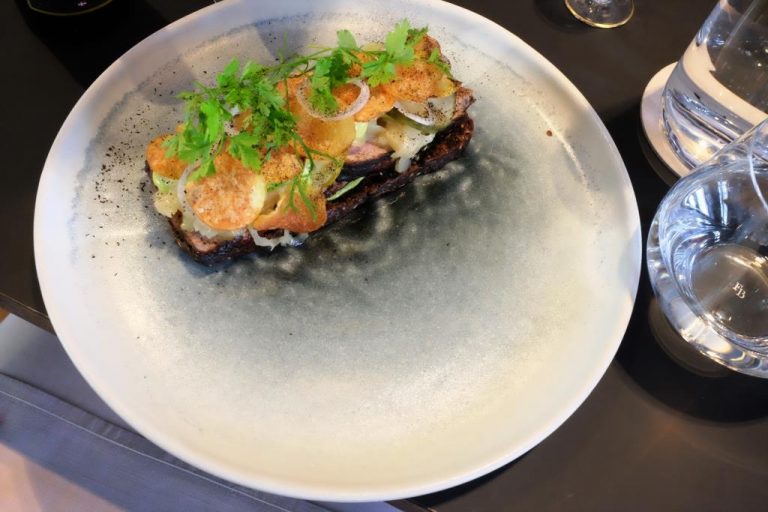
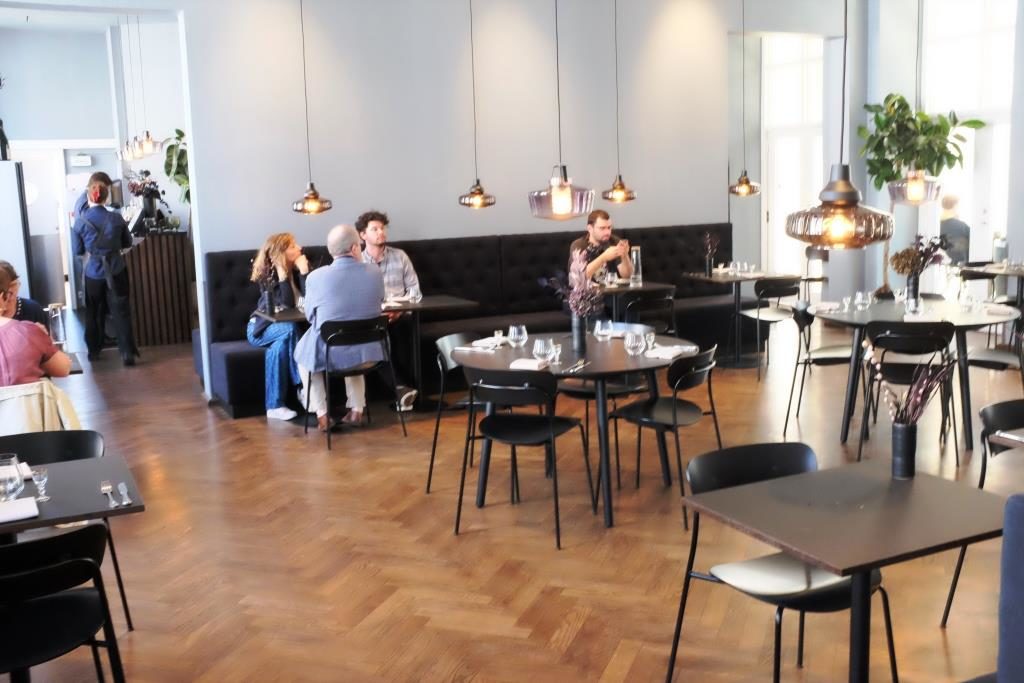
The venue with its light walls and dark Danish designer chairs is inviting and cozy. Here you feel welcome to a country obsessed with rye bread! Rye bread provides the foundation for the open-faced sandwich, or smørrebrød. Typically slathered with butter, and topped with meat, fish or cheese. At Restaurant Smör inside the National Museum in Copenhagen they give this beloved treasure a modern twist. The open sandwiches here are made with seasonal, mostly local, ingredients.
welcome to rhe country obsessed with rye bread!
What about….
Soft boiled egg, lumpfish roe, Buretta from Rødovre with a crispy chicken skin, or
Smör’s Salami on Beef and Mangalitza, Portwine aspic, onion, traditional Danish flavored lard and green tomato, or
Creaky chicken salad on Danish free range chicken, Madagascar pepper, bacon and asparagus, or
Tatar of beef topside, ramson, pecorino, tomato and egg yolk.
Smörrebröd from a kitchen of Danish gastronomic pedigreeRye bread provides the foundation for the open-faced sandwich, or smørrebrød
Although two pieces of smørrebrød (which each cost around USD 15) should suffice for a filling lunch, it’s a shame to miss out on a slice of the Danish free range beef fillet with Tarragon Crème, caramelized onions and fried egg.
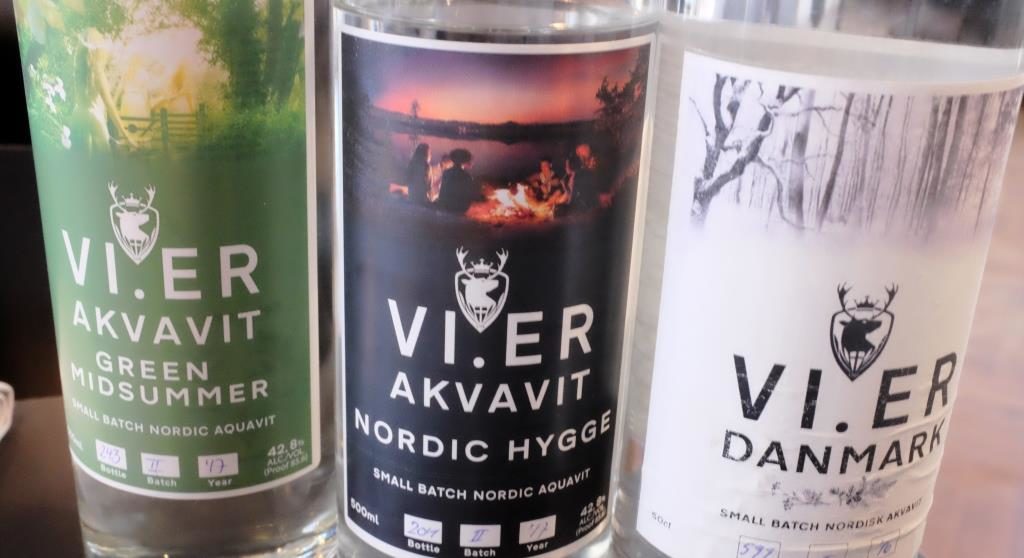
Local beer at Restarurant Smör“Vi er akvavit” translated into English means “We are aquavit”
Beer and aquavit fans will appreciate the handful of interesting local brews.
The venue with its light walls and dark Danish designer chairs is inviting and cozy
SMÖR is the brainchild of Madkastellet, famous for their award-winning, edgy food concepts. Ulrika Mortensen is Head of Communication & Brand Development.
Ulrika Mortensen, Head of Communication & Brand Development and head waiter Niclas Klixbüll
All photos: Tor Kjolberg
Reinvented Traditional Smørrebrød in Copenhagen: Restaurant Smör reviewed by Tor Kjolberg
A new report, Oslo: State of the City 1918, shows that Oslo is recognized as a capital for business as well as vigorous growth.
It is 5 years since Oslo decided to re-shape the city-region’s international identity, visibility, reputation and positioning and to frame the Oslo brand. In those 5 years, Oslo has emerged as a new and distinctive player on the European and global stage. The Region has taken responsibility for bringing into being an additional economic model for 21st century Norway, during a cycle of great change for both the country and the world.
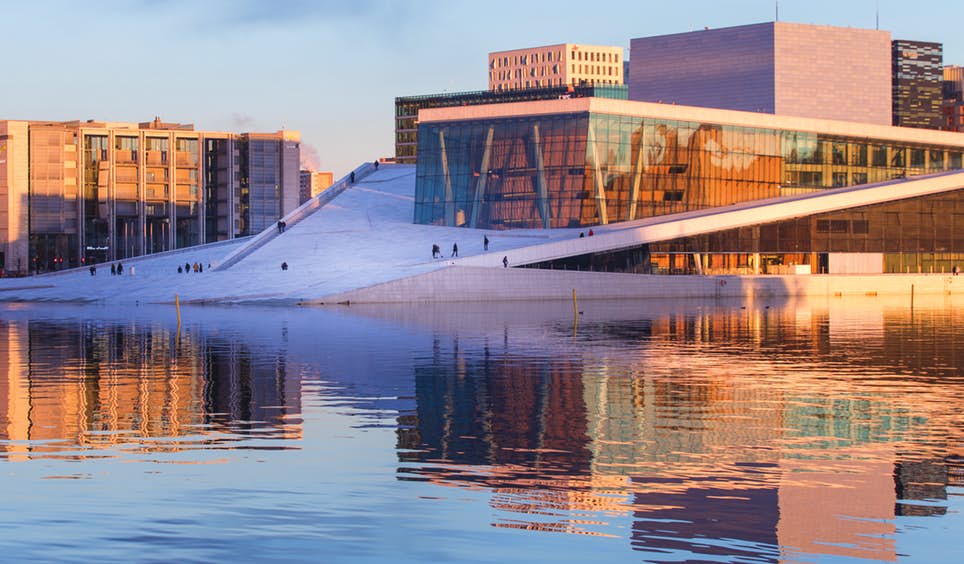
The Oslo Opera House
A new economy and a new Oslo
In this cycle the changed commodities outlook and an aging population means that Norway has to shift decisively from an oil/gas and corporate economy towards a more diversified set of sectors powered by knowledge systems, small and medium sized companies, and a new generation of exponential technologies that will create the next generation of jobs.
The winds of change are global in scale. Urbanization, globalization, digitization and cross-border capital flows are all tending to concentrate opportunities in the most competitive, innovative and adaptive city regions. The global contests between cities and regions are shifting away from attracting banks and corporate HQs to a focus on science, technology, entrepreneurship, talent, lifestyle, institutions and soft power.
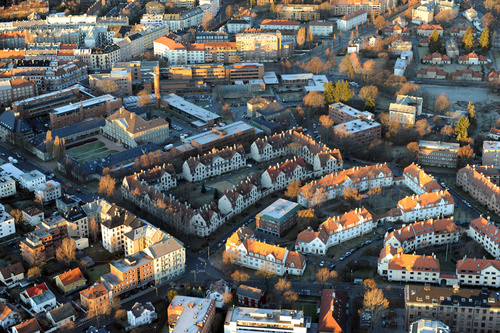
Groruddalen in Oslo from above. Photo: Lasse Tur
The Oslo region has been the fastest growing capital city in Europe. Since 2000, the Region’s population has grown by more than 25%, and many of the key dynamics are in place for growth to continue up to 2050. Oslo’s high standard of living, buoyant labor market and increased recognition of the region’s standard of public services has seen it become more attractive to young people within Europe and also beyond.
It is 5 years since Oslo decided to re-shape the city-region’s international identity, visibility, reputation and positioning and to frame the Oslo brand
In 2018, for the first time, 25% of the Oslo population is born overseas. High levels of in-migration of young people have transformed the demographic profile of Oslo and created the conditions to expand the city’s innovation and cultural scene.
In 5 years, Oslo has emerged as a new and distinctive player on the European and global stage
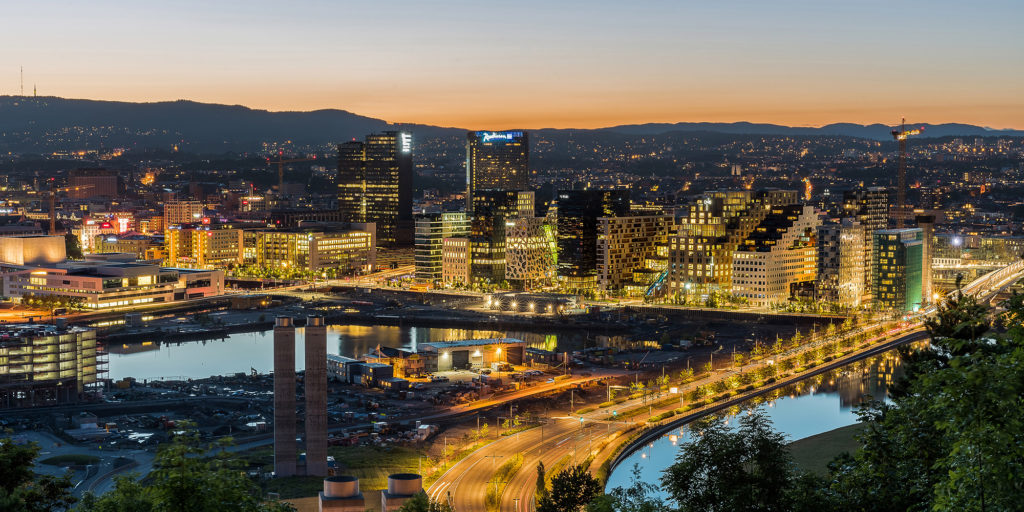
Oslo’s rapid regional growth has seen local governments and national government recognize that to accommodate this growth the capital has to develop a regional approach that involves intelligent use of regional infrastructure and assets, and large scale urban restructuring. This has not only seen Oslo grow its successful new airport into an internationally connected hub. It has also involved a process or urban densification and redevelopment to connect its harbor to the city center.
The Oslo region has been the fastest growing capital city in Europe
Oslo is not only a city of finance and business serving its national commodities and maritime economy – it is a diversified city of knowledge, culture, medicine and advanced technology. Since 2010, many of its emerging sectors have grown rapidly, including telecoms and IT (4% jobs growth per year), technical advisory (4%), and arts, culture and entertainment (3%).
Both the New York Times and Lonely Planet have recently listed Oslo as one of the top places to visit worldwide,
For the new wave of fast-growing and rapidly globalizing city regions, culture is an essential ingredient if the region is to successfully accommodate the innovation and creative economy. This is very true in Oslo. As the region competes at the global cutting edge, cultural investment is helping to cement Oslo’s reputation for quality of life, boost its destination appeal, meet the preferences of the innovation economy, and communicate its core values in a time of change.
Oslo: State of the City 2018
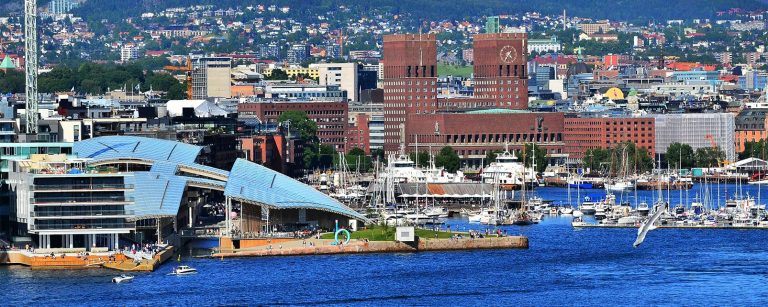
Oslo’s growing cultural reputation is the product of a 10 years cycle of investment which began with the Opera House followed by The National Museum, the Astrup Fearnley Museum of Modern Art, the new Public Library and the Munch Museum, all providing a major boost to the competitiveness of Oslo’s cultural amenities while also improving public services, public space and public access.
One international survey identifies 92% of Oslo residents are quite or very satisfied with cultural facilities in the city, such as concert halls, theatres, museums and libraries.
Both the New York Times and Lonely Planet have recently listed Oslo as one of the top places to visit worldwide, in recognition of the city’s ever-improving offering of exciting architecture, cultural and art experiences.
Oslo has always been something of a pioneer in adopting green and sustainable models
Oslo has always been something of a pioneer in adopting green and sustainable models, but this has really accelerated in the last 5 years. Oslo has become renowned globally for implementing some of the most ambitious greenhouse gas reduction targets anywhere in the world. The City plans on reducing greenhouse gas emissions by 50% compared to 1990 levels by 2020, and by 95% by 2030. If successful, this will make Oslo faster at reducing emissions than any other city or country.
it appears that there are three core dimensions to the way the region has evolved in this latest cycle. Oslo has emerged as an innovation region on the international stage. Relative to other small regions around the world, Oslo region continues to grow more firms, create more co-working spaces, incubators, accelerators and startups.
The Acrobat, by Rolf Thoresen
A cycle of investment in cultural infrastructure and neighborhood redevelopment is capturing the imagination of prospective talent. Oslo is also a region promoting new approaches to social cohesion and inclusion, family-friendly urban living, and healthy lifestyle at all stages of life
What does this all mean for Oslo?
As a result, it is fair to say that Oslo’s new business model (innovation, science, culture) is increasingly in demand. It also increasingly benefits from an integrated region that adds scale and capacity to help Oslo absorb demand in a well-managed way.
Oslo was known for being a small, pleasant, safe, domestically oriented city that was on the cusp of change. Today, more of Oslo’s edges are known by the world: its urban quality and vibrancy is being recognized, its work-life balance is feted, and its diversity, innovation and ambition is widely perceived by external observers. Oslo is becoming a leader.
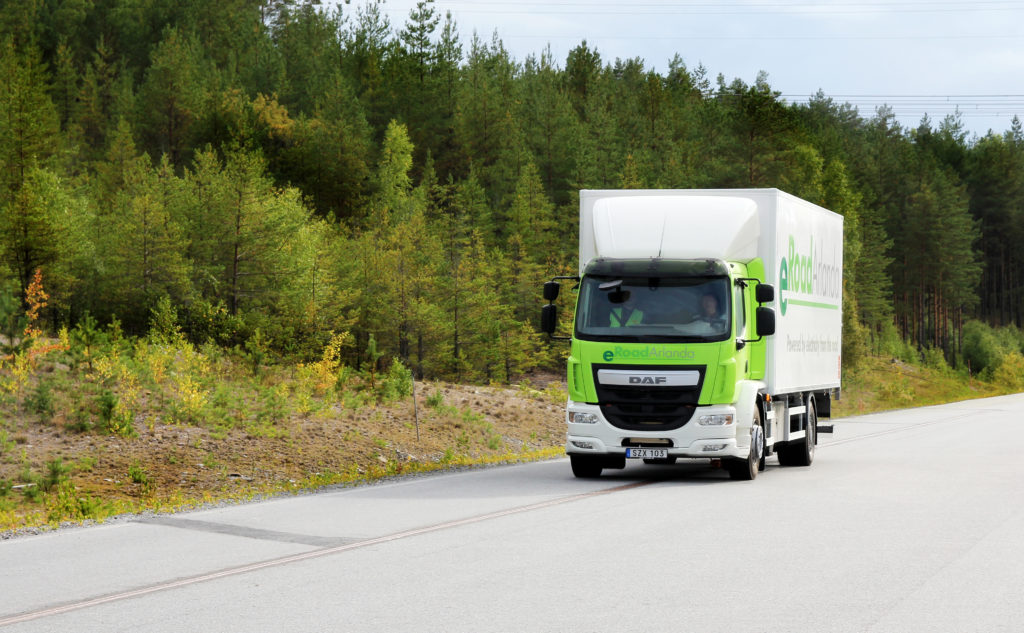
eRoads Arlanda – world’s first electrified road for charging vehicles has opened in Sweden. The first working tracks on Road 983 was started in October 2017 and has now been completed and electricity turned on. Modified electric vehicles can now be charged while they’re driving.
eRoadArlanda is one of several projects in the Swedish Transport Administration’s pre-commercial procurement of innovation for the development of electrified roads and the project was started in June 2013. The newly opened stretch of road outside Stockholm transfers energy from two tracks of rail in the road, recharging the batteries of electric cars and trucks.
First out on the 2km (1.2 miles) long road was an 18-ton electric truck transporting goods between Arlanda and the PostNord terminal in Rosersberg
First out on the 2km (1.2 miles) long road was an 18-ton electric truck transporting goods between Arlanda and the PostNord terminal in Rosersberg, and the road is set up to bill the driver for the amount of electricity the car pulls from the road as it moves. The techniques that have been developed in recent years are based on conductive technology that use an electric rail installed in roads to power and recharge vehicles during their journey.
The first working tracks on Road 983 was started in October 2017
The goal of the project is to generate knowledge, experience and decision data that is conducive to the creation of a platform for the electrification of larger transport routes in Sweden. The Swedish government’s road agency has already drafted a national map for future expansion. The project is an important part of Sweden’s target of achieving independence from fossil fuel by 2030 requires a 70% reduction in the transport sector.
A conductive technology uses an electric rail installed in roads to power and recharge vehicles during their journey
“The electric road project and the shift away from fossil fuels will help boost Sweden’s competitiveness,” the organization says. Energy is transferred from two tracks of rail in the road via a movable arm attached to the bottom of a vehicle. The electrified road is divided into 50m sections, with an individual section powered only when a vehicle is above it.
When Sturlason Press Agency in Oslo closed its operation in the 1970s, the photo archive of nearly one million images was stowed away in a basement.
Svein A. Sturlason (1906-1989) started his business in Oslo in the 1930s. He photographed about 1600 theater performances in Oslo between 1942 and 1980 as well as hundreds of thousands of photographs from around the world, covering news, politics, social life, culture, royal history and wars from 1900 to the early 1960s.
The enormous press archive was stored in a basement and remained untouched until spring 2010. In 2010, the archive was reopened, and it was agreed that it would be deposited, supported by the Ministry of Culture and The Norwegian Freedom of Expression Foundation, in the National Archives, Riksarkivet.
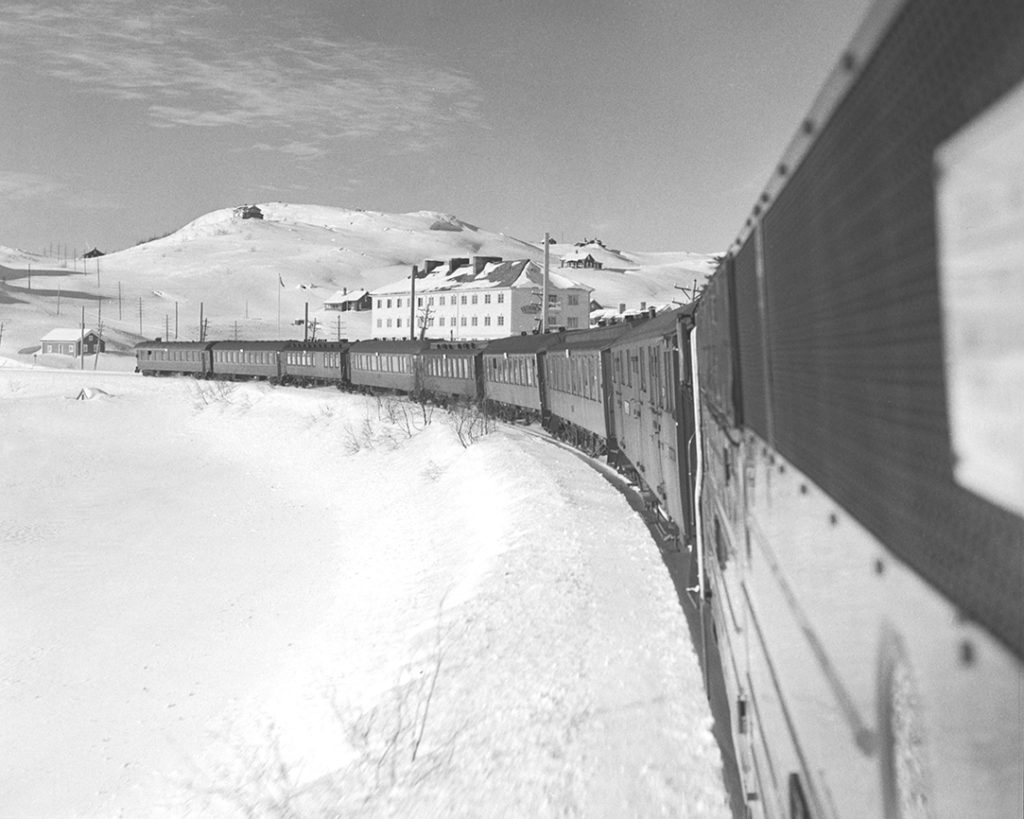
The Oslo-Bergen railway at Ustaoset 1961
There was no catalogue of the photographic material, so listing the contents of the archive has to be made from scratch. Samples taken so far show that the archive contains, besides many familiar images, several images which have never been seen. Most of the pictures in the collection have a typed text on the back explaining the time and place of the shot. These are valuable aids to identification.
Svein A. Sturlason 1944
The archive and the rights to all images in the collection belongs to Sturlason AS Polyfoto. Here Daily Scandinavian presents a selection of unique images from the collection.
Below, the Norwegian author Bjornstjerne Bjornsen and his wife Karoline Bjørnson (Aulestad 1897). Their daughter Bergliot Ibsen (Henrik Ibsen’s daughter in law) in the background. Photo: Visnes Dahl
Bjørnstjerne Bjørnson
Two Norwegian revue and film actors and theater directors Ernst Diesen (1913-1970) and Leif Juster (1910-1995)
Ernst Diesen (left) and Leif Juster
Spanish dictator Francisco Franco (1892-1975) fishing in Spain.
Francisco Franco
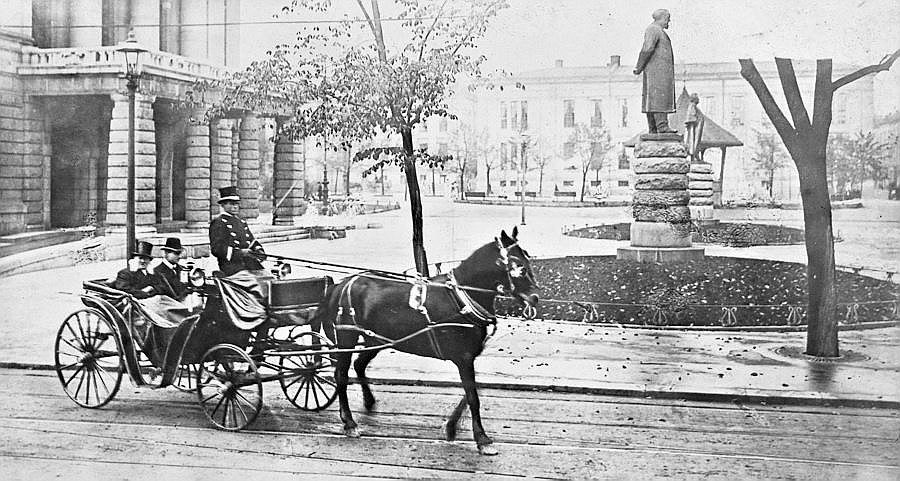
The Norwegian playwright Henrik Ibsen (1828-1906) (far left) passing the National Theatre in Oslo, 1906.
Henrik Ibsen
The Norwegian speed skater Hjalmar “Hjallis” Johan Andersen (1923 –2013) won three gold medals at the 1952 Winter Olympic Games of Oslo, Norway. He was the only triple gold medalist at the 1952 Winter Olympics, and as such, became the most successful athlete there.
Norwegian speed skater Hjallis
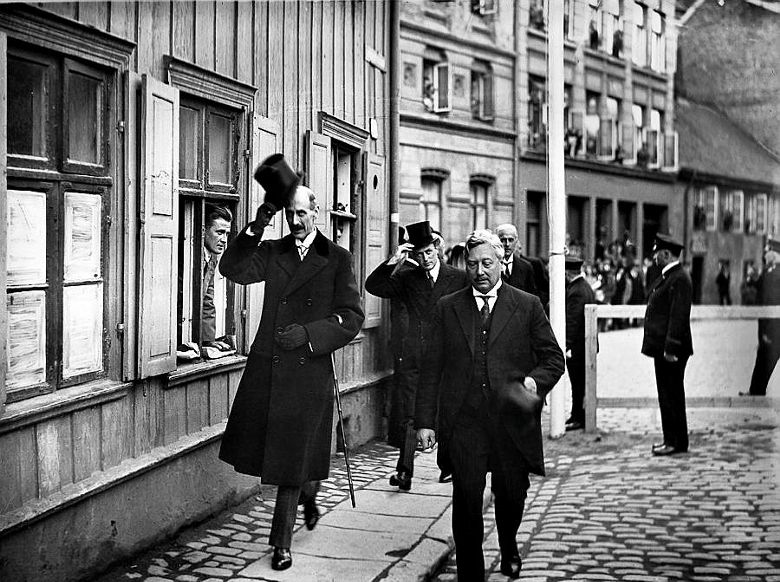
King Haakon VII (1872-1957) known as Prince Carl of Denmark until 1905, was a Danish prince who became the first king of Norway after the 1905 dissolution of the union with Sweden. He reigned from November 1905 until his death in September 1957.
King Haakon VII (1931)
King Olav V (1903-1991) was king of Norway from 1957 until his death. Here with Crown-prince Harald (b. 1937 – now King Harald V of Norway).
King Olav V of Norway and Crown-prince Harald 22 July 1958
King Olav V of Norway after the coronation in June 22 1958.
King Olav V of Norway
The Norwegian campaign during WWII, though hastily improvised, was meant to play to Britain’s maritime strength. Cutting off the supply of Swedish iron ore shipped through Narvik, which the Ministry of Economic Warfare believed could fatally weaken the German war effort in months — was dubious.
Narvik 1925
Queen Elizabeth at the Derby, photographed by Sturlason.
Queen Elizabeth at the Derby
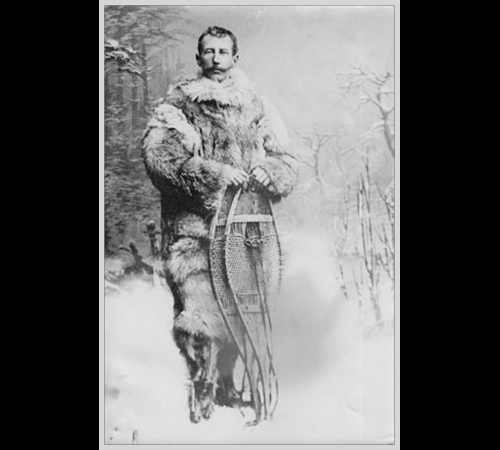
The Norwegian explorer Roald Amundsen. The image was not signed and there is no info in its backside.
Norwegian explorer Roald Amundsen
Sonja Henie (1912 – 1969). Three-time Olympic Champion, ten-time World Champion and six-time European Champion. Unknown time and place. Photo: Myres Press Agency
Anni Mogensen, who took over the leadership of the National Museum in Copenhagen in March this year, after holding a position there as head of public programs for two years, has just one aim: to convey cultural heritage in a context you have only in very few places. That is the museum’s major value and it is very precious.
I met Anni Mogensen in her office in the great treasure house of the museum in Ny Vestergade and she is warm and friendly and answers my questions softly and carefully. And she has vast ambitions for the museum – plans that will, if they see the light of the day, transform the museum for generations to come.
The aim of the National Museum in Copenhagen is to convey cultural heritage in a context you have only in very few places
Mogensen and her team are aiming to put the museum through a major renovation project that will culminate in a complete redisplay of its galleries. However, the building is old and partly protected, which is a challenge considering that the state of the essential services, such as electricity, heating and ventilation, which are in dire need of repair. Mogensen will test out different ways of doing this together with her team.
The National Museum, Copenhagen – the atrium
That doesn’t sound so remarkable until you begin to absorb the scale of the job. Mogensen tells me there are 10,000 square meters of exhibitions, equal to 14 football pitches. It’s a six kilometers walk containing 45,000 items.
The museum contains 10,000 square meters of exhibitions, equal to 14 football pitches. It’s a six kilometers walk containing 45,000 items
They cannot close the museum. It is one of the most visited museums in Copenhagen, 350,000 visitors last year, so that’s entirely out of the question. Work will have to be phased and is projected to take nine years. And who will pay, when the government’s funds are reduced by two percent annually? There will certainly be a need for fundraising campaigns.
Anni Mogensen, Head of the National Museum, in playful surroundings – at the children’s collection
By the end of all this Mogensen hopes to achieve a display that is more coherent – and more interconnected. “Human history has always been driven by exchange, by cultures communicating. The interconnection she is keen to demonstrate might also be across time. “We have responsibilities,” she says. “The history can meet us in the life we’re living today, but at the same time expand across time and place, for instance through existential themes such as death,.” She is referring to a Grand Tour in time from the most ancient parts of the ethnographical collection through the Viking Age ending up in our present time. Where are we going from here?
The museum’s job, Mogensen says, is to take the long view, to confront the whole of human history, to understand that present time is just a moment in the turbulent story of the world. The National Museum in Copenhagen is a symbol of Denmark and a repository of global knowledge. “We present stories from the present alongside monuments of antiquity as well as listening to and playing with our children,” explains Mogensen.
Focus on the children
Just now the museum has a focus on the children. At the end of the interview we go over to the director’s keenness to demonstrate the interconnectedness also across themes. This year all power is given to the children. There’s an emphasize on exhibitions and activities for children. They’re even asking the children what they think is good and less good about the museum. Mogensen is proud of the backing given to and from the coming generation. “Children are honest, playful, curious and a source of inspiration,” she says.
However, many children think it’s boring to visit museums. They have to be quiet, they can’t play and they’re forbidden to touch anything. But the National Museum of Denmark is about to change all this. They have launched a ‘boredom button’. If cabinets with arrowheads and potsherds don’t interest them, this button is designed to bring the museum to life, so the children experience that history wants something from them.
Viking Exhibitions The next big initiative on the agenda is a total renewal of the museum’s Viking exhibitions, also with the museum’s many foreign visitors in mind. The Viking collections in Copenhagen as well as in Stockholm and Oslo are all in the process of renewal, and a cooperation comes naturally.
A collection of drinking horns
“I would never be doing something like this without asking who it is for,” says Mogensen. “It’s all about asking the question: ‘How is our public going to profit from this?’ “I cherish every day working in this environment,” she concludes.
When exploring the National Museum, why not take a break to enjoy delicious Danish smørebrød accompanied with special made beers and aquavits at Restaurant SMØR right in the center of the museum.
Anni Mogensen studied rhetoric and social sciences at Copenhagen University and holds a HD from Copenhagen Business School. After a position at the Danish Embassy in Canada, she took the position as Head of Public Programs at the National Museum in Copenhagen, before she was promoted to Head of the Museum in March this year.
National Museum of Denmark The National Museum is Denmark’s cultural historical main museum, covering both Denmark and foreign cultures. The Museum is actually 20 different museums spread all over the country, whilst the National Museum in Ny Vestergade is a time-machine with destinations such as Vikings, Egyptian mummies and a hash stall from Christiania.
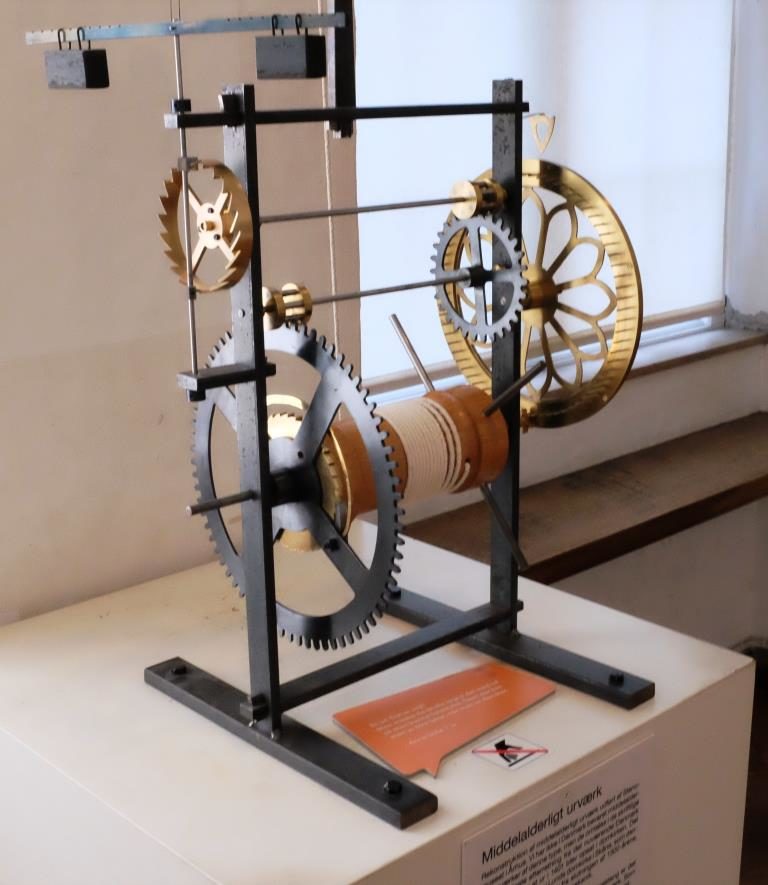
Feature image (on top): Timepiece from the Medieavl times
All photos by Tor Kjolberg
National Museum in Copenhagen – A Journey in Time and Space, written by Tor Kjolberg
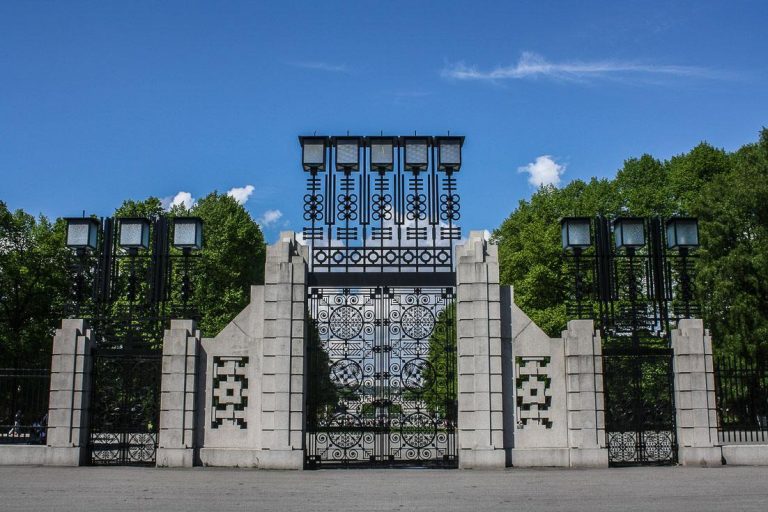
The works of one of the Norwegian painter Edvard Munch’s contemporaries, sculptor Gustav Vigeland (1869-1943), dominate the Vigeland Sculpture Park (Vigelandsparken) in Oslo in Frogner Park to the west of the city center, an extensive display of human life and emotion cast in stone and bronze.
The most captivating piece here is Vigeland’s Monolith, a swirl of 121 intertwining figures carved from a single block of granite in a moving tribute to the human condition. A 10-minute walk south of the obelisk, at the edge of the park, is the Vigeland Museum.
This was the artist’s atelier and home in the 1920s and is full of sketches, photos, casts and sculptures linked to his work in the sculpture park.
One of the sculptutes in the Vigeland Park, Angry Boy
Also within the park is the Oslo City Museum (Bymuseet) in the beautiful Frogner Manor House which explores 1,000 years of Oslo’s cultural history and urban development.
From the Emanuel Vigeland Museum
A few block uphill near Slemdal T-Bane station is the Emanuel Vigeland Museum. Gustav Vigeland’s brother, painter Emanuel Vigeland (1875-1948), was also fascinated by themes of life and death, and used them in the alfresco decoration of a mauseleum, entitled Vita (Life), the museum’s main attraction.
The Vigeland Sculpture Park in Oslo, written by Tor Kjolberg
The Swedish Pompeii Project started in 2000 as a fieldwork project initiated at the Swedish Institute in Rome. The aim was to record and analyze an entire Pompeian city-block, Insula V 1.
Since then archeologists in Sweden have uncovered gold and jewelry at the site of a fort called Sandby Borg on the Swedish island of Öland. Hundreds died in a ‘brutal massacre’ at the island fort 1,500 years ago, and recently archeologists have unearthed one of their most exciting discoveries so far; an onion from the time of the massacre.
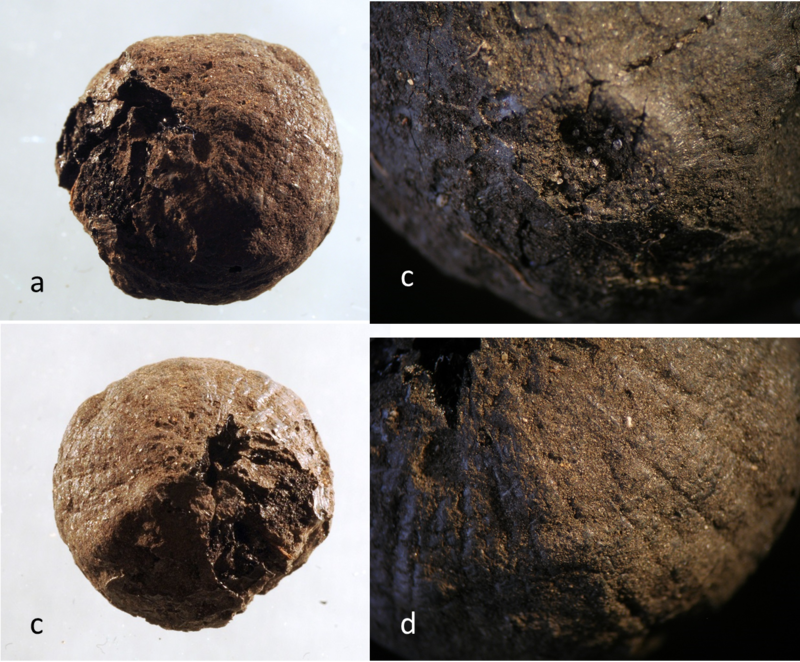
During the excavation of a home, the archeologist found something they originally thought must be some kind of a large nut. However, when testing, the lab confirmed that it was in fact a burnt onion. So, it is the oldest onion discovered in Scandinavia.
1500-year old burnt nut found at Sandby Fort
Why the Sandby Fort has been left untouched for 1,500 years still remains a mystery. Since autumn 2010 the Swedish Pompeii project and its research is directed from the Department of Archaeology and Ancient History at Lund University. The onion is an exciting find, because it means that the area’s trade with ancient Rome must have included foodstuffs, in addition to things like gold and jewelry.
Before the brutal massacre, the site appears to have been a peaceful and prosperous place, where people lived comfortably in small huts and reared livestock for meat. But their peace was shattered when a group of unknown men burst in one night butchering the residents in a vicious and unexplained attack. This is maybe one of the reasons Atlas Obscura has nicknamed Sandby “Sweden’s Pompeii”.
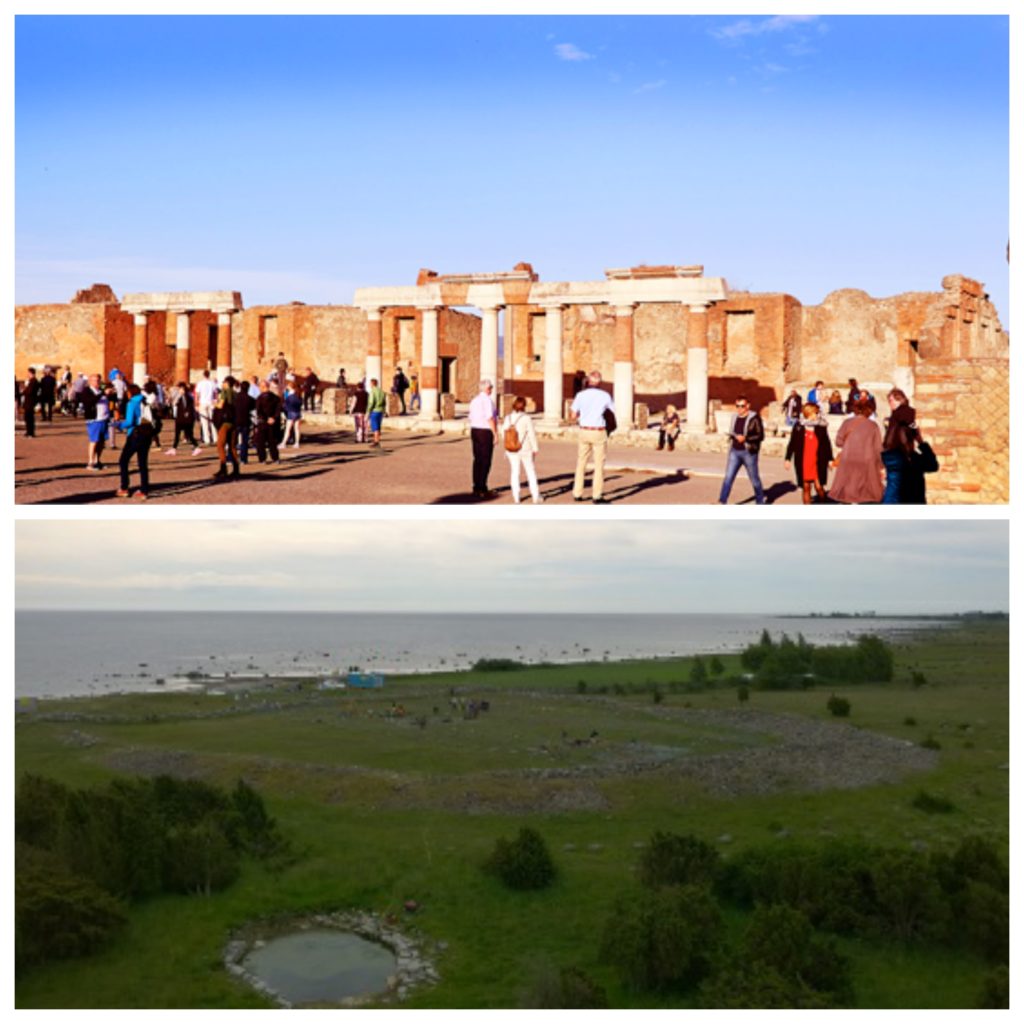
Pompeii-like ruins frozen in time have been uncovered in Sweden
‘It’s like Pompeii: Something terrible happened, and everything just stopped,’ said Helene Wilhelmson, a researcher at Sweden’s Lund University,
Pompeii, Italy / Pompeii, Sweden
The site was left undisturbed for the next 1,500 years. One theory is that the location became taboo after the massacre, with people simply too terrified to set foot there.
The Swedish Pompeii project 2007
Perhaps the onion will help shed some light on the situation
1,500-year Old Sweden’s Pompeii, written by Tor Kjolberg