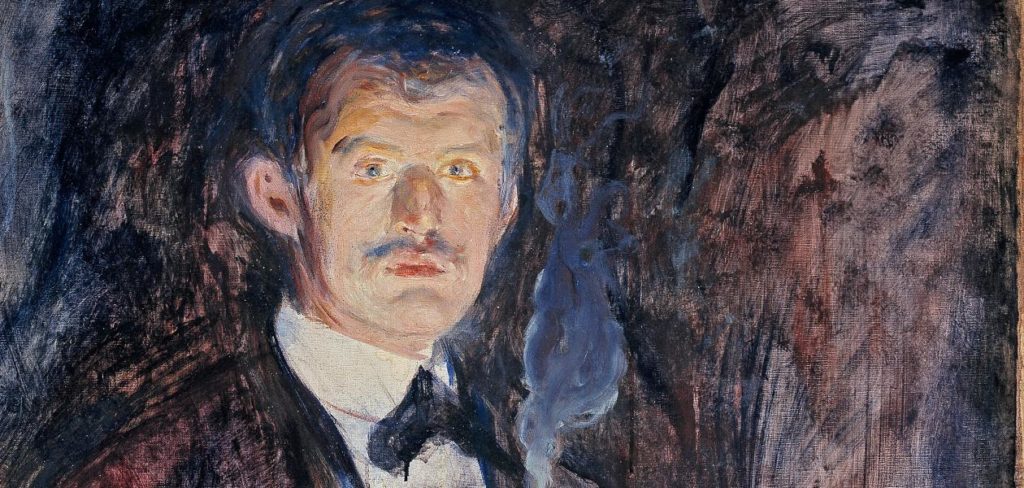
It’s a worthwhile journey to the north-eastern suburb of Tøyen in Oslo to visit the Munch Museum in Oslo. Dedicated to the life and works of Edvard Munch (1863-1944), the painter and graphic artist who fathered German Expressionism.
The gallery holds approx. 1 150 paintings, close to 18 000 prints depicting more than 700 different motifs, 7 700 drawings and watercolors as well as 13 sculptures. In addition, there are nearly 500 printing plates, 2 240 books, notebooks, documents, photographs, art tools, accessories, letters and pieces of furniture, which were bequeathed to the City of Oslo by his sister Inger Munch.
Edvard Munch selfportrait
The Much Museum in Oslo
Edvard Munch himself initiated a discussion about a future Munch Museum with Jens Thiis, the director of the National Gallery, back in 1927. In the mid-1950s the Oslo City Council decided to build the museum in Tøyen in eastern Oslo. In May 1963, a hundred years after the artist’s birth, the museum opened in architects Gunnar Fougner and Einar Myklebust’s – by contemporary standards – very modern building.
The Scream
His Skrik (The Scream) is Scandinavia’s most reproduced dork of art, famously stolen in 2004 then recovered two years later.
The Scream, by Edvard Munch
It was actually painted in two versions. The earlier, from 1893, is in the National Gallery of Oslo. What appears to be a somewhat later version hangs here. More important for the promoting and spreading the image was the lithograph version from 1895, which is on display in the graphic section.
The new Munch Museum (Lambda) and the Opera (Estudio Herreros)
The new Much Museum An increasing number of visitors come to the museum and additional space is needed in order to exhibit more of the collection. The Munch Museum has long outgrown its current premises. In May 2013, after years of debate, the Oslo City Council voted to build a new Munch Museum in Bjørvika in the Oslo’s harbor area, close to the Opera. Spanish architects Herreros Arquitectos won the design competition and the new museum will be completed in 2019.
Feature image (on top): The Sun, 1909 by Edvard Munch is perhaps the greatest achievement of modern mural painting. Symmetrically structured, it occupied the enormous front space of Oslo University’s assembly hall, dominating through size, unmitigated frontality, and power of imagery.
Winners at the red-carpet gala evening in Athens, Greece included Denmark’s leading boutique hotel, Nobis in Copenhagen, Norway’s leading business hotel, Grand in Oslo and Sweden’s leading hotel, Grand in Stockholm. The Scandinavian Travel Awards 2018 were revealed at World Travel Awards Gala in Athens.
World Travel Awards shield 2018
Hundreds of the leading figures of Europe’s travel and tourism industry attended the ceremony late last June, which was staged at the historic Zappeion Megaron Hall.
Graham Cooke, Founder & President, World Travel Awards, said: “What an evening it has been here in the incredible city of Athens, Greece. We have had the privilege of recognizing many of the leading hotels, airlines and hospitality providers from destinations across Europe and my congratulations to each of them.”
In the aviation sector, Norwegian Air Shuttle was voted “Europe’s leading low-cost airline” while DFDS was awarded “Europe’s Leading Ferry Operator”.
Scandinavia wins big at the 25th annual World Travel Awards
If you stroll around the center of Voss on a late June afternoon, nothing looks out of place. Coachloads of tourists in all shapes and sizes mingle with the locals who are going about their daily business. But this is the wild, wild Voss in Norway – at least for one week a year.
There’s a young woman whizzing past with a parachute in her bag on her way to the jumping ground. As a matter of fact, everything in Voss is quite normal.
The world’s largest extreme sports festival.
Or not? Aren’t there rather too many clapped out cars, with life-vests in the roof and crash helmets on the back shelf? Youngsters cycling past on large bicycles, while others wander in the direction of the cable car with huge rucksacks on their backs? A glance at the sky confirms the suspicion that they contain paraglider wings.
It all started 20 years ago, with four local enthusiasts
A closer look around reveals that something is definitely going on. In the lawn beside the beach promenade stands a large circus tent. What is going on is no less than the world’s largest extreme sports festival. which gather together well over a thousand participants from 30 countries.
Extreme Sports Week is probably only possible in Voss, both because of the natural arenas afforded by the surrounding landscape and the efforts of some extremely, possibility-oriented enthusiasts.
20 tears of madness It all started 20 years ago, with four local enthusiasts. They were each practitioners of their own specialist activity: parachuting, rafting, river kayaking and paragliding. They decided it would be good idea to hold a series of competitions within their individual sports in the same week, and maybe even have a chance to try out other activities.
Today there are a dozen or so sports on the program, and each year sees the staging of both national and international competitions during this week. Extreme Sports Week is constantly developing, with new complementary activities being added to the concept all the time. In 2005 where was so much snow up on the Vikafjellet mountain that a big jump competition for skis and snowboards was organized, as well as freeride on snow.
In 2007 more than 1000 competitors and more than 40,000 spectators attended the event. The festival was covered by more than 250 reporters from both the Norwegian media as well as the international media. “Veko” does not employ many people as they base the organizing and execution of the event mostly on volunteers.
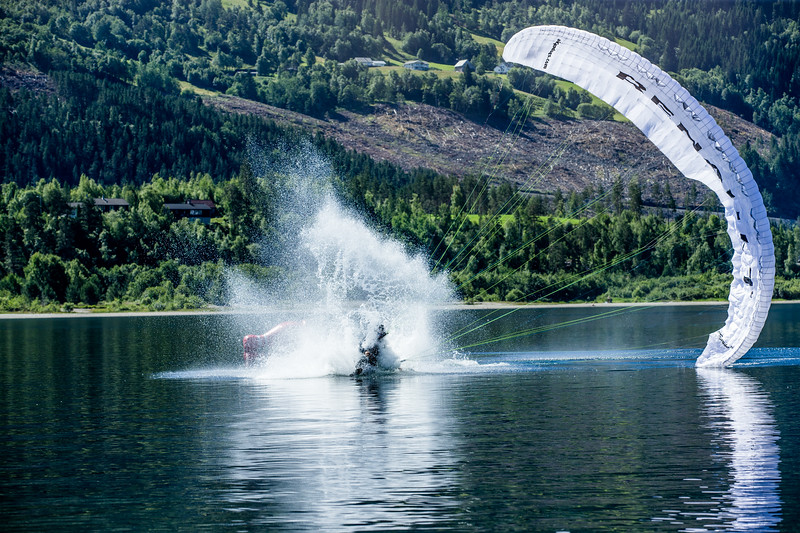
Kiteboarding works very well at the Vangsvatnet lake near the town center. In recent years the ski lift has become an Eldorado for cyclists who like jumps, drops and high speed along narrow woodland trails. While those with sufficient stamina can take part in the Multisport Competition, which is one of the relatively new events on the program.
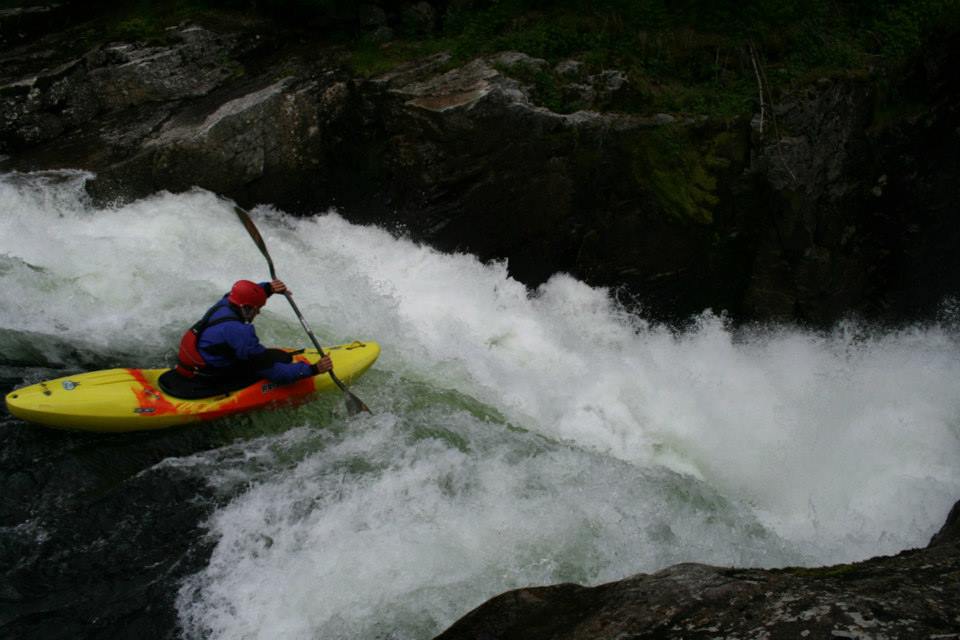
Downhill racing in a river kayak is one of the most popular competitions at Extreme Sports Week at Voss, Norway
Audience-friendly The participants themselves are the main focus of Extreme Sports Week, but the organizers do what they can to accommodate spectators, too. The aerial sports are a case in point. They show themselves to their best advantage over Vossevangen every evening, with exhibitions of parachuting, paragliding and hang-gliding.
If you want to feel the energy of Extreme Sports Week, all you need to do is look at the program and map pf events. Although the bulk of the events take place close to the town center, many of the participants stretch the radius from Voss by many miles.
If you fancy, you can take a tandem paraglider flight from Hanguren over Voss.
Downhill racing in a river kayak is one of the most popular competitions, and takes place well off the beaten track. One of the most spectacular events during the week is base jumping in the natural beauty of Gudvangen. To really feel the rush, you should take the steep hike up to the jumpers’ exit point.
Watching people like yourself jump off a mountain and be gone in seconds is in itself an extreme experience.
Entertainments have become an important part of the Voss experience
Music The concert side of the week gas grown big enough to make it worth the trip for those interested in music. With international celebrities like Kurt Nilsen and Røykopp on the program, the evening entertainments have become an important part of the Voss experience. And when the music in the big top has come to an end, club events continue through the pale mid-summer night.
Increasingly popular
The daily high point of Extreme Sports Week is the screening of the day’s video. Everyone who has been in action that day gathers in the circus tent to get an update on what has happened elsewhere during the day. It is a good opportunity to get a glimpse of one’s self and everyone cheers when spectacular stunts race across the screen.
Rafting at Extreme Sports Week, Voss, Norway
In recent years the Norwegian broadcasting company NRK has produced daily news bulletins, so that the whole country can get a shot of the adrenaline that is flowing about at Voss. With the national broadcasting company providing such first-class marketing for activities which would otherwise not get much public attention, more and more people turn up wanting to have a go themselves. If you want to take the plunge and take part in Extreme Sports Week, you can do it in many ways.
Try-it is a regular feature, tailor-made for those who want to make the most out of the various activities on the program. The event is so popular that you have to get your name down early if you want to be sure of a place.
At the start of the week anyone who wants to can try paragliding on a steep field – for free
Wild, Wild Voss in Norway
At the start of the week anyone who wants to can try paragliding on a steep field – for free. But you have to be prepared to fly. If that takes your fancy, you can take a tandem paraglider flight from Hanguren over Voss. And if that is not dizzying enough, you can take a tandem parachute jump. Voss Rafting offers ordinary rafting, gorge walking and river-boarding in the local rivers.
If you have brought your own bicycle you can also join one of the many guided trail rides, or challenge yourself on the downhill run at the ski center. There are also specially constructed jumps, scaffolding and other elements to test your nerve and your skills.
To keep a particularly good Extreme Sports Week tradition, though, you should not get yourself too badly hurt. For, incredibly, no one has died or suffered serious injury in all these years. Which shows that the organizers are in control and that there is method in the madness. That too could probably only happen in Voss.
The different sports You can see the complete program of the week 2018 here.
Music festival Extreme Sports Week also includes a music festival with several concerts and club events.
It is hard to think of a better trip anywhere in the world that can be completed inside a single day. It could be that the Norwegians, ever mindful of their high cost of living, feel that most tourists want to get their money’s worth. In just three days you can experience the spirit of Norway.
Several companies operate excursions that whisk you up mountain railways, along precipitous roads and then out to sea to experience Norway’s most famous feature, the iconic fjords.
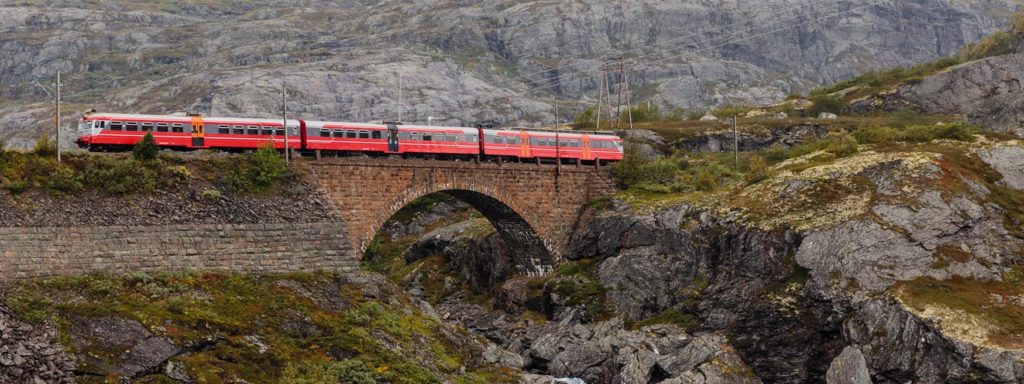
Northern Europe’s highest-altitude railway line, the Bergen Railway
The Bergen Railway
The typical journey starts with a ride on Northern Europe’s highest-altitude railway line, the Bergen Railway. Exposed to harsh Atlantic weather systems, it is a huge engineering feat just to keep the line open, but you will be glad they do.
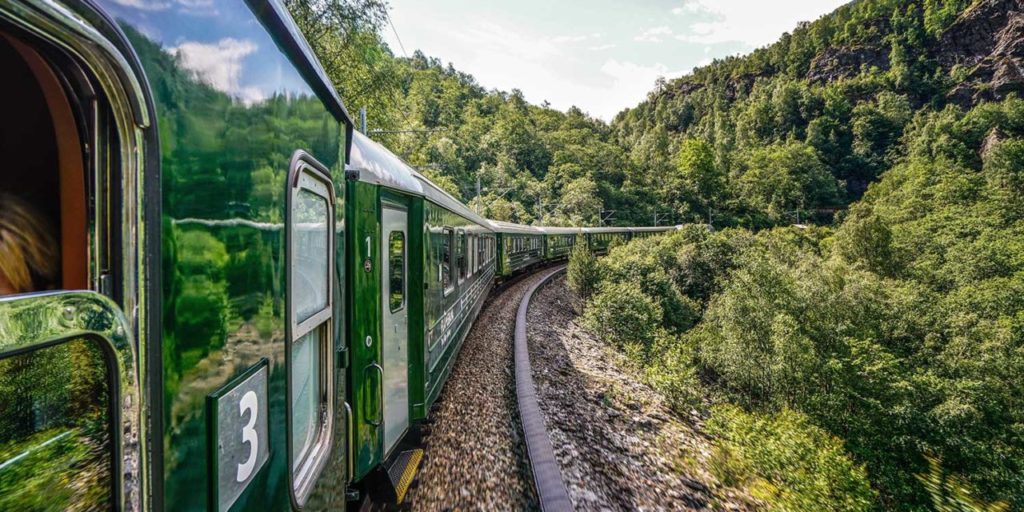
The Flåm Railway runs alongside magnificent mountain scenery and tumbling waterfalls
The Flåm Railway
The mountain views are stunning as the engine hauls you up incredible steep inclines. From there the rollercoaster ride continues as you transfer to the Flåm Railway, a 20-km (12.5mi) journey from the hill station of Myrdal, which runs alongside magnificent mountain scenery and tumbling waterfalls.
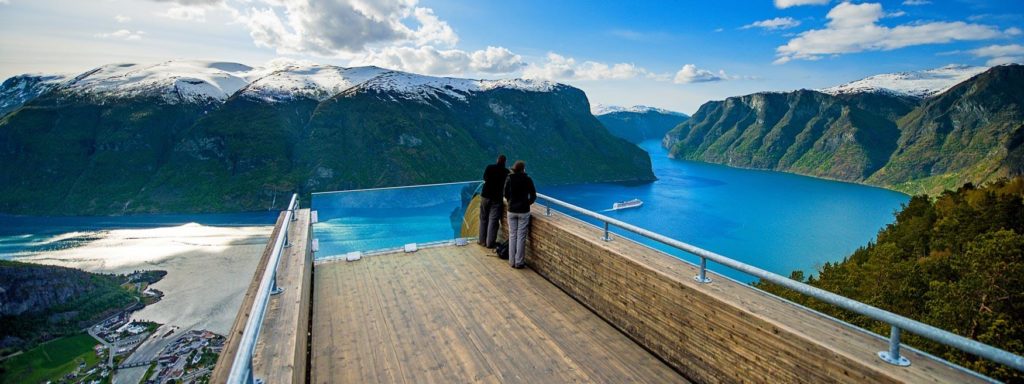
Aurlandsfjord – Stalheim
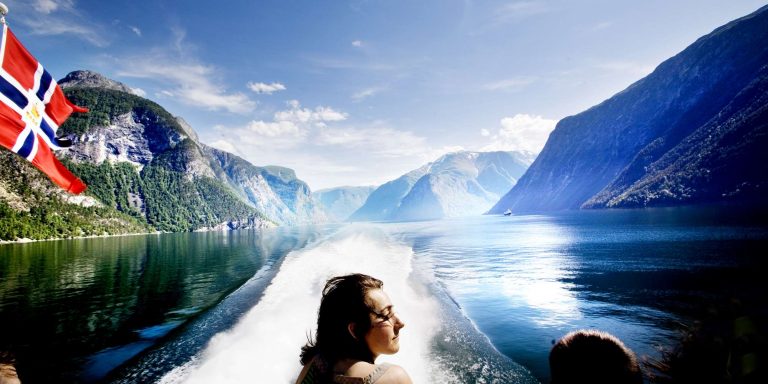
Beautiful though this all is, you quickly realize that it was merely the hors d’oevre. From Flåm the next leg of the excursion us completed by boat. Although the fjords are so obviously a symbol of Norway, one cannot tire of seeing them. These deep-sea gullies, carved by ice, take the breath away and the towering rock faces in both sides make it sometimes hard to believe that you are in water.
The Spirit of Norway
Legendary labyrinthine and starkly beautiful, a journey through the fjords leaves you with images that will stay with you for the rest of your life.
From Flåm
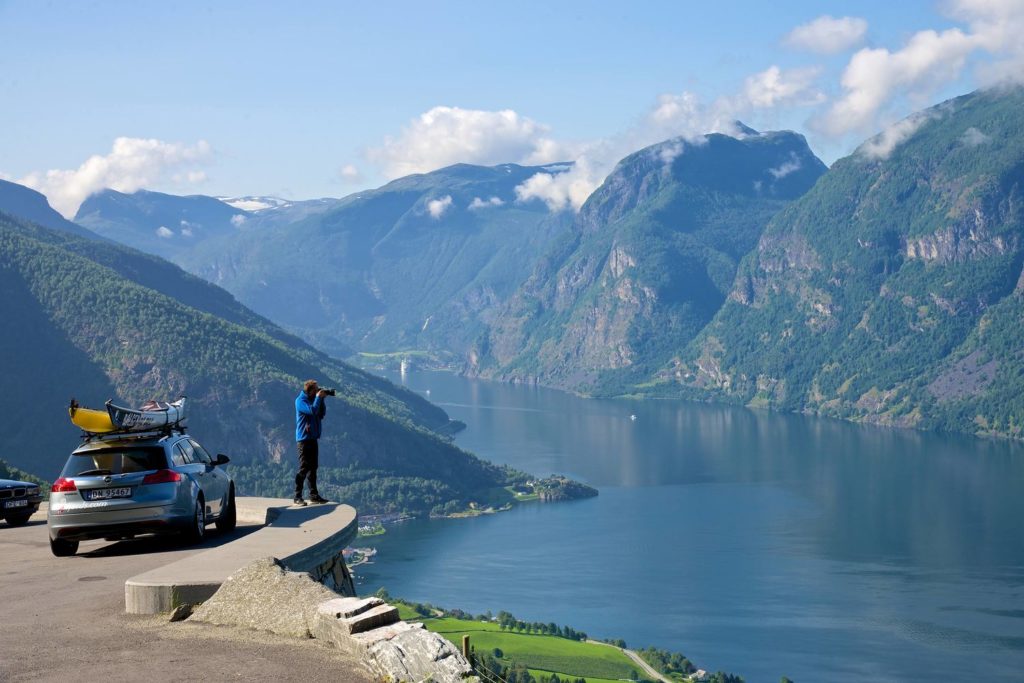
The last leg of this most fabulous of days out takes you by coach, along amazingly winding mountain roads to your final destination of Stalheim. From there it is possible to transfer by train back to Bergen.
You can do the trip all year round but best during the light Norwegian summer, May to July.
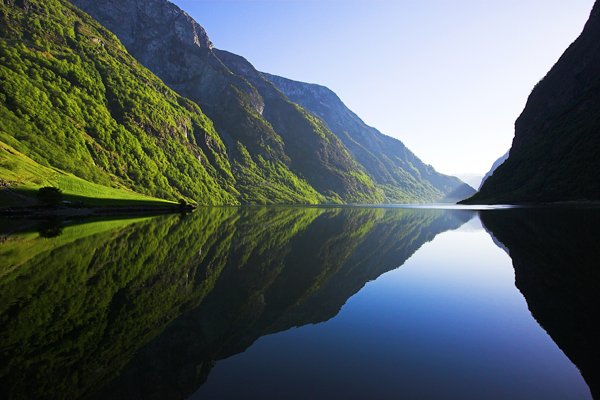
The improbably narrow Naeroyfjord
Three days or 16 hours?
Total trip takes 16 hours, but we recommend you to choose to stop and use three days. If I should mention some highlights it should be the picturesque village of Flåm, the mountains around Sognefjord, the improbably narrow Naeroyfjord and the Folk museum at Stalheim, a celebration of traditional Nordic life.
Norway can be very expensive, so there’s no shame in taking your own lunch with you. In fact, that is precisely what most locals do.
Spirit of Norway, written by Tor Kjolberg
Feature image (on top): From Flåm, photo: Visit Bergen
The Norwegian artist Hannah Ryggen spent six years as a painter’s apprentice before turning to weaving, and her renegade use of traditional rural techniques was just as attention-grabbing in 1930s Norway as it is now. Making tapestries almost exclusively for public spaces. The woven politics by the Norwegian artist has been known across Europe and America.
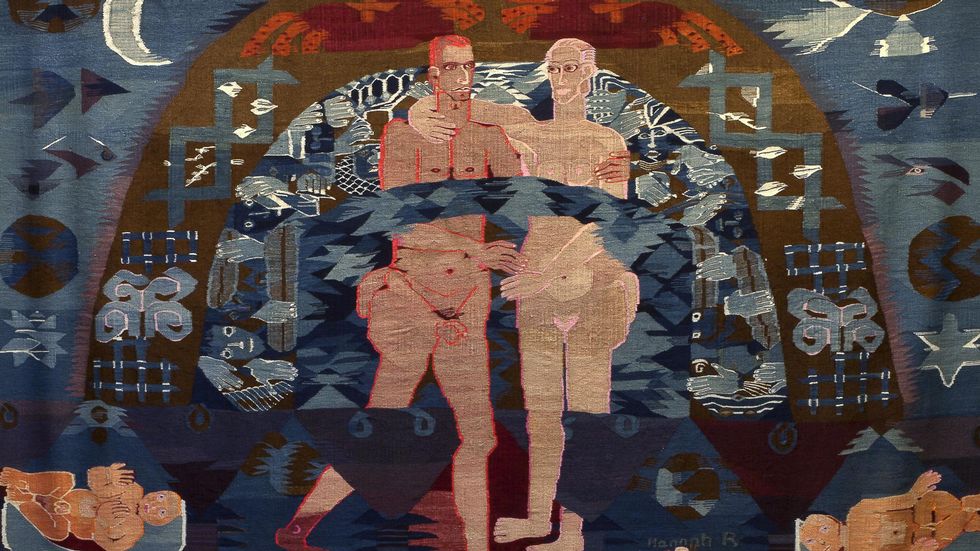
Hannah Ryggen (b. 1894, Malmö, Sweden – d. 1970, Trondheim, Norway) was one of Scandinavia’s most outstanding artistic figures of the 20th century. Ryggen remains an important artist, as she dealt with the pressing social and political concern of her time. Her art has enlightened issues from the rise of fascism and the Nazi occupation of Norway, to the proliferation of nuclear power and the Vietnam War.
From the Hannah Ryggen Center in Norway
Trained as a portrait painter
Born to a working class Swedish family in 1894, Ms. Ryggen trained as a portrait painter. On a trip to Dresden, Germany, as a young woman, she immersed herself in the work of Vermeer, Goya and El Greco. She was likewise versed in the art of her own time, making repeat visits to the huge 1914 Baltic Exhibition in Malmo, Sweden, at which paintings by Kandinsky and the German expressionist group Die Brücke were shown.
She later abandoned painting in favor of weaving, which became her area of expertise after having moved with her husband to a wind-blown farm on a remote Norwegian farming community Ørlandet near Trondheim. On this shore, with no running water or electricity, she learned the processes of treating wool, spinning and weaving from local tradition, and developed as an artist by experimenting with materials and techniques from the world around her.
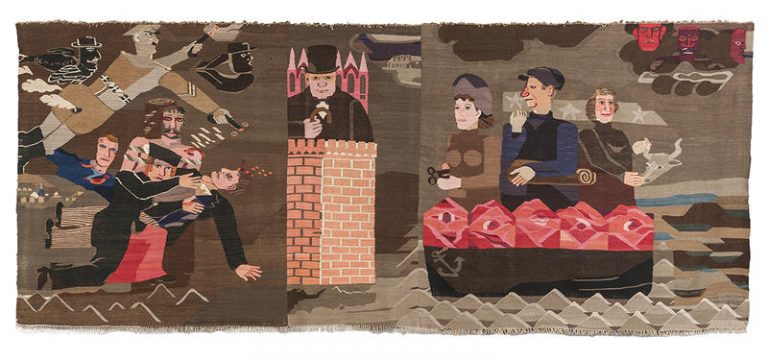
“The death of dreams”, 1936 by Hannah Ryggen
Anti-fascist tapestries
Hannah Ryggen worked utterly from scratch on her anti-fascist tapestries. Spinning wool from her sheep, she dyed it with things she’d found by foraging: birch leaves, bark moss and bog rosemary. Urine, too, was an essential part of this alchemical process, and visitors were asked to leave their donations in a bucket.
One of her earliest famous works is the frieze-like “Etiopia,” Ms. Ryggen’s furious response to the Italian occupation of Ethiopia in 1936. Portraits of the Emperor Haile Selassie and Italy’s King Victor Emmanuel III are set above a large geometrically patterned rug panel suggesting Ms. Ryggen’s kinship with African weavers. “Etiopia” was shown by Norway at the Paris Expo of 1937 in the pavilion adjacent to Spain, where Pablo Picasso’s “Guernica” offered a horrified response to the Nazi bombing of a Basque town during the Spanish Civil War.
Woven politics by a Norwegian Artist In one 1936 work, Hitler, Göring and Goebbels pop up like murderous glove puppets with blood-red faces and hands. Three decades later, Lyndon B Johnson’s beagle – for the artist a fluffy media distraction from the Vietnam war – becomes a similarly scarlet hound of hell.
Hannah Ryggen was one of Scandinavia’s most outstanding artistic figures of the 20th century
Since her death in 1970, the Swedish-born artist has remained a defining figure in Scandinavia, although she has only recently been rediscovered by the wider world.
Woven Politics by a Norwegian Artist, written by Tor Kjolberg
Feature image (pn top): Nazi occupation of Norway by Hannah Ryggen
Regarding culinary experiences, Copenhagen Airport has been considerably upgraded in recent years. Whether it is steaks or sushi, caviar or cinnamon rolls, the approximately 72,000 daily travelers at Kastrup are looking for, the culinary airport of Copenhagen has the world’s best offering of restaurants and coffee shops.
Eating in airports is more often than not a humiliating, expensive and unfulfilling experience. Not so at Copenhagen airport. In 2016 the airport was honored with the “Airport Food & Beverage Offer of the Year” award as the airport with the world’s best range of coffee shops and restaurants (the Oscars of the food and beverage industry).
In 2016 Kastrup was honored with the “Airport Food & Beverage Offer of the Year” award
Serving 29 million travelers annually
Passengers at Copenhagen Airport currently have a choice of more than 34 restaurants and coffee shops offering everything from quality snacks to fine dining. The airport’s strategy is to establish a good mix of internationally well-known restaurants and very good Danish names.
For an airport that serves more than 29 million people annually, the remarkable thing about Copenhagen Airport is how peaceful it feels. You never feel like herded cattle, the atmosphere in Copenhagen is deliciously serene.
With lots of different restaurants to choose from, we have selected a number of restaurants to give you an overview of where to eat in Copenhagen Airport.
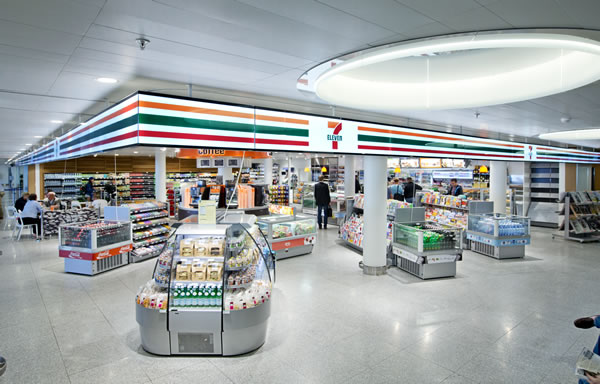
There are two 7-Eleven Deli at the airport
7-Eleven Deli
There are two 7-Eleven Deli at the airport. You might think that 7-11 is the worst American fast-food on earth. Maybe it once was, but the market has changed and so has the Deli chain. If you prefer, the food is wrapped up so you can take it with you onboard the plane. If you choose to eat it out in the C-pier – where the big international aircraft leave, you can also enjoy a supreme view – where all the 380’s are taxing by.
Gorm’s is located between piers B and C and is one of the airport’s largest restaurants
Gorm’s
Copenhagen Airport has succeeded in getting ‘local heroes’ into the restaurant scene – long lasting Danish concepts. This is also true of Gorm’s, although the restaurant chain hasn’t revamped the pizza, it has at least raised it to a level where eating pizza is fun. Gorm’s is located between piers B and C and is one of the airport’s largest restaurants. Good raw materials are treated the way they deserve, just to demonstrate Italian cuisine at its best.
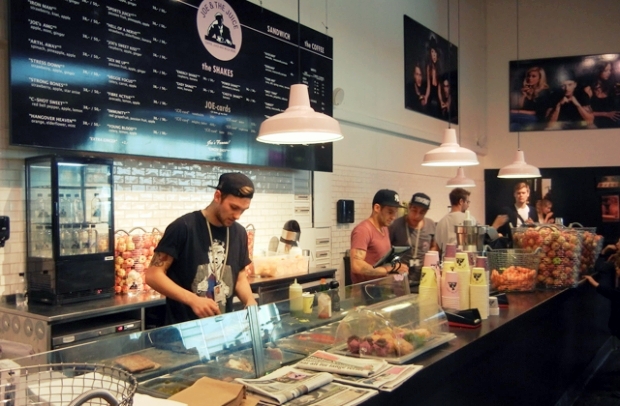
Joe & the Juice has three locations at the airport
Joe & the Juice
Joe & the Juice has in fact three locations at the airport. And in all three places, the music is loud and lively, while the tattooed bartenders squeeze one healthy glass of juice after another – if they’re not busy roasting one of their delicious sandwiches. Their tuna sandwich has taken the world by storm. Smart, young travelers are attending Joe & the Juice at all times of the day. Should you need an energy boast, a visit is recommended.
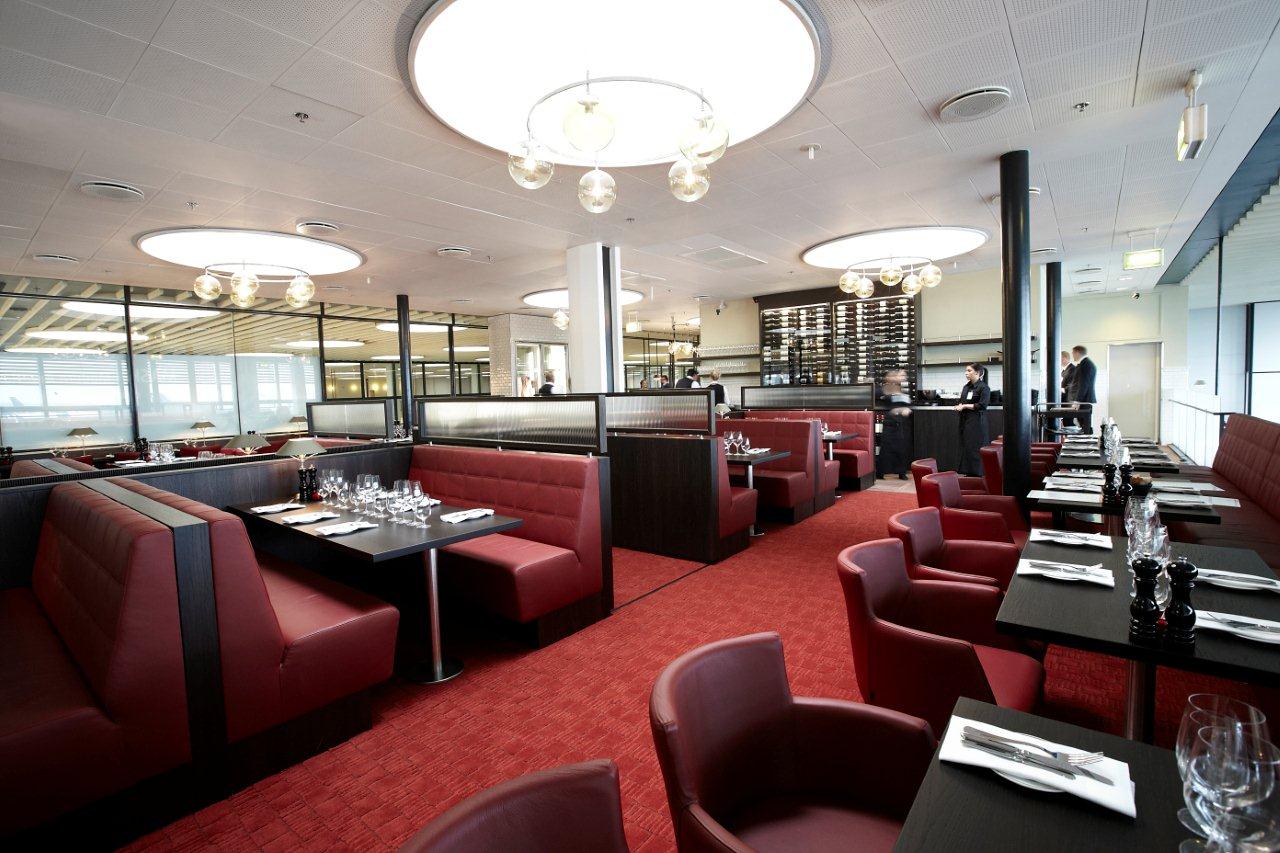
The Danish beef success MASH has already conquered many places in the world
MASH
The Danish beef success MASH has already conquered many places in the world – not least in Germany and England. Now the restaurant chain also has a department at the Copenhagen Airport. It is situated between the A and B piers, on the first floor. Like elsewhere, MASH at the airport offers red sofas, stalls and lots of proteins on the menu with the characteristic side orders. Therefore you don’t have to bother your belly with what the airlines are serving up in the air. Copenhagen Airport has made it a rule not to make calls over the speakers other than strictly necessary ones, so a visit to MASH is as pleasant as a normal visit to their other restaurants.
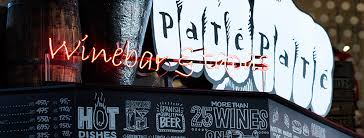
Kenn Husted, the wine king of Copenhagen, is in charge of Paté Paté at Kastrup
Paté Paté Winebar & Tapas
Kenn Husted is the wine king of Copenhagen. One of his most recent openings at the airport is the Paté Paté Winebar & Tapas. The emphasis on fresh ingredients, expedient service, and supporting “local hero” restaurants has been a strategic shift for Copenhagen Airport, one that is meant to increase the overall experience of every traveler. “Copenhagen’s gastronomy has strongly contributed to putting Denmark on the world map, and naturally, the New Nordic food culture must be reflected at the airport,” says Lise Ryevad, director of airport sales. “Sixty percent of passengers attach importance to food when traveling, and we want to give travelers a taste of Copenhagen on the go. It is important to us that you eat well—very well—at the airport,” she adds.
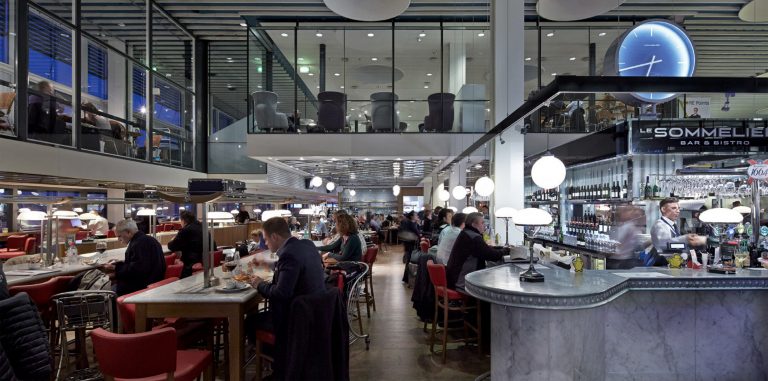
Le Sommelier was one of the first at Kastrup to really show what good airport food consists of
Le Sommelier Le Sommelier was one of the first at Kastrup to really show what good airport food consists of. They have also the best location at the entire airport, at pier B – where almost all SAS flights come and go. Guests are also coming to the large open restaurant, which has a basic rule stating that all food on the menu is served within a quarter of an hour – and in fact, usually faster, down to 12 minutes. Almost no matter how busy they are, you can always have a glass of good wine or a classic French bistro dish – or why not just a few oysters with caviar on top and a glass of champagne?
Aamanns is a gift to Danish gastronomy
Aamanns
Aamanns is a gift to Danish gastronomy and offers delicious warm open-faced sandwiches made with free-range beef and herring, as well as a signature beef tartare with capers and tarragon. The airport restaurant – located between the B and C piers – is divided into two – there is the bar facing the buzzing airport, and ‘inside behind’ it’s very close to the most authentic restaurant experience you’re able to find throughout the airport. Here you are relatively isolated, it’s cozy located near to a few panorama windows facing the planes, so you can sit and enjoy your sandwiches while watching different flights taxing back and forth from the runways. The food is so excellent that Aamanns is a must.
Kastrup- The Culinary Airport of Copenhagen
Many airports, especially the larger ones, will boast about how many food and beverage choices they have, but Copenhagen actually delivers exceptional-quality options as well. There are, of course, the crowd-pleasing fan favorites, a handful of foolproof Irish pubs, and, yes, even a Starbucks. But the real treat of flying through Copenhagen is experiencing what the airport refers to as its “local heroes”—the vendors showcasing Scandinavian cuisine, with many run by chefs with successful pre-existing restaurants in the city center.
Kastrup- The Culinary Airport of Copenhagen, written by Tor Kjolberg
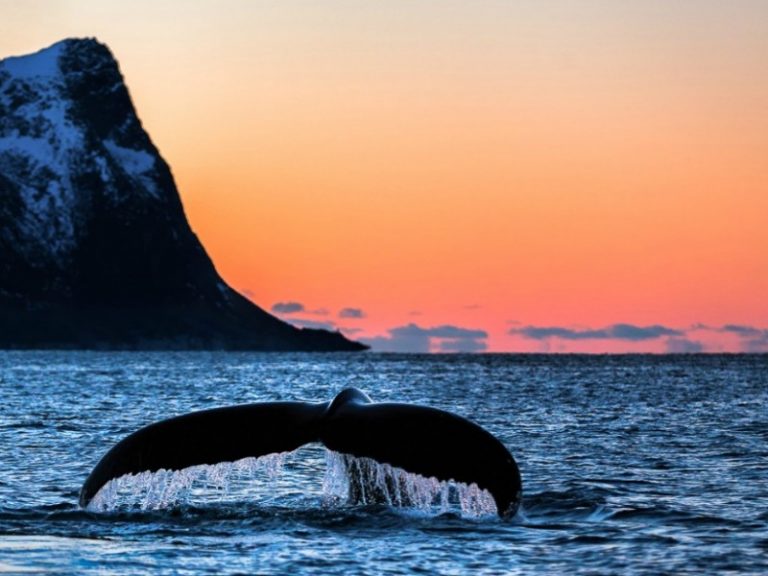
Several companies in Norway run boat trips on which there’s a good chance if seeing whales. While you’ll need to go in summer for a chance to see blue whales, winter is a good time to see killer whales and humpbacks. Welcome to Norway – the Kingdom of Whales.
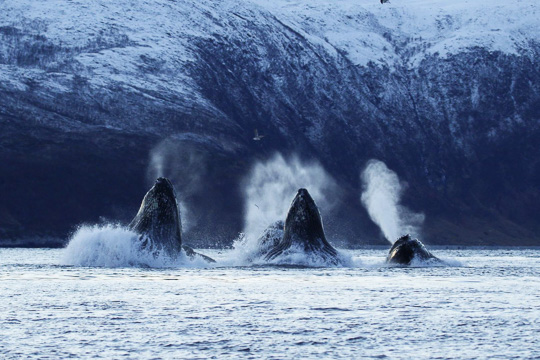
Every year thousands of tourists come to Norway to do some whale watching. No matter the season, there are all kinds of whales, not to forget the truly spectacular and epic landscapes. Sea scientists have never seen so many whales as in recent years, and outside the city of Tromsø, the sea is sometimes “boiling” with whales.
When can you go watching whales in Norway? But how and when can you go whale watching in Norway, and what’s the price? Tromsø, The Lofoten and Vesterålen, far north in Norway, are perfect places for whale watching all year round. While you can rely on seeing sperm whales in summer, orcas and humpbacks crowds the fjords full of fish in winter.
Killer whales in Andenes, Lofoten. Photo: Jesper Anhede
Going in winter, you can even watch world-class Northern Lights on the very same visit. And it never gets dark in summer, so both being perfect conditions to watch the most fascinating animals on our planet. With one of the most staggering, breathtaking coastlines as background, it will probably be an experience you’ll never forget.
Orcas and humpbacks
Norway – the kingdom of whales
If you believe it’s impossible to miss these giant marine mammals, you’re completely mistaken. The sea around Norway is vast and the animals don’t always feel like showing off. You should therefore definitely seek out one of the more experienced expedition operators.
During the winter months there is an enormous supply of plankton and krill in the northern waters, which attracts lots and lots of fish. And those fishes attract the whales back to Norway! From late October until mid-January you’ll have an almost 100% chance of seeing whales in Norway, often swimming right next to the boats.
The animals are spread out from the Lofoten to Andøya (Tromsø region). During these months there are a lot of whale watching safaris going on in Norway.
Do you remember Keiko? Do you remember Keiko from the films Free Willy? This world-famous, beautiful and friendly orca actually chose Norway after he was set free, and he stayed around the Tromsø region a couple of years, until he sadly died from pneumonia in 2003.
The best places for whale watching
During summer, the most important place is the little harbor town of Andenes in the north of the Vesterålen. Only 3.000 people live there but there are over 15.000 tourists in the city every year. They watch the sperm whales, which are full-time residents to the waters off Andøya, so encounters are very likely.
Lofoten and Vesterålen, far north in Norway, are perfect places for whale watching all year round
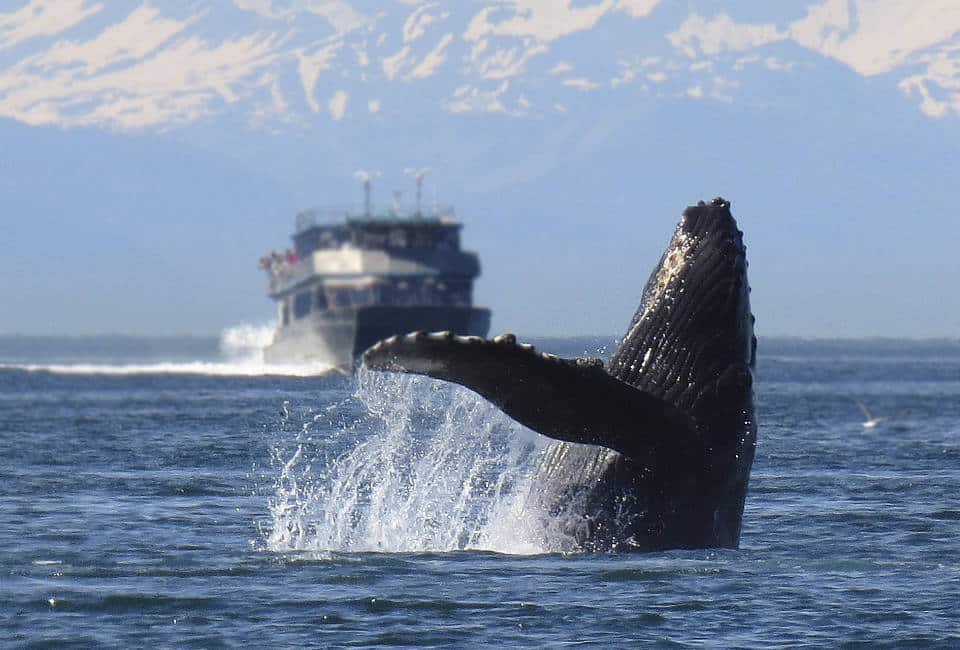
In open sea it’s very difficult to see whales and orcas. You’ll get the best chances in between the fjords where there are a lot of fish on which the whales can hunt. Most of the times you’ll get to see tails and backs, but still it is a magical experience to see these creatures from up close!
During summer, the most important place for whale safaris is the little harbor town of Andenes in the north of the Vesterålen
Summer and winter season About 50% of all Norwegian summer whale watching tours start from Andenes and its little neighboring town of Stø. In Andenes you can also find a very good and informative whale centre with life size models. Sperm whales are best spotted between June and August, occasionally also pilot whales, minke whales and various dolphins show up.
Tromsø offers some of the highest probabilities of whale sightings on earth in the winter. Scientists say that the whale activity in these fjords is quite unique. Tromsø city is situated among islands, breathtaking fjord landscapes and dramatic mountain peaks.
Many whale excursions are often fully booked for weeks in advance. If you’re sure that you’re going to Norway to watch the whales, we recommend that you book the safaris beforehand.
Norway – The Kingdom of Whales, written by Tor Kjolberg
Gotland is Sweden’s largest and most sunny island – and also a culinary gold mine. A tasteful journey in Gotland’s food world offers surprises and wonderful gastronomic experiences. A number of new eateries and old traverses have resurfaced on the island.
The Gotlandic culinary culture is known for its ingredients and the art of improving the value of a culinary experience. In 2013 Gotland was in fact appointed culinary capital of Sweden by the government.
Visby panorama from Klinten
Gotland culinary heritage
The central role of regional food traditions in the island’s culture has resulted in Gotland becoming a member of the network Culinary Heritage Europe, which works to promote and stimulate the development of local businesses. That includes restaurants, farming and processing of foodstuffs, fishing, both local and international, in which the businesses have a clear regional connection and an expressed intent to profile and further develop the cuisine of the entire region.
A walk through Gotland’s medieval city, Visby keeps both tourist and gourmet in touch with the city’s savory past. The Gotlandic food culture is renowned for its fine ingredients and the art of changing them to delicious dishes and unique dining experiences. The island has good conditions for cultivating many different raw materials. The sunny climate and the calcareous soil provide excellent prerequisites for growth. There are many varieties unusual elsewhere in Sweden, such as truffles, asparagus, rams and different types of root vegetables. Even the Gotlandic meat has a very distinct flavor since the animals are grazing in open meadows covered with herbs.
Don’t miss saffron pancake
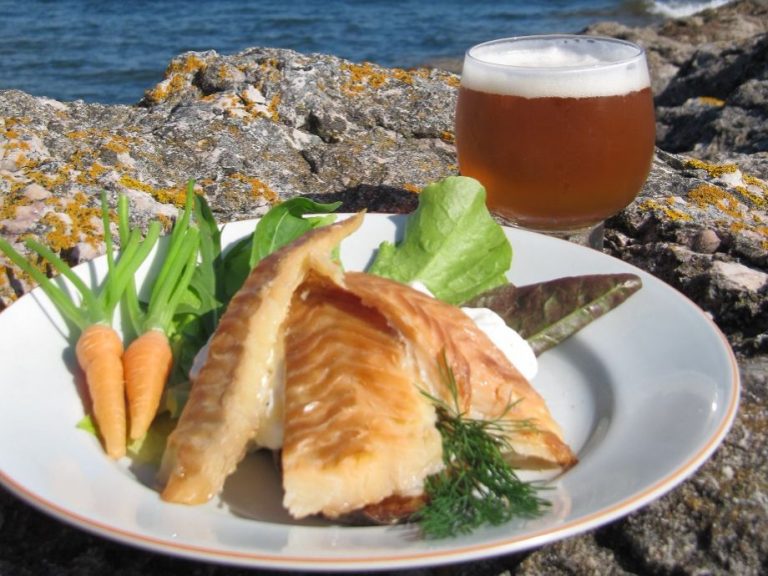
A vibrant historic district Not surprising, the raw materials in Gotland are delivered to Michelin-starred restaurant NOMA in Copenhagen as well as to Nobel dinners and royal weddings. Grilled lamb, smoked flounder, saffron pancake and Burgundy truffle are all Gotlandic specialties.
Strolling along the narrow, cobblestoned streets of this island city, it is easy to imagine Swedish knights in armor; ladies in flowing gowns; jesters and minstrels; and the salty air thick with the savory aroma of spit-roasted mutton.
Strolling along the narrow, cobblestoned streets of this island city, it is easy to imagine Swedish knights in armor
Although the area within massive granite walls is now a vibrant historic district with craft shops, cafes, and cottages, the ruined medieval churches remind us of the turbulent past of this Viking stronghold and Hanseatic League city-state.
Sweden’s Culinary Island Gotland
Take the opportunity to get closer to the food during your stay and visit farm shops or go on an organized truffle hunt with dogs. Or, at least, visit some of the new restaurants and eateries.
Cafe Breidablikk
Café Breidablikk
With the beautiful botanical garden of Visby as the nearest neighbor, Café Breidablikk is a place filled with harmony, flowers and tranquility. As of this spring, the cafe has new owners, Ingela and Lars Nisser. The place is open for breakfast, coffee, lunch and selected evenings arranged for barbecue nights.
Adel 33
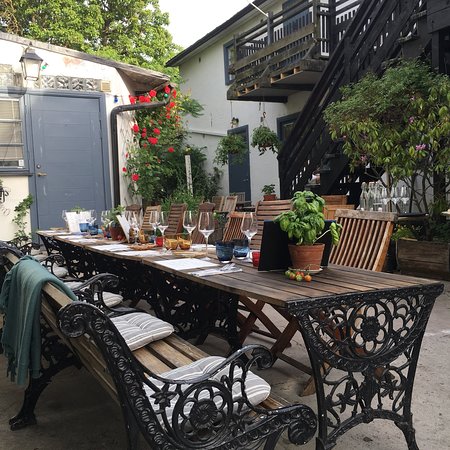
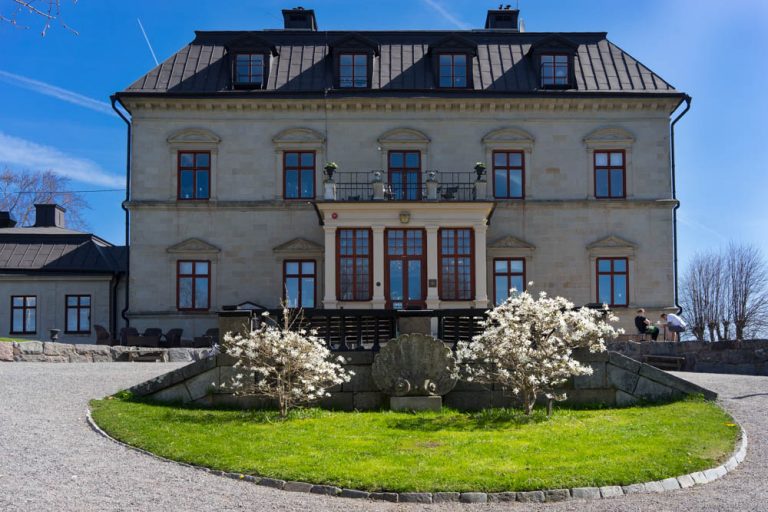
Robin Ingelse, former chef of Wisby Strand, has opened his own restaurant, Adel 33, in the shopping street Adelsgatan. The restaurant offers an inspiring crossover concept with Caribbean and Japanese-inspired menu. The restaurant aims to offer a culinary healthy experience with food, drink and music. Here you can enjoy exotic drinks that can be enjoyed in the outdoor dining room at Adelsgatan or in the backyard
Tuppens Krog
The famous eatery Gula Hönan has now a sister restaurant in Adelsgatan in Visby called Tuppens Krog. In venerable 17th century rooms, you may enjoy rustic flavors composed by the chef Marc Enderborg.
Tuppens krog
Pensionat Warfsholm Pensionat Warfsholm in Klintehamn is now run by new owners and the place has undergone a renovation, while retaining its old character. The restaurant offers tasty food from the charcoal grill, to be enjoyed out on the porch. During summer, concerts with well-known Swedish artists will also take place.
Warfsholm pensionat, Klintehamn
Brasserie Lickers In the small charming old settlement and fishing village Lickershamn, Julia Söderbloom has taken over the Brasserie Lickers after her parents. After gathering inspiration from traveling to Asia and experience from the restaurant industry in Stockholm, she has given new life to Brasserie Lickers. Here, you may enjoy smoked shrimps from the local fish shop as well as food from all over the world with a Gotlandic twist.
Try saffranspannkaka
Gotland’s history as a Baltic trading center is also reflected in the island’s food. Take, for example, saffranspannkaka, a baked rice pudding flavored with saffron. It is on the menu of nearly every cafe and restaurant in Visby.
Sweden’s Culinary Island Gotland, written by Tor Kjolberg
About five hours’ drive from Copenhagen, you arrive at the perfect summer holiday spot in Scandinavia, North Jutland. At Denmark’s northernmost tip there’s nothing but water between you and the horizon. You have arrived at the Scandinavian summer paradise Skagen.
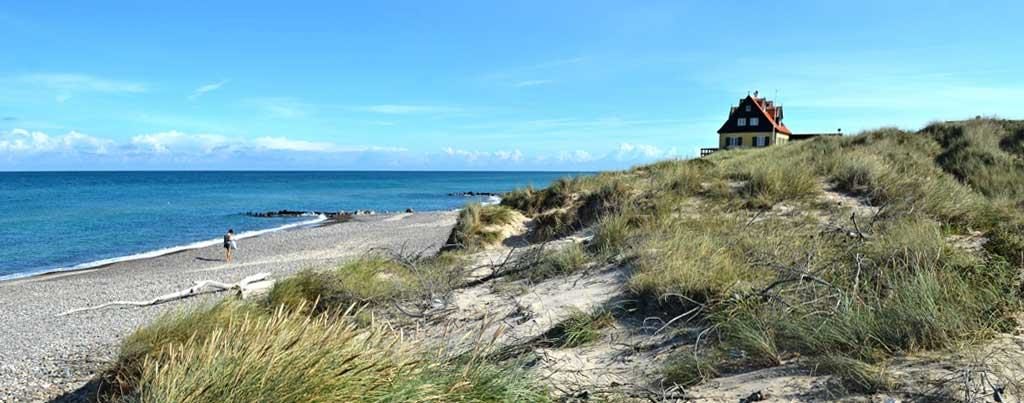
Sand and dunes are interrupted only by wild grasses, and the people barely make a dent in the landscape. You have to have an affinity for sand to truly appreciate Skagen. But as the short summer season kicks into high gear, people from all over the world gather at this resort town.
Rooftops in Skagen
Skagen – a medieval fishing village A few hundred years ago, the entire spit, from the Råbjerg Mile to the northernmost tip of Grenen, was more or less obliterated by migrating dunes. By the end of the 18th century, the fishing village of Skagen, once a proud medieval trading center with a population of 4,000, had been reduced to about 600 inhabitants, and its church buried up to its tower.
There are three lighthouses in Skagen: a gray one, a white one, and the original one, which resembles a giant, primitive wooden lever. Past this odd structure, off the road to Grenen that runs north of town, lies the Danish painter P. S. Krøyer’s favorite beach.
The Scandinavian Summer Paradise – Skagen
Today, still without the crowds or amusement arcades, Skagen offers plenty of sun, rain, sand and sea, and families love going to the beach to build sandcastles or fly kites. Skagen is also the summer-vacation sport for Denmark’s “well-heeled”, mostly people from Copenhagen.
Fishermen hauling the net on Skagen’s north beach, painting by P. S. Kroyer
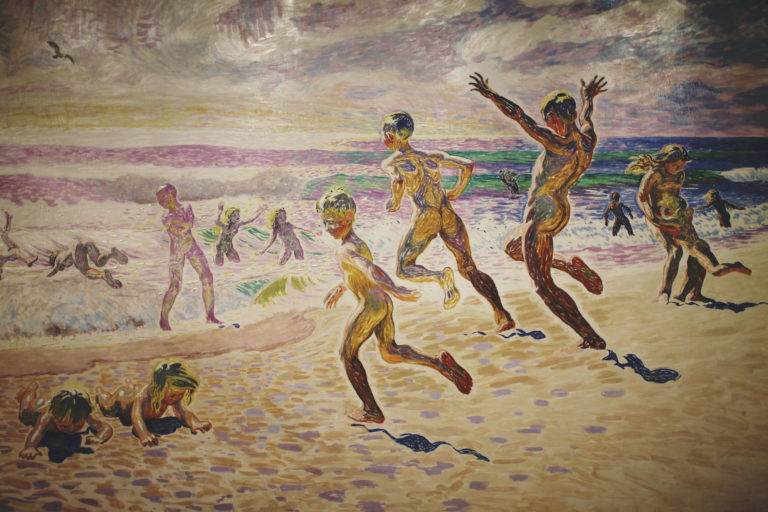
This remote, medieval fishing village attracted back more than a century ago a remarkable group of artists due to its authentic character, its mammoth, ever-shifting dunes, but most of all because of the extraordinary quality of its light.
The light in Skagen
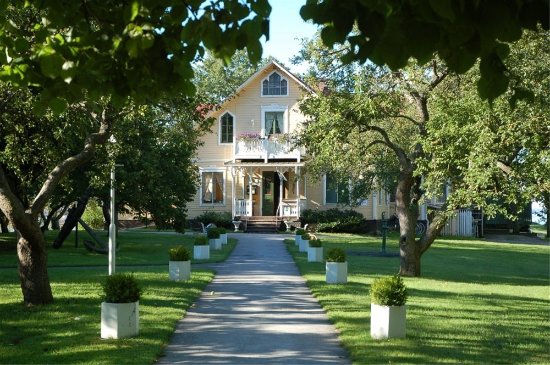
Mention Skagen to almost anyone around the country, and you will immediately hear about its light and about the Skagen school of painters, the best-known being Peder Severin Krøyer, Michael and Anna Ancher and Holger Drachmann. The area’s sandy beaches were a favorite motif for the artists, though most of the painting done in Skagen is of the town itself, where the houses are predominantly and startlingly daubed every shade of yellow. The Skagen artists have shown the rest of the world what life was like here at the tip of the world.
The blue light in Skagen
The area still enjoys an artistic cachet, and there are several artists’ houses to visit, beautifully preserved, and a fine museum that organizes painting days for children. You will also hear about Hans Christian Andersen, famous for his pen rather than his brush. However, the writer’s time in Skagen was notably brief, if rich in the stuff of legend. He visited Skagen only once.
A popular week-end retreat
There are no castles in Skagen. The location itself is the luxury, with modest cottages and hotels and a few local bars and restaurants. For Europeans it’s a big advantage that the Danish schools break up earlier for summer holidays than in most other European countries. This means that at the height of the summer season, plenty of the best seaside accommodation becomes available at low-season prices and the local attractions are less busy, too.
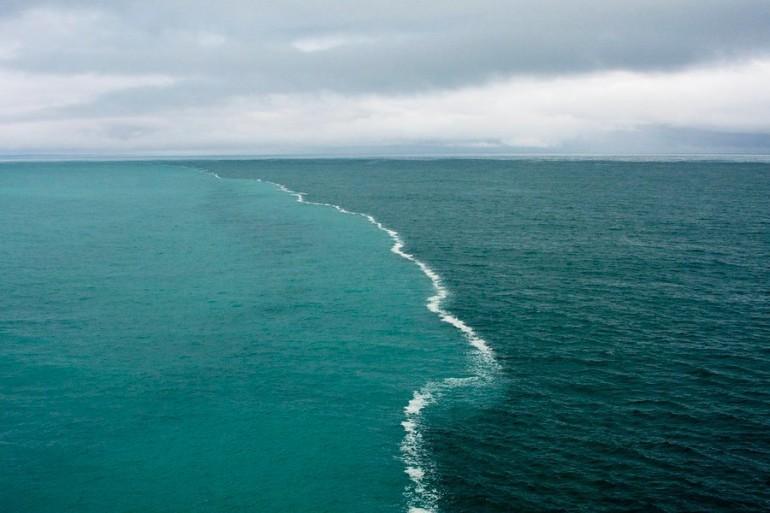
Skagen attracts weekend visitors from Norway and an international cruise-ship crowd. The sandbar called Grenen marks the spot where waters of the North Sea meets the Baltic. Wave after wave of pilgrims visit this point.
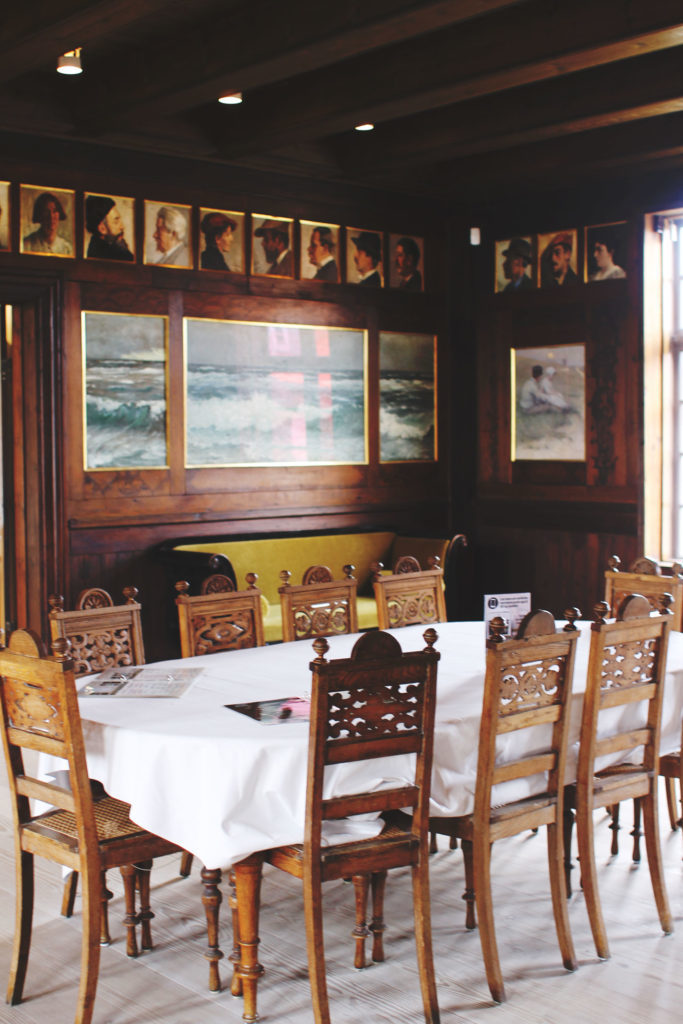
The dining room at Brondums hotel
Skagen Proper and Old Skagen
Skagen is actually two places, closely related yet distinct. There’s Skagen proper, a working port; home of Brøndums Hotel with its portrait-filled dining room. The small portraits were the preferred payment method by the painters. The main shopping and dining street is on the peninsula’s east side.
Raabjerg Mile, Skagen
And then some two miles to the southwest is the Gammel Skagen (Old Skagen), tucked among grassy dunes on the Skagerak coast. There are six small hotels, a handful of restaurants, one general store and a number of traditional style rental cottages. The simple, modestly elegant Seaside hotel and the swanky summer watering hole and restaurant Ruths Hotel are worth a stay.
On top of a steep dune stands a massive wooden structure called Sømerket, placed there as a marker for boats. From this spot there is a magnificent view of the boundless sea, notched with ships, that surrounds this improbable spit of land. The largest sand dune of all is called Råbjerg Mile. It still grows by 20 feet a year.
The town of Amber
A popular local pastime across the region is collecting amber. Necklaces of the chunky fossilized resin are for sale everywhere, but it is often hard to distinguish the real thing from stones of the same color. If you wish, local “ambermen” will take you out on amber-spotting courses along the beach.
Charming street in Skagen
Food in Skagen
Here far north in the country, Danish food tends to hit the same notes again and again. The staples are herring—spiced, creamed, or marinated—fried fish, cod fritters, smoked salmon, mussels, and potatoes in gravy. But the chefs are doing it so well that even such seemingly plain fare can be wonderful.
The Norwegian playwright Henry Ibsen found Skagen too busy and preferred its smaller neighbor, Saeby, where he found the inspiration for his play The Lady of the Sea. Both towns have plenty of fish restaurants.
The Scandinavian Summer Paradise – Skagen, Denmark, written by Tor Kjolberg
Fish has been a vital source of food on the long Scandinavian coastline since man first inhabited the north after the last Ice Age. In the months to come, we’ll dive into some of the many preserved fish recipes in Scandinavia.
Fish were plentiful in the past and migratory fish were easy to catch, even without boats. The need to preserve this seasonal abundance to survive long months of cold and unfishable waters, with primitive means, is the basis of the enormous heritage if all manner of preserved fish in Scandinavia.
Drying fish
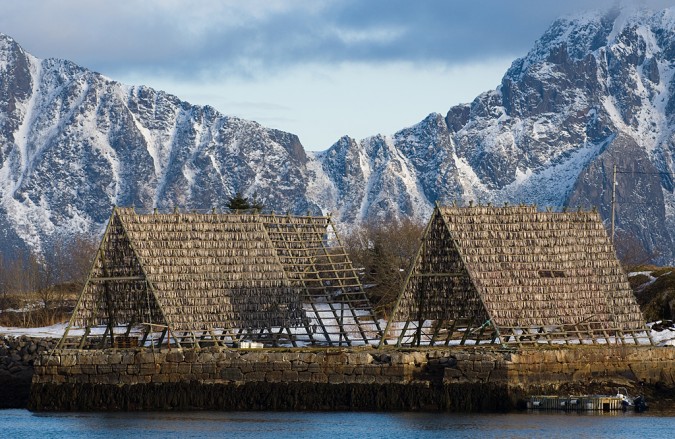
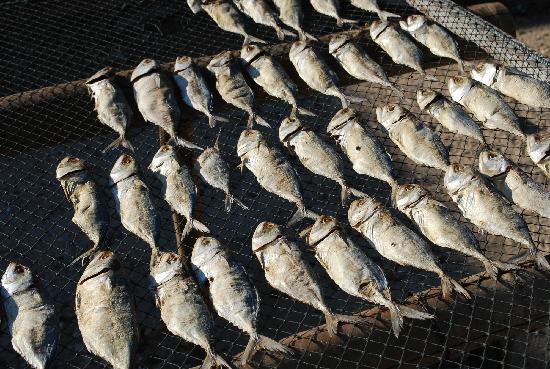
Drying fish in the cold, dry winter air has been a necessity for as long as man has lived in the north. Fishing waters in the lakes and rivers freeze solid for a large part of the winter, or storms make fishing at sea impossible, so the preservation of fish caught in the summer has long been a means of survival.
It’s the mastery of skills such as smoking, drying and vinegar pickling that kept us alive – the Viking would not have been able to launch multiple and ambitious adventures abroad without their reliable supply of salted, smoked and dried fish.
Early preservation methods
Early preservation methods were simple, and before salt was available at an affordable price, drying and smoking were the only methods used. As trade improved, salt became another means of preserving, either on its own, or combined with drying, smoking and fermentation.
Lactic acid fermentation and lime curing are relatively new methods but are still at least thousand years old. Over time and through human ingenuity, the skills of salting, smoking and pickling have developed and survived the advent of modern refrigeration.
Scandinavian preserved fish
Preserved fish is still an important part of the economy of fishing communities all over the north, transformed from an age of necessity into something refined and delectable in its own right.
Scandinavian Preserved Fish, written by Tor Kjolberg
Featured image (on top) Drying fish in Lofoten, Norway






















 Adel 33