10 Major Scandinavian Trends in Educational Environments

Kinnarps is one of the leading European designers of functional office and learning environments. The company has conducted extensive research during the last years on how our working and learning habits will change in the future, in order to anticipate forthcoming needs that will be evident in our offices and learning environments. 

As we spend more than half of our ‘awake’ time at work or in learning processes, it is very important that our working places are designed in a functional way to allow people to feel comfortable and maximize their productivity. The goal can be achieved by creating different areas suitable for the diverse needs of different people.

10 Major Scandinavian Trends in Educational Environments
Kinnarps emphasizes that it is very important that our working places are designed in a functional way to allow people to feel comfortable and maximize their productivity

Kinnarps has always taken these topics very seriously and has succeeded in shaping tailormade solutions adjusted to fit varied individual needs, no matter whether old or young, man or woman, tall or short. Kinnarps creates unique solutions for pleasant office and educational spaces that will make everybody enjoy being at work.

10 Future Trends in Learning
Based on research, interviews and work, Kinnarps FutureLab, has compiled ten major trends that will influence and shape the educational environments of the future up to 2025 in the Nordic countries.

The complete trend report provides a more detailed description and interesting issues relating to future learning environments. You can get access to the full report here.

10 Major Scandinavian Trends in Educational Environments
Trend 1 and 2

TREND 1
Learn bnb. involving the whole person in the learning

Body language is a crucial part of how we communicate, and research indicates that people learn better through movement. That way, not only the brain but the entire body is engaged in the learning process. But people’s ability to learn and the way they learn varies significantly. The learning environment must therefore be responsive and flexible.


TREND 2
Fully sustainable learning environments 

Sustainability means that all players take a long-term perspective. From the economy and the environment right down to the level of the individual. A fit body that puts the mind in the best possible position in a carefully considered learning environment will help make learning sustainable in the long term.

10 Major Scandinavian Trends in Educational Environments
Trend 3 and 4

TREND 3
Digilearn. digital learning

The digitalization of schools has enabled interaction between sender and recipient. Now we are seeing new tools that can personalise learning, and learning can take place remotely in almost any location. The learning environment must allow the power of digital technology to be exploited, but it must also be capable of preventing distractions.


TREND 4
Digiteach. teaching in a digital age

We are now seeing technology that really can change the role of the teacher in an ever more digital future. Teaching robots, artificial intelligence and digital transfer of teachers across geographical borders are no longer science fiction.

10 Major Scandinavian Trends in Educational Environments
Trend 5 and 6

TREND 5
Mass customization. individualized

Personalized study paths are in ever greater demand but, at the same time, educators need to ensure that their operations are financially viable. The answer: mass customization. In other words, the mass production of (online) courses that respond to the student’s requirements.

TREND 6
Maximise everything. self-fulfilment through the children

In the affluent society in which we live, parents fulfil themselves through their children – and are keen to protect them from anything that they perceive to be bad for them. And this also applies to demands placed on them at school. The attitude “the customer is always right” is now evident in schools, and is putting educational institutions under a great deal of pressure.

10 Major Scandinavian Trends in Educational Environments
Trend 7 and 8

TREND 7
Global learning network. New ways of collaborating and learning

As globalization takes hold, courses, teachers and students may come from all over the world, forming new educational networks. The old hierarchies will be transformed: the young will teach the old and vice versa. We will meet without borders.

TREND 8
New realities. Multisensory learning through virtual achievements

Ever more powerful computers are helping us construct alternative and indeed “better” realities, which will become powerful new tools in the classroom. We can also collect huge quantities of data on events that are taking place around us – information that can enhance and guide these resources.

10 Major Scandinavian Trends in Educational Environments
Trend 9 and 10

TREND 9
New ecosystems for learning

Students are no longer content with their nearest school. Instead, they want to be associated with a particular group or approach to education. Businesses are also getting involved, establishing links with schools and students and creating entire ecosystems for learning.

TREND 10
From IQ to SQ. The importance of social skills

For a long time now, a high IQ has been a key factor in a person’s success. Now, “social intelligence” is at least as important in the achievement of success. At the same time, creativity and the ability to innovate are essential, both in schools and in society as a whole.

The list is compiled from Kinnarps third Trend Report 2017, which identifies and analyzes key changes in the world around us for different types of work, meeting, learning and training environments. This time the focus is on what these changes will mean for learning environments in the Nordic countries: Sweden, Norway, Denmark and Finland.

Get access to the full report here.

All illustrations © Kinnarps

This article is a summary from Kinnarps Trend Report 2017

Swedish Fashion Hope

0

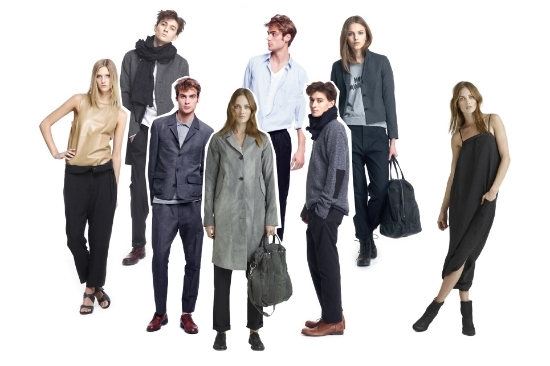
Swedish fashion brand Hope was established in 2001 by Ann Ringstad and Stefan Söderberg. They wanted to create contemporary, high-quality fashion, aimed to inspire and emphasize individual style.

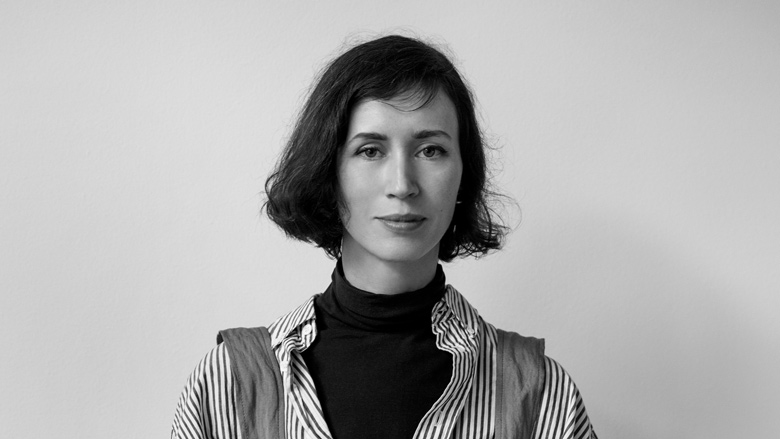
What began as a creative discussion between two friends, passionate about well-made utility wear, is today a fashion label centered on well-made, quality fashion design. Frida Bard signed on as creative director in 2016, after working at Acne Studios for 13 years. She sees Hope, once defined by utility and minimalism, as having “a little bit of a punk soul.”

Related: Functional Fashion from Sweden

Swedish Fashion Hope
According to the company’s website, Hope is passionate about diversity, creativity and self- expression

According to the company’s website, they’re passionate about diversity, creativity and self- expression. Their new Changes collection is a celebration of a new outlook on gender identity through a new way of labeling: Men’s and women’s sizes are from 2017 on indicated on every garment so that it’s easy for the customers to make their own choices.

“Style comes before gender, and we encourage our customers to explore our full assortment, rather than just one department,” says Ann Ringstad. “The clothes you wear should be a celebration of you,” adds Frida Bard.

Related: Sweden’s Most Powerful Fashion Man

Swedish Fashion Hope
Frida Bard signed on as creative director in 2016, after working at Acne Studios for 13 years

In Sweden everyone’s entitled to be who they want to be, believe what they want to believe, love who they want to love, and wear what they want to wear.

Related: Durable Scandinavian Workwear

Swedish Fashion Hope
Ann Ringstad and Stefan Söderberg

When the first collection for men was launched in 2005, it immediately became a go-to favorite of the Swedish fashion establishment. Over the years, HOPE has received numerous awards and nominations and is today one of the leading fashion brands in Sweden.

Swedish Fashion Hope, written by Tor Kjolberg

Prestigious Award to Daily Scandinavian

Daily Scandinavian has been selected the third best Scandinavian Travel Blog by the panelists of RSS Reader Feedspot.

“I personally give you a high-five and want to thank you for your contribution to this world,” says founder Anuj Agarwal. “This is the most comprehensive list of Top 50 Scandinavia Travel Blogs on the internet and I’m honored to have you as part of this!” he adds.

Prestigious Award to Daily Scandinavian
Daily Scandinavian ranked #3 among Top 50 Scandinavian Travel Blogs

The online RSS reader Feedspot jumped into action in 2013 following the removal of social features from Google Reader. Now Feedspot not only offers a solid Google Reader replacement for the desktop, but is also one of the few to include the ability to search within your RSS feeds.

Prestigious Award to Daily Scandinavian
Founder of Feedspot Anuj Agarwal

When asking Anuj what have been his biggest challenges he says: “Getting paid customers for a Reader service is a challenge. However, we realize that people pay for a reader product if you help them to stay updated with information which is essential for their business.”

Feedspot has recently launched a monthly subscription plan which is US $2.99/month.

Who are your typical customer?
“Working professionals across all industries.”

Prestigious Award to Daily Scandinavian
The online RSS reader Feedspot jumped into action in 2013 following the removal of social features from Google Reader

To collect the Top 50 Scandinavian best websites, The Feedspot editorial team searched extensively on Google and social media websites to find the best blogs and ranked them based on several factors such as:

  1. Blog content quality
  2. Post consistency
  3. Age of the blog
  4. Average number of shares on social sites for blog posts
  5. Traffic of your blogs
    and more.
Prestigious Award to Daily Scandinavian
75 Best Landscape blogs selected by Feedspot

When Feedspot launched its service, the goal was not to be a Google Reade clone, but rather to offer an unadorned interface, keyboard navigation, shortcuts and a compact “list” view, which makes for easier headline scanning.

Thee service lets you automatically post both your shared items and favorited items to a variety of third-party sources, including Facebook, Twitter and many others.

Prestigious Award to Daily Scandinavian, written by Tor Kjolberg

Norway – Richest Country in the World?

Quatar has for many years been considered the richest country in the world in the World Bank ranking. In a new method of calculating the wealth per capita, Norway now beats out Quatar.

Due to the country’s substantial natural resources, very high income, huge financial assets and low debts, Norway currently tops the World Bank’s list over the wealthiest countries in the world.

Norway – Richest Country in the World?
In a new method of calculating the wealth per capita, Norway now beats out Quatar

And Norway is not even a part of the European Union. It turned down the Common Market in a referendum in 1072 and turned it down again when it had become the EU in 1994 by good margin

Related: Norway’s Top Oil Company Will Provide New York with Renewable Energy

Norway – Richest Country in the World?
Norway is also a rich ski nation

In the new method of calculating the World Bank has now translated wealth into a nation’s various available resources both now and for the future. The expected income for residents in the course of their lifetime has also been taken into the equation.

Norway is famous for its beautiful fjords, its seafood, the fearsome Vikings and its success in winter sports. The oldest ski discovered in Norway dates in fact back to 5100 B.C. Yes, the country is prosperous, happy and free. Its towns and cities are orderly and comfortable, runs its own affairs and is trading cheerfully with the EU.

Related: Michael Booth on Scandinavia

Norway – Richest Country in the World?
Norway currently tops the World Bank’s list over the wealthiest countries in the world

However, Ingvild Almås, an economics professor at business school NHH in Bergen and the University of Stockholm, called the World Bank’s new calculations “interesting,” but worries that Norway may score higher than it should.

Related: Norway’s Sovereign Wealth Fund Surpasses the $1 Trillion Mark

In fact, we agree. If we’re looking in terms of real GDP, Norway ranks according to Global Finance #8 in the world with a ‘current’ GDP of 69,296 International dollars, falling behind Quatar and Luxembourg.

Yet, apart from all these statistics, it is safe to say that Norway is the happiest country in the world.

Norway – The Richest Country in the World? Written by Tor Kjolberg

The Breathtaking Vettisfossen Falls in Norway

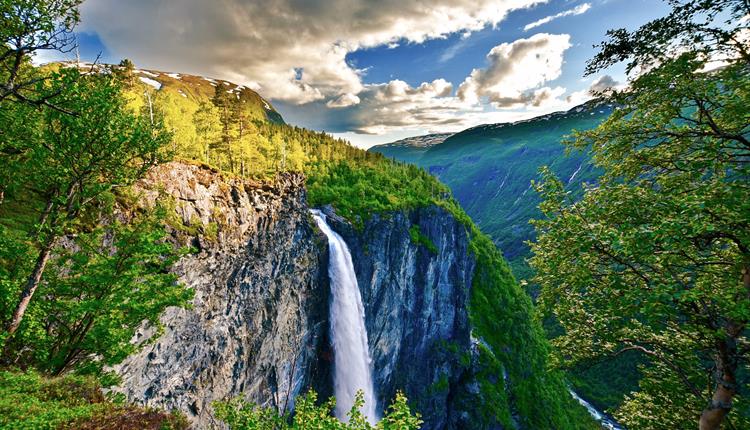
Vettisfossen in Norway is the tallest free-falling waterfall in Europe and the 284th in the world, with a single drop of 275 meters (902 ft).

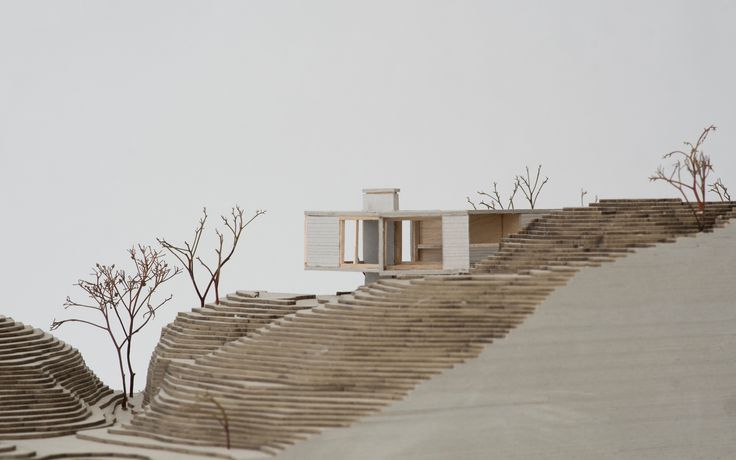
What makes this waterfall stand out is that it is the tallest unregulated free-falling single-drop waterfall in Norway. The architects have designed a notched wood pavilion curving around a bonfire, defining a natural shelter after hours of hiking.

Related: Art, Music and Architecture in the Polar Landscape of Norway

The Breathtaking Vettisfossen Falls in Norway
What makes this waterfall stand out is that it is the tallest unregulated free-falling single-drop waterfall in Norway

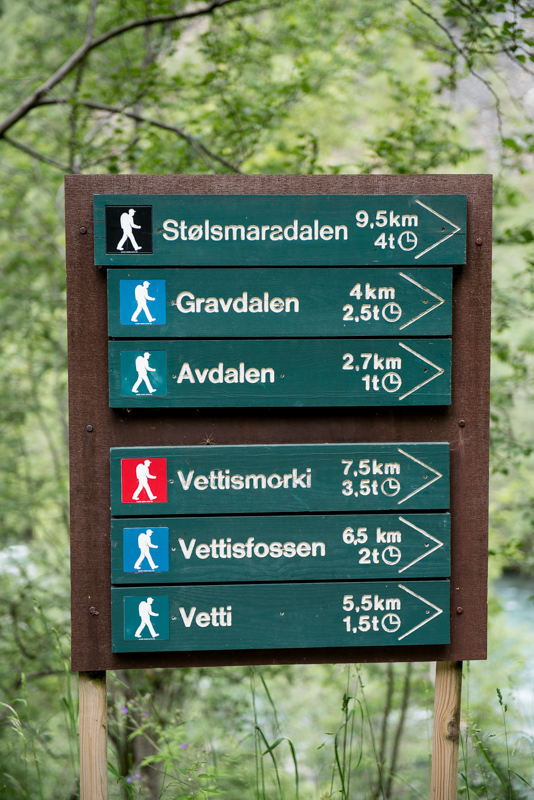
To access the waterfall it is an about 6km long hike in each direction (or 12km round trip). It will take you a little over 4 hours to do the entire out-and-back hike with some rest and photo breaks. Since there are other interesting waterfalls along the way, the hike doesn’t seem that long.

Related: The Unique Energy Design Hotel in Norway

The Breathtaking Vettisfossen Falls in Norway
To access the waterfall it is an about 6km long hike in each direction

Reaching the viewpoint, the inside of the Vetti pavilion serves as a compass, framing a variety of motives in the landscape, – from the rocks, heather and birch trees nearby, to the monumental mountains and waterfall in a distance.

The Breathtaking Vettisfossen Falls in Norway
The inside of the Vetti pavilion serves as a compass, framing a variety of motives in the landscape

Now Vardehagen architects in collaboration with the National Park Manager and the local municipality of Årdal in Sogn og Fjordane has been commissioned to redesign the old viewpoint. The work will begin later this year, and when the projected Vetti Pavilion is completed in 2019, visitors can enjoy a campfire, a shelter, a scenic route and an outdoor museum, next to the Vettisfossen falls.

Related: Exciting Modern Architecture in Lillehammer

The Breathtaking Vettisfossen Falls in Norway
Model of the Vett Pavilion (Vardehagen architects)

The architects aim to replace the classic lookout point with an insight point, a social place where hikers can experience the landscape in a diverse way, and so socialize and share their thoughts with each other.

The Breathtaking Vettisfossen Falls in Norway, written by Tor Kjolberg

Feature image (on top): Photo: © Eskild Digrenes / www.eskildigernes.com

Swedish Trendspotter Searching for Patterns

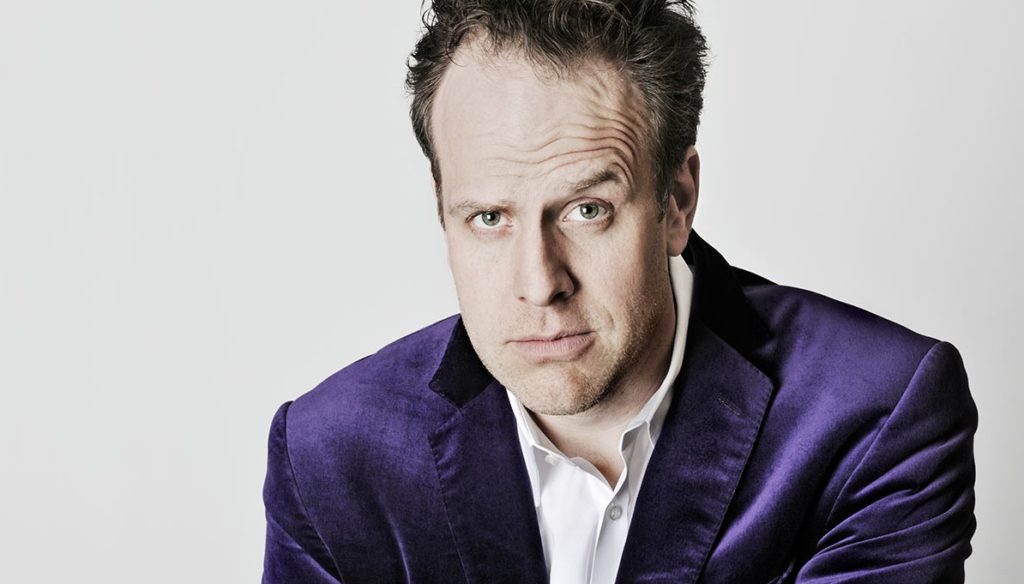
The Swedish futurologist and author Magnus Lindkvist, based in Zurich, Switzerland, is known for his thought-provoking ideas on technology and the future of business.

Lindkvist weaves together important current trends to forecast what life, society and business might look like in the future. His presentation style is dynamic with compelling content. His four books “Everything We Know Is Wrong,” “The Attack of the Unexpected,” “When the Future Begins” and “The Minifesto” (2016) have made him a popular international speaker. In his last book he describes how small ideas can change the world.

Swedish Trendspotter Searching for Patterns
Futurologist Magnus Lindkvist weaves together important current trends to forecast what life, society and business might look like in the future

It is his fantastic timing, storytellig and politically incorrect humor that keep a global audience, laughing and talking well after his talks end.  Magnus challenges our entire way of thinking about and looking towards the future.

Relateds: All Scandonavian Capitals on the “50 Smartest Cities in the World” List

Swedish Trendspotter Searching for PatternsBased on Ingvar Kamprad’s idcea for IKEA, Magnus coined the term IKEAfication, which describes how technology travels along a trajectory that enables you to do more with less. “It’s not just for the rich or the cash-rich companies. An example is how making movies has gone from ‘kissing ass of old men’ to everybody being able to do it at home,” he says.

Swedish Trendspotter Searching for PatternsLindkvist has given in excess of a thousand keynote speeches over the past decade to everyone from Fortune 500 CEOs and civil servants in the Middle East to anyone looking to be inspired and enlightened by trendspotting and future-thinking. He founded his company, Pattern Recognition in 2005 employing a number of top trendsetters who help companies sort through the complexities of what’s ahead and how it will impact their future.

Related: The Swedish Furniture Giant

Swedish Trendspotter Searching for Patterns
Kindkvist’s presentation style is dynamic with compelling content

In 2009, Lindkvist won the “Business Speaker of the Year” award in Sweden. His talks are often described as ‘shows’ or ‘performances’. As a writer, Magnus Lindkvist is driven by a relentless curiosity about our mental space where the outside world collides with the human brain.

Related. Michael Booth on Sweden

Swedish Trendspotter Searching for Patterns
Magnus challenges our entire way of thinking about and looking towards the future

He has won several awards for his ‘performances’ on stage and for his books, but perhaps the best acclaim ever given was from an HR director in the UK who said ‘Magnus Lindkvist is the best Swedish export since ABBA and meatballs.’

Swedish Trendspotter Searching for Patterns, written by Tor Kjolberg

Self-Driving Buses in Sweden

0

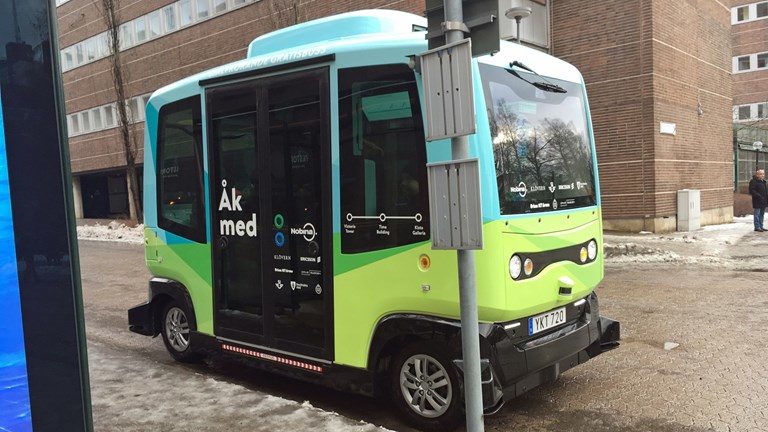
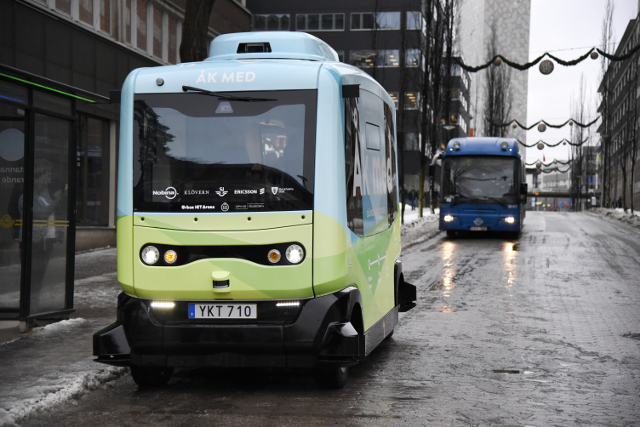
Last month, for the first time in Scandinavia, two self-driving shuttle buses started to mix with pedestrians, cyclists and other traffic along a straight 1.5kilometer public road in Kista, northern Stockholm.

Possibly no-other European nation loves technology as much as the Swedes. Stockholm has more tech startups per capita than any other city in the world apart from Silicon Valley. This pilot project will try out the technology over the next six months on normal road conditions on weekdays from 7 am to 6 pm.

Self-Driving Buses in Scandinavia
The travel speed of the self-driving bus will be up to 24 km per hour
Photo: Marko Säävälä

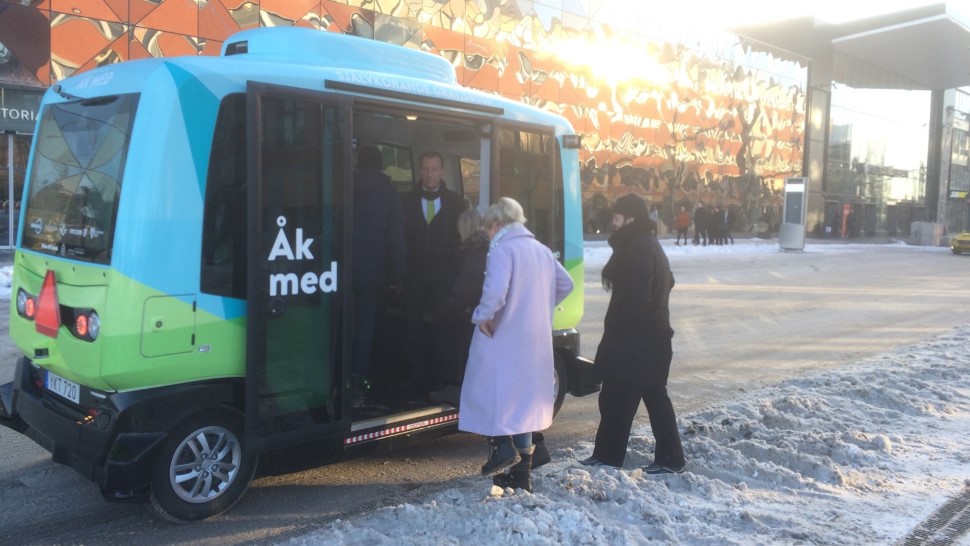
The travel speed will be up to 24 km per hour, and the small ugly looking buses, taking up to 11 passengers, set a bold example for multimodal urban transport, which many predict as the model for the near-future of smart cities.

Related: Energy Saving Road Lightning in Norway

Self-Driving Buses in Scandinavia
Passengers entering a driverless bus in Stockholm

Automation is almost everywhere in Sweden, helping to eliminate the requirement for expensive Swedish labor or cash. Ericsson’s Connected Urban Transport platform serves as the virtual bus driver for the shuttles in Stockholm, communicating with smart, sensor-enabled bus stops, traffic lights and road infrastructure.

Already by the end of the summer, in a new residential area in Barkarby northern Stockholm, self-driving buses are supposed to be part of the normal public transport route.

Related: All Scandinavian Capitals on the “50 Smartest Cities in the World” List

Self-Driving Buses in Scandinavia
A self-driving bus evokes a photographer’s interest in Stockholm

For transport companies, the attractions of cutting out bus drivers and saving on those wages are obvious, not to mention the expected improvements in safety. Ericsson offers installation and operation of smart traffic solutions, minimizing installation time, operational costs and staffing headaches.

Related: Norwegian Zero Emissions Ship Without Crew

“If this project is successful, I would say that in just a few years, this will be a very common part of Stockholm transport system,” says Kristoffer Tamsons, Stockholm’s regional transport commissioner, and chairman of Stockholm transport.

Self-Driving Buses in Sweden, written by Tor Kjolberg

Sweden’s IKEA Conquered the World with Innovation and Design

In its 75 years IKEA has stood out as a particularly innovative organization. Seventeen years old its founder, Ingvar Kamprad, wanted to start his own firm in Älmhult in Sweden’s Småland. The company’s name is an acronym consisting of the initials of his first and last name, Ingvar Kamprad, the farm where he grew up, Elmtaryd and his hometown Agunnarud in Småland.

After his death last month, it’s important to remind ourselves of Kamprad’s way of future thinking: “As long as there is human housing on our earth, there will be a need for a strong and efficient IKEA,” he said.

Sweden’s IKEA Conquered the World with Innovation and Design
The company’s name is an acronym consisting of the initials of his first and last name, Ingvar Kamprad, the farm where he grew up, Elmtaryd and his hometown Agunnarud in Småland

IKEA’s philosophy has always been to create products for the user, carefully thinking over how a product fits into an individual’s situation, familywise and financially. Functional design combined with user-friendly prices have been IKEA’s trademark. Today, vintage IKEA furniture can be worth a fortune on auctions, proving that the company’s innovation has stood the test of time.

Related: The Swedish Furniture Giant

Sweden’s IKEA Conquered the World with Innovation and Design
Facts about IKEA (From the IKEA museum)

I have always wondered how it is to be a product designer at IKEA, so I traveled to IKEA’s hometown, Älmhult to meet one of the in-house designers, Iina Vuorivirta from Finland.

Sweden’s IKEA Conquered the World with Innovation and Design
“Good design is first and foremost a focus on how the product should work,” says Iina Vuorivirta, in-house designer at IKEA

I was curious to find out how a young designer landed a position at a huge company like IKEA, and Iina explains that it was quite accidentally. She had lived among IKEA products in Finland all her life and studied product design in Sweden, later to start her own studio in Stockholm. One day she sneaked into IKEA, which launched a new product next to her own small gallery.

Sweden’s IKEA Conquered the World with Innovation and Design
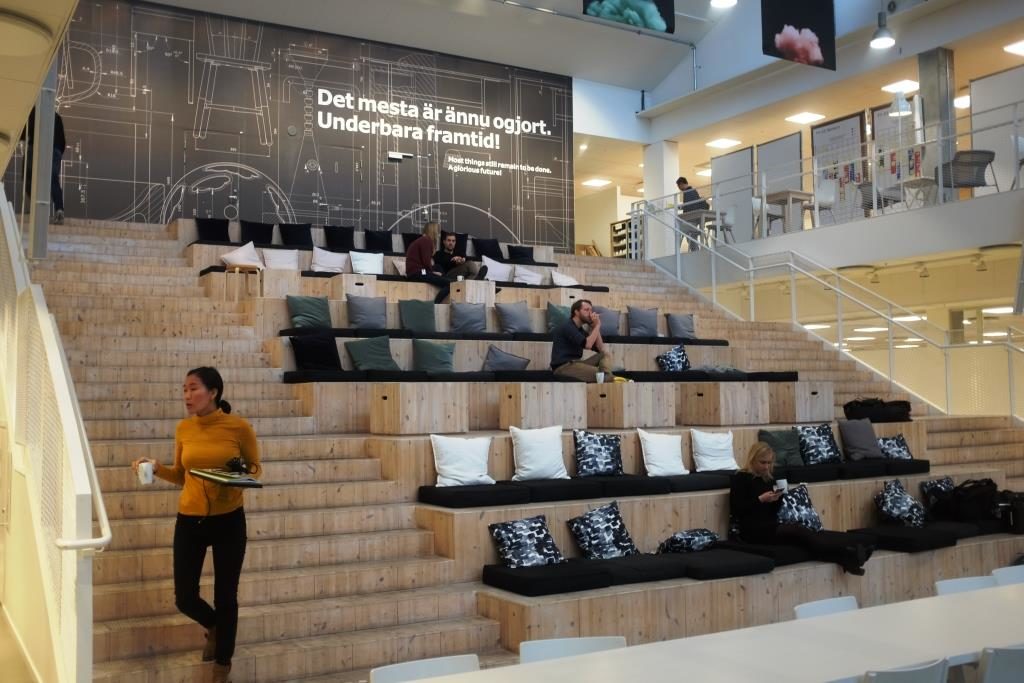
Designers at IKEA can meet in an informal atmosphere to discuss their individual projects.

There she met head of design, Marcus Engman, and she made a quick decision to apply for a position.

Related: IKEA founder returns to Sweden

Sweden’s IKEA Conquered the World with Innovation and Design
IKEA tools

Iina tells me that she is open-minded and likes to challenge herself. She is curious and more than average interested in materials. She has been doing glassblowing and worked with ceramics.

Sweden’s IKEA Conquered the World with Innovation and Design
Ingvar Kamprad in conversation with his workers

At IKEA she is currently working on a new dish-brush, which she has been doing for two years now. When I look like a question mark, she explains that a brush lasts for approximately one year. Being concerned about the environment, the brush and the shaft should be recycled in the same process, not separately, like most dish-brushed are treated today. She is therefore searching for sustainable materials meeting these requirements.

Sweden’s IKEA Conquered the World with Innovation and Design
IKEA furniture from the 70s exhibited at the IKEA Museum

“Good design is first and foremost a focus on how the product should work. This is the stage at which many questions will arise. Doing proper design and material research will help answer those questions,” she says.

Related: IKEA Donates Millions to Ebola Fight

Sweden’s IKEA Conquered the World with Innovation and Design
IKEA designer Iina Vuorivirta from Finland.

Travelling to suppliers is a big inspiration for Iina. It is the most exciting part of the process. Her interest for natural fibers arose when visiting Indonesia and Vietnam. She is concerned about using materials in the best possible ways – respectfully and esthetically, not focusing on a beautiful layout only.

‘Design based on facts, not assumptions’ is her mantra. She is concerned about the smaller details, the fingertip feeling.

“When this is right, I am right,” she concludes.

Today IKEA works with students, in-house designers as well as well-established designer brands.

Sweden’s IKEA Conquered the World with Innovation and Design
Portrait of IKEA founder Ingvar Kamprad at the IKEA Museum in Älmhult

IKEA has today more than 400 stores worldwide. The first store opened in Älmhult in 1958. In 2012 the store was relocated. The old building has now been transformed into the IKEA Museum. The exterior of the building has to large parts been restored to its original form, following the drawings of architect Claes Knutson. The interior has been created to meet the needs of a modern museum and is well worth a visit.

Sweden’s IKEA Conquered the World with Innovation and Design, written by Tor Kjolberg

All photos: Tor Kjolberg

Sweden’s New Floating Sauna Hotel

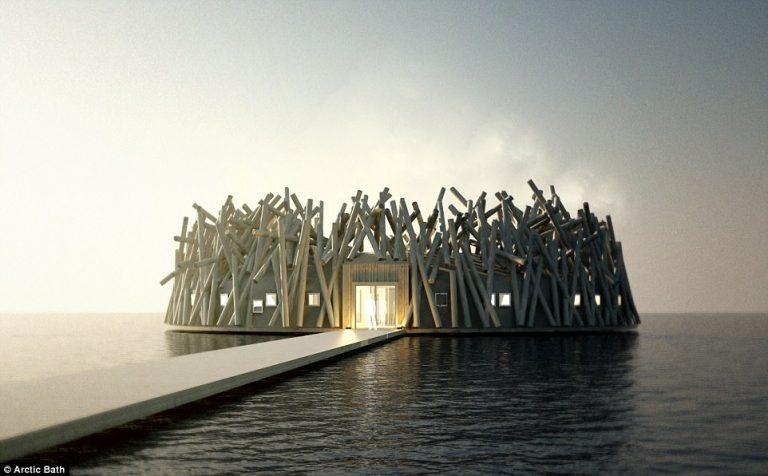
The new floating open air cold bath, inspired by the success of Treehouse hotel is planned to be situated downstream from the bridges of Bodstrackfors on Lule River. With the river frozen in wintertime and summertime free-floating, this lodge will be a year-round attraction. Arctic Bath is a sister retreat to the country’s Treehouse hotel.

The Northern Lights may be checked in lots of cool ways, but they might not come any cooler than the experience to be offered by this new floating hotel in the Swedish Lapland. This upcoming resort, literary floating on a river, couldn’t be further from normal life.

Related: World’s Largest Treehouse Hotel Room in Sweden

Sweden’s New Floating Sauna Hotel
Activities at Arctic Bath Hotel will include cold baths, different water activities, several saunas and spa treatments

Activities there will include cold baths, different water activities, several saunas and spa treatments. The hotel houses four different saunas and a spa treatment room, along with six hotel rooms, a shop, bar and a restaurant. This logjam-inspired floating lodge honors the jogged piles of timber that once clogged up the river and offers visitors a refreshing! dip in an ice-cold bath in its center. The Lule River stretches 280 miles through northern Sweden and was once an important thoroughfare for moving timber.

Related: The Coldest Hotel in Sweden

Sweden’s New Floating Sauna Hotel
The developers are billing Arctic Bath Hotel as an exclusive hotel suitable for small conferences, group events and private parties

Now it will be home to an eye-catching floating hotel that pays tribute to this heritage, cutting a spooky, serrated figure atop the waterway’s surface.

Sweden’s New Floating Sauna Hotel
Owners Britta Jonsson Lindvall and Kent Lindvall will offer a mix of luxury and nature

The area is a glacial haven of snow-tipped forests, world-class fishing, amazing wildlife and the Northern Lights.

Related: Ice-cold Tradition is on Fashion Again in Sweden

Sweden’s New Floating Sauna Hotel
The hotel is planned to be situated downstream from the bridges of Bodstrackfors on Lule River

Inspired by the wild, stunning Swedish surroundings, owners Britta Jonsson Lindvall and Kent Lindvall will offer a mix of luxury and nature. Swedish architects, Bertil Harström and Johan Kauppi are responsible for architecture and design.

The developers are billing it as an exclusive hotel suitable for small conferences, group events and private parties.

Sweden’s New Floating Hotel, source: Arctic Bath

American Artist Duo Exhibits in Oslo

Astrup Fearnley Muesum of Modern Art in Oslo will for the first time in Norway present a solo exhibition featuring the works of American artists Lizzie Fitch and Ryan Trecarin, both born 1981.

Since they met in 2000, the critically acclaimed artist duo has created large-scale video installations that examine the effects of technology and social media on identity formation and the mutability of language. Their expansive collaborative practice includes video, sculpture, sound and installation.

American Artist Duo Exhibits in Oslo
American artist duo Lizzie Fitch and Ryan Trecarin

Sculpture has always played a role in Fitch and Trecartin’s practice, both on and off the screen. Here the concept of “scripting” is foundational to the way the artists set the parameters for interaction, whether between humans, objects, or even environments, treating the source materials as words in poetic compositions.

Related: Watch Michael Jackson in Oslo

American Artist Duo Exhibits in Oslo
The artists’ expansive collaborative practice includes video, sculpture, sound and installation.

Astrup Fearnley Muesum of Modern Art in Oslo will for the first time in Norway present a solo exhibition featuring the works of American artists Lizzie Fitch and Ryan Trecarin, both born 1981.

American Artist Duo Exhibits in Oslo
Plaza Point, 2009

Since they met in 2000, the critically acclaimed artist duo has created large-scale video installations that examine the effects of technology and social media on identity formation and the mutability of language. Their expansive collaborative practice includes video, sculpture, sound and installation.

American Artist Duo Exhibits in Oslo
The Edge, Skinny 2008

Sculpture has always played a role in Fitch and Trecartin’s practice, both on and off the screen. Here the concept of “scripting” is foundational to the way the artists set the parameters for interaction, whether between humans, objects, or even environments, treating the source materials as words in poetic compositions.

Related: Watch Michael Jackson in Oslo

Fitch and Trecartin purposefully guide us toward a time when the connections between technologies and humanity have passed a milestone, but before the effects of this ontological change have been fully assessed. As Trecartin says: “I love the idea of technology and culture moving faster than the understanding of those mediums by people.”

American Artist Duo Exhibits in Oslo
Sculpture has always played a role in Fitch and Trecartin’s practice

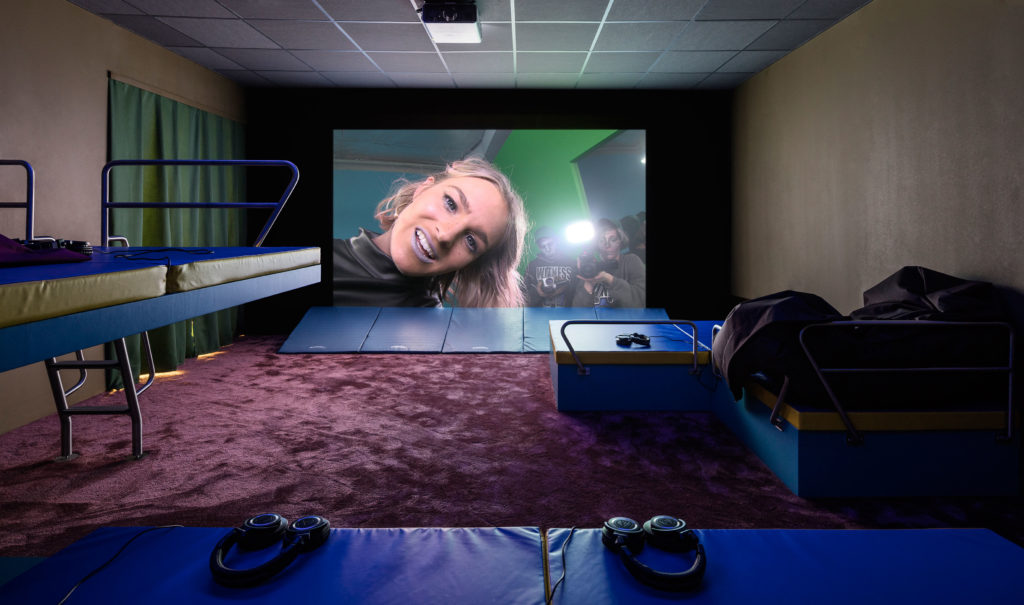
Astrup Fearnley Museum will exhibit one of the artists’ room size “sculptural theaters” Plaza Point (2009), alongside a major presentation of Fitch and Trecartin’s sculptures. This is the first museum show to focus on their sculptures as autonomous works, placed in an indoor “sculpture garden” within the main museum space. The works, made from an overwhelming variety of traditional and non-traditional materials, are single figures or complex narrative groups that express a simultaneously grotesque and celebratory view of human nature.

Related: At the Edge in Oslo

About the artists

Ryan Trecartin (b. Webster, Texas, 1981) and Lizzie Fitch (b. Bloomington, Indiana, 1981) received BFAs from the Rhode Island School of Design in 2004 and currently live in Los Angeles. Their collaboration has endured over 15 years producing works that have been shown at contemporary art centers and museums around the world, including the Musée d’Art Moderne de la Ville de Paris; MoMA PS1, New York; KW Institute for Contemporary Art, Berlin; the Museum of Contemporary Art, Los Angeles; and the Francois Pinault Foundation at the Punta della Dogana, Venice.

About the museum
Astrup Fearnley Museet is a private museum of contemporary art, and has since its opening in 1993 been one of the most important art institutions in Oslo.

The museum moved to Tjuvholmen in 2012, beautifully located by the Oslo Fjord in a building designed by world-renowned architect Renzo Piano. The museum presents temporary exhibitions of international art, and houses the Astrup Fearnley Collection, one of Norway’s most important and most extensive private collections of contemporary art, with iconic works by artists such as Damien Hirst, Anselm Kiefer and Jeff Koons.

The exhibition opens 23 February and lasts through 20 May 2018.

Artist Duo Lizzie Fitch and Ryan Trecartin Exhibits in Oslo, written by Tor Kjolberg

Feature image (on top): Image Ready: Ryan Trecartin
Ready (Re’Search Wait’S)
2009-2010
HD Video, 26:50
Courtesy the artist and Elizabeth Dee, New York