
Are Scandinavians the Happiest People in the World?

The Nordic model, also called Nordic social democracy, refers to the economic and social policies common to the three Scandinavian countries Denmark, Norway and Sweden as well as the Nordic countries Finland and Iceland. Why is the Nordic model so successful? Researchers all over the world are curious.

The term is coined to capture the unique combination of free market capitalism and social benefits, creating a society that enjoys top quality services like free education, free healthcare and generous guaranteed pension payments for retirees.

Are Scandinavians the Happiest People in the World?
The 2017 Happiness Index

Researchers all over the world are looking to the Nordic model to examine when and why it emerged, and why it evidently is so successful. However, recently there has been a greater interest for discovering the secrets of the model outside the Nordic region, while less research has been done inside the region itself.

Are Scandinavians the Happiest People in the World?
Haldor Byrkjeflot, academic director of UiO: Nordic

In 2015 the University of Oslo launched a research program called “Global Challenges – Nordic Experiences”. In March 2017 they arranged the first cross-disciplinary Nordic Challenges conference, aiming to establish an international forum for researchers who work with issues related to Nordic experiences. Haldor Byrkjeflot, academic director of UiO: Nordic, the strategic inititative behind the “Nordic challenges research program” was the chief organizer behind the conference.

There are many questions and issues to be taken into consideration, for instance the role of the indexes where the Nordic countries commonly score the highest. What is measured and how? One example is the happiness index, where Norway score highest followed by Denmark , Switzerland and Iceland.
Are Scandinavians the Happiest People in the World?
Nordic challenges research program

Gitte Meyer from Copenhagen Business School argues that the measurements used for the happiness index may be misleading.  “There has been 2,500 years of disagreement on what is happiness,” she claims. “Fortuna has often been named the Goddess of Happiness, but is the Goddess of Luck a better depiction?” she asks.

Are Scandinavians the Happiest People in the World?
The Nordic Model

The Happiness Industry is not a new one. 125 years ago the American neurologist George Miller Beard wrote a paper, “American Nervousness, Its Causes and Consequences”, in which he discusses several issues related to happiness, or rather the opposite, like domestic and financial trouble, politics and religion, gambling, new inventions and many more.

Are Scandinavians the Happiest People in the World?
The World Happiness Index

Happiness indicators have been as volatile as happiness itself. The first World Happiness Report was launched in 2012, and the Nordic countries have always been on top. But how does happiness research and happiness measuring affect what is considered valuable in a society?

Are Scandinavians the Happiest People in the World?
World Happiness Report 2017

The research program “Global Challenges – Nordic Experiences” at University of Oslo currently involves 140 researchers. The project has been granted NOK 80 million from the the University of Oslo and the participating units of the University must fund the same amount itself, totaling NOK 160 million. One of the projects, Nordic Branding, covers issues like social welfare, gender equality and rights and democracy. The group, led by professor Malcolm Langford, involves 35 researchers from the University of Oslo and beyond.
Professor Byrkjeflot explains that all countries today wish to brand themselves. However, there are several examples of negative national branding.

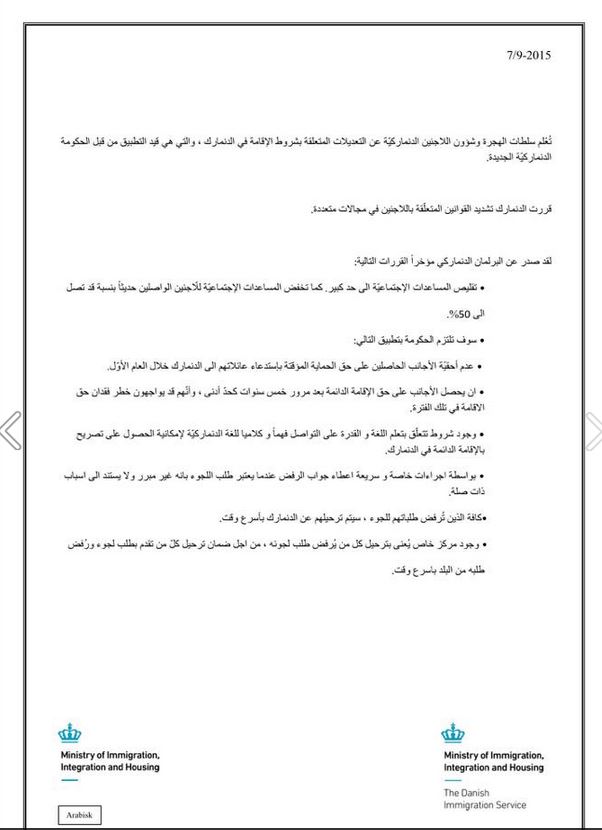
Mads Mordhorst, associate professor at Copenhagen Business School, has written a paper titled Public Diplomacy vs Nation Branding: The Case of Denmark after the Cartoon Crisis (2016) included in the book Histories of Public Diplomacy and Nation Branding in the Nordic and Baltic Countries. In this paper he discusses how Denmark moved from emphasizing the need for a positive and strategic to a more complex and negative branding strategy after the Danish government took out advertisements in Lebanon telling refugees not to go to Denmark. As a consequence the international media has become more critical in their reporting of current events in Denmark, such as for instance in their reporting of Danish kindergartens that were obliged to serve pork to protect “Danish food culture”.
Are Scandinavians the Happiest People in the World?
Danish advert in a Libanese paper

Is the Nordic Model sustainable? How are ideas about Nordic identity and models constructed and disseminated? What drives the construction of the Nordic region as exceptional and successful and how are such perceptions of the Nordics challenged.

Are Scandinavians the Happiest People in the World?
One of the projects, Nordic Branding, is led by professor Malcolm Langford

These and several other questions are discussed in this strategic initiative launched by the University of Oslo. Researchers across disciplines from all over the world continue to cultivate their findings, and Daily Scandinavian will follow the project and report on the developments.

Are Scandinavians the Happiest People in the World? Written by Tor Kjolberg

Related content:
The Cool Norwegians
Danish Bacon
The Sophisticated Swedes

The Oldest Residential District in Copenhagen

On Bernstorffsgade, across from the Copenhagen Tivoli’s west entrance, is the Central Railway Station (Hovedbanegården). Beyond it to the west lies Vesterbro, one of Copenhagen’s oldest residential districts, today a multicultural community, vibrant with bizarre shops, exotic restaurants and its red-light boulevard, Istedgade, which is also Vesterbro’s best shopping artery.

Over the last few years, Vesterbro has been the focus of a whole whirl of stylish new bars, clubs, restaurants and contemporary art galleries, based in Kødbyen, the meat-packing district. By day, it is still populated by butchers (although rising rents are forcing many to relocate). By night, it’s a place to party.

In Copenhagen
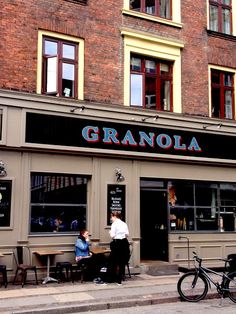
Local families come for pancake breakfasts at Granola

Local families come for pancake breakfasts at Granola, while old ladies prefer a croissant and students sit discussing their subjects.

If you’re searching for local traditions you should have smørrebrød (open sandwiches) for lunch. Visit Øl & Brød (Beer and Bread). They also serve 50 options of aquavit there, in case you’re not in the mood for beer.

In one of Copenhagen’s loveliest streets, Værnedamsvej, you shouldn’t miss the wine bar Falernum or the restaurant Les Trois Cochons.

The Copenhagen Tourist Office lies across from Central Station on Bernstorffsgade, near the corner of Vesterbrogade. This travelers’ ganglion has it all: information on sights, cultural activities, transport, eating places and events. A prime source of information is the weekly English language tabloid newspaper The Copenhagen Post in which you also will also find local news and listings.

In Copenhagen
Don’t miss the wine bar Falernum

Copenhagen’s Oldest Residential District, written by Tor Kjolberg

One Year Anniversary for Danish Design Hotel in Japan

On December 1, 2016 The Finn Juhl Hotel in Hakuba, Japan opened for business in a former lodge and is entirely decorated with furniture by the Danish modern design master Finn Juhl.

The boutique hotel is nestled at the base of one of the most popular skiing destinations in Japan, surrounded by the Japanese Alps. The suave hotel combines Scandinavian design sensibilities with Japanese elegance.

Danish Design Hotel
Finn Juhl Boutique Hotel in Nagasaki

The founders of One Collection, Ivan Hansen and Hans Henrik Sørensen were granted the rights to produce Finn Juhl’s designs in 1990 by the designer’s widow, Hanne Wilhelm Hansen. Since then, Onecollection has helped protect and carry on the legacy of Finn Juhl. That is why stores with an explicit focus on displaying and selling Finn Juhl has opened around the world in recent years.

Danish Design Hotel
Living room in Finn Juhl Hotel

Later Hansen and Sørensen purchased a vintage ski chalet in Nagano and outfitted it completely in the Danish furniture master’s creations.

Everywhere the hotel, which makes up six double guest rooms, each named after a Juhl piece (the Chieftain, the  Poet, the Japan, the Pelican, the 46 and the France), exudes a sense of downplayed elegance, from the soft bedlinen and organic toiletries to the cozy lighting. There are several shared lounge areas, a dining hall and a basement bar. The hotel also acts as a showroom for OneCollection.

As for the interiors, they are characterized by simple white walls, exposed beams, hardwood floors, and an open layout in the common areas.

Danish Design Hotel
Hakuba Happo One mountain ridge

Nagano has more than 100 ski runs and features mountain heights up to nearly 10,000 feet. The hotel is located just steps from the ski-jumping hill used during Nagano’s 1998 Winter Olympics.

Danish Design Hotel
Chieftain door sign

Onecollection already has deep ties to Japan, as part of the Finn Juhl range of furniture is produced there in the company’s Japanese workshop.

Danish Design Hotel
Funn Juhl sofa in Finn Juhl Boutique Hotel, Nagano

Just now, through 22 December there’s a Finn Juhl furniture exhibition at A. Petersen in Copenhagen

One Year Anniversary for Danish Design Hotel in Japan, written by Tor Kjolberg

Related content:
First Time Exhibit in Scandinavia by Controversial Japanese Artist
Sushi in Oslo
Japonism in Scandinavia

The World’s First Arctic Single Malt Whiskey Distillery

Whiskey made from desalinated Arctic sea water, matured under the Midnight Sun and the Northern Lights will soon be on sale at the Norwegian Wine Monopoly.

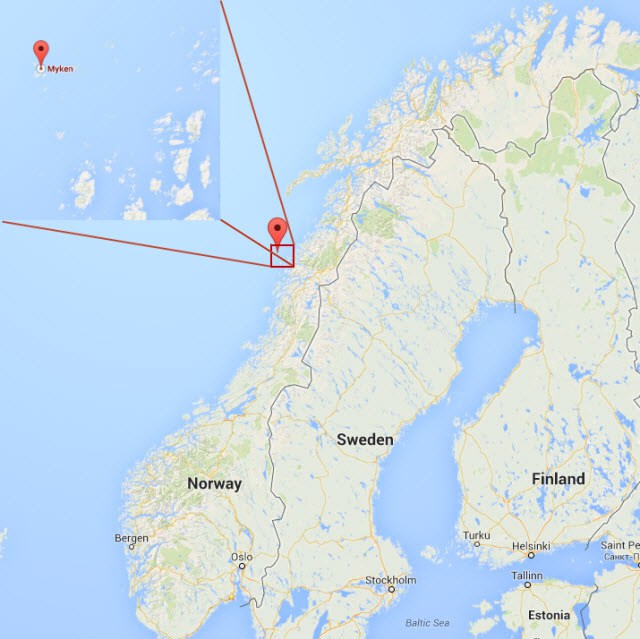
In 2013 a group of six enthusiastic amateurs established the world’s first Arctic whiskey distillery on the tiny island of Myken 32 km off the coast of far-northern Norway.

The World's First Arctic Single Malt Whiskey Distillery
Myken Disrtillery

Roar Larsen with years of passion for whiskey purchased an old fish factory to house the distillery and applied for a distillation permit after he quit his day job as the chief scientist at Trondheim’s prestigious Sintef institute.

The World's First Arctic Single Malt Whiskey Distillery
Map of Norway showing Myken

The very special energy of the blurred and almost displaced Myken far into the sea just north of the polar circle has fueled a new life and touch – and strength – in the form of spirits. It began with gin; Myken Arctic Gin is already on sale, and soon also Arctic whisky.

The World's First Arctic Single Malt Whiskey Distillery
Myken. Photo: Roar Larsen

Myken is Norway’s only dedicated whiskey distillery, and also the world’s northernmost and first Arctic whiskey distillery. “We believe we have a unique opportunity to be recognized in the market as the first whisky distillery in the Arctic,” Larsen told Norway’s NRK news channel.

The World's First Arctic Single Malt Whiskey Distillery
“Safety, optimism and enthusiasm are what characterize people on Myken,” says Jan Hellstrøm

Jan Hellstrøm and his wife together with five other couples with more or less loose ties to the island community are enthusiastic ambassadors to Myken. They founded the distillery together. “Safety, optimism and enthusiasm are what characterize people on Myken,” says Jan Hellstrøm. “We fell immediately in love with the unique atmosphere on the island,” adds Kjerstin Hellstrøm.

The World's First Arctic Single Malt Whiskey Distillery
Myken Whisky

The ocean waves are almost washing over the distillery and the warehouse. The enthusiasts believe this is going to be noticeable in the finished product. The distillery uses desalinated sea water straight from the Vestfjorden. The ocean itself delivers plenty of cooling water for optimal processing

The World's First Arctic Single Malt Whiskey Distillery
From left: Jan Hellstrøm, Trude Tikle, Roger Melander, Trygve Lundheim and Helge Eriksen

So far, the distillery has only used unsmoked malt of barley (light German Pilsner malt), but is now experimenting with other types of cereals and not least smoked malt. So far, they buy the smoked malt (35 ppm) since it gives a more controlled smoke character to the distillate than if it was smoked on a small scale with, for example, local peat.

The World's First Arctic Single Malt Whiskey Distillery
Roar Larsen (left) and Trygve Lundgeim (right)

However, the desire is to use Norwegian malt, but Norwegian malt is protein rich of so-called sixth grade. For whiskey production, the two-grade structure with its lower protein content is preferable, but it is not cultivated in Norway, except at the experimental farm at Tjøtta in Nordland. From next year, in cooperation with Innovation Norway, they will therefore attempt to cultivate their own malt. This might create ripple effects for beer breweries which are increasingly looking for local produce.

The World’s First Arctic Single Malt Whisky Distillery, compiled by Admin

Group picture: Jan Hellstrøm, Trude Tokle, Roger Melander (Box Whisky), Trygve Lunheim og Helge Eriksen

Related content:
Danish Whisky Distellery Expanding
The Next Big Scandinavian Thing
Spirits of Norway

Rocking Scandinavia

Here are 6 of the best new Scandinavian Indie acts that are currently rocking out in Scandinavia.  Zac Green, chief editor of popular music blog ZingInstruments.com believes that music isn’t just a thing you do – it’s a mindset, an attitude, a way of life.

Are you a fan of indie music? Do you love listening to music from bands you’ve probably never heard of? Read on, because here are 6 of the best new Indie acts that are currently rocking out in Scandinavia.

Lykke Li
Li from Sweden isn’t the newest act on this list. Her act has been around for a few years now, but has been predominately in Scandinavia. Her music is a great mix between the elements of Indie and dream pop; with a little bit of electric blended in for good measure. Very different, but her songs have a strange hypnotic way about them.

Siv Jakobsen
Hailing from Norway, this artist is already making waves with over 2 million streams on Spotify. She has produced two albums, both of which include dreamy sounds with beautiful lyrics. The strings, quite prominent in her songs, are a perfect complement to her voice.

Her music can be considered quite mellow and has been compared to a cozy night in.

Elliot
Elliot has created a very different sound. If you like a weird, dreamlike music that sounds like something David Lynch would like; this is for you. Again from Sweden, this artist was chosen by JaJa as one of the musicians to watch in 2017. His strange music is ideal for any indie lover who really wants a change from the mainstream pop that often dominates the charts.

Hater
Sweden certainly can produce music. Hater has a beautiful sound, full of sad but often romantic lyrics. The guitar is the main instrument used in their music to a great effect. Her voice is dreamy and complements their sound perfectly. Not exactly rocking Scandinavia, but is akin to grabbing a warm coffee and sitting next to the fire.

Jacob Faurholt
This Danish artist makes the list as one of the best new musicians to keep a look out for. His song ‘A Lake of Distortion’ has a very unique sound that is not heard often in mainstream pop. His melancholy lyrics are often at conflict with upbeat sounds, but amazingly; it works.

Efterklang
This indie band from Copenhagen produces some truly stunning music. Mixing dream pop, electronic and dark wave; they have created a wonderful sound that is easy listening for any night. They have three core members but keep their music interesting by constantly adding supporting or guest members to add to their sound. A great band to look out for.

There you have it; 6 of the best newish indie musicians that are rocking Scandinavia. Some have enjoyed success in various countries; all are fantastic musicians that deserve to be heard.

Feature image (on top): Jacob Faurholt (Photo: You Tube)

Written for Daily Scandinavian by Zac Green at ZingInstruments.com

The Universality of Loneliness at the Edvard Munch Museum in Oslo

Per Inge Bjørlo and Lena Cronqvist are two of the most pivotal artists in the Nordic region. Their meeting with Munch results in a powerful exhibition, Head by Head, at the Munch Museum in Oslo. The exhibition studies and illuminates the loneliness, the fragility and sorrow within human existence.

The exhibition’s title, Head by Head, has been taken from a painting by Munch. This work depicts a woman’s head leaning in to the head of a man. Trustfully, the woman closes her eyes, whereas the man’s cold gaze stares somewhat aloofly ahead.

The Universality of Loneliness at the Edvard Munch Museum in Oslo
Painting by Edvard Munch

The imbalance in the expressions of the two heads says much about the complex relationship between human beings and depicts how difficult it can be to achieve mutual trust, security and affinity. This psychological tension can be seen as a metaphor for the entire exhibition, as Bjørlo and Cronqvist explore and render visible the loneliness, fragility and sadness that is present in our modern existence.

Since the 1980s, the often-painful existence we have as human beings has been the driving force behind Bjørlo’s art, and he himself has stated that life is a question of keeping alive a “scream within ourselves”.

The Universality of Loneliness at the Edvard Munch Museum in Oslo
Lena Cronqvist with wind in her hair

Cronqvist became a pioneer with the way she incorporated her own private experiences in to her work in order to expose her own sorrow and pain.

In the exhibition, the work of the two artists is placed together with a selection of works by Edvard Munch. The result is an exhibition that invites us to reflect upon the deepness and universality of loneliness and impermanency.

The exhibition consists of paintings, graphic works, drawings, sculptures and a full-room installation created by Bjørlo especially for the occasion. As we enter, we meet Munch’s painting Anxiety (1894), which, like Bjørlo’s room, thematizes human despair.

The exhibition’s central room serves as an important meeting point between Munch, Bjørlo and Cronqvist. Here, Bjørlo’s abstract sculptures meet Cronqvist’s cast-bronze girl figures. On the end wall you can see Cronqvist’s well-known paintings of young girls with their grotesque dolls.

The Universality of Loneliness at the Edvard Munch Museum in Oslo
Madonna, ny Lena Cronqvist

The meeting of works highlights the similarities, both in terms of artistic style and motif, with Munch’s Four Girls in Åsgårdstrand (1903) and Two Girls with Blue Aprons (1904-5). Never before have the works of Cronqvist been exhibited in Norway to such an extent as in the exhibition Cronqvist/Bjørlo/Munch.

The exhibition is on display through 28 January 2018


Lena Cronqvist (b. 1938) grew up in Karlstad, and lives and works in Stockholm and on Koster.
For one year, she attended Konstfack in Stockholm. She then chose to transfer to the Royal Academy of the Art in Stockholm.

The Universality of Loneliness at the Edvard Munch Museum in Oslo
The Ice, by Lena Nordqvist

Cronqvist made her breakthrough in the 1970s. Since then her exhibitions in the Nordic region and abroad have attracted great interest. Her most recent major solo exhibition was in Liljevalchs Konsthall in Stockholm in 2013.

Per Inge Bjørlo (b. 1952) grew up in Spjelkavik, and lives and works in Hønefoss. Bjørlo is regarded as one of Norway’s most important living artists. He studied at the Bergen School of Arts and Crafts and the National Art Academy. Bjørlo made his breakthrough in 1984 at the Henie Onstad Art Centre. He represented Norway at the Sao Paulo Biennale in 1985 and the Venice Biennale in 1988. Since then he has exhibited to wide acclaim at home and abroad. In 2011 he won the Critics’ Award for his solo exhibition at the Henie Onstad Art Centre.

Curator for the exhibition is Kari Brandtzæg

The Universality of Loneliness at the Edvard Munch Museum in Oslo
Installation, by Per Inge Bjørlo

Head by Head with Edvard Munch in Oslo, source: Munch Museum, Oslo

Feature image (on top): Edvard Munch Head by Head

Related content:
Edvard Munch through the Eyes of Andy Warhol
The Edvard Munch Art Award
Munch Through New Eyes

Royal Residences in Stockholm

The present Royal Palace (Kungliga Slott) was built in the site of the Tre Kronor Palace, which burnt down in 1967, some say not without the help of Nicodemus Tessin the Younger, who had already built a new northern wing and who obviously relished the glory of rebuilding the palace to his Renaissance designs.

His father, Nicodemus the Elder, had been architect to the old Tre Kronor Palace, and the grandson, Carl Gustaf, was responsible for supervising the completion of the new palace many years later. The palace comprises 608 rooms. Various suites are open to the public – the stunning Royal Apartments are what most people go to see – and the sprawling palace houses three museums. Lovers of military uniforms and marching can watch the 40-minute Changing of the Guard ceremony in the outer courtyard.

Royal Residences in Stockholm
The Royal Palace in Stockholm. Photo: Dick Norberg

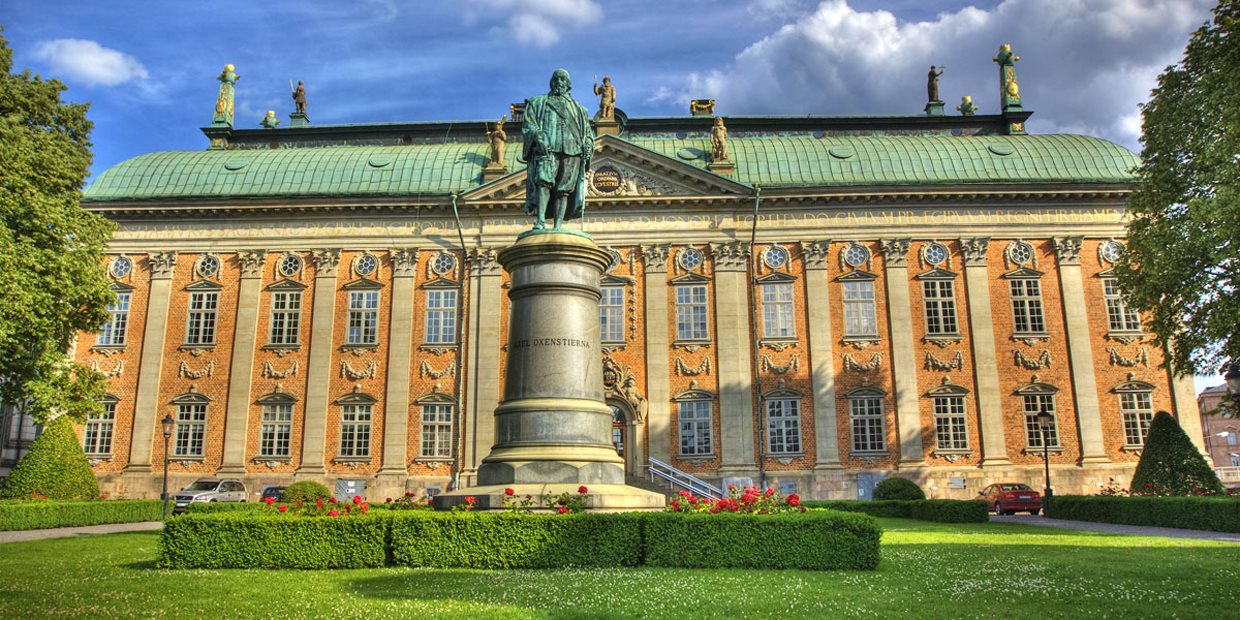
For more of Sweden’s aristocratic heritage head for the House of Nobility (Riddarhuset) on the nearby island Riddarholmen, built 1641 as a meeting place for the nobles. It is arguably the most beautiful building in Gamla Stan, with two pavilions looking out across the water.

Royal Residences in Stockholm
House of Nobility, Etockholm (Photo Visit Sweden)

Inside, the nobles deliberated in the grandeur of the Main Chamber, watched from above by a painting of Mother Svea, who symbolizes Sweden.

Royal Residences in Stockholm
Riddarholmskyrkan, Stockholm (Photo: Wikimedia commons)

On the opposite side of Centralbron is Riddarholmskyrkan, an iron-spired 13th century monastery church (the oldest in Stockholm) that serves as the burial place for Sweden’s monarchs.

Royal Residences in Stockholm, written by Tor Kjolberg

Feature image (on top): The Blue Room, House of Nobility, photo: Henrik Sundholm (Flickr)

Related content:
Unusual Views of Stockholm
Stockholm – The Vasa Capital
Stockholm – The Capital That Floats on Water

Norwegian Air Carrier’s World Premiere of New Generation Aircrafts

0

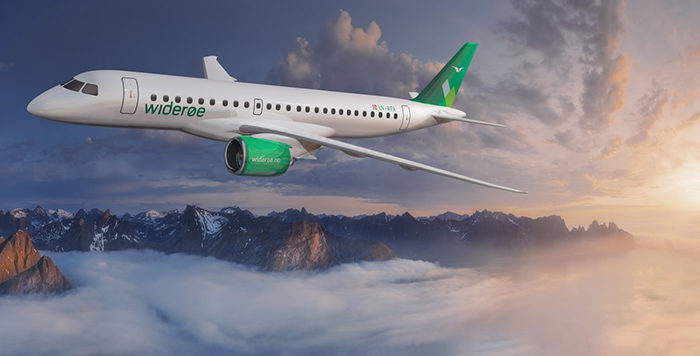
Norwegian regional airline Widerøe is the first airline in the world to use the Embraer E-Jet E2 family on commercial flights. This is also a milestone in international aviation history.

Widerøe will then connect Western Norway with Northern Norway in a more efficient and fast way.  On 24 April next year, Widerøe’s new family member, LN-WEA, takes off from Bergen Airport Flesland to Tromsø Airport Langnes. This flight is getting International attention as Widerøe is making its 114-seat regional jets available to the public for the first time.

Norwegian Air Carrier’s World Premiere of New Generation Aircrafts
The 114-seat cabin in Embraer E190-E2

The E190-E2 is the next generation environmentally friendly aircraft and will contribute to a sustainable future for Norwegian aviation and for Widerøe. Through the investment in new aircrafts, Widerøe takes greater responsibility in the climate challenge and creates the prerequisites for continued growth.

The delivery of three E190-E2s with an option for additional 12 aircrafts is a massive accreditation of Widerøe and a big leap in the company’s long history of turboprop operations. The first aircraft is to be delivered March 2018.

Norwegian Air Carrier’s World Premiere of New Generation Aircrafts
Widerøe CEO Stein Nielsen

“We believe that the link between the fjord and mountains in western Norway and the exciting nature in northern Norway with northern lights and midnight sun will be one of the strongest tourism products in Europe in the next few years,” says Widerøe CEO Stein Nilsen.

Norwegian Air Carrier’s World Premiere of New Generation Aircrafts
Flight-deck in Embraer E190-E2

CEO of Embraer, John Slattery, and his team visited the Widerøe facilities on several occasions before the decision was taken. The fact that one of the biggest aircraft manufacturers in the world selected Widerøe as their launch customer is a huge honor to the organization.

Embraer is the leading manufacturer of commercial jets up to 130 seats. The company, headquartered in Brazil, maintains industrial units, offices, service and parts distribution centers, among other activities, across the Americas, Africa, Asia and Europe. Since the company was founded in 1969, Embraer has delivered more than 8,000 aircrafts.

All images: Widerøe/Embraer

Norwegian Air Carrier’s World Premiere of New Generation Aircrafts, written by Tor Kjolberg

Related content:
Airport of the Future
On the Blooming Banks of Queen of Fjords
Record Number for Northern Lights Tourism

Europe’s Largest Battery Factory for Electric Cars to be Built in Sweden

0

The Swedish start-up company Northvolt said last week it had selected the coastal town Skelefteå north-east in Sweden for its electric car battery factory.

The two people behind the startup company are two Tesla Motor veterans, CEO Peter Carlsson and chief operating officer Paolo Cerruti. Skelefteå is a perfect site for such a plant due to its access to key raw materials, such as nickel, cobalt, lithium and graphite.

Europe’s Largest Battery Factory for Electric Cars to be Built in Sweden
Map of Sweden

Northvolt will then be a rival to Tesla’s U. S. ‘Gigafactory’ and South Korea’s LG Chem’s proposed site in Poland. However, the company continues to seek the billions of euros needed to finance the scheme. Carlsson admitted in an interview with the Financial Times, that funding would be “the most challenging” issue.

Europe’s Largest Battery Factory for Electric Cars to be Built in Sweden
CEO Peter Carlsson

The aim is to be capable of making 32 gigawatt-hours of battery packs a year by 2023, at a cost of just over 4 billion euros. The batteries will be aimed at electric cars and other new energy vehicles (NEVs), renewable energy producers looking for electricity storage, as well as industrial companies.

Europe’s Largest Battery Factory for Electric Cars to be Built in Sweden
Green transport

Europe is making 20% of the global vehicle market, 18 million units a year, and the increase in EV penetration increases the incentive for large-scale battery-production for the close markets.

Europe’s Largest Battery Factory for Electric Cars to be Built in Sweden
Electric car battery

The plant located in Skelefteå will eventually employ 2,000-2,500 people while the research and development operations will be set up in Västerås, west of Stockholm.

Europe’s Largest Battery Factory for Electric Cars to be Built in Sweden
The proposed Northvolt site

“If environmental processes and other permitting moves as planned, we will be able to put the shovel in the earth during the latter part of 2018,” Carlsson told a news conference. It is planned to raise production gradually between 2020 and 2023.

Europe’s Largest Battery Factory for Electric Cars to be Built in Sweden, written by Tor Kjolberg


Related content:
Sweden – the best start-up country in the world
New Test Center for Global Wind Industry in Sweden
Amazon Web Services (AWS) to Expand in Sweden

Come Follow My Path to Skiing in Norway

0
One of Norway’s greatest Olympians and winter sport athletes, Aksel Lund Svindal, promotes the best spots to enjoy Norway’s ski season in a new video.

The Olympic winner and skiing athlete will show the world the fantastic skiing opportunities in Norway. In a video launched by Visit Norway, he takes viewers on a personal journey, from the Lyngs Alps in the north to the mountain areas of Eastern Norway.

Skiing in Norway
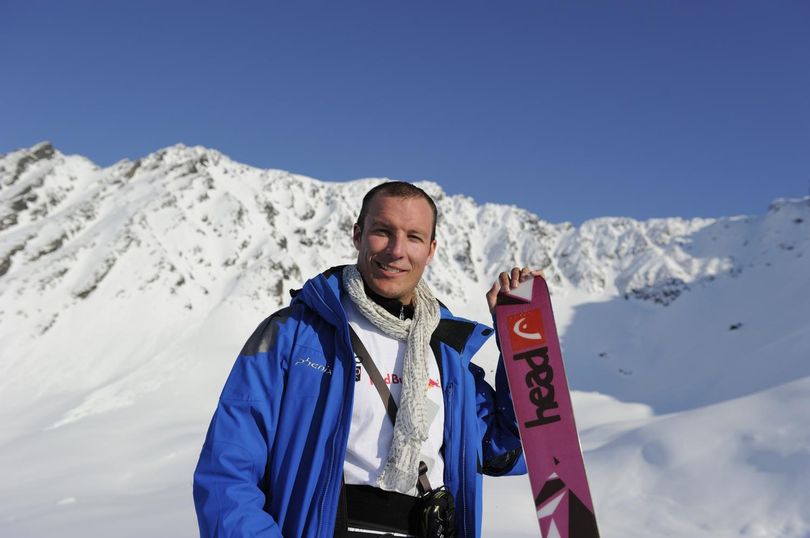
Aksel Lund Svindal
“I was lucky to have been born into a family that took me skiing from an early age (3), and I’m grateful to have realized many of my dreams and have experienced great victories at big competitions,” says Svindal.
Skiing in Norway
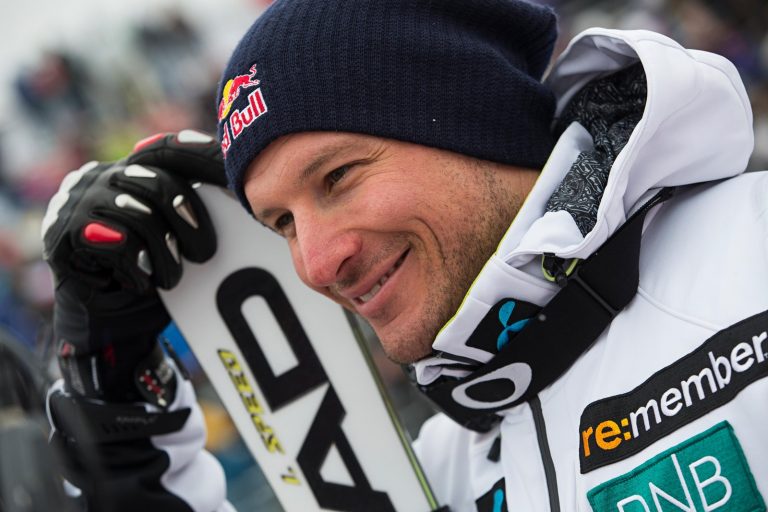
Aksel Lund Svindal in the slopes (Photo: Red Bull)
“Aksel enjoys great respect in the field of skiing, and few, if any, have greater credibility than him when he says ‘When it comes to skiing, Norway has everything’. We believe this video, with such a well-known ski profile will bring people’s attention to everything Norway has to offer as a ski destination, says Bente Bratland Holm, Director of Tourism Norway in Innovation Norway.
Skiing in Norway
Aksel Lund Svindal, offpiste in Loppa
It’s been said that Norwegians are born with their skis on and no one can make the skies run faster than Aksel. He’s not just a winner, but also a gentleman and a great role model.

“In terms of skiing, Norway has actually absolutely everything. The possibilities for skiing in Norway, both when it comes to the ski resorts and the people and culture you meet, are what’s made me the Alpinist I am today,” says Aksel Lund Svindal to Visit Norway. “I’m still having lots of fun skiing mountains around the world and hope to keep doing so for several years to come,” he adds.
Skiing in Norway
Aksel Lund Svindal is also a gentleman and a great role model
Now, as a part of an international ski campaign, the personal ski video is launched by Visit Norway. The film, promoting skiing in Norway, gives an insight into Svindal’s first experiences in the downhill fields and how this made him a world champion and Olympic winner a few years later.
Skiing in Norway
The slopes in Geilo

The film also shows the great diversity of Norwegian Alpine products, and hopefully gives viewers inspiration in addition to some goosebumps’ moments. “We hope this video will give our destinations and resorts the visibility they deserve,” says genral manager at Norske Fjell AS, Camilla Sylling Clausen.

The video takes viewers skiing along snowy mountains in Geilo, Kvitfjell, Varingskollen and the Lyngs Alps. The destinations were chosen to show the diversity of Norwegians ski resorts.

Skiing in Norway
Downhill in Kvitfjell

Come Follow My Path to Skiing in Norway, is based on a press release from Visit Norway

Related content:
Skiing on the Sunny Side in Norway
After-Ski in Oslo
The World of Ski Photography