
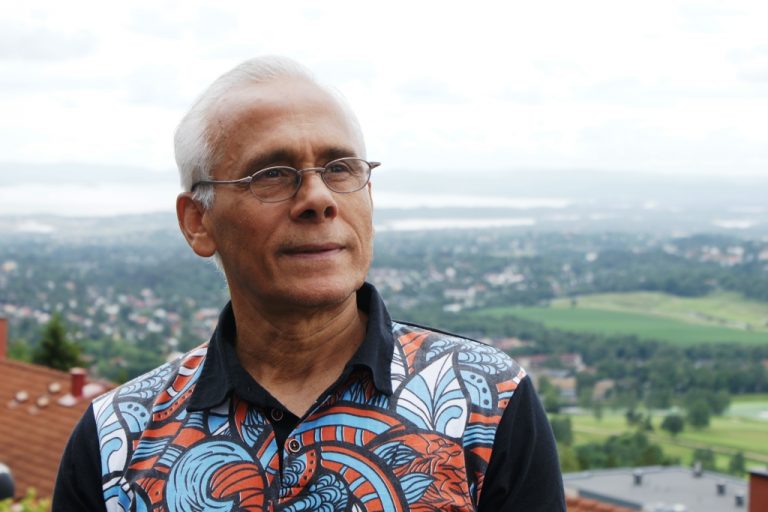
From Architect in Pakistan to Cubist Painter in Norway

Amar Aziz (65) earned his bachelor in architecture at NCA.National College of Arts, Lahore in Pakistan and started working in his father’s architectural firm. There he became curious about the outside world through contact with pen pals from many countries.

During his correspondence with a friend in Norway he received three postcards, one showing a fjord motif, another an image of Pillar-Guri with her horn, and a third of a winter landscape. Amar had never seen snow before, but had read about the midnight sun in Readers’ Digest, and for him this was a fantasy world for several years.

Amar Aziz
Amar Aziz

His desire for adventure never ceased, eventually drawing him to Portugal where he found employment as an architect’s assistant.  However, his lack of knowledge of the Portuguese language made him uneasy, and after a suggestion from a relative in Norway he traveled to Oslo.

Oslo poster 50x70 by Amar Aziz
Oslo poster 50×70 by Amar Aziz

Amar earned his bachelors in interior design and graphic design at the Oslo National Academy of Arts.  After graduation, he was employed as a graphic designer for several years.

Black boat by Amar Aziz

When the chocolate manufacturing company Freia, for which he worked, celebrated its 100th anniversary, he was asked to paint their anniversary poster. His paintings were then exhibited at the famous Freia Canteen. The 12 wall paintings commissioned from Edvard Munch by Johan Throne Holst for the factory’s 25th anniversary are still decorating the room, so he was in good company.

Freia poster by Amar Aziz

Art critic Jappe Nilsen wrote about the unveiling of the Freia pictures in the autumn of 1922:  “Freia has made a  great undertaking. It has spearheaded development. It decided that for the workers only the best was good enough and has therefore got Norway’s greatest painter to decorate their canteen.”
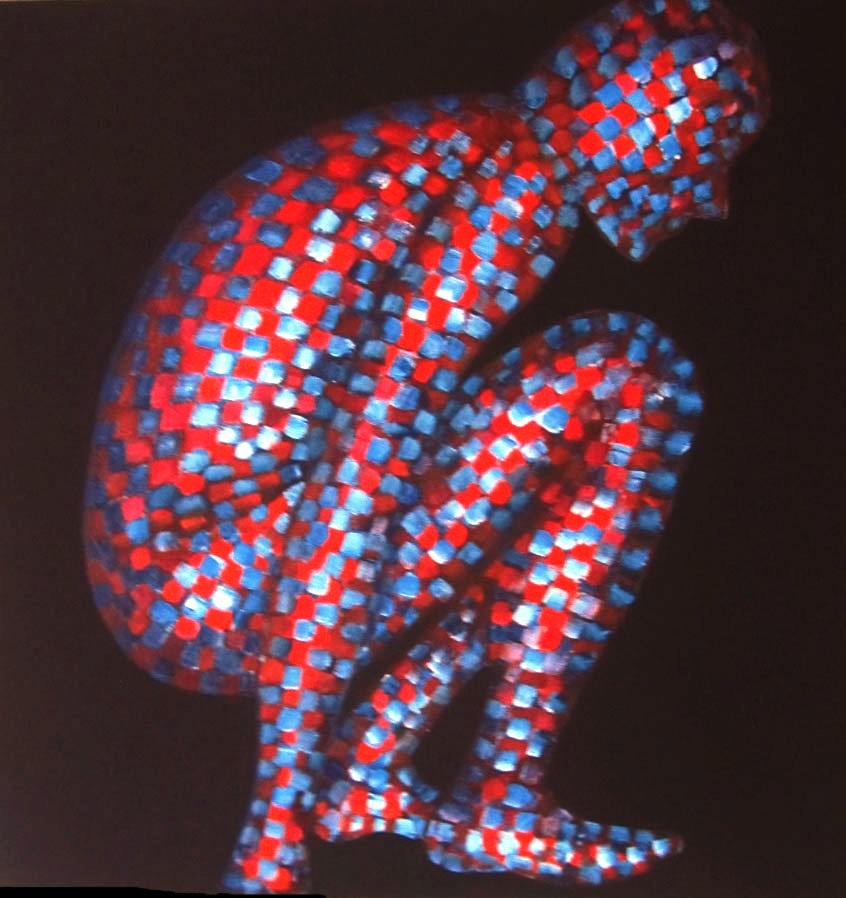
Figure by Amar Aziz
Figure by Amar Aziz

After Amar’s Freia debut he participated in a poster competition in the capital, Oslo, and won first prize. That poster was distributed all over the world.
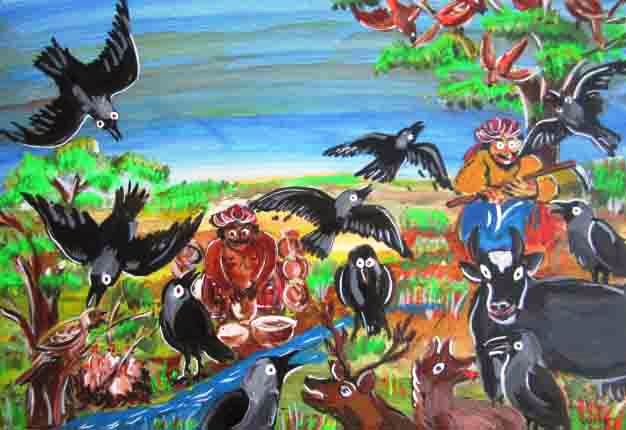
Ollustration by Amir Aziz
Illustration by Amir Aziz

Although he graduated with degrees in the learning sciences at Oslo National Academy of Arts, Amar never worked as a teacher, realizing that he had to be a full time painter.  After studying several art forms he fell in love with cubism, then illustrating two stories in the Norwegian princess Märtha Louise’s “Book of Angels”. He also fully illustrated a book on “Fairy Tales from Pakistan to Norway” (Universitetsforlaget).

From Taj Mahal restaurant in Oslo

He has also decorated three Indian restaurants in Oslo.

Book cover by Amar Aziz

When I met Amar last month, he told me that he is impassioned in light, shadow and dimensions. His cubistic paintings show that he rejects the concept that art should copy nature, but still he adopts the traditional techniques of perspective, modeling and foreshortening.
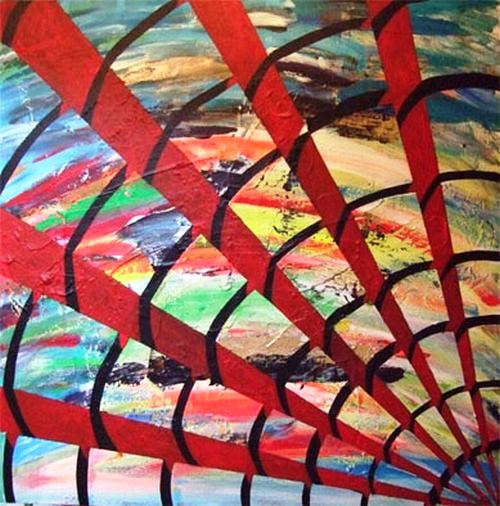
Festival by Amar Aziz

Today he combines his art education with his knowledge of interior design, printing his motifs on aluminum. “I want to create my own expression,” he says. “I am not too keen on the classic painters,” he admits. “I want things to come out of my own head. I don’t want to follow in the footsteps of others.”

Hold Stream by Amar Aziz

One painter he adores, however, is the Hungarian-French artist Victor Vasareli.

Late night ny Amar Aziz

Amar likes Norwegian architecture, and as long as “it’s not national romantic”, he would like to bring in new elements in his own art.

Opportunities by Amar Aziz

At present he is working on a cubistic series called “Steps to Paradise”, which he aims to exhibit in the near future.

Portraits of Amar Aziz, photographs by Tor Kjolberg

From Architect in Pakistan to Cubist Painter in Norway, written by Tor Kjolberg

Gallery:
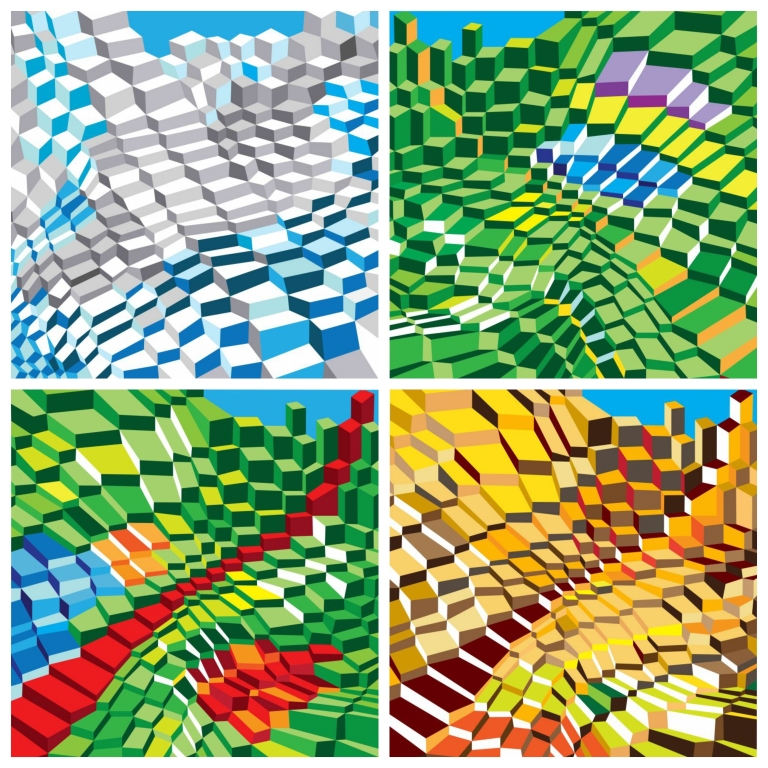
Collage Four seasons
Collage of paintigs by Amar Aziz
Ollustrations by Amar Aziz
Illustrations by Amar Aziz
Collage by Amar Aziz

Daily Scandinavian – New Website Design

0

We are thrilled to finally launch our new website design! Why a new look and feel to our site? To put it bluntly, the old Daily Scandinavian site was designed for a different era (i.e. three years ago). Enjoy!

As of 2 November 2016, our new website is live! It features a whole new look with mobile-first responsive design, and a new focus on sharing with you Scandinavian active lifestyles, destinations, accommodation, attractions, history, arts and music, architecture, fitness, recipes and more.

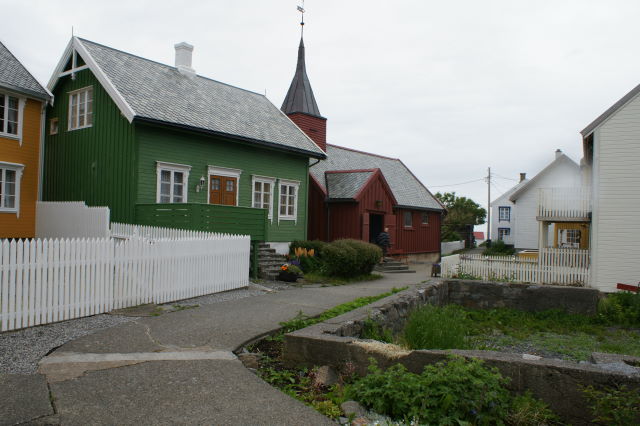
From the island of Grip in Norway. From our archives. Photo: Tor Kjolberg

We are confident you will find the new look and feel visually pleasing and easy to navigate.  As we have grown and evolved in the past, so will our website.  We will continue to add helpful information so that you may discover Scandinavia with Scandinavians!

Norway's oldesthotel, Walaker. From our archives. Photo: Tor Kjoberg
Norway’s oldest hotel, Walaker. From our archives. Photo: Tor Kjoberg

What better way to follow us as we continually work to improve all areas of our business, whether it includes our daily articles, partner presentations, our quality advertisers and more.

Dogsledding in Sweden. From our archives

As always, we welcome your feedback and respect your opinions. Please complete the Contact Us Form on the Contact Us page. You may also provide praise, problems you’ve encountered, ideas to help us improve by, and questions you may have.

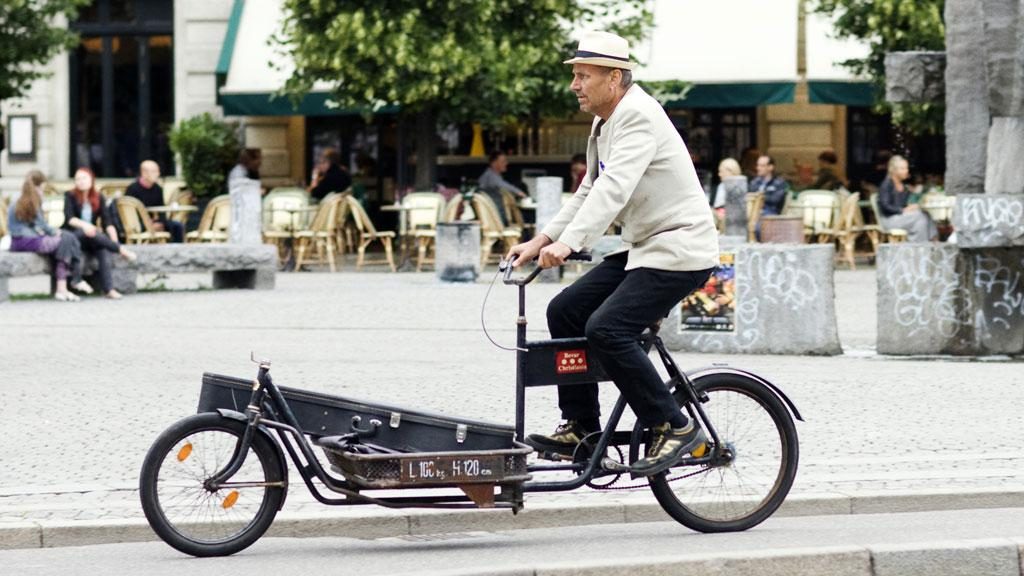
Catty-on cyclist in Copenhagen. From our archives

With more and more of you accessing web content via tablets and smart phones, we needed to redesign the look and feel of the site so that it was more multi-platform friendly (a fancy way of saying we wanted to make sure it looked good on any device).

Kronborg castle in Elsinore, Denmark. From our archives

We also wanted to make sure that the images really popped on the new site. After all we’re a part of the travel industry, and the “graphic” part of that is really important to us and our readers. Finally, we wanted to streamline things. As our content has expanded some of the old ways of navigating, the site didn’t work so well any more.

Photo by Ashley Cameron. From our archives

We have published almost 700 articles by now, and that’s a lot of information for all of you to navigate! Hopefully, our new design will make things a little easier on you.

We thank our web-designer and webmaster Amir Hussain for his excellent cooperation.

Enjoy!

tk-portrett-hvit-bakgrunn-lite-2
Tor Kjolberg
Editor in Chief

Scandinavia – Top Nations for Girls

Last October, Save the Children released the report ‘Every Last Girl’ for the International Day of the Girl Child

Advocacy organizations around the world have spotlighted girls’ issues, resulting in a report tanking the best and worst countries to live in as a girl. All Scandinavian countries are listed on the top six.

161116-every-last-girl-report-by-savethechildrenThe index used indicators such as child marriage rates, adolescent fertility, maternal mortality, number of women in parliament compared to men, and rate of lower-secondary school completion. “While there is much to celebrate, there is still a mountain to climb until we reach a world in which girls will have the same opportunities as boys,” wrote former Danish PM Helle Thorning-Schmidt, now the CEO of Save the Children International, and Kevin Watkins, CEO of Save the Children UK, in a press release.

Unsurprisingly, Sweden, Norway and Denmark emerged as the best places to be a girl, and Mali, Chad, and Niger ranked among the worst.

Some other developed nations such as the UK (15), Canada (19) and the United States (32) were pulled down the rankings by not having enough women represented in government.

The report also pointed out the US’s relatively high adolescent fertility and maternal mortality rates. Fourteen women died per 100,000 live births in the US in 2015; a similar number to Uruguay and Lebanon, and far higher than the three deaths per 100,000 in Poland, Greece and Finland,” the report stated.
“Given the indicators used in the index, we relied on the available data,” said a spokesperson for Save the Children, “and because of this, were unable to include some countries that did not have the data available.”

 former Danish PM Helle Thorning-Schmidt, now the CEO of Save the Children International
former Danish PM Helle Thorning-Schmidt, now the CEO of Save the Children International

Only 144 of the 196 countries in the world are represented in the report. Some of the countries absent have notable issues, such as Russia, which has one of the highest maternal mortality rates in the world, and China, “where people kill baby girls like housework” according to CNN, and there are over 100,000 children abandoned every year. North Korea and Venezuela are also not included, and each is ruled by an oppressive dictator.

A Trokosi slave and her child in Ghana

In addition to the Girls’ Opportunity Index, the report shows that there are 62 million girls currently not in school, 30 million girls are at risk of female genital mutilation in the next decade, 15 million girls under 18 likely to be married this year, and 2.5 million girls likely to give birth this year. Over a quarter of human trafficking victims are children, and 2.6 billion girls and women live in countries where marital rape is not explicitly criminalized.

Scandinavia – Top Nations for Girls, written by Tor Kjolberg

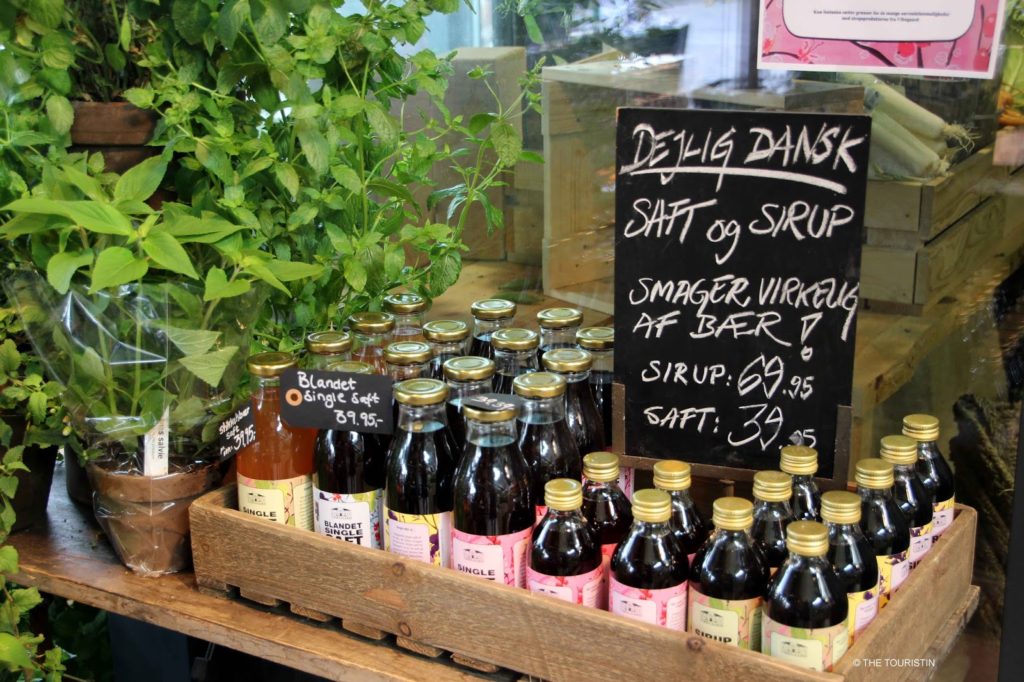
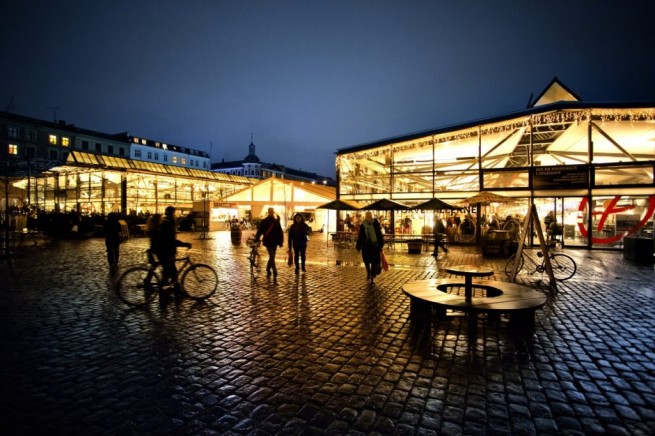
A Super Market in Copenhagen

Torvehallerne in Copenhagen, which opened 2 September 2011, situated right by Nørreport Station is a foodie lover’s dream. Today Copenhagen is considered one of the most delicious capitals to visit in Europe.

Torvehallerne were designed by architect Hans Peter Hagens, who proposed his idea to the municipal government in 1997.He had studied markets all over the world, from Sweden to Morocco, from China to Cuba. After several negotiations, primarily about finances, the market’s twin modernistic buildings, actually two glass and steel market halls, came to life.

151116-torvehallerne-copenhagen-architecture
“This plaza used to be empty, especially in the evening, and there were a lot of drug dealers,” said Hans Peter Hagens. “So I wanted to find a solution where you could create city life, and a market attracts a lot of city action.”

Architect Hans Peter Hagens

Mr. Hagens explains that the layout partly is inspired by the Mezquita, the great mosque and cathedral in Córdoba, Spain.

Butcher in Torvhallerne

More than 80 shops are selling everything from fresh fish and meat to gourmet chocolate and exotic spices, and you’re also guaranteed to find a place that’ll drive your hunger monster into overdrive, in between searching for Dead Sea salts, artisanal honey, organic sausage, Italian specialties, local vegetables or blue cheese.
Farmers market
Farmers market

“I simply love it. It’s absolutely ecstatic.” Hanne Pedersen, who spends some time here with her mother is smiling from ear to ear.

In my opinion, one of the best things about Torvehallerne is that the two main halls are specializing in different types of groceries, small restaurants, take away places and wine merchants.

151116-from-torvehallerne-copenhagen
Some of the best raw ingredients shops are the ones selling fresh fish, and with the Danish coastline only 10km (7 miles away), it’s not surprising. A hint: Don’t miss Hav. Their website is unfortunately in Danish only.

If you like French specialties look for the French butcher, selling ham, patés, chicken, goose and duck.

151116-torvehallerne-copenhagen-denmark
I encourage you to visit Torvehallerne in Copenhagen. Here is my bucket list:

Gourmet Brewery: Gourmet Bryggeriet

Fishing Quay: Fiskerikaien

Specialities from the small Baltic island of Bornholm: Bornholmerbutikken

For sushi lovers: Sushi Lovers

Eduardo Cazazian defected to Torvehallerne from Borough Market in London and established his shop Ma Poule.

151116-torvehallerne-copenhagen-interior
But don’t forget flowers and vegetables!

At Torvehallerne you may also find some of Denmark’s most beautiful flowers and potted plants, and there are literally dozens of stalls offering colorful fruit.
A Super Market in Copenhagen, compiled by Admin

Read also:
Copenhagen Street Eats

Indoor Skydiving in Norway

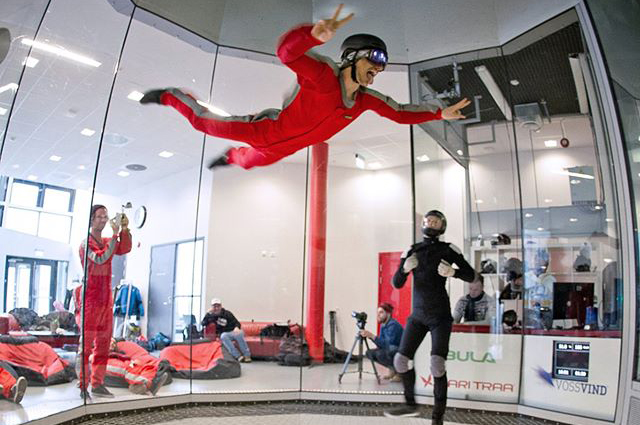
Voss in Western Norway is arguably the top winter destination, especially when it comes to fresh track skiing. But Voss has something to offer – also in the summer months.

At Vossvind Indoor Skydiving you can soar like a bird and experience the feeling of flying through the air in a safe indoor environment. The center caters for novices and professionals alike, something that many Norwegian activities seem to do.

Just 75 minutes from Bergen by train, on Norway’s west coast, the small city of Voss is known as the country’s capital of extreme sports. A huge variety of exhilarating activities are available, with the Vossvind wind tunnel one of its most exciting attractions.

211116-vossvind-voss-norway-exterior
Indoor skydiving is not dependent on the weather, and so the facility is open all year round for anybody who’d like to take flight – you don’t need any specialist skills, meaning everybody aged five and above can enter.

211116-skydiving-at-vossvind-voss-norway
Whether you’re a pro or a rookie flyer, this is the perfect destination to visit with family and friends, or for a unique company outing. A variety of packages are available, with even the basic option offering the equivalent air time to four skydives from 12,000 feet, with experienced and skillful instructors to guide you through the entire process from start to finish.

My two 90-second ‘flights’ were a blast and proved to be one of my most fantastic experiences last summer.

211116-vossvind-action-photo-visit-norway
Aside from the skydiving, Voss offers a huge array of activities in the summer, including some of the best rafting in the country. Sessions at Vossvind start at 765NOK pp.

Feature image (on top): Visit Norway

Indoor Skydiving in Norway, written by Tor Kjolberg

Scandinavian Adventure Activities

Scandinavia makes a thrilling playground for the adventurous in any season, and every year activity companies offer better and better access to wilderness.

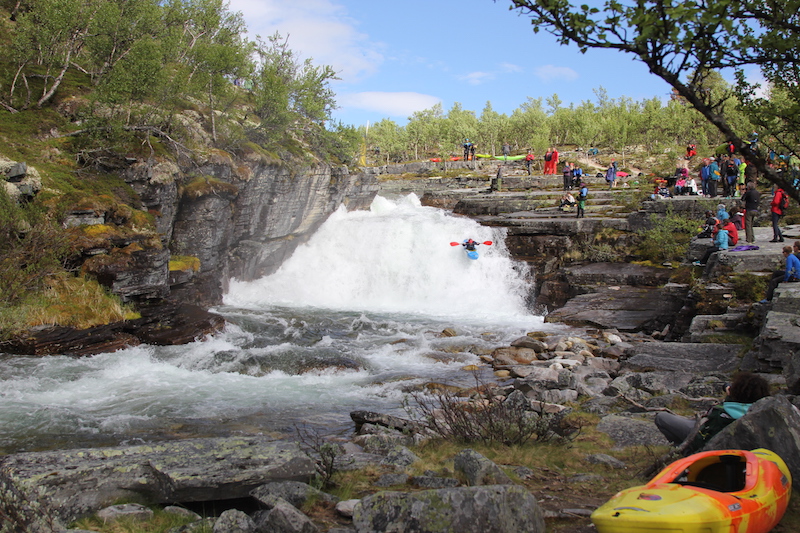
The region’s rivers present an exhilarating challenge for white water rafters: the fast-flowing Gevsjöströmmarna, near Åre, is Sweden’s steepest navigable river. Several companies in Norway run rafting trips, including one along the Sjoa River, near Rondane National Park: canyoning and riverboarding are also possible here.

Dog sledding in Roros

In the winter months, visitors can experience dog-sledging, an ancient form of transport believed to have been around for 4,000 years.

Djoa River Festival extreme race 2015
Roa River Festival extreme race 2015

Hunting across packed snow on a dog sledge, pulled by teams of almost-wolves, is truly something out of the ordinary. Wrap up warm and go for a ride in Greenland, in Norway’s Finnmark or Swedish Lappland.

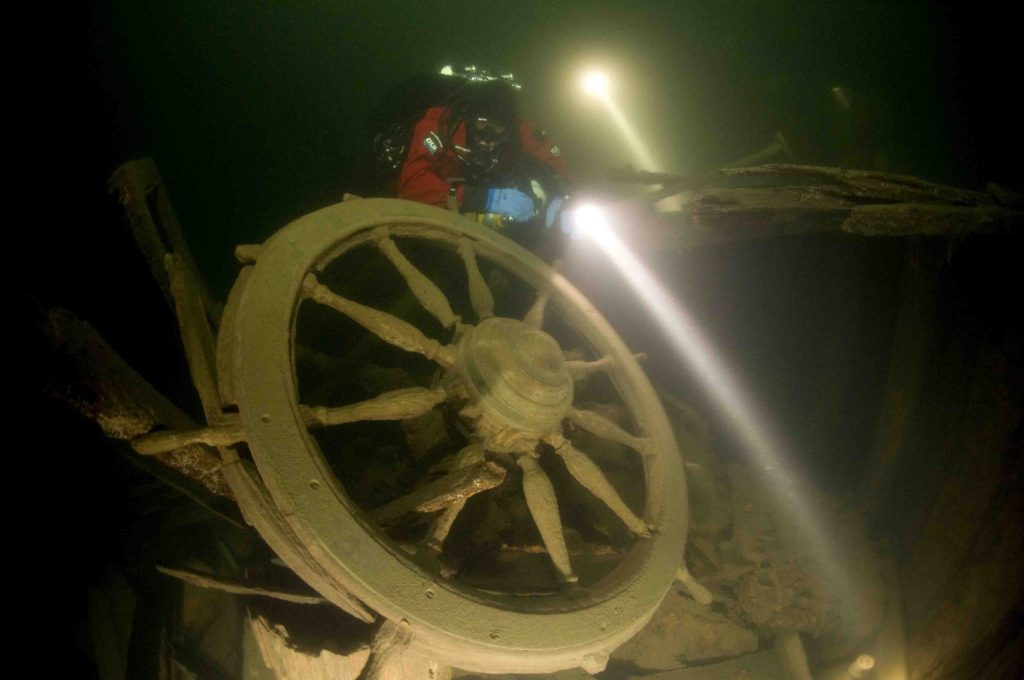
Diving in the Baltic sea

What the Baltic Sea lacks in tropical reefs, it makes up for in shipwrecks – all well preserved thanks to the low saline water and an absence of wood-eating worms. Around 40,000 known wrecks lie on the bottom, from Viking vessels to World War II submarines.

Diving tourism is just beginning to take off in Sweden, with several new companies who can lead divers to these sunken treasures.

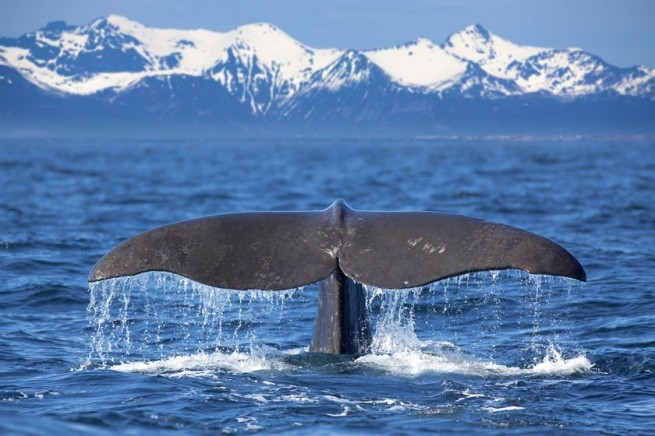
Europe’s unspoilt north contains some of the most fascinating creatures on the planet. Whale-watching is a burgeoning industry and the north coast of Norway is a prime place to spot orca, minke and sperm whales from May to September. Greenland has even more species to see, including narwhales.

021116-whale-safari-norway
Visitors can go on a whale-watching safari in towns such as Nuuk and Kulusuuk, and it’s common to see creatures while walking by the shores or fjord sides.

Scandinavian Adventure Activities, written by Tor Kjolberg

Norway’s Most Popular Tourist Attraction

More than 100,000 visitors are expected to visit Troll’s Tongue in Hordaland this year – in spite the fact that it was considered a place for the few.

But when the newspaper photographer Roar Christiansen in Bergen posted a photo in social media in 2011n and a story was published in National Geographic, millions of travelers have read about the mountain formation.

Hiking to Trolltunga

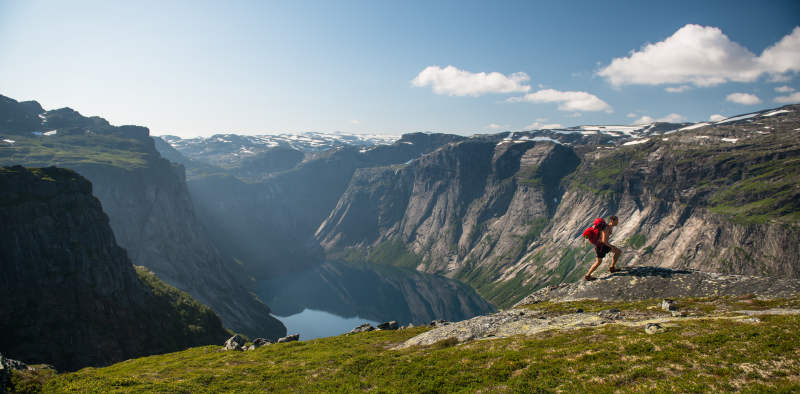
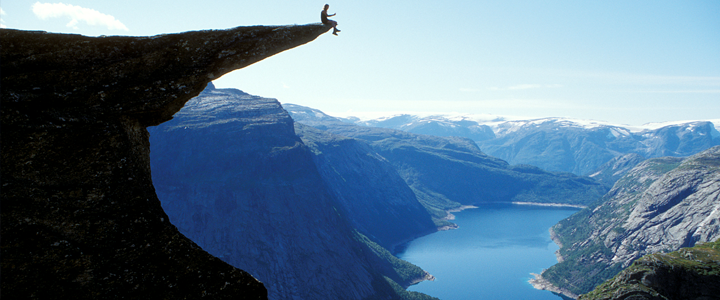
Trolltunga is one of the most spectacular scenic cliffs in Norway. Trolltunga is situated about 1100 meters above sea level, hovering 700 meters above lake Ringedalsvatnet, providing a breathtaking backdrop, ideal for photographs.

Photo: Visit Norway
Photo: Visit Norway

However, there are several things to take into consideration when deciding to hike Norway’s Trolltunga. Can you walk up a flight of stairs without breathing hard? Do you mind stepping in mud puddles as large as Rhode Island, and can you handle extreme beauty without sobbing?
The hike starts in Skjeggedal and goes through the high mountains, takes 10-12 hours (23 km in total to Trolltunga and return) and the ascent is about 900 meters. It is a long and hard hike. All nature based activities are at your own risk, and you will need sturdy hiking boots, bring extra clothing and be prepared for bad weather.

091116-hiking-to-trolltunga-warning
A Norwegian tour guide says he had been expecting tragedy to strike at the tourist hot spot, and actually on a September Saturday last year a Melbourne student, Kristi Kafcaloudis, 24, fell to her death. She lost her balance as she tried to walk off the rock ledge and join her two friends.

Thomas Ruud, the owner of Trolltunga Adventures, which specializes in guided treks around the area, said it would be impossible to install fences, because the whole valley is a 700-meter drop.

091116-trolls-tongue-norway-you-tube
I talked to two tourists from Portugal, who told me there was no question that this was one of the most physically demanding adventures they’d ever been on in their lives. They was participating a 22 kilometers (~13.6 miles) round trip, which took a total of 11 hours (6 hours up, 1 hour at Trolltunga, and 4 hours back down).

Trolltunga adventures

The hike is usually possible to do from mid-June, depending on when the snow melts in the mountains , until mid-September.

Bring map and compass, plenty to eat and drink, a torch and a simple first aid kit. Weather in the high mountains can change quickly – check the latest weather forecast before going to Trolltunga. Do not hike to Trolltunga in strong wind, heavy rain or in foggy weather. It is always colder in the mountains than down by the fjord. Respect the nature.

Photo: Hotel Ullensvang

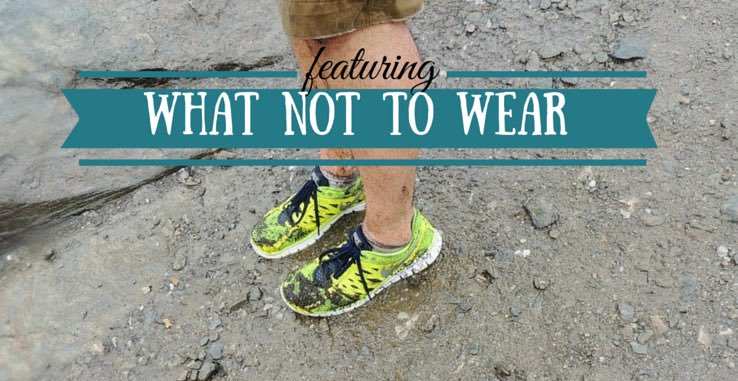
Mr Ruud says that this pretty `new’ attraction has become a huge favorite for travelers around the world and there are a lot of inexperienced people doing the trek – both in physical form and some clothing/shoes you wouldn’t believe.’  Every year there are search and rescue operations for hikers in serious trouble.

There is no mobile phone coverage along the route. Warning – do not hike to Trolltunga in wintertime, except from mid-March when you can join guided snowshoe hikes with Trolltunga Active.

091116-trolltunga-trolls-tongue-norway
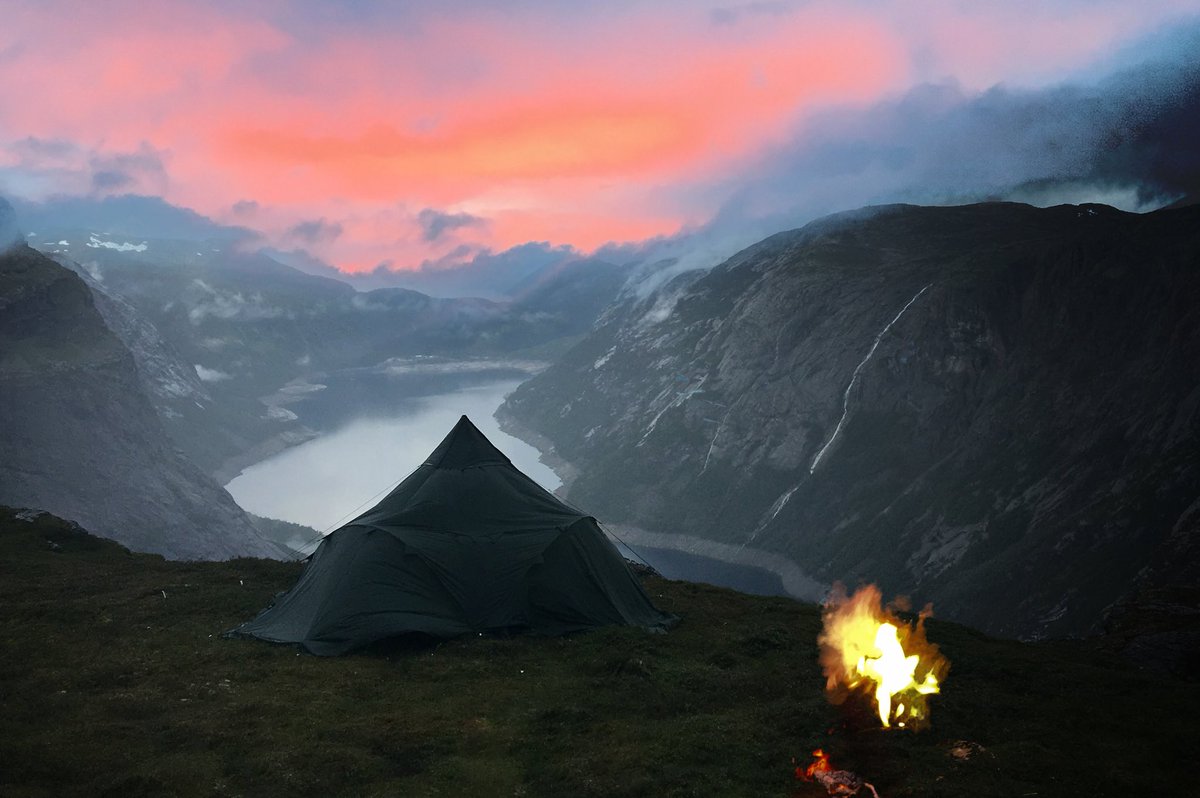
Trolltunga was formed about 10,000 years ago from glacier erosion. In fact you can still see glaciers on the mountaintops and take guided tours to them. Along the way, you’ll find gorgeous blue lakes, towering fjords and impressive scenery that no picture can accurately describe.

091116-trolltunga-map
How To Get There
Odda is the main town and point of reference you want to reach. It is located at the southern tip of the Sørfjorden, and you can get there from Bergen or Oslo by bus or train. Once you reach Odda, you’ll take a bus through Tyssedal and then up to the mountain settlement of Skjeggedal. This bus is only 48 NOK and is probably the best and easiest way to get there without a car. The trailhead for Trolltunga begins in Skjeggedal.

091116-trolltunga-warning
Feel free to contact the Odda Tourist Office for more detailed information about the hike,

For other popular hikes, have a look at
Norwegian Views

Norway’s Most Popular Tourist Attraction, written by Tor Kjolberg

Scandinavian Eel

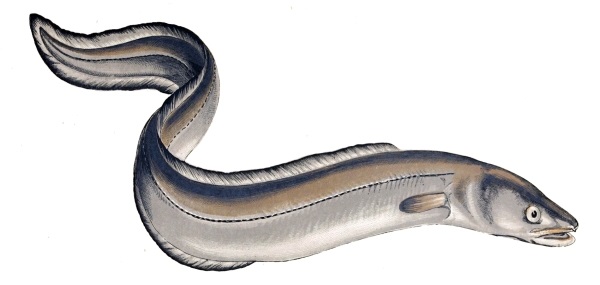
Anguilla anguilla. Eels are mythic creatures, spending their youth in the sea but their adult life in fresh water.

As tiny fry (elvers) they take the grand tour of their life, spending three years swimming from the Saragossa Sea off the American coast thousands of miles across the Atlantic, bound for the streams and rivers of Europe and North Africa.

They then live their very long adult life in fresh water, before going on the long pilgrimage back to the warm sea of their youth to spawn and die.

141116-eel
These days, wild eel is a threatened creature. This is partly due to overfishing – including in rather mean ways, using flares to illuminate the water at night, when the eels are most active. However, the most serious threat is the damage to the eels’ habitat caused by pollution and intensive drainage.

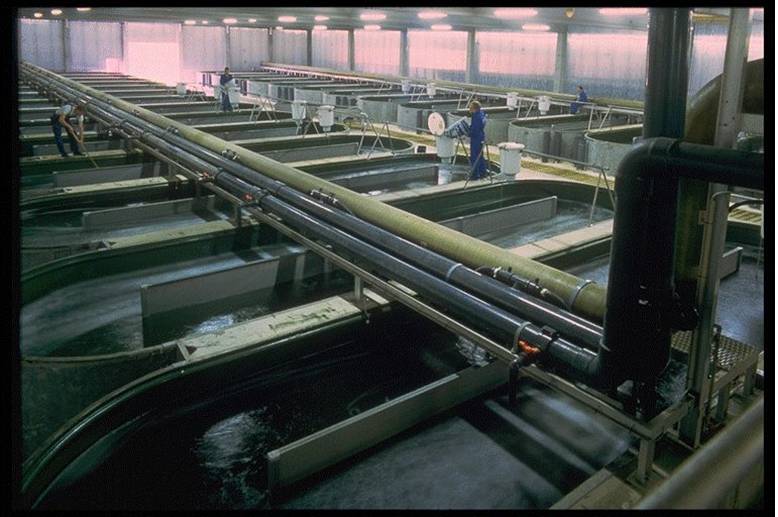
Nowadays, eel farming is big business, and the farmed eels are actually good to eat.

Scandinavian silver eel

In Scandinavia, eating eel is a male initiation rite, a contest, the proof of manhood being the number of times the bones can reach around the plate, and there is schnapps to go with most of the pieces of eel.

141116-eel-as-food
Appearing and taste
Eels have small heads and very tough, black skin. They wiggle like a snake and they even taste very much like snake. They are more popular dead than alive – as living creatures, most women find eels nasty, slimy beasts. Wild eels can reach 1.5 meters in length, although specimens this big are rarely seen. Most eels for frying are 30-40cm long. Those for smoking need more fat, which comes with age.

Eels in bucket
Eels in bucket

Buying and storing
Smoked eel must be shiny, firm and with absolutely no wrinkles. Eel will not keep more than a day, so cook it on the day it is bought; once cooked, eel will keep for several days in the fridge.

141116-eel-dish
Culinary uses
Eel flesh is rich and robust enough to cope with strong flavorings, including serious spices, vinegar, lemon, beer, horseradish and/or garlic.

Eel has a great, rough taste and the flesh is fine, very firm and very, very fatty. When it is smoked the fattiness is a virtue, but if you are boiling or frying it, eel needs special care to get rid of some of the fat, and be as wonderful as it really can be. Grilling is the perfect way to cook fresh eel with the skin on; the fat has time to drip away, leaving succulent meat.

If you are pan-frying it, the eel should be skinned. Fry it once until the fat and juices run, then transfer it to a colander and wash it in cold water. Dry the eel, dip it in seasoned flour, then fry again in browned butter.

Grilled eel
Grilled eel

The traditional trimmings are creamed potatoes, though honestly this combination is not very easy to survive as the fat content is alarmingly high. It’s tasty but devastating. You have to stay in bed for a day to digest, like a snake that has swallowed a whole goat.

There are other delicious ways to eat eel without the health alert: I suggest new potatoes and a vinegary cucumber salad with dill. Or, as the recipe below, braised in dark beer. Leftovers are beautiful if soused.

141116-braised-eel
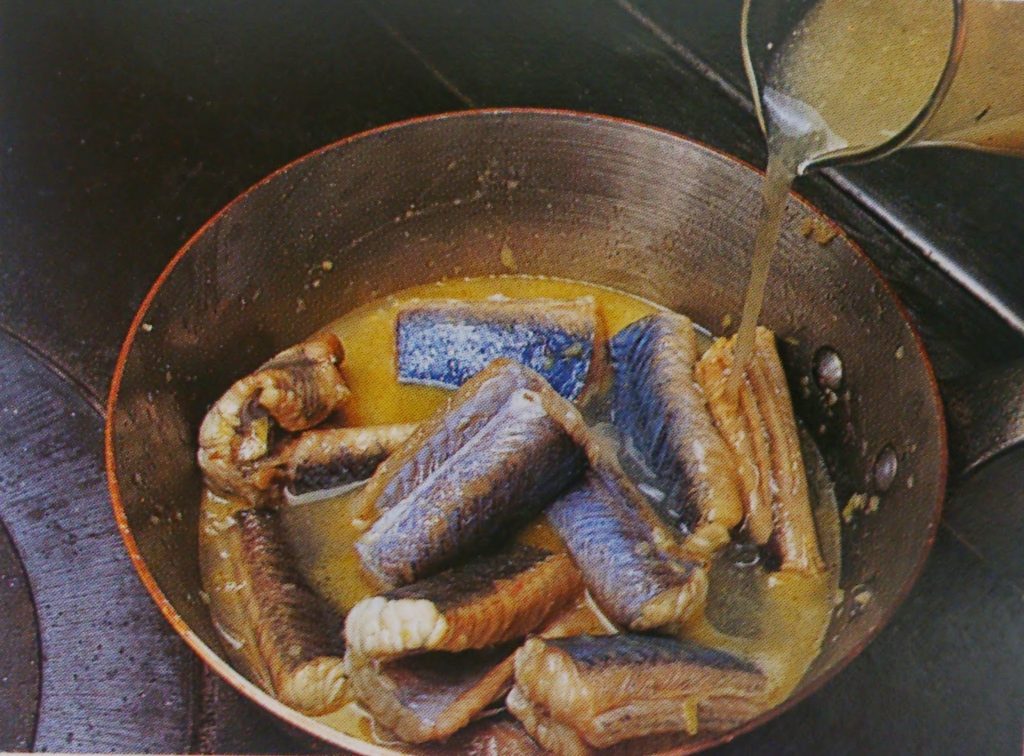
Eel braised in beer
The interesting flavor if this dish comes from the dark beer, lots of herbs and a touch of vinegar, contrasting with the delicious fatty fish. The strange thing about cooking with beer is that the bitterness from the hops diminishes during cooking, leaving an arousing, pleasant complexity. Eat simply with new potatoes.

800g eel, cut into large chunks
2 tablespoons salted butter
4 tablespoons cider vinegar
A sprig each of fresh tarragon and sage
1 bay leaf
1 teaspoon fresh thyme leaves
250ml dark, strong beer
200ml sweet cider
Coarse sea salt
1 teaspoon ground black pepper
150ml whipping cream
500g chopped mixed fresh herbs: parsley, dill, chives, chervil and sorrel
(Serves 4)

Fry the eel in butter in a deep, thick-based pan, browning it lightly all over. Add the vinegar and fry it until the liquid has evaporated. Add the sage and tarragon sprigs, bay leaf, rhyme leaves, beer, cider, salt and pepper. Leave to braise slowly for 15 minutes until tender. Remove the eel from the pan. Pour in the cream and reduce to a thick sauce over a high heat. Add the chopped fresh herbs, and salt and pepper to taste.  Return the eel to the pan and then serve.

Feature image (on top) Smoked eel

Written by Tor Kjolberg

Villa Saunders in Bergen

0

Bergen-based, Canadian born architect Todd Saunders’ self-designed home is a soaring symphony in Norwegian wood.

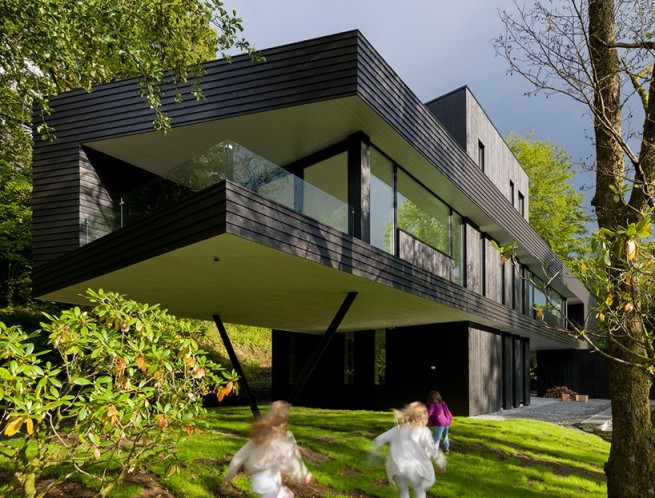
Todd Saunders of Saunders Architecture completed his project of designing his own family home in 2014. The house, nestled in an abundant suburb of Bergen, Tveirerås Garden City, is 35m long and 6m wide, consisting of two main structures, cladded in a stained, dark wood.

Villa Saunders in Bergen
Todd Saunder’s own family home was completed in 2014.

The suburb was laid out by pioneering local architect Leif Grung in the early 1930s. Grung’s elegant functionalism has weathered well, and the immaculately maintained plots, with their verdant planting and far-reaching views, create an oasis of calm.

https://www.dailyscandinavian.com/villa-saunders-in-bergen/
Due to the colder climate of the northern hemisphere, the rooms are warmed by underfloor heating powered by geothermal energy.

About his house, Saunders said “it’s like three sticks, stacked on top of each other.” The residence displays clear modernistic, architectural elements with flat roof, ribbon windows and subtle details. Due to the colder climate of the northern hemisphere, the rooms are warmed by underfloor heating powered by geothermal energy.

081116-villa-saunders-bergen-2
The lifted element contributes to the illusion that the house is floating in the forest, as well as creating a covered outside space.

https://www.dailyscandinavian.com/villa-saunders-in-bergen/
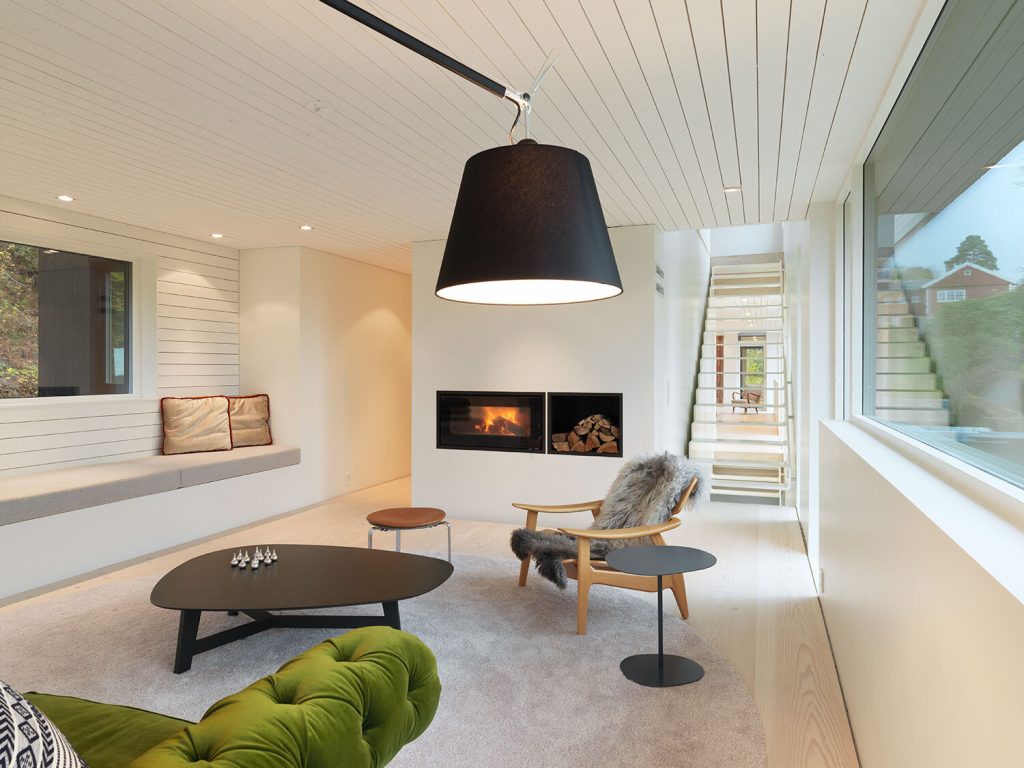
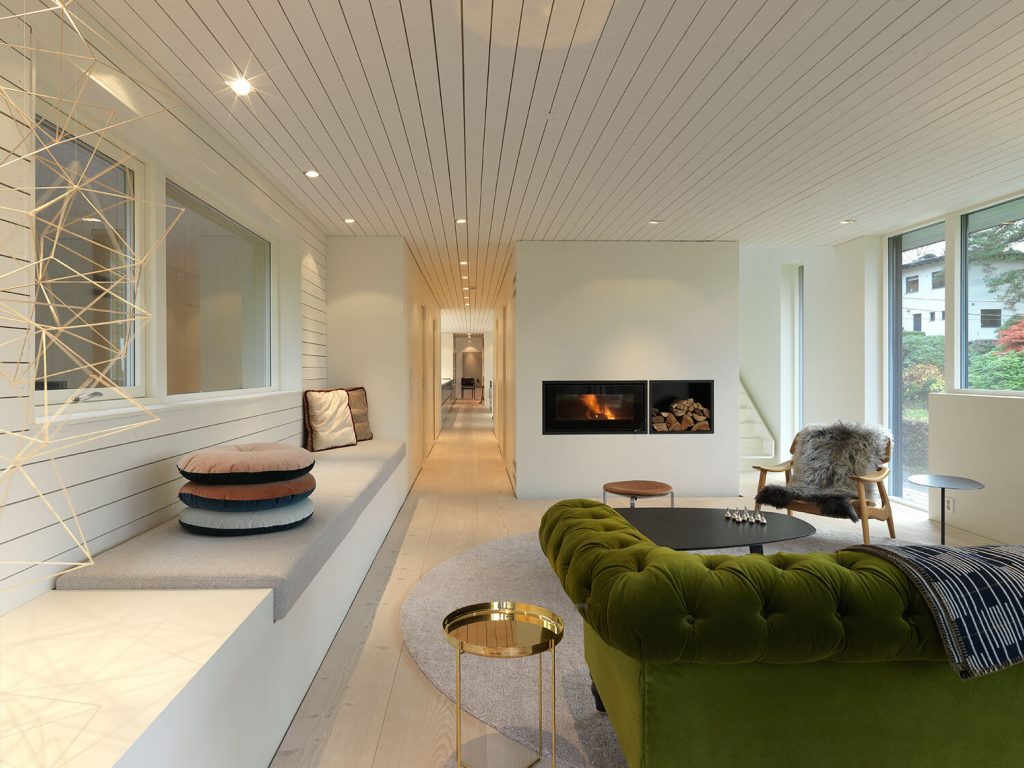
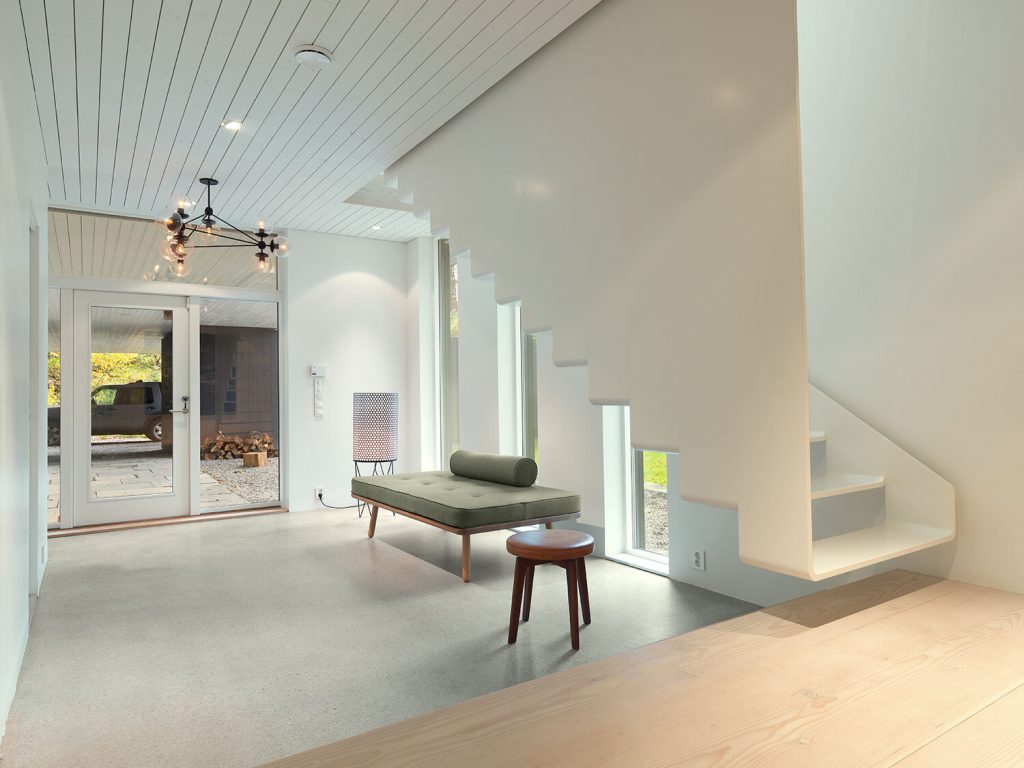
The bright livingroom.

Internally, the first floor contains the main entrance and the storage areas of a bicycle pod, kayak pod and technical pod. A library is situated in the roof of the vertical element, while a large roof terrace can be enjoyed above the horizontal structure.

Related: Artistic Architecture in Norway and Newfoundland

Villa Saunders in Bergen
in contrast with its dark exterior, the rooms are light and illuminated by large windows.

The first view of the house is up a steep, narrow driveway, from which one gets tantalizing glimpses of the ribbon windows, flat roofs and shuttered facades of the vintage Grungs. in contrast with its dark exterior, the rooms are light and illuminated by large windows. Additionally, the architect collaborated with Hannes Wingate for the interior design, resulting in the use of light and refined materials, mix of Nordic and vintage furniture pieces.

Related: Mathematical Tendencies with Their Influence on Scandinavian Architectural Design

Villa Saunders in Bergen
The architect collaborated with Hannes Wingate for the interior design.

Set on an east-west alignment, just like its 80-year- old neighbours, the new house feels utterly integrated into the site. The last remaining plot in Grung’s masterplan, the land was originally designated as a communal park but had been abandoned to vegetation.

Villa Saunders in Bergen
Bathroom

Overall, villa S is an exercise of contemporary house design which addresses the lifestyle, climate, and connection between the natural and built environment- making for an ideal family space.

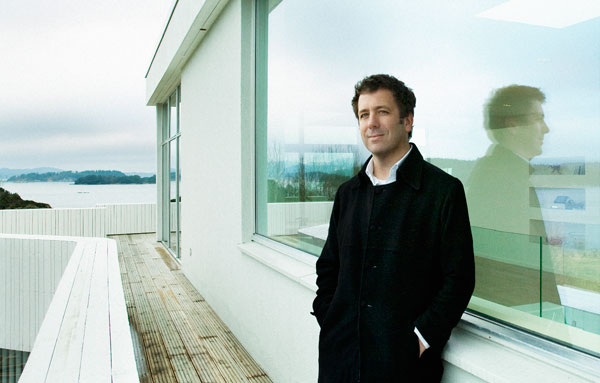
Todd Saunders outside Villa Saunders

Todd Saunders
Born 1969 in Gander, Newfoundland, Canada
Master in architecture from McGill University, Montreal
Company: Saunders Architecture, Bergen
Guest professor at Cornell, New York
Considered one of the world’s five best architects by Huffington Post
Listed on Baunetz’ 100 Best Archictects
Villa S, completed 2014

Villa Saunders in Bergen, written by Tor Kjolberg

All images by Saunders / Bent René Synnevåg


14 Funny Facts about Scandinavia

Usually Scandinavia is associated with winter sports and fjords; countries inhabited by tall, statuesque blondes and Vikings.  Yet there is so much more to these Northern countries. We’ve compiled a list of strange, silly and superb Scandinavian facts. Read on!
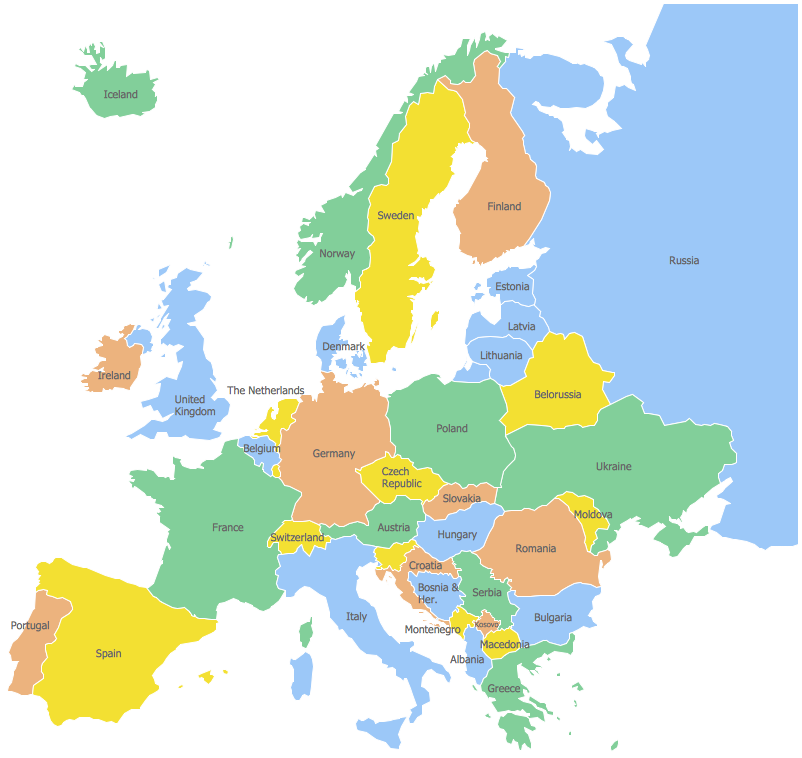
111116-europe-map
1) Norway
During Norway’s Polar Nights, the sun is up for only 3 hours a day in some parts (and not at all in others).

Polar night in Norway

2) Denmark
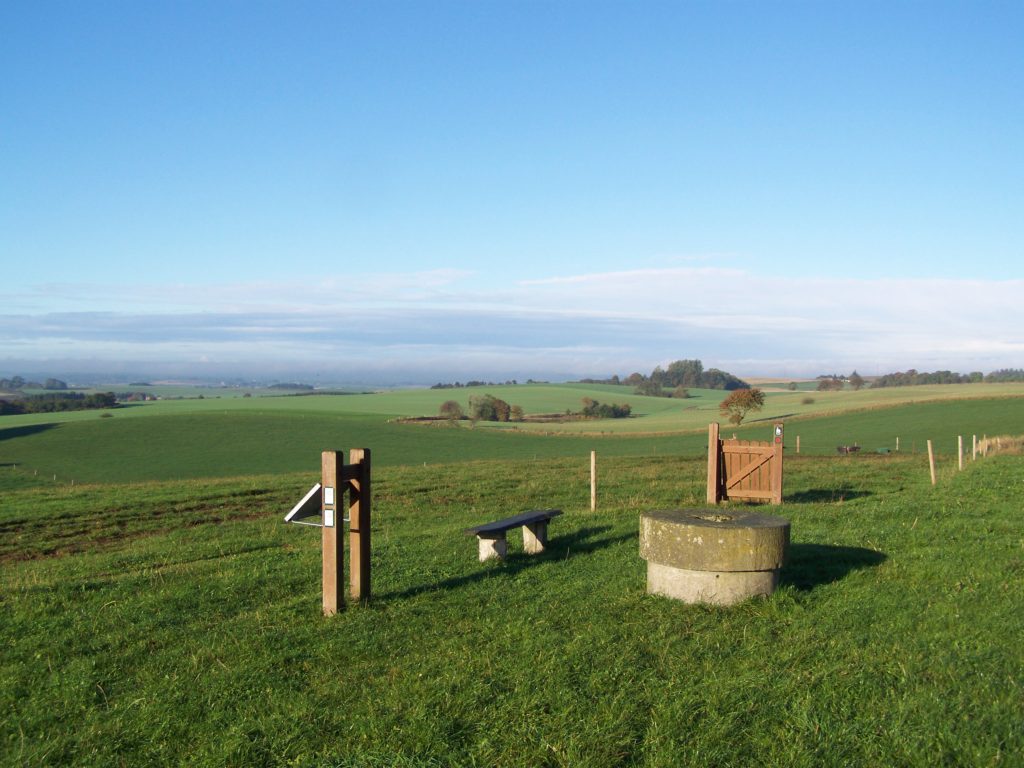
Denmark doesn’t do mountains. Their tallest ‘hill’ is a mere 170 meters high. It’s called Møllehøj.

Denmark's highest mountain, Möllehöj
Denmark’s highest mountain, Möllehöj

3) Sweden
The most popular souvenir in Sweden is the commonly seen “moose-crossing” warning sign. Many are stolen from the roadside every year.

Moose crossing sign from Sweden

4) Denmark
In Denmark, if you’re not married by the age of 30 you get a pepper shaker as a gift. Men are called Pepperman (“pebersvend”) and females Peppermaid (“pebermø”). We don’t know why…

Pepper man cake in Denmark

5) Sweden
Sweden is a trailblazer when it comes to inventions and innovations. The zipper, the fridge, the pacemaker and the computer mouse are Swedish. Not forgetting IKEA and H&M. The stylish lot.

Did you know that the zipper is a Swedish invention?

6) Denmark
The inventors of LEGO® got things started in Billund, Denmark in 1932 manufacturing not toy bricks, but stepladders! Naturally, Billund is now the home of Legoland Theme Park.

111116-lego-denmark
7) Norway

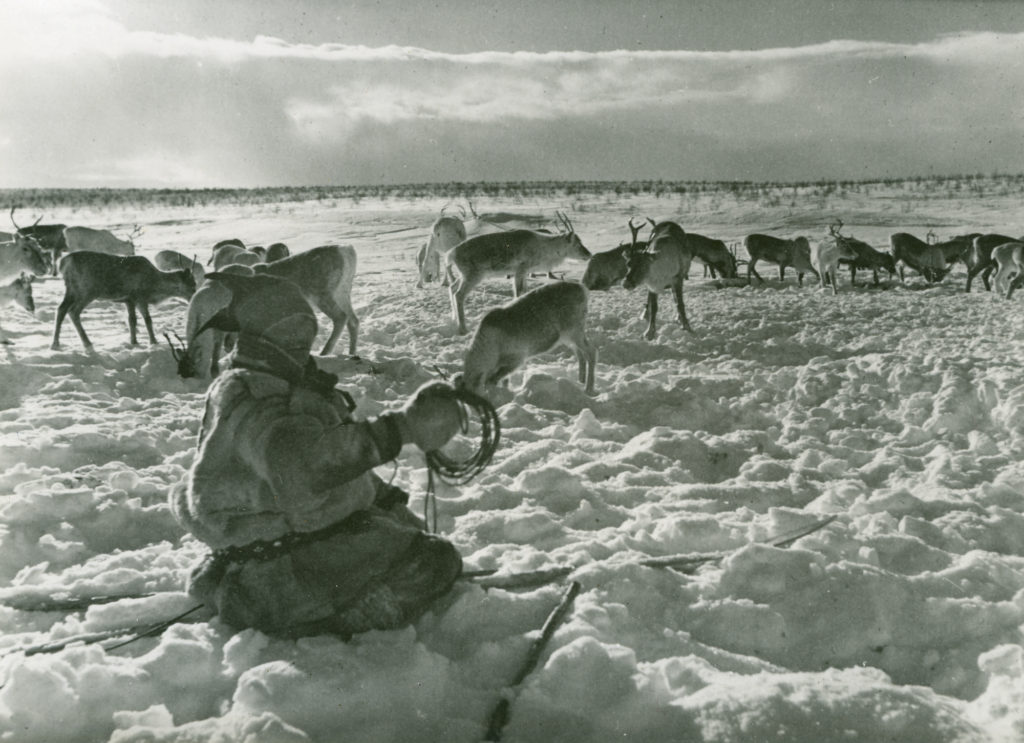
You herd it here first. The world’s largest population of arctic reindeer herders can be found in Norway!

Sami people noth of the Arctic circle in Norway

8) Norway
Norway is just a little bit larger than the US state New Mexico and two thirds of Norway are mountain regions.

Just have a look at the map above.

9) Sweden
During Easter in Sweden, which is a well-known holiday here, children dress up and go from home to home asking for candy, similar to Halloween!

Easter in Sweden
Easter in Sweden

10) Sweden
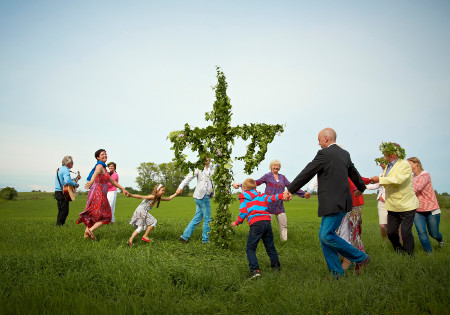
During Midsummer, the Swedes dance around a maypole and sing songs where they pretend to be frogs, pigs, horses… ridiculously catchy too, if you’re lucky enough to get to experience this, you’ll be humming the songs for the rest of your holiday.

Midsummer in Sweden
Midsummer in Sweden

11) Denmark
The Danes were recently crowned as the happiest people in the world

Happy Danes
Happy Danes

12) Sweden
The Swedes recycle so much of their waste, so they have to import it from Norway so they can fuel their energy programs.

111116-recycling-sweden
13) Norway

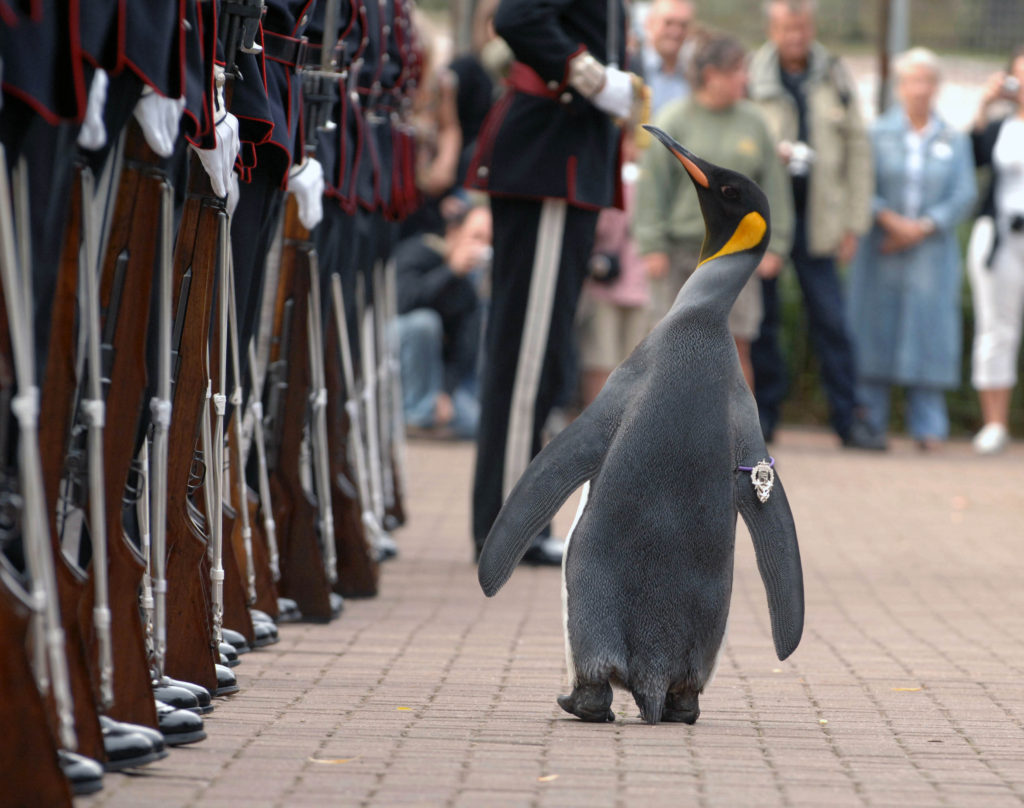
In 2008, Norway knighted a penguin! The penguin in question is called Nils Olav and prior to his knighthood, was promoted to Colonel in Chief of the Norwegian Army.

Nils Olav the Penguin inspects the Kings Guard of Norway after being bestowed with a knighthood at Edinburgh Zoo in Scotland. The King's Guard adopted the penguin as their mascot in 1972 during a visit to Edinburgh for the annual Military Tattoo.
Nils Olav the Penguin inspects the Kings Guard of Norway after being bestowed with a knighthood at Edinburgh Zoo in Scotland.
The King’s Guard adopted the penguin as their mascot in 1972 during a visit to Edinburgh for the annual Military Tattoo.


Danish boy feeding himself spaghetti

14) Denmark
The Danes eat more pasta than any other country in the world.

14 Funny Facts about Scandinavia, compiled by Admin