The Aurora Borealis (the Northern Lights) is the world’s most brilliant light show.
And each year people travel far and wide for a chance to see it.
But how do they work?
The aurora occurs when highly charged electrons (from the solar wind) collide with oxygen and nitrogen in the earth’s atmosphere. These particles congregate near the Earth’s magnetic field.
Northern lights in Greenland
What’s even wilder…
The color of the aurora depends on which atom is struck at what altitude:
– Green – oxygen, up to 150 miles
– Red – oxygen, above 150 miles
– Blue – nitrogen, up to 60 miles
– Purple – nitrogen, above 60 miles
These magnetic and electric forces are constantly shifting, creating the auroras “dance”.
Atrora borealis in Sweden
And the best place to get seduced by the aurora is near the magnetic poles, e. g. Greenland and the Scandinavian coast.
October to March are the best months for viewing because it’s darker. In the summer, most northern locations get sun 24 hours a day, making difficult to view.
Northern Lights in Greenland
The dancing northern lights in the night sky are a sight for the gods which winter holidaymakers in Greenland will in all likelihood come to experience. From early autumn the night sky is regularly illuminated by the northern lights’ green glow.
It is a natural phenomenon that always causes excitement and wonder among those who have never seen it before.
Northern Lights in Norway
Alta is the largest town in Finnmark. A world of adventure awaits you there, all framed by the brilliant blue light and contrasts which are so distinctive of Finnmark in the middle of winter.
The world’s first Northern Light observatory was built there at the end of the nineteenth century and has earned Alta the well-deserved nickname “The Town of the Northern Lights”.
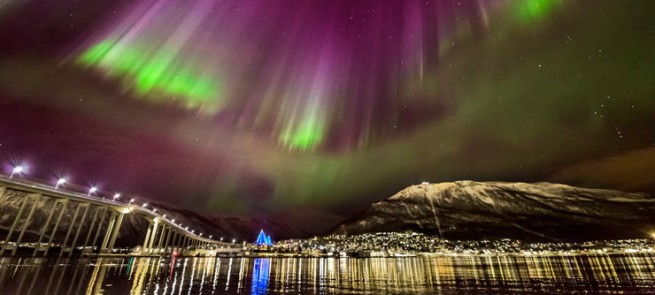
Northern lights in Tromsoe, Norway. Photo: Innovation Norway/Bjorn Jorgensen
But there are other Norwegian places where you can be seduced by the aurora. Just click on the link above to find out more.
Northern Lights in Sweden On more than one traveller’s list of things to do before you die, you’ll find ‘See the northern loghts’ jotted down. Rightfully so – these lights are one of nature’s most jaw-dropping displays. Click on the link above to find out the best places to watch them in Sweden.
Feature image (on top): Nothern Lights in Tromsoe, Norway. Photo: Visit Norway
Seducing Northern Lights in Scandinavia, compiled by Tor Kjolberg
Last summer architect Tron Meyer (31) launched his spiral stair Risa Meyer, made from Norwegian wood and produced in Norway.
The design has made it possible to replace steel and concrete with a more sustainable alternative, high quality wood.
In a time where most stairs are made from standard materials like steel and concrete produced outside Norway, a Norwegian spiral stair is indeed very uncommon.
The Rita Meyer stair is beautiful, made from sustainably harvested wood and certainly elegant.
“We looked at conventions like the narrow part of the step along the core, and asked ourselves how we could make it into a valuable part of our design,” explains Tron Mayer. “The staircase has become a balanced dialogue between absolute needs of function and an optimal construction using wood,” he adds.
The stair is offered in two wooden materials, spruce or oak, produced at Massiv Lust in Luster at the West coast of Norway, who won the 2014 Nordic Wood Award. The Nordic Wood Prize was created in 2014 and awarded by the Association of Nordic Wooden Towns, a Nordic cooperation between Nordic cities to promote modern urban development with wooden houses.
Wooden Prize 2014
The Nordic Wooden Towns project– a success story and a kick off for further regional co-operation The Nordic countries including Iceland and Denmark (on behalf of the Faroe Islands and Greenland) were very much involved in the Nordic Wooden Towns project carried out in 1970-1972. The common concern was the rapid economic change in the 1960s and 70s and the planners’ visions of the modern urban environment. The small wooden towns very typical of the Nordic countries were threatened. Only a few historic areas had attained conservation area status such as Kyrkbacken in Västerås, Sweden, Old Stavanger in Norway and Old Århus in Denmark.
Massive Lust AS is a Norwegian start-up solid wood manufacturer, producing cross-glued solid wood. In 2013 the company moved into a new production hall at Granden in Gaupne in Luster Municipality, built in solid wood.
Photo:
From left: Project Manager Hans Andrén in association Nordic cities, laureate Jørgen Tycho in Massive Lust, Johanna Kairi, Holzindustrie Schweighofer GmbH and Chairman Vesa Juntilla in association Nordic cities. Photo: Knut Werner Lindeberg Alsén, Byggeindustrien.
Whether you want to call the stair a sculpture or anything else, it’s very functional and will be even more beautiful after years of use.
Sleek Norwegian Spiral Stair, written by Tor Kjolberg
With the strongest exchange rates to Danish, Norwegian and Swedish kroner in nearly a decade, airfare prices dipping, and crowds thinning out for the fall, fall is the best time to visit Scandinavia for both huge savings and the opportunity to take things in at a more luxurious rate.
Best Exchange Rates In Years Foreign visitors looking to visit Scandinavia this fall are sitting pretty right now. It’s been nearly a decade since foreign currencies have been so strong against kroner, and all signs point to continued parity through at least the end of the year.
Use this opportunity to visit the three Scandinavian capitals, Copenhagen, Oslo and Stockholm. Less Demand Drives Down Fares It’s basic economics, really: higher demand translates to higher rates and lower demand leads to lower rates. Thus, flights to Scandinavia during the summer high season are very expensive; fall flights, when the demand is lower, are less expensive.
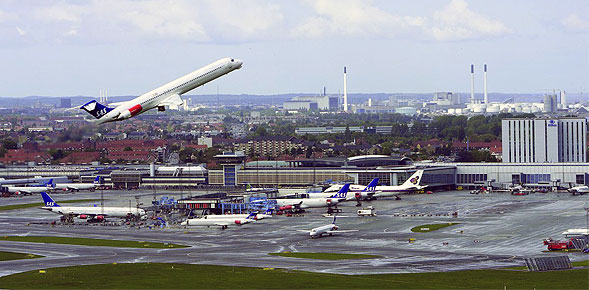
Copenhagen Airport
For travel to Scandinavia, the sweet spots for airfare savings are just before and just after summer when you stand to see savings of 50 percent off the peak-season prices. We spotted, for example, two round-trip fares between Boston and Copenhagen this fall for about $800 total, taxes and fees included. In July, you couldn’t have purchased one fare at that price, let alone two.
Savings At Accommodations Airlines and cruise lines have an advantage over hotels: Rooms can’t be relocated to wherever the demand is highest. Rooms either go for significantly reduced rates or they go empty. Lower demand leads to higher risk of vacancies, which leads to a higher opportunity for you to nab cheaper rates.
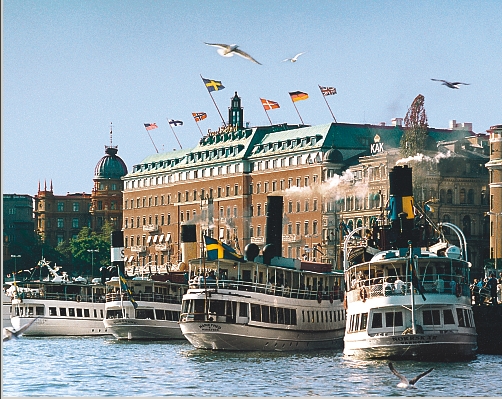
First Hotels – Grims Grenka, Oslo
Room prices are negotiable. Brush up on your courage and haggling skills and you stand to save huge sums, especially during non-peak times. If you’ve already prepaid for your stay but find the hotel quite vacant when you arrive, negotiate for a room upgrade.
Shops and restaurants are open – while many are closed during summer season Shoulder season in Scandinavia is in fact more welcoming to travelers as is the busy summer window, especially in major Scandinavian cities. The only exceptions to this rule are the countryside and remote smaller towns with few year-round visitors.
Sparse Crowds Those who’ve attempted to climb the Norwegian mountains, tour the canals of Copenhagen or marvel at the Subway art collections in Stockholm during peak season can attest to this: The swarms of aggressive tourists at these popular sites can all but ruin the iconic monuments you traveled so far to visit. Sparse crowds translate to shorter lines and less frustration.
Richer Experiences Everyone, including locals, feels less rushed in the off season. Local tour guides will have more time to field your questions; shop keepers will have ample time to recommend their best wares or their favorite local restaurant; wait staffwill have time to describe the finer ingredients in a dish. The chef will make the rounds to greet his patrons.
Relaxing in Old Town, Stockholm
Dining Is More Affordable As the crowds thin out, restaurateurs increase incentives to drive customers through their doors. For the shoulder-season traveler, this translates to an increased number of happy hours, two-for-ones, and other dining specials. Take advantage of these savings by upgrading your palette and trying typically costlier items on the menu.
And that months-long waitlist at the world-class restaurant? Just as exclusive and delicious, yet suddenly with an available table.
Mind Your Specific Destination If you’re the type of traveler who prefers longer days for sightseeing and decent weather, select your destination wisely. Traditionally, destinations that geographically sit further north are colder. For example, this October expect average temperatures of 46 degrees Fahrenheit and 8 percent chance of sunny days in Stockholm.
Perspectives Sure, the weather may not be as sunny as summer, but with the fewer daylight hours also comes foliage season and its bounty of color. As with most things in life, shoulder-season travel is about your perspective: glass half full or empty.
9 Reasons to Visit Scandinavia in the Fall, written by Tor Kjolberg
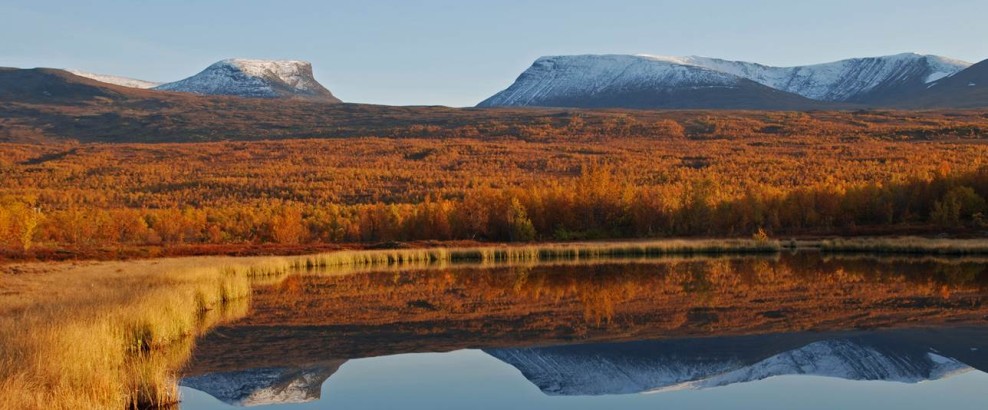
Feature image (on top) Autumn in Lom, Western Norway
Experience the Tverrfjellet Pavillion in Dovre Municipality, designed by the prestigious architectural firm Snøhetta.
The Tverrfjellet Cabin was opened 2011, built on behalf of the Norwegian Wild Reindeer Centre North. The building is made as a box of steel, with a large glass surface against the mountain Snøhetta in the north, and one organic and undulating form of solid wood to the south.
The building is open and accessible during the summer months, and is reached after 20 minutes’ walk from the parking lot at Tverrfjellet.
The car park is bounded by the front post rows inspired by the old fences that were used to capture wild reindeer in the mountains for more than 800 years ago. Follow the gravel path, which is also accessible to wheelchair users, 1500 meters up to the viewpoint.
On the way, a series of flagstones tell you the Dovre mountain’s history over the past 10 000 years. At the top you’ll reach Viewpoint Snøhetta with a spectacular view to the Dovre-Sunndalsfjella National Park and the abandoned Hjerkinn artillery range.
The building has won several international awards since it was built and was named the “World Building of the Year” in 2011.
During the past four years over 60,000 people have visited the building.
Hjerkinnhus is located 3 km from Snøhetta Viewpoint.
Snøhetta was long thought to be Norway’s highest peak, and plays a significant role in the romantic nationalism ideology of mountain Norway. “United and faithful until Dovre falls”, the famous quote from the Constitution fathers in Eidsvold, testifies to this.
When you come for the first time into this giant, isolated mountains, especially if you come from Snøheim, you understand why Snøhetta has obtained a special place in the picture of the mountain Norway. Head to Snøhetta and Dovre and see for yourself!
Skåne in Southern Sweden is famous for its apples and 26-27 September sees the annual Apple Market in Kivik.
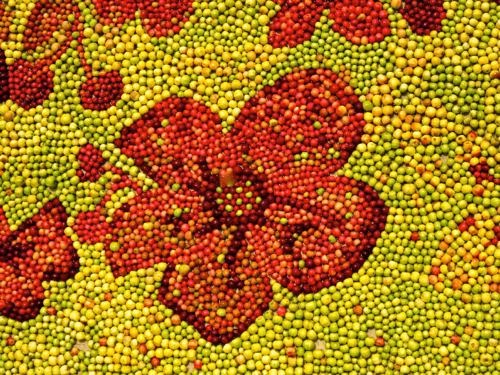
Artist Emma Karp Lundström has been behind the apple art at The Kivik Apple Market in recent years and this year will be no exception. This year’s market takes place in Kivik 26-27 September.
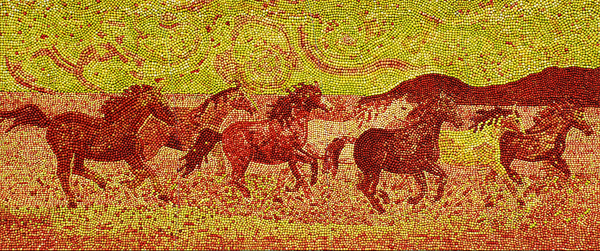
The Kivik Apple Market is a harvest festival focusing on the Swedish apple. Every year the market features a piece of apple art. The piece of art looks like a painting, but is actually pieced together by colorful apples. The theme is kept secret until the art is unveiled at the market.
The Kivik Apple Market started in 1988 when the Swedish fruit-growing industry joined forces to raise positive awareness of Swedish fruit. In 1988, an estimated 6,000 visitors attended the market in the square. Twenty or so years later, between 20,000 and 25,000 people are attracted to Kivik Harbour during the last weekend in September.
During the market, visitors can taste and buy a wide range of Swedish fruit, listen to artists performing on the stage, buy Swedish handicrafts and attend the annual Golden Apple award ceremony. The Apple Market is organized by the non-profit company Äpplemarknaden i Kivik – a cooperative effort from several fruit growers and companies in the Swedish fruit industry, including Äppelriket & Kiviks Musteri.
Kivik is a small town in the southern county of Skåne. It is located in a part of Skåne called Österlen.
Apple Art in Southern Sweden, source: Visit Sweden
The Norwegian artist Gardar Eide Einarsson is perhaps the most unpopular young artist in Norway, but in his new hometown Tokyo he has acquired an added status as an all over tattooed performer of martial arts.
His exhibitions over the past decade have followed a highly consistent thematic trajectory, continuously tracing out what one would call an ‘iconography of resistance’.
“Say nothing” by Gardar Eide Einarsson
When Gardar Eide Einarsson (39) moved from Norway to New York some years ago, he believed he would return to Norway after a short stay. Instead he moved to Tokyo, and bought an apartment in the fashionable Aoyama district. Later he bought a house from the elderly professor and famous architect Kazunari Sakamoto, who had just restored his own designed house in the Ebisu area. “The project had been more expensive than expected, but this is a home suitable for an artist who actually wanted to be an architect,” he says.
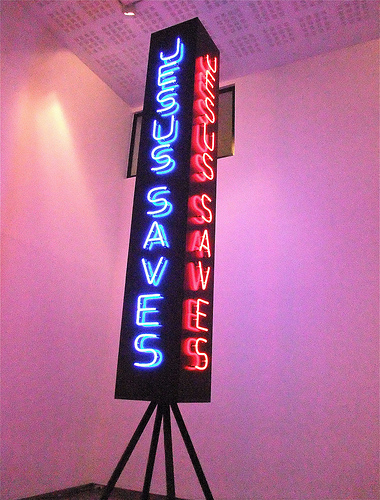
Some years ago he made a rotating neon sign that said, Jesus Saves for Art Basel in Switzerland. Einarsson says it is based on one of the scenes in Dirty Harry, where Clint Eastwood is hiding on a rooftop, staking out a serial killer. It became clear to him how evil the bad guy is when he shoots up a Jesus Saves sign.
The artist used lives with his Japanese wife and their two years old son. His Japanese wife runs a fashion and PR-agency. Einarsson exercises daily in his Brazilian jiu-jitsu club, and he has of course, he has designed the club’s logo.
The signs and symbols created by Einarsson often refer to fundamental conflictual structures between a society of control following 9/11, and the individual’s rebellion against and threat to central power.
66 car tyres and resin. Photo: Joshua White
“I grew up with a lot of American culture,” he says. “I was interested in stuff like skateboarding and hardcore music. But growing up in Norway, the whole relationship between the individual and society is very different from what I experienced in America.”
From the exhibition “Power Has a Fragrance” by Gardar Eide Einarsson at the Astrup Fearnley Museum of Modern Art, Oslo, Norway. May 6, 2010.
He explained that he moved to New York the day before 9/11, and there were armed guards on the subways and Humveens downtown. There was a very different relationship to individualism than he was used to in Norway. “I can still see those experiences in my work,” he adds.
Einarsson also uses historical examples of tragic, abortive attempts to achieve individual freedom, and looks at popular culture’s treatments of the myths, signs, and visuality of the outsider ideal as drawn from examples in reality where instances of extreme individualism have resulted in terrorism and crime.
Yves Saint Laurent by Einarsson
He explains that he became interested in arts through conceptual art and institutional critique during the ‘70s. If that critique hadn’t been there, I think a lot of my work would be stupid,” he adds.
During a solo exhibition in Bergen Kunsthall in Norway, the book “Versuchsstation des Weltuntergangs” was published and is the artist’s first comprehensive monograph. The book contains documentation of a large section of works since the early 2000s.
Three paintings by Gardar Einarsson and one by Stanley Whitney
The walls in his house is filled with photographs, depicting his life and his acquaintances, from both New York and Tokyo. One image shows a sculpture made by Einarsson’s favourite artist Cady Noland, photographed by Larry Clark. A photography from the famous work “Following Poece” by Vito Acconci, a New York artist, who Einarsson assisted for two years after having been asked to help him to build a shelf. Pictures by the post war classics Daido Moriyama and Araki, photo veterans Einarsson happens to meet in Tokyo.
He tells that he has become increasingly attracted to the more extreme, tragic versions of rebellion. He has done a number of collaborations with the Norwegian artist Matias Faldbakken, who he met in school, including Norway’s least favorite public arts piece. “It was demolished by the people,” he smiles. It was based in a German fairy tale about Schlaraffenland (Cockaigne) where nobody has to work, and if they did, they were punished.
“We tried to turn a public square in Bergen, the second largest city in Norway, into the fairy tale, and people got mad, telling us it was the worst thing they had ever seen.
The philosopher Nick Land outlines a complex interpretative horizon in the ecounter with Einarsson’s precise analyses of the language of power by exploiting and reactivating the vocabulary of ‘post-Minimalist’ art. Martin Herbert tackles Einarsson’s output in the 2000s, and shows how he continually problematizes the residual potential of art as critique and political tool within an art institution that has long since been exposed as a power structure in its own right, by constantly pointing to the contradictory oppositions between power and anti-power, between resistance and repressive tolerance.
Einarsson is, however, concerned about that his art is not becoming too nice and clever.
Gardar Eide Einarsson – Born in 1976, grew up at Ås, outside Oslo.
– Educated 1995-2003 at Bergen Art College, Städelschule, Frankfurt and New York’s Whitney Museum Independent Study Program.
– Known for paintings, sculptures and installations, using found material, often depicting sub cultures.
– Together with his artist partner Matias Faldbakken, he is often described as new conceptualist.
– He belongs to the most noted international artists during the recent years.
– His work has been bought by prestigious museums, like Museum of Modern Art in New York and Moderna Museet in Stockholm.
– He is represented by prestigious galleries, like Standard in Oslo, Yvon Lambert in Paris, Team Gallery in New York Maureen Paley in London and Nils Stærk in Copenhagen.
– He has cooperated with fashion designer Johan Lindeberg and designed perfume flacons for Yves Saint-Laurents.
Nippon Art by a Norwegian Artist, written by Tor Kjolberg
“Congratulations to all our winners here at Forte Village Resort in Sardinia,” said World Travel Awards President Graham Cooke last week-end. “These are the leaders of our industry here in Europe and it is a pleasure and an honor to recognize their achievements this evening.”
The European Gala Ceremony was held at Forte Village Resort in Sardinia, Italy. The European Gala Ceremony held on Saturday night September 5 was followed by an audience of more than 250 industry leaders from across Europe.
Feature image (on top): A representative from Norwegian Air Shuttle receives the World Travel Award 2015.
Focus this autumn is on the French painter Matisse at Henie Onstad Art Center outside Oslo as well as at Ordrupgaard Museum outside Copenhagen.
Basis for the two exhibitions is, however, fundamentally different.
Henie Onstad Kunstsenter is launching a provenance project with vast cultural and informational significance for museum institutions, art history students and professionals in Scandinavia as well as a general audience. The exhibition In Search of Matisse is the first research project in Norway on the relationship between looting and art collecting during and after World War II, and the role of the market also in contemporary situations such as Bagdad in 2003 and the ongoing destruction by IS in Mosul.
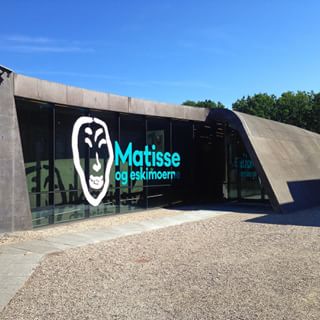
In Copenhagen, on the other hand, the focus is on a period in Matisse’s life in which the artist directed his attention and creative motivation towards the North, in a series of black and white depictions of Eskimos, whose faces and mask art, he was introduced to by his son-in-law’s collection of inuit masks and the Danish polar explorer Knud Rasmussen’s books. The exhibition Matisse and The Eskimos draws attention to an overlooked niche in Matisse’s late work, in which, he increasingly simplifies and radicalizes his portraits and figurative representations and endows them with the monumentality of the mask.
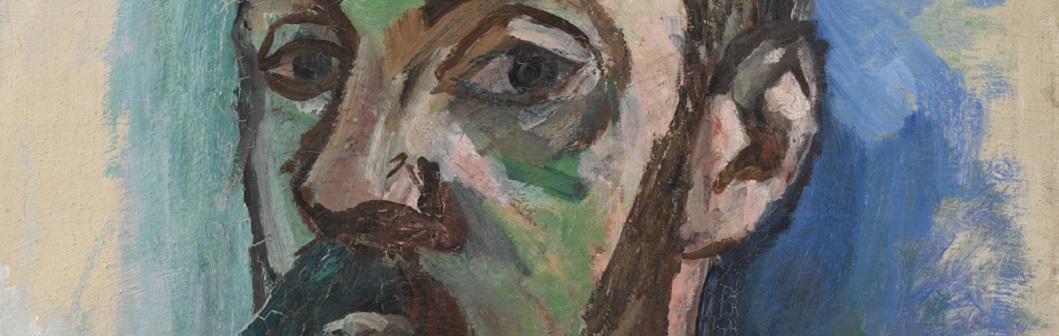
Blue Dress in Ocher armchair
The title of the exhibition in Oslo might give the impression that Henie Onstad Art Center will exhibit works by Matisse only, but there are only two works by the world famous French artist on display. The title refers to the story relating to the artworks’ ownership history (provenance) and comes in the wake of the fact that the Art Center in 2014 relinquished the painting Blue dress in ocher armchair to the heirs of the French Jewish art collector Paul Rosenberg. Where this painting is today is unknown to the Henie Onstad Foundation.
The exhibition is open September 11 to December 13.
The exhibition Matisse and The Eskimos at Ordrupgaard Museumexhibits works from the 1940s, and the theme os the artist’s interest for this ethnic group. This is an overlooked chapter in Matisse’s production, and is complemented by several reference works, including works by Césanne, Pissaro, Gauguin and Delacroix, who also were concerned by the so called exotic.
Philodendron noir et citrons
The exhibition is open through November 29.
In Search of Matisse in Copenhagen and Oslo, compiled by Tor Kjolberg
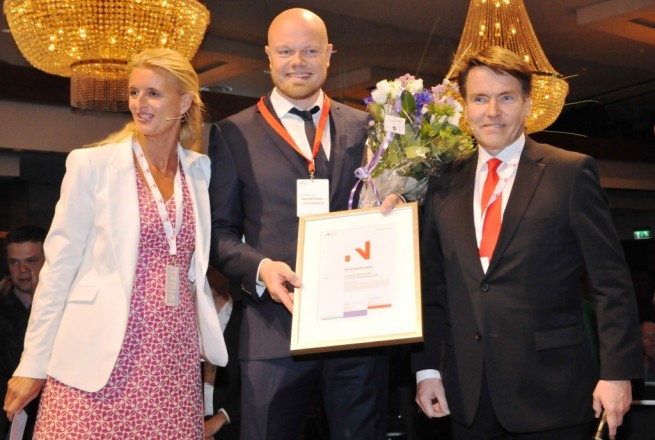
Lyngfjord Adventure, Tromsoe, North Norway, was rewarded the Norwegian Tourism Prize 2015 yesterday.The Tourism Prize is awarded by Innovation Norway and consists of a cash award of NOK 250,000. The announcement was made by Cathrine Pia Lund, director of Brand Norway/Innovation Norway
Lyngfjord Adventure has offered Arctic adventures since 2007, and visitors can enjoy a combination of outdoor activities and Northern Lights experiences every day and evening during the winter season – seven days a week.
The activity center Camp Tamok provides guests with crisp Arctic air, silence, untouched wilderness and once-in-a-lifetime experiences.
“Lyngfjord Adventure has created values to the company as well as to the local community – and with national engagement,” said the jury. “The team has focused on economy, security and sustainability and has managed to attract an international audience.” More than 10,000 foreign visitors have enjoyed the services of Lyngfjord Adventures.
“It’s an honor to receive the Norwegian Tourism Award 2015,” said founder and chairman Hans-Olav Eriksen. “When we started to play with the thought of making an Arctic attraction several years ago, we knew nothing about tourism, and there were no benchmarking reports to guide us. It was purely enthusiasm, teamwork and trial and error. The only thing we knew was stated in a report we had read, saying that tourism was the least profitable business in the country with the least knowledgeable employees.”
The prize of NOK 250,000 will be used to further improve the product and cooperation with the benevolent municipalities.
Feature image (on top) shows founder and CEO Hans-Olav Eriksen, Lyngfjord Adventure (in the middle), Cathrine Pia Lund, Brand Norway/Innovation Norway (left) and Per-Arne Tuftin, manager Tourism, Innovation Norway/(right). Photo: Audun Pettersen.
All other images, Lyngfjord Adventures.
Norwegian Tourism Prize 2015, written by Tor Kjolberg
ABBA’s Dancing Queen piano, which will go under the hammer at Sotheby’s Rock & Pop Auction in London on 29 September, is expected to make £800,000.
The ABBA Grand Piano has featured in many ABBA pop classics, like “Waterloo”, “Dancing Queen”, “Mamma Mia”, “SOS”, Knowing Me, Knowing You”, “Ting Ring” and “Money. Money, Money.” “The opening piano glissando from Dancing Queen is one of the most distinctive sounds of the 1970s and we are delighted to offer the actual instrument used by the legendary ABBA in their major recordings,” said Sotheby’s books and manuscript specialist Dr. Philip W Errington.
The piano was built by the Swedish musical instrument maker George Bolin for the American jazz pianist Bill Evans. In 1964 the New York Times described it as a “space-age piano” and wrote: “the new piano represents Mr. Bolin’s ultimate desire – to produce an instrument that gives the pianist the sensation of playing ‘directly on the strings’ as a guitarist would.”
Evans said it was one of the most unbelievable instruments he had ever played.
Stockholm’s Metronome Studios bought the piano in 1967 and it appeared on nearly all of the group’s recordings between 1973 and 1977. The piano is now sold by Atlantis Grammofon, the former Metronome Studios.
The groups pianist Benny Andersson has described the piano as “One of a kind and a great source of inspiration during the ABBA sessions in the studio.” The instrument comes with a certificate of authentication from the ABBA pianist.
The Swedish band shot to fame after winning the Eurovision Song Contest in 1974 and their hits dominated charts in both the UK and the US. Their music inspired a generation of artists and was immortalized in the film and musical production Mamma Mia!
ABBA is estimated to be one of the best-selling music artists of all time, second only to The Beatles. It is rare for any ABBA-related material to be sold and this is the first major ABBA piece to be offered at auction.
The four member pop group comprising Andersson, Bjoern Ulvaeus, Anni-Frid Lyngstad and Agnetha Faeltskog split up in 1983. They have never performed as a group since.
It is not the first time a famous piano has appeared at auction.
John Lennon’s Steinway upright piano, on which he composed Imagine, was sold for £1.67 million in 2000 to singer George Michael, while the piano which featured in the film Casablanca was sold for 3.4 million dollars (£2.2 million) last year.
Iconic ABBA Piano to be auctioned at Sotheby’s, written by Tor Kjolberg